



Abstract
Background
Integrating digital technologies into social work practice has become increasingly significant, with new developments occurring in the artificial intelligence (AI) era, reshaping service delivery and interdisciplinary collaboration. This bibliometric-systematic review examines the scope and evolution of digital technologies in social work. This is a review that examines the body of knowledge as a whole, rather than focusing on the effectiveness of individual interventions. Specifically, the study addresses the following research questions: Which articles, journals, countries, and authors hold the most significant influence in the field? What research trends in this domain have been explored in the past decade? To what extent is digital social work a cohesive body of knowledge? What are the future directions for research in digital social work?
Methods
The study employed a bibliometric approach and analysed 767 articles from the Web of Science's Social Work category. It used CiteSpace for network analysis and visualisation.
Results
The findings reveal ten major research clusters, including foundational themes like the social worker–client relationship and emerging areas such as AI and telehealth.
Implication
The review highlights the potential for continuity and cohesiveness within the field while also identifying structural hurdles, the need for enhanced theorisation, the strategic importance of innovation, and the value of fostering cross-regional collaborations.
Keywords
Digital Social Work: Where are we Now and Where are we Heading?
In the context of this study, we use the term “digital social work” to describe a body of knowledge focused on the application of digital technologies in social work practice. This body of knowledge is also referred to by various other terms, such as e-social work (López Peláez et al., 2018), technology-mediated social work (Afrouz & Lucas, 2023) or other similar terms. These terms reflect the prevailing technologies and their varied roles in social work. For clarity, we use “digital social work” (López Peláez & Kirwan, 2023) to emphasise how digital technologies – such as social media, mobile apps, online counselling, data systems, and artificial intelligence (AI) – are transforming practice through enhanced communication, service delivery, and information management.
Despite frequent mentions in professional documents, social work lacks a clear and well-defined approach to digital technologies in training and practice – unlike other disciplines, where technology integration has been central for over a decade. For instance, information technology (IT) is deeply embedded in education studies (Visscher, 1996), information systems are a cornerstone of business studies (Hidding, 2012), and health informatics is critical in medical science (Payne et al., 2016). These disciplines have systematically incorporated technology into their curricula and professional frameworks, creating a cohesive and forward-thinking approach.
In contrast, social work has yet to establish a similarly structured and integrated pathway for digital practices, leaving a gap in how technology is conceptualised, taught, and applied within the profession (Afrouz & Lucas, 2023; López Peláez et al., 2018). This disparity may underscore the need for social work to develop a more systematic approach to technology, ensuring it keeps pace with advancements in other fields. Indeed, we see several gaps in the existing systematic reviews.
First, most reviews in social work tend to focus on specific service domains, such as mental health or youth (Chan, 2018; Ramsey & Montgomery, 2014), rather than offering a comprehensive overview of technology applications across the entire field. This specialisation/fragmentation prevents a holistic understanding of how various technologies can interconnect and be applied across different contexts.
Moreover, many existing systematic reviews tend to manually select a small cluster of studies (e.g., typically ranging from 0 to 30 studies) based on the quality or theoretical relevance of the research (Afrouz & Lucas, 2023; Steiner, 2021). For example, Afrouz and Lucas (2023) review highlights that digital tools enhance service accessibility in social work and emphasises the importance of understanding service user's experiences to accurately assess their impact.
Conversely, many other systematic reviews in social work adopt an objective, evidence-based approach used in medical science, ranking the quality of evidence by study design and prioritising randomised controlled trials (RCTs) over other methodologies (Chan & Holosko, 2016; Ramsey & Montgomery, 2014). While such reviews are rigorous and insightful, a key limitation is the highly unique and context-specific nature of apps and tools in social work. This makes standardised comparisons in social work much harder than evaluating a single drug administered uniformly across diverse settings in medicine
Furthermore, some of the latest reviews focus exclusively on AI (Chan & Nurrosyidah, 2025; Garkisch & Goldkind, 2025), highlighting valuable innovations while neglecting the wider historical development of digital social work. From that research, the integration of AI into digital social work is recognised for its potential to enhance service delivery, improve outcomes, and increase organisational efficiency. However, this updated focus fails to adequately capture long-term trends and the evolving dynamics between technology and social work.
Finally, some reviews present theoretical frameworks related to digital transformation in social work, for example, Steiner (2021) offers a thoughtful analysis of such frameworks within the field. While these reviews provide valuable theoretical insights, they often do not address the actual quantity, relationships, or structure of the existing body of knowledge. Additionally, they may overlook broader geographical and stakeholder factors intrinsic to this domain, potentially leading to an underestimation of the complex interplay between social and institutional elements that shape the field.
Given these gaps, there is a need for comprehensive, updated reviews that include recent technologies such as AI and present digital social work as a cohesive body of knowledge – an interconnected collection of ideas that deepen understanding (Kim & Jeong, 2006). Unlike collections of unrelated works, cohesive bodies are characterised by articles citing each other and forming clusters, as in established fields like medicine. Most existing reviews focus on intervention effects and central concepts, often neglecting the relationships among studies. A bibliometric approach can quantitatively assess research connectivity, revealing how studies contribute to the field's development (Donthu et al., 2021; Bordons et al., 2004; Wahid & Hassini, 2022; Williams et al., 2013).
This study examines the body of knowledge, rather than focusing on the effectiveness of interventions. The following research questions (RQs) are used to guide an investigation into the current state of digital social work:
Methods
Article Selection
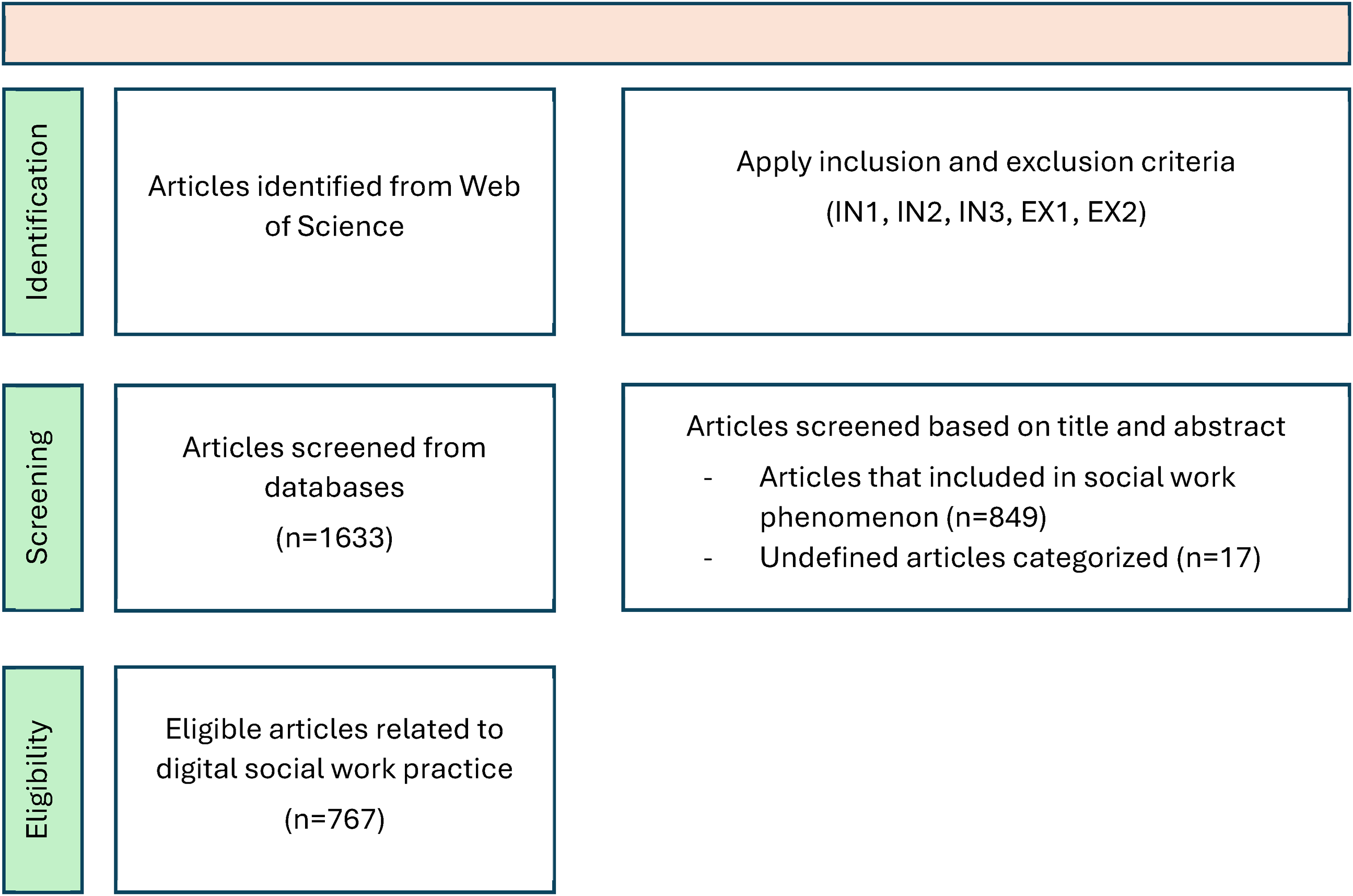
The article selection process followed the PRISMA (Preferred Reporting Items for Systematic Reviews and Meta-Analyses) guidelines recommended for systematic literature reviews (Page et al., 2021). A flowchart illustrating this process is provided in Figure 1.
PRISMA Framework.
We applied specific inclusion and exclusion criteria, focusing on journals classified as “social work” in major citation databases like WOS, SCOPUS, and SJR. Using structured databases ensures transparency and prioritises influential, widely recognised articles, supporting robust analysis. While no database is perfect, Web of Science (especially SSCI and ESCI) is distinguished by its clear selection criteria, extended historical coverage, and reliable data export features, making it well-suited to our research.
First, we particularly chose the “Social Work” category in the WOS category to retrieve relevant Journals (IN1). We were aware that it might exclude journals from other disciplines, but it served the purpose of this review by providing domain-specific insights. As a result, 103 journals were included. Publications between 2010 and 2024 were selected (IN2). The review period begins in 2010 to coincide with the emergence of comprehensive professional guidelines for technology use in social work (AASW, 2013; BASW, 2013; NASW, 2017) in the 2010s, and the widespread adoption of platforms like YouTube and Facebook as essential tools for outreach and engagement around this period. Prior research highlights that this decade witnessed the widespread adoption of technologies that fundamentally reshaped service delivery, communication, and professional practices (Schallmo et al., 2018; Egodawele et al., 2022). By focusing on literature published after 2010, we ensured that the review captures the most relevant and technology-driven developments in digital social work. The query used in this research was: Social Work (Web of Science Categories) and media OR online OR digit* OR technolog* OR AI OR artificial intelligence OR Smart OR electronic OR internet OR ICT OR mechanic* OR machine OR mobile OR phone OR e-learn* OR tele* (All Fields) and media OR online OR digit* OR technolog* OR AI OR artificial intelligence OR Smart OR electronic OR internet OR ICT OR mechanic* OR machine OR mobile OR phone OR e-learn* OR tele* (Title) and Article or Review Article or Early Access (Document Types) and English (Languages)
The initial search returned 1,633 articles, which we narrowed down using AI-assisted and manual tagging based on titles and abstracts. Articles were categorised into (A) “Social Work Practice Development and Evaluation,” our target group, and (B) “Social Problem/Phenomenon Analysis.” Classification was done using AI integrated with Excel, and results were manually reviewed. Disagreements were resolved through discussion with a second reviewer. Ultimately, 767 articles were included in the analysis.
Bibliometric Analysis
This study used a bibliometric analysis method (Brignardello-Petersen et al., 2025; Marzi et al., 2025). It begins with the systematic identification of a collection of literature (i.e., the N = 767 document set), importing these works along with their cited sources, and then analysing how all these items – both the selected works and their references – interconnect and form patterns (Bordons et al., 2004; Wahid & Hassini, 2022; Williams et al., 2013). The analysis involves two core parts: citation counts and relational patterns. Citation count analysis assesses the productivity and overall popularity of various research constituents – such as authors, institutions, countries, and journals – by evaluating their citation frequency. Relationship analysis examines the structural connections among all items, identifying patterns and thematic groupings. In this study, we used CiteSpace Version 6.4.R1 for data import, analysis, and visualisation.
Identifying Themes Reflected in the Citation Network to Inform our Discussion
By analysing citation patterns and keyword occurrences, bibliometric analysis helps identify the most significant research clusters and emerging areas of interest (Öztürk et al., 2024). A thematic analysis of these clusters and patterns can then further uncover underlying themes. The analysis used in this study was guided by both inductive and deductive reasoning (Fereday & Muir-Cochrane, 2006). Deductive reading is a top-down approach that begins with a set of predefined codes. In this review, the deductive part was performed using software based on algorithms and keywords. The inductive phase, primarily reflected in our discussion, was based on the researchers’ interpretations, allowing themes and insights to emerge organically from the network clusters. We adopted this deductive–inductive interpretation cycle to reveal the structure and emerging trends within the citation network.
Results
The Network and Major Clusters
We employed document co-citation analysis to generate a network of relationships among a group of intricately connected articles and their cited references. The document co-citation analysis produced a network with a modularity Q index of 0.538 and an average silhouette metric of 0.846, indicating a moderately well-structured clustering and a prominent level of internal consistency within the identified clusters. A modularity index closer to 1 reflects a network composed of loosely connected sub-networks, suggesting a well-defined cluster structure (Newman, 2006). Meanwhile, the silhouette score, which assesses how closely related items within a cluster are, indicates a high degree of homogeneity (Rousseeuw, 1987). A silhouette score approaching 1 suggests that the clustering is meaningful and that the documents within each group share strong thematic coherence.
The analysis specifically examines the interconnections and characteristics of clusters formed by the cited documents from the selected articles, providing insights into their thematic and structural relationships (Chen et al., 2010). Network analysis and visualisation were conducted using CiteSpace. We used the g-index as a criterion for node selection to extract the most impactful subset of articles based on the citations from the selected articles, resulting in a citation network comprising 612 nodes and 5,633 edges.
Visualising the Clusters
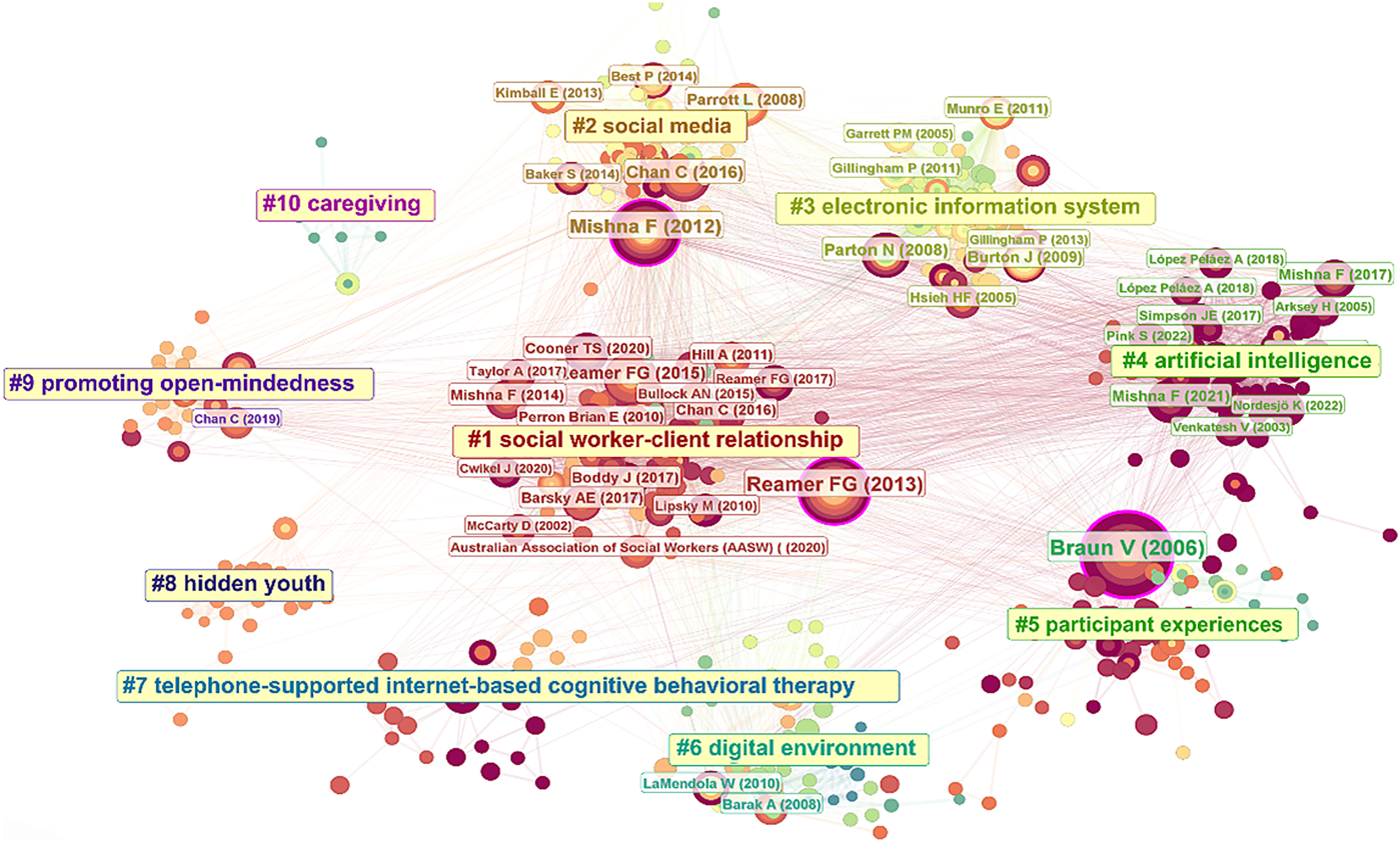
The citation network was visualised, with each node representing an article (see Figure 2). Nodes with a purple ring indicate high betweenness centrality, showing the article acts as a bridge between major groups (Gaggero et al., 2020). The visualisation highlights three nodes with purple borders, labelled Braun and Clarke (2006), Reamer (2013), and Mishna (2012). These nodes represent pivotal articles, indicating their considerable influence on the field of digital social work. Some influential articles, like Braun and Clarke (2006), are not in our selected article set but are frequently cited and pivotal in certain clusters. Such foundational external works continue to shape social work research, though the network's most influential nodes all come from our selected document set.
Visualisation of the Clusters.
The analysis identified 46 clusters, with 10 primary clusters containing more than nine articles as the members. These clusters were ranked by the size of their members, starting with the largest (#1) and progressing to the smallest (#10). We adopted the log-likelihood ratio (LLR) to label these clusters, as it is an algorithm that determines the most significant term to describe each cluster based on the actual wordings used in their keywords (Chen, 2014; Gaggero et al., 2020).
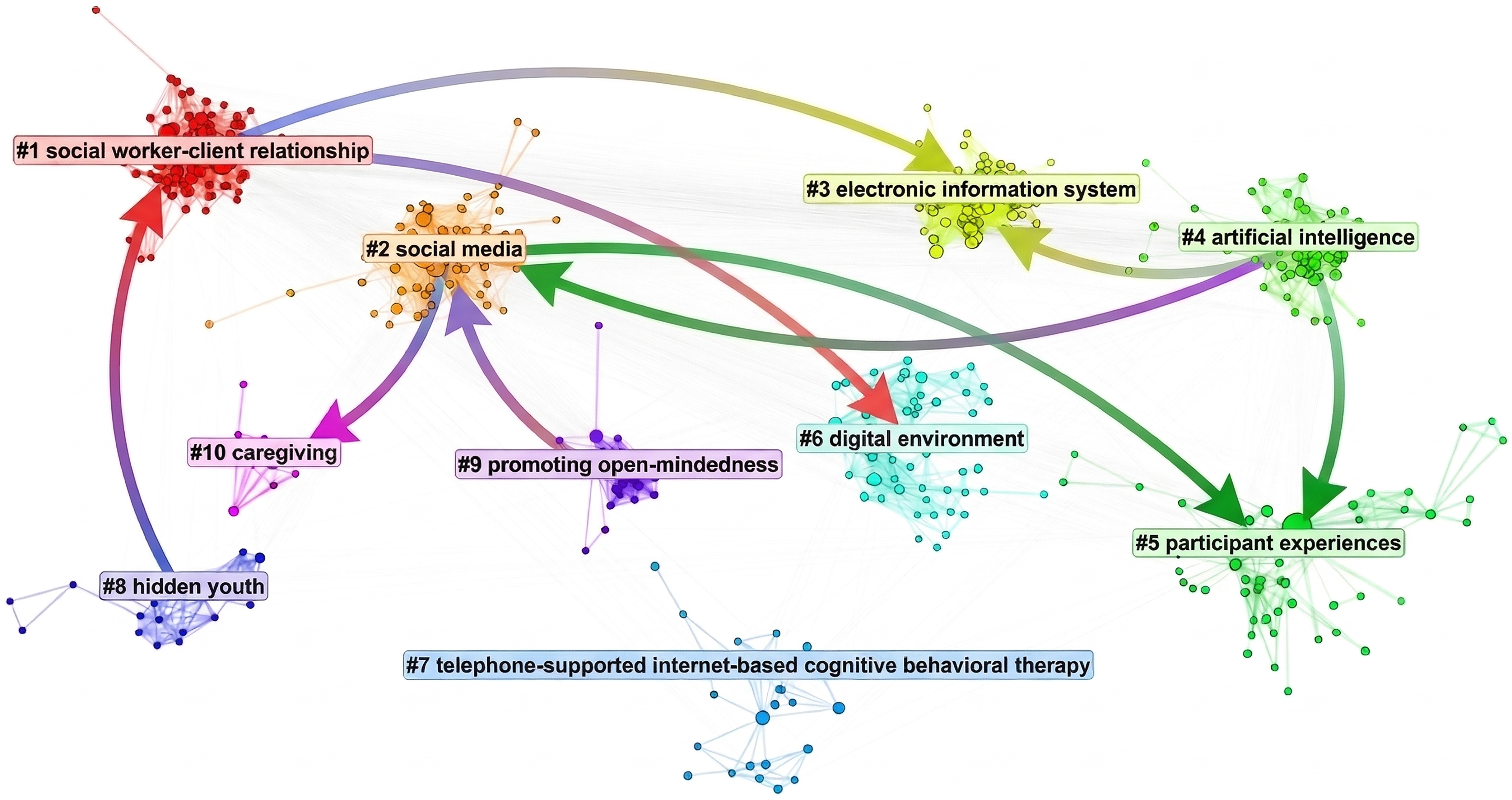
Figure 3 illustrates the dependencies among clusters using bluish-to-red arrows. Cluster formation is grounded in co-citation analysis, which constructs a network in which each node represents a cited reference. An edge is established between two nodes when the corresponding references are cited together in subsequent publications (Chen et al., 2010). The direction of the arrow indicates the direction of citations. For example, an arrow from the #9 Promoting Open-Mindedness cluster to the #2 Social Media cluster means that #9 cites works from #2 more frequently than the reverse. This co-citation network serves as the foundation for identifying thematic dependencies and eventually forming coherent clusters of related literature. For instance, Cluster #1, labelled “Social Worker–Client Relationship,” is linked to Cluster #3, “Electronic Information System,” and Cluster #6,” “Digital Environment.” Similarly, Cluster #2, “Social Media,” demonstrates dependencies on Cluster #6, “Digital Environment,” Cluster #5, “Social Work in General,” and Cluster #10, “Caregiving.”
Cluster Dependencies.
Visualising the Development of the Clusters Over Time
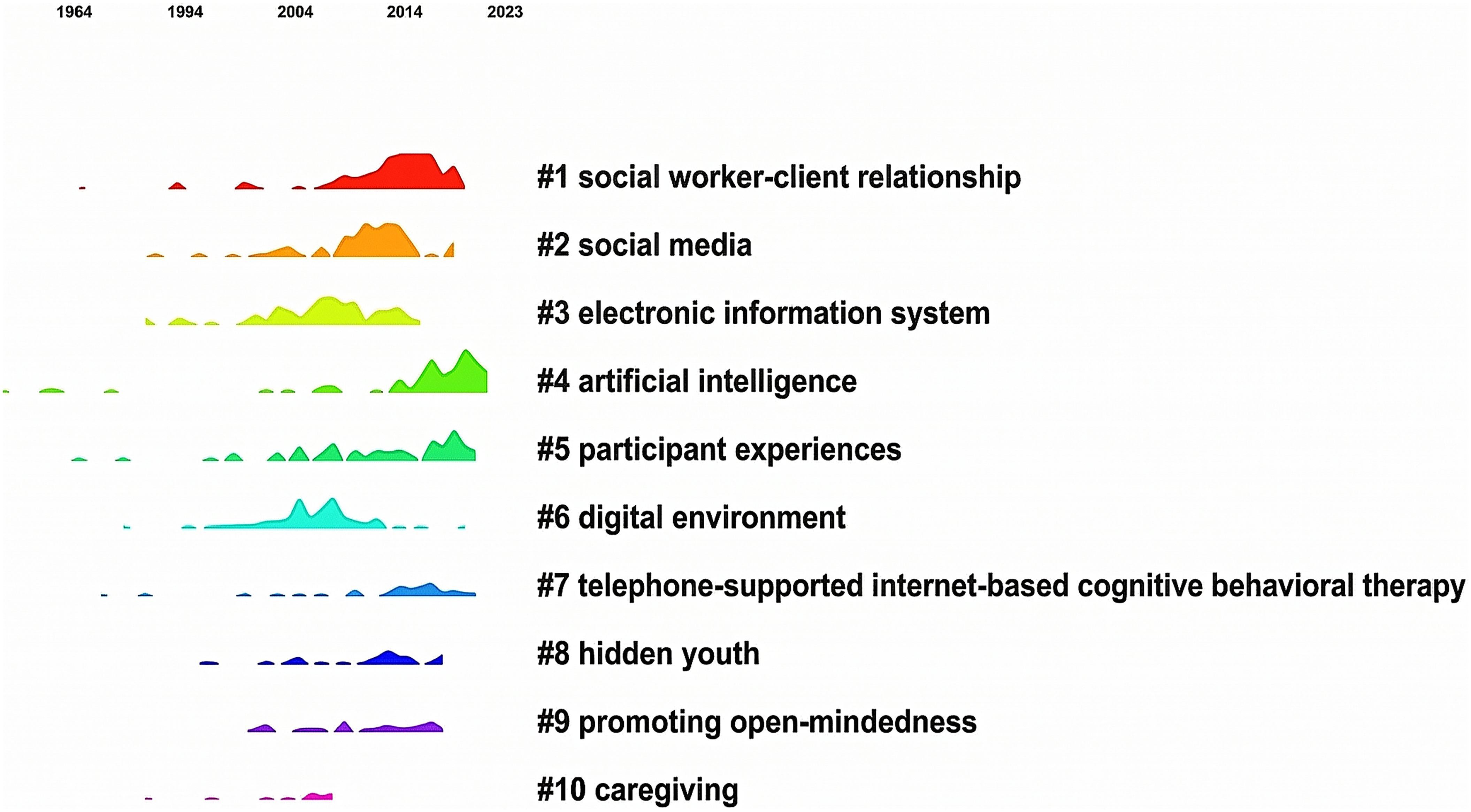
The development of clusters over time is presented in Figure 4 which reflects the evolution of research priorities in digital social work. The most prominent cluster is #1 “Social Worker–Client Relationship,” which has been active since the 1990s. As the timeline progresses, newer clusters, such as #2 “Social Media” and #3 “Electronic Information System,” emerge, signifying the integration of digital and online platforms into social work practices. Notably, Cluster #4 “Artificial Intelligence” represents a significant and recent shift in research focus. This cluster shows heightened activity in the late 2010s until the time of writing, underscoring the growing interest in AI applications, such as predictive analytics and virtual assistants, within the field. The progression and interconnections of these clusters illustrate the transition from traditional social work concepts to modern technological innovations, with AI marking a pivotal advancement.
Landscape View on the Development of Social Work and Technology Area.
The key Themes of Each Cluster
Cluster 1: Social Worker–client Relationship
The largest cluster (#1) consists of 87 members. This cluster centres on the fundamental relationship and ethical aspects of social work, a topic that has remained active since the 1990s and has continued to grow steadily over the years. The most cited work within this cluster is Reamer (2013)'s Social work in a digital age: Ethical and risk management challenges is a key reference in this domain. The major citing articles in this cluster are from the USA, which include Afrouz and Lucas (2023)'s “A Systematic Review of Technology-Mediated Social Work Practice: Benefits, Uncertainties, and Future Directions” and Mishna et al. (2022)'s “#socialwork: An International Study Examining Social Workers’ Use of Information and Communication Technology.” This cluster emphasises the significance of preserving human connections in the social work profession, even as digital tools increasingly shape interactions.
Cluster 2: Social Media
The second largest cluster (#2) consists of 75 members. It investigates the role of social media platforms in social work practice, focusing on their application in communication and community engagement. This study area has gained increasing importance as social workers seek to leverage the potential of social media to connect with younger audiences and marginalised populations. Mishna et al. (2012)'s “The digital age and implications for social work practice” is the most cited member in this cluster. Major citing articles include Mishna et al. (2021, which examines the opportunities and challenges associated with a digital future, and Chan (2018), which explores ICT-supported social work interventions for youth.
Cluster 3: Electronic Information System
This cluster has 73 members and focuses on using digital systems, including case management software and electronic databases, to streamline social work operations. The article from Parton (2006) titled “Changes in the form and knowledge in social work: From the ‘social’ to the ‘informational’” is the most cited member in this cluster. Gillingham P, as a prominent contributor in the top five citing articles, explores the role of these tools in enhancing decision-making processes and improving service delivery (Gillingham, 2011, 2015a, 2015b, 2015c, 2016). This cluster also highlights critical concerns regarding balancing technological adoption with ethical considerations.
Cluster 4: Artificial Intelligence
The fourth largest cluster has 71 members, most of them are from the USA. The artificial intelligence cluster examines the integration of AI technologies into social work. One of the key contributions to this field is Garkisch and Goldkin's (2025) work titled “Considering a Unified Model of Artificial Intelligence-Enhanced Social Work: A Systematic Review.” This cluster represents an emerging area of research, emphasising both the transformative potential and the inherent challenges associated with adopting AI in social work practices. Faye Mishna is the most cited member (Mishna et al., 2017, 2021). Notably, this cluster shows strong connections to Cluster #2, “Social Media,” Cluster #3, “Electronic Information System,” and Cluster #5, “Social Work in General.” The arrows representing dependencies indicate that articles in Cluster #4 extensively cite references from Clusters #2, #3, and #5. This reliance underscores the foundational role these clusters play in shaping AI-related discussions within social work. It is worth noting that the integration of AI into social work has spurred a growing body of recent studies exploring its applications across various domains, such as AI in therapeutic interventions (Chan et al., 2024; Prescott & Hanley, 2023), machine learning models (Kissos et al., 2020; Victor et al., 2021), and parenting (Lee et al., 2024; Özaydin Aydoğdu et al., 2024). However, most of these AI-related studies in social work journals do not occupy a central position within social work or the broader academic literature, in terms of centrality or citation counts.
Cluster 5: Participant Experiences
This cluster has 61 members. It is anchored by Braun and Clarke (2006) – a methodological touchstone rather than a topical one. Most of these studies use thematic analysis to centre the voices and lived experiences of clients, students, and practitioners engaging with technology. Common foci include perceptions of access and inclusion, therapeutic alliance in digitally mediated settings, ethics and boundaries online, usability and acceptability of tools (e.g., text-based counselling, learning platforms), and the organisational conditions that shape digital practice. The topical heterogeneity of the major citing articles – Occhiuto et al. (2023), Gibson and Cartwright (2014), Afrouz and Crisp (2021), Paz et al. (2023), and Schmidt Hanbidge and Vito (2023) – underscores that the cluster reveals a methodological backbone spanning diverse digital technology applications.
Cluster 6: Digital Environment
This cluster has 53 members, examining digitalisation's impact on social work, particularly how practitioners adapt to digital platforms or online environments in areas such as counselling and e-learning. The most cited articles include Barak et al. (2008) and LaMendola (2010), which explore both the opportunities and challenges of operating within virtual and hybrid environments. The major citing articles in the cluster concern the ethical aspect of digital environments (Harris & Birnbaum, 2015; Reamer, 2015).
Cluster 7: Telephone-supported Internet-based Cognitive Behavioural Therapy
The 7th largest cluster has 26 members. This cluster focuses on the growing prominence of telehealth solutions, particularly in the delivery of cognitive behavioural therapy (CBT) through telephone and online platforms. The most cited articles are not directly related to digital social work; for example, Cohen (2013), discusses the use of statistics in the behavioural sciences. The key citing member is Young et al. (2022) from Hong Kong, which examines the heightened demand for accessible mental health services in the wake of the COVID-19 pandemic. The cluster underscores the growing acceptance of remote therapy as a credible alternative to in-person sessions, offering greater flexibility and scalability to address clients’ diverse needs. In general, CBT studies in the social work literature do not commonly cite sources included in the document set we refer to as “digital social work.” Additionally, Figure 3 shows no directional arrows linking this cluster to others.
Cluster 8: Hidden Youth
The 8th-largest cluster is related to “hidden youth,” with 23 members. The hidden youth phenomenon refers to socially withdrawn young individuals. The article by Harris and Birnbaum (2015), which is about online ethics, is the most cited member of this cluster. Notably, some key citing articles, such as Chan (2020b) and Chan (2020a), are from Hong Kong, which explore interventions involving online counselling and gaming for this client population. This specialised area of study highlights the distinct challenges encountered by socially isolated youth, underscoring the importance of developing effective support systems.
Cluster 9: Promoting Open-mindedness
This cluster has 22 members and centres on strategies to cultivate open-mindedness within social work practice, particularly in community settings, and on the enhancement of cultural competence. In this cluster, the article by Chan and Ngai (2019), titled “Utilizing social media for social work: insights from clients in online youth services,” is the most cited member. Noteworthy studies by C. Chan from Hong Kong are the major citing articles that highlight the use of digital storytelling as a tool for fostering open-mindedness within the community (Chan, 2019a, 2019b; Chan & Sage, 2021). By promoting open-mindedness, social work practitioners are better able to establish stronger connections, leading to improved outcomes in multicultural environments. These works create an interconnected and cohesive narrative, but one that presents a regional circle.
Cluster 10: Caregiving
The last cluster has nine members from diverse regions. This cluster explores the intersection of social work and caregiving. Key citing articles examine the role of online parenting discussions and internet forums (Nieuwboer et al., 2013; Salzmann-Erikson & Eriksson, 2013). The most cited member of this cluster is the Plantin & Daneback (2009) article titled “Parenthood, information and support on the internet: A literature review of research on parents and professionals online.” These studies highlight how digital platforms support caregiving or caregiver training. It is worth noting that this cluster is not active in the recent decade (see Figure 4). This does not mean that this type of study topic is inactive in broader research literature, but rather that it is not prominently referenced in social work journals in recent years.
Top Articles
Most Globally Cited Articles
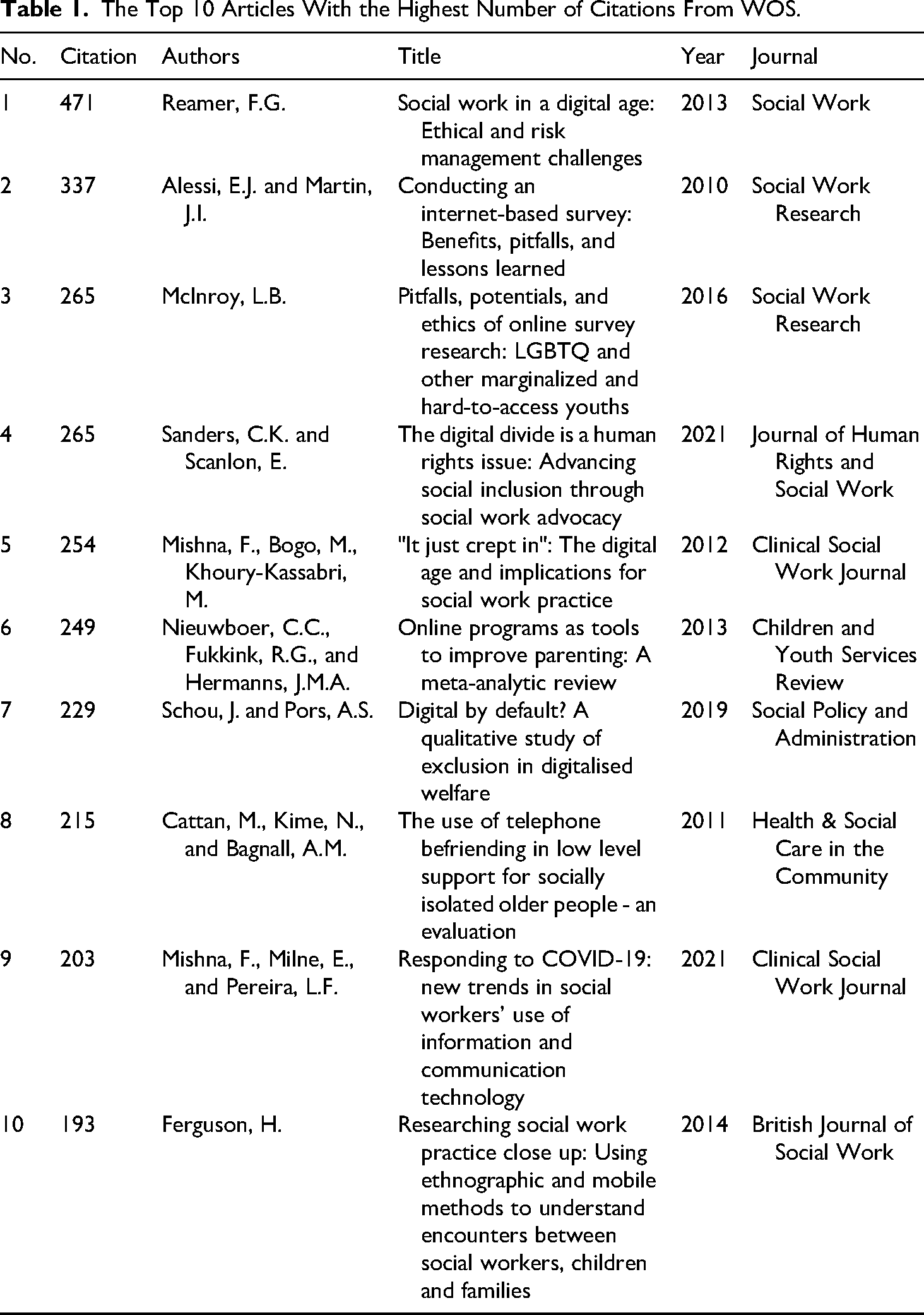
Of the 767 documents screened, Table 1 shows the top 10 articles with the highest number of citations in WOS. The result reveals that the article titled “Social Work in a Digital Age: Ethical and Risk Management Challenges” by Reamer, FG emerges as the most cited publication, occupying the foremost position in terms of citation count. Notably, all the top 10 globally cited articles are included within our document set.
The Top 10 Articles With the Highest Number of Citations From WOS.
Most Cited Articles Within the Network
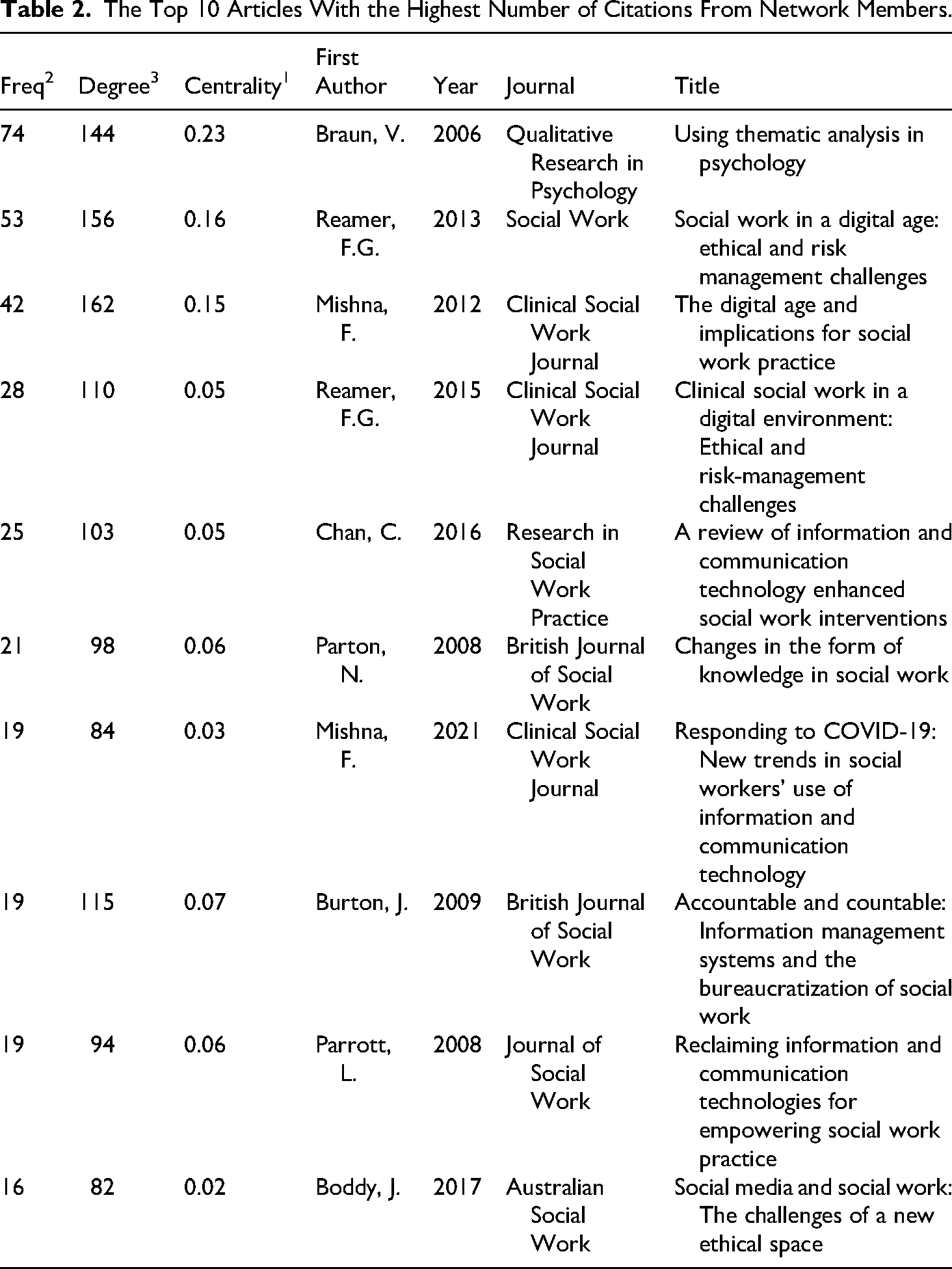
Table 2 presents the top 10 most-cited articles within a specific network that is formed based on the references cited by the selected articles, ranked by citation frequency (Freq). Works by Reamer (2013) and Mishna et al. (2012) exert considerable influence, addressing topics such as digital ethics in social work and the implications of the digital age. The article by Braun and Clarke (2006) has the highest citation count (74), highlighting its influence within the network. Notably, this most-cited article does not belong to the set of 767 digital social work articles, but a widely referenced source cited by them.
The Top 10 Articles With the Highest Number of Citations From Network Members.
Most Pivotal Articles Within the Network
Another important measure of an article's influence is Betweenness Centrality, which quantifies how often that node (article) appears in the shortest paths between pairs of nodes in a given network. Here, the network is partly based on references cited by the selected articles, revealing influential works that link different studies. Table 3 shows the top ten articles, with Braun and Clarke (2006) – a foundational qualitative study – ranked first. The prominence of their work, along with other leading social work articles, indicates that digital social work's knowledge base remains rooted in the social sciences rather than computing, highlighting their key role in shaping the field.
The Top 10 Articles in Terms of Centrality.
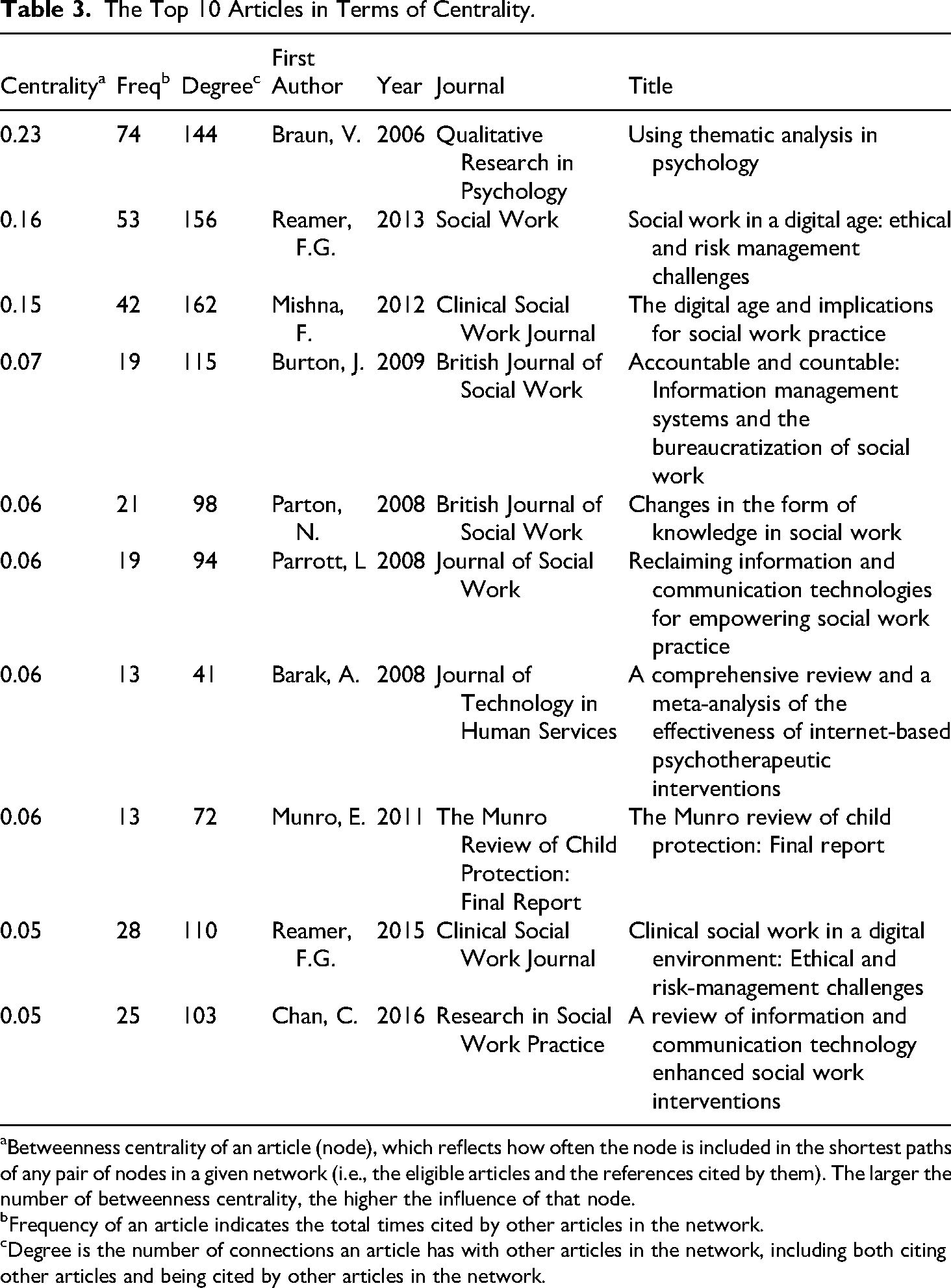
Betweenness centrality of an article (node), which reflects how often the node is included in the shortest paths of any pair of nodes in a given network (i.e., the eligible articles and the references cited by them). The larger the number of betweenness centrality, the higher the influence of that node.
Frequency of an article indicates the total times cited by other articles in the network.
Degree is the number of connections an article has with other articles in the network, including both citing other articles and being cited by other articles in the network.
Productivity
Most Productive Journals
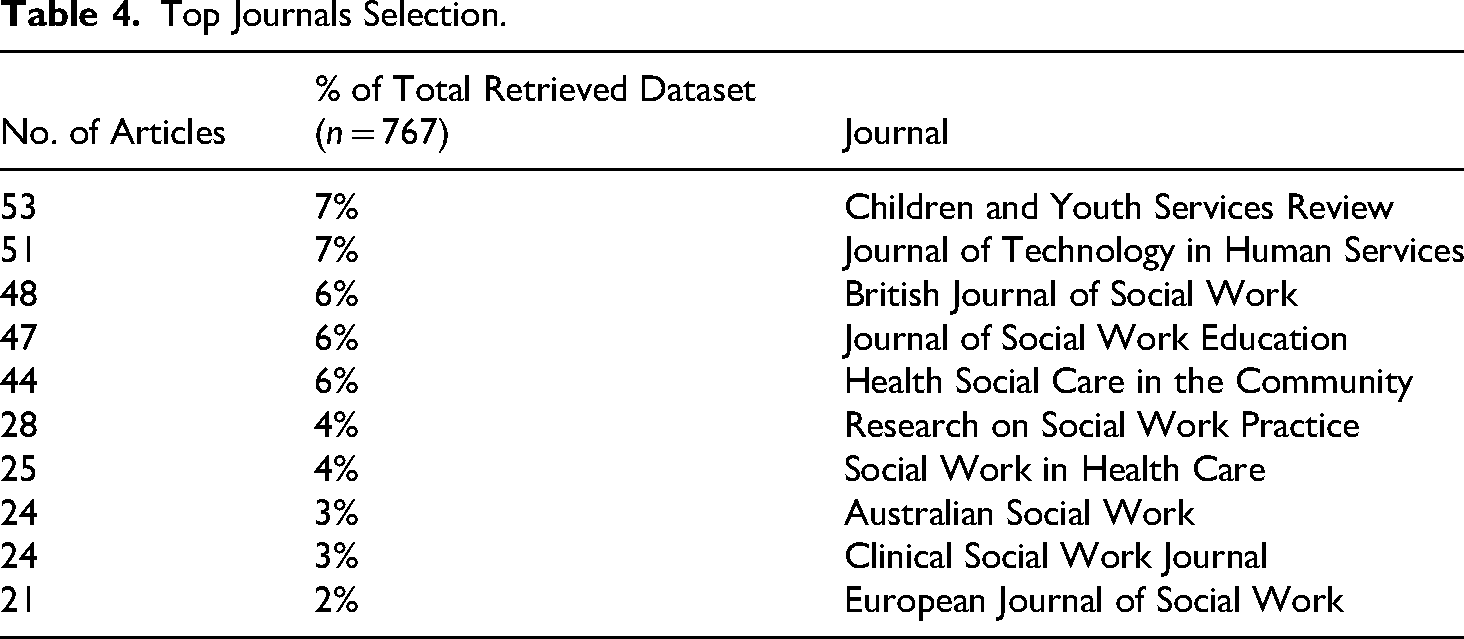
Table 4 presents the distribution of journals in the social work field. The left column shows the number of articles in each journal, while the middle column shows the percentage of journals from the total publications. The table shows that “Children and Youth Services Review” has the highest number of articles (53), followed by the Journal of Technology in Human Services in second place.
Top Journals Selection.
Most Productive Countries
A total of 61 countries were found to publish technology-related research in social work. Table 5 illustrates the top 10 countries that have contributed to social work research. The United States led with 359 publications, accounting for 47% of the total, followed by Australia (94 articles, 12%) and England (67 articles, 9%).
Most Productive Countries.
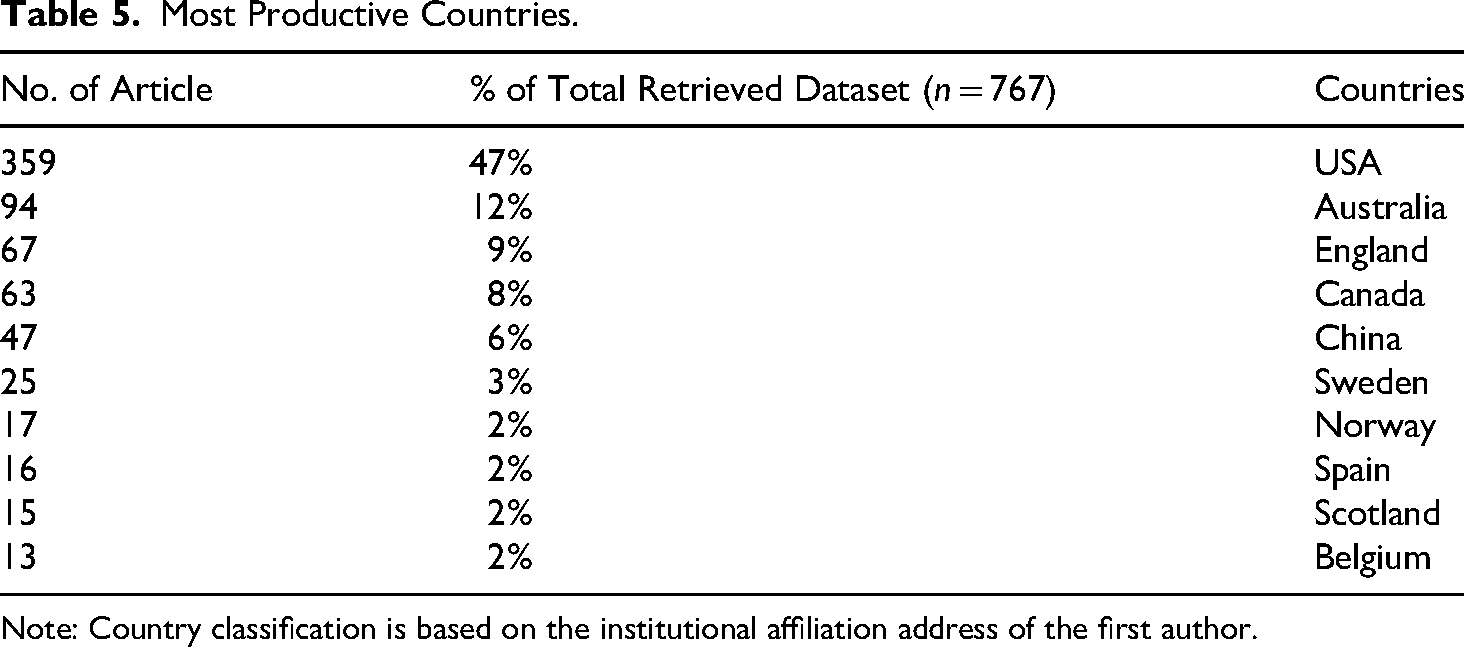
Note: Country classification is based on the institutional affiliation address of the first author.
Most Productive Authors
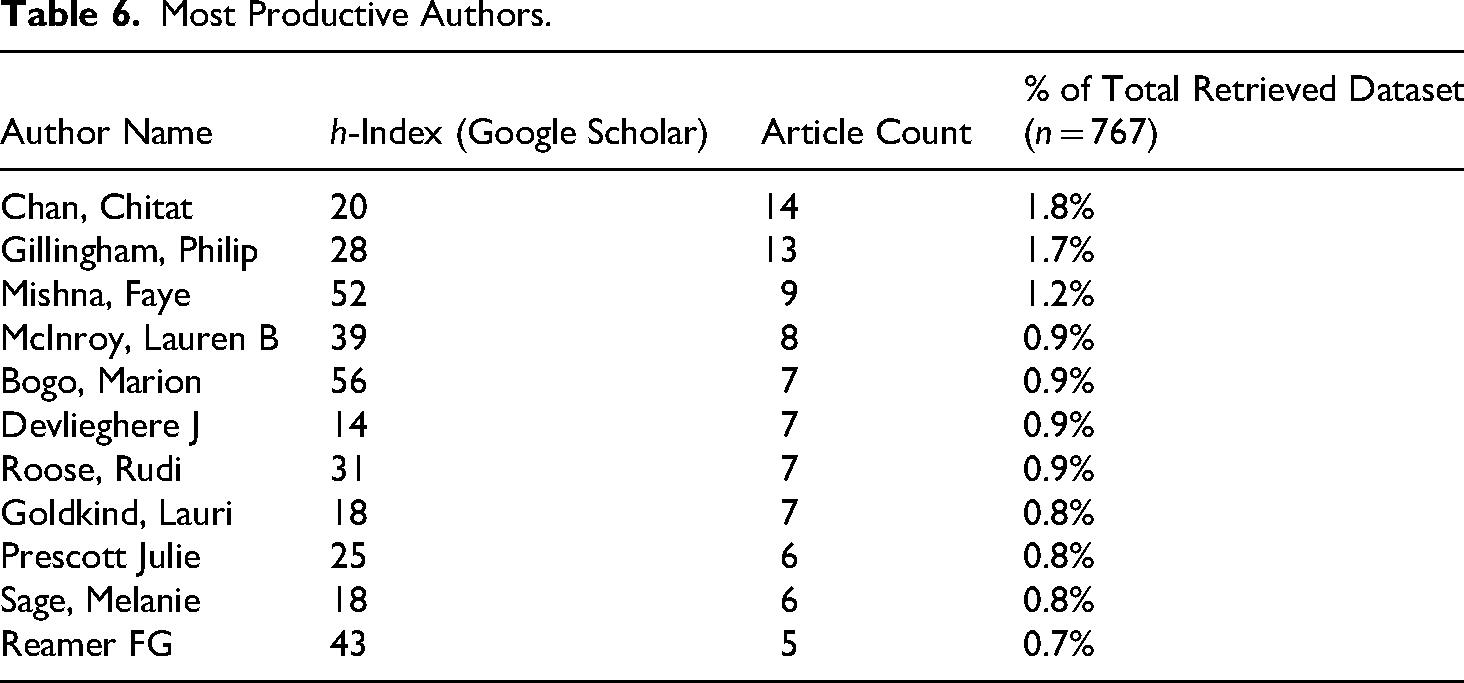
Table 6 summarises the most productive authors among the eligible article set (n = 767), highlighting their research impact and contributions. It includes the authors’ names, their H-index (as measured by Google Scholar), the number of articles they contributed, and the percentage of the total dataset their contributions represent. For instance, Chan Chitat, with an H-index of 20, contributed 14 articles, accounting for 2% of the dataset, followed by Philip Gillingham and Faye Mishna, who contributed 13 and 9 articles, respectively, with corresponding dataset shares of 2% and 1%.
Most Productive Authors.
Discussion
A Cohesive Body of Knowledge With Emerging Specialisation
Using a bibliometric approach, we quantitatively assessed the connectivity of a document set (N = 767) that we call “digital social work.” Our analysis demonstrates that these articles are not simply an assemblage of unrelated works that merely cite external references. Notably, the document set encompasses nearly all the widely cited articles identified in our analysis, except for Braun and Clarke (2006), which, although frequently cited by the set, is not included among the 767 digital social work articles. This indicates that external references do not constitute the most popular works or dominant nodes within the citation network. Instead, the most influential nodes are those contained within the document set itself. Thus, we can assert that the selected digital social work articles form an interconnected scholarly community: they frequently cite one another, and all the core nodes at the centre of the network originate from within the set, rather than from widely cited external sources.
We have seen studies mutually cite one another, fostering a dynamic, interconnected ecosystem. For example, Cluster 2 (social media, representing a more recent development) and Cluster 3 (Electronic Information Systems, reflecting earlier technological adoption in the field) illustrate the ongoing and expanding integration of digital tools into social work practice. Research on social media and electronic information systems gained momentum in the early 2010s, driven by the increasing availability of digital tools and the need for more efficient service delivery.
These clusters are closely linked to earlier themes (Cluster 1 and Cluster 5) and have influenced the development of newer clusters, such as AI (Cluster 4) and telehealth (Cluster 7). Similarly, the use of social media for client engagement has informed research on digital environments (Cluster 6), while electronic information systems have laid the groundwork for AI-driven decision-making tools.
Likewise, although Cluster 4 (Al) and Cluster 6 (Digital Environment) represent more recent trends, they are connected to other clusters. AI has the potential to revolutionise decision-making and service delivery. At the same time, digital environments have transformed how social workers interact with clients and deliver services. Research on AI and digital environments has surged in the late 2010s and early 2020s, driven by technological advancements and the COVID-19 pandemic. Articles like Garkisch and Goldkind (2025) explore the transformative potential of these technologies and the ethical and practical challenges they pose.
It is worth noting that these studies do not merely exemplify the use of technologies; they also represent a body of work that underscores emerging specialisations, some of which are need-based and some of which are means-based. In other words, rather than applying technology for its own sake, the applications studied in the research are purposefully designed to address specific challenges and improve service delivery.
Many of these studies are not evaluations of ready-made applications; instead, they focus on intervention designs that are bottom-up innovations, driven by specific needs and incorporating a mix of technologies. For example, need-based specialisations often focus on addressing the unique challenges of vulnerable populations or specific social issues, tailoring digital tools to enhance accessibility and engagement. A prime illustration is Cluster 8 (“Hidden Youth”), which targets socially withdrawn young individuals through online counselling and gaming interventions. Studies in this cluster, such as those by G. H. Chan (2020a, 2020b), demonstrate how digital platforms can facilitate outreach to hard-to-reach groups, fostering therapeutic connections in virtual spaces while mitigating isolation. Similarly, Cluster 10 (“Caregiving”) highlights need-driven applications in social support, with research such as Plantin and Daneback (2009) exploring online forums for parental information and support, highlighting how digital resources can empower families navigating caregiving challenges.
In contrast, means-based specialisations emphasise the tools and platforms themselves as catalysts for broader practice improvements, often integrating emerging technologies to optimise processes across contexts. Cluster 4 (“Artificial Intelligence”), for instance, represents a means-oriented focus on AI's role in predictive analytics and decision-making, as seen in Garkisch and Goldkind (2025), which proposes a unified model for AI-enhanced social work, and other works like Victor et al. (2021) on machine learning for identifying domestic violence in child welfare records. This cluster connects to foundational means, such as electronic systems, in Cluster 3, where Gillingham (2015a, 2015b, 2015c) critiques and refines digital databases for ethical and efficient case management.
Likewise, Cluster 2 (“Social Media”) exemplifies means-based innovation through platforms for community engagement, with Mishna et al. (2022) examining social workers’ ICT use internationally, and Chan and Ngai (2019) highlighting client insights from online youth services.
“Internet-based cognitive behavioural therapy” (Cluster 7) occupies a unique position among these groupings. While it represents a significant body of research around digital mental health interventions, studies in this cluster often stand apart methodologically and conceptually. Notably, the most cited articles are less directly tied to digital social work, such as Cohen (2013), which focuses on behavioural science statistics rather than digital social work practice. Furthermore, the citation network reveals minimal integration, with few, if any, references linking Cluster 7 to the core “digital social work” canon defined by our document set, and Figure 3 shows no directional citation arrows to or from this cluster. This suggests that the CBT-focused literature, despite its clear relevance, tends to operate in parallel rather than in direct conversation with other digital social work domains. Nevertheless, as the field of digital social work matures, there is significant potential for greater synergy.
Implications
Despite their potential, these emerging specialisations are underexplored in the literature. Social work researchers should consult this network when designing interventions and leverage real-world practice settings, a unique strength compared to laboratory-based studies. Iterative piloting and feedback in authentic contexts ensure innovations stay client-centred, while means-based tools advance on solid theoretical and technological foundations.
An Imbalanced Critical Mass
We have witnessed the emergence of a critical mass, marked by a growing convergence of research, practice, and innovation over the years. The citation network illustrates the interconnections and characteristics of clusters formed by their citation relationships, providing insights into their themes and structures (Chen, 2014). The node selection process resulted in a network comprising 612 article nodes, including the selected articles and the references cited by these articles. It is noteworthy that although the high-centrality articles in this network are not among the 767 eligible articles, with the exceptions of Reamer (2013, 2015) and Chan (2016), most of them are related to digital social work but were published before 2010, falling outside the 2010–2024 timeframe, and therefore, they are not in the eligible article set. These early digital social work articles form the cornerstone of foundational knowledge, persistently shaping the field's scope and trajectory.
Also, these top articles are predominantly from social work journals rather than standalone works in sociological, psychological, or computer studies. This underscores the centrality of social work research in shaping the field's discourse on digital technologies. The most productive journals in this domain are predominantly social work-focused, including Children and Youth Services Review, Journal of Technology in Human Services, and British Journal of Social Work. These journals have published a substantial number of articles on technology in social work, underscoring their influence in the field. Other notable journals, such as Social Work and Clinical Social Work Journal, have also played a crucial role in publishing high-impact articles that address ethical, practical, and theoretical aspects of digital social work.
The field is driven by a core group of researchers from various social work departments worldwide who have significantly shaped the discourse on digital social work over the years. For instance, Reamer has established a solid foundation through his highly cited and pivotal articles (Reamer, 2013, 2015). Philip Gillingham has focused on electronic information systems and their impact on social work practice (Gillingham, 2016, 2018), while Faye Mishna has explored the ethical and practical implications of digital technologies (Mishna et al., 2012, 2017). Chan Chitat has contributed to ICT-enhanced social work interventions, particularly digital storytelling (Chan, 2019a; Chan & Sage, 2021). Together, these researchers and others in the field represent a critical mass of thought leaders advancing both research and practice in digital social work. Based on the citation network and productivity report, Reamer and Faye Mishna can be identified as the authors with the longest publication span in the field of social work and related ethics. This is further supported by their H-index and their most influential publications, which highlight their sustained contributions over the years.
Nonetheless, this critical mass is imbalanced. The United States leads in research productivity, contributing 47% of total publications in the field. This dominance underscores its leadership in both social work research and technological innovation. Other significant contributors include Australia (12%), England (9%), and Canada (8%), which have made notable strides in areas such as telehealth, digital inclusion, and ethical considerations. While these countries have established strong research presences, greater geographic diversity in contributions is needed to ensure the field addresses global challenges and perspectives. Increased inclusion of countries from the Global South would enrich the field by incorporating diverse cultural, economic, and social contexts into digital social work research and practice.
One of the emerging key players (ranked 4th in our review) in digital social work is China, including regions such as Hong Kong, which has contributed approximately 6% of the total publications. It is worth noting that the most productive author (C. Chan) in terms of the number of articles in this domain is from Hong Kong. Additionally, some of the core articles within certain clusters are by researchers from Hong Kong (G.H. Chan, DKW Young). It is important to clarify that these authors are “important” in the network in terms of citations rather than citations to them. Thus, they are consumers of knowledge rather than leaders of influential research. Overall, the global influence of these researchers in the Chinese regions remains much weaker than that of leading Western researchers. While China's research in critical technology, such as 5G/6G telecommunications, electric vehicles, solar energy, and battery technology, is increasingly prominent (Leung et al., 2024), its global impact on digital social work has yet to reach its potential.
The situation remains unclear, as publications and discussions are increasingly fragmented. It is uncertain whether the field in Chinese regions is underdeveloped or simply underrepresented internationally, especially given ongoing China–US tensions that disrupt technology development and collaboration. Barriers such as application restrictions, limited data sharing, intellectual property issues, and differing regulations hinder cooperation and global scalability of AI interventions. Consequently, researchers rely more on local tools and systems, leading to fragmented knowledge and innovation.
Implications: The visibility and cohesiveness of digital social work articles show the field has a strong core of thought leaders shaping research and practice. While US scholars dominate, emerging contributions from the Global South highlight potential for broader enrichment. To maintain progress, building communities of practice, open-access platforms, and international consortia can democratise knowledge and amplify underrepresented voices. Addressing geopolitical barriers through equitable, multilingual collaboration will help digital social work become a truly global, culturally responsive field.
The Double-edged Sword of Ethics
We have observed a body of work that underscores the ethical considerations central to the social worker–client relationship. All the clusters heavily depend on earlier research on these ethics-related foundational themes (Cluster 1 and Cluster 5) across various time periods, while research on electronic information systems has provided a basis for exploring digital environments.
Cluster 1 (Social Worker–Client Relationship) and Cluster 5 (Participant Experiences) represent foundational themes central to social work research for decades. These clusters focus on the core principles of social work practice, including the importance of human relationships, ethical considerations, and theoretical frameworks. These themes have remained consistently relevant, but their focus has shifted to address the challenges posed by digital technologies. For example, Reamer (2013) and Mishna et al. (2012) explore how digital tools impact the social worker–client relationship and ethical practice. These foundational clusters are intricately connected to other clusters, particularly those focusing on digital environments (Cluster 6) and electronic information systems (Cluster 3). The ethical and relational challenges identified in these clusters underpin much of the research in other areas, such as AI (Cluster 4) and telehealth (Cluster 7).
It is worth noting that study clusters rise and fade over time, as illustrated in Figure 4, which visualises the evolving trends across different research areas. Among these, the ethics cluster stands out as the only sustainable and enduring theme, consistently maintaining its relevance over the years.
In contrast, the most recent and prominent trend is the use of AI in social work. However, it remains uncertain whether this AI trend will sustain its momentum within the field. As noted in Section “Cluster 4: artificial intelligence,” the integration of AI into social work has spurred a growing body of studies (Chan et al., 2024; Kissos et al., 2020; Lee et al., 2024; Özaydin Aydoğdu et al., 2024; Prescott & Hanley, 2023; Victor et al., 2021). However, most of these AI-related studies in social work journals do not occupy a central position within social work or the broader network of academic literature, either in terms of centrality or citation counts. One contributing factor is the relatively recent emergence of these studies, which has limited the time available for accumulating citations and developing connections within the field.
Yet another reason is that technical application research in social work tends to be cited less frequently and less durably than ethics commentaries. For instance, the emergence of AI as a rising star is not new in social work studies related to machine learning have been published since the early 2020s (Kissos et al., 2020; Victor et al., 2021), but they have received few citations across all databases over the years. In contrast, commentaries addressing ethical issues are among the most globally cited and pivotal works in the field (Mishna et al., 2012, 2017; Reamer, 2013, 2015).
This ethics-dominated pattern may reflect a double-edged sword for social work. On the one hand, the enduring focus underscores the profession's commitment to its core values, such as data security and the importance of human relationships, which align with the AI4People framework's core principles (Floridi et al., 2018). These principles serve as a moral compass for navigating the complexities introduced by emerging technologies such as AI. On the other hand, the dominance of ethics commentaries as a central theme may also reflect a potential limitation in the field's ability to harness technological advancements quickly. This may stem from limited technical expertise among researchers, which, in turn, fosters a cautious approach to technologies with ethical implications.
Implications
Digital social work literature provides a strong ethical foundation, prioritising client autonomy and equity to guide responsible technology use. This positions the field to influence ethical and regulatory frameworks for emerging technologies, ensuring data privacy and accountability. However, to fully realise technology's potential, social work must move beyond commentary to actively drive practical innovations. Building practitioners’ ethical and technical skills and fostering collaboration with technologists is essential for shaping the digital landscape.
Limitations of the Study
While bibliometric analysis effectively maps research trends, it has limitations that may affect this review. First, results are shaped by predefined search terms and criteria, such as restricting to the Web of Science “Social Work” category, technology-related keywords, the 2010–2024 timeframe, and English-language publications. Second, citation analysis prioritises attention over research quality, possibly overrepresenting timely but less robust studies and underrepresenting innovative, low-citation work. Additionally, clustering and thematic analysis rely on algorithms and researcher interpretation, introducing potential bias. Nonetheless, bibliometric analysis offers a quantitative overview of the field's structure and evolution, complementing traditional reviews and illuminating key works and research gaps.
Closing Remarks
The integration of digital technologies into social work has significantly transformed the field, broadening the opportunities for service delivery, client engagement, and interdisciplinary collaboration. This review indicates that “digital social work” has developed into a connected, albeit uneven, body of knowledge. While ethics-focused scholarship remains a central and enduring aspect, newer areas, particularly AI, are emerging but have not yet been fully integrated into the broader framework. Overall, the field is cohesive; however, its representation is geographically imbalanced, with the United States leading and limited participation from the Global South.
We have identified the most influential nodes in this network (RQ1): The most influential articles are by Reamer (2013) and Mishna et al. (2012). The top journals in this field include Children and Youth Services Review, the Journal of Technology in Human Services, and the British Journal of Social Work. The United States leads in publications, accounting for 47%, followed by Australia, England, Canada, and China/Hong Kong.
The trends of this network are charted (RQ2): Analysis of ten major clusters and their evolution over time reveals persistent foundational themes, such as the social worker–client relationship and ethics. There were notable increases in the use of social media and electronic information systems during the 2010s, as well as a recent rise in AI integration. Some applied areas, such as telehealth and CBT, remain peripheral to the core network.
Our analysis shows that this body of knowledge is cohesive (RQ3): Network metrics (modularity Q = 0.538; silhouette = 0.846) and intra-set citation patterns suggest an internally coherent body of knowledge with significant interdependencies across clusters. Cohesion varies by topic and geography.
Our discussion of the network (Sections “A cohesive body of knowledge with emerging specialisation,” “An imbalanced critical mass,” “The double-edged sword of ethics”) has shed light on future directions (RQ4): The next phase should prioritise implementation and diffusion – moving beyond predominantly ethical commentary into co-design, delivery, and evaluation of practice-facing innovations – while preserving social work's values. Concrete suggestions include:
Methodological priorities for practice-facing innovation. Strengthen co-design and participatory approaches involving service users and frontline staff, and embed evaluation into routine practice. As such, it is also crucial to encourage administrators, educators, and practitioners to engage with insights generated by this research. This knowledge transfer can foster an ongoing dialogue in which practitioners and researchers inform and learn from each other. Equity, geography, and access. Address imbalances by investing in multilingual, open-access repositories; supporting Global South-led consortia; and pairing digital inclusion efforts (connectivity, devices, skills) with research on context-specific uptake. The enduring focus on ethics underscores the profession's commitment to core values, but it also risks hindering the adoption of transformative technologies like AI. To fully harness their potential, social work should move beyond ethical commentary and actively drive practical innovations, equipping practitioners with both ethical and technical expertise.
The road ahead is complex, marked by challenges and opportunities. Nevertheless, the story of digital social work is still unfolding – and its next chapters depend on the choices we make today.
Footnotes
Acknowledgements
Article classification was partly supported by GPT4; language checks, text shortening, and enhancements were partly supported by GPT4 and Grammarly.

Ethics
Ethics approval was not required, as this study did not involve human subjects.
Funding
The authors disclosed receipt of the following financial support for the research, authorship, and/or publication of this article: This study was funded by an internal grant from the Hong Kong Baptist University
Declaration of Conflicting Interests
The authors declared no potential conflicts of interest with respect to the research, authorship, and/or publication of this article.