



Abstract
Summary:
This study examines social workers’ coping strategies for managing tensions in hybrid social work while interacting with clients after the pandemic. Data were gathered through interviews with 26 social workers in social assistance within Swedish social services and analyzed using the theory of street-level bureaucracy and coping.
Findings:
Four coping strategies emerged: Two cognitive strategies involved modifying mindsets by (1) merging modalities and (2) maintaining distance in client interactions following a digital-material logic. Two behavioral strategies included (3) optimizing work for speed and efficiency and (4) digital rationing by reconfiguring digital tools to protect oneself and limit accessibility. These coping strategies are facilitating flexible and hybrid work, granting social workers greater autonomy, efficiency, and control. Paradoxically, these strategies indicate an increased tendency to avoid client interactions, often resulting in a walk-away approach.
Applications:
The findings suggest that social workers may become more ‘unsocial’ compared to traditional working methods. Therefore, navigating hybrid roles requires balancing digital and physical interactions while safeguarding relational practice with vulnerable clients. Organizations should develop clear policies for mandatory in-person meetings, ethical guidelines for channel use, and training that equips social workers to manage blurred boundaries and resist efficiency-driven practices that risk undermining core professional values.
Keywords
Introduction
As a global crisis, the COVID-19 pandemic reshaped social work practice, making remote work necessary and replacing face-to-face meetings with digital communication (Engwall et al., 2020; Mishna et al., 2021). When restrictions in Sweden were lifted in 2022, organizations faced the challenge of defining the “new normal” (Peláez & Kirwan, 2023). A key development was hybrid practice, understood as a reorganization of how, where, and when work is performed through interrelated dimensions: a digital–material logic arising from the interplay between digital and physical modalities; shifting spatial arrangements between office and remote work; and temporal arrangements across synchronous and asynchronous rhythms (Pink et al., 2022; Zamani et al., 2025). These dimensions are seen in child and family social work as shifts from speech to text, face-to-face to digital meetings, group to solitary work, and office to remote settings (Jeyasingham & Devlin, 2024). Accordingly, hybridity functions as an umbrella, operating across micro (client interactions and communication), meso (organizational routines and work arrangements), and macro (policy directions and governance) levels, rather than being limited to digitalization or remote work (Zamani et al., 2025).
In this article, we focus on the micro level to examine how social workers navigate hybridity in client interactions. The study focuses on social assistance, Sweden's means-tested financial support administered by municipalities and regulated nationally through the Social Services Act. This support serves as society's last safety net, intended to counteract poverty and unemployment. The focus on social assistance is motivated by the challenges it poses in a hybrid context, where social workers balance two core responsibilities: assessing eligibility for financial aid and supporting clients toward self-sufficiency. The first involves legal and administrative assessments, while the second centers on client meetings, activation (mandatory labor market activities), and long-term planning (National Board of Health and Welfare, 2021). In addition, there are strong tendencies toward standardization and digitalization in this area of social work (Nordesjö, Ulmestig, et al., 2022). Together, these characteristics make social assistance a relevant arena for examining how social workers navigate hybrid practice.
Understanding how social workers navigate hybridity requires attention to how it unsettles established boundaries, blurring distinctions between home and work, private and professional, and temporal rhythms. These disruptions create opportunities for social workers to renegotiate how, when, and where they work, expanding their discretionary space (Chamakiotis et al., 2024; Lipsky, 2010). While Social workers do not determine formal policy, they act as informal policymakers (Lipsky, 2010). Exercising their discretion, however, can introduce challenges: remote work may produce “grey” social work, which limits insight into clients’ conditions (Ahmad, 2025); digitalization can disrupt conventional interactions and strain relational skills such as collaboration and physical proximity (Gnecco et al., 2024; Nordesjö, Scaramuzzino, et al., 2022); and virtual or automated services can erode relational nuances, reflecting trends of digitization, standardization, and control (Nissen, 2020; Nordesjö, Ulmestig, et al., 2022; Pentini & Lorenz, 2020). These challenges can generate tensions, i.e., behaviors or demands that push and pull against one another (Putnam et al., 2014). For example, organizational pressure and hybridity may encourage digital meetings for efficiency, yet clients require face-to-face encounters, creating a tension between efficiency and relational work. To manage such tensions, social workers employ coping strategies to prioritize, adapt, and integrate different ways of working (Lipsky, 2010).
While existing research in social work and public administration has examined how social workers adapt to traditional and digital work practices (e.g., Astvik & Melin, 2013; Huang et al., 2025), less attention has been given to coping strategies employed when navigating different dimensions in a hybrid practice, particularly after the pandemic. Accordingly, understanding how social workers cope with the tensions of hybrid work is crucial, revealing how social work is reshaped in the post-pandemic context. This leads to the guiding research question: What coping strategies do social assistance social workers employ to manage tensions in hybrid client interactions after the COVID-19 pandemic? Examining these strategies illuminates how social workers navigate the hybrid interplay while balancing conflicting demands. Moreover, it sheds light on broader coping mechanisms within the Nordic context, where universal welfare systems are increasingly influenced by digitalization, standardization, and audit-oriented governance (Nordesjö, Ulmestig, et al., 2022; Romakkaniemi et al., 2024). Empirically, the study draws on interviews with 26 social workers in Swedish social assistance, analyzed using street-level bureaucracy and coping strategies (Lipsky, 2010; Tummers et al., 2015).
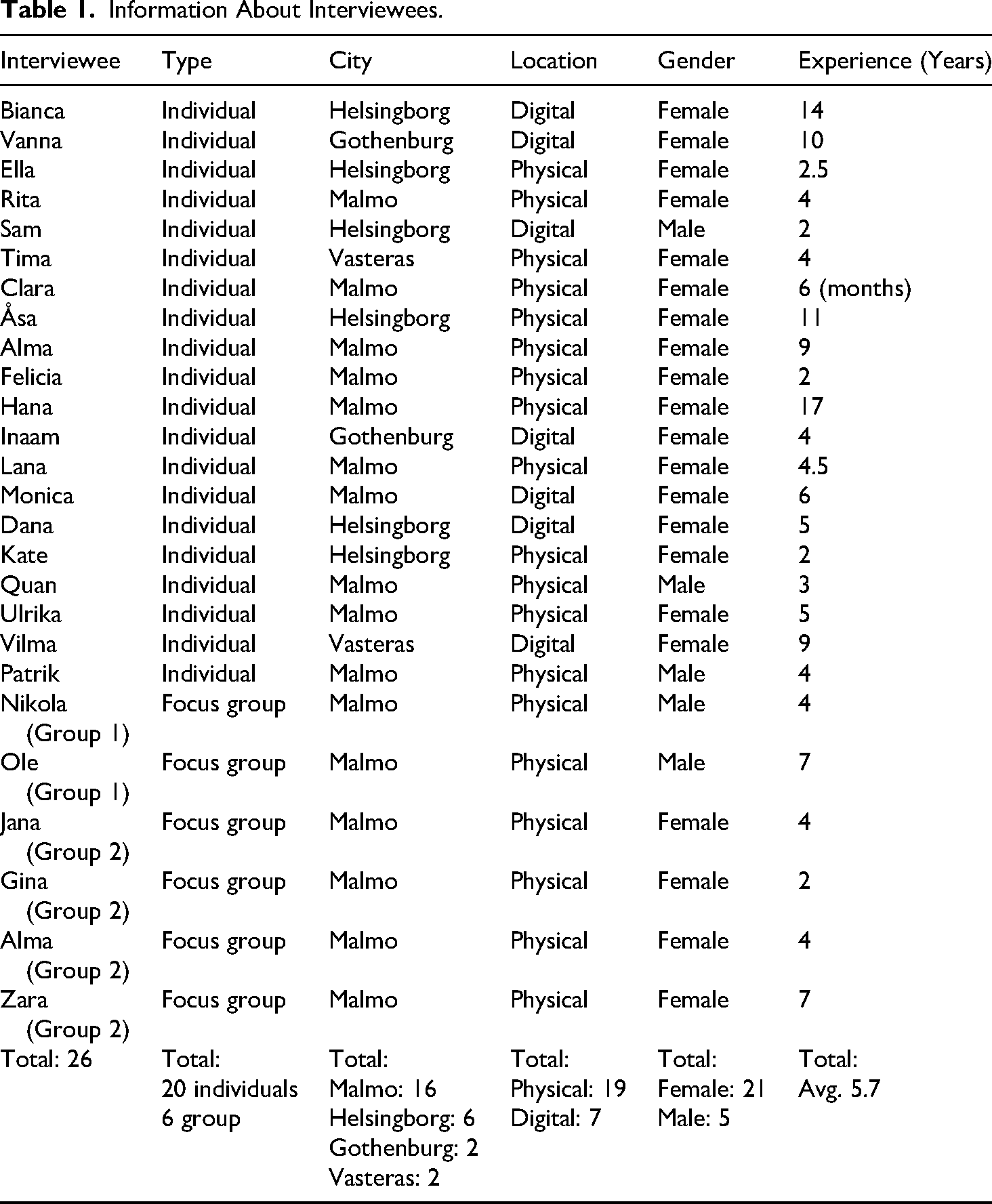
Information About Interviewees.
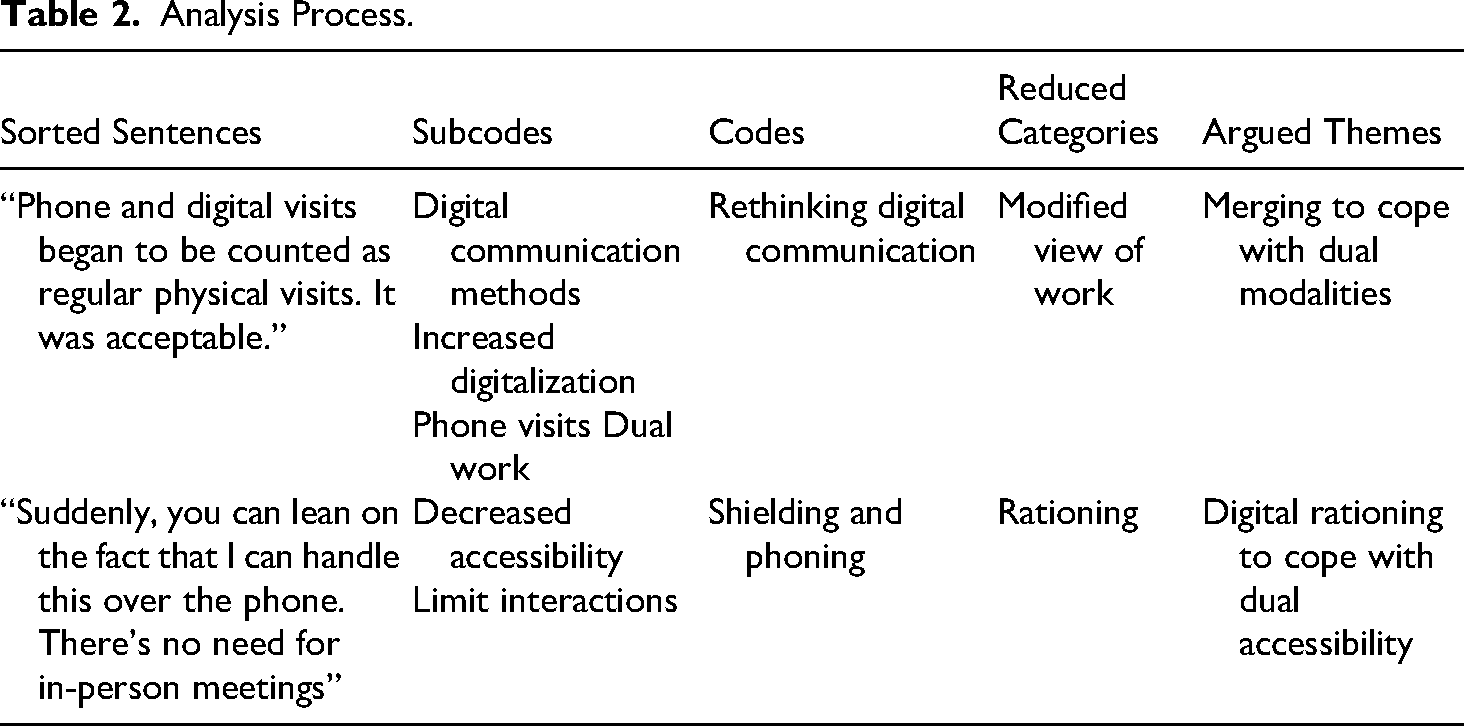
Analysis Process.
Research on Coping
To examine social workers’ coping strategies in managing hybrid social work tensions, we draw on research concerning remote work during the pandemic and in digitalized street-level bureaucracy. While few studies focus on post-COVID hybrid social work, some examined coping strategies during the pandemic. This research shows that medical social workers used strategies such as social support, recreation, purpose-finding, and advocacy to handle distress (Lewinson et al., 2023). Other studies reveal that the pandemic changed care delivery, as social workers often distanced themselves from clients and avoided deeper emotional engagement (Gillen et al., 2022). McFadden et al. (2021) identified positive strategies like active coping and help-seeking, as well as negative ones such as avoidance. Seinsche et al. (2023) described strategies for remote work, including flexible environments, managing interruptions, and strengthening resources (e.g., regular meetings, improved equipment).
Beyond the pandemic, coping strategies have also been examined in relation to digitalization, portrayed as both a constraint and an enabler of professional discretion (Buffat, 2015). On the one hand, discretion can be curtailed through standardized and automated processes, as seen in Sweden through e-service applications, robotic process automation (RPA), and automated decision-making (Germundsson et al., 2024; Nordesjö et al., 2024; Busch & Henriksen, 2018). More recently, artificial intelligence has introduced new complexities, further reshaping discretion (Gillingham et al., 2025). Bovens and Zouridis (2002) argued that there is a shift toward “screen-level bureaucracy,” where decisions are mediated through digital interfaces rather than face-to-face, a trend amplified by hybrid practices (Wright, 2021). They further argued that discretion is indirectly shaped by “system-level bureaucracy,” as IT professionals and technical infrastructures influence service delivery. These developments risk fragmenting relationships and fostering feelings of alienation (Løberg & Egeland, 2023). On the other hand, digital tools can enhance discretion by improving decision-making, providing richer information, and increasing transparency in citizen interactions, reducing power asymmetries (Marienfeldt, 2024).
This dualist approach to understanding digitalization can be complemented by the “continuation thesis,” which stresses bureaucrats’ coping responses to organizational rules and routines to maintain professional discretion (Marienfeldt, 2024). In hybrid work, digital and flexible arrangements may generate tensions that require ongoing adaptation (Putnam et al., 2014). For example, Breit et al. (2021) show how increased digital availability and communication transparency led to the outsourcing of responsibilities to clients and more cautious communication from professionals. Other research highlights how social workers cope with information systems to maintain responsiveness (Devlieghere & Roose, 2018), manage low digital competence, and handle rising administrative workloads (Huang et al., 2025).
All in all, research on coping during the pandemic, as well as on remote work and digitalization, has expanded in the recent decade, offering valuable insights into both digital and physical domains. However, little attention has been given to coping with post-COVID hybrid social work, where social workers transition between physical and digital, office and home, worktime and leisure time in a unified approach, all while balancing conflicting demands. To contribute to this ambition, we turn to the concept of coping.
Coping as an Analytical Tool
We use the concept of coping to understand how social workers in social assistance manage tensions in hybrid social work. Folkman and Lazarus (1980, p. 223) defined coping as “the cognitive and behavioral efforts made to master, tolerate, or reduce external and internal demands and conflicts among them.” Lipsky (2010) applied this concept to explain how street-level bureaucrats handle pressures in their work, assisting vulnerable citizens in complex cases, often extending beyond what laws can fully regulate. The complexity of the work mirrors the conflicting impulses within society that street-level bureaucracies aim to address. Policymakers respond by granting frontline workers significant discretion, “the extent of freedom a worker can exercise in a specific context and the factors that give rise to this freedom” (Lipsky, 2010, p. 2). While organizational, professional, and client goals constrain this space, they also define its scope. Thus, street-level bureaucrats need to cope with competing goals and values from multiple sources (Lipsky, 2010).
In this article, we conceptualize hybrid social work as a transition from street-level bureaucracy toward screen-level bureaucracy, where discretion is exercised at a distance and through digital systems rather than solely face-to-face encounters (Bovens & Zouridis, 2002; Buffat, 2015; Lipsky, 2010). While core street-level tasks remain, hybrid practice is increasingly mediated by screens, and system-level actors, indirectly shaping service delivery. In this context, coping becomes the mechanism through which discretion is performed, allowing social workers to navigate competing demands and shape practice accordingly. Following Tummers et al. (2015, p. 1100) and incorporating Folkman and Lazarus’ (1980), we define coping as “the cognitive and behavioral efforts frontline workers employ when interacting with clients to master, tolerate, or reduce external and internal demands and conflicts.” This implies that hybrid social work requires both cognitive and behavioral adaptions. Our analysis examines coping at these two levels.
First, coping strategies can be modifications at the cognitive level, such as mentally reconstructing the perception of work and client interaction. Lipsky (2010) and Tummers et al. (2015) link these to emotional responses, such as distance and withdrawal from social interaction. In hybrid social work, it may involve reframing phone contact as sufficient for building relationships. Second, coping strategies on a behavioral level include rigidity, bending or breaking, aggression, routinizing, simplifying, and rationing. Based on the material, this study focuses on simplification and rationing. Simplification streamlines work by reinforcing standard procedures and avoiding the human interaction (Lipsky, 2010). Brodkin (2011) describes this as a “speed-over-need” approach. In hybrid social work, choosing digital instead of physical meetings may serve this purpose. Rationing limits services and distances the worker, moving away from the interaction. This includes limiting information, creating queues, or delaying responses (Lipsky, 2010; Tummers et al., 2015). Tummers et al. (2015) group all these into three coping “families” based on whether the social worker moves closer to, away from, or against the client.
In sum, we use coping on a cognitive and behavioral level to understand and characterize the tensions and strategies found in the data. Theoretically, we argue that coping offers a lens to understand how social workers respond to the demands of a novel post-crisis practice, highlighting the broader relevance of the concept in contemporary social work.
Method
This study included interviews with 26 social workers from social assistance, handling long-term cases, including activation planning and financial eligibility. Of these, 20 participated in individual interviews, while the remaining six joined two focus groups, one with two participants and one with four. The combination of individual and focus groups enriched the material with in-depth insights and broader perspectives. Focus groups reinforced shared experiences and highlighted municipal differences in experiencing hybrid practices. All interviews were analyzed as a single dataset, and saturation was reached when the last interviews confirmed existing strategies, with no new categories emerging.
Following ethical approval (Ref. 2022-02214-01), interviews were conducted in 2023 after restrictions were lifted, capturing the early post-pandemic context. Most interviews took place in Malmo and Helsingborg, with a few in Gothenburg and Vasteras due to recruitment constraints. The researcher contacted middle managers, who distributed study information via email to social workers, enabling them to contact the researcher if they wanted to participate. To mitigate influence from organizational loyalty or managerial expectations, voluntary participation and researcher independence were emphasized. Written informed consent was also obtained prior to interviews, which were held at social services, university location, or online, according to participant preference. All interviews were audio-recorded with consent and lasted between 60 and 90 min. Two semi-structured guides, one for individual interviews and one for focus groups, were used to allow flexible probing while focusing on work practices, tensions, and coping strategies in the post-pandemic period. Participant characteristics are presented in Table 1.
All interviews were conducted in Swedish, with quotations translated into English by the first author and verified for semantic accuracy by the second author. Furthermore, credibility was supported through seminars and collegial conversations that informed interpretations. Beside this, participants were recruited from four municipalities, Malmo and Gothenburg (Sweden's second and third largest cities) and Helsingborg and Vasteras (medium-sized municipalities), capturing contextual variation and providing width. Interviews were conducted in person and digitally, reflecting both accessibility and constrained insight into context and subtle nuances. Similarly, participants’ experience ranged from six months to 17 years, offering various perspectives, while the predominantly female sample mirrors the gender distribution in social work. This diversity not only provides breadth but also allows for reflection on how differences may have shaped participants’ accounts of their work and coping strategies. Finally, all participants held a bachelor's in social work, shared professional ethic, and responded to the same interview topics, situating the material and supporting the transferability to comparable contexts.
The interview data were transcribed, pseudonymized, and reviewed. The analysis followed Rennstam and Wästerfors’ (2015) three-step approach, sorting, reducing, and arguing, with NVivo software supporting data organization. To deepen the analysis, concepts from Lipsky (2010) and Tummers et al. (2015) were applied in an abductive phase, enabling the development of categories and themes that capture recurring strategies. In the first step, key sentences revealing prominent strategies were coded and later used as quotations in the analysis. For example, a statement about the value of digital work was coded under “digital communication methods,” with additional subcodes. Subsequently, the codes were grouped into broader categories, such as “modified view of work,” and expanded into the theme “merging to cope with dual modalities.” Examples illustrating this analysis process are presented in Table 2.
Results
The findings are organized around four coping strategies grouped into two levels: cognitive and behavioral. The cognitive strategies merging and distancing, facilitate social workers’ navigation of digital and physical work while regulating their proximity to clients. The behavioral strategies optimization and digital rationing, facilitate the management of competing priorities and dual accessibility.
Merging to Cope with Dual Modalities
The first strategy examines how social workers cognitively merge digital and physical modalities to manage the tension between two modes that cannot be performed simultaneously. After restrictions were lifted, social workers faced the challenge of maintaining client relationships while reconciling competing logics: pre-existing professional imperatives promoting the time-consuming norms of traditional and physical social work versus organizational and hybrid trends of digital work. All social workers address this tension by merging digital and physical practices, transferring certain in-person tasks into digital formats to enable flexible switching and align with organizational goals that strengthen digitalization. Thereby, social workers adjust their mindset to merge through rethinking digital communication while preserving the value of physical interaction, reinforcing hybridization.
First, rethinking digital communication refers to the interviewees’ experience from being limited to physical meetings toward seeing digital communication as an essential part of varied work. Many interviewees perceive this as a “milestone,” prompting a reassessment of traditional norms. This flexibility offers an opportunity to bypass bureaucracy or adjust formal procedures (Tummers et al., 2015). Bianca (individual interview) explains: We found the ability to vary work differently. We can leverage digital tools or stick to traditional physical methods. /…/ Do we need to meet this client, or can I press a button? The quote highlights heightened discretion following the crisis, as all interviewees reassess the role of digital tools. Sam (individual interview) argues, “the lens through which we view social work has expanded beyond physical visits to encompass digital interactions. We can still cultivate meaningful relationships, even with a phone call.” This underscores how digital modalities are becoming integral to professional practice, which is confirmed by existing research (Engwall et al., 2020; Mishna et al., 2021; Nissen, 2020). Patrik (individual interview) illustrates the change in his mindset from “I’ll schedule another visit” to “Alright, let's go ahead digitally.” Hence, the social dimension of work has increasingly incorporated virtual elements, with phone calls, digital home visits, and hybrid meetings becoming central to professional interactions. However, as Vanna (individual interview) describes, this transformation also introduces challenges for clients facing digital exclusion or issues such as addiction, which she refers to as a “disabled sociality.”
Second, interviewees emphasize that rethinking digital communication, which increases the use of digital work, challenges traditional principles emphasizing physical interactions. To uphold these principles, many proactively seek face-to-face meetings, preserving physical interactions with clients. As Ella (individual interview) emphasizes, “we need to actively consider personal contact more than what was necessary three years ago, when personal contact was taken for granted.” This indicates that some social workers question the effectiveness of the hybrid approach: The pandemic brought a new renaissance of social work. It's simple and convenient. It doesn’t require much to work digitally and from home. But what kind of work am I doing for the people? Should I get paid to sit and type on my computer when people are vulnerable and want my help? (Rita, individual interview)
Distancing to Cope with Client Proximity
The second strategy examines how social workers create distance from clients to manage the tension between proximity and distance. This tension intensified as the pandemic accelerated digitalization and remote work, aligning with personal convenience and welfare ideals of efficiency, making closeness costly and digital contact preferable. This reflects a conflict between maintaining face-to-face interaction, which limits digital methods, versus embracing distance to enable hybrid arrangements. Most social workers cope by emotionally and physically distancing themselves, creating space for digital and remote interactions to increase efficiency. Distancing alters social workers’ mindsets by reducing emphasis on physical meetings and deprioritizing client needs.
First, most social workers reduce the emphasis on physical meetings to enable a more hybrid approach. For example, monthly physical visits may be replaced by phone calls or email. As Åsa (individual interview) explained, “I prefer written communication, but sometimes physical meetings are needed, but digital contact make work faster and more efficient”. Similarly, Quan (individual interview) emphasizes that he would rather call several times a month than meet the client in person. Some social workers reflect critically on this strategy, stressing that distance may increase detachment from the relational core of social work, resulting in misunderstandings and conflicts, complicating efforts to rebuild trust and connection. We’re missing the traditional aspects of social work. We’re not meeting people face to face. Instead, we deal with someone who's upset or frustrated. We understand they’re a person, but it's hard to form a real connection when all we have is a name. It feels like talking to a distant shadow, we lose the human touch and assume things about people. (Vanna, individual interview)
Second, increased distance leads social workers to deprioritize client needs, shifting toward institutional efficiency and personal convenience. This shift is both personal and organizational, as productivity and digitalization intersect with social workers’ personal efforts to balance work and private life. As Vanna (individual interview) highlights, “The concept of what's best for my client nearly vanished. The focus is on convenience and efficiency, relying heavily on digital tools. But what about the client's needs?” Even Tima (individual interview) underscores the shift:
I’m at home, in bed, with my laptop, taking calls. It is convenient for me, but not for the client. What's happening to social support? Our goal is for the client to be well, not for me to feel comfortable.
Overall, this theme shows that most social workers manage relational proximity by adopting a distancing strategy, facilitating the transition to remote and digital practices to work more efficiently and conveniently. This is achieved by downplaying physical work and shifting priorities from client welfare to institutional and worker convenience, reflecting governance ideals of efficiency and digitalization. This also aligns with previous research (Gillen et al., 2022; McFadden et al., 2021), highlighting strategies for minimizing direct contact. According to Lipsky (2010), this strategy entails a cognitive reframing of client relationships, characterized by psychological distancing and a shift from embodied to more detached interactions.
Optimizing to Cope with Competing Priorities
The third strategy is behavioral and demonstrates how social workers optimize work to navigate the tension between organizational goals for statistical outcomes and time-consuming relationships with clients. During the pandemic, organizations began to equate digital and physical meetings in performance metrics, while simultaneously increasing pressure to achieve measurable results. This situation created a tension for social workers: should they invest time in resource intensive face-to-face relationships, resulting in fewer measurable outputs, or prioritize faster, digitally mediated practices that produce higher numbers? The dilemma highlights a broader tension between quality and quantity in hybrid work. The data suggest that most social workers cope through an optimization strategy, where they prioritize speedy and simplified interactions to meet performance metrics. Two examples of optimization include boundary-bending and speed-over-need.
First, boundary-bending arises from increased flexibility in time and space (Zamani et al., 2025), fostering greater autonomy and self-governance. Vilma (individual interview) illustrates this, stating, “Freedom and flexibility mean I can plan my day according to my needs. No one dictates to me; rather, I organize, decide, and structure.” For many others, boundary-bending is exemplified by working from home while simultaneously caring for a sick child or being ill. Another example includes working in the evenings or calling clients at 10 p.m. However, excessive bending can blur the lines between personal and professional life, affecting work quality and well-being (Ahmad, 2025; Seinsche et al., 2023).
Second, interviewed social workers prioritize speed-over-need to align with organizational objectives (Brodkin, 2011). Hybridization facilitates faster communication through technology, which has become accepted as equivalent to physical interactions, contributing to increased performance. Efficiency may involve selecting fewer complex cases, favoring time-saving meeting formats, and prioritizing clients based on their digital proficiency, an approach Lipsky (2010) refers to as “creaming.” For instance, Inaam (individual interview) opts for SMS rather than calls, reducing time and relational effort while streamlining workload. However, some social workers recognize that prioritizing speed and quantitative metrics may compromise the quality, reducing relational depth and nuanced assessments. It's about efficiency. With digital meetings, you can do more, and you can work even when you’re sick. So, we end up with more of what's perceived as quality, although it doesn’t necessarily have to be quality. (Ole, focus group)
Consequently, most social workers optimize their work to align with organizational objectives for measurable outputs, while personal convenience may emerge as a secondary effect. They achieve this by bending boundaries (Tummers et al., 2015) and prioritizing “speed-over-need” (Brodkin, 2011). Equal weighting of digital and physical meetings encourages social workers to favor faster interactions and extend work into home-based settings, balancing organizational demands with personal convenience. Lipsky (2010) describes this as the simplification of work, which we interpret as optimization, where social workers streamline tasks through segmented work, combining work with childcare or faster communication to maximize efficiency and performance metrics. This reflects governance ideals that privilege measurable outputs, standardized procedures, and quantifiable results, while hybrid arrangements expand discretion for achieving these targets.
Digital Rationing to Cope with Dual Accessibility
Another behavioral strategy is digital rationing, used to manage the tension created by dual accessibility (physical and digital) in client interactions. The post-COVID expansion of digital communication and remote work has extended social workers’ availability into virtual environments, decoupled from time and place. Organizational mechanisms previously discussed, such as digitalization policies, efficiency ideals, and performance metrics, further amplify this tension, heightening stress and eroding professional boundaries. Consequently, social workers adopt digital rationing as a form of digital coping (Breit et al., 2021), deliberately limiting and regulating availability through digital tools (Lipsky, 2010) to manage increased accessibility and balance organizational demands. Practices such as shielding and “telephone sociality” exemplify this approach.
First, social workers describe how digital channels can shield them from physical contact and emotionally taxing interactions with clients, as illustrated by Ella (individual interview): You’re spared the slightly awkward task of delivering a face-to-face rejection. Suddenly, you can handle it over the phone. There's no need for in-person meetings. Even Nikola (focus group) highlights how digital contact reduce physical accessibility to manage workload by “avoiding handling extra tasks, such as requests or hearing about someone's entire life when meeting them in-person.” A more extreme form involves relying on written communication, as Åsa (individual interview) emphasize: “On the phone, you have five minutes of small talk and another five minutes for an intro. Written communication reign supreme.” Even Ylva and Alma (individual interviews) avoid giving clients their mobile numbers, keep their phones turned off, and check only voicemails to limit digital availability, prioritizing controlled and asynchronous communication. An even more stringent approach is communicating decisions through the website while disabling all communication. Ella (individual interview) underscores that hiding behind digital tools is embarrassingly easy. Thus, digital rationing limits the workload by pushing away clients, a practice identified by Seinsche et al. (2023) as regulating accessibility and interruptions.
When clients say:
“I want a meeting.”
“But then we’ll call.”
“But I still want a [face-to-face] meeting.”
“But why? We’re already talking on the phone.”
“But I still want a meeting.”
I try to push it away if possible. (Sam, individual interview)
Second, the increased use of digital communication has reshaped the function of phone calls, transforming them into what we call “telephone sociality.” The frequent use of terms such as “phone visit”, “phone follow-up”, and “phoning” in the material underscores a post-COVID reconfiguration, where phone calls have become a central mode of interaction. Tima (individual interview) emphasizes the change from “meeting room” to “conversation room,” noting how virtual spaces have supplanted traditional meeting rooms, with digital devices replacing direct human interaction. Furthermore, the data show that the content of a digital meeting is adapted as communication loses human dimensions, such as spontaneous pre- and post-talk, follow-up questions, laughter, and physical touch. Conversations conform to a more structured format, resembling scripted dialogues. As Sam (individual interview) notes: “You don’t have the natural flow, or the humorous comments. The humor disappears; it requires timing and the ability to read the room, which you can’t do the same way now”.
Consequently, many social workers report that social interaction is gradually eroded, and opportunities for casual drop-ins or asking “silly questions” are decreasing. As a result, interactions occur across different realms, which limits access to subtle relational cues (see also Løberg & Egeland, 2023). While some view this shift negatively, others find it convenient due to reduced workload. Some interviewees also highlight risks to preventive work: detecting signs of domestic violence may be harder, and individuals with special needs are more likely to be overlooked in predominantly digital environments. Accordingly, some perceive social work conducted by telephone as diminished social work. I denied application after application. I spoke with the client and tried to guide him. Based on my perception from the phone, the client seemed perfectly capable and employable. However, a few months later, when the person came in, I noticed he had a disability and should have received financial support. I felt terrible. The person had Down syndrome. (Rita, individual interview)
Discussion
This article has explored the coping strategies social workers in social assistance use to manage the tensions arising from client interactions in hybrid social work post-COVID. The identified coping strategies are summarized in Table 3.
Summary of Results.
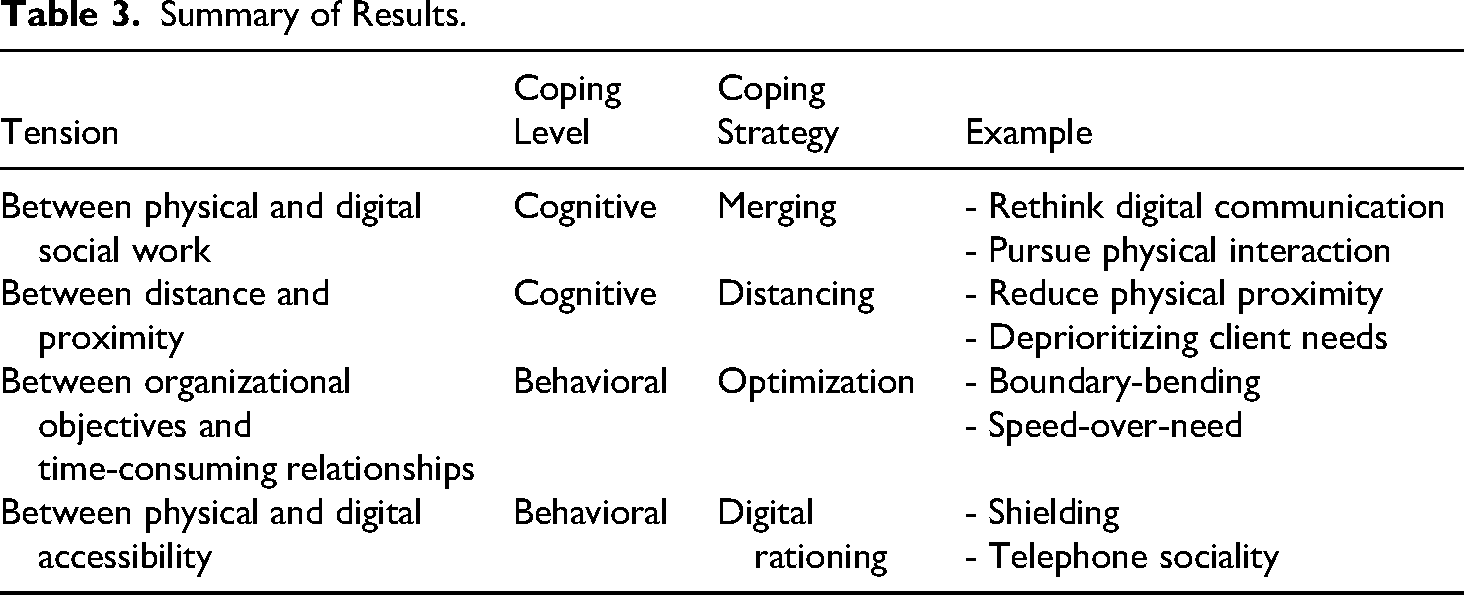
Identified strategies correspond to hybrid social work as conceptualized by Zamani et al. (2025), Pink et al. (2022), and Jeyasingham and Devlin (2024). The first strategy, merging, responds to the shift toward a digital–material logic by integrating digital and physical modalities (Pink et al., 2022). Distancing, the second strategy, aligns with Pink et al.'s (2022) and Jeyasingham and Devlin's (2024) argument that hybrid practices reshape social workers’ perception of clients, making digital engagement more prominent and relational proximity less central. Optimization, the third strategy, reflects the shift toward efficiency, speed, and flexible boundaries in hybrid work, which can be linked to spatial-temporal reconfigurations described by Zamani et al. (2025), yet it warrants further research. Lastly, digital rationing corresponds to the transition toward digitally mediated communication emphasized by Pink et al. (2022), Jeyasingham and Devlin (2024), and Zamani et al. (2025).
The results indicate that many of the interviewed social workers feel ambivalent toward hybrid strategies. While they acknowledge the flexibility and benefits, they also recognize that these strategies imply avoidance of direct client interaction by centering technology, distancing practices, simplifying processes, and limiting availability. This avoidance could indicate that social workers in social assistance are shifting away from clients, a finding partly consistent with Tummers et al. (2015) and other pandemic-related studies (Gillen et al., 2022; McFadden et al., 2021). Although they are also associated with moving toward clients, the stronger trend of client avoidance, as shown in the material, suggests they are becoming more “unsocial” than before. This can lead to a fragmented relationship between social workers and clients, characterized by reduced physical proximity and ability to understand clients’ needs holistically (Breit et al., 2021; Løberg & Egeland, 2023; Marienfeldt, 2024). However, hybrid practices do not uniformly diminish relational accessibility. For some clients, digital tools enhance access and flexibility, challenging a one-sided perception (Mishna et al., 2021; Romakkaniemi et al., 2024).
Furthermore, this study highlights the role of digitalization, which is often credited in research with enabling engagement with specific groups and fostering relationships. However, our findings reveal a shift toward screen-based bureaucracy and distanced tool use, reflecting a broader trend of reduced client interaction due to technology, observed both before (Tummers et al., 2015) and during the pandemic (Peláez & Kirwan, 2023; Pentini & Lorenz, 2020; Romakkaniemi et al., 2024). Similarly, the results show how merging, distancing, optimizing, and digital rationing increase flexibility and efficiency but simultaneously reduce relational proximity to clients. These strategies can function as survival mechanisms within hybrid practice, enabling professionals to adapt to a blended approach and supporting the continuation thesis by moving beyond viewing digitalization as either limiting or enabling (Marienfeldt, 2024). In doing so, the findings underscore social workers’ agentic interplay, showing how they actively negotiate hybrid boundaries rather than passively adapting to organizational constraints (Chamakiotis et al., 2024). Similar trends may also be observed across Nordic welfare states, where digitalization, standardization, and managerialism continue to shape practice (Breit et al., 2021; Nordesjö, Ulmestig, et al., 2022; Romakkaniemi et al., 2024).
Beyond digitalization, the identified coping strategies are shaped by personal, organizational, and societal dynamics. At the personal level, these strategies help social workers limit interactions, integrate private life, and manage work pressure while still meeting organizational demands. At the organizational level, coping aligns with policies that promote technology, efficiency, and measurable outputs over relational depth (Ahmad, 2025; Nordesjö, Ulmestig, et al., 2022). At the societal level, these practices mirror broader governance trends, including accelerating digitalization and artificial intelligence, alongside responsibilization, standardization, and activation-oriented welfare (Buffat, 2015; Gillingham et al., 2025; Nordesjö et al., 2024). Consequently, the pandemic-driven shift to hybrid work, reinforced by organizational pressures, personal convenience, and societal trends, rapidly normalized digital and efficiency-oriented practices, prompting social workers to adopt ‘walk-away’ strategies to deliver ‘more welfare for less.’ These trends can devalue physical work, create blind spots that obscure complex conditions, and blur the boundaries between private and professional life. They also shift practice away from client-centered care, challenging core values in social work and the citizen–state relationship, including trust, accessibility, proximity, empathy, and humane qualities (Gnecco et al., 2024; Marienfeldt, 2024; Pentini & Lorenz, 2020).
To address these challenges, several measures are needed. First, organizational policies should define when physical meetings are mandatory, for example, at first contact or in cases of suspected domestic violence, cognitive impairment, or language barriers, since reliance on phone or digital channels can limit insight into clients’ needs. Second, clear guidance is needed to balance digital and face-to-face work as hybridization and digitalization accelerate, supported by ethical frameworks for “channel triage” to ensure efficiency does not override relational care. Finally, training initiatives should prepare social workers to integrate technology and remote work in ways that strengthen relational practice, while managing blurred boundaries and countering tendencies toward distance, optimization or digital shielding that risk undermining professional values. These measures aim to safeguard legal certainty, equality of access, and professional accountability in hybrid contexts (Nissen, 2020; Pink et al., 2022; Wright, 2021).
Limitations
A limitation is the study's scope, restricted to social assistance in Sweden. Future research could expand to other areas of social work and welfare state settings, such as administrative or treatment-focused roles, to better understand differences in coping strategies. It could also explore how participant diversity affects the management of hybrid practices. Another limitation is the timing of data collection, during the first years after the pandemic, which may reflect the initial phase of adapting to a global crisis. Social work practices have likely changed since then, with some countries returning to physical work and others maintaining hybrid arrangements. Although recent research suggests that hybrid social work is becoming more common, further studies should investigate its long-term effects and future development. Importantly, client perspectives should be included to understand how hybrid practices impact vulnerable clients.
Conclusion
This article has examined four coping strategies—merging, distancing, optimizing, and digital rationing—that social workers in social assistance employ to manage tensions in post-COVID hybrid practice. The findings indicate a trend toward client-avoidant strategies, rendering hybrid social work “unsocial” in some respects. This shift raises critical questions about the future of social work in certain branches, traditionally grounded in physical interaction, which now show signs of moving away from it. Moreover, the results reveal how hybridization embeds governance ideals into practice, shifting discretion from embodied relational work toward metric-driven and screen-mediated processes. Finally, these findings contribute to emerging research on hybridization, digital coping, and the future of relational social work.
Footnotes
Acknowledgements
The authors thank the social workers who participated, as well as Paula Mulinari for valuable comments.

Ethical Considerations
Ethical approval was given by the Swedish Ethical Review Authority, reference number 2022-02214-01.
Consent to Participate
All participants provided written informed consent prior to the study.
Funding
The authors received no financial support for the research, authorship, and publication of this article.
Declaration of Conflicting Interests
The authors declared no potential conflicts of interest.