



Abstract
Summary
Social workers are increasingly using digital technology and online platforms in service delivery, with many services having moved online in 2020 following the emergence of the COVID-19 pandemic. A systematic literature review was conducted to synthesize research on the benefits and uncertainties of technology-mediated social work practice. Relevant keywords were searched in the following databases, Scopus, EbscoHost, SocINDEX, and Google Scholar. A total of 28 articles were included in this review, and their findings were synthesized thematically.
Findings
The review revealed several benefits of using digital tools and online platforms, including providing services to the larger population and making social work more available and accessible. However, while technology was widely employed in social work practice, there were some uncertainties about the impacts of technology on practice, maintaining professional boundaries, and concerns over privacy and confidentiality.
Implication
There is a need for further support for social workers to access flexible, efficient, and creative tools to maintain the quality of service delivery. The interdisciplinary collaboration between social work bodies and organizations with technology developers will improve technology-mediated social work practice to be aligned with professional principles, ethics, and values.
The unprecedented changes in the 21st century have made contemporary social work practice more uncertain than before (Afrouz, 2021). The advent of digital technology, particularly following the emergence of the COVID-19 pandemic, has transformed how social workers engage with service users. Such transformation has sparked debate on how professional values and ethics could be maintained when providing social work services through technology.
The history of using digital technology in social work has been described as paradoxical (Harris, 2021). For instance, there is an argument that social work has been slow or resistant in accepting technology in practice compared to other professions (see Bullock & Colvin, 2015; Dodsworth et al., 2013; López Peláez & Marcuello-Servós, 2018; Perron et al., 2010). However, Bullock and Colvin (2015) described social workers’ reactions as rightfully “cautious” in adopting digital technology. In addition, some scholars contended that shifting from face-to-face to virtual or online service delivery might benefit organizations’ desires for cost-cutting rather than placing clients’ needs at the forefront of service delivery (Harris, 2021; Murphy & Pardeck, 1992).
Given the uncertainties of providing social work services through digital means (Reamer, 2013), it is not surprising that social workers have demanded more evidence outlining the impacts of digital tools to ensure practices are ethical and inclusive. Nevertheless, during the COVID-19 pandemic, many social work services had to move to “remote” or online and technology-mediated service delivery as this became the only way to engage with service users. Now that digital technology has become a critical part of service delivery, evidence-based research can help identify the uncertainties and effectiveness of service delivery through technology within social work principles and values.
Historically, the phone-based helpline was established as a useful tool to provide crisis intervention and anonymous support without needing to colocate workers and service users physically. However, technology has moved beyond crisis intervention and has fundamentally changed communication, engagement, and client relationships. Now more than ever, technology increasingly meditates social work practices in many different contexts, including clinical social work, therapeutic practice, mental health treatment, and domestic violence intervention (Cortis et al., 2021; Mattison, 2012). Notably, technologies are not simply “add-ons” to service delivery; rather, they have transformed service provision, particularly if there is a loss of physical connection and proximity between social workers and their clients (Byrne & Kirwan, 2019). Therefore, using technology in service delivery and, more specifically, for client engagement requires significant adoption and innovation. To this end, this article explores the effectiveness, benefits, and uncertainties of delivering services through technology and provides relevant recommendations.
Technology-mediated social work practice
Digital tools and online applications have provided new insights into many professional settings. Those tools and applications can help professionals transfer information, manage data, and facilitate communication electronically and/or online (Zuppo, 2012). As such, digital applications created a new era in social work (López Peláez et al., 2018), which shifted practice and transformed service delivery (Berzin et al., 2015; López Peláez et al., 2018). Moreover, with the COVID-19 pandemic, social workers have found themselves in a fast-paced and continuous adaptation process involving new technological platforms and tools.
Terminologies used to explore and describe digital technologies in social work service delivery are still contested, including Information and Communication Technologies (ICT) in social work (Chan & Holosko, 2016; Mishna et al., 2017), e-social work (López Peláez & Marcuello-Servós, 2018), technology-mediated service delivery (Cortis et al., 2021), and online social work. Such terms are also used interchangeably in the literature. For this article, we use “technology-mediated social work” to reflect the purpose of this article on how social workers utilize digital tools and platforms as “mediators” of practice and service delivery.
The introduction of digital technology to mediate practice brings a new horizon for innovation and practice improvement (Harris & Birnbaum, 2015; López Peláez et al., 2018). People widely use the internet, with 5.1 billion people using mobile phones worldwide, among which 3.6 billion are internet users (GSMA, 2019); hence, there are more opportunities to access services such as social work via digital means. For example, many people in different geographical settings can access social work services via online platforms (Barsky, 2017; Dombo et al., 2014; Giffords, 2009). Also, digital technology and online platforms have shifted how service users interact with social workers and access social work services (Bullock & Colvin, 2015). Indeed, Mackrill and Ebsen (2018) argued that technology improved the accessibility of social work services and elevated the “seldom-heard” voices of hard-to-reach population groups.
However, using digital technology and online platforms has not been without uncertainty. The nature of digital technology is constantly changing (Turner, 2016) and, as a result, contemporary working environments have undergone profound transformations (Chan & Holosko, 2017). Technology-mediated social work practice is somewhat new, and its influence, risks, and associated ethical dilemmas are still emerging (Reamer, 2013). Also, there is some uncertainty about how to design digital tools that ensure best practices via online platforms (e.g., Zoom, Microsoft Teams, and WhatsApp; Wilkerson et al., 2021). Given the diversity of practice and services in social work, debates on how digital technology can or should mediate social work practice are multifaceted, and reaching a consensus on best practice is therefore difficult. Also, some of the social work's ethical requirements might be difficult to fulfill through technology-mediated practices (Dombo et al., 2014; Reamer, 2015). For example, Dombo et al. (2014) stated that social workers and service users are embracing digital technology while often facing unclear relationships and boundaries in the online environment. Indeed, the lack of a physical presence in relationships between social workers and service users has made maintaining professional boundaries less clear (Harris & Birnbaum, 2015; Reamer, 2015). Despite these concerns, Barsky (2019) argued that digital technology and online communication pose no greater risk than physically colocated “in-person” services. Yet, regarding uncertainties about practice requirements, there is a demand to improve practice guidelines and standards to deliver social work services through online platforms (Barsky, 2017; Reamer, 2015).
There is a call for social workers to stay current with the benefits and potential of advances in using technology for direct services and be aware of the uncertainties of employing technology in engagement with clients and their work more broadly. A systematic review of the research on the benefits and uncertainties of technology-mediated social work practice may help researchers and social workers stay abreast of such benefits and identify relevant uncertainties. It is anticipated that identified benefits and challenges of such a review might inform the development of best practice recommendations and a future research agenda for social work practitioners, educators, and researchers.
Aim and review questions
This systematic literature review aims to identify and synthesize the research reporting on technology-mediated social work practice. Based on this aim, two review questions were posed: (a) what are the benefits of technology-mediated social work practice? And (b) what are the uncertainties surrounding technology-mediated social work practice?
Methods
This systematic literature review was conducted in four phases: (a) systematic literature search and selection, (b) methodological quality assessment, (c) data extraction, and (d) data synthesis. These phases were undertaken according to the recommendations by Crisp (2015) and reported against the Preferred Reporting Items for Systematic Reviews and Meta-Analyses (PRISMA) 2020 statement (Page et al., 2021). Phases 1 and 2 were facilitated using the online software, Covidence, while Phases 3 and 4 were facilitated using the qualitative research software NVIVO (Version 20; see www.qsrinternational.com).
Phase 1: Systematic literature search and selection
Electronic search strategy
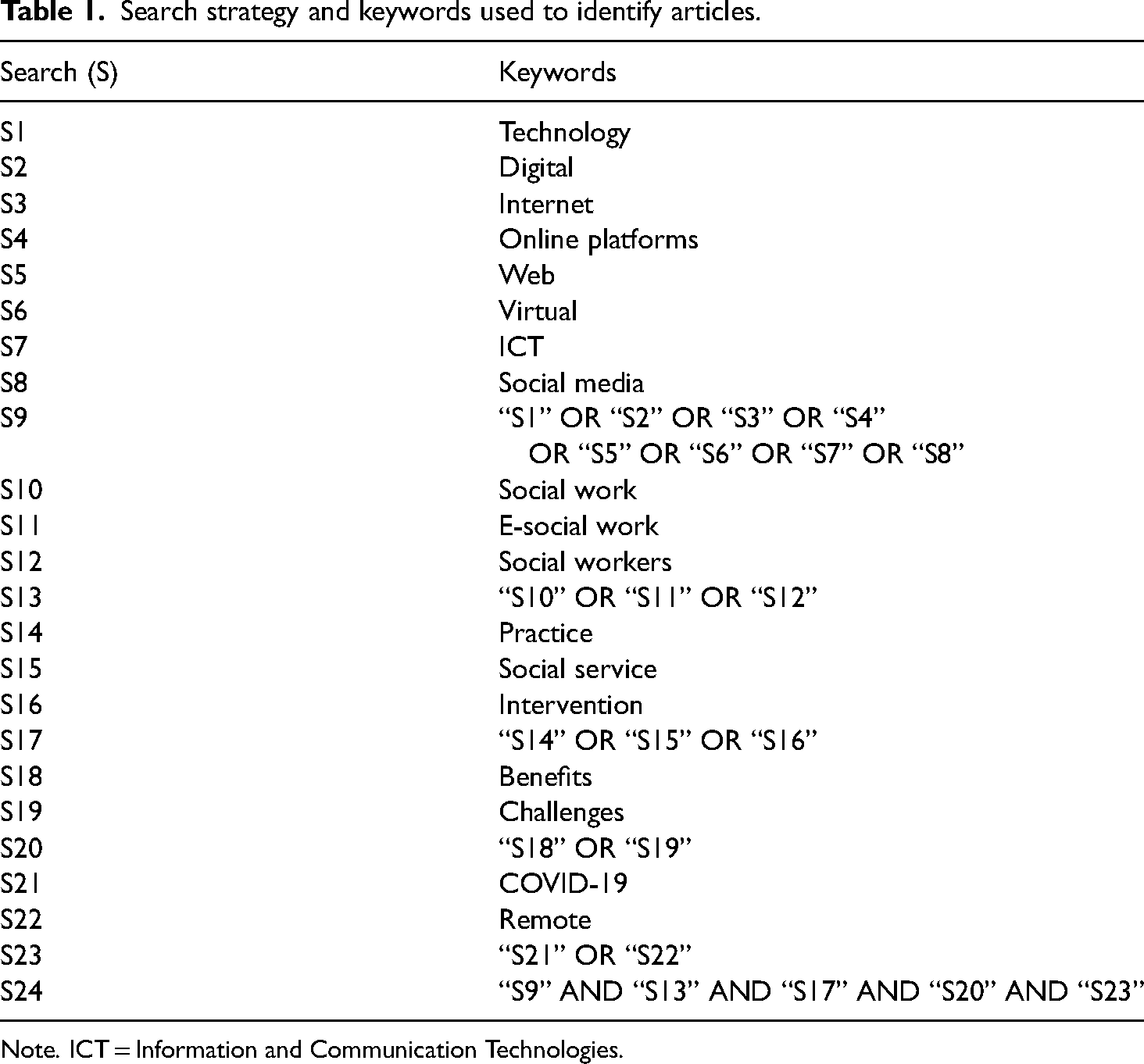
Potential studies were located through the following electronic databases and websites: Scopus, EbscoHost, SocINDEX, Social Work Abstracts, Academic Research Complete, Springer Journals Online, Taylor and Francis Online, and Google Scholar. In addition, the reference lists of eligible articles were reviewed for possible additional articles. The search strategy involved the following keywords: social work, technology-mediated social work, information and communication technology, social media, and online social work practice (see Table 1). These keywords were nuanced according to each database's requirements. The initial search was conducted in February 2020, just as the COVID-19 pandemic emerged, and this article began to be written. The search was conducted a second time in August 2021 to capture any new research specific to the COVID-19 pandemic.
Search strategy and keywords used to identify articles.
Note. ICT = Information and Communication Technologies.
Inclusion and exclusion criteria
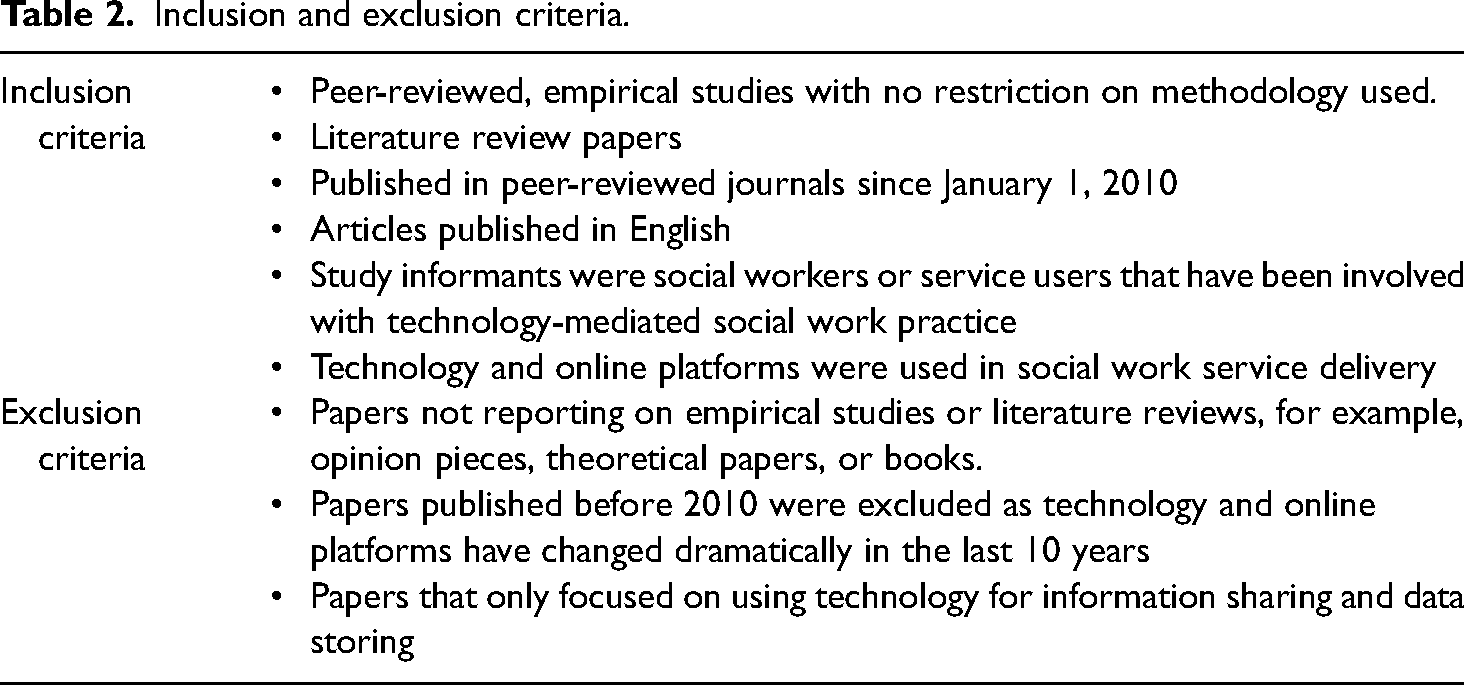
This review focused on articles that reported technology-mediated social work practice in engagement with clients and providing social work practice. Articles were included if they reported various technological tools as practicing mediums to engage with service users and professional relationships and deliver social work services to individuals, groups, and communities. Those articles provided evidence on how digital technology meditated service delivery in clinical social work, crisis intervention, therapeutic practice, and family and domestic violence intervention. All research methodologies and designs were included so long as they reported on the benefits and uncertainties of technology-mediated social work practice. Peer-reviewed articles published in English were reviewed. Articles published since January 2010 were included due to the dramatic changes in technological advances since this time. Previously published literature review articles on the topic were also included. Studies that only explored the role of technology as a part of broader organizational engagement and bureaucratic processes, the role of digital tools for information management and governance, and online social work education were excluded from this review. Commentaries, abstracts, and grey literature were also excluded. Further details on the inclusion and exclusion criteria are outlined in Table 2.
Inclusion and exclusion criteria.
Literature selection
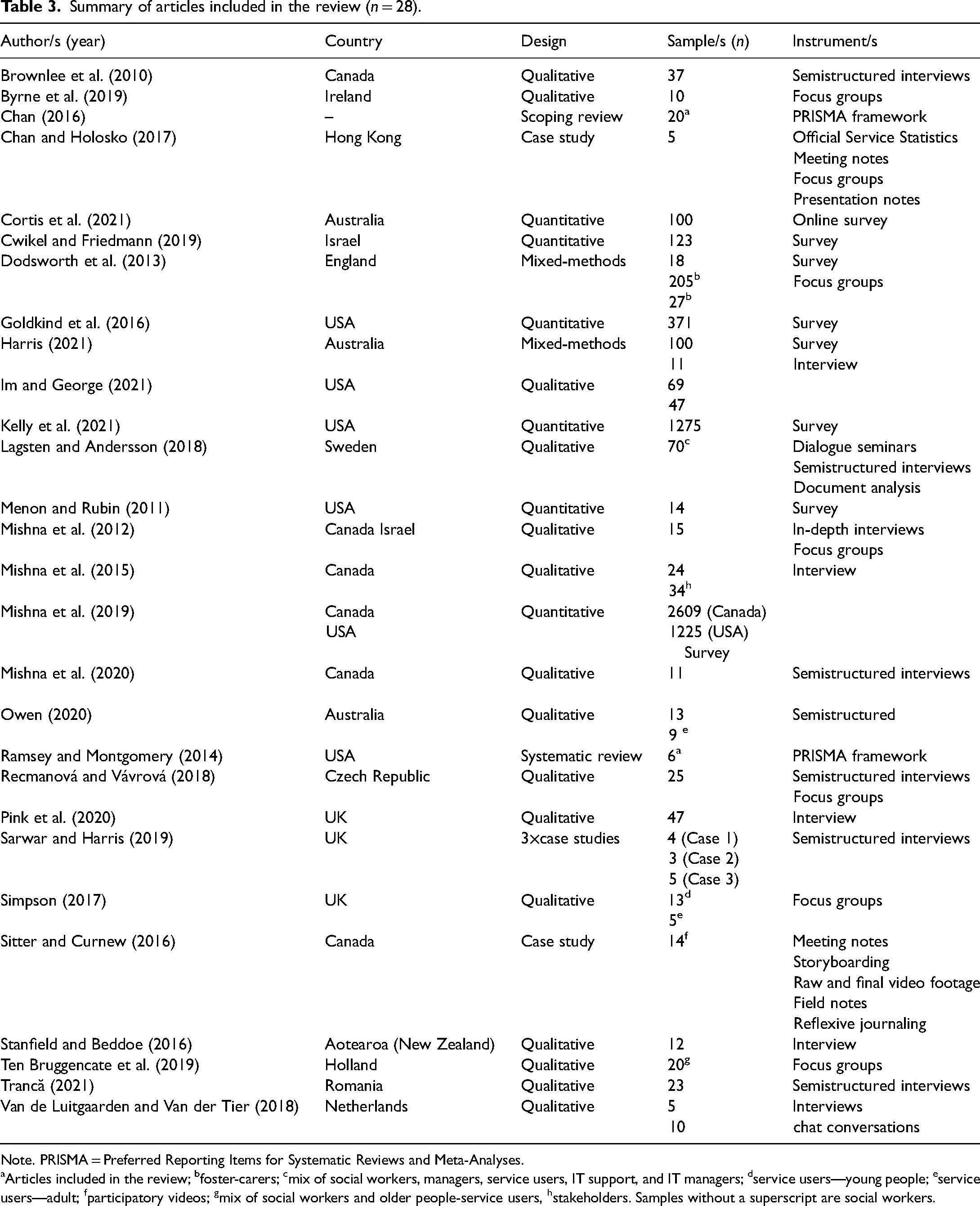
After duplicates were removed, two reviewers (the authors) independently screened the titles and abstracts of the retrieved literature for their relevance. Those potentially relevant articles were retrieved in full text and further reviewed for their inclusion or exclusion in this review. Any disagreements were resolved through consensus; for example, in deciding whether to include or exclude one article (Mishna et al., 2015), there was a disagreement between the reviewers based on the study sample (i.e., social work students). In arriving at a consensus decision, the reviewers openly presented their respective opinion for or against inclusion and reflexively considered feedback from each other. The mutually agreed outcome was to include the article because social work students provided counseling services. The review process (Figure 1) resulted in 28 articles being included in the review (Table 3).
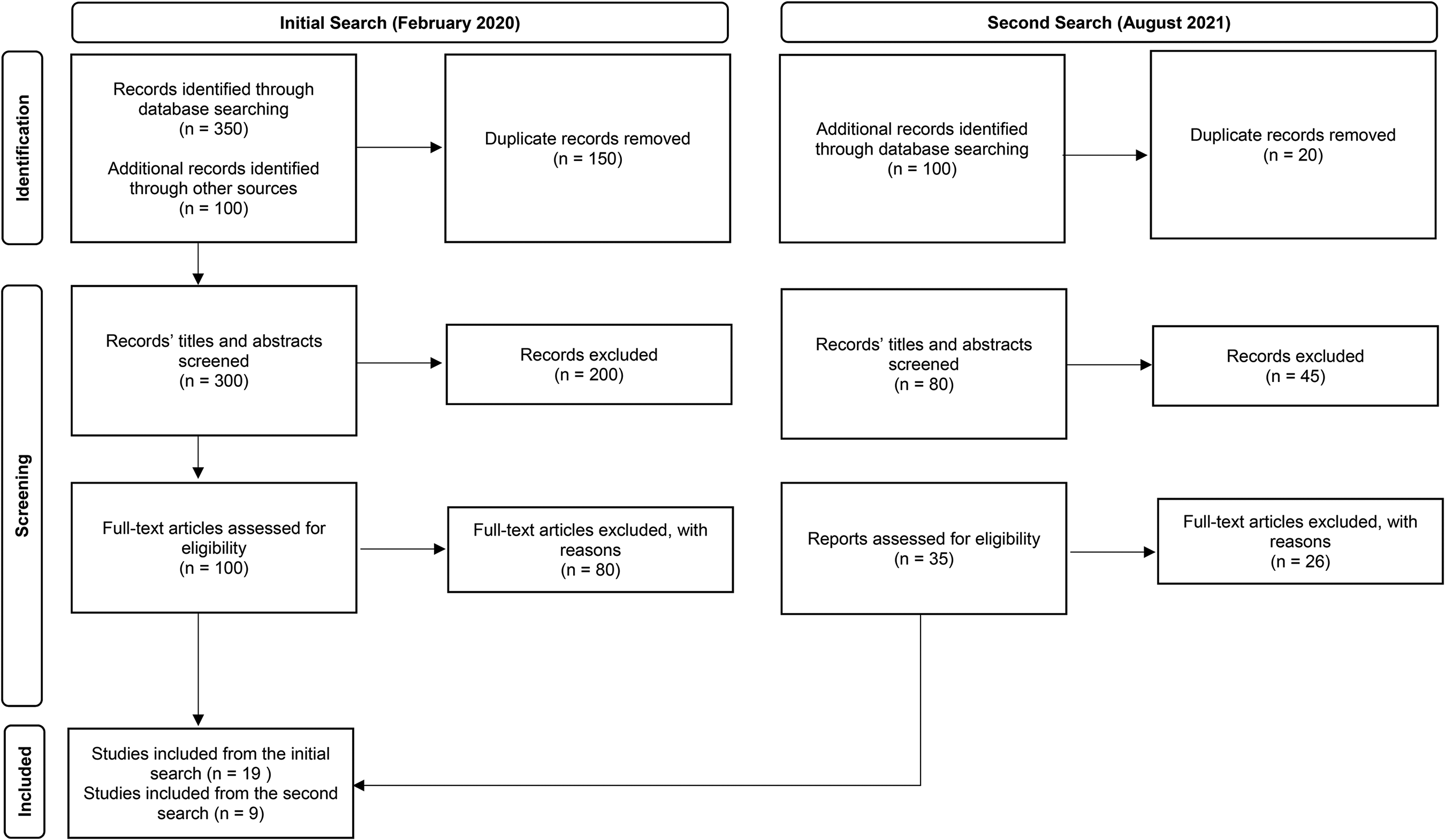
Process of literature selection according to the Preferred Reporting Items for Systematic Reviews and Meta-Analyses (PRISMA).
Summary of articles included in the review (n = 28).
Note. PRISMA = Preferred Reporting Items for Systematic Reviews and Meta-Analyses.
Articles included in the review; bfoster-carers; cmix of social workers, managers, service users, IT support, and IT managers; dservice users—young people; eservice users—adult; fparticipatory videos; gmix of social workers and older people-service users, hstakeholders. Samples without a superscript are social workers.
Phase 2: Methodological quality assessment
The two reviewers independently assessed the methodological quality of each included article according to Dixon-Woods et al. (2006) recommendations for assessing the quality of a methodologically diverse body of literature. The literature was not excluded based on the quality assessment but rather informed whether methodological quality might have impacted the study's findings.
Phase 3: Data extraction
All included articles were uploaded to NVIVO to assist the authors with data extraction. Summary data were extracted from each article: author/s, year of publication, country, research design, sample/s (n), and data collection instruments used. In addition, key findings from each article were extracted in the form of direct participant quotes (first-order data) and study author/s descriptions and interpretations (second-order data). The first author (RA) extracted these data, which were checked for accuracy and completeness by the second author (JL).
Phase 4: Data synthesis
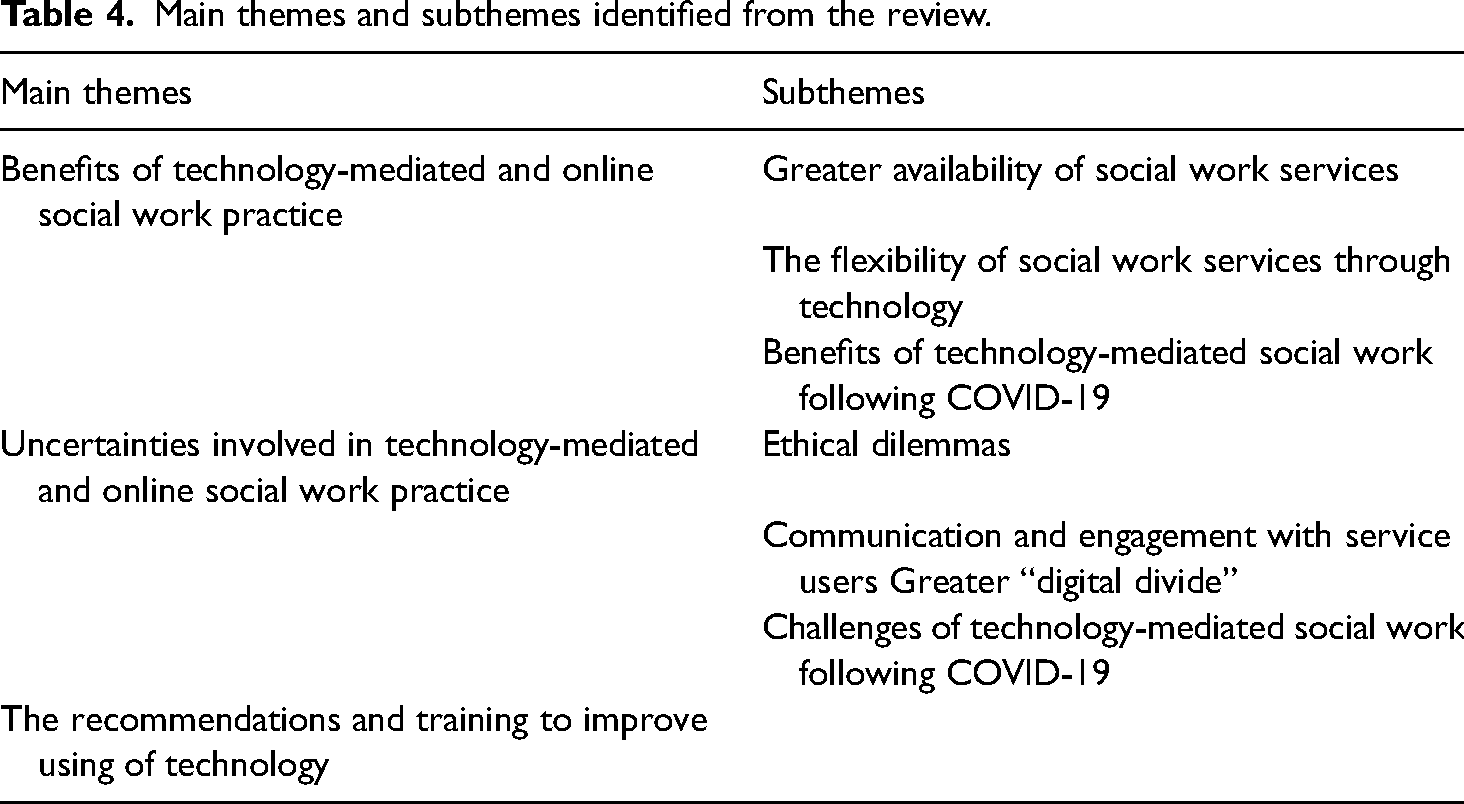
The extracted first- and second-order data from the included articles were pooled using NVIVO, and a synthesis subsequently occurred (Kiteley & Stogdon, 2013; Pope et al., 2007) to determine the key themes relating to the benefits and challenges of technology-mediated social work practice. This involved an inductive thematic synthesis process (Thomas & Harden, 2008; Zimmer, 2006), which is an adaptation of Braun and Clarke's (2006) thematic analysis to the context of research synthesis with six recommended stages: familiarization of data, coding, generating initial themes, developing and reviewing the themes, refining, defining, and renaming themes, and finally writing up. The first author (RA) read each article's methodology and findings line-by-line to explore words and key points and code them. Similar codes were then grouped into a smaller set of larger themes in NVIVO that the second author (JL) checked for accuracy and completeness. In case of discrepancies, the two reviewers referred to the original publication for clarification and resolution through consensus. A summary of key themes and subthemes is presented in Table 4.
Main themes and subthemes identified from the review.
Results
All 28 articles included in this review focused on social work service delivery through technological tools and platforms. Of the 26 empirical studies, 19 focused on social workers, four focused on both social workers and service users, and only three reported service users’ views and experiences of using technology-facilitated social work. Included articles were conducted in diverse countries; however, the article collection is predominately from the Global North. Five articles reported studies conducted in the USA (17.8%), four from the UK (14.2%), and another four from Canada (14.2%). In addition, 18 articles (64.2%) used qualitative methodology, six articles (21.4%) used quantitative methodologies, two articles (7.1%) reported mixed methods, and another two (7.1%) reported literature reviews. The following sections present identified themes.
Benefits of technology-mediated social work practice
A synthesis of the included articles’ key findings showed a range of benefits in using technology in social work practice through digital tools and online platforms.
Greater availability of social work services
Technology-mediated social work services were reported as more available and accessible to a wider population (Byrne et al., 2019; Chan, 2016; Harris, 2021; Menon & Rubin, 2011; Mishna et al., 2015; Owen, 2020; Ramsey & Montgomery, 2014; Recmanová & Vávrová, 2018). In particular, the provision of services through online platforms enhanced the accessibility of social work to diverse population groups, particularly individuals with special needs or disabilities (Chan, 2016; Cwikel & Friedmann, 2019; Recmanová & Vávrová, 2018; Ten Bruggencate et al., 2019). In addition, the technology offered greater assistance in accessing hard-to-reach populations (Byrne et al., 2019). Thus, online engagement has become a complement to physically colocated, face-to-face service delivery (Mishna et al., 2012).
Social work services were available through online platforms that crossed geographical locations, as both Harris (2021) and Chan (2016) found that reaching remote and rural areas was more viable through online service delivery. Participants (social workers) in Menon and Rubin (2011) also reported that digital tools allowed people to access counseling services in their preferred language as they could engage with services beyond their geographical location. In addition, the online platform has become a unique tool for engaging young people who prefer such engagement (Harris, 2021).
The flexibility of social work services through technology
Social workers could also record their meetings and interviews with clients and reflect on them later, as Harris (2021) and Mishna et al. (2015) reported. Furthermore, articles reported technology assisting practitioners in accessing online databases, connecting to other professionals and sharing information, and undertaking social work practice via digital means (Brownlee et al., 2010; Chan & Holosko, 2017; Sitter & Curnew, 2016). Technology has also provided different ways of communication with clients, including written communication (Mishna et al., 2015), and the online or virtual visit was an efficient alternative to a home visit (Owen, 2020).
Technology-mediated communication also transformed relationships between service users and social workers, being collaborative and dialogical rather than hierarchical (Chan, 2016; Chan & Holosko, 2017). In addition, social workers who participated in Dodsworth et al. (2013) study reported that using technology appeared to reduce the professional-service user power imbalance and the social workers’ authority, thereby developing a sense of ownership among clients.
Participants (social workers) in Mishna et al. (2021) study described using technological tools as client-driven and flexible. Likewise, Pink et al. (2020) found that social workers felt comfortable engaging with children through a virtual connection. In Mishna et al.'s (2015) study, clients were more likely to feel comfortable being asked personal, intimate, and uncomfortable questions online. The practitioners who participated in Menon and Rubin’s (2011) study also stated that anonymity via online engagement reduced the social stigma of accessing services and enhanced service utilization. Thus, service users appreciated how they could remain anonymous through technology (Chan, 2016; Ramsey & Montgomery, 2014).
Benefits of technology-mediated social work following COVID-19
There has been a major shift to technology-mediated social work and online services due to the emergence of the COVID-19 pandemic. Several articles published in 2020–2021 explored the impact of the sudden change in some social work settings. For example, Mishna et al. (2021, p. 487) described a “paradigm shift” in technology-mediated social work following COVID-19 that resulted in innovative ways to connect with service users. In addition, Trancă (2021) indicated that social workers had to rethink their practice and adapt to new communication modes with clients. Interestingly, social workers in this study found that shifting to online engagements and using online tools during the COVID-19 pandemic were useful, flexible, and efficient. As a result, they could reach the solution “faster than before the use of this means of communication” (Trancă, 2021, p. 11). Likewise, Cortis et al. (2021) found that the shifting to remote services was positive for both workers and clients, as workers enhanced their efforts and time with clients, and clients were more likely to accept this form of service at the time of COVID-19.
Mishna et al. (2021) conducted several studies on social workers’ experiences using digital tools and online platforms. They developed another study to investigate social workers’ responses to COVID-19 and their experiences of using technology following the pandemic. They found that social workers used various innovative digital tools as their agencies provided a wide range of digital tools and online platforms following the pandemic. The study also found that during the COVID-19 pandemic, social workers were less likely to feel worried about the dichotomy between the use of formal online platforms and informal social media in their practice and client engagement.
Uncertainties involved in technology-mediated social work practice
Included studies identified the uncertainties of using digital tools and online platforms in social work practice. These uncertainties centered around ethical dilemmas, communication and engagement with service users, the digital divide, and a paradigm shift in technology-mediated social work practice during the COVID-19 pandemic.
Ethical dilemmas
Included studies identified some ethical dilemmas that emerged since technology has become a part of service delivery. For example, Chan (2016) identified practice uncertainties regarding reliability, confidentiality, and privacy when using technology as a means of practice. Mishna et al. (2019) explored social workers’ experiences in service delivery through online platforms in the US and Canada and found that professional boundaries were difficult to maintain. Byrne et al. (2019) also found that social workers were unsure how to access their clients’ information through online platforms.
Also, there were no clear directions for providing social work services via online platforms and social media (Goldkind et al., 2016). For example, Dodsworth et al. (2013) found that social workers were particularly concerned about breaching privacy in highly confidential cases like the foster care system. Likewise, for social workers who participated in Cwikel and Friedmann's (2019) study, clients’ privacy and confidentiality were critical, particularly in times of crisis. Notably, social workers were concerned regarding privacy for those clients who needed assistance using technology to access services (Mishna et al., 2012; Ten Bruggencate et al., 2019). This was particularly important as some clients might not have access to an appropriate set-up and private space at home or did not have a supportive family in crisis (Mishna et al., 2021).
Social workers who participated in Byrne et al.'s (2019) study reported that online activities generally enhanced surveillance levels in terms of managers of social workers and social workers of service users. Likewise, Sarwar and Harris (2019) found that technologically mediated surveillance, together with an audit culture, resulted in social workers becoming more responsive to their managers’ needs rather than the service users’ needs, therefore reducing their professional autonomy. Finally, included articles demonstrated that separating work and private spheres has become increasingly difficult for social workers (Mishna et al., 2019; Ramsey & Montgomery, 2014; Stanfield & Beddoe, 2016).
Communication and engagement with service users
The included articles revealed some complexities in developing rapport and professional relationships through online platforms, mainly due to the lack of face-to-face interactions in a physical space (Cwikel & Friedmann, 2019; Menon & Rubin, 2011; Mishna et al., 2012). Menon and Rubin (2011) and Mishna et al. (2012) found that communication was difficult through online platforms due to a lack of nonverbal engagement. Likewise, Trancă (2021) found that the frequency of communications and informal relationships between workers and clients decreased, and nonverbal feedback was less likely to be provided. Moreover, the emotional engagement with service users necessary for the child protection setting was difficult in an online environment (Pink et al., 2020). The emotional engagement was challenging because workers and service users were not together in a physical space (Mishna et al., 2015).
Simpson (2017) found that the young people who participated in their study demanded that social work services be faster with greater accessibility through digital tools and online platforms. Social workers who participated in Recmanová and Vávrová’s (2018) study perceived society as accelerating and demanding the speeding up of social work services. While digital tools have provided an opportunity to maintain relationships beyond the physical space, Mishna et al. (2012) also found that social workers felt the pressure of being available 24/7. Conversely, Van de Luitgaarden and Van der Tier (2018) argued that the nature of the technology made social work practice more directive, task-oriented, and problem-focused, and mainly dominated by workers.
Digital divide
Studies found that service users did not have equal access to online services due to a digital divide among marginalized individuals and communities (Chan, 2016; Cwikel & Friedmann, 2019; Im & George, 2022; Ramsey & Montgomery, 2014). Hence, for those who did not have access to digital tools, there was a risk of not having access to social work services (Mishna et al., 2021). The digital divide was particularly highlighted in Cwikel and Friedmann’s (2019) study, where poorer populations might not have full access to technology compared with more affluent communities. Brownlee et al. (2010), who conducted interviews with 37 social workers, found that apart from the digital divide, service users might not utilize digital tools and online platforms due to language barriers, limited technology skills, and a lack of privacy guidelines and transparency. Finally, Stanfield and Beddoe (2016) found that some social workers believed that delivering social work services through online platforms could be a constraint for some individuals and communities.
Uncertainties of technology-mediated social work following COVID-19
While the COVID-19 pandemic and following restrictions made remote services more viable, a major shift to technology-mediated social work services brought uncertainties. For example, Pink et al. (2020) reported that social workers who worked in child protection and had to shift their communication via digital tools desired to get back to physically based face-to-face connections with their clients. The sudden change was an issue in developing rapport with children and visiting their homes virtually, making transferring to online communication challenging. Furthermore, participants (social workers) in the study conducted by Im and George (2022) identified that refugee clients who had limited experiences of using digital tools had a stressful experience with accessing services, and therefore they had an issue making a connection online. Thus, social workers were uncertain whether online communication and technology were “an answer” to clients’ needs in some settings (Im & George, 2022, p. 13).
Kelly et al. (2021) found that while social workers had a smooth process of adaptation to all-virtual services, the shifting to remote and online for school social workers was challenging. They were unsure of the “best or “right” way to engage with students and how to motivate them to stay connected. Social workers also needed to allocate more time for their work and manage their working environment at home. Cortis et al. (2021) found that moving to remote services enhanced the uncertainty of the clients’ safety and how to conduct and review the risk assessment in a domestic violence service setting.
“Working from home” was also explored in the context of the pandemic for technology-mediated social work services (Kelly et al., 2021; Mishna et al., 2021). For participants (social workers) in the study by Kelly et al. (2021), technical issues were a concern when delivering services from home. In addition, Mishna et al. (2021) reported that social workers were more likely to check their working platforms outside their working hours. This potentially enhanced clients’ expectations that if workers work from home, why they did not respond to their emails all the time.
Recommendations and training to improve using of technology
The included studies provided recommendations to enhance the possibilities of using technology or reduce the uncertainties involved when technology mediates practice. For example, in Owen’s (2020) study, workers believed they should have access to adequate and reliable digital tools and support to provide appropriate services and relevant training. Likewise, Dodsworth et al. (2013, p. 788) emphasized that workers needed “flexible, efficient and creative” tools.
Van de Luitgaarden and Van der Tier (2018) reported that the online environment requires new skills to develop nonverbal engagement. Those skills will help workers develop adequate and sustainable client relationships (Mishna et al., 2021). Furthermore, Trancă (2021, p. 13) recommended adapting the procedures and communications between workers and clients for online engagement. Further recommendations were provided by Harris (2021, p. 9) to adjust relevant policy and practice guidelines as workers identified the difficulty of implementing the new guideline by the Australian Association of Social Workers on privacy and confidentiality over online platforms, and they described it as “overly cautious.”
Included articles also found that using digital tools and online platforms in service delivery needed spending considerable time and investment in training (Brownlee et al., 2010; Chan & Holosko, 2017; Im & George, 2022; Owen, 2020; Sarwar & Harris, 2019). To this end, social workers in Menon and Rubin (2011, p. 137) and Byrne et al. (2019) studies believed that social work education programs should incorporate digital technology in teaching practical subjects or, as they called, “e-intervention,” through which social work graduate will be ready for this form of practice. Menon and Rubin (2011) identified that workers needed specific training for text-based practice and engagement with online platforms. Recmanová and Vávrová (2018) also identified the drawbacks of not being prepared, such as slowing social work services, disengagement of service users, and possible resistance to new technology among social workers. Chan and Holosko (2017) reported that social workers needed ongoing training, which could result in a feeling of being overwhelmed. As such, Sarwar and Harris (2019) found that social workers preferred allocating their time to their service users over spending time on training.
Discussion
This systematic literature review demonstrated the impacts of a wide range of digital technology and online tools used for social work practice. Using technology as a medium for service delivery opened new opportunities for social work practice while bringing some uncertainties and challenges. As such, the findings of this review revealed greater accessibility and availability of social work services to individuals and communities, particularly people with special needs. Nevertheless, it is worth mentioning that reviewed studies were mainly focused on social workers’ experiences and viewpoints rather than service users’ experiences. Exploring service users’ experiences and viewpoints is a crucial element in demonstrating how service users experience using technology-facilitated services and what is required to improve service delivery. Thus, while some studies in this systematic review indicated the benefits of using technology, further research is needed to reveal the realities of using technological advances for marginalized people and communities.
The emergence of the COVID-19 pandemic and subsequent restrictions have accelerated the shift in how workers and agencies use online platforms. At the time of the COVID-19 pandemic, there was a limited choice of face-to-face service delivery within a physical workspace in many practice settings; therefore, many social work services shifted to online service deliveries. Interestingly, the findings showed that some social workers and clients welcomed the shift, and social workers were more likely to be flexible and innovative in using online platforms during the COVID-19 pandemic. Notably, the paradigm shift has been celebrated due to the positive adoption of technology and innovation in service delivery (Mishna et al., 2021). On the other hand, the sudden shift and moving to technology-mediated service delivery in some settings like refugee settlement, domestic violence, and child protection brought unique challenges and concerns. Thus, this systematic review indicated that while social workers and their agencies are open and welcoming to technology, in some fields, there is a greater need to tailor social work practice to some contexts and ensure that the safety of service users is not compromised. To this end, adjusting and developing technology-mediated practice for different groups of clients and different practice settings, particularly marginalized individuals and communities, will ensure that online platforms are available, inclusive, accessible, and safe.
Furthermore, the findings of this review indicated uncertainties and challenges in providing services through technology. The fast pace of advancing digital technology made some social workers less confident in adapting to such an accelerated digital environment (Parton, 2008). Nonetheless, the picture of challenges and uncertainties is beyond the social workers’ and clients’ willingness or lack of acceptance of using technology, as indicated by previous studies (see Bullock & Colvin, 2015; Dodsworth et al., 2013; López Peláez & Marcuello-Servós, 2018; Perron et al., 2010). Enhancing social workers’ knowledge and understanding of technology-mediated practice is necessary to ensure and improve their confidence in service delivery (Bullock & Colvin, 2015; Craig & Calleja Lorenzo, 2014). As this review revealed, the technology-mediated practice has become essential to social work service delivery (Goldkind & Wolf, 2015; Parton, 2008), particularly during the COVID-19 pandemic; social workers may no longer be able to return to a solely physically based face-to-face mode of working. Therefore, social work agencies should ensure adequate technical support and training in this process so that workers are not overwhelmed, and practice is not adversely affected.
Maintaining professional boundaries and privacy has become a significant ethical dilemma in service delivery through online engagement (Byrne et al., 2019; Chan, 2016; Mishna et al., 2012). The reviewed articles highlighted a lack of appropriate and relevant guidelines and policies to address such ethical dilemmas. Social work bodies must accelerate their efforts to develop guidelines to find the best way to manage ethical dilemmas and address privacy concerns and professional boundaries in technology-mediated social work (Wilkerson et al., 2021). This is particularly important to develop those at the time of crisis, such as the COVID-19 pandemic, when face-to-face social work was no longer viable. Those guidelines should also be developed with social workers to avoid being “overly cautious” or irrelevant to practice settings, as this has been identified as a significant challenge (Harris, 2021).
While social workers needed considerable time for relevant training to utilize relevant technology appropriately, studies indicated that some social workers felt that spending time on training would impact their capacities and workload time to allocate for their clients. The neoliberal approach to social work services within the social welfare system in many countries included in articles in this review offers limited time for social workers to work holistically to meet their clients’ needs (Spolander et al., 2014). Hence, it is unsurprising that social workers are willing to allocate more time to their service users than to obtain technological skills and knowledge. Nevertheless, training is crucial for using technological platforms in practice to provide high-quality service (Recmanová & Vávrová, 2018) and should be acknowledged in workers’ workloads. In addition to training, social workers should have an opportunity to be actively involved in designing proper tools, service delivery systems, and data management. To this end, there is a need for strong interdisciplinary collaboration and consolidated efforts to reflect social work core values, epistemology, and viewpoints (Bullock & Colvin, 2015; Fitch, 2015). Thus, as Baker et al. (2014) stated, this is the time that social workers should begin a dialogue with IT developers and interdisciplinary collaborations to develop proper tools and platforms for service delivery.
The findings also highlighted the complexity and uncertainties of the “digital divide” (see Steyaert & Gould, 2009) among users of social work services. The digital divide resulted in unequal service delivery within countries, nations, and communities. Moreover, the digital divide for those who do not have access to (quality) technology can be a barrier to reaching people who face intersecting oppressions and exclusions. In addition to addressing the digital divide, enhancing digital literacy is critical to ensure service users have a set of skills to “use technology confidently, creatively and critically” (Coldwell-Neilson, 2018, p. 104). Hence, social workers and activists need to advocate for service users to have greater access to technology and relevant training and ameliorate the negative impact of the current digital divide on service users’ lives. Reducing the digital divide and improving marginalized people's access and competency to use technology is particularly important during crises like the COVID-19 pandemic, as obtaining services is only possible through online platforms. The discussion has also begun on how social workers and service users should participate in designing digital means for service delivery to address the digital divide (Gillingham, 2014). Although the fast pace of technology and relative changes might potentially impact ways of collaborating, moving beyond our comfort zone is necessary to play a pivotal role in enhancing service users’ access to technology and improving social justice.
This is also noteworthy to mention that social work has recently begun using new platforms and technology; hence, those uncertainties might be a part of adopting and adjusting service delivery. Nonetheless, social work services must be ready for a comprehensive adoption of digital tools in practice in the future (Morley et al., 2019). This is particularly crucial that social workers can deliver online services in high-risk, hard-to-reach communities and unsafe areas. Thus, social work practice can be done remotely wherever possible, and the safety of workers and clients can be maintained. Countries worldwide should evaluate their possibilities of using technology and their capacities to develop online social work practices in those contexts. In addition, there should be an international collaboration and sharing of experiences and knowledge to address the challenges of this new and evolving model of service delivery within the new “COVID-normal” world.
Limitations
While this systematic review provided insight into the impacts of technological advances in service delivery and engagement with service users, it cannot provide a full picture of technology within social work, particularly regarding clients’ privacy, data security, and data management. Further empirical studies and data synthesis can explore this area and provide relevant recommendations. In addition, included studies mainly focused on social workers’ experiences, viewpoints, and perceptions. Further studies on service users’ experiences and viewpoints can help social work agencies, bodies, and social workers themselves to tailor their practice and develop the best practice model. Finally, the included studies conducted during the COVID-19 pandemic reported a shift in technology use. However, those impacts are still emerging; therefore, this argument may not indicate the full picture of technology-mediated social work practice at the time of the pandemic.
Conclusion
This systematic literature review revealed that technology and online tools had enhanced accessibilities and availabilities of social work services for a wider population. For some groups of service users, technology provides a comfortable and flexible way of engaging with services. However, while communication and engagement with service users have become more client-centered and flexible, online engagement has been a challenge for those who worked in settings like child protection and domestic violence. This review highlighted the need for further development of the best practice model when technology and online platforms are parts of service delivery. This should be developed by all parties, including social work education, agencies, registration bodies, and social workers.
Following the COVID-19 pandemic, social workers had more opportunities to use technology and online platforms in their service delivery. However, further research and evaluation of those services are needed to adjust and adapt the services through technology. This is important to acknowledge that moving to a remote and online model is not simply replacing face-to-face service engagement. Moving forward to using digital tools and online social work, social work practice must remain aligned with social work core values, principles, ethics, and social justice.
Footnotes
Ethics
This study comprised an analysis of publicly available literature and thus approval by a formally constituted ethics committee was not required.
Funding
The authors received no financial support for the research, authorship, and/or publication of this article.
Declarations of Conflict of Interests
The Authors declare that there is no conflict of interest.
