



Abstract
Summary
For adult social care organizations faced with growing challenges, an increasingly important issue is how best to make use of relevant research. This article reports on a survey that sought to assess the views, experiences, and use of research among adult social care staff in three neighboring local authorities in England.
Findings
In total, 250 staff (30% response rate) across all grades and areas of practice responded to the survey. Staff expressed positive views about the role of research in practice and 36% of respondents could think of changes to their practice that were informed by research findings. Staff with personal experience of doing research, on more senior grades, and in receipt of relevant training reported more positive views, knowledge, skills, and application of research. Elements of research engagement were reported more frequently by occupational therapist staff compared to those in social work. There were no significant differences based upon duration of service or recency of professional qualification. Staff trained in literature searching and critical appraisal were generally not confident to apply their learning. Inadequate time was a leading barrier to research engagement.
Applications
This study highlights the need for an organization-wide perspective on promoting greater use of research evidence in adult social care decision-making. From this stance, our research indicates the importance of attending to the interests and capacities of diverse staff groups alongside a focus on specific staff-informed opportunities and leverage points through which to disseminate the use of research evidence in complex organizations.
Keywords
Introduction
The principle that social care practice should become more strongly informed by research receives widespread support (Wakefield et al., 2022), including from practitioners themselves. In the U.K. and internationally, this interest is shaped by the increasing pressures on adult social care arising from ageing demographics, rising needs, and pressures on the costs of care (Dowling, 2022). Studies indicate that social workers, and other practitioners working in social care, hold positive views about the importance of research for practice (Despard, 2016; Finne, 2021; Gray et al., 2014; Wakefield et al., 2022). However, the same body of research also suggests that practitioners have low levels of confidence, knowledge, and skills in the use of research, and that some practitioners are uncertain about its value. In 1999, Sheldon and Macdonald (1999) described this “research-practice gap” as a gap between perceptions of the potential value of research and its actual application in practice. Despite many initiatives to promote the use of research, Rojas and Stenström (2020) claim that there is a growing sense of “things not going fast enough.” Writing about social work, Parrish et al. (2023) argue that, despite sustained effort over the past three decades, “it is unclear whether these efforts have increased the adoption of this process in social work practice.”
In this article, we report results of a survey that sought to understand contemporary patterns of engagement with research among practitioners in adult social care. Given the significance of the workplace as the setting for the adoption of new practices, we took an organization-wide approach to explore the perspectives of a range of practitioner groups. We also maintained a concern with the general use of research in decision-making, as opposed to a more specific interest in evidence-based practice (EBP). There is substantial—and sometimes skeptical—debate on what the application of research evidence should look like in social work (e.g., Gray and McDonald, 2006), occupational therapy (e.g., Dougherty et al., 2016), and social care more generally. Much of this revolves around the appropriateness of EBP as a model with roots in medicine and healthcare. In the U.K. context, Wakefield et al. (2022) propose that, while there exist critiques and differences of opinion, there is a consensus that practitioners (in any field) should be equipped with the necessary skills and knowledge to make use of research evidence and to have the opportunity to engage with research activity. Reflecting similar moves for a common ground, in the U.S. context, Parrish et al. (2023) note that the “new terminology” of EBP is taking on a more inclusive use to refer to a range of forms of practitioner engagement with research evidence, rather than necessarily reflecting a specific model.
Plath (2014) argues the need for an organizational perspective on implementing EBP. The dominant model for understanding the use of research among practitioners has entailed a focus on the role of individuals as decision-makers. This has led to a neglect of the diverse team and systems-based environment within which social care practitioners work. Plath's perspective emphasizes the importance of addressing how different practitioner groups engage with research in different organizational situations. This has been partially addressed in some literature on the application of research evidence among practitioners who differ in terms of their level of seniority, professional background, education, and practice experience. For example, taking an organizational perspective, Bäck et al. (2020) reported that tiers of management held different interpretations for the use of research evidence. Staff in senior positions focused on strategic- and system-level issues, such as external comparisons and evidence of innovation in other authorities; middle managers focused on evidence relating to implementation at staff level, such as motivating and involving staff. Similarly, studies by Zardo and Collie (2015) and Gudjonsdottir et al. (2017) found that research evidence was applied differently by management and frontline practitioner staff groups. In adult social care, there is also some evidence of profession-based differences in engagement with EBP. For example, Gudjonsdottir et al. (2017) found that physical therapists were more open to EBP and found EBP more appealing than their social work colleagues. Such interprofessional differences are likely to be particularly significant in contexts where decision-making takes place within multidisciplinary teams.
Placement students and newly qualified staff with recent education in the application of research can experience difficulties exercising their skills when they enter organizational settings. Gleeson et al. (2023) found that social work students on placement encountered “negative, often dismissive views of research and experience little in the way of role-modelling of evidence-based practice.” Teater and Chonody (2018) reported that social work practitioners felt insufficiently prepared by their professional qualifications to use their education in research. In another study, recently graduated occupational therapists found it challenging to consistently implement research skills in their daily practice (Di Tommaso et al., 2019).
Work-based encounters with research may affect perceptions of research use. Regarding occupational therapists and physical therapists, a study by Thomas et al. (2020) identified a positive association between participation in empirical research activities and confidence in applying EBP. However, duration of general practice experience appears to be another factor. Gray et al. (2014) found that social work staff with long service were more likely to report research-based changes to their practice. Parrish et al. (2023) found that greater years as a licensed social work practitioner was associated with more positive attitudes about, and less perceived difficulty with, EBP.
Pressures associated with working in organizations are frequently cited by practitioners as a barrier to using research. Often this is expressed in terms of lack of time, pressures on time, or challenges with time management (Finne et al., 2022; Scurlock-Evans and Upton, 2015; Upton et al., 2014). A further leading area of difficulty concerns training on the use of research evidence, notably its availability, appropriateness, and the opportunities to make use of the learning in practice (Scurlock-Evans and Upton, 2015; Cooke, et al., 2008), with generally fewer opportunities for those working in social care, compared with staff working in healthcare settings (DHSC, 2018; Wittenberg et al., 2018).
Regarding social workers, studies by Gray et al. (2014) and Van der Zwet et al. (2019) both found that some practitioners describe their engagement with research evidence in vague rather than specific terms. Lack of clarity was accompanied by reservations about the “EBP agenda” itself. For example, Gray et al. (2014) found that some staff had concerns about the relevance, usability, and applicability of EBP to their practice. There are also indications that practitioners may take different routes to engage with research evidence. In a related study, Gray et al. (2015) report a distinction between those practitioners who preferred to engage in the whole EBP process themselves and those preferring to adopt practice guidelines based on appraisal of research evidence by other experts.
To date, much investigation on research use in adult social care has focused on specific professional groups or specific professional hierarchies. In contrast, the study reported here builds on organization-wide approaches with an aim to assess the views, experiences, and use of research among diverse staff groups working in adult social care services. Our study is based upon a baseline survey conducted as part of the initial stage of the ConnectED (Connecting Evidence with Decision-making) research project (Macdonald et al., 2022).
Methods
Survey design
We employed a cross-sectional survey to explore the engagement with research of adult social care staff. The research took place in three neighboring local authorities, affiliated as part of an Integrated Care System (a partnership that brings together NHS organizations, local government, and non-government organizations) in the South West of England. Ethical approval for the study was given by School of Policy Studies Research Ethics Committee at the University of Bristol. The survey built on the survey designed by Gray et al. (2014) for social work professionals in Australia. Given the multidisciplinary context of service provision, we adapted the survey to apply to all practitioners working in an adult social care organization, which included social workers, occupational therapists, non-registered professionals, service leaders and managers, and other support staff. The survey covered views about using research; knowledge and skills in working with research evidence; searching for, finding, and evaluating evidence; key barriers to using research; and demographic and employment details.
As well as review from the practice leads and evidence champions for the ConnectED project, the draft survey was piloted and reviewed with five social care practitioners and students. In response to feedback, we adapted the language of the measurement scales used by Gray et al. (2014). The phrase “research views” was used instead of “research attitudes,” which was perceived to have moral connotations. Similarly, reviewer feedback led us to change two sets of scales from measures of “ability” to those of “confidence.” A full copy of the final survey is available as a supplementary file.
Survey distribution
The final survey was designed as a 49-item, self-complete, and anonymous questionnaire hosted on REDCap (an online survey platform). It was distributed as a weblink through email lists collated by administrative staff in the participating local authorities to all adult social staff. The survey was promoted by staff working in the ConnectED project and through newsletters and publicity at staff team and department meetings, but completion was voluntary. The survey ran between March 2022 and July 2022, with multiple email-based reminders being sent out. Participants had the option to apply to win a £50 voucher by giving contact details separately to the survey (to preserve anonymity). One applicant was randomly selected for a voucher from each local authority.
Data analysis
The dataset was exported into Microsoft Excel and IBM SPSS version 29 for processing. For measurement scale items where there were up to three missing data items, we applied imputation (Luengo et al., 2012) to insert the mean for other responses from the respondent (nine cases in total). Given our use of revised questions, we assessed the internal consistency of the measurement scales where a Cronbach α of .70 or higher was considered acceptable. For the question set on “research views,” the reliability analysis obtained a Cronbach α of .766. For “literature search confidence” measures and “critical appraisal confidence” measures, the scale reliability analysis was a Cronbach α of .820 and .866, respectively. Within-group comparisons were made by Pearson chi-square test for nominal data and the Mann–Whitney U test for data on ordinal scales, with p < .05 set to determine statistical significance.
Findings
Profile of respondents
From an email list of 841 employees, a total of 250 people responded to the survey, providing an overall response rate of 30% (Table 1). The response rate differed between the local authorities, with the lowest response rate from the largest employing local authority (Local Authority C). Senior leaders and service or team managers included staff with role descriptions such as assistant director, head of service, strategy manager, and commissioning manager. Of the 132 registered professionals, there were 91 social workers and 42 occupational therapists. The non-registered social care professions group (n = 56) included staff with job roles of social care practitioner, social care assistant, occupational therapy assistant, as well as students, and apprentices. A total of 23 people selected the “other staff” category. These roles included brokerage staff; quality, strategy, and policy development staff; and roles linked to specific areas such as practice placements, lettings, business support, and financial benefits.
Survey responses by staff roles and local authority employer.
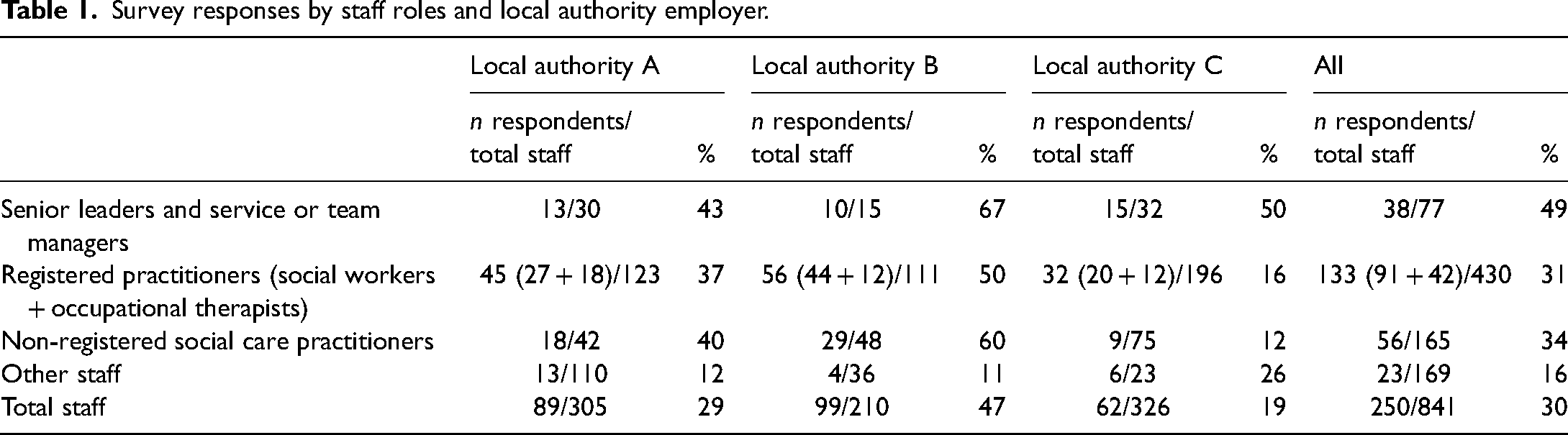
Table 2 provides the demographic and work profiles of survey respondents. While all areas of adult social care practice were represented, the highest percentage of respondents worked with older people, followed by those working with people with a long-term disability.
Demographic and employment characteristics of survey respondents.
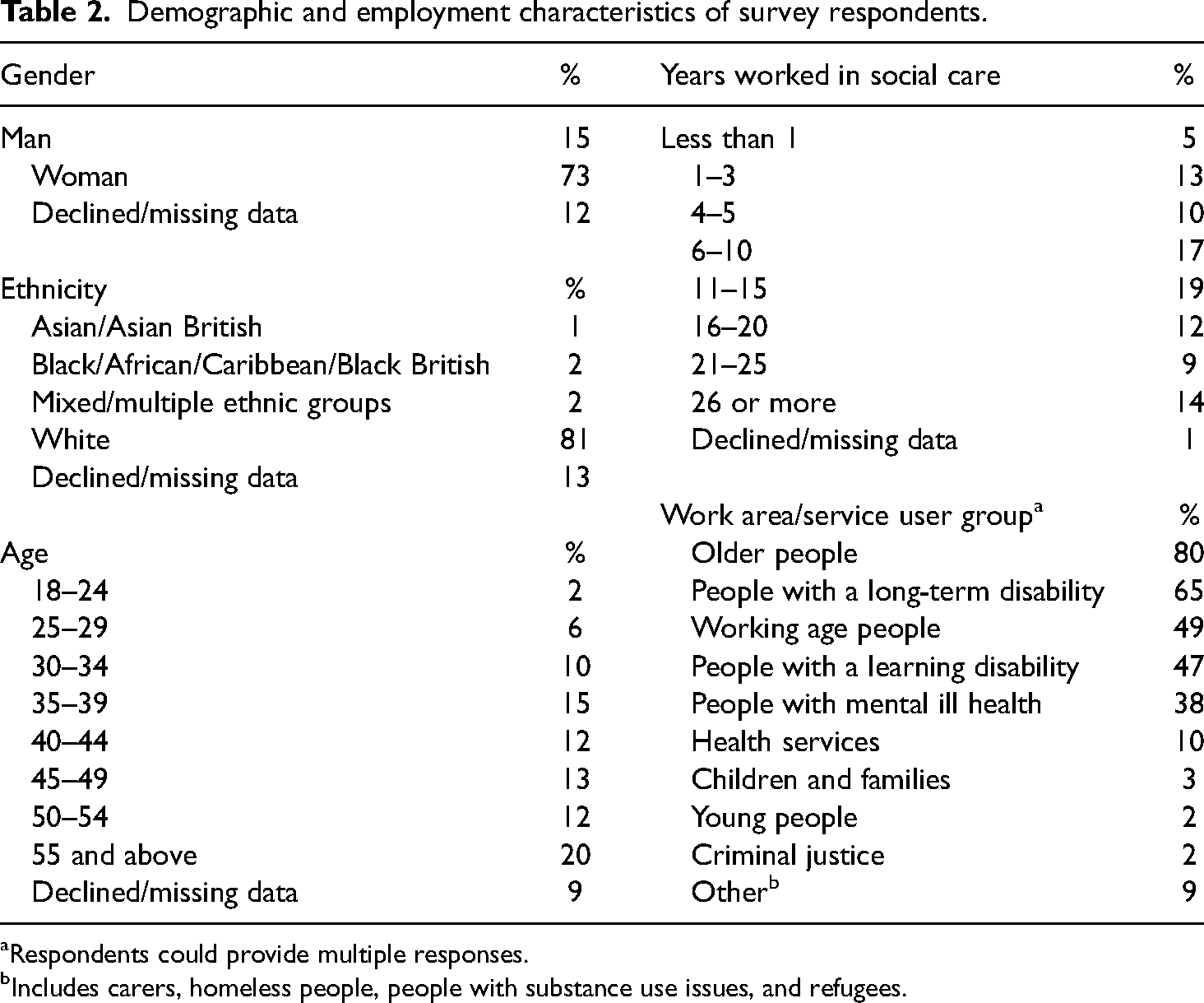
Respondents could provide multiple responses.
Includes carers, homeless people, people with substance use issues, and refugees.
Views on using research in adult social care
The survey items measuring views on using research in adult social care were presented as a ten-point rating scale. Scores anchored at “1” represented a positive response (entirely supportive, strongly agree) and those anchored at “10” represented a negative response (entirely unsupportive, strongly disagree). Table 3 shows that survey respondents were broadly positive in their views about different aspects of research in practice settings. They were most positive about their own “views on using research to inform practice” and the benefits for “service users/the people I work with” (87% and 84%, respectively). Research was largely felt to be relevant to “my day-to-day work” and respondents disagreed with the statement that “thinking about research is not a good use of my time” (77% and 74%, respectively). Respondents overall gave a more mixed response to two measures, where 47% disagreed with the statement that “research is of limited value in social care…” and 50% reported a “very good” to “good” level of ability to “apply research to practice.” Regarding different groups of staff, senior leaders, service or team managers and registered practitioners tended to hold more positive views than unregistered practitioners, an area explored further in this findings section. The pattern of responses for those in the “Other staff” category is not interpreted given the small number of respondents.
“Research Views”: measures concerned with views on using research in adult social care.
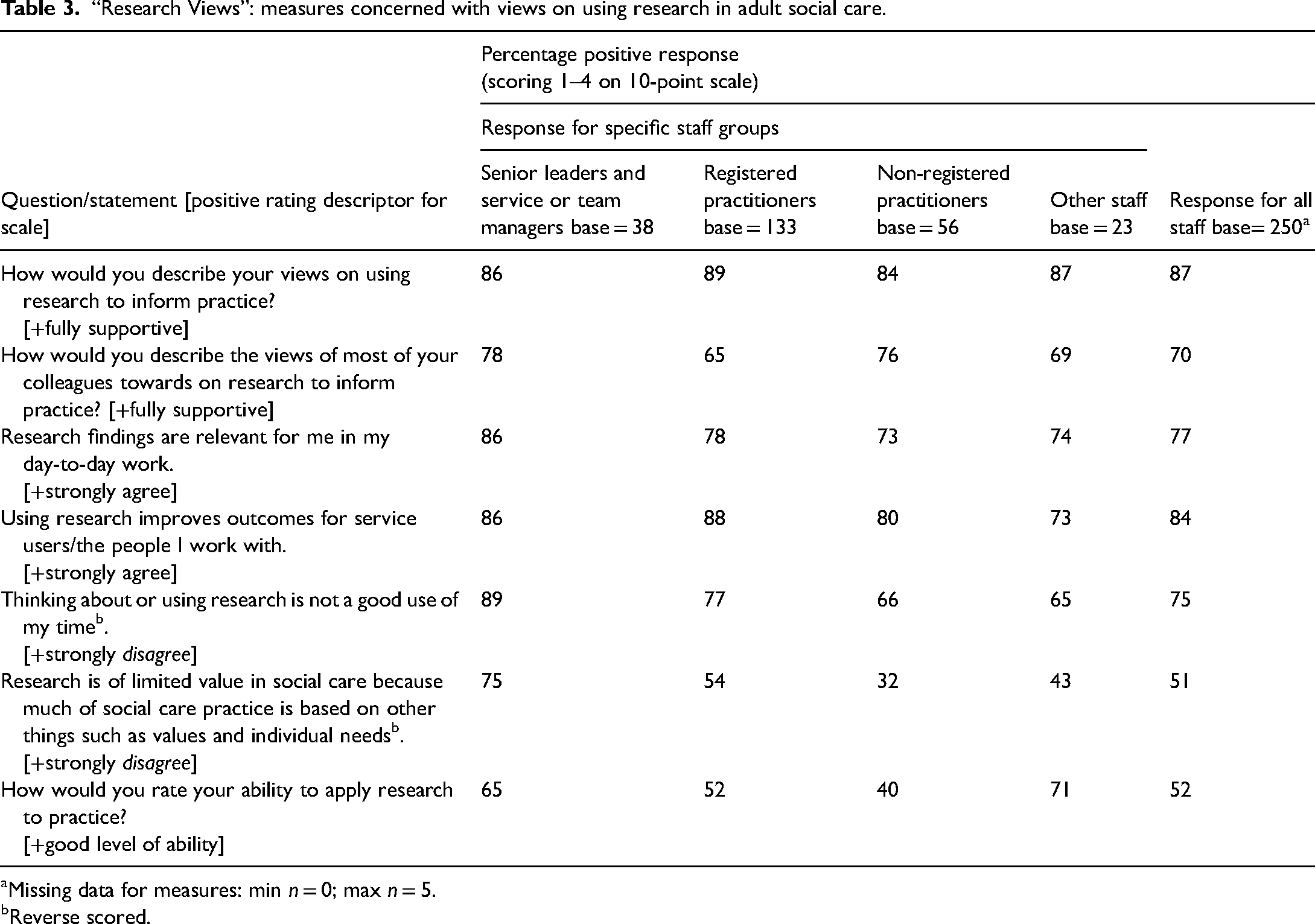
Missing data for measures: min n = 0; max n = 5.
Reverse scored.
Experience and knowledge of research, evidence gathering, and appraisal
Table 4 summarizes respondents’ experiences and knowledge of aspects of research. For all staff, in response to a “Yes” or “No” question, 36% of respondents could think of changes to their practice within the last two years that had occurred in response to research findings. Those who held more positive responses to the measures on research views in Table 3 were more likely to report a change to their practice as a result of research findings (p < .001). Staff on higher grades (senior leaders and registered practitioners) were more likely to report changes compared to non-registered practitioners (42% and 41%, respectively, compared to 27%, p = .03), a pattern reflected in responses to the other initial questions.
Experience and knowledge of research, evidence gathering, and appraisal.
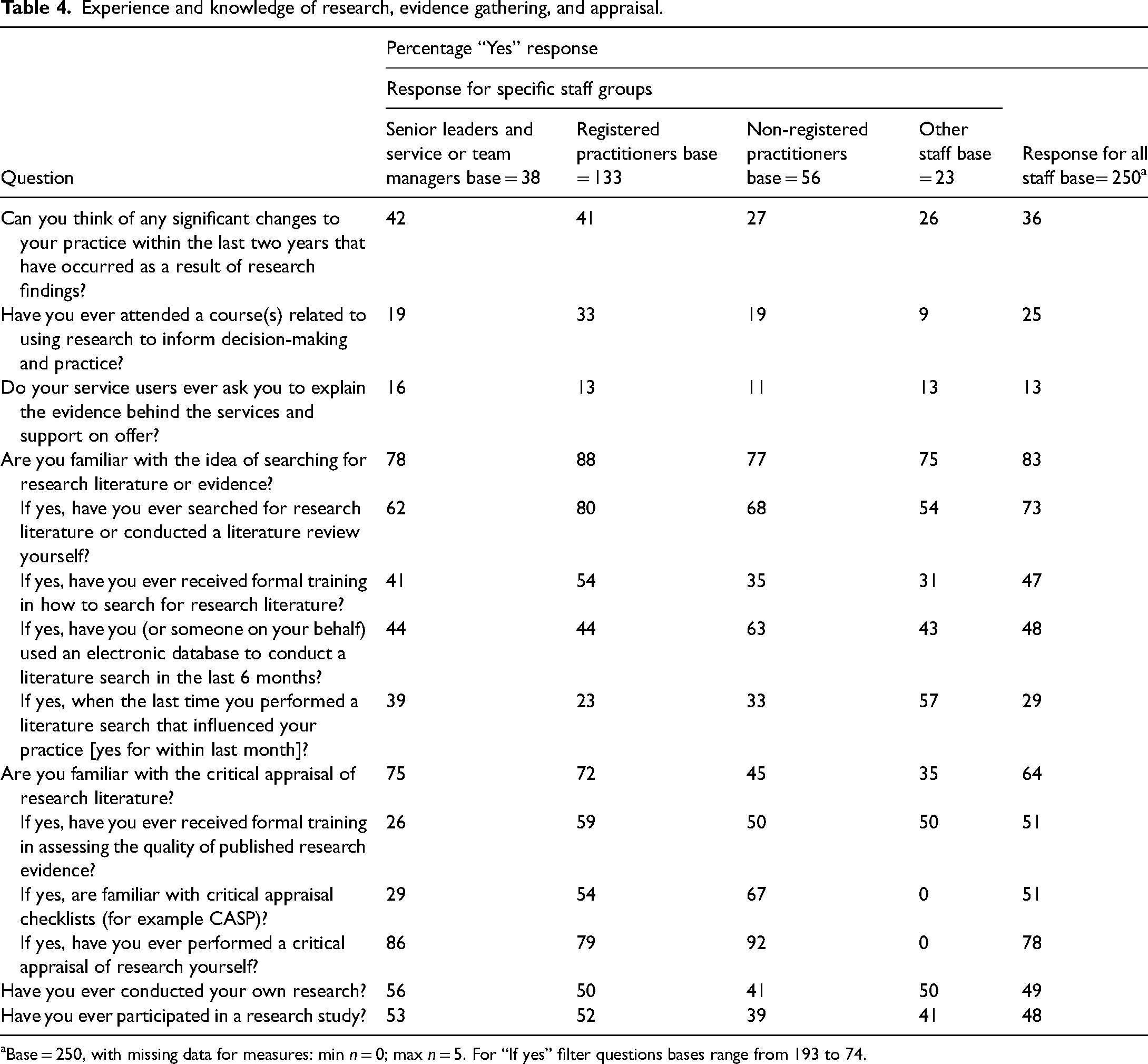
Base = 250, with missing data for measures: min n = 0; max n = 5. For “If yes” filter questions bases range from 193 to 74.
While the majority report being familiar with literature searching (83%) and critical appraisal (64%), smaller proportions had exercised skills linked to these activities (see “If yes” filter question responses). More generally, around half of respondents reported that they had conducted their own research (49%) or participated in a research study (48%). A minority of staff recalled attending a course using research to inform decision-making (24%). Recollection of instances where service users ask for evidence underpinning service provision was reported by a small minority of respondents (13%).
Further questions concerned the sources that practitioners used to inform their own decision-making (Figure 1). The leading sources were “internal policy documents” and “government websites” (89% and 86%, respectively). Fewer (39%) reported the direct use of online academic journals. Staff on higher grades were more likely to report using online academic journals than those in non-registered professional groups (54% compared to 22%, p < .001).
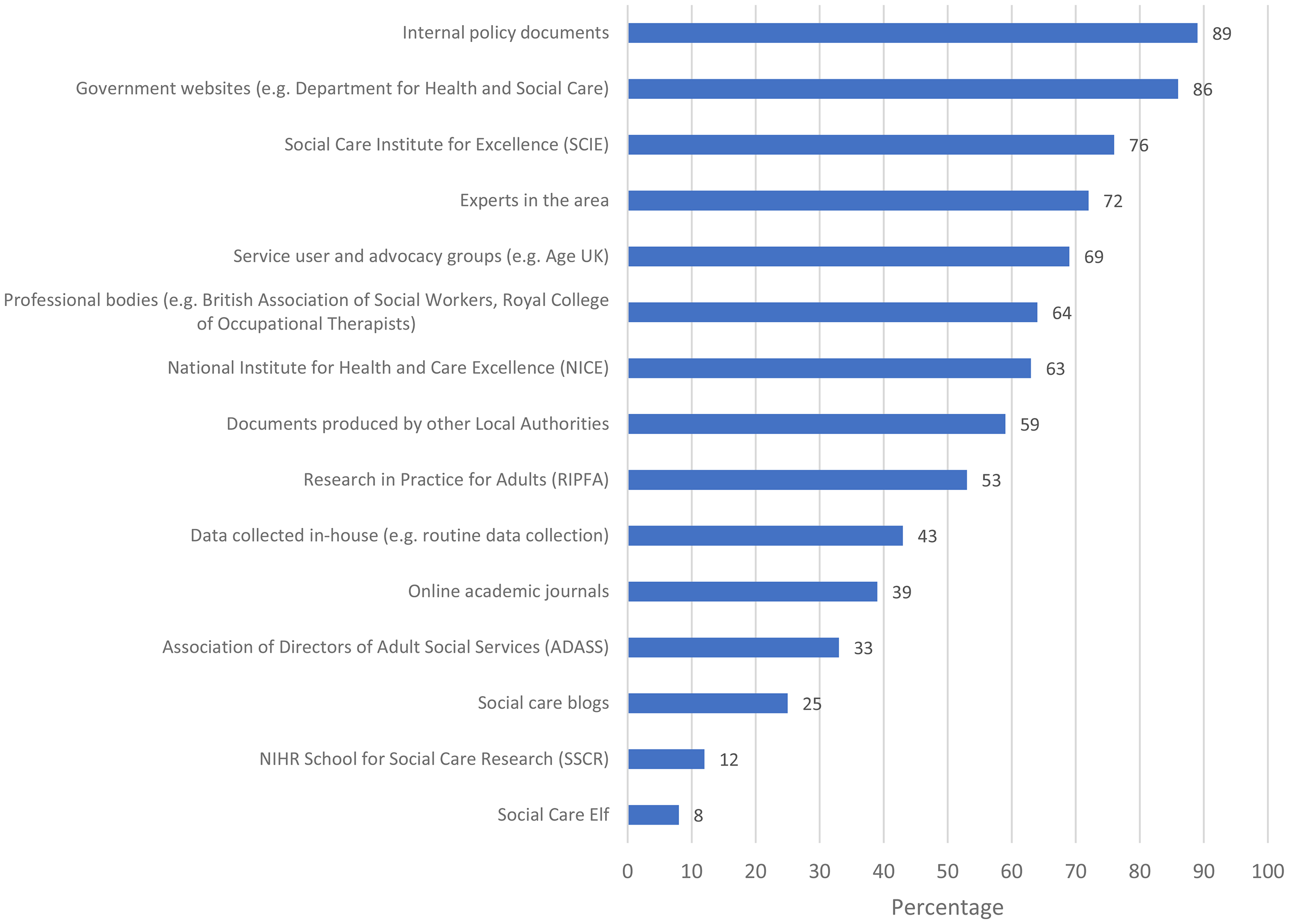
Sources used to inform practitioners’ own decision-making. Multiple choices permitted (n = 229).
Confidence regarding literature searching, use of evidence, and critical appraisal
Those respondents who stated that they were familiar with literature searching and critical appraisal were asked to rate their confidence in three areas. Following the convention of Gray et al. (2014), where three represents the scoring standard for an “adequate” level of confidence, Table 5 shows that across all self-report measures the mean scores fell below adequate. Compared to non-registered professional staff, staff on higher grades reported greater levels of confidence, however the mean continued to be under three for each of the three scales.
Confidence regarding literature searching, use of evidence, and critical appraisal.
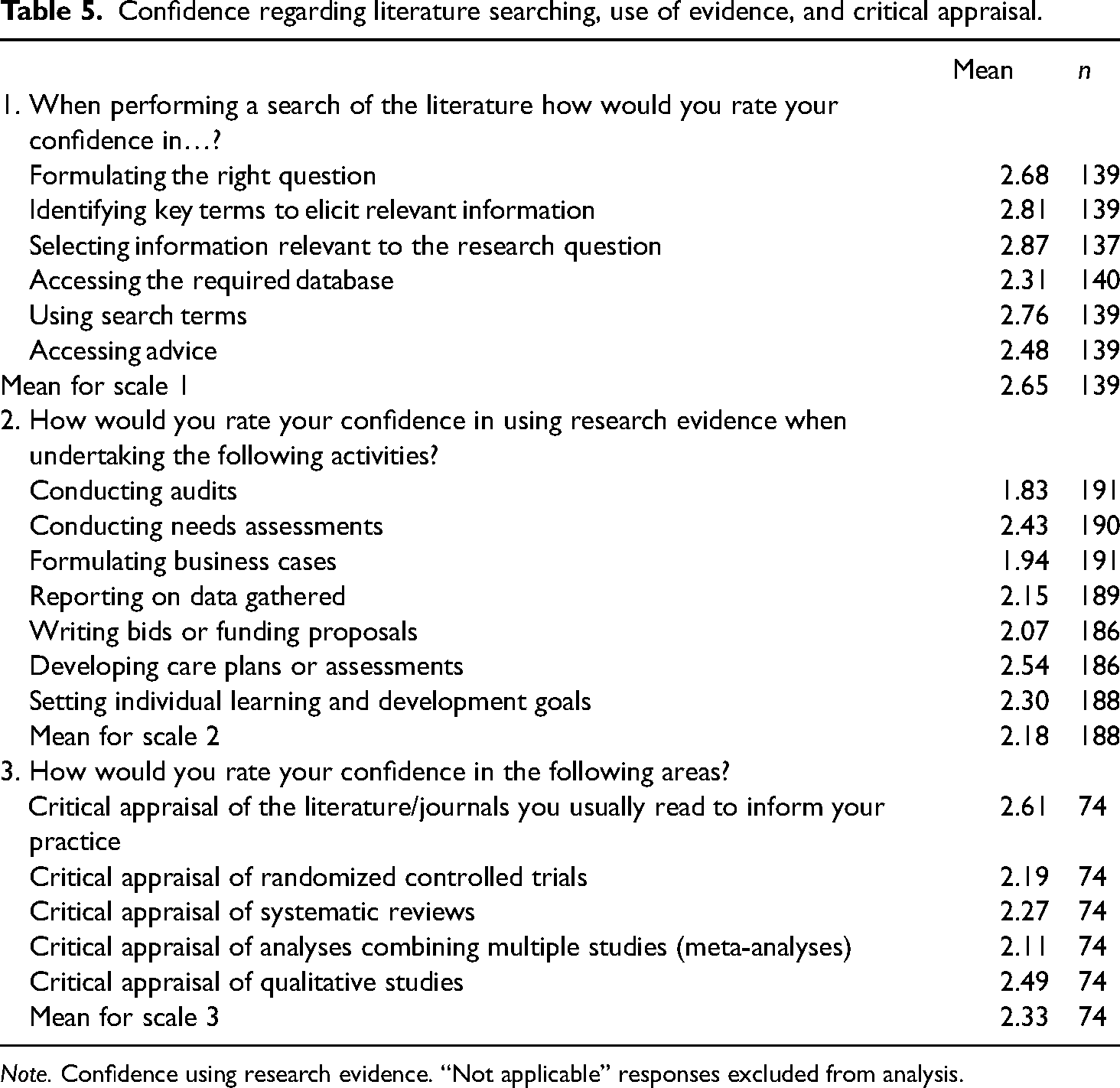
Note. Confidence using research evidence. “Not applicable” responses excluded from analysis.
Barriers to using research to inform decision-making and practice
Survey respondents were asked to choose one main barrier to using research to inform decision-making and practice in their team/area of work (Figure 2). “Not enough time” stood out as the leading area of difficulty (43%), followed by “lack of knowledge of research” (15%). Other potential main barriers were identified by smaller proportions of respondents. Regarding the choice of main barrier, there were no significant differences between staff groups in terms of seniority and role.
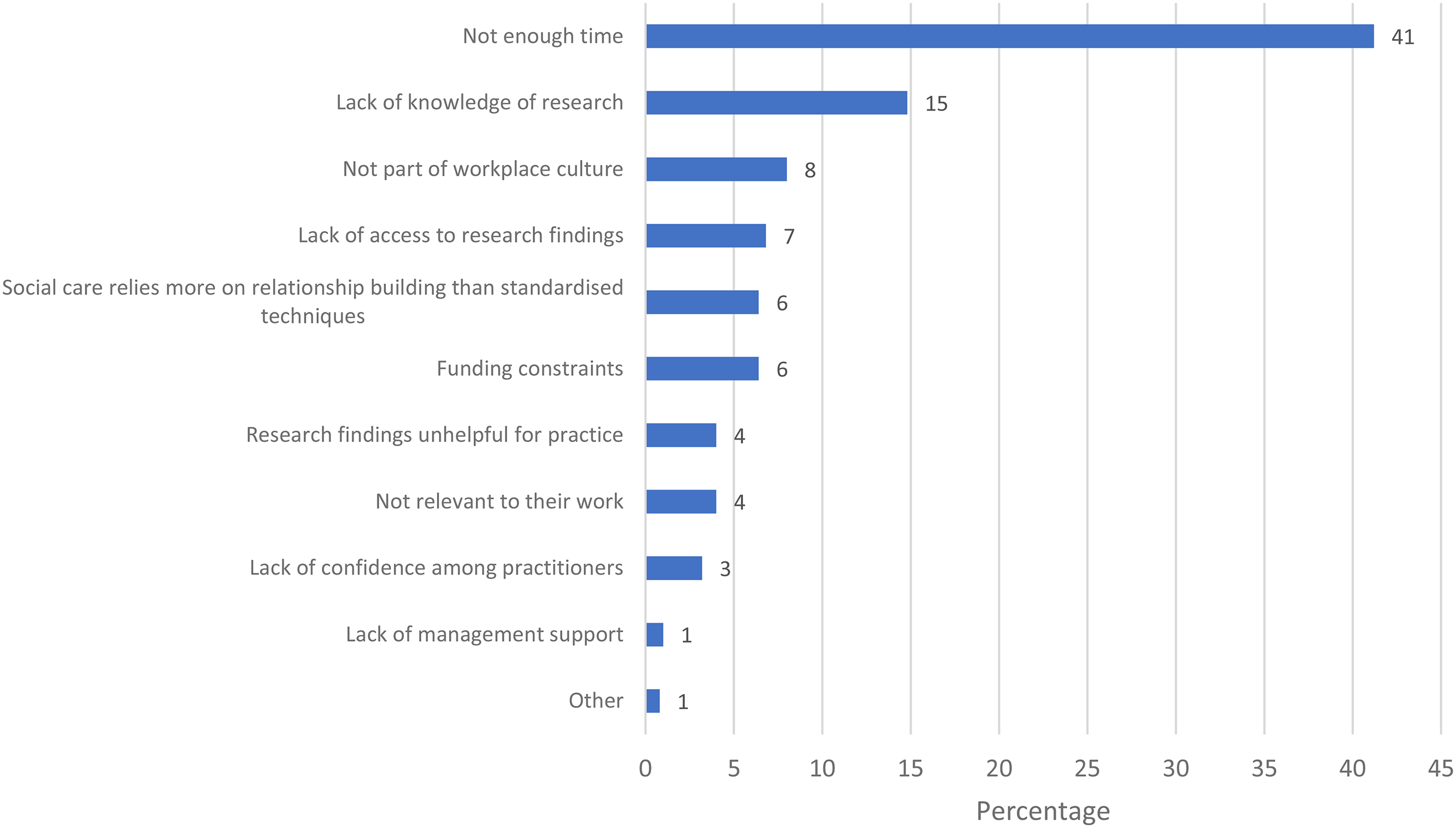
Practitioner views on the barriers to using research to inform decision-making and practice in their team/area of work. Respondents asked to select one leading barrier (n = 240).
Further analysis of differences between practitioner groups
This section reports comparisons between staff groups, including those between grades, professions, duration of service, and prior experiences of research. As might be anticipated, respondents who held a more positive response to the “Research Views” measures (outlined in Table 3) were significantly more likely to report significant changes to practice as a result of research findings (p < .001) and to have conducted or participated in research themselves (p < .001 for both measures). However, those with more positive Research Views were not more likely to have attended a course related to using research to inform decision-making and practice (p = .102).
Staff in senior leadership roles and staff who were registered professionals were significantly more likely than those in non-registered professions to report:
Holding positive research views (p = .033), with significant differences holding for each question item; Recalling significant changes to practice based on research (p = .041); Recalling applying research (p = .007); Attending a course related to using research to inform decision-making (p = .038); Explaining evidence to service users (p = .002); Having received formal training on literature reviewing (p = .005); Having conducted their own research (p = .012); and Having participated in a research study (p < .001).
The survey returns allowed for comparisons between two leading professional groups in adult social care. With respect to all staff grades (registered and non-registered professionals), those working in occupational therapy were more likely than those in social work to have:
Received formal literature review training (p = .028); Conducted a literature review (p = .008); Be familiar with critical appraisal (p = .013); and Received training in critical appraisal (p = .006).
There were no differences between those in occupational therapy and social work/care in terms of:
Research views (p = .461); Ever having attended a course using research for decision-making (p = .596); Been asked by service users to explain evidence (p = .220); and Recalling significant change to practice due to research findings (p = .100).
When a comparison was made between those who had “worked in social care up to 10 years” and those who had “worked in social care for 11 years or over” (a similar comparison to that made by Gray et al., 2014), there were no significant differences in terms of Research Views, practice changes resulting from research findings, and other key variables. The only difference was that respondents who had worked in social care for 11 years or over and who were also on higher grades were more likely to have attended a course related to using research in EBP (p = .034).
Multiple comparisons identified no differences between recency of qualification or age groups, with the exception that those aged over 39 years were more likely to positively rate their ability to apply research (p = .026). There was little difference between the three local authorities in terms of the patterns of response. Compared to Local Authorities C and B, practitioners in Local Authority A were less positive in terms of their Research Views (p = .026) and had less experience of having conducted research (p = .049). However, this difference may be attributed to a lower proportion of senior leaders and management staff respondents in Local Authority A than the other authorities (p = .05).
Discussion
In this study, we undertook an organization-wide approach to understand practitioner engagement with research in adult social care. We found that staff in a range of positions held broadly positive views about the role of research in their work and that a substantial proportion could relate aspects of research to their own work experience. However, the lack of agency resources (most notably staff time) was considered a major barrier to using research to inform decision-making and practice in their team/area of work. Moreover, those who had taken part in training on evidence gathering and appraisal were not, overall, confident in applying these skills. Only a minority of survey respondents recalled service user requests to explain the evidence behind the services and support on offer. Nevertheless, a value of the organization-wide perspective is that it demonstrates that this is not a uniform situation for all staff. Significant differences between groupings of staff indicate that the perceptions of the role of EBP may have gained more traction in some areas of adult social care work than in others, for example among occupational therapists more so than social workers. Such differences inform an understanding of where there are opportunities to build upon existing interest, as well as where there are greater needs to address. This reflects a theme in other studies (e.g., Gray et al., 2014; Gudjonsdottir et al., 2017), where it is believed that organizational shifts towards the use of research occur through the influence of groups reflecting leading advocates and early adopters.
Among a complex picture, one strong link reported in this study was that social care practitioners were more likely to report applying research in practice if they had themselves been involved in conducting or participating in research. Those with such perceptions reported a more positive outlook towards research more generally and were more confident about the evidence gathering and appraisal skills they had acquired through research training. We cannot be sure how the survey respondents interpreted having “conducted” or “participated in” a research study. However, in line with Wakefield et al. (2022), the implication appears to be that staff benefit from being given opportunities to experience and do research and research-associated activities. More than a range of other factors, it may be that “practice at doing research” informs the use of research evidence in practice more generally. The following discussion considers how this insight may be complemented through attention to how different staff groups are placed to promote change within their organization.
Given the growing position in recent years of EBP across curricula of qualifying programs for regulated professions in social care, we might have anticipated that early career practitioners (and most probably newly registered professionals) would report greater engagement and confidence with research training compared to those generations educated in a less research informed era. However, our study identified no substantive differences linked to more recent education. Indeed, as other studies have found (Di Tommaso et al., 2019; Gleeson et al., 2023; Teater and Chonody, 2018), there are indications that new starters encounter difficulties putting their research-based skills into practice. While caution is needed in the interpretation, this raises a question around how newly qualified staff are supported to apply their learning in the use of research evidence, particularly through protected time.
A related concern is the effectiveness of continuing professional development (CPD). Our study indicated that, while a proportion report being trained in research evidence skills, such staff also report relatively low levels of confidence in applying their learning. This draws attention to the requirements, availability, and utility of the CPD. Ill-fitting and weakly exercised training represents one type of problem, but the challenge of implementation is compounded where there are already constrained resources and competing pressures in the workplace, as participants in this study reported.
While social work and occupational therapy staff share many similarities with respect to engagement with research, our study found that occupational therapy staff respondents reported greater levels of experience with literature searching and critical appraisal. Albeit in a different organizational context, Gudjonsdottir et al. (2017) found profession-based differences, in this case between social work and physical therapists, and attributed this to the greater influence of medical science in physical therapy training. Gudjonsdottir et al. (2017) argues that differences in attitudes towards the use of research evidence between professions may result in poor interprofessional relations and negatively impact the quality of client care. This points towards the importance of interprofessional education and shared learning around the interpretation and use of research evidence. It also indicates that education providers in social work and occupational therapy might usefully exchange best practice in the application of research during qualifying training.
In addition to profession-based differences, the survey results suggest hierarchical differences in engagement with EBP. In this respect, our research resembles some elements of other studies (see, for example, Bäck et al., 2020; Zardo and Collie, 2015). Those in senior grades (managers, team leaders and registered professionals) were more likely than non-registered professional care staff to report positive views, research training experiences, and application of research evidence. This might be anticipated, given the additional investment in education and training, as well as experiential learning opportunities, for those on senior grades. Given the higher authority of those in senior grades, actors within this group are well placed to shape an organizational culture that promotes the use of research. If this is to be a whole organizational approach, this involves making the use of research evidence meaningful and relevant for staff at all grades. Given that no staff group, including those in higher organizational positions, had a high overall level of confidence about key elements of research evidence use, those in senior roles might also support tools and processes that revise the focus of research evidence training to be more meaningful for staff with a diversity of roles and predispositions. As Gray et al. (2015) found, staff groups can differ whether they prefer to either explore the raw research evidence themselves or to rely on the digests of authoritative others.
Of the staff represented in this study, we are specifically cautious in drawing conclusions about those identified as “other” in the survey. The response rate for this group was low (14% of the total in this group) and therefore highly questionable in its representativeness. Moreover, within this catch all group, there is a great diversity of roles. Nevertheless, our research may suggest that more consideration should be given to the use of research in work roles such as brokerage, business support, financial assessment, and lettings, not least because they provide important functions as part of the adult care workforce. Employers in this study designated 20% (n = 169/841) of their staff in “other” roles that were outside social work, social care practice, occupational therapy, management, and leadership. Reforms to adult social care provision are likely to generate an increasing diversity of new staff roles (e.g., DHSC, 2023). From the positions of equity and effectiveness, such staff stand to benefit from attention to support their research informed decision-making as much as the established professions do.
From an organizational change perspective, many efforts to promote evidence-based decision-making employ a form of systems change reasoning. Examples include Normalization Process Theory and the adoption-of-innovation thesis (Gray et al., 2014; Gudjonsdottir et al., 2017; and Gray et al., 2015), whereby (in both instances) influencers spread new practices as opportunities and conditions allow. While this thinking informed lines of analysis for this baseline study, the follow-up research planned as part of the ConnectED project provides an opportunity to assess these mechanisms for change and thereby develop a more refined approach to enhance the application of research evidence in adult social care organizations.
Implications for social work and adult social care
We summarize the leading implications from this study as follows. While social workers and other professionally qualified colleagues may benefit from training on research use and research methods during their qualifying training, newly qualified staff need support and encouragement to translate this knowledge into routine practice. This could be achieved through their involvement in research and research-associated activities, and more generally through an organizational culture that values research use. CPD should be available and clearly tailored to the specific needs of practitioners, with emphasis given to the needs for interprofessional education and shared learning around the application of research evidence. Those in senior roles might promote tools and processes that reinforce the relevance of research evidence as meaningful for staff with a diversity of roles and predispositions. This may require agencies to do what is feasible to alleviate constraints of limited resources and competing work pressures. Further research is needed around the research use needs of new and diverse practitioner roles.
Limitations of the study
Some limitations of this study should be recognized. The research is based upon the adult social care system in one geographical location and may not be reflective of others. A minority (30%) of those eligible responded to the survey and there were differences in the response rates between the three local authorities. As the data collection process mainly involved the use of closed questions, we have been cautious about the wider interpretation of the findings. Furthermore, the survey might have gathered further evidence about the enablers to research use alongside evidence of the barriers. Nevertheless, the research adds to a growing body of evidence drawing on comparable measures and data collected from other populations in this field, which were adjusted to the local context. A strength of the study was that it drew upon the perspectives of a wider range of adult social care practitioners than have been reported upon elsewhere. It also obtained sufficient responses to explore key differences between practitioner groups which is important in the context of multidisciplinary practice in adult social care.
Conclusions
A prevailing image from recent research on the promotion of EBP in adult social care is one of a difficult, slow, and unsteady walk. Practitioners are encouraged to travel with new resources and promising interventions in workplaces that contend with growing demand, resource constraints, and high staff turnover. Faced with such countervailing pressures, this might lead some to be concerned that the agenda for the use of research evidence is faltering or perhaps even taking steps backward. The present study offers further empirical evidence to signal a challenging environment, alongside affirmations that adult social care staff nevertheless seek to engage with research. Where this study adds to existing enquiries on the use of research evidence in practice is through gathering the perspectives of diverse practitioner groups across an entire organizational setting in adult social care. Different patterns of engagement draw attention to the capacities for action of specific groups of staff, and how their interests might offer the basis for wider innovations in practice. With respect to improving decision-making in adult social care organizations, this study points to prospects for the further application of evidence from research. This includes the need to facilitate greater experiential and interprofessional learning alongside a focus on the responsibilities for action from those in senior roles and the need for training—and post-training support—that better reflects the interests and capabilities of diverse staff groups at all levels of adult social care organizations.
Supplemental Material
sj-docx-1-jsw-10.1177_14680173251336107 - Supplemental material for Connecting evidence with decision-making in adult social care: A cross-sectional staff survey
Supplemental material, sj-docx-1-jsw-10.1177_14680173251336107 for Connecting evidence with decision-making in adult social care: A cross-sectional staff survey by Mat Jones, Lisa Dibsdall, Ailsa Cameron, Karen Gray, Hugh McLeod, Linda Sumpter, Jon Symonds, Paul Willis, Christie Cabral and Geraldine Macdonald in Journal of Social Work
Footnotes
Ethical approval
Ethical approval for this project was given by: The School of Policy Studies Research Ethics Committee at the University of Bristol (reference number: SPSREC/21-22/215).
Funding
The authors disclosed receipt of the following financial support for the research, authorship, and/or publication of this article: This work was supported by the National Institute for Health and Care Research under Grant Number NIHR131345. The views expressed are those of the authors and not necessarily those of the NIHR or the Department of Health and Social Care.
Declarations of conflict of interests
The authors declare that there is no conflict of interest.
Author's contributions
All authors contributed to developing, testing, and administering the survey. LD, MJ, and HM conducted the analysis of the data, with review of findings from all authors. All authors supported the underpinning review of the literature. MJ and LD drafted the initial manuscript with input, revisions, and final review by all authors. CC and GM led the overall study.
Acknowledgements
The Authors acknowledge the following for their contribution to this article: The authors would like to thank all those who took part in the survey for this research and gratefully acknowledge the valuable support and advice provided by our organizational partners and colleagues within the three participating local authorities.

Supplemental material
Supplemental material for this article is available online.
References
Supplementary Material
Please find the following supplemental material available below.
For Open Access articles published under a Creative Commons License, all supplemental material carries the same license as the article it is associated with.
For non-Open Access articles published, all supplemental material carries a non-exclusive license, and permission requests for re-use of supplemental material or any part of supplemental material shall be sent directly to the copyright owner as specified in the copyright notice associated with the article.
