



Abstract
Summary
This study evaluated the feasibility of ‘Social Workers in Schools’, an intervention that involved social workers being based within schools across three local authorities in England (SWIS). Schools make a large number of referrals to Children's Social Care and play an important role in recognizing risks to children and protecting them from harm, but it is unusual for social workers to be based in schools in the U.K. and to do statutory work. We evaluated the pilots on the basis of the feasibility of implementing SWIS, how promising it was in terms of reducing the need for statutory intervention, and the extent to which it be scaled. We used a mixed methods approach, with a process evaluation and a difference in differences analysis of indicative impact on key social care outcomes. In addition, we estimated the cost of implementing and maintaining SWIS.
Findings
We found high levels of acceptability among those involved, and examples of how SWIS enhances the way safeguarding issues are addressed. There was also some evidence that it may reduce the need for social care interventions, though this needs ratifying with more and better data.
Applications
The study suggests that SWIS is a promising intervention. Both the qualitative and quantitative findings suggest it may have the intended policy impact, but this needs to be tested on a larger scale and with a more rigorous counterfactual comparison. Such a study—a randomized-controlled trial involving 21 local authorities—was commissioned in 2020.
Introduction
Children are protected from harm through the collective efforts of many individuals and organizations (MacAlister, 2022). As the agency with lead responsibility for safeguarding in the U.K., children's social care (CSC) depends on schools, the police, health professionals, family members, and others to report their concerns and collaborate with them. This makes it important to understand how such collaboration happens and to explore how links in this network might be improved. In this article, we focus on the interface between CSC and schools, and report the findings of three pilot evaluations that took place in different English local authorities (LAs). The aim of the pilots was to embed social workers within schools, to work more closely with school staff to address safeguarding concerns, and to do statutory child protection work. As we discuss below, although “school social work” is common elsewhere, school social workers in other countries are not typically tasked with a comparable level of safeguarding work, and social workers who undertake such work in the U.K. are not typically embedded within schools. We evaluated each pilot with a focus on four areas: (1) the feasibility of delivering the intervention, (2) whether it showed promise after it has been running for around 10 months, (3) any indicative evidence of its impact on rates and levels of CSC intervention, and (4) the costs of set up and delivery.
Why schools? Schools play an important role in supporting and keeping children safe, and school-age children typically spend a large proportion of their time under the supervision of people who work in schools. Teachers and other school staff regularly deal with safeguarding issues and schools are usually among the major sources of referrals to CSC, contributing the second highest proportion making the second highest proportion of all referrals each year between 2020 and 2022, behind the police (Department for Education, 2022). That being so, the potential for improved ways of working has been highlighted historically (Morse, 2019), and there is statutory guidance that encourages better interagency working (HM Government, 2018). But, the heterogeneity of schools and the complex interface between them and social care underlines the need to find solutions that work locally.
Reflecting this picture, the recent Care Review in England recommended that schools become statutory safeguarding partners and corporate parents, to “more accurately reflect the role that schools … play in the lives of children in care and those with a care experience” (MacAlister, 2022, p. 148).
U.K. policy and practice context
Two developments have heightened the need for schools and CSC to work together effectively in recent years. The first is a significant increase in numbers of children receiving interventions from social workers and being removed from their birth families into care (Biehal et al., 2014; DfE, 2022). Linked to this, CSC has been described as a being in need of a “dramatic whole system reset” (MacAlister, 2022, p. 10). The second development is the wide-ranging reform of the English school system since the millennium (Baginsky et al., 2019; Blair, 2000; Cummings et al., 2007; Diss & Jarvie, 2016; Dyson & Jones, 2014; Morris, 2001). This was characterized over the last two decades by sweeping changes to the structure, management, and governance of schools, and in particular a move to academisation (Gunter et al., 2005; HM Government, 2022; Thomas et al., 2004). Academy schools are funded directly by central government, and are self-governing charitable trusts that are independent from local government. It has been argued that this has altered the relationship between schools and LAs in ways that complicate safeguarding arrangements (Baginsky et al., 2019).
Another significant disruptor arrived last year in the form of the COVID-19 pandemic. For the first time since the Education Act of 1918, most children spent little to no time at school between March and September. CSC referrals from schools fell 31% in the 2020/2021 fiscal year (DfE, 2021), but LAs have consistently reported increased referrals since then, including more citing neglect and domestic abuse (Havard, 2021). The impact of this is unknown, but likely to be severe: children resident in poorer families are more likely both to be referred to CSC and to be affected by COVID-19 (Finch & Hernández Finch, 2020), and emerging evidence suggests effects on child mental health (Youngminds, 2020), including increasing anxiety among young people (Levita, 2020), disproportionately impact the most vulnerable (Davies et al., 2020). Similarly, increases in domestic abuse during “stay at home” restrictions (Bradbury-Jones & Isham, 2020) and new financial pressures on families, in part caused by school closures, are likely to increase risks to children. Indeed, the Child Poverty Action Group found the “cost burdens of school closures have fallen most heavily on families already living on a low income” (Child Poverty Action Group, 2020).
The pilot studies were completed before the worst impact of COVID-19 was realized, but the pandemic exacerbated many of the issues the SWIS pilots were designed to address. This additional pressure is likely to increase the need for families to require support from CSC, and perhaps change the shape of the agency response. A follow-on study, underway at the time of writing, will examine this in detail.
International research on school-based social work
In the U.S., parts of Scandinavia, New Zealand, Australia, Hong Kong, and other countries “school social work” is relatively common. In some American states, school social workers are licensed separately, and since 1992 the National Association of Social Workers has offered experienced school social workers field-specific certification (NASW, 2022). The reach of school social work is growing in some countries, such as Brazil, where it was recently made mandatory in elementary schools (da Luz Scherf, 2023). Nonetheless, the evidence base for school social work is small, especially outside of the U.S. (Franklin et al., 2009; Isaksson & Sjöström, 2017; Rafter, 2022).
It is also true that school social work varies greatly both in policy and practice terms, and much of it is not what U.K. readers would recognize as statutory social work (Rafter, 2022). A recent review by Rafter (2022) details the current state of school social work and shows that the role is often oriented more towards educational outcomes than safeguarding. Many school social workers are employed directly by the schools, though there is some evidence they have similar competencies and preparedness for the role as their agency-employed counterparts (Bronstein et al., 2011). Early twentieth-century versions of school social workers in the U.S. were called “visiting teachers” and the role bore few similarities to modern social work (Culbert, 1921). Likewise, the core responsibility of school social workers in Australia is to help students achieve educationally (AASW, 2011; Lee, 2012), and in Ghana and the United Arab Emirates, they are expected to cover teaching duties when teachers are absent or unavailable (Tedam, 2022). In Sweden (where school social workers are not required to have a social work qualification), and in Hong Kong, the role is more focused on counseling, well-being, and community building (Isaksson & Sjöström, 2017; Kjellgren et al., 2024; Lau, 2020).
This makes it difficult to translate research findings between countries because “school social work” can mean many things (Rafter, 2022). Arguably much of what characterizes international school social work already exists within many schools in the U.K., in the form of pastoral support. This also varies greatly between schools, but rather than being done by social workers it is provided by other professionals such as school counselors, nurses, and welfare officers.
What is common both in the U.K. and elsewhere, is that it is unusual for social workers to do statutory casework in a school setting, and rare for research to explore this dimension of school social work. Nonetheless, some research findings relate to how more serious concerns may be reported. This was the focus of a study of school social workers’ roles in the reporting of abuse and neglect in New Zealand. Through qualitative interviews with a small sample of social workers, Beddoe and de Hann (2018) found “significant variability” in processes and procedures between and within schools, confusion around roles and thresholds, and tensions between social workers and school staff (Beddoe & de Haan, 2018).
Other research on school social work highlights common themes that may be applicable to the U.K. context of the pilots, despite their statutory focus. For instance, the topics of integration and professional identity are likely to be pertinent whatever the focus of the work undertaken. Several challenges become apparent from this literature. For example, Beddoe’s (2019) New Zealand study found that school social workers were viewed as “outsiders” who struggled to integrate into the school environment (Beddoe, 2019), and similar tensions in Sweden were attributed to differences in professional cultures (Isaksson & Sjöström, 2017). This corresponds to research on interagency working more broadly, which highlights how barriers to good practice can arise from agencies differing in terms of their culture, routines and goals (Barton & Quinn, 2001).
U.K. research on school-based social work
There are few robust evaluations of school-based social work in the U.K., though several pilots have been undertaken and some pre-date the changes to the education system described above. Bagley and Prichard (1998), evaluated a 3-year program where social workers were placed in a primary school in a socio-economically deprived area. This had some positive impacts including a statistically significant decrease in truancy, bullying, and exclusions, which is notable amidst the mainly qualitative findings of other studies. The authors also suggested that this could lead to a reduction in rates of children entering care. After the move towards academisation had begun in the early 2000s, an unpublished study Wigfall et al. (2008) evaluated a 6-month pilot which placed a social worker in each of four schools (three primary schools and one secondary school) for 6 months. The finding that the social workers were generally well received by the schools is encouraging, and while schools’ experiences varied there was consensus that the posts should be continued beyond the pilot. The authors also echoed findings from other countries around the cultural aspects of interagency working.
Other more general attempts to innovate in CSC and work more closely with communities have involved embedding social workers in schools. This was the aim of a program of 11 pilots which formed the “Social work remodeling project” implemented by the Children's Workforce Development Council in 2008–2011. Key findings included perceived benefits of having more capacity and time to do early intervention work, being more accessible, working flexibly, and being more trusted as a result (Baginsky et al., 2011).
Potential challenges
More recently, Sharley (2020) examined the role schools play in addressing neglect in Wales, and as part of this, she explored the nature of the relationship between schools and CSC, and the experiences of education colleagues. One of Sharley's key contributions is in demonstrating differences between agency responses, and the factors that shape these differences. For example, different approaches to safeguarding, the learning and training environment created for staff to develop expertise, professional confidence in identifying and reporting concerns, and the schools’ relationships with families. These create potential implementation challenges that have been highlighted elsewhere. For example, research on the experiences of student social workers placed in schools has described some of the difficulties students had when trying to integrate into schools (Hafford-Letchfield & Spatcher, 2007).
Despite these challenges, the case for embedding social care staff within education is persuasive. When they work well, study placements are thought to aid social workers’ understanding of the education system (Gregson & Fielding, 2012) and increase opportunities for direct work with children and families (Parker et al., 2003). Moreover, Sharley concluded that the creation of a “school social worker” role might be a way of overcoming some of the challenges discussed above. She argued such a role could enhance multi-agency cooperation and facilitate training around decision-making, neglect, and the promotion of children's well-being in school. The current study therefore builds on this work by examining the intervention at a larger scale and by paying particular attention to issues of implementation and impact.
The SWIS intervention
SWIS was designed around the following core features, beyond which LAs had flexibility to tailor it to local needs (for example in deciding which types of schools to include):
Secondary schools would normally be allocated one social worker who should be physically based within the school and use it as their main base. They could also work with “feeder” primary schools, particularly if a family they worked with had younger children in those schools (this is why the numbers of schools is larger than the numbers of social workers in Figure 1). Social workers would work alongside school staff, particularly designated safeguarding leads, and focus on statutory social work, as opposed to early intervention. As far as possible, children in the school who are on child in need and child protection plans should have the SWIS social worker as their allocated worker.
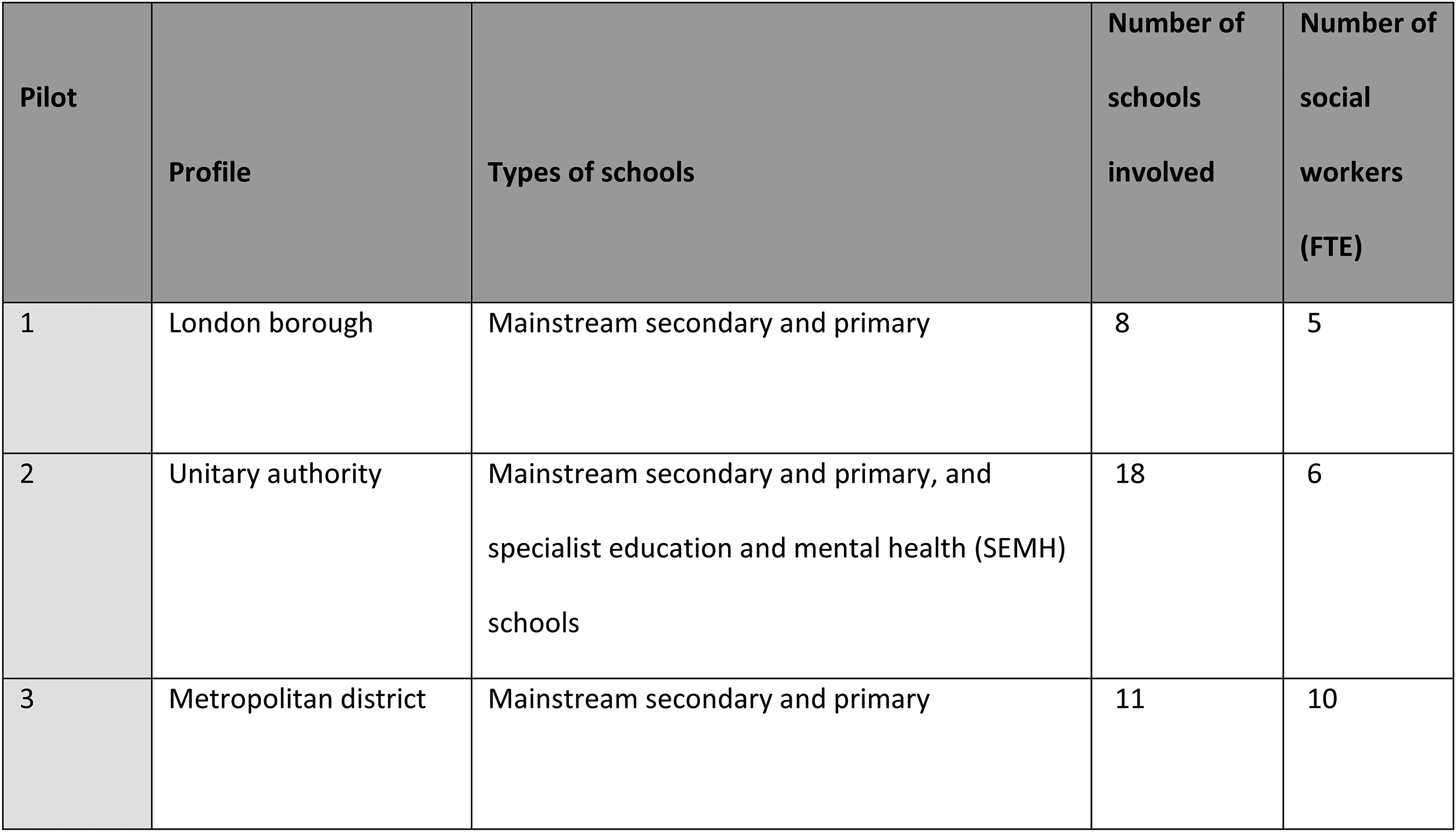
Summary of the three pilots.
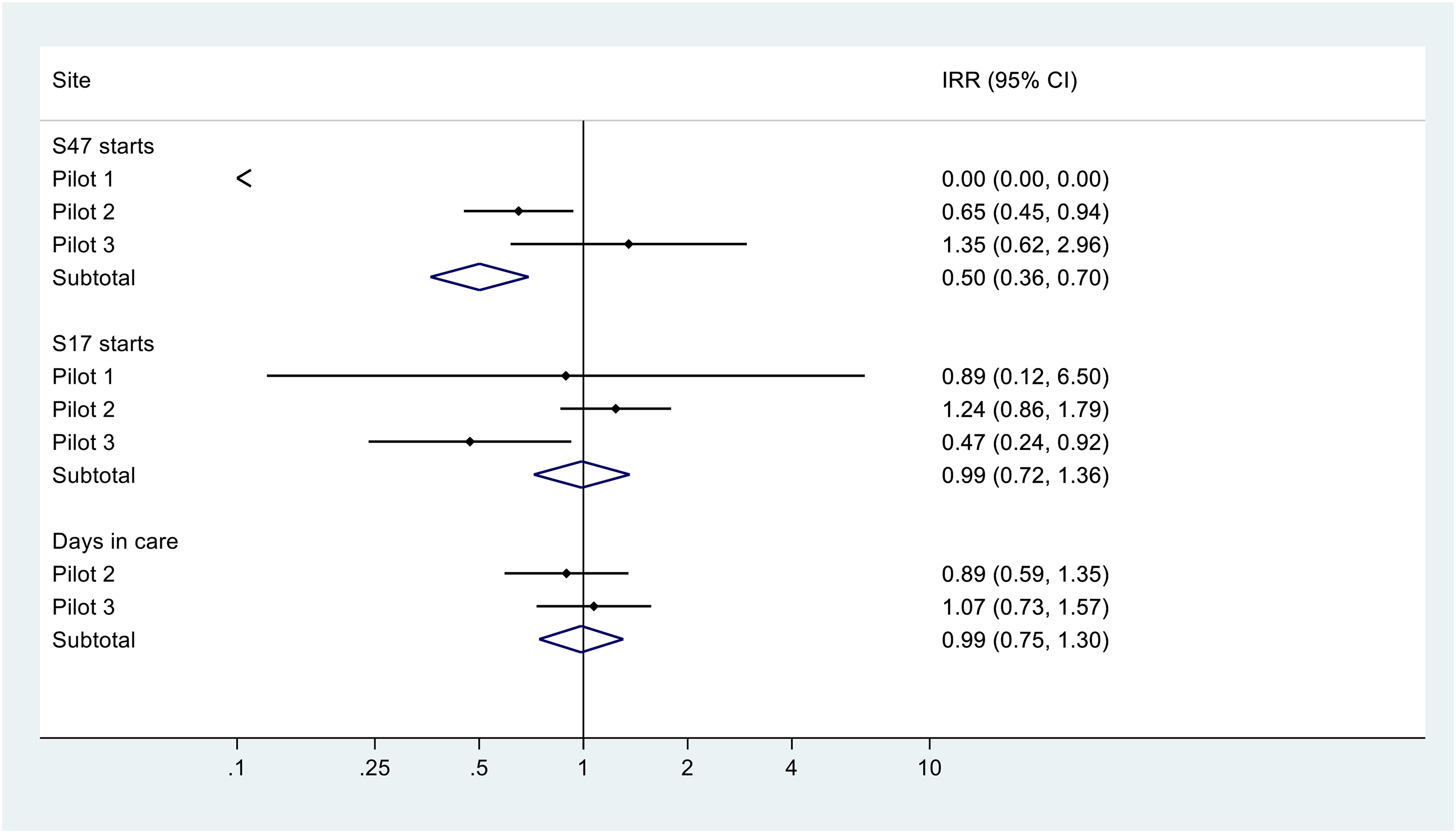
Forest plot including all three pilots across all three outcomes.
Methodology
Study design and research questions
Our broad objective was to understand how and why each pilot was implemented as it was and gather indicative evidence about the outcomes it may lead to. This led us to use a combination of qualitative and quantitative approaches to explore four core areas of interest: (1) the feasibility of implementing SWIS, (2) whether SWIS is specified and coherent enough to be scaled up and implemented elsewhere, (3) evidence that SWIS might be a promising approach to reducing risks to children and the need for CSC services, and (4) the costs of delivering SWIS. Our research questions, which map to these areas of interest, were as follows:
Can SWIS be delivered practically and are there systems and processes to enable it to be easily scaled? (Feasibility) To what extent is SWIS used as anticipated and is the intervention sufficiently codified to operate at scale? (Scalability) What evidence is there that SWIS can have a positive impact on outcomes? (Evidence of promise) What are the costs associated with delivering SWIS? (Economics)
Data used and methods of data collection
Between December 2018 and January 2020, we gathered data using the following methods and sources.
Qualitative data
Interviews with professionalsInterviews with social workers, managers, school-designated safeguarding leads (DSLs) and headteachers, and other local authority staff (administrators and project support officers) took place at schools or local authority offices. They lasted 20–60 min, with semistructured questions about implementation of SWIS (e.g., probing the day-to-day activities workers undertook), their attitudes towards it, and experiences of it. Interviews were audio recorded and transcribed, and informed written consent was gained. Each participant was interviewed once.
Observations of social workers as they worked in the schools.A researcher shadowed one of the social workers in each local authority, though most of this took place in LA1 as they were most willing to have a researcher observing. Observations were for short periods of time, usually a half day or full day, and involved four of the research team acting as observers. During these observations we sat in on a number of formal meetings, such as child in need and child protection reviews. Fieldnotes were written up within 24 h of the observation and collated for analysis.
Quantitative data
Administrative data from LAs We collected administrative data that is routinely collected by the LAs, using a Microsoft Excel proforma that data managers in each LA completed and returned to us. This contained data on key social care outcomes by collating numbers of the following variables, broken down by school year group. The timescale for this data covered the year prior to the pilots (2017–2018 school year, Terms 1–3) and the pilot period (2018–2019 school year, Terms 1–3 and 2019–2020 school year, Term 1). We measured three outcomes: Section 17 starts. Known as a “child in need assessment,” this aims to identify the needs of a child or children within a family, and ascertain what support the family needs to meet them. Section 47 enquiries. These are investigations CSC carry out when they have “reasonable cause to suspect that a child who lives, or is found, in their area is suffering, or is likely to suffer, significant harm” (Children Act, 1989). Days in care. The number of days children spent in care is an important measure of both costs and outcomes in CSC. The proforma also included financial claims covering the study period, from which we extracted data on staff costs directly involved in the intervention and costs incurred in setup and implementation.
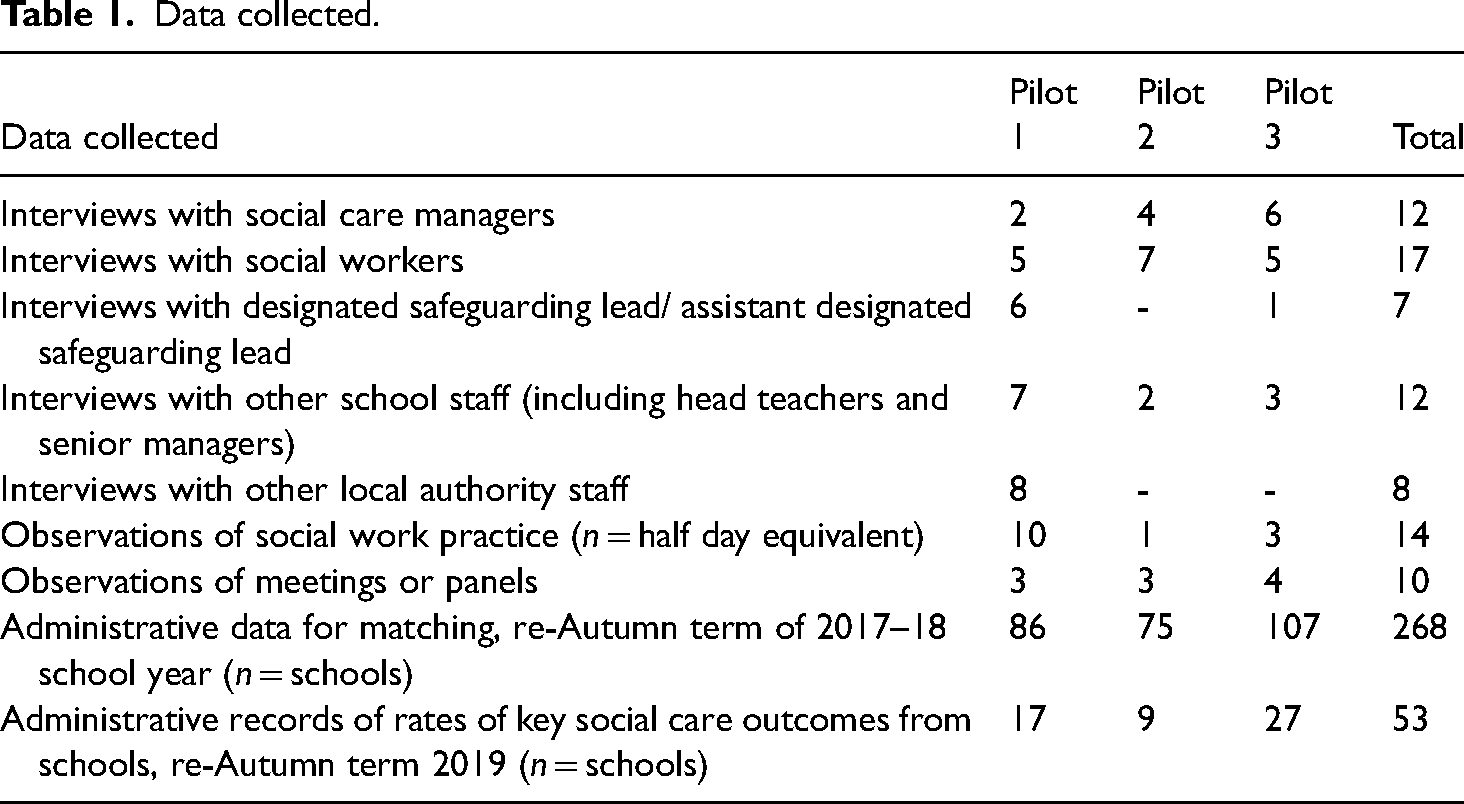
Table 1 details the breakdown of these data by source and across the three pilot sites.
Data collected.
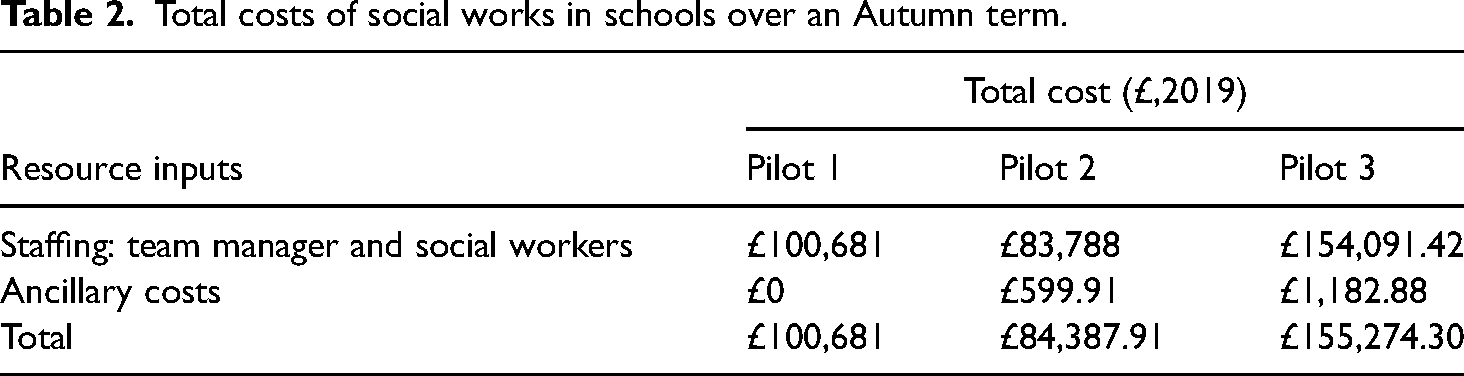
Total costs of social works in schools over an Autumn term.
Analysis
To answer Research Questions 1 and 2, we drew on interviews, focus groups, and observations. We analyzed the qualitative data using a retroductive approach consistent with realist evaluation (Lewis-Beck et al., 2004; Olsen, 2010). Initially two researchers, working independently, read all transcripts and coded passages thematically in Nvivo 12 to create a list of themes and sub-themes. A second stage of analysis involved the wider research team in discussion groups based on the coding, an initial program theory and logic model that was developed with implementation colleagues at the start of the project, and our experiences of doing the study. Analysis therefore used a combination of inductive and deductive reasoning. This resulted in the findings discussed below, and a refined logic model that is discussed elsewhere (Westlake, et al., 2020).
To answer Research Question 3, we used administrative data on rates of social care outcomes. We used a difference-in-differences (DiD) model with cluster-robust standard errors and fixed effects by school to estimate the impact of SWIS. This compares schools with similar historical trends in certain outcomes, to assess whether the intervention made a difference in these trends during the study period. We matched schools based on existing statistical similarities in relation to historical trends for these outcomes for the autumn term periods over years prior to the pilot, and then measured whether and how they differed once the pilot started. 1 We pooled estimates from each site in a fixed-effects meta-analysis model (equivalent to specifying a generalized linear mixed-effects model with random intercepts) to create a pooled effect.
For each outcome, we compared intervention schools against matched control schools. This analysis relies on the assumption that outcome variables between the pilot and control schools exhibit parallel trends prior to the start of the intervention. Because all outcomes could be measured as counts, we used a Poisson link with “number of students in each school in each term” as the exposure scaling variable. The resultant coefficients were expressed as incidence rate ratios. These are best understood as the multiplicative change in the count of the outcome against a reference group, standardized by number of students in the school for that term. So, for example, a rate ratio of 1.5 is interpreted as a 50% increase in the rate of an outcome, and a rate ratio of 0.5 is interpreted as a 50% decrease in the rate of an outcome, compared to a reference time point. 2
We also estimated the cost to setup and deliver SWIS over the 4-month Autumn period (September to December 2019). Any ancillary costs reported were annuitized, based on the replacement cost and the useful life of the item. A 4-year lifespan was assumed and a discount rate of 3.5% was applied to estimate the annuitization factor and thus the value of ancillary costs over the Autumn term. The currency used was pound sterling (£), with 2019 as the reference financial year. No discounting was applied to staffing costs as all costs occurred within the study period, which did not exceed one year.
The study was approved by Cardiff University School of Social Sciences research ethics committee, and informed consent was obtained from all participants.
Findings
Feasibility of delivering SWIS
All the pilots succeeded in changing the way they worked with schools through the project, and the practical aspects of implementation and challenges faced were relatively consistent across them. However, there was significant variation between schools within each pilot, and this had consequences for how “SWIS” manifested in practice which we return to when considering scalability below. Our first three insights cover the central elements of feasibility, which appeared to be (1) the level of integration and embeddedness achieved, (2) the nature and scope of activities undertaken, and (3) the challenges associated with bridging organizational differences.
Integration and embeddedness
The extent to which social workers were embedded and able to integrate into schools was an important variable in how SWIS operated. In several schools in Pilot 1, workers had office bases and moved around freely, being visible and accessible to staff and students during breaks and between lessons. In Pilot 2, two workers occupied a dedicated office in the center of one of the secondary schools, a short distance away from the DSL. In contrast, in Pilot 3, the whole SWIS team were based in a small but centrally-located office in one of the secondary schools.
Each of these formats enabled some workers to integrate well into some schools, and there were examples where social workers became, as one manager put it, “part of the furniture” of the school (Social work manager, interview, LA1). However, there are also examples in each pilot where it looked very different. In many schools social workers remained visitors, though often they could come and go as they needed and schools welcomed them. Some schools lacked the physical space to accommodate workers full time, and some were deemed (by themselves or social workers) to need less input than other schools which were larger or had greater social care needs. A minority of schools were more reluctant to adopt an embedded model and opted instead for scheduled drop-in sessions or ad hoc input that fitted better with their routines and ways of working.
Even when physically embedded, the extent to which workers were integrated into schools varied. Some were absorbed into the school's pastoral team, with constant contact with staff and students and portrait images of them featuring on safeguarding posters. As one member of secondary school staff we interviewed explained about their social worker, “she's got a staff lanyard, … her face is on the safeguarding posters, …we’re building a nice community here where students can trust staff. They see her as a member of staff here, and I think that's really important” (Secondary school staff, interview, LA1).
Others were more isolated, in back offices without good access to resources and less accessible to others in the school. Considering all the iterations of the model, it seemed most effective when more time was spent physically located within the schools, and where workers appeared to be more integrated in other ways. While it is clear that some of the schools involved would prefer a more remote service from the social workers, the most compelling evidence of promise emerged from where workers were fully embedded.
Activities and scope of the role
Although statutory work was the stated focus of SWIS, in reality the role tended to be much broader. As the “ultimate policy makers” (Lipsky, 1980), workers used the freedom of developing a new role in a different agency to adapt their remit. The most obvious manifestation of this is that many activities involved children who were not the subject of a Child in Need or Child Protection plan. Workers recounted early intervention work or actions designed to prevent an escalation of lower-level risks, or more general advice and support. Examples include speaking with a child who wanted to know more about the private law proceedings their parents were engaged in, and supporting a young person around the process involved in disclosing sexual abuse. The move from local authority to school brought them into contact with these children and enabled this type of work to become part of the social workers’ day-to-day activities. In general, workers valued this and were active in making it part of their role.
Related to this, the role was said to require a greater level of autonomy and isolation than other social work roles. This required workers to be confident and resilient in order to avoid, as one social worker described, being “pulled apart” in a “very strong network [of other professionals] that disagrees with you quite a lot” (Social worker, interview, LA3).
Cultural and organizational differences
Differences between organizational cultures and approaches to safeguarding are central to the literature on inter-agency working, but often the challenges are discussed in general terms (Darlington et al., 2005). This can obscure the specific issues and make them more difficult to address, but these pilots make the challenges more transparent. For example, all three illustrated differences between how schools and social care interpret issues such as lateness and behavioral problems. Often, schools would take what social workers felt was an overly disciplinarian stance on these matters, whereas the social workers’ approach was presented as more curious about why children were late, or what was going on at home to cause them to misbehave. Similarly, when children arrived wearing attire that deviated from the school uniform, social workers felt they were more likely to consider issues of neglect than school staff. For example, one worker explained: One of the main issues for me was about staff at school and their approach to children. Sometimes they speak to children in a way that is not helpful to them to start their school day when they may have already had a whole host of difficulties before they’ve arrived at school. (Senior social work practitioner, focus group, LA2)
Along with these differences, which might be thought of as “cultural” or “value” based, the contrasting working patterns of the two agencies also became clearer. Social workers developed a better understanding of how the regimented timetabling of school days leaves school staff small pockets of time to attend to safeguarding issues. Likewise, school staff seemed to have a better grasp of the unpredictable and crisis led nature of social work, and how this shapes their whereabouts and routine.
Impact of SWIS on social care outcomes
We found some evidence of a positive impact on the key outcomes we studied in each pilot, though as Figure 2 shows the findings were mixed. Interestingly, we found a reduction in Section 47 enquiries in two of the pilots (1 and 2), but no evidence of an effect on numbers of days children spent in care in the two pilots (2 and 3) where we examined this. In Pilots 1 and 2, significantly fewer Section 47 enquiries were registered post-intervention in SWIS schools. For example, in Pilot 2, implementation of SWIS was associated with a drop of 35% in the incidence of Section 47 enquiries as compared to the time trend in comparator schools. Though analysis of Pilot 1 suggests a statistically significant effect, interpretation of this is difficult because the regression coefficients were unstably estimated due to a limited sample size and low incidence rates. Findings in relation to Section 17 starts were also mixed. Pilot 3 showed a 53% decrease in the incidence of Section 17 starts in intervention schools as compared to comparison schools, which was statistically significant. Conversely, Pilot 2 exhibited an increase in Section 17 starts among intervention schools, though this was not statistically significant. Although this suggests a significant and substantial benefit of the pilot, it should be replicated at a larger scale before we can draw firm conclusions. Only two pilots provided data relating to days in care; SWIS did not have a significant impact on reducing the count of days in care in either site.
Pooled impacts reflected these mixed results, with imprecisely estimated confidence intervals. Overall, these results are encouraging and suggest the approach is worth exploring further, while not providing strong evidence of a positive impact.
Our qualitative impressions can aid the interpretation of the effects that we have identified on Section 17 and Section 47 starts, though further work is needed to draw more reliable conclusions. Certainly, social workers within the schools seemed to have a better understanding of the issues children faced through being immersed within the school and in regular informal contact with staff and students. This may help them reduce the risks to children directly, and consequently the need for Section 47 work, as well as offering reassurance to school staff who may otherwise refer to CSC. It is also logical—and supported by what social workers told us—that some families, who were not on the CSC radar, will enter the system through Section 17 because of the social worker's presence in the school. The worker may become concerned about such children, or endorse the existing concerns of school staff who were previously hesitant about referring.
Costs of setting up and implementing SWIS
The cost of having social workers based in schools ranged from £84,387 to £155,274 over the autumn term, the majority of which were staffing costs (Table 2). Pilot 1 did not report any ancillary costs in their financial claims. Pilot 2 purchased six phones, six laptops and carried out a refurbishment of a room at one of the schools where social workers were based. For Pilot 3, ancillary costs were made up of setting up a base for the social workers and training.
Discussion
Key components
In all the local authority pilots, the SWIS intervention was shaped by the social workers and schools that were involved. To some extent, each worker—with the support of their manager and wider team—had to develop their own version of the intervention to fit the school/s they were working with. Nonetheless, there appear to be a few components of the model—as it was delivered in the majority of locations—that were thought to be particularly important;
Social workers need to be physically present, accessible, and visible to school staff, children, and families. The intervention is open to the whole school, not just those who are known to social care. Social workers need to be able constructively challenge school practices.
For some schools this was best achieved by a drop-in approach, where workers would regularly spend time in the school and interact with staff and students. Even this varied in format, from scheduled time slots to ad hoc but more regular periods of time spent in schools. In others, being based full time on the school premises seemed to be more in keeping with the aims of the pilot. If the more embedded and integrated approach is thought to be more effective—as it was by many social workers and school staff—then this is a systemic challenge of delivering the intervention, as the same pattern was evident in all three pilots. The approach seemed to work better when workers were more integrated, because they were visible and available to staff and students. However, some schools seemed to prefer a more remote interaction with social workers, which can be interpreted as a sign that the approach needs a degree of flexibility built in.
Social workers in all three pilots came into contact with young people who were not known to CSC and who did not become the subject of child in need or child protection plans. Some creative work was observed with young people who would not otherwise encounter a social worker. There were clear benefits of a social worker talking to young people about healthy relationships, for example, or group sessions where specific risks are discussed. However, implementers will need to consider how this might fit alongside statutory social work for practitioners who have limited capacity.
Finally, an important feature of the SWIS role was thought to be the ability for social workers to act as a critical friend within schools, challenging practices where they feel they could be improved. There was a consensus that this worked better when social workers were experienced, assertive, confident, and comfortable in working in isolation from their own colleagues among a team of professionals who worked in a different way.
Strengths and limitations of the evaluation
The chance to explore SWIS in three contexts generated a nuanced picture of how such an approach can be done across a range of schools. Being a set of feasibility studies, it was more important to understand how social workers interacted and engaged with schools than it was to examine the impact they might have on care outcomes. Nonetheless, our comparative analysis does give some useful indications of impact and, alongside the promising qualitative evidence, this suggests they should be examined further. The timescale available for the evaluation precluded the inclusion of medium or long-term outcomes, and longitudinal work may help to address this in future. The amount of data we collected varied between pilots, due to practical and logistical issues such as the availability of workers and families during our fieldwork visits. Furthermore, the schools varied in the nature and extent of pastoral support they had, so while comparisons were with “usual practice,” it is important to note that this was not consistent.
Conclusions
This feasibility study aimed to describe and understand how SWIS was implemented across three LAs. The results of our quantitative analysis of impact suggest that SWIS may have the potential to benefit children and reduce CSC involvement in their lives, though the qualitative descriptions of the intervention and how it may bring about such an impact are a stronger basis on which to explore SWIS further.
In this vein, we offer three observations. First, SWIS needs a degree of flexibility because of the varied contexts to which it is being applied. We noted the heterogeneity of the English school system above, and alongside the overt differences between the specialisms or governance of different types of schools, the more subtle variations between schools involved were also important. The “culture” of an organization may be nebulous, but it can shape how an intervention such as SWIS is delivered. Some flexibility in how SWIS is implemented therefore seems necessary, and future evaluations need to be designed in ways that accommodate a less rigid notion of “fidelity” than other interventions might. Indeed, on this evidence, SWIS is unsuited to narrow manualisation, and understanding variation in how interventions are practiced is an important part of developing a theoretical grasp of their value (Leventhal & Friedman, 2004). In this sense, SWIS might be a case study in support of Orford’s (2008) calls to avoid “neglecting relationships in favor of techniques” and to take account of the “tacit theories” of those involved (Orford, 2008). At the same time, this may prove challenging for those trying to implement or evaluate it.
Nevertheless, while flexibility at the program level of SWIS is necessary for it to fit across different school contexts, too much flexibility at the level of individual SWIS workers may be undesirable. Our second observation is that the roles of individual social workers in SWIS would benefit from being more clearly defined. In multiagency settings it is important that professionals maintain a clear remit and professional identity rather than each role becoming indistinguishable from the others in a multi-agency “soup” (Lilo & Vose, 2016; Pickford, 2000). The pilots highlight this dilemma, particularly through examples where workers were doing tasks that might otherwise be undertaken by other professionals, such as education welfare officers or school attendance workers. This raises questions about the informal expansion of roles and responsibilities. Chief among these are: at what point does the remit become unfeasibly wide? Could it mean other important tasks are deprioritized? Does it lead to duplicating or replacing the work of others? And might this circumvent a focus on the outcomes that SWIS is designed to achieve? In any case, it will require careful implementation if this balance between program-level flexibility and a clear remit for individuals is to be struck.
Individual SWIS workers are central to this, and our final observation is that the role requires high levels of skill and may be more challenging for less experienced workers. Working as a social worker in a school seemed to amplify the importance of skills such as relationship building and decision making, due to the more remote and isolated nature of the role. Workers also needed to regularly assert their professional viewpoint, or present a social care position on an issue amid opposition from other professionals. These three areas should provide a focus for the next stage of development of SWIS.
Footnotes
Ethical approval
Ethical approval for this project was given by the Cardiff University School of Social Sciences ethics committee (reference number: SREC/3176).
Funding
This study was funded by What Works for Children's Social Care.
Declaration of conflicting interests
The authors declared no potential conflicts of interest with respect to the research, authorship, and/or publication of this article.
Authors’ contributions
All authors contributed to the study in various ways. CC, ST, MM, RT, LF, SA, and DW conducted fieldwork and qualitative analysis. GJMT and ES undertook quantitative design and analysis. AEB designed and delivered the economic analysis. LC was responsible for administration and project management. As principal investigator, DW led the study, including the overall study design and the writing of the paper. All authors reviewed and edited drafts of the manuscript.
