



Abstract
Summary
This article reports on research exploring the perspectives of Australian social work and human service professionals about environmental practice. An online survey consisting of quantitative and qualitative questions was conducted, recruiting 303 participants from the human services sector. Quantitative data were analyzed descriptively using SPSS and qualitative data analyzed thematically using NVivo.
Findings
Overall, results indicated that participants strongly supported an environmental focus in human services at personal and professional levels of practice. However, while participants expressed values supporting environmental practice, its implementation was less frequently reported. The adverse impacts of climate change were reported as strongly impacting the well-being of service users, and a general lack of support from employing organizations to facilitate environmental practice was evident. Despite a strong belief in the value of Australian First Nations knowledges, limited engagement with Australian First Nations peoples was practiced.
Applications
Implications suggest the need to examine the practical realities of environmental practice including the disconnect between values and action. Given that participants reported adverse impacts of climate change on people and communities, but faced significant challenges implementing environmental action, the need to disrupt barriers caused by the dominant neoliberal discourse is critical. Likewise, disrupting the prevailing colonialist discourse by working alongside First Nations peoples to decolonize society and the profession is essential for enacting principles of environmental sustainability.
As the environmental crisis unfolds, changes to climate are adversely impacting human health and well-being in a variety of ways, including a lack of access to clean air, nutritious food, clean water, safe shelter, and positive health outcomes (World Health Organisation [WHO], 2021). Consequently, social work and human service professionals are engaging with people and communities affected by environmental degradation and climate change as part of everyday practice (Alston et al., 2019). Climate change, involving an increase in greenhouse gas emissions, is causing unprecedented rises in temperature trends and subsequent changes to typical climate patterns, resulting in extreme weather events including heatwaves, fires, floods, and droughts (Intergovernmental Panel on Climate Change [IPCC], 2023). According to Islam and Winkel (2017), climate change and social inequality are deeply intertwined, with marginalized communities experiencing disproportionate exposure and susceptibility to environmental problems and climatic events. This inequity is a core concern for social work and other professions purposed towards promoting social justice and improving well-being. In order to engage effectively with these issues, it is important to understand the perspectives and experiences of Australian social work and human service professionals in relation to environmental practice.
Understanding environmental practice in social work and human services
The human services workforce in Australia encompasses a wide range of roles and professions (including social work, psychology, counseling, community work, and several others) working to improve the health and well-being of individuals, groups, and communities (Chenoweth & McAuliffe, 2021). Across the sector, there has been an increase in interest in the impacts of climate change and the role that these varied professions have in ameliorating the effects on people and communities (Forbes & Smith, 2023; Howard et al., 2022). Social work is one of the largest professions in the human services sector (Australian Institute of Health and Welfare, 2021) and, as a profession, has engaged theoretically and practically with environmental practice for a significant period (Deepak et al., 2023; International Federation of Social Workers [IFSW], 1996).
Although literature relating to environmental practice in social work has proliferated over recent decades, its conceptualization is still developing. According to Ramsay and Boddy (2017), environmental practice seeks to help people create and maintain a healthy, sustainable, and biodiverse ecosystem for all living organisms. It also recognizes that human and environmental well-being are interdependent (Boetto, 2017), which is a core belief of many First Nations peoples (Billot et al., 2019) and is concerned with injustices caused by an unfair distribution of environmental resources and risks (Dominelli, 2012). Of significance to environmental practice is a holistic understanding of the place of humans in the natural world involving a conceptualization of the (human) “self” as a relational part of a much larger ecological system (Boetto, 2017). Social work has used various terms to denote environmental practice, including ecological, green, and ecosocial work. Despite these varying terms, the overall shared purpose is to identify a practice approach that centers planetary health for the well-being of all living organisms. For the purposes of this article, the term “environmental practice” is adopted for its interdisciplinary application within the human services sector.
Critical understanding of environmental practice recognizes the influence of dominant modernist discourses in society that contradict environmental sustainability (Boetto, 2019). At the heart of this critical understanding is recognition that pervading colonial structures and imperialist behaviors of Euro-Western nations cause environmental degradation through the appropriation of Indigenous lands (Billot et al., 2019; Hiller & Carlson, 2018). Wiradyuri and social work scholar Green (2023) argues that climate change is a direct result of colonialism; in contrast, First Nations’ cosmologies have guided humans to live in harmony with the natural environment for eons. Green calls for social work to prioritize decolonization, and to take responsibility for “working alongside Indigenous people to disrupt the ideologies and spaces that allow colonialism to continue to flourish” (p. 114). This decolonizing approach requires White Euro-Western social workers to examine their positionality and patterns of White privilege within the profession that reinforce colonial structures.
Enmeshed in the colonialist discourse is the prevailing neoliberal discourse, which advances a free-market economy and profit-making strategies, critiqued for causing environmental degradation through the exploitation of Earth's natural resources (Dominelli, 2019). According to Matthies et al. (2020), social work needs to critique its co-dependency between the welfare state and neoliberalism to alleviate poverty and seek fairer and more sustainable alternatives. Neoliberalism is embedded within the fabric of Euro-Western society, including the social work profession (Hyslop, 2016; Webb, 2007) and human service organizations that commonly operate according to task-focused and market-oriented principles (Greenslade et al., 2015; Wright et al., 2011). Shaped by capitalist structures, neoliberalism gives prominence to individualist, economic, competitive, and managerialist notions of welfare, including the commodification of relationships between service users and service providers (Dlamini & Sewpaul, 2015; Heron, 2019). Consequently, micro-level practice is commonly favored over macro-level practice, placing the profession at risk of being complicit with neoliberal structures that contradict environmental sustainability (Närhi & Matthies, 2018; Panagiotaros et al., 2022). Transformative change involving action at all levels of practice, including the personal (self), individual, group, community, and structural levels, is therefore needed to disrupt inherent modernist assumptions that undermine environmental practice (Boetto, 2017).
Progressing environmental practice in social work
Social work has committed to the global effort required for repairing biodiverse ecosystems and alleviating the adverse impacts of climate change (Cordoba & Bando, 2022). This commitment has been ratified by the IFSW recent policy position supporting the profession's role in co-building a new ecosocial world (IFSW, 2022). Specific to this policy is a holistic rights framework inclusive of the natural environment, and a call for social workers to adopt environmental approaches that support sustainable development. Further, IFSW member countries, such as Australia, the United States, and the United Kingdom have integrated environmental practice obligations within their codes of ethics (Bowles et al., 2018). Together these changes evidence a movement within the profession to promote environmental sustainability and places an ethical imperative on social workers to undertake environmental practice as part of day-to-day practice.
Notwithstanding this ethical obligation, social workers face various challenges associated with the practical realities of environmental practice. Despite research establishing social worker concern for the natural environment decades ago (e.g., Soine, 1987), integrating the natural environment into mainstream practice has been difficult (e.g., Boetto et al., 2020; Marlow & Van Rooyen, 2001). A comparative study by Boetto et al. (2022) with social workers in Finland and Australia identified various professional and organizational constraints preventing practitioners from enacting environmental practice, including restrictive organizational contracts, difficulties with management, and resource shortages. Similarly, a study by Slattery et al. (2023) with social work educators from six countries, highlighted constraints to environmental practice as occurring in national contexts of socio-political systems emphasizing market-oriented principles and limited support from professional accrediting bodies. These practice challenges are concerning in the context of research highlighting the adverse impacts of climate change on service users, including a lack of access to healthy food, unsafe play spaces, air pollution, and extreme weather events (Nesmith & Smyth, 2015), as well as physical and emotional health issues, and infrastructure damage caused by disasters (Allen, 2020).
Building on this research, the current study surveys the perspectives of Australian social work and human service professionals about environmental practice, including personal beliefs and behaviors, professional practice interventions, climate change impacts, and the practices and policies of organizations and professional associations.
Methodology
Design
This research explored the question: “What are the perspectives of Australian human service professionals about environmental practice?” A mixed-methods design, collecting and analyzing quantitative and qualitative data sequentially based on Creswell and Plano Clark (2011) was used. The components in this research consisted of a structured online survey including quantitative (scaled) and qualitative (open-ended) questions followed by a series of focus groups. This article reports on the descriptive quantitative and qualitative outcomes of the online survey. Bayesian Network Analysis (Nguyen, 2021) was also undertaken with the quantitative data to explore relationships between variables and these findings will be reported elsewhere, as will the outcomes of the focus groups.
The survey
The online survey was based on a national survey of social workers in Finland (Nöjd et al., 2023). In consultation with the Finnish researchers, the survey was adapted to an Australian context and modified to take account of differences between countries relating to the structure of the social work and human services sector, the context of the natural environment, as well as language and intercultural factors. For example, climate conditions listed in the Australian survey were modified to include drought and bushfires. Six sub-questions from the Australian Survey of Social Attitudes (McNeil et al., 2021) were included for analysis in a future article. The framework used for conceptualizing the survey was based on Boetto's (2017) transformative ecosocial work model, which incorporates a congruent philosophical base across ontological (being), epistemological (thinking), and methodological (doing) dimensions of practice. Key aspects of this model were incorporated into the survey, including personal and professional domains of practice.
The survey addressed five topic areas relating to environmental practice: personal beliefs and behaviors; professional practice interventions; impact of climate-related issues on the well-being of people and communities; and policies and practices of organizations and professional associations. Demographic information was also sought, for example, gender, level of qualifications, and years of experience. Participants were asked to respond to two kinds of 5-point Likert-type scales: one on the “agree–disagree” continuum and the other on a frequency-based scale ranging from “always” to “never.” Participants were also asked open-ended questions to invite qualitative responses. The survey was initially pre-tested with people known to the research team before piloting under survey conditions with a group of 20 human service professionals. The appropriate ethics approval was gained from the university's human research ethics committee (Protocol number: H22038).
Recruitment
Using purposive and snowball sampling (Berg & Lune, 2012, p. 52), participants were recruited via: e-communication through university promotional activities to practitioners, students, academics, and alumni; social media platforms; direct email to large employing organizations; and through professional networks. The survey was open online from April to June 2022 on the Survey Monkey platform provided through the university.
Participants
A total of 303 participants were recruited to undertake the survey. As participants were not required to answer every question, valid percentages are reported for each variable to describe participant details below (Table 1).
Participant demographic information.
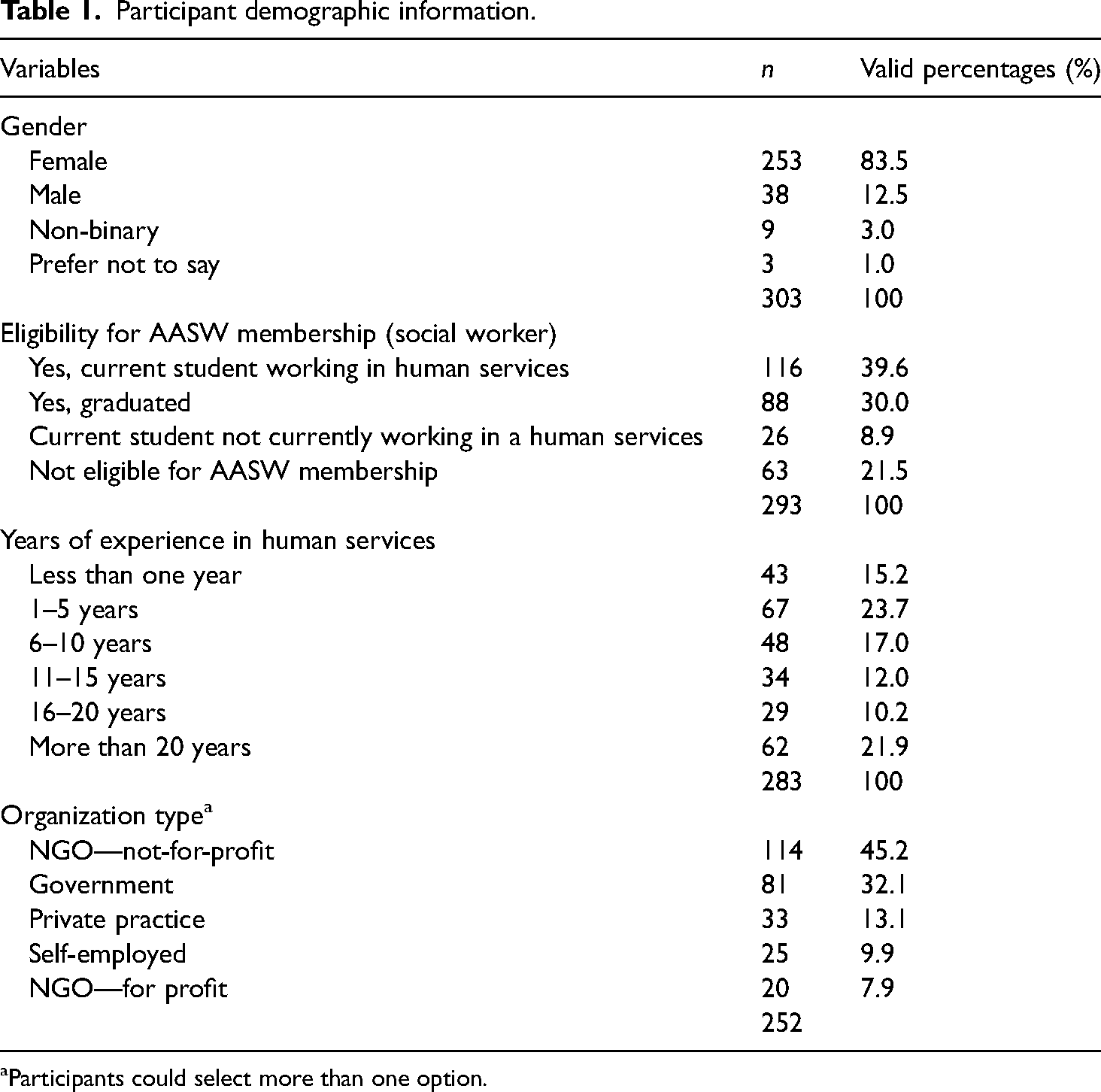
Participants could select more than one option.
Gender
Most participants in the study identified as female (83.5%), which reflects the gender composition of the social work profession in Australia where 84.0% of the workforce are female (Australian Government, 2021).
Human service professions
The majority of participants were social workers. Of the 293 participants who responded to the question about eligibility for membership with the national professional body, the Australian Association of Social Workers (AASW), 230 (78.5%) were eligible. Of these, 116 participants (39.6%) were students working in the human services sector, 88 participants (30.0%) were graduated social workers, and 26 participants (8.9%) were social work students not working in a human services field. Fifty-five participants (18.8%) indicated they were from professions other than social work, which included psychologists, community workers, educators, and counselors.
Years of experience in human services
While 43 participants (15.2%) had been working in the human services sector for less than a year, over half (n = 173, 61.1%) had worked in the sector for more than five years, with 62 of these (21.9%) for more than 20 years.
Organization type
Participants in employment were primarily drawn from not-for-profit non-government organizations (NGOs) (45.2%) and government organizations (32.1%), with smaller numbers in private practice (13.1%), self-employment (9.9%) and for-profit non-government organizations (7.9%).
Fields of practice
Participants also indicated the fields in which they currently or have previously practiced. The field in which most participants practiced was “children and young people” (n = 142), followed by “mental health” (n = 115) and “disability” (n = 94). It is noted that these fields were not mutually exclusive, and many participants indicated they worked in more than one field of practice, with 38 participants nominating 10 or more. In this question, 120 participants identified as a current student, of which 26 did not select any of the fields of practice listed.
Geographic location
Participants worked across a range of geographical regions, including metropolitan (large capital city), inner regional (population >50,000), outer regional (population between 5,000 and 49,999), rural (population <5,000), and remote (100 km from nearest town) locations. Some participants worked in more than one kind of region, for example via offering outreach services. The most nominated region was metropolitan (n = 100) and the least was remote (n = 11).
Data analysis
Quantitative data from survey questions were imported into SPSS and a descriptive statistics frequency analysis was used. For ease of interpretation, the 5-point Likert-type scales were re-coded into 3-point scales, collapsing the two points on either side of the middle score into one, as the following: “disagree—neither agree or disagree—agree” and “rarely—sometimes—often.” As the total number of valid responses differed from question to question, raw frequencies were converted to percent values for easier comparison. The calculation of relative frequencies is based on the non-missing values, and the valid percentage is used throughout this discussion. A variation in the number of responses was caused by participant drop-off as the survey progressed. Overall, between 229 and 271 people responded to each question in the second half of the survey. Exact numbers are provided in the tables.
Qualitative data from survey questions were collected through three open-ended questions where participants were provided the opportunity to share narrative details about the types of practice interventions they have implemented, practice interventions they would like to “try out in the future” and any further comments. Open-ended questions were completed by 147, 138, and 52 participants, respectively. All unstructured text responses were visually scanned, then exported into NVivo as a single data set and coded into categories and themes relevant to environmental practice. A deductive approach to coding was used based on an initial review of the survey responses and the topic areas included in the survey. Two members of the research team independently coded the data in NVivo to ensure consistency. Differences were discussed by the wider team to reach consensus. These qualitative data provide depth and meaning to the quantitative results.
Results
Results are reported according to the five main topics included in the survey: personal beliefs and behaviors; professional practice interventions; climate change impacts; organizational practices and policies; and professional associations’ practices and policies. Qualitative results are reported against the corresponding survey topics and identifying details are removed to protect participants’ privacy.
Personal beliefs and behaviors
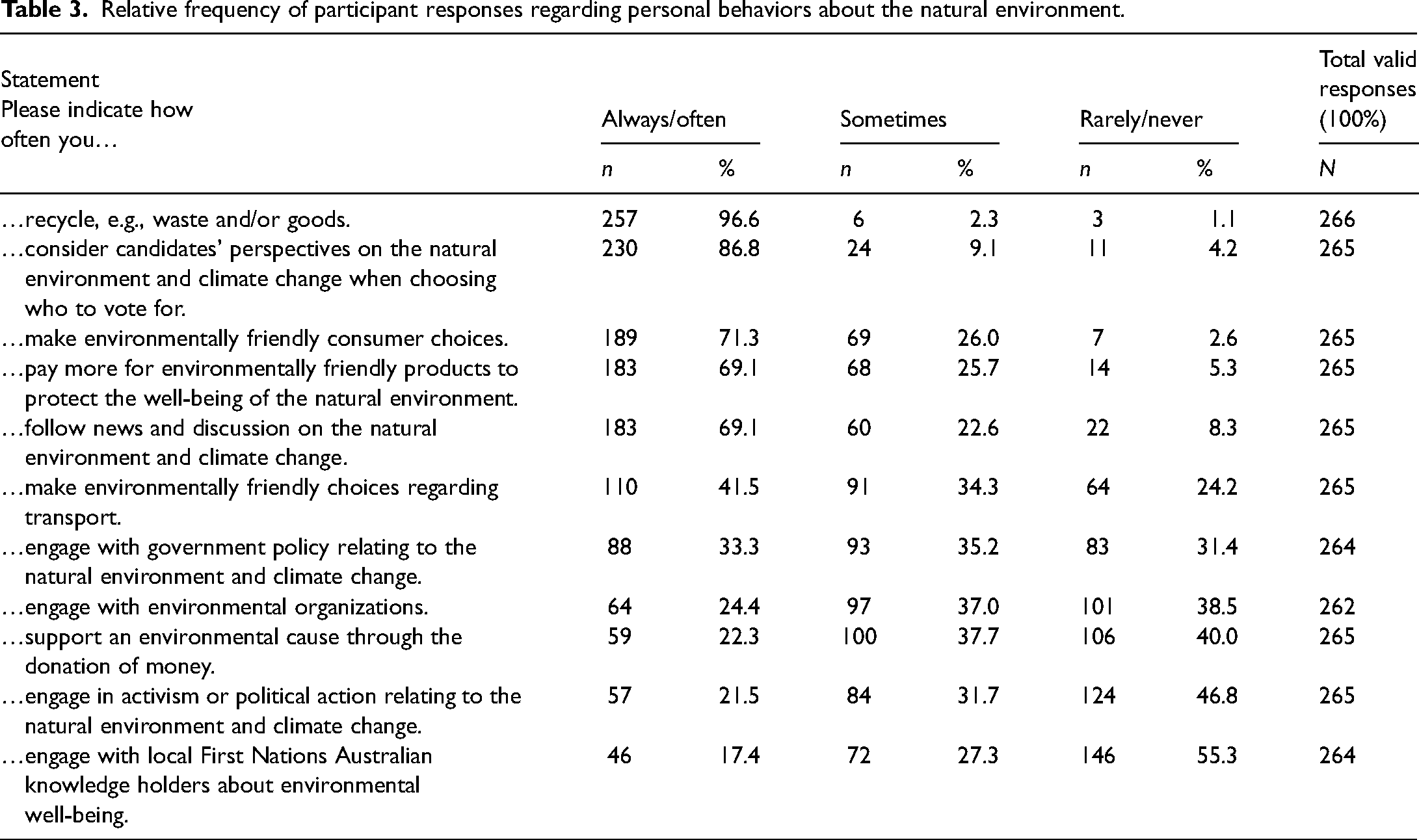
Participants were asked to respond to a series of statements about their personal beliefs and behaviors regarding the natural environment and climate change. Overall, participants reported positive personal beliefs relating to the importance of the natural environment (Table 2). In relation to their personal behaviors, participants reported both positive and negative responses (Table 3).
Relative frequency of participant responses regarding personal beliefs about the natural environment.
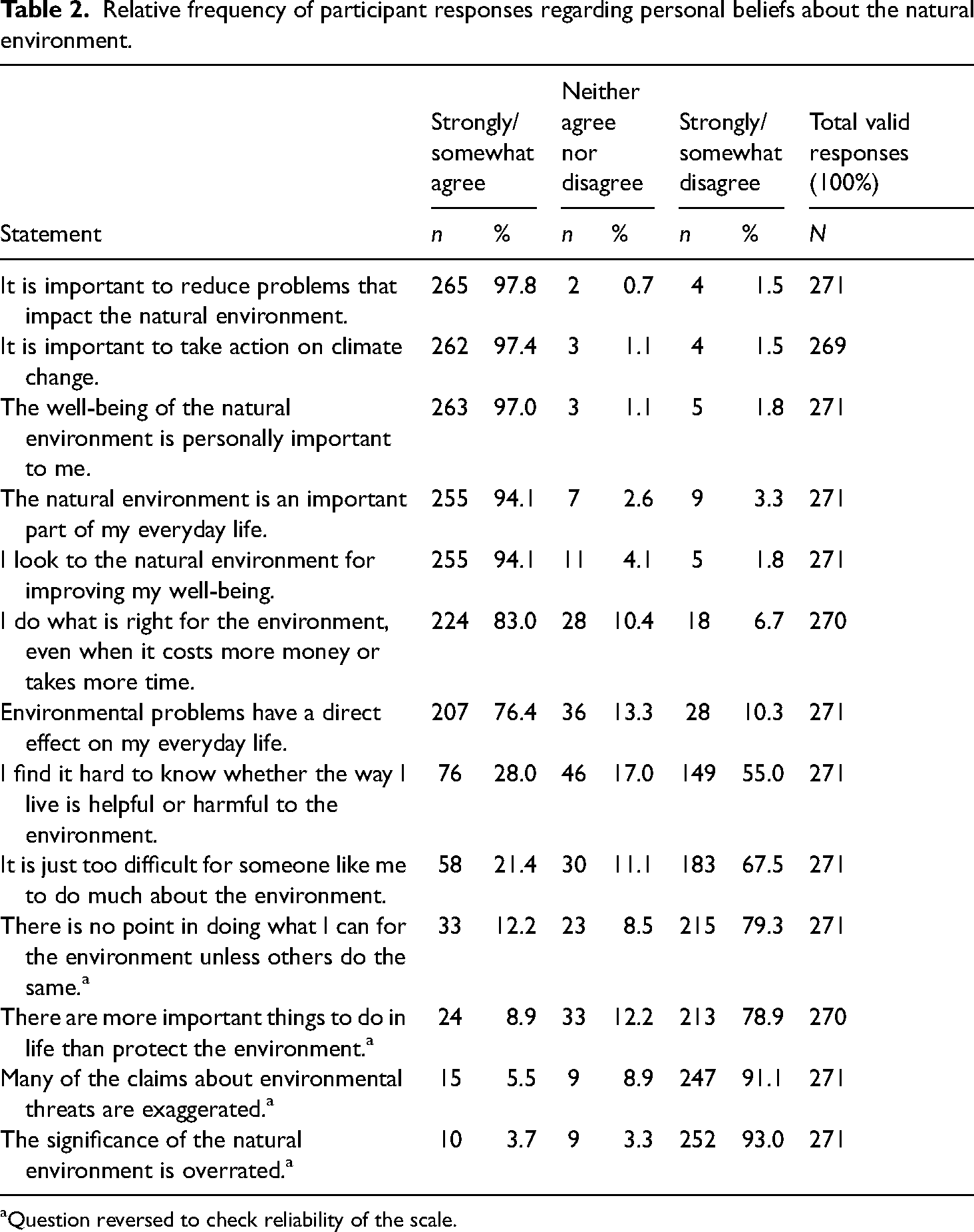
Question reversed to check reliability of the scale.
Relative frequency of participant responses regarding personal behaviors about the natural environment.
Personal beliefs
In relation to personal beliefs, participants responded positively to statements about the significance of the natural environment in their everyday life (Table 2). The highest responses by participants agreed with statements about the importance of reducing problems that impact the natural environment (97.8%) and the importance of acting on climate change (97.4%). Validating the reliability of the scale, most participants also disagreed with corresponding reverse statements about the significance of the natural environment being overrated (93.0%), and the exaggeration of environmental threats (91.1%). Although still in the majority, the fewest participants disagreed with negatively worded statements that it's too difficult to do much about the environment (67.5%), and it's hard to know whether the way they live is helpful or harmful to the environment (55.0%).
Personal behaviors
Participants reported varied responses about their personal behaviors in relation to the natural environment and climate change (Table 3). The highest responses by participants indicated environmentally supportive actions for recycling (96.6%) and voting according to the environmental position of candidates (86.8%). However, lower responses were reported with fewer than one quarter of participants engaging in activism or political action (21.5%) and fewer engaging with local Australian First Nations knowledge holders (17.4%).
Professional practice interventions
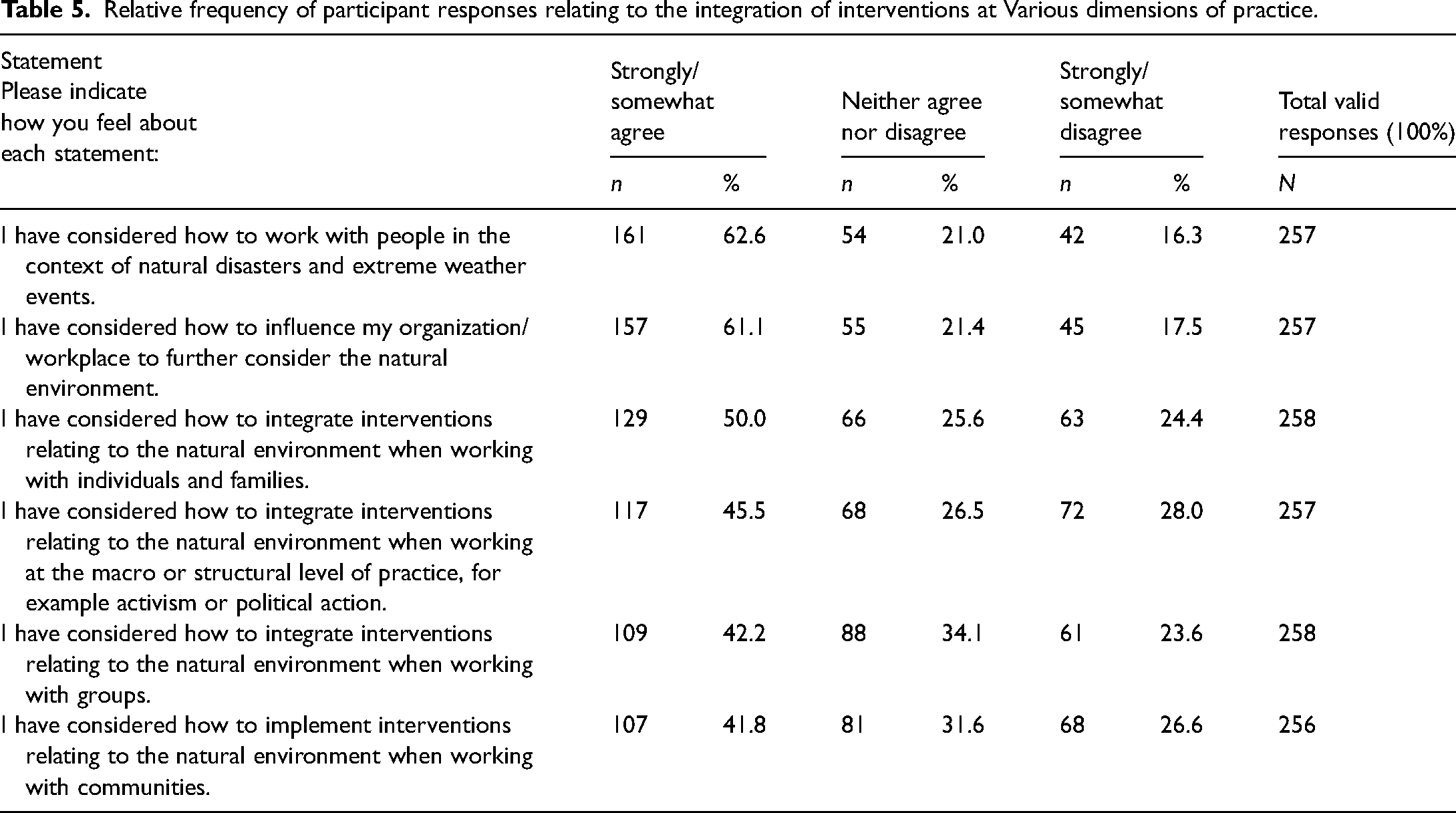
Participants were asked to respond to a series of statements about the natural environment and climate change at the professional level of practice, including their perspectives and interventions. Overall, participants expressed support for environmental practice at the professional level (Table 4); however, the implementation of interventions was less pronounced (Table 5). These results are illustrated by the following qualitative response: In my personal life I make many choices with the environment in mind (e.g., second hand, energy efficient, self-sufficient food) … but I don’t actively engage in discussions or interventions with clients around the natural environment unless raised by a client. (Participant 1)
Relative frequency of participant responses relating to perspectives on environmental practice.
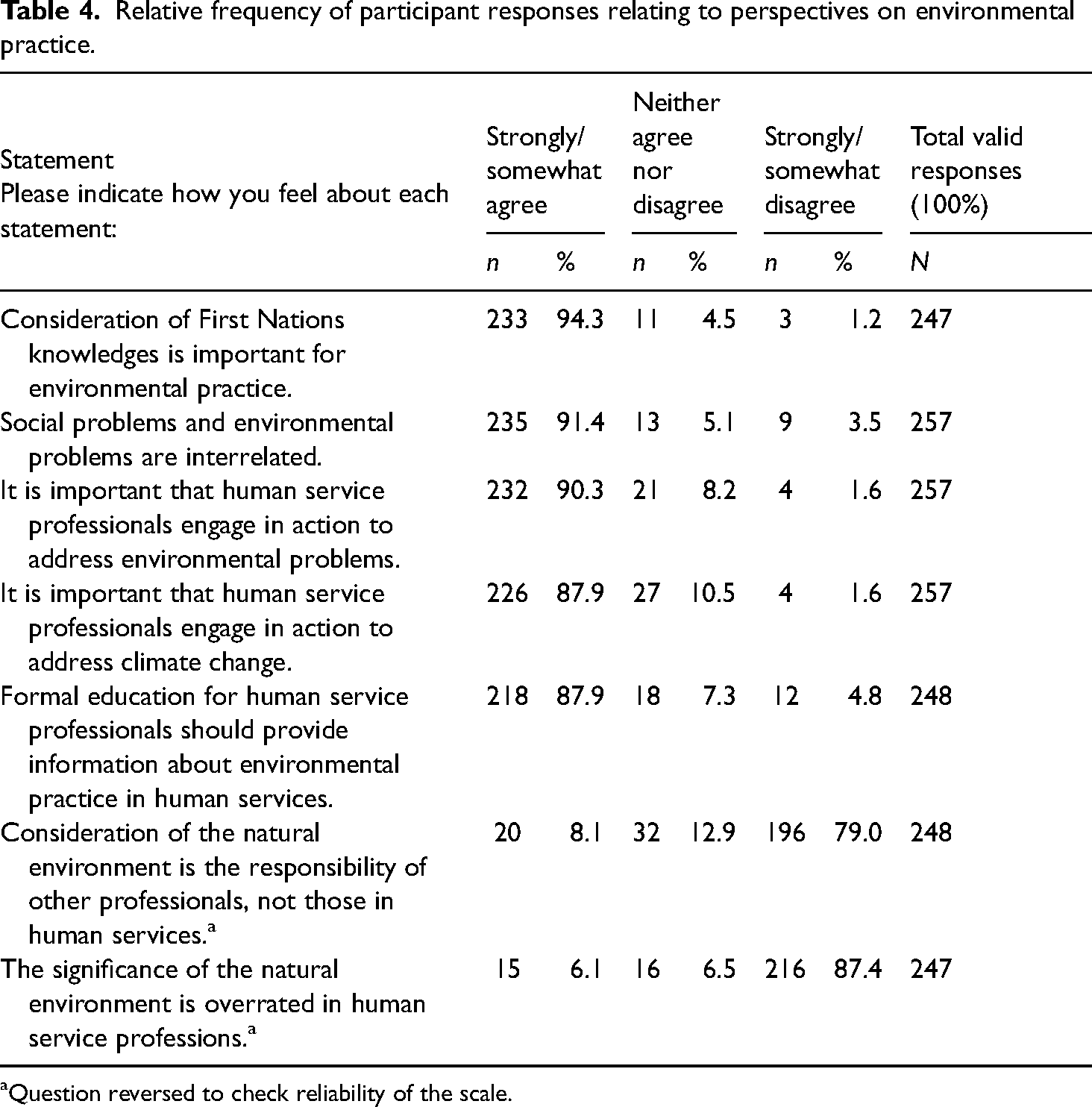
Question reversed to check reliability of the scale.
Relative frequency of participant responses relating to the integration of interventions at Various dimensions of practice.
Perspectives about professional practice
Regarding perspectives about professional practice, participants were asked to respond to statements relating to the responsibilities of human service professionals, formal education, Australian First Nations knowledges, and service user resources (Table 4). The highest responses by participants agreed with statements about the importance of Australian First Nations knowledges (94.3%) and the belief that social problems and environmental problems are interrelated (91.4%). Validating the reliability of the scale, most participants also disagreed with reverse statements that the significance of the natural environment is overrated in human service professions (87.4%) and that consideration of the natural environment is not the responsibility of human service professionals (79.0%).
When asked if service users have the resources (e.g., money, time) to implement environmentally sustainable solutions in their lives (N = 247), most participants disagreed (62.8%), approximately one-fifth were neutral (20.2%) and fewer than one fifth agreed (17.0%) (Figure 1). One participant's qualitative reflection highlighted the challenges associated with a lack of resources: I believe [one's] financial situation significantly affects how much people are able to contribute to climate action. As a student on a very low Centrelink income, I don’t have the luxury of always buying organic, environmentally friendly products…. Climate action is a very important issue to many low income people but taking direct action means having the finances … climate change action is very intertwined with economic privilege/deprivation. (Participant 2)
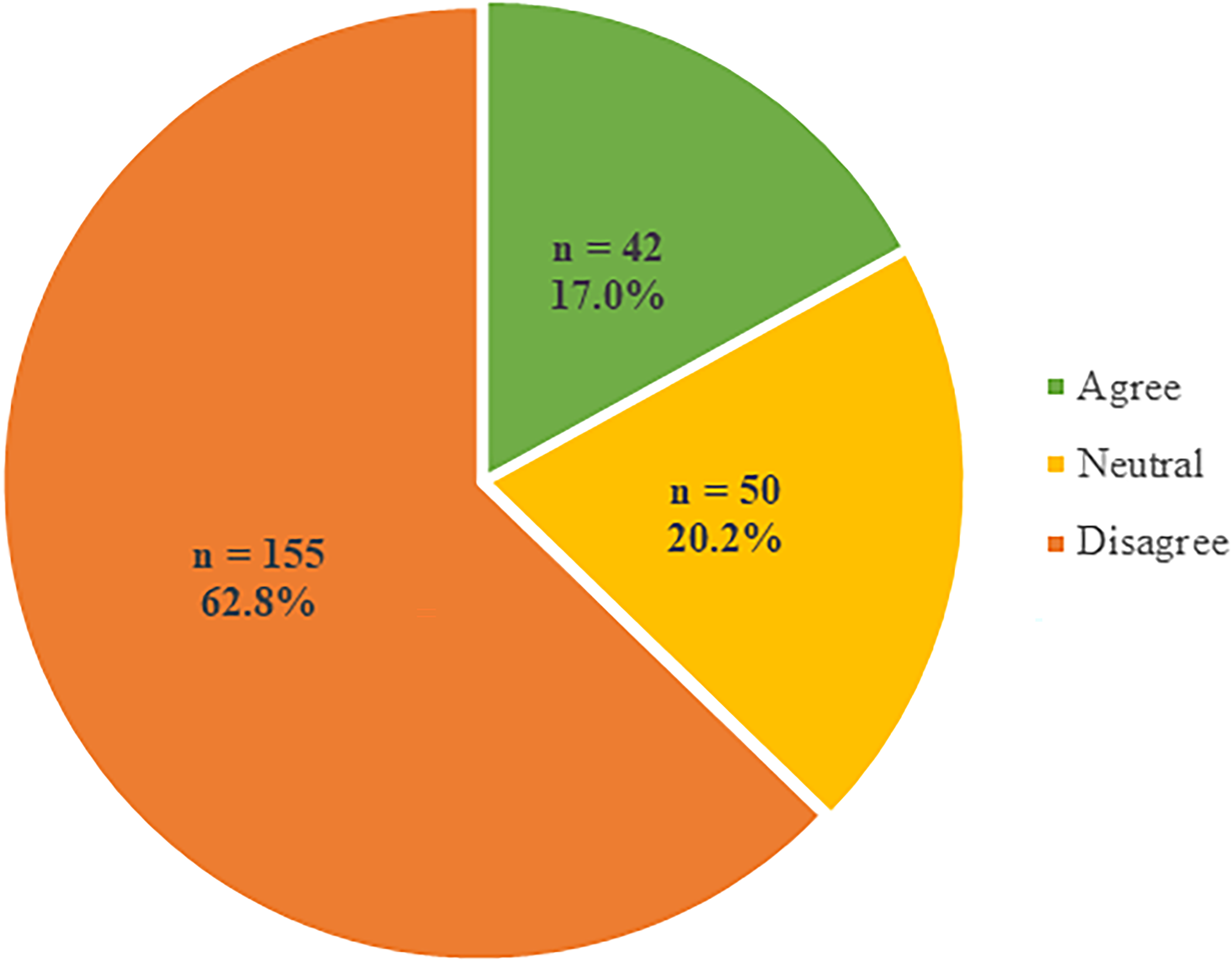
Relative frequency of participants who believe service users have the resources to implement environmentally sustainable solutions.
Professional practice interventions
When responding to the statement, “I know how to incorporate interventions relating to the natural environment into professional practice” (N = 255), most participants agreed (45.1%), approximately one-third disagreed (29.8%) and approximately one quarter were neutral (25.1%) (Figure 2). Qualitative responses identified the need for more information about environmental practice such as “I am currently studying, and it feels like the course has not caught up with the effects of climate change and what that means for the community. One small unit on environmental when it should underpin the whole course” (Participant 3).
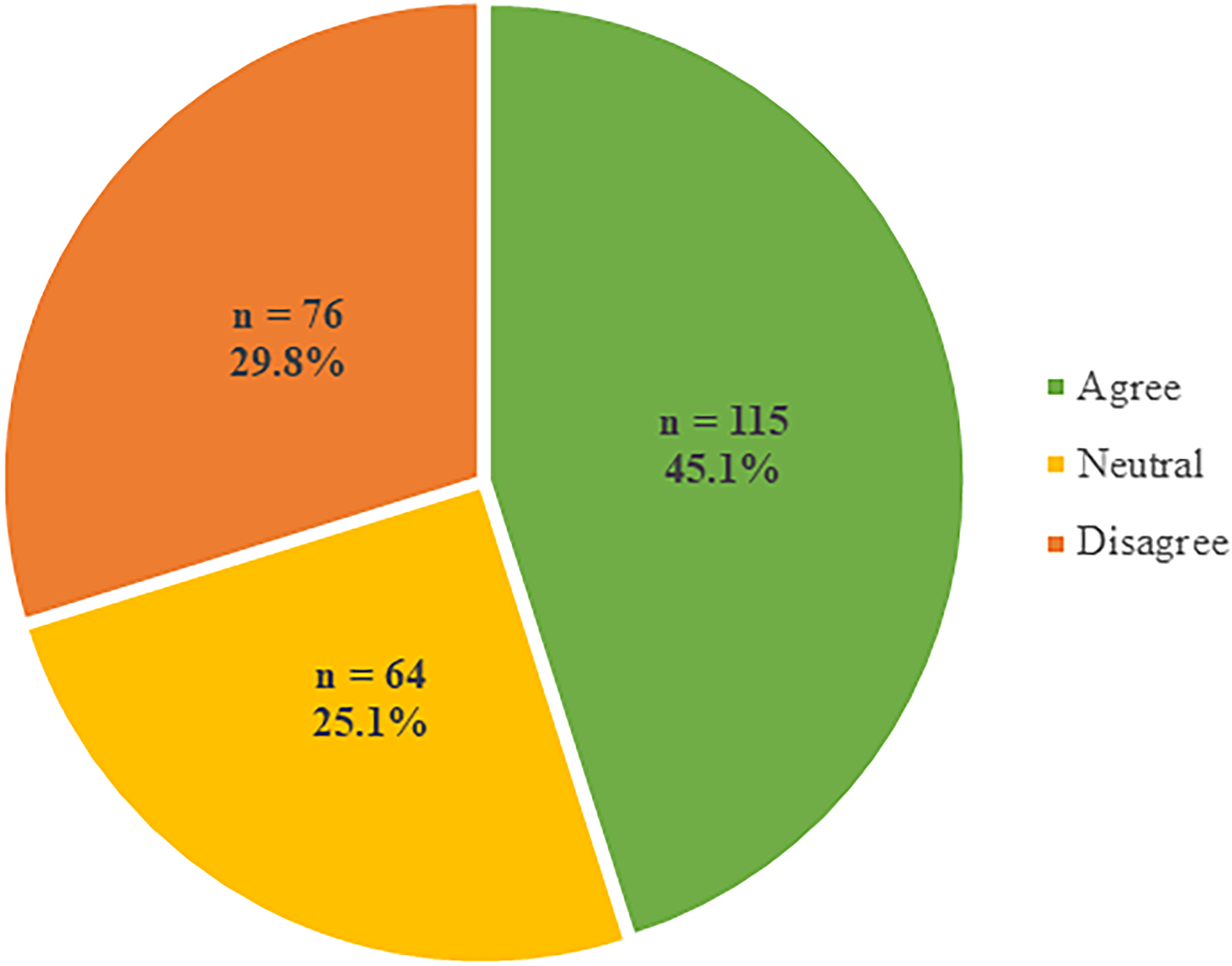
Relative frequency of participants who know how to incorporate interventions relating to the natural environment.
Participants were asked to respond to statements about whether they have considered the integration of the natural environment at multiple levels of practice, including the individual, group, organizational, community, structural and, in the context of disasters (Table 5). The level of practice with the highest number of participants who have considered the natural environment was in the context of disasters (62.6%), followed by the organizational (61.1%), individual and family (50.0%), structural (45.5%), group (42.2%), and community (41.8%) levels of practice. The following qualitative response indicates a reason for emphasis on natural disasters, “[I] believe social workers will be impacted by the coming effects of climate change. We need to be prepared to help people recover from natural disasters, drought, storm, flood, heat etc” (Participant 4).
Other qualitative responses described current interventions at multiple levels of practice, including the micro level (e.g., car-pooling, recycling, and changing food choices), meso level (e.g., instigating a paperless office, purchasing sustainably, and greening indoor spaces), and macro level (e.g., social and political action, activism, community gardens and education). One participant provided a detailed example of how to incorporate the natural environment into practice: Inviting clients to be aware of, and draw on, the parts of the natural world which support and sustain them. Proposing to management the introduction of practices such as walking/outdoor appointments. Buying plants for my office, lobbying to get more natural light in…. Seeking permission from management for clients to bring therapy animals. Raising idea of incorporating therapy animals into our practice in future. (Participant 5)
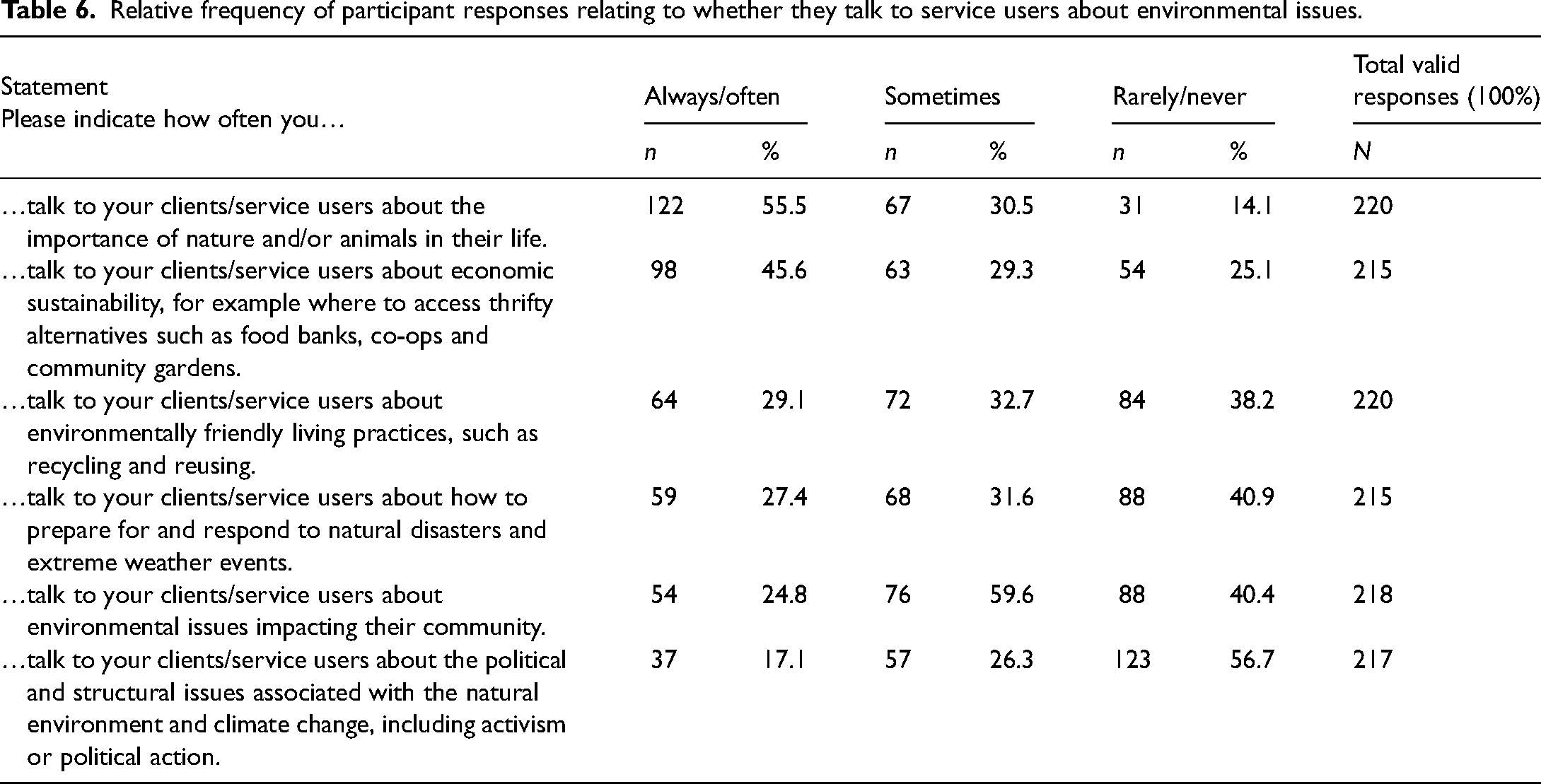
Participants were asked to indicate whether they talk to service users about environmental issues, including the importance of nature and/or animals in their life, environmentally friendly living practices (e.g., recycling and reusing), economic sustainability (e.g., thrifty alternatives), environmental issues impacting their community, disaster preparedness, and political and structural issues (Table 6). The type of environmental issues that participants talked to their service users about most was the importance of nature and/or animals (55.5%), followed by economic sustainability (45.6%), environmentally friendly living practices such as recycling (29.1%), disaster preparedness (27.4%), environmental issues impacting their community (24.8%), and political and structural issues (17.1%).
Relative frequency of participant responses relating to whether they talk to service users about environmental issues.
Climate change impacts
Nearly all participants agreed that climate change adversely impacts the well-being of people and communities they work with. When asked to respond to the statement, “environmental problems and climate change negatively impact the wellbeing of clients/service users” (N = 258), almost all participants agreed (93.4%), a minority were neutral (6.6%), and no participants disagreed (Figure 3).
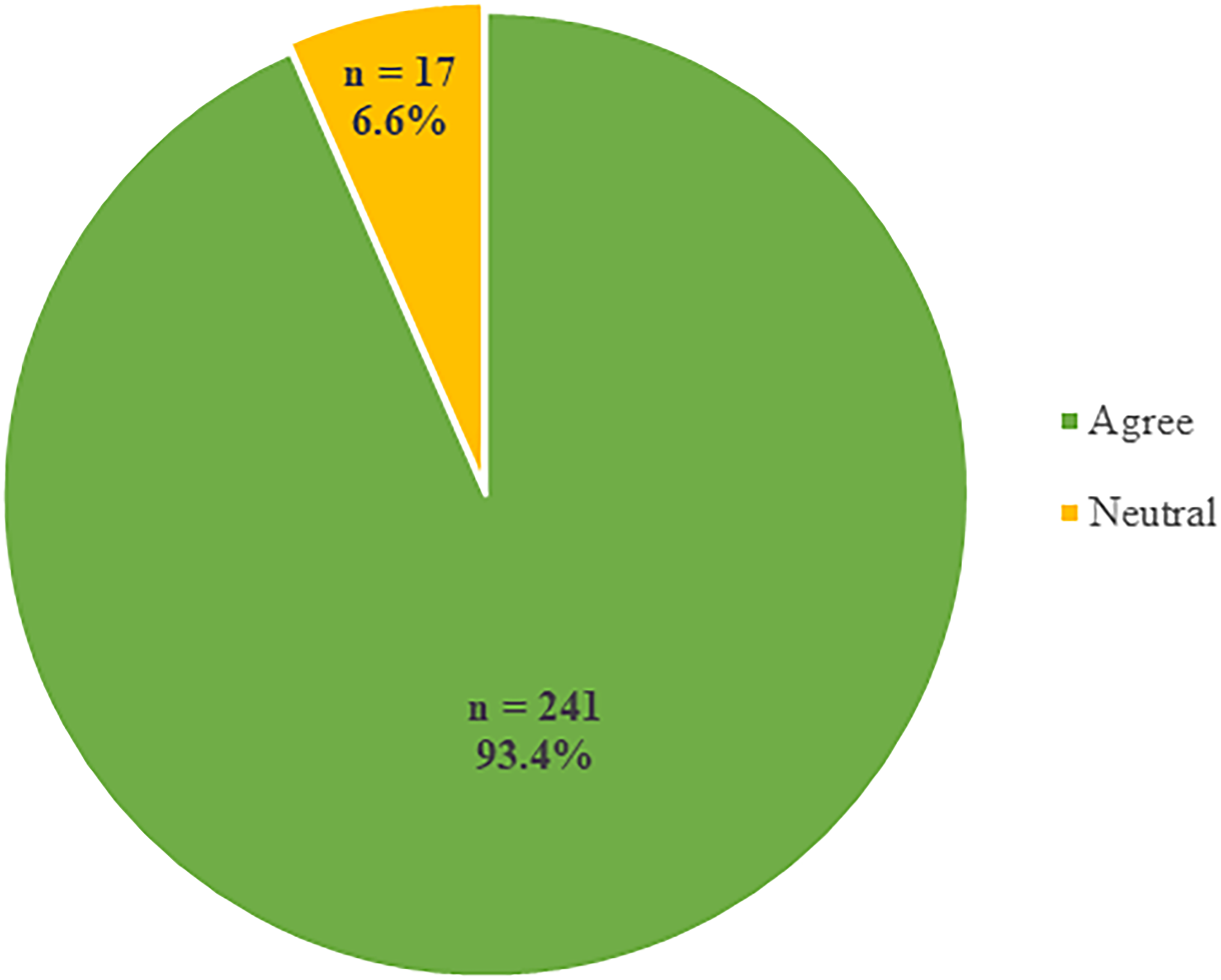
Relative frequency of participants who agree climate change impacts on service user well-being.
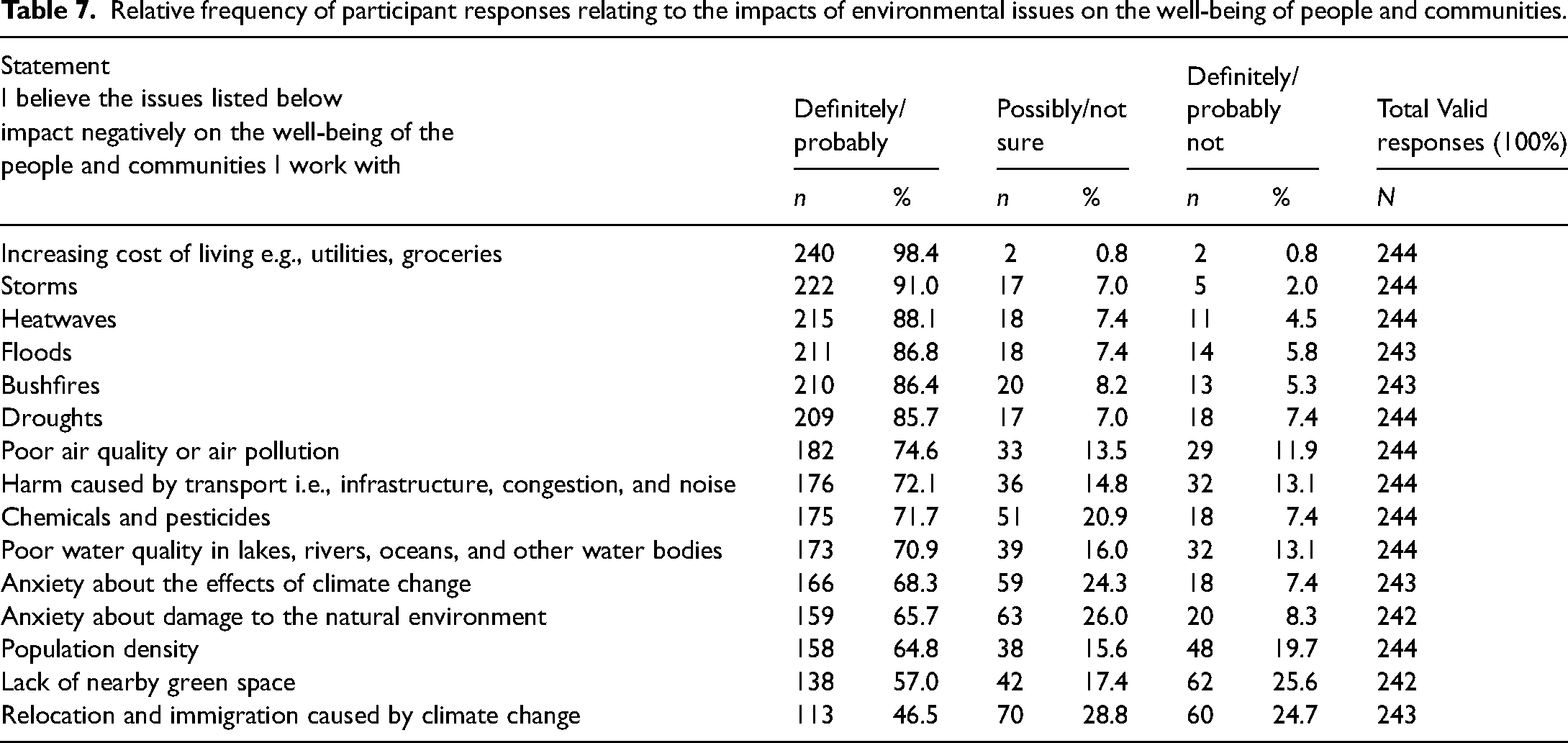
Participants were also presented with a list of environmental issues and asked to indicate whether the issue negatively impacts the well-being of the people and communities they work with (Table 7). While participants regarded all issues as negatively impacting the people and communities they work with, there were variations in their responses. The highest responses by participants were in relation to the increased cost of living (98.4%), storms (91.0%), heatwaves (88.1%), floods (86.8%), and bushfires (86.4%). The lowest responses by participants were in relation to relocation and immigration caused by climate change (46.5%) and lack of green space (57.0%).
Relative frequency of participant responses relating to the impacts of environmental issues on the well-being of people and communities.
Participants were provided the opportunity to share qualitative details about other issues that negatively impact the people and communities they work with. Additional responses included “entrenched structural disadvantage” (Participant 8) and other social justice issues; a sense of hopelessness and helplessness in the face of government inaction and “corruption” (Participant 9); loss of flora and fauna and their habitats due to industry and development; and inaccessibility to public transport and other means to reduce personal impact. The role of Australian First Nations peoples and their knowledges was also brought forward as integral for reducing environmental issues. One participant also referred to the impacts of a recent flood in Australia as a catalyst for environmental practice: I intend on exploring this issue and, after the floods, it is my intention to speak up and implement any practice I can within my organisation. Climate change is here and we NEED to wake up. The floods have brought this home to many of us who may have sat on the fence. (Participant 10)
Several participants noted that young people will bear the burden of current inaction. For example, “Perhaps worth noting the biggest impact to be felt is the upcoming generations, the younger people, who will have to bare [sic] the brunt of our actions or inactions towards climate change and sustainable living” (Participant 11). Another noted the increasing workload on human services professionals in the wake of more frequent disasters, “My ‘clients’ are responsible for responding to natural disasters such as fires, floods, etc., and therefore the increase of these types of events increases exposure to traumatic events, workload, and sense of safety and wellbeing” (Participant 12). The negative impact on individual and community mental health due to climate change and disasters was also a strong theme in these responses.
Organizational practices and policies
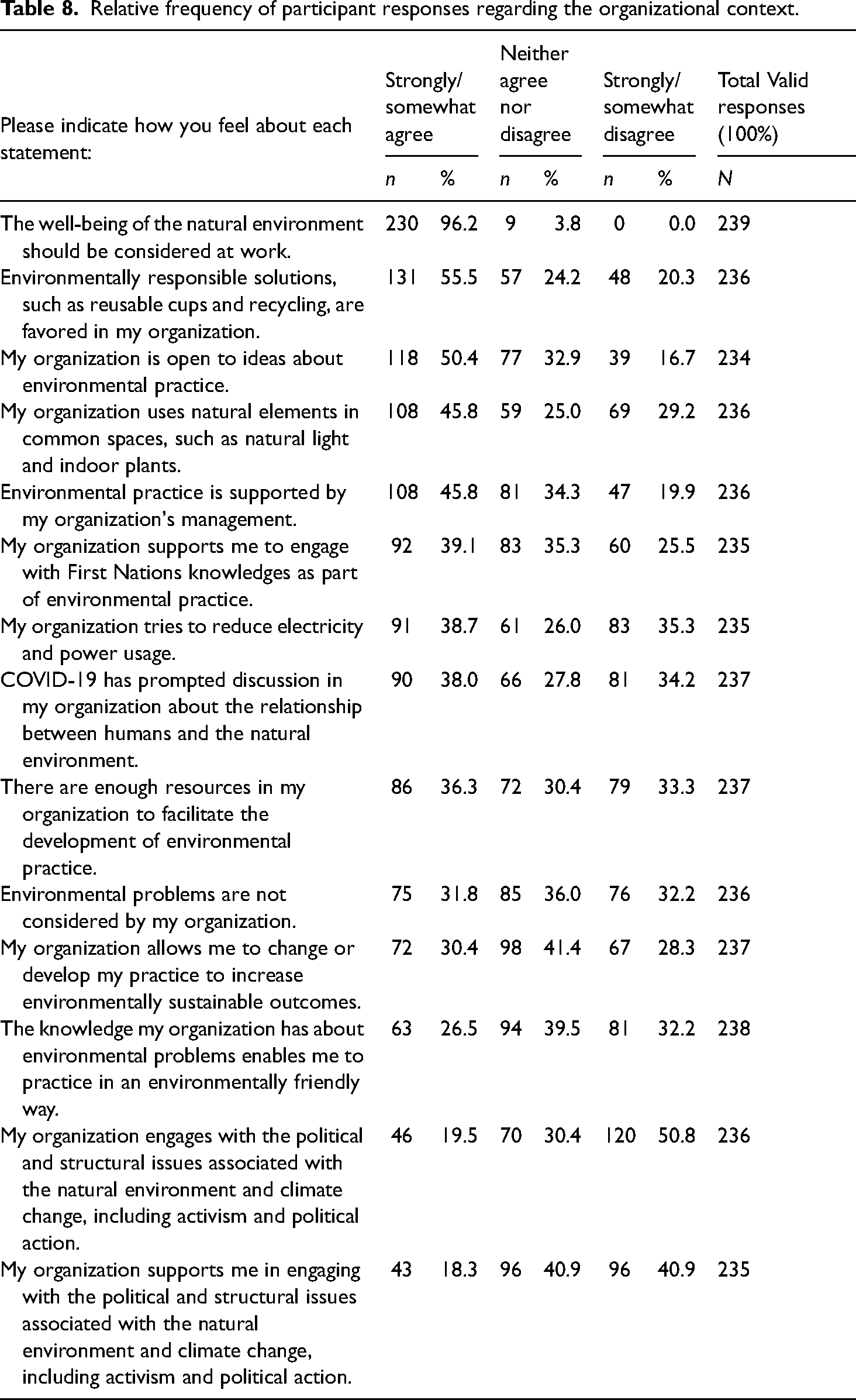
Participants reported diverse organizational experiences with varying levels of support, policies, and practices (Table 8). There was a clear contrast between beliefs and actions with most participants agreeing that the well-being of the natural environment should be considered at work (96.2%). However, when presented with the statement “environmental problems are not considered by my organization” participant responses were mixed: 31.8% agreed; 36.0% neither agreed nor disagreed; and 32.2% disagreed. Similarly, participants provided mixed responses relating to organizational support for engaging with Australian First Nations knowledges as part of environmental practice: 39.1% agreed; 35.3% neither agreed nor disagreed; and 25.5% disagreed. The lowest responses by participants were reported in relation to organizational engagement with political and structural issues associated with the natural environment and climate change (19.5%) and organizational support for participants’ engagement in political and structural issues associated with the natural environment and climate change (18.3%).
Relative frequency of participant responses regarding the organizational context.
Qualitative responses provided further insight into the challenges faced by participants when integrating environmental practice interventions within an organizational context including high workloads, “[I am] unsure how, given that workload is very high and key outcomes are prioritised over environmental issues” (Participant 13), and management, “I have not been able to introduce diverse ways of approaching practice. I have found managerial protocols to be oriented financially and focused upon growth of the organisation” (Participant 14). Some participants cited other challenges within the organizational context, including workplace restrictions, “would love to do counselling sessions outside but within my scope of practice and if I pushed for it, it would require a lot of paperwork” (Participant 15); limited resources “The non for profit sector is under resourced and over stretched. This impacts capacity to commit to environmental sustainability policy and procedures” (Participant 16); unsupportive colleagues “We have tried to have a green rubbish bin to avoid food going into landfill. It only worked for a while with some staff. Even now it is difficult to educate people to use landfill and recycle bins properly” (Participant 17); and poor infrastructure, for example: It likely won’t happen due to constraints in functional space in the workplace…. I wish there were more local options in my area for recycling industrial wastes. My w/ place won’t fund a … recycling station at work. And Officeworks doesn’t exist in my neck of the woods so a lot of industrial waste—computers, biros, Biro lids, goes in the bin. (Participant 18) One of our strategic areas is climate justice and we are invested through our policy responses in advocating for meaningful climate action. We work from home mostly [which] has reduced our transportation, we don’t have to fund and maintain a whole building, we are paperless, we invest in ethical superannuation, we vet the contractors … we use [and] have an ethical decision-making process to consider who we partner with. We look for how the systems and structures are caring for environment or not, and we consider how we can work to change these. (Participant 19)
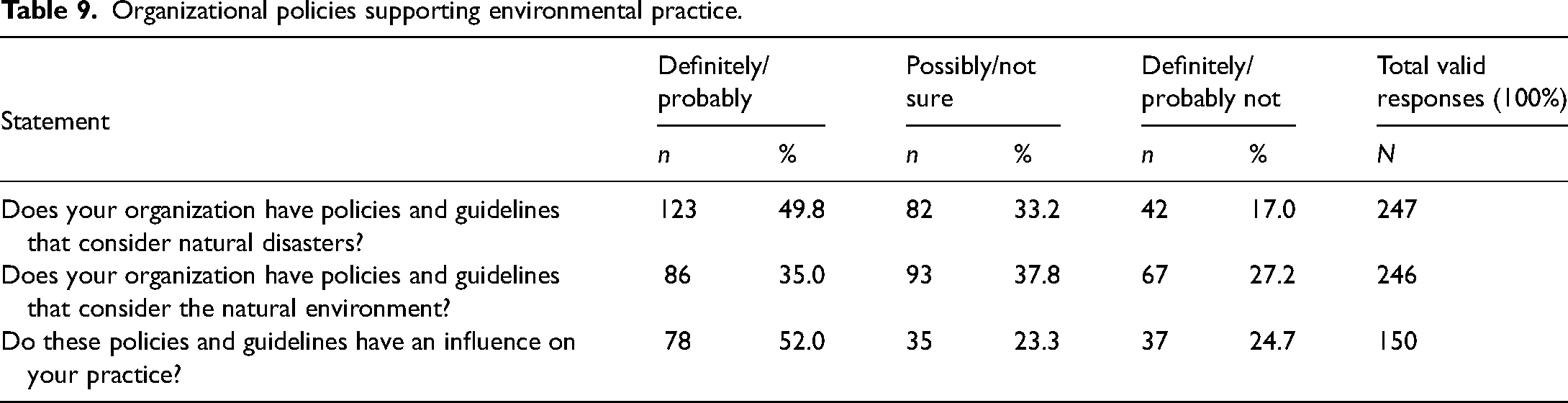
Participants were asked about organizational policies supporting environmental practice (Table 9). When asked if their organization has policies and guidelines that consider natural disasters, almost half of the participants agreed (49.8%). However, when asked if their organization has policies and guidelines that consider the natural environment more generally, just over one-third of participants agreed (35.0%). Just over half of the participants expressed the belief that these policies and guidelines have an influence on their practice (52.0%).
Organizational policies supporting environmental practice.
Professional associations’ practices and policies
Participants were asked about their beliefs regarding the role of professional associations in supporting environmental practice (Table 10). Most participants expressed the belief that professional associations have a responsibility to include the natural environment and climate change in ethical guidelines (87.1%) and policies (86.6%). To validate the reliability of the scale, most participants also disagreed with the reverse statement that it is not the role of professional associations to take leadership in developing environmental practice (83.6%). Notably, just over one-third of participants believed that professional associations are providing support for adopting environmental practice (35.4%).
Professional associations that represent human services and social workers.
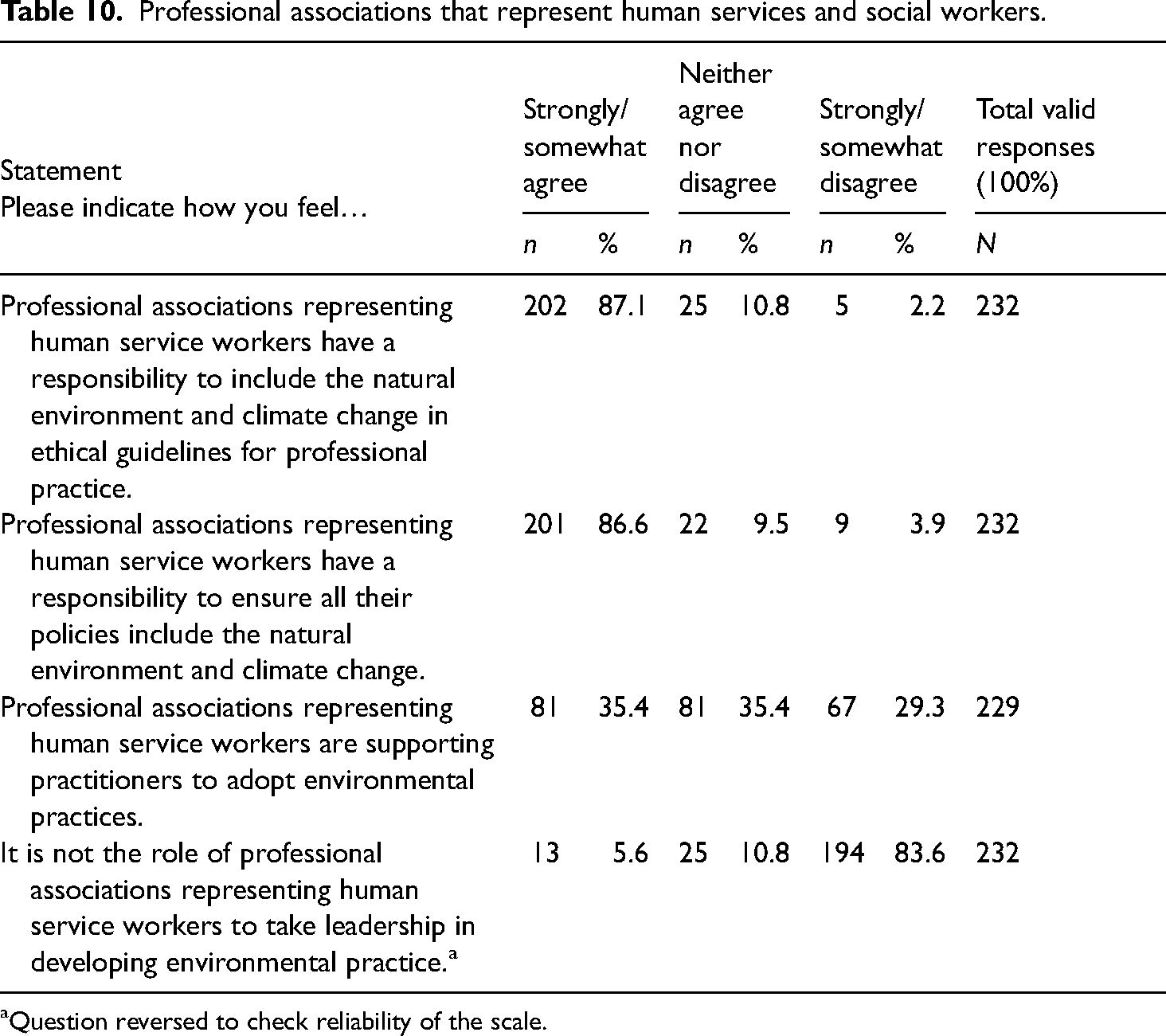
Question reversed to check reliability of the scale.
Discussion
Results indicate that participants supported an environmental focus in human services at personal and professional levels of practice, however, actions were less frequently reported. At the personal level, almost all participants believed in the importance of reducing environmental problems and acting on climate change. These findings are supported by a previous survey with social workers from the United States and South Africa where over 90% of participants across both countries reported that environmental issues were personally important (Marlow & Van Rooyen, 2001). More recently, a survey with social workers in the United States reported similar findings with almost 90% of participants believing in climate change and over 70% feeling worried about climate change (Allen, 2020). Regarding personal behaviors, most participants undertook action at the micro level to support environmental sustainability, such as recycling, and making environmentally friendly consumer choices, however, fewer than half of the participants engaged in personal actions at the macro level such as engaging with environmental organizations and activism. Although further research is needed, the emphasis on micro-level actions could reflect dominant White Euro-Western culture predicated on individualism, and the prevalence of neoliberalist ideology across all areas of life (Dlamini & Sewpaul, 2015).
Similarly, at the professional level of practice, the findings present a disconnect between participants’ beliefs and actions. While almost all participants expressed strong beliefs in value statements about the interrelationship between environmental and social problems and the importance of climate action in professional practice, these beliefs did not translate into professional practice interventions; for example, fewer than half of participants stated they know how to incorporate environmental practice interventions. These results are supported by a previous survey with social workers from the United States and South Africa discussed above where, despite recognition about the importance of environmental issues, fewer than half (46%) incorporated environmental issues into their practice (Marlow & Van Rooyen, 2001). This apparent tension between participants’ understanding about the need for climate action and their capacity to actualize this action was further supported in qualitative responses highlighting barriers, including high workloads, management protocol, limited resources, and unsupportive colleagues. These barriers inhibiting environmental practice are also supported by previous research with social workers in Finland and Australia that identified professional and organizational barriers, including restrictive organizational contracts, difficulties with management, and resource shortages (Boetto et al., 2020, 2022), and research with social work educators from six countries that identified barriers relating to socio-political systems emphasizing market-oriented principles and limited support from professional accrediting bodies (Slattery et al., 2023).
Further to this disconnect between personal beliefs and action, professional practice interventions reported by participants also tended to focus on micro-level action. For example, more than one-half of participants talked with service users about the importance of nature and animals in service users’ lives compared to fewer than one-fifth of participants who talked with service users about activism and political action. According to several authors (e.g., Dlamini & Sewpaul, 2015; Heron, 2019), a focus on micro-level action is perpetuated by neoliberalist ideology embedded within the human services sector that promotes individualist and consumer-based approaches to service provision, which contradicts environmental sustainability (Närhi & Matthies, 2018; Panagiotaros et al., 2022). Closely associated with an emphasis on micro-level practice is the perceived lack of support from employing organizations to enact environmental practice, including limited organizational knowledge about environmental issues and limited resources to facilitate environmental practice. Results also suggest that organizations don’t support participants to implement environmental practice interventions and don’t engage in political or structural issues relating to the natural environment and climate change. These findings are indicative of the organizational constraints that neoliberalism places on human service professionals, including the dominance of market-oriented, task-focused, managerial, and risk-adverse approaches (Greenslade et al., 2015; Noble, 2015).
A disconnect between beliefs and practice was also apparent in relation to Australian First Nations knowledges. While nearly all participants strongly agreed that Australian First Nations knowledges are important for environmental practice, fewer than one-fifth engaged with local Australian First Nations people. There was a similarly ambiguous response regarding organizational support to engage with Australian First Nations people, with just over one-third of participants who agreed that their organization was supportive, approximately one-third who were neutral, and approximately one quarter who disagreed. The inconsistency between participants’ acknowledgment of Australian First Nations knowledges and their engagement with local Australian First Nations people to access that knowledge is further confused by variable levels of organizational support. As noted by First Nations authors, an active effort towards decolonization of the profession and practitioners is needed, involving forming relationships between Indigenous and non-Indigenous social workers (Billot et al., 2019; Green, 2023). Given that climate change is regarded as the direct result of colonialism (Green, 2023), it is imperative that human service professionals disrupt the prevailing colonialist discourse by examining patterns of privilege within the profession and society that reinforce colonial structures.
Results indicate that service users are adversely impacted by environmental issues and climate change. All 15 of the environmental issues presented in the survey (e.g., poor air quality, storms, heatwaves, floods, increased cost of living) were recognized by participants as negatively impacting on the well-being of people and communities, with almost three quarters of participants strongly identifying with 10 of these environmental issues. The highest responses were for increased cost of living, storms, heat waves, floods, fire, and drought. These outcomes are supported by research with social workers in the United States that found service users were experiencing a lack of access to healthy food, unsafe play spaces, air pollution, and extreme weather events (Nesmith and Smyth, 2015). Likewise, a survey by Allen (2020) in the United States found that adverse impacts of climate change on service users included physical and emotional health issues, and infrastructure damage caused by disasters. Due to social work's concern for injustices caused by an unfair distribution of environmental resources and risks, these results suggest the need to embed environmental practice within professional and organizational domains to meet ethical practice requirements.
Within the human services sector, survey results present an opportunity for universities, professional associations, and accrediting bodies to develop practitioner guidelines for environmental practice and to endorse its implementation. This is in line with the United Nations’ Sustainable Development Goals, especially Goal 4.7, which states that “By 2030, ensure that all learners acquire the knowledge and skills needed to promote sustainable development” (United Nations, 2015). While some universities have made progress toward embedding sustainable development into their programs (Cordoba & Bando, 2022), survey responses indicate this is not being implemented consistently or thoroughly. Further, to fully accomplish environmental practice outcomes relating to the restoration of healthy, sustainable, and biodiverse ecosystems, there is a need to move beyond human-centered statements of ethnocentric importance towards a holistic understanding of the interdependence between human and non-human well-being. For example, raising awareness among students, the human services sector, and the wider community about the impacts of environmental degradation on the health of the planet, including species extinction, is integral to promoting sustainable development.
Within an organizational and structural context, survey results suggest the need to enhance organizational support for human service professionals to engage in macro and decolonizing practices. This is intertwined with the previous point in terms of training to better integrate macro, policy advocacy, and decolonizing action as a core aspect of human service practices. For effective organizational change to take place, training opportunities need to match government policies that recognize the significance of environmental practice and to fund it accordingly. The overreliance on individual approaches continues to attribute blame to individuals, rather than external and structural factors, resulting in a workforce that supports people to adapt to an unsustainable situation instead of working to change it. Decolonization of practice requires macro-level change that needs to be integrated across all professional domains rather than remaining the responsibility of volunteers, who are often from groups that are marginalized in society. Furthermore, this extends to assuring recompense for Australian First Nations peoples who often volunteer their time and expertise to support environmental practice. Social work and human services professionals are key actors in addressing the urgent global climate challenges, however, it is critical they are supported, guided, and resourced appropriately to make a meaningful impact.
Limitations
As a small-scale national survey, there were limitations to this research. Perhaps the strongest limitation was sampling bias that likely attracted participants with an interest in environmental practice, thereby affecting the research validity. Additionally, participants voluntarily self-selected to participate in the survey, which created a non-random sample. Another limitation is that the survey did not specify definitions for some of the variables. For instance, organizations within Australia's complex social service system may be co-funded privately and publicly, so the distinction between government and non-government organizations is not always clear. The relatively small sample size resulted in a limited quantity of data, which was further reduced as the total number of valid responses declined towards the end of the survey. While the study explored social work and human services, respondents were mainly from a social work background therefore further studies could explore the experiences of the other roles and professions that constitute this broad field. Further, 8.9% of the sample (n = 26) were students who didn’t nominate an employment field of practice in the human services sector, which could indicate their responses were not informed by practical experience. Finally, as an Australian-based study, the results are not generalizable and therefore cannot be applied to other countries and contexts.
Conclusion
Through a national survey, this research investigated the perspectives of Australian human service professionals about environmental practice. Key areas explored in the survey related to personal beliefs and values, professional practice interventions, climate change impacts, and support provided by organizations and professional associations. Results indicated that participants strongly support an environmental focus in human services at personal and professional levels of practice. However, while participants expressed values supporting environmental practice, interventions were less frequently reported. Participants reported adverse impacts of environmental issues on the well-being of people and communities with the highest responses for increased costs of living, storms, and heatwaves. Despite a strong belief in the importance of Australian First Nations knowledges, limited engagement with Australian First Nations knowledge holders was practiced. Furthermore, participants reported a lack of support from their employing organizations to facilitate environmental practice. Even within a sample that was likely biased towards environmental practice, a major concern is that most participants indicated they experienced challenges enacting environmental practice interventions. The disconnect between values and actions suggests the need to further examine the practical realities of environmental practice. Advancing environmental practice requires the urgent need for social work to embed the natural environment and climate change into professional and organizational domains. Within the human services sector, there is opportunity for universities, professional associations, and accrediting bodies to develop practitioner guidelines for environmental practice and to endorse its implementation. Within an organizational context, further training that corresponds with government policies that recognize the significance of environmental practice is needed to appropriately support, guide, and resource human service professionals.
Footnotes
Ethical Approval
Ethical approval for this project was given by the Charles Sturt University Human Research Ethics Committee (Protocol number: H22038).
Funding
The authors disclosed receipt of the following financial support for the research, authorship, and/or publication of this article: This study was supported by Charles Sturt University.
Declarations of Conflict of Interests
The authors declared no potential conflicts of interest with respect to the research, authorship, and/or publication of this article.
Authors’ Contributions
All authors contributed to developing and testing the survey instrument for the Australian context. Monique Shephard took primary responsibility for recruitment and organization of quantitative data. All authors contributed to the analysis of data and final review of the study.
Acknowledgements
The authors acknowledge the following for their contribution to this article: We would like to acknowledge Charles Sturt University for providing funding to support this project. In addition, Gail Fuller, Manager, Spatial Data Analysis Network (SPAN) provided assistance with survey design and implementation; and Gang Xie, Qualitative Consulting Unit at Charles Sturt University provided advice on data analysis.
