



Abstract
Summary: Stress in social work is frequently experienced by practitioners and is attributed to a range of work-related factors. This study explored the manifestation of burnout, perceived social support, and work-life balance in 73 social workers in two cities in south India. A cross-sectional quantitative design was used. Data were collected based on survey methodology and three standardized instruments were administered to assess the manifestation of our key variables. Multiple regression analysis was used to identify the predictors of burnout.
Findings: Results indicated high levels of burnout and low levels of social support and work-life balance in respondents. No significant differences were seen in the key variables of the study based on selected sociodemographic factors. Both social support and work-life balance were extracted as significant predictors of burnout.
Application: We suggest that issues related to burnout and compassion fatigue are key aspects that need to be incorporated within the social work curriculum in educational programs in India. A focus on maintaining a healthy work-life balance, and the importance of self-care in maintaining good health and wellbeing are key elements that need to be emphasized. We make use of the literature to offer suggestive measures that can be taken to enhance the provision of social support, maintain better work-life balance and reduce the incidence of burnout in social work practitioners. This will in the long run bode well for the mental health and wellbeing of the professionals besides ensuring better quality of service provision to the community that they work with.
Social work is acknowledged to be a high-stress profession that involves working with people in distressing circumstances and complex life situations such as those experiencing abuse, domestic violence, substance misuse, and crime (Stanley & Mettilda, 2016). It has been observed that important sources of occupational stress for social workers include excessive workload, working overtime, dealing with role ambiguity/conflict, workplace dilemmas, and having to confront unmet personal expectations and a negative public perception of the profession (Storey & Billingham, 2010). Besides these stressors, insufficient support, and a lack of understanding by one's supervisor and colleagues may also lead to occupational stress and symptoms of burnout (Solomonidou & Katsounari, 2022). Having to deal with a range of workplace stressors takes a toll on the mental health and wellbeing of these professionals. The literature indicates that high levels of stress have been reported among social workers in Western countries resulting in higher levels of sickness, depression, and burnout (British Association of Social Workers, 2013; Schraer, 2015). High levels of turnover intentions and low job satisfaction have been reported in social workers by Ravalier (2019) who found that the interaction between high demands, low levels of control, and poor managerial support was related to social worker stress and related outcomes. These work-related stressors are also relevant in the Indian context where the profession suffers from a lack of role clarity, poor salaries, and conditions of work compounded by the fact that the profession does not have a legally mandated apex regulator (Stanley, 2006).
Burnout along with secondary traumatic stress (STS) which refers to emotional trauma experienced vicariously, have been conceptualized as being the two components of compassion fatigue in professionals engaged in the helping professions such as nursing and social work (Stamm, 2002). In fact, the term burnout has become synonymous with stress caused by being overburdened by work duties in the social work profession (Hoffarth, 2017). Heavy caseloads, low wages, limited resources, time constraints and deadlines, conflict within the work climate, ethical dilemmas, and the structural organization within which individuals work are some factors associated with the manifestation of burnout in social workers (Ben-Porat & Itzhaky, 2015; Diaconescu, 2015; Iacono, 2017; McFadden, 2015; Willis & Molina, 2019). Burnout is characterized by emotional exhaustion, depersonalization, and a low sense of personal achievement (Maslach et al., 2001) and can manifest in symptoms such as chronic physical and emotional fatigue, the depletion of empathic resources such as compassion, boredom, cynicism, diminution of enthusiasm, temporary distress, and depression (Diaconescu, 2015). Burnout is also associated with personal factors, such as lower family incomes and fewer coping strategies, and workplace factors, including insufficient supervision, less team support, low work autonomy, and role stress (Kim & Stoner, 2008; Lloyd et al., 2002; Söderfeldt et al., 1995). Burnout has been reported to adversely impact health and wellbeing in social workers and is associated with a range of pathological consequences including depression, anxiety, sleep disturbances, memory impairment, neck and back pain (Peterson et al., 2008) as well as a significant increase in headaches, gastrointestinal problems, and respiratory infections (Kim et al. 2011).
It is against this background that the concept of work-life balance (WLB) gains importance for the social work professional. WLB is the separation of work life from one's personal life (Soomro et al., 2018) and has been considered to be the ability to satisfactorily manage responsibilities relating to both work and family matters (Delecta, 2011; Guest, 2002). A good WLB improves job satisfaction, psychosocial wellbeing, and one's overall quality-of-life (Greenhaus et al., 2003). Studies have identified that WLB is a key factor that affects work engagement (Harini et al., 2019; Jaharuddin & Zainol, 2019) and is an important determinant of employee satisfaction resulting in low rates of absenteeism, lesser employee stress, improved health, and a better life (Rani et al., 2011). WLB gets disturbed when the dimensions of “work” and “family life” become incompatible or conflicting demands on one another are experienced. Work–family conflict is conceptually defined as inter-role conflict that stems from incompatibility in work and family responsibilities (Greenhaus & Beutell, 1985; Michel et al., 2011). Indeed, previous studies have found that work–family conflict is among one of the occupational stressors that triggers job burnout (Allen et al., 2000; Maslach & Leiter, 2005; Schaufeli et al., 2009). Other work-related outcomes of burnout pertain to higher absenteeism rates and decreased work performance (Amstad et al., 2011; Peeters et al., 2005) and burnout has been positively associated with role conflict and role ambiguity (Lee & Ashforth, 1996; Örtqvist & Wincent, 2006). Occupational demands associated with work–family conflict, role conflict, role ambiguity, and generalized job stress are also associated with an increased tendency for burnout (Boyas & Wind, 2010; Nissly et al., 2005).
It is also reported that work–family conflict, role ambiguity, and role conflict, impact work withdrawal and exit-seeking behaviors indirectly through burnout, and that exit-seeking behaviors are positively impacted by depersonalization and work withdrawal (Travis et al., 2016). Both work-to-family conflict and family-to-work conflict are significant predictors of reduced job satisfaction (Kalliath & Kalliath, 2015). Other negative consequences associated with work–family conflict include increased psychological strain, reduced organizational commitment, increased absenteeism, and higher job turnover rates (Gareis et al., 2009; Grzywacz & Butler, 2008). Besides adverse work-related outcomes, a poor WLB adversely affects family satisfaction and marital quality (Voydanoff, 2004), negatively impacts physical and mental wellbeing, and is associated with the propensity for substance misuse (Frone et al., 1996; Lapierre & Allen, 2006). It is, therefore, important to understand how to help social workers develop a better WLB, to help improve retention rates of social workers and to enhance their motivation to continue in the profession. One interesting avenue worth exploring is the role that social support might play in this context.
Social support is a crucial variable that can help maintain WLB and potentially mitigate the adverse consequences associated with burnout in social workers. In the organizational context, it refers to the social climate at work and includes a congenial relationship with supervisors and coworkers. It is an important resource that helps people cope with job stress through supportive relationships with others (Thompson et al., 1994). Social support is a factor that can help individuals reduce stress levels and help them find effective coping strategies to overcome difficult situations (Yasin & Dzulkifli, 2010). Social support may be sought for instrumental reasons to obtain practical advice, assistance, or information as part of problem-focused coping or as an emotion-focused coping strategy for getting moral support, sympathy, or understanding from others (Carver et al., 1989).
It is believed that social support can improve mental and physical health, and emotional wellbeing (McDonnell, 2014), and in the organizational context, social support is associated with better work engagement (Christian et al., 2011; Hakanen et al., 2006). Social support provided by coworkers can buffer against the negative effects of workload on burnout while low support from coworkers is associated with burnout (Koeske & Koeske, 1989). Employees who have low social support can experience high levels of burnout and lower levels of job satisfaction (Abualrub et al., 2009). Sharing stressful events with others and talking about the emotions associated with them is likely to aid positive psychological adjustment when supportive social networks are available (Lepore et al., 2000). High emotional involvement without adequate social support or feelings of personal work accomplishment (i.e., job satisfaction) may leave the helping professional vulnerable to burnout (Adams et al., 2008). Formal support systems in social work involve line management, supervision, and appraisal systems while informal support involves support from inside and outside the social work setting, involving, for example, family and friends (Collins, 2008). It has also been observed that social workers who receive more support from their coworkers, supervisors, and work teams demonstrate lower levels of STS (Choi, 2011).
In the Indian context, studies dealing with issues such as burnout in social workers besides investigations relating to their WLB and perceived social support are scant. Given the importance of these variables in influencing the health status and wellbeing of frontline social work practitioners and the potential for influencing aspects such as absenteeism and job turnover rates, it was felt that a study of this nature would help to provide a better understanding of work-related experiences of social workers. Framed against this background, this study seeks to answer the following questions:
What is the extent to which work-life balance, informal social support, and burnout is manifested in social workers? What is the nature of the relationship among these key variables? Do these key variables enter into a relationship with demographic variables such as gender, age, years of work, and the marital status of the respondents? What variables predict the manifestation of burnout in the respondents?
Method
Research design
This descriptive study used survey methodology for the collection of data. It uses a quantitative methodology and correlational analysis for the generation of findings. The study uses a cross-sectional design as data was collected only at one point from the respondents.
Measures
Standardized instruments were administered to all respondents to collect data in relation to our study variables. These measures have been outlined below:
(1) A self-prepared questionnaire was used to collect socio-demographic data and work-related information from the respondents.
(2) The Professional Quality of Life Scale (ProQOL) (Stamm, 2009) measures the positive and negative effects experienced by those who choose to help others experiencing suffering and trauma. The instrument has three component subscales that measure compassion satisfaction, STS and burnout. For this study, only the 10-item burnout scale was used. The 5-point Likert scale asks respondents to rate how frequently they experienced certain feelings in relation to their work with clients in the last 30 days and has responses ranging from “never” to “very often.” The reliability coefficient for the burnout scale of the ProQOL in this study was 0.85, considered to be “good” (George & Mallery, 2003).
(3) The Multidimensional Scale of Perceived Social Support (Zimet et al., 1988), was used to measure perceived social support in this study. This widely used instrument has three subscales, each addressing a different source of support, namely: Family, Friends, and Significant Other. The 12-item scale is scored on a 7-point Likert scale with lower scores indicative of lower social support. The reliability of the instrument in this study using Cronbach's alpha coefficient was estimated at 0.82 and is considered to be “good” (George & Mallery, 2003).
(4) The WLB scale (Hayman, 2005) is a psychometric instrument used to measure WLB in organizations. It is a 15-item scale and is designed to capture employee perceptions of WLB. It measures three constructs of WLB namely, work interference with personal life (WIPL), personal life interference with work (PLIW), and work personal life enhancement (WPLE). Responses are provided on a 5-point Likert scale anchored with the endpoints 1 = strongly disagree to 5 = strongly agree. The overall WLB score was computed by adding the scores on the three dimensions. The Cronbach's alpha coefficient in this study was 0.86 indicating good scale reliability (George & Mallery, 2003).
Data collection
We obtained a list of voluntary organizations registered with the District Social Welfare Board to identify organizations in two cities of Tamilnadu state in south India namely Tiruchirappalli and Thanjavur. Social workers employed by these organizations were contacted after permission was obtained from the head of the organization. The nature of the study was explained to them, and they were invited to participate in the study. Hard copies of the questionnaire were given to them at the preliminary contact and a time was agreed upon for collection of completed questionnaires. In many instances, we had to make repeated visits to collect questionnaires from the respondents. Of the 118 questionnaires circulated, 73 completed questionnaires were received and included for data analysis yielding a good overall response rate of 62%.
Ethical considerations
Ethical clearance for this study was obtained from the Ethics Review Panel of Periyar Maniamai Institute of Science and Technology (PMIST), where one of the authors is based. Participation was voluntary, and informed consent was obtained from all respondents. Respondents were given the option to drop out of the study at any point and were told that they would not be contacted thereafter. Questionnaires were anonymized and no personal identification data were collected.
Statistical analysis
SPSS version 25 (Statistical Package for Social Sciences; IBM Software, Armonk, NY, USA) was used for data analysis. t-tests, Pearson's correlation, and multiple linear regression were used to generate results relevant to our pre-determined research questions.
Results
Respondents’ background profile
The age of respondents ranged from 22 to 59 years (M = 34.3, SD = 7.7). The majority of them were married (57.5%) women (54.8%). Their work experience ranged from 1 to 36 years (M = 9.8, SD = 7.1). The size of their family ranged from having 1 to 9 members (M = 3.6, SD = 1.8). The work profile of the respondents is depicted in Table 1.
Distribution of respondents by their work profile.
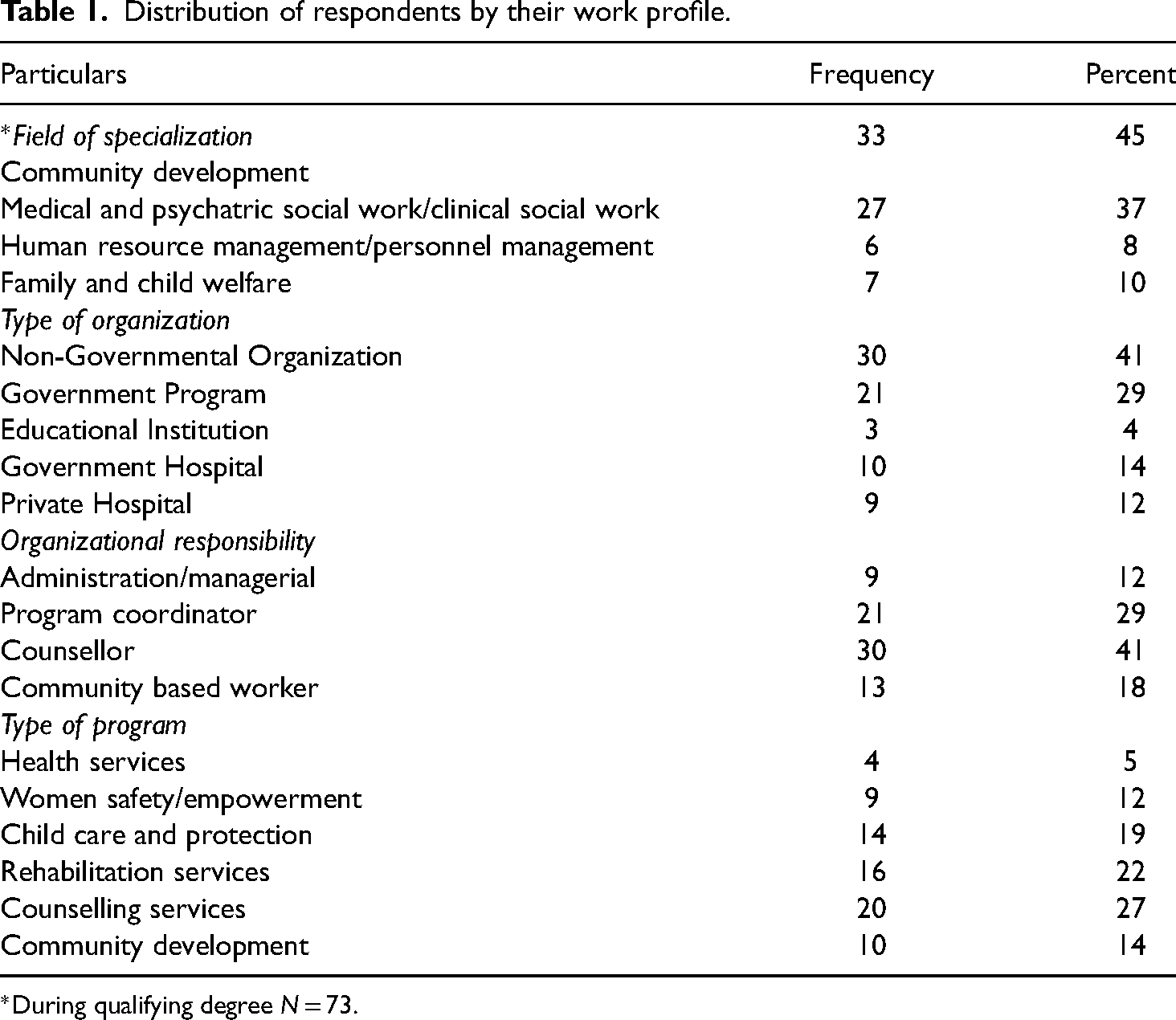
*During qualifying degree N = 73.
Respondents’ profile on key variables
We used the median scores for all the key variables to generate a respondent profile to classify them into “low” and “high” categories. The results in Table 2 indicate that in terms of burnout and overall social support scores, the respondents were almost equally distributed in both groups. However, in terms of the components of the social support scale (family, friends, significant other), the majority of respondents were seen to receive low social support from these three sources. Further, the majority of the respondents are in the ‘low’ WLB category on the total score for this variable and as well as on all three of its components (WIPL, PIWL and WPLE). Figure 1 plots the respondent profile based on their mean score for all the key variables of the study.
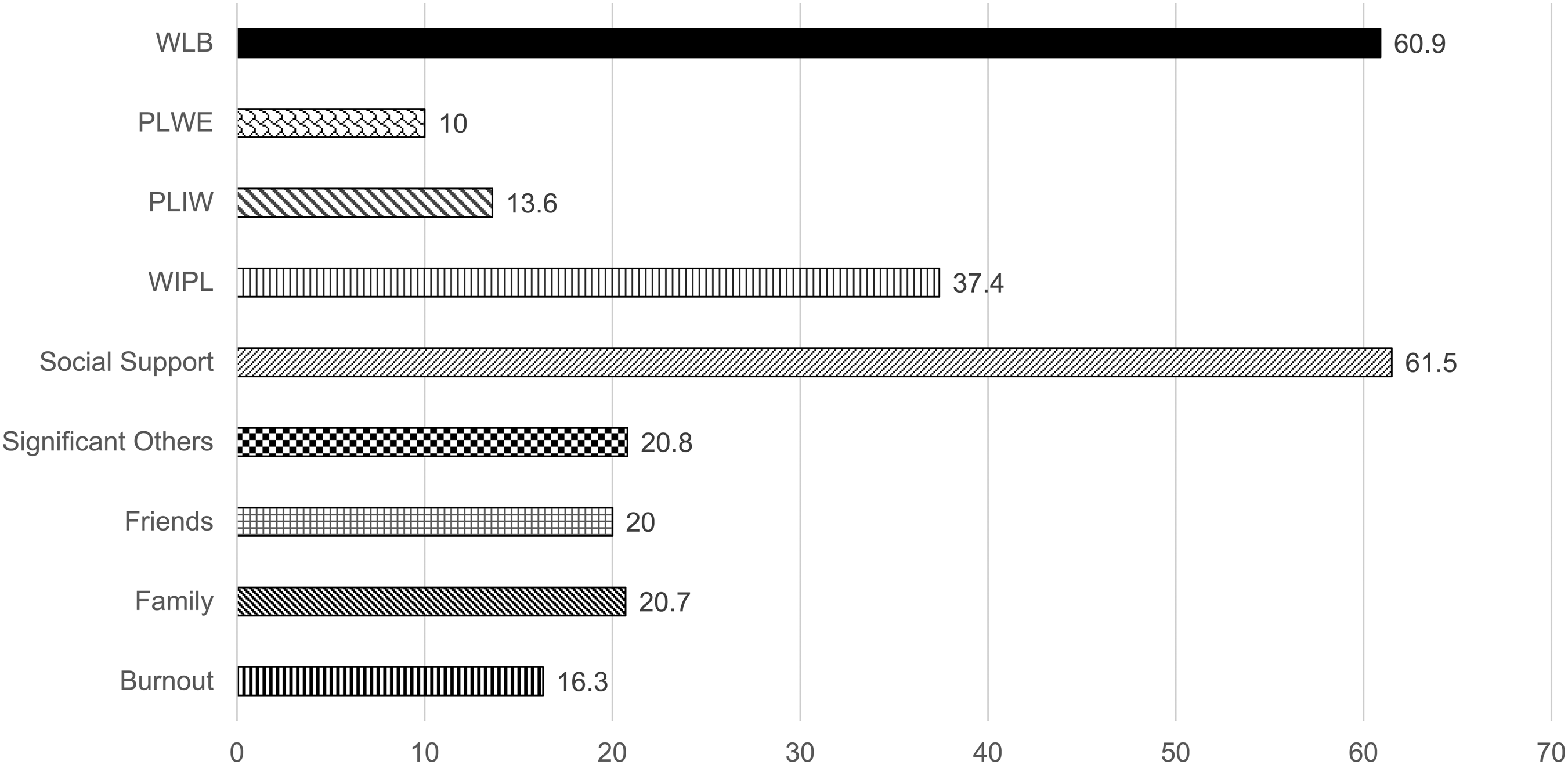
Mean score profile of respondents on key variables.
Median score profile of respondents on key variables.
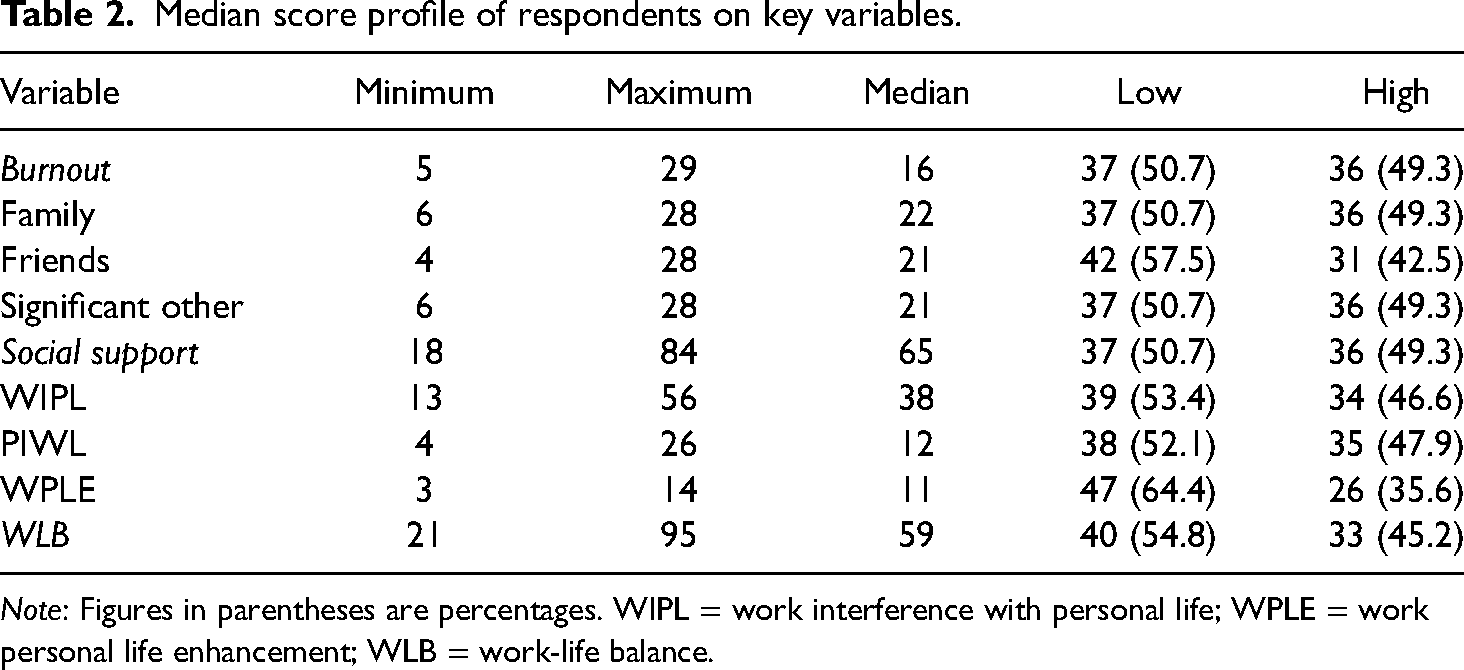
Note: Figures in parentheses are percentages. WIPL = work interference with personal life; WPLE = work personal life enhancement; WLB = work-life balance.
Comparisons based on demographic variables
To compare the respondents on all the key variables of the study based on their gender, we used t tests. No statistically significant differences were found between male and female respondents in terms of any of the key variables except for the WIPL component of the WLB scale. Higher mean scores on this component were obtained by female respondents (Male: M = 34.9; SD = 7.5; Female: M = 39.4; SD = 9.4; t = 2.19; p < .05).
When comparing the marital status of respondents (married/unmarried) t tests revealed no statistically significant differences on any of the key variables.
Correlations among variables
Pearson’s correlation coefficients were then computed for the key variables and select demographic variables (Table 3). While these correlations are not indicative of cause-effect relationships between variables, they do indicate a propensity to influence one another. Results indicate significant negative correlations between the burnout scores and the overall social support score and all its three components (family, friends, and significant other). It is important to note that all these correlations are negative in nature and statistically significant. A positive statistically significant relationship is also seen between the burnout score and the PLIW component of the WLB scale and a significant negative relationship with its WPLE component. Significant positive correlations have also been extracted between the overall WLB score and the overall social support score as well as its “significant other” component. In terms of the demographic variables in this analysis, burnout scores did not correlate with the age of the respondents, their years of work or their family size. Both age and years of work entered into positive correlations with the WPLE component of the WLB scale, while family size did not manifest any statistically significant correlations with any of the key variables of the study.
Correlation matrix for key variables and select demographic factors.
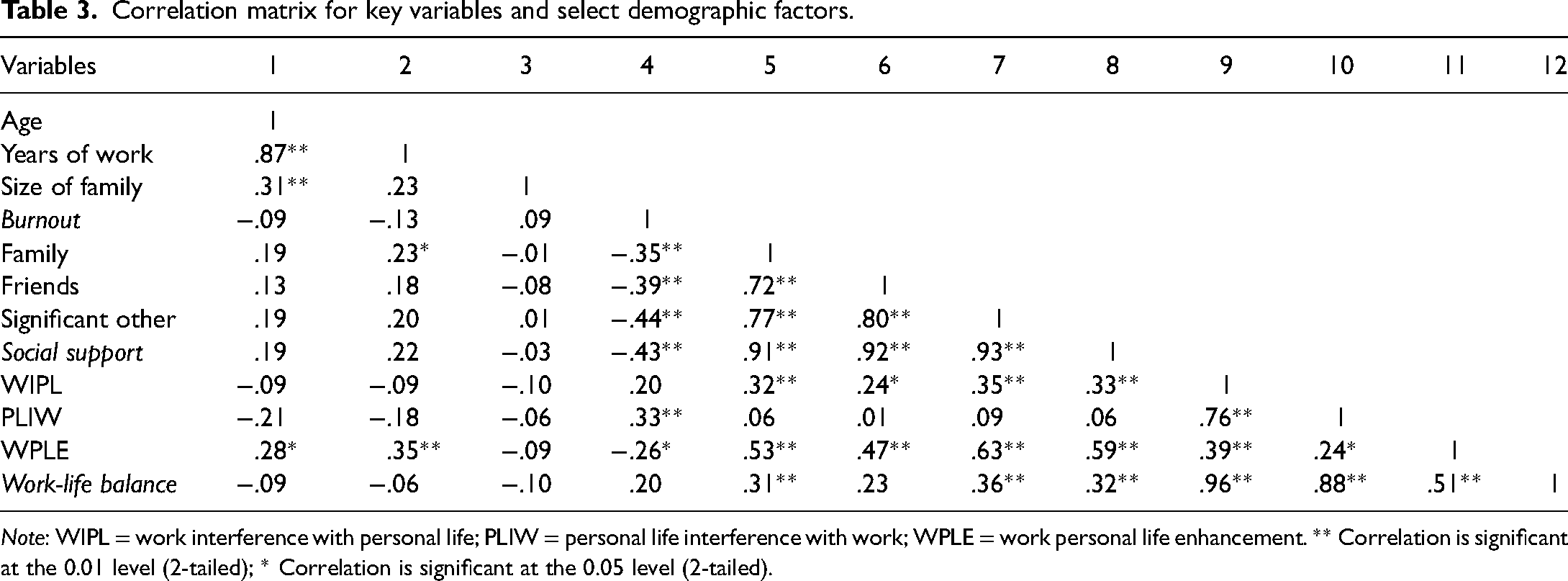
Note: WIPL = work interference with personal life; PLIW = personal life interference with work; WPLE = work personal life enhancement. ** Correlation is significant at the 0.01 level (2-tailed); * Correlation is significant at the 0.05 level (2-tailed).
Predictors of burnout
Linear multiple regression analysis was executed to see the extent to which the overall WLB and social support scores predicted the manifestation of burnout in the respondents. Using the enter method it was found that both these variables explain a significant amount of the burnout experienced F (2, 70) = 16.12, p < .001, R2 = .32, R2Adjusted = .30. The analysis shows that both social support (β = −0.55, t = 5.30, p < .001), and the overall WLB score (β = 0.38, t = 3.55, p < .01) ignificantly predicted the manifestation of burnout in the respondents. Figure 2 depicts the path diagram showing the influence of both WLB and social support on burnout.
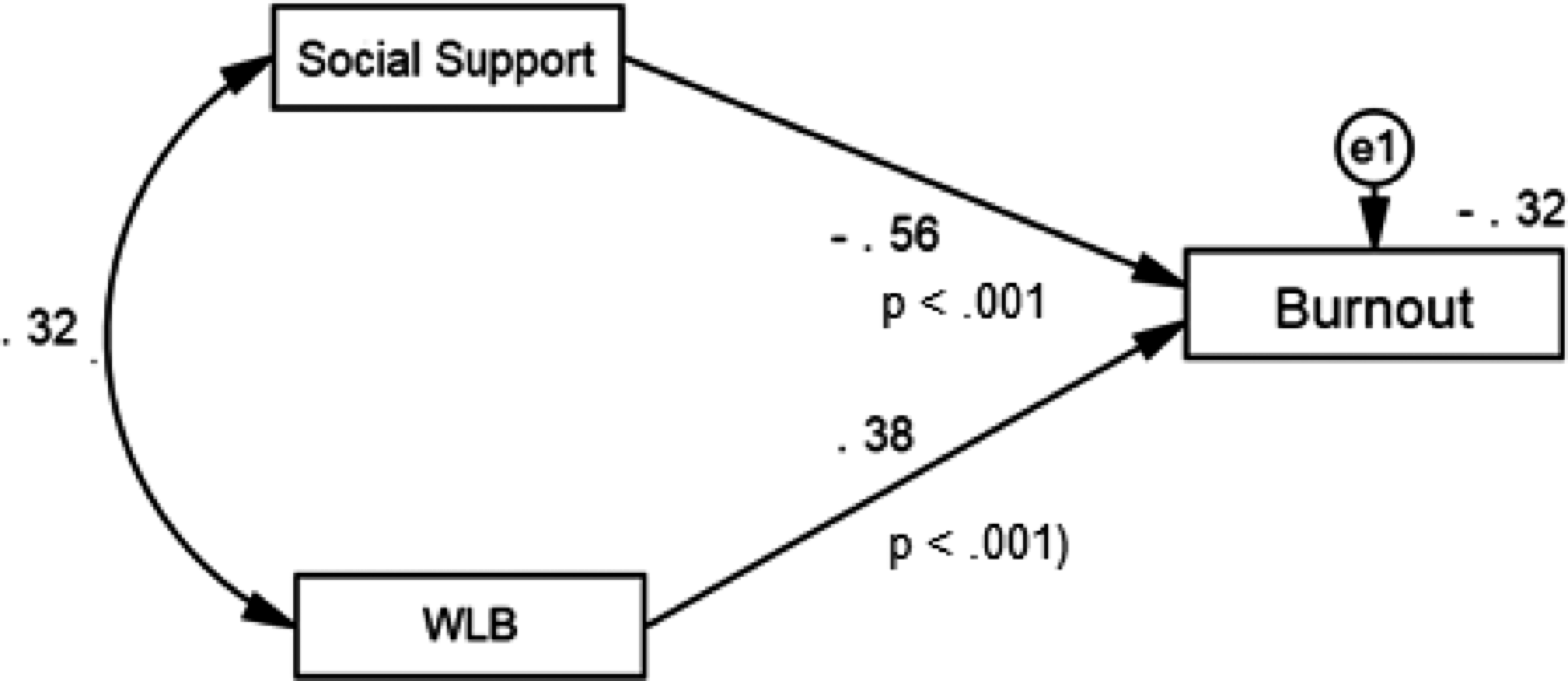
Path diagram depicting predictors of burnout in respondents.
Discussion
The purpose of this investigation was to explore the extent to which WLB is maintained in social workers in India. We were also interested in their perception of informal social support that was available to them and the extent to which they experienced burnout. Our results indicate that in terms of both burnout and social support, almost half the respondents were high on the former variable and low on the latter. This is indeed a matter of concern and a pointer that steps to reduce burnout levels and enhance the provision of social support need to be introduced. This finding is in consonance with the high levels of burnout in social workers reported Internationally from several countries (e.g., Spain: Martínez-López et al., 2021; USA: Peinado & Anderson, 2020; UK: McFadden, 2015; Singapore: Seng et al., 2021).
We have obtained significant negative correlations between the burnout scores and the overall social support score and all its three components (family, friends, significant other). This is in line with the findings of Kim and Stoner (2008). Social support is an important factor that can moderate the impact of workplace stress (Tügsal, 2017). While we have not explored social support within organizational contexts such as the support received from workplace colleagues and supervisors, there is a clear indication in this study that social support received from informal sources beyond that of the organization is also key in terms of minimizing burnout. This is consistent with the finding of Sánchez-Moreno et al. (2015) that a lack of informal social support from friends and family positively influences psychological distress in social workers. Social workers benefit from informal social support for venting their emotions, doing distracting pleasurable things together, or, if their friends were also social workers, discussing solutions to stressful work situations (Barck-Holst et al., 2022).
The concept of work–family balance is often understood in terms of the absence of conflict or interference between family and work (Frone, 2003). Frone distinguishes between two forms of work–family conflict with one domain (work influencing the other and vice versa). He also considers it important to identify the direction of the adverse effect stemming from one domain over the other. The concept of WLB, on the other hand, is broader than that of work–family conflict as it incorporates all non-work-related domains including and going beyond one's family life. In terms of the relationship between burnout and WLB, a positive relationship was seen in this study with the PLIW component of the WLB scale. This is indicative of family life baggage interfering with one's work life and the need for more family-oriented support to tide over domestic issues. It has been reported that dependent care issues, lack of time management, and low family support, are major factors creating imbalance in family and work life (Mathew & Panchanatham, 2011).
We also note a significant negative relationship between burnout and the WPLE component of the WLB scale. The idea of role enhancement or enrichment refers to the notion that skills and experiences in one role can improve or further enhance performance and satisfaction in another (McNall et al., 2010). According to Greenhaus and Powell (2006), work-to-family enrichment occurs when work experiences increase satisfaction in one's family life, and family-to-work enrichment occurs when family life experiences contribute to satisfaction with work life. It has also been reported that employees with high role enrichment are less likely to experience stress and anxiety from role demand as they apply their skills and resources across social roles producing more positive outcomes and thereby experience a heightened sense of self-efficacy in their roles (Sirgy & Lee, 2018).
Significant positive correlations have also been observed between the overall WLB score and the overall social support score as well as its “significant other” component. It is important to note that the harmful effects of stress becomes less evident when family members are supportive (French et al., 2018). Sharing of dependent care duties by other family members and providing psychological support to reduce role conflicts and negative spillover from work to home is an important form of social support provided by the family (Payne et al., 2012). The most important sources of social support for professionals are their partner, family, as well as work and nonwork-related friends who provide emotional and instrumental support (Annink, 2016).
We found in this study that both WLB and social support were extracted as significant predictors of burnout. This is consistent with the finding of Tugsal (2017) who also arrived at the same finding. Tugsal's study also established a partially mediating role for social support between WLB and burnout. In this context, Inggamara et al. (2022) observe that WLB and social support are significantly related and have a positive impact on work engagement.
In terms of demographic variables, burnout scores in this study did not correlate with the years of work of the respondents. This is not in line with an earlier study (Siebert, 2005) which reports that burnout in social workers is less likely for those with more years of work experience. We also did not see any significant difference based on marital status in terms of any of our key variables. This also does not agree with Siebert's study which found that respondents not married and those living alone scored higher on burnout.
Again, in contradiction with several studies which assessed burnout in social workers, we did not find any association between the age of our respondents and their burnout scores. For instance, Poulin and Walter (1993) found that age is inversely related to emotional exhaustion and depersonalization, both considered to be important components of burnout. A study of Spanish social workers on the other hand has found a small correlation between age and depersonalization but concluded that the influence was not significant when regression analysis was carried out (Garcia et al., 2020).
Implications for intervention
In light of the findings of this study, what is required are measures to reduce burnout, improve the provision of social support, and enhance the quality of WLB through a proactive approach that seeks to attain harmony between work-related demands and one's personal life. It is important to deal with burnout as it also impairs the social workers’ ability to function professionally and, consequently, adversely impacts their ability to provide quality services to their clients (Rupert et al., 2015). The effects of occupational burnout are reversible, but awareness of their significance, timely recognition, as well as the application of response strategies at all levels are an integral part of their prevention and treatment (Solomonidou & Katsounari, 2022). Sustained efforts need to be introduced at two levels; namely to deal with measures to enhance personal and professional effectiveness on one hand and then to take steps to improve the work culture and organizational climate on the other.
Personal resources play a significant role in enabling social workers to cope effectively with their work-life demands (Virga et al., 2020) and in this context, the importance of strengthening and nurturing psychological capital (PsyCap) is increasingly being seen as being key in preserving the wellbeing of employees (Avey et al., 2010; Newman et al., 2014) and in decreasing the vulnerability of social workers to occupational hazards. PsyCap has been conceptualized as a positive psychological state that incorporates the development of hope, self-efficacy, optimism, and resilience in employees (Luthans et al., 2007; Luthans & Youssef-Morgan, 2017).
It has been found that self-esteem, mastery, and a sense of influence in their work environment play an important role in preventing burnout (Ben-Porat & Itzhaky, 2015). Rewards and recognition hence would be important measures to give employees a sense of worth and enhance their esteem. It would be important for organizational leaders to use praise and acknowledge good work done by social workers that they employ, akin to the “employee of the month/year” tags frequently awarded in commercial enterprises. A smile and a pat on the back besides other incentives would go a long way to enhance work engagement and to sustain employee morale.
Resilience is frequently mentioned in the context of stress and coping and refers to the capacity of an individual to maintain stable functioning and to adapt in the face of significant adversity (Fletcher & Sarkar, 2013; Secades et al., 2016). Resilient individuals will entail a combination of flexibility, acceptance of reality, and perception of life as meaningful (Pérez-Fuentes et al., 2019). The literature suggests that resilience buffers the negative impact of work stress, in intrinsically challenging work environments (Howard, 2008) such as social work. An earlier study of women social workers in India mentioned that the effect of stress on burnout is moderated by resilience (Stanley et al., 2021). Resilience-building measures hence need to be considered at the individual level through organizational efforts. This could include the promotion of a sense of worth (self-satisfaction and spirituality), self-care (social and psychological support), professional growth (promotion of expertise and acquisition of related experience), and the establishment of boundaries (setting working limits and defining tasks among colleagues).
A recent systematic review that spanned two decades (Padín et al., 2000) highlights the importance of coping skills training for heath social workers to combat the effects of burnout. This would involve training in mindfulness (Goodman & Schorling, 2012), empathetic attitudes, and stress reduction strategies (Ekman & Halpern, 2015). Previous research has also established the importance of promoting self-care behaviors and decreasing self-care barriers in social workers to promote higher levels of professional quality of life (Xu et al., 2019). In fact, self-care has been considered to be a core social work competency (Jackson, 2014) and involves engaging in activities that improve wellness in areas such as physical, psychological, social, spiritual, leisure, and professional domains (Lee & Miller, 2013). In the context of occupational stress and burnout in social work practice, Miller et al. (2017) emphasize the importance of a healthy, resilient workforce of practitioners who proactively attend to their own health and wellbeing through strategies of self-care. Dalphon (2019) suggests a range of self-care activities for social workers besides regular sleep and exercise such as maintaining close personal relationships outside the workplace, saying “no” to work overload, participation in mindfulness-based stress reduction programs, and having an accountability partner to monitor one's self-care plan. More importantly, the value of self-care needs to be actively promoted through social work education and training programs. This is a key element that is missing in the social work curriculum taught in Indian colleges and universities and potential social workers would benefit from a conscious awareness relating to maintaining a healthy WLB, self-care, good health, and wellbeing.
Support for professional development, education, personal experiences, safety measures, self-care, and self-protection are other organizational efforts that need to be implemented (Kapoulitsas & Corcoran, 2015). Workplace support is important in buffering the effect of role stress on burnout and it has been suggested that interventions on improving workplace support can help alleviate role stress and burnout in social workers (Tang & Li, 2021). Mentoring and supervision are important measures that could be easily implemented by organizations in a cost-effective manner. Unlike the good practice in social work organizations in the West, the authors are aware that this is not standard practice done on a routine basis in organizations in India. The literature indicates that mentoring by an experienced practitioner enhances professional wellbeing, promotes resilience, and provides a means of addressing poor job satisfaction and high burnout rates among social workers who work in settings where compassion fatigue is likely to be particularly high (Toh et al., 2018). Supervision, the use of support, and ongoing training are some organizational variables identified by social workers as ameliorating experiences associated with vicarious traumatization (Pack, 2014). A supportive work environment and positive supervision play a pivotal role in shaping resilience (Kapoulitsas & Corcoran, 2015). It has also been established that resilience is a key variable that buffers the impact of stress as well as determines the efficacy of coping (Stanley & Mettilda, 2020).
Prevention strategies need to focus on enhancing the quality of the work environment, improving performance, maintaining employee commitment, as well as developing the resilience of the individual (Solomonidou & Katsounari, 2022). It is also important to build these issues within the education and training curricula for social workers to generate an awareness of what is likely to be encountered in practice. At present the social work curriculum in India does not dwell on these aspects. We need to teach students about compassion fatigue and burnout and more importantly strategies to prevent and manage these issues frequently encountered in practice. Empathy training, maintaining healthy boundaries with clients, and avoiding overidentification are practical aspects that need to be incorporated within the social work curriculum.
Social work agencies in India hence need to foster a work ethos that is supportive and growth-oriented and takes into consideration factors that promote autonomy, realistic workloads, and the provision of needed resources, so that work efficacy is maximized as well as staff morale and job satisfaction are sustained (Stanley et al., 2020). This will in the long run augur well not only for the health and wellbeing of the practitioners but also result in better provision of services to the people that they serve.
Limitations
The cross-sectional design of this study does not capture the dynamics associated with changing job requirements and the nature of social work practice over time. It also does not permit us to arrive at any cause-effect-related conclusions.
Data for this study were collected during the prevalence of coronavirus disease 2019 when conditions of practice were significantly altered. However, we are not certain to what extent the pandemic has influenced the manifestation of our key variables.
The organizational literature outlines several work-related factors such as increased workloads, lack of recognition, poor workplace relationships as contributing to stress and burnout. This study has not considered the influence that such factors may have on the variables included in this study.
Social work practice varies across settings and organizations and is located within a regional socio-cultural context. As such the scope for generalizing the findings of this study is fairly limited.
This study does not garner the lived experience of social workers in India. Future studies could incorporate a qualitative strand that could generate more insight into issues encountered in practice.
Conclusion
In spite of these limitations, this study makes an important contribution in helping to understand key variables relating to professional social work practice in India. It specifically contributes to our understanding regarding the manifestation of burnout in social workers and the key role played by WLB and the availability of social support in influencing burnout. Our findings point to the fact that ameliorative measures need to be put in place to reduce work stress and burnout besides ensuring the availability of social support both at work and in the personal lives of social workers. The importance of maintaining a healthy WLB needs to be emphasized in training programs for social workers. These measures in the long run have the potential to promote retention rates, positively impact workforce morale, and ultimately be reflected in better quality of services being provided to the community.
Footnotes
Ethics
Ethical clearance for this study was granted by the Ethics Review Panel of Periyar Maniamai Institute of Science and Technology (PMIST), Vallam, Thanjavur.
Funding
The authors disclosed receipt of the following financial support for the research, authorship, and/or publication of this article: This study was supported by the seed money grant received from the Management of the Periyar Maniammai Institute of Science & Technology, Vallam, Thanjavur, India for conducting this study.
Declarations of Conflict of Interests
The Authors declare that there is no conflict of interest.
Acknowledgements
The authors are thankful to Dr Stephanie Kewley, Reader, Liverpool John Moores University for the helpful suggestions and guidance provided in finalizing this manuscript.
