



Abstract
Summary
The present U.S.-based study adds to the ongoing discourse on the ethical use of digital technology in social work practice, made more urgent by the coronavirus disease 2019 (COVID-19). Following the achievement of Human Subjects approval, we obtained a stratified, random sample of 150 institutions of higher education with Council on Social Work Education-accredited undergraduate and graduate social work programs. Prior to COVID-19, we administered a 61-item, Likert-scale survey to social work program directors via email, who then communicated this information to student listservs. A total of 430 social work student responses were retained for analysis. The survey instrument included items related to the students’ social media use, their attitudes toward social media, and their knowledge of social media’s impact on society. Rao-Scott chi-square tests for independence were used to ascertain statistical relationships between U.S. social work students’ responses to the survey item, social media should be used as a treatment modality, and student demographic variables that include: Age, program level, course format, and social media use.
Findings
Statistically significant relationships were determined to exist between social work students’ endorsement of social media as a treatment modality and: (1) Age and (2) program level. Conversely, no significant relationships were found regarding (1) course format and (2) social media use.
Applications
Implications for social work professional education are discussed. Recommendations for future social work research are provided: (1) A national replication study; (2) qualitative studies; (3) a comparative study with social work educators and practitioners; (3) a global study; and (4) ongoing evaluation of direct practice methods.
Developments in digital information and communication technology are daily informing the scope, depth, and feel of social work practice. Digital information and communication technology, hereafter digital technology or technology, encompasses web-based devices, systems, and methods that may include, for example, artificial intelligence, predictive algorithms, risk modeling, and biometric data (Nations, 2018). The term social media functions as both a form of and a cultural synecdoche for, digital technology. As scholar and founder of the research institute, Data & Society, Dr Danah Boyd (2015) suggests, digital technology is greater than the material world; it is a social phenomenon with vast economic and political implications. The impact of digital technology is particularly felt in conjunction with the decades-long trending down of government regulation and oversight; globalization; and the onset of coronavirus disease 2019 (COVID-19), a pandemic that has impacted mental health and interpersonal communication norms, and amplified the numerous structural inequalities that the social work profession is charged to address. However, as Hymans et al. (2020) considered in the May 15, 2020 electronic newsletter titled, Let's Call It What It Is: Telesocialwork, digital technology is not a cure-all. It has built-in benefits, but it also has built-in challenges that may be particularly insidious for a profession such as social work that embraces the dignity and worth of the person; the importance of human relationships; professional integrity and competence; and, a just distribution of resources, goods, opportunities, and burdens. A strengths-based perspective still requires a critical eye for identifying related challenges—across clients and constituencies; social programs and policies; and within our own practices, including the ethical use and/ or non-use of technology.
In Fall 2019, just prior to the onset of COVID-19, we administered a survey to social work students across the United States to capture their use of, knowledge of, and attitudes on, social media. The survey included the item, social media should be used as a treatment modality. In this vein, the purpose of the present study is to ascertain and describe significant statistical relationships with this particular survey item and student demographic variables, as well as to draw out professional implications and to inform recommendations for future research.
Background: Social work ethics, technology, and practice standards
In response to the emerging role of technology in twenty-first Century information and communication, the National Association of Social Workers (NASW) partnered with the Association of Social Work Boards (ASWB), the Council on Social Work Education (CSWE), and the Clinical Social Work Association (CSWA) to form the Task Force for Technology Standards in Social Work Practice. The Task Force issued the 2005 Technology Standards for Professional Social Workers, which was intended for adoption as practice guidelines. In response to the rapid proliferation of digital technology, the Technology Standards for Professional Social Workers were again updated in 2017, and currently include the following points of guidance: provision of information to the public; designing and delivering services; gathering, managing, and storing information; and social work education and supervision (Knight, 2017; Task Force for Technology Standards in Social Work Practice, 2017).
Professional standards
Mary Jo Monahan, CEO of the ASWB was quoted as stating of the revised 2017 Technology Standards for Professional Social Workers, “I believe the area of social media has introduced new challenges….The standards clearly guide social workers to develop and adhere to social media policies in work settings, and particularly in private practice settings” (Knight, 2017, Introduction). The responsibility to develop substantive guidelines for best digital practices seemingly falls at the agency- and/or practitioner-levels (Mattison, 2018), with the Technology Standards for Professional Social Workers (2017) serving more as a basic scaffolding. For example, Standard 2.27, Social Media Policies, offers the following guidance: By establishing clear social media policies, administrators and supervisors can provide employees and volunteers with guidance on how to maintain professional standards, including protection of client confidentiality, maintaining appropriate boundaries, and the use of accurate and respectful language. (Task Force for Technology Standards and Social Work Practice, 2017, Standard 2.27)
Standard 2.27 arguably presupposes that: (1) There are regulations and policies in-place at the government level to which agencies and practitioners would be legally beholden; (2) governmental and agency policy is ethically suitable, as a matter of default or framework, for social work practice and the needs of clients; (3) there will/can be congruence between social work values and ethics, and private sector market logic (e.g., service versus profit motive and efficiency); and that, (4) should a conflict arise between private market values and traditional professional ethics, professional ethics will take primacy/ not result in harm or in a qualitative difference in service delivery to clients. Given the paucity of U.S. federal oversight recognizing individuals’ rights to privacy and ownership/ protection of personal data, and holding social media companies accountable for content and user data transactions (Williams, 2020), it is arguably incumbent upon professional regulatory bodies, and not necessarily agency administrators and practitioners, to set these practice standards in an explicit and applied fashion, updating them regularly, frequently, and with appropriate consultation from information and communication technology experts.
Social work practitioners and students who may turn for additional guidance from the revised 2017 Ethical Standards promulgated in the NASW Code of Ethics will find explicit mention of the term, social media, twice and explicit mention of the term, technology, 20 times. Social media is first addressed in section 1.06, Conflicts of Interest, and states: “Social workers should be aware that personal affiliations may increase the likelihood that clients may discover the social worker's presence on Web sites, social media, and other forms of technology” (National Association of Social Workers, 2017, Section 1.06 [g]). The next explicit reference to social media appears in Section 1.07, Privacy and Confidentiality: “Social workers should avoid posting any identifying or confidential information about clients on professional websites or other forms of social media” (National Association of Social Workers, 2017, Section 1.07 [r]). Explicit reference to technology is made in 9 out of 51 standards: (1) Informed Consent; (2) Competence; (3) Cultural Awareness and Cultural Diversity; (4) Conflicts of Interest; (5) Privacy and Confidentiality; (6) Access to Records; (7) Sexual Relationships; (8) Unethical Conduct of Colleagues; and, (9) Evaluation and Research (National Association of Social Workers, 2017). Together, just 5.1% of the 2017 NASW Ethical Standards explicitly addresses social media and/or technology. Additionally, the implicit awareness of technology challenges (i.e., privacy/ user data rights) that directly conflict with core NASW social work values and ethical principles, such as social justice and dignity and worth of the person, should be explicitly recognized.
Rapid growth and normalization of digital technology
Regular and frequent monitoring and assessment of extant professional standards are essential to competent and ethical social work practice owing to the rapid pace of digital technology development (Hill & Ferguson, 2014; Lopez, 2014; Reamer, 2013; Reamer, 2019; Simpson, 2017; Voshel & Wesala, 2015). In the article, Social Work, Technology, and Ethical Practices: A Review and Evaluation of the National Association of Social Workers’ Technology Standards, Lopez (2014) attributes this incongruence between technology development and professional standards to a lack of embedded processes put forward in the 2005 Standards for Technology and Social Work Practice. In addition to a lack of embedded processes, Lopez (2014) points out the ubiquity of information and communication technologies in U.S. society: The first issue is a social work practice issue. In other words, there are pressing needs to examine the principles that will guide social workers in their use and application of ICTs [Information and Communication Technologies] in the various fields of practice (i.e., in mental health, substance abuse, child welfare, administration, community organization). The second issue relates to the ubiquity of ICT use in American life. In other words, ICTs are in use everywhere and in every field of practice, including professional organizations like NASW, despite legal and ethical issues. (p. 816)
This identified ubiquity can result in multiple-platform and even unintentional client engagement that can have ethical, practical, regulatory, and personal consequences (Dombo et al., 2014), and that must be weighed in terms of risks and benefits in order to inform best practices and policy (Hill & Ferguson, 2014; Mattison, 2018; Mishna et al., 2017; Mishna et al., 2012; Reamer, 2013). Voshel and Wesala (2015) also take a critical position with regard to the 2005 Standards for Technology and Social Work Practice, as well as the 2008 NASW Ethical Standards, iterating that the earlier standards did not adequately address specific precautions regarding the use of social media and that when guidelines do not explicitly articulate ethical standards, this may be more confusing than it is helpful.
The impact of digital technology to ethical practice
In the peer review article titled, A Scoping Review of Social Media Use in Social Work Practice, Chan (2016) concluded that the dominant research concern in the scholarly literature on social work practice and digital technology has thus far been ethics, with less attention paid to applied ethics and social work interventions. From the perspective of a practitioner, in the peer review article, “It just crept in”: The Digital Age and Implications for Social Work Practice, Faye Mishna et al. (2012) identified the following four themes after interviewing 15 social work professionals about the perceived impact of digital technology on their practice: (1) client-driven practice, (2) Pandora's Box, (3) ethical gray zone, and (4) permeable boundaries. With regard to client-driven practice, “Many respondents explained that their clients initiated cyber communication more often, more purposefully, and more persistently than the social workers” (Mishna et al., 2012, p. 280). The theme, Pandora's Box, refers to the study participants’ expressed concern for the unintended consequences of cyber communication and for potential misinterpretation (Mishna et al., 2012). The theme, ethical gray zone, refers to respondents’ primary concern regarding “not being able to ensure client (or practitioner) privacy or confidentiality, along with the associated liabilities. This finding stretched across domains including client confidentiality, practitioner privacy/intrusion, liability, social networking and agency policy” (Mishna et al., 2012, p. 282). And finally, the theme of permeable boundaries refers to the different communication norms associated with the different digital technology platforms, and the nuances of navigating these differences (Mishna et al., 2012).
The concern for impact on ethical practice is echoed in the work of Voshel and Wesala (2015), who points out that: (1) Social media has impacted privacy, confidentiality, professional boundaries, and service delivery; (2) social media has no enforceable international standards and is allowed to operate indiscriminately across the world; (3) social workers are never off duty (e.g., mandatory reporting requirements) and therefore personal use of social media can affect professional social work identity, credibility, and reputation; and, (4) clients are not bound to the same standards of online behavior, and as such, are free to conduct Internet searches on social work practitioners. As Chan (2016) found: Many of the negative impacts of social media use are related to the problem of upholding professional ethics, and all comments about the impacts of social media on professional ethics were negative. These generally cover issues such as workers’ privacy, boundaries between working and non-working time slots, and practicing outside licensed areas. (p. 269)
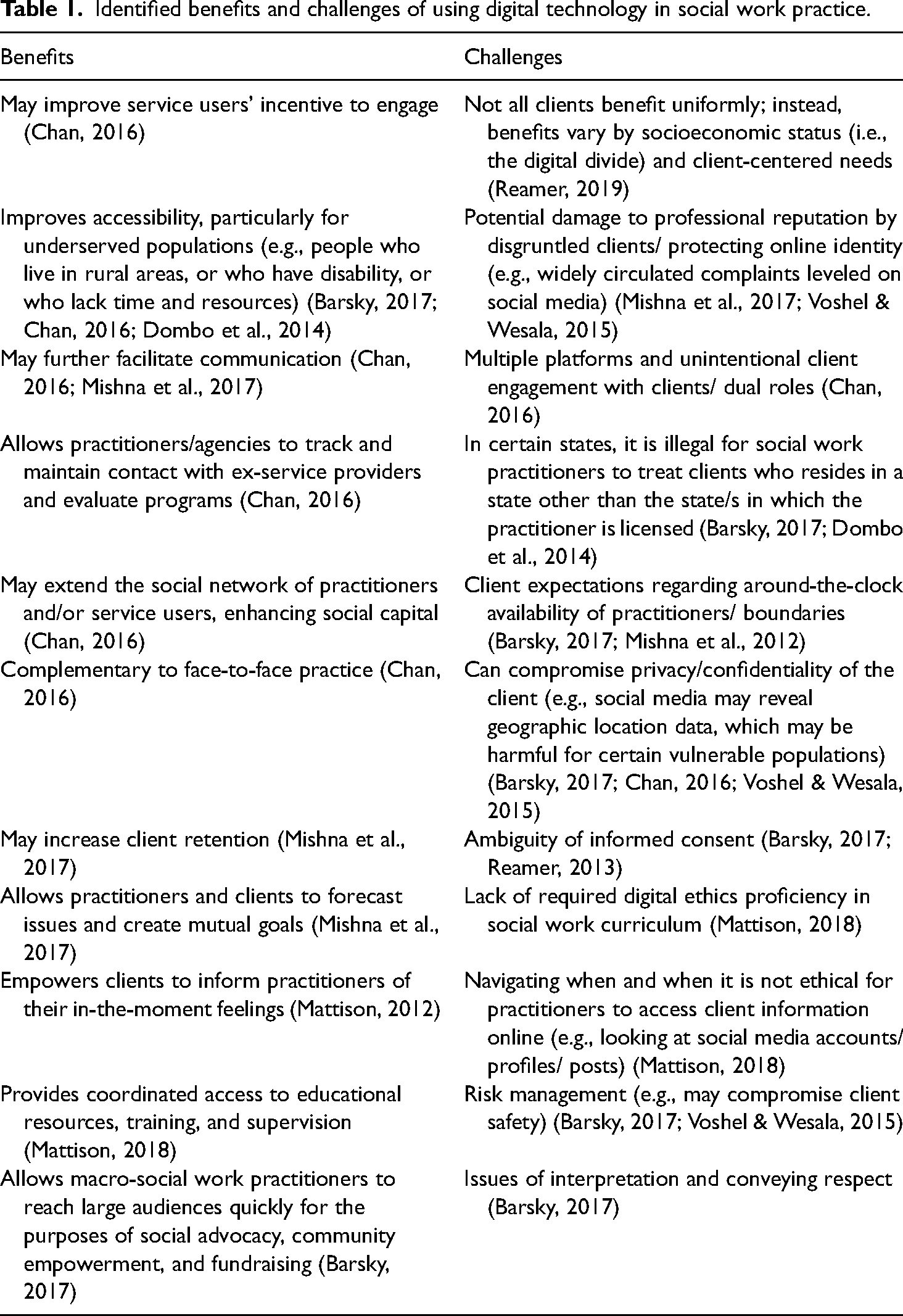
Table 1 provides an overview of the benefits and challenges identified in the scholarly literature on the use of digital technology in social work practice.
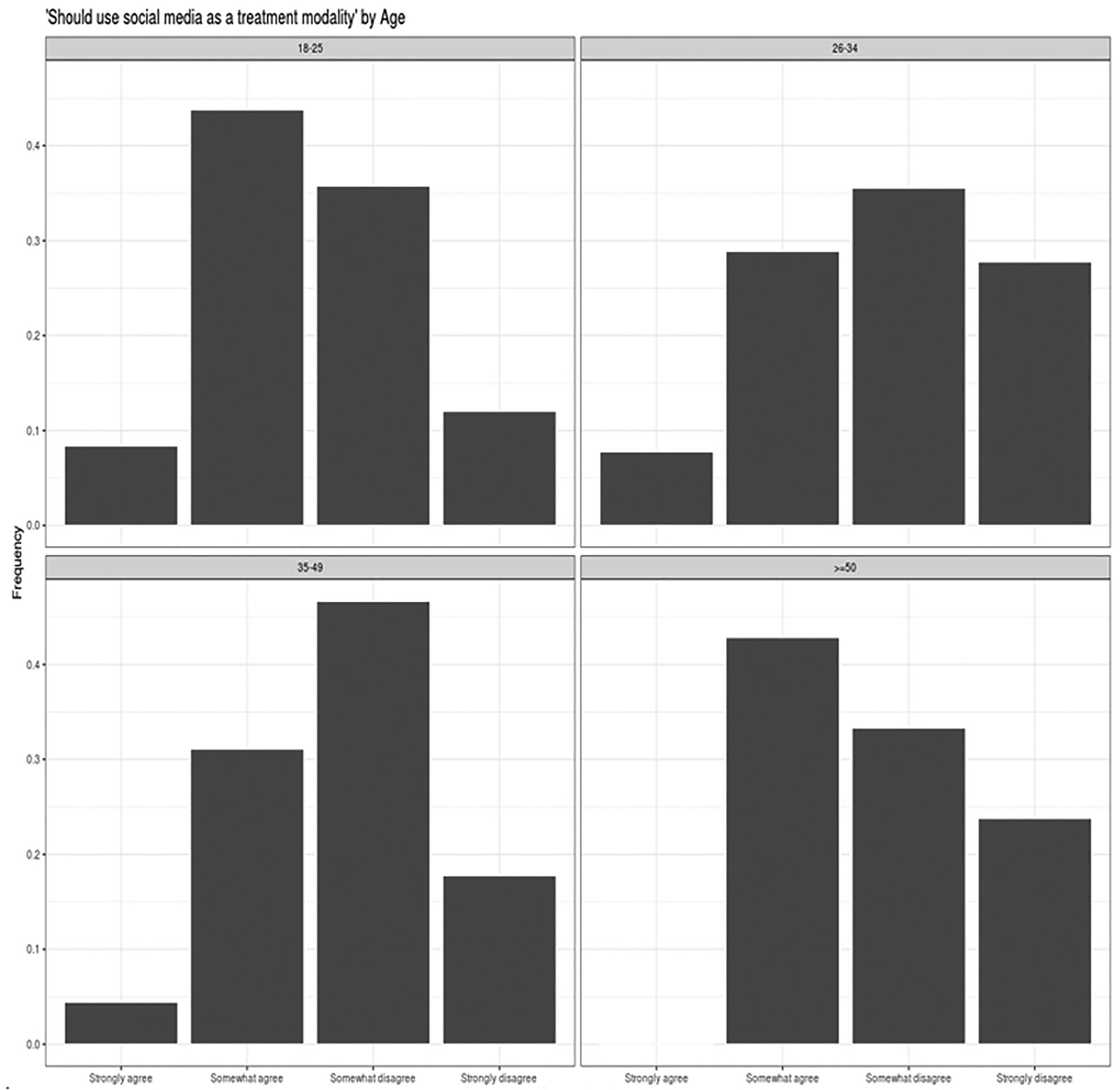
Social work students’ social media treatment attitudes by age.
Identified benefits and challenges of using digital technology in social work practice.
Descriptive statistics of social media attitudes among social work students.
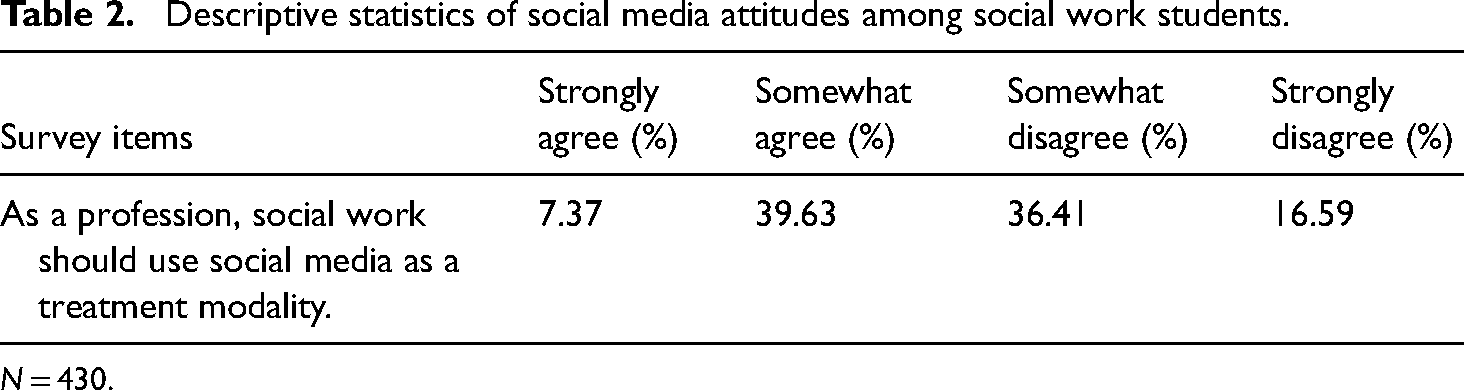
N = 430.
Methods
Participants
Recruitment and human subjects
To achieve the stated purpose of this study, the authors first obtained Human Subjects’ approval from the university's Institutional Review Board. The authors then contacted undergraduate and graduate program directors at the identified institutions and administered a 61-item Qualtrics survey to program directors, who in turn shared the link with enrolled social work students. The survey remained open to respondents for a period of 4 weeks.
Sample selection
A total of 150 institutions of higher education with both a CSWE-accredited undergraduate and graduate program in social work, including collaboratives, were ultimately sampled. The inclusion of both undergraduate and graduate programs was necessary for the purpose of examining differences between levels of study. In order to increase the generalizability of this study, the sample was obtained by randomly sampling social work schools in the United States that met the above criteria, stratified by the following four U.S. Census Regions: South (n = 57), West (n = 23), Midwest (n = 39), and Northeast (n = 31). Using information that is publicly available through the CSWE's Directory of Accredited Programs website and the U.S. Census’ Regions and Divisions of the United States, it was subsequently determined that a total of 92 institutions met the sampling criteria in the South; a total of 36 institutions met the sampling criteria in the West; a total of 62 institutions met the sampling criteria in the Midwest; and a total of 50 institutions met the sampling criteria in the Northeast. Therefore, of the possible 92 institutions in the South, approximately 62% were sampled; of the possible 36 institutions in the West, 63.9% were sampled; of the possible 62 institutions in the Midwest, 62.9% were sampled; and of the possible 50 institutions in the Northeast, 62% were sampled.
Measures
The 61-item survey requested that bachelors- and masters-level social work students provide demographic information (i.e., age, race/ethnicity, social work education), and respond to questions related to their social media use, their attitudes toward social media, and their knowledge of social media's impact upon society. Of the 61 variables measured in this study, 28 were categorical with nominal/ordinal scaling, and 33 were 4-point Likert-scaled variables with the following categories: Strongly Agree, Agree, Disagree, and Strongly Disagree.
Missing data
Among the 520 returned surveys in the initial dataset, 90 surveys were removed due to extremely low responses across variables (i.e., greater than 80% of the items were missing). However, eight surveys possessed a low percentage of missing data (i.e., less than 1%), with no particular pattern found for these missing cells. Due to this extremely low percentage of missing data in these latter surveys, item-mean substitution was performed to address the missing data. Item-mean substitution replaces a missing cell with the mean value for the variable across all respondents. This procedure is considered appropriate for dealing with missing data when the percentage of missing data is very low and distributed randomly (Hawthorne et al., 2005). The final dataset possessed 430 observations.
Statistical methods
Data preparation and analyses of sample characteristics and Rao-Scott chi-square tests for independence were performed using SAS software, version 9.4 (SAS Institute Inc, 2013). In addition, graphical plots were created using the statistical software R 3.4.4 (R Core Team, 2018).
Results
Descriptive statistics
In the current study, the majority of social work students reported being between 18 and 27 years old, while 86% (N = 430) of respondents were female. Of respondents, approximately 12% reported identifying as Black/African American, 68% White/Caucasian, and 15% Hispanic, Latina/o, or of Spanish origin. In addition, respondents’ social work education level at the time of the survey was reported. Among respondents, approximately 45% were BSW students, 23% were advanced standing MSW students, and the remaining 32% reported being enrolled in a 2-Year MSW program. Collectively, advanced standing and 2-Year MSW students accounted for just over half of the sample (55%). Moreover, among respondents, 48% reported attending all classes in a face-to-face format, while 6% reported attending all classes in an online/remote format; 46% reported learning in a hybrid format consisting of face-to-face and online/remote courses. Approximately 97% of students endorsed using social media between 0 and 9 h per day. Finally, 47% of total social work student respondents either somewhat or strongly agreed with the statement, social media should be used as a treatment modality, as compared to 53% of students who either somewhat or strongly disagreed. This represents a near-split. Table 2 presents descriptive statistics for this survey item.
Relationships between age, program level, course format, and social Media use
Social work students’ ages, by program level
A chi-square test of independence was performed to examine the association between student age and student program level. The relationship between these variables was significant, X2 (6, N = 430) = 25.16, p < .01, suggesting student age is associated with student program level.
Social work students’ program level, by course format
A chi-square test of independence was performed to examine the association between treatment modality and students’ reported program level. The relationship between these variables was significant, X2 (6, N = 430) = 2.56, p = .63, suggesting that a similar distribution of students at all program levels exists across course format type.
Social work students’ ages, by course format
A chi-square test of independence was performed to examine the association between student age and course format (i.e., face-to-face, hybrid, or online), which was found to be significant, X2 (6, N = 430) = 14.69, p = .02, suggesting an association between age and type of course format.
Social work students’ social media use, by age
A chi-square test of independence was performed to examine the association between social media use and student age. The relationship between these variables was found to be nonsignificant, X2 (6, N = 430) = 15.93, p = .07, suggesting no association between social media use and age.
Social work students’ social media use, by program level
A chi-square test of independence was performed to examine the association between variables. The relationship between these variables was significant, X2 (6, N = 430) = 20.359, p < .01, suggesting that an association exists between social media use and student program level.
Social work students’ social media use, by course format
A chi-square test of independence was performed to examine the association between variables, which was found to be significant, X2 (6, N = 430) = 3.44, p < .75, suggesting that no relationship exists between social media use and the format of students’ courses.
Comparisons of treatment modality by age, program level, course format, and social media use
Social work students’ attitudes regarding use of social Media as a treatment mode, by age
A chi-square test of independence was performed to examine the association between treatment modality and students’ reported program level. The relationship between these variables was significant, X2 (6, N = 430) = 19.51, p = .02, suggesting that younger students are more likely to endorse social media as a treatment modality. Figure 1 presents social work students’ social media treatment attitudes by age.
Social work students’ attitudes regarding use of social media as a treatment mode, by program level
A chi-square test of independence was performed to examine the association between these variables. Moreover, the relationship between these variables was not significant, X2 (6, N = 430) = 15.34, p = .02, suggesting that an association exists between attitudes about social media use as a treatment modality and program level.
Social work students’ attitudes regarding use of social media as a treatment mode, by course format
A chi-square test of independence was performed to examine the association between these variables, which was found to be nonsignificant, X2 (6, N = 430) = 3.57, p = .73, suggesting that there was no difference in social media treatment attitudes across course format type.
Social work students’ attitudes regarding use of social media as a treatment mode, by social media use
A chi-square test of independence was found to be significant, X2 (6, N = 430) = 10.61, p = .30, suggesting that no relationship exists between social media treatment use attitudes and social media use.
Discussion
Rapid technological developments in the present landscape of government deregulation, lack of recognition of digital rights, and global surveillance capitalism raise important questions about the evolution of professional standards, professional ethics, and best practices for social work. The data indicate that U.S. social work students’ self-reported endorsement of social media as a treatment modality has a statistical relationship with students’ Age and Program Level. It was further determined that there was a significant relationship between Age and Program Level, suggesting a positive correlation between these two demographic variables. One obvious hypothesis is that younger students are within a generational cohort born into digital technology through utilizing social media both personally, as well as educationally. Technology is an essential thread in their understanding of the human fabric. From a critical perspective, however, norms become taken-for-granted assumptions and such assumptions may be hard to pin down for critical evaluation because of their insidious quality. It is therefore incumbent upon social work educators to bring an informed, critical perspective on the professional merits of technology into the academic discourse so that it may live on in the next generations’ pedagogy and practice. A critical perspective follows.
Owing to the present lack of U.S. federal oversight recognizing individuals’ rights to privacy and ownership/protection of personal data (Williams, 2020), it is arguably the responsibility of professional regulatory bodies to promulgate substantive guidelines and processes, and to update them regularly, frequently, and with appropriate consultation from information and communication technology experts. Otherwise, social work values and ethics—arguably the hallmark of the profession—run the risk of being overshadowed by other, external logics, such as those that govern the tech industry (e.g., growth and the commodification of user data) and private enterprise (e.g., profit, surveillance, and efficiency). Such logics are arguably antithetical to social work values, such as social justice and dignity and worth of the person. In addition to promulgating substantive guidelines, professional social work organizations and practitioners can lobby for regulatory oversight of the technology industry at the state and federal levels. The profession can and should take a position with regard to the privacy, use, ownership, and protection of digital data. Further, the profession has an ethical stake in how artificial intelligence, predictive algorithms, risk modeling, and biometric data can be oppressive in practice, and how the commodification of private user data without informed consent is a violation of peoples’ basic dignity and worth.
Limitations of the present study
Limitations associated with survey research include self-response and social desirability biases. Most notable of the limitations is that the survey instrument was not validated. Therefore, there are no validity and reliability metrics to report for the present instrument. History was also a threat to validity, owing to the passage of time and influential events. Finally, with regard to future research, subsequent studies should use data that is amenable to parametric statistical procedures so that relationships can be more robustly described and understood.
Recommendations for future research
Having now witnessed in Spring 2022 the broad and often unquestioned incorporation of digital technology into both social work practice and education, as well as other trends in social work student enrollment, a replication study seems in order to explore possible differences across time and cohorts in the United States. Secondly, further understanding is needed with regard to students’ qualitative, lived experience with social media. Thirdly, comparative studies examining social work practitioners’ and educators’ held beliefs about, use of, and attitudes toward social media could provide additional context beneficial to understanding professional acculturation. Fourthly, a global study is recommended in order to examine differences between countries that may have implications for international social work. Finally, just as there is a mandate to practice evidence-informed social work, there should also be a mandate to use evidence-informed technology as a treatment modality. Such data are lacking and could remain elusive for many years. Herein lies the important role of future social work research.
Conclusion
In order to contribute to the emerging discourse on the use of digital information and communication technology in social work practice, the purpose of this study was to ascertain significant statistical relationships with regard to U.S. social work students’ responses to the survey item, social media should be used as a treatment modality, and student demographic variables that included: Age, Program Level, Course Format, and Social Media Use. A stratified, random sample, based on the four U.S. Census Regions and the inclusion criteria of a CSWE-accredited undergraduate and graduate program in social work, resulted in a total of 150 institutions of higher education being selected (N = 430). First, self-reported frequency of use of social media seemingly has no relationship with student endorsement of social media for professional practice. Second, statistically significant relationships were determined to exist between social work students’ endorsement of social media as a treatment modality and: (1) Age and (2) Program Level. Furthermore, the demographic variables, Age and Program Level, were determined to have correspondence.
Footnotes
Ethics
This study was approved by the University of Georgia Institutional Review Board Study # 00006763.
Funding
The authors received no financial support for the research, authorship, and/or publication of this article.
Declarations of Conflict of Interests
The Authors declare that there is no conflict of interest.
Authors’ contributions
Conceptualization was done by L.A.R., J.S., and D.D.. Methodology was designed by L.A.R. and L.N. Formal Analysis was performed by A.Q. Investigation and data curation were done by L.A.R., A.Q., and L.N. Writing—original draft preparation was done by L.A.R., D.D., J.S., and A.Q.. Writing—review and editing was done by L.A.R. and D.D. Visualization was done by L.A.R. and A.Q. Supervision was done by L.A.R.. Project administration was done by L.N.
