



Abstract
Rural tourism in China has grown rapidly under national rural revitalisation policies, leading to a surge in interest in ethnic homestay accommodation. Despite this growth, a persistent mismatch between tourist demand and host supply poses challenges to sustainable development in these destinations. This study employs a mixed-methods approach to examine the co-evolutionary relationship between supply and demand in ethnic homestay tourism. Data were gathered from 412 tourists and 303 homestay operators using a questionnaire, and from 30 in-depth interviews with homestay operators, in Xijiang Miao Village, a leading ethnic tourism destination in China. The results indicate that perceived value and experience quality significantly enhance tourists’ overall satisfaction and perceptions of symbiotic development, with experience quality functioning as a mediating factor. Tourist satisfaction exerts a strong positive influence on perceived symbiotic development. Despite these positive relationships, notable supply–demand imbalances persist, highlighting the necessity for adaptive and context-sensitive operational strategies. This study extends perceived value theory in the context of ethnic tourism and proposes a value–experience–satisfaction–symbiosis pathway. The practical implications of this study focus on prioritizing emotional and efficiency value, enhancing communication channels, and promoting participatory cultural experiences. Policymakers and tourism platforms are encouraged to support these practices to foster sustainable and co-creative rural tourism development, equipping them with actionable insights.
Keywords
Introduction
Rural tourism in China has expanded rapidly under the national strategy of rural revitalisation, and this has resulted in the emergence of a vibrant homestay sector. This is particularly the case in ethnic villages, where policy support has served as a major impetus for growth (Zhang, 2025). National policies, for example, the Guidelines on Promoting High-Quality Development of Rural Homestays (Ministry of Culture and Tourism, 2022), emphasise the dual function of homestay businesses as both custodians of cultural heritage and drivers of local economic renewal (Tian et al., 2021). Despite this policy momentum, the rapid proliferation of homestays has exposed structural mismatches between what hosts provide and what tourists demand. A persistent mismatch is nevertheless evident between supply and demand, which threatens to undermine the sector’s sustainability (Zhou and Deng, 2024). Such imbalances are manifested not only in fluctuating occupancy rates but also in gaps between perceived service quality and visitors ‘expectations of cultural authenticity. This underscores the need to align homestay offerings with tourist preferences to promote value co-creation and sustainable, symbiotic development.
Studies in the homestay context have previously examined service quality (Zhou et al., 2022), satisfaction (Quang et al., 2025), tourist loyalty (Dai et al., 2025), experience design (Carvalho and Alves, 2023), place attachment (Richards, 2018) and empowerment (Quang et al., 2024). These studies have tended, however, to adopt either a supply-side or a demand-side perspective, thereby failing to employ an integrated framework to capture the dynamic interaction of the two (Carvalho and Alves, 2023). Existing research focuses predominantly on tourists, often neglecting the active role hosts play in value creation. Consequently, the way in which the two sides mutually adapt to each other over time, referred to as the process of demand-supply co-evolution, remains conceptually underdeveloped and empirically underexplored. The concept of demand-supply co-evolution thus remains under-theorised and under-employed in research on homestay tourism.
Interactivity between the demand side and the supply side is also a key component of the value co-creation paradigm, which is widely used in tourism research (Sthapit et al., 2022, 2023). This rests on the proposition that tourists and service providers engage in reciprocal relationships to build consumer value. However, co-evolution extends beyond co-creation by emphasizing mutual adaptation and transformation: how hosts adjust their offerings in response to tourists’ evolving expectations, and how tourists reinterpret local culture through these adapted experiences. Studies on homestay tourism have tended, however, not to examine how various dimensions of perceived value may influence experience quality and tourist satisfaction (Regalado-Pezúa et al., 2023). Bridging these theoretical gaps is critical to advance the understanding of ethnic homestay tourism, providing a more complete understanding of how host–tourist interactions evolve over time and how these dynamics contribute to sustainable development. Accordingly, this study aims to investigate the process of demand–supply co-evolution in the ethnic homestay sector, exploring how tourists’ perceived value, experience quality, and satisfaction interact with hosts’ adaptive practices to shape sustainable and mutually beneficial outcomes.
This study accordingly employs a mixed-methods approach to investigate how demand–supply co-evolution shapes the development and sustainability of ethnic homestay tourism. Specifically, it integrates quantitative analysis from a structured tourist survey with qualitative insights from semi-structured interviews with homestay hosts. Xijiang Miao Village, China’s largest Miao settlement and a leading ethnic tourism destination, serves as an instructive empirical case due to its pronounced supply–demand tensions, rich cultural resources, and long-standing engagement in rural revitalization initiatives.
This study contributes to knowledge by: (1) conceptualising demand–supply co-evolution as a dynamic mechanism linking hosts and tourists; (2) integrating supply- and demand-side perspectives into a unified analytical framework; and (3) offering actionable insights for fostering sustainable, mutually beneficial growth in ethnic homestay destinations.
Literature review
Perceived value and experience quality
Perceived value is a foundational construct in tourism and hospitality research and is defined as a consumer’s overall assessment of the utility of a product or service based on perceived benefits versus sacrifices (Zeithaml, 1988). In the context of rural and cultural tourism, it has been argued that perceived value comprises multiple dimensions, including functional, emotional, social, epistemic, and efficiency-related (Yu et al., 2023a). In ethnic village homestay settings, perceived value has been found to extend beyond tangible attributes to include factors ranging from cleanliness and convenience to cultural engagement, authenticity, and emotional resonance (Zuo et al., 2024). Tourists are increasingly seeking participatory experiences that connect them with local traditions, foster interaction with host communities, and provide a sense of place (Kastenholz et al., 2020). Certain elements of such encounters, e.g., authentic storytelling, cultural immersion, and co-created activities, serve to strengthen this relationship (Leong et al., 2024). However, while existing studies confirm the multidimensional nature of perceived value, they often conceptualise it as a static construct, overlooking how value perceptions evolve through continuous host–guest interaction and cultural learning. Taken together, perceived value not only reflects tourists’ cognitive evaluation of benefits and costs but also signals their affective and symbolic engagement with place and culture, which underpins the experiential dimensions of homestay quality. Accordingly, the following hypothesis is proposed:
Perceived value positively affects tourists’ quality of the homestay experience in ethnic village homestays.
Perceived value and tourist satisfaction
Tourist satisfaction, defined as a post-consumption evaluation of whether an experience meets or surpasses expectations, has long played a key role in tourism research (Oliver, 1997). Satisfaction displays the combined effect of cognitive judgements and emotive responses (Choe and Kim, 2022). Across cultural, rural, and ecotourism contexts, perceived value has repeatedly emerged as an important predictor of satisfaction (Qiong et al., 2025; Yu et al., 2023b).
Research also suggests that perceived value extends beyond monetary considerations, encompassing functional, emotional, social, cognitive, and efficiency-related dimensions (Regalado-Pezúa et al., 2023). Functional value refers to the service’s practical benefits; emotional value captures affective experiences; social value relates to interpersonal connections and social recognition; cognitive value reflects learning and novelty; and efficiency value focuses on convenience and time savings.
Tourists who experience authentic hospitality, opportunities for cultural learning, and community inclusion are therefore likely to be more satisfied with their stay and the overall destination (Yang and Ma, 2022). Moreover, location attachment, perceived authenticity, and memorable tourism experiences have been recognised as significant pathways connecting perceived value to satisfaction in culturally sensitive settings (Qian and Li, 2024). Despite these insights, few studies integrate these multidimensional values within a broader host–guest relationship framework, which limits our understanding of how satisfaction emerges as a co-created outcome rather than a unilateral evaluation. These findings demonstrate that value assessments of ethnic homestays are influenced by both tangible service features and intangible cultural connections, emphasising the importance of integrated models that include multidimensional value dimensions. The following hypothesis is thus adopted.
Perceived value positively influences tourists’ overall satisfaction in ethnic village homestays.
Quality of the homestay experience and tourist satisfaction
Experience quality is commonly understood as a holistic, post-consumption evaluation of the consumption episode that integrates cognitive judgements (Otto and Ritchie, 1996). Prior research emphasise that the service experience, rather than merely discrete attributes, often serves as the primary antecedent of satisfaction and subsequent behavioral intentions (Dai et al., 2025). In ethnic homestays, experience quality is influenced by factors distinct from conventional hotels, including personalised host behaviors, authentic cultural interactions, meaningful immersion activities, and other experiential elements (Sarma et al., 2025).
Despite increasing attention to homestay experience quality and its link to tourist satisfaction, loyalty, and positive word-of-mouth, research in ethnic village contexts remains limited. Existing studies have shown that co-created service experiences significantly predict satisfaction and revisit intentions (Carvalho and Alves, 2023; Sthapit et al., 2024); while emotionally engaging and culturally respectful encounters foster pro-sustainability behaviors in community-based tourism (Campos et al., 2018). Interactive and personalised elements, such as participatory cultural activities or one-to-one host interactions, have been found to enhance memorability and authenticity, further elevating visitor satisfaction (Zatori et al., 2018).
However, few studies have operationalised experience quality using multidimensional scales tailored to ethnic homestays, and the mediating roles of memorable tourism experiences, perceived authenticity, and place attachment remain underexplored. Experience quality in ethnic homestays should be conceptualized not merely as a static evaluation of service performance but as a dynamic, co-created process reflecting the interplay of host intentionality, guest participation, and cultural context (Campos et al., 2018; Hosany et al., 2022). Recognising the importance of these factors, the present study hypothesizes that:
Quality of the homestay experience positively affects tourists’ satisfaction in ethnic village homestays.
Mediating role of experience quality
Previous research confirms a robust association between perceived value and satisfaction across both cultural and coastal tourism contexts, while further indicating that psychological and experiential factors may moderate the strength and direction of this relationship (Regalado-Pezúa et al., 2023). Experience quality can be considered a key mediator in tourism settings (Hosany et al., 2022).
In the context of ethnic homestays, experience quality is critical, as these accommodation establishments integrate conventional service delivery with authentic cultural encounters. For example, environmental and interactional features of the experiencescape positively stimulate guests’ feelings, judgements, and place attachment, leading to significantly higher satisfaction and engagement behaviors (Shen et al., 2024). When tourists actively participate in culturally meaningful activities or are treated with warm hospitality and narrative storytelling, perceived cultural and emotional value is transformed into memorable experiences and stronger affective bonds, increasing overall satisfaction and loyalty (Dai et al., 2025).
Furthermore, emotions and memorable experiences have been found to mediate the relationship between stimulus and loyalty or satisfaction in community homestays (Regalado-Pezúa et al., 2023). This mediating process underscores that experience quality acts as the affective bridge translating cognitive appraisals of value into evaluative judgments of satisfaction, consistent with the cognitive–affective–behavioral (CAB) paradigm. Accordingly, the following hypothesis is proposed:
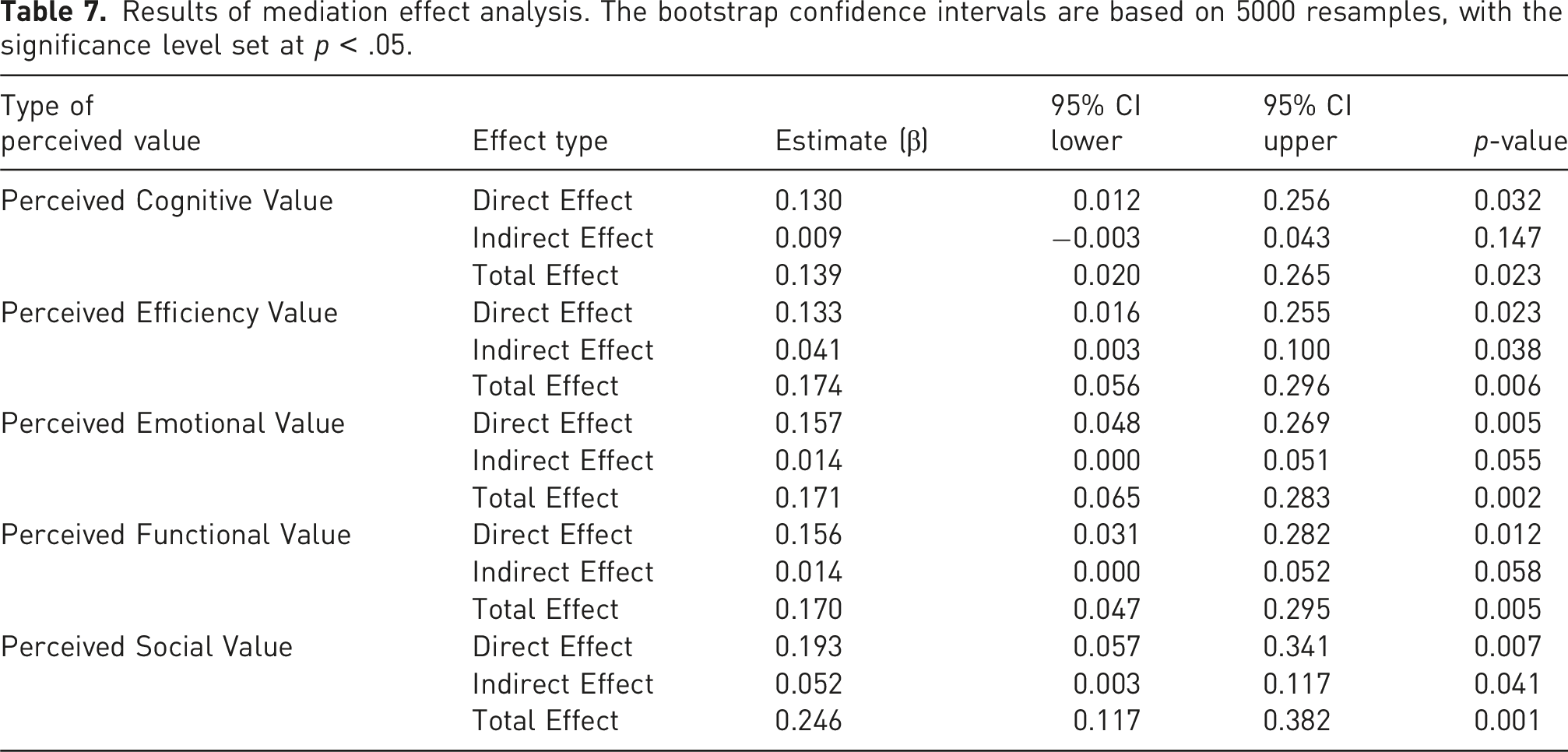
Quality of the homestay experience mediates the relationship between perceived value and tourists’ satisfaction.
Value, quality, satisfaction, and co-evolutionary perception
Tourism research increasingly acknowledges the dynamic interplay between service providers and consumers. The concept of demand and supply co-evolution highlights how hosts and guests adapt interactively to co-shape tourism experiences (Campos et al., 2018; Carvalho and Alves, 2023; Liu et al., 2024; Sthapit and Björk, 2020). Building on this line of thought, the present study introduces the notion of a symbiotic development model (SDMA), which represents tourists’ perception of the co-evolutionary relationship between hosts and guests. In the ethnic homestay context, tourists’ awareness of this process is referred to in this study as the assessment of the symbiotic development model (SDMA), which captures their recognition and evaluative judgement of the interdependent relationship between hosts and guests. SDMA emphasizes how visitors perceive their role not only as recipients of services but also as active partners who contribute to cultural preservation and service innovation (Tao et al., 2024).
Grounded in symbiosis theory (Margulis, 1998) and the logic of value co-creation (Prahalad and Ramaswamy, 2004), the SDMA conceptualises the host–guest relationship as a mutually adaptive system evolving through iterative feedback, shared learning, and cultural negotiation. When tourists perceive themselves as active partners in value co-creation, they are more likely to support cultural continuity and innovation in service delivery (Heinonen and Sthapit, 2024; Sthapit et al., 2022). Moreover, higher perceived value and superior experience quality enhance tourists’ sense of contributing to mutual growth (Assiouras et al., 2023), while satisfaction further reinforces their recognition of agency within a symbiotic system (Wang and Hui, 2023). Thus, the SDMA extends traditional service-evaluation frameworks by integrating psychological satisfaction, experiential co-creation, and socio-cultural adaptation into a dynamic, co-evolutionary perspective of tourism development. On this basis, the following hypotheses are advanced:
Perceived value positively influences tourists’ assessment of the symbiotic development model.
Homestay experience quality positively influences tourists’ assessment of the symbiotic development model.
Tourist satisfaction positively influences tourists’ assessment of the symbiotic development model. Drawing on the preceding literature review, this study advances a conceptual framework in which to examine these hypotheses that integrates perceived value, experience quality, tourist satisfaction, and co-evolutionary development cognition within the context of ethnic village homestay tourism (Figure 1).
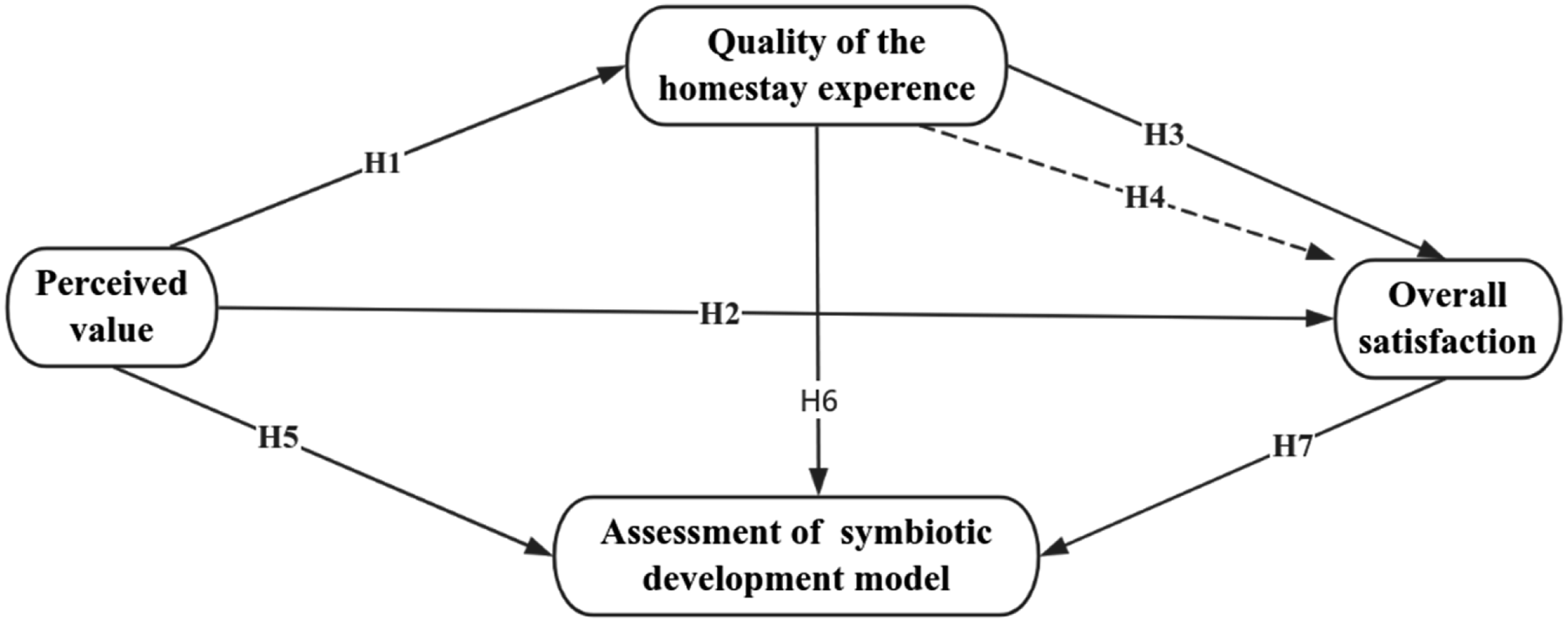
Conceptual framework.
Method
Research site
Xijiang Miao Village, in Leishan County, Qiandongnan Miao and Dong Autonomous Prefecture, Guizhou Province, China, is the world’s largest Miao settlement, renowned for its rich intangible cultural heritage, distinctive festivals, and well-preserved vernacular architecture (Wang et al., 2024). It was selected for this study because it exhibits pronounced supply–demand tensions and active host–tourist interactions, linking visitor demand with local economic benefits and providing opportunities for cultural exchange and co-creation (Guizhou Provincial Government, 2025).
Research design
To examine the dynamic mechanisms underlying host-tourist co-evolution in ethnic homestay tourism, a mixed-methods sequential explanatory design was adopted. Quantitative SEM analysis captures structural relationships among constructs, while qualitative interviews provide contextualized insights into the processes driving these relationships. Integrating these phases ensures that statistical findings and qualitative interpretations mutually reinforce each other, overcoming limitations of single-method approaches (Creswell and Plano Clark, 2018).
The choice of a sequential explanatory design is also theoretically justified. Quantitative analysis based on structural equation modeling (SEM) captures the causal pathways among perceived value, experience quality, satisfaction, and perceived symbiotic development, while the qualitative interviews reveal contextualized mechanisms of adaptation, negotiation, and value co-creation between hosts and guests. By connecting the two phases through a purposeful integration process, where quantitative findings informed the qualitative interview protocol and subsequent thematic interpretation, the study ensures that the two strands are not merely parallel but mutually reinforcing.
For the quantitative component, structured questionnaires were distributed to tourists who had previously stayed in ethnic village homestays in Xijiang Miao Village. To help ensure respondent validity, questionnaires were handed out at the homestay reception area during the check-out procedure. Sampling was implemented during both weekdays and weekends in July–August 2024 to capture variation in visitor profiles. All items were adopted from validated measurement scales used in tourism and hospitality research. The responses were recorded using a standard seven-point Likert scale, and the generated dataset was the analyzed using SEM to test the hypothesized relationships.
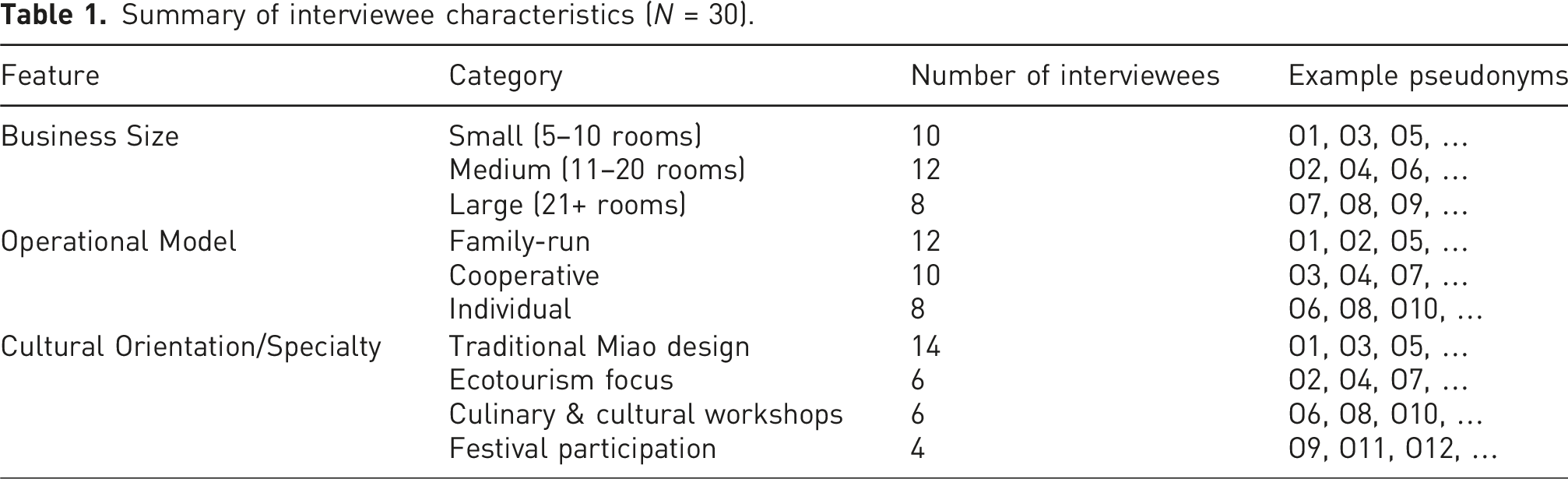
Summary of interviewee characteristics (N = 30).
Data sources and sampling
Questionnaire
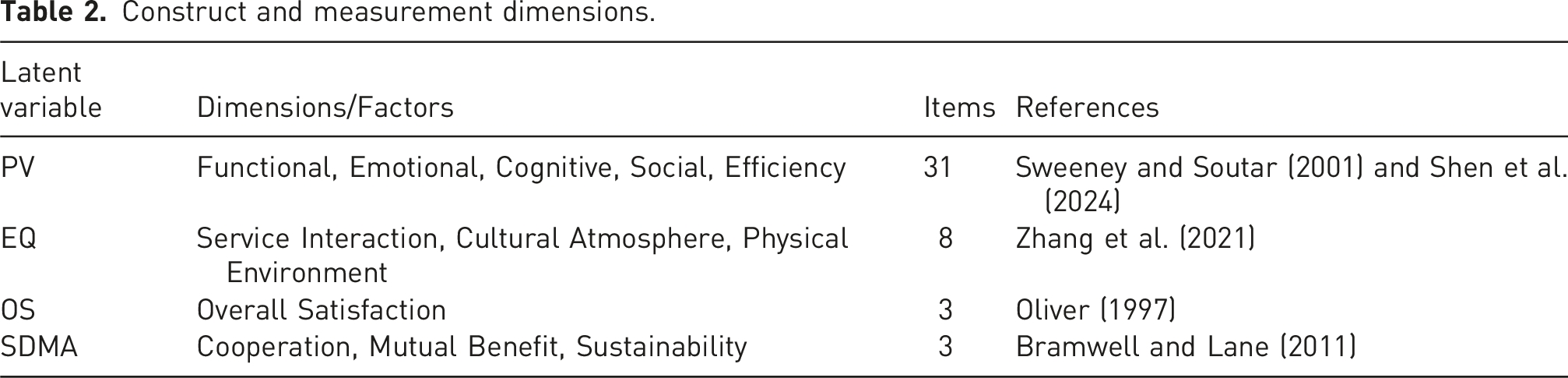
Two structurally parallel questionnaires were designed for tourists and homestay operators, assessing Perceived Value (PV), Experience Quality (EQ), Overall Satisfaction (OS), and the newly developed Symbiotic Development Model Assessment (SDMA), which operationalizes supply-demand symbiosis through interorganizational cooperation, mutual benefit, and sustainability orientation (Bianchi, 2022; Wilke et al., 2019). Items were drawn from validated frameworks (PERVAL, Sweeney and Soutar, 2001; SERVQUAL, Bigné et al., 2001; Parasuraman et al., 1988), refined through 1289 online reviews and 12 expert interviews to ensure conceptual and contextual validity. The final questionnaire included 45 items on a seven-point Likert scale. Of 450 tourist questionnaires collected, 412 were valid (91.6% response rate); all 303 operator questionnaires were valid. Sample size meet both statistical power analysis requirements (Cohen, 1992) and SEM recommendations, ensuring robust parameter estimates.
Interview survey
Thirty semi-structured interviews were conducted with homestay operators using purposive and snowball sampling to capture diverse business types and locations. Interviews lasted 40–75 minutes, were conducted in Mandarin or the local Miao dialect, and were audio-recorded and transcribed verbatim. Theoretical saturation was achieved after the 27th interview, with three additional interviews confirming no new themes emerged (Guest et al., 2006). Back-translation and inter-coder checks ensured semantic accuracy and analytic consistency.
Measurement of variables
Construct and measurement dimensions.
Data analysis
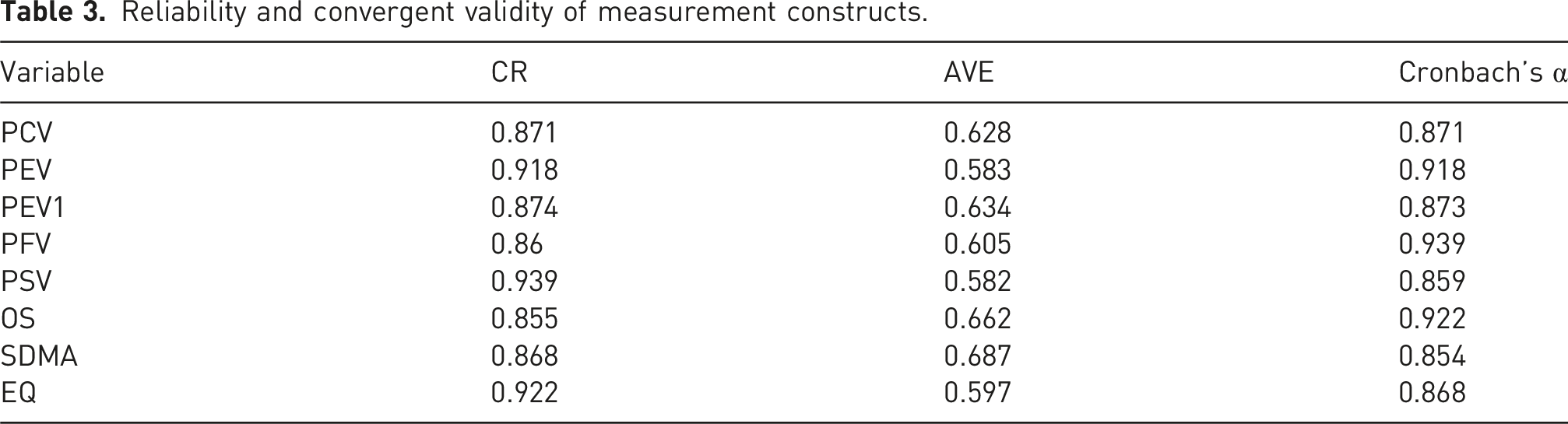
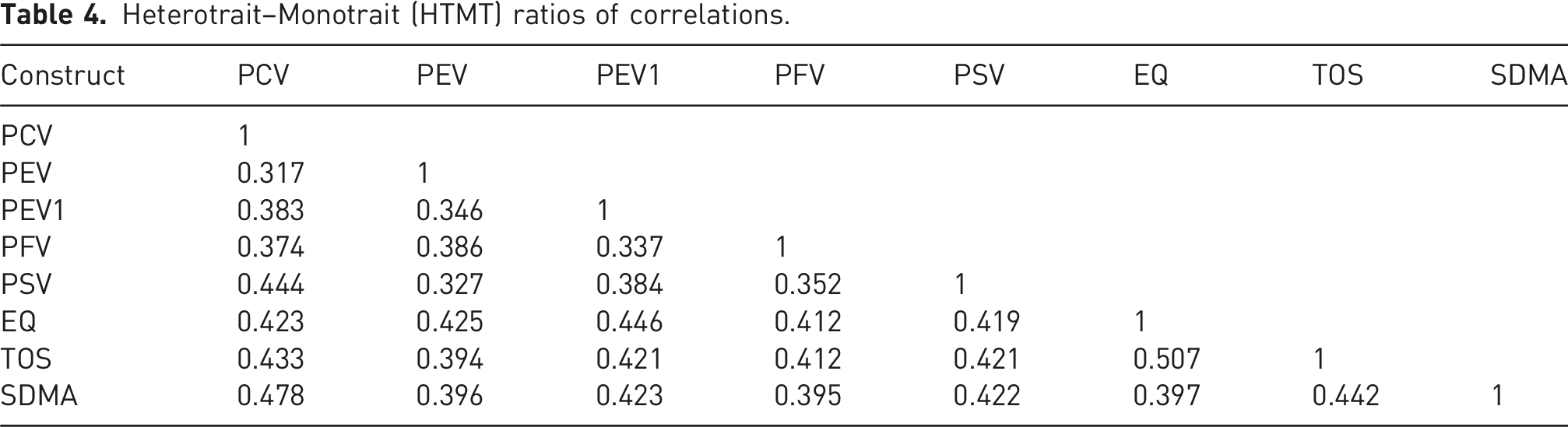
The quantitative data were analyzed using SPSS 26.0 and AMOS 24.0. Reliability was assessed using Cronbach’s α and Composite Reliability (CR), while convergent validity was evaluated via Average Variance Extracted (AVE). Discriminant validity was examined using the Fornell-Larcker criterion and further confirmed via the Heterotrait-Monotrait ratio (HTMT), ensuring latent constructs were empirically distinct. SEM was employed to test the hypothesized relationships, with model fit assessed using χ2/df, CFI, TLI, and RMSEA (Goretzko et al., 2024). Mediation effects were tested using bootstrapping with 5000 resamples. Independent sample t-tests were performed to compare perceptions between tourists and operators, with Levene’s test confirming homogeneity of variance, thereby ensuring the appropriateness of parametric tests.
Qualitative data were analyzed through thematic analysis, supplemented with open and axial coding from grounded theory (Strauss and Corbin, 2015). Interviews were transcribed verbatim and read several times to ensure immersion. Open coding generated initial concepts, while axial coding linked them into higher-order themes. This approach went beyond descriptive categorization, allowing identification of mechanisms underpinning co-evolutionary interactions between hosts and tourists. Integration with quantitative findings was achieved by mapping qualitative themes onto SEM paths, thereby connecting statistical patterns with contextual explanations.
Research ethics
This study complied with the ethical standards of the authors’ affiliated institution and the principles of the Declaration of Helsinki. All participants provided informed consent, and anonymity was assured through data de-identification. A pretest ensured the clarity and comprehensibility of questionnaire items. Triangulation across quantitative and qualitative data enhanced explanatory depth and robustness, while expert review strengthened content validity.
Results
Descriptive statistics
Regarding tourists, 55.1% were female. The largest age group was 26 and 35 years (30.6%). In terms of education, 72.5% held a bachelor’s degree or above, and the average annual household income was in the RMB 20,000 to 30,000 range (30.6%).
Regarding homestay operators, the largest group (27.7%) had been in operation for less than a year, with 24.1% having been in operation for between one and five years. Most homestays (69%) fell into the small-to medium-sized category, having fewer than 20 rooms. Around 60% were located around the scenic viewing platform, highlighting a spatial concentration near this key tourist zone. Pricing mainly targeted the mid-range market, with 67.3% of homestays priced between RMB 301 and 700 per night.
Measurement model assessment
Reliability and convergent validity of measurement constructs.
Heterotrait–Monotrait (HTMT) ratios of correlations.
Model fit indices.

Structural model results
The standardized factor loading coefficient table.
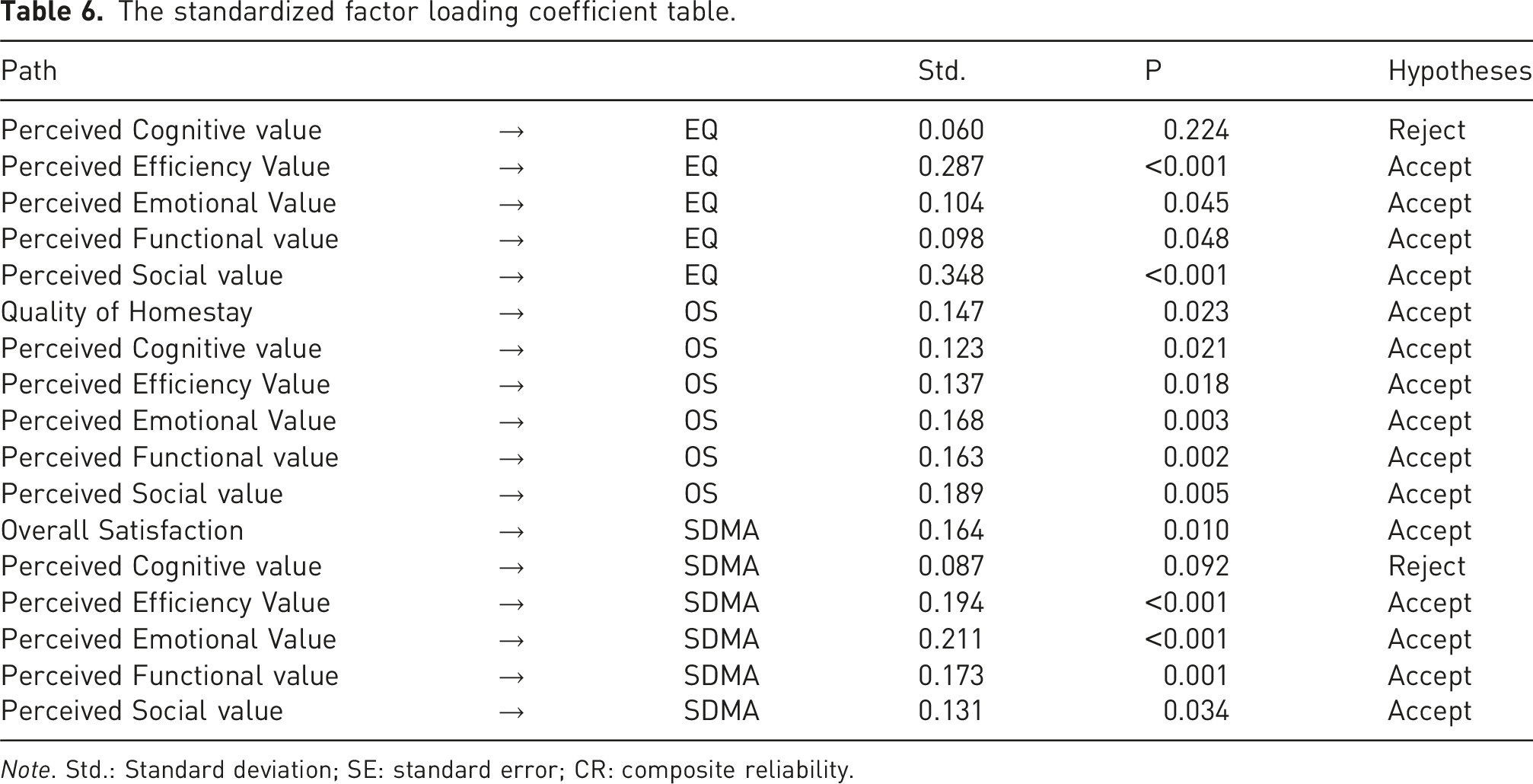
Note. Std.: Standard deviation; SE: standard error; CR: composite reliability.
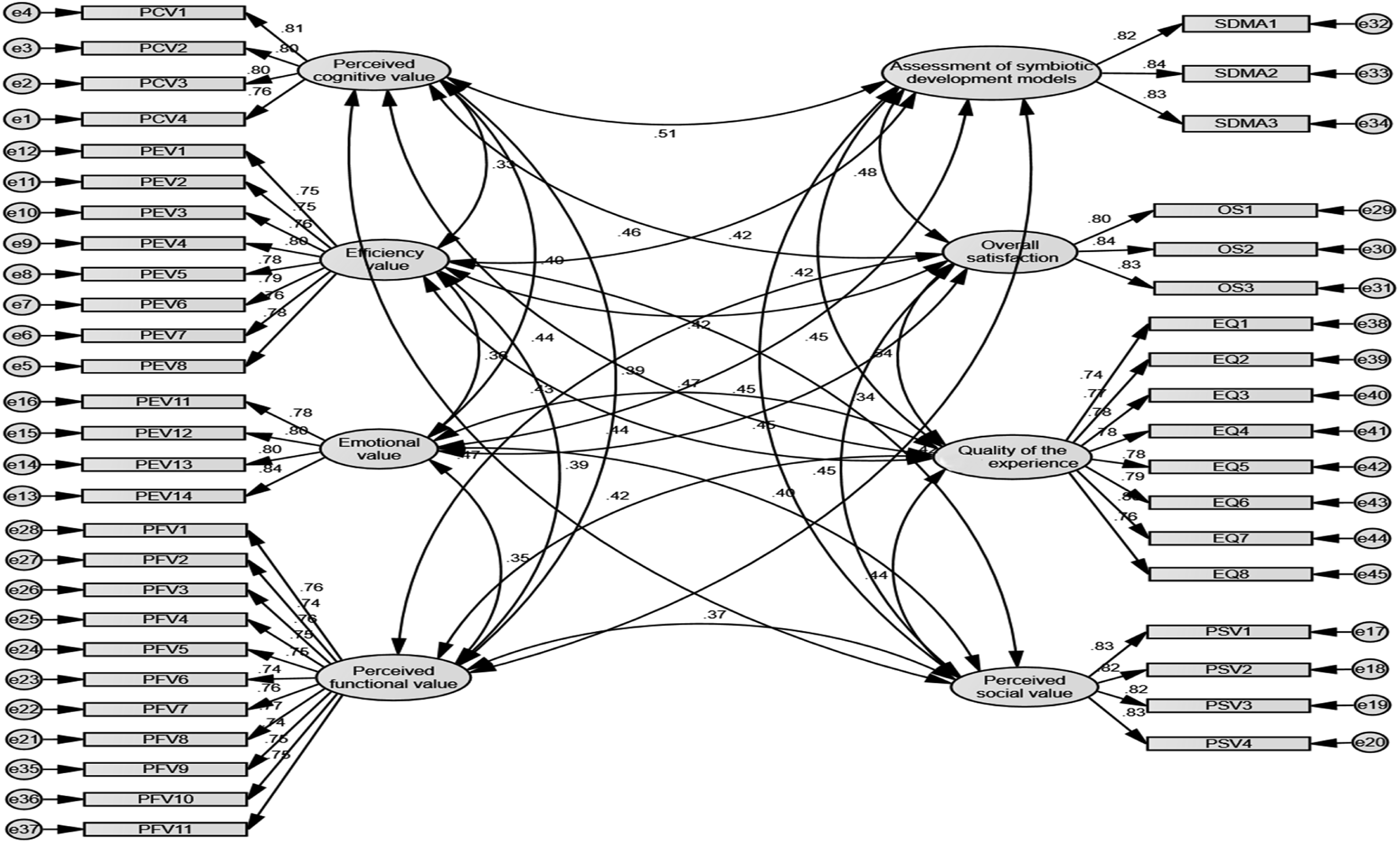
The structural equation model.
Mediation analysis
Results of mediation effect analysis. The bootstrap confidence intervals are based on 5000 resamples, with the significance level set at p < .05.
Comparative analysis of supply and demand perceptions
The comparative results of the supply and demand sides’ ratings of bed and breakfast dimensions.
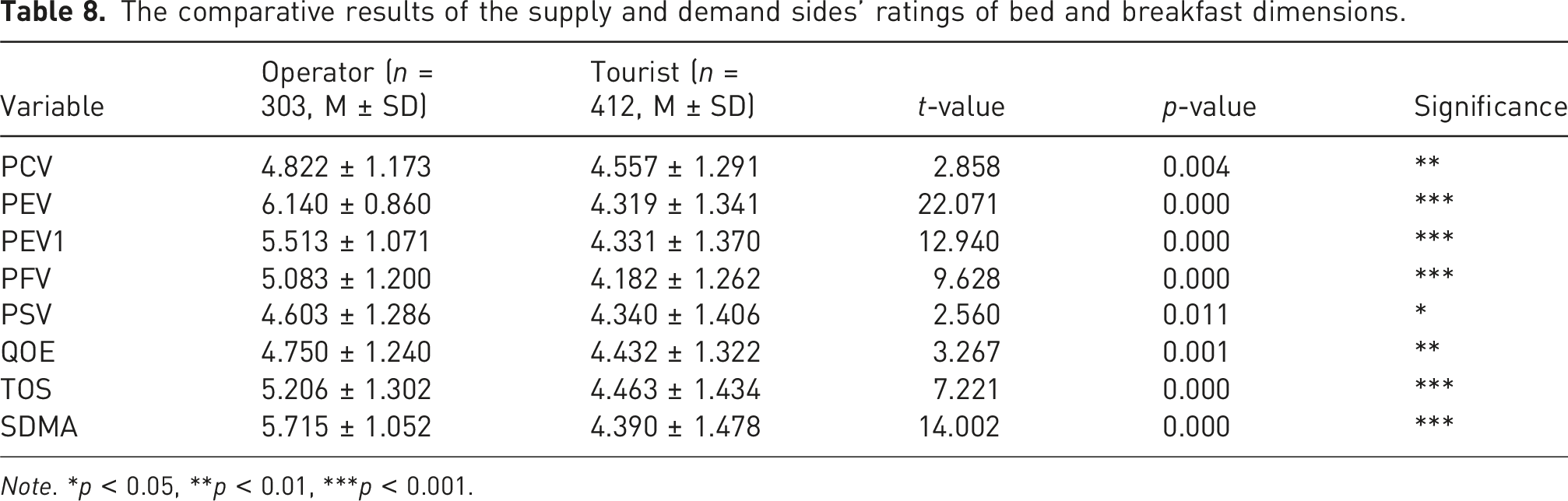
Note. *p < 0.05, **p < 0.01, ***p < 0.001.
Mixed-methods integrated analysis of value, experience, satisfaction, and symbiosis
Interview results
Thematic analysis of the semi-structured interviews was conducted to examine homestay operators’ perspectives on tourist satisfaction, value creation, and symbiotic development (the mutually beneficial relationship between operators and tourists). Data were independently coded by two coders using open, axial, and selective coding procedures. An initial set of 86 open codes was generated. These were then consolidated into 15 subthemes and finally grouped into four overarching themes through iterative comparison and discussion. Coding consistency reached 91% intercoder agreement (κ = 0.87), ensuring reliability of the qualitative interpretation.
These are summarised below with illustrative quotations from participants (see Appendix 1 for interviewee details), highlighting key patterns in operators’ practices and perspectives.
Theme 1: The prevalence of functional and efficiency-oriented value perceptions. Most operators defined “value” in terms of utilitarian necessities such as clean rooms, easy booking processes, and cost-effectiveness, rather than broader emotional, social, or cultural benefits. This practical and efficient approach is exemplified in the statements: “Guests are delighted with clean rooms and reasonable prices … Cultural activities are good to have, but they do not provide consistent results.” (O17).
A smaller group of operators, however, emphasized the importance of providing unique cultural or emotional value for long-term competitiveness. One stated, for example, that “People can get clean rooms anywhere: what makes them come back is the story and the mood of the location.” (O8).
Another operator reflected that “Sometimes guests say we are very professional but lack warmth. I think we are efficient but maybe too mechanical.” (O11). This indicates that operators’ focus on efficiency may inadvertently weaken the experiential and affective dimensions of value.
Theme 2: Misalignment between operator assumptions and tourist expectations. A recurring result was a mismatch between operators’ assumptions and tourists’ actual desires, a recognition that many visitors desire efficient and standardized services, such as speedy check-ins and clean bedding. (O5).
Some operators noted that tourists actively seek engagement, asking about local history, traditions, and even recipes. For example, one interviewee noted that “If we dismiss that, we will miss the opportunity to connect.” (O14).
Another noted, “We assume they just want clean beds, but many come here for our festivals.” (O7). This discrepancy underscores the need for a more nuanced understanding of tourists’ evolving preferences and for flexible service adaptation.
Theme 3: Limited institutionalization of co-creation and feedback utilization. While most operators welcomed tourist feedback, they lacked a systematic method for incorporating it into service changes. Feedback gathering was frequently reactive. For example, one operator said that “We read the evaluations, but we do not have a method in place to follow up with the visitors or adjust our services.” (O2). Another noted that “Some organizations have built systematic procedures, such as monthly online meetings with repeat guests to brainstorm new activities, which aids innovation.” (O1).
Yet another reflected, “We respond only when there are complaints, not before.” (O18). The overall pattern reveals a fragmented approach to co-creation, where insights are rarely institutionalized or leveraged for continuous improvement.
Theme 4: Fragmented understanding of symbiotic development. The concept of “symbiotic development” has been understood inconsistently. Some viewed it as fundamental hospitality, for example: “We want to grow together with the tourists, but we are not sure how to do that beyond being friendly.” (O30). Others shared a strategic vision for example “Partnering with visitors on local projects, such as cultural programmes, makes them part of our success, not just consumers.” (O29).
Another operator emphasised the need for institutional support, saying, “Symbiotic development sounds good, but we need training and cooperation with tourism bureaus to make it real.” (O23). Overall, while operators recognised the potential of co-evolutionary relationships, their conceptualisation and implementation of symbiotic practices remain at an early and uneven stage.
Multidimensional value-driven pathways to tourist satisfaction
The quantitative findings of this study indicate that emotional value and social value exert the most significant influence on overall tourist satisfaction in Xijiang Miao Village, whereas cognitive value has a smaller impact. Efficiency and functional value also contribute positively, but to a lesser extent.
Insights from the qualitative interviews shed light on these statistical patterns. Many operators reported that they actively monitor online reviews, ratings, and repeat bookings, prioritizing the creation of a warm atmosphere and culturally rich environment to meet emotional and social needs. As one operator put it, “Our priority is to make guests feel like they are part of the family, not just customers.” (O3). Such practices resonate strongly with tourists’ expectations for emotional connection and social interaction, helping to explain the prominent role of these two value dimensions in satisfaction formation.
Although cognitive value was not a major quantitative driver, operators still sought to enhance transparency by providing clear check-in instructions and efficient online communication, thereby reducing uncertainty for first-time visitors. Efficiency value was fostered through flexible seasonal pricing and quick responsiveness, aligning with tourists’ preference for convenience. Functional value was strengthened through reliable facilities and safety measures, ensuring basic service quality.
In summary, the formation of tourist satisfaction involves the integration of various value dimensions, with emotional and social dimensions playing the most decisive role. From a dual supply-demand perspective, operators’ emphasis on emotional and social experiences aligns closely with tourists’ value preferences, forming a shared foundation for symbiotic development within the homestay sector.
Mechanisms of perceived value influencing homestay experience quality
The quantitative analysis indicates that all five perceived value dimensions positively affect experience quality, with efficiency value and emotional value having the greatest effects. Interview narratives help unpack the mechanisms behind these statistical relationships. For efficiency value, operators have streamlined booking and check-in processes, and maintain prompt communication, which visitors perceive as highly convenient. One interviewee commented, “We respond within minutes, so tourists feel they can trust us.” (O16). For emotional value, many operators intentionally cultivate a family-style atmosphere, creating opportunities for genuine interaction that enhance emotional bonds. Social value is fostered by organizing cultural activities and creating communal spaces, which strengthen tourists’ sense of belonging. Cognitive value plays a comparatively more minor role but contributes to reducing uncertainty through clear service information. Functional value contributes by ensuring facility reliability and safety compliance, which indirectly improves perceived quality. Overall, efficiency and emotional value are the most potent levers for improving experience quality. Social and functional dimensions complement these by enhancing belonging and ensuring basic reliability, while cognitive value indirectly supports quality by increasing trust and reducing perceived risk.
Perceived value pathways to symbiotic development
The quantitative results reveal that efficiency, emotional, social, and functional value significantly promote the symbiotic development of homestays, whereas cognitive value’s effect is statistically insignificant. Interview accounts shed light on how these values operate in practice. Cognitive value, while not a primary driver, establishes a trust-based foundation through transparent communication. Efficiency value supports repeat visits by ensuring services are convenient and responsive. Emotional value deepens loyalty via a familial atmosphere and cultural engagement, as one operator explained: “When they feel like part of our community, they come back and bring friends.” (O28). Social value is reinforced when operators embed local cultural performances or community activities, fostering tourists’ identification with the destination. Functional value, through reliable facilities and consistent service delivery, sustains long-term relationships. Overall, symbiotic development emerges from a shared perception of efficiency, emotional, social, and functional benefits. Cognitive value plays an enabling but only indirect role.
Operational strategies for enhancing the quality of experience
Survey results demonstrate that a higher quality of experience is a strong predictor of visitor satisfaction, with accommodation environment, service quality, and emotional interaction emerging as the most influential factors. Interview narratives offer concrete examples of how these elements are operationalized. Many operators reported that greeting guests in person is more effective in fostering friendliness and satisfaction than self-service check-in. Seasonal price adjustments, particularly during peak periods, are viewed as a means not only to increase revenue but also to enhance tourists’ sense of recognition. Real-time communication channels, such as instant messaging, are valued for building trust and promptly addressing guest concerns. Hosting local events and adapting services to individual preferences were frequently cited as examples of cultural engagement that establish emotional attachments. Overall, operational decisions that simultaneously create emotional and social value while ensuring functional reliability can meaningfully enhance the quality of experience, thereby increasing tourist satisfaction.
The role of overall satisfaction in promoting symbiotic development
The statistical results show that higher levels of overall satisfaction are strongly associated with more favourable assessments of symbiotic development. Insights from interviews shed light on the mechanisms behind this relationship. While formalized co-creation frameworks are rare, many operators actively integrate guest feedback into service improvements, thereby strengthening visitor identification, loyalty, and repeat visitation. As one operator noted, “We adjust breakfast menus based on what guests suggest: it makes them perceive that their opinions are considered” (O22). Such adaptive practices, reinforced by online reviews and repeat bookings, create informal yet robust feedback loops that connect satisfaction with sustained cooperation. In this way, satisfaction catalyses the service-delivery process, transforming positive experiences into enduring, mutually beneficial relationships and fostering the co-evolution of hosts and guests in ethnic homestay settings.
Discussion
Multidimensional perceived value and symbiotic development
This study finds that perceived efficiency, emotional, functional, and social values significantly contribute to the symbiotic development of homestays, whereas cognitive value shows no statistically significant effect.
This pattern resonates with Choe and Kim (2022), who reported that affective and relational values outweigh functional or cognitive dimensions in fostering satisfaction and loyalty in ecotourism contexts. Similarly, Lin et al. (2017) underscored that residents’ emotional bonds and perceived tourism benefits are pivotal to sustaining collaborative destination development, highlighting the centrality of affective and social factors in collective growth.
Qualitative insights further substantiate these results but also reveal the contextual mechanisms behind them. Tourists frequently emphasised warmth, belonging, and meaningful interpersonal exchanges – attributes rooted in local cultural rituals – over informational clarity or novelty. This preference indicates that in culturally embedded destinations, affective and social experiences outweigh purely cognitive evaluations (Campos et al., 2018).
The lack of a cognitive value effect may stem from the standardised presentation of homestay information in Xijiang, which limits opportunities for distinct cognitive engagement. This underscores the contextual importance of emotional and social mechanisms in sustaining value co-creation and collective adaptation within ethnic tourism systems.
By integrating emotional, social, and efficiency-related values into a symbiotic framework, this study extends previous work by demonstrating that value co-creation in ethnic homestays operates less through cognitive appraisal and more through reciprocal affective ties and practical collaboration.
Experience quality as a driver of satisfaction
Experience quality emerged as a strong predictor of tourist satisfaction, corroborating Carvalho and Alves’ (2022) assertion of its pivotal role in rural tourism. Four dimensions – efficient service delivery, personalized attention, emotional interaction, and responsive feedback –jointly define this construct, reflecting the multidimensional nature of experiential value (Otto and Ritchie, 1996; Zeithaml, 1988). The findings of this study highlight how these components interact dynamically: functional competence and affective engagement operate synergistically to enhance satisfaction. Consistent with Yang and Ma (2022), participatory cultural experiences enhance satisfaction by fostering authenticity and attachment. This is in line with Zuo et al.’s (2024) argument that engagement with intangible cultural heritage strengthens visitor-host relationships. Importantly, this study moves beyond description by emphasising the processual link between experience quality and adaptive management-showing how iterative feedback and open communication translate into continuous service innovation. Therefore, this study reconceptualises experience quality as a dynamic adaptive process that integrates cultural interaction, emotional engagement, and managerial responsiveness, advancing existing static models in rural tourism research.
Satisfaction as a catalyst for symbiotic development
Tourist satisfaction was found to significantly predict perceptions of homestay symbiotic development, affirming previous research (Oliver, 1997) that positions satisfaction as a precursor to loyalty and sustained engagement. This finding also resonates with Assiouras et al. (2023), who identify satisfaction as a critical enabler of value co-creation and long-term collaboration in hospitality.
The qualitative findings further indicate that although most Xijiang homestay operators lack formal participation frameworks, they display strong adaptive openness and willingness to integrate guest feedback. This relational flexibility, grounded in trust and mutual respect, provides fertile ground for co-evolutionary improvement, echoing Campos et al.’s (2018) argument that co-creation depends as much on interpersonal dynamics as on formal structures. Satisfied tourists frequently exhibit affective loyalty – revisiting, recommending, and sharing experiences – which strengthens both destination identity and community resilience. These behaviors align with the work of Yu et al. (2023a) and Liu et al. (2023), who found that perceived authenticity and satisfaction jointly enhance attachment and collective development. Overall, the study advances understanding of satisfaction beyond behavioral loyalty, positioning it as an intermediate mechanism linking affective trust with collective symbiotic evolution-thus bridging individual experience and community sustainability.
Conclusions
The conclusions of this study are threefold. The first is that the symbiotic development of homestays is significantly determined by perceived efficiency, emotional, functional, and social values, whereas the effect of cognitive value is not statistically significant. This suggests that in ethnic tourism contexts, strategies emphasizing authentic cultural engagement, personalized service, and community integration are likely to be more effective than those focusing solely on informational enrichment. Strengthening these affective and relational aspects not only enhances immediate visitor experiences but also lays a relational foundation that can be leveraged in subsequent stages of host–guest collaboration, fostering stronger and more enduring host-guest relationships.
Secondly, the study concludes that experience quality is a strong predictor of tourist satisfaction. Moreover, rather than being confined to operational efficiency, experience quality in ethnic homestays hinges on emotional immersion and cultural integration. By strategically combining functional excellence with participatory cultural experiences, operators can design stays that not only satisfy immediate visitor expectations but also lay the groundwork for enduring host–guest relationships.
The third conclusion is that tourist satisfaction significantly predicts perceptions of homestay symbiotic development. Satisfaction was found to function not only as an immediate outcome of high-quality experiences in ethnic homestay contexts but also as a strategic lever for fostering enduring, mutually beneficial relationships through emotional engagement, cultural alignment, and participatory opportunities. By transforming short-term positive experiences into sustained cooperative bonds, satisfaction ultimately contributes to the long-term viability of symbiotic development.
Theoretical implications
This research makes three interrelated theoretical contributions. First, it moves beyond confirming existing perceived value frameworks by reconfiguring them within the ethnic rural tourism context and empirically establishing a value–experience-satisfaction-symbiosis pathway (Figure 1). This approach extends perceived value theory by explicating how multidimensional value elements, particularly emotional and relational components, drive community-level symbiosis, rather than merely influencing individual satisfaction. Such contextualised theorisation advances understanding of how value co-creation unfolds in culturally embedded, high-contact tourism systems, thus extending the boundary conditions of perceived value theory beyond commercial service settings.
Second, this study introduces a dual-perspective analytical framework that integrates both demand- and supply-side mechanisms, thereby addressing a long-standing fragmentation in rural tourism research. In this framework, experience quality in ethnic homestays is conceptualised as a process of reciprocal co-performance, where tourists’ emotional participation interacts with hosts’ operational and cultural practices. By theorising experience quality as co-constructed through iterative feedback loops and mutual adaptation, this study advances the literature on co-creation and experience management by providing an empirically grounded, process-oriented understanding.
Third, the study deepens the conceptualisation of symbiotic development within the service-dominant logic paradigm by bridging micro-level experiential processes with macro-level sustainability outcomes. This integrative view explains how individual satisfaction evolves into collective adaptive capacity and long-term host–guest integration, offering a novel link between experience theory and sustainable development frameworks.
Managerial implications
This study offers evidence-based and actionable recommendations for homestay operators, destination management organizations (DMOs), and policymakers involved in rural tourism development. First, the finding that emotional and social values outweigh cognitive evaluations suggests that operators should prioritise relational engagement over transactional efficiency. This can be achieved through experience design that fosters emotional resonance, such as community meals, shared handicraft sessions, and storytelling activities. These strategies are not merely experiential add-ons: they operationalise the identified emotional and social pathways that underlie symbiotic relationships. Second, the demonstrated impact of participatory cultural activities on experience quality indicates that immersive cultural programs serve as both economic and social catalysts. Operators and DMOs should co-create experience packages with local culture-bearers, ensuring that the design reflects authentic feedback loops observed in the data: for instance, how mutual learning and collaboration enhanced satisfaction and loyalty. This evidence-based alignment ensures that managerial actions correspond to the mechanisms empirically verified in this study. Third, the limited role of cognitive value highlights the potential of narrative-driven marketing rooted in lived authenticity rather than informational appeal. Operators could employ storytelling formats grounded in visitor narratives and local traditions, as the findings suggest that emotional and symbolic content more effectively fosters destination attachment. Thus, marketing becomes an extension of the affective co-creation process rather than a separate promotional activity. Fourth, the significant link between satisfaction and perceived symbiotic development underscores the importance of structured feedback systems as vehicles for continuous adaptation. Beyond informal communication, DMOs can institutionalise periodic community forums where feedback is discussed collectively: an approach consistent with the study’s finding that adaptive responsiveness drives long-term symbiosis. This not only operationalises the study’s conceptual model but also translates its theoretical insights into practical governance tools.
Limitations and future research
The limitations in this research must be acknowledged. This study was conducted within the context of China. Future research could build directly on this study’s proposed value–experience–satisfaction–symbiosis framework by empirically testing its applicability across diverse cultural and destination contexts. In other words, it would doubtless be instructive to employ samples drawn from different populations to conduct cross-cultural research. Longitudinal and comparative studies could explore how the co-evolution of demand and supply unfolds over time, providing deeper insight into the adaptive mechanisms of symbiotic development. This study was limited to tourists and homestay operators. Future studies might also extend the current dual-perspective approach by including additional stakeholders (e.g., residents, policymakers, and cultural intermediaries) to map broader community-level symbiotic networks, thereby advancing theory on multi-actor co-creation in rural tourism.
Footnotes

Funding
The author(s) disclosed receipt of the following financial support for the research, authorship, and/or publication of this article: This research was supported by the Chongqing University of Arts and Sciences Foundation Project (Grant No. Y2023LY05). Project Name: Talents Training Program (Tower-based Plan), General (Special) Project of Chongqing University of Arts and Sciences. Project Title: Construction of a Symbiotic System of Rural Homestays in Chongqing under the Context of Rural Tourism.
Declaration of conflicting interests
The authors declared no potential conflicts of interest with respect to the research, authorship, and/or publication of this article.
Author biographies
Full list of interviewees ( N = 30)
Pseudonym
Gender
Age
Business size (rooms)
Size category
Operational model
Cultural orientation/Specialty
O1
F
32
6
Small (5–10)
Family-run
Traditional Miao design
O2
M
45
12
Medium (11–20)
Family-run
Ecotourism focus
O3
F
29
7
Small (5–10)
Cooperative
Traditional Miao design
O4
M
38
13
Medium (11–20)
Cooperative
Ecotourism focus
O5
M
41
6
Small (5–10)
Family-run
Traditional Miao design
O6
M
36
13
Medium (11–20)
Individual
Culinary & cultural workshops
O7
F
33
25
Large (21+)
Cooperative
Ecotourism focus
O8
M
40
12
Medium (11–20)
Individual
Culinary & cultural workshops
O9
M
37
22
Large (21+)
Cooperative
Festival participation
O10
M
42
11
Medium (11–20)
Individual
Culinary & cultural workshops
O11
F
34
5
Small (5–10)
Family-run
Traditional Miao design
O12
M
39
24
Large (21+)
Cooperative
Ecotourism focus
O13
F
31
6
Small (5–10)
Family-run
Traditional Miao design
O14
M
44
12
Medium (11–20)
Cooperative
Culinary & cultural workshops
O15
F
35
12
Medium (11–20)
Family-run
Festival participation
O16
M
47
22
Large (21+)
Cooperative
Ecotourism focus
O17
M
30
5
Small (5–10)
Individual
Traditional Miao design
O18
M
41
11
Medium (11–20)
Family-run
Culinary & cultural workshops
O19
F
36
22
Large (21+)
Cooperative
Ecotourism focus
O20
M
43
15
Medium (11–20)
Individual
Culinary & cultural workshops
O21
F
33
5
Small (5–10)
Family-run
Traditional Miao design
O22
M
39
11
Medium (11–20)
Cooperative
Festival participation
O23
M
37
11
Medium (11–20)
Individual
Culinary & cultural workshops
O24
M
46
25
Large (21+)
Cooperative
Ecotourism focus
O25
F
32
5
Small (5–10)
Family-run
Traditional Miao design
O26
M
40
15
Medium (11–20)
Cooperative
Culinary & cultural workshops
O27
F
34
22
Large (21+)
Family-run
Ecotourism focus
O28
M
38
11
Medium (11–20)
Individual
Festival participation
O29
M
31
5
Small (5–10)
Family-run
Traditional Miao design
O30
M
45
28
Large (21+)
Cooperative
Ecotourism focus