




Abstract
Employees in branded hotels can be more satisfied and better perform at work if they appreciate brand value, thus showcasing employee based brand equity. By interacting with hotel guests, employees can transfer some of this brand value onto customers and affect their experience. The interlinkages between employee based brand equity and customer experience are however under-explored. By surveying employees (n = 335) and customers (n = 332) of a renowned multinational hotel chain, this study demonstrates that employee based brand equity exerts significant effect on customer experience. The results suggest that hotel managers should better recognise the key role of employees as brand ambassadors.
Keywords
Introduction
The concept of brand equity first appeared in literature in the 1980s and, since then, it has become an established research object (Keller, 2002). Brand equity represents an invisible asset emerging from the construction of a brand which incorporates the value bestowed on it by various actors (Farquhar, 1989). Brand equity is “a set of assets and liabilities linked to a brand, its name and symbol, that add to or subtract from the value provided by a product or service to a firm and/or that firm’s customers” (Aaker, 1991: 15).
Brand equity has three categories. Customer based brand equity (CBBE) is a collection of assets related to brand image and name which increases or decreases the perceived value of products or services to customers (Hasni et al., 2018). Finance based brand equity (FBBE) is the total value of a brand that is a separatable asset when sold or involved in a balance sheet (Farjam and Hongyi, 2015). Lastly, employee based brand equity (EBBE) represents an approach by which employees can convert their own understanding of the brand based on their perspective roles (Lee, 2021).
King and Grace (2009) first conceptualised EBBE to describe how employees can transfer their understanding and perception of a brand to customers. This conceptualisation suggests that, for services industries, the construction of a brand primarily emerges from the internal rather than the external environment (De Chernatony et al., 2006). The features of service products include intangibility, perishability, and heterogeneity (Rodríguez-López et al., 2020); thus, the process of developing a service brand is different from that for non-services (De Chernatony and Segal-Horn, 2001).
Most theories of brand equity are focused on CBBE and FBBE (Farjam and Hongyi, 2015; Keller and Swaminathan, 2020; Lee, 2021). In contrast, EBBE remains understudied (Ding and Tseng, 2015), especially in the context of hospitality (Erkmen, 2018). This is a major research gap because a better understanding of EBBE in general, but also specifically in the hospitality industry, can prompt hoteliers to better recognise the role of employees in delivering brand equity to customers via service provision (Yang et al., 2015a).
Hospitality is often referred to as a people industry whereby one category of people that is, customers, is served by another category of people that is, employees (Preston, 2022). This suggests that hospitality employees can mediate the transfer of brand equity of a hospitality company which they work for to this company’s customers; in other words, employees can affect the value of a hospitality brand which they represent (Gelb & Rangarajan, 2014). Moreover, a high level of service is key to establishing positive brand equity of a hospitality company (Calza et al., 2020) and the transfer of brand value is achieved through communication between customers and employees (Bai et al., 2006). Employees are thus paramount for disseminating brand value from a hospitality company to its customers (Boukis and Christodoulides, 2016). Ultimately, hospitality employees enhance customer experience (CE) which, in turn, reflects the value attributed by customers to their interactions with a company’s employees (Meyer and Schwager, 2007). This value is fundamental for building brand equity from the perspective of hospitality customers (Xiong and King, 2019).
Liu et al. (2020) argue that research of employees as brand ambassadors is limited. This holds true for the hospitality sector. EBBE is not always featured in the brand equity enhancement strategies of hotels although the importance of staff in hospitality brand development has long been recognised (Kong and Cheung, 2009). Studies on EBBE have been undertaken in the field of brand management and marketing (Poulis and Wisker, 2016), while little research exists in the field of hospitality (Wisker and Kwiatek, 2018). Further, studies on EBBE have excluded some major hospitality markets from analysis, such as China, where research has largely been concerned with CBBE (Lin et al., 2015). This is a major shortfall because the increasing number of branded, multinational hotel chains in China suggests that such intangible asset as EBBE can be used to attract customers and improve their experience (Assaf and Cvelbar, 2011).
This study will explore the effect of EBBE on enhancing CE in hotels in China. The focus will be on multinational hotel chains, as their brands have gained recognition among the Chinese (Liu and Jiang, 2020). The next section provides further theoretical background to this study.
Theoretical background
Brand equity
The motivation to build brand equity is an important factor in a firm’s success. This is because, by building brand equity, a firm diversifies its product offer to counteract competition; although this diversification increases operational costs, it can also improve reputation and enhance customer loyalty (Prasad and Dev, 2000). This becomes particularly important in modern days given the rapid technological developments and societal transitions towards sustainable development goals. For example, as Zollo et al. (2020) show, social media platforms can be instrumental in building brand equity, signalling to different customer categories what a brand stands for, and engaging these customers in the co-creation of the brand identity. Likewise, as Narayanan (2022) demonstrate, there is a correlation between brand equity and customer perception of corporate social responsibility practices among younger generations, which implies that brand equity can aid in showcasing the wider societal role played by firms in environmental conservation and stakeholder well-being. Therefore, brand equity represents a key concept in brand development (Keller and Brexendorf, 2019).
In services industries, strong brand equity cultivates customer trust in a firm as it motivates customers to appreciate the service provided (Chi et al., 2020). Service quality is therefore often viewed as a representative of branded firms (Srivastava and Sharma, 2013). Tien et al. (2019) argue that, considering the difficulty of identifying products without tangible distinctness, brand equity plays a crucial role in services. Likewise, Padlee et al. (2019) posit that, in highly competitive services industries, for customers, a strong brand equates to a reliable locale, or even a reference point to be used for benchmarking. However, while the brand equity of physical products is sufficiently understood, research on brand equity in services remains limited (Vredenburg et al., 2020).
In hospitality, brand equity is closely related to perceived quality of service (Khan et al., 2018). Prasad and Dev (2000) argue that, when satisfied customers are aware of a hotel’s brand and support it, this hotel acquires brand equity, and brand becomes an additional form of value which attracts customers by means of invisible assets. Thus, creating an emotional connection with guests by enhancing brand equity benefits hotels (Rather and Camilleri, 2019). These benefits can be direct i.e., exemplified by increased revenues driven by repeat customer visitation and resultant loyalty (Kim and Kim, 2004). The benefits can also be indirect taking the form of, for instance, positive word of mouth whereby customers speak favourably of hospitality firms that went an extra mile in value creation or managed a crisis situation effectively (Seo and Jang, 2013).
Given the variety of hotel brands, Sun and Ghiselli (2010) state that appropriate brand management is imperative for hotels to retain competitive advantage. This may be particularly true for upmarket and luxury hotels as these compete for a specific group of clientele and should, therefore, clearly demonstrate how their brands differ from others (Liu et al., 2017). The benefits of developing a robust brand for hotels are manifold. For example, Garmaroudi et al. (2021) suggest that hotels consider brands as a symbol of their services which helps customers to recognise and demarcate hotels from competition. Hotels with successful brand equities perform better financially than non-branded hotels (González-Mansilla et al., 2019). This is confirmed, for instance, by the growing willingness of unbranded, independent hotels to become branded: being associated with a specific brand can aid such hotels in attracting clients, but it can also increase their chances for survival in crisis situations (Igosheva et al., 2024). For example, hotels with successful brand equities demonstrated better organisational resilience in the time of the COVID-19 pandemic (Marco-Lajara, B. et al., 2022). Importantly, there is evidence to suggest that such resilience is attributed to the more positive brand perception and, consequently, more successful brand equity persistent in a time of crisis among hotel customers (Kim and Kim, 2005), but also among hotel employees (Liu et al., 2023), including those with managerial responsibilities (Filimonau et al., 2020).
Above all, for firms aiming at long-term market success, brand equity represents the most valuable and reliable asset (Keller and Brexendorf, 2019). Brand equity can however be difficult to understand given it is considered from numerous perspectives (Shariq, 2018). Three main types of brand equity are distinguished: customer based brand equity (CBBE), finance based brand equity (FBBE), and employee based brand equity (EBBE) (Farjam and Hongyi, 2015).
Employee-based brand equity (EBBE)
Both CBBE and FBBE concentrate on the external environment of a firm trying to explain the relationship between brand, customers and profits (McDonald et al., 2001). However, the internal environment of a firm is equally important (Helm et al., 2016), especially in hospitality where employees are critical for a firm’s success. The literature has started recognizing this by looking at how brand value can be delivered by hotel staff (Erkmen, 2018) via the interaction between guests and employees (Rasoolimanesh et al., 2020). In other words, brand value is internalised by hotel staff who can shape customer perception of service delivery (Boukis, 2019). For example, as Xie et al. (2014) show, hotel employees’ brand-citizenship behaviour can affect customers’ brand trust, thus prompting hotel customers to perceive the brand more valuable and, eventually, patronise it. Similarly, Sürücü et al. (2019) demonstrate the relationships between internalised brand value of hotel employees, customer trust in the hotel brand and subsequent customer loyalty.
To enhance experience of customers with brands, employees should be carefully selected and trained (Belas et al., 2020). This is because staff can strengthen or damage the brand when interacting with guests (Roper and Davies, 2007). Customer trust in a brand is determined by employees as highlighted earlier and further confirmed by Xiong & King (2019). Although the critical role of staff as brand ambassadors has been recognised (Xiong et al., 2013), the perspective of employees in enhancing customer experience and, therefore, affecting customer perception of hotel brands remains under-studied (Ding and Tseng, 2015).
King and Grace (2009) define EBBE as an opportunity for employees to translate their own understanding of the brand into the background of their professional roles. This suggests that employees are intrinsic to the excellence of a service brand because brand construction in a service firm commences from the internal environment (King and Grace, 2010). Service firms have started realising that employees are a valuable source of brand embodiment, thus shifting the marketing strategy from an external to an inside-out approach (Yang et al., 2015b). For instance, as Cheung et al. (2014) demonstrate, internal branding of hotels among employees can positively affect the overall brand performance exerting influence on this brand’s perception by other stakeholders. EBBE should therefore be considered a basis of brand construction in service firms, such as hotels (Altaf and Shahzad, 2018).
King and Grace (2009) have proposed a EBBE framework consisting of internal brand management, employee brand knowledge effects, and perceived brand benefits. While acknowledging the value of this analytical framework, Kwon (2013), Naudé et al. (2003), and Garas et al. (2018) argue that it focuses on the exchange between an employer and an employee, thus being more appropriate for investigating internal marketing in a firm. In response to this critique, King et al. (2011) have developed another EBBE framework involving brand endorsement, brand consistent behaviour, and brand allegiance. While offering novel insights, this framework continues to prioritise brand internalisation by employees while customers are excluded from analysis. To complement the frameworks by King and colleagues, Kwon (2013) has proposed an EBBE model which includes three components: brand knowledge (BK), role clarity (RC) and brand commitment (BC). This analytical framework is directly aligned with customer experience, and it will therefore be used in the current study.
BK is based on people’s perceivable behaviours (Kwon, 2013). Like CBBE, BK for employees represents an ability to identify and recall a brand image (Ngo et al., 2019). Mangold and Miles (2007) suggest that employees’ comprehension and knowledge of the brand underpins brand building. Piehler (2018) pinpoints that employees with an excellent understanding of a brand are more likely to recognise their role and commit to their job. This is also supported by King and So (2013) who argue that BK among hotel employees can drive their pro-brand behaviour. This will have a positive effect on customer experience (Erkmen, 2018).
RC refers to a certainty about regulations and expectations appropriate to staff in a given position (Templer et al., 2020). With a clear understanding of job content, employees are more likely to meet work standards and, therefore, satisfy customers (Lang et al., 2007). Nasr et al. (2019) identify RC as a significant factor in employee’s satisfaction with their organisation and subsequent job performance. Better job performance is likely to positively affect customer experience (Erkmen, 2018). Lastly, perceived RC among hotel employees can empower them psychologically and lead to pro-social service behaviour, thus enhancing the chances that this behaviour will be noticed by hotel customers who, in turn, may patronise the hotel brand which these employees represent (Kang et al., 2020).
BC is the psychological reliance of employees on the brand, which inspires them to work harder to achieve the brand ambitions (Petzer and Van Tonder, 2019). BC represents an aspiration for employees to maintain a constant relationship with a brand which can result in brand loyalty and even lead to sacrifice i.e., when employees choose to stick to their preferred brand even if other brands become more beneficial in terms of price, for example (Warrington and Shim, 2000). BC can improve psychological reliance (Kwon, 2013) and increase job satisfaction (Arasanmi and Krishna, 2019), thus enhancing employees’ retention (Hansen et al., 2003), pro-brand behaviour (Yang et al., 2015a) and, ultimately, affecting customer experience (Erkmen, 2018). Specifically in the hotel sector, the relationship between stronger levels of employee BC and higher levels of hotel brands equity was observed empirically by Kimpakorn and Tocquer (2010) who also called for more nuanced research on this topic given the profound impact of BC on overall business success of hotel operations.
Zhang and Niu (2015) distinguish three dimensions in EBBE i.e., cognition, affect, and conation. Cognition is defined as a progress of individuals to gain awareness after identifying and obtaining information, which covers perceiving, recognizing, conceiving, evaluating, and inference (Kurczewska et al., 2018). Affect is understood as an emotional explanation of knowledge, information, and understanding, which is related to mental dependence of individuals on people, objects, and insights (Kurczewska et al., 2018). Conation is defined as the effort related to motivation, volition, achievement, passion, and ambitions; it represents a mental development during the process of individual growth and can be divided into motivation and volition (Ruohotie and Koiranen, 2000).
The results of Zhang and Niu (2015) suggest that Kwon’s EBBE model covers the cognition and affect dimensions, ignoring the conation dimension, while the EBBE models by King and colleagues focus on conation while ignoring cognition and paying little attention to affect. Concurrently, Zhang and Niu (2015) posit that empirical measurements of such EBBE dimension as conation can be difficult due to its complexity. For example, employee motivation and volition represent multi-dimensional constructs influenced by such complex psychological factors as self-esteem, perseverance, self-regulation, but also by external appraisals. Further, according to Afshardoost et al. (2023), the challenge of measuring conation is in that it explains employees’ desire for conducting behaviour or a behaviour tendency which should be considered a pre-intention step. This may partially explain why Piehler et al. (2019) have identified a limited effect of employees’ conation on internal brand management. Hence, this evidence and the results of Zhang and Niu (2015) imply that, due to its focus on cognition and affect, Kwon’s analytical framework (2013) may offer novel empirical insights.
Empirical research on EBBE
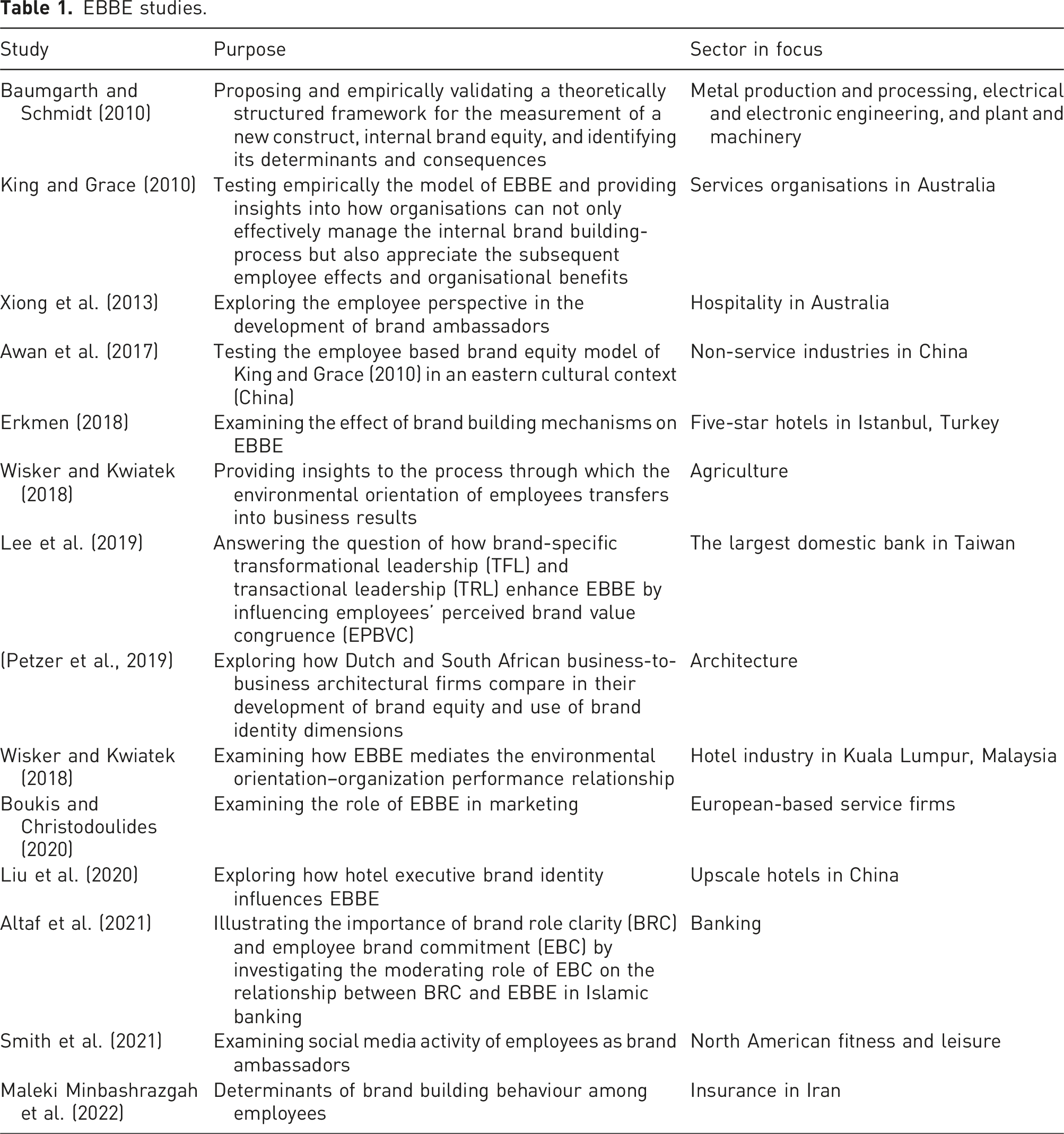
Kwon’s EBBE model (2013) was developed for services industries and tested on 102 full-time staff working in a bookstore in Seoul, South Korea. Drawing on the literature review, Erkmen (2018) proposed a model to explore how EBBE is formed among hospitality staff to establish that communication and employee performance positively influenced EBBE. Erkmen (2018) concluded that “a strong internal brand equity could be used to ensure a strong external brand equity” (p.13). In other words, according to Erkmen (2018), EBBE can benefit customers through excellent brand experience.
EBBE studies.
The relationship between EBBE and CE in hospitality
CE in the hospitality industry
Sharpley (2021) claims that CE in hospitality is created or upgraded by mediators of service provision. In the context of EBBE, employees represent such mediators leading the experience of customers through their service exchange journey (Erkmen, 2018). Xiong and King (2019) argue that hospitality employees form their BK by receiving information from internal (for example, colleagues) and external (for instance, guests) environment. Thus, BK leads inner brand operations or actions (Quaratino and Mazzei, 2018). This suggests that, to provide CE and align it with the brand’s vision, hoteliers should develop BK of employees (So and King, 2010). Similarly, Xiong and King (2019) posit that, with the internalisation of BK, hospitality employees can externalise it in their work behaviour by providing quality service to enhance CE. Without this internalisation of BK, staff are less able to perform well (Oldham and Hackman, 2010), thus decreasing their job commitment and potentially causing service deterioration and even service failure (Tsang et al., 2011).
Xiong and King (2019) recognise that RC can motivate employee performance to ensure it is aligned with brand meaning. With RC, employees realise that their work impacts the brand experience of guests (Chien et al., 2021), and that their work responsibilities are cultivated by meeting customer expectations (Karatepe et al., 2014). The confusion of employees with their roles at work can reduce job satisfaction and damage CE (Geersbro and Ritter, 2010). In some cases, the lack of RC can even prompt employees to quit their jobs while a lengthy process of recruiting, onboarding and training new employees can lead to the deterioration of CE (Ro and Lee 2017).
As for the last element of Kwon’s EBBE model (2013) i.e., BC, there is evidence that employees can transfer BC to hotel guests if they possess good BK and RC (Chien et al., 2021). Xiong and King (2015) state that, with RC, employees realise that BC is significant for them, and this encourages employees to develop positive attitudes and behaviour at work. BC can motivate and maintain the effort of employees, which improves work performance by building emotional attachment to a brand (Tseng, 2012). Similar conclusions are drawn by Terglav et al. (2016) who demonstrate the relationship between hotel employees’ BK, BC and psychological contract arguing that these factors are all paramount for fostering positive job performance among staff, but also can influence CE. This implies that BC can boost CE by increasing customer satisfaction and enhancing customers’ relationship with hotels (Nobar and Rostamzadeh, 2018). Kandampully et al. (2018) argue that long-term communication between hotel guests and staff can establish stronger relationships between customers and hotels. The connection between customers and employees is therefore conducive to the favourable experience of hotel guests towards hotel brands (McColl-Kennedy et al., 2015).
Brakus et al. (2009) posit that, in the context of branding, CE can be evaluated from the perspective of senses, affection, behaviour, and intelligence. The sensorial component consists of CE attained through smell, taste, hearing, contact, and vision (Wibisono and Yahya, 2019). The affective component describes CE produced by an affective connection with a firm, which can influence emotions, mood, and feelings (Schmitt, 2011). The behavioural component explains CE emerging from interactions with a firm, such as via service provision (Brakus et al., 2009). This also includes behavioural co-creation whereby hotel customers interact with employees to obtain / offer a better value (Wu and Gao, 2019), such as, for instance, in the case of a prompt and effective response provided by a hotel employee to a customer request (Stankov and Filimonau, 2020). The intellectual component signifies features which can influence purchase decision-making, such as calculation of cost and benefit (Oh et al., 2019). The model of Brakus et al. (2009) has been empirically tested in various consumption contexts (Han et al., 2019), including the context of brand equity (Iglesias et al., 2019). Therefore, this model will be utilised in the current study to develop a scale to measure CE in hotels.
CE in Chinese multinational hotel chains
The hospitality industry of China has grown significantly in size and quality within the last two decades (Jin and Chen, 2019). One of the indicators of this growth is the increased share of multinational hotel chains (MHCs) in the Chinese hospitality market (Guillet et al., 2011). For example, Marriott have opened over 400 hotels in China to date with plans to increase this number substantially in the next 3 years (ChinaTravelNews, 2021). The expansion of MHCs benefits the national economy, but also causes fierce competition (Liu and Jiang, 2020). To remain competitive, MHCs should utilise their invisible assets to draw customers’ attention, such as by providing better service quality (Assaf and Cvelbar, 2011). Hoteliers should understand the key features of intangible assets which they possess, like brand equity, to achieve market advantage (Meek et al., 2018).
Competitiveness can be achieved through employee training and development (Kong and Baum, 2006) as the abilities and skills of employees represent the key intangible asset of hotels. However, in China, employee development is not always prioritised because hoteliers are more concerned with optimizing labour costs (Yao et al., 2019). MHCs should maintain coherence of service quality across all markets in which they operate, and the performance of staff should correspond to the hotel brand’s expectations (Kong and Cheung, 2009). MHCs should therefore cultivate employee performance to succeed in brand development (King and So, 2013). Staff development is crucial for MHCs in China due to their over-dependence on domestic workforce; however, the related research agenda remains scarce, especially from the perspective of brand equity and from the viewpoint of employees (Awan et al., 2017). This is confirmed in the recent study by Liu and Hung (2022) who have revealed that hotel customers in China value face-to-face interaction with employees more than the interaction with self-service technology, especially from the perspective of perceived cognition, affect and sociability. This underscores the need to invest in building EBBE in hotels in China as a means of fostering CE despite the rapid adoption of technological innovations, including self-service technologies and robotics (Ma et al., 2023).
Research gap and conceptual model
Compared with CBBE and FBBE, EBBE acknowledges the importance of employees and emphasizes their contribution to constructing brand equity in hotels. However, very few studies demonstrate that hotel employees who are confident in BK, RC, and BC can enhance brand equity. In services industries, CE has been well studied, but the conceivable effect of employees on hotel’s brand equity through quality service provision to create valuable CE is insufficiently understood. The research gap is especially pronounced in China, where MHCs are expanding, but little is known about the influence of their branding efforts on employees and customers (Awan et al., 2017).
This study has developed a research model based on the three dimensions of EBBE as proposed by Kwon (2013) and the four dimensions of CE presented by Brakus et al. (2009), Figure 1. The study has developed the following research hypotheses: Research model.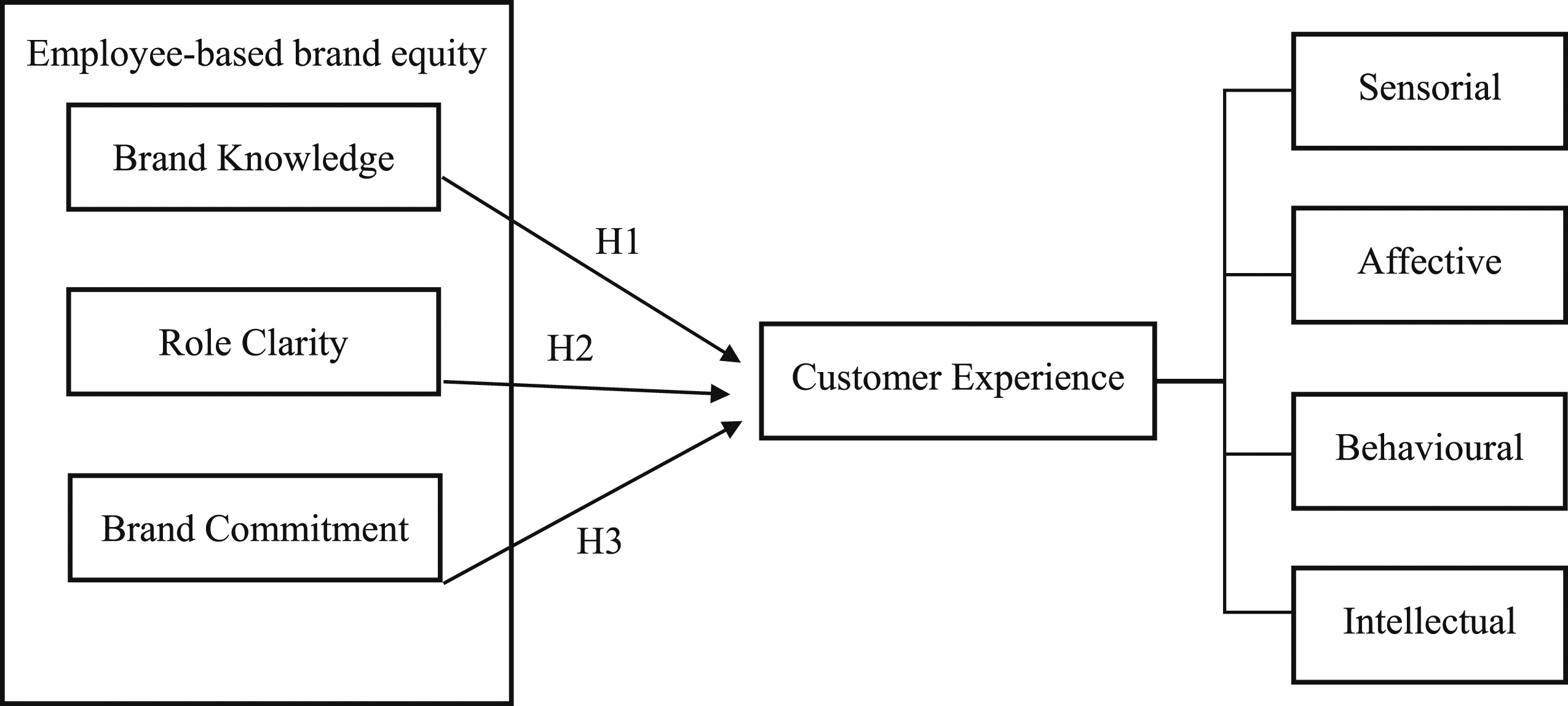
H1: Good brand knowledge among hotel employees enhances customer experience.
H2: Clarity about their job roles among hotel employees enhances customer experience.
H3: Brand commitment among hotel employees enhances customer experience. The following section explains this study’s methodology.
Methodology
Sampling and data collection
As the second largest hotel company in the world and one of the largest in China (Lock, 2022). Marriott was used as a case study. Shanghai is home to 62 hotels, or 16% of the total number of Marriott-branded hotels in China. These Shanghai hotels represent 19 Marriott sub-brands. The main Marriott-branded hotels in Shanghai are Courtyard by Marriott and Four Points by Sheraton which are represented by 21 hotels, or 34% of the total number of Marriott-branded hotels in Shanghai.
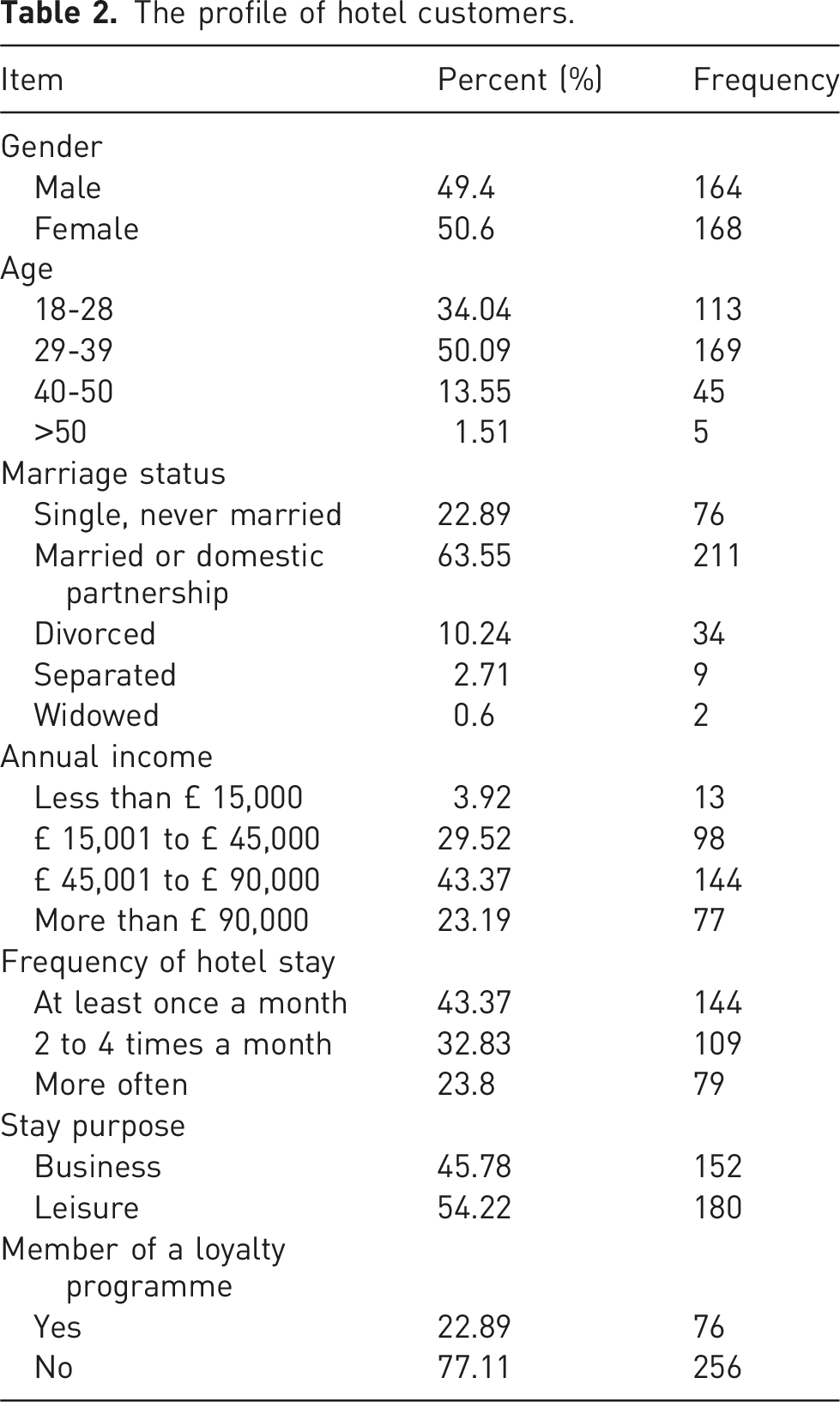
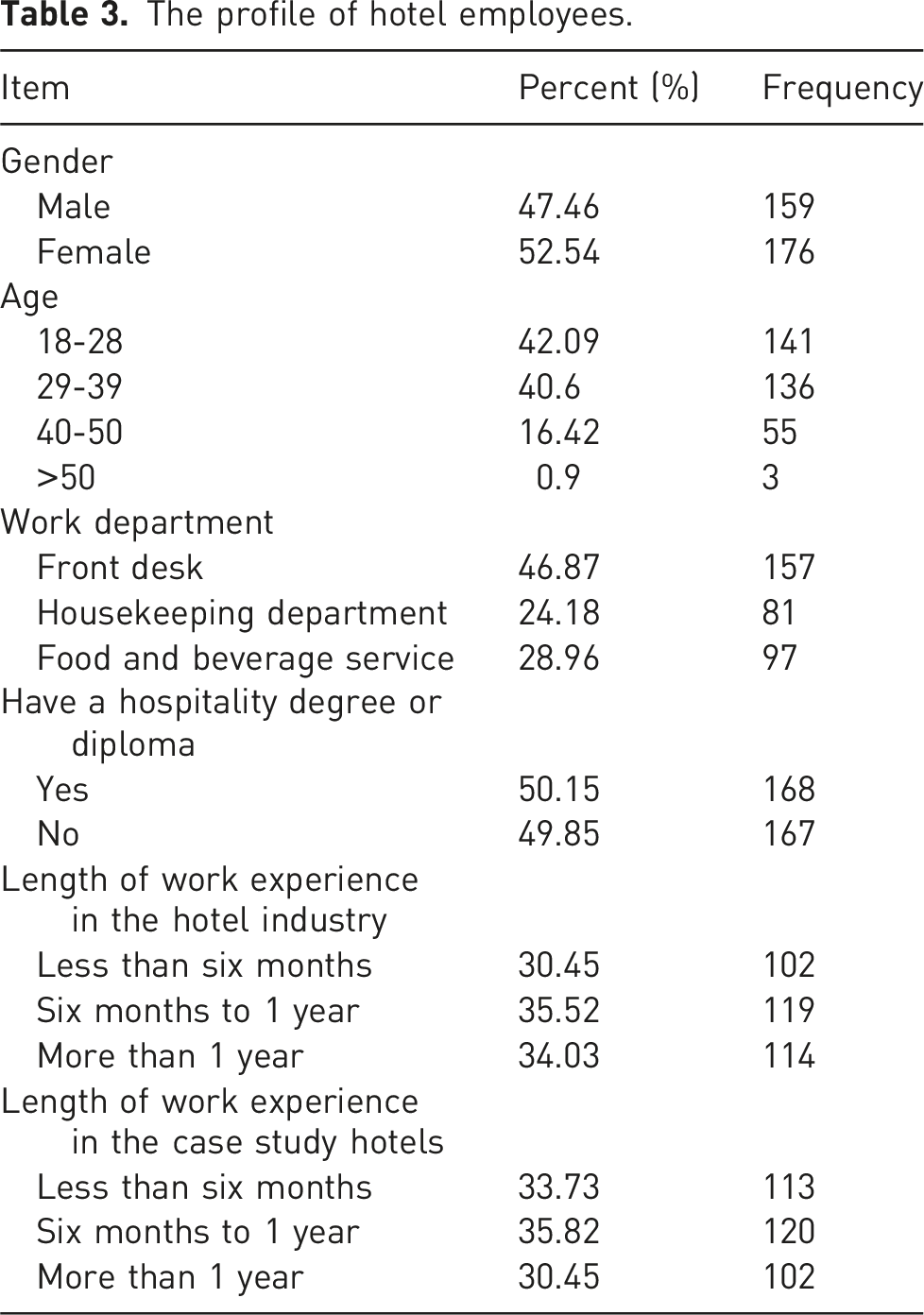
Employees and customers of Courtyard by Marriott and Four Points by Sheraton in Shanghai were recruited for data collection by snowball sampling. Data were collected in June 2022 by the survey method. Due to Covid-19 restrictions, the survey questionnaire was distributed online, via a popular social media platform, WeChat. The questionnaire link was first sent to five employees and five customers of Courtyard by Marriott and Four Points by Sheraton in Shanghai who were known to the research team. These employees and customers were requested to forward the questionnaire to other employees and customers of the above Marriott hotel brands in their professional and personal networks. 667 usable questionnaires were collected i.e., 335 for EBBE and 332 for CE.
Measures and instrument development
Given the focus of this study on hotel employees and customers, two versions of the questionnaire were designed for each group of prospective respondents. Each questionnaire included two sections: section 1 collected socio-demographic information and section 2 collected data on EBBE and CE using a 5-point Likert-type scale ranging from 1 (strongly disagree) to 5 (strongly agree). To reduce the effect of social desirability bias and common method bias, data collection was anonymous, and survey respondents were reassured in complete anonymity of data provided.
For the EBBE section of the questionnaire, 18 questions were presented to examine BK, RC and BC of hotel employees. BK was measured with five items from Baumgarth and Schmidt (2010) and Ambler (2013). RC was measured with six items from Mukherjee and Malhotra (2006) and King and Grace (2010). BC was measured with seven items from Baumgarth and Schmidt (2010) and Punjaisri et al. (2009). For the CE section of the questionnaire, 12 questions were presented to measure the four dimensions of CE (sensorial, affective, behavioural, and intellectual). Each dimension was measured with three items from Manthiou et al. (2015). Copies of the research instruments are provided in Supplementary materials (Appendix 1 and Appendix 2).
The questionnaires were designed in English and back translated in Mandarin. The questionnaires were each piloted for content and face validity with 10 volunteers from hotel employees and customers. Some minor changes related to the clarity of translation and comprehension of the survey items in Mandarin were made to the questionnaire post pilot.
Data analysis
The data were analysed in SPSS 28 software. When evaluating the credibility of research, reliability and validity need to be ensured (Elo et al., 2014). The following methods were selected for data analysis. First, descriptive statistics were used to summarise the demographic information of respondents including gender, age, work department (in the case of hotel employees), for example. Second, reliability and validity were tested by measuring internal consistency. Then, correlation analysis and linear regression analysis were employed to evaluate the influence of independent variables on dependent variables. Finally, the analysis of variance (ANOVA) was used to test the difference among variables.
Results
Respondent profile
The profile of hotel customers.
The profile of hotel employees.
Validity and reliability tests
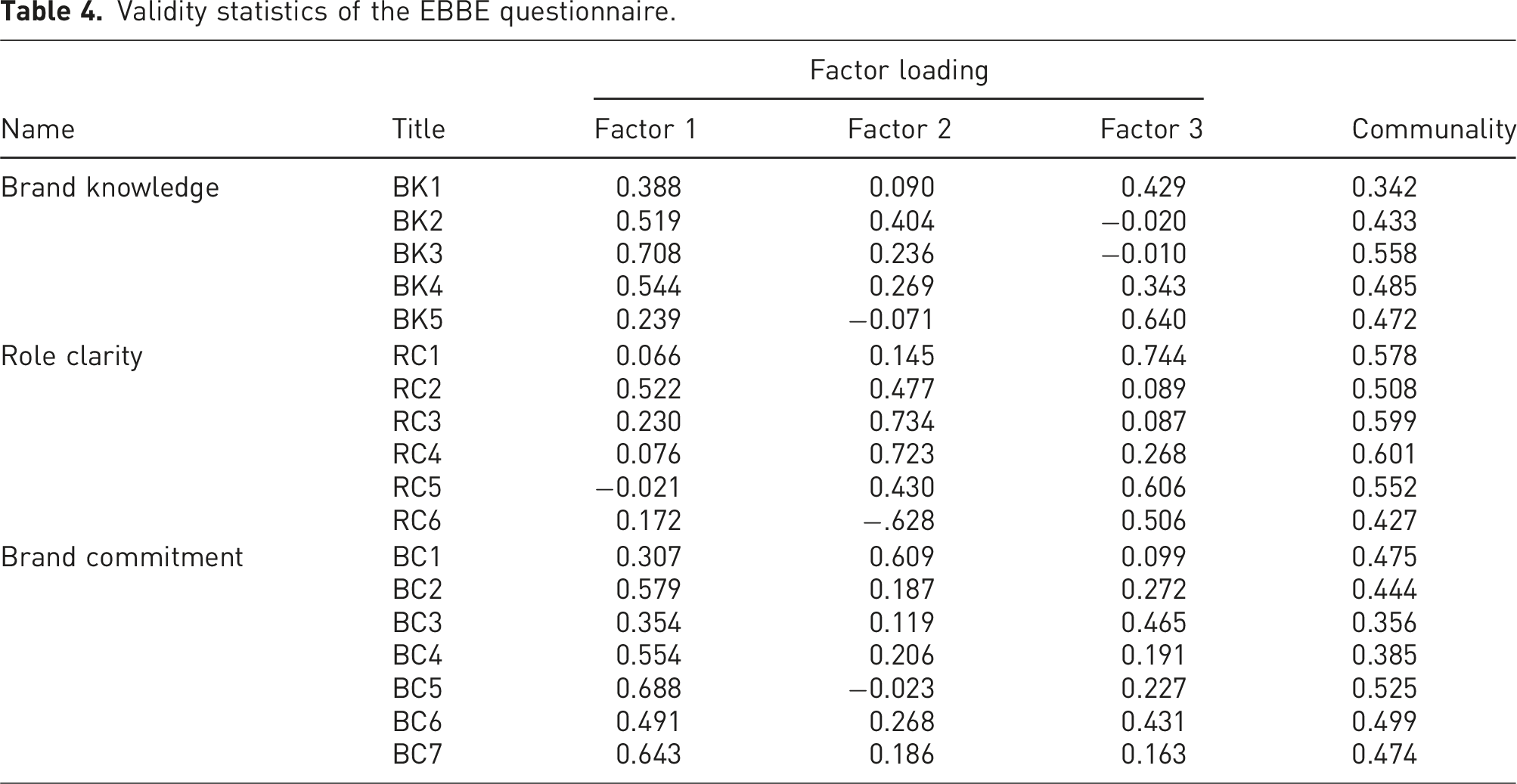
Validity statistics of the EBBE questionnaire.
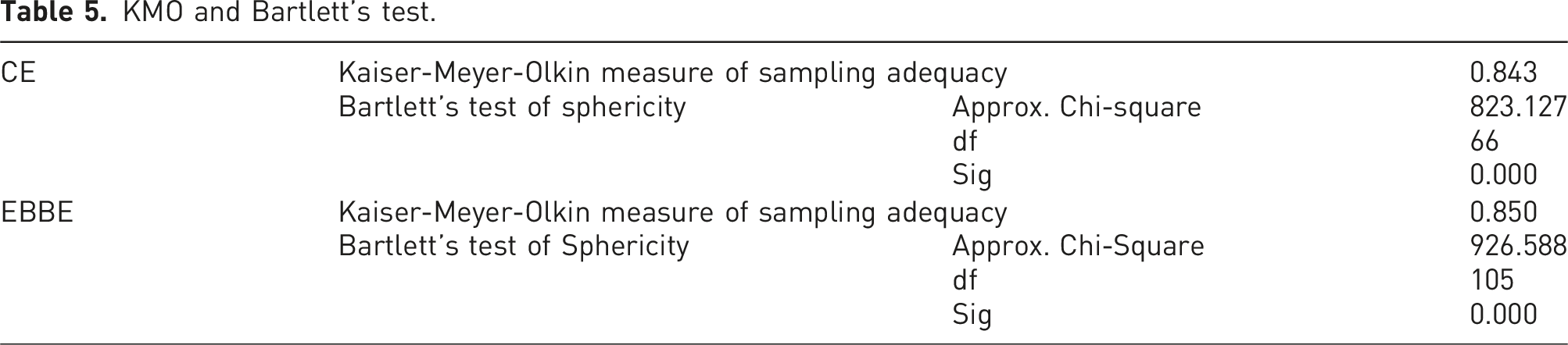
KMO and Bartlett’s test.
Cronbach’s Alpha of the overall scale.
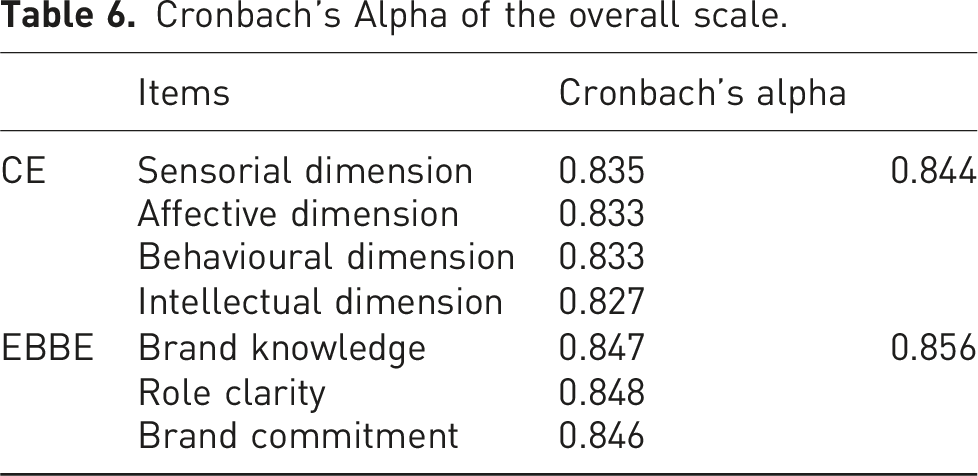
Compared with the seminal study of EBBE by Kwon (2013) which demonstrated the values of KMO over 0.950 and Cronbach’s alpha over 0.90, the EBBE scale of the current study retained high reliability and validity following English-Mandarin translation. Like another seminal study of CE by Manthiou et al. (2015) which achieved a Cronbach’s alpha over 0.90, the CE scale of the current study maintained high reliability after translation. This suggests that the translated scales can be used in future research on EBBE and CE in the context of China and its hotel industry.
Correlation analysis and hypotheses testing
Correlations of CE and EBBE.
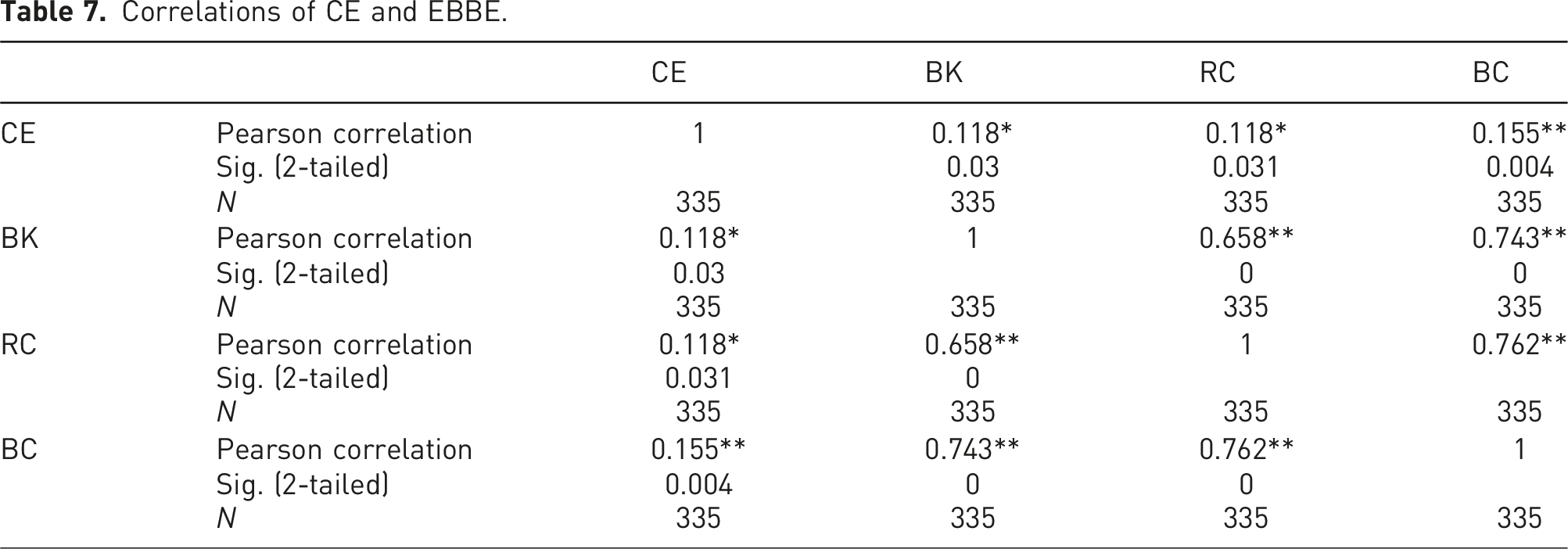
This study tested the three hypotheses presented in this research by employing simple linear regression. According to Ballinger (2004), linear regression is a statistical method to identify correlations between variables by counting the functional relation between variables and a dependent variable using ordinary least squares. Simple linear regression is easy to operate and effective while it ensures good interpretability of the output (Ballinger, 2004).
Regression and ANOVA.
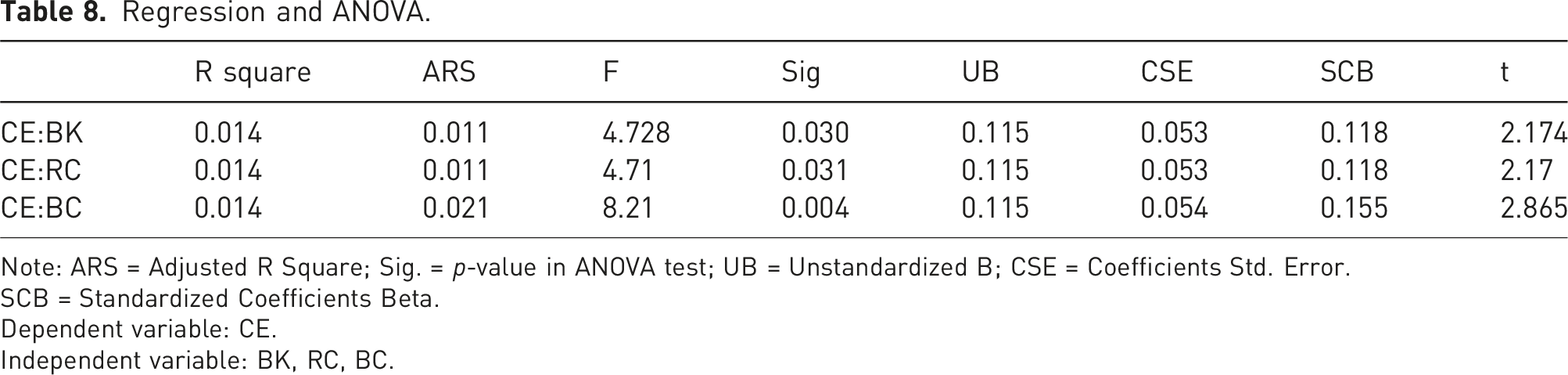
Note: ARS = Adjusted R Square; Sig. = p-value in ANOVA test; UB = Unstandardized B; CSE = Coefficients Std. Error.
SCB = Standardized Coefficients Beta.
Dependent variable: CE.
Independent variable: BK, RC, BC.
Discussion and conclusions
Contribution to knowledge
Research on brand equity has been primarily concerned with CBBE and FBBE (Farjam and Hongyi, 2015; Honarmandi et al., 2018; Jin et al., 2019) and the current study expands the body of knowledge with an empirical investigation of EBBE, another key element of brand equity. The empirical investigation of EBBE is undertaken in the context of hotels where employees play a critical role in business success by becoming brand ambassadors and mediators of CE. Research on EBBE has mainly focused on other services industries, like banking (Altaf et al., 2021; Lee et al., 2019), restaurants, airlines and travel agencies (Boukis and Christodoulides, 2020) or insurance (Maleki Minbashrazgah et al., 2022), while paying less attention to the connection between EBBE and CE in hotels. This is a major shortcoming because the hospitality industry is a people industry and hotel employees are key to establishing brand equity by providing high-quality service to customers. Only few studies have been concerned with EBBE in hotels (Erkmen, 2018; Wisker and Kwiatek, 2018; Xiong et al., 2013). Further, while many studies have adopted the EBBE model by King and Grace (2009), the alternative EBBE framework by Kwon (2013) has received less scholarly recognition although it can provide useful insights into the relationships between EBBE and CE, especially in hotels. Lastly, limited research has been undertaken on EBBE in the context of MHCs in China despite their steady development. The novel contribution of this current study is thus in addressing these knowledge gaps.
The study finds that BK has positive influence on CE which is aligned with the findings of Xiong and King (2019) and Quaratino and Mazzei (2018) in that employees firstly internalise BK and then externalise it into work performance to enhance CE. The study also supports the findings of Oldham and Hackman (2010) who state that CE would worsen if employees had poor work performance caused by poor BK. Although previous research has proved that CE is positively impacted by RC (Chien et al., 2021; Karatepe et al., 2014) and BC (Nobar and Rostamzadeh, 2018; Tseng, 2012), these elements of EBBE have been considered separately. This current study presents an integral concept of EBBE which is composed of BK, RC, and BC, thus treating it as a multi-dimensional, all-in-one variable.
Implications for hotel management
This study highlights the importance of employees in hotel brand management and development. Employees play an important role in transferring brand equity to customers which reinforces EBBE and eventually enhances CE. Hence, hoteliers should recognise that hotel employees are required not only to master the basic work skills and blindly follow the at-work regulations and expectations, but they should also understand and enact their role as brand value mediators in work to promote brand equity (Liu et al., 2020). Hotels should therefore invest in the design of brand training programmes for employees, develop incentives, and introduce internal communication channels to assist employees with internalizing brand values to drive the development of EBBE. This will not only contribute to CE but can also lead to increased staff retention given that past research has established the correlation between job commitment, pro-brand behaviour and EBBE (Liu et al., 2020). Essentially, this highlights EBBE as an integral element of management interventions which should be applied to address the problem of low staff retention in hotels (Wong et al., 2019).
To foster EBBE and improve CE, hoteliers should strive to empower their staff. As this study demonstrates, commitment to a hotel brand can prompt staff to more effectively realize their brand citizenship behaviour, and Altaf and Shahzad (2018) argue that such commitment can be achieved by empowering employees. Therefore, if more hotels followed the staff empowerment principles adopted by Ritz Carlton i.e., considering their employees as ‘ladies and gentlemen’ serving other ladies and gentlemen represented by customers (Solnet and Kandampully, 2008), empowered staff would exhibit stronger EBBE, ultimately leading to increased CE.
Fostering EBBE among hotel employees is particularly important from the perspective of sustainability and new generational trends in hospitality employment. From the viewpoint of sustainability, employees committed to a hotel brand and exemplifying stronger EBBE are more likely to recommend this hotel to other, prospective recruits (King et al., 2012). They are also more inclined to consider it as a career-long workplace opportunity, thus portraying the image of this hotel brand as a ‘good corporate citizen’ (Filimonau et al., 2020). This is critical given that the global hospitality industry is under the increasing pressure to better integrate the principles of corporate social responsibility and environmental social governance (ESG) in their business strategies and operational measures (Kim et al., 2017). Further, as younger generations of employees are gradually entering the market, represented, for example, by Generation Z workers who have higher sustainability expectations of their employers (Rzemieniak and Wawer, 2021), hoteliers need to showcase and promote EBBE to better appeal to these socio-demographic groups. This will be critical in the foreseeable future given that the popularity of hospitality employment as a life-long career opportunity is declining, especially after COVID-19 (The Economist, 2022). Thus, by promoting staff commitment to the brand, providing knowledge about the brand’s values and ethos, and by offering clarity on what the job role entails, hoteliers can strengthen EBBE and better align their performance with sustainable development goals.
CE is important for constructing a successful hotel brand. Hotels often prefer to enhance the physical experience of guests by developing a brand’s visual environment and upgrading services, like a spa, while neglecting the development of the emotional and social experience of customers which arises from interaction between employees and guests (Guan et al., 2021). The current study suggests that hotel managers should appreciate the significance of employee value in establishing the invisible connections to guests. This is because employees are key for creating special and memorable CE when interacting with customers (Kandampully et al., 2018). For example, employees can enhance CE by trying to better understand their needs and meeting their expectations (Homburg et al., 2009). Aside from building and/or strengthening the emotional and social connection, such actions can foster value co-creation, thus benefitting CE as well as the hotel brand itself (González-Mansilla et al., 2019). For example, by regularly communicating with guests, hotel employees can react more promptly to their feedback, thus minimizing the risk of negative word-of-mouth and increasing the chances for brand patronization. As an example, TUI, a major tour operator in Europe, has the policy of providing their representatives for customer interaction in most contracted hotels. The role of these representatives is to listen to customer feedback and react to it as promptly as possible, thus enhancing CE (TUI, 2024).
Importantly, technology can be harnessed to facilitate interaction between hotel guests and staff. In the above example of TUI, customers can contact a company representative 24/7 via a smartphone application or by phone (TUI, 2024). Technology can also be instrumental in training employees for enhanced CE, for instance, by providing them with better knowledge on the hotel brand and the job which they are to perform. For example, the emergence of immersive technologies can simplify the process of customer feedback provision and speed up staff reaction to this feedback, ultimately improving CE (Tom Dieck and Han 2022). Immersive technologies can also aid in staff training on brand ethos and CE by making it freely available and non-dependent on experienced trainers (Ashton et al., 2024). All this suggests that, by fostering EBBE, especially via technological interventions, hoteliers can build memorable CE and maintain long-term relationships with their guests.
Limitations and future research directions
The study collected data from two major Marriott sub-brands in Shanghai and, therefore, its results are mostly applicable to employees and customers of Courtyard by Marriott and Four Points by Sheraton. Opinions of employees and customers in other Marriott sub-brands should also be studied to provide further empirical evidence on the links between EBBE and CE. Future research should also investigate EBBE in other hotel categories, such as budget and upmarket, as the relationships between employees and customers may be different in these hotel segments. For instance, budget hotels put less emphasis on employee-customer interactions, and it is therefore interesting to study if EBBE exerts an effect on CE in this consumption context. Future research should also examine EBBE and CE outside China and extend the scope of analysis towards other MHCs, in China and beyond. A comparative analysis of the effect of EBBE on CE in branded and non-branded hotels, or in hotels representing established vs emerging brands, is also warranted. Lastly, this study is restricted to the analysis of three elements of EBBE i.e., brand knowledge, role clarity, and brand commitment. EBBE can however incorporate many other elements, and these elements deserve a separate investigation. CE can also contain further elements in addition to those considered in the current study. These additional elements can be integrated into future research to build a more robust model of the interlinkages between EBBE and CE in hotels.
Supplemental Material
Supplemental Material - The effect of employee based brand equity on customer experience in multinational chain hotels
Supplemental Material for The effect of employee based brand equity on customer experience in multinational chain hotels by Jinlan Zhang, Viachaslau Filimonau and Ulan Tlemissov in Tourism and Hospitality Research.
Footnotes
Author contributions
Declaration of conflicting interests
The author(s) declared no potential conflicts of interest with respect to the research, authorship, and/or publication of this article.
Funding
The author(s) received no financial support for the research, authorship, and/or publication of this article.

Supplemental Material
Supplemental material for this article is available online.
Author Biographies
References
Supplementary Material
Please find the following supplemental material available below.
For Open Access articles published under a Creative Commons License, all supplemental material carries the same license as the article it is associated with.
For non-Open Access articles published, all supplemental material carries a non-exclusive license, and permission requests for re-use of supplemental material or any part of supplemental material shall be sent directly to the copyright owner as specified in the copyright notice associated with the article.
