



Abstract
This photo essay explores the practice of digital self-portraiture as an epistemological practice. Drawing on the well-established role of photography within the anthropological canon, this photo essay looks with a new criticality on the act of self-portraiture by an anthropologist as both performative praxis and ethnographic tool. Employing a series of digital photographs taken in Venice, this essay explores how the practice of taking self-portraits to enrich an Instagram self is a vital step in the ethnographic research of social media. Allowing the researcher to engage with the practices of their interlocutors through performing the same actions as they do.
Keywords
Smartphones have given users the ability to take photographs of themselves with a frequency that is unsurpassed in history. It is a phenomenon that anthropologists have commented on (see, for example, Waltorp, 2021; Miller, 2015, 2016: 82–84) as well as garnering interest more widely in the social sciences (Jurgenson 2019; Eckel et al., 2018; Tiidenberg, 2018), but the act of the anthropologist turning around the camera and photographing themselves has received little critical attention. The closest to this may be Zeitlyn’s (2010) work that considers the role of representation in anthropology through a conceptualisation of various portraits, including one of Marilyn Strathern, yet the intentionality of conceptualising the anthropological eye as one which produces portraits (see also Bray, 2015) and the act of crafting a self-portrait with that same eye is rather different.
This is a photographic essay and has a very specific aim: to examine self-portraiture as a performative praxis and ethnographic tool. In previous work (Bluteau, 2021a, 2022a, 2022c), I have detailed how self-portraiture acts as one strand of my wider experimental ethnographic practice. This acknowledges the processes that digital interlocutors employ to create digital versions of themselves on platforms such as Instagram and attempts to replicate these practices (as a researcher) to both access a shared space and gain an understanding of the process of Instagramming (following Wacquant, 2004). In many ways, this could be framed as traditional participant observation in a digital space, but there are nuanced differences due to the additional creative action of birthing a digital self in order to conduct ethnographic research. As such, the researcher becomes a kind of observing participant (following Holy, 1988) through a methodological process I term immersive cohabitation (Bluteau, 2021a).
The shadow of the anthropologist caught on camera is part of a long tradition of photographs “springing leaks” (see Edwards, 2001, in Dilley, 2019: 3), yet the deliberate act of turning around the camera and problematising the body of the anthropologist as methodological tool, digital artefact, and agential force offers the potential for a new type of ethnographic knowledge.
Much like autoethnography, there is the danger of narcissistic indulgence lurking in the shadows (see Reed-Danahay, 2017: 145), waiting to wrongfoot the budding ethnographer, but without taking the plunge into this experimental ethnography it is difficult to conduct anthropology in hard-to-reach digital spaces. Naturally any ethnography of this sort is plagued with trial and error, and I have catalogued such missteps in earlier work (see Bluteau, 2021a, Bluteau, 2022a). Creating images that respond to the requirements of a particular online network, that fit within their schema of desire and aesthetics is fetishistic and nuanced. It took over 12 months of digital research and regular image creation and posting before it began to feel like I was getting this right.
This photographic essay comprises six images that form part of my ongoing ethnographic practice. The images included here were not posted at the time they were taken, but will be posted to Instagram to coincide with the publication of this article (to the Instagram account @anthrodandy). This will both extend the impact of this work beyond the journal and highlight the multiple temporalities of these images as part of my ongoing experimental practice. It will also allow readers the opportunity to dip their toes in the murky digital waters of my field with unparalleled ease, a rare gift from anthropologist to reader.
I have been conducting anthropological research with Instagram since 2015. The first two years of this research was conducted alongside a more typical offline ethnographic study of bespoke tailors and their customers in London and is documented in a monograph entitled ‘Dressing Up’ (Bluteau, 2022a). During the course of this ethnographic fieldwork with Instagram, I worked with a network of informants who habitually take self-portraits of themselves and post them to Instagram. These images are often not identified as self-portraits – indeed such a term does not appear in the native vernacular – yet the images produced are photographs of the offline self, carefully crafted, edited, and captioned, before being posted to the user’s Instagram. The individuals I worked with were mostly men and typically either worked in the garment industry as designers, tailors or craftsmen of some form, or were avid wearers of high-end artisanally made clothing, with bespoke tailoring featuring most prominently.
After the initial two-year period of ethnographic research, I drew an invisible dotted line under the research and attempted to leave the field. This proved challenging, with the digital field being less geographically boundaried and more portable than a traditional terrestrially bound (and boundaried) fieldsite (see Bluteau, 2021a, 2022a, 2022c, see also Luvaas, 2019). As a result, I withdrew initially in a tapered fashion from my digital field, still creating and posting content but on a less frequent basis. Over time, with competing commitments, I went through periods of not posting at all, yet there are very few days where I do not access Instagram to view my interlocutors new content. This field then is still an active one, and even when I am not actively contributing, there are over a thousand images forming the body of my digital self, continuing to exist in the digital aether. This means that it is a field that I continue to inhabit and am free to return to. This is not an unusual practice and mirrors the habits of the network in which I research, where individual users equally move from periods of heavy use to inaction. It also mirrors long-established anthropological practices where fieldsites are often returned to throughout one’s life.
The six images included here were conceived to explore a particular scenario but also to examine a number of questions drawn from my ongoing research that required further articulation. Within my network of digital interlocutors, there is a twice-yearly menswear trade show in Florence called Pitti Uomo. This event has acquired almost mythic status with journalists and industry stalwarts attending on mass to peacock their wildest wardrobes, offer sneak peaks at upcoming collections, and proffer in-depth analysis of trends, garments, and accessories. Twice a year, the Instagram network is flooded with images of men in astonishing pieces of tailoring, typically captured in a high-fashion editorial style of image often posed to look like they are simply captured in the street talking to colleagues or walking between events. This has become such an identifiable form of image and event on the social and fashion calendar of menswear that the Instagram dandies I work with (see Bluteau, 2022b) - and those aspiring to be - who are not invited or unable to access this space emulate the style of image when they travel as a means of enriching their digital selves.
Examining the process by which this enrichment takes place is central to this photographic essay. The production of the six images included here build on a wider set of published photographs (in the form of Instagram posts) that initially helped craft my digital self and subsequently serve to enrich it, giving a more defined presence in the digital landscape and greater agential force (see Bluteau, 2022a). Self-portraiture as an experimental ethnographic method allows for the performance of photography to be established, both the performance of taking the images and the digital performance once it has been posted; this will be explored in the captions of the included images. Self-portraiture in the context of creating social media content is also an ethnographic tool – a way of accessing a digital field that without a digital self would be much harder to see (following Bluteau, 2021a).
This photo essay explores self-portraiture as an epistemological practice, whilst also allowing space for reflections on self-making, and the ethnographic act of performance. The images presented here, forming the body of this photo essay, are not taken from the first two years of fieldwork (see Bluteau, 2022a), but are later images, taken in 2020 on a visit to Venice. This was treated as a research visit, and a capsule wardrobe was acquired and packed in advance. The purpose of this visit was to explore the creation of Pitti Uomo inspired images, following a trend within my network, and the result of this experimental ethnography was approximately 400 ‘rough’ digital photographs from which to choose a small number of images to edit and post. Six images were initially identified for posting and have been included here as the basis of the photo essay, with a small number of additional images kept for potential future posts.
Thematically, Luvaas’s (2016) exploration of street style through blogging and photography falls closest to this work, but the practices are somewhat different. During the course of my first two years of fieldwork with Instagram, I published an oeuvre of 850 images across a period of 24 months under the name anthrodandy. The fieldwork I continue to conduct builds on this and intersects with the work of visual anthropologists, long interested in the practice of photography, and anthropologists working in the realms of new technologies, business, and the digital. Self-portraiture in these contexts can be utilised as a tool. One that provokes the creation of thick description and archives it, in much the same way that Bray (2015) utilises paint and the practice of portraiture. Beyond thick description (or perhaps thick photography following Deger, 2016), self-portraiture can act as an ethnographic tool for other types of knowledge production, including reflexivity and the practice of self-making. Yet, one of the most vital pedagogical justifications for employing self-portraiture in a digital space full of other self-portraits is the value of the ethnographic knowledge that can be gleaned by performing the same tasks as one’s interlocutors do.
Figure 1 shows anthrodandy on a bench in Venice. The compositions intentional loucheness belies the intentionality of the constructed image and the subject portrayed within it. The outfit worn in this image is knowingly loud and brightly coloured, and was an experiment in navigating the line between well thought out dandyism and the garish (see also Bluteau, 2021b). The construction of this outfit was considered for a number of weeks before this image was taken with items being acquired during that time specifically to be worn and photographed in Venice. The jacket became the central piece around which the colour palate of this look gathered. Originally from Paul Smith’s SS13 mainline menswear collection, this jacket’s coral hue allowed for an artful assemblage of colours, textures, and shapes to be constructed around it. It was hoped that such a set of colours would fit well into the plasterwork facades that dominate Venice’s colourway allowing for images to be taken that showcase the outfit, and therefore the character of the digital self, while also looking well-conceived within the broader landscape. In the case of this image specifically, the almost white background was chosen to focus attention of the clothing being displayed, but the pink facade in the top right of the frame and the roof tiles present contextualise the colour palate of the image. This is important for an Instagram image where coherence of colour makes for a more appealing final image – and consequently a richer diet for the online self in terms of interaction and reciprocity. Finally, the use of the bench as street furniture adds a key aesthetic element both architecturally and as an additional contrasting colour. However, beyond its aesthetic merit, incorporating the bench speaks of an emotional moment in the days narrative, with the digital self seeking rest amid the architectural grandeur of the city. This can be interpreted by various other online users, but allows anthrodandy to control the narrative of this moment through an accompanying comment while injecting a static image with an all too human moment in time. N.B. In the captions for each image, I will briefly discuss the method of crafting the image including setting, dress, angles, colours, narrative, and so on to give the reader an insight into the process of capturing these images. Figures 1, 2, and 3 all display the same outfit and were taken on the same day. Of the many images of this outfit that were taken on this day, these have been singled out as the ones to initially be posted. These images highlight various aspects of the outfit and character being performed, and were intentionally conceived to either be posted individually with accompanying comments or as a collection with a comment relating to the overall outfit or trip; individual postings will be adopted in this circumstance. In either situation, Figure 1 was identified from an early stage as the first image posted due to the framing of the whole outfit and how well it matched to the kind of images posted by other members of the Instagram network. A set of three images was chosen to fit best with the structure of Instagram which displays images in three columns. Alt text: anthrodandy sat on a red bench wearing a coral coloured double breasted jacket, teal-green trousers with yellow and black stripes, and a cream scarf. The figure is pictured side-on with a canal and a series of pale buildings out of focus in the background. This image was conceived as a way of using brightly coloured street furniture (in this case a bench) to complement and juxtapose the vivid outfit choice. This location was not pre-chosen, but happened upon while searching the city for photogenic locations. The pale distant background appealed as a backdrop to highlight the details of the outfit. Numerous iterations of this photograph were taken, with the images being reviewed and the pose being reset after each set had been taken. Fortunately, this was a quiet plaza with few passers-by which afforded the luxury of taking multiple images without anyone in the background. In preparation for this trip, the jacket and trousers had been acquired from eBay (the online auction website) specifically because I had been looking for items to take on this trip to be photographed that fitted with the pink plaster buildings and waterways of the city. Following the capturing of this image, it was edited using a pre-set purchased from a professional photographer to give an editorial-style quality to the image in keeping with the style desired by the network where it would be posted without it appearing over-edited (this was the case for all of these images included in this photographic essay). When posted to Instagram, the accompanying text will be: Good morning. After a busy few months @anthrodandy is finally having a moment to relax. Having a very nice time exploring Venice. Trying out a bright combination to offer a little English dandyism amid all this Italian chic. What do you think?…@paulsmithdesign jacket, scarf and boots @untuckit shirt @kentandcurwen trousers @tomford spectacles…#mensstyle #mensfashion #menswear #menwithstyle #mensfashionpost #mensfashiondaily #mensfashioninspiration #dailyinspiration #dapper #dandy #bohochic #sharp #suave #influencer #tailored #tailoring #sprezzatura #gentlemenstyle #gentlemen #luxerystyle #madeinengland #whatimwearing #anthropologist #beard #beardsofinstagram #ootd #ootdmen #bespoke #savilerow #igstyle.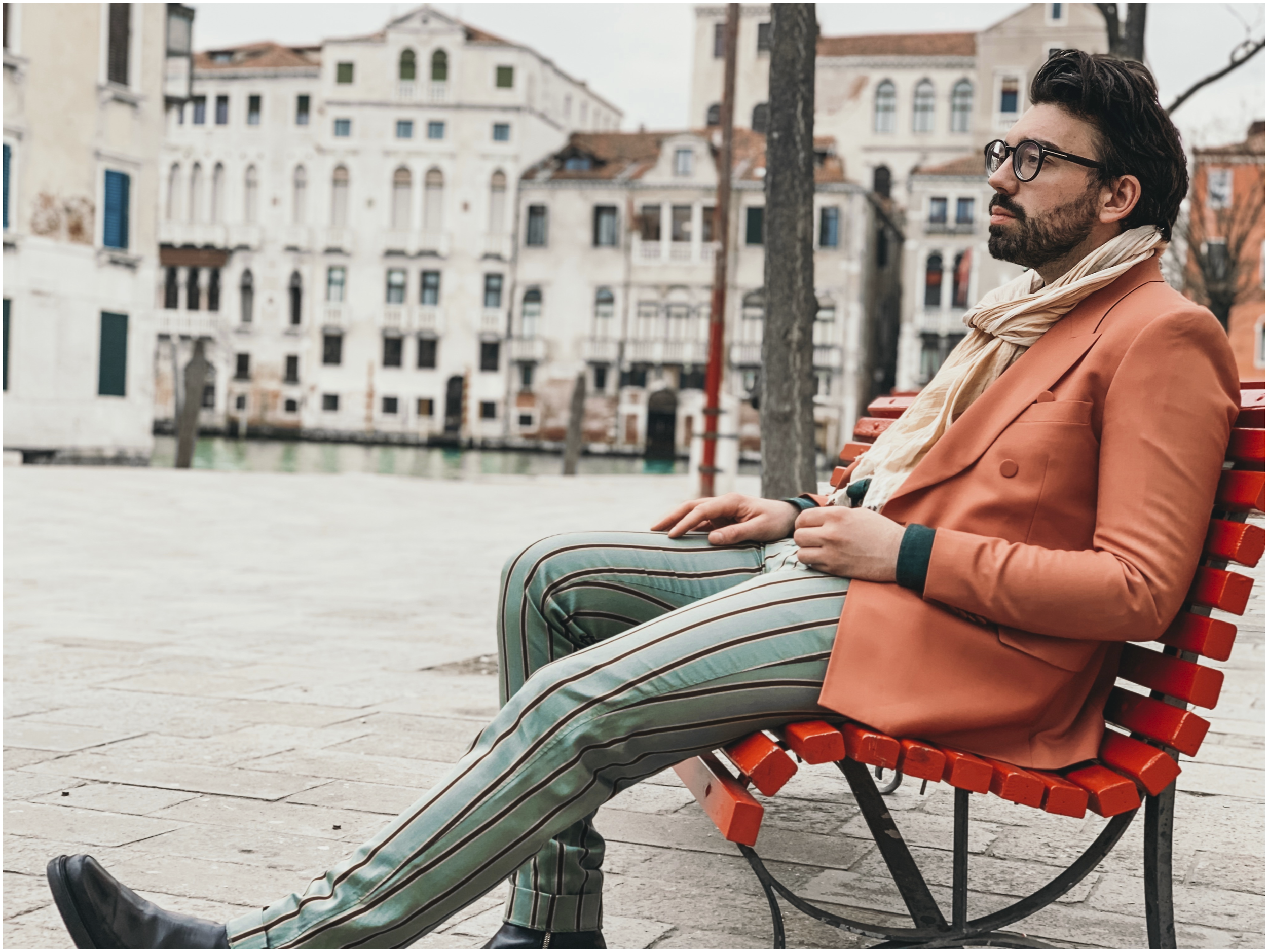
Figure 1 draws inspiration from the images shared by certain interlocutors who pose sitting down, partly to lend an affected air to the image composition (hinting at personality) but also to allow a whole outfit to be squeezed into an image with closer-up framing that would be possible in a standing shot. The captions included with the images identify both the process taken to capture the image and the subsequent preparation that would be necessary for posting the images to Instagram. This is included here to give the reader an insight into the practicalities of self-portraiture as an ethnographic tool and the potential for engaging analytically with self-portraiture as an epistemological practice.
These images were taken across a three day visit to Venice, but the clothes worn in the images were assembled in advance with the express purpose of performing a particular kind of self, which could be captured, and form part of an assemblage of images. The assemblage could later be posted to Instagram to add to, enrich, and continue to tell the story of anthrodandy. As such, these photographs hold joint tenure as visual research diary entries, artefacts, and memories. Allowing for latent analysis of the ethnographers practice as well asserting agency once posted on behalf of anthrodandy. These images are a selection of a much larger number taken, with the express purpose of being posted to Instagram as a collection, not unlike Edward’s (2012, 225) “assemblages of affect.” Contextualising this allows these self-portraits to show what is possible when the anthropologist turns around the camera.
Figure 2 adds activity to the image, which both figuratively and literally pushes the clothed body into the background. This adds a playfulness to the images, particularly when placed in the context of a set of similar images, and adds life to a digital (clothes wearing) self that can at times feel more mannequin than man (see Bluteau, 2022b). Ice cream was particularly chosen to highlight the juxtaposition between the grown-up world of tailoring and the playful nature of travel and experimenting with colour. When added to the assemblage of images that makes up the digital self, such an approach validates the lived reality of the offline and emphasises the authenticity of the experience of posting such content (see also Ross 2019), even if these are carefully chosen steps. In the case of this image, the ice cream was chosen first, part consumed, and the yellow wall was found and the image conceived. The image has been taken on an iPhone in portrait mode which accounts for the blurred background, giving it a current feel within the vernacular language of images posted to the network the author works with. While the compositional choice of outfit, ice cream, and background adds an intentionality to the final image. Alt text: anthrodandy holding a half melted pale yellow ice cream in a cone. The figure is shot from the neck down, but only the hand and ice cream is in focus. Clothing is the same as Figure 1. This image was conceived as an homage to a number of posts by other Instagram users in my network that I had viewed prior to the visit to Venice. These images were publicity shots primarily from the brand Drakes of London where models in their tailored clothing were seen eating ice cream and burgers. There was a playfulness to these images that juxtaposed the formality of the dress with the informality (and potential messy consequence) of the activity. This not only placed the clothing into a context where one could foresee wearing it but challenged assumptions that tailored dress limited ones activity. This playful approach is what I aimed to emulate here and the use of portrait mode on the iPhone allowing for the out-of-focus background. When posted to Instagram, the accompanying text will be: I think I have found my new favourite ice cream! Thank you @gelateriaildoge for making my day with their signature Crema del Doge, delicious… @paulsmithdesign jacket, scarf and boots @untuckit shirt @kentandcurwen trousers @tomford spectacles…#mensstyle #mensfashion #menswear #menwithstyle #mensfashionpost #mensfashiondaily #mensfashioninspiration #dailyinspiration #dapper #dandy #bohochic #sharp #suave #influencer #tailored #tailoring #sprezzatura #gentlemenstyle #gentlemen #luxerystyle #madeinengland #whatimwearing #anthropologist #beard #beardsofinstagram #ootd #ootdmen #bespoke #savilerow #igstyle #icecream.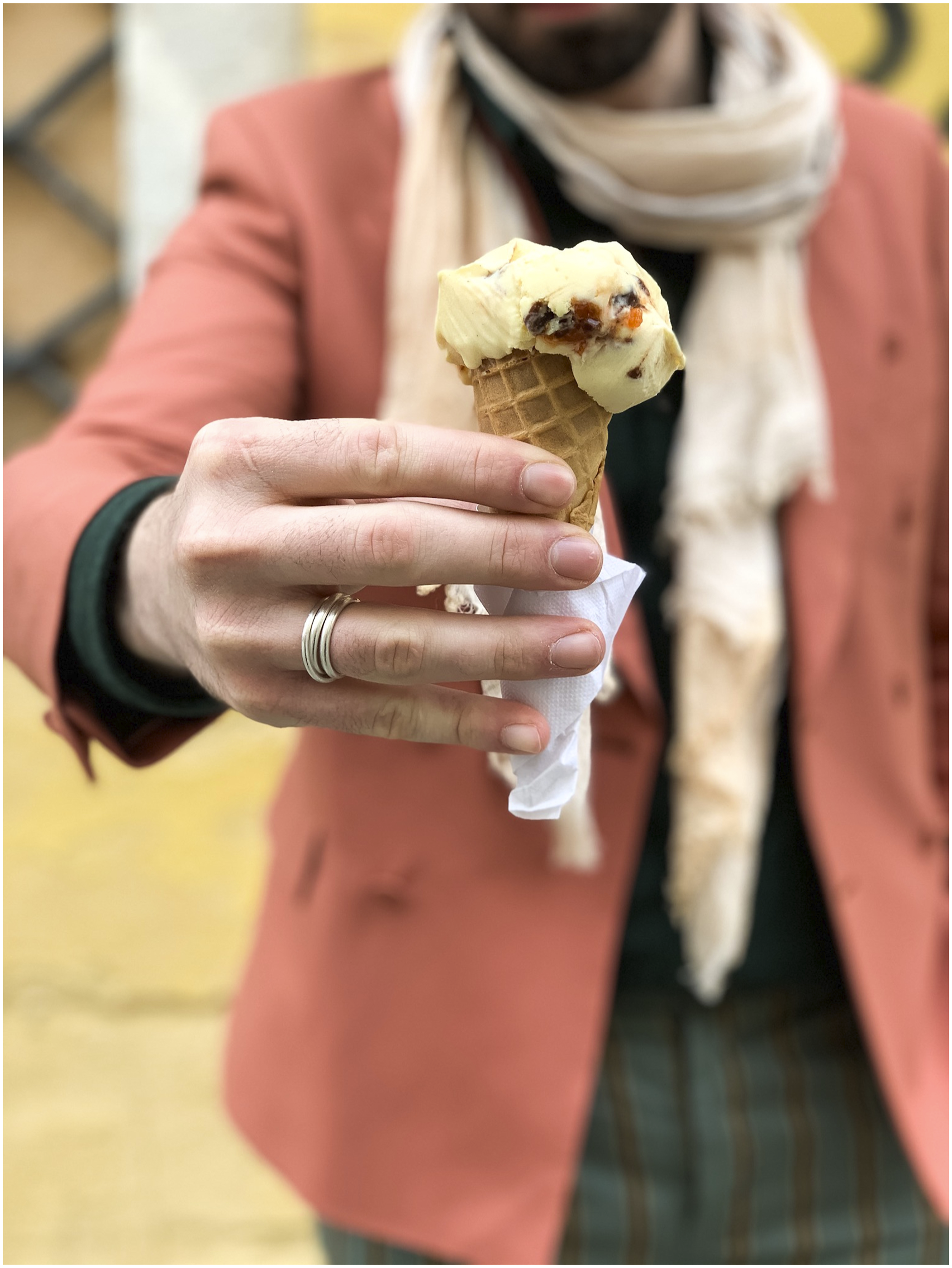
Figure 3 is what is known as a detail shot. Usually posted as an additional or follow-up post to an initial depiction of an outfit or particular piece of clothing. This form of image draws the viewer’s attention to a specific detail or feature of a garment. In this image, the collar of the jacket has been turned up allowing the undercollar melton to be seen. Typically, this felt-like material that is sewn into the collar of a tailored jacket, to add structure, is in a colour to blend into the fabric of the jacket. However, in this case, the melton has been utilised as an accent, with both white and burgundy melton used to accentuate this area of the jacket. Such a feature would only be found on either bespoke clothing or those from particular designers. As such, this feature would be of interest to the members of the Instagram network where this image would be posted. In addition to this, there are other details such as the working cuff (also known as a surgeon cuff), the undercollar stitching, and the flat profile fabric covered buttons that would pique the interest of members of the same network. This image was conceived to show off all these details. Alt text: anthrodandy wearing a coral coloured jacket, shot from the side with the collar turned up to reveal a burgundy and white undercollar melton. This image was conceived as a detail shot. In the network of my informants, the subtle details of menswear and tailoring are highly prized, and Instagram posts frequently highlight these details. This image was taken after multiple failed attempts to capture the key details of this jacket. It was challenging to frame both the undercollar and the cuffs at the same time. When posted to Instagram, the accompanying text will be: This jacket is full of surprises, I love the two tone undercollar melton, and those flat covered buttons…@paulsmithdesign jacket and scarf @untuckit shirt @tomford spectacles…#mensstyle #mensfashion #menswear #menwithstyle #mensfashionpost #mensfashiondaily #mensfashioninspiration #dailyinspiration #dapper #dandy #bohochic #sharp #suave #influencer #tailored #tailoring #sprezzatura #gentlemenstyle #gentlemen #luxerystyle #madeinengland #whatimwearing #anthropologist #beard #beardsofinstagram #ootd #ootdmen #bespoke #savilerow #igstyle #workingcuff #surgeoncuff #workingcuffbuttons.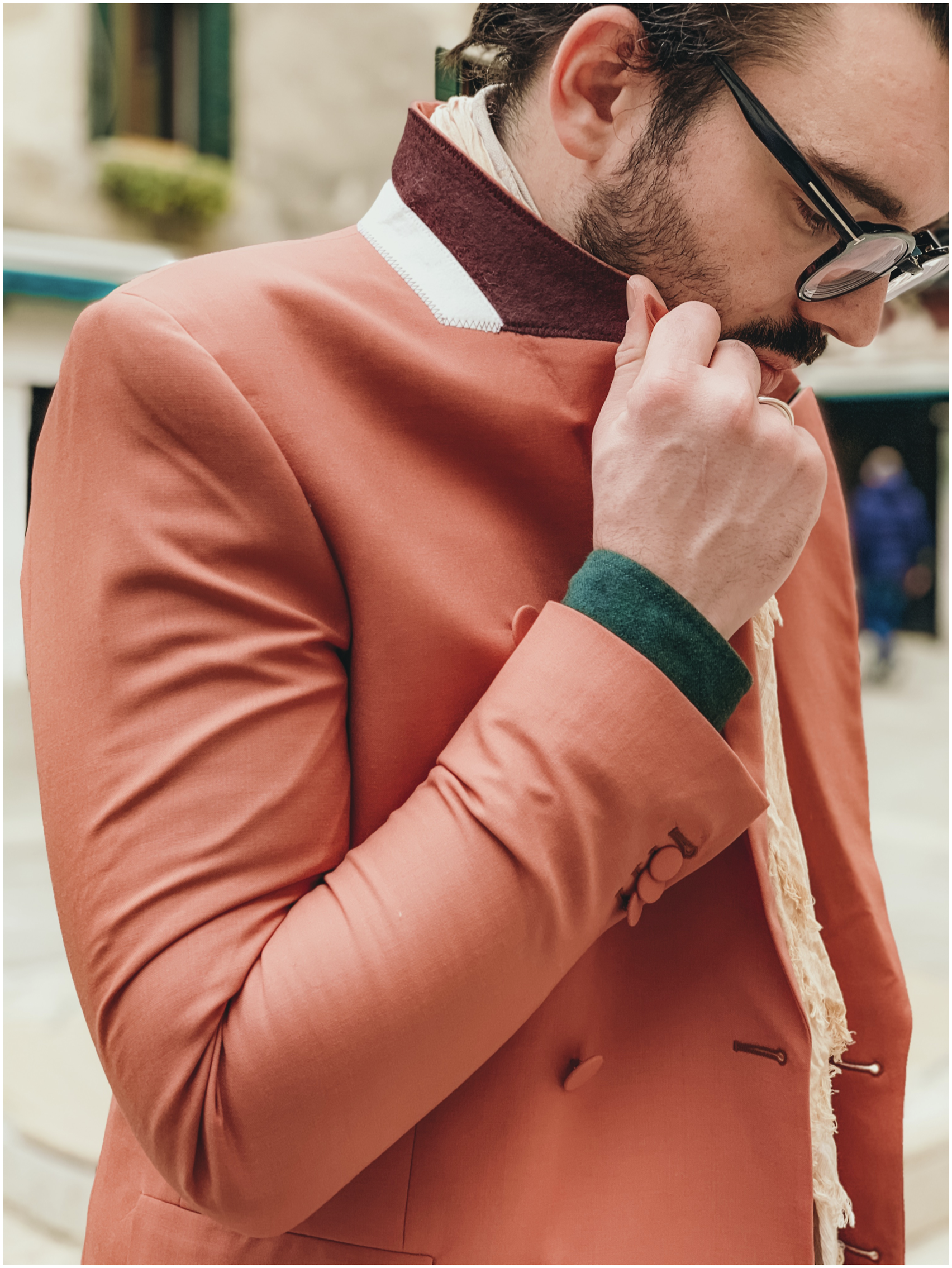
In this case, the enactment of self-portraiture has developed from the selfie, to the use of an additional party, one that could be conceptualised as a research assistant or biological tripod but in the case of these images was my partner. This is much the same as was observed in the images posted by my interlocutors. It would be all too easy to refute that these images are self-portraits, when they are taken by someone other than the sitter, but this fundamentally misconstrues the nature of the practice being enacted. The performance of a specific kind of self, which is then photographed for the specific purpose of enriching a digital self, is a collaborative self-portrait between the photographer, sitter, and digital self. One which is time-locked to the specific moment the image is taken, but sits within a timeline of intellectual conception, ongoing conceptualisation, the taking of multiple possible images, delay before editing, editing, and finally posting. The moment of posting adds an additional layer to the temporality by asserting a present onto that moment, but also negating the dozens (or more) of digital images that may have been taken within seconds of that finally posted image.
Figure 4 introduces a new outfit and a new day to the story of anthrodandy in Venice. Employing different outfits allows for continued interest in one’s social media feed to be garnered through a constant stream of content, but it also adds a temporal structure to the account in the same way that one might dress a doll in a new outfit for a new ‘day’. In the case of this particular image, it was taken early in the morning when Venice was relatively quiet. There is a temporal narrative to the lived experience of the photograph subject here, with shortened hours of sleep and the greyer light of morning experienced in the moment of the photograph being taken, but not necessarily reflected in the finished product – especially after editing the hue of the light – highlighting the displacement between offline self and Instagram self. The outfit chosen here has been constructed to show off a specific colour palate and the layered nature of the items being worn. Compositionally, the sparse background accentuates this, drawing the eye to the clothes being worn while allowing the faded architecture to speak more contextually to the character being constructed. Alt text: anthrodandy walking through a pale coloured plaza with the domes of a large church appearing through the mist in the background. He is wearing a camel coloured overcoat, green jacket, and black dungarees. He also wears a fisherman’s style cap. This image was taken very early in the morning. The aim was to try and capture some photographs with the sunrise and morning light, as well as hopefully being able to capture images in locations that would usually be busy with tourists. The morning, however, was cool and misty which led to a different kind of image, but ones that are quite atmospheric. A different outfit had been prepared for this day, with an autumnal set of hues employed. This was a less colourful look but one that was more playful with the garment choice employing layering and juxtaposed fabrics and notions of formality to imbue the character with an authentic sense of self-dress. When posted to Instagram, the accompanying text will be: A morning stroll past the historic Doge’s palace. I just love the pink hued streetlamps that I passed in the haze. They seemed to complement my ensemble rather well… @paulsmithdesign jacket and t-shirt @joshuakanebespoke camel coat @lucyandyak corduroy dungarees @lockhatters fishermans cap @anndemeulemeester_official belt @tomford spectacles…#mensstyle #mensfashion #menswear #menwithstyle #mensfashionpost #mensfashiondaily #mensfashioninspiration #dailyinspiration #dapper #dandy #bohochic #sharp #suave #influencer #tailored #tailoring #sprezzatura #gentlemenstyle #gentlemen #luxerystyle #madeinengland #whatimwearing #anthropologist #beard #beardsofinstagram #ootd #ootdmen #bespoke #savilerow #igstyle #joshuakane.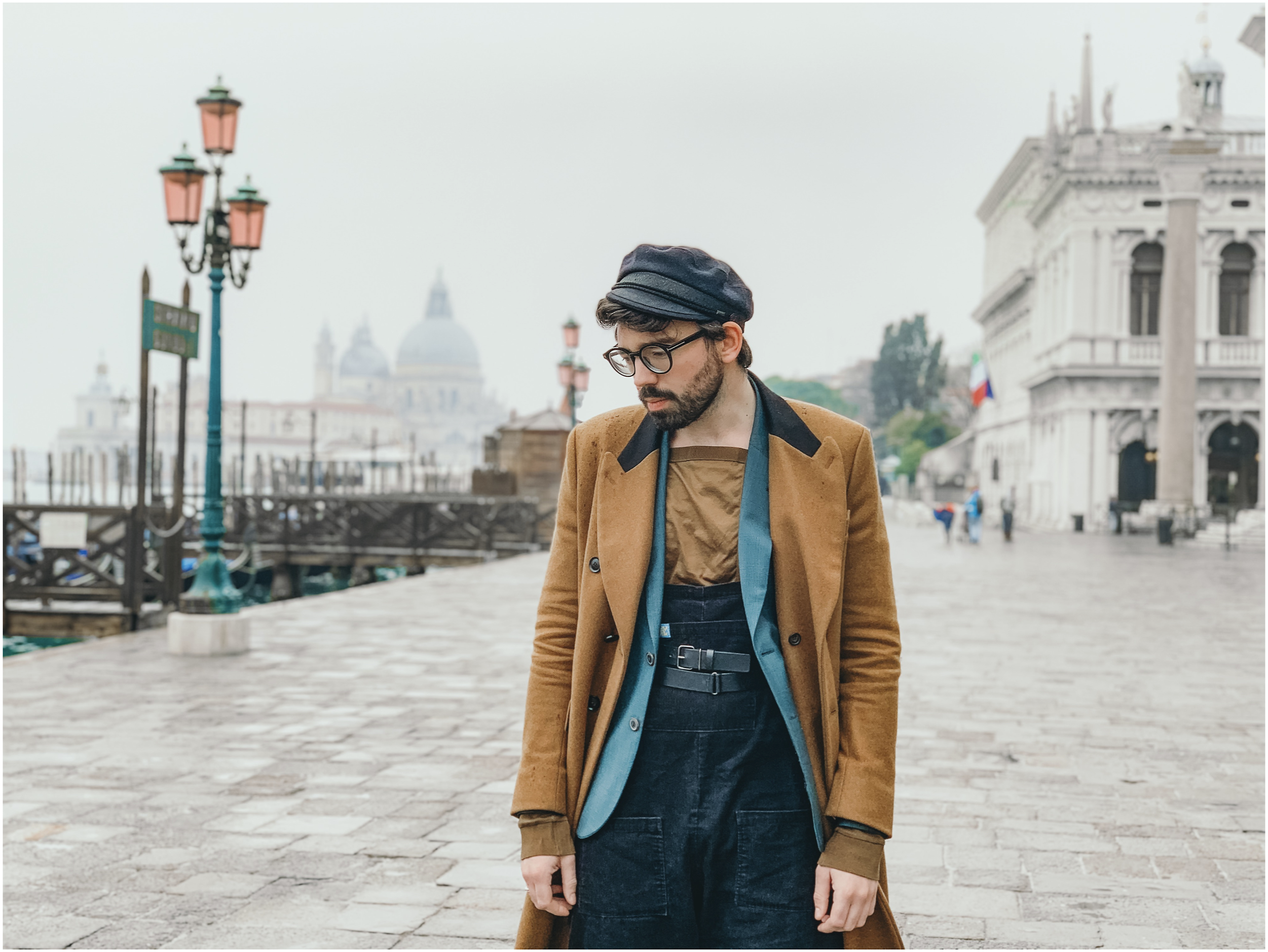
The act of self-portraiture then is so much more than a necessary exercise in gaining access and acceptance within a highly visual network whose content consists primarily of self-portraits. Of course without mimicking, replicating, and producing content of a certain form it would be difficult to conduct ethnographic fieldwork in a network such as this – this is the principle of the methodological approach immersive cohabitation (Bluteau, 2021a). However, beyond merely a way of gaining access – a key if you will – self-portraiture in this context allows the ethnographic eye to see beyond the two dimensional digital images posted to Instagram, whilst learning through a particular kind of performative praxis.
Taken from beneath the iconic bridge of sighs, Figure 5 fulfils the remit of tourist photograph, whilst also serving to detach the character of anthrodandy from the melee of bodies that typically features in this view. The clothes worn in this image are more subdued than in the previous images, but were chosen to emphasise a hero piece. This is a feature item that can elevate a more neutral outfit to something more intentionally fashionable. In this case, the heavy wool trousers by E Tautz are the hero, and both the pose and accessories (primarily the belt) allow these trousers to elevate the outfit and the associated status of the online self. It is also pertinent to mention that both the coat and trousers are made in England, and this fact would be highlighted in any post featuring this image. Production values and locations are of considerable interest to the network where this would feature. Finally, drawing on Figure 4, the coat featured there also features here, and this may be sued to provoke a discussion following posting this image of the perfect travel wardrobe, or how a capsule of certain key pieces can be used with various outfits. This all adds to the variety of ways in which these images and associated captions can be posted, and the authoritative voice that the character of anthrodandy is able to employ online. Alt text: anthrodandy standing with the bridge of sighs and a canal behind him. He is wearing a camel coloured overcoat, grey checked high waisted trousers, and a black roll neck top. This image was taken later in the day from Figure 4. This necessitated returning to the accommodation to change my outfit. This outfit allows the same coat from Figure 4 to be shown off with a different ensemble. When posted to Instagram, the accompanying text will be: Ahhhh, the bridge of sighs. What a perfect place to stop for a moment. I love the weight of this coat, swooshing around on a cold day. The perfect foil to these wide legged trousers. Love that subtle high waist too…@joshuakanebespoke camel coat @hm_man rollneck @etautz trousers @paulsmithdesign belt @tomford spectacles…#mensstyle #mensfashion #menswear #menwithstyle #mensfashionpost #mensfashiondaily #mensfashioninspiration #dailyinspiration #dapper #dandy #bohochic #sharp #suave #influencer #tailored #tailoring #sprezzatura #gentlemenstyle #gentlemen #luxerystyle #madeinengland #whatimwearing #anthropologist #beard #beardsofinstagram #ootd #ootdmen #bespoke #savilerow #igstyle #joshuakane.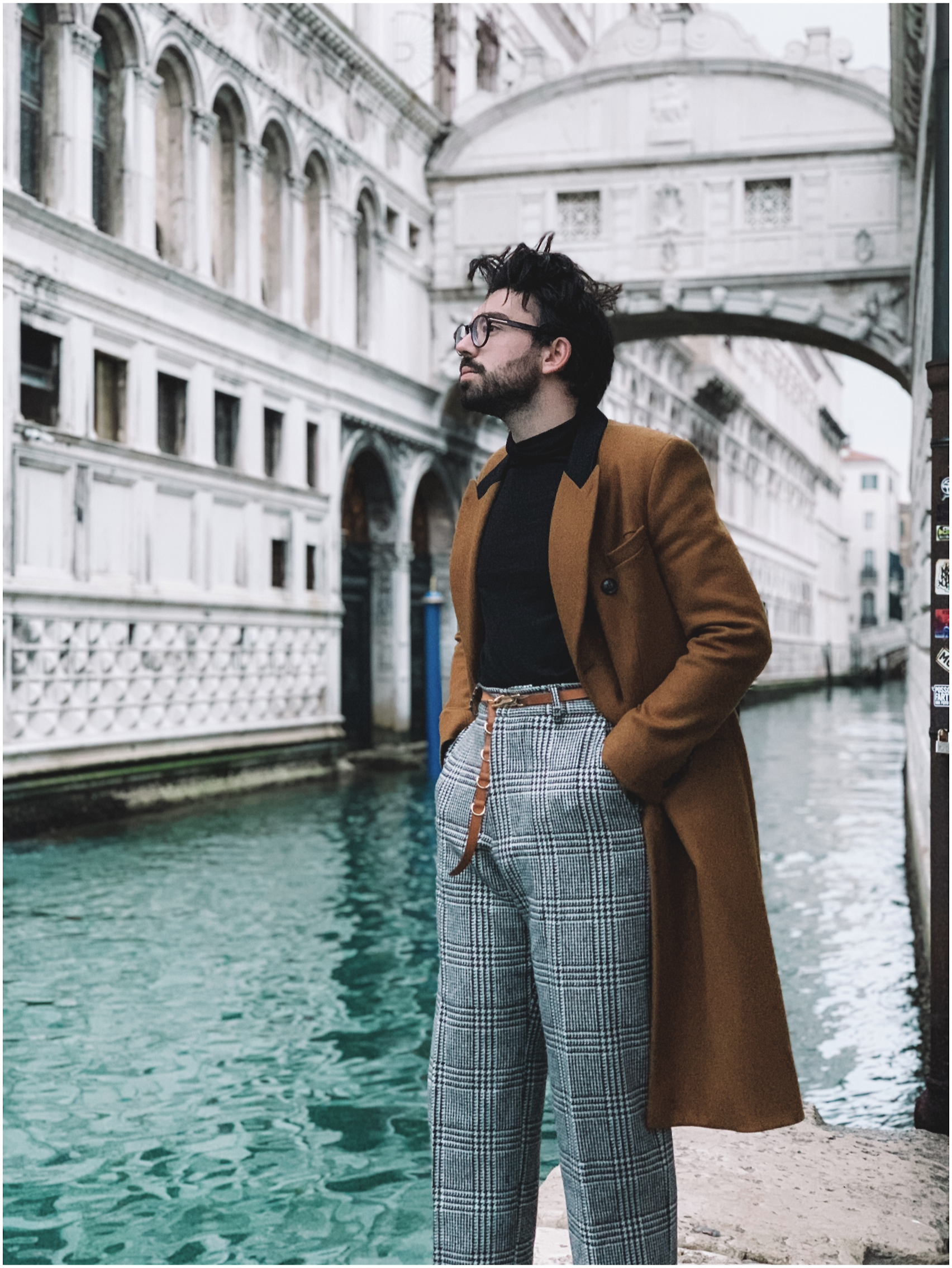
Such an approach could be classed as a form of experimental ethnography. Indeed, I would assert that this essay builds on Waltorp’s (2018) notion of digital ethnography as interface and takes more fundamental cues from Rakowski’s (2018) work and his thoughts on Turner’s idea that “we should not merely comment on ethnographies but actually perform them” (Turner, 1979: 80 in Rakowski, 2018: 154). Yet, whilst an identification of this work as experimental is valid in its current form, there is an implicit value to this form of ethnographic engagement which may become increasingly mainstream over time as more and more fieldsites become digitally saturated.
Taken on the final day of the trip, Figure 6 employs colour and a 1970s style influence that has been emerging in the Instagram network I worked with for some time. This image was conceived as a reaction to this, with a vintage orange corduroy shirt paired with green neckerchief and jacket to hint at the fashion cues from a certain era whilst also displaying a specific fashionable modernity and character specific look. As in earlier images, details are important here and the hand rolled edge of the neckerchief is intentionally clearly visible. The sunglasses chosen for this photograph are a reissue of a classic French climbers sunglasses made by Jublo, featuring leather side gaiters these are form over function for city wear. However, they allow the subject to play with a form of dress known as high-low dressing, popular among my network. An extreme form of this would be jeans paired with a dinner jacket, but this form of dress when executed correctly demonstrates than one is an experienced and articulate dresser of the male form, capable of crafting a specific, and stylish, aesthetic voice for oneself. As can be seen above, I typically wear spectacles and require contact lenses to wear sunglasses. In the case of this image, I have not had the foresight to change into contact lenses and have simply worn the sunglasses for the photograph. This fact however would not be noticeable when posted to Instagram. Alt text: anthrodandy standing in St Mark’s square with the arcade in soft focus in the background. He is wearing a green suit jacket, orange corduroy shirt, and a green neckerchief with white edging. He also wears a pair of round mirrored mountaineering sunglasses with leather side panels. This image was taken on the final day, and uses a simpler outfit to show off an accessory. In this case, the mountaineering style sunglasses are chosen to intentionally challenge the formality of the image, again paying homage to posts from my network that use similar devices for effect to challenge opinion and demonstrate the ability of the individual to show an authentic and individual sense of style. This is all part of enriching the Instagram self. When posted to Instagram, the accompanying text will be: My last day in Venice. Sad to be going but going out in style drawing on vintage inspired accessories and colours today…@paulsmithdesign jacket and neckerchief #vintage shirt @jublo_eyewear Vermont sunglasses …#mensstyle #mensfashion #menswear #menwithstyle #mensfashionpost #mensfashiondaily #mensfashioninspiration #dailyinspiration #dapper #dandy #bohochic #sharp #suave #influencer #tailored #tailoring #sprezzatura #gentlemenstyle #gentlemen #luxerystyle #madeinengland #whatimwearing #anthropologist #beard #beardsofinstagram #ootd #ootdmen #bespoke #savilerow #igstyle.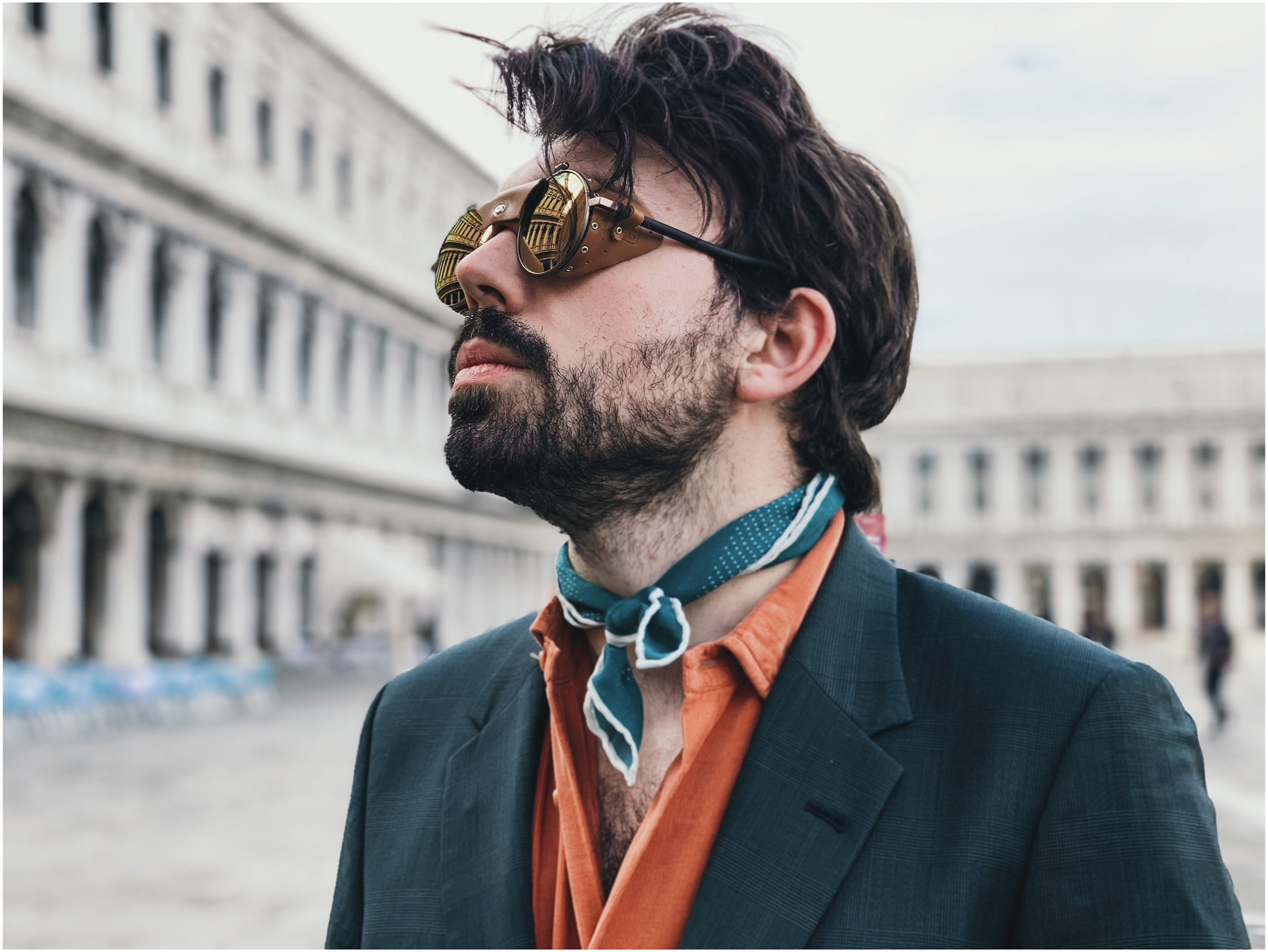
The photographs presented here demonstrate the performance of the anthropologist as a member of a specific network of informants. Images can be viewed as two dimensional representations of a specific event, but the images here can be analysed as multi-dimensional artefacts, making temporal assertions, telling part of a larger story, and adding to the corpus of work on experimental ethnography. Sontag’s (1977: 6) argument that photography “appropriate[s] the thing photographed” highlights the inevitable relationality and power dynamic created by the production of photographs. With social media, the impact of this is extended, and as anthropologists, we must be critical of both the process of publication, the impact it has on the offline self, and the way such practices impact on the temporalities of researcher and informants. Finally, with the majority of images captured in such an endeavour as this photographic essay ultimately discarded, or consigned to a digital repository (Horst et al., 2021), how do we consider long-established anthropological questions on personhood, individuality, and death in a world of almost infinite digital images and video. Only through further experimental ethnography can these questions be engaged with as we move towards an increasingly post-digital world.
Footnotes
Acknowledgements
I would like to thank R4 for her tireless eye, skilful photographic efforts and companionship on this journey of digital self-making. The ongoing enrichment of anthrodandy would not be possible without her. All photo credits are jointly shared between R4 and Joshua M Bluteau.
Declaration of Conflicting Interests
The author(s) declared no potential conflicts of interest with respect to the research, authorship, and/or publication of this article.
Funding
The author(s) received no financial support for the research, authorship, and/or publication of this article.
