




Abstract
Sustainable entrepreneurship integrates economic, environmental, and social into a firm's goals, activities, and planning to create a long-term value for the firm, its stakeholders, and broader society. The firm's strategies are formulated and executed to meet the firm's needs and its stakeholders while protecting, sustaining, and enhancing the natural resources that will be needed in the future. The COVID-19 pandemic was a wake-up call regarding external uncertainty that impacted all small and medium enterprises (SMEs). Leveraging this context, this study aims to assess the external and internal factors that influence sustainable opportunity recognition through interviews with twelve sustainable entrepreneurs in the USA and Canada. Based on the results, future research directions and recommendations have been made.
Keywords
Introduction
Entrepreneurship research abounds in models of entrepreneurial action in both theory (e.g. McMullen & Shepherd, 2006; Sarasvathy, 2001; Shane & Venkataraman, 2000) and practice (Osterwalder & Pigneur, 2010, Osterwalder, Pigneur, Bernarda, & Smith, 2014; Ries, 2011). Entrepreneurship starts with the recognition of entrepreneurial opportunities (Shane & Venkataraman, 2000). Opportunities are “situations in which new goods, services, raw materials, markets, and organizing methods can be introduced through the formation of new means, ends, or means-ends relationships” (Eckhardt & Shane, 2003: 336). Although a rich extant literature exists on opportunity recognition, there is limited research on recognizing opportunities for sustainable entrepreneurship, as seen in the following paragraphs.
Sustainable entrepreneurship is defined as a “unique perspective that combines the creation of environmental, social and economic values, which focuses on ensuring future generations’ well-being” (Muñoz & Cohen, 2018) (Figure 1). Moreover, sustainable businesses understand that the public consumer is becoming increasingly concerned about these challenges to a sustainable world. Therefore, these challenges create market opportunities for enterprises to address concerns about sustainability by providing new products and services that reduce energy and natural resource use (Terán-Yépez et al., 2020). According to sustainable entrepreneurship scholars, in traditional or commercial entrepreneurship, the promise of rewards positively affects the ability to recognize opportunities (Shepherd & DeTienne, 2005). On the other hand, sustainable entrepreneurship realizes and exploits opportunities for sustainable development and aspires to create viable market solutions and act as change agents (Farny & Binder, 2021) (Figure 2).
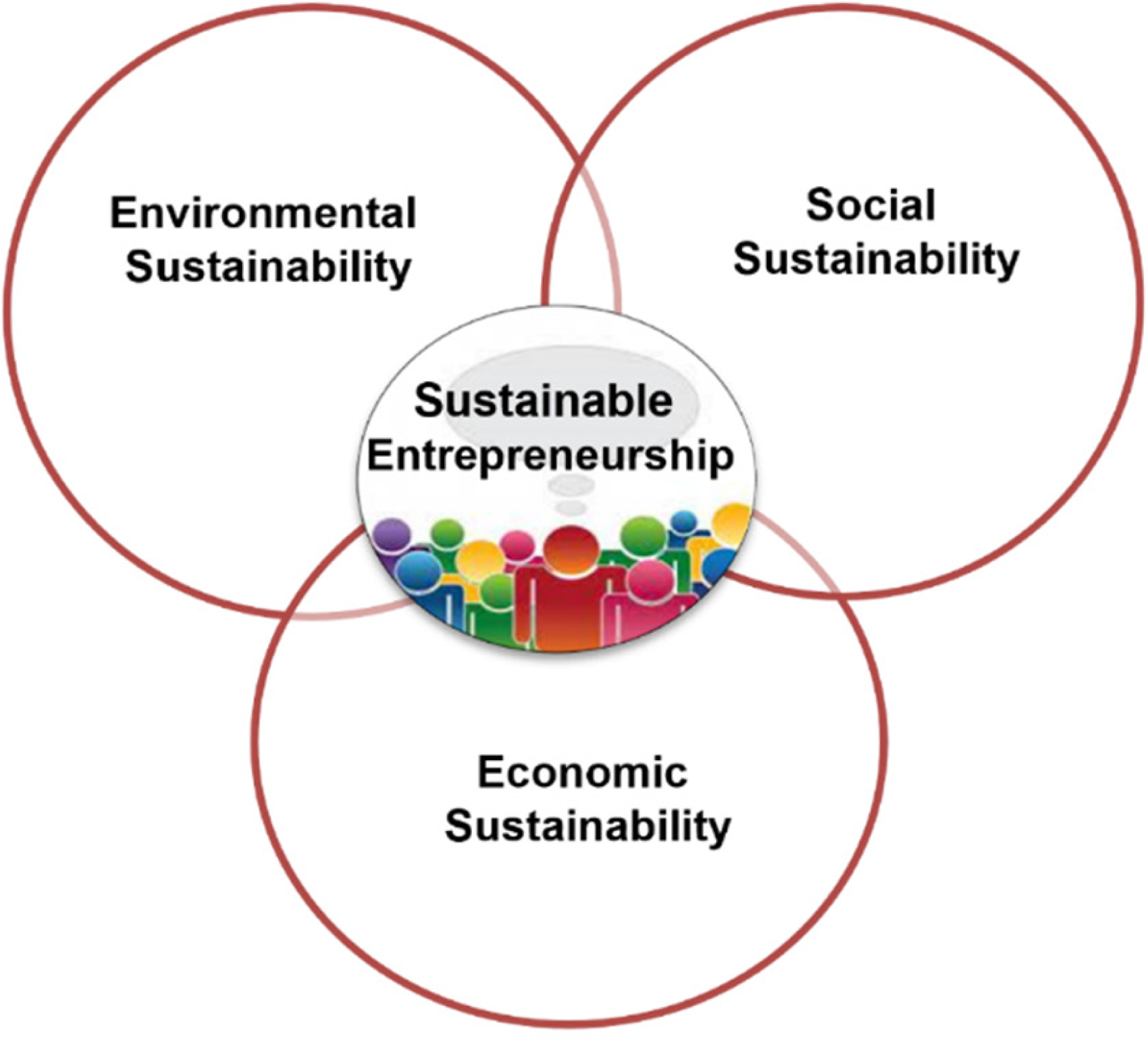
Sustainable entrepreneurship.
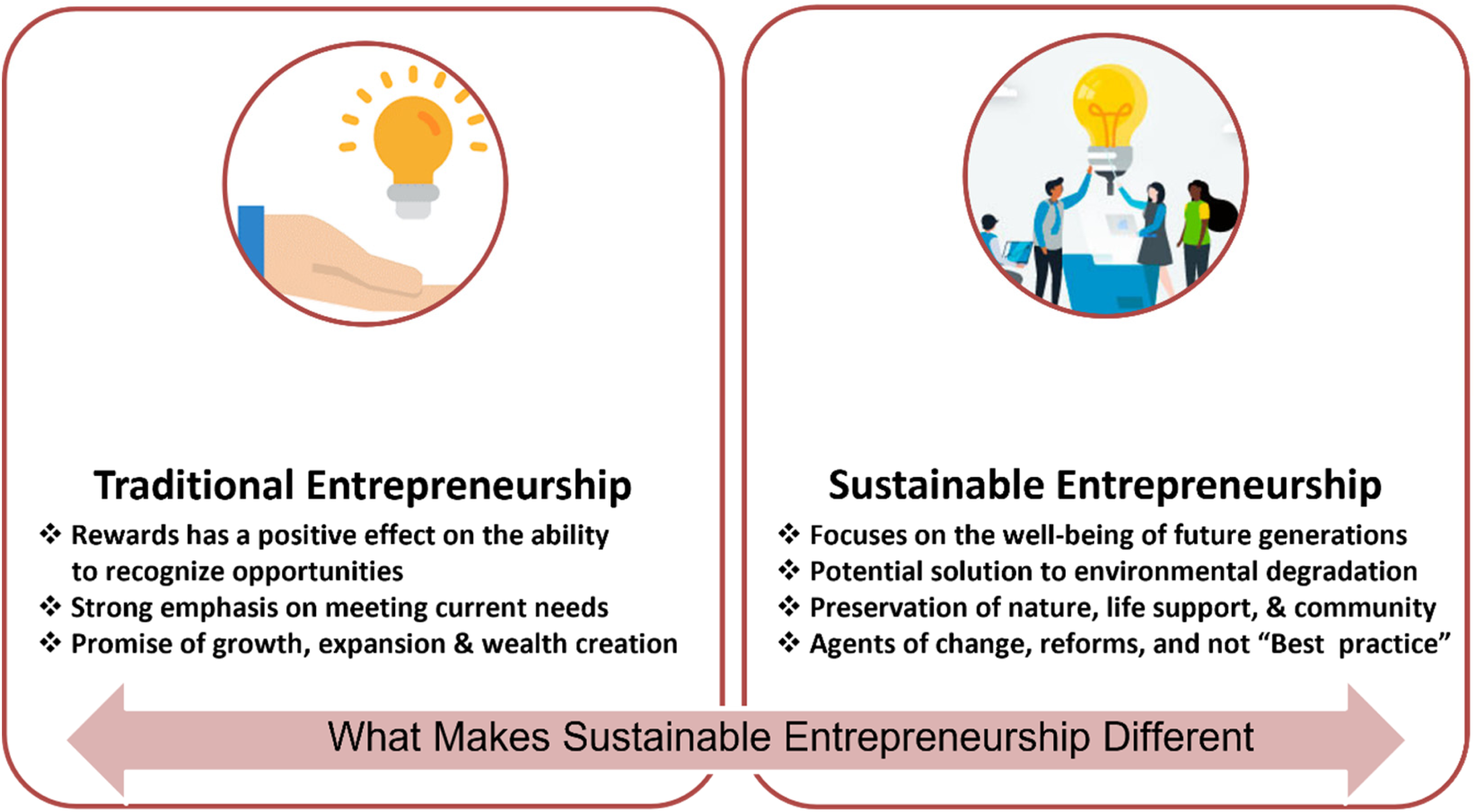
Traditional vs. Sustainable Entrepreneurship.
In the last decade, scholars have postulated that entrepreneurship must focus on non-economic benefits (social and environmental) in addition to economic wealth creation (Urbaniec, 2018; Shepherd & Patzelt, 2011). Research shows that internal organizational factors such as resilience capability, prior knowledge, and motivation are essential antecedents to sustainable opportunity recognition (Patzelt & Shepherd, 2011; Hanohov & Baldacchino, 2018). Existing research further shows that environmentally relevant market failures and imperfections represent opportunities to the sustainable entrepreneur (Dean & McMullen, 2007).
Besides these few studies, there seems to be scant research in this area of sustainable opportunity recognition despite the increasing importance of sustainable entrepreneurship (Terán-Yépez et al., 2020), especially after the COVID-19 pandemic. This shortage of reporting has led to incomplete data with effects that are often anecdotal and, notably, not thoroughly tested. Only a few papers are published in peer-reviewed academic journals or written as academic working papers exploring the internal and external factors required to enable sustainable business operations for these sustainable ventures.
This paper is a critical early academic contribution to a field dominated by the narratives and promises of consultants. This study examines how sustainable entrepreneurs identify entrepreneurial opportunities. The study reviews data collected through two rounds of interviews with twelve sustainable entrepreneurs in the USA and Canada. Three objectives guided the study: to identify how small businesses recognize opportunities, discover their capabilities to exploit opportunities, and establish the factors influencing successful opportunity recognition and exploitation.
Although the first round of interviews was conducted pre-COVID, additional data was collected post-COVID to satisfy reviewers’ suggestions. This resulted in an interesting observation as to how most of the sustainable entrepreneurs rebounded and continued operations despite the lockdowns and prevailing uncertainty. Hence, the introduction of the COVID-19 context into this paper as it offers valuable insights into the resilience shown by these sustainable entrepreneurs.
Section 2 is a literature review on the evolution of sustainable entrepreneurship, entrepreneurial opportunities, and factors that influence opportunity recognition and exploitation. Section 3 describes our research design and rationale for collecting and analyzing data. Section 4 presents data analysis and evaluates the challenges and disruptions caused by the COVID-19 pandemic. Section 5 shows a summary of findings and conclusions. Finally, section 6 provides recommendations to sustainable entrepreneurs and policymakers.
Evolution of sustainable entrepreneurship
During the last decade, scholars have started to link traditional entrepreneurship, society, and the environment to coin the concept of sustainable entrepreneurship (Terán-Yépez et al., 2020; Cohen & Winn, 2007). There have been several definitions of sustainable entrepreneurship. In addition to the one by Muñoz & Cohen (2018) mentioned earlier, sustainable entrepreneurship has been defined as the focus “on the preservation of nature, life support, and community in the pursuit of perceived opportunities to bring into existence future products, processes, and services for gain, where the gain is broadly construed to include economic and non-economic gains to individuals, the economy, and society” (Shepherd & Patzelt, 2011). The basic premise of sustainable entrepreneurship lies in investigating what natural/communal ecosystems need to be sustained or preserved and what is to be developed for the people, society, or the economy.
Sustainable entrepreneurial opportunity
Entrepreneurship literature has extensively studied the ontological and epistemological nature of opportunities (Alvarez & Barney, 2007; Foss & Klein, 2010) and equated it to new venture creation (Nicolaou, Shane, Cherkas & Spector, 2009). The basic premise behind opportunity recognition or new venture creation was introducing new goods, services, raw materials, and organizing methods to the market. These new things allowed outputs to sell higher than their cost of production (Shane, 2000). In sum, traditional entrepreneurship and opportunity recognition majorly focused on financial wealth creation and social value creation (Terán-Yépez et al., 2020; Shepherd & Patzelt, 2011). According to Drucker (1985), entrepreneurial opportunities arise due to three conditions: market inefficiencies, discovery and invention, and changing conditions in social, political, demographic, and economic forces. Cohen and Winn (2007) added another condition to this list: changes in the natural environment, such as climate change or resource scarcity, and their associated changes in the social and economic arena (Figure 3).
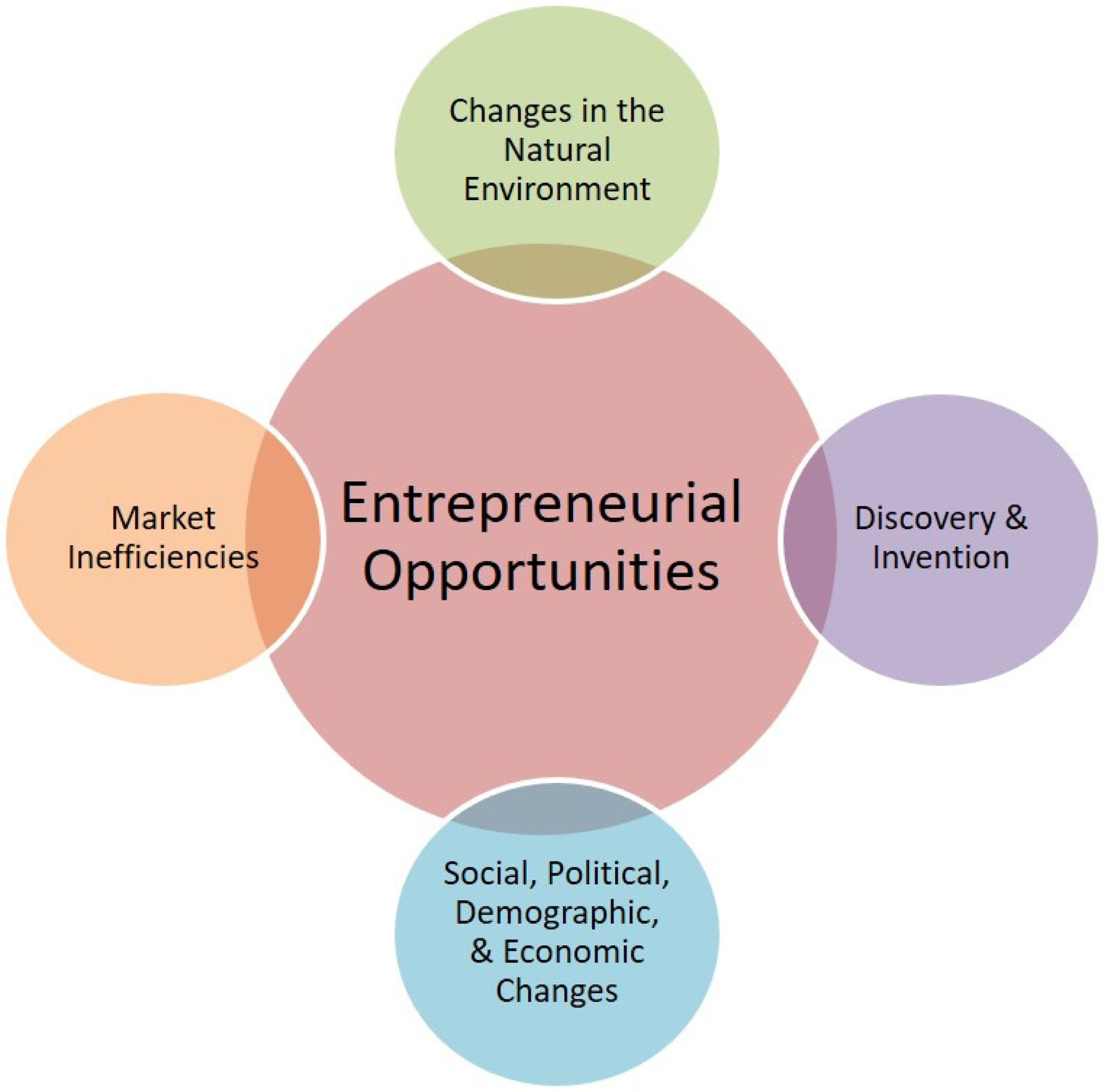
External factors affecting entrepreneurial opportunities.
In their classic article, Cohen and Winn (2007) argued that four types of natural-based market imperfections (i.e. inefficient firms, externalities, flawed pricing mechanisms, and lack of perfectly distributed information) contribute to environmental degradation (e.g. public concern; policy and incentive changes; shifts in consumer preferences; stakeholder shifts; changes in resource availability; weather-related disasters). These factors also provide significant entrepreneurial opportunities for the creation of radical technologies and innovative business models. They also showed that these opportunities establish the foundations for an emerging model of sustainable entrepreneurship (Figure 4).
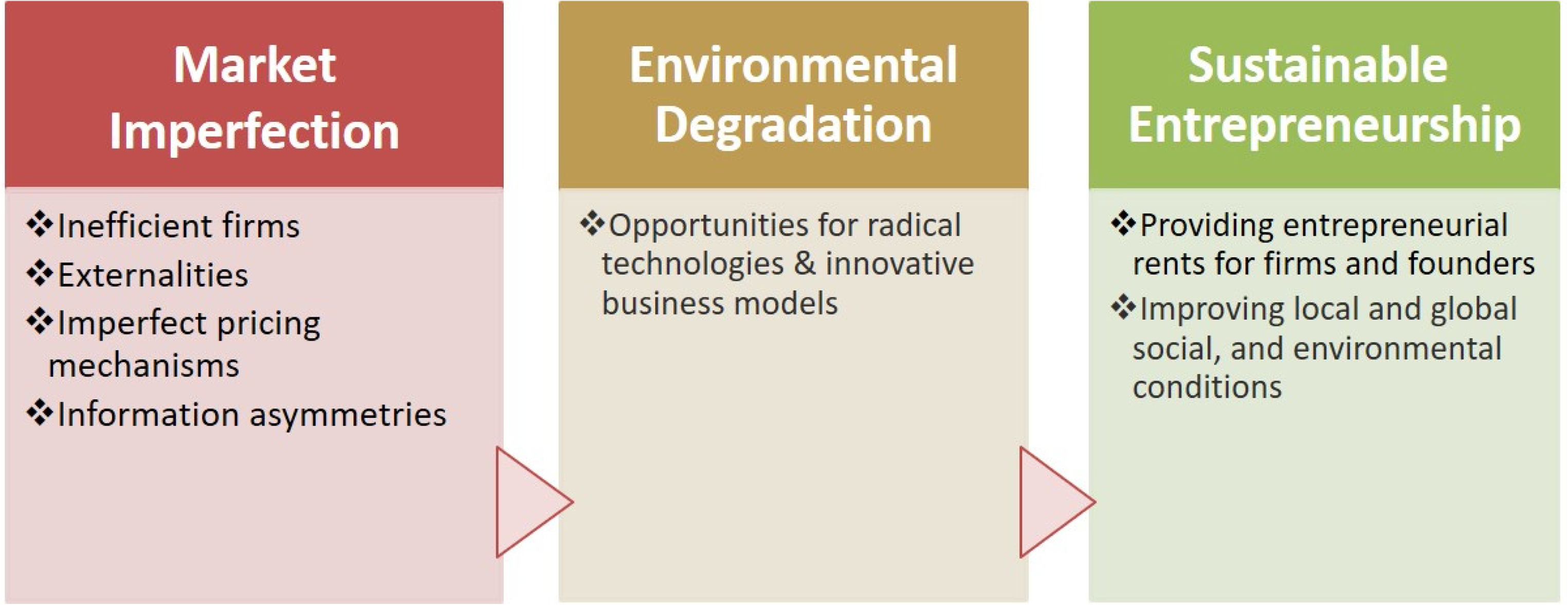
The relationship between market imperfections, entrepreneurial opportunities, and sustainable entrepreneurship.
Recent sustainable entrepreneurship research focuses on the entrepreneurial process (Belz & Binder, 2017; Davidsson, 2015; Muñoz & Dimov, 2015; Kibler et al., 2015). Belz & Binder (2017) share a process interest in recognizing, developing, and exploiting opportunities. In the beginning, a sustainable entrepreneur recognizes a specific ecological or social problem and then finds an opportunity to rectify the socio-ecological problem and successively develop solutions that can be introduced into the market (Belz & Binder, 2017). The opportunity could arise from natural environment market imperfections that provide an economic opportunity for entrepreneurial action (Cohen and Winn, 2007). A sustainable entrepreneur is willing to exercise a more compassionate, socially responsible enterprising practice and possess both the ability and the motivation to increase communal or societal well-being (Muñoz & Cohen, 2018). Integrating sustainability into a company's activities creates high complexity and uncertainty due to the often-competing demands and objectives. It requires organizations to simultaneously achieve economic, social, and environmental value (Farny et al., 2019; Muñoz & Cohen, 2018). Ploum et al. (2018) used exploratory empirical research in which 96 would-be entrepreneurs were subjected to real-life decision-making processes in an online environment. They concluded that “pro-environmental behavior values and moral competencies are important indicators of the ability to recognize opportunities for sustainable development.” Another study examined the factors influencing identifying sustainable opportunities among 220 SMEs in Zambia. The empirical results showed that “altruism towards others was partially supported while the positive effects of knowledge of the natural/social environment and perception of threats to the natural/social environment on the identification of sustainable opportunities were not supported.” Choongo et al. (2016).
Despite the lack of consensus on this issue, many scholars have identified the following internal organizational factors such as resilience capability, prior knowledge, motivation, cognitive properties, personality traits, social networks, and entrepreneurial alertness as essential antecedents to sustainable opportunity recognition (Shane & Venkataraman, 2000; Gaglio and Katz 2001; Ardichvili, Cardozo, et al., 2003; Dimov, 2007; Patzelt & Shepherd, 2011; Hanohov & Baldacchino, 2018).
The main aim of this paper is to add to our understanding of the process of sustainable entrepreneurship. We selected four factors identified in most sustainable entrepreneurship research – prior knowledge, motivations, empathy towards others, and motivation as essential indicators of recognizing opportunities for sustainable development. Our objective is to present research findings of sustainable entrepreneurship in action and emphasize the role of these four factors in contributing to sustainable development goals.
Knowledge
Knowledge of the ecological environment
The ecological environment refers to the physical or natural world that includes the earth, biodiversity, and ecosystems (Parris & Kates, 2003). It can have intrinsic value over and above it as simply a life support system (Muehlebach, 2001). Businesses and the natural environment coexist in an interdependent relationship. Unfortunately, most business operations cause pollution of air, water, and land in addition to depleting natural resources such as fossil fuels and fresh water.
Similarly, the dumping of hazardous industrial wastes has led to groundwater pollution, with arsenic being detected in potable drinking water. Knowledgeable entrepreneurs could commercialize technology that treats produced water (water that is extracted during the oil extraction process) to make it suitable for irrigation of crops, conduct a pilot in an acre of land producing sorghum, and provide treated produced water to farmers at a reasonable cost once the produced water usage safety is ensured. Doing so would safeguard the water table levels and mitigate the drought conditions (Meng et al., 2016).
In sum, if the ecology is not cared for and sustained, human lives, flora, and fauna are threatened (Shepherd & Patzelt, 2011). The natural environment can be sustained if the adversarial relationship between business and ecology is mitigated. Entrepreneurs who have prior knowledge of this threat can identify various opportunities to reduce such a threat by providing a suitable product or service offering.
Knowledge gained through prior work experience
Prior experience of the entrepreneur is an essential source of knowledge to him/her not available to others (Shane, 2008). Previous experience contributes to developing competencies, abilities, and skills in individuals (Hmieleski, Carr & Baron., 2015; Wright, Hmieleski, Siegel & Ensley, 2007). The competencies, in turn, can drive and incentivize entrepreneurial actions (Davidsson & Honig, 2003). There are two types of experience that an entrepreneur can possess: functional and founding. Both functional that is, industry experience and entrepreneurial or startup experience (Baum and Locke, 2004) positively influence entrepreneurial outcomes (e.g. opportunity recognition, new venture growth) (Sarma & Marszalek, 2019). Research shows that around 45% of entrepreneurs start businesses in which they were previously employed (Shane 2008). Experienced entrepreneurs can assess their entrepreneurial skills, capabilities, and fit within the entrepreneurial setting (Folta, Delmar & Wennberg, 2010). In addition, prior startup experience sharpens alertness to opportunity identification and evaluation and provides information about resource acquisition and firm organization.
In addition to nurturing their skills and capabilities, sustainable entrepreneurs need to mobilize resources and engage with external agencies (Sarma & Sun, 2017) to bring an opportunity to fruition in the marketplace. While today's strategy is focused on pollution prevention and risk reduction, tomorrow is aligned with innovation and repositioning to commercialize clean and sustainable technology that is eco-friendly (Hanohov and Baldacchino, 2018).
Motivation
Perception of threat to oneself
Motivation could result either from a perception of threat to oneself or from empathy towards others. When the entrepreneur perceives that their own physical or psychological well-being is threatened, then (s)he is motivated to direct their focus on the root cause of the threat. For example, the coronavirus (COVID-19) unrelenting spread across the world motivated the healthcare providers and social entrepreneurs to come together to find a cure to stop the pandemic and engage in philanthropic activities to deal with the current and post-virus era.
A theoretical lens of the situationism theory suggests how situational factors in the external environment (e.g. nature, community) influence an individual's helping behavior (Lefevor, Fowers, Ahn & Cohen, 2017), especially prosocial and pro-environmental behaviors. The entrepreneurship literature is extant to the influence of entrepreneurial ecosystems and other situational contexts on new venturing (Sarma & Marszalek, 2019; Spigel & Harrison, 2018, Welter, 2011). However, how external situations (e.g. ecological environment) influence an individual's motivation to engage in sustainable activities is scant.
Empathy or Altruism towards others
Over and above the need for personal gain wherein entrepreneurs try to mitigate the threats in the ecological environment (discussed above), there is also a motivation to act altruistically towards other human beings and other living species irrespective of any immediate personal threat (Muñoz & Dimov, 2017). In the literature, motivation to act altruistically has been explained through individuals’ empathic and sympathetic behavior. The altruistic entrepreneur might recognize an opportunity that produces lower emissions or reduces wastes (Khan & Quaddus, 2015). Similarly, the entrepreneur can commercialize technology to suitably treat produced water and make it suitable for irrigation of crops and other uses not necessarily in his/her state but elsewhere in the country or abroad that faces severe water scarcity. The current case of small businesses offering to make masks for healthcare workers amid the COVID-19 situation is also a relevant example where entrepreneurs demonstrate altruistic behaviors.
Resilience
The entrepreneurship literature has assimilated the construct of resilience from various academic disciplines. Resilience has been studied and analyzed at different levels – individual, organizational, and macro-level. This paper focused on the individual or micro-level resilience as a driver of continued sustainable business operations. Resilience is defined as the capability of entrepreneurs and small business owners to cope with the entrepreneurial process and bounce back repeatedly from failures or recover quickly from adversarial events such as the COVID-19 pandemic (Bullough, Renko & Myatt, 2014; Manfield & Newey, 2018; Nisula & Olander, 2020). The resilience capacity is the bundle of cognitive and behavioral traits exhibited by the entrepreneurs that enable their businesses’ adaptability and continuity. Gittell et al., (2006, p. 303) refer to resilience capability as “(a) the maintenance of positive adjustment under challenging conditions, (b) the ability to bounce back from untoward events, and (c) the capacity to maintain desirable functions and outcomes in the midst of strain.” Scholars posit that such a resilience capability is essential for small businesses to survive disasters.
The COVID-19 pandemic is a natural disaster that struck the entire globe simultaneously. The whole world has not encountered anything so uncertain and complex as this coronavirus pandemic, and which still shows no sign of a clear finish line. Across the United States, states and cities have requested or required that residents avoid any non-essential travel or activity (Mervosh, Lu, and Swales, 2020). Such “stay-at-home” or “shelter-in-place” orders have devastated economies, leading to rising unemployment rates, falling consumer activity, and stifled growth (Lee, 2020). SMEs are more heavily impacted by recessions and economic shocks than the larger national chains as they have limited access to credit and alternative financing options during such crises (Dietrich, Schneider, and Stocks, 2020). Entrepreneurs and small business owners have not planned for such an exigency, and many were hit hard by the pandemic. After the initial shock, resilient ones immediately adapted to remote work from home for their employees while they continued to be in their office/sites taking necessary precautions.
Research methodology
Study region
We selected Calgary and Bakersfield for conducting interviews with a high potential of sustainable entrepreneurship environment at the nexus of energy (including renewable), agriculture, and water. These two cities show no significant differences in their economic, institutional, and cultural ecosystem elements (Spence, Gherib & Biwole, 2010). This ensures that the external factors were similar. Calgary is a vibrant city with a culture for sustainable entrepreneurship with over 55,000 businesses. Calgary small businesses account for 95 percent of all companies. Bakersfield is a vibrant city with approximately 18,791 businesses as of 2018 (https://www.labormarketinfo.edd.ca.gov/LMID/Size_of_Business_Data.html).
Bakersfield's economy lies at the nexus of oil & gas and agriculture. The extraction of fossil fuels through fracking generates a significant amount of wastewater called oilfield-produced water. This water if suitably treated can be put to beneficial uses such as farming to supplement freshwater streams for crop irrigation in water-stressed regions like Bakersfield. However, given an adversarial public perception of mixing oil water and food as unacceptable, a sustainable entrepreneur who wants to treat oilfield-produced water and make it suitable for irrigation may not be welcomed with open arms. In the absence of a supportive external environment (Muñoz & Dimov, 2015), internal factors take precedence to bring the opportunity to fruition. The initiation of such a sustainable business model would require resilience, knowledge, and motivation to manage and deal with the various stakeholders in this ecosystem, such as the water board, food producers, environmentalists, and so forth.
Study sample
The interviewees included 12 sustainable entrepreneurs from active SMEs with less than 50 employees. We ensured that these SMEs fulfills the criteria of sustainable entrepreneurship if their product or service offerings minimizes the negative impact of their business on the environment and/or improve societal conditions. We did not select the sample through a random sampling method, yet some managers were more likely to be chosen over others. The businesses were identified through personal contacts, sustainable entrepreneur hubs, and online business directories. They were spread across various sectors ranging from construction to hand-made cards and are listed in Table 1.
Research informants.
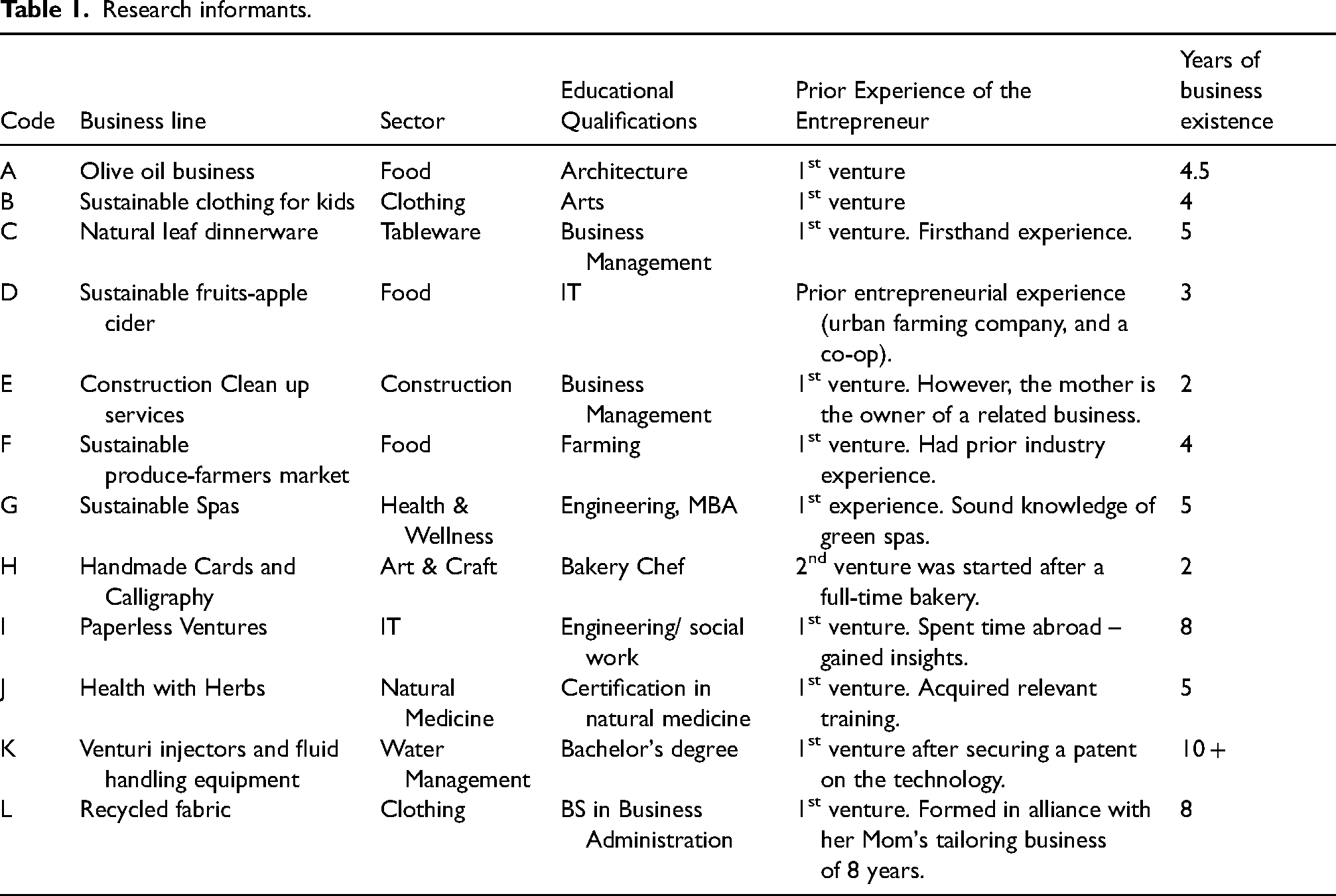
Research informants.
The interviewees or informants were selected using purposive as well as convenience sampling. This meant establishing relevant selection criteria and selecting sustainable entrepreneurs in Calgary and Bakersfield who met these criteria (Bernard, 2002). The most appropriate sustainable entrepreneurs were selected based on the following criteria:
Those who have a minimum of 10 years’ experience working Those with a business existence of at least two years
Primary data were collected through semi-structured qualitative in-person interviews. We selected the semi-structured interview technique to encourage the interviewees to discuss their own opinions towards sustainability freely. We utilized an open-ended, flexible approach to interviewing during the interview, strongly recommended by Hammersley and Atkinson (2007). We conducted interviews in two rounds. The authors visited twenty sustainable entrepreneurs residing in Bakersfield, USA, and Calgary, Canada, in the first round. The second round of data was collected through zoom calls in November 2020 to allow the first round of revise and resubmit. We took advantage of the COVID-19 situation to check in if the businesses we interviewed were still alive. 95% of these were active, and the second informal round of interviews revealed few insights regarding resilience building and the availability of digital platforms that enable small business resilience. The interviews lasted from 30–45 min, depending on each individual and their responses. Follow-up questions were asked as and when necessary.
Before our discussions with the interviewees, we did a digital presence scan of the businesses through the information available on the business websites and social media profiles. This provided us with firsthand assessment tools when we visited their businesses and saw for ourselves the social and environmental goals of their business. All responses were documented with the requisite consent of the Informants. Although we conducted twenty interviews, we present only twelve cases as the remaining eight firms did not participate in the follow-up phone calls during the 1st round of interviews. Each one of these eight entrepreneurs had a story, yet in the present analysis, we cannot present the results of our superficial interaction with them. In many cases, repeated follow up, either through emails or phone calls, did not elicit any response.
Data analysis
The data gathered in this research were analyzed using thematic analysis based on the six-step approach formulated by Braun and Clarke (2006). These six steps included repeatedly checking notes, generating initial codes to conceptualize data extracts, theme construction, connecting themes to recognized themes, refining themes, and writing up the results and discussion. The interview responses were cross-checked with their life stories on the websites and social media, wherever applicable. Each Informant was given an alphabetical code ranging from A-L to ensure confidentiality and anonymity, along with their educational qualification, if this was their first venture and the age of their experiences (Table 1).
Results
The interviews with the sustainable entrepreneurs revealed that changes and conditions influenced their business startups in the ecological environment, including the COVID-19 pandemic. Three macro-categories emerged: internal organizational factors such as knowledge of the entrepreneur, his/her motivation that spurred entrepreneurial action, and resilience capability. External factors that were instrumental in the survival of their businesses were government subsidies and financial assistance to the small businesses, access to online banking and credit lines, and most importantly availability of digital platforms that ensured access to their customers and hence, continuity to their business.
Knowledge and sustainable opportunity identification
All our Informants recognized sustainable business opportunities because they perceived either threats to themselves and the ecology or felt that other human lives or the fauna and flora are threatened. An interesting insight revealed is that the entrepreneurs gained their knowledge in various ways – from their own life and work experiences here and abroad, by watching their parents managing their businesses, formal education, and online certification. For example, Interviewee A recognized the need to preserve rare high-quality varieties of olive trees in native Spain as the opportunity to start a select olive oil business in the Calgary market. Informant B used her knowledge of the emerging TBL (Triple Bottom Line – economic, social, and environmental) concept to start a modern, inclusive, organic and sustainable clothing label, ethically manufactured in Canada. She and her founding partner integrated sustainability at the design phase by adopting a unique sizing system for young kids. This meant less waste, less use of raw materials in the production lines, and fewer sizes to buy. Informant C who migrated to Canada in 2010 as an international student was appalled to see the littered plasticware in the Rockies. His motivation to save the flora and fauna led him to start his company wherein he introduced an eco-friendly, biodegradable (made from fallen leaves) solution to dinnerware plates for homes, businesses, and restaurants.
Informant E saw an opportunity in construction waste clean-up in Bakersfield, California. Working closely with his Mom's business since he was a kid, he quickly realized that unattended construction waste can lead to air, water, and land quality and toxicity issues and impair the health of humans and the environment in the California area. Informant F's business was born out of her awareness and experience that unused fresh produce gets wasted at every step and is bad for the environment. This led her to make changes in her fresh produce stall in the farmers market to convert fresh unused produce to fresh cold-pressed juice and unused fresh juice to popsicles. Informant G started Eco spa lines as he was aware of the impact of inefficient resource use on the business environment. An awareness that environment-friendly initiatives such as led lights, rainwater use, lower carbon emissions, green cleaning chemicals, and organic spa products can make a huge difference to his business led him to the path of sustainability as a new start-up. Informant H saw the opportunity to make handmade cards when she saw paper being thrown away carelessly without concern for the environment. Converting waste into wealth, she decided to use her calligraphy skills to use paper to make memories and turn it into a great start-up. Informant I saw a sustainability opportunity in going paperless. Informant J saw an opportunity in the natural healing power of plants and herbs and to create high-quality, premium products for alternative health and well-being, sourced locally where possible. Embedded in this business was the vision that mother nature's bounties are unlimited yet nature's carrying capacity should be respected. Informant L saw a sustainability opportunity in the clothing sector in two ways. One, she is a part-time seamstress and works in her mother's business to stitch tailor-made clothing for her small clientele in Bakersfield. Second, the mother-daughter duo recently started recycling old fabric, washes, and sanitizes these fabrics, and makes various products with the fabric such as backpacks from thrown-away jeans, trousers, and so forth.
Motivation and sustainable opportunity recognition
Perception of threat to oneself or the ecological environment
Our interaction with businesses in Calgary and Bakersfield revealed that the entrepreneur's perceptions of threat to oneself or the environment manifested as motivation to start a sustainable venture. Informant A's business venture culminated as a result of her fierce motivation to prevent the extinction of olive tree cultivation in her home country and elsewhere. She preserved her Spanish culture in her newfound homeland of Canada. Informant B and her partner fully recognized the adverse effects of the textile industry on the environment in terms of being the second biggest polluter (both water and air) in the world in addition to huge energy expenditures. In their sustainable line of kids clothing, they cut sizes in kids’ clothing through process and product design changes. They also used their art background to preserve and nurture the unique Canadian cultural identities.
Informant C was appalled at the unsustainable public behavior of carelessly throwing away plastic ware and the global challenges of the ill effects of plastic pollution on flora and fauna. The understanding that plastic and Styrofoam do not degrade led him to realize the gravity of the threat and make natural plant Areca palm products which are biodegradable and can reduce landfill mass by up to 30%. Informant D's goal is to let no piece of Calgary fruit go unused. Their business in wasted urban fruit has found a way to convert waste to wealth. For Informant E, the knowledge of construction waste and its effect on air, water, and land quality if not managed properly was the prime motivator for starting a construction clean-up company.
Unsustainable consumption resonates well with Informant F whose quest began with two small tables in the local farmers market with fresh produce sourced from British Columbia farmers and is today transformed into a fresh fruits and vegetable boutique shop covering 2400 square feet of space at the city's oldest farmers market. Armed with the knowledge that wasted fresh produce is bad for the environment and affects humans and animals alike, she used this threat perception to start an enterprise where good health is for all. The birth of the Vegetable Butcher Service and Better juice bar were established by this evolution. Going paperless has improved process efficiency and revenue for Informant G's Eco spas and in and just three months after replacing all the lights in the facility with LEDs he started experiencing cost savings. Informant H, the owner of handmade cards is motivated to preserve the planet and its resources for progeny. Informant I too saw the threat to natural ecosystems in the widespread use of paper. In this case, he recognized the threat of resource inefficiency and built the TBL concept built into the business by going digital.
Informant J used her knowledge of medicinal and traditional use of local flora and embarked on a business of natural medicine, offering a range of products at various farmer market outlets in Calgary. She felt personally threatened by the inability of modern medicine to cure her ailments and decided to explore the healing power of plant ingredients.
Altruism/empathy towards others
Our research analysis shows that the altruistic trait was predominant in the Informants to varying degrees. Informant A exhibits an altruistic trait when she started her own olive oil business to keep family ties alive, nurture family and friends’ community in Spain in addition to making the business profitable and the environment happy. Currently, she is leveraging her rich legacy to embark on sustainable tourism which entails visits from Canada to her olive grooves in Spain.
Informant B and her partner demonstrate empathy for workers by treating all their employees with dignity, respect, and ensuring them a safe work environment. For Informant C, it is also a way of life to care for the environment in his business of supplying biodegradable dinnerware. The motivation arises for a passion to leave the earth in a better shape than what it is today for all species. For Informant D, altruism is about caring for others by disseminating their knowledge of fruits to farmers. Informant E's motivation results from his motivation to grow his business in a way to help other industries such as agriculture and oil in the county to grow. He further believes that other entrepreneurs in the Bakersfield area will be inspired by his cleanup construction company initiatives and replicate the same business model which could potentially help improve the air quality in the region.
Informant F has been supporting more than 20 plus farmers in Alberta and BC. She loves bringing in hard-to-find items like fiddleheads, fresh figs, and microgreens to the table every season. Informant G's eco-friendly and green spa results from his motivation to help save the environmental resources through his organization's environmental initiatives while offering professional spa services. At one time, Informant G's office doubled as a yoga studio, where he offered complimentary yoga sessions to the residents of apartments for the homeless.
Informant H is motivated to continue to create magical memories for others through the gift of her handmade cards. Going digital for a social work company for interviewee I meant being altruistic with a desire to conserve the environment, improve stakeholder behavior and encourage a shift towards sustainable production and consumption. For Informant J, altruistic traits are manifested by the offerings of herbal products and services which are environment-friendly, while benefiting the community through natural medicine. Interviewee K has recently started manufacturing venture injectors that can process oilfield-produced water and other wastewaters to promote beneficial uses of treated wastewater to augment dwindling freshwater streams on the West Coast Interviewee L was appalled by the working conditions of textile manufacturers in developing countries like Bangladesh and Vietnam. To do her bit in providing safe and humane employment opportunities to others in her community, she started her venture of restoring recyclable fabric and making clothes and other fabric products out of these.
Resilience in the face of COVID-19
The COVID-19 pandemic can be labeled as a “black swan” event that was outside the realm of the entrepreneur's imagination that resulted in a high degree of uncertainty and complexity (Kaplan, Leonard & Mikes, 2020; Suarez & Montes, 2020). The unforeseen pandemic presented challenges (and opportunities) to the small businesses, and their stakeholders (employees, customers, suppliers, and the communities). Most of the businesses interviewed for this project have repositioned themselves digitally during and post-pandemic. Eleven of the twelve businesses demonstrated resilience and continued their trade. The entrepreneurs interviewed realize that these are unprecedented times fraught with uncertainties. Most of the entrepreneurs were already familiar with living in a world of chaos and change. Our discussions revealed that supply chains have been disrupted. Direct engagement with stakeholders has been reduced and lockdowns have forced companies to switch to digital mode, virtual technology, and contactless forms of delivery. Implementation of coronavirus protocols has taken precedence over all aspects of the businesses. The businesses interviewed have been following protocols to ensure safety for their workers, suppliers, vendors, and service providers. They conducted training for all about social distancing, the correct use of PPE's and so forth.
Informant A of the olive oil business has gone digital by offering virtual cooking classes using their unique brand of olive oil, virtual visits to see live harvesting sessions, new product lines such as olive oil-enriched dark chocolates, etc. Our second round of interviews reveals that the Informant has used the lockdown time to consolidate the unique selling strengths of their products and diversified. Informant B who is into sustainable clothing for kids has upped their social media presence to offer all their product lines through e-commerce while still maintaining a small instore presence after the period lockdown was lifted. Informant C was always digital savvy, and the lockdown has sharpened their business strategy to reposition their brand and add their natural dinnerware product lines on social media.
Informants D (local fruit business), F (Fresh farm produce), and Informant J (Healing through herbs) have transformed their digital space post-COVID onslaught. Informants F and J are back in the in-store space with safe distancing protocols while Informant D has expanded their merchandise to offer their premium brands in restaurants, and pubs. Informant E of construction cleaning services continued to use social media to market their services during the pandemic. Given that Bakersfield has shown upward mobility and growth, their services have been gainfully utilized by the land developers.
Informant G's spas were hit hard as all locations were closed down during the lockdown. But, they were back in business after the lockdown has lifted following a boost from the government to support their business recovery plans and have also opened a new location. Informant H saw a boost in their business of hand-made cards during quarantine as almost everyone opted for quarantine cards in the wake of restrictions in social gatherings and events across the country. Informant I, in the second round of interviews, said that their core business model underlies work in the “digital transformation” space, as a result of which they still have a solid amount of work. When the pandemic started, they donated masks which earned them some goodwill in the community. They even did a virtual grand opening using social media through the Greater Bakersfield Chamber of Commerce. However, the entrepreneur faced technical glitches and subsequent expenses as they migrated their operations to a publicly owned cloud server. Informant K kept his manufacturing of injectors up and running while following social distancing rules and safety procedures. Informant L did not have such a success story owing to the nature of her business, and feelings of overwhelm and uncertainty to move their entire model online.
In sum, the interviews revealed that the entrepreneurs embraced agility to change their mindset and exhibited fluidity as they rebounded and continued their small business operations despite the pandemic and strict lockdown and social distancing protocols. They found comfort in being uncomfortable n moving away from their past perspectives and how they used to do business.
From a buyer's perspective, the post-COVID interviews revealed support from consumers in buying local and supporting the small businesses in their communities. This could work as a signal for these sustainable entrepreneurs to market, communicate and brand their products and services accordingly to reach the customer base.
The post-COVID interviews also revealed that the women entrepreneurs showed equal resilience and innovative thinking to continue their small operations and attract customers. It has been found that the sustainable entrepreneurs provided effective coaching and mentoring of their handful of employees to the new workplace rules and regulations.
Favorable external factors
It is argued that natural-based market imperfections, including externalities, provide significant entrepreneurial opportunities to create innovative business models. These opportunities could establish the foundations for an emerging model of sustainable entrepreneurship (Figure 3). Our findings confirm this hypothesis. Favorable external factors amidst the COVID-19 helped build the resilience capability of the sustainable entrepreneurs. Those interviewees who were located in Bakersfield informed that the weekly virtual webinars organized by the Small Business Development Corporation (SBDC) located in this area and which focused on pandemic relief updates on federal, state, and local funding opportunities, tax credit programs, employee programs such as payroll protection and so forth were beneficial. Resilient entrepreneurs after overcoming their initial overwhelm and sense of helplessness as businesses shuttered utilized these webinars along with free counseling that was made available by the SBDC to the local businesses.
Faced with the current crisis, most of the small businesses we interviewed have been forced to utilize alternative channels to reach customers, maintain revenue, and stay alive. A bright spot for some has been the growth of access to alternative digital channels over the last few years. Government subsidies and financial assistance to the SMEs helped some of them to stay alive during the lockdown. The most insightful reveal was how various digital channels optimized the survival of SMEs by serving as a substitute when traditional brick-and-mortar channels were limited. Out of the numerous digital platforms, Zoom has been adopted by 75% of the entrepreneurs interviewed in the 2nd round post-COVID-19 either to deliver on their altered sustainable business models (e.g. conduct cooking classes using healthy ingredients) or to conduct business meetings with various stakeholders, both internal and external. 90% of the participants had either a web presence from the start or created one during the pandemic. This enabled them to continue their modified business operations online with continuity in access to their customers. For the remaining essential operations on-site, the entrepreneurs took necessary precautions for the protection of their employees’ health and safety by following CDC protocols of 6-feet social distancing, providing hand sanitizers and adequate PPE such as masks and shields.
Discussions and conclusions
This paper makes three main contributions to the literature on opportunity recognition for sustainable entrepreneurship. First, it helps to advance the conversation on sustainable entrepreneurship as more and more potential entrepreneurs are coming up with new venture ideas that practice environmentally sustainable business practices. The recent surges in temperatures, wildfires, and droughts on the West Coast are glaring evidence that more sustainable entrepreneurs are required. Individuals with enough knowledge about the environment and motivation to protect themselves and others would provide a starting point to counter the various environmental issues confronting different regions across the globe. Second, research on sustainable entrepreneurship can help advance development at the intersections of the different industries like oil and gas, agriculture, water, and so forth. It would reveal the gaps on how industries can complement each other better and create economic value while solving societal and environmental problems through sustainable entrepreneurs. It reinforced the necessity and importance of sustainable entrepreneurship initiatives in economies supported by sectors such as energy, agriculture, and construction to safeguard the environment and community. The paper hopes to contribute to building an entrepreneurial ecosystem that is inclusive of environmentally sustainable business practices. Third, during the coronavirus outbreak, the different MSAs showed variable vulnerability to jobs and new business creation and resilience depending on the industries.
As the COVID-19 induced lockdown winds down, the new normal for businesses points towards digital interaction instead of in-person commerce. The impacts have been across industries and sectors indicating a strong dominance of e-commerce and remote working given the norms for social distancing, extensive cleaning protocols, and consumer hesitancy to visit stores. While many small businesses shuttered down permanently, the survivors have been those that demonstrated resilience capability in addition to their knowledge and motivations. These entrepreneurs demonstrated resilience through an agile mindset with a capability to leverage and adopt new technology. Our findings underscore the heightened role that digitization and digital platforms will play in enabling resilience-building capability of small businesses in the post-COVID economy and provide new insights to practitioners into how altered resource allocations, collaborations, and ability to adapt quickly in uncertain environments can facilitate in sustained operations of sustainable ventures.
Finally, the interviews with the entrepreneurs revealed an interesting insight about how the immigrant entrepreneurs continued to be motivated by their culture and sustainability beliefs as to start their sustainable ventures in a foreign land. Future research can investigate the role of nationality, ethnicity, and culture as drivers of sustainable opportunity recognition.
Practical implications
The study concluded that factors such as knowledge of the entrepreneur, his/her motivation, and resilience influenced opportunity recognition and exploitation and served as drivers of sustainable entrepreneurship and its continuity among small businesses. This paper helps advance the conversation on sustainable entrepreneurship as more and more potential entrepreneurs conduct environmentally sustainable business practices. This study also helps move forward the conversations around sustainable entrepreneurship and sustainable business models to prepare individuals to build resilience capability and thrive in times of calamity and calm. Finally, the results of this study can help teachers, educational software developers, IT consultants, academicians, curriculum designers, researchers, and sustainable entrepreneurs to develop further the concept of sustainable entrepreneurship and its underlying processes.
Recommendations to sustainable entrepreneurs and policy makers
Based on the findings of the study, we recommend the following implications for entrepreneurs and policymakers to enable the continuity of small and medium enterprises in the face of uncertainty.
Building resilience capability
Footnotes
Declaration of conflicting interests
The author(s) declared no potential conflicts of interest with respect to the research, authorship, and/or publication of this article.
Funding
The author(s) received no financial support for the research, authorship, and/or publication of this article.
