




Abstract
This study explores the influence of Portuguese higher education students’ pro-sustainable orientations in promoting social entrepreneurship when mediated by perceived feasibility and desirability. The sample was collected through a questionnaire of 391 Portuguese higher education students, and the Partial Least Square (PLS) method was applied to a proposed research model. The pro-sustainable orientation of Portuguese higher education students positively influences the social entrepreneurial intention and the perceived desirability of starting an entrepreneurial activity. Furthermore, the pro-sustainable orientation of these students positively affects the social entrepreneurial intention when mediated by the perceived desirability of starting an entrepreneurial activity. The study fills the gap by relating sustainable development, the general theory of entrepreneurship, and the paradigms of social entrepreneurship. Considering the pro-sustainable orientation of entrepreneurs, perceived viability does not significantly affect social entrepreneurial intention, challenging the core assumptions of the theory of planned behavior and the entrepreneurial event model.
Keywords
Introduction
Sustainable entrepreneurship has emerged as a key concept in promoting social entrepreneurship among higher education students, driving the search for innovative and sustainable solutions to societal challenges. Sustainable entrepreneurship is a concept that links sustainable practices and ideas to business management. It refers to the exploitation of businesses that not only generate profits but also have a social and environmental outreach (Zahrani, 2022). In other words, sustainable business owners seek to create enterprises that are socially, environmentally, and economically sustainable (Akkuş and Çalıyurt, 2022). This perspective understands the need to consider the long-term effects of business actions on society and the planet (Shepherd and Patzelt, 2011). When entrepreneurs care about the sustainability of their businesses, business owners can help achieve sustainable development goals (Fichter and Tiemann, 2020; Shabbir, 2023). Sustained entrepreneurship has an important role to play in solving societal problems and promoting positive transformations.
One of the main reasons why sustainable management is important is because it contributes to the development of an increasingly sustainable society. Therefore, the spirit of social entrepreneurship lies in solving social and environmental problems through new solutions (Lepik and Urmanavičienė, 2022). When they care about sustainability in their business models, sustainable business leaders help to promote social responsibility (Hoogendoorn et al., 2019). Thus, sustainable entrepreneurship helps to promote a culture of social responsibility and encourages business owners to consider the social effects of their enterprises (Shabbir, 2023). This, in turn, generates an increase in the emergence of socially-oriented enterprises among higher education students.
In this context, universities have a significant role in promoting sustainable entrepreneurship among their students. When sustainability and social entrepreneurship are combined in courses, universities can give students the knowledge and skills they need to start a social and sustainable business. Entrepreneurial education that prioritizes sustainable methods and ideas can help students create innovative and socially sound business concepts (Hermann and Bossle, 2020; Rashid, 2019). In addition, it can equip students with an understanding of responsibility toward the community and the environment, which are essential today (Zahrani, 2022). When nurturing an entrepreneurial mindset in students through tools to create sustainable businesses, universities help develop a new generation of entrepreneurs who care more about the environment and society (Anand et al., 2021; Zahrani 2022). This, in turn, will unfold a more sustainable and community-based future.
Students who care about society and are dedicated to creating businesses that have a positive social effect are more likely to have a social entrepreneurial attitude, which is consistent with the desire to create a more prosperous and better society (Zahrani, 2022). Zulkifle and Aziz (2023) identified that higher education students exhibited a high level of entrepreneurial intention and social entrepreneurship. This indicates that students have a growing desire to use entrepreneurship as a way to solve social problems and help develop sustainability.
The perceived desirability of social entrepreneurship among undergraduates is another important component in defining sustainable entrepreneurship. Students who see social entrepreneurship as an interesting and important career are more likely to participate in social actions in a positive way. Bazan et al. (2020a), suggested that universities have an important role in propagating the desire for social entrepreneurship among students by providing assistance and creating an environment that encourages social entrepreneurship. Moreover, perceived feasibility is also a crucial factor in promoting sustainable entrepreneurship among higher education students. Students need to believe that their social entrepreneurship ventures can be successful and financially sustainable. Akkuş and Çalıyurt (2022) emphasized the importance of balancing the social and economic aspects of sustainable entrepreneurship. When students are provided with the right skills, knowledge, and resources, universities can improve the perceived feasibility of social entrepreneurship ventures. This can be achieved through entrepreneurship education initiatives, mentoring, and access to resources and assistance networks (Bazan et al., 2020a; Hassan et al., 2022).
The literature on the influence of the pro-sustainable orientation of entrepreneurs coming from higher education is still in its infancy (Gupta et al., 2020), and research explaining the relationship between pro-sustainable orientation and the emergence of social enterprises is scarce (Shabbir, 2023). Current knowledge is unable to explain how individuals’ beliefs and values regarding sustainability can affect and promote social entrepreneurship among higher education undergraduates (Zahrani, 2022). This gap prevents a full understanding of the potential benefits and outcomes of integrating sustainable and social entrepreneurship principles into higher education programs (Zahrani, 2022). Zahrani (2022) indicates that research specifically investigating the role of higher education institutions in promoting social entrepreneurship is lacking. Therefore, learning how universities can effectively incorporate sustainable entrepreneurship strategies and approaches into their course programs is crucial to prepare students to become social entrepreneurs (Amatucci et al., 2013; Apostolakis, 2011). That said, two important research questions arise: RQ1: How can higher education students’ pro-sustainable orientation influence their social entrepreneurial intention? RQ2: What is the mediating role of perceived feasibility and perceived desirability in the relationship between entrepreneurs’ pro-sustainable orientation and social entrepreneurship promotion in higher education students?
The aim of this paper is to study the influence of entrepreneurs’ pro-sustainable orientation on the promotion of social entrepreneurship in higher education students through the mediating role of perceived feasibility and desirability. A total of 391 valid responses were obtained from students attending Portuguese higher education.
This paper makes four important contributions. First, this study provides evidence of the relationship between business support for sustainable development orientations and social entrepreneurship, filling the gap between sustainable development, general entrepreneurship theory, and social entrepreneurship paradigms. Second, the research also shows that perceived feasibility does not significantly affect the intention to engage in social entrepreneurship when considering the pro-sustainable orientation of entrepreneurs. We acknowledge that this fact challenges the central assumptions of the theory of planned behavior (Ajzen, 1991) and the entrepreneurial event model (Shapero and Sokol, 1982), which suggest that perceived feasibility is an important driver of entrepreneurial intentions. Third, perceived desirability was found to mediate the link between a pro-sustainable orientation and the entrepreneur’s intention to engage in social entrepreneurship. Finally, the results showed that students who were more interested in sustainable practices had a higher propensity towards social entrepreneurship.
Literature review
Theory of change
The theory of change began to be introduced in the 1990s to assess the impact of sustainable development. Several studies have linked the theory of change with social entrepreneurial activity (Chell, 2007; Kamaludin et al., 2021; Raimi et al., 2022). According to Weiss (1997), this theory is based on the process or method that can be applied to programmed planning. It is based on empirical evidence to define how a process or method will work, allowing it to support assumptions or interventions to carry out planned actions. To this end, the theory of change presupposes mapping the process in reversal to desired long-term goals. Then it identifies essential conditions and interventions to achieve these goals. In this way, it presupposes the definition of a standard structure that describes the process of change in organizations as a result of planned activities that will produce changes in response to the activities that the social mission intends to achieve (Silva et al., 2014; Mook et al., 2015). Failures in implementing these processes by social organizations can be caused by assessment tools and additional requirements imposed by stakeholders that prevent achieving the intended results (Carman, 2010). In this way, implementing the theory of change can provide the necessary structure for entrepreneurial activity to achieve short-term sustainability (Kamaludin et al., 2021).
Linking sustainability and social entrepreneurship
Sustainable entrepreneurship and social entrepreneurship are two concepts that are intrinsically linked and have a significant role in higher education. Sustainable entrepreneurship aims to create and run businesses that have a positive effect on both society and the environment (Shepherd and Patzelt, 2011). In addition, social entrepreneurship aims to solve social problems and develop creative solutions to increase the happiness and quality of life in communities (Shabbir, 2023). The two forms of becoming an entrepreneur have common characteristics, such as a strong dedication to sustainability, social responsibility, and the pursuit of long-term social benefits (Contreras and Dornberger, 2023). Understanding the definition and characteristics of social entrepreneurship and sustainable entrepreneurship is fundamental for undergraduates to have a general notion of both and their possible consequences for society (Zahrani, 2022).
Higher education students’ pro-sustainable orientation can directly affect their desire to create a society. Pro-sustainable orientation is how inclined an individual is to exercise sustainable behaviors, as well as their understanding of why sustainability is important for the environment and society (Zhang and Chen, 2023). Paiva et al. (2019) indicate that students with an inclination to become sustainable are more likely to have a social entrepreneurial intention, as they see the possibility of using entrepreneurship to tackle social and environmental problems. Moreover, the university environment plays a significant role in shaping students’ economic behaviors and aspirations (Bazan, 2022). Undergraduate courses at universities can increase the desire and love for entrepreneurship and improve students’ entrepreneurial character and intentions (Souitaris et al., 2007). Directing students towards sustainable and social entrepreneurship is one of the biggest challenges of universities’ entrepreneurship education programs.
The relationship between sustainable entrepreneurship, social entrepreneurship, and higher education students’ intentions can be shaped by several variables. Contextual factors, such as the business ecosystem and support from the institution, can have a great influence on students’ entrepreneurial intentions (Karimi and Ataei, 2022; Rodriguez-Gutierrez et al., 2020). In addition, the university context and the use of social networking websites affect students’ desires regarding sustainable and social entrepreneurship (Bazan et al., 2020a; Hussain et al., 2021). Growing entrepreneurial skills through business classes can also have an effect on student motivation (Santos-Jaén et al., 2022). When universities recognize these factors, they can design effective programs and interventions to promote social entrepreneurship and sustainability more effectively in their students.
H1: Higher education students’ pro-sustainable orientation positively influences their social entrepreneurial intention. In this context, perceived desirability and perceived feasibility are important factors affecting university students’ social entrepreneurial intentions. Perceived desirability refers to the degree to which individuals perceive social and sustainable entrepreneurship as an attractive and rewarding career choice (Tehseen and Haider, 2021). This in turn is influenced by factors such as personal values, social norms, and the social influence of entrepreneurship (Krueger et al., 2000; Tan et al., 2021). Perceived feasibility, on the other hand, refers to the degree to which individuals believe they have the skills, resources, and support needed to successfully participate in social entrepreneurship (Zhang and Chen, 2023). This is further affected by factors such as self-efficacy, entrepreneurship education, and access to business support (Jung and Lee 2020; Liao et al., 2022). When mediated by perceived desirability, higher education students’ pro-sustainable orientation tends to positively affect their social entrepreneurship intentions. Thus, individuals with a pro-sustainable orientation are more likely to view social entrepreneurship as desirable because it aligns with their values and goals of creating positive social and environmental impact (Calic and Mosakowski, 2016; Tehseen and Haider, 2021). This sense of desirability further increases their willingness to participate in social entrepreneurship (Lopes et al., 2023). Moreover, factors such as support from the university and family have been found to positively affect students’ entrepreneurial attitudes, which in turn affects their willingness to undertake (Awal et al., 2023; Liao et al., 2022).
H1a: Higher education students’ pro-sustainable orientation positively influences their social entrepreneurial intention, when mediated by perceived desirability. In the same sense, higher education students’ pro-sustainable orientation tends to have a positive effect on their social entrepreneurial intention when it is mediated by perceived feasibility. Thus, individuals who are pro-sustainable are more likely to consider a social entrepreneurship career as a viable career possibility (Lopes et al., 2023). Factors such as entrepreneurial attitude, psychological capital, and social capital play a significant role, in the understanding of the possibility of success, that students possess (Jalil et al., 2023). Moreover, Yasir et al. (2023) reveal that a high perceived behavioral control toward becoming a sustainability-oriented entrepreneur positively influences the willingness to start an environmentally sustainable project. In other words, stimulating a pro-sustainable orientation among undergraduate students may increase their willingness to become social entrepreneurs, which in turn will increase their perceived feasibility.
H1b: Higher education students’ pro-sustainable orientation positively influences their social entrepreneurial intention, when mediated by perceived feasibility.
Perceived desirability in pro-sustainable orientation and social entrepreneurial intention
Perceived desirability plays a significant role in understanding the interrelationship between pro-sustainable orientation and the desire to be a social entrepreneur in higher education students. The personal attractiveness that an individual has toward creating a social business can be called perceived desirability (Ndofirepi, 2023; Tan et al., 2021). Within the community of higher education students, perceived desirability is a significant element to take into account, as it has an influence on the willingness to engage in sustainable social behaviors, and thus, become an entrepreneur (Otache et al., 2021). Tan et al. (2021) have shown the need to be aware of what is expected of people so that willingness to undertake can be determined. Higher education students’ pro-sustainable orientation has the ability to positively affect their perceived desirability. Bazan et al. (2020a) evidenced that students who care about sustainability, which includes a commitment to practicing sustainable customs and beliefs, are more apt to understand what social entrepreneurship is and desire it. Bazan et al. (2020a) also found a positive correlation between desire and pro-sustainable orientation. This suggests that universities can promote a pro-sustainable orientation among their students in order to increase their attractiveness for social entrepreneurship.
H2: Higher education students’ pro-sustainable orientation positively influences their perceived desirability. On the other hand, some studies related perceived desirability with entrepreneurial intention (Tan et al., 2021; Vuorio et al., 2018; Yan et al., 2023). The personal attractiveness of starting a business, including financial and non-financial rewards, in turn, influences the intention of a given individual to engage in entrepreneurial activities (Vuorio et al., 2018). Besides, the perceived desirability significantly predicts social entrepreneurial intention among university students (Bazan et al., 2020b; Tan et al., 2021). In other words, increasing higher education students’ perceived desirability of social entrepreneurship can help foster their willingness to become entrepreneurs. Universities by providing resources, guidance, and support for social entrepreneurship initiatives can further encourage and nurture their students’ social entrepreneurial intentions (Farinha et al., 2020; Lepik and Urmanavičienė 2022; Saebi et al., 2019).
H2a: Higher education students’ perceived desirability positively influences their social entrepreneurial intention.
Perceived feasibility in pro-sustainable orientation and entrepreneurial intention
The concept of perceived feasibility, a critical component in Krueger et al. (2000) entrepreneurial intentions model, is another key concept for understanding the relationship between pro-sustainable orientation and social entrepreneurial intention in higher education students. Perceived feasibility refers to an individual’s belief in his or her ability to successfully perform a particular behavior or action (Martínez-González et al., 2019; Tan et al., 2021). In the context of the present study, it refers to the belief that students have in their ability to engage in sustainable and socially entrepreneurial activities.
According to Ajzen (1991) theory of planned behavior, individuals are more likely to act upon their intentions when they perceive themselves as capable and competent. Hence, students’ pro-sustainable orientation, which refers to their predisposition towards sustainability and green practices, is posited to have a positive effect on their perceived feasibility in initiating sustainable and socially entrepreneurial actions perceived feasibility (Lechuga Sancho et al., 2022). This means that when students have a strong tendency to become sustainable, they are more likely to believe that they are able to engage in sustainable and socially entrepreneurial actions. The relationship between pro-sustainable orientation and perceived feasibility indicates the need to foster an increasingly green mindset among higher education students (Tapia-Fonllem et al., 2017; Žalėnienė and Pereira, 2021) so that they engage in social entrepreneurial actions.
H3: Higher education students’ pro-sustainable orientation positively influences their perceived feasibility. In addition, higher education students’ perceived feasibility tends to positively influence their social entrepreneurial intention (Tan et al., 2021; Zulkifle and Aziz, 2023). In line with Hockerts (2017) discussion on social entrepreneurial intentions, when students identify that they are able to do social entrepreneurship activities well, they are more likely to be willing to do them (Farinha et al., 2020; Mueller et al., 2014; Saebi et al., 2019). Classical models on sustainable entrepreneurship further highlight the potential of pro-sustainable orientation in fostering a sense of feasibility and encouraging social entrepreneurial intention (Mair and Noboa, 2006). This indicates that increasing students’ confidence about their perceived feasibility may increase their willingness to engage with social entrepreneurship. Therefore, universities need to make every effort to provide students with the necessary resources, skills, and assistance (Betáková et al., 2020; Lepik and Urmanavičienė, 2022), to increase their perceived feasibility and encourage their social entrepreneurial intention.
H3a: Higher education students’ perceived feasibility positively influences their social entrepreneurial intention. Figure 1 presents the research model of this study.
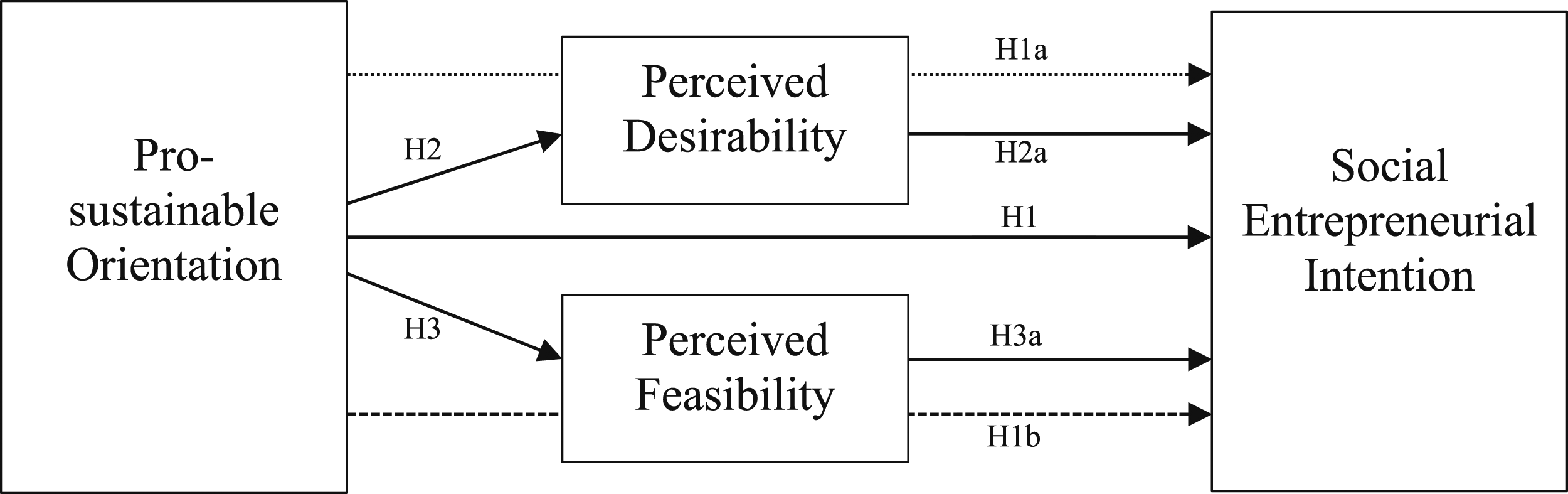
Research model. Note: direct effects (→) and indirect effects (→).
Methods
Sample
The sample for this study was collected through an online questionnaire, whose link was disclosed on social networks (Facebook and Linkedin) and the authors’ email contacts between September and December 2022. This is a convenience sample and not probabilistic. The target audience was students attending Portuguese higher education, and as such, we shared the link to this questionnaire in five Portuguese universities via email. A total of 391 valid responses were obtained. In 2022, in Portugal, the number of students enrolled in higher education reached 433 thousand (Pordata, 2023). Considering a 3% margin of error, we would need 1065 responses. As the number of responses collected in this study is lower, the sample does not represent students enrolled in Portuguese higher education. Participation in the survey was voluntary and anonymous and informed consent was obtained from all participants. A pre-test was carried out involving 15 participants with different socio-demographic characteristics regarding gender, age, and educational level. The pre-test aimed to assess response times and understanding of the questions.
Scales
The questionnaire (available in Appendix A1.) consists of five sections. The questions in this questionnaire were adapted from Gundry and Welsch (2001), Kolvereid (1996), Graevenitz et al. (2010), and Dickel and Eckardt (2021). The first section contains the informed consent of the participants and socio-demographic data. The second section has the social entrepreneurial intention measured by two items; in the third section, the perceived desirability was measured with five items; in the fourth section, the perceived feasibility was measured with six items and, finally, in the fifth section, the pro-sustainable orientation of the participants was measured with three items. The items in the second section referring to the social entrepreneurial intention were measured as follows: item 1 - was measured on a 7-point Likert scale: 1 – strongly disagree to 7 – strongly agree; item 2 - was measured on a 7-point Likert scale: 1 – a social entrepreneurship to 7 – a for-profit entrepreneurship. For analysis, the scale of item two was inverted, and the higher the scale, the greater the social entrepreneurial intention of the participants. The items referring to the remaining sections (three, four and five) were measured on a 7-point Likert scale, ranging from 1 – I totally disagree to 7 – I totally agree. In items PF1, PF4, and PF5 referring to perceived feasibility, it was also necessary to invert the scale as suggested by Dickel and Eckardt (2021).
Data analysis procedures
Data from this study were evaluated in five steps. First, a statistical analysis of the socio-demographic characteristics of the participants, the constructs contained in the research model, and the items that measure them was carried out. The second step was to carry out a factor analysis, having implemented an exploratory factor analysis (EFA) with a varimax-rotated matrix to divide the items into factors and a confirmatory factor analysis (CFA) to obtain the confirmatory factor loads and evaluate the reflective nature of the model. The third step was the application of the Partial Least Squares method to the research model using the Smart PLS software (v. 4.0). This method combines factorial analysis with the estimation of simple linear regressions using the Ordinary Least Squares method, allowing the optimization of relationships between constructs (Hair et al. (2021). This quantitative method has been increasingly used in social and behavioral (Saari et al., 2021). This method does not require data normality, a widespread situation in data collected by questionnaires. We tested our sample for data normality using kurtosis and skewness statistics and the results demonstrate that data do not have a normal distribution. The model obtained after applying the PLS method was evaluated in terms of convergence, reliability, and discriminant validity, as suggested by Hair et al. (2021), which is the fourth step of our analysis. Thus, to evaluate the convergence and reliability, we used Cronbach alpha (Cα ≥ 0.70), composite reliability (CR ≥ 0.70), and Average Variance Extracted (AVE ≥ 0.50). Discriminant validity was tested using two criteria: the Fornell-Larcker criterion and the HTMT criterion. In addition, the predictive and exploratory power of the model was evaluated, using the R2 values and calculating the Stone-Geisser measure (Q2). Finally, the last step was to perform a boostrap analysis to test the direct relationships and the mediating effect contained in the research model.
Results
Statistical description of the sociodemographic characteristics of the participants
The sample contains responses from 391 participants. Most respondents are women (55.2%), and the rest are men (44.8%). No one classified their gender like others. The average age of participating students is 21.57 years old (minimum age 17 years old and maximum age 39 years old). Most are just students (87%), but 13% are student workers. Concerning the degree to which students are enrolled in higher education, 82% are studying for a degree, and 18% are students pursuing a master’s or doctoral degree.
Statistical description of constructs and items
Descriptive statistics of constructs and items.
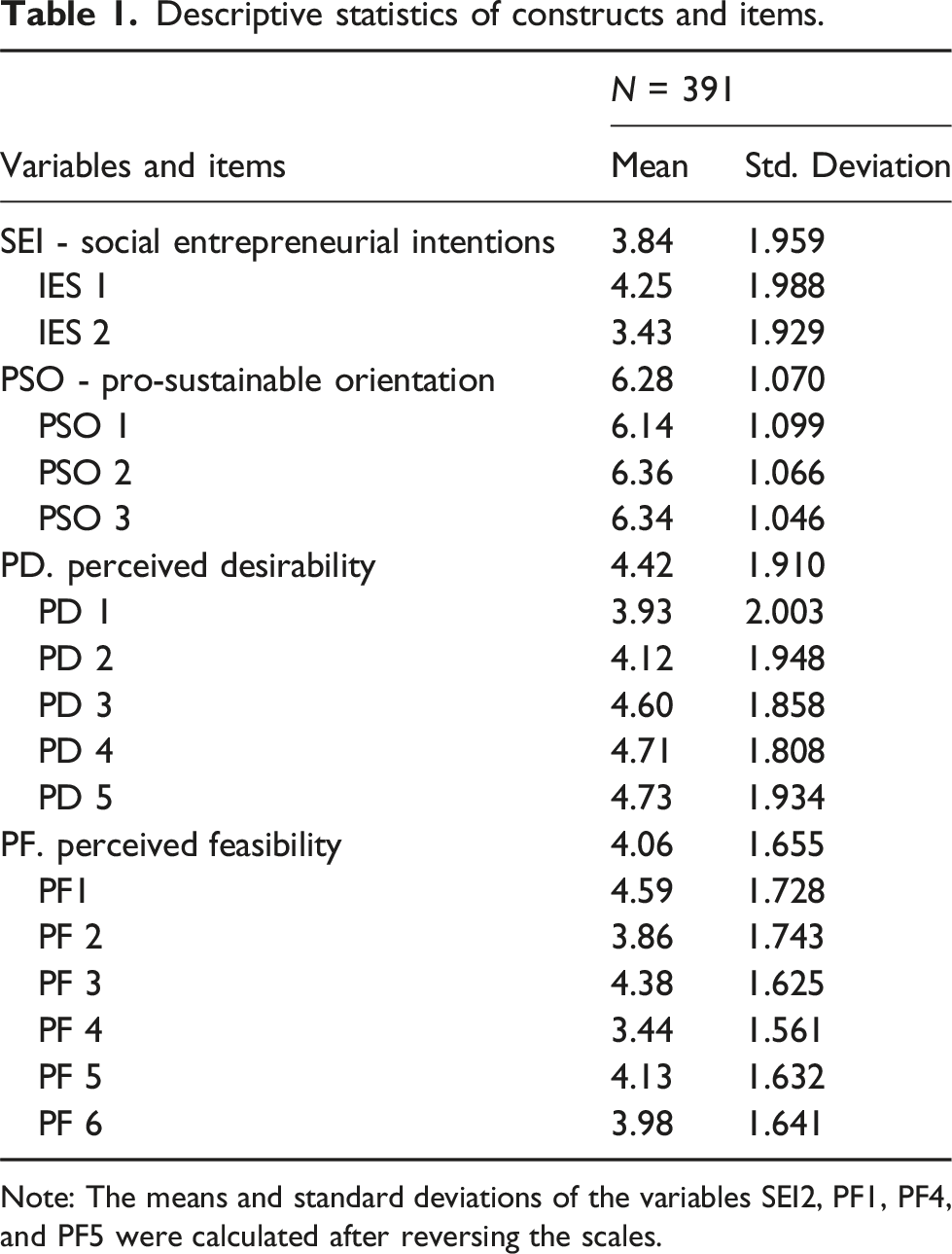
Note: The means and standard deviations of the variables SEI2, PF1, PF4, and PF5 were calculated after reversing the scales.
Factor analysis
Appendix A2 includes the results of the implementation of the EFA and the CFA. Regarding EFA, the 16 initial items were divided by four factors corresponding to each of the constructs in the research model, with no item being eliminated. The cumulative variance of the four factors is 66.08%, and none of the factors individually explain more than 50% of the variance. Furthermore, all items have high communalities (greater than 0.70). The CFA results reveal the reflective model, and all items have high confirmatory factor loads (>0.70).
Assessment of the measurement model
Evaluation of the reflexive model.
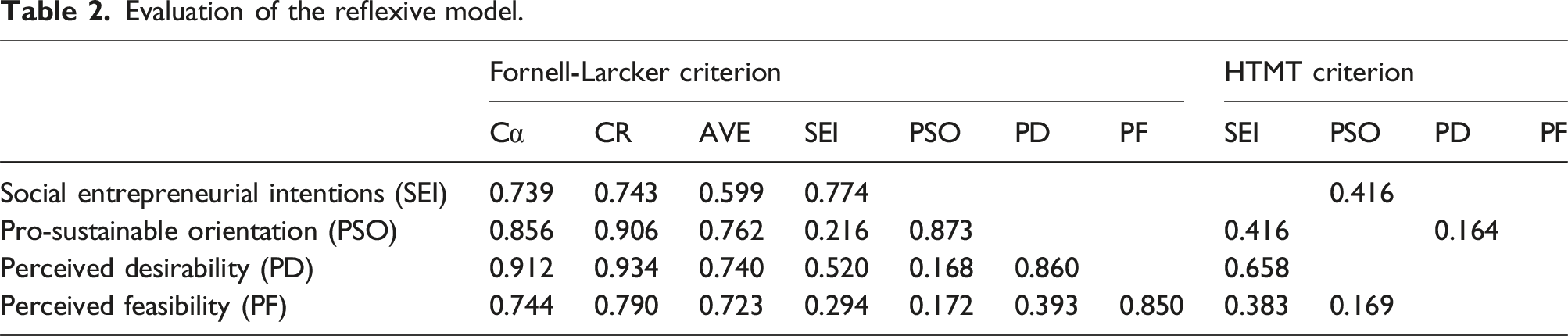
Furthermore, following the indications proposed by Hair et al. (2021), the quality of the model’s fit was also evaluated using the following measures: GFI = 0.967 (reference value >0.90); CFI = 0.958 (reference value >0.90); IFI = 0.964 (reference value >0.90); RMSEA = 0.073 (reference value <0.08). Based on the results of these measurements, we can conclude that the model obtained after applying the PLS method presents a good fit. The predictive and explanatory power of the model was also evaluated. According to Cohen’s criteria (1988), the dependent variables Social Entrepreneurial Intention (R2 = 0.294) have a “substantial effect” and Perceived desirability (R2 = 0.228) and Perceived feasibility (R2 = 0.230) have a “moderate Effect”. Based on the cross-validated redundancy approach, the Stone-Geisser measure (Q2) was also used to assess the predictive relevance of the model. As Q2 of all dependent variables is greater than zero (Social Entrepreneurial Intent – Q2 = 0.127; Perceived desirability – Q2 = 0.102; Perceived feasibility – Q2 = 0.122), the model has predictive relevance.
Research model estimation
Estimation of direct effects.
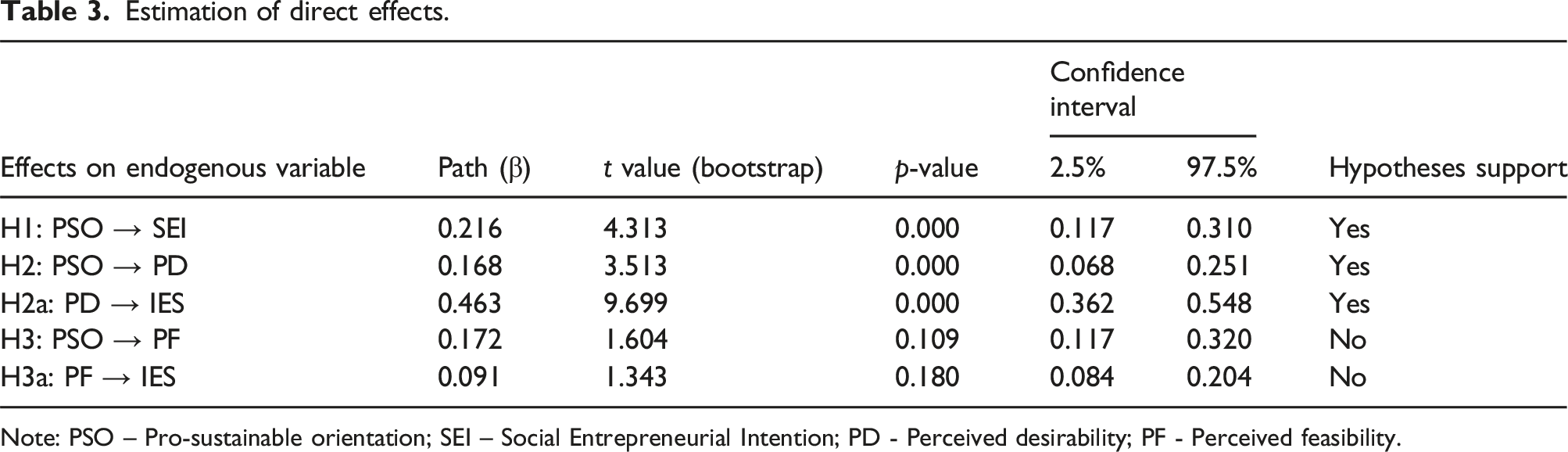
Note: PSO – Pro-sustainable orientation; SEI – Social Entrepreneurial Intention; PD - Perceived desirability; PF - Perceived feasibility.
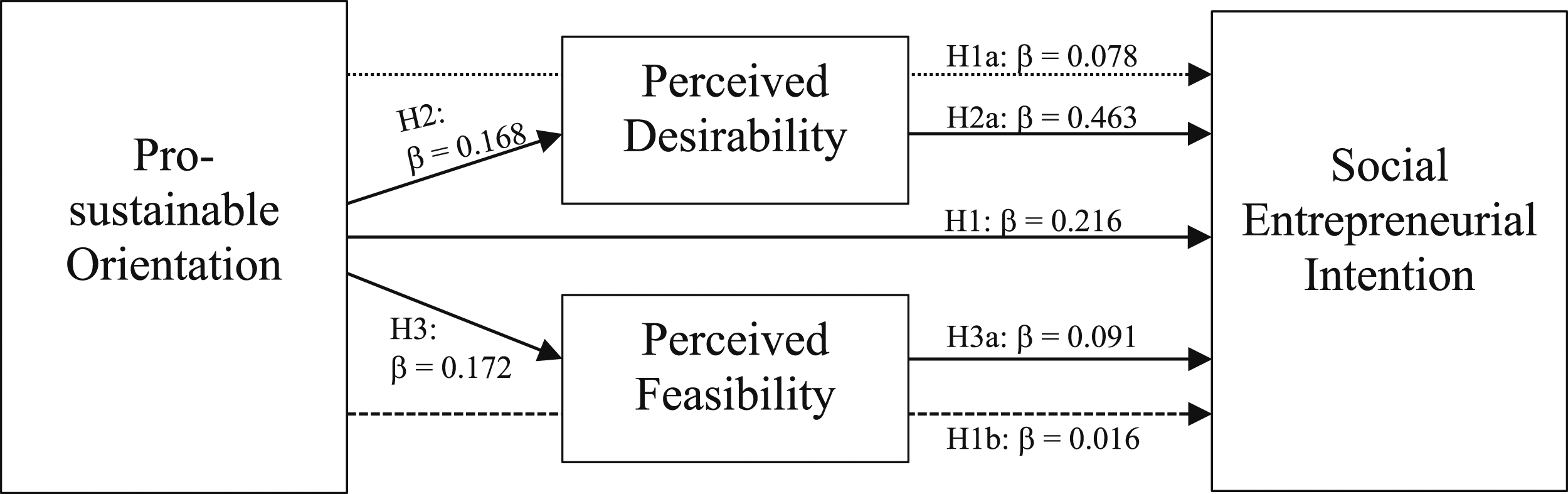
Results of the estimation of direct and mediating effects. Note: direct effects (→) and indirect effects (→).
The results reveal that the pro-sustainable orientation of Portuguese higher education students positively influences, in a significant way, the social entrepreneurial intention (β = 0.216), confirming hypothesis H1. The pro-sustainable orientation of these students also positively influences the perceived desirability of starting an entrepreneurial activity (β = 0.168) but does not influence its perceived feasibility since this relationship is not statistically significant. Thus, hypothesis H2 is confirmed, but hypothesis H3 is rejected. In turn, Portuguese higher education students’ perceived desirability of starting an entrepreneurial activity positively and significantly influences their social entrepreneurial intention (β = 0.463), confirming hypothesis H2a. However, these students’ perceived feasibility of creating an entrepreneurial activity is not statistically significant to affect their social entrepreneurial intention, rejecting hypothesis H3a.
Estimation of mediating effects.
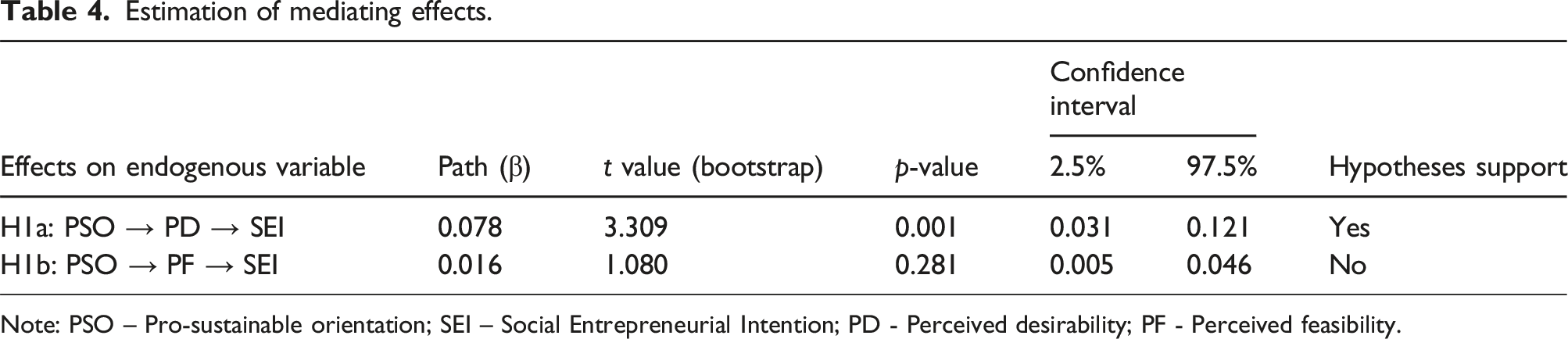
Note: PSO – Pro-sustainable orientation; SEI – Social Entrepreneurial Intention; PD - Perceived desirability; PF - Perceived feasibility.
The results reveal that the pro-sustainable orientation of Portuguese higher education students positively influences, albeit in a residual way, their social entrepreneurial intention (β = 0.078) when mediated by the perceived desirability of these students concerning starting an entrepreneurial activity. Thus, hypothesis H1a is confirmed. However, the relationship between the pro-sustainable orientation of Portuguese higher education students and the social entrepreneurial intention, when mediated by perceived feasibility, is not statistically significant, rejecting hypothesis H1b.
Discussion, implications, and limitations
Discussion
The outcomes of our paper disclose that pro-sustainable orientation generally affects the intention to engage in social entrepreneurship, which highlights how sustainable methods play an important function in shaping entrepreneurial intentions (Bazan 2022; Paiva et al., 2019; Souitaris et al., 2007). We also find it to be in consonance with the objectives set forth by the United Nations Sustainable Development Goals (Fichter and Tiemann 2020; Shabbir 2023), which call for entrepreneurial approaches to address environmental challenges. Altogether, validating Hypothesis H1 offers an understanding of just how believing in sustainability can serve as a motivator encouraging students to pursue entrepreneurship. This highlights the relevance of integrating sustainability-focused curriculum into entrepreneurship programs and lines up with the argument that entrepreneurship driven by sustainability is paramount in the pursuit of sustainable development (Schaltegger and Wagner 2011).
Turning to the desirability factor, our findings provide evidence in support of Hypothesis H2, suggesting that a pro-sustainable orientation enhances the perceived desirability of starting a social enterprise. This underscores the importance of nurturing sustainability perspectives to make social entrepreneurship more attractive to students. We also confirmed Hypothesis H2a, which proposed that students’ perceived desirability of social entrepreneurship would fuel their entrepreneurial intentions. Both of these observations align with the held belief that individuals’ perceptions about the desirability of entrepreneurship play a role in shaping their aspirations to become entrepreneurs. Therefore, if creating social value is seen as desirable, it can greatly influence students towards considering an entrepreneurial venture. This finding is consistent with Liñán and Chen (2009), emphasizing how perceived attractiveness shapes entrepreneurial intentions. Additionally, our finding asserting that the pro-sustainable orientation of higher education students positively impacts their social entrepreneurial intentions when mediated by the perceived desirability of starting an entrepreneurial activity finds resonance in studies emphasizing desirability as a key driver of intentions (Bazan et al., 2020b; Tan et al., 2021). In essence, as students perceive sustainable entrepreneurship as increasingly desirable, this perception stimulates their intention to engage in such activities. Hence our study emphasizes the importance of nurturing in students a mindset that supports sustainability, aiming to cultivate their intentions toward entrepreneurship.
However, the findings in this study also present an unexpected challenge to the held belief that perceived feasibility has a significant impact on entrepreneurial intentions. Surprisingly, results rejected Hypotheses H3 and H3a and thus depart from the frameworks that emphasize the importance of perceived feasibility (Graevenitz et al., 2010; Krueger et al., 2000). Consequently, our research suggests that traditional feasibility models may not fully encompass the factors that drive social entrepreneurial intentions. It leads us to consider that in the realm of entrepreneurship elements such as self-efficacy, alignment with personal values or social support may take precedence (Mair and Noboa 2006). In a similar fashion, we found no support for the hypothesis that pro-sustainable orientation affects intentions when mediated by perceived feasibility (H1b), in dissonance with Tan et al. (2021). Altogether, our findings point to the distinctive nature of social entrepreneurship and suggest that the desire to create social value may carry more weight than practical feasibility considerations, leading to a need for deeper exploration into what drives entrepreneurial intentions.
Theoretical and practical implications
This study reinforces the role that individuals’ perception of desirability plays in influencing their intentions to become entrepreneurs and, as such, it aligns with the seminal argument put forward by Shapero and Sokol (1982) in their Entrepreneurial Event model. Our research provides evidence of this relationship within the context of social entrepreneurship, bridging the gap between general entrepreneurship theories and social entrepreneurship paradigms. Interestingly, the study also reveals that perceived feasibility does not significantly affect social entrepreneurial intention. We recognize that these challenges the core assumptions of the Theory of Planned Behavior and the Entrepreneurial Event model, both of which declare perceived feasibility as a significant factor of entrepreneurial intention. As formerly pointed out, this disparity may imply that the feasibility assessment might be superseded by the individual’s desire to create social value, which, if substantiated by additional research, would invite expansions in the conventional theoretical models. Additionally, our evidence reveals that the perception of desirability mediates the connection between a pro-sustainable orientation and the intent to engage in social entrepreneurship – a finding with intriguing theoretical implications. It suggests that the influence of sustainability mindsets on entrepreneurial intention is conditional upon just how desirable students regard social entrepreneurship to be. This finding lines up with Krueger et al. (2000) proposed extension to the Theory of Planned Behavior which argues for mediating effects entailing perceived desirability as well as perceived feasibility. This further sustains the applicability of this extension in the social entrepreneurship setting and provides opportunities for exploring additional mediators or moderators.
Relating to the practical implications we envision, the observed link between pro-sustainable orientation and social entrepreneurial intention suggests that motivating sustainability-minded thinking can be an effective way of promoting social entrepreneurial activity. Educational institutions can take advantage of this outcome by incorporating sustainability principles right into their curricula, organizing workshops and programs focused on sustainability, and starting projects centered around sustainability, in addition to collaborating with network partners, in the spirit of Lepik and Urmanavičienė (2022). The substantial function of perceived desirability in influencing intentions for social entrepreneurship suggests that boosting the attractiveness of entrepreneurship can be an efficient method to increase such intentions, an approach that revitalizes ideas regarding the influence of favorable portrayals of entrepreneurship. Conversely, the lack of a significant relationship between perceived feasibility and social entrepreneurial intention is, as mentioned, intriguing. It indicates that traditional methods of promoting entrepreneurship, such as providing business skill training or facilitating access to resources (which aim to increase perceived feasibility), may not be as effective in the context of social entrepreneurship. Rather it might be more valuable to invest resources in initiatives that augment perceived desirability, or in exploring methods that address the unique motivational drivers of social entrepreneurs. This understanding could assist organizations supporting entrepreneurship and policymakers in making decisions about where to allocate their resources and how to design their programs. On the other hand, the finding that perceived desirability mediates the relationship between pro-sustainable orientation and social entrepreneurial intention highlights that efforts promoting sustainability and social entrepreneurship should not be isolated. Taking a cohesive approach that connects sustainability with the desirability of social entrepreneurship could yield better results. Altogether, the theoretical and practical implications of the present study converge in stressing the importance of adopting a systems-focused perspective in entrepreneurship education and policymaking.
Limitations and future research
This research study offers insights into the interconnection between a sustainability mindset and intentions to engage in social entrepreneurship, and it suggests areas for research as well as methodological variations and innovations. Our study concentrates on Portuguese higher education students and delivers useful context-specific insights, yet there is an obvious potential for studies to broaden the geographical scope and explore comparable dynamics in different sociocultural contexts. This would certainly add to the improvement of our understanding of social entrepreneurship on a global scale. Furthermore, future research may take into consideration other data collection techniques beyond self-reported data, such as interviews or observations, to verify and improve the findings. Moreover, it may be worth considering additional factors alongside pro-sustainability orientation when studying social entrepreneurial intentions, including but not limited to the examination of personality traits, and the impact of entrepreneurial role models, along with evaluating external conditions and support. The incorporation of these variables might contribute to establishing a more comprehensive model of social entrepreneurial intention.
Concluding remarks
The present study contributes to the understanding of the direct and indirect ways in which sustainable orientation influences the social entrepreneurial intentions of higher education students. Our results indicate that students with a higher affinity for sustainable practices display a higher propensity for social entrepreneurship. Being in accordance with established research (Bazan 2022; Paiva et al., 2019; Shepherd and Patzelt 2011; Souitaris et al., 2007), this finding strengthens the overall recognition of sustainability as a driver of social entrepreneurship.
When we shift the lens to the examination of perceived desirability, our results suggest that a pro-sustainability orientation has a positive impact on students’ perceptions of the desirability of launching an entrepreneurial venture. This effect is observed both directly and indirectly via desirability’s mediation effect on social entrepreneurial intentions, exposing desirability as a decisive bond between sustainability orientation and social entrepreneurial intentions. Hence, we argue that the perceived attractiveness of social entrepreneurship can serve as a potent incentive for aspiring entrepreneurs.
On an opposite stand, and contrary to expectations, we found no evidence of perceived feasibility influencing social entrepreneurial intentions. In fact, as the hypotheses which posited that perceived feasibility would act as a significant predictor of social entrepreneurial intentions were not supported by our data, we have become aware that this outcome may challenge conventional entrepreneurship models and it calls for deeper explorations into the unique dynamics of social entrepreneurship.
In conclusion, this research study adds to our knowledge of the interrelationship between sustainability orientation, perceived desirability and feasibility, and social entrepreneurial intentions among higher education students. Its outcomes underscore the importance of pro-sustainability orientation and perceived desirability as significant factors of social entrepreneurial intentions while inviting a re-examination of the role of perceived feasibility in the field of social entrepreneurship. Consequently, we believe this paper contributes to the discussion on social entrepreneurship, delivering insights for educators, policymakers, and future social entrepreneurs alike.
Supplemental Material
Supplemental Material - The green seed: The influence of pro-sustainable orientation on social entrepreneurship in higher education students
Supplemental Material for The green seed: The influence of pro-sustainable orientation on social entrepreneurship in higher education students by Sofia Gomes, João M Lopes and Tiago Trancoso in Industry and Higher Education.
Footnotes
Acknowledgments
NECE-UBI, Research Centre for Business Sciences, Research Centre and this work are funded by FCT – Fundação para a Ciência e a Tecnologia, IP, project UIDB/04630/2020.
Funding
The author(s) disclosed receipt of the following financial support for the research, authorship, and/or publication of this article: this work was supported by the NECE-UBI, Research Centre for Business Sciences, Research Centre and this work are funded by FCT – Fundação para a Ciência e a Tecnologia, IP, project UIDB/04630/2020.
IRB statement
Ethical review and approval were waived for this study due to Portuguese law and guidelines from the Foundation for Science and Technology.

Supplemental Material
Supplemental material for this article is available online.
Appendix A1
Questionnaire available at: https://drive.google.com/file/d/1FOPoYJnFImpkRcqztE7jajpoa9pzH-ny/view?usp=drive_link.
Appendix A2
Variables and items
Confirmatory factor loads
Factor 1
Factor 2
Factor 3
Factor 4
Communality
SEI - social entrepreneurial intentions
IES1
0.994
0.786
0.703
IES2
0.897
0.775
0.786
PSO - pro-sustainable orientation
PSO1
0.928
0.756
PSO2
0.824
0.757
PSO3
0.864
0.803
PD. Perceived desirability
PD1
0.868
0.811
0.704
PD 2
0.881
0.818
0.762
PD 3
0.876
0.841
0.748
PD 4
0.846
0.794
0.798
PD 5
0.828
0.804
0.767
PF. Perceived feasibility
PF1
0.878
0.748
0.716
PF 2
0.792
0.715
0.776
PF 3
0.723
0.701
0.787
PF 4
0.724
0.788
0.734
PF 5
0.758
0.733
0.756
PF 6
0.712
0.868
0.728
References
Supplementary Material
Please find the following supplemental material available below.
For Open Access articles published under a Creative Commons License, all supplemental material carries the same license as the article it is associated with.
For non-Open Access articles published, all supplemental material carries a non-exclusive license, and permission requests for re-use of supplemental material or any part of supplemental material shall be sent directly to the copyright owner as specified in the copyright notice associated with the article.
