




Abstract
This article explores Nordic countries’ and companies’ sustainability practices. It explores how nations like Denmark, Finland, and Sweden and companies such as Novo Nordisk and Ørsted achieve top sustainability rankings through their distinctive approach to stakeholder cooperation. It discusses the historical and cultural context that has shaped the Nordic approach, emphasizing the importance of long-term vision, stakeholder engagement, and cooperative strategies. It provides insights into how these practices contribute to achieving sustainable development goals and offers valuable lessons for global businesses seeking to integrate sustainable practices into their operations.
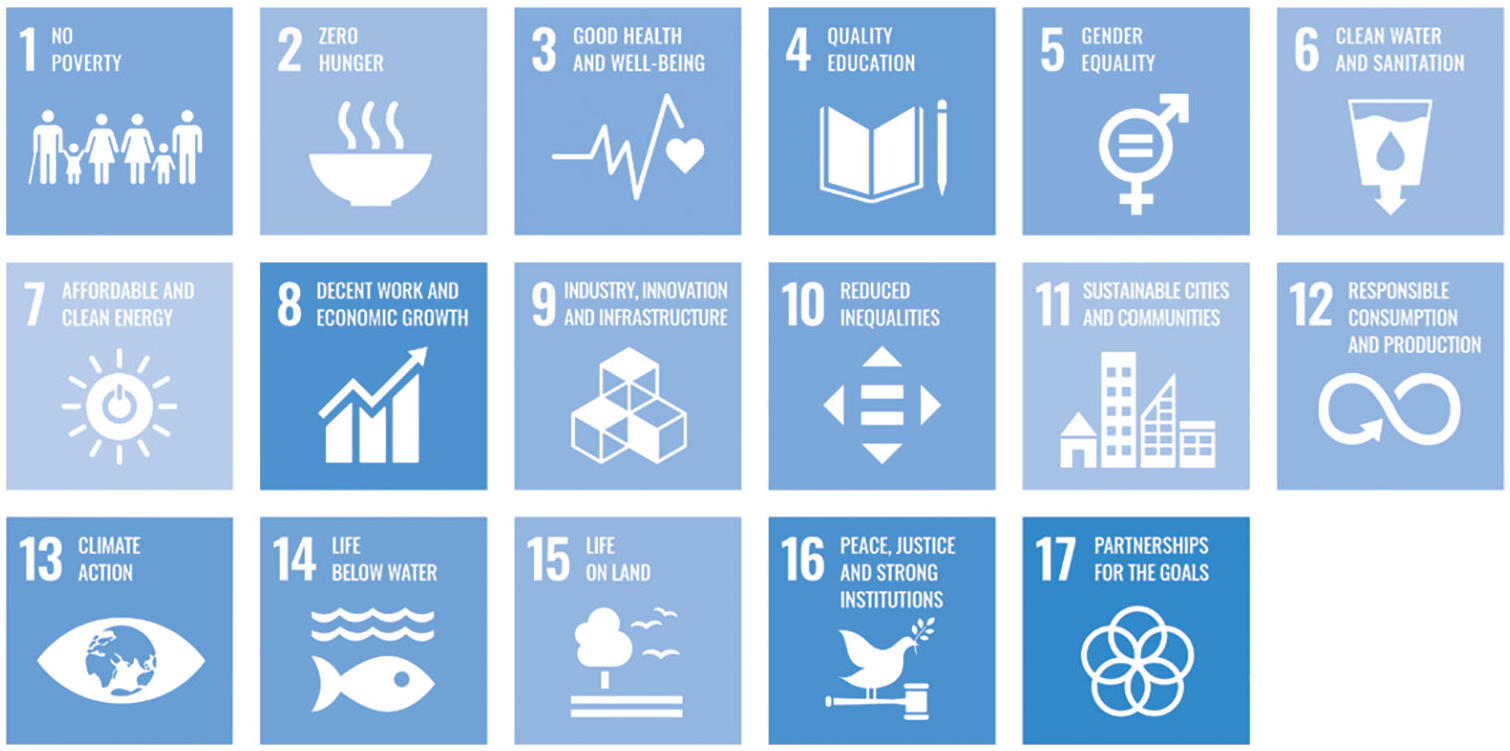
Sustainable development goals.
The corporate world was instrumental in shaping the SDGs between 2012 and 2015, underscoring the importance of public-private partnerships in realizing these expansive goals. Nordic companies have been frontrunners in assessments of corporate sustainability. They routinely secure top spots in the Global 100 Most Sustainable Corporations in the World annual rankings, launched in 2005 at the World Economic Forum. Between 2005 and 2024, Nordic companies claimed the top three rankings 32% of the time, contrasting with U.S. corporations’ 18%. 2 Nordic companies have thus been 20 times more likely to be selected to the top three Global 100 ranking than U.S. companies, as the United States is over ten times larger than the Nordics (United States: GDP $20.5 trillion, population 335 million; Nordics: GDP $1.5 trillion, population 28 million). In its 2024 edition, the Global 100 selected 15 Nordic and 16 U.S.-based companies; thus, Nordic companies were over ten times more likely to be selected to the complete list of the Global 100. In a previous study utilizing the Dow Jones Sustainability Index (DJSI), another firm-level sustainability assessment, Nordic firms were three times more likely to be selected for the DJSI than U.S.-based firms. 3
Denmark has been home to the top-performing Global 100 company five times in the ranking’s 20-year history, surpassing any other nation. Chr. Hansen, Novo Nordisk, Ørsted, and Vestas (two times) have donned the moniker “world’s most sustainable company.” With a GDP and population comparable to that of an average-sized U.S. state, like Wisconsin or Minnesota, Denmark is a small nation with a giant global sustainability presence. The same can be said about the overall Nordic cluster: The Nordics are a small region with an outsized sustainability presence in the world, worthy of benchmarking attention.
Sustainability Benchmarks: Nordic Case Companies
The comparatively strong sustainability performances of Nordic-based firms are rooted in strong stakeholder engagement and effective cooperation. Novo Nordisk, Ørsted, Chr. Hansen, Neste, and IKEA serve as useful case studies to benchmark.
Novo Nordisk
Novo Nordisk is a global leader in diabetes care and the world’s largest insulin producer. Founded in Denmark in 1923, it is widely recognized for demonstrating effective stakeholder engagement and is routinely mentioned among global sustainability leaders, including having been named the world’s most sustainable company by Corporate Knights in 2012. As 2024 commenced, Novo Nordisk was Europe’s most valuable public company by market capitalization.
In the late 1970s, Novo Nordisk faced significant challenges regarding its environmental impact, mainly centered around the use of a controversial enzyme. Rather than retreating to a defensive posture, the firm chose an innovative path forward: proactively and transparently engaging with the stakeholders who were their greatest critics. Recognizing the importance of open dialogue, Novo Nordisk identified its most vocal critics, including Greenpeace, the Danish Ecological Council, and concerned community members. Formal invitations were extended, inviting these stakeholders to participate in dialogue forums.
Throughout the early 1980s, these forums became catalysts for change. Strategically, Novo Nordisk refrained from acting as an imposing corporate entity, choosing instead to listen, understand, and adopt a cooperative posture. Independent professionals frequently facilitated sessions, ensuring a balance in power dynamics and fostering an environment of mutual understanding and respect. Novo Nordisk’s efforts were considered more than mere corporate diplomacy; they were genuine effort to connect with stakeholders. The period was not without friction, as they faced continued scrutiny from nongovernmental organizations (NGOs) such as Greenpeace, who continued to express concerns about the potential environmental impact of their operations. In addition, local community groups in areas where they operated, such as the Danish Society for Nature Conservation, were initially wary, questioning the genuineness of Novo Nordisk’s stakeholder engagement efforts. Balancing the diverse concerns of these specific stakeholders with their business objectives was a complex endeavor, illustrating the intricate dynamics of corporate-stakeholder relations.
Within this climate of increasing stakeholder engagement and continued stakeholder scrutiny, John Elkington, a renowned thought leader in sustainability, co-authored The Green Consumer Guide in 1988, which was critical of Novo Nordisk. 4 Mads Øvlisen, Novo Nordisk CEO since 1981, encouraged a cooperative approach to engage critics as potential partners to improve. So, Novo Nordisk invited Elkington to Novo Nordisk HQ to listen to the critiques and engage. A wholly different strategy had emerged in the United States, where a combative posture could be observed toward critics who threatened the profit objective, including such extreme measures as character assassinations and full-fledged science denial campaigns. 5 However, Novo Nordisk collaborated with Elkington, and in partnership with teams of stakeholders within and outside the company’s walls, they laid the groundwork for what would become globally recognized as the “Triple Bottom Line” (TBL) approach.
The TBL approach suggests that companies should balance profit-making with their social and environmental impacts, aligning with the stakeholder-centric view of the firm. The TBL philosophy further influenced how Novo Nordisk takes stock of its effects on stakeholders and how it could better cooperate with stakeholders in its operations. Mads Øvlisen’s leadership role in these efforts solidified his reputation as the “Father of Corporate Social Responsibility” in Denmark, 6 successfully navigating a corporate crisis that required both strategic foresight and committed stakeholder engagement rooted in mutual respect. 7 Novo Nordisk was embroiled in a crisis of stakeholder expectations in the early 2000s. It was a member of an industry association group, the Pharmaceutical Research and Manufacturers of America (PhRMA). This association and several major pharmaceutical companies took legal action against the South African government over its Medicines and Related Substances Control Amendment Act, which aimed to improve access to affordable medicines, specifically around antiretroviral drugs (ARVs) used to treat HIV/AIDS. While Novo Nordisk did not produce the disputed ARVs, it was nevertheless caught in a public relations crisis by being a member of the PhRMA industry coalition.
Protesters staged extended protests outside the company’s headquarters in Bagsværd, Denmark. Recognizing the severity of the crisis and the need for direct dialogue, CEO Lars Rebien Sørensen, who assumed the CEO after Øvlisen stepped down in 2000, went outside to meet with the protestors at Novo Nordisk’s HQ, listening to their grievances. The PhRMA industry coalition dropped its lawsuit in 2001. Still, as a direct result of Novo Nordisk’s listening to critical stakeholders and their concerns regarding access, Novo Nordisk subsequently established the World Diabetes Foundation (WDF) in 2002 as an independent trust dedicated to preventing and treating diabetes in developing countries. Novo Nordisk’s creation of the WDF shows how it used a crisis to realign and demonstrate its commitment to a broader array of stakeholders.
Novo Nordisk’s adherence to the TBL approach became the basis for its integrated annual reporting, making it a global pioneer in this area. This method, introduced in the early 2000s, aligns financial metrics with social and environmental outcomes. While other sustainability leaders produced separate sustainability reports from their financial reports, Novo Nordisk chose a more holistic approach, combining financials with sustainability results. Their approach inspired the title of the 2010 book “One Report: Integrated Reporting for a Sustainable Strategy” by Robert Eccles and Michael Krzus, featuring Novo Nordisk as a global leader in integrated annual reports. 8 Their integrated reporting provides a holistic perspective of value creation for shareholders and other stakeholders, enhancing transparency and encouraging dialogue. The integrated annual report builds on Novo Nordisk’s legacy of cooperation, enhancing trust, and co-creating sustainable solutions with stakeholders.
In the early 2010s, recognizing the energy-intensive nature of insulin production and broader climate challenges, Novo Nordisk collaborated with Ørsted in the World Wildlife Fund’s Climate Savers program. This alliance involved Novo Nordisk’s long-term commitment to procuring power from new offshore wind projects by Ørsted, enabling Ørsted to approve these projects, thus ensuring the “additionality” of renewable energy to the grid. Novo Nordisk aligned with the broader sustainability agenda, highlighting its commitment to environmental stewardship. Their cross-sector cooperation serves as a benchmark for effective corporate climate action.
Novo Nordisk, once seen as a small pharma company, was growing in global stature. In 2015 and 2016, Harvard Business Review (HBR) named Novo Nordisk CEO Lars Rebien Sørensen the world’s best-performing CEO. Sørensen used the attention to emphasize the cooperative approach that has made Novo Nordisk successful. In his interview with HBR, he critiqued the CEO award itself—“I don’t like this notion of the ‘best-performing CEO in the world.’ That’s an American perspective; you lionize individuals,”—and added that he is part of “a team that is collectively creating one of the world’s best-performing companies.” Sørensen utilized the spotlight on him to address the issue of CEO pay. HBR raised the point Nordic CEOs earn far less than US CEOs. (US CEOs are paid, on average, about 300-500 times that of an average employee in their company, whereas Nordic CEOs are paid about 30-50 times an average employee.) Sørensen replied by emphasizing the importance of building a collaborative culture. “My pay is a reflection of our company’s desire to have internal cohesion. When we make decisions, the employees should be part of the journey and should know they’re not just filling my pockets.” 9 In recent years, since Lars Fruergaard Jørgensen assumed the role of CEO in 2017, Novo Nordisk has continued to expand its mission, becoming a service provider for addressing chronic diseases through comprehensive strategies, emphasizing collaboration. “Cities Changing Diabetes” is a global public/private partnership program launched as a pilot in 2014. It is evidence of Novo Nordisk’s increased focus on diabetes education. With engagement in over 45 cities worldwide, this program emphasizes urban diabetes prevention and care, creating partnerships with multiple stakeholders, from policymakers to community organizations, to address the unique challenges urban environments pose in diabetes care. In parallel, Novo Nordisk’s collaboration with UNICEF on preventing childhood overweight and obesity showcases a unified vision to tackle the burgeoning global health crises. This partnership draws upon both organizations’ strengths to deliver education, awareness, and early interventions.
Insofar as Cities Changing Diabetes is successful, insulin demand is reduced, seemingly in conflict with shareholder interests. Although the Cities Changing Diabetes may reduce immediate insulin demand, it aligns with Novo Nordisk’s broader stakeholder strategy, prioritizing long-term value creation over short-term profit maximization, and the confidence that such successes would result in new opportunities realized along the way.
This purpose-centric ethos has another significant business implication: talent attraction and retention. In an era where professionals increasingly seek purpose in their work, Novo Nordisk’s unwavering commitment to holistic health and stakeholder collaboration offers a compelling proposition. By intertwining purpose with business strategy, the company addresses global health challenges and cultivates a motivated workforce, thus gaining an advantage in attracting and retaining talent.
However, Novo Nordisk faces stakeholder scrutiny, particularly regarding product access and pricing. The 2021 launch of Wegovy, its weight loss drug, and the explosive demand for it and Ozempic have brought Novo Nordisk back into the spotlight, with stakeholders expressing concerns regarding pricing and access, particularly in the United States. The U.S. pharmaceutical pricing landscape is complex, with pharmacy benefit managers, insurers, and other intermediaries determining the final consumer cost.
Nevertheless, Novo Nordisk’s commitment to cooperatively engaging with its stakeholders over the long run has helped cement its reputation as a global sustainability leader. Its work directly supports several SDGs. Its efforts in battling diabetes to champion holistic patient care align with SDG 3’s objective of ensuring good health and well-being for all. Their emphasis on lifestyle and nutrition extends their influence on SDG 2, advocating for ending hunger and improving nutrition. Their adoption of the integrated annual report, drawing from the TBL principle, mirrors the ethos of SDG 12, underscoring the imperative for sustainable consumption and production. Novo Nordisk’s collaboration with Ørsted to drive offshore wind power procurement directly connects with SDG 13’s call for urgent climate action. In 2023, Novo Nordisk CEO Lars Fruergaard Jørgensen was named the Financial Times Person of the Year. Upon acceptance, Jørgensen emphasized a stakeholder approach, stating “I feel a great sense of responsibility for actually succeeding together with society because I think that as an industry and as a company, we have part of the key to solving some of the huge societal problems, aging populations, chronic diseases.” 10 Novo Nordisk’s sustainability leadership supports Denmark’s strong annual SDG Index performance.
Ørsted
Denmark’s Ørsted is a global renewable energy leader and the world’s largest producer of offshore wind. Ørsted demonstrates a stakeholder approach and is routinely mentioned among global sustainability leaders, including having been named the world’s most sustainable company by Corporate Knights in 2020. Ørsted transformed itself from a fossil fuel energy company to an almost entirely renewable energy company in just over a decade, demonstrating how a massive sustainability transition can be made, even in a heavily capital-intensive industry. Subsequently, Ørsted was the only energy company recognized within Harvard Business Review’s top business transformations of the previous decade (2010-2019).
Ørsted was formed in 2006 from the merger of six Danish energy companies. It was initially named Danish Oil & Natural Gas (DONG) and focused on electricity generation from fossil fuels. It was principally a domestic energy company and majority-owned by the Danish state. In 2016, DONG was taken public in the second-largest initial public offering of the year, and the following year, it changed its name to Ørsted to reflect its green energy transition. Ørsted is named for the Danish scientist Hans Christian Ørsted, who discovered electromagnetism in 1820. The interaction between electricity and magnetism has played a vital role in the technological advances of the nineteenth and twentieth centuries, including generating electricity through wind turbines.
Originally rooted in the fossil fuel sector, by the late 2000s, the company began to sense the strategic and environmental imperatives of renewable energy. By the 2010s, Ørsted was adjusting its business model and executing a radical shift in its identity, culminating in its emergence as the world’s leading offshore wind energy producer by the mid-2010s.
A foundational pillar of Ørsted’s strategic reinvention in the early 2010s was its deep commitment to stakeholder engagement and cooperation. One can observe this in the planning and execution of its Hornsea Project in the late 2010s, the world’s largest offshore wind farm at the time, located off the Yorkshire coast in northeast England. The Hornsea Project exemplifies the complexity of stakeholder interactions when driving efforts to expand renewable energy offerings. At the heart of the challenge lay the concerns of local communities, encompassing residents, fishing professionals, and local businesses. Ørsted actively encouraged dialogue, ensuring that community voices were integrated into the project’s development, engaging closely with groups like the “Fisheries Liaison with Offshore Wind and Wet Renewables” (FLOWW), which seeks to minimize disruption to the fishing industry.
In steering the complex Hornsea Project to completion, Ørsted delved deep into its multifaceted global supply chain, cultivating dialogues with stakeholders from European turbine manufacturers to Asian component suppliers. On the regulatory front, Ørsted worked with stakeholders such as the UK’s Marine Management Organisation and specific environmental watchdogs like the Royal Society for the Protection of Birds (RSPB), ensuring ecompliance with ecological and regulatory standards. Local stakeholders regularly consulted with coastal community representatives, fishermen associations like the National Federation of Fishermen’s Organisations, and regional environmental consortiums, which cemented the project’s community integration. Culminating in 2020, the Hornsea Project went live as the world’s largest offshore wind farm, boasting a total capacity of 1.2 GW (gigawatts), enough to power over 1 million homes.
Ørsted’s engagement with the Danish state during the 2000s and 2010s was instrumental in Ørsted’s journey. Progressive energy policies from the Danish government, with an emphasis on renewables and a gradual shift away from fossil fuels, set the stage. Direct engagements between Ørsted and governmental agencies created a supportive backdrop that made Ørsted’s transition conceivable and nationally endorsed.
Ørsted’s transition was not without challenge. In 2014, the Danish government faced strong public opposition over its decision to sell a 19% stake in the state-owned DONG to Goldman Sachs. Critics feared a loss of national control over crucial infrastructure, and the deal ignited widespread protests and questions regarding whether Goldman Sachs had pulled a fast one over on naïve government bureaucrats who were out of their league engaging with the likes of Goldman Sachs considering such a significant deal. Although the government did not fall immediately due to this controversy, the issue became a significant factor in the 2015 general elections, resulting in political turmoil for the ruling Social Democrat party. As a result, a new center-right government came to power, marking a change in Denmark’s political landscape.
Ørsted, represents a radical transition from a fossil fuel past to a renewable energy future and serves as an exemplary model of sustainability leadership for others. To share its lessons, Ørsted published a white paper in 2021 to reflect upon its journey titled “Our Green Business Transition: What We Did and Lessons Learned.”
Ørsted’s first lesson was to face its reality in a changing landscape and overcome the short-term comfort of denial. For Ørsted, that meant understanding the long-term challenges of a business model built upon fossil fuel, given the realities of climate change, and working to understand the opportunities for renewable energy. Ørsted emphasized the importance of looking to “the fringes of your stakeholder landscape” to help identify stakeholders who can better help a company identify the useful signal through the noise with which to better understand the risks and opportunities for future business. Its second lesson was to define an aspirational and purpose-driven vision that would clarify how the company was going to directly contribute to a sustainable world. For Ørsted, the revised vision became “to create a world that runs entirely on green energy.” Third, Ørsted emphasizes the vital lesson of engaging with key stakeholders—policymakers, investors, employees, customers, and suppliers—and working together to align aspirations. Ørsted emphasized the importance of a “supportive policy environment” achieved through ongoing engagement between Ørsted and policymakers who shared a commitment to transition from fossil fuel toward renewables.
Ørsted, however, continues to face challenges with policymakers to enable the green transitions, particularly in the United States, where it is currently grappling with significant challenges in its U.S. projects. Despite its commitment to sustainability and robust stakeholder engagement, the Danish company faces potential write-offs of up to $6 billion due to supply chain problems and other setbacks in three major offshore wind installations off the U.S. East Coast. These complications reflect more significant industry issues, from manufacturing and logistics delays caused by the pandemic to changing economic conditions. Ørsted’s ventures are further hampered by rising interest rates, which elevate costs in the United States, and potential reductions in anticipated tax credits. Ørsted remains resolute in its dedication to the green energy transition, and it emphasizes the need for better support for improved tax policies that favor renewable energy, faster permitting processes, and an end to subsidies that favor fossil fuels.
Ørsted remains committed to stakeholder engagement and has taken the lead in 2023 to convene industry peers, NGOs, academics, and other key stakeholders to lay the groundwork for establishing the industry-wide “People Positive” framework for the green energy transition. People Positive represents the ambition to define and measure all social impacts of renewable energy projects to ensure the projects have a positive social impact in addition to the (oftentimes more obvious) positive environmental impacts. Emphasizing the stakeholder approach and need for cross-industry collaboration, Ørsted CEO Mads Nipper stated a people-positive approach must become the standard for the industry, whereby local job creation and upskilling, and ensuring people from marginalized groups have equitable access to the opportunities and shared benefits of clean energy, becomes the standard of doing business. “Our industry needs dialogue with community groups and nongovernmental organizations (NGOs) to define common standards for a people-positive energy transition. We also invite our industry peers to work together to find the best ways to integrate people-positive measures into the buildout.” 11 Ørsted’s green energy transition directly supports several SDGs. This transition shows their commitment to SDG #7 (Affordable and Clean Energy) by ensuring universal access to sustainable energy. Still, it also robustly aligns with SDG #13 (Climate Action), reflecting their proactive stance against climate change. Moreover, Ørsted’s cooperative spirit, especially evident in their outreach to supply chains, investors, and policymakers, fortifies the aims of SDG #9 (Industry, Innovation, and Infrastructure) and SDG #17 (Partnerships to Achieve the Goal). Furthermore, its leadership to drive the People Positive framework across the entire renewable industry directly supports SDG #8 to promote sustained, inclusive, and sustainable economic growth, full and productive employment, and decent work for all. In sum, Ørsted’s commitment to stakeholder engagement and cooperation has helped fortify Denmark’s leading position in the SDG Index.
Chr. Hansen
Chr. Hansen Corporation is a global leader in sustainability-driven solutions in the food and pharmaceutical sectors. It was established in 1874 by Christian D. A. Hansen in Denmark (focused initially on the production of rennet for cheesemaking), and it has since evolved into a global bioscience company with activities in various areas, including natural solutions for food, nutritional, pharmaceutical, and agricultural industries. In 2019, Chr. Hansen was named the world’s most sustainable company in the Global 100.
Since the early 2010s, Denmark-based Chr. Hansen has emerged as a sustainability leader. A significant reason for its success lies in its extensive stakeholder engagement practices. The company’s commitment to comprehensive dialogue is exemplified by its annual Stakeholder Roundtables (initiated in 2015). These roundtables bring together diverse perspectives, convening experts ranging from environmental NGOs, local community leaders, and global retail partners to critics like sustainable agriculture activists. For instance, in the 2017 roundtable, representatives from Greenpeace were invited, providing a critical voice on Chr. Hansen’s agricultural impact. By ensuring a diverse range of participants, including those with opposing views, Chr. Hansen ensures that its sustainability strategies are holistic and robust.
Cooperation lies at the heart of Chr. Hansen’s sustainability approach. Over the years, the company has formed a myriad of partnerships with diverse entities. One noteworthy collaboration in 2019 was with the Global Alliance for Improved Nutrition (GAIN), aiming to tackle malnutrition through bio-fortified food solutions. Furthermore, alliances with research institutions, such as its 2018 partnership with the University of Copenhagen, have bolstered Chr. Hansen’s capacities in probiotics research and underscore its commitment to science-backed sustainability. Engagements with industry leaders, NGOs, and academic bodies have expanded the company’s influence and enriched its knowledge pool, fostering an environment where holistic, effective solutions are co-developed.
Such stakeholder engagement and collaboration strategies have reinforced Chr. Hansen’s stature as a sustainability leader. The convergence of stakeholder insights with actionable partnerships has led to tangible results: By 2020, the company reported a 25% reduction in CO2 emissions compared to a 2015 baseline, attributing much of this success to collaborative endeavors and stakeholder-driven focus areas. Chr. Hansen’s journey provides a compelling example for businesses aiming to meld ecological responsibility with stakeholder inclusivity.
However, Chr. Hansen has recently faced significant backlash from many of its Denmark-based employees after the company bowed to pressure from U.S. customers. In June 2023, Chr. Hansen stripped rainbow colors off its logo for PRIDE month and removed any visible signs of LGBTQ support from its website and social media. In justifying the decision, Chr. Hansen CEO Mauricio Graber stated, “The U.S. is experiencing a wave of boycotts and threats of violence across sectors against companies with visible Pride Month support . . . We must look after our customers and market shares worldwide.” Several hundred employees signed a letter of protest, stating, “We feel that you put profit and support for shareholders and customers above the working environment of your own employees.” 12 CEO for the Danish pension fund Akademikerpension, which held $20 million of Chr. Hansen’s shares, publicly admonished the decision, demonstrating that shareholders are not a monolithic stakeholder group whose sole interest is always short-term profit maximization. 13 The example demonstrates the challenges of engaging different stakeholder groups in a global corporation, and how even a leader like Chr. Hansen does not always get it right.
Chr. Hansen’s commitment to sustainability and innovative biotechnological solutions is directly tied to various SDGs. Their pioneering work in probiotics and natural solutions is a testament to SDG #3 (Good Health and Well-Being), emphasizing the importance of enhancing health sustainably. Furthermore, by prioritizing natural ingredients and green alternatives in their product line, they echo the sentiments of SDG #12 (Responsible Consumption and Production), promoting a sustainable approach to consumer habits and production techniques. Chr. Hansen’s innovative bio-based solutions supports SDG #9 (Industry, Innovation, and Infrastructure). In addition, the company’s collaborative initiatives with partners, suppliers, and the broader scientific community reflect the essence of SDG #17 (Partnerships to Achieve the Goal). Chr. Hansen established company-wide objectives for 80% of its revenues to directly support one or more of the SDGs, with specific attention to SDG #2 (Zero Hunger), SDG #3, and SDG #12, achieving 81% in its 2022-2023 fiscal year. 14 Chr. Hansen helps to ensure Denmark remains at the forefront of the SDG Index.
Neste
Neste is a Finnish company renowned for transforming into a leading supplier of sustainable aviation fuels (SAFs) and renewable diesel. Neste is consistently among the top performers in the Corporate Knights Global 100 list of sustainable companies, ranking as high as #3 in 2020.
The aviation sector contributes to approximately 2.5% of worldwide greenhouse gas emissions. While that percentage may seem small, air travel is expected to increase in the coming decades, especially in emerging markets, likely giving rise to increased emissions. This scenario underscores the aviation industry’s pressing need for eco-friendly fuel alternatives. Enter Neste, a Finnish biofuel pioneer shaping the narrative around SAF.
Established as a state petroleum refiner in 1948, Neste’s evolution from conventional oil refining to sustainability-focused operations symbolizes the more significant commitment to a greener future, drawing parallels with Ørsted, which transformed from a coal-centric operation to a renewable energy giant. Neste’s investment in SAF, which demonstrates the potential to cut greenhouse gas emissions by up to 80% compared to traditional fuels, has garnered attention and partnerships from global aviation giants like Air France-KLM, with whom Neste closely cooperates.
Neste has faced challenges and its fair share of scrutiny from NGOs, such as Transport & Environment and Friends of the Earth Netherlands (EFEN). Critics point to its supply chain, particularly the environmental implications of certain biofuel feedstocks. In 2022, EFEN commissioned a Profundo research report that raised concerns about Neste’s palm oil suppliers and their links to deforestation. Rather than retreating from these challenges, Neste engaged transparently, undertaking thorough investigations to address the concerns, including satellite imaging and third-party experts. In a move reflecting its commitment to responsible production, Neste pledged to eliminate palm oil (a contentious ingredient) from its production processes by 2023. Furthermore, they continue diversifying their renewable fuel portfolio, aiming for a substantial expansion in capacity by 2026. 15 In addition to engaging with NGOs, Neste has often partnered with academic institutions to pursue sustainable innovations. Collaborative research initiatives with universities and research bodies help the company explore new feedstock options and refine its production processes. Neste has ongoing collaborations with Aalto University, Åbo Akademi University, and The Technical Research Centre of Finland (VTT).
Neste’s proactive approach to addressing environmental NGO concerns and commitment to academic research collaborations underscores its broader stakeholder engagement strategy. By maintaining open communication channels with critics and partners alike, the company has cemented its role as a leader in transitioning to more sustainable fuel sources.
Neste’s core business, supplanting fossil fuels with renewable sources, directly supports SDG #7 (Affordable and Clean Energy) and SDG #13 (Climate Action). Furthermore, its commitment to innovating the clean energy space in collaboration with partners strengthens the objectives of SDG #9 (Industry, Innovation, and Infrastructure), supporting Finland’s leading position in measures of SDG performances.
IKEA
Founded in Älmhult, Sweden, in 1943 by Ingvar Kamprad, IKEA initially sold pens and nylon stockings. The company’s foray into the furniture industry was a game changer, especially with the innovation of flat-pack design by IKEA employee Gillis Lundgren in 1956. This shift positioned IKEA as an industry leader and set the tone for its continued evolution in innovative thinking. IKEA often ranks among the top three of the annual GlobeScan-SustainAbility survey of global sustainability leaders alongside Patagonia and Unilever. 16 In the 1990s, a major challenge surfaced for many Western companies: the issue of child labor within their supply chains. Instead of deflecting or downplaying this challenge, IKEA chose the path of proactive stakeholder engagement. Recognizing its limitations in handling this intricate issue, IKEA fostered partnerships with NGOs such as Save the Children and global organizations like UNICEF. It established a cooperative approach with its suppliers. The Harvard case study “IKEA’s Global Sourcing Challenge” details how the protagonist, Marianne Barner, helped IKEA tackle child labor issues. IKEA addressed the challenges of child labor head-on, admitting it did not have the knowledge or capacities to address the issues effectively, and built mutually beneficial partnerships.
By the 2010s, as environmental concerns began to weigh heavily on global corporations, IKEA faced criticisms, with some asserting that the brand encouraged a throwaway culture due to its affordable product range. Addressing these concerns head-on, IKEA forged a strategic partnership with the Ellen MacArthur Foundation, aiming to champion the cause of the circular economy. Marcus Engman, Chief Creative Officer for Ingka Group, IKEA Retail, stressed that transitioning to a circular model is not just about recycling; it is about a transformative mindset where waste becomes the raw material. 17 In addition to its overarching commitment to sustainability, IKEA has launched initiatives targeting specific consumer behaviors. One such endeavor highlighted the increasing waste from discarded mattresses. Engman emphasized the importance of educating consumers and providing them with the necessary infrastructure to adopt circular behavior patterns. For example, allowing consumers to return old furniture pieces for repurposing ensures that even low-value waste gets a new lease of life.
IKEA’s philosophy is centered on enhancing everyday life for many people, increasingly aligning with sustainability and consideration for future generations. In the 2020s, IKEA is shifting toward a more sustainable business model by implementing its Buy Back & Resell program across all its U.S. stores, which allows customers to return used, fully assembled IKEA furniture in exchange for store credit. This initiative aligns with IKEA’s broader goal to become climate-positive by 2030 and addresses consumer demands for affordable and sustainable furniture options.
Collaboration has been a cornerstone of IKEA’s approach to sustainability. IKEA’s dedication to responsible wood sourcing has been unwavering, built upon the need to collaborate across industries. IKEA was crucial in founding the Forest Stewardship Council (FSC) in 1994. As of 2020, 98% of the wood used in IKEA products was either FSC-certified or recycled.
IKEA’s journey exemplifies the transformative power of stakeholder engagement and a dedicated commitment to sustainability, with initiatives supportive of the SDGs. Their proactive approach to child labor in the 1990s showcases their commitment to SDG #8, promoting decent work. This was evident as they formed holistic partnerships with various organizations and suppliers to mitigate the broader implications of child labor. Furthermore, their transition toward a circular business model, exemplified by the Buy Back & Resell program and their collaboration with the Ellen MacArthur Foundation, embodies SDG #12’s ethos of responsible consumption and production. Instead of a linear consume-and-discard model, IKEA emphasizes products that fit into a sustainable closed-loop system. Lastly, their ambitious goal to become climate-positive by 2030 aligns with SDG #13, emphasizing climate action. By aiming to offset more greenhouse gas emissions than their value chain produces and investing in renewable energy, IKEA is not merely pursuing profitability but is ardently working toward global sustainable development objectives.
Discussion
The SDGs are wicked problems. Wicked problems are complex and interconnected, and they necessitate broad cooperation between various actors to address them effectively. From a corporate perspective, that means effective stakeholder engagement is necessary. The essence of tackling sustainability challenges like those represented by the SDGs lies in effective stakeholder engagement.
R. Edward Freeman, a pioneering figure in stakeholder theory, underscored the importance of engaging with stakeholders to create value together, connecting the company with competencies and ideas beneficial to all involved while listening to critics. 18 With every critique lies an opportunity for improvement. As Freeman suggests, effective stakeholder engagement means genuinely engaging with diverse viewpoints and working with stakeholders who challenge the status quo. Engaging with stakeholders, including those critical of the company, also better ensures the company will be held to account to take action in important matters of sustainability.
Nordic firms are frequently cited as exemplars of effective stakeholder engagement. Freeman and Robert Strand introduced the term “Nordic cooperative advantage” to describe the predominant strategic posture of Nordic firms toward stakeholder cooperation. They defined Nordic cooperative advantage as the “general tendency for companies in a Nordic context to implement a value-creating strategy based on cooperating with their stakeholders that results in robust value creation for the companies and their stakeholders.” 19 The willingness and ability of Nordic companies to cooperate with their stakeholders is a core reason for Nordic companies’ strong sustainability performances. 20 Stakeholder engagement and cooperation are not the sole proprietorships of the Nordics, though. Microsoft has committed to becoming carbon-negative by 2030, cooperating closely with stakeholders, including suppliers and competitors, to achieve its lofty objective. Patagonia stands out for its dedication to environmental and social responsibility, frequently cooperating with grassroots activists, NGOs, and other firms to address environmental crises and promote sustainable practices. Levi Strauss & Co.’s Worker Well-being initiative demonstrates its cooperative approach, emphasizing partnerships with suppliers for improved working conditions and actively promoting and sharing best practices with stakeholders across the apparel industry.
Nevertheless, expectations for engaging with stakeholders and adopting a cooperative strategic posture are mainstreamed in a Nordic context, representing the rule rather than the exception.
Cultural and structural factors influence the heightened prevalence of cooperation and stakeholder engagement in the Nordic context. Companies that desire to improve their sustainability performances should thoroughly consider the cultural factors and structural underpinnings from the Nordic context to effectively apply lessons in their local contexts.
Nordic Cultural and Structural Factors
Organizational scholar Jennifer Chatman’s body of research underscores the idea that culture can be actively managed with direct results on organizational performance. Chatman describes organizational culture as a system of shared values, norms, and practices that shape the behaviors of its members. Through deliberate attention and strategic interventions, organizational culture can be transformed to help achieve the company’s strategic objectives. 21 Aiming to improve the company’s sustainability performance is an example of a strategic objective, and a company aiming for a strategic shift toward sustainability needs to nurture a culture that promotes cooperation and stakeholder engagement. Structural factors, typically enacted through legislation, include critical elements like tax policies, social programs, and guidelines for corporate structuring.
Language and Metaphors
Language and metaphors shape corporate strategies and the behaviors they engender. Using collaborative terms can nurture a cooperative culture while deploying aggressive metaphors associated with war and zero-sum games can encourage competition. Utilizing the expression “industry peers” instead of “competitors” can help enable cross-industry collaborations in noncompetitive domains, a practice commonly observed in the Nordic business context. H&M, for example, describes its stakeholder engagement approach, “Some challenges are best addressed collectively. We work with industry peers and even companies operating in other sectors to define industry standards and common responses to shared challenges.” 22 In addressing major sustainability challenges where heightened levels of cooperation are often necessary, including across an industry, careful selection of language and metaphors is relevant.
An organization’s language and symbols reflect its cultural values and shape its behaviors. In the seminal work Metaphors We Live By, George Lakoff and Mark Johnson emphasize the profound impact of metaphors on our cognition and actions. 23 A company narrative driven by warfare and competition metaphors might inadvertently encourage a confrontational mindset, perceiving stakeholders as adversaries rather than collaborators. Such a perspective can stifle cooperation. Conversely, when organizations emphasize metaphors of collaboration, unity, and mutual growth, they inherently promote a cooperative culture. 24 In this environment, stakeholder engagement becomes a natural extension of the organization’s ethos, and synergistic collaborations emerge as the norm rather than the exception.
Companies can view corporate strategy through Swedish business school professor Eric Rhenman’s cooperative-based stakeholder map rather than the competition-focused lens of Porter’s Five Forces model. While Porter’s model is rooted in a competitive strategy that views business mainly as a battleground of forces, Rhenman’s stakeholder map emphasizes cooperation and mutual interests, where the company and its stakeholders are depicted as a series of overlapping ellipses, emphasizing their shared interests. The term “stakeholder” was first defined in management literature in Rhenman’s 1968 publication, Industrial Democracy and Industrial Management, which also included the first stakeholder map (see Figure 2). 25 Rhenman founded the Scandinavian Institutes for Administrative Research (SIAR) in 1966, an influential consulting company and research institute based at the Stockholm School of Economics, affording his ideas a broad audience across industry and academia. 26
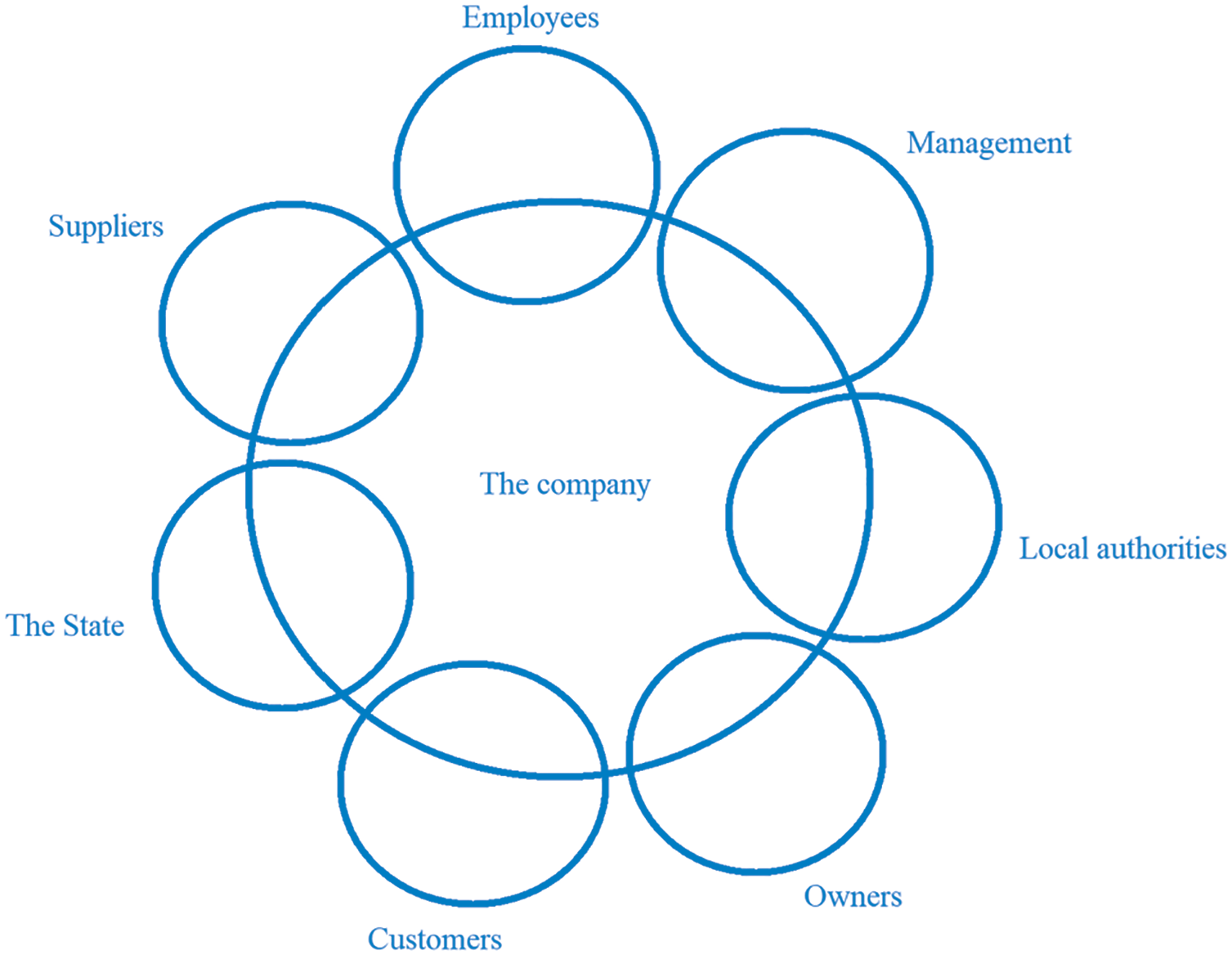
Eric Rhenman’s Stakeholder Map (1968).
In contrast with Porter’s five forces, Rhenman’s stakeholder map depicts stakeholders, such as suppliers and customers, as cooperative partners instead of competitors. More recently, Porter has dramatically shifted his rhetoric to adopt a cooperative tone, as evidenced by the publication of Creating Shared Value with co-author Mark Kramer. 27 Porter received critique, such as in the article “Contesting the Value of Creating Shared Value,” where the authors contend Porter is effectively just endorsing the stakeholder view of the firm, as R. Edward Freeman and others have long advocated. 28 Similarly, a Financial Times article noted, “Michael Porter has apparently discovered how business is done in Scandinavia,” underscoring the longstanding emphasis on cooperation and stakeholder engagement in the Nordics, as championed by Rhenman, and more recently emphasized in the Creating Shared Value article. 29
The intricate relationship between structural mechanisms and sustainability outcomes is apparent in exploring the Nordic context, highlighting how structural adjustments can further sustainability goals in various global contexts.
Internalizing Negative Externalities: Carbon Tax
The Nordic nations have consistently been at the forefront of environmental and climate initiatives, exemplified by their early adoption of the carbon tax. Finland led the way by introducing a carbon tax in 1990, the first in the world, with Sweden and Norway quickly adopting similar measures in 1991. By the end of 1992, Denmark had also instituted a carbon tax, although with a unique approach: While the tax was levied on the energy sector, industrial firms could secure tax exemptions provided they entered into voluntary agreements to enhance energy efficiency.
The collective policy actions of Nordic countries in the early 1990s showcase their pioneering role in sustainability leadership.
Nordic Model
Nordic leadership in the SDGs is supported through the efficient delivery of universal programs directly addressing many SDGs. Universal access to healthcare directly supports SDG #3, Good Health & Well-Being. Universally subsidized childcare and universal access to education through university directly supports SDG #4, Quality Education. Importantly, these universal programs depend on the vibrant Nordic economies and availability of good jobs, directly tied to SDG #8, Decent Work and Economic Growth—promoting sustained, inclusive, and sustainable economic growth; full and productive employment; and decent work for all. Without excelling in SDG #8, the Nordics would not generate sufficient tax revenues to support their universal programs.
The success of the Nordic model stems from companies and their business leaders acknowledging their civic duties, including paying their fair share of taxes. This reciprocal relationship strengthens the Nordic social contract: Businesses invest in the society that nurtures them, while the society creates an environment where businesses can thrive sustainably. Hence, the Nordics’ leadership in the SDGs realm is not merely a voluntary corporate responsibility but is woven into the fabric of Nordic socio-economic structures. This intrinsic commitment ensures that the region consistently showcases sustainability leadership on the global stage.
The strong and cooperative relationship between labor unions and employers is central to the Nordic model’s success. An astounding 70%-80% of Nordic employees are members of labor unions, an indicator of the deep-seated culture of collective bargaining and workers’ rights. Unlike many other regions like the United States, where labor relations can be contentious, the Nordic approach is characterized by continuous dialogue, collaboration, and mutual respect between unions and employers. This harmonious dynamic ensures that prosperity is more equitably shared rather than just accumulated by the most powerful actors. Furthermore, these unions play a pivotal role in lifelong learning and skills development, ensuring workers remain agile and adaptable in a rapidly evolving global economy. This proactive approach to workforce development safeguards employees against economic uncertainties and reinforces the region’s commitment to SDG #8, which emphasizes decent work for all and economic growth, and SDG #10, which emphasizes reduced inequalities.
Anu Partanen and Trevor Corson capture the essence of Nordic attention to power dispersion equilibrium in their 2019 New York Times feature titled “Finland is a Capitalist Paradise.” They note, “The Nordic nations as a whole, including a majority of their business elites, have arrived at a simple formula: Capitalism works better if employees get paid decent wages and are supported by high-quality, democratically accountable public services that enable everyone to live healthy, dignified lives and to enjoy real equality of opportunity for themselves and their children.” 30
Corporate Structures
The Nordic corporate landscape is characterized by distinct structures that encourage long-termism. One of these is the industrial foundation model, prevalent in the Nordic context in renowned firms like Novo Nordisk and Carlsberg. In this model, an associated industrial foundation holds the majority of voting rights in perpetuity. Such a configuration provides insulation against the short-term pressures of financial markets, enabling companies to prioritize long-term strategies and sustainable practices. A study by Thomsen et al. revealed that industrial foundation-owned companies in Denmark have notably stable ownership and showcase a consistent commitment to long-term decision-making. These companies exhibit conservative capital structures, prioritize long-term investments, and demonstrate enhanced longevity in the market. 31
Yvon Chouinard’s 2022 decision to donate U.S.-based Patagonia to an environmental nonprofit, placing its voting stock into a trust, mirrors the industrial foundation model prevalent in the Nordic region. He had learned about the Carlsberg Foundation, the first Danish industrial foundation established in 1876, during a 2019 visit to Patagonia’s headquarters in Ventura, California, by Carlsberg’s Simon Boas Hoffmeyer. Chouinard followed the path of Carlsberg founder J.C. Jacobsen, who willed Carlsberg to the Carlsberg Foundation in 1887, ensuring its profits support scientific research and societal advancement. The Carlsberg Foundation retains majority voting rights in the Carlsberg Group, safeguarding its long-term focus and preventing takeovers while directing profits toward a social good. 32
The 2022 Forbes article “Chouinard’s Donation of Patagonia Is Big and Bold, But Not New” highlights that although the concept may be considered novel in the United States, the foundation-owned firm model is a longstanding and integral part of Nordic corporate traditions. 33 Nordic companies thrived for generations under the industrial foundation structure. That is particularly the case in Denmark, where the industrial foundation structure represents over 70% of the market capitalization of the Danish stock exchange, including the likes of Novo Nordisk, Novozymes, Carlsberg, Lundbeck, Coloplast, and A.P. Møller—Mærsk. Privately held companies also widely embrace the industrial foundation model in Denmark, including Rambøll, Grundfos, Danfoss, and a significant portion of LEGO. Many of these companies, with their long-term vision enabled by the industrial foundation structure, prominently lead in sustainability. For instance, Rambøll, a global engineering and consulting firm with 97% of its shares owned by the Rambøll Foundation, embraced “The Partner for Sustainable Change” as its overarching corporate strategy beginning in 2022, fully committing to sustainability as its core business. 34
The Nordic model emphasizes how crucial structured approaches are in promoting sustainability and social responsibility. Within The Market for Virtue: The Potential and Limits of Corporate Social Responsibility, David Vogel emphasizes that while voluntary sustainability and social responsibility efforts can lead to positive changes, they are often insufficient to address broader societal and environmental challenges without structured policies and regulations. 35 In The Enlightened Capitalists: Cautionary Tales of Business Pioneers Who Tried to Do Well by Doing Good, James O’Toole demonstrates how well-intentioned business pioneers realized that good intentions alone are insufficient to create lasting positive change. Structural changes—including sound policies, robust governance, and effective incentives—are essential to sustain socially responsible and sustainable behavior. 36 O’Toole featured Patagonia founder Yvon Chouinard, who, as previously noted, drew structural inspiration from the Carlsberg Foundation.
Practitioner Takeaways
Since every region has cultural and political differences, firms outside the Nordics that seek to emulate their success should focus on the underlying principles rather than just copying the practices. For the Nordics, this includes clearly defining a firm’s vision and long-term goals; ensuring internal cohesion around them; and positioning itself as responsive vs. reactive. The Nordic firms discussed here aim to recognize when to remain resolute in their visionary courses, for needing to make or reverse a decision that does not align with a firm’s mission can be costly on many levels. Of course, the visions of firms discussed here are also aspirational and purpose-driven, and lofty aspirations sometimes require a shift in identity. Either way, establishing a clear and sustainable corporate identity requires courage and willingness to take a broader perspective. To achieve this, firms must engage in open and cooperative communication (even to the peripheries of their stakeholder landscape or critics) to learn, grow, and shape the organization’s future to create lasting value.
Novo Nordisk engaged with its most vocal critics, formally inviting them to participate in the dialogue. Ørsted’s transition to renewable energy relied on active involvement with the fringes of its stakeholder landscape—policymakers, investors, employees, customers, and suppliers worldwide—and working together to align aspirations. Its white paper publicly shared the lessons it learned. A significant reason for Chr. Hansen’s success lies in its extensive stakeholder engagement practices, exemplified by its annual Stakeholder Roundtables. In addition to engaging with NGOs, Neste has partnered with academic institutions to pursue sustainable innovations. IKEA has also fostered partnerships with NGOs, and such collaborations have been a cornerstone of IKEA’s approach to sustainability. Likewise, its dedication to responsible wood sourcing and its Buy Back & Resell program demonstrate its responsiveness and commitment to a wider suite of stakeholders’ interests.
Novo Nordisk and Ørsted cooperated across sectors to achieve alignment with their broader sustainability agenda. This collaboration demonstrated their long-term commitment to environmental stewardship. Chr. Hansen formed partnerships with diverse entities (ones that might even seem in conflict) so as to not shy away from differing perspectives and achieve more holistic solutions. Neste, also, was proactive in finding solutions in its quest for responsible sourcing by working with its critics. They engaged transparently, undertaking thorough investigations to address the concerns about their suppliers, reflecting their commitment to responsible production. These Nordic firms responded to criticism with responsiveness rather than denial as a sign of their willingness to adapt and envision a broader and more inclusive sustainability agenda.
These efforts are not without challenges, such as differing regulations across borders, competing visions of the correct way forward, and inevitable criticism from both opponents and supporters. Overhauling or even moderately shifting a firm’s identity is not an easy path. Still, long-term sustainability goals require patience and perseverance in committing to a vision of a sustainable future.
Conclusion
The Nordics stand out as global sustainability leaders, consistently topping numerous sustainability metrics, making them invaluable benchmarks. A hallmark of Nordic success is the robust cooperation and stakeholder engagements as showcased by firms featured in this article. Furthermore, Nordic industry leaders help shape policies and structures for societal benefit, frequently prioritizing broader societal interests over narrow corporate interests. The Nordic region was an early adopter of carbon taxes, which would not have been possible without industry support. Nordic business leaders have been among the strongest champions of the Nordic Model, which is recognized as a basis for the Nordic region’s strong SDG performances. As the world grapples with escalating sustainability challenges, the Nordic experiences offer valuable lessons.
Footnotes
Notes
Author Biography
Robert Strand is the Executive Director of the Center for Responsible Business at the Haas School of Business and Executive Director of the Nordic Center at the University of California, Berkeley, and Associate Professor at the Copenhagen Business School (