




Abstract
This case presents how entrepreneurial storytelling assists entrepreneurs in attracting new investors, pursuing innovation and developing resilience in the Palestinian Territory. It also examines the role of entrepreneurial storytelling in eluding political crises and supporting the CEO's vision to adapt changes in the political environment. Moreover, this case explains how entrepreneurs respond to local competitors who operate in the same uncontrollable and unpredictable environment. The case is written based on three semi-structured interviews (total seven hours) with the Chief Executive Officer 1 of Pharmacare Pharmaceuticals Public Limited Company (PCP) 2 : Mr Bassim Khoury (BK). PCP is the third Palestinian pharmaceutical company in terms of turnover in 2021, with more than 100 products and 330 employees, and is the first company in the Palestinian Territory to expand internationally in 22 countries.
Learning outcomes : this case gives students the opportunity to
Analyse how entrepreneurial storytelling can sustain performance during political crises and offer alternatives to overcome frequent changes in the environment?
Define the role of innovation in sustaining entrepreneurs’ performance in an extreme environment?
Introduction
This case explains the role of entrepreneurial storytelling (Garud et al., 2014; Lounsbury and Glynn, 2001) of a small pharmaceutical company operating in the Palestinian Territory on an entrepreneur's ability to develop resilience and cope with the challenges as part of their entrepreneurial activities (Manning et al., 2019).
The stories are the symbols that organisations use in written language or verbal expressions (Trice and Beyer, 1993) and include transitions and event sequences in plot line(s) (Bruner, 1990). They are “alternative forms of communications” for entrepreneurs (Aldrich and Fiol, 1994: 652), that introduce the unknown entrepreneurs to external audiences (Lounsbury and Glynn, 2001). The appealing and coherent stories are distinctive assets and resources that can minimise the impact of uncertainty during complicated and nonlinear proves of entrepreneurial venture formation (Lounsbury and Glynn, 2001). The stories guide entrepreneurs to accomplish the expectations of stakeholders (Martens et al., 2007) “to confront many unforeseeable obstacles as their entrepreneurial journeys unfold” (Garud et al., 2014: 1489) to become more resilient.
The potential effect of ambiguous and cognitively complex societal environment on entrepreneurial storytelling is an area of interest to scholars in the field. For example, Markowska and Lopez-Vega state “context and entrepreneurship are intertwined [and] in some contexts, the ability to craft a compelling regional identity story may become crucial for enacting entrepreneurial action” (2018: 282). Hence, entrepreneurial stories and activities vary among different business environments (Glaeser and Kerr, 2009) to build a context-dependent resilience strategy.
Resilience is an interaction process between individuals and situations to stay effective in the face of uncertainty (Cooper et al., 2013), and resilience research in entrepreneurship is still at preliminary stages in certain contexts (Duchek, 2018). Becker and Kabongo argue that studying “entrepreneurial resilience is particularly needed in developing economies because entrepreneurs face additional and dramatic adversity, including general economic and political hardships and specific difficulties in the daily operations of managing a business” (2020: 116).
The impact of environment on entrepreneurial strategies is incessant and evolutionary in nature (Aldrich and Martinez, 2001). For example, the environment offers various economic (McMullen et al., 2008) and cultural resources (Thomas and Mueller, 2000), and impacts on the way through which various bricolage approaches emerge (Baker and Nelson, 2005). The latter refers to creating “something out of nothing” (Baker and Nelson, 2005: 330), where entrepreneurs use every possible resource and “refuse to accept such limitations [from the environment] and instead engage in experimenting with and improvising solutions and observing what works” (Alvi et al., 2019: 290).
Entrepreneurs develop new strategies to sustain their competitive advantage in turbulent environments by attracting investors and utilizing external resources. For example in volatile contexts, strategic alliances can encourage innovation, strengthen companies’ resources, reduce costs and mitigate risks (Khoury et al., 2021). This case considers how entrepreneurial storytelling can attract investors to sustain performance of an enterprise that operates in the Palestinian Territory as an example of an extreme environment.
Hannah et al. (2009) define the extreme environment as a place “where one or more extreme events are occurring or are likely to occur that may [affect or] exceed the organization's capacity to prevent and result in an extensive and intolerable magnitude of physical, psychological, or material consequences” (p. 898). The Palestinian Territory of the West Bank and Gaza faces unique and extreme challenges (Izraeli, 1997), which affect the ability of entrepreneurs to make decisions (Alvi et al., 2019). Thus, the entrepreneurial assessment of an opportunity in such environment is distinctive when compared with less turbulent contexts. For example, entrepreneurs reconcile the uncertainty of institutional environment (Baker et al., 2005) to identify their strategic choices and shape their trajectory. In such context, challenges for entrepreneurs must be addressed at an individual or micro-level to encounter uncontrollable external factors (Dacin et al., 1999).
In this case, we argue that in extreme environment the entrepreneurial storytelling can attract local and international investors, contribute to the strategic choices, enhance resilience and provide motivation to search for alternatives such as product innovation and internationalisation as will be seen in the PCP case. It also explains how entrepreneurs in an extreme environment mobilize their activities using their stories to identify opportunities and sustain their existence. Our argument is summarised in Figure 1.
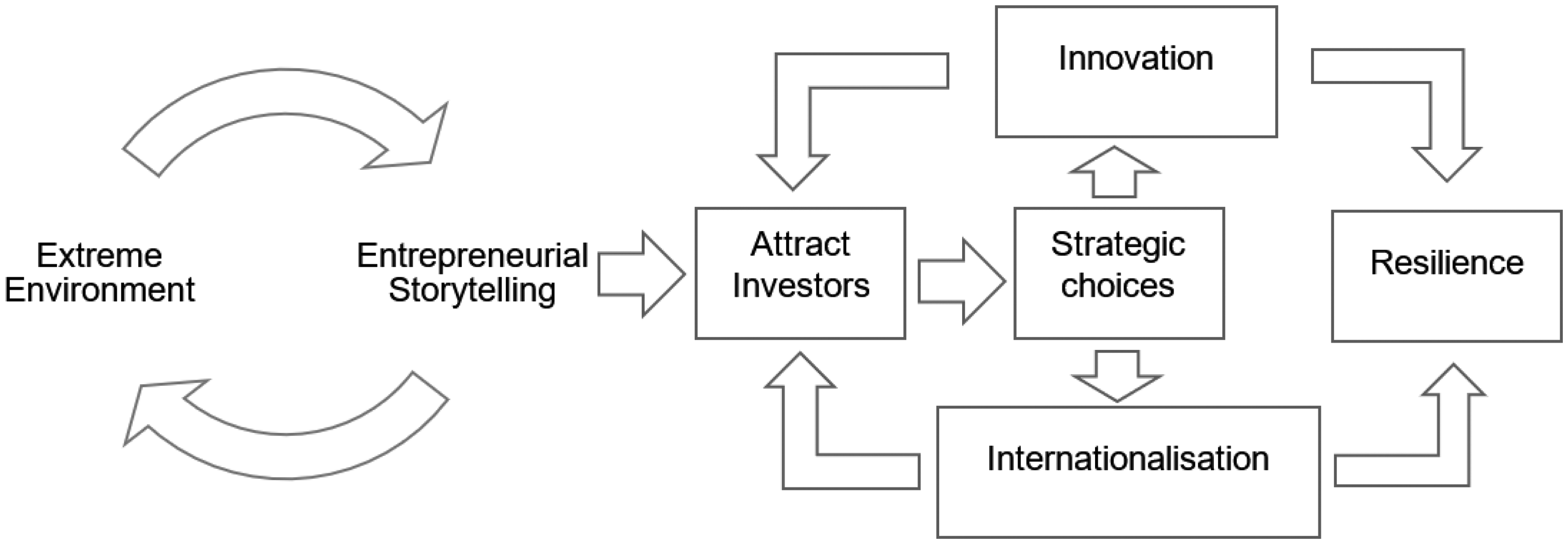
Summary of the case arguments (the theoretical framework)
This case is divided into four parts; the first part illustrates an overview of the Palestinian Pharmaceutical Industry. The second part presents PCP followed by the Palestinian context, and the last part covers the teaching notes.
The Industry: Palestinian Pharmaceutical Industry
In the 1960s, the Palestinian pharmaceutical market suffered from shortages of medications and pharmaceutical equipments due to political issues. After the Arab-Israeli war that ended in the occupation of West Bank and Gaza Strip in 1967 (BBC, 2020), Israel started to promote its own generic 3 medicines and the imported medicines by Israeli traders to serve the demand of Palestinian Territory. Several local generic pharmaceutical firms were established to serve the Palestinian market and manufacture low-cost medicines.
In 2017, the overall market value of the Palestinian Pharmaceutical Industry was $160 million 4 and the market is divided between locally produced pharmaceuticals (52.5%) and foreign and Israeli pharmaceuticals (47.5%), as presented in Table 1.
Palestinian Pharmaceutical Market in 2017 (Abu Rjailah, 2019).

* All values in (US$ + 000,000).
** Tender sales.
According to Abu Rjailah (2019) “the pharmaceutical sector remains a key sector in the Palestinian economy” (p. 1). However, it “suffers from various hindrances” (Almi, 2012: 11), which affect the costs of supply chain and eventually the prices of locally produced medicines in the country settings (Seiter, 2010; Towse et al., 2012). For example, the Palestinian pharmaceutical companies pay the costs of annual licensing of imported raw materials, shipping medicines in bulk through Jordan and back-to-back deliveries to and from the West Bank and from the West Bank to Gaza Strip.
The variations in the population's socio-economic status (such as GDP and average income) between Israel and the Palestinian Territory is largely overlooked (Almi, 2012), which has impacted on prices of foreign-manufactured medicines 5 in the Palestinian Territory and rendered them substantially higher than they should be (Keuffel, 2019). Moreover, the lack of Palestinian ownership of public healthcare policies and absence of diplomatic relations limit trade agreements with Palestinian pharmaceutical industry, licensing and exporting medicines (Keuffel, 2019; Abu Rjailah, 2019). For example, the Palestinian Ministry of Health employs rules and regulations that were adapted from different sources such as Jordanian Food and Drug Administration (JFDA), Egyptian health regulatory body and the British Mandate to govern the health sector and drug registration (Makhool, 1999).
As mentioned in Table 1, there are four local Palestinian pharmaceutical companies: Jerusalem Pharmaceutical Co, Birzeit Pharmaceutical Co, Beitjala Pharmaceuticals and Pharmacare Public Limited Company (PCP). Table 2 provides an overview of these companies, and they represent 94% of the local Palestinian companies (Abu Rjailah, 2019; Palestinian Federation of Industries, 2009).
Overview of the main Palestinian pharmaceutical companies that represent 94% of the local market share.
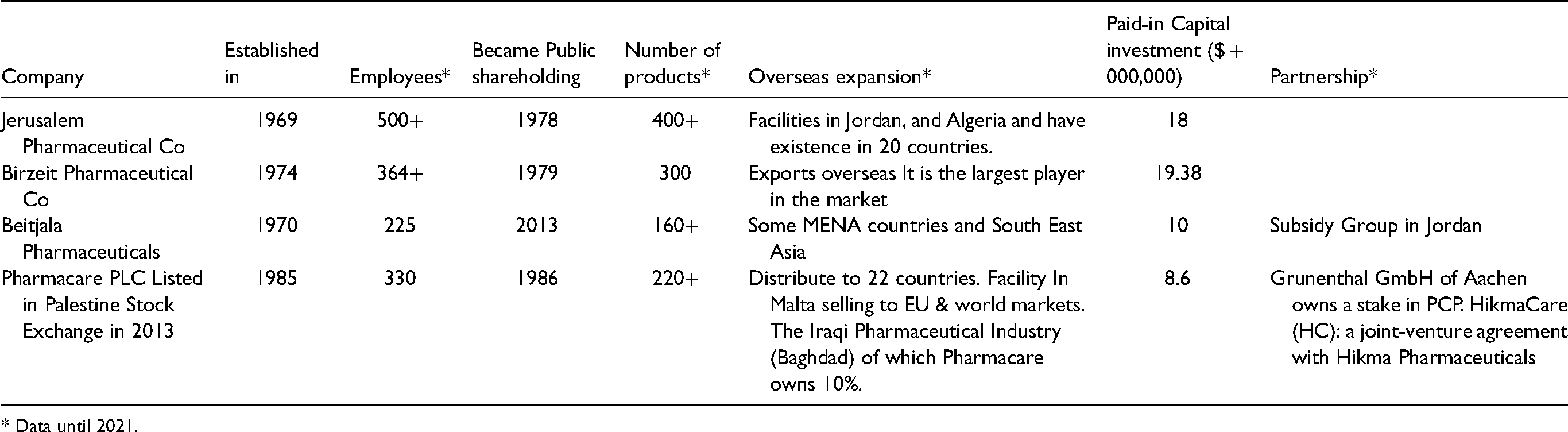
* Data until 2021.
The case: Pharmacare Public Limited Company (PCP)
PCP was established to manufacture and distribute pharmaceutical goods by a small group of Palestinian entrepreneurs in 1985 in the Palestinian Territory. The company was initially led by the late Subhi Khoury (SK), followed by his son Basim Khoury (BK), the present CEO. PCP specialises in the development, production and marketing of generic and branded pharmaceuticals; as well as local distribution of products that are manufactured by multinational pharmaceutical companies. Furthermore, PCP operates through networks of subsidiaries, and has penetrated the European Union (EU) and other international markets as will be presented in this case.
Subhi Khoury (SK): The founder of PCP
SK felt responsible toward the Palestinian society, and he aimed to support their existence and satisfy their needs. Prior to PCP, SK started his first small pharmaceutical manufacturing company in Jordan in 1962. After the Arab-Israeli war in 1967 (BBC, 2020), SK felt the need to launch a generic pharmaceutical company to serve the demand for medicines in the Palestinian Territory. This was a devoted mission to support Palestinians after the war due to the closure of borders with neighbouring Arab countries and difficulties of transporting goods, including pharmaceuticals, after 1967. In 1973, SK founded and led Birzeit Pharmaceutical Company, as CEO and Chairman, until it was taken over by other shareholders in 1984. Later, he launched PCP, which became an active player in the market.
His story at Birzeit Pharmaceutical Company and his vision attracted many entrepreneurs to work and invest in PCP. Since its establishment in 1985, PCP's mission statement reflected an obligation to society: “Pharmacare is committed to fulfil its obligations to society and to the environment by producing high quality pharmaceutical products at affordable prices in order to help preserve and improve quality of life”. With the changes in the direction and expansion of product portfolio, which took place over years, the mission and vision statements were updated in 2012, and it states “to help attain national medicine security by providing high quality essential and complimentary medicines and to contribute to the national economy by qualifying the local human resources in-order-to produce and export pharmaceuticals” Figure 2 is main office of PCP in the Palestinian Territory.
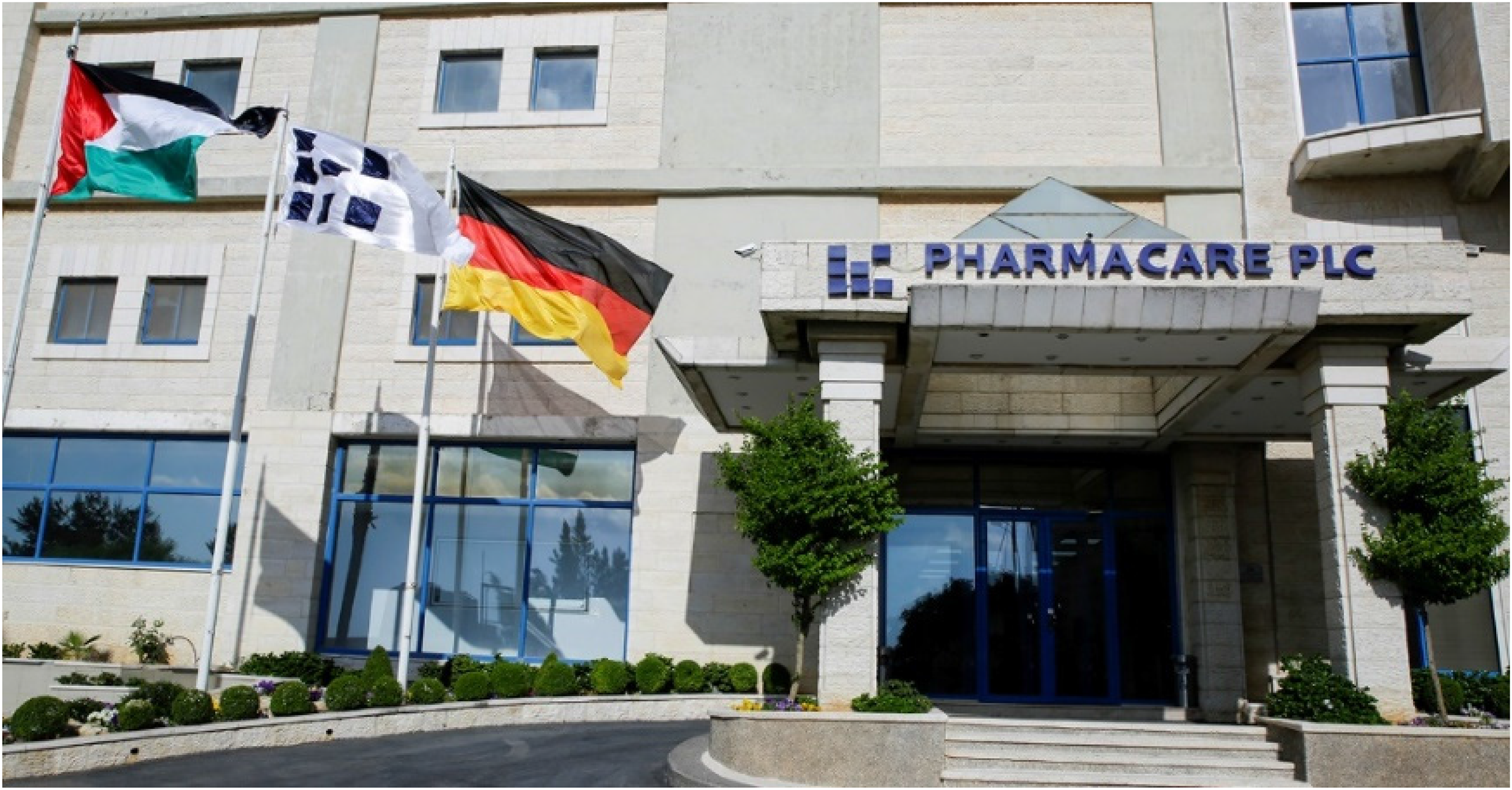
The main office of PCP in the West Bank – the Palestinian Territory.
Bassim Khoury (BK): CEO since 1999
SK raised his son, Bassim Khoury (BK), to carry his story and passion, and sustain the active contribution of PCP to the Palestinian economy and industry. BK earned his pharmacy degree in the United States (US), and he was exposed to numerous manufacturers in the US and EU. The inspiration of his late father in supporting society is inherited by his family and BK is devoted to pass it on to future generations. He explains: “back in 1985, PCP was an inspiring story about the creation of a company under extreme impediments and constraints which managed to succeed and win market share… it was never a giving up project, and the aim was to support local people and economic development in Palestine. My late father started from scratch after becoming a refugee in 1948, his story did not only inspire me and my sons, but also inspired many entrepreneurs in Jordan and Palestine”.
BK continues the same legacy of his dad to sustain PCP performance, by gaining international recognition for its products, initiating international expansion strategies, attracting investors and developing innovative products.
Quality: International Inspection
SK and BK focused on Good Manufacturing Practices (GMP) and Quality Assurance (QA) to differentiate their products from local rivals. In the early nineties, experts in the pharmaceutical industry from France inspected the local Palestinian pharmaceutical companies, and PCP was ranked first in terms of quality manufacturing. This was a learning curve for PCP to understand processes of international inspection, and similarly encouraged international recognition of PCP's products. PCP succeeded in obtaining the European Good Manufacturing Practice (EU-GMP) certificate in 2008 to export its medicines to EU. This was critical for PCP to become an internationally recognised company as BK explains: “this was a dream comes true to our company, we were the first and only company to achieve this! which proved to be good to maintain our business through another income stream generated from international sales”. BK's vision was supported by PCP Board of Directors, shareholders and employees, as international recognition of quality provides an opportunity to sustain the growth of the company.
Ready for an Alternative Strategy: International Expansion
BK focused on penetrating international markets as an alternative strategy to circumvent the unstable local political environment in the Palestinian Territory. However, there are limitations to accessing external markets, such as the import and export law and meeting stringent international standards of quality manufacturing. PCP's first shipment of pharmaceuticals was to Russia and Belarus in 1993, followed by a few shipments to different countries in various regions. In 2010, PCP launched Pharmacare Premium Malta (PCM) as a Palestinian Company (Figure 3) that operates outside the Palestinian Territory to overcome local and regional political instability. This was a core investment after obtaining the EU-GMP for PCP in the Palestinian Territory, BK says: “Pharmacare Premium Malta (PCM) is an EU-GMP approved site with optimum quality and performance and leading technology focusing on high potency products, which is a niche sector with limited players”
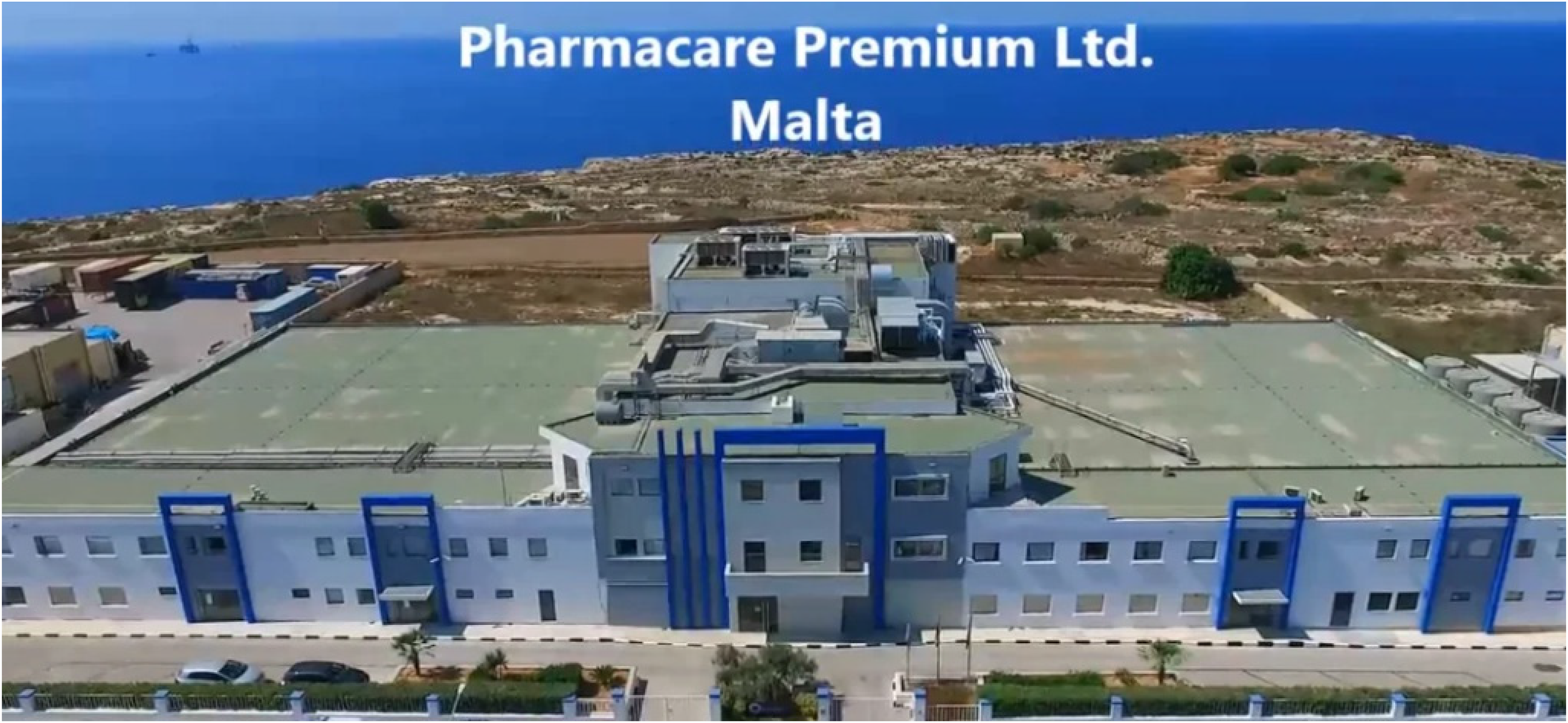
Pharmacare Premium Ltd. Malta (PCM)
Attracting Investors and Partners
SK and BK focused on building a network of investors in the pharmaceutical field in order to construct their succession stories as tools for making sense of events. Their participation in global conferences and activities made them professionally visible to regional and international investors.
In 1999, the company was engaged in equity finance through cooperation with Michael Wirtz and his family (owners of Grunenthal© GMBH), a German Pharmaceutical Company. The Wirtz family currently 6 owns 26% of PCP shares, and this is the only foreign direct investment in pharmaceutical industry in the Palestine Territory. The cooperation with Grunenthal and the Wirtz family strengthened the transfer of technology and knowledge and granted the right for PCP to manufacture and distribute some of Grunenthal products in the Palestinian Territory. This ensured continuous growth in PCP's sales and enhanced its ability to overcome political and competitive challenges.
Building such an investment increased the confidence of new investors and attracted regional and global pharmaceutical companies to invest in PCP. For example, PCP established a joint venture with Hikma Pharmaceuticals (Jordan) in 2018 and started Hikma-Care Unit (HC), which aims to manufacture and distribute under-licence products in the Palestinian Territory. Moreover, in 2018, PCP managed to penetrate the Iraqi market by investing in the Iraqi Pharmaceutical Industry (IPI). These partnerships created a solid foundation for geographical expansion in different regions.
Innovation and Internal Adaptation
BK has the ambition to develop PCP's product portfolio. Currently, PCP is the first company in the Palestinian Territory that has Soft Gel Facility to manufacture soft gel capsule since 2018. Moreover, PCP launched medicines for chronic diseases, such as hypertension, diabetes and lipid lowering agents, where such products provide sustainable streams of revenue.
In 2020, PCM focused on penetrating the oncology market and managed to register five new generic oncology products that are considered as high-opportunity products. The launch and market development of PCP is illustrated in Figure 4.
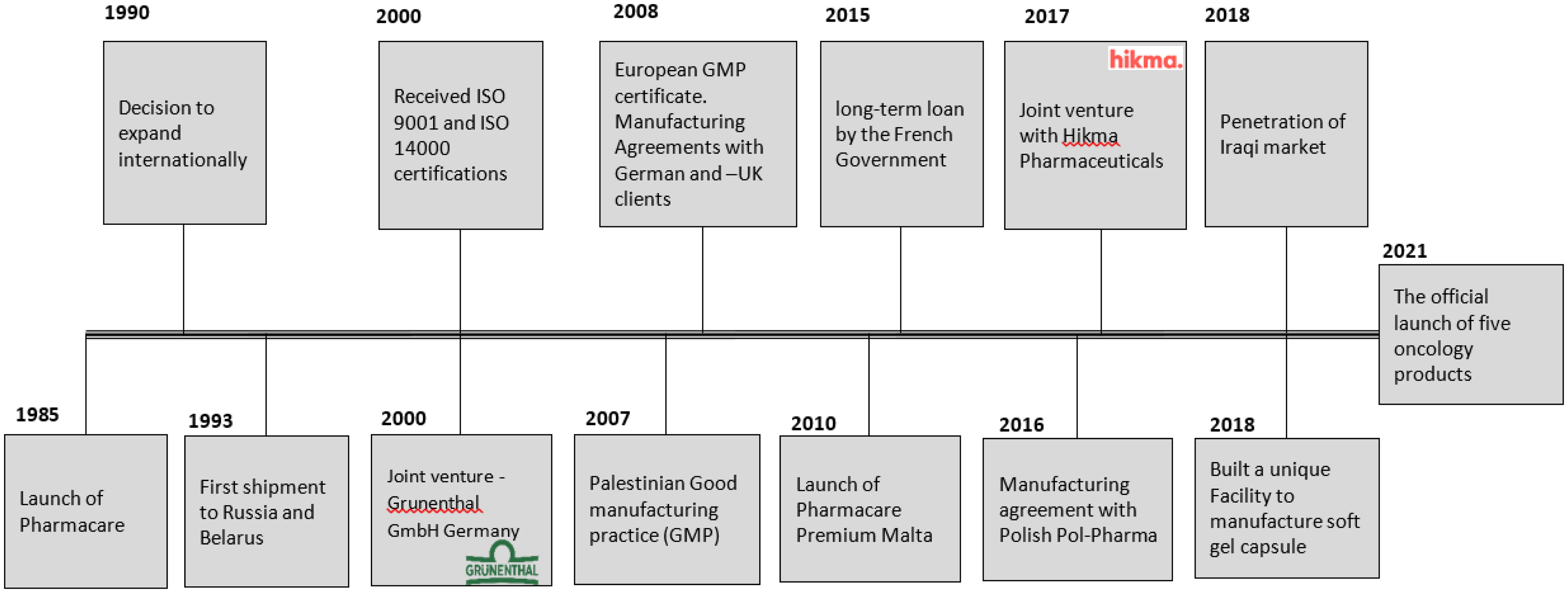
The launch and market development of PCP since 1985
In 2019, PCP went through internal turbulence due to the need to adapt changes within the environment it operates in. BK states: “we did not realise the growth that we were going through, it was very fast to cope with all changes and international expansions, and we did not pay enough attention to the demands of our local employees, but we learnt from this mistake and corrected our internal strategy and Human Resources policies”. It is also important to highlight that PCP's international expansion was unique and employees in the Palestinian Territory were not physically and mentally prepared to absorb the required changes. BK explains: “we were Pharmacare family and we found ourselves expanding massively, and we were not fully prepared for such a stage.”
Competition and Performance
There has been an increase in the market share of local pharmaceutical companies between 2013 and 2017 (44% to 53%, respectively), which is justified by an increase inpatients’, hospitals’, and doctors’ trust in using locally-manufactured medicines (Abu Rjailah, 2019). At the same time, the increase in the Palestinian population since 1994 to 2018 (2.5 million to 5 million, respectively) increased the demand for pharmaceuticals in general (Palestinian Central Bureau of Statistics, 2019). The financial performance of PCP and its competitors issummarised in Table 3 based on the preliminary financial data disclosed on Palestine Exchange website. As shown below, PCP is the only company to have a growth in net profit between years 2019 and 2020, to become second in terms of return on assets.
Performance of local pharmaceutical companies in the Palestinian Territory (numbers are in US dollars).
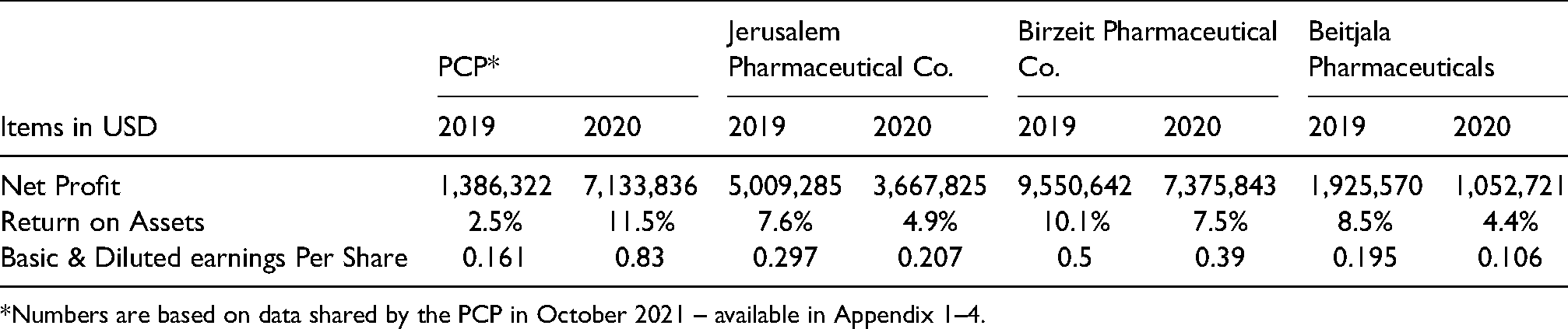
*Numbers are based on data shared by the PCP in October 2021 – available in Appendix 1–4.
Changes in the political environment in the Palestinian Territory since 1960s reduced the attractiveness of the local pharmaceutical market, but BK highlighted “political turbulence can be a threat, but it is not all bad because it decreased the number of players in the market”. The entrepreneurial storytelling of SK and BK attracted investors and motivated employees to support their decisions, and this sustained PCP orientation to overcome political obstacles. PCP's story is a source of motivation to investors and employees that created strategic alternatives to PCP at each stage. The next part covers the Palestinian context.
Palestinian Context: Politics, Economy, and History
Due to the nature of pharmaceutical industry, the changes in the political environment have had a direct impact on the import of raw materials, logistics, distribution of medicines and health services in the country. BK said, “you can’t separate pharmaceutical industry from politics, they are deeply linked to each other”.
From an economic point of view, starting up businesses in the Palestinian Territory is very challenging due to lack of control on borders and resources, and restrictions on the mobility of goods and people. Recently, the Israeli West Bank barrier (or The Wall) increased the cost of movement; this has been detrimental to the Palestinian economy and has impeded economic growth and long-term competitiveness (Kock et al., 2012). The World Bank (2013) estimated an increase in Palestinian GDP by 32% in 2011 if Israel lifted restrictions of movement in the Palestinian Territory.
The History Since 1948
From a historical point of view, the Palestinian market faced high turbulences originating from political issues that hindered entrepreneurs from starting up new ventures. The first Intifada 7 (or uprising) in 1987 has led to the first change in the Palestinian political representation after a long period of Arab-Israeli conflict since 1948. The uprising created an opportunity for the Palestinian Liberation Organisation (PLO) to solidify its political influence on the Palestinian Territory, and also pushed Jordan to cut its legal ties with the West Bank 8 (Leopardi, 2020). This, consequently, put administrative risks on the PLO to manage the economy, while handling the Palestinian-Israeli conflict. Figure 5 explains the changes in political environment in the Palestinian Territory since 1967.
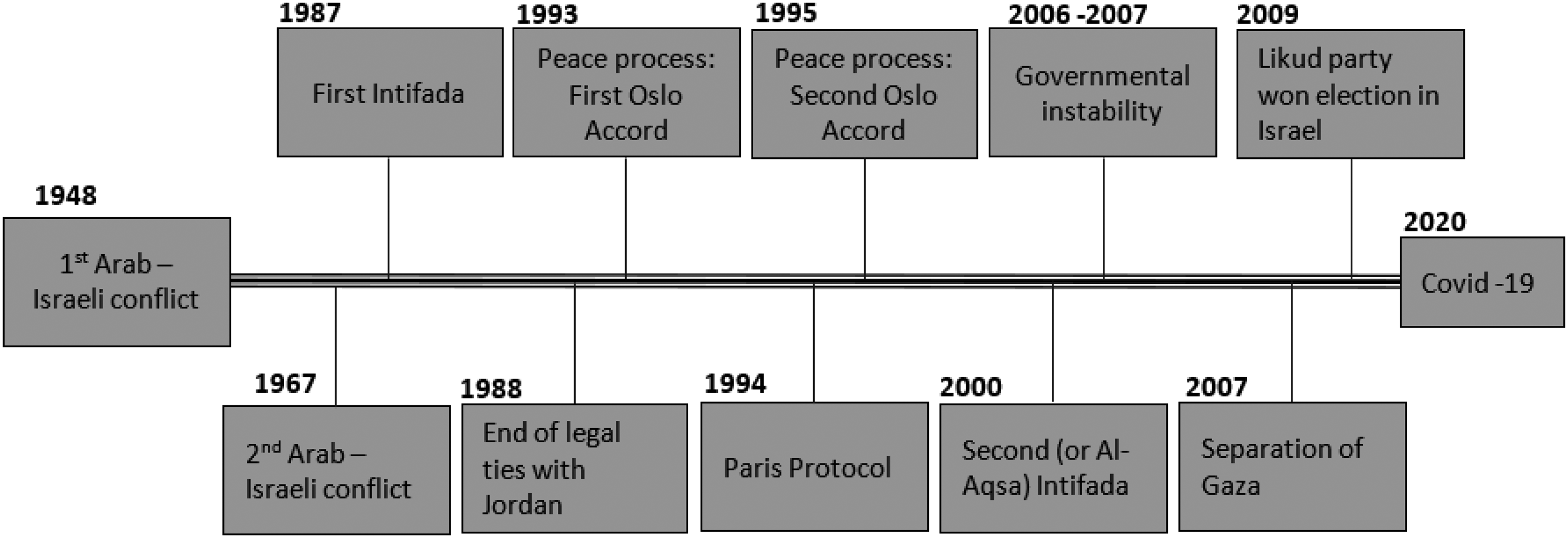
The Palestinian Territory since 1967
Oslo I and Oslo II
Oslo talks went into two stages since 1991; Oslo I and Oslo II. First Oslo Accord was signed between PLO and Israel in 1993, which is a declaration of Principles on Interim Self-Government Arrangements. Whereas Oslo II is an interim Agreement on the West Bank and Gaza Strip, and it was signed in 1995.
Paris Protocol is a customs union agreement enacted in 1994 between PLO and Israel, which “view(s) the economic domain as one of the cornerstones in their mutual relations with a view to enhance their interest in the achievement of a just, lasting and comprehensive peace. This protocol lays the groundwork for strengthening the economic base of the Palestinian side and for exercising its right of economic decision making in accordance with its own development plan and priorities” (Gaza-Jericho agreement: Annex IV, 1994). In his secondary research, Samhouri (2016) confirms that neither of these goals were achieved after 20 years of initiating this protocol (1994–2014). BK says that the impact of signing Paris Protocol is that “the Palestinian economy is a hostage of the political will of Israel”.
In 2000, the second (or called Al-Aqsa) Intifada occurred 9 . According to Pressman (2003), the main motive for the second Intifada was because Palestinians were dissatisfied by the Oslo peace process. Palestinians expected their lives to improve in terms of freedom of movement and socioeconomic standing, but the reality on the ground did not match the expectations created by the peace agreements.
2006–2009: The Elections
In 2006, the Palestinian elections created an unstable internal turbulence, and the separation of Gaza from the central Palestinian legitimate state, generated two different governments in the West Bank and Gaza strip. In 2009, the Likud party won the election in Israel, which suspended the peace talks and negotiations with Palestinian leaders. The frustrated political situation between Israel and Palestinians remains at the time of writing this case, and it freezes any hope for future economic development and peace process.
BK says “the political turbulence affected us badly and we as entrepreneurs find it difficult to sustain our business, but the uprisings attracted attention to the local Palestinian industries”. Storytelling was a shield against the uncertain political conditions in the Palestinian Territory, as it attracted local and global stakeholders to value these stories in extreme environment.
COVID-19 Pandemic
The COVID-19 pandemic in 2020 added more damage to the economy and healthcare services in the Palestinian Territory. The pandemic affected the already vulnerable Palestinian economy which shrank by 2.5% in 2020 (World Bank, 2020), and increased the cost of operations for pharmaceutical industry due to measures taken to avoid cross contaminations as part of Good Manufacturing Practice (Barshikar, 2020).
Summary of the case and context
The pharmaceutical industry is becoming more complicated (Arden et al., 2021) due to the nature of the industry in relation to the political environment, frequent changes in the treatment protocols, globalisation of pharmaceutical companies, high costs of investment and the emergence of new diseases. The uncertain political environment has imposed, and will continue to impose, challenges on Palestinian pharmaceutical companies. Hence, some Palestinian executives visualise that the potential economic growth can be achieved only through international expansion.
BK says “working in pharmaceutical industry is like walking on hot coal; you have to keep moving otherwise you will burn yourself”. This case provides an overview on how the vision of an entrepreneur, who started a small pharmaceutical company (PCP) in 1985, was implemented and supported by investors in an uncontrollable and unpredicted political environment. PCP's differentiation strategy, in terms of product portfolio, innovation and good manufacturing practice sustained its growth and maintained its position. This strategy allowed PCP to distribute the risks, develop medicines for chronic diseases, acquire generic oncology medicines and the Good Manufacturing Practice created opportunities to expand regionally and internationally.
Despite PCP's late entry, it is ranked third in the local Palestinian market in terms of turnover 10 , and second in terms of return on assets. At the time of writing this case, PCP has more than 100 products, 330 employees and succeeded to launch its products in 22 different countries. The company has been developing and enjoying consistent growth in its home market (See Appendices 1–4) and it puts a strategic plan to launch five to seven new generic products per year.
Teaching notes and objectives
The main objective of the case is to introduce undergraduate and postgraduate students to the resilience of entrepreneurs who work in extreme environments. It highlights how entrepreneurs use storytelling to spot opportunities, attract investors and build trust in their ability and competence; for example, through attracting the Wirtz family who currently owns 26% of PCP shares in 2021. The case allows students to gain insights on the ability of entrepreneurs to sustain their performance during multiple political crises. The questions below cover the main aims of the case.
Analyse how entrepreneurial storytelling can sustain performance during political crises and offer alternatives to overcome the frequent changes in the environment. Define the role of innovation in sustaining entrepreneurs’ performance in an extreme environment.
Footnotes
Acknowledgements
This case was made possible through the generous cooperation of PCP. This case will only be used for academic purposes to introduce students to entrepreneurs’ way of thinking about uncertain changes in the political environment and its impact on the direction of Small Medium Enterprises. The authors would like to thank Mr Bassim Khoury for his precious time and valuable insights to understand the successful growth of PCP in a highly competitive and uncertain environment.
Declaration of conflicting interests
The author(s) declared no potential conflicts of interest with respect to the research, authorship, and/or publication of this article.
Funding
The author(s) received no financial support for the research, authorship and/or publication of this article.

Notes
Questions and answers
To answer this question, it is important to identify three points: a. the environmental analysis, b. impact of storytelling on the Palestinian context and c. the use of alternative strategies such as internationalisation strategy.
The environmental analysis: b. The use of storytelling in their reaction to volatile environment c. Alternative strategies to overcome the current political environment
Two levels of environmental frameworks (Lynch, 2018; Whittington et al., 2020) can be used: PESTLE (Political, Economic, Social, Technological, Legal and Environmental) at Macro level, and Porter's five forces (barriers to entry, power of suppliers, power of buyers, threat of substitute and competitive rivalry) at Micro level. Students can argue how these factors interact with each other and influence entrepreneurs. In this case, the political, economic, technological and legal factors were highlighted, such as changes in the political regimes at different periods of time. The changes in the economic and legal structure were a reflection of changes in the political environment in terms of taxation, import and export and distribution of goods. Students can go an extra mile to argue economic and social gaps (Arnon and Weinblatt, 2001) between the Palestinian Territory and Israel. For example, work-permits to Palestinian labourers in Israel are becoming easier to obtain due to the high cost of labour in Israel. This will put pressure on economy and healthcare system in the Palestinian Territory that is characterised by lack of resources. The environment affects all companies that operate in the Palestinian Territory not only PCP. Moreover, the Pharmaceuticals is a very a controlled industry by the government, and stability ofthe legal structure is necessary to sustain the existence of these companies. Because Porter's five forces measure market attractiveness, the Palestinian local market can be argued as an unattractive market due to barriers to entry, alongside a high number of competitors and a high threat of substitutes. PCP managed to sustain its business through creating a competitive position after successful international inspections of good manufacturing practice. At this stage, the international recognition provided an opportunity for PCP to expand their business outside borders and find alternative markets for its products.
SK and BK believed that manufacturing sector builds the economy of any country, and businesses should aim to support the local economy and serve their society. SK started in Jordan in 1962, and then moved to the West Bank. SK's entrepreneurial story is not defined as a timeline, but as a mix of lessons learned, frustrations, motivations, culminations of key moments and successes to become a powerful tool to attract investors, employees and customers (Bruce, 2017). SK's entrepreneurial story attracted international investors; and use its facilities as a gate to launch their products in the Palestinian Territory, such as, Grunenthal (Germany) and Hikma Pharmaceuticals (Jordan) as in Figure (4). This has eventually created a competitive advantage.
PCP found an opportunity to penetrate the EU market and expand overseas (Yip, 1992). Students can use Yip's framework to highlight similar market needs of medicines as a motive for internationalisation. The main competitive advantage is low-cost manufacturing of medicines and competitive prices. The internationalisation strategy provided PCP access to technological aspects in manufacturing medicines in the EU, which is another motivation for international expansion. The technological acquisition (Knight, 2001) is a strategic choice that allowed PCP to operate in the EU. The expansion was regional and international as illustrated in the case. Students might discuss changes in the registration of medicines, and the ability of PCP to increase its product portfolio by manufacturing generic medicines that are no longer covered by patent rights.
Innovation is one of the key factors in generic pharmaceutical industry. PCP launched several products in the market with a focus on niche markets such as cancer (or oncology) medicines and medicines for chronic diseases, such as hypertension and diabetes. Manufacturing these products needs dynamic capability (See Teece, 2018) that students can discuss and analyse. Moreover, the ability of PCP to produce soft gelatine capsules created a differentiation strategy and demonstrated the dynamic capability of PCP. It is also good to include the impact of internationalisation, access to different market needs and innovativen strategy of PCP. This innovation sustained the performance of PCP. A good answer can also include diversification (Ansoff's Matrix) and a reflection on its efficient use of available resources.