



Abstract
Corruption is widely acknowledged as a critical factor shaping the internationalisation strategies of small and medium enterprises (SMEs), yet its effects remain contested. Drawing on institutional theory and the resource-based view, this study investigates how innovation and quality certification moderate the relationship between corruption and SME internationalisation. Using firm-level data from 236 Indian small and medium enterprises in the World Bank's 2022 Enterprise Survey and applying ordinary least squares regression, we find that corruption exerts a positive influence on SME internationalisation. However, this relationship is significantly attenuated when firms engage in innovation and adopt quality certification, with innovation exerting the stronger moderating effect. These findings contribute to international entrepreneurship literature by illuminating the conditional roles of innovation and certification in mitigating the institutional voids associated with corruption. The study also provides actionable insights for policymakers and entrepreneurs seeking to enhance the competitiveness of small and medium enterprises in corruption-prone environments.
Keywords
Introduction
Over the past decade, the relationship between corruption and the internationalisation of small and medium enterprises (SMEs) has attracted considerable scholarly attention. The prevailing view is that corruption hinders international expansion, with numerous studies reporting a negative correlation between the two (Ashyrov, 2020; Tan and Tusha, 2023). However, recent research has begun to challenge this narrative. Emerging evidence suggests that, under certain circumstances, corruption can facilitate SME internationalisation by helping firms navigate bureaucratic inefficiencies and gain access to foreign markets (Bertrand et al., 2022; Qi et al., 2020). These contrasting findings suggest that the nexus between corruption and internationalisation is more complex than previously assumed and may be shaped by specific contingency factors that influence how SMEs respond to institutional environments (Ge et al., 2017).
For example, Bahri et al. (2021), in a study of 537 Tunisian SMEs, found no direct significant effect of corruption on export intensity. Yet, when regulatory obstacles were considered as a moderator, the effect became significantly negative; conversely, in the presence of political instability, the effect turned positive. This illustrates that the nature of the corruption and internationalisation relationship can shift depending on the interplay of contextual factors, underscoring the need for further investigation.
To date, most research has focused on the moderating influence of institutional factors such as home-country digitalisation (Adomako et al., 2021a) and government regulations (Tan and Tusha, 2023). In contrast, the role of firm-specific factors in shaping this relationship has received comparatively little attention despite evidence that such factors are critical in revitalising internationalisation trajectories (Mmadubuko et al., 2025). This gap constrains both theoretical development and practical application, potentially leading to misinterpretations by scholars and misinformed decision-making by policymakers and entrepreneurs (Jafari-Sadeghi et al., 2023).
Addressing this gap, the present study investigates the moderating effects of two firm-specific factors, quality certification and innovation, on the relationship between corruption and SME internationalisation in India. These variables are selected because they represent dynamic strategic resources that are increasingly central to SMEs’ competitive positioning in global markets (Sousa and Mmadubuko, 2025). Drawing on institutional theory and the resource-based view (RBV), the study addresses two research questions:
What is the relationship between corruption and the internationalisation performance of Indian SMEs? How do innovation and quality certification influence the corruption and internationalisation relationship for Indian SMEs?
India offers a compelling context for this investigation. With over 63 million SMEs contributing ∼30% to GDP, more than 40% to exports, and employing over 110 million people, the sector is a key driver of India's integration into global markets (Rathore, 2025). Yet, corruption remains pervasive, with India ranking 96th out of 180 countries in Transparency International's 2024 Corruption Perceptions Index. Furthermore, 21% of SMEs surveyed by the (World Bank, 2020) identified corruption as a significant obstacle, compared to just 8% in OECD high-income economies. The coexistence of high export potential and persistent governance challenges presents a rich empirical setting for examining how firm-level capabilities can mitigate institutional constraints. Moreover, ongoing reforms such as the Make in India initiative, ease-of-doing-business measures, and stricter enforcement of the Prevention of Corruption Act have created a dynamic policy landscape that presents both opportunities and informal barriers to SME internationalisation.
This study makes three key contributions. First, it advances international entrepreneurship, institutional theory, and RBV scholarship by demonstrating how firm-specific capabilities, innovation, and certification can condition the effects of institutional voids on SME internationalisation performance. Second, it provides policymakers and entrepreneurs in emerging markets with practical insights, highlighting strategies to enhance global competitiveness through capability development. Third, it provides a nuanced contextual analysis of India, supported by empirical evidence of the country's growing investments in R&D, expanding startup ecosystem, and government-led innovation support programmes. Collectively, these contributions enhance theoretical understanding of SME internationalisation in emerging economies and provide actionable recommendations for fostering innovation and certification among SMEs.
The remainder of the article is organised as follows. The ‘Theoretical framework’ section reviews the literature, outlines the theoretical framework, and develops the hypotheses. The ‘Methodology’ section describes the methodology and data analysis. The ‘Hypothesis development’ section presents the findings, followed by a discussion of implications, limitations, and directions for future research in the ‘Conclusion’ section.
Theoretical framework
Institutional theory provides a foundational framework for understanding how regulatory, economic, and political environments influence SMEs’ internationalisation decisions. Institutions shape business incentives and constraints, impacting firms’ strategies when expanding into foreign markets. A growing body of research suggests that corruption thrives in weak institutional environments, where regulatory inefficiencies and bureaucratic complexities create opportunities for illicit practices (Wellalage et al., 2019). In such contexts, SMEs often struggle to access critical resources, such as financing, permits, and contracts, without engaging in corrupt activities (Williams and Martinez-Perez, 2016).
The institutional environment in both home and host countries significantly affects SMEs’ internationalisation strategies. Regulatory frameworks, political stability, and economic policies significantly influence the feasibility of entering foreign markets, as well as the mode and scale of expansion (Deng and Zhang, 2018). Weak institutions, characterised by inconsistent enforcement of laws, excessive bureaucracy, and political instability, increase risks for SMEs, often making corruption a perceived necessity for business survival. Institutions also play a crucial role in distributing entrepreneurial resources, shaping access to finance, market opportunities, and competitive advantages (Boudreaux et al., 2018).
Although most governments attempt to establish opportunities to mitigate the impact of these challenges, implementation often exacerbates the problems (Sadraei and Sadeghi, 2025). For instance, the recent Indian government's Digital India initiative, which has created numerous platforms that SMEs can utilise to reduce their exposure to corruption by providing transparent procurement processes that eliminate traditional intermediaries and their associated corrupt practices, has not been very successful due to poor implementation.
To mitigate the effects of poor institutional environments and regulations, entrepreneurs actively sought the effective utilisation of their internal capabilities and resources (Phan and Archer, 2020).
RBV provides a robust theoretical framework for explaining how firms achieve and sustain a competitive advantage through the strategic utilisation of resources (Teece et al., 1997). Within the context of SME internationalisation, RBV highlights how firm-specific capabilities can enhance foreign market entry (Barney et al., 2001). RBV therefore underscores that sustainable competitive advantage arises from resources that are valuable, rare, inimitable, and non-substitutable (VRIN) (Barney, 1991).
In highly corrupt institutional environments, RBV suggests that firms can counteract institutional weaknesses by leveraging strategic assets, particularly intangible resources such as certifications and innovation capabilities (Hoq and Chauhan, 2011). SMEs’ ability to successfully internationalise depends on their resource configuration. Since corruption erodes market efficiency, SMEs that lack strategic assets may struggle to compete internationally, reinforcing the importance of leveraging competitive resources to overcome institutional challenges (Michael et al., 2016).
Corruption and SME internationalisation
Corruption, including bribery, fraud, and abuse of power, distorts markets, erodes competition, and undermines institutional trust (Adomako et al., 2021b). Bribery, the exchange of money or favours for preferential treatment, is especially damaging to SMEs, as it inflates costs, restricts finance, and increases bankruptcy risk (Amin and Motta, 2023). These pressures weaken firm sustainability and global competitiveness.
India illustrates how corruption constrains SME operations and international ambitions. Despite economic reforms and digitalisation, SMEs still navigate a bureaucratic landscape where corrupt practices persist at multiple levels of government. Indian SMEs face particular difficulties in states with weaker governance. The ‘License Raj’ legacy, although officially dismantled, continues through complex approval processes, multiple trade clearances, and discretionary regulatory powers (Irwin, 2025). Export-oriented SMEs frequently report demands for ‘speed money’ to expedite customs, obtain quality certifications, or secure export licences (Venkatesan, 2023). A 2023 Federation of Indian Micro and Small & Medium Enterprises (FISME) survey found nearly 40% of SMEs had encountered corrupt demands from government agencies, often scaled to the urgency of the service.
While corruption is widely viewed as economically harmful (Habib and Zurawicki, 2002), some scholars argue it can act as a ‘grease the wheels’ mechanism in highly bureaucratic economies, enabling faster market entry and bypassing inefficiencies (Eramudugoda and Ramos, 2023). In such contexts, unofficial payments may expedite licensing, approvals, and market access that would otherwise be blocked by bureaucratic hurdles (Wellalage et al., 2019).
In emerging economies, corruption often takes a ‘disorganised’ form endemic across multiple administrative levels rather than concentrated in specific sectors (Tan and Tusha, 2023). In India, this means SMEs encounter demands for bribes when securing loans, registering businesses, or resolving tax liabilities. The country's federal structure compounds the challenge, as firms must meet both central and state regulatory requirements, multiplying corruption touchpoints. For instance, a Gujarat textile manufacturer might face demands from state pollution boards, central regulators, export councils, and customs, each adding costs and delays.
The impact varies by industry. Export-oriented manufacturing SMEs, particularly in sectors such as pharmaceuticals, face multiple clearances from agencies like the Central Drugs Standard Control Organisation (CDSCO), customs authorities, the Drug Controller General of India (DCGI), and various state-level agencies. Each interaction carries the risk of delay or additional cost, threatening time-sensitive contracts (Ghosh and Dutta, 2025).
Corruption distorts competition by advantaging politically connected firms and penalising those operating legally (Eramudugoda and Ramos, 2023). Lacking lobbying power, SMEs are more vulnerable and less able to influence regulatory outcomes. Widespread corruption fosters a ‘race to the bottom’, as firms justify participation on the assumption that competitors do the same (Bahri et al., 2021).
However, dependence on corrupt networks is unsustainable. Officials may renege on promises, escalate demands, or alter requirements, creating instability (Eramudugoda and Ramos, 2023). Moreover, corruption erodes credibility with international partners, exposes firms to legal and reputational risks, and can lead to exclusion from markets governed by strict anti-corruption laws, such as the Foreign Corrupt Practices Act (FCPA) or the UK Bribery Act.
Innovation as a strategic corruption mitigation mechanism
Innovation emerges as a powerful antidote to corruption-related challenges, offering SMEs pathways to enhance adaptability, transparency, and operational efficiency in foreign markets. This multifaceted approach encompasses technological innovation, process innovation, and organisational innovation, each contributing to corruption resistance in distinct ways (Ramdani et al., 2023).
Innovative firms demonstrate greater resilience to corruption-related barriers through several mechanisms. First, they reduce dependence on traditional bureaucratic approval processes by leveraging digital platforms, automated systems, and technology-enabled services that minimise human discretion and associated corruption opportunities (Audretsch et al., 2023). Second, innovation enhances operational transparency through digital documentation, traceable transactions, and automated compliance reporting, which makes corrupt practices more difficult to conceal.
The digitalisation wave in India has provided SMEs with powerful tools to circumvent traditional corruption bottlenecks. The implementation of the Goods and Services Tax (GST) system, despite initial challenges, has created a primarily digital tax compliance framework that has significantly reduced direct interactions between SME owners and tax officials, thereby minimising corruption opportunities.
The relationship between innovation and international engagement appears to be reciprocal; firms active in global markets tend to achieve higher innovation performance due to exposure to international best practices, technological transfer, and competitive pressures (Genc et al., 2019). This creates a virtuous cycle where international exposure drives innovation, which in turn facilitates further international expansion while building resistance to corruption.
Certification as a strategic credibility signal
International certification represents another crucial strategic resource for SMEs seeking to establish legitimacy in global markets while reducing vulnerability to corrupt practices. Certification serves as a credible signal of reliability, adherence to international standards, and commitment to ethical business conduct, helping SMEs overcome information asymmetries that often plague international business relationships (Khanna and Palepu, 2010).
The strategic value of certification is particularly pronounced in both developed and emerging economy contexts, where it helps firms navigate complex regulatory environments, reduce transaction costs, and build trust with international partners. Standards such as ISO 9001 (Quality Management), ISO 14001 (Environmental Management), and ISO 45001 (Occupational Health and Safety) provide internationally recognised frameworks that demonstrate operational excellence and regulatory compliance (Lu and Yu, 2015a).
Empirical studies consistently demonstrate a link between certification and superior business performance across multiple dimensions. Lu and Yu, 2015b found that certified firms demonstrate higher profitability, improved operational efficiency, and enhanced long-term sustainability compared to non-certified counterparts. The benefits extend beyond financial performance to encompass superior supply chain management, stronger risk controls, enhanced customer trust, and improved personnel management capabilities (Pacheco et al., 2022).
Hypothesis development
Relationship between corruption and SME internationalisation performance
Corruption is widely recognised as one of the most significant barriers to SME growth and development in emerging markets (Fungáčová et al., 2015; Kato and Sato, 2015). Yet, its relationship with firm export performance remains contested (Amin and Motta, 2023). The ‘sand in the wheel’ view argues that corruption hampers performance by increasing transaction costs, limiting access to formal resources, and reducing competitiveness (De Rosa et al., 2015). In contrast, the ‘grease the wheel’ perspective suggests that in weak institutional environments, corruption can act as an informal mechanism to bypass inefficiencies and facilitate business operations (Bertrand et al., 2019). These contradictory findings highlight the contextual nature of corruption's impact, shaped by institutional characteristics and firm-level strategies, warranting further investigation (Belitski et al., 2025).
Empirical studies provide mixed evidence. Hewa Wellalage et al. (2020), analysing 7153 Indian SMEs, found that bribery significantly increased the likelihood of being credit-constrained, with bribe-paying firms 68.2% more likely to face such constraints. Notably, the existence of a bribe had a greater effect than its intensity. Conversely, Saeedi et al. (2012), in a 12-year longitudinal study of an Iranian SME in the pharmaceutical sector, found that resources such as entrepreneurial orientation, networking capability, and adaptive production capability were critical to successful internationalisation, suggesting that non-corrupt strategies can also yield strong results.
Other research supports the “grease” argument. In environments where bureaucratic inefficiencies hinder operations, corruption may expedite market entry and regulatory approvals (Gupta, 2017), enhance perceived legitimacy, reduce uncertainties, and lower the risk of failure. Ayaydin and Hayaloglu (2014) found that informal payments can help firms bypass regulatory delays to access new markets. Similarly, Blagojević and Damijan (2012) reported that bribery was associated with higher productivity growth, enabling SMEs to scale operations. In the Philippines, Mendoza (2015) observed that corruption improved operational efficiency for SMEs. More recently, Belitski et al. (2025), using data from 186,027 firms across 137 countries collected via World Bank Enterprise Surveys (2006–2024), concluded that corruption can positively influence exports by reducing bureaucratic burdens at the managerial level.
Overall, corruption emerges as a double-edged sword, potentially alleviating bureaucratic frictions while also imposing long-term costs (Adomako et al., 2021). In weak institutional contexts, however, its short-term benefits for SME internationalisation may outweigh immediate drawbacks (Hanousek and Kochanova, 2016). Based on this reasoning, we hypothesise:
The moderating role of innovation
The resource-based view (RBV) posits that firm-specific capabilities, such as innovation, enhance performance by improving adaptability and mitigating external risks (Shiu and Yang, 2016). In this context, innovation is expected to moderate the relationship between corruption and SME internationalisation, enabling firms to overcome institutional constraints and compete more effectively in global markets. Empirical evidence suggests that innovative firms are better positioned to navigate corruption-related challenges and exploit emerging market opportunities (Wang and Huang, 2018).
Innovation can help SMEs reduce the inefficiencies of corruption-prone environments through digitalisation, process improvements, and technological adoption (Sousa et al., 2025). For example, blockchain applications in supply chain transparency, contract management, and regulatory compliance create immutable transaction records, limiting corrupt interventions and enhancing the trust of international partners (Raghuvanshi and Agrawal, 2020). Similarly, artificial intelligence (AI) and machine learning can automate compliance monitoring, detect irregularities, and reduce the human discretion that enables bribery (Gupta and Barua, 2016). By fostering transparency, efficiency, and operational flexibility, innovation provides SMEs with viable alternatives to relying on informal payments (Sadraei, 2025).
However, innovation is not a universal safeguard. In industries with high regulatory barriers, even technologically advanced SMEs may still face corruption pressures (Li et al., 2023). Moreover, some scholars argue that innovation could inadvertently increase exposure to corruption risks. For example, technologically advanced firms may become more visible to officials, inviting greater scrutiny and potentially more corrupt demands (Belitski et al., 2025). Others note that in severely corrupt systems, innovative processes such as securing intellectual property rights or obtaining certifications for new products can themselves become new points of extortion, adding complexity rather than alleviating it (Kumari et al., 2025). Resource-constrained SMEs may also struggle to implement advanced technologies effectively, thereby limiting the protective role of innovation (Audretsch and Guenther, 2023).
Despite these caveats, the broader empirical literature supports the potential of innovation to reduce corruption. Chege and Wang (2020) found consistent evidence, in a review of 113 studies, that technological innovation lowers corruption. Yefimenko et al. (2025), analysing World Bank data from 2017 to 2023 across 11 countries, reported a similar effect among SMEs. Troisi et al. (2023), using data on 1666 Italian firms convicted of corruption, found a negative relationship between innovation and corrupt activity.
Overall, innovation tends to enhance SME competitiveness and resilience, reducing the adverse effects of corruption and supporting successful international expansion. Based on this, we hypothesise:
The moderating role of certification
In emerging markets with weak institutional environments, SMEs often require additional capabilities, such as obtaining quality certification, to remain competitive and sustain credibility in international markets (Ullah, 2022). Certification acts as a market signal, enhancing transparency, credibility, and innovation management capacity while reassuring customers about product quality (Medase and Abdul Basit, 2023; Schmuck, 2023).
However, certification is not a guaranteed safeguard against corruption. In highly corrupt environments, certification processes themselves can be subject to rent-seeking, with officials demanding bribes for issuing or renewing certificates (Shafiq et al., 2014). Some SMEs may also obtain certifications only to meet procurement or export requirements without implementing meaningful quality or ethical improvements, a form of ‘window dressing’ that fails to address institutional weaknesses (Ullah, 2022). Moreover, high compliance costs may divert limited resources away from innovation and market expansion, potentially undermining competitiveness in resource-constrained firms.
Despite these limitations, certification can play an important strategic role in strengthening SME internationalisation. Many emerging economy governments have introduced initiatives to raise product standards. In India, for example, the zero defect zero effect (ZED) scheme promotes high-quality production while minimising environmental impact, offering financial assistance for certifications such as ISO 9001 and ISO 14001 (Ghosh et al., 2023). Complementary programmes, including the National Manufacturing Competitiveness Programme and the Quality Council of India, provide certification and standardisation support to help SMEs compete domestically and internationally (Banerjee, 2023). Nonetheless, barriers such as limited awareness, insufficient technical expertise, and high compliance costs persist.
Quality certifications ensure compliance with industry best practices and regulations (Deng and Zhang, 2018) while improving operational efficiency, risk management, and resource utilisation (Schmuck, 2023). By aligning with international standards, certified SMEs demonstrate commitment to quality, foster continuous improvement, and enhance global competitiveness (Lu and Yu, 2015). Certifications can also promote ethical business practices by standardising procedures and increasing transparency, thereby reducing the scope for corruption.
Empirical evidence supports these benefits. Ullah (2022) found that certification stimulates SME innovation by encouraging creative problem-solving and adaptation. Changwony and Kyiu (2024), analysing 56,827 observations from 2006 to 2018, found that SMEs with international standardisation certificates were less likely to engage in corrupt practices. Similarly, Vidyarani and Maheshkumar (2025), studying 8581 Indian SMEs, reported a higher prevalence of corruption among firms without certification compared to their certified counterparts.
Given certification's potential to enhance SME competitiveness and mitigate the negative influence of corruption, we hypothesise:
Conceptual framework
Figure 1 presents the conceptual framework for this study, illustrating the dynamics between corruption, SME internationalisation, and the moderating influences of innovation and certification. This framework posits that corruption directly affects the internationalisation process of SMEs. Additionally, it highlights the moderating roles of both innovation and certification in shaping how corruption impacts SME internationalisation. Specifically, innovation can potentially mitigate the negative effects of corruption by fostering competitiveness and adaptability. At the same time, certification may signal credibility, helping SMEs navigate corrupt environments and overcome institutional barriers during international expansion.
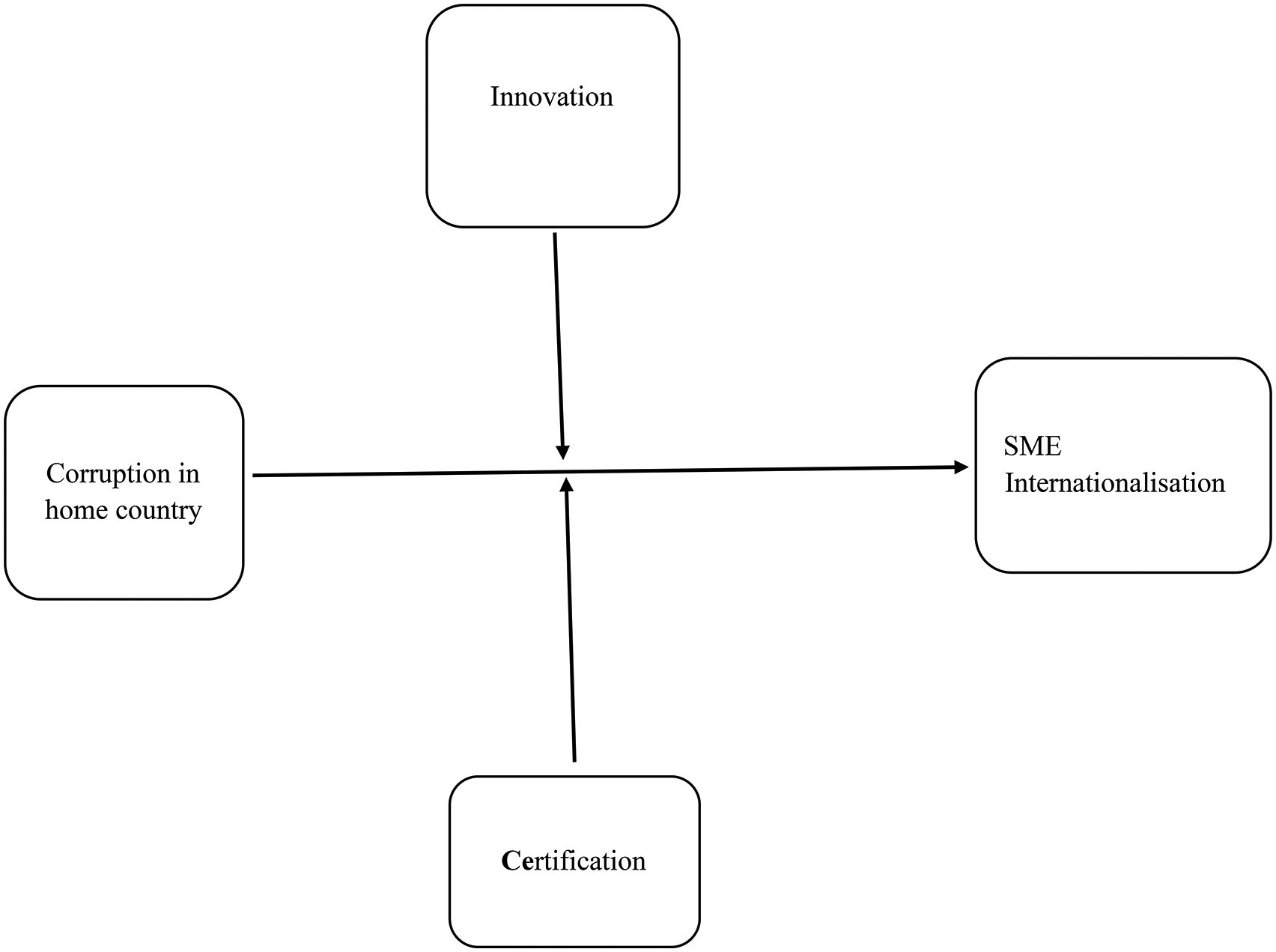
The research conceptual framework.
Methodology
Data source
To test our hypotheses, this study utilised the most comprehensive data available from the World Bank's Enterprise Survey 2023, which provides information on the business environment in 139 countries and has been extensively used in academic publications (Abdin et al., 2024; Ferreira et al., 2024). The Enterprise Survey provides firm-level data on firms spanning various countries and years. The survey data used in this study were collected in India in 2022. It contains information on corruption, export performance, certification, and firm characteristics. One significant advantage of utilising the World Bank's Enterprise Survey to analyse corruption is that it gives unique data at the firm level (Khan et al., 2021). Firms participating in the study make their own financial decisions and keep separate financial records independent of their parent firms. The CEOs of the participating businesses responded to the survey.
Variable measurement
Table 1 provides the measures of the research variables. SME internationalisation is the dependent variable for the study. Studies have measured SME internationalisation using dimensions such as extent, speed, and scope of internationalisation (Dar and Mishra, 2019). Export is the most common and convenient measure for SMEs to enter international markets (Jafari-Sadeghi et al., 2020; Mmadubuko et al., 2025). Export plays a crucial role in the competitiveness of SMEs in international markets. Export intensity is measured as the ratio of exports to total sales (Dong et al., 2022). The logarithm of the percentage of direct and indirect export sales measures export.
Definition of variables and their measurement.
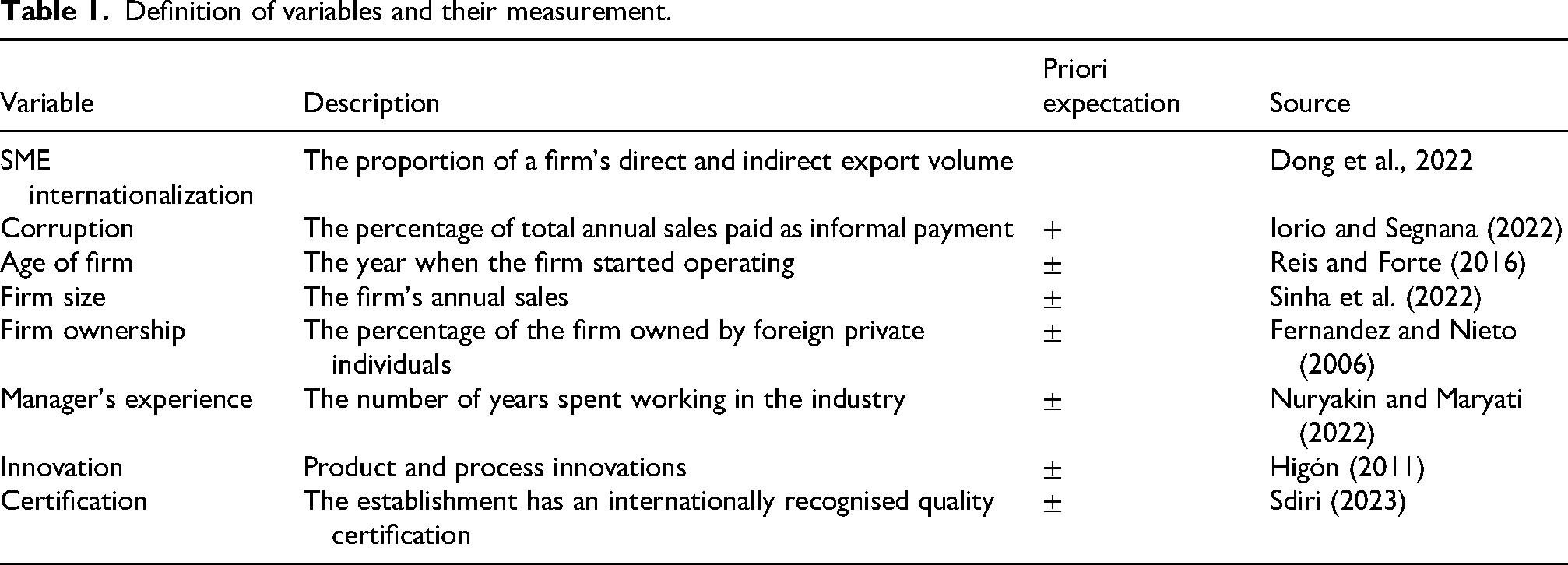
Certification serves as a vital indicator of a firm's commitment to maintaining international standards and best practices. This study employs a binary variable to capture the presence or absence of internationally recognised quality certifications such as ISO 9000 and ISO 14000. The inclusion of internationally recognised certifications signifies a firm's dedication to delivering products and services of consistently high quality, while prioritising environmental responsibility and competitiveness on an international level. This measure of certification is used by Sdiri (2023). Certification serves as a moderator in the relationship between corruption and SME internationalisation. Certification addresses corruption by upholding integrity in firms that adhere to internationally acclaimed standards, thereby enhancing their credibility with international stakeholders, investors, customers, and regulatory bodies, and reducing their reliance on corruption for internationalisation (Gil-Barragan and López-Sánchez, 2021).
Innovation is a vital determinant of a firm's internationalisation. Consistent with previous studies, innovation refers to the introduction of new goods, services, and processes within a firm's operations (Higón, 2011). Innovation is measured by process and product innovation as they reflect the output and operational efficiency of firms. For SMEs to internationalise quickly and effectively, they must innovate internally and adapt (Sadraei and Sadeghi, 2025). For this study, innovation serves as a moderator between Corruption and the SME Internationalisation relationship. Innovation provides SMEs with alternative, non-corrupt pathways for entering global markets. Thus, innovation enhances firms’ resilience against institutional constraints (Mohammad and Husted, 2021).
Firm size can influence internationalisation actions and outcomes (Kirca et al., 2012). In this study, firm size is measured by the logarithm of the firm's annual sales as used by Sinha et al. (2022). Firm ownership may influence firms’ strategic decisions regarding internationalisation and the development of international relationships. Firm ownership is measured by the percentage of the firm owned by foreign private individuals, as measured by Fernández and Nieto (2006), as it may indicate knowledge of international markets, which tends to facilitate innovative capabilities and export performance (Yi et al., 2013).
This study employed quantitative analysis that adopted ordinary least squares (OLS) regression to examine the relationships among corruption, innovation, certification, and SME internationalisation. OLS is appropriate for this study because it is easy to compute, provides reliable results, and effectively captures the direct relationship between corruption and SME internationalization, while allowing for straightforward testing of the moderating effects of innovation and certification without being influenced by irrelevant factors, making it a straightforward and efficient method for analysis (Gujarati and Porter, 2009). Additionally, OLS is widely used in similar international business studies that examine institutional factors and SME internationalisation (Cuervo-Cazurra et al., 2019), making the results of this study directly comparable to existing research and suitable for analysing World Bank Enterprise Survey data.
Stata 14 is used to analyse the data. Results from the analysis are presented in both tabular and graphical forms. While more sophisticated techniques, such as structural equation modelling or instrumental variables, can be useful in other contexts, OLS is a straightforward and appropriate method for the study's data and research questions.
Analysis and discussion
Prior to analysing the paths, the reliability and validity of variables are assessed. However, in this study, all variables are single-item indicators. According to Haddoud et al. (2023), the reliability and validity criteria cannot be applied when variables are single-item indicators. Table 2 shows the correlation coefficients among the dependent variable and the independent variables. Corruption was positively and significantly correlated with SME internationalisation. The results also showed that certification and innovation were negatively correlated with corruption, with innovation being the only significant factor. Managers’ experience and Innovation are negatively correlated with SME internationalisation and are significant. The possibility of collinearity was checked by estimating variance inflation factors (VIFs). The VIF indicates whether the independent variables have a strong linear relationship with each other. In Table 1, all the VIF values are below 1.75, indicating the absence of multicollinearity (Hair et al., 2013).
Variable correlation matrix.
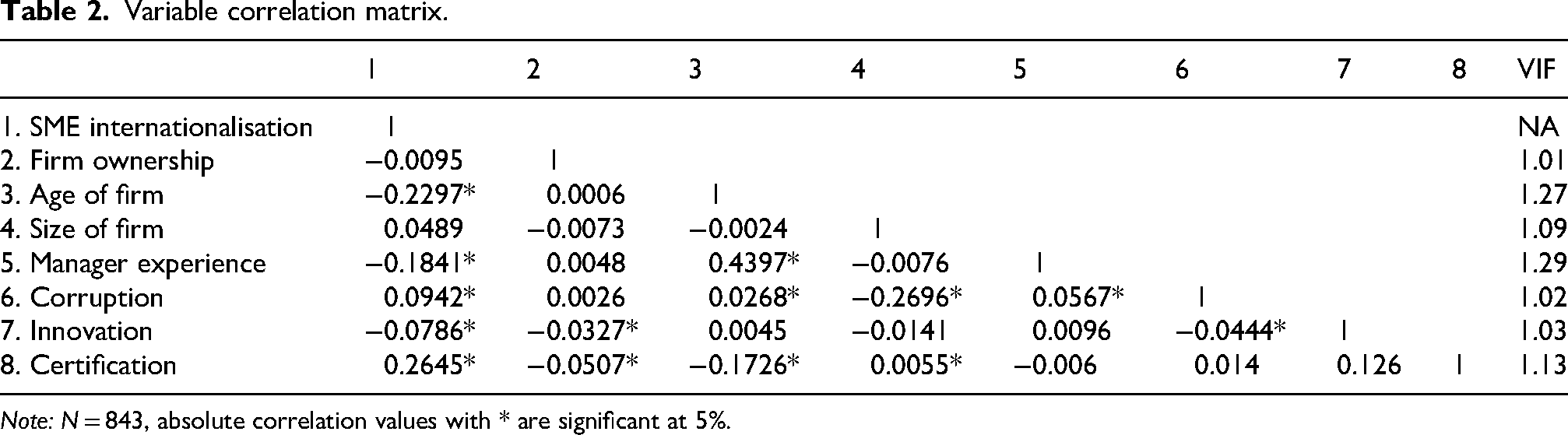
Note: N = 843, absolute correlation values with * are significant at 5%.
Table 3 presents the regression results. Model 1 features only the control variables. Model 2 includes the control variables and the primary independent variable, corruption. Models 3–5 include the interaction terms, and Model 6 reports the results of the full model, which includes control variables, the independent variable, and interaction terms.
Regression results.
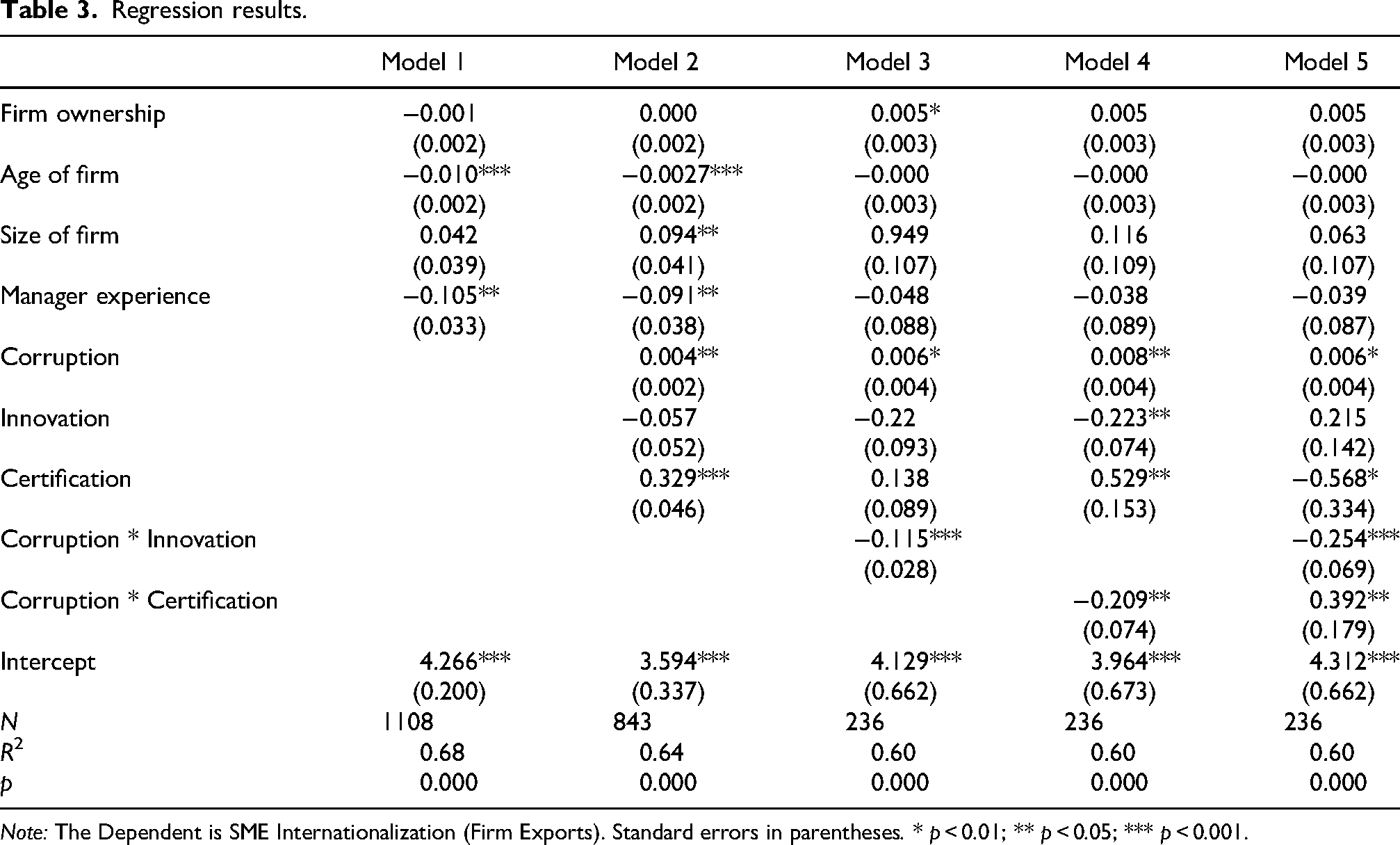
Note: The Dependent is SME Internationalization (Firm Exports). Standard errors in parentheses. * p < 0.01; ** p < 0.05; *** p < 0.001.
Hypothesis results summary.
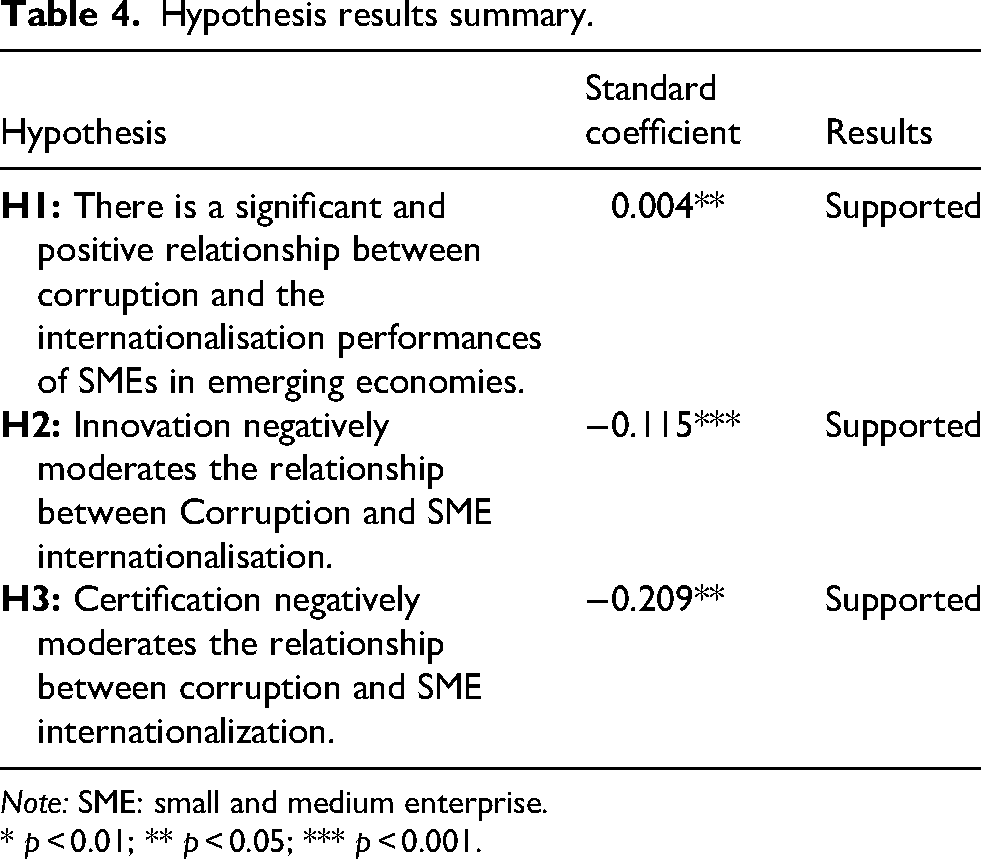
Note: SME: small and medium enterprise.
* p < 0.01; ** p < 0.05; *** p < 0.001.
Hypothesis 1 suggests that corruption has a positive effect on SME internationalisation. In Model 2, the coefficient of corruption is positive and significant (b = 0.004, p = 0.005), which supports the null hypothesis. That is, a unit change in corruption will increase SME internationalisation by 0.004. Figure 2 visually confirms this positive relationship, showing that SMEs internationalise more actively when corruption levels are high. This finding provides empirical support for the argument that corruption influences SME decisions regarding market expansion. Specifically, when corruption costs remain manageable, SMEs opt to stay within domestic markets. However, as corruption escalates and operational challenges intensify, SMEs seek internationalisation as a strategic response, aiming to enter markets with strong institutions and less burdensome regulatory environments
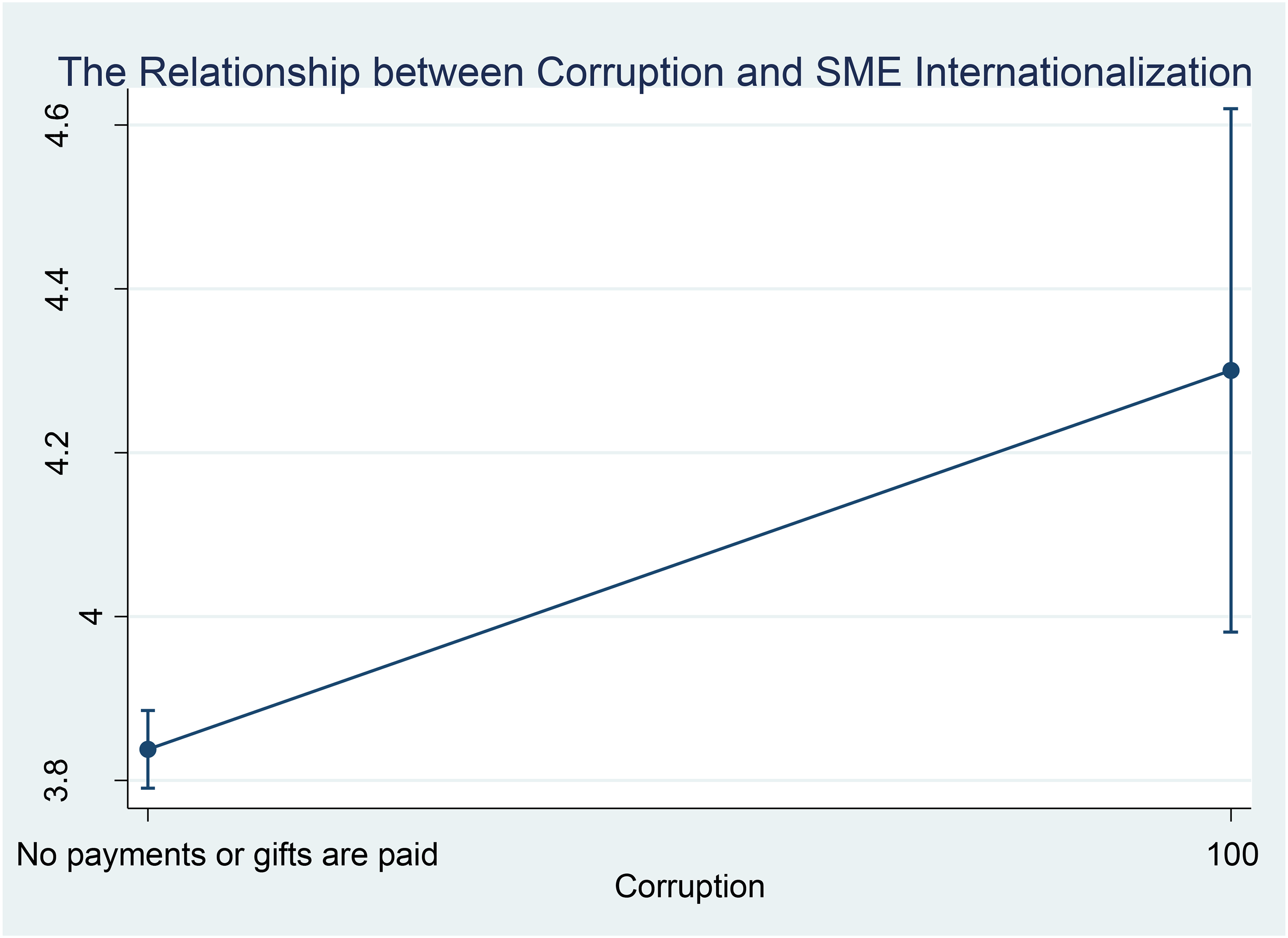
The relationship between corruption and small and medium enterprise (SME) internationalization.
This finding diverges from studies asserting that corruption negatively affects SME internationalisation (Ashyrov, 2020; Tan and Tusha, 2023). However, it aligns with prior research indicating that corruption acts as a catalyst for internationalisation (Adomako et al., 2021; Bertrand et al., 2022). This contributes to the growing discourse on SME adaptation strategies, demonstrating that corruption does not merely hinder internationalisation; it can intensify SMEs’ drive to expand internationally as a survival mechanism. The finding draws on the institutional theory explaining how external pressures, such as high levels of corruption, shape firm behaviour. SMEs operating in environments with weak or corrupt institutions may try to survive or grow by moving into countries with stronger institutions, where rules are more straightforward and there is less corruption. Simultaneously, through a resource-based perspective, SMEs leverage their flexibility and adaptability to strategically relocate their operations to less corrupt environments, where they can operate effectively and efficiently, thereby creating greater value.
Hypothesis 2 proposed that innovation weakens the positive relationship between corruption and SME internationalisation. Model 3 reveals a negative and statistically significant interaction effect (b = −0.115, p < 0.001), indicating that innovation weakens this relationship between corruption and SME internationalisation. That is when SMEs engage in innovative activities such as developing new products or processes; they are reluctant to rely on corrupt practices to pursue internationalisation (Mohammad and Husted, 2021; Saridakis et al., 2019). This result does support Hypothesis 2 and suggests a more complex relationship between innovation and corruption in shaping international expansion. Though these findings answer whether innovation moderates the corruption-SME Internationalisation relationship, innovation provides SMEs with alternative, non-corrupt pathways for entering global markets.
These innovative firms are better equipped to compete based on product differentiation or process efficiency, and thus can avoid institutional ‘shortcuts’ such as bribery. This supports prior studies that argue innovation enhances firms’ resilience against institutional constraints (Mohammad and Husted, 2021; Saridakis et al., 2019). Therefore, reducing their dependence on ‘grease’ in the form of bribes or favours as their unique offerings (product differentiation or process efficiency) speak for themselves when engaging in international expansion. Through the resource-based view, innovation serves as a strategic internal resource that enables SMEs to bypass the pressures of corrupt environments (Ramon-Jeronimo et al., 2019). Meanwhile, institutional theory shows how SMEs respond to weak institutional environments by not complying or conforming, but by innovating their way around institutional voids. Innovation serves as both a capability and a coping mechanism for SMEs. Table 4 summarises the hypothesis testing results, indicating that all three hypotheses are supported. Specifically, H1 shows a positive and standard coefficient (p = 0.004), while H2 (−0.115 **) and H3 (−0.209**) demonstrate negative and statistically significant effects.
Hypothesis 3 predicts that certification would weaken the positive relationship between corruption and SME internationalisation. The results from Model 4 indicate that certification significantly weakens the positive relationship between corruption and internationalisation (b = −0.209, p < 0.05), thus supporting Hypothesis 3. This finding suggests that, rather than amplifying the drive to internationalise under corruption, certification serves as a substitute mechanism, allowing SMEs to navigate international markets without relying on corrupt practices (Pacheco, 2023; Chow-Chua et al., 2003). Certification addresses corruption by upholding integrity in firms that adhere to internationally acclaimed standards, thereby enhancing their credibility with international stakeholders, investors, customers, and regulatory bodies, and reducing their reliance on corruption for internationalisation.
Pacheco et al. (2022) confirm that the role of internationally recognised certification seals issued by third-party entities can be seen as addressing market failures (corruption) and helping firms surpass the liability of foreignness. This result directly responds to whether certification moderates the effect of corruption on SME internationalisation. The evidence suggests that internationally recognised certifications, such as ISO or other third-party seals, signal credibility, integrity, and compliance with global standards, facilitating entry into new international markets. These certifications help SMEs overcome institutional voids and reduce the need for corrupt payments to access international markets (Chow-Chua et al., 2003; Pacheco, 2023). Also, firms engaged in corruption are exposed to various risks, including legal repercussions, reputational damage, and financial losses.
Certification can help mitigate these risks by promoting ethical practices and compliance with international standards (Terlaak and King, 2006). This can incentivise firms to distance themselves from corruption, thereby decreasing their role in their internationalisation strategies (Chow-Chua et al., 2003). The result, which draws on institutional theory, reinforces that firms seek legitimacy in response to institutional pressures. In corrupt environments, certification serves as a legitimising tag that signals trustworthiness to foreign stakeholders, including regulators, investors, and customers. Thus, reducing the necessity for ‘grease’ payments to facilitate business. From the resource-based view, certification as a valuable intangible resource enhances a firm's reputation and lowers entry barriers, thereby functioning as a strategic asset for internationalisation (Dimitropoulos and Koumanakos, 2006). This evidence confirms that certification initiatives are a corruption-resilient pathway to internationalisation. Thus, SMEs should be encouraged to pursue certifications not only for quality assurance but also as a strategic risk mitigation tool that builds international legitimacy and reduces exposure to corrupt systems.
Finally, the results presented in Model 5 show that the explanatory variables, interaction terms, and control variables are included simultaneously, providing robustness to the overall findings. This stability lends confidence to the conclusion that both innovation and certification serve as buffers against the influence of corruption on internationlisation, rather than amplifiers of it.
Conclusion
Extensive research has examined the relationship between corruption and SME internationalisation; however, a notable gap remains in understanding how certification and innovation influence this relationship, particularly in emerging markets such as India. Grounded in institutional theory and resource-based view, this study explores the impact of corruption on SME internationalisation while investigating the moderating role of firm-specific factors. The findings corroborate previous studies, establishing that corruption significantly enhances SME internationalisation (Adomako et al., 2021; Bertrand et al., 2022). Specifically, when corruption costs remain manageable, SMEs opt to stay within domestic markets. However, as corruption escalates and operational challenges intensify, SMEs seek internationalisation as a strategic response, aiming to enter markets with strong institutions and less burdensome regulatory environments. Notably, innovation and certification emerge as influential moderating factors in this dynamic. These firm-specific factors serve as buffers against the influence of corruption on SME internationalisation.
Theoretical implications
This research makes several theoretical contributions to the international entrepreneurship and corruption literature. First, this study extends institutional theory and RBV on how firm-specific resources (certification and innovation) interact with external institutional voids (corruption) to influence SME internationalisation strategies. This dual theoretical lens shows how internal and external factors jointly shape strategic outcomes for SMEs in international business research.
Second, the findings make a significant contribution to the ongoing theoretical debate between the ‘grease’ and ‘sand’ perspectives on corruption. Rather than supporting one view exclusively, the research suggests that both theories may be valid, depending on contextual factors, specifically the presence of moderating variables such as certification and innovation. This integrative perspective advances theoretical understanding of corruption by recognising that its effects are dependent on specific conditions.
Third, the study expands the growing literature on the consequences of corruption on the international activities of SMEs in emerging countries. By examining this relationship in the Indian context, the study provides insights into how institutional voids in emerging markets shape firm behaviour and Internationalisation strategies. Finally, our study suggests that the influence of firm-specific factors on the internationalisation of SMEs varies based on firm size, age of the business, and management experience.
Practical implications
For SME managers and entrepreneurs, our findings provide strategic guidance for navigating corrupt business environments. While corruption might serve as ‘grease’ to facilitate access to resources for internationalisation in weak institutional contexts, our research highlights the importance of developing alternative capabilities that reduce dependence on such practices. Specifically, investing in innovation and pursuing international certifications represents more sustainable paths to international market entry and expansion.
For policymakers, our research highlights the importance of creating an enabling environment that reduces SMEs’ reliance on corrupt practices for internationalisation. This includes harmonising international certification standards to improve accessibility for SMEs and strengthening legal frameworks for combating corruption. Additionally, innovation support programs that help SMEs develop unique products and efficient processes would enhance their competitive position in international markets without resorting to corrupt practices.
Industry associations and business support organisations should consider developing specific programs that help SMEs obtain relevant certifications and develop innovation capabilities, particularly for firms looking to internationalise. These initiatives could significantly mitigate the perceived need to engage in corruption to overcome market entry barriers.
Limitations and future studies
The study has several limitations that present opportunities for future research. First, our cross-sectional design does not capture the dynamic nature of corrupt practices across different stages of the internationalisation process. Future studies should employ panel data to examine the long-term effects of corruption on SME internationalisation, with particular attention to variations across firm sizes and industries, as well as more robust estimation techniques such as structural equation modelling and instrumental variable estimation.
Second, further research should explore the effectiveness of specific certification schemes and innovation strategies in mitigating the effects of corruption on internationalisation. Not all certifications or innovation types may be equally effective, and understanding these nuances would provide more targeted guidance for SMEs.
Third, future studies could incorporate cultural perspectives to examine how national and organisational culture influences the relationships between corruption, innovation, certification, and SME internationalisation. Cultural factors likely play a significant role in determining how firms respond to corrupt environments and effectively leverage their resources.
Ultimately, our findings suggest that innovation can mitigate the effects of corruption; however, the effectiveness of this strategy may vary depending on contextual factors, including industry dynamics, institutional environments, and firm-specific capabilities. Future research should further explore these factors and develop practical frameworks to support innovative SMEs in overcoming corruption-related challenges as they expand into international markets.
Footnotes

Funding
The authors received no financial support for the research, authorship, and/or publication of this article.
Declaration of conflicting interests
The authors declared no potential conflicts of interest with respect to the research, authorship, and/or publication of this article.