



Abstract
This article investigates the influence of networking on innovation and internationalisation within U.K.-based, female-led small and medium-sized tech enterprises. It utilises data from the 2021 Longitudinal Small Business Survey to evaluate a model that incorporates networking, three forms of innovation (product, process, and market), and international performance across 156 technology start-ups founded by women. The study employs orchestration theory to explore how female entrepreneurs strategically manage resources like networking to foster innovation and promote international growth. Findings suggest that while networking significantly boosts product innovation, it does not have a direct effect on process or market innovation. Nonetheless, networking indirectly strengthens the impact of process and market innovations on internationalisation. This highlights that women entrepreneurs initially use networks to enhance product innovation, then leverage them to convert process and organisational innovations into international expansion. The study contributes to the theoretical understanding of the intersection between gender and international entrepreneurship from an orchestration perspective and provides practical insights for female entrepreneurs on optimising networks to drive innovation and facilitate global scaling.
Introduction
International small and medium-sized enterprises (SMEs) face a challenging landscape marked by political upheavals, such as trade wars and Brexit, dynamic migration patterns, societal movements, and trends towards de-internationalisation (Hatzigeorgiou and Lodefalk, 2021; Meyer et al., 2023). Since the inception of international business (IB), scholars have acknowledged the pivotal role of innovation in the internationalisation of small firms (SMEs). SMEs, aiming to enhance returns on their innovations, typically engage in internationalisation efforts (Knight and Cavusgil, 2004; Oviatt and McDougall, 1994; Sadraei, et al., 2022). However, challenges confront firms in the internationalisation process, including resource constraints (Verbeke and Ciravegna, 2018). Due to these limitations, SMEs frequently leverage their networking to mitigate risks and facilitate internationalisation (Leung-Kwong Wong and Ellis, 2002).
Networking plays significant role in aiding firms (Papadimitriou et al., 2024) in acquiring new opportunities and innovative collaboration (Belderbos et al., 2006) and market access (Puthussery et al., 2019), thus facilitating internationalisation (Cassiman and Veugelers, 2006) by helping addressing challenges towards internationalisation (Karami and Tang, 2019). However, while the literature acknowledges the benefits of networking (Deng et al., 2024), it often overlooks its dual-edge nature. Networking can also lead to dependency on specific partners, reduced autonomy, and potential conflicts. This study underscores the critical significance of networking as potential moderators influencing the innovation-internationalisation relationship in the advanced context of the United Kingdom.
The existing literature reveals that limited attention has been placed on the overall network development and networking activities of female entrepreneurs (Hampton et al., 2009; Hosseinzadeh et al., 2022; Khavarinezhad et al., 2022; Singh and Belwal, 2008; Watson, 2012). When it comes to young firms (Chakraborty et al., 2023), there is a notable gap in understanding the unique challenges faced by young firms led by women when seeking to establish global networks/connections for their startups or SMEs internationalisation (Isaga, 2019; Kuschel et al., 2017; Mcclelland et al., 2005; Musteen et al., 2014a). While studies such as Brush and Cooper (2012) and Terjesen and Elam (2009) shed light on gender-specific challenges in entrepreneurship, there is a limited exploration of the intricate dynamics involved in building international networks (Anggadwita and Indarti, 2023) or how to orchestrate for emerging women-led businesses.
Researchers highlight the importance of networks for women entrepreneurs but lacks insight into how networking directly or moderately impacts innovation in young firms’ internationalisation. This gap is critical for understanding the challenges these startups face in global markets. Effective networking is essential for young tech firms (Podolny and Page, 1998), especially in the male-dominated tech sector. While the internationalisation of female-led SMEs is well-studied, the role of networking in enhancing innovation dimensions and its moderating effects on internationalisation remains unclear.
This article investigates the influence of networks on orchestrating innovation for the international expansion of young, female-led tech SMEs in the United Kingdom. It poses two research questions: (RQ1) What is the impact of networking on innovation (Product, Process, and Market) towards internationalisation? (RQ2) Does networking moderate the relationship between innovation and internationalisation performance?
This study enriches IB literature by showing how female-led start-ups use innovations and networks for global expansion. Early networking directly boosts product innovation and indirectly influences process and market innovations, crucial for internationalisation. Using orchestration theory, the research highlights the strategic importance of early networking for the international growth of women-led SMEs.
Orchestration theory underpins this study, explaining how female entrepreneurs strategically manage resources like networking to drive innovation and international growth. This theory posits that firms must coordinate diverse resources to achieve goals (Sirmon et al., 2009). For female-led SMEs, this means using networks to access knowledge and market opportunities, enhancing innovation in products, processes, and markets. The study explores how these firms orchestrate networks to influence innovation and internationalisation, revealing both benefits and challenges, and offering insights into optimising networking strategies for global expansion.
The rationale for exploring the role of networking in internationalisation, especially in the context of female entrepreneurs, is driven by current trends and challenges in the global business environment. According to industry reports by McKinsey, and Harvard Business Review, the COVID-19 pandemic and ongoing geopolitical shifts have significantly impacted global trade and business operations, making effective networking more crucial than ever for SMEs (Harvard Business Review, 2023; McKinsey & Company, 2021). These reports emphasise the increasing importance of digital networks and the need for strategic networking to navigate the complexities of international markets. For female entrepreneurs, who often face additional barriers, understanding how to leverage networks effectively can be a key factor in overcoming challenges and achieving sustainable growth in international markets.
The subsequent sections of this study are structured as follows: The theoretical underpinnings and hypotheses development section provides an overview of theoretical underpins, the hypothesis development section offers the hypotheses development, the research method section supplies the research methodology, the findings section illustrates the results and then the discussion section discuss the findings. Finally, the study concludes with recommendations and fundamental concepts for internationalisation of young SMEs led by women in the United Kingdom.
Theoretical underpinnings and hypotheses development
The role of networks in the internationalization of female entrepreneurship
Over the past two decades, the rise of small business owners pursuing cross-border opportunities and the increasing participation of women in entrepreneurship have converged to highlight the internationalisation of female-owned enterprises (Arenius and Minniti, 2005; Carter et al., 2003; García and Capitán, 2016; Madsen and Servais, 1997). The literature emphasises how networks facilitate entry into foreign markets by providing access to essential opportunities, knowledge, and resources, thus mitigating risks and helping new ventures overcome the liabilities of size, newness, and foreignness (Brush et al., 2009; Johanson and Mattsson, 2015; Mcclelland et al., 2005).
However, reliance on networks also has drawbacks, particularly when they are overly insular or consist of strong ties with close associates, leading to missed opportunities and suboptimal decisions due to redundant information or excessive trust (Krämer et al., 2021; Musteen et al., 2014b). This highlights the dual-edge of networks in supporting yet potentially constraining the growth of international enterprises.
The relationship between networking and the internationalisation of female entrepreneurship offers insights into promoting gender-inclusive economic growth (Anggadwita and Indarti, 2023). Networking provides women entrepreneurs with access to resources, contacts, and mentorship crucial for global markets (Marlow and McAdam, 2013). However, women often extend traditional business focuses to include balancing entrepreneurship with motherhood and overcoming biases (Brush et al., 2009). Their preference for informal networks, often male-dominated, can hinder internationalisation (Greve and Salaff, 2003). Career breaks due to motherhood may further isolate them, leading to alternative internationalisation strategies and suggesting a nuanced role of networking in the growth of female-led businesses.
Innovation and international female entrepreneurship
Innovation is pivotal in female entrepreneurship, significantly influencing the success and sustainability of women-owned startups (Dutta et al., 2019; Gundry et al., 2014). Female entrepreneurs are recognised for launching innovative solutions that meet specific needs within their target markets, often focusing on social impact, sustainability, and inclusivity (Brush and Cooper, 2012; Machado et al., 2023; Marlow and McAdam, 2013; Suseno and Abbott, 2021). Such innovations often arise from personal imagination, customer feedback, and societal trends, among other sources.
Networks play a crucial role in this context, facilitating the exchange of ideas and insights that enhance innovation (Farrukh et al., 2023). Additionally, the importance of networking in the internationalisation of female-led startups cannot be overstated. Networks help women entrepreneurs access diverse knowledge, establish connections, and gain insights into global markets, supporting their international expansion (Madhok and Keyhani, 2012).
Effective networking thus not only advances business growth but also contributes to broader societal benefits, making it a key area for targeted research and support to empower women in global business ventures (McAdam et al., 2019). Networking is crucial for female-led startups, enhancing product innovation through access to diverse expertise and resources (Brown and Mason, 2017), and facilitating process innovation through the adoption of efficient practices and technologies (Brush et al., 2019).
It also enables business marketing innovation, helping female entrepreneurs gain market intelligence and establish international partnerships (Brush, 1992; Ojong et al., 2021). Networking supports the strategic exploration of global markets, overcoming gender-specific barriers, and securing international growth. This interconnectedness of networking, innovation, and internationalisation underscores its pivotal role in promoting the success and global expansion of women-led startups, driving economic growth and empowering women in the entrepreneurial landscape (Brush et al., 2006).
The orchestration of innovation theory (To, 2017) emphasises a holistic approach, focusing on product, process, and market innovation. It advocates for strategic coordination across these dimensions to enhance customer satisfaction, operational efficiency, and market expansion, thereby fostering a cohesive innovation ecosystem (Hurmelinna-Laukkanen et al., 2022; Leten et al., 2013; Yaqub et al., 2020). This theory is particularly relevant for understanding how female entrepreneurs manage and mobilise resources to drive innovation and foster international growth.
Hypothesis development
Network: Innovation
Hypothesis 1 proposes that there is a positive and significant relationship between networking and innovation across three key areas: business marketing innovation, product innovation, and process innovation in women-owned start-ups.
Extensive research indicates that networking enhances innovation in the business market (Bolzani and Scandura, 2023; Ciravegna et al., 2014; Eggers et al., 2020; Pittaway et al., 2004). Scholars argue that collaborative networks provide access to a broad range of insights, market intelligence, and potential strategic alliances, thus promoting innovation and increasing competitiveness in global markets. Powell et al. (1996) and Franco and Martins (2023) further highlight that social networks are critical for facilitating knowledge exchange and collaboration, which are essential for business market innovation.
There is a strong correlation between networking and product innovation. Engagement in industry networks grants access to external resources and knowledge, which are essential for developing innovative products (Najafi-Tavani et al., 2018). Research by Jones et al. (1998) and Lee et al. (2010) demonstrates that collaborative networks expand the scope of knowledge acquisition and enhance dynamic interactions with diverse stakeholders, driving the development of technologically advanced products that meet evolving customer needs.
The significant impact of networking on process innovation is well-supported in literature. Uzzi (2018) explores how strong networks enable the exchange of best practices, technological insights, and strategic efficiencies, fostering the adoption of advanced processes and technologies. This network-driven ecosystem drives firms towards operational excellence and innovation (Konsti-Laakso et al., 2012; Winters and Stam, 2007). Ritter and Gemünden (2003) also affirm that collaborative networks act as catalysts for process improvement by facilitating the exchange of ideas and expertise. H1a: Networking is significantly and positively associated with the business market innovation of start-ups led by women. H1b: Networking is significantly and positively associated with the product innovation of start-ups led by women. H1c: Networking is significantly and positively associated with the process innovation of start-ups led by women.
Business market innovation: Business internationalization
Hypothesis 2 posits a significant and positive relationship between market innovation and the internationalisation of start-ups led by women.
Literature emphasises the critical role of market innovation in shaping the internationalisation strategies of women-owned start-ups. Terjesen and Elam (2009) and Brush and Cooper (2012) suggest that female entrepreneurs often employ market-oriented strategies that emphasise innovation to gain a competitive advantage in international markets. Market innovation, which includes new market entry strategies, product positioning, and adaptation to changing market demands, serves as a strategic driver for women-led start-ups aiming to expand globally. H2: Market innovation is significantly and positively associated with the decision of start-ups led by women to internationalise.
Product innovation: Business internationalization
Hypothesis 3 suggests a significant positive relationship between product innovation and the internationalisation of women-led SMEs.
Empirical evidence underscores the crucial role of product innovation in driving internationalisation strategies. Marlow and McAdam (2013) and Welter and Audretsch (2016) highlight that unique entrepreneurial traits and innovative products tailored to market demands are strategic assets for women entrepreneurs targeting global markets. The introduction of differentiated products that meet diverse consumer needs enhances international competitiveness, confirming product innovation as a key factor in the international expansion decisions of women-led startups (Setini et al., 2020). H3: Product innovation is significantly and positively associated with the decision of start-ups led by women to internationalise.
Process innovation: Business internationalization
Hypothesis 4 posits a significant and positive relationship between process innovation and the internationalisation of start-ups led by women.
Empirical studies support the transformative role of process innovation in shaping the internationalisation strategies of women-owned start-ups. Minniti and Nardone (2007) indicate that women entrepreneurs often leverage process innovation to enhance operational efficiency, streamline production, and adopt advanced technologies. Process innovation, characterised by improvements in internal organisational processes and the adoption of cutting-edge technologies, is a strategic enabler for women-led SMEs seeking to navigate the complexities of international markets (Machado et al., 2023). H4: Process innovation is significantly and positively associated with the decision of start-ups led by women to internationalise.
Network: Business internationalization
Hypothesis 5 consists of two parts, suggesting that network dynamics moderate the relationship between market innovation and process innovation with the internationalisation performance of women-led SMEs.
Scholars like Aldrich and Zimmer (1986) and Elfring and Hulsink (2003) emphasise that networks facilitate information exchange, collaboration, resource acquisition and internationalisation (Mahmoud et al., 2023). For women entrepreneurs engaged in market innovation, the moderating role of networks is crucial, influencing the extent to which innovative market strategies lead to successful internationalisation.
Ahuja and Lampert (2001) highlight the importance of social networks in the adoption and diffusion of innovative processes within organisations. For women-led start-ups, networks are essential conduits for knowledge exchange, skill development, and collaborative learning, ultimately impacting internationalisation performance. Brush and Cooper (2012) note that female entrepreneurs strategically leverage networks for IB ventures, drawing on valuable resources, mentorship, and market insights. H5a: Network moderates the association between market innovation and start-ups internationalization performance. H5b: Network moderates the association between process innovation and start-ups internationalization performance.
Figure 1 illustrates the hypothesised conceptual model.
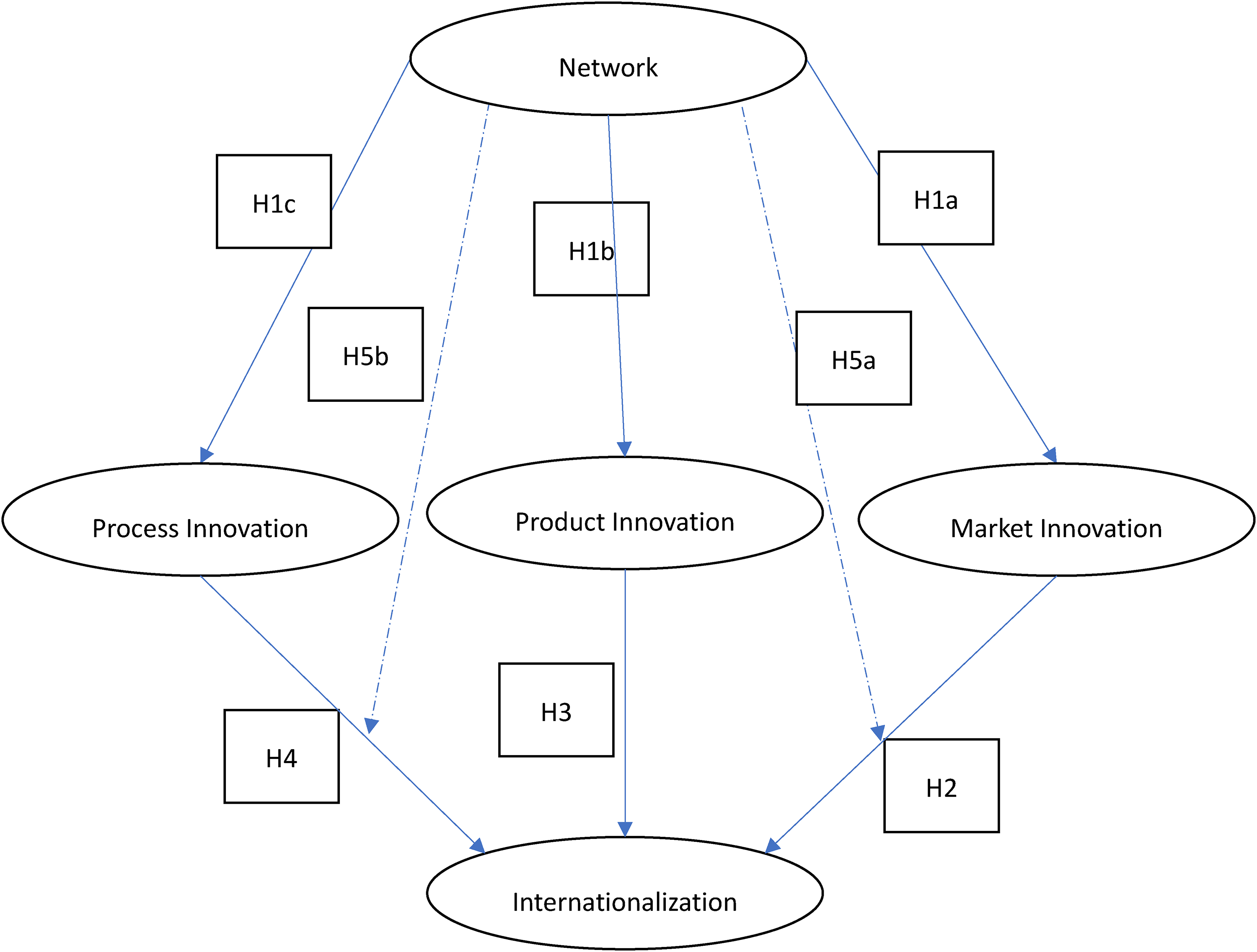
The hypothesised conceptual model.
Research method
Data and sample characteristics
To examine the hypotheses, the data at the firm level were extracted from the Small Business Survey 2021, which is administered by the U.K.'s Department for Business, Energy, and Industrial Strategy. The Longitude Small Business Survey, initiated in 2015, is a survey that enlists businesses operating in the private sector and employing fewer than 250 individuals. The overall dataset observation encompasses 7636 interviews conducted nationwide in the United Kingdom, with 5597 of these representing SMEs, excluding entities with no employees and larger businesses with over 250 employees. This includes 2255 ‘top-up’ interviews (1764 SMEs) carried out in 2021, along with 4764 follow-up interviews (3486 SMEs) from the 2019 panel and 617 follow-up interviews (424 SMEs) from the panel spanning 2015–2018.
In the scope of this study, the sample has been restricted to SMEs, led by women in the United Kingdom, identified by the variable WLED_YY equalling 1. The sample was filtered by tech-based SMEs and the age of the firm, as well. To achieve the aim of targeting start-ups, the sample has been narrowed down to young businesses, with an age between 0 and 5 years old. We filtered the samples to those firms that use technologies or web-based software to manage their business.
Consequently, the final dataset comprises 1764 SMEs led by women has been observed. After limiting to the year 2021, tech-based firms, and the age filter, the sample size became 156.
Notably, this sample size surpasses the recommended range, as indicated by statistical power analyses. The results underscore the substantial adequacy of the sample size, exceeding the suggested range of derived from inverse square root methods and the gamma-exponential approach proposed by (Kock and Hadaya, 2018).
To ensure representativeness, the final sample was diversified across various sectors that embedded technology in their business plans. various sectors such as encompassing the primary sector, manufacturing, construction, wholesale/retail, transport/storage, accommodation/food, information/communication, financial/real estate, professional/scientific, administrative/support, education, health/social work, arts/entertainment, and other services. The sample comprises 53.6% micro firms with 1–9 employees, 31.5% small firms with 10–49 employees, and 14.9% medium firms with 50–249 employees. In terms of age, a majority of these enterprises have been in operation for more than 20 years (51%), while the remaining sample consists of firms distributed across the categories of 11–20 years (21.1%), 6–10 years (16.9%), and less than five years (10%). Regarding geographical location, the data indicates that the North West (15.9), Yorkshire and the Humber (15.8), and West Midlands (13.2) emerge as the top three regions with the highest concentration of employed SMEs. The rest of the firms are dispersed across other locations in the United Kingdom.
Measures
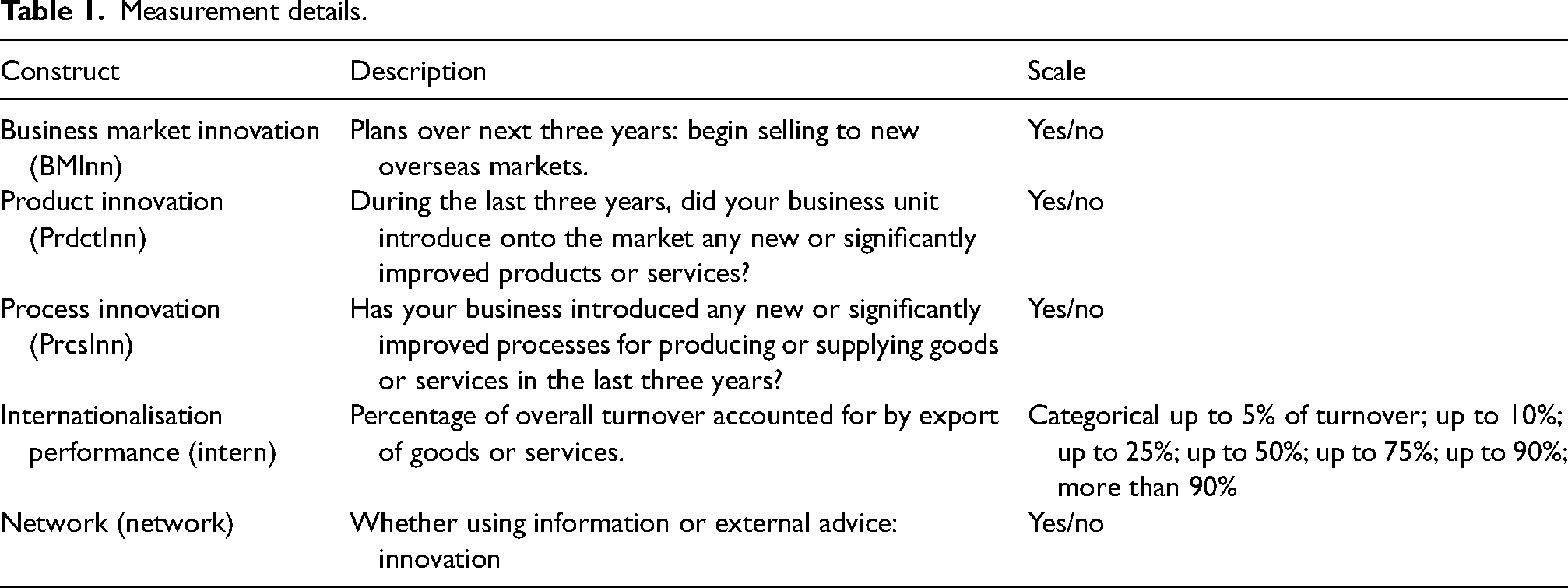
According to the literature, innovation includes three main dimensions, namely business market innovation, product innovation and process innovation (Hanaysha et al., 2022). Accordingly in this study, ‘business market innovation’ has been measured by the extent to which firms have planned to begin selling to new overseas markets. Expanding to foreign markets represents a major innovation for SMEs, requiring substantial changes to strategy, operations, and offerings to succeed in new environments. As such, we consider it a useful indicator of market-focused innovation orientation (Hilmersson et al., 2023; Martín Martín et al., 2022).
Due to the nature of the database questions, we put product and service innovation measurements together into one factor. Based on the literature ‘product innovation’ is associated with introducing new or significantly improved products or services to the market (Castaño et al., 2016; Halilem et al., 2014). However, when it comes to ‘Process innovation’, literature highlights that introducing any new or significantly improved processes for producing or supplying goods is an effective way to measure process innovation (Halilem et al., 2014).
Regarding the other measures, our suggested model incorporates two additional variables including internationalisation and network. As per internationalisation following Jafari Sadeghi and Biancone (2018), we considered ‘internationalisation performance’ as the percentage of overall turnover accounted for by the export of goods or services (Jafari Sadeghi and Biancone, 2018). Moreover, the literature indicates that, social networks, can be defined as the firms’ relationships and interactions with external stakeholders to obtain various organisational advantages/advice towards innovation, such as cost efficiencies, innovation performance, risk reduction, new idea creation, etc. (Faems et al., 2005; Hatch and Schultz, 2010; Ind et al., 2017; Markovic and Bagherzadeh, 2018). Therefore, in this study ‘network’ has been measured by whether a firm uses information or external advice towards Innovation.
Table 1 illustrates measures that have been used to conceptualise this study.
Measurement details.
Method of analysis
The proposed analytical method is non-linear partial least squares structural equation modelling (PLS-SEM) utilising WarpPLS software version 8.0. We opt for PLS-SEM for its suitability in simultaneously testing various variables, including latent variables and moderator, in the model (Jafari-Sadeghi et al., 2023; Kock and Gaskins, 2014). As noted by scholars, PLS-SEM is particularly appropriate for research aiming to predict measurable outcomes through correlations. Additionally, WarpPLS, in computing p-values through nonparametric approaches, aligns with our research model that involves binary and categorical variables, not relying on normality assumptions (Kock, 2014). The interpretation of p-values and path coefficients (β) in the path model will guide the extraction of findings.
Findings
Assessment of measurements and structural model
When evaluating the SEM model, it becomes essential to scrutinise the validity and reliability of latent variables before proceeding to test the hypothesised paths. However, as the majority of our variables are either binary or categorical, conventional criteria such as composite reliability, Cronbach's alpha, and average variance are not applicable. Instead, we addressed the potential collinearity in the structural model by computing both full and block collinearity variance inflation factors (VIFs). The full collinearity VIFs not only gauge collinearity across all variables in the model but also form the basis for a conservative assessment of common method bias (Kock, 2021).Conversely, the block VIFs resemble the conventional multicollinearity assessment, examining collinearity solely among predictors of endogenous variables in the model. As evidenced in Table 2, the VIF values fall below the recommended thresholds of 5 and 3.3, advised for respectively acceptable and optimal limits (Hair et al., 2011; Kock and Lynn, 2012).
VIFs.

VIF: variance inflation factor.
Furthermore, Table 3 presents seven quality and model fit indices that assess the resilience of the structural model, indicating a strong alignment between the model and the data. Notably, the average R-squared, average adjusted R-squared, and average path coefficient have demonstrated statistical significance, signifying substantial explanatory power. Additionally, both average block VIF and average full collinearity VIF have been computed, with no collinearity concerns identified as all requisite thresholds are met. The GoF (Tenenhaus GoF) affirms a moderate level of fit between the model and the data. Subsequently, SPR, denoting Sympson's paradox ratio, emphasises the robustness of the cause-and-effect relationships within the model (Bag et al., 2021; Chitsaz et al., 2017).
Model fit and quality indices.
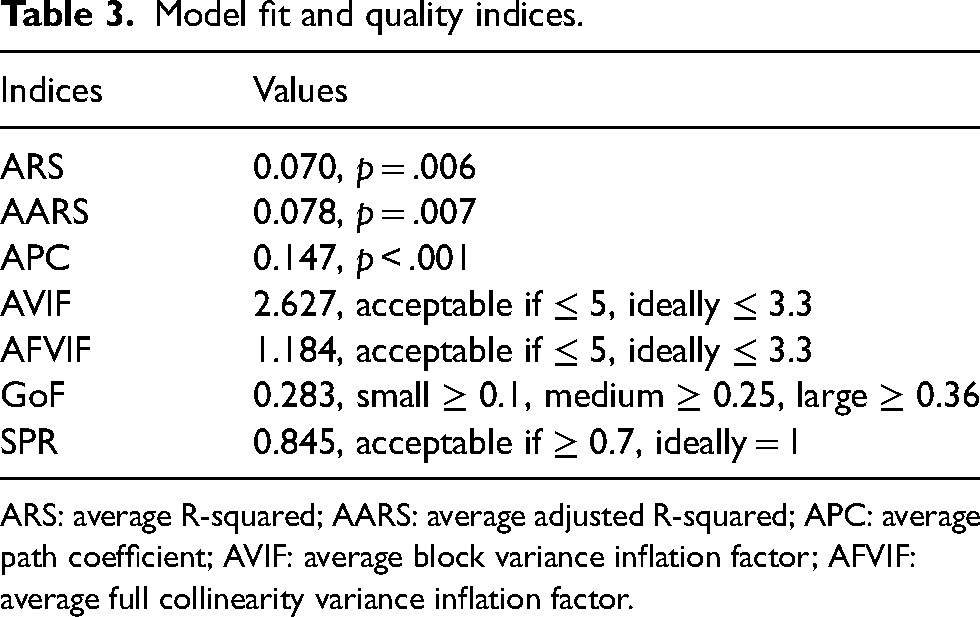
ARS: average R-squared; AARS: average adjusted R-squared; APC: average path coefficient; AVIF: average block variance inflation factor; AFVIF: average full collinearity variance inflation factor.
Results of hypothesis testing
Figure 2 illustrates the conceptual model, showcasing the path coefficients (β) and p-values associated with the hypothesised relationships. The model comprises a total of six relationships, incorporating two moderators.
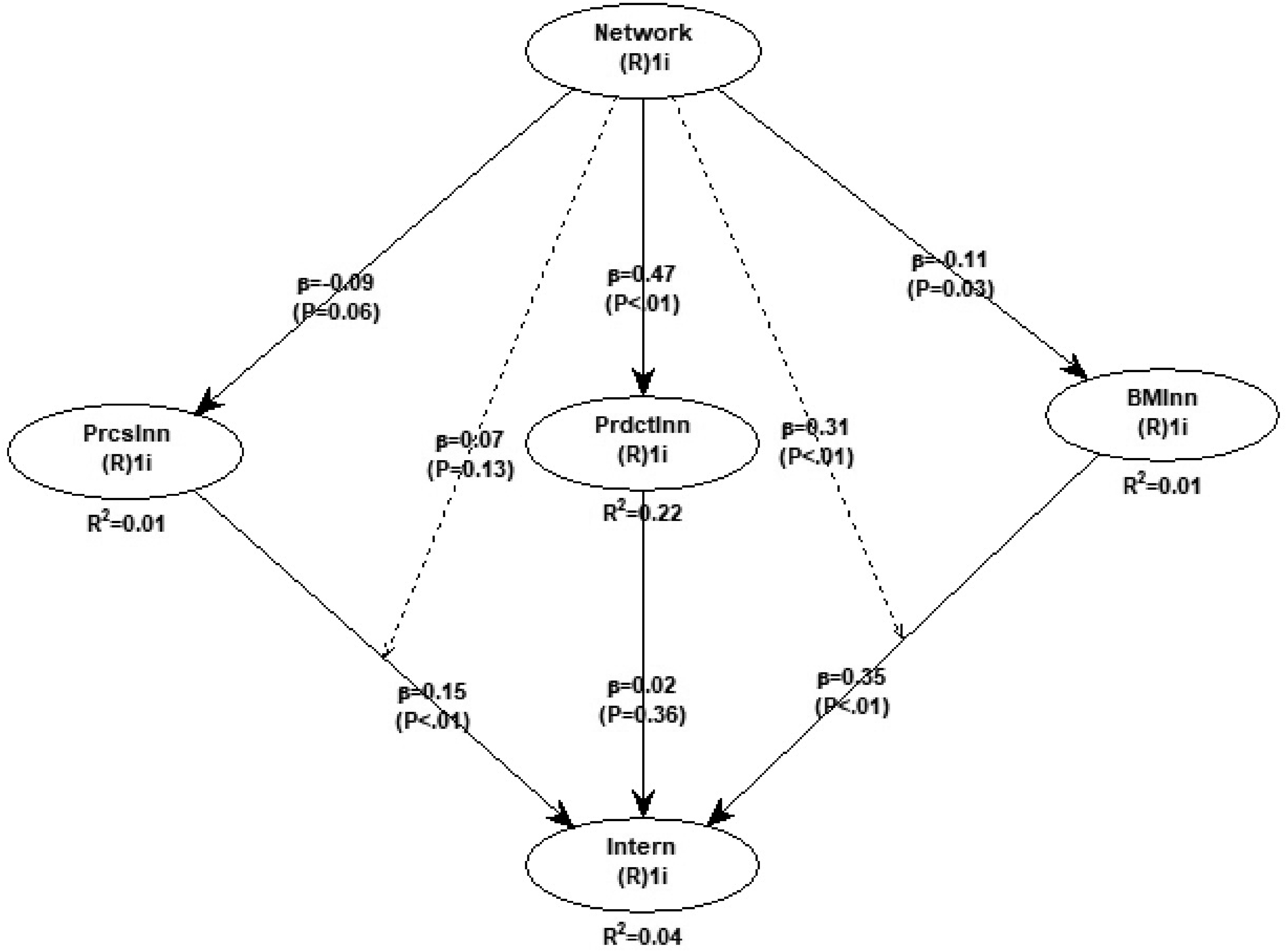
Estimated conceptual model.
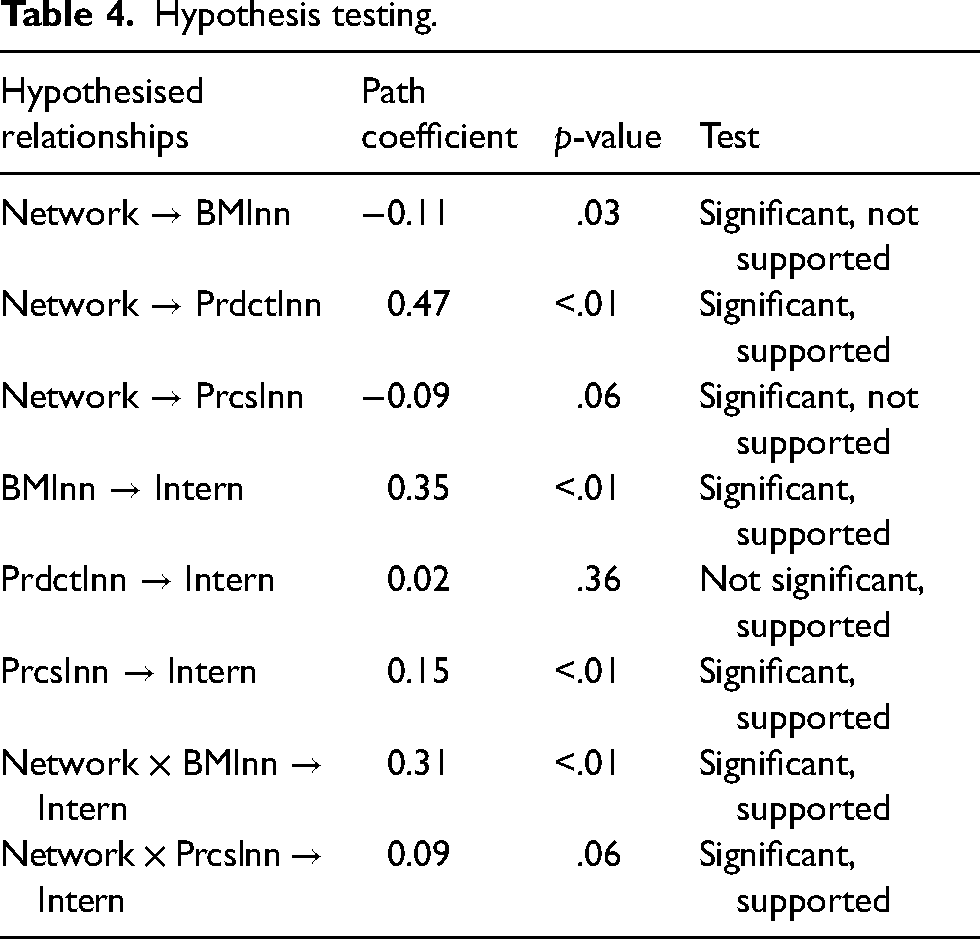
The path analysis unveiled that within the dimensions of dynamic capabilities, the positive and significant enhancement of Network increases the likelihood of start-ups innovate their products, thus supporting H1b (β = 0.47**). However, the correlation between network and both business market innovation and process innovation were found to be negative yet significant (β = −0.11*** and β = −0.09*** respectively). Consequently, the outcomes of this study do not substantiate H1a and H1c.
Moreover, the supported H2, H3 and H4 highlight that innovation in business market, in product and process has positive association with internationalisation performance (β = 0.35***, β = 0.02***, and β = 0.15*** respectively).
When considering the moderator variable, our findings validate that the positive association between both the business market innovation and process innovation with internationalisation performance is positively moderated by the network (H5; β = 0.31***) and (H6; β = 0.09***). The synthesis of the hypothesis testing results is outlined in Table 4.
Hypothesis testing.
Discussion
This discussion explores how networks facilitate innovation and international growth in women-led startups. Our study confirms that networking directly enhances product innovation (H1b), allowing women entrepreneurs to leverage external expertise and resources (Powell et al., 1996). Networks also indirectly bolster internationalisation by influencing process and market innovations, highlighting their strategic value. While networking did not directly impact process and market innovations (negative results for H1a and H1c), it played a significant moderating role (H5), enhancing these innovations’ capacity to drive international growth (Uzzi, 2018). This suggests that networks are crucial for applying innovations strategically as women-led firms scale globally.
Our findings align with several existing studies but also diverge in notable ways. Powell et al. (1996) has emphasised the direct benefits of networks for innovation, supporting our findings regarding product innovation. Similar to our results, these studies highlight how access to diverse resources and knowledge through networks can lead to significant improvements in product development. However, our results regarding the negative relationship between networking and both business market innovation and process innovation (H1a and H1c) differ from some established literature. Traditional expectations, as noted by scholars like Cohen and Levinthal (1990), suggest that networks should generally facilitate all forms of innovation by enhancing firms’ absorptive capacities. The negative correlations found in our study could stem from the unique challenges faced by women-led startups, including limited access to male-dominated networks, which might restrict the scope and effectiveness of their networking activities in broader business and process innovations (Brush et al., 2001).
The unexpected negative relationships observed for H1a and H1c warrant a deeper examination. One potential cause could be the resource allocation constraints often encountered by women-led startups. When resources are stretched thin, prioritising product innovation may come at the expense of broader business market and process innovations. This trade-off is critical for early-stage startups that must make strategic decisions about where to focus their limited resources (Carter et al., 2003). Additionally, the nature of networks available to women entrepreneurs might play a role. Women-led startups might predominantly access support networks that are more focused on immediate, tangible outputs like product innovation, rather than the more complex and systemic changes required for business market and process innovations. This aligns with findings by McAdam et al. (2019), who noted that women's networks often provide emotional support and practical advice but may lack the strategic depth required for broader business innovations.
The results highlight the strategic necessity for women entrepreneurs to not just form networks but to engage with them in ways that align with their stages of innovation and internationalisation goals (Johanson and Vahlne, 2009). Effective networking that focuses on both acquiring new capabilities and leveraging existing ones can provide a dual pathway to growth: directly through enhanced product offerings and indirectly by facilitating the international exploitation of broader innovations.
Implications for theory and practice
Our findings offer significant contributions to both theory and practice. From a theoretical standpoint, integrating orchestration theory into the study of women-led startups’ internationalisation processes provides a novel perspective on how strategic resource management, particularly networking, influences innovation and global growth. Orchestration theory, which emphasises the strategic coordination of resources to create value, underpins our hypotheses by suggesting that the way female entrepreneurs manage their networks can directly and indirectly impact different types of innovation and their subsequent internationalisation outcomes.
The theoretical implications extend to a deeper understanding of the gendered dimensions of entrepreneurship. Existing literature often highlights the barriers faced by women entrepreneurs, such as limited access to capital and networks (Brush and Cooper, 2012; Terjesen and Elam, 2009). Our study enriches this narrative by showcasing the pivotal role of networking in not only overcoming these barriers but also in strategically orchestrating innovations that support international expansion. This aligns with the work of scholars like Carter et al. (2015), who emphasise the importance of networks but expands it by detailing the indirect pathways through which networking influences internationalisation.
In practice, the results indicate that women entrepreneurs should strategically leverage their networks to maximise innovation and international growth. While product innovation benefits directly from robust networks, the internationalisation benefits of process and market innovations are realised through the strategic application of networking resources. Policymakers and business support organisations should take these dynamics into account when designing programmes to support women-led startups. Initiatives such as mentorship programmes, network-building workshops, and targeted support for international market entry can strengthen ties between networking, innovation, and internationalisation, providing women entrepreneurs with the tools they need to succeed on a global stage.
Moreover, the findings suggest that women entrepreneurs should be encouraged to engage in networks not only to gain immediate benefits but also to position themselves for future growth. Networks should be seen as dynamic, evolving resources that can be strategically managed to support both current innovation efforts and future internationalisation goals.
Conclusion
This study reveals that women entrepreneurs strategically use innovation and early-phase networking to internationalise their start-ups. Early networking directly boosts product innovation and indirectly enhances process and market innovation through its impact on internationalisation. This indicates that female entrepreneurs initially leverage networks for product innovation and later use them to drive international growth.
However, this study has several limitations. The focus on U.K.-based, technology-using start-ups may limit the generalisability of the findings to other geographical locations and industry sectors. The cross-sectional design also limits the ability to capture dynamic orchestration effects over time, suggesting the potential value of longitudinal studies to deepen these insights. Future research could explore how these dynamics vary across different institutional and cultural contexts, examining other underrepresented entrepreneurial groups. Additionally, investigating the long-term impacts of networking and innovation strategies on the international growth of women-led start-ups could provide a more comprehensive understanding of these processes.
Footnotes
Declaration of conflicting interests
The author declared no potential conflicts of interest with respect to the research, authorship, and/or publication of this article.
Funding
The author received no financial support for the research, authorship, and/or publication of this article.
