




Abstract
The article aims to identify how varied factors (e.g., physical and socioeconomical) behind vulnerability of the urban poor in Dhaka’s low-income settlements interact with each other to constitute their overall vulnerability. It addresses the complexity of the issues involved which cannot be understood by having partial look at their vulnerability. Hence, it suggests a ‘whole systems’ view to understand the underlying phenomenon. Data collected through mixed methods were analysed using a grounded theory-systems analysis approach. It identifies the reinforcing loops developed within the systems that strongly promote poverty traps and also identifies ways in which these vicious circles can be broken.
Introduction
The impacts of climatic hazards are not felt uniformly for all strata of people; those who are most exposed to the impacts also often have the least ability to adapt. The latest Intergovernmental Panel on Climate Change (IPCC) report (2014a) has warned that urban climate change risks are projected to increase with prevalent negative impacts being further amplified for those living in informal settlements located in risk-prone areas and lacking basic infrastructure and services. It has further warned that climate change will create new poor between now and 2100, endangering sustainable development, and putting special emphasis on the urban areas of the developing countries. This calls for urgent attention to the vulnerability of urban poor. Identifying the vulnerability of the urban poor to climatic stresses is deemed necessary, as this is where the impacts are experienced most by people who face the greatest challenges in coping with them (Haque et al. 2014). The impacts of climatic hazards transform into vulnerability, depending on the local context, and, more specifically they vary with household and community circumstances. This brings out the need for analysing contextually embedded vulnerability. The effectiveness of mainstream top-down adaptation approaches are being questioned for not only being unable to reduce vulnerability of the most vulnerable members of the society (i.e. the poorer groups) but also for not engaging with their needs (Boyd et al. 2014). However, a better understanding of the vulnerability of the most vulnerable low-income populations can contribute to more effective and targeted adaptation policy (Adger et al. 2003).
Dhaka, the capital of Bangladesh, is the fifth fastest growing mega cities in the world. Its population has increased from 1.6 million in 1974 to 12.04 million in 2011 making it is one of the most densely populated cities in the world (World Population Review, 2017). One-third of this population lives in low-income settlements (Rabbani et al. 2011). One of the major reasons behind this high rate of urbanization is migration. And direct and indirect climatic impacts in different parts of the country are major driving forces behind this migration. According to the World Bank (2007), every year 300,000–400,000 new migrants arrive in Dhaka, and they are predominantly poor. A total of 34 per cent of the city’s population is living below the poverty line (World Population Review 2017). It has been identified as one of the cities most vulnerable to climate change in the world (Mapplecroft 2014). Apart from being located in a region prone to flooding and storms, Dhaka is particularly vulnerable because of its unplanned urbanization: ‘add the expected impact of climate change to this cauldron and it’s a recipe for disaster’ (UN-Habitat 2008: 1).
Broadly, Dhaka city (also described as Dhaka Metropolitan Area) can be divided into two parts: Dhaka East and Dhaka West [Figure 1(a)]. Dhaka West was the original city, and the city corporation predominantly represents this area. To keep pace with the high urbanization rate, the city has expanded into the eastern side (which is mostly out of the city corporation jurisdiction) [Figure 1 (b)]. The western part of Dhaka is protected from fluvial flooding by embankments, but Dhaka East, which is the low-lying part of the city, is unprotected (Alam and Rabbani 2007). These low-lying water retention areas in Dhaka East are being encroached to house the growing population of the city; hence, the natural drainage is not working (Halcrow 2006; Haque et al. 2012). Furthermore, there is inadequate drainage infrastructure to meet the increasing drainage requirements resulting in frequent flooding in this part of the city.
Dhaka East houses a significant portion of the low-income population of the city. In the cities around the Global South, it is a common scenario for low-income settlements to establish and grow in the highest risk zones, for example, low-lying areas (also see Section II) as these are places where they can afford to live while being near to livelihood opportunities [see Figure 1(a)]. Also these low-income settlements tend to be located in areas deemed undesirable for others, and where the threat of eviction is least. Although these settlements might face flood and other climatic shocks every now and then, these are considered a worthwhile trade-off for occupying an urban location: priority is given to daily economic concerns rather than to vulnerability to climatic events. Being located mostly outside the municipal jurisdiction [refer to Figure 1 (b)], this area is largely deprived of basic service provision (i.e., sanitation, water supply, drainage, education, health facilities, etc.) and is ignored by the city authority. Therefore, the environmental, geographical, political and socio-economic contexts of Dhaka East offer a good case in which to study the ways that the manifold dimensions of vulnerability interact for the urban poor. There is no previous study on vulnerability of the urban poor to climatic risks in the study area. The lack of data on the case study indicates that it is unclear which kind of phenomenon is taking place there.
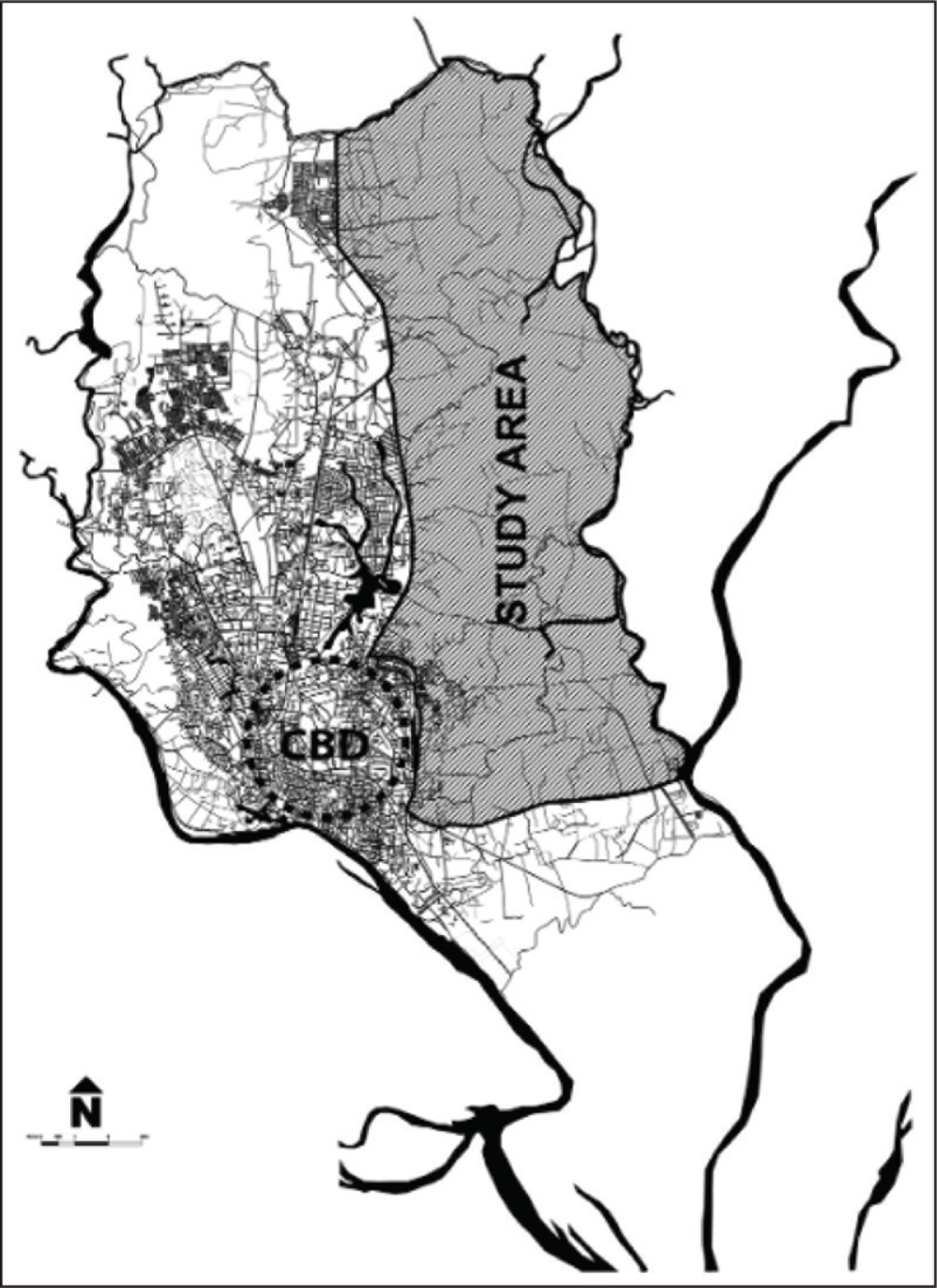
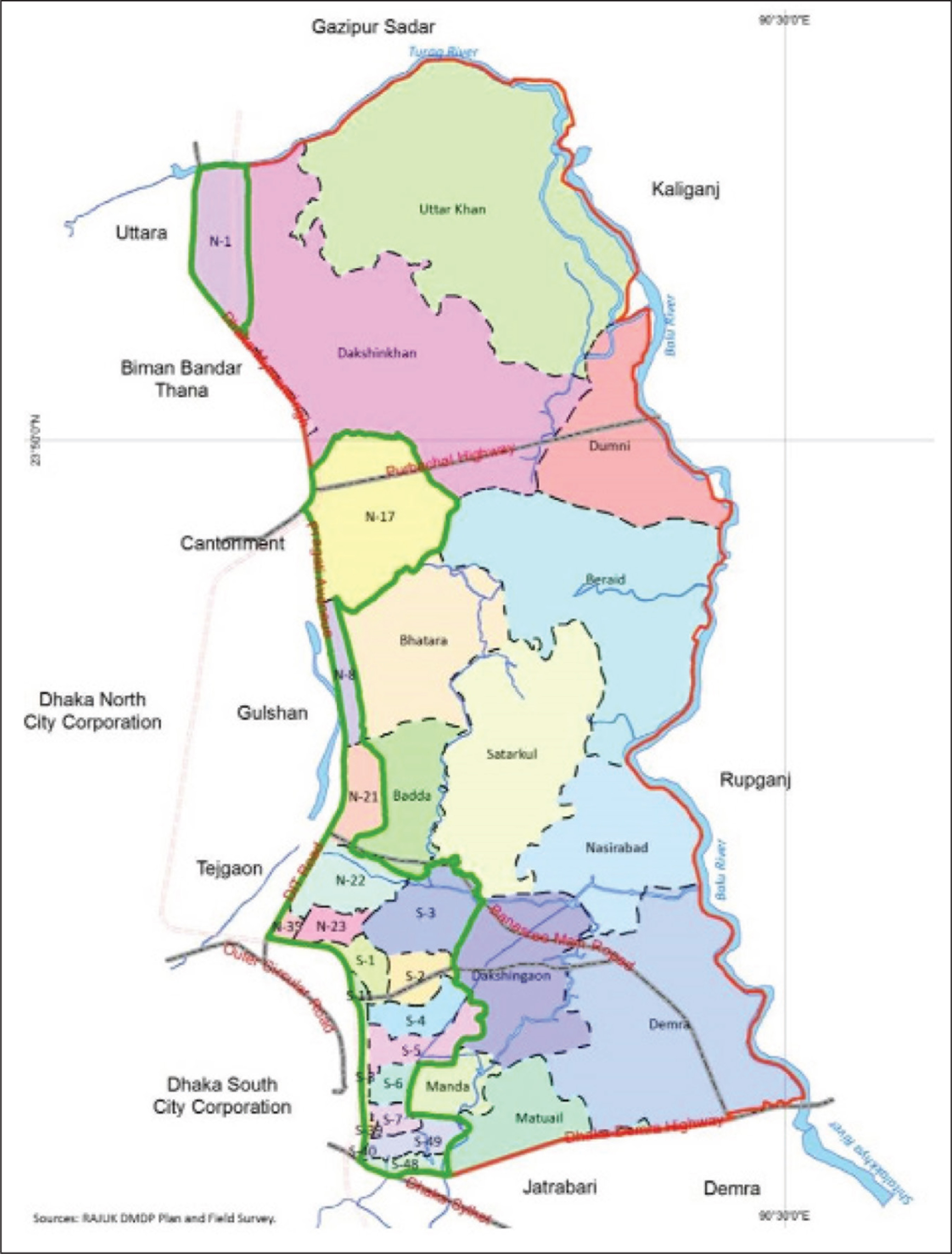
There has been frequent association of urban informal settlements with urban poor, although it is neither always the case that informal settlements house the urban poor, nor that all the urban poor live in informal settlements (Baker, 2012). Hence, in this study, the term ‘low-income urban settlements’ is used to include informal settlements, but is not restricted to them, since the urban poor may also live in other areas (see Section III for definition of urban poor for this study). Note that this article focuses on exploring flooding as one major climate-related risk to explore here.
In general terms, ‘Vulnerability’ stands for ‘the degree to which a system is prone to be affected due to the exposure to hazards’ (Turner II et al. 2003) where hazard is ‘a potentially damaging physical event, phenomenon or human activity that may cause the loss of life or injury, property damage, social and economic disruption or environmental disruption’ (IPCC 2012: 560). In this research, the main physical hazards of interest are hydro-climatic, specifically rainfall- and (sometimes) snowmelt-induced floods. The IPCC Fifth Assessment Report (IPCC 2014b: 128) defines vulnerability as ‘the propensity or predisposition to be adversely affected’ by climatic events, including climate variability and extremes. Vulnerability has been further explained as a function of the character and magnitude of hazard, and the rate of climate variation to which a system is exposed, its sensitivity and adaptive capacity. Exposure stands for the exposure of a system to stimuli that act on that system (i.e., climate variability); sensitivity refers to ‘the responsiveness of a system to climatic influences’ (Gbetibuo and Ringler 2009: 5). Adaptive capacity is the system’s ability to adjust to climatic variabilities and extreme, and their impacts, so as to minimize probable damage (Haque and Grafakos 2010). The potential impact of a natural event on a system or a unit and its capacity to adapt to it together determine the vulnerability of the system (or unit).
The growing body of literature on vulnerability uses many terms, such as resilience, sensitivity, adaptive capacity, risk, hazard and more (Adger et al. 2002; Burton et al. 2002). The same term is often used with different meanings in different contexts. For instance, social scientists may view vulnerability through a lens of socio-economic factors determining people’s ability to cope with climatic stresses, whereas physical scientists tend to view vulnerability in terms of likelihood of occurrence and impacts of geophysical events. This confusion can be overcome by differentiating between physical and social vulnerability (Brooks, 2003). Physical vulnerability is concerned with the physical components of the impacts of a hazard event. It is mainly related to exposure and reflects the location of the at-risk population in relation to the known hazards. Social vulnerability on the other hand represents properties of the human system experiencing a hazard (Adger and Kelly 1999), that is, it refers to the internal state that is inherent to the system independent of external hazards (Adger and Kelly 1999; Brooks and Adger 2004). Hence, the sensitivity and adaptive capacity of a system largely defines its social vulnerability. It can be affected by factors such as poverty, marginalization, education and access to resources (Adger and Kelly 1999; Cross, 2001). Such generic determinants of social vulnerability to a certain extent also influence the physical vulnerability of communities and individuals to different hazards, for instance, through determining exposure to hazards by residing in river floodplains or low-lying areas, or the way they construct their housings and settlements. Hence, it is the interaction of hazard with social vulnerability which produces the outcome (or impact), generally measured in terms of physical damage (Neumayer and Plümper 2007). In this sense, social vulnerability may be viewed as one of the determinants of physical vulnerability, where this inherent property of an affected system acts to mediate the outcome of the hazard event.
Vulnerability combined with hazard produces risk, where risk is the total loss due to a particular hazard event; this may then be cumulated for all realizations of such events over a given area or period (Brooks 2003). Risks lead to disaster when certain physical events result in severe alterations in the normal functioning of a community or a society (IPCC 2012). Although hazards might be natural process inherent in the climate, disasters are essentially man-made (Blaikie et al. 1994). A disaster cannot happen if there is no vulnerable population (Bicknell et al. 2010; Kelman 2011).
Although studies of vulnerability have historically developed in rural contexts, during the last two decades debates regarding vulnerability to environmental risks in urban areas have become increasingly prominent and have supported understanding of how to tackle risks in these areas (Bulkeley and Tuts 2013; Simon and Leck 2014). Vulnerability of urban areas to climatic risks results from a combination of interrelated physical, socio-cultural, economic and institutional conditions. The exposure is not only due to physical location but also reflects the concentration of population and assets, increased sensitivity of the physical condition of buildings and infrastructure, the social and economic composition of population and last but not the least lack of institutional capacity; these result in increased vulnerability in urban areas (Gencer 2013). In many urban areas particularly in the developing world, rapid urbanization is often characterized by poor governance, inequitable access to public services and increased social inequality (Moser and Satterthwaite 2008). Hence, even without considering the vulnerability of cities as a whole, such pre-existing conditions have resulted in many pockets within the cities which are innately vulnerable to natural hazards and climatic variability (Basu and Bazaz 2016).
Vulnerability to climatic risks in urban areas, especially, is largely socially constructed and determined by factors involved in people’s everyday lives (Enarson, 2000; Wisner et al. 2003). As argued by Wisner et al. (2003: 4), ‘the risks involved in disasters must be connected with the vulnerability created for many people through their normal existence’. It is, therefore, important to understand the social processes involved in everyday lives because of the rootedness of vulnerability to hazards in everyday lives. Vulnerability increases with the adverse economic conditions of the poor, which leads to them living in places with high (physical) risk of hazard, especially in urban areas (see Section I). Many economic and political factors underlie the impacts of hazards, relating to the distribution of assets, income and access to resources among different groups of people within the society. Members of society do not have equal access to resources and opportunities and are not equally exposed to hazards (Wisner et al. 2003). Whether they have adequate access to basic services, or have a decent place to live, or have adequate access to safety nets or welfare service, are all largely determined by social factors including economic and political processes. These social processes largely determine the level of risk experienced by individuals (Wisner et al. 2003).
The degree of vulnerability varies even within households. Social norms strongly influence a gendered vulnerability (e.g., through socio-cultural restrictions imposed on female). Even with similar exposure to hazard, sensitivity varies between men and women (Neumayer and Plümper 2007). Socio-cultural restrictions placed on females often do not allow social contact with the outside world which further aggravates their vulnerability, for example, through restricting access to early warning information (Enarson, 2000). Arora-Jonsson (2011) argues that gendered vulnerabilities also derive from power inequalities related to decision-making. Decision-making ability before, during and after disasters largely relies on the bargaining ability to access, manage and control resources (as both are dependent on established power relations) (Jabeen 2014). These attributes are primarily formulated from cultural practice. Traditionally, men have privileged access to resources, both in the household and public domains (Quisumbing 2003), and throughout South Asia, there are evidence of higher disaster-induced mortality rates in women (Neumayer and Plümper 2007).
Methodology
The discussion in Section II establishes the importance of understanding vulnerability as embedded in socio-economic, cultural and political contexts. A Grounded Theory approach is an effective way to uncover such social processes: to seek out and conceptualize the latent social patterns and relationships in order to understand an observed social phenomenon within a particular setting, such as households in low-income urban settlements (Glaser and Strauss 2000). Glaser and Strauss (1967) developed and coined the term ‘Grounded Theory’, which stands for an inductive methodology where theory is developed inductively from the data. Also, vulnerability to climatic risks is very much context specific and can vary from place to place. As mentioned in Section I, the lack of data on the case study indicates that it is unclear which kind of phenomenon is taking place there. This further justifies application of Grounded Theory, which is particularly suited for exploring integrated social relationships, and the behaviour of social groups which is dependent on particular contexts, where there has been little exploration of exactly which contextual factors and underlying processes really do affect individuals’ lives (Crooks 2001). It allows analysis of data, information and evidence without the bias of preconceived ideas or hypotheses, thus enabling evidence to speak without imposing a preconceived view (Strauss and Corbin 2010). Particularly considering the lack of both data and existing studies in the study area, Grounded Theory provided an ideal basis for enabling conceptualization to be developed from the evidence emerging from the data collected for this study.
The discussion in Section II also illustrates the complexity of issues relevant to vulnerability of the urban poor, where the vulnerability arises from both the interaction of multiple actors at multiple levels (i.e., household, community and macro-level organizations) and multiple underlying factors ranging from physical factors (e.g., location and housing structure) to socio-economic factors (e.g., poor financial condition and socio-cultural restriction for female) to political factors like denial of acknowledging the low-income settlements and lack of provision of basic services. There is a dynamic complexity deriving from the interaction of these different actors influencing, and being influenced by, the underlying factors and processes which are difficult to perceive if not seen from a ‘whole system’ point of view (note that, a system is constituted with interacting elements). The vulnerability outcome produced through the interaction of these system components is difficult to understand by looking at these components in isolation. The behaviour of a single element can be different from its behaviour when it interacts with other elements in the system. Each element has an effect on the functioning of the whole, affecting or affected by at least one or more elements of the system (Mele et al. 2010). Systems thinking has a growing influence on scientific research: it can be particularly helpful for studying social system involving dynamic non-linear behaviours (Meadows 2008). Addressing the objectives of the study to identify how relevant influencing factors behind vulnerability are influencing and constituting the vulnerability of the urban poor and to understand the underlying phenomenon, the study adopts systems analysis to explore the relationship between the identified factors.
Considering the multiple levels and varied stakeholders involved in the systems under inquiry, this research has adopted a mixed methods approach for collecting data with a systematic integration of quantitative and qualitative data. Hence, the different strategies adopted for data collection are those that best understand the research problem, and that capture the best of both quantitative and qualitative approaches: a questionnaire survey, focus group discussions (FGDs) and semi-structured interviews have been undertaken primarily governed by the different scales to be covered, that is, household, community and organization and the resulting data requirements. The diverse forms of data deriving from these methods have been integrated using a qualitative form of systems analysis, to understand the relationships among the key variables in the vulnerability systems under investigation. Here, the term ‘low-income urban populations’ and ‘urban poor’ has been used as synonymous. It has been specified as including the households who have a monthly income of BDT 9,000 (USD 114) or less. This specification is based on the author’s previous research experience with the urban low-income populations in Dhaka and on evidence from relevant reports on the population of the study area (DAP 2010; Halcrow 2006).
The questionnaire survey was conducted with 520 households covering 2394 inhabitants. A total of 99 settlements were surveyed covering 70 locations within the study area. The questionnaire survey helped to characterize the households according to certain predefined criteria, for example, location, income and housing typology. This helped to create a profile of the surveyed settlements considering the issues of inquiry [see Supplementary Material 1(a)].
Forty-four FGDs were conducted with the communities to understand their vulnerability to flooding, the influencing factors behind their vulnerability, the interaction among different stakeholders, etc. [see Supplementary Material 1(b)]. Two FGDs were conducted with representatives from community based organizations (CBO) to recognize their activities, challenges and obstacles. Two FGDs were conducted with non-governmental organization (NGO) officials, and one FGD was conducted with government officials. The objective of these FGDs with relevant officials was to recognize their perspective and activities towards vulnerability of urban poor to flooding and also to better understand the existing policies along with the challenges they face. One FGD was conducted incorporating representatives from both government and NGOs to understand their interaction pattern. The FGDs not only helped to address issues that were not identified by the survey but also to further clarify relevant issues in detail. Seventeen government officials, eighteen private sector officials (including representatives from NGOs, developers and journalists), six academicians and ten CBO heads were interviewed. These interviews not only helped to gain more detailed insights about specific issues relevant to the study, but also helped to further clarify and discuss issues derived from FGDs [see Supplementary Material 1(c)].
A team of six research assistants was trained to conduct the field work. Despite the fact that all of them had some prior experience of working with low-income populations and conducting surveys, they were rigorously trained in the survey techniques before commencing the main field work. Their performance was periodically monitored by the author. All the FGDs were conducted by the author with the assistance of the research assistants.
Within the framework of the research, the FGD and interview data were analysed based on the ‘Grounded Theory’ method, and the questionnaire survey data were analysed based on statistical analysis methods. The data emerging from the Grounded Theory analysis were merged with the analysed data from the questionnaire survey and were used to conduct systems analysis to analyse the overall systems of vulnerability. Grounded Theory entails a rigorous process of reading and re-reading the textual database and identifying the categories and their interrelationships. For this research, a combination of open coding, axial coding and selective coding was applied to analyse the data collected through FGDs and Interviews. The objective of coding is to disaggregate the data and rearrange them into meaningful categories (Strauss 1987). This helps to compare data under each category and to develop theoretical concepts (Maxwell 2005).
Open coding entails grouping data items into categories that share common characteristics. Axial coding can also be called pattern matching. As coding progresses, higher-level categories are identified which systematically integrate the lower-level categories (constructed during open coding process) into meaningful units. Within the established categories, patterns were identified based on comparison and analysis of the data, focusing on the causal relationships and fitting things into certain relationship patterns such as causal and intervening conditions or consequences (Hanzel 2010). These patterns were established based on their occurrence throughout the transcribed texts. Selective coding is the final step where the relationships among different factors are identified comparing different categories and patterns emerged through the earlier two steps. For more detail information on coding and systems analysis, see Supplementary Material 2 and also refer to Saldaña (2015) and Hanzel (2010).
The qualitative data were analysed manually rather using software as there is always a risk of missing certain important issues in the coding: it was difficult to capture the nuances of meaning of a text. The coding process required an extensive cognitive analysis: a thorough understanding of the different opinions and perspectives in relevance to the context. To ensure these, the coding was done manually. In this research, systems analysis has been undertaken more in a conceptual and qualitative way to address the complexity of the systems under investigation. To understand the mechanisms of a complex system, causal loop diagrams are used.
Vulnerability of Urban Poor in Dhaka East
In all instances, people’s vulnerability is largely determined by their capacity to avoid a hazard, or to adapt to it (Bicknell et al. 2010). Note that, by ‘organization’, the research only considers government and NGOs as relevant organizations involved in the research problem, although it is fully recognized that there are other private sector organizations influencing the investigated problem (e.g., developers). Currently in the study area, NGOs represent the most significant formal private sector organizations, who, despite being partly controlled by government, have a key role to play not only in the socio-economic sector in relevance to urban poor but also with the physical infrastructure concerning basic service provision such as water, sanitation and drainage.
Governance and Urban Poor
As mentioned in Section I, most of the low-income settlements in the city are not acknowledged by the government. These people live under considerable pressure specifically of a threat of eviction. There is no rehabilitation programme in place. Despite the poor living in low-income urban settlements having voting rights, their participation is limited to this: after the election process, they are not consulted or included in any decision-making. The continued refusal of government to acknowledge low-income urban settlements leads to lack of entitlement to access services; they are deprived of most of the basic services provided by government. In Dhaka, the urban poor are being sidelined through no/limited participation in the policy-making process. Restricted capacity of the city government to serve the urban poor plus general lack of political will to serve this group is further contributing to this.
The urban poor are neglected in policy in Bangladesh (Banks et al. 2011). Lack of recognition of the vulnerability of urban poor is clearly reflected in the fact that this group has not been effectively included in existing national programmes. For example, in the case of Bangladesh’s Climate Change Policy, there is insignificant recognition of most of the challenges faced by urban poor. This has significantly impacted on funding allocation and service delivery for the urban poor, and also the strategies and guidelines to address their vulnerability (Banks et al. 2011). Although the latest policy on climate change Bangladesh Climate Change Strategy and Action plan (BCCSAP) acknowledges some challenges faced by the urban poor, it has emphasized the need for further research. This indicates that there is a lack of research-based knowledge to delineate the policy for targeting this group.
Bangladesh is one of the countries having highest number of NGO concentration in the world. Apart from post-disaster responses, like relief activities, they do not have any specific activities for flood per se. These NGOs largely focus on developmental activities which in turn have the potential for reducing the vulnerability of the urban poor. Such services include better provision of sanitation which in turn can reduce the vulnerability of flooding by reducing health risk; financial services (such as loan and microfinance) which helps to improve the economic condition of the urban poor and vocational training which helps for employment of the urban poor. Despite their potential for serving the urban poor and reducing their vulnerability, they face several barriers imposed by government and donors which inhibit their activities. The government is not likely to approve any NGO project that contradicts their activities/policies. Hence, any projects serving the low-income settlements that are not acknowledged by the government are unlikely to be approved. Also, as a mid-level NGO official said:
… there is always a tendency of the government to reshape our projects according to their will.
Additionally, donors are restricted in their ability to serve areas outside municipal areas. The conventional definition of urban area for most of the international donors only represents the municipal area. All the areas outside the municipal boundary are referred to as rural areas. All funds for rural projects are used for other more vulnerable rural areas of the country. Areas outside the municipality (most of the study area) are thus out of scope for most of their activities funded by such donors. Hence, NGOs are not being able to serve the urban poor in Dhaka (particularly those living in the study area) despite having a high potential for reducing their vulnerability.
Social Vulnerability
As discussed in Section II, the properties that define social vulnerability are inherent within the system prior to the hazard. The urban poor experience an inherent social vulnerability associated with their adverse economic conditions. Poverty is a primary determinant of social vulnerability (Wisner et al. 2003), which potentially generates other aspects of social vulnerability deriving from, for example, lack of education and/or lack of legal tenure. A total of 46 per cent of the surveyed population earn between BDT 5,000 and BDT 9,000, 37.7 per cent earn between BDT 3,000 and BDT 5,000 and 16.3 per cent earn less than BDT 3,000 (BDT 80 USD 1). Nearly half of the surveyed population have no permanent job and live on daily wages. A strong positive relationship was identified between assets and income (i.e., less income is related to low levels of asset ownership).
A total of 50.2 per cent of the surveyed population is illiterate, while approximately 8 per cent of the population is only able to sign their name. Better education tends to decrease vulnerability (and increase adaptive capacity) not only by increasing the probability of better occupation or income generating activity but also by increased awareness about climatic and associated risks. The majority (82) of households in the study area are living on a rental basis in settlements which are either constructed on privately owned land or established by influential local people on public vacant land. In both cases, they live under varied degrees of threat of eviction. During the FGDs, it was revealed that tenure is one of the prime factors for such households not investing in housing or the built environment to make them more adaptable (also see Haque et al. 2014). They do not want to invest as they can be evicted any time, and their investments will be lost. An FGD (male) participant said:
…we have no other alternative but to live in this vulnerable situation… we cannot afford to move to a better place, and we cannot afford to invest in the housing… even if we can invest some of our small savings, we do not want to….. it is very risky as we might be evicted anytime, we hardly can save anything and if that also is wasted, we cannot survive….
Furthermore, in many cases, NGOs require that a household ideally should hold a legal tenure in order to be served. The primary reason behind this, as explained by a senior NGO official, is that many of their services are financial which requires long-term involvements with beneficiary households (e.g. for loan repayment). Hence, they need to be able to track them, which is difficult in the case for a household without legal tenure. Therefore, many of the households in the study area cannot meet this prerequisite and cannot access NGO services. As stated by a tenant (male):
They (NGOs) do not give us microcredits or grants as we live here as tenants…if we have our own house, then why would we need money from them?
The majority (66) of the population depends on tube wells for drinking water, and 45 per cent of those are privately established by the settlement owners. Only around 21 per cent of the population have access to water supplied by government standpipes. None of the sources are safe, and they have to boil water before drinking it. The common practice for sanitation in the low-income settlements is sharing one latrine with 25–30 households. Hanging toilets (used by 15%) are still in practice directly polluting the water body and surrounding environment. There are households with no access to any sanitation service (4%), and they must defecate in the open. This unhygienic condition, which is exacerbated during periods of flood and waterlogging, leads to disease. The medical facilities are insufficient, inefficient and largely inadequate.
The early warning systems in the study area are to be dysfunctional. Although there is an interactive voice response (IVR) system in place, it is still not fully operational and most people are not aware of the service. Only 6 per cent of the surveyed population get microphone announcement. The rest of the population mostly relies on their social networks (interaction with people) for early warning. The city has neither flood shelters nor a flood evacuation system in practice.
The study area, being mostly located outside city authority, hardly has any access to government organizations, government-provided services (e.g., adult education and financial services like loan and saving scheme) or basic infrastructural services. Though there is lower level of government representation in areas outside, city authority (i.e., Union), but they have little authority and few resources at their disposal to serve those areas. They are reliant on central government for approval and execution of developmental plans in their area, including infrastructural projects. Lacking in operational and financial autonomy, and being largely excluded from the structures of urban governance, only few people can access government or NGO services (less than 12% and 20% of the population, respectively). A respondent (female) from the study area said:
…we are non-existent for the city, and the government apparently have many other more important works to do than serving us, given the fact that we are of no importance to the government.
Coming to the gendered aspects of vulnerability, in the study area females are found to be highly vulnerable for various reasons, such as: unequal access to resources and decision-making processes, cultural and religious restrictions on mobility, restrictions on socialization and socio-cultural norms limiting their access to information and survival skills to escape hazards (e.g., swimming). The majority of the females (more than 60%) are illiterate. They are neither allowed to go out and work, nor to mix with outside world. This negatively affects their capacity to access the financial system (e.g., through labour market participation). Hence, their adaptive capacity is largely restricted by the underlying socio-cultural norms, resulting in isolation of women from the empowering activities. Also, restrictions on women’s socializing affect their access to early warnings disseminated by social networks. In many cases, it was identified that though many NGOs offer services for women, the majority of the women are unaware of those services since they are cut off from social networks and the outside world. The social restrictions imposed on them are demonstrated by the statement of a surveyed women:
My husband does not allow me to talk to anybody, specially the male, I am not allowed to go to the nearby shop even if my kids do not have anything to eat. Once my son was ill and I had to seek my neighbour’s help…my husband scolded me for that and said why did I not wait for him to come back.
Physical Vulnerability
The primary physical vulnerability arises from residing in areas exposed to flooding (e.g., low-lying flood-prone areas) and due to lack of basic infrastructure that could reduce their physical exposure (being located outside municipal boundaries). Such pre-existing conditions make these people the hardest hit during disasters. As mentioned by one of the FGD participants (male):
We know that our location is vulnerable, but we cannot afford to stay in a better location and it is close to our work places, government will not give us a place to live … if we ask for help, they will evict us. No one comes to help us.
Moreover, 40 per cent of the surveyed population live in temporary structures made out of temporary materials such as bamboo, wood, corrugated tin, straw and jute sticks. A total of 50 per cent of the population live in housings which can be called semi-permanent because the plinth material is concrete or brick, but the walling and roofing material is the same for the temporary structures. Hence, the majority of the population (90 per cent) living in such housings become highly vulnerable to climatic stresses. The study area is out of the city’s storm sewerage coverage, and very few areas have surface drains; those that do are not performing well because of poor maintenance.
Ironically, there is evidence from study area that various government actions are further increasing vulnerabilities for some low-income settlements. For instance, there are areas where government has implemented flood protection measures but has not considered existing low-income settlements in their planning. This is further exacerbating the flood conditions in those settlements by channelling more flood water towards them. One of the FGD participants (male) said:
…it is sarkar (government) who should take care of us, we are citizens of this city, if they don’t do anything who else will help us?… they neither help us, nor respond to any of our complains and sufferings … on top of that, they do harm to us by eviction and in many other ways.
The vulnerability in such settlements is further exacerbated where chronic hazards (derived from pre-existing vulnerability conditions like deficiency of basic services) and catastrophic hazards (derived from natural calamities) overlap.
Analysis and Discussion
Figure 2 represents the complex system of vulnerability in this context, including the key influencing factors/variables/drivers. Note that, the key influencing factors behind vulnerability have been derived from the FGDs with communities (based on the number of times each driver was mentioned in reference to their vulnerability to flooding).
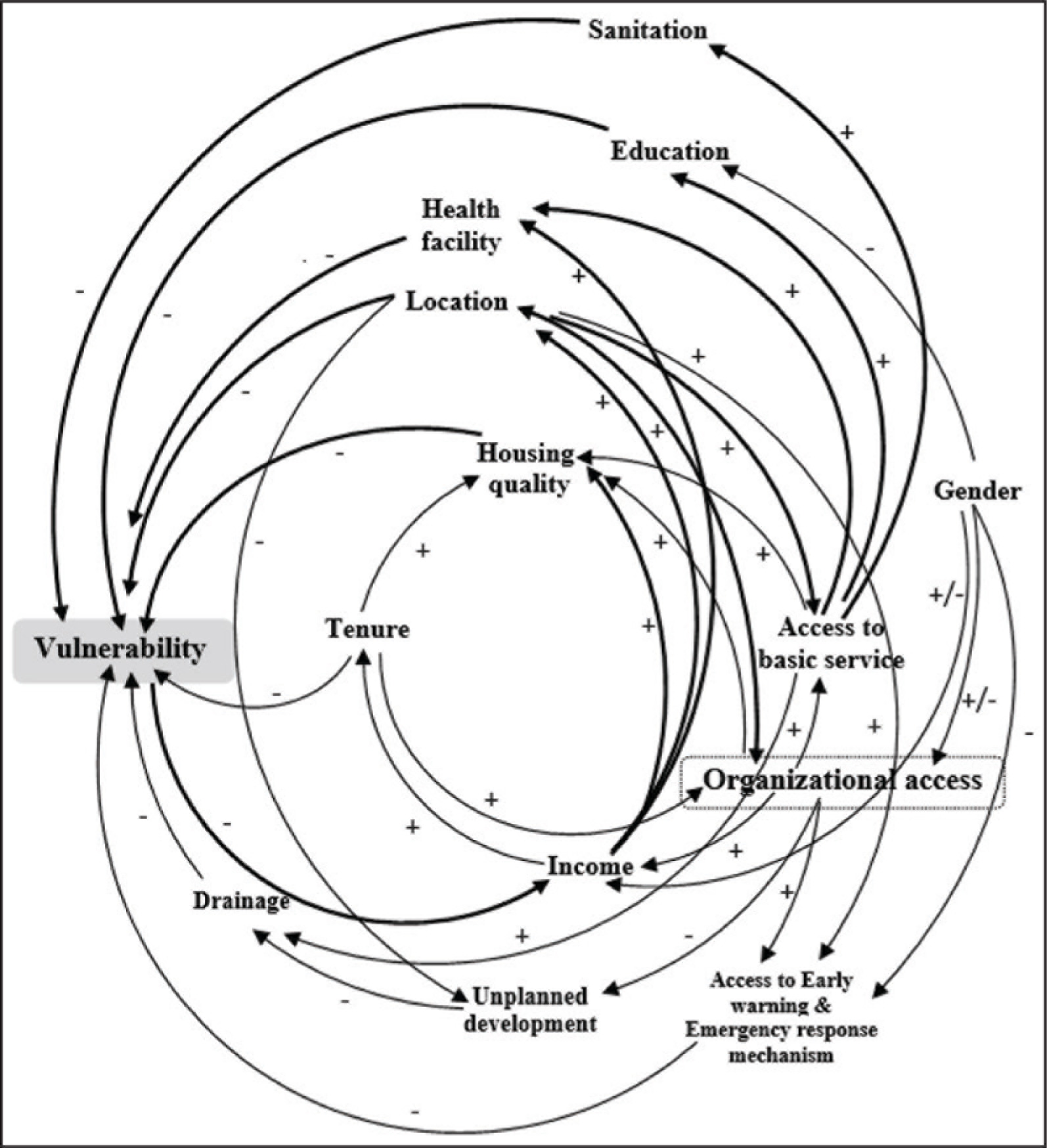
Figure 2 reveals that the drivers are connected to each other in one or more ways (i.e., directly or indirectly) and thereby contributing to the overall vulnerability of the urban poor in the study area. For instance, gender influences vulnerability in the study area in various ways. The data show there is a negative relationship between being female and education, and between being female and access to early warnings due to socio-cultural restrictions: these result in increased vulnerability. There is a negative relationship between being female and income considering the restriction posed on women to go outside and work, but there can be a positive relationship for those who can access the NGO programmes specially designed for females, thereby positively influencing their adaptive capacity to reduce their vulnerability. Hence, gender, as a driver behind vulnerability in the study area, contributes to the overall vulnerability in various and sometimes complex ways.
This systems analysis reveals that organizational access is integral to the vulnerability of the low-income urban populations, as most of the drivers of the system are directly or indirectly influenced by it. Figure 2 shows that the system variables are not only closely related to each other but also strongly reinforce each other. Increasing vulnerability through lack of organizational access greatly promotes vicious circles of poverty (also see Section VI). For instance, poor income is, in many cases, exacerbated by lack of organizational access to the many financial schemes, loans, saving schemes on offer; poor income determines vulnerable locations for living; vulnerable locations determine poor access to basic services; poor access to basic services defines poor access to health facilities, education, etc. The lack of each of these reduces adaptive capacity and increases vulnerability, and increased vulnerability in turn negatively affects income and increases poverty. Hence, there is a two-way relationship between vulnerability and organizational access, lack of organizational access increases vulnerability and more vulnerability decreases the probability of accessing organizations.
To further explore on the relationship between organizational access and the other drivers for vulnerability, the following paragraphs analyse the vulnerability systems more elaborately based on the types of organizations (i.e., government and NGO), and how those are influencing specific drivers, that is, space-related, economic and infrastructural drivers for vulnerability.
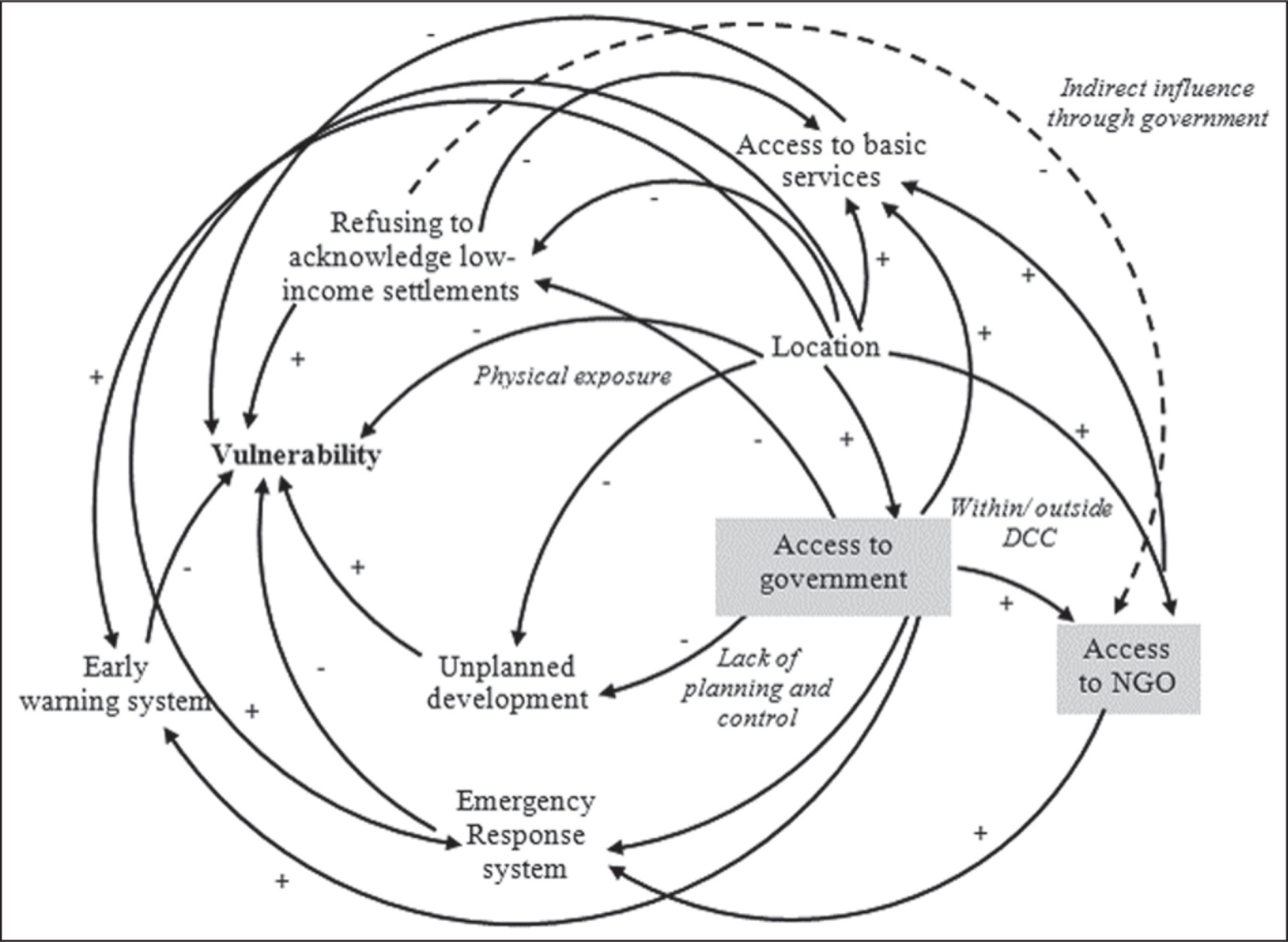
Figure 3 shows how space-related drivers are driven by access to government and NGOs and contribute to vulnerability. Location itself determines the extent of physical exposure to certain types of hazards, for example, riverside settlements are more prone to fluvial floods if there is no/inadequate protection. Furthermore, location is vital in the context of ensuring access to basic services, early warning and emergency response provided by both government and NGOs. Access to basic services is governed by access to government which is directly influenced by the refusal of government to acknowledge the low-income settlements. Access to NGOs is indirectly influenced by this refusal because the NGOs are regulated by government which determines where, and to whom, NGOs can provide their services. Certain locations are particularly vulnerable because of unplanned development work (which is directly influenced by government through lack of planning and control) (see Section 3), which further contributes to vulnerability through affecting the drainage.
As mentioned earlier, income (an economic driver) is influenced by both government and NGOs through the access to their financial services such as loans, grants, financial schemes, savings, etc. (Figure 4). Income and location have a two-directional relationship, as income determines the choice of location to live in, and location influences income through better access to the financial services offered by government and NGOs. Tenure status also mediates the two-directional relationship between income and access to NGOs: lower income is associated with lack of tenure, which prevents access to the financial services of NGOs and in turn reinforces low income.
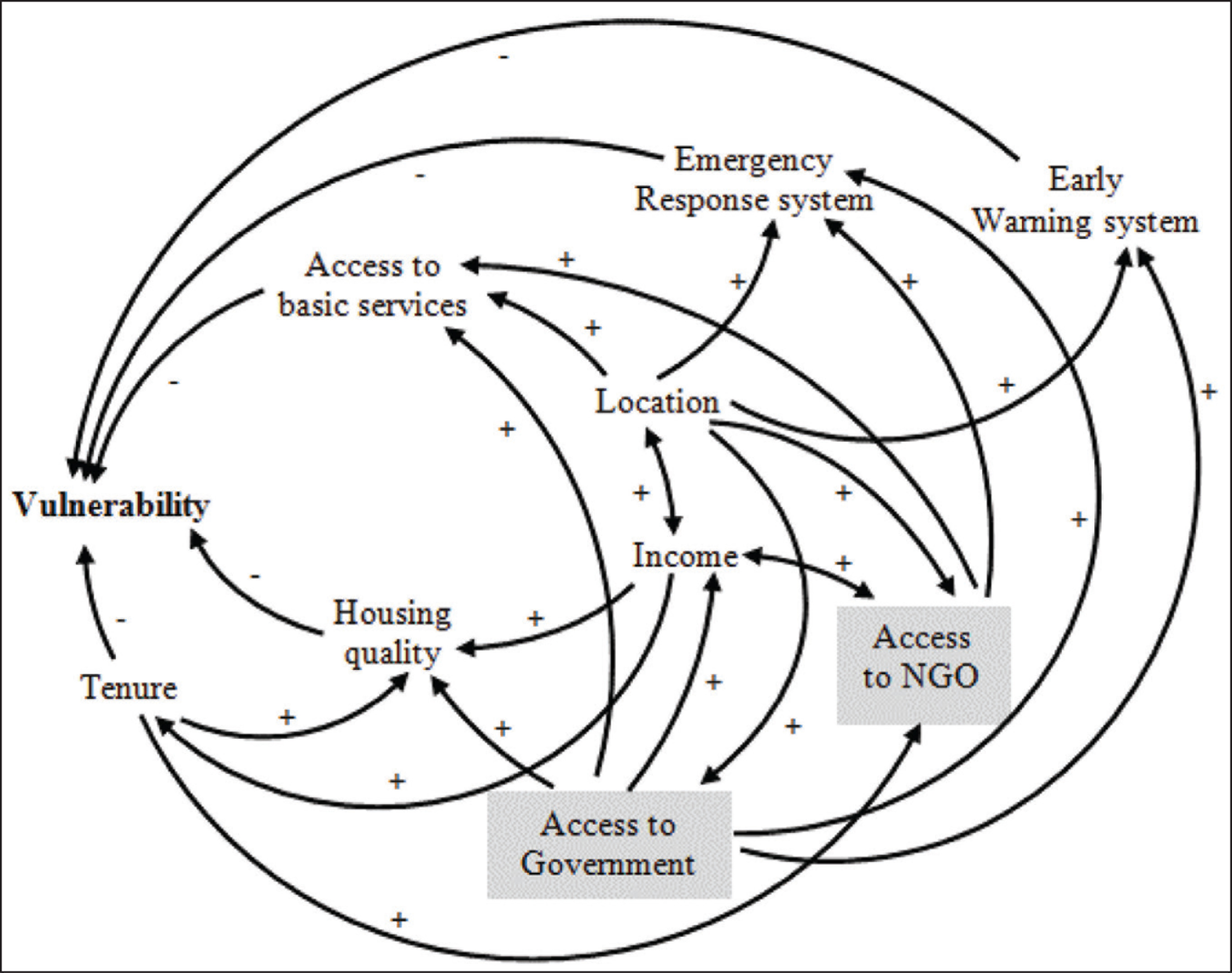
Figure 5 shows how infrastructural drivers of vulnerability are influenced by government and NGOs. Access to NGO and government influences housing quality not only through the access to financial services and hence improving income, but also weaker access to government tends to increase the threat of eviction, hence discouraging urban poor from investing in housing. Lack of adequate access to basic services, such as health facilities, further intensifies the effects of flooding, as polluted flood water often leads to disease epidemics after disasters. Vulnerability and the nature of hazards is always subjected to change because of the lack of adequate access to basic services, such as sanitation, pure water supply and health facilities: it is difficult to ascertain beforehand what type of hazard will evolve as a result of the multiple and interlocking deficiencies that exist within the settlements. The inability to anticipate the specific nature of the hazard in turn makes it more difficult to control.
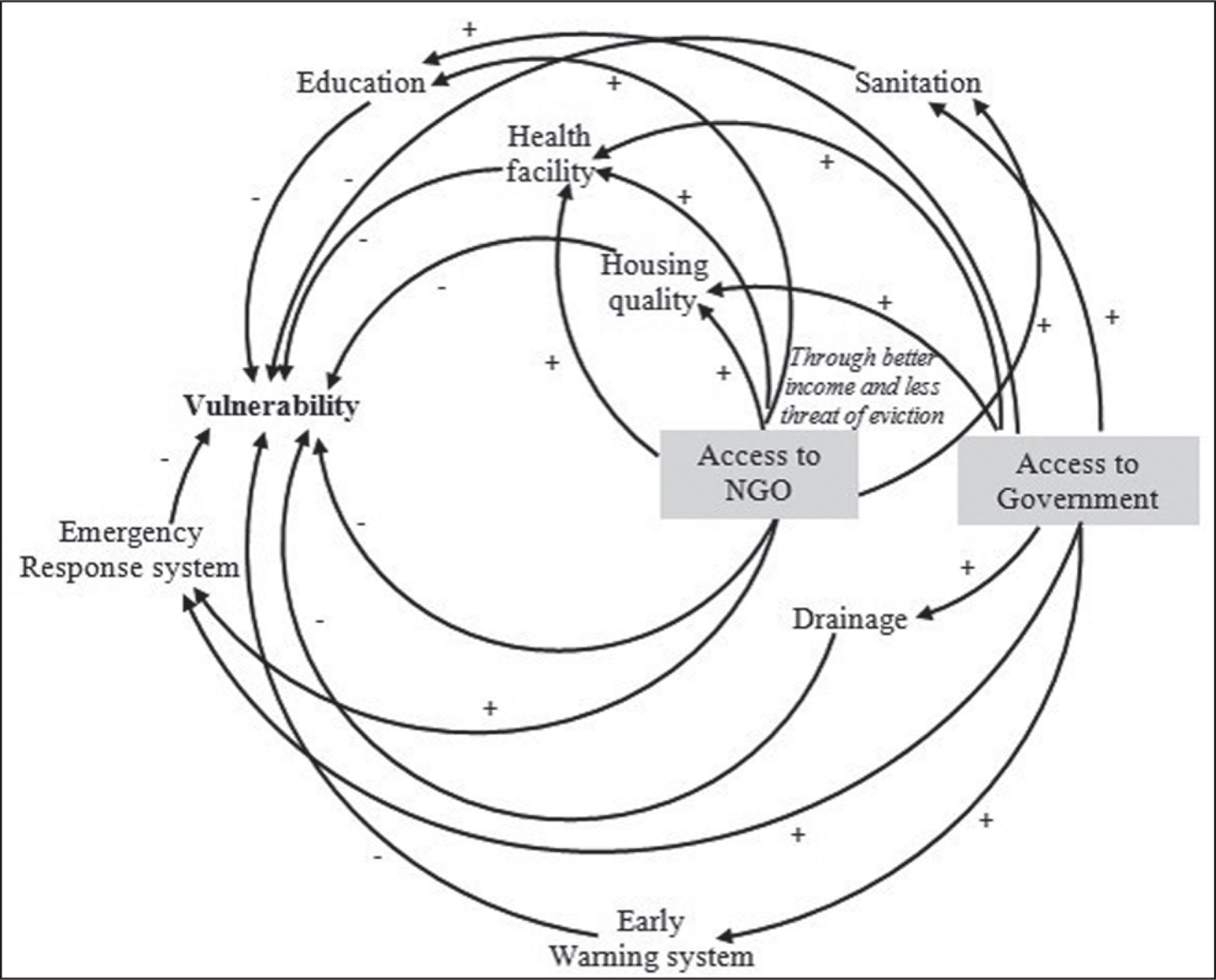
Therefore, the above systems analysis clearly demonstrates the importance of organizational access in underpinning the vulnerability of the urban poor: it is the underlying factor that influences most of the other factors contributing to vulnerability. The discussion here on the vulnerability of the urban poor clearly depicts that there is a missing vertical link in the study area.
Conclusion
The study looks at the vulnerability of the urban poor from a unique perspective involving a ‘whole systems’ point of view. It allows a better understanding of the complexity behind urban poor’s vulnerability to climatic risks through unpacking the relationships among the influencing factors/drivers behind their vulnerability. This approach is very useful for generating a holistic understanding of a complex process like vulnerability through visualizing how the key drivers are influencing the overall system and constituting overall vulnerability. Such a holistic understanding can also be useful for identifying ways in which the systems under investigation can be positively influenced (i.e., in this case, for reducing vulnerability) by addressing the causal relationships among the factors.
Overall, the poor in Dhaka East are trapped in vicious circles of poverty primarily developed through the two-way relationship between vulnerability and organizational access: lack of organizational access increases vulnerability, and more vulnerability decreases the probability of accessing organizations. One flood leaves people more vulnerable to the next flood by negatively affecting their income and thereby affecting their adaptive capacity, and, before recovering from one disaster, the next disaster strikes (as discussed in Section I, flooding is a regular phenomenon in the study area). Hence, repeated disasters push them further into a poverty trap (also see Section V).
As identified in the systems analysis of vulnerability, the poverty loops develop through the two-way relationship between lack of access to government and NGOs, and, vulnerability, both having a direct negative influence on income. Hence to break this vicious circle, ensuring better access to organizational services is essential. The core problem behind this lies in the lack of appropriate representation of the rights and security of the urban poor in relevant policies. Lack of political commitment for pro-poor policies is a fundamental challenge. Most governments in the developing world give little attention to the urban poor in their policies and investments, especially in relation to climate change and natural disasters. This is particularly the case for issues related to climatic change, where risk is uncertain and also takes a back seat as a concern for the marginalized urban poor. The tendency to overlook the urban poor in national policies has the consequence that governmental and NGO programmes have less emphasis on the urban poor and are constrained in serving the urban poor living beyond the city’s administrative boundaries. Moreover, a ‘rural bias’ still persists (mostly justified by conjectures regarding the relative level of poverty between urban and rural areas) which diverts programmes and research activities regarding poverty towards rural areas. If there is no normative shift in the perception of the urban poor as in need of support, the urban poor will remain excluded from national policies, and consequently from developmental plans and adaptation strategies.
There is little point in researching adaptation to flooding and climatic risks without knowing the factors that make people vulnerable in the first place. In Dhaka, government understanding focuses on large infrastructural development as a dominant adaptation to solve flood vulnerability. This is common around the global south. But national and local governments, donors and other macro-level organizations need to understand that large-scale infrastructural investments may not always be the most effective way to reduce vulnerability to climatic risks—flooding. Rather, the systems analysis reveals that the risk posed by disaster is often strongly linked with social and economic factors rather than simply being the result of the physical intensity of the event. Considering this, social vulnerability to flooding cannot be separated from the development context. The significance of social vulnerability warrants its mainstreaming in adaptation strategies and doing so will improve to the sustainability of adaptation to flooding. Development, if seen through the lens of vulnerability reduction (and vice versa), can be seen as a contribution to resist future climatic risks.
Footnotes
Acknowledgements
The author acknowledges Professor Keith S. Richards and Dr Mike Bithell (Department of Geography, University of Cambridge) for their valuable inputs in this research. The material presented in this manuscript is based on the work supported by Schlumberger Foundation and University of Cambridge.
Declaration of Conflicting Interests
The author declared no potential conflicts of interest with respect to the research, authorship and/or publication of this article.
Funding
The research was supported by funding from Schlumberger Foundation.