




Abstract
One of the structuring logics behind the creation of news beats is the geographical one: that is, national, foreign and local news desks. Foreign and local beats, in particular, have a lot in common: the coverage of different geographical contexts increases the diversity and plurality of views; reporting from geographical peripheries is always the costliest in terms of production; the audience is more dispersed; and geographical news beats can create a sense of belonging to the place and the associated community of people. The national news desk is traditionally considered the most important and it receives adequate research attention; the coverage of foreign and local news desks is scarcer. Our aim is to make a cross-country comparison of key national media in 13 countries, both quantitatively and qualitatively, with focus on geographical news beats. We aim to answer the following questions: How do selected national news organisations cover geographical news beats, specifically foreign and local news beats? How are these news desks organised in terms of production and staffing? How does this practice vary across selected national news organisations? The findings are based on a combination of executive semi-structured in-depth interviews and a byline analysis of news stories. The findings illustrate that economic pressures have a significant impact on the maintenance of geographical news beats, although concurrent international crises may reinforce their importance. We have developed a conceptual model based on four different groups of media with their similar editorial strategies as related to foreign and local news beats.
Geography is an important part of the establishment of national, foreign, and local news desks. Its impact on media matters and news beats have a lot in common, regardless of whether it is foreign or local news, because covering different geographical contexts increases the diversity and plurality of views (Brüggemann and Kleinen-von Königslöw, 2013; Hess and Waller, 2017); reporting from geographical peripheries, whether local or global, is always the most costly in terms of production (Hess and Waller, 2017); it has a more dispersed audience (The New York Times, 2017); and geographical news beats can create a sense of belonging to the place and the associated community (Brüggemann and Kleinen-von Königslöw, 2013; Waschková Císařová, 2017).
Belonging to a specific geographical community connects foreign and local news beats. Brüggemann and Kleinen-von Königslöw (2013: 362) refer to the “sense of belonging to a global community” as cosmopolitanism, which “comprises awareness of global interconnectedness, appreciation of cultural diversity” and “openness to engage with the culturally different Other in an open transnational dialogue”. On the local level, authors (Hess and Waller, 2017; Waschková Císařová, 2017) describe a similar sense of closeness. Moreover, in both foreign and local journalism, the presence of journalists in the field is crucial: they have to “get boots on the ground”. Working in the field is not only a key part of reporting itself, but it is particularly relevant for both foreign (Bradley and Heywood, 2024) and local reporters’ jobs (Waschková Císařová, 2025).
Nevertheless, while the national news desk is traditionally considered the most important at media organisations and therefore receives adequate research attention (Magin and Maurer, 2019; Reich et al., 2021), the coverage of foreign (Brüggemann and Kleinen-von Königslöw, 2013) and local news desks (Jenkins and Jerónimo, 2021) is scarcer and increasingly under threat. There are news deserts in the coverage of foreign (Van Leuven et al., 2021) and local topics (Verza et al., 2024) (i.e. areas without available quality information for the audience). However, the internal newsroom logic and the reasoning behind (de)prioritizing reporting from and on geographical territories are not well-researched. For example, local news deserts are mapped primarily through the lens of local media, not the coverage of the local news beat by national media (Verza et al., 2024).
Authors also often address the respective geographical news beats in isolation, emphasising the importance of a particular geography (Jenkins and Jerónimo, 2021), which is limited to a national case study (Reich, 2012), or an international comparison of a limited number of countries (Brüggermann et al., 2017). This limits the opportunities to evaluate how the news organisations prioritise the geographical beats within the context of the entire newsroom.
This study explores, for the first time on a comparative basis, the composition of news beats at leading quality news outlets in 13 countries. Our aim is to explore the state of geographical news beats in national news organisations by comparing the foreign and local news beats across 13 countries, both quantitatively and qualitatively. Therefore, based on our inductive approach, we map the current international trends, compare them, and offer explanations for the detected trends according to the perspectives of the newsroom representatives themselves. Leaving aside the well-researched national news beat, we focus on the following questions: (1) How do leading national news organisations cover geographical news beats, specifically foreign and local news beats? (2) How are these news desks organised in terms of production and staffing? And (3) How does this practice vary across selected national news organisations?
News beats
Beat reporting is characterised by thematic and/or geographical specialisation. Journalists develop expertise in specific areas, and they establish routines and regular interactions with particular places and individuals. News beats are how media organisations “seek to structure the social environment they cover” (Magin and Maurer, 2019: 1). Beats, therefore, can lead to both efficiency and depth.
According to Firmstone (2024: 144), beats reflect and sustain organisational “aims, objectives, and values, which in turn, shapes its news production practices and content”. It is possible to see the beat system within a newsroom as a mirror of their organisational priorities and hierarchies (Magin and Maurer, 2019; Reich et al., 2021). Decisions need to be made about the topics that will receive routinised, regular coverage by a dedicated staff, as opposed to remaining on the margins of attention, and the areas that will receive local reporters, as opposed to freelancers or secondary sources, like PR companies and news agencies. Establishing new beats, as well as terminating the old ones, can be driven by both commercial and editorial interests.
According to Tunstall´s organisational consensus model (1971), beats can contribute in three ways: increasing audience size (e.g. crime, sports); attracting advertising revenue (e.g. consumer affairs, tourism); or strengthening organisational prestige (e.g. politics, foreign news). By establishing a new beat, news organisations indicate an ongoing interest and commitment to having a voice within specific discourses by regularly addressing certain topics, locating their reporters in specific areas, and serving the audience that is interested in these topics.
As such, based on these considerations, the distribution of resources in newsrooms may result in some beats being less prioritized or even neglected. According to Marchetti (2005), events or crises can boost (e.g. health during the COVID-19 pandemic) or undermine the importance of beats and the proportion of specialised journalists attributed to them, as seen in France as a result of the decline of social and labour news and the growth of the economic beat. In Belgium, research has documented the decline of local reporting (Van Leuven et al., 2021). Market size also plays a role – European scholars mention the stronger position of generalists in newsrooms, especially in smaller markets that rely on newsrooms with fewer journalists who cover more diverse beats (Balcytiene et al., 2015).
Each beat constitutes a unique “microculture” (Ericson et al., 1989: 34), unique “social spaces” or “subspaces” (Marchetti, 2005: 65), or “a virtual network of social relations” (Broersma and Graham, 2012: 405), where information exchange, and the rules for that exchange, are negotiated between reporters and their sources (Magin and Maurer, 2019). Thematic or geographical beat boundaries, and the routines developed within these boundaries, therefore define “places to go and people to see” (Fishman, 1980: 104).
A medium uses a beat to connect to a specific network of sources and their topics on one hand, and the segments of audiences interested in these topics on the other hand. General assignment reporters, by contrast, are the ultimate generalists – often located on 24/7 and city news desks. Their relationships with sources are more ad hoc, which might mean less expertise and a weaker network of sources, but also less dependency on a defined network of sources, which might, in the long term, limit their objectivity (Gans, 1979).
Beat journalists have more potential to initiate original news stories or scoops and to provide unexpected perspectives rooted in more expert contextualisation (Van Leuven et al., 2021). Nevertheless, strong personal networks can also create threats to independent reporting (Magin and Maurer, 2019). The danger of becoming absorbed in a specific news beat is expected to result in a less critical point of view towards the beat and its sources, as documented in political journalism (Skovsgaard and Van Dalen, 2013). While routine sources give access to certain information, the journalist-source proximity that develops over time can mean that topics and sources outside the established network will lack media attention (Malling, 2021). Beat reporters also run the risk of being more vulnerable to commercial pressure (Kvalheim and Barland, 2019).
A foreign news beat
Foreign news, which is considered to be both one of the most prestigious news beats and one of the most expensive, has been the subject of a great deal of work compared to other beats. Most of these studies focus on news coverage over a given period, on international events, areas, or institutions. While a comprehensive list is impossible, it is worth noting that research has identified a number of major principles for selecting foreign news, such as geographical proximity, cultural affinities, and the hierarchy of countries (Galtung and Ruge, 1965; Golan, 2008). Wu (2000) also highlights economic interests, the availability of information, and production costs. Moreover, researchers point out the effects of the commercialisation of foreign news: layoffs of reporters and correspondents (Skovsgaard and Van Dalen, 2013; Van Leuven et al., 2021).
Other researchers emphasise the processes of nationalisation or the localisation of international information (Cohen et al., 1996; Nossek, 2004). The variation in the degree of attention paid to foreign news from one country to another, and in the audiences targeted, inevitably changes the notion of proximity, as illustrated by the case of transnational media (Allern, 2002), or media/desks that specialise in a geographical, linguistic, or political area.
Other types of investigations have helped to gain a better understanding of the characteristics and professional practices of the various agents in the division of labour involved in producing foreign news, which obviously varies from one medium to another. This includes: war reporters; parachute journalists (Erickson and Hamilton, 2006); foreign correspondents (Brüggemann et al., 2017), who are fewer in number and more common as freelancers (Dorsey, 2016; Zhang and Jenkins, 2023); fixers (Kotišová and Deuze, 2022); and even more desk workers, who remain blind spots in research. Regarding gender differences in news beat coverage, a foreign news beat is considered a “masculine beat,” according to a survey of US journalists (Santia et al., 2024: 7).
Building upon the debate about the New World Information and Communication Order, (MacBride, 1980) there is also a large body of work about the dominant functional weight of the major foreign news wholesalers, be they the three major world news agencies – AFP, AP and Reuters (Dell'Orto, 2016), transnational 24-h news channels, transnational dailies, or national dailies that have a transnational dimension.
Paradoxically, the analysis of news sections (Reich et al., 2021; Tunstall, 1971) and their names, and the mapping of the presence of journalists who are based abroad, remains virtually unexplored.
A local news beat
Historically, the local news beat has been associated with two topics: the financial difficulty of covering thematic peripheries that are not covered, by default, by agency news (Culpepper, 2024); and the stated greater importance of local content to audiences who identify more with what is happening in their local area (Hess and Waller, 2017).
However, the reverse trend, which confirms the aforementioned, is emerging — local-news-focused organisations reciprocally exchange regional and national agency news for their own locally supplied news. As Culpepper’s (2024) article maps out, nine nonprofit local newsrooms in the US currently have content-sharing partnerships with the Associated Press (AP) agency.
Of course, the development of the local news beat has technological and economic implications: the extent and existence of it may be influenced by the state of digitisation, paywall strategies, and the integration of individual news desks in newsrooms (Jenkins and Jerónimo, 2021). From the economic point of view, news production has been centralised for cost-cutting and the related consequences: layoffs of locally based staff, freelancisation (Van Leuven et al., 2021; Paulussen and D’heer, 2013), and the related greater dependence on homogenised national and foreign agency news (Hess and Waller, 2017; Jenkins and Jerónimo, 2021).
As Van Leuven et al. (2021) point out, the number of regional beat journalists in Belgium is declining the most among all of the news beats, and also journalists’ scope in this beat’s has expanded, as has the proportion of freelancers. Therefore authors (Van Leuven et al., 2021: 1216, 1208) conclude that their “study confirms that the regional beat is on the decline”, suggesting that this “offers many reasons for concern, especially since many of those professional local beat reporters are replaced by non-professional volunteers or citizen journalists who do not admit to the same practices, norms, values and ethics as professional journalists.” Marchetti (2005) adds that the level of specialisation varies between different beats, and, in the professional hierarchy, it is the local news beat that is at a lower position, often taken as a starting position for newcomers or lower quality journalism. It is also less lucrative (Hess and Waller, 2017). Beat journalists at the local level are at risk of becoming more connected to sources and local contexts, with proximity and instrumentalisation often mentioned, which can limit professional autonomy and the plurality of views (Magin and Maurer, 2019).
Given the breadth of topics, apart from the politics that the local news beat addresses, it can also be understood to be a “feminine beat”, as Santia et al. (2024: 7) concluded based on a survey of 1600 US journalists: “we classified feminine beats as those that tap into the communal traits generally attributed to women” when “female journalists are expected to gravitate toward beats that reflect feminine stereotypic qualities, such as education, family issues, homelessness, or health.”
Geographical beats, both foreign and local, therefore can be seen as combining the aspects of topical and generalist beat reporting. Due to newsroom logistics, reporters from the remote areas are expected to cover a wide range of topics from the area. As Gans (1979: 132) points out, “staffers who collect the news from an entire region must keep up with so many different substantive topics that they remain generalists.” At the same time, they are expected to have local knowledge, source networks, and relevant language and cultural skills.
It is the missing (comparative) data and the ambivalence of these news beats — the simultaneous emphasis on the importance of foreign and local news beats, their high economic demands, and the declining emphasis placed on them by individual media outlets — that prompt the formulation of our aim. We focus on the specificities, similarities, and differences of geographical news beats, namely foreign and local, from a comparative perspective.
Methods
Countries, media, and number of interviews a .
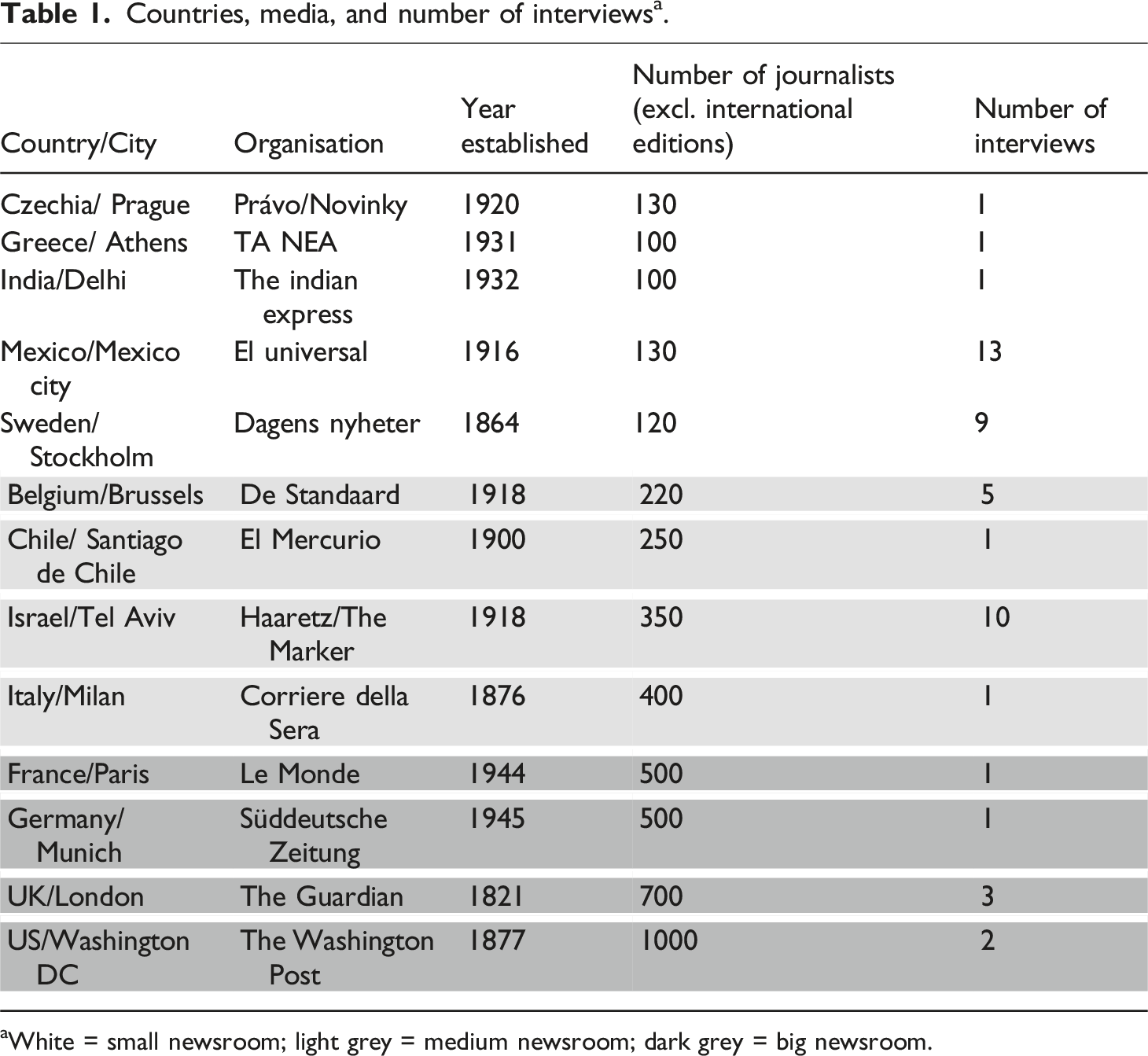
aWhite = small newsroom; light grey = medium newsroom; dark grey = big newsroom.
We focused on these research questions: (1) How do selected national news organisations cover geographical news beats, specifically foreign and local news beats? (2) How are these news desks organised in terms of production and staffing? And (3) How does this practice vary across selected national news organisations?
The findings are based on a mixed method approach (Berger, 2000; Thurman, 2018) that combines executive semi-structured in-depth interviews with a byline analysis of samples of the stories. The latter was essential because some of the news organisations, especially some of the larger ones, were reluctant to participate, let alone share sensitive information, like the size of different departments and the numbers of part-time and freelance staff. This approach provided us with two types of data: statistical information on news desks and news beats in the selected media; and contextual information, from interviews, about trends, reasons for change, strategies for development, organisational structure, and policies.
In order to extract and compare the individual findings, the team agreed on clear topics for data collection. This consisted of four main groups: structural data (lists of desks, sections, departments, beats and supplements; reporters employment status; strategies for content production); trends (the rise and fall of the importance of beats, sections and desks); policies and practices (hierarchies in the newsroom, practices and routines); and operational data (routine work within a specific beat or desk).
The selected countries were included in the sample based on the purposive sampling method – at the beginning of the research, two general rules were established to select the countries, which were limited to those with democratic political systems and free media systems. The selection process, which was organised over a limited period, resulted in the selection of the 13 countries, most of which were European (Belgium, Czechia, France, Germany, Greece, Italy, Sweden, United Kingdom), followed by the Americas (Chile, Mexico, United States) and Asia (India, Israel). One limitation of the study is therefore the predominance of states from the Global North at the expense of those from the Global South.
This was followed by the selection of one media organisation to be analysed from each national media system. It also was based on the two established conditions. Due to the intricate and incommensurable structures of the news beat systems, and the challenges of their comparison, we focused on one newsroom per country. It had to be a quality news outlet that maintained both print and online editions. Different sizes of media outlets and their newsrooms are represented in the sample, so we established three types according to the number of journalists: small (up to 200 journalists – Právo/Novinky, TA NEA, The Indian Express, El Universal, Dagens nyheter); medium (between 200 and 400 journalists – De Standaard, El Mercurio, Haaretz/The Marker, Corrierre della Serra); and large (400-plus journalists – Le Monde, Süddeutsche Zeitung, The Guardian, The Washington Post) (see Table 1).
All researchers worked with the same thematic research structure, and each chose a process that allowed them to find answers to the chosen questions – an appropriate number of interviews (see Table 1) with suitable interviewees (i.e. reporters, editors, managers, including ex-employees), or byline analysis, if the interviews did not cover the full range of topics.
The data was collected between January and August 2023, resulting in 49 interviews – between one and 13 interviews in each country. The different numbers of interviews reflect the various strategies used by country researchers to obtain the information and their accessibility to senior managers/journalists in a position to understand and explain the entire beat structure of the respective organisation. In some cases, typically in larger newsrooms, senior editors were inaccessible, or had partial information about particular sections, forcing country representatives to piece together the testimonies of more interviewees. The interviews lasted between 20 and 90 minutes and guaranteed anonymity. They were transcribed and analysed in the national languages and structured according to set criteria, then translated into English and shared with the whole research team.
During the same period some of the researchers collected additional data from the media itself through byline monitoring, cross-checking the list of beats with newspapers’ websites and trade directories. Both the interviews and the byline analysis focused primarily on structural data (i.e., the number of journalists in the beat, their positions, gender, form of employment, and background). The information from the interviews then supplemented quantitative data with explanations of the development, strategies, and reasons for changes of individual beats as well as the entire newsroom (Reich et al., forthcoming).
When the data was shared, individual data was handled anonymously; individual journalists or organisations were designated with a numerical code. Each of the researchers who collected data resolved the ethics assessment of their work at their home university.
The analysis was conducted on two levels — quantitative and qualitative. The individual researchers input the quantitative data (mainly on the number and features of journalists in each news beat) into an Excel spreadsheet, where they were systematised and cleaned for the quantitative analysis in the SPSS programme. These variables included: gender, job title, employment status, unit in the organisation, parent unit, reporter’s location, beat cluster, and beat description. The analysis in SPSS was based on a descriptive analysis that used frequencies and crosstabs to compare variables. Then, the information from the interviews, which put the quantitative findings into context, was analysed thematically (Saldaña, 2009) and it serves as an interpretive supplement to the quantitative data.
Findings
In total, the sample has 399 foreign journalists and 508 local journalists. Overall, the number of foreign and local journalists is in accordance with the size of the newsrooms (see Table 2 and Figure 1). Big newsrooms have, with the exceptions explained below, consistent proportions for reporters in foreign and local news beats to their total number of journalists. A share in both news beats of around 9% is the standard. There are only three differences: there is a negligible share of local reporters in The Guardian’s newsroom; conversely, the emphasis is on the local news beat at Süddeutsche Zeitung; and there is a similar stronger emphasis on the foreign news beat at Le Monde. These quantitative findings are in line with the declared editorial strategies of the respective media. When there is a decline in a particular news beat, according to respondents, it is mostly due to economic problems (Van Leuven et al., 2021). This is the reason for the slightly trimmed local news beat at The Washington Post (US), the dissolution of the national news desk at The Guardian (UK), and the local correspondents who work for all of the sections and pages, such as at Le Monde (France). Metro is not as desirable a place [as National]. So the editors are kind of hit-and-miss, honestly, and it’s harder to get the top editors to want to work in Metro. [...] I would say there was a lot of fear, because they lost a few Metro reporters in the layoffs. (reporter, The Washington Post, US) Number of foreign and local reporter shares per newspaper. aWhite = small newsroom; light grey = medium newsroom; dark grey = big newsroom. Number of foreign and local reporter shares per newspaper.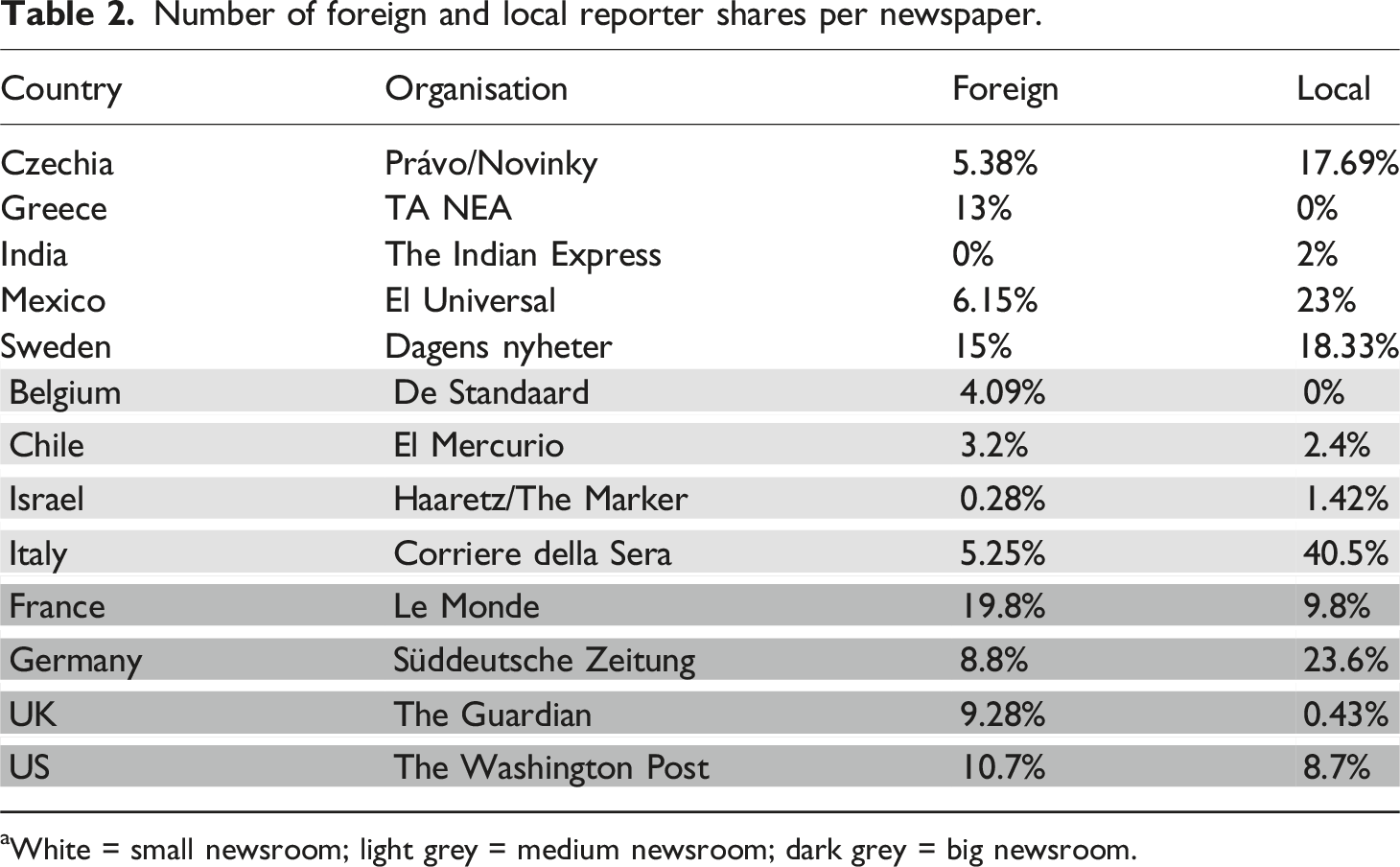
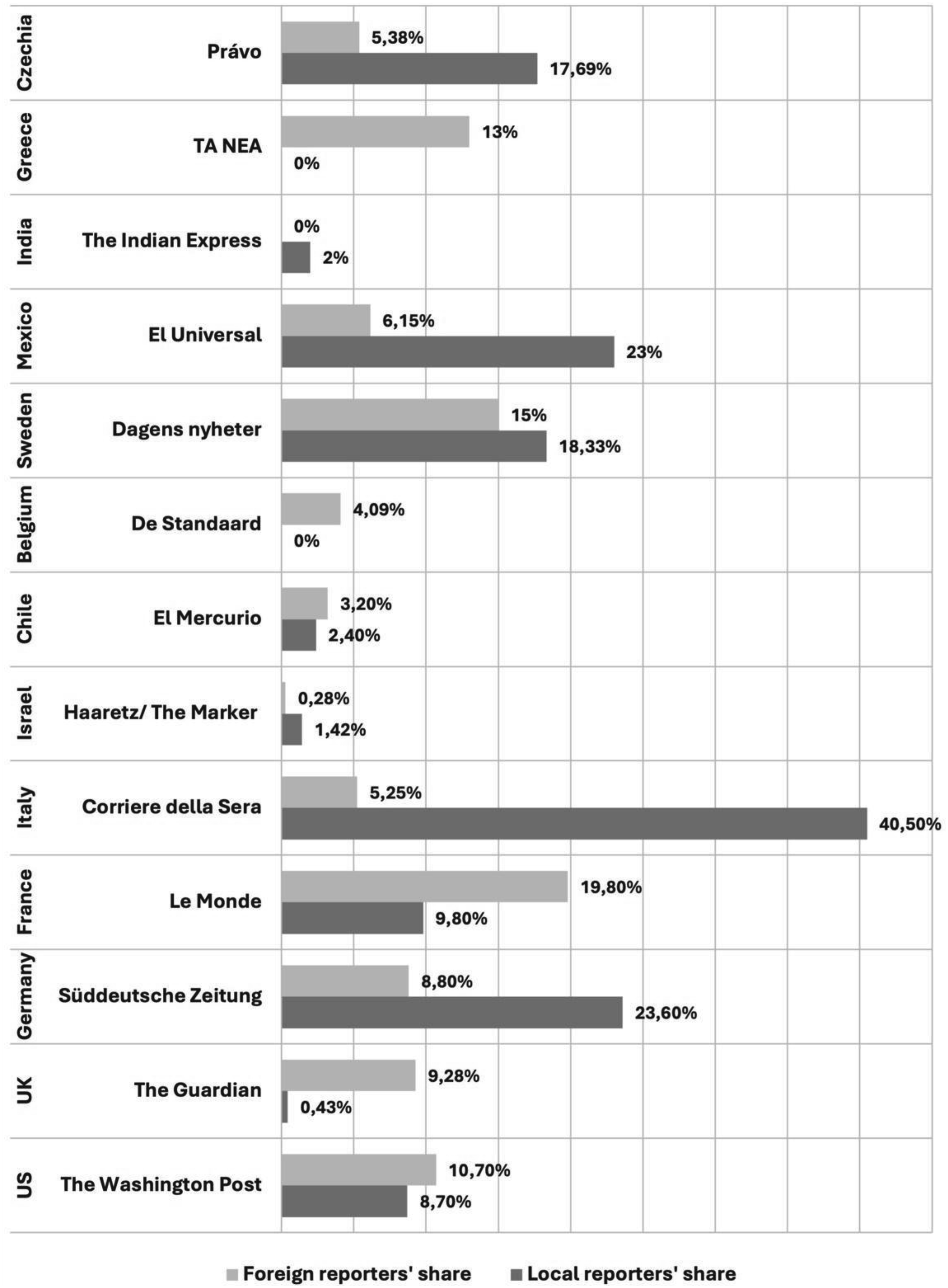
The reason for the high representation of both foreign and local reporters is newsroom tradition (Brüggemann and Kleinen-von Königslöw, 2013; Jenkins and Jerónimo, 2021). An example is the editorial emphasis on Bavaria at the Süddeutsche Zeitung in Germany, the second highest share of local reporters in the entire sample. This is supra-regional significance, but at the same time these are strong roots in the region. I think that makes SZ unique, even in the German media landscape. (editor, Süddeutsche Zeitung, Germany)
The same example, but for a foreign news beat, is the tradition at Le Monde, which has the highest share in the whole sample.
Among medium-sized newsrooms, the share of foreign and local reporters is noticeably lower. The standard share of both news beats is only around 3%–4% and there are more outliers. There is, for example, the newsroom of Haaretz/The Marker (Israel), which has the lowest share for both news beats of the entire sample, with one foreign and only a few local reporters. We have very good syndications. With all the respect, no Israeli reporter can compete with the NYT, Bloomberg, Guardian or Washington Post […]. We do not send reporters abroad anymore. (editor, Haaretz, Israel)
Similarly, Belgian De Standaard has no local news beat, and local news are copied from another newspaper of the company, the result of financial hardship. At Chilean El Mercurio, the entire foreign section disappeared from the media organisation and relocated in the general news section. On the other hand, Italian Corriere della Serra stands out in the data among medium-sized newsrooms because it has the highest proportion of local reporters (162 out of 400; 40.5%), which builds significantly on the tradition of covering all Italian regions.
Among small-sized newsrooms, the situation with the share of foreign and local reporters is much more disordered. This is probably because their economic stability is considerably more fragile than that of the bigger media organisations. However, small newsrooms also seem to prefer a clearer division for their news beats. While they have the highest share standard (around 15%) among the three types of newsrooms based on size, there are also significant differences. For example, the Swedish newsroom of Dagens nyheter has the most balanced and, at the same time, high shares of both news beat reporters (15% foreign; 18.33% local). Conversely, the newsroom of The Indian Express is in the same group, which is made up of periodicals that lack a foreign news beat and for which the proportion of local reporters is negligible.
The foreign news beat is one of the most valued and it traditionally employs the most experienced and most valued journalists in the newsroom (Brüggemann and Kleinen-von Königslöw, 2013). Nevertheless, the interviewees often commented that, due to economic reasons and lower reader interest, the foreign news desk has gradually been weakened (Van Leuven et al., 2021). Limited resources force mainly small-size newsrooms to drop or outsource geographical beats. The limited budget for foreign correspondents can be seen in the share of Czech Právo/Novinky. For Greek TA NEA, the financial difficulties mean it does not have a local news beat. There were more [correspondents] in the past. Now these are the only ones left. We removed the ones that were not very important or the ones that cost a lot (US). (This was) mainly (for) financial reasons […] There was a belief that for a small country, for a newspaper that needs to cut costs, correspondents are not essential; we don’t even have anyone in Turkey, Cyprus… (editor, TA NEA, Greece)
What is remarkable, however, is that we observe the opposite of cost cutting on foreign reporting in some media. The recent major international crises — interviewees mentioned the war in Ukraine, the Israeli-Palestinian conflict, the presidential elections in the US — have created demand for journalists in the foreign section. This could be related to Tunstall’s (1971) aspect of prestige. As an editor from Belgian De Standaard puts it: “Until we got a new reporter, we were slightly tight, because… well, the conflicts keep piling up.” However, this does not necessarily mean that there is a strengthening of foreign news beats. Le Monde publishes articles by foreign correspondents in all sections, scattering the information from abroad throughout the issue.
There are significant similarities in the development of the foreign and local news beats, like the high financial requirements for their operation (Brüggemann and Kleinen-von Königslöw, 2013; Hess and Waller, 2017). Yet, the local news beat is sometimes considered less important for news production (Hess and Waller, 2017).
In some newsrooms, the local news beat is traditionally seen as a space for gaining experience and, later, hierarchical promotion to other news beats with more responsibility, such as the national news beat. A correspondent gains a remarkable hold on a beat after spending 3 to 4 years. Learning almost all the ins and outs of a beat in these years prepares them to be part of state reporting, a bigger responsibility. Bigger responsibility comes with an extended profile, i.e. more than two beats one has to cover. Indian Express emphasises and experiments with the versatility of correspondents, like, if a correspondent hails from Bihar, politics is their forte. A correspondent hailing from Goa covers crime astutely but we at Indian Express switch their beats at times so they can master multiple beats and develop the nose for news in plurality. (editor, The Indian Express, India)
If we focus on the details of the coverage of foreign and local news beats (i.e. the answers to questions (2) How are these news desks organised in terms of production and staffing? And (3) How does this practice vary across selected national news organisations?), a more nuanced picture appears.
Number and percentage of foreign reporters located within and outside the country; the number of freelancers shown in parentheses a
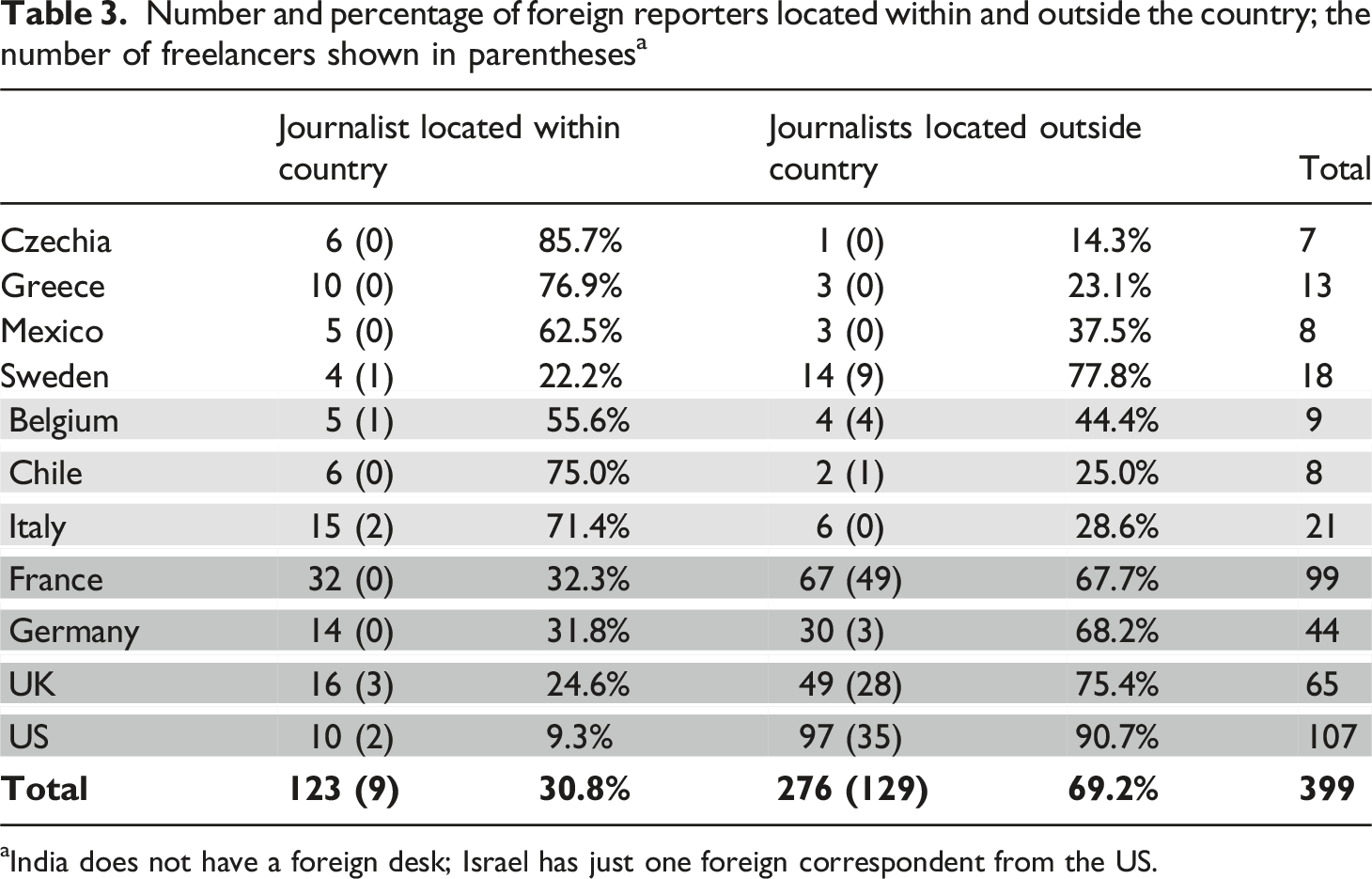
aIndia does not have a foreign desk; Israel has just one foreign correspondent from the US.
Regarding the importance of the individual countries in which media outlets place their foreign correspondents (Galtung and Ruge, 1965; Golan, 2008), they are most interested in neighbouring countries (e.g., Právo/Novinky, Czechia) or in correspondents from the European Union (e.g., Dagens nyheter, Sweden; TA NEA, Greece). We strengthened the EU reporting in recent years, since the decisions taken at the EU level influence Sweden and the Swedes. (editor, Dagens nyheter, Sweden)
The quantitative data shows that local reporters are spread between the publication city if it is not the capital (21.5%), the capital (29.9%, including when the publication is based in the capital), and elsewhere in the country (46.3%). Therefore, local news is still mostly gathered in the field of the specific locality, which supports the argument for the continued importance of the local news beat (cf. proximity, Magin and Maurer, 2019; Waschková Císařová, 2017). Most local reporters (77.6%) are full-time staff, with the exception of Le Monde (France), where all 49 local reporters are freelancers. This contradicts existing research, which shows that one of the consequences of cost-cutting in local reporting is the ongoing freelancisation (Paulussen and D’heer, 2013; Van Leuven et al., 2021) and the related dependence on homogenised agency news (Jenkins and Jerónimo, 2021). As such, the French newspaper seems to apply a radically different strategy than the other newspapers in our sample, who hire local reporters only (e.g. Czechia, Israel, Mexico, Sweden) or mainly (e.g. Chile, Germany, Italy, the United States) as permanent staff. On top of that, some analysed media invest in local news beat development, which indicates an ambition to increase the audience size (Tunstall, 1971). The Swedish newspaper now has 22 full-time local reporters: During the last three years, Dagens nyheter invested in building newsrooms in four different geographical areas of Sweden. This replaced the local correspondents or freelancers. […] This investment was made in order to strengthen the reporting for the national audience about the events in the different parts of the country [in contrast to having a local supplement for the local audience]. (editor, Dagens nyheter, Sweden)
Gender of foreign reporters a .
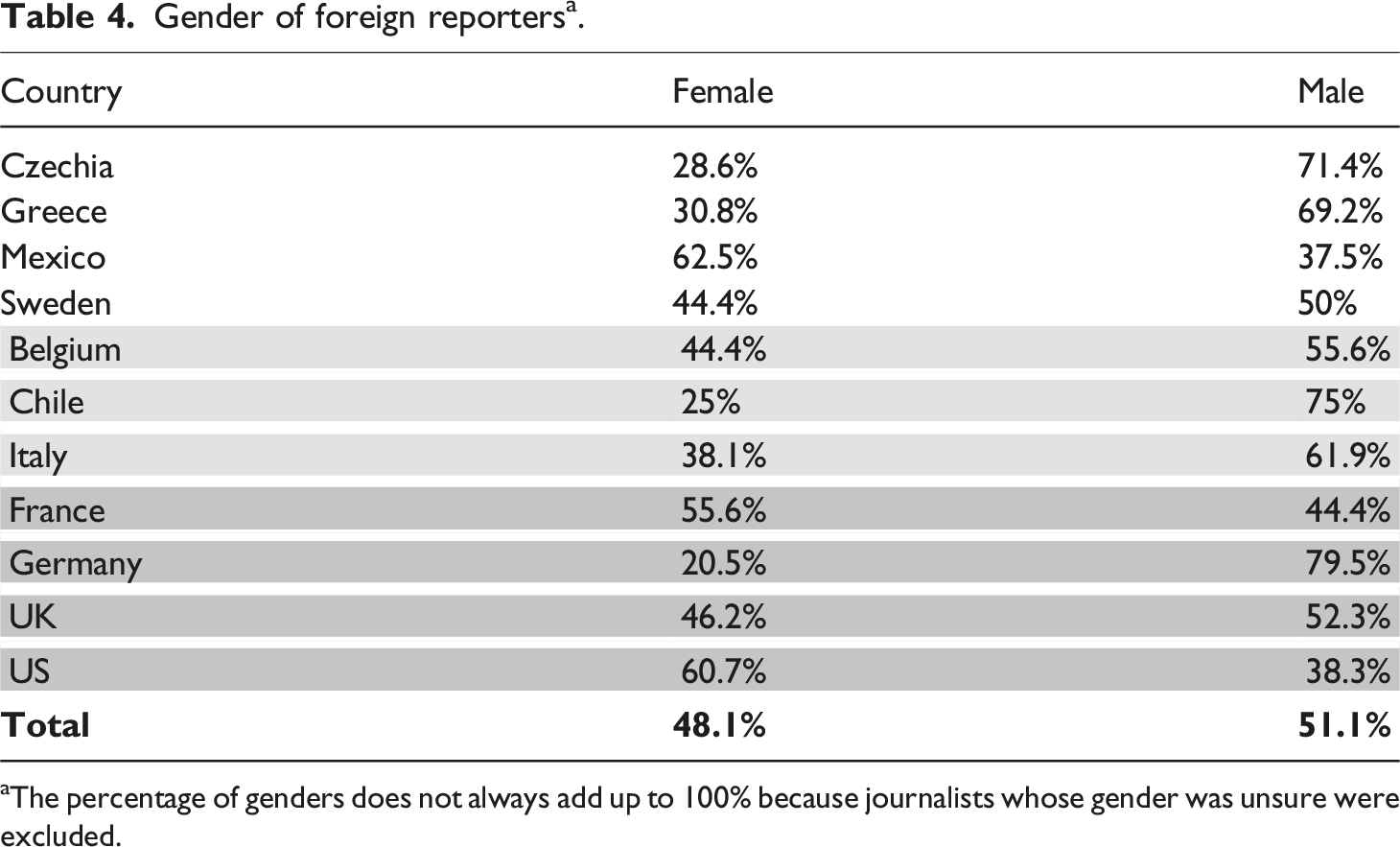
aThe percentage of genders does not always add up to 100% because journalists whose gender was unsure were excluded.
Gender of local reporters a .
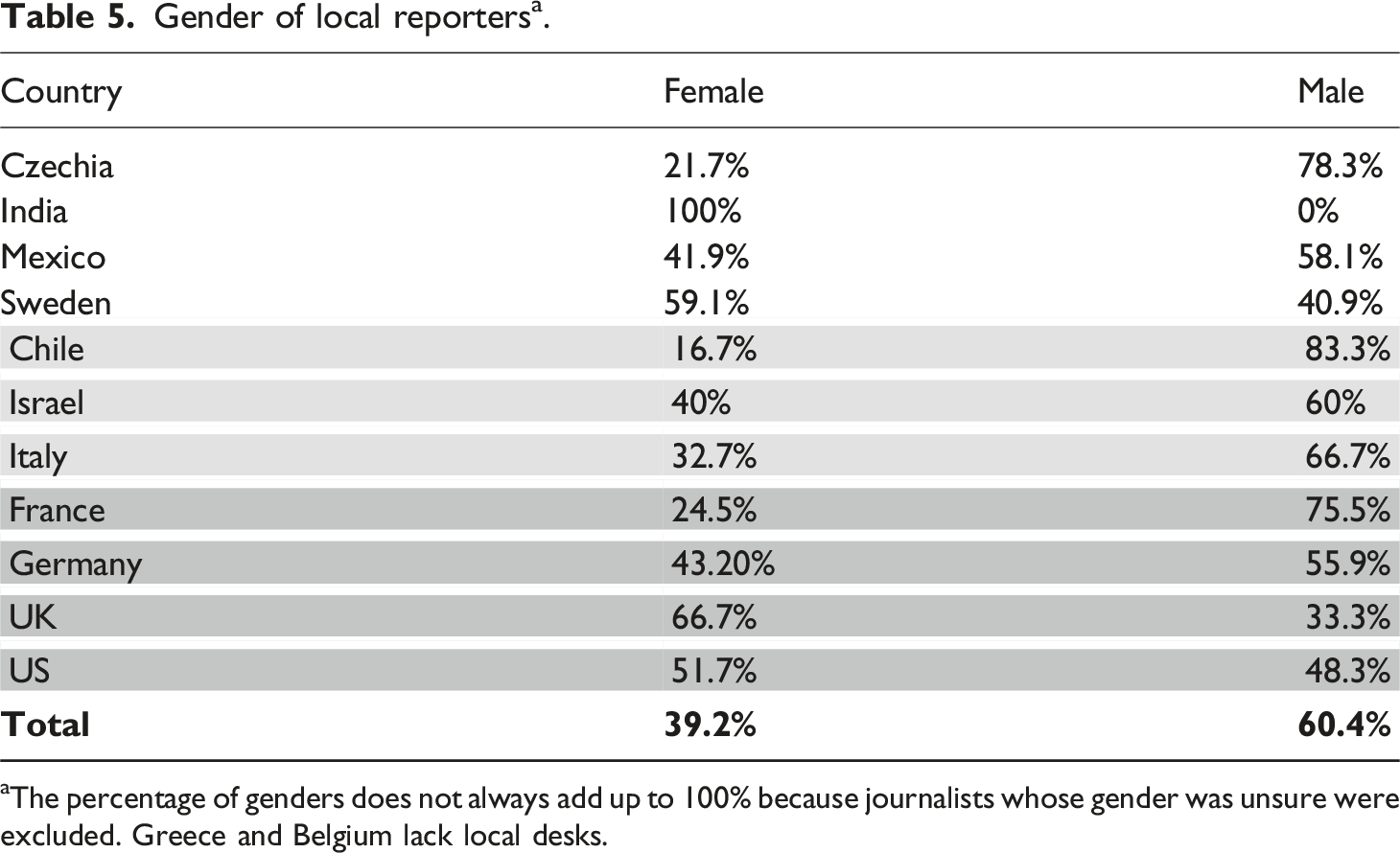
aThe percentage of genders does not always add up to 100% because journalists whose gender was unsure were excluded. Greece and Belgium lack local desks.
In the total sample, we see a balance between female (48.1%) and male (51.1%) foreign reporters, whereas male reporters are overrepresented in local reporting (60.4% vs 39.2%). Yet, the ostensible gender balance in foreign reporting hides substantial differences between countries. The majority of the foreign reporters in Germany, Chile, Czechia, Greece, and Italy are male, whereas there are more female reporters especially in Mexico, the United States, and France. The reason behind these results could be influenced by the selection of the media analysed, as we selected one traditional quality daily with an online version in each country.
Discussion
Our study contributes to the understanding of the status and development of news beats in selected leading media in the respective countries in our sample. We focused on the following questions: (1) How do leading national news organisations cover geographical news beats, specifically foreign and local news beats? (2) How are these news desks organised in terms of production and staffing? And (3) How does this practice vary across selected national news organisations?
In general, there are clear trends for geographical news beats, namely foreign and local: economic pressures are leading to a reduction in this expensive reporting (Brüggemann and Kleinen-von Königslöw, 2013; Hess and Waller, 2017), especially in reporting from the field; and there is a reduction in the number of dedicated correspondents. As a result, foreign and local reporters often have no “boots on the ground” and provide audiences with taken over, translated, and detached news, which lack proximity (Allern, 2002) and therefore the potential to strengthen the sense of belonging to either global or local community (cosmopolitanism, Brüggemann and Kleinen-von Königslöw, 2013; closeness, Waschková Císařová, 2017). It can also contribute to the emergence of news deserts (Verza et al., 2024).
Yet, we see the opposite trend — strategic decisions by selected media to maintain traditionally strong geographical news beats or even to strengthen foreign and/or local news beats — which is related both to the ongoing international crises, which again emphasise the necessity of reporting from selected territories, but also to the strategy to maintain the traditional face of the media, build relationships with the audiences relevant for the newspaper, or to differentiate themselves from competitors (Tunstall, 1971).
We looked at the different form and nature of foreign and local news beats in three groups of newsrooms according to size, where it turned out that the smallest newsrooms generally have the highest proportion of such reporters, with the biggest differences in editorial strategies. Let us now focus on editorial strategies (Magin and Maurer, 2019; Reich et al., 2021) to understand the logic behind the maintaining or developing foreign and local news beats.
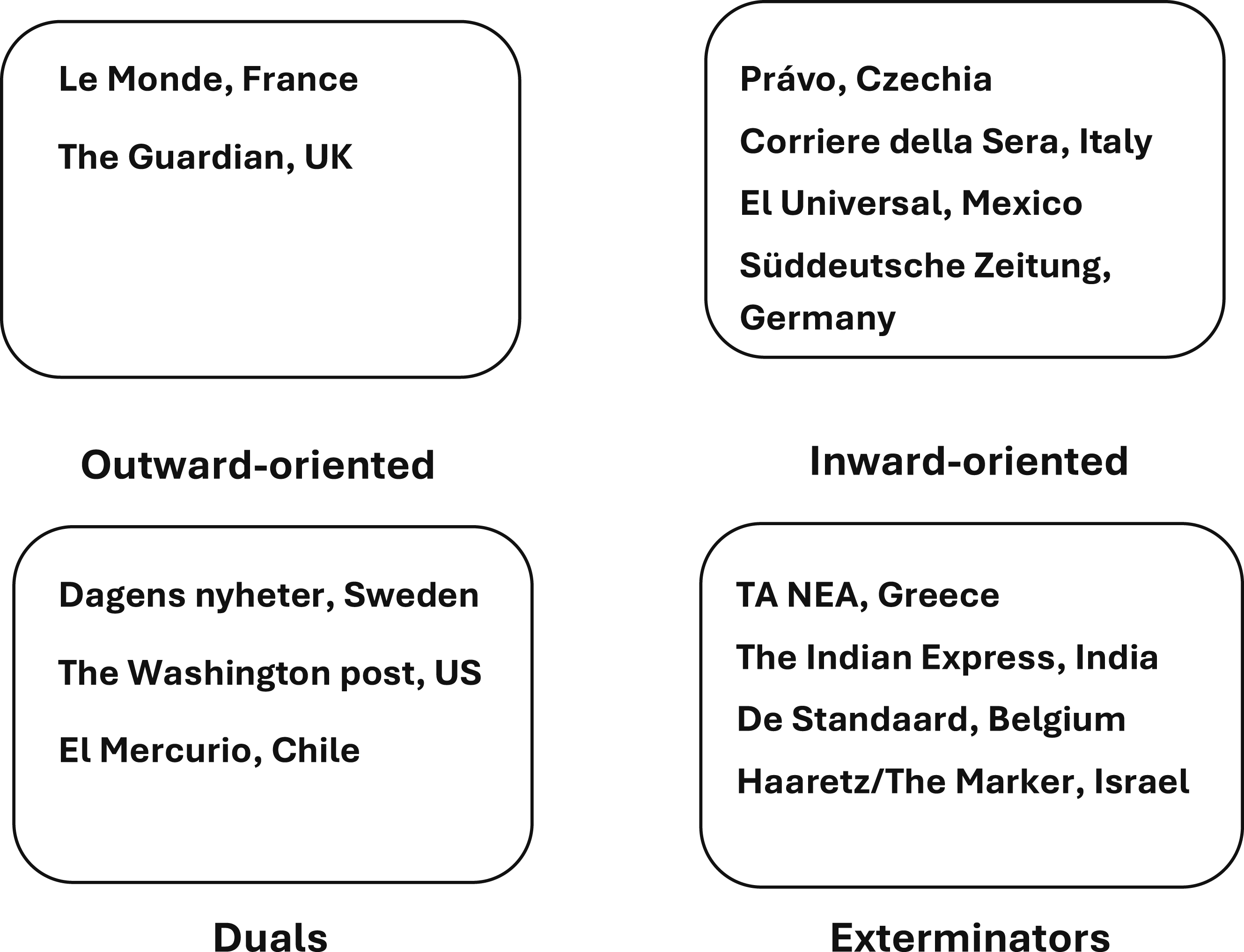
The outward-oriented group of media (e.g. Le Monde, France; The Guardian, UK) shares a strong disparity between the size of foreign and local news beats, in favour of foreign reporting. On top of that, they share the style of approach to the reporting itself – both Le Monde (67.7%) and The Guardian (75.4%) rely on foreign correspondents based abroad (Brüggemann and Kleinen-von Königslöw, 2013), which goes hand in hand with the higher numbers of freelance reporters (Brüggemann et al., 2017; Zhang and Jenkins, 2023). Nevertheless, one newsroom in the outward-oriented group also opposes the findings about the preponderance of male reporters on the foreign news beat (Santia et al., 2024): Le Monde (unlike The Guardian) has more female foreign reporters.
The inward oriented media, which are more supportive of local reporting (e.g. Právo/Novinky, Czechia; Corriere della Sera, Italy; El Universal, Mexico; Süddeutsche Zeitung, Germany), also share the significantly larger size of the local news beat when compared to the foreign one. As for the local news beat, all four media outlets have exactly the same strategy, regardless of the size of the newsroom — most or all local reporters are staff, not freelancers (Van Leuven et al., 2021; Paulussen and D’heer, 2013), and most of them are men (78.3% in Právo/Novinky; 66.7% in Corriere della Sera; 58.1% in El Universal; 55.9% in Süddeutsche Zeitung), which differs from other studies (Santia et al., 2024).
In the duals group, the media pay similar attention to foreign and local news beats (e.g. Dagens nyheter, Sweden; The Washington Post, US; El Mercurio, Chile). All three newsrooms use the same or similar strategies to maintain and develop this structure: they have mostly freelancers for their foreign news beats and mostly permanent staff for the local news beats. They also more often confirm the division of the news beats into the “male” foreign news beat (with the exception of The Washington Post, which has 60.7% female reporters) and the “female” local news beat (with the exception of El Mercurio, which has 83.3% male reporters).
Among the exterminators, there are newsrooms that do not have either foreign or local news beats (e.g. TA NEA, Greece; The Indian Express, India; De Standaard, Belgium; Haaretz/The Marker, Israel). Two of them — The Indian Express, India, and Haaretz/The Marker, Israel — have no foreign news beat, and two of them — TA NEA, Greece, and De Standaard, Belgium — have no local news beat. Haaretz has only one foreign correspondent in the US. In this group, the differences between individual media are more pronounced and the individual strategies for foreign and local news beats are rather different. Media outlets with only foreign news beats have a different emphasis on employing reporters. Greek TA NEA has only permanent staff. Belgium’s De Standaard has more than half freelancers among its foreign reporters. But they are the same in the predominance of men in their news beats and this confirms the thesis of a “male” foreign news beat (69.2% male foreign reporters in TA NEA; 55.6% male foreign reporters in De Standaard). Newsrooms with local news beats differ in their detailed characteristics: Israeli Haaretz/The Marker builds its local news beat on full-time staff and predominantly male reporters (60%), while Indian The Indian Express relies more on freelancers who are all women.
Therefore, we identify four editorial strategies related to geographical news beats (see Figure 2): (1) Outward-oriented group of media outlets with more emphasis on foreign reporting (e.g. Le Monde, France; The Guardian, UK). (2) Inward-oriented media with more emphasis on local reporting (e.g. Právo/Novinky, Czechia; Corriere della Sera, Italy; El Universal, Mexico; Süddeutsche Zeitung, Germany). (3) Duals, who pay comparable attention to foreign and local news beats (e.g. Dagens nyheter, Sweden; The Washington Post, US; El Mercurio, Chile). (4) And exterminators – organisations that gave up one of the analysed news beats, foreign, local, or both (e.g. TA NEA, Greece; The Indian Express, India; De Standaard, Belgium; Haaretz/The Marker, Israel). Four editorial strategies related to foreign and local news beats in the analysed media.
Conclusion
The aim of our paper was to explore the state of geographical news beats in national news organisations by comparing foreign and local news beats across 13 countries, both quantitatively and qualitatively. Therefore, we mapped the current international trends and compared them, but we have also offered explanations for these trends from the representatives of the newsrooms themselves.
Among the most significant findings is the confirmation of the trend of cost-cutting in geographical news beats and its consequences in the analysed media (e.g. withdrawing from covered locations, remote reporting, layoffs). Even more interesting, however, is the findings that reflect the opposite trend of maintaining the tradition, or even strengthening the share of foreign and local news beats in the selected media.
The foreign news beat is usually perceived to be related to the outlets’ strive for prestige, while the local news could be treated as a way to strengthen the outlets’ link to a specific network of sources and audiences. However, our study shows that the reasoning behind the current geographical expansions in small, medium, and large organisations is similar for foreign and local beats. Those news organisations that invested in the geographical news beats hoped for a competitive advantage while gaining and maintaining the audience, possibly after realizing that there are limits to how much cost-efficiency the paying audience is willing to accept.
The data from the leading national media in our sample also show a different logic for positioning within geographical news beats than that which is reflected in other research — they do not support the assumption of a gendered “male” foreign news beat and a “female” local news beat, or a straightforward direction towards freelancisation.
Based on our inductive approach, we developed a conceptualisation of editorial strategies that reflect the structure of foreign and local news beats. Different strategies for covering geography might reflect hidden structural changes that media in different countries are undergoing. These four types of editorial strategies can be further elaborated using additional indicators from the broader economic, political, or cultural context. The debunking of the one-dimensional myth about the disappearance of foreign and local news beats may also inspire further comparative research focused on the real causes and consequences of the transformation of news beats.
Footnotes
Declaration of conflicting interests
The authors declared no potential conflicts of interest with respect to the research, authorship, and/or publication of this article.
Funding
The authors received no financial support for the research, authorship, and/or publication of this article.
Ethical approval
Each of the researchers who collected interviews resolved the ethics assessment of their work at their home university.
Consent to participate
Respondents gave consent before interviews.
ORCID iDs
Data Availability Statement
The dataset generated and analysed during the current study is available from the corresponding author on a reasonable request.
Author biographies
 ).
).