



Abstract
In an era of globalisation, journalism transcends national and cultural boundaries, with international events commanding significant media attention. This evolution necessitates researching the complex networks that produce news in our interconnected world. This study examines the transformative impact of collaborative journalism in Latin America, focusing on cross-border alliances and their dual role in enhancing journalistic safety and solidarity. Notable efforts such as Tierra de Resistentes, Lava Jato, and regional teams behind the Panama and Pandora Papers demonstrate the power of collective journalistic efforts in the region. This research investigates how journalists and news outlets implement cross-border coverage through quantitative and qualitative analysis, including a survey of 75 respondents across 15 Latin American countries and 19 in-depth interviews with media practitioners in 10 countries. Our findings reveal that the success of collaborative journalism depends on contextual factors and organisational frameworks that prioritise material support, effectively functioning as solidarity and security networks. These collaborations have significantly shaped public discourse despite challenging contexts, including underdeveloped economies and authoritarian regimes. Particular attention is paid to approaches to journalist security through partnerships, training initiatives, and consultancy. This study advances scholarly literature and practical understanding by demonstrating that collaborative journalism’s empowering potential in Latin America is realised primarily through its crucial role in fostering solidarity and implementing comprehensive safety measures for journalists.
Introduction
The contemporary media landscape has witnessed a fundamental shift as journalism evolves beyond traditional geographic and cultural constraints. While globalisation has intensified international news coverage, it has also necessitated a deeper understanding of the intricate institutional ecosystems and professional networks that shape modern news production. This evolution has given rise to new forms of journalistic practice, particularly collaborative journalism and cross-border investigative reporting, which represent innovative adaptations to the digital age’s opportunities and challenges. Collaborative journalism has emerged as a particularly effective framework in response to the complexities. It has transformed conventional reporting and addressed fundamental operational challenges faced by media professionals worldwide (Löffelholz et al., 2023).
While often interrelated, cross-border journalism and collaborative journalism represent distinct and similar approaches to modern news reporting. Cross-border journalism specifically focuses on investigations that transcend national boundaries, requiring journalists from different countries to work together on stories with international implications. This approach inherently involves navigating multiple jurisdictions, cultural contexts, and national perspectives to produce comprehensive coverage of transnational issues (Berglez, 2013). Thus, cross-border investigative journalism entails collaboration among journalists or organisations from various nations who work together on common interests (Alfter, 2019). These actors compile, cross-check, merge findings, and customise stories for diverse target audiences (Jenkins and Graves, 2022).
Collaborative journalism broadly encompasses various forms of cooperation between newsrooms or individual journalists, whether local or international, who share resources and expertise to achieve common journalistic goals. This model can manifest in temporary partnerships, long-term alliances, or project-based initiatives (Sambrook, 2018; Stonbely, 2017). Beyond its role in facilitating high-impact political and professional investigations, collaborative journalism offers practical solutions to the persistent challenges of resource constraints in contemporary newsrooms. By pooling expertise, resources, and networks across borders, collaborative journalism has created new possibilities for comprehensive coverage of complex global issues while addressing the practical limitations of traditional newsroom structures (Alfter, 2016; Sambrook, 2018).
As a result, collaborative journalism presents a relevant organisational model that tackles challenges in the media market, with a specific focus on investigative practices (Sambrook, 2018; Stonbely, 2017). It reinforces journalism’s commitment to core values such as ethical standards, integrity, credibility, transparency, and independence. This approach has gained prominence over the last two decades, propelled by advancements in information and communications technologies – ICTs (Alfter, 2016). The widespread accessibility of the Internet and technological infrastructure has played a pivotal role in fostering collaborative journalism.
These collaborative practices in the industry facilitate cooperation, information sharing, and the creation of shared resources (Alfter and Cândea, 2019). This involves sharing data, ideas, skills, and knowledge, fostering freedom of expression, particularly in regions where journalists encounter restrictions. However, these practices expose journalists to threats, including harassment and intimidation (González and Rodelo, 2020).
While cross-border collaborative journalism is expanding its role in media systems globally, Latin America has experienced a concerning surge in violence against the media in recent years, encompassing physical attacks, harassment, and killings (Imbusch et al., 2011). This increase in attacks can be attributed to the decline in journalism’s reputation, the rise of authoritarian and populist regimes, and the growing use of social networks (Orgeret and Tayeebwa, 2020). The violence against Latin American journalists is especially troubling as it occurs within democracies, often with public acceptance, connivance, and participation. The digital environment, with the proliferation of social media platforms, has exacerbated this violence (González and Rodelo, 2020). These attacks are not isolated incidents; they are coordinated, relentless, and, at times, state-sponsored. Strategies, including the deployment of bots, coordinated campaigns, and digital militias, have evolved into new state policies against journalists and the free press, even by certain regional public authorities (Ozawa et al., 2024; Santos & Ceron, 2023).
While the region is grappling with escalating violence against journalists, collaborative journalism cross-border investigations take on even greater significance, offering opportunities and posing distinct challenges for the profession (Cueva Chacón and Saldaña, 2020). For example, Porlezza and Arafat (2022) identified physical and digital threats confronting journalists in exile. Joyce et al. (2022) highlighted the heightened vulnerability of Latin American women and independent or digital journalists to such attacks. Mesquita and de-Lima-Santos (2023) found that safety measures for journalists in Latin America fall into four key categories: legal, digital, physical, and psychological. In response to these safety challenges, various journalistic entities are coming together to convert statistics into public policies. The full impact of these collaborations on the media landscape and their effectiveness in ensuring journalist safety are areas that require further exploration. In this context, this study examines the transformative role of collaborative cross-border investigative approaches in mitigating the risks Latin American journalists face or at least offering supportive measures for those victims of violence (Mesquita and de-Lima-Santos, 2023). These security measures gain significance due to the growing threats to newsafety. As journalists navigate this complex landscape, collaboration and the development of safety measures become crucial for safeguarding the integrity of journalism and its role in upholding democracy. Following this line, we pose the following questions: RQ1. How effectively are collaborative projects supporting journalists and news organisations with diverse risks in Latin America? RQ2. What specific attacks do these journalists encounter, and what safety measures are implemented in collaborative journalism in the region?
We employed a multi-method approach, combining a survey with semi-structured, in-depth interviews. From these 75 survey respondents, we have contacted nineteen (n = 19) journalists engaged in collaborations across Latin America.
This study builds on and expands concepts from previous research, including the “newsafety” framework introduced by Westlund et al. (2022), which outlines three interconnected dimensions: Safety and Infrastructures, Safety in Practice, and Safety and Its Consequences. This framework emphasises the dynamic relationship between social and technological factors. Slavtcheva-Petkova et al. (2023) expand the previous framework by identifying risk factors at societal, institutional, organisational, and individual levels, which contribute to various threats faced by journalists.
Building on these insights, our study identified the risk dimensions and developed a framework to explore how collaborative journalism may impact journalists’ safety. It examined the presence of threats during collaborative projects, the types of attacks these journalists face, and the support mechanisms collaboration may provide to mitigate these threats. Consequently, this study contributes to the academic literature and news practices by extending the knowledge of newsafety.
Journalists’ safety in Latin America
The historical narrative of Latin America, shaped by European invasion and colonisation, has resulted in long-standing socioeconomic disparities (Reyes and Sawyer, 2019). This has led to a history of violence, including political unrest, guerrilla movements, civil wars, revolutions, dictatorships, domestic violence, criminal activities, and youth violence. Such violence has affected civilians and has been perpetuated by governments endorsing violence against the press. The region’s political institutions remain precarious and fragile, influenced by enduring colonial structures and evolving democracies (Imbusch et al., 2011).
Latin American journalists confront a wide spectrum of threats in their countries, ranging from harassment to arbitrary detention, kidnappings, physical assaults, and, in the most tragic instances, even murder. These attacks on journalists are increasingly portrayed as assaults on freedom of speech and access to information (Garcés Prettel and Arroyave Cabrera, 2017).
New challenges have surfaced in the contemporary digital news ecosystem, characterised by the prevalence of hate speech and polarisation (Ozawa et al., 2024). Bots, smear campaigns, and various digital tactics (Mesquita and de-Lima-Santos, 2023) have evolved into state policies against journalists and the free press, compounding the historical violence against Latin American media. Consequently, self-censorship is a tactic among journalists, who often withhold information to safeguard themselves and maintain social relationships (González and Rodelo, 2020).
Journalists continue to grapple with issues such as censorship, political pressures, and a lack of safety. For instance, during Fujimori’s administration in the 1990s, Peru witnessed government interference in legacy media. Similarly, Brazil has operated under a system of ‘clientelism’ that influenced press-state relations (Hallin and Papathanassopoulos, 2002). Nicaragua’s government has also detained numerous journalists and aggressively pursued both journalists and opposition members, employing tactics such as legal actions, equipment confiscation, and taking over newsrooms (Vílchez, 2019).
Latin American journalists face various social and technological threats, encompassing all three sub-dimensions of newsafety. First, ‘Safety and Infrastructures’ covers the technical aspects affecting journalism’s secure operation. In it, technology serves as a critical tool for data access and collaboration in investigative work and, paradoxically, as a gateway to digital threats, including surveillance and harassment. ‘Safety in Practice’ discusses the inherent risks of journalistic work, such as corruption, land conflicts, narcotrafficking, human rights abuses, and environmental disputes—topics that place them in confrontation with powerful, often hostile interests, widespread in Latin America. Finally, ‘Safety and Its Consequences’ addresses the broader social, psychological, and political fallout from enduring threats and violence, underscoring that such dangers transcend the professional sphere and severely impact personal lives and mental well-being (Westlund et al., 2022).
As the relationships between governments and the media evolve, journalists confront growing challenges and diminishing freedom (RSF, 2019). In response to these changing dynamics, journalists have had to adopt new routines, norms, and practices to counter threats to press freedom (UNESCO, 2019). For example, digital-related risks have emerged as a significant concern, catching journalists unprepared to cope with surveillance and threats in the digital realm.
Reflecting on it, Mesquita and de-Lima-Santos (2023) also observe that the role of Latin American journalism has expanded in response to these intensifying threats. Journalists and media organisations in the region increasingly adopt a multifaceted safety strategy defined across four dimensions—digital, legal, physical, and psychological. Consequently, it redefines journalistic roles, incorporating new skills in their daily routines, such as digital security, legal advocacy, and psychological resilience. However, the power dynamics shaping the boundaries of journalists’ work can also result in threats and work-related stress (Slavtcheva-Petkova et al., 2023).
Safety concerns and a lack of resources often hinder investigative journalism in the region. Despite the challenges in Latin America, non-profit independent journalism has gained traction in the region, filling the void left by mainstream media (de-Lima-Santos and Mesquita, 2021). Small, independent news outlets, often backed by financial support from foundations, have exhibited resilience in generating high-quality investigative journalism despite direct attacks and safety risks (Requejo-Alemán and Lugo-Ocando, 2014)
These small news outlets have emerged to fill this void, producing high-quality investigative reporting despite potential concerns about donor dependence (Wright et al., 2019). Notable projects such as Tierra de Resistentes, Lava Jato, and regional teams behind the Panama and Pandora Papers exemplify this movement, contributing to a more pluralistic media environment while exposing crucial issues often overlooked by mainstream outlets.
In this context, safety is comprehended as operating on objective and subjective levels, encompassing material conditions and perceptions. Thus, the safety of journalists in Latin America is a complex and multifaceted issue (Waisbord, 2022). Despite enduring obstacles, Latin American journalists and media outlets remain crucial in uncovering the truth and advocating for transparency and accountability in the region.
Cross-border collaborative investigative journalism: Transitioning from a global practice to the Latin American context
Scholars and practitioners are increasingly interested in collaborative and cross-border reporting practices. While collaboration has been inherent in journalism (Stonbely, 2017), its significance has been magnified by the emergence of ICTs (Löffelholz et al., 2023), profoundly impacting various facets of journalism, including practices, production, distribution, and business models. The development of ICTs has set the stage for the rise of a networked society, which is considered a key factor contributing to the emergence of collaborative and participatory practices in journalism (Alfter and Cândea, 2019).
Literature has defined collaborative journalism as a cooperative arrangement involving media outlets and other entities within the information ecosystem. For Stonbely (2017), it is a cooperative arrangement, formal or informal, between two or more media institutions aimed at supplementing each organisation’s resources and maximising the impact of the content produced.
Understanding these network structures, spaces, and cultures is essential to comprehend how collaborative and cross-border journalism efforts have supported journalists in risky situations. In Latin America, studies have demonstrated how collaborative journalism transforms the profession and fulfils a vital normative mission in society (Cueva Chacón and Saldaña, 2020). This adherence to normative journalistic values is significant in regions characterised by authoritarian governance and developing economies. The commitment to normative journalism principles among collaborative journalism practitioners becomes especially crucial in these challenging contexts, as it creates protective spaces for conducting meaningful investigative work while upholding professional standards (Mesquita, 2023).
As the field of collaborative journalism continues to evolve, studies lack an examination of how these networks adapt to emerging challenges and technological innovations. The sustained success of cross-border investigative initiatives demonstrates that collaborative journalism is not merely a temporary trend but a fundamental transformation in how journalism operates in the digital age (Mesquita, 2023). This evolution suggests a promising path for maintaining journalistic integrity and impact, particularly in regions where independent reporting faces significant obstacles.
Methodology
Questionnaire of the online survey answered by journalists from 16 countries.
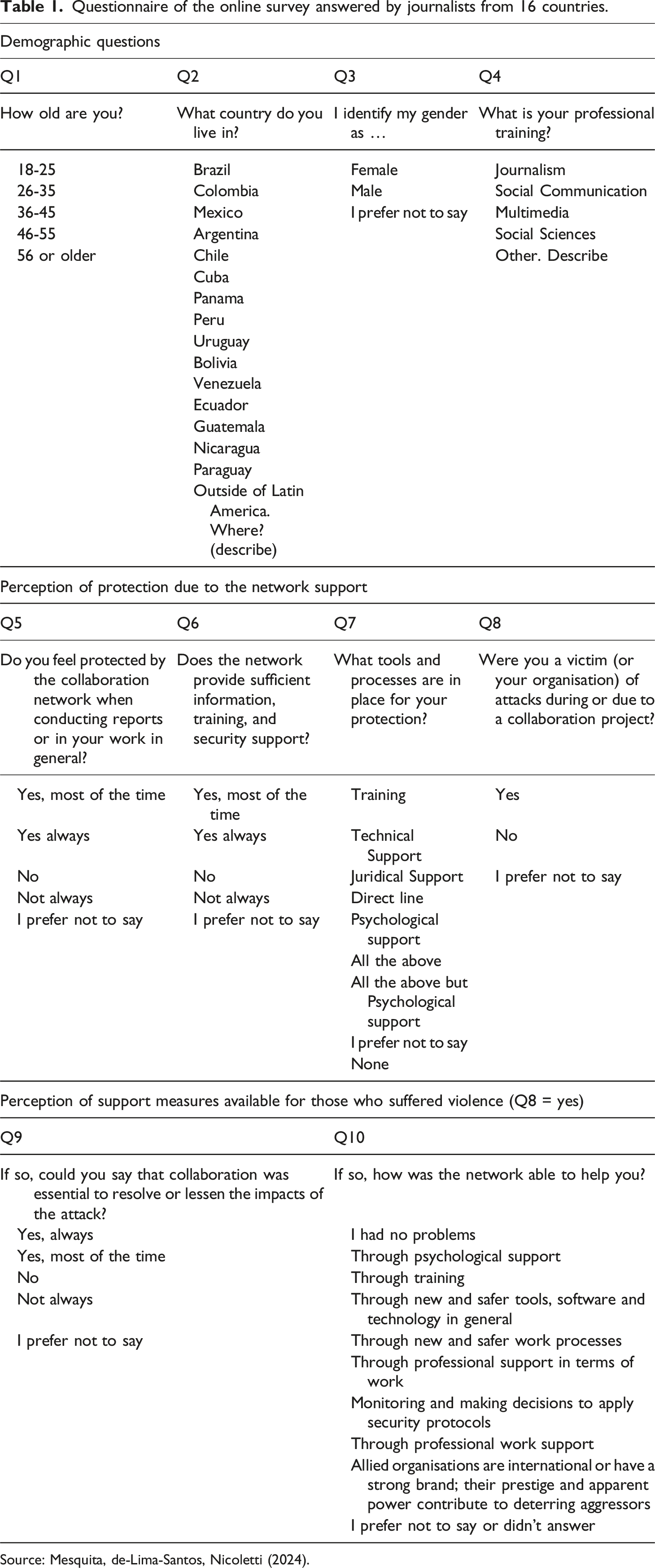
Source: Mesquita, de-Lima-Santos, Nicoletti (2024).
The survey was sent to 120 news organisations across 20 countries in Latin America. The authors compiled a list of journalists involved in collaborative coverage through desk research of media organisations’ websites and news stories. Once these journalists were mapped, we contacted them with the questionnaire. In total, 75 journalists from 15 countries in the region and three journalists based overseas responded to questions related to safety concerns. To protect the respondents, the survey maintained anonymity, only collecting information on their organisation, age, gender, and country. No positions or identifiable information was collected.
The survey dataset revealed variations in response rates across countries and individual questions, particularly those with checkbox options, indicating uneven participation patterns. These variations can be attributed to two main factors: first, participants selectively responded to questions rather than completing the entire survey; and second, there was substantial disparity in country-level participation, ranging from 30 responses from Brazil to a single response from Nicaragua. While this presents a limitation to our study’s quantitative component, we addressed these constraints through our complementary qualitative approach.
Furthermore, given the absence of comprehensive demographic data on journalists across Latin America and the purposive nature of our sampling strategy, this study does not claim statistical representativeness. Rather, our findings provide valuable insights into the experiences and perspectives of our specific respondent group, offering an important window into collaborative journalism practices in the region while acknowledging the methodological constraints of our sample.
List of countries and organisations represented by the in-depth interviews.
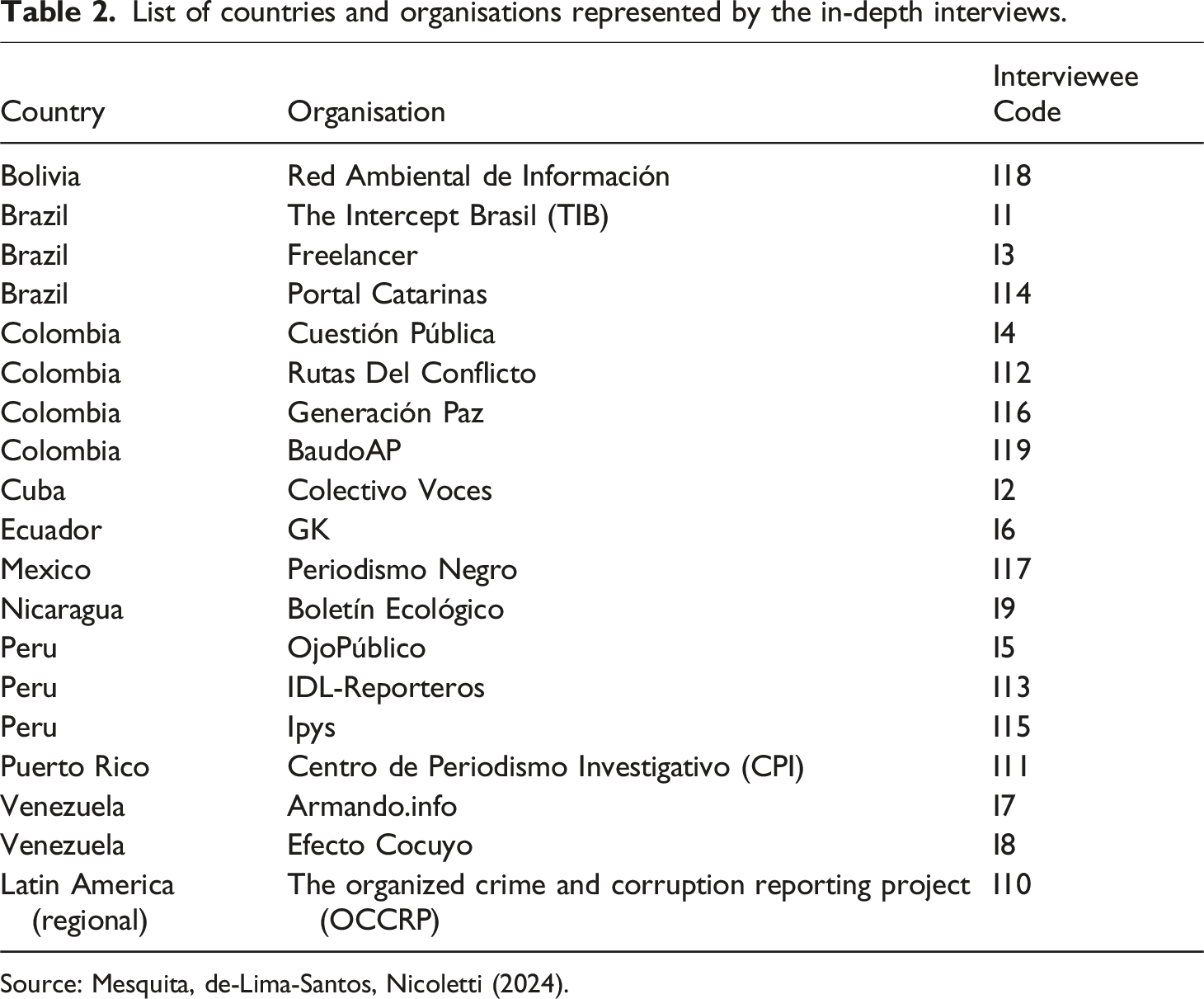
Source: Mesquita, de-Lima-Santos, Nicoletti (2024).
These interviews were conducted remotely using virtual platforms such as Zoom, WhatsApp, and Google Meet. They were conducted in Spanish and Portuguese between 2020 and 2021, and each interview lasted approximately 60 minutes.
The collected data were then analysed using thematic analysis (Braun and Clarke, 2012). Our objective was to elucidate the impact of collaboration on mitigating, addressing, and ultimately resolving issues about personal security, organisational security, and the protection of sources and other professionals involved in collaborative initiatives. This engagement involved soliciting feedback from these journalists to comprehensively comprehend the intricate dynamics at play.
To protect participants’ identities, we highlighted in our findings only aspects in the descriptions below that cannot expose our interviewees or damage the safety measures adopted by the organisations they represent. This decision is anchored on requests made by our sources.
This multi-method approach was crucial to understanding the effectiveness of collaborative projects for journalists’ safety and the implementation of such measures in response to specific types of attacks experienced by these professionals and organisations in Latin America.
Quantitative findings
To analyse the role of collaborative journalism in media practitioners’ safety in Latin America. We initiated the process by developing a survey to answer the first research question RQ1.
Number of journalists participants in the survey by country.
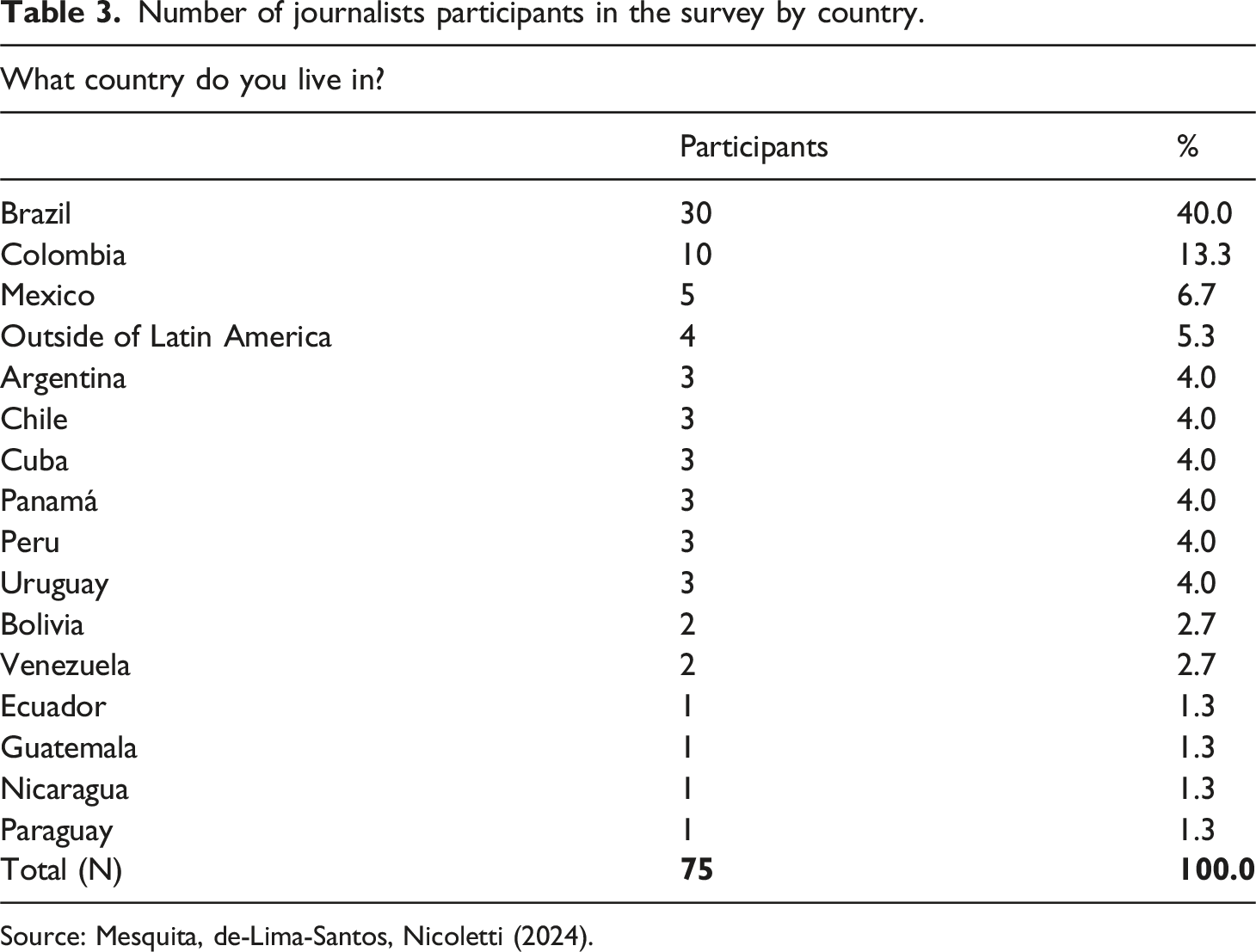
Source: Mesquita, de-Lima-Santos, Nicoletti (2024).
Our quantitative data indicate that a significant proportion (one-third) have underscored the importance of collaborative networks in providing support and security to journalists in Latin America. At the same time, most respondents (58.1%) have not experienced attacks or threats due to their work (Figure 1). The number of respondents who suffered attacks compared to the total number of participants by country. Source: Mesquita, de-Lima-Santos, Nicoletti (2024).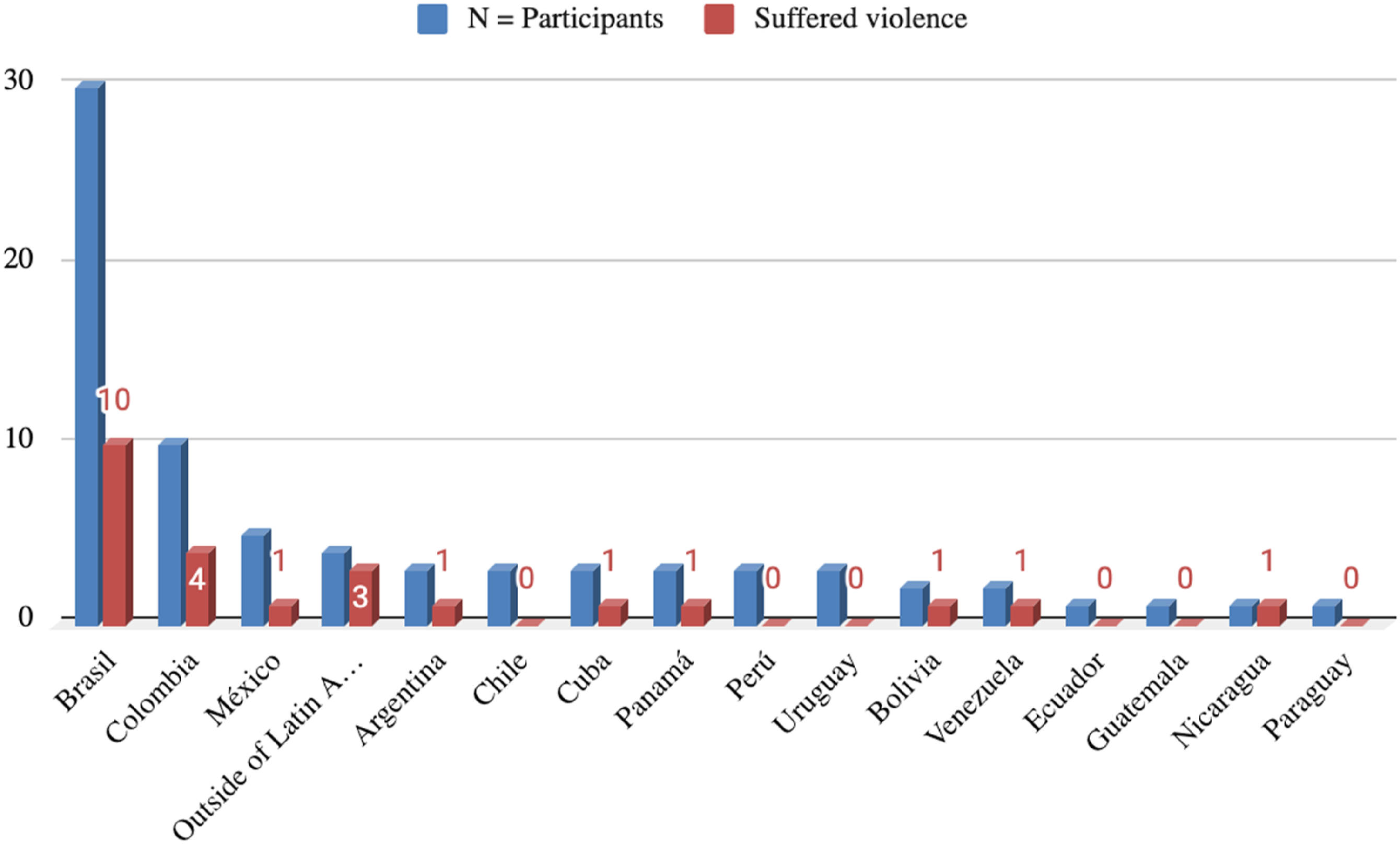
Most journalists and professionals engaged in collaborative journalism feel protected by their networks, with nearly 80% feeling secure ‘most of the time’ (43%) or ‘always’ (35%). However, this tendency is observed differently across genders. More men than women reported feeling less protected, with 25% of self-identified male practitioners stating they do not always feel secure compared to 12% of females.
Approximately 55% of journalists engaged in collaborative networks receive their employers’ information and training for organisational and professional safety, while 39% do not get specific guidance. Regarding the provided support, 26% of respondents said they received training, 17% had legal support, and 16% had technical assistance. Only 8% counted with psychological support, and 6% other types of assistance. However, 16% of respondents preferred not to specify the support received to protect their measures, a practical measure adopted by these professionals to safeguard themselves. Only 6% stated they received no help (Figure 2). Type of support received by their employers. Source: Mesquita, de-Lima-Santos, Nicoletti (2024).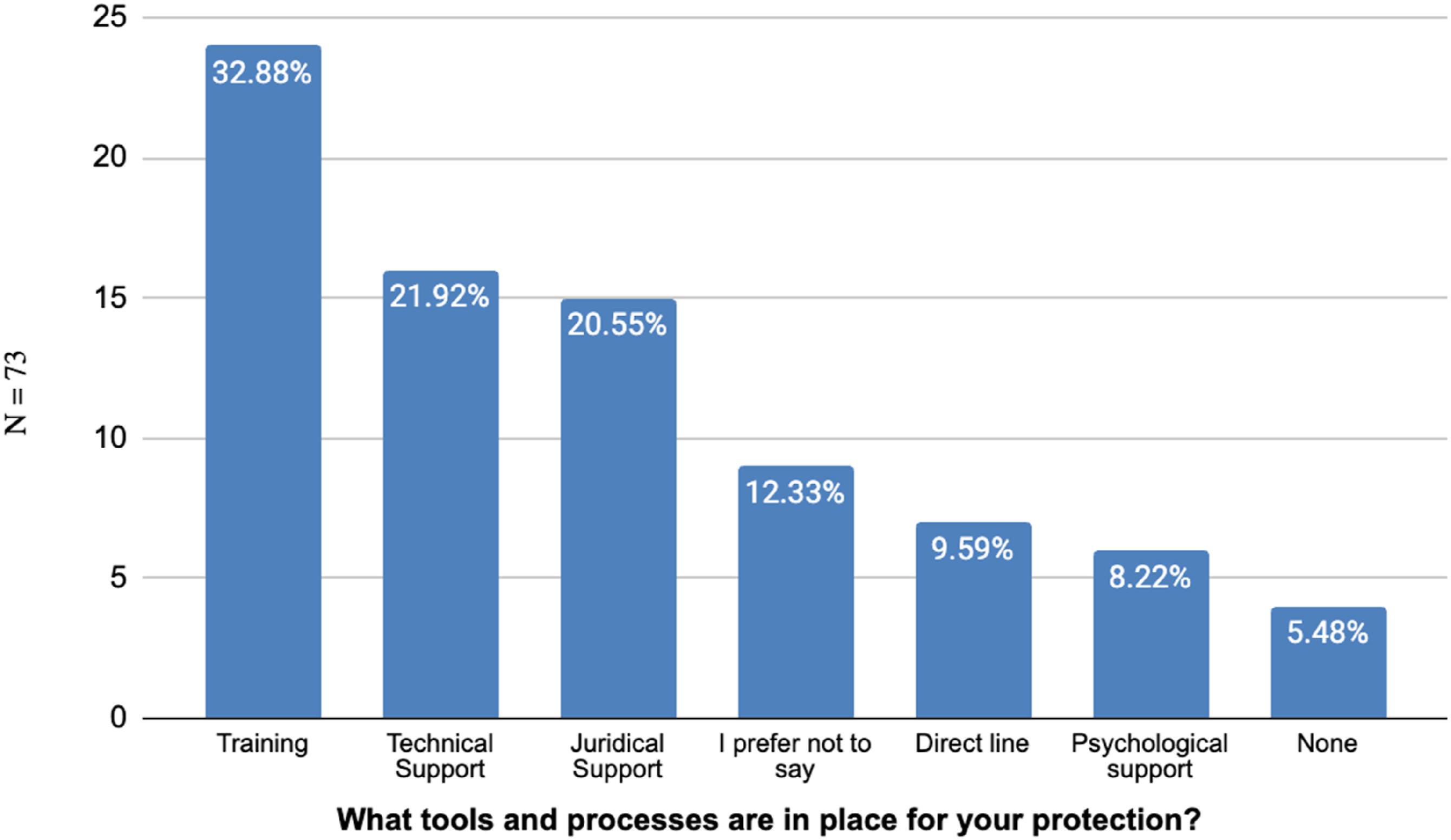
Our findings indicate that the persistent state of violence and the dual impacts of technology, often used to target journalists and media outlets, also have lasting effects on collaborative journalism practices. Regarding attacks, more than half of journalists (53%) involved in collaborative efforts reported never being attacked due to their work, while 38% experienced attacks. For two-thirds of those reported being victims of attacks on themselves or their organisations, collaborative networks in which they collaborate play a role in mitigating the impact of violence suffered.
About 70% of those attacked stated that collaborative networks were crucial in resolving or lessening the impact of these incidents. However, a third reported that their networks could not always address these challenges effectively. Maybe that is why the level of perceived support offered by the journalistic network is lower among those victims of violence than among the entire group of respondents.
Furthermore, these collaborative networks generally act as information sources and coaching on safety measures for these practitioners, but there is a need for additional support. All but two respondents indicate that collaborative networks provide support through training, psychological assistance, improved tools, and professional guidance.
Qualitative findings
This section delves into the insights from interviews with individuals representing various Latin American media organisations, shedding light on their approaches to digital and legal safety measures, collaboration strategies, and their distinct challenges in their respective regions, which answers RQ2. Based on interviews with 19 experienced cross-border investigative journalists (11 male, 8 female) who work for organisations that regularly collaborate with other media outlets on investigations and special reports. These respondents represent one regional alliance and 10 countries (Bolivia, Brazil, Colombia, Cuba, Ecuador, Mexico, Nicaragua, Peru, Puerto Rico, and Venezuela). Their stories cover various topics, such as armed crime, gender and feminism, human rights, race, and investigating public institutions. Reporting highly sensitive topics exposes these individuals and their news outlets to risks. Among the issues faced by them during collaborative projects, they mentioned cases of digital attacks, state censorship, governmental persecution, physical attacks, and assassination threats.
These interviews also reveal that media outlets often implement multiple layers of protection to safeguard journalists, data, and sources. Strategies employed typically involve a combination of the following: training, cryptography, professional support, advanced security software and technologies, physical security measures such as bodyguards, legal counsel, and psychological support. Nevertheless, implementing these protective measures is inconsistent, and not all organisations provide adequate safeguards for journalists working in conflict zones or investigating high-risk stories.
Respondents corroborated findings from previous studies, affirming the critical role of collaborative journalism in supporting organisations and journalists to mitigate the impact of safety concerns. They also highlighted the key motivations that drive practitioners to engage in collaborative efforts. However, interviews suggest that collaborative projects have not consistently improved safety, particularly in distributed settings, as we will explore further through our analysis.
In their response, these practitioners mentioned the four main types of safety measures adopted by their outlets to engage in collaborative journalism projects. They can be classified into four groups: • Physical and Psychological Support: This refers to individuals who are exposed to physical or mental health risks or who have been victims of violence. • Legal Support: This encompasses organisations targeted by lawsuits or other forms of judicial intimidation by those affected by their reporting. • Digital and Technological Expert Support: Nearly all organisations have implemented digital and technological support, although the level of protection varies. This often involves consulting with cybersecurity experts. • Holistic Approaches: include initiatives emphasising collaboration, verification, and other strategies to enhance journalist safety.
Physical & psychological support
Many interviewees asserted that collaboration has afforded them increased security to continue their work. This was emphasised by the Nicaraguan journalist I9 from Boletín Ecológico, who relies on networks to move discreetly from one part of the country to another, evading detection by government security forces, which is a threat to professionals in the country.
I9 highlighted the importance of forging alliances with other media entities, which has been crucial for their continued operation. This collaboration involves two key strategies: firstly, partnering with an international network of journalists to transfer investigative work and associated materials abroad, and secondly, leveraging a domestic network of journalists to navigate safely across different regions within Nicaragua.
Interviewees have recognised that certain well-structured networks provide substantial support through partnerships and collaboration, particularly regarding psychological assistance. However, they also acknowledged that numerous collaborative efforts have struggled to adequately promote safety measures and support, as an investigative freelance journalist I3 based in Brazil described.
Nevertheless, most media outlets represented by our interviewees engaged in collaborative efforts across the region hold a different perspective. Consider the example of GK in Ecuador, which has instituted a “year-long mental health program for its team members” (I6). This organisation acknowledges the significance of addressing the mental well-being of journalists, particularly when covering sensitive and high-risk topics.
In Venezuela, Efecto Cucuyo has taken a proactive stance on physical safety by “formulating action protocols”, explains I8. These protocols encompass strategic team deployment strategies “aimed at minimising exposure to danger, allowing journalists to safeguard each other during potentially perilous situations” (I8). The emphasis on preparedness and training highlights the organisation’s steadfast commitment to ensuring the safety of its journalists. Efecto Cucuyo’s proactive approach to physical safety is a testament to the organisation’s dedication to protecting its team during real-world challenges.
I11 cautions journalists to be vigilant about risks and develop protection strategies, even in regions where physical safety is not an immediate concern. They emphasise the importance of “not being naive,” explaining that while new physical security measures have been implemented in their workplace, digital threats remain the primary concern in Puerto Rico.
In a different approach, I13 asserts that all investigative journalists at their Peruvian media outlet are required to complete self-defence training.
Legal support
Recently, one of the most challenging safety aspects for news practitioners and their organisations has been the legal issues faced by numerous media outlets worldwide. Strategic Lawsuits Against Public Participation (SLAPP) – a term used to describe lawsuits aimed at intimidating or silencing critics – has been increasingly adopted by powerful figures in Latin America. Strategies to counter-attack or defend Latin American organisations and journalists have relied on collaboration for many years. For example, I11 from CPI in Puerto Rico shared insights into the organisation’s legal safety practices. The Puerto Rican media outlet has established agreements and received funding to address legal challenges, such as defamation lawsuits. CPI’s legal defence extends to other safety dimensions, as the institution actively protects the rights of its professionals against online attacks.
Similarly, media outlets like IDL-Reporteros in Peru prioritise legal safety by providing in-house legal support. Their affiliation with the Instituto de Defensa Legal – IDL (Institute for Legal Defense, in English) is a bulwark against legal challenges and threats. IDL-Reporteros also collaborates with FLIP (Fundación para la Libertad de Prensa) to underscore the importance of leveraging legal expertise to protect the region’s freedom of expression and journalistic integrity. Another partner of FLIP is Rutas Del Conflicto (Colombia), which highlighted their proactive approach to legal safety and collaboration. They actively seek strategic alliances with external organisations like the collaborative project “Liga contra el Silencio” to enhance their legal protection in a network of Colombian media outlets (I12).
Digital and technological expert support
A recurring theme across interviews with journalism organisations, such as I10 from OCCRP in Latin America and I13 from IDL-Reporteros in Peru, is the importance of secure communication tools. These organisations prioritise adopting encryption techniques, encrypted emails, and secure communication platforms. I10 highlights the significance of using secure communication tools to safeguard sensitive data, a practice particularly crucial in investigative journalism, where protecting sources and materials is paramount. By integrating these technologies into their workflow, these media outlets ensure the confidentiality of sensitive information and establish a robust defence against potential digital threats.
As described by I5, OjoPúblico in Peru also prioritises secure communication tools and information-sharing guidelines to protect the content they produce. They underscored their commitment to digital safety through several key measures, such as utilising encryption tools like Signal for secure communication. Additionally, OjoPúblico establishes clear guidelines for information sharing to prevent vulnerabilities through email or other channels. Their security measures include in-house professionals with these skills to support threat detection and regular risk assessments. These in-house collaborations enable professionals from different backgrounds to share knowledge and learn from each other.
Similarly, Cuestión Pública in Colombia places great importance on digital security, with a “specialised focus on cybersecurity” (I4). The Colombian news outlet enhances journalists ' security awareness by actively engaging in security courses and collaborating with institutions. The partnership with an expert organisation underscores the importance of external collaborations in strengthening digital safety and addressing a gap in their knowledge.
Throughout the interviews, common challenges related to security concerns have also emerged, encompassing technical difficulties such as website attacks, access restrictions, and sustainability and funding issues. Multiple informants acknowledged the challenging environment for journalists in certain regions, including Venezuela, as a significant issue (I1, I2, I6, I7, I15).
Portal Catarinas, a feminist Brazilian news website, encountered website attacks after covering a specific issue on women’s rights. The informant (I14) highlighted that collaborating with an expert organisation was crucial to mitigating the digital attacks that compromised their systems. However, the interviewee also underscored the digital inequality faced by organisations and individuals in poorer regions, even within a country with higher technological development like Brazil, significantly impacting their safety. For this reason, the feminist news portal collaborates with various entities to create a collective response to combating gender-based violence during the COVID-19 pandemic.
Across the spectrum of media organisations prioritising safety, there is a commitment to digital safety that extends beyond individual concerns. For example, Colectivo Voces in Cuba emphasises the importance of accuracy and constructive reporting, ensuring they only publish information when completely certain to avoid contributing to the information disorder prevalent in the digital environment.
Holistic approaches
Beyond securing safety in their digital communication tools, respondents mentioned the need for a more holistic approach. For example, I13 pointed out that IDL-Reporteros in Peru adopts a comprehensive approach encompassing digital, legal, and physical security dimensions. They proactively respond to online attacks and threats, taking legal action against defamatory parties. The organisation’s adaptive communication methods, commitment to source protection, and proactive response to online attacks were highlighted. They employ various communication platforms tailored to source security needs. Physical data security measures include using external hard drives and secure document handling. In the face of attacks, IDL-Reporteros persists in their investigative work, exposes attackers, and pursues legal action against defamation, thus upholding freedom of expression.
Recognising the complex landscape of online threats, Armando. Info prioritises commitment to accuracy and digital safety, acknowledging the inherent risks in the digital media landscape. However, I7 from Armando. Info (Venezuela) employs comprehensive digital, legal, and physical security measures. Despite their robust security protocol, I7 flags that physical safety remains a formidable concern, underscoring the gravity of threats journalists face, especially in regions marked by political turbulence.
I1 from The Intercept Brasil (TIB) in Brazil underscores the significance of network collaboration in tackling security risks and attacks on journalism. The institution maintains close collaborations with other media outlets and organisations throughout the region to carry out their work, particularly in Brazil’s politically charged environment in recent years. Additionally, I1 emphasises the importance of adaptability among media outlets to navigate their political contexts and challenges. TIB acknowledges that the outcomes of their collaborative work might have varied if they had been more established during a different political period, indicating the dynamic nature of the media landscape in the region.
Discussion
Using a multi-method approach, this study verified the connection between journalists’ safety and collaborative journalism. Through an online survey with 75 responses and 19 in-depth interviews, we analysed how these collaborative efforts supported (or not) journalists facing digital, physical, psychological, and legal risks. Our findings corroborate existing research and further detail the dynamics of collaborative and cross-border journalistic endeavours in Latin America. They also indicate that journalists in collaborative projects highly perceive protection from their network. Still, the support offered needs to be improved, evolving for a more effective approach, mainly when directed to journalists victims of violence (RQ1). As proposed in the framework developed for this study, most of the attacks encountered by the interviewed journalists are physical, psychological, legal, or digital. Consequently, the safety measures observed are related to physical and psychological support, legal support, digital and technological expert support, and holistic approaches in which other strategies are combined, such as investing in collaborations and quality journalism (RQ2).
Participants of this study represent a group of media practitioners highly targeted by different actors. Cueva Chacón and Saldaña (2020) argue that being a professional journalist in Latin America introduces additional constraints beyond those reporters face in other parts of the world. They work in countries with deep socio-political conflicts, most in polarised societies, covering sensitive topics that uncover political misleadings, crimes against human rights, and narcotics, among others.
Compared to previous studies involving journalists (e.g., Garcés Prettel and Arroyave Cabrera, 2017; González and Rodelo, 2020; Ozawa et al., 2024; UNESCO, 2019), our respondents appear to have implemented more safety measures, suggesting a higher level of safety concerns in recent years. For the journalists participating in our study, involvement in cross-border or collaborative journalism seems to enhance their perception of safety. Collaborative networks provide a range of support for these professionals, including training, psychological and legal assistance, and the development of improved, more secure working conditions.
However, our findings also highlight the lack of support after the violence suffered. Most measures focus on practical aspects, such as training, software, or adaptations to the working environment. Those are relevant considering the absence of protective measures reported worldwide (Westlund et al., 2022), which makes journalists face risks that could be avoided with some adaptive measures. Maybe the preventive resources employed by the organisations represented by our interviewees have resulted in the low rate of violence suffered by the participants of this study. However, our analysis considers the type of support for those attacked insufficient.
Both findings indicate a significant gap in mental health support for collaborative journalism. Five of 75 journalists responding to our survey reported receiving psychological assistance. Only a single entity had established a focused support program, the Ecuadorian news outlet GK. While some suggest that the communal aspect of collaboration may mitigate isolation-related stress, the reality is that most groups, especially those involving freelance journalists, lack the resources or infrastructure to offer such support. This indicates a significant challenge investigative journalists face, as they constantly encounter threats that undermine their capacity as watchdogs, impeding their effectiveness in reporting.
Furthermore, a pattern was observed in the responses: collaborative efforts enhance the standing of the participating organisations, consequently promoting their safety. For instance, a participant from Colombia in our survey remarked, “[p]artnerships with either international entities or those with established credibility help shield against potential aggressors through their perceived influence”. Correspondingly, practitioners from TIB in Brazil, OCCRP, and BaudoAP in Colombia recognise the protective influence such alliances exert, attributed to their alignment with specific audience segments and the effect they command. This aligns with a previous study that features a comprehensive analysis of Comprova (a fact-checking coalition) in Brazil, revealing that this collaborative effort of media outlets and fact-checking institutions mitigated extreme audience reactions and direct assaults by uniting forces across the political spectrum.
Ensuring newsafety, securing working environments, and addressing crimes against media workers are paramount. The region’s long-standing political and criminal violence issues challenge investigative journalism, necessitating enhanced safety measures, especially for smaller news outlets (Saldaña and Mourão 2018). Respondents strongly highlight the rise of technology as adding new risks, such as government surveillance and information disorder (Di Salvo 2021; Iesue, 2021).
The rise of repressive tactics targeting journalism and accountability in Latin America has taken a disturbing turn, with an alarming surge in violence against journalists. Even within democratic nations, these attacks are on the rise, posing a grave threat to press freedom. Latin American governments are often perpetrators of violence against media professionals, ranging from harassment to more severe attacks (Orgeret and Tayeebwa, 2020).
Judicialisation, the abuse of legal mechanisms to silence whistle-blowers (Vallinder, 1994), is not a new form of preventing journalists from accessing information. Still, it is also a form of punishing journalists and news organisations. Recently, this has taken a toll in Latin America, even with cases that led to the imprisonment of journalists and the payment of very high compensations (The Intercept Brasil, 2023).
Strategic lawsuits against public participation (SLAPP) are a global phenomenon that drains resources, causes moral and psychological harm, and ultimately silences the messenger. Such actions hinder access to crucial information, impacting democracy. Efforts to combat this trend include organisations like Voces del Sur, advocating for press freedom and the United Nations Sustainable Development Goals. Nevertheless, the problem persists, necessitating a united effort to defend press freedom. Among the 75 journalists who answered our survey, only 13 of them can rely on structured legal support from their collaborative consortiums.
Conclusion
The decline of democracy is a global issue, not confined to Latin America. Over half of the world’s population feels they are not living in a democracy, with democratic backsliding observed even in Europe, especially in former Soviet states (Economist Intelligence Unit, 2020). Despite technological disruptions diminishing journalism’s traditional power, it still commands public respect, particularly post-pandemic (García-Avilés, 2021).
The collaborative media ecosystem emphasises high-quality, democratic journalism aimed at social transformation, environmental justice, and cooperative culture, moving away from purely commercial standards (Heft, 2021). Collaborative journalism protects and supports journalists, though challenges remain in ensuring long-term safety and security. Addressing the needs of smaller organisations and enhancing support within collaborative networks across the news industry is essential.
Our analysis highlights the importance of digital safety measures and collaboration in modern journalism. Media outlets are adopting strategies to protect their work, sources, and teams amidst evolving challenges. Collaboration is vital for resilience and addressing shared concerns within the journalism community.
This study acknowledges limitations, such as the difficulty in reaching a substantial number of female and non-conforming individuals, which could potentially lead to an incomplete understanding of gender-based safety challenges. Additionally, due to selection bias, the sample may not fully represent all collaborative journalism efforts in Latin America. Future research can conduct longitudinal studies to track changes in safety practices over time and identify emerging trends, mitigating these limitations.
Two critical areas that these respondents did not address are the impact of state and government persecution and gender-based violence against journalists. Future studies should develop specific indicators to assess these dimensions of violence.
Despite these limitations, this research highlights a comprehensive newsafety approach encompassing digital, physical, psychological, legal, and financial risks (Slavtcheva-Petkova et al., 2023; Westlund et al., 2022). While our research did not fully address all broader systemic risks, it was seen from these respondents that collaborative journalism significantly contributes to a more comprehensive safety approach. Success depends on genuine collaboration, shared resources, and a community-driven ethos.
These insights provide valuable insights into how media organisations navigate the complex landscape of digital safety and collaborative journalism. By understanding the strategies employed to protect journalists and their work, we can identify best practices and advocate for stronger safeguards. As the media industry continues to evolve, ensuring journalist safety and maintaining the integrity of their work remains paramount. Future research should delve deeper into emerging threats, such as artificial intelligence-driven disinformation and cyberattacks, and explore innovative solutions to mitigate these risks.
Footnotes
Declaration of Conflicting Interests
The author(s) declared no potential conflicts of interest with respect to the research, authorship, and/or publication of this article.
Funding
The author(s) received no financial support for the research, authorship, and/or publication of this article.
