




Abstract
This article examines the adoption of cross-border collaboration practices by introducing the concept of ‘intermediaries of change’: individual journalists who drive the adoption and gradual normalisation of pioneering cross-border practices. We ask how they implement cross-border practices, integrate them into existing working routines, and how this influences their working conditions using a case study on Europe’s Far Right, a network of seven newspapers that investigated far-right parties ahead of the European Parliament election 2019. We found that the network expanded journalists’ research capacity and entails a ‘domino effect’ since journalists gain experience and establish cross-national ties, which enable them to better establish follow-up collaborations. While this might help to normalize cross-border practices, organisational structures and contexts of transnational journalism shape the degree of participation by different network members. Moreover, we found that cross-border collaborations might foster precarious working conditions and competition.
Keywords
Introduction
Cross-national collaborations in journalism are a growing trend that drives innovation and addresses some of the professions’ pressing problems (cf. Sambrook, 2018). By combining resources and skills and, in some cases, investing in technical infrastructure, cross-border journalistic collaborations promise to enable investigations that individual newsrooms would be unable to conduct otherwise. To some extent, this might help counter the repercussions of the continued economic crisis of journalism combined with growing global interdependencies, which are difficult for national news media with dwindling resources to tackle.
Thus far, research on the rise of cross-national collaborations has emphasized large-scale investigations, often conducted by networks of leading national news media and facilitated by specialized organisations, such as the International Consortium of Investigative Journalists (ICIJ) (cf. Heft, 2019; Lück and Schultz, 2019). The networks conducting such high-profile investigations constitute what Hepp and Loosen (2019) describe as ‘pioneer journalism’: exemplars of new organisational forms and experimental practices that are slowly becoming more broadly adopted in the field. Among other things, pioneering cross-national collaborations in journalism have contributed to advancements in data journalism (for the joint evaluation or collection of data, e.g. in the case of leaks) and in the adoption of encryption technologies by journalists (Baack, 2016; Salvo, 2017).
While researching pioneer journalism is important, this work needs to be accompanied by investigations of how the changes exemplified by pioneering high-profile collaborations are being adopted. How do journalists collaborating in smaller networks, that is, networks with fewer resources and a smaller number of collaborators that do not act as exemplars for the field at large, adopt these new practices and organisational structures, and how does this shape their everyday working routines and practices?
In this paper, we suggest studying the gradual adoption and subsequent normalisation of pioneering practices by identifying and examining the networks of individuals that drive their integration into existing organisational routines and workflows. We call the individuals in these networks intermediaries of change, as they facilitate the adoption of new, experimental practices within the constraints of the media organisations in which they operate. To illustrate the role of these intermediaries in relation to cross-border journalism, we present the findings from a case study on Europe’s Far Right, a network of seven newspapers that researched the collaboration of European far-right parties ahead of the European Parliament (EP) elections in May 2019: taz, Falter, and WOZ (Central Europe), Internazionale and Libération (France and Italy), and Gazeta Wyborcza and HVG (East European).
To understand how the members of Europe’s Far Right act as intermediaries for the adoption of cross-national practices and how they integrate those practices into their everyday working routines, we addressed the following research questions:
(1) How is the collaboration motivated, and what are the main practices of individual members to implement and sustain the collaboration?
(2) How do the involved journalists perceive and evaluate the collaboration?
In the following, we first elaborate on our concept of intermediaries of change and review existing research on cross-national collaborations in journalism to situate Europe’s Far Right. Second, we present our methodological approach, relying on practice theory and qualitative analysis. Third, we provide our findings and conclude with a discussion about the implications for the gradual normalisation of cross-border practices.
Theoretical framework
Studying the adoption of pioneering practices
To grasp how the growing trend of cross-national collaborations shape journalistic practices, we follow Hepp and Loosen’s (2019) suggestion to ask not what but who is driving changes in journalism. Hepp and Loosen (2019) address this question by introducing the concept of pioneer journalism, defined as ‘a particular group of professionals who incorporate new organisational forms and experimental practice in pursuit of redefining the field and its structural foundations’ (p. 2). These professionals construct themselves as ‘forerunners’ (Hepp and Loosen, 2019: 5) who can bring actors from the journalistic field together with those from other sectors, such as technology development and design, or with societal organisations (Carlson and Usher, 2016; Eldridge, 2018). By doing so, pioneer journalists ‘act as intermediaries’ (Hepp and Loosen, 2019: 6, emphasis in original) between professional spheres, contributing to journalism’s continuous transformation by balancing traditional and innovative conceptualisations and practices (Deuze and Witschge, 2020). The rise of cross-border collaborations is driven by large-scale investigative journalism projects, such as the Panama Papers, which we consider examples of pioneer journalism. They experimented with, adapted, and, in some cases, also developed new technologies to facilitate cross-border collaborations on larger scales and with higher intensity (Baack, 2016). High-profile collaborations typically make the collaboration itself part of the news, and the participants of such networks, as well as organisations like the ICIJ, are featured prominently in publications and conferences directed at journalists. Accordingly, high-profile collaborations help shape a broader imaginary of the future of journalism as ‘Global, Networked and Collaborative’ (Hume and Abbott, 2017).
In this paper, we are not primarily interested in pioneer journalists themselves but in how their influence manifests itself in the practices and imaginaries of others who are not pioneers in Hepp and Loosen’s (2019) sense. Pioneer journalists reflect upon and put into practice new imaginations of journalism’s possible futures that are influential to the extent that they ‘orientate present journalistic practice’ (Hepp and Loosen, 2019: 6, emphasis in the original). That is, pioneer journalists do not have a direct impact in that the practices they develop are directly copied by the majority of the field. Instead, they provide the basis for ‘models or imaginaries of new possibilities’ that ‘influence transformation as a whole’ (Hepp and Loosen, 2019: 5).
We suggest studying the gradual adoption of pioneering practices and technologies similarly to how Hepp and Loosen (2019) study pioneers themselves: by looking at processes of anchoring, that is, how diverse groups of individuals adopt the ideas of pioneers and transfer ‘experimental practices into business’ (Hepp and Loosen, 2019: 11). While pioneer journalism addresses who provides the orientation for journalism’s possible futures, we study who anchors them into existing working routines and expands the possibilities for their respective organisations. While those individuals might be considered pioneers within their respective organisations, they are not pioneer journalists in Hepp and Loosen’s (2019) sense (p. 11). While pioneer journalists operate in the context of highly experimental practice and reimagine journalism’s possible futures at large, the journalists we study act as intermediaries of change, who contribute to the gradual normalisation of the exemplified practices. In other words, instead of mediating between different professional spheres, intermediaries of change incorporate pioneers’ imaginaries into existing organisational structures and routines, as they anchor new practices in their day-to-day work and their own editorial offices.
We consider this subsequent process of incorporating and anchoring new methods into regular journalistic work routines as a non-linear development that varies greatly depending on the context. To capture this process, we adopt a practice theory approach, in which practices are understood as ‘repeated patterns of doings and sayings that define the social space of journalism’ (Ryfe, 2019: 847). Practice theory provides an openness for exploring how the practices developed by Europe’s Far Right are implemented and sustained and how they integrate those practices into existing routines and structures (Couldry, 2004). In the methods section below, we explain in detail how practice theory shaped our case study design and data analysis.
Cross-border journalistic collaborations
When talking about cross-border collaboration, we look specifically at transnational journalism networks in which ‘journalists and/or media organisations from different countries [. . .] network across national borders to investigate a common topic in a collaborative effort’ (Alfter, 2016: 300; Heft et al., 2019: 1186). This method of cross-border journalism, according to Alfter (2016, 2019), involves common interests and goals, information and material sharing, joint content creation, and individual publication to respective national or sub-national audiences. In this practice, the ‘collaborative element is decisive’ (Alfter, 2019: 19). It is not confined to the narrower field of investigative journalism, characterized by critical, in-depth, resource-intensive reporting often created by journalistic intervention to expose hidden facts in the public interest (Carson, 2020; van Eijk, 2005), but it is feasible in every form of journalism and day-to-day research.
Unlike other collaborative journalism definitions, which are primarily oriented towards collaborations between media organisations (Konieczna, 2020; Stonbely, 2017), this approach recognizes that in the changing field of journalism, individual journalists adopt an entrepreneurial role as they test and establish innovative ways of practicing journalism (Heft and Dogruel, 2019; Carlson and Usher, 2016). Alfter’s (2019) definition focuses on forms of collaborative sharing and co-creation between partners for common ends that go beyond mere cooperation, such as exchange agreements made to suit individual objectives.
Cross-border collaborative journalism networks arise in a variety of forms that can be distinguished according to their degree of institutionalisation, size, duration, intensity of collaboration among journalists and integration at the organisational level (see Figure 1).
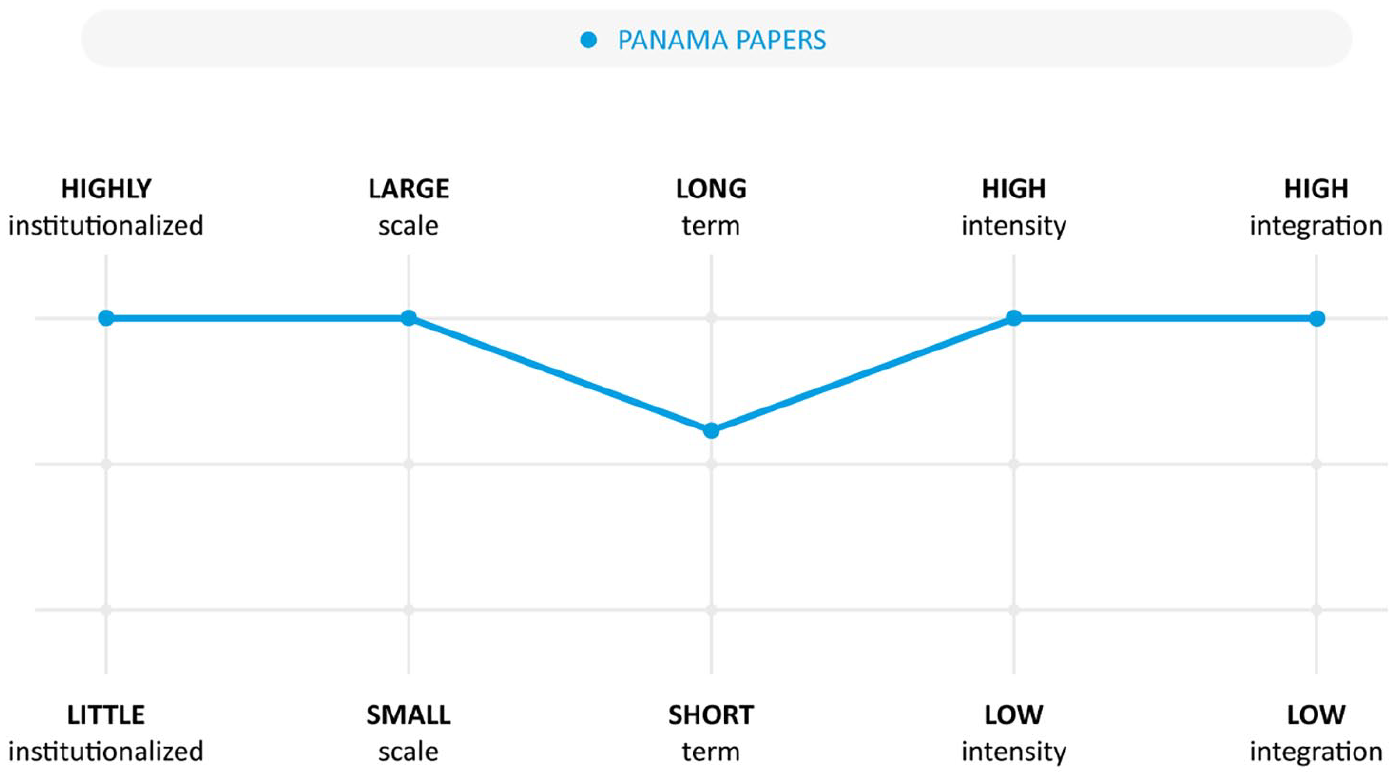
Characteristics network types and Panama Papers’ example.
Institutionalisation ranges from highly flexible network patterns to highly institutionalized structures in which collaborations are supervised by specific organisations with a fixed infrastructure, established roles and routines, and predefined schedules (Heft et al., 2019: 1188–1189), as exemplified by the ICIJ’s role in the Panama Papers. The development of organisational structures is clearly related to project size. Small-scale teams are less dependent on such structures and can act more flexibly, whereas large-scale collaborations require specific infrastructures and roles to manage collaboration in a big team (Alfter, 2018). Collaborations can be established as temporary, short-term projects with a finite end or as ongoing, open-ended endeavors (Stonbely, 2017: 20–21), which will also dictate the degree of institutionalisation a project adopts. Finally, collaborations can be distinguished according to the intensity of the actual collaboration among the journalists. We can, again, conceptualize this as a continuum, ranging from low-intensity cooperation, in which the exchange among journalists is limited, to close and intense collaboration within a research team, in which content is produced collectively, with medium degrees of intensity in between (Heft et al., 2019: 1188). Stonbely (2017) also defines levels of integration at the organisational level: a low level, in which organisations create content independently and share it; a medium level, defined by working together to create content; and content and resource sharing at the organisational level, which is the most integrated type (pp. 20–21).
The combinations of these characteristics reflect the many types of collaborative cross-border journalism that are practiced. At the extreme poles, we find highly institutionalized, intense, and integrated large-scale collaborations, such as the Panama Papers at one end, and flexible, small-scale collaborations with low collaboration intensity and little institutionalisation at the other. Research shows that the less demanding forms can pave the way for more institutionalized, intensive collaborations (Konieczna, 2020).
However, collaborative journalistic production, especially across national borders, is a comparatively new journalistic practice. We can assume that the motivations for and the enactment of such collaborative work are influenced by various contextual conditions. Political and cultural frameworks might differ between countries, and country-specific professional and ethical standards can render collaborative work more complicated. Research highlights that the emerging role of the editorial coordinators of collaborating teams is important, not least because this position enables the better handling of national, cultural, or professional differences (Alfter, 2018). Other relevant contextual conditions include economic frameworks and organisational structures within media organisations and everyday work routines (Hanitzsch, 2009: 155–157). As project partners might work under quite different constraints, this will likely influence how collaborations can be anchored in daily work.
The difficulties emerging from varying contextual differences are particularly important to the topic of right-wing populism. How the media deal with this political topic and the strategy they apply in their reporting are influenced by the national political context, media freedom, and commercial dependencies (de Jonge, 2019). Altogether, professional and country-specific context conditions can be expected to influence the motives for joining collaborations, how they are implemented, and how they are experienced by different project partners.
Design and methods
The network
Europe’s Far Right was founded in October 2018 as a reaction to the rise of right-wing populist forces throughout Europe in the face of the upcoming EP election. Guided by the idea that Europe’s right-wing populists and their role in the election could only be understood through cross-border research, journalists from seven countries teamed up to analyze and report on the agenda, strategies, and networks of European far-right parties. Financially supported by several foundations, the collaborative team published about 70 articles on Europe’s far right before the election in May 2019. 1
Among the participating news media were the German-speaking taz (Germany), Falter (Austria) and WOZ (Switzerland), Internazionale (Italy), Libération (France), Gazeta Wyborcza (Poland) and HVG (Hungary). All papers have a national scope and share, albeit with differing intensities, a left-wing to left-liberal political orientation. They differ with respect to publication type and frequency (including newspapers and magazines with daily or weekly publication schedules) as well as in circulation and audience reach (for details, see Supplemental Appendix A and Table A1).
We have chosen Europe’s Far Right as a case study because the external characteristics of the network allowed us to assume that this case represents an example of an intermediary of change, in which network practices are less likely to be framed as experimental or groundbreaking. In addition, while the participating media share a similar ideological orientation, they are subject to different workflows and operate in distinct professional, societal, and political contexts. This implies different challenges for adopting pioneering practices within their respective organisations, thus helping us identify commonalities in such challenges.
Methods
Following our focus on networks of individuals who adopt cross-border practices in their respective organisations, we used qualitative research methods. We conducted semi-structured interviews with six project members from five countries. Interviewees were selected with respect to (a) their relevance for the establishment of the network; (b) the representation of journalists from Central, Eastern and Southern European countries to compare different journalistic contexts, cultures and languages; and (c) the intensity of participation in the network in terms of journalistic output. Thus, the taz, which initiated the network and represents the central European context, is represented by two interviews. This is complemented by one interview with WOZ as an additional case for the German-speaking context. The Eastern European context is captured by one interview with Gazeta Wyborcza and another with HVG. One interview with Internazionale represents the southern European context.
Network members were contacted between February and August 2019, and interviews were conducted within this time frame either face to face (4) or online (2). They lasted between 38 (minimum) and 67 (max) minutes, with an average length of 51 minutes. Table A2 in the Supplemental Appendix provides an overview of the interview details and the interview identification numbers, which are used in the results section. Interviews were conducted either in German or English. The authors translated the German quotations from the interviews into English.
Interview dimensions
The interviews covered four main dimensions. First, we were interested in the interviewees’ motivations to join or initiate the network. We asked about their role in the network, how their participation was initiated, and what motivated them personally and their organisation to join. Second, we asked about perceptions. We wanted to know how our interviewees experienced the collaboration and how it might influence the future cross-border investigations they conduct. We asked our interviewees the challenges they faced, what they found to be most valuable about Europe’s Far Right, and whether they connected the work in the network with the idea of a Pan-European public sphere beyond its practical advantages.
Guided by practice theory (Ryfe, 2018), third, we asked questions to reconstruct the processes of implementing inquiries and managing the network as a whole. Regarding practices and structure, we asked our interviewees to walk us through one of the joint investigations from beginning to end – how the inquiry was initiated and implemented, the tools used, the data collected, and so forth. If possible, we also gave our interviewee a blank piece of paper and asked them to draw a map illustrating how the collaboration was organized. The map could include individuals from the same or other media organisations, funders, local contacts, and more. Follow-up questions were asked about the intensity of the collaboration, the tools used to collaborate with different entities, and the roles of the entities in different research. These maps not only gave insights into the network structure but also highlighted contextual differences in how the collaboration was experienced and implemented.
Finally, we asked more explicitly about signs of the broader adoption (and perhaps gradual normalisation) of cross-national practices. Were the interviewees involved in other networks before, after, or parallel to Europe’s Far Right? How did the interviewees manage the work for Europe’s Far Right with their everyday obligations, and to what extent did the two overlap? What resources and extra time were afforded by management, and did the collaboration in Europe’s Far Right ease the way for follow-up collaborations? An example interview guide listing all dimensions is available in Supplemental Appendix B.
Analysis
Each interview was recorded, transcribed, and coded using the structure and dimensions of the interview guidelines as a starting point. We combined two qualitative research methods. To code perceptions and motives, we relied on category assignment following the approach of Mayring (2008). Following the structure provided by the dimensions of our interview guide, we first grouped the related segments into more abstract, comprehensive areas and subsequently further structured and summarized them into concrete and distinct dimensions in a multilevel and iterative process. To categorize practices, we used Grounded Theory (Charmaz, 2006). We found Grounded Theory to be better aligned with our practice theory approach, as it enabled us to openly ask the practices that were used and how our interviewees understood them (Couldry, 2004). The main difference from the first approach is that the categories were not directly derived from the interview guide, and they were developed without a prior structure following Grounded Theory’s cyclical approach, in which the researcher gradually builds levels of abstractions by moving from initial to focused coding and by conducting theoretical samplings (Charmaz, 2006). Theoretical sampling means that we did not conduct all interviews at once. The first interview was transcribed and analyzed to inform the selection of the second interviewee and so forth.
The maps drawn by some of our interviewees were analyzed alongside the interview material. They partly helped generate more detailed responses in the interviews, and the combination of the maps with the interview provided important insights into the network’s organisation. They also informed the selection of interviewees for our theoretical sampling. An example map is available in Supplemental Appendix C.
Results
Building a decentral research network: Motives and practices
Motivations
An important reason to initiate or join the collaboration network was the positive experience journalists had in previous collaborations. The taz initiated the network because a previous collaboration at the national level ‘went extremely well’ (ID1, 37). When journalists at the taz saw an opportunity to obtain funding for a European project, this gave them ‘the courage to say ‘OK, we are now trying this at the European level’ (ID1, 37). Positive prior experiences were shared across the interviewees. The primary motivation for our interviewees to engage specifically in Europe’s Far Right was to expand their individual and collective research capacity. For the network’s initiator, the taz, ‘it was clear to us that we couldn’t do this on our own’ (ID1, 37). Other members echoed the idea that the network was an opportunity to combine ‘economical [sic] resources and expertise’ (ID5, 11) and to ‘share research’ (ID6, 7). Expanding research capacities in this way speaks to both professional journalistic and economic motivations.
Journalistic motivations were about ‘doing justice’ to a transnational issue, such as European right-wing populism. First, the interviewees were interested in exchanging knowledge with experts from other countries. Joining the network was described as a ‘unique opportunity to get this knowledge from other colleagues’ (ID6, 9). The network initiators specifically aimed at bringing together colleagues from different countries ‘who had specialized on those political trends’ (ID1, 7) and possessed ‘knowledge that we didn’t have at all’ (ID1, 5). The interviewees emphasized how this enabled them to develop a new, transnational perspective, which deepened their understanding of the issue and allowed them to better contextualize national phenomena: It was very clear that this kind of phenomenon was present not only in Italy but also in Poland, in Hungary—in all East European countries. And it was very interesting to see . . . [how] the different parties . . . have been inspired by one another. (ID5, 15)
The East European partners also wanted ‘other journalists [to] know and let the European public know what is happening’ (ID6, 27) in their countries.
Economic motivations were less pronounced in the interviews. Members from Eastern and Southern European countries saw Europe’s Far Right as a ‘pilot project’ (ID3, 7) to determine how editorial offices can collaborate to finance journalism under difficult financial conditions and to join forces ‘in terms of economic resources’ (ID5, 14). However, while less pronounced, economic and journalistic motivations are difficult to disentangle. Simply put, being able to produce stories that the journalists would not otherwise be able to produce naturally serves both economic and journalistic interests.
Practices and coordination
The primary motivation of expanding research capacity by gaining access to (transnational) expertise shaped the journalists’ coordination and collaboration practices in the network. Everything was designed to expand existing routines, professional cultures, and networks while keeping mandatory deadlines and requirements to a minimum. The result was a decentralized research network that allowed participants to work largely independently.
When asked to draw maps of Europe’s Far Right illustrating how the collaboration is structured and coordinated, most interviewees created visuals of largely decentralized networks without outstanding central nodes (see the visualisation in Supplemental Appendix C), reflecting the non-hierarchical and flexible approach at the beginning of the collaboration. However, follow-up questions about the role of the different nodes showed a gradual shift towards more centralized coordination. Originally, the taz should handle some general organisational tasks, but network coordination should shift with each joint inquiry to a different media partner. However, most participants had limited time and resources to engage in Europe’s Far Right, which eventually let the taz take over most organisational tasks.
Regular physical meetings of all journalists were essential to synchronize efforts and facilitate common understandings. The meetings took place every 6 to 8 weeks and were hosted by a different partner organisation each time. The primary purpose was to discuss and agree upon the subjects for upcoming investigations and to establish deadlines for deliverables. Besides the actual ‘business meeting, ’ these physical gatherings were important for general networking (e.g. joint dinners), creating social bonds and ‘cultural mediation’ (ID5, 25), in which journalists taught one another about the particularities in journalistic culture and the current political situation. For example, when the meeting was hosted by HVG, Hungarian journalists included a tour to illustrate how the government of Viktor Orban is shaping Budapest’s architecture.
The subjects for joint investigations needed to be relevant in every participating country, but this relevance could vary for the individual partners. Once a subject was chosen, each partner independently started its own national inquiry. On an agreed-upon deadline, findings were shared with the rest of the network using Slack, a popular tool for journalists to build virtual newsrooms (Bunce et al., 2018). In Europe’s Far Right, each research had its own Slack channel, in which journalists continuously exchanged information. This ranged from short messages with a quote that one of the journalists obtained to abstracts summarising all the information gathered about the subject.
Journalists were free to use this information pool to write stories for their national audiences – or not. In most cases, only some network members published stories based on the shared information because not everyone deemed the subject to be interesting for their audience. For example, the network collected information on climate change denial by European right-wing parties. HVG only used this material in hindsight, after the subject became relevant nationally: The Hungarian Fidesz was not denying this phenomenon [climate change]. Therefore, we didn’t print it when the others were publishing last month. [. . .] In the last two weeks, however, the Hungarian government torpedoed two climate change policies of the European Union, so we wrote something after all. (ID3, 11)
Thus, direct joint writing and story-telling were the exceptions rather than the rules, which was important to be able to respond to national particularities. However, the topic as such was nevertheless raised across borders.
Article production based on the shared materials usually resulted in more 1:1 exchanges via Slack or WhatsApp, in which journalists asked follow-up questions and made requests for additional quotes or contacts. In some cases, journalists shared their final articles before publication so that others could use them as drafts for their own writing. Members who decided to publish stories coordinated the publication dates to avoid scooping one another, which was particularly important because some members were daily newspapers, whereas others published weekly (see Table A1, Supplemental Appendix).
Compared to pioneering, high-profile cases of cross-national collaborations (e.g. the Panama Papers), neither data journalism, sophisticated encryption, nor the development of new technology played a role in Europe’s Far Right. While the lack of data journalism was likely due to the investigations being not data driven, the lack of encryption technologies was a pragmatic choice to strike a balance between usability and security: We didn’t discuss very sensitive information. We had a password-secured Google Drive folder and WhatsApp [besides Slack]. You can’t do an investigation in which you analyze documents from an intelligence service with that, but for us, it was OK . . . The focus was to encourage communication within this relatively huge team with different working routines. (ID4, 93)
In this sense, the use of technology is consistent with the overall theme of expanding existing routines and anchoring the collaboration in the daily workflow while keeping additional burdens to a minimum.
Advantages of the research collaboration
The project partners concluded that the motive to expand research capacities through a decentralized research network was positively fulfilled.
Interviewees from all countries highlighted that the transfer of knowledge and know-how was an essential advantage. The sharing of information, quotations, ongoing work, and ideas for future research was considered ‘rewarding’ (ID3, 21). The fact that all collaborators work on similar topics (and, in most cases, specialized in covering right-wing parties) in their respective countries, resulted in a huge knowledge gain.
Closely related but extending beyond a pure knowledge gain is the broadening of horizons and a general increase in experience associated with working in the network, which was also highlighted frequently as a benefit. Interviewees found that the collaboration ‘opens up, expands the horizon’ (ID1, 151), as the exchange with colleagues is different from just hearing or reading about the situation in another country. Our interviewees described the exchange and the experiences as enriching: [W]hen you discuss with other journalists, with other colleagues, you understand how far we are from a proper understanding of what’s happening in Europe. [. . .] And well, it’s very, very interesting and useful from a journalistic point of view to share and go into this direction. (ID5, 55)
Another central advantage concerns individual networking as such – current collaborators established connections that they could draw upon for future collaborations. The respondents stated that joining the network gave them a major opportunity to permanently expand their individual networks with experts they could approach with questions and potential future opportunities to collaborate: It’s certainly the idea of networking. We now somewhat know journalists in six other countries who are working on similar topics [. . .]. (ID2, 167)
Concerning the journalistic output, the interviewees highlighted the advantages of the collaboration for the quality, diversity and amount of journalistic coverage they were able to produce: I think that journalistically, the articles were very good, and the fact that we collaborated, we cooperated, we shared the point of view, we shared contacts, we shared information, it represented a plus to our product in the end. (ID5, 35)
More specifically, the network members appreciated the international perspective enabled by the collaboration. When asked specifically about a European public sphere, some journalists referred to a ‘European public’ and found it ‘important that the [. . .] international media or whatever international community knows what’s happening there’ (ID6, 89). While the concept as such remains abstract for some, the collaboration helped establish Europe as an ‘important reference point’ (ID1, 145).
The project also brought to fruition results that would not have been possible otherwise. This applies both to the diversity of perspectives and to the sheer capacity of working and reporting on the topic.
You can simply do more when you get together [. . .] That applies to a smaller newspaper like the taz, but it also applies to the big ones. [. . .] In teams like this, you can cope with completely different quantities; you have different approaches. I find that extremely important. (ID1, 149)
Beyond its central advantages, the project strengthened solidarity and commitment among fellow journalists against the threats that network members face in contexts where press freedom is under pressure. There was a shared desire to ‘tell other journalists that they’re not alone’ and to build ‘cross-national solidarity against these threats’ (ID4, 49). This evaluation highlights the differences in professional contexts across countries, with the Polish and Hungarian media systems being characterized by lower journalistic autonomy and higher state intervention (Sparks, 2008: 13) compared with the other partners.
Challenges of cross-border collaboration
Although the network members reported great satisfaction with the collaboration, their experiences also allowed us to identify the challenges of such partnerships. The journalists highlighted three central areas: challenges at the macro or system level related to network characteristics and network context, challenges at the meso level of network organisation and coordination, and individual-level problems related to how each journalist integrated the research project into regular work routines.
As the partners were constrained by different country contexts, the international composition of the network posed cultural difficulties. Language was a ‘huge challenge’ (ID1, 41) but not the central one. Partners were able to get along with English as a common language, although translating requires ‘a lot of extra work’ (ID1, 41). The same applies to spatial distance, which seemed to be more of an organisational problem (see next section) of coordinating and establishing the tools for creating an efficient virtual newsroom (Bunce et al., 2018).
Challenges arising from country-specific political frameworks, differences in thematic affectedness and different audience expectations were more pronounced.
Given the specific political contexts, the network partners differed concerning how critical right-wing populism was in their country; how pressing it was, as perceived by the journalists; and the extent to which it was new and relevant for the audiences of a medium. The interviewees reported different levels of affectedness with the topic, either because it has been salient and covered for a long time or because other issues were more pressing at the time of collaboration. For example, Polish politics at that time was shaken by several political scandals, which had a higher priority in the national media agenda. Likewise, other network members indicated that ‘involvement with what’s happening right now is very different’ (ID3, 45). These different concerns and topic salience were also due to the audiences’ varying levels of information and sensitivity, which were relevant for the production process overall: It’s also very important that we don’t write together because we have different perspectives, on the one hand, and different sensitivities of our readers on the other. (ID3, 17)
While these network characteristics present a challenge, the network structure is flexible enough to integrate the various partners, who participate according to their needs and possibilities (see above).
As expected, challenges stemming from country-specific journalistic cultures and traditions and differences in journalistic production routines were highlighted. Regarding journalistic cultures, role perceptions and the degree of neutrality have been addressed by our interviewees. Although the journalistic cultures in the countries of the media partners are generally similar, they differ in details. For example, there is a more detached monitorial role perception of journalists in Switzerland, France and Italy and a more accommodative role perception among journalists in Germany, Austria and Hungary (Hanitzsch et al., 2019: 161–197). In addition, in Germany, for example, the traditional news media have a rather critical stance towards right-wing populist actors and positions (Esser et al., 2016), which can be explained by German history, whereas journalists in other media systems are more neutral (e.g. Poland) or even conducive to populism (e.g. Austria or Italy) (Biorcio, 2003; Mazzoleni, 2008; Plasser and Ulram, 2003; Stępińska et al., 2016). These differences created misunderstandings during the collaboration. Although one interviewee stated that ‘there were not so big cultural journalistic differences’ (ID5, 85), journalistic self-perceptions and traditions played a role, for example, with respect to a more neutral or interventionist approach to journalism.
That is perhaps the most interesting thing about this collaboration—that our Western partners are ideologically or [. . .] are more ideological than we can be. (ID3, 17)
Different production routines in the daily newspapers and the magazines also led to challenges in anchoring the collaboration in the day-to-day workflow, as the ‘newspapers [. . .] want the daily update and for us [the magazine], it was more interesting the investigation [. . .] and the in-depth part’. (ID5, 43)
At the meso level, implementing such collaboration is difficult in terms of network organisation and coordination. The significant effort required to effectively coordinate and organize the communication and work on a day-to-day basis was frequently highlighted: It’s something different than working in a very small team, where everyone is on-site and where it’s clear to everyone that this project is now the thing they do and nothing else. Then, maybe less coordination is needed. But in such a model [. . .], you have to remind people of things, and ask again and ask again, and so on. (ID4, 31)
Using technology to overcome spatial boundaries has its limits. Although it is promising, one interviewee clearly described the limits of online communication and the necessity of face-to-face meetings for mutual understanding: [I]t was difficult to, for example, do the meeting through Skype [. . .] once a month, you should meet each other; you should discuss face to face. Otherwise, you cannot understand what’s happening. You can’t discuss in a proper way. That was the biggest [. . .] difficulty. (ID5, 75)
Beyond the day-to-day aspects, the fundamental planning of the project in its entirety constituted a challenge, as a discrepancy between idealistic goals and available resources emerged, and partners ‘had too ambitious plans’. (ID4, 180)
While the interviewees highlighted all project members’ high commitment, the downside was non-realistic planning considering the available resources or the lack of sufficient resources from the beginning. A ‘clearer and more transparent way of dealing with one’s own resources’ (ID4, 175) was needed. Thus, good macro planning was considered essential and could be fostered by answering questions, such as ‘What it is, what do we really want with it in the end? What is [. . .] the outcome we want to have?’ (ID4, 178)
More critical at the individual level was the challenge of integrating the research project into the regular workload. The project work in almost all cases was additional to the daily editorial routine; it required extra effort, flexibility and commitment.
I wasn’t asked to do this work. I actually do this work out of self-initiative extra to the work which is demanded of me. (ID3, 43)
Depending on the position the project work held for the participating media, project members had more or less time they could dedicate to it. In some cases, the project work was not explicitly supported by the editorial office and had to be handled entirely in addition to the ongoing daily work. As one interviewee put it, ‘It was more like an extra assignment to do this work for the network’ (ID6, 92), and ‘we could not really officially incorporate it’ (ID6, 146). In other cases, in which the medium also gave the project a higher value, the additional burden was lower. However, high flexibility was demanded by all participants. In addition, the regular workloads of the participating editors in their respective countries varies, which made the project work an additional challenge, especially for those with fewer overall resources.
Discussion and conclusion
How do intermediaries of change contribute to the adoption of pioneering cross-border collaborative practices in everyday journalistic work? To what extent do they facilitate journalism’s gradual transformation by anchoring new methods and practices, and what are the conducive conditions and obstacles to this? Our paper has examined these questions based on the example of the Europe’s Far Right network, which we considered a case in which pioneering practices of cross-border collaboration are implemented on a smaller scale.
The findings support our assumption that the journalists participating in Europe’s Far Right can be considered intermediaries of change. The use of innovative and experimental practices was deliberately avoided to make the collaboration easy to integrate into existing working routines. The overarching goal was to expand existing practices rather than to rethink journalism, indicating a step towards a gradual normalisation of cross-border collaborations.
Highly institutionalized and integrated large-scale examples of cross-border collaborations, such as the Panama Papers, provide pioneering role models that can only partly be transferred to the broader field. They require extensive resources for infrastructures to maintain and coordinate the collaboration, are time intensive, and need experience both on the organisational side and on the side of the journalists who join such large-scale collaborations. Projects, such as the Panama Papers, are often driven by large amounts of data and require technical expertise and technological investments by the partners involved.
By contrast, the collaboration observed in Europe’s Far Right had a medium degree of institutionalisation (see Figure 2). One partner functioned as editorial coordinator (Alfter, 2018), and the team established organisational structures to keep schedules and tasks synchronized. It was therefore more binding than simple sharing between colleagues, but the small scale of the network enabled a form of flexibility that allowed partners to contribute in a way that fitted their capabilities and needs. Flexibility was also provided because the project was designed for a medium-term period and thus did not require a significant or lengthy commitment. We observed varying intensities of collaboration among the project partners, ranging from close collaboration and joint production of single pieces to less intense forms of collaboration, always tailored to the partners’ roles, resources and aspirations. This degree of openness enabled partners with less time and resources to become selectively involved. These characteristics seem to make Europe’s Far Right an ideal field of open experimentation and learning to adopt pioneering practices into everyday work. Yet, we must carefully examine what works well and might signal a more conscious adoption of cross-border practices in the future and what are the problems for broader adaptation in the field.
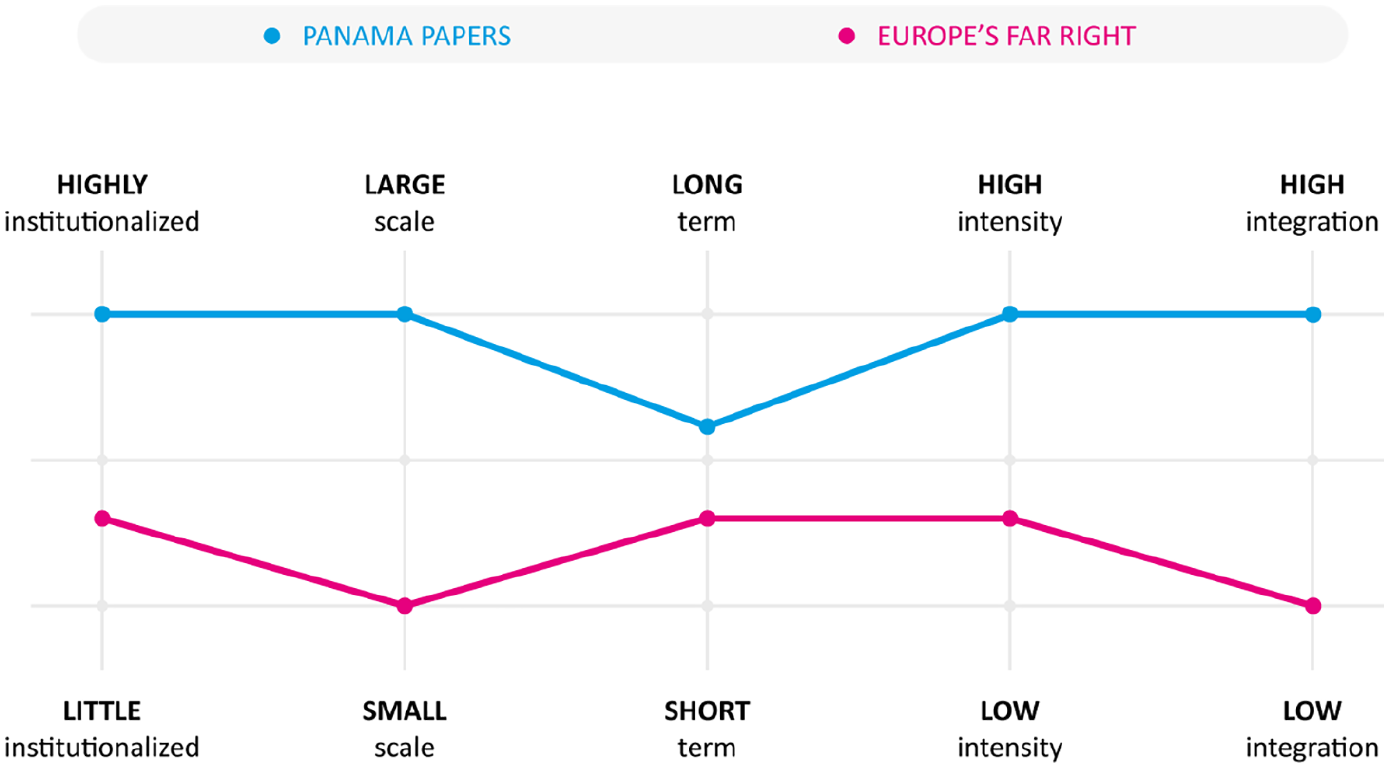
Characteristics Europe’s Far Right collaboration network in comparison.
Our findings show that small-scale collaborations, such as Europe’s Far Right, can contribute to a gradual integration of transnational practices into everyday working routines, even in media organisations with few resources. Our interviewees reported that they gained considerable practical experience. For most of them, prior experience opened the door for them to participate in or organize other cross-national collaborations, and the previous positive experience motivated the taz to initiate Europe’s Far Right. This suggests a sort of ‘domino effect’: one successful collaboration increases the openness to and, in some cases, the desire for further collaborations. Indeed, most interviewees indicated that they were part of other cross-national or national collaborations at the time and that they ‘would like to join similar groups’ (ID5, 65) in the future. They believe that journalism ‘should or could work much more networked’ (ID3, 60), and they see cross-border collaboration as ‘quite promising or trend setting’ (ID4, 211).
In addition, engaging in Europe’s Far Right helped our interviewees permanently expand their individual networks and increase their access to local experts in several European countries. This makes future cross-national collaborations easier, and cross-national exchanges will likely become more common for them not only in the context of larger projects with external funding but also on an everyday basis. Especially conducive to this is that most journalists specialized in the specific topic of the network. Accordingly, they could establish individual ties that could progress towards more organized networks in the future. The higher intensity of working together through small-scale collaboration might also be more likely to create profound trust and long-standing connections between journalists and their respective media organisations. This results in an increase in their individual agency and value.
Cross-national collaborations nonetheless require additional resources – time, money, and acknowledgement by editorial offices. The participants in Europe’s Far Right had to balance the work required for the collaborative enterprise with the demands of their everyday tasks and routines. Except for the taz, in which some journalists could dedicate full working days to the project every week, all our interviewees performed those tasks on top of their other assignments and had to put in extra working hours. This not only speaks to the journalists’ high level of professional and personal motivation to participate in the network but also indicates that the expectations placed on journalists to engage in cross-national collaborations could further increase precarious working conditions in the field. Thus, our findings indicate that cross-border practices are likely to become more common, but the intensity and scale of collaborations will vary greatly and reflect inequalities in transnational journalism; large-scale and high-intensity collaborations will probably remain the domain of leading national media organisations, primarily from Western countries. Establishing cross-border collaborations on a broader scale requires strategic integration and respective resource allocation by journalistic enterprises.
Some aspects of this study might limit the generalizability of our findings. We investigated one network based on a small number of interviews. In addition, our study examined a unique European scenario, and the findings cannot easily be transferred to other regions where journalists might have very different professional identities and working conditions.
Nonetheless, this study provides a valuable starting point to further investigate the broader adoption of cross-national practices and the role of intermediaries of change. We see several angles for upcoming research. First, researchers should consider how the proliferation of cross-national collaborations is changing the working conditions for journalists. While pioneering examples, such as the Panama Papers, seem to increase the credibility and authority of the involved journalists, most of our interviewees were expected to work on Europe’s Far Right as an extra assignment, with no additional time or resources. In this respect, studying the role of editors would be valuable – how do they perceive and support collaborative efforts? Second, longitudinal research would be useful to study how the proliferation of cross-national practices reinforces or challenges inequality within transnational journalism more broadly. The differences between Western and Eastern European partners in Europe’s Far Right were obvious. While the network expanded the resources and possibilities for all partners, we do not see the inequalities between regions significantly challenged or mitigated, but we feel that there is an opportunity for follow-up research to develop a more nuanced understanding of these dynamics. Third, similar research in non-Western contexts is important to better understand the generalizability of our findings. Focusing on the networks of individual journalists who act as the intermediaries of change we exemplified here would be valuable for addressing these questions.
Supplemental Material
sj-pdf-1-jou-10.1177_1464884921999540 – Supplemental material for Cross-bordering journalism: How intermediaries of change drive the adoption of new practices
Supplemental material, sj-pdf-1-jou-10.1177_1464884921999540 for Cross-bordering journalism: How intermediaries of change drive the adoption of new practices by Annett Heft and Stefan Baack in Journalism
Footnotes
Acknowledgements
We are grateful to all interview partners for their time and willingness to give us detailed insights into the establishment and procedures of Europe’s Far Right collaboration network. In addition, we thank the anonymous reviewers for their helpful comments.
Declaration of conflicting interests
The author(s) declared no potential conflicts of interest with respect to the research, authorship, and/or publication of this article.
Funding
The author(s) disclosed receipt of the following financial support for the research, authorship, and/or publication of this article: This work was supported by the German Federal Ministry of Education and Research, funding code 16DII114.

Supplemental material
Supplemental material for this article is available online.
Notes
Author biographies
References
Supplementary Material
Please find the following supplemental material available below.
For Open Access articles published under a Creative Commons License, all supplemental material carries the same license as the article it is associated with.
For non-Open Access articles published, all supplemental material carries a non-exclusive license, and permission requests for re-use of supplemental material or any part of supplemental material shall be sent directly to the copyright owner as specified in the copyright notice associated with the article.
