



Abstract
This article provides a Systematic Literature Review (SLR) on forensic journalism. This is a field which combines the areas of journalism and forensic investigation and plays an essential role in crime report and journalistic investigation, in connection with the legal system and advocacy of justice. The SLR considered a corpus of 90 scientific articles, from four databases: Web of Science, B-On, Communication Abstracts and Scopus. The authors demonstrate a particular interest in discussing the framing of crime news, as well as their effects on audiences. The idea that runs through is that of the relevance of quality journalism. An investment in journalism education and in the specialisation of journalists comes out as a possible path towards enhancing the quality of the news. Even though this is a well established area, “forensic journalism”, the concept itself, is yet to be widely adopted by researchers.
Keywords
Introduction
Crime news has become more prominent in everyday life and has captured audiences’ attention (Tabor, 2022). According to Yardley et al. (2018), this is largely due to the success of podcasts about real-life crimes which has led to an increased interest in this area of research and to an update of preconceived and outdated ideas, such as the roles of the offender and the victim. The popularity of forensic crime series, whether fictional or based on real cases, has prompted both popular and academic reports to consider their potential impact on public understanding and engagement with forensic science (Ley et al., 2012).
This Systematic Literature Review (SLR) rests on two ideas: that “there is no research in this area that stems directly from the communication curriculum” (Walker, 2014: 36), and an attempt to respond to Sellnow et al.'s (2015) call to link communication and forensic education. The potential impact of bridging the media and criminal investigation also fuels other possibilities, such as the specialisation of journalists as a strategy for improving the quality of news about crime.
We live in ever more individualised contexts, and “in such circumstances, mass media are an increasingly important means of influencing and potentially manipulating people’s attitudes and behaviour” (Newburn, 2017: 86). This concern is particularly due to the fact that “the general public largely does not consult academic journals, has no formal scholarly training, and tends to rely on the media and personal experience for information about crime” (Wright and Cullen, 2012: p. 240). Crime thus finds its primary channel within the media, as the media “are essential heuristic tools for understanding the criminal landscape, both as a product and producer of the social environment they are part of” (Gomes, 2015: p. 81). The public holds journalists, image reporters, and photo reporters to high expectations for rapidly delivering information about what is relevant (Blom, 2018).
Protocol
This SLR aims to position and define the scope of research on the concept of forensic journalism, as a category of the literature that examines the relationship between forensics and journalism. The research protocol is based on Okoli (2015) and Pelissari et al. (2018).
Research questions
• How is forensic journalism defined? • What concepts are related to forensic journalism? • What types of crimes are adressed? • What themes and angles are adopted? • What methodologies are most commonly used? • What potential research topics emerge?
Database selection and data extraction
Four databases were selected: Web of Science, B-On, Communication Abstracts and Scopus, as they are the most relevant in the field of communication sciences and journalism. Only scientific journals exclusively in the field of Social Sciences were considered in order to avoid grey literature (Kitchenham, 2004).
The search was conducted until October 23 2023 (without an initial time frame), and alerts were set up within the databases to monitor subsequent publications. These were the search terms: “Forensic” AND “Journalism” (English), “Jornalismo” AND “Forense” (Portuguese), “Periodismo” AND “Forense” (Spanish), “Journalisme” AND “Forense” (French) (refer to Appendix I).
A total of 1037 articles were retrieved from the four databases. Out of this initial pool and after the application of the inclusion and exclusion criteria, the final corpus comprised 90 articles. Appendix II provides a comprehensive breakdown of the database cleaning procedures.
These inclusion criteria were considered: (a) the article focuses on forensic journalism or practices related to forensic journalism; the article reports on a practical case involving forensic journalism. An article was ecluded if: (a) it wasn’t focused on forensic journalism or it’s practices; (b) it does not describe a practical case involving forensic journalism; (c) it’s repeated across different databases; (d) it’s not open acess and the author(s) didn’t provide it; (e) is not available in English, French, Portguese or Spanish.
Findings
The review of the 90 articles adhered to a model segmented into four dimensions: technical characteristics; themes and angles; methodologies and prospective research topics. Technical characteristics include these indicators: journal; year of publication; language and author(s). Themes and angles encompass the definition of forensic journalism and its related concepts; research topics and approaches; and the types of crimes. As for methodologies, research methods ant techniques were identified.
Technical characteristics: year of publication, journal, language and authors
Graph 1 illustrates the number of published articles on forensic journalism from 1997 to 2023. The first articles address the media coverage of the 1997 trial of O. J. Simpson, a prominent American actor and football player accused of murdering his wife and a friend. The trial extended for more than a year and was broadcast on television. By 1999, research topics extended to the interplay of religious beliefs, political influence, and the media’s criteria for newsworthiness when employing photographs to provide context for murders. Subsequently, in 2000, the focus shifted to how racial offences were depicted in the media. Number of published articles between 1997 and 2023.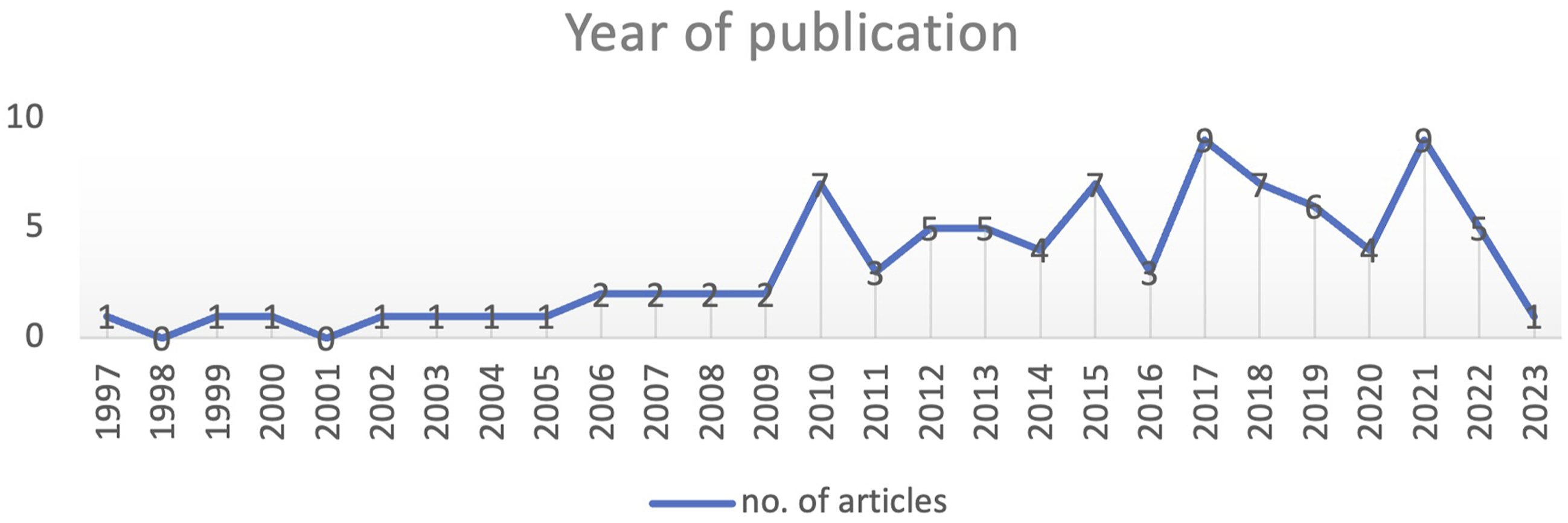
Notably, the work by Muller and Gawenda (2010) stands out as it examines the conduct exhibited by journalists when covering crime scenes and the relationship between “crime”, “media,” and the “police”. The years 2017 and 2021 recorded the highest number of articles, totalling nine publications each. Especially noteworthy are the contributions of Buozis (2017) on the role of the accused as a legitimate source of information and Murray (2017), who outlines seven key steps undertaken by the media when producing crime-related news.
The vast majority of the articles are written in English. As for the journals, Crime Media and Culture (CMC) published 16 of the 90 articles, followed by Journalism with 12 and the International Journal of Communication (IJC) with 4 articles.
Themes and angles
Definition and related concepts
Only five articles from the sample actually refer to the concept of “forensic journalism” and only four of those provide a definition for the concept. The first definition we found in the literature was that of Websdale et al. (1997): We employ the term “forensic journalism” to describe that routinised style of crime reporting that focuses on the individual crimes and the immediate situational dynamics within which the crime takes place. In the final analysis, forensic journalism tells readers more and more about less and less. The sharper the focus and the more details we know, the less we learn about larger issues and patterns (p. 126).
Stratton (2015) describes forensic journalism as a form of crime reporting that employs reporting techniques that seek an aesthetic connection between the crime, the victims and the public. Tabor (2022), on the other hand, sees it as sensationalist and exploitative, focused on profit over information.
According to Gates (2020, 2023), Forensic journalism is emerging as one site where media forensics becomes formalized as a product of popular consumption and sense-making, taking its place alongside forensic-themed reality television and fictional crime dramas like CSI, as much as real forensic investigations and legal proceedings.
In 2023, Gates defined forensic journalism as a form of investigative reporting that relies on advanced digital forensics techniques to analyze and interpret non-traditional sources of information, such as social media, user-generated content, and surveillance footage.
Although scarce, these definitions illustrate the evolution of literature on forensic journalism, from focusing on the process of news production and reception to, more recently, giving relevance to the technological dimension and the potential of digital and data analysis for journalistic practice.
The concepts related to forensic journalism include ‘crime reporting’, ‘crime media’, ‘investigative journalism’, ‘police reporting’, and ‘court reporting’. Different authors use these concepts to describe the work carried out by journalists when covering criminal cases.
“Crime” as a central concept
While the concept of crime emerges as essential for discussing forensic journalism, its definition is not outlined. The word crime is used in 58 of the 90 texts. According to Newburn (2017), Crime, like so many things in our social world, has a certain taken-for-granted or common-sense nature. When we use the term, we assume the category is meaningful; that is, we assume that those to whom we are talking will understand what we’re talking about and will tend to use the term in the same way as we do (Newburn, 2017: 6).
Defining the boundaries of crime proves to be a complex task, as they encompass actions and behaviours that range from breaking the law to interfering with the smooth running of society (Newburn, 2017). Forensic journalism is also associated with topics related to crime, such as death - often intrinsically linked to the crimes covered in the news - and violence (in its many forms), a recurring theme. Other concepts related to the process of investigating crimes, trial procedures and crime reporting were identified.
Family Violence is the most represented type of crime: acts of violence against the family itself, such as child abduction, filicide anddomestic violence (Andersson and Lundstrom, 2007; Barnett, 2005; Barnett, 2006; Buiten and Coe, 2022; Cotterill, 2011; Horeck, 2014; Davies, O’Leary and John Read, 2017; Dissanayake and Bracewell, 2022; Hennink-Kaminski and Dougall, 2009; Jones et al., 2011; Little, 2018; Niblock, 2018).
Overall research on forensic journalism focuses on Crimes Against People: Crimes against life, Crimes against physical integrity, Crimes against personal freedom, Crimes against freedom and sexual self-determination. This relevance might be explained by the concept of public safety, as violent crimes, especially, represent a direct threat to public safety, which makes it a priority for researchers to understand and them and their social impact on affected individuals, their families and communities. This knowledge empowers society and communities to better support victims, to face the social consequences of violence and to develop effective prevention and rehabilitation programs to reduce recidivism.
Death is not always mentioned when crime is discussed. However, 42 articles were identified in which the concepts are inextricably linked, with death being treated as a consequence of one or more criminal acts. These topics could, at first glance, alienate the public because they arouse negative emotions, but the dichotomy of feelings that crime provokes deserves further investigation since “readers greet gory scenes of the after-effects of violent crimes with apparent shock and horror, yet also with morbid fascination that transcends local contexts” (Ramos, 2015: 4).
In newsrooms, crimes are not equally perceived and their relevance is therefore organised according to the news values defined by the editorial policy of each media outlet (Nikunen, 2011). However, these news values also reflect the predominant values of the society in which each media organisation operates (Nikunen, 2011).
The construction and framing of crime news
Media representations of crime can reflect stereotypes and prejudices prevalent in a given society, as pointed out by Nikunen (2011). Literature provides examples: violent acts committed by women are seen as deviant, while the same acts committed by men are interpreted as portraying masculinity (Little, 2018; Niblock, 2018). Culturally, certain behaviours are attributed to men and women, and when they behave outside conventional social norms, there is a need to explain this transgression (Friedman, 2008). “Journalism’s stubborn adherence to gender stereotypes, however, repeatedly undermines the media’s explanatory function.” (Friedman, 2008: 852).
Social discrimination can also stem from the media construction of communities and identities, as in the case of the Irish and Muslims in the UK (Nickels et al., 2012). Religious issues can also interfere with the news. According to Edge (1999), for example, irish reporters were succeptible to their religious beliefs while covereing crime in Northern Ireland.
Political discrimination can arise when a victim is presented according to their position or social standing. It happened to a young Norwegian man when the attempted rape he suffered from a Somali national was reported and he was presented as an active politician instead of a member of a left-wing party (Dancus, 2018). As a known protector of this community, he said he felt guilty that the sentence had ordered the extradition of the perpetrator, which “facilitated an opportunity for tabloid journalists to rally against the Norwegian, and by extension, the European political Left, which they constructed as weak, feminine, and raped from behind by the very immigrants it seeks to protect” (Dancus, 2018: 74).
Crimes involving family violence tend to attract media attention, often international (Buiten and Coe, 2022; Dissanayake and Bracewell, 2022). Literature points out that the choice of events to report can be determined by a commercial logic aimed at selling the story and guaranteeing an audience. Impartial reporting and giving voice to all parties is not always guaranteed, which suggests that journalists are sometimes unprepared to cover this cases and tend to oversimplify the contexts.
In cases of child abduction or disappearance, “it is not surprising that a significant amount of media attention is given to crimes of this nature, whether committed by strangers or estranged parents” (Cotterill, 2011: 449). As a rule, several news crews are sent to the scene to provide live coverage, with appeals and possible rewards for information on the missing person’s whereabouts.
Rape cases, especially involving celebrities, are usually seen as a news value in their own right. Cristiano Ronaldo, a football player, was accused of rape in 2009 and an interview with the alleged victim in the German daily Der Spiegel reopened the case (Silveirinha et al., 2020). The case was widely publicised and received a great deal of attention in Portugal, but “in general, the reporting mostly ignored any contextualisation, let alone issues of gender and power balance between the complainant and the Portuguese athlete” (Silveirinha et al., 2020: p. 221). What was highlighted in the media was Cristiano Ronaldo’s clean profile and not the alleged rape, gender issues, and all that this implies in today’s societies (Silveirinha et al., 2020). The shield that defends a celebrity, who is well regarded by the public, means that the media miss a “good opportunity to highlight rape allegations as a serious matter, pushing to define what should be considered to be newsworthy, regardless of the celebrity status of those involved” (Silveirinha et al., 2020: 221).
Other authors emphasise that journalists lack the training and knowledge to address crime, especially given the challenge of investigating cases and giving them an explanatory context (Barnett, 2005, 2006; Blood and Holland, 2004). Along the same vein, Davies, O'Leary and Read (2017) analysed how child abuse and neglect were reported in the British and Welsh press between 2003 and 2013. They concluded that the newspaper articles were lacking: “contextual information and social and structural facts known to underpin physical abuse, emotional abuse and neglect are often missing. Prevention, education and policy options are largely absent” (Davies, O'Leary & Read., 2017: 768). The news context and framing contribute to the audience’s understanding, confine a particular event within a specific temporal and spatial setting and can contribute to crime prevention (Hennink-Kaminski and Dougall, 2009). Without this, “the result is that everyone copies each other in the attempt to get ahead; everyone ends up doing the same thing” (Bordieu, 1998 as cited in Lea, 2012: 97).
Just as consequential as providing the audience with tools for interpretation is the risk of disrupting trial proceedings through news coverage that dehumanises the suspect and causes social alarm (Staggs and Landreville, 2017). Research on the O. J. Simpson trial (previously mentioned) concludes that celebrities benefit from wider news coverage, tend to receive extensive news coverage, and the way the media frame the news can influence the recipient’s judgment of guilt or innocence (Brown et al., 1997; Neuendorf et al., 2000). For example, in the case of O. J. Simpson, “those with a strong belief in the veracity of television were more likely to support Simpson’s claims of innocence” (Neuendorf et al., 2000: 261). Although the media might not deliberately intend to persuade the audience, sustained news coverage of an event tends to embed it in the public’s mind, forming cognitive perceptions about the crime (Staggs and Landreville, 2017). On the other hand, another factor associated with excessive media exposure of a crime pertains to the criminals themselves: “it definitely intrigues them, and provides these socially and emotionally inept killers with new imagery from which to focus, study, justify, fantasise, and normalise their actions” (Murray, 2017: 122).
Murray (2017) has researched mass murder cases, and identified seven standard stages in the construction of news. We highlight Murray’s proposal, insofar as she is the only author in the corpus who attempts at describing a process of producing criminal news and emphasizes standard media behavior when dealing with crime.
The reception of crime news
The reception of the news is analysed from various angles: from the effects on society, on the victims and on the accused. As mentioned earlier, the news can encourage the construction of stereotypes, particularly gender stereotypes. For example, in war contexts, “public opinion has long held that women are unlikely warriors, ill-suited for combat because they are unable or unlikely to perpetrate violence” (Friedman, 2008: 843). Depending on how it is framed, the news also influences people’s perceptions of the military (Esu and Maddanu, 2018). Interest in journalism and war/conflict journalists is rooted in the media’s pivotal role in understanding and shaping conflicts (Hoxha and Hanitzsch, 2018).
Crimes involving suicide and filicide are perceived differently according to gender and sexual orientation (Buiten and Coe, 2022), largely because of what is reported in the media (Barnett, 2005; Jaworski, 2008; Little, 2018; Niblock, 2018; Nikunen, 2011). Research has also demonstrated that the audience’s perception of guilt or innocence can be influenced not only by gender-related issues but also by factors such as ethnicity (Dissanayake and Bracewell, 2022; Horsti, 2017; Larsen, 2019; Matthews, 2014) and the social status of the accused (Brown et al., 1997; Neuendorf et al., 2000; Nickels et al., 2012; Silveirinha et al., 2020).
The news can also be a vehicle for social alarm when it comes to, for example, kidnapping (Cotterill, 2011), sexual assault (Andersson and Lundström, 2007) or mental health (Blood and Holland, 2004; Coverdale et al., 2013; Cross, 2014) The same goes for headlines about violence and sexual assault, especially involving young people. If we add “deadly violence, the huge number of this type of article may give the public the impression of the world as a dangerous place for teenagers to live in.” (Andersson and Lundström, 2007: 240).
Research about media studies and criminology also highlights apprehensions regarding misrepresentations of crime (Machin and Mayr, 2013). A distortion of public understanding and the reinforcement of structural issues such as the relationship between poverty and crime is pointed out: “the media thereby legitimise the criminal justice system, helping to naturalise certain discourses of crime that serve the interests of the powerful in society” (Machin and Mayr, 2013: 356).
Reported crime cases involve not only the alleged criminals but also the victims. The stigma surrounding a child who confesses to suffering abuse increases the risk of psychological problems and fosters silence (Jones et al., 2011). Justice is not always swift, and the duration of legal proceedings can slow the recovery of the victim, who may feel exposed, isolated and subjected to commentary from others (Jones et al., 2011). Whilst forensic crime investigation techniques have evolved, there is a need for more and better discussion of the impact of news on victims and strategies to mitigate its adverse effects (Jones et al., 2011). The general public reads information and eventually processes it, but survivors may not have the same ability to cope with the news (Wellman, 2018). Therefore, “journalists must be aware of the impact homicide stories can have on the related survivors” (Wellman, 2018: 6).
Another area of contention revolves around innocent individuals who eventually find themselves wrongly accused of committing a crime: “wrongful convictions threaten the norms of crime reporting by shifting the media focus away from crime toward notions of innocence and fallibility” (Stratton, 2015: 281). In these cases, journalists often renounce their role of investigators and verifyers to circumvent the shifting and moralistic discourse that pits good against evil (Stratton, 2015).
A watchdog for human rights empowered by technology
Even though the media’s role in reporting crime is approached through different lenses, its watchdog function stands out, in general and regarding specific contexts such as war and human rights: The main role of the media as regards the functioning of the tribunals has been in its publicity and watchdog functions, and in the news-gathering and image-making that leads to momentum in political circles to pursue accountability initiatives, trials or truth commissions, in the areas concerned (Joyce, 2010: 231).
In wars or politically unstable scenarios, this watchdog function can be challenged. For instance, during Operation Iraqi Freedom, reporters leaned toward direct reporting but were incorporated into military operations (Brockus, 2009; Hasian, 2014). According to Brockus (2009), “the result was a military and Bush administration–endorsed plan for gaining control over messages about the war conveyed to the public” (p. 35).
The importance of the watchdog function became particularly apparent in the case of Ukraine in 2010 when the country was going through the process of consolidating its fledgling independence declared in 1991 (Chaban and Vernygora, 2010: 242-243). This represents one of the most emphasised functions of journalism, its fundamental role in civil society: “pivotal in creating and strengthening an open and informed debate about social issues within a democracy” (Chamberlain et al., 2021: 2405). However, to fulfil this role effectively, the media must not be the judge but rather provide a platform for all stakeholders to voice their perspectives without resorting to sensationalism (Joyce, 2010; Chamberlain et al., 2021).
One of the voices that journalism echoes is the advocacy and promotion of children’s and human rights. Technological advancements have facilitated access to stories and witnesses that might have remained out of reach otherwise. Humanitarian organisations have also harnessed these developments, recognising that “information is the oxygen of the human rights movement” (Ristovska, 2016: p. 347). The key issue is not solely the use of words, which hold a privileged place in journalism as a vehicle to expose cases of abuse; it is about the implications of the transformation unfolding in our times. Forensic evidence is no longer confined solely to professionals in the field; it has permeated journalism, activism, and even civil society (Ristovska, 2016).
This influx of material opens up “conceptual and methodological possibilities for tracing how, when, and why visuals drive the recognition and restitution of human rights violations” (Ristovska, 2016: 355). We would argue that a growing practice to acknowledge is the use of Open Source Intelligence and Investigation (OSINT), when investigating a variety of situations, ranging from finantial crimes to different forms of humanitarian violence (Gregory, 2022; Ristovska, 2016, 2019).
Although reluctant, journalism is gradually “embracing the potential of eyewitness videos to offer initial coverage of or provide key data for difficult news events otherwise inaccessible to journalists reporting on site” (Ristovska, 2016: 351). When journalists empower society with a voice, such as recording eyewitness accounts, they play a part in reshaping “the workflows and practices of the institutional players who are involved, forming an interlinked ecology among journalism, the law and political advocacy in spaces overlapping with human rights work” (Ristovska, 2019: 338).
Ultimatelly, the quality of the news
A prevalent concern resonates throughout the literature: the quality of the news. Journalists’ work might be susceptible to bias, the dissemination of fake news, and the spread of misinformation if they are not equipped with a capacity to evaluate (Blom, 2018). This gap can be looked at as “a call to increase research in an underdeveloped aspect of journalism education” (Blom, 2018: 345). For Pafundi (2010), only knowledge can help manage sensitive and potentially inflammatory information for public opinion, as is the case with crime news, and therefore “necessitates a coherent, responsible access policy” (Pafundi, 2010: 258). “This policy should focus on when and how the materials become public, in order to best reduce the risk of pretrial prejudicial publicity, and the harm that could arise from the misuse of one’s personal information” (Pafundi, 2010: 258). Creating an incubator for crime reporters, through collaboration between newsrooms and legal and law enforcement agencies, could play a pivotal role in enhancing journalists’ legal acumen, thereby fostering the practice of Justice Reporting (Chamberlain et al., 2021).
Journalists and analysts complain “repeatedly about gaps in capacity and understanding in media forensics” (Gregory, 2022: 715), which looms as a challenge to the media’s social role. The social construction of crime and justice has gained significance in media studies, particularly in contexts such as family violence: “journalists need to extend their sourcing beyond kneejerk or vested reactions, such as typically approaching family members and friends” (Niblock, 2018: 2464). Furthermore, some universities are already focusing on emotional literacy, which is nothing more than teaching journalism students to walk in the shoes of a victim or survivor and write from that perspective (Wellman, 2018).
The forensic field is already engaging with digital multimedia experts, who delve into media recordings to search for possible evidence worthy of investigation (Gates, 2020), The same could happen in the opposite direction, since these professionals have become forensic media experts, even though data are not just from the media and can come from other sources such as surveillance systems, body cameras or drones (Gates, 2020). Experts are trained to see and hear differently and develop a forensic sensitivity (Gates, 2020: 404). This development could address concerns raised by journalists about the limited options and use of forensic techniques for distinguishing truth from manipulation (Gregory, 2022).
Methodologies for the study of forensic journalism
Not all authors allocate equal attention to elucidating methodologies, methods, and techniques. However, the explanation of their process throughout the article ultimately clarifies them.
Within the analysed corpus of 90 articles, there are distinct approaches. Eleven articles delve into forensic journalism primarily through theoretical reviews. Sixty-eight adopt a qualitative methodological approach. This choice could be explained by the qualitative research’s flexibility and creative potential. Only seven articles rely on statistical association to uncover the processes involved in producing and receiving crime news. Four articles employ mixed methodologies.
Among the selected articles, one particular research method stands out: the case study. As for data collection techniques, some articles used focus groups (journalists, editors and the public), direct observation, telephone interviews and questionnaires. The most widely employed data collection technique involved gathering data from the news (outlets) about a particular forensic event or about representations of specific crimes (31 of the 90 articles). The second most frequently used technique involved searching for information available online, through search engines and keywords (20 of the 90 articles). As for data analysis techniques, over half the articles (47 of the 90 articles) relied on discourse or content analysis.
From this analysis, we would propose for future research to resort to two approaches that have been less explored: on the one hand, there is room for more quantitative analysis; on the other hand, it would be interesting to implement ethnographic research and follow journalists in the filed.
Prospective lines of research
Gregory (2022) encourages more and better research into how the media operate, their strategies for engaging with the public, the tools required for improvement, and how they should counteract attacks on their credibility. Enhancing the collaboration between the media and the legal sphere is perceived as crucial for society, as is fostering dialogue between journalists and researchers (Blom, 2018). Marchetti (2002), emphasising the benefits of specialised journalism, had already suggested the creation of an incubator for crime reporters, through collaboration with legal and law enforcement agencies, to strengthen media transparency and effectiveness in fulfilling its social function to restore public trust. Davies, O'Leary and Read (2017) advocate for newspapers to focus on context and rigorous research to substantially contribute more to the public understanding of child abuse and neglect, “to amelioration of its consequences and, perhaps most importantly, to its prevention” (p. 769). Vizoso et al. (2021) argue that “future lines of research regarding this topic might include a deep assessment of how journalists perceive deepfakes in their daily routines, and the challenge of verification for journalists, which includes questions of technological literacy and guides for good practices” (p. 297).
While the authors’ focus extends to various facets of journalistic production and the media’s relationship with the audience, their underlying concern remains consistent: the quality of journalism and its impact on the audience. Education and the specialisation of journalists can be seen as mechanisms for enhancing this musch need quality. Thus, considering the entire production process, including professionals’ perspectives and training, could constitute a promising research line to explore.
Conclusion
Forensic journalism, as a specific concept, has yet to achieve a robust presence in the literature as the term itself has not been used by many researchers. Other than Websdale et al. (1997), only Gates (2020, 2023) incorporates the concept in their articles’ title. The challenge of establishing a clear-cut definition for forensic journalism might be attributed to its intersection with various fields, including law and criminology. This underscores the significance of specialisation in this domain, which encourages interdisciplinary dialogue to foster a deeper comprehension and collaboration between journalists and forensic investigators.
Forensic journalism frequently revolves around the concept of crime. As Newburn (2017) elucidated, crime, like many aspects of our social fabric, carries a certain inherent or conventional understanding. That is why defining crime presents a challenge as it usually mirrors the prevailing values of a society. Forensic journalism often encompasses crimes related to violence, gender, social, religious, and political discrimination, family violence, sexual assault, and death. Literature on journalistic practices has also focused on the intersection between human rights investigation and forensic journalism and, more recently, on the use of Open Source Intelligence and Investigation (OSINT) methods to investigate different forms of humanitarian violence.
In essence, the literature often invokes traditional journalism values when assessing and discussing forensic journalism. As it should. It underscores dimensions such as information reliability, context, verification, and accuracy and the importance of adhering to journalism ethics and maintaining a balanced approach to news coverage. Context, information verification, and reliable sources are crucial elements in journalism. Their absence can compromise the quality of news production, leading to difficulties in understanding the news and eroding media’s credibility. Journalistic ethics, a recurring theme in studies within this field, is primarily linked to concerns regarding the privacy of both victims and suspects. Conducting in-depth investigations is also emphasised, particularly on the premise that journalists should delve beyond surface-level information to gather pertinent data and evidence. The focus should be on a clear and understandable presentation of the facts, avoiding excessive use of biased adjectives, and simplifying complex concepts to ensure audience comprehension.
On the other hand, Gates (2023) argues that forensic journalism differs from traditional journalism in that it largely depends on non-news sources of information, such as social media and user-generated content, open-source inquiry, and user-generated material to reconstruct events and establish facts. There are some epistemic tendencies that forensics and journalism have shared for a long time. These tendencies include an orientation to event reconstruction that relies on media recordings as evidence and a mode of evidence presentation that claims to stay tightly wedded to the facts by eschewing general knowledge claims in favor of very specific ones (Gates, 2023).
We do not argue that values and routines of traditional journalism do not apply forensic journalism. We argue that these are not enough, given the the impact of crime news in society and individuals and considering the sensitivity of the material a forensic journalist has to deal with. Also, considering its interdisciplinary nature, as it intersects with fields such has criminology, justice, national and international law, forensic science, psychology, sociology (to name a few), this would call for the recognition of a specific field and further research.
We believe that Sellnow et al.'s (2015) call to explore and strengthen the connection between communication/journalism education and forensic education is also a relevant path to pursue, given the recurring concern about the quality of forensic journalism throughout the literature. Some authors have even suggested increased investment by the media to prevent errors that can damage journalism (Pafundi, 2010; Surette, 2015; Laidler et al., 2017). The battle for ratings and the dissemination of unverified information through technology are perceived as threats to the credibility of journalism. Consequently, there is a growing imperative for investment in techniques and resources to mitigate these challenges. Media industry’s financial constraints, coupled with the growing instability in working conditions and a trend towards leaner newsrooms, in terms of personnel and financial resources, pose a significant challenge for the future of the journalism and the overall quality of news reporting.
Existing research has primarily focused on the analysis of published materials and the reception of news. It would be interesting to delve into the news production process itself, following professionals as they gather information in the field, carry out their reporting, and subsequently edit their work. Rather than solely focusing on a normative perspective (what forensic journalism should be and/or is not) it would be valuable to explore the practical aspects of how journalists work in the field, including their challenges, interactions with sources, time constraints, and editorial guidance. This could be accomplished through an ethnographic approach, which is a traditional and well established method in journalism studies, especially when it comes to the study of newsrooms and news routines.
With this SLR, our primary objective was to stimulate debate and encourage future research that delves deeper into forensic journalism. We particularly emphasise its significance for society and its role in enhancing the relevance of quality journalism. The dissemination of accurate, impartial, and verified information can play a critical role in fostering an informed, aware, safer, and healthier society.
Research on any topic inevitably carries a degree of subjectivity, starting with the definition of search terms, extending to the selection of databases, and culminating in the application of exclusion and inclusion criteria (Van Wee and Banister, 2015). It is worth noting that this subjective decision-making process can introduce limitations, as it has the potential to shape the research findings and determine whether an article is included or excluded from the study. Another exclusion factor that introduces subjectivity is the choice of the languages in which the article must be written to be considered. This decision is heavily reliant on the language proficiency of the researchers themselves. In the case of this SLR, the researchers’ limitations meant that only articles in English, French, Spanish and Portuguese were considered. Another evident limitation is that text searching is constrained by the content available in databases, whether in open access or that can be made available by the authors (Bhattacherjee, 2012). In the case of this SLR, it is important to acknowledge these limitations as criteria that should be considered when evaluating and interpreting our data. Making this process public allows readers to make that judgement and other researchers to replicate or possibly challenge our conclusions.
Lastly, these articles’s interpretations about journalists, journalistic practice, and forensic journalism stem from our perspective on the role of journalism in society. We view it as essential to the lives of citizens in a democracy, socially constructed and also constructor, through the (negotiated) effects it produces on media messages’ recipients. Naturally, this view influences our perspective of what constitutes quality journalism.
Footnotes
Declaration of conflicting interests
The author(s) declared no potential conflicts of interest with respect to the research, authorship, and/or publication of this article.
Funding
The author(s) disclosed receipt of the following financial support for the research, authorship, and/or publication of this article: This work was supported by the national funds through FCT – Fundação para a Ciência e a Tecnologia, I.P., under the Pluriannual Funding of the Communication and Society Research Centre 2020-2023 (which integrates the parcels of base funding, with reference UIDB/00736/2020, and programmatic funding, with reference UIDP/00736/2020).
