




Abstract
Celebrity CEOs espousing Corporate Social Responsibility (CSR) are receiving increasing media attention. However, researchers have not yet examined how CEOs and journalists co-create meaning about CSR in broadcast talk, an unscripted genre of news making, rife with contestation and cooperation. This paper presents a Conversation Analysis of six interviews featuring Dan Price, a CEO who pledged to “solve income inequality” by restructuring salaries in his company. Findings suggest that CSR anchored a process of double branding in which the CEO promoted himself and journalists reaffirmed their news philosophy. Price’s warm embrace by journalists across the political spectrum demonstrates a collaborative process of “celebrification”. Price created a transferable persona that appealed, through a mixture of political targeting and strategic ambiguity, to diverse audiences. Journalists elevated this persona by serving pseudo-criticism and showing identification. The story thus provided corporate media with the opportunity to reaffirm their commitment to “responsible capitalism”.
Introduction
Founders/CEOs 1 promoting inspiring stories of responsible capitalism have become a common sight in the media. This paper focuses on one such story, of CEO Dan Price, who pledged to radically restructure pay at his credit-card processing company “Gravity Payments” to provide a “capitalist solution to a social problem”. Price’s pledge to pay a minimum annual salary of $70K at his firm (henceforth, “the 70K Initiative”) received ample media coverage, including headlines like “The best boss ever” (Inc magazine) and “The poster boy for responsible Capitalism” (The Guardian). It also led to several interviews on major US broadcasting platforms.
Treating Price’s promotion of the 70K initiative on TV as a case study of broadcast talk about Corporate Social Responsibility (CSR), this paper compares six interviews featuring Dan Price that were aired in the week following his pledge. Its goal is to understand how Price and his interviewers co-created meaning about the 70K Initiative and what they each gained through this collaborative interactive work. Analysis of the content and conversational style of these interviews suggests a process of double branding: Price promoted himself and his company, and journalists promoted their own brand and their program’s “news philosophy” (Becker and Vlad, 2009). Price’s rhetoric about the initiative, which was tailored to the presumed audience of the different shows, combined with vagueness around the political implications of his initiative created a transferable personality (Tolson, 2001) that appealed to journalists and audiences across the political spectrum. Price emerged as a celebrity, which was clearly beneficial for him, but it also helped corporate commercial media sustain the assumptions of responsible capitalism (Gans, 2005) and techno-optimism (Barbrook and Cameron, 1996) in the face of inequality and precarious working conditions.
This paper contributes to studies of broadcast talk, in which interviews with CEOs are a relatively understudied genre. Its comparative approach to Conversation Analysis helps parse out repetition and adaptability in rhetorical patterns within and across dialogue, which could be useful to other studies of viral or highly covered interviewees. The paper also contributes to the emerging field of CSR studies, by illustrating the significance of conversational collaboration and turn-taking in the construction of a narrative about social problems and their desirable solutions.
Socially responsible celebrity CEOs
Celebrities communicate economic conditions through their mediated persona. Duffy and Pooley (2019), adapting Leo Lowenthal’s seminal analysis of celebrity culture, characterized 21st-century celebrities as idols of promotion. Like Lowenthal’s idols of consumption typical of the 1940s, today’s heroes represent leisure industries. They share the producer orientation of Lowenthal’s turn of the century idols of production, only the product they are selling is themselves. Against a backdrop of precarious working conditions that make self-branding increasingly intertwined with professional mobility, contemporary celebrities promote themselves by highlighting meritocracy, a spirit of cross-platform self-enterprise, and authentic expression.
Though celebrities may initially rise to prominence due to a particular action or talent, the finalized celebrity product is a transferable personality that excels at- and is expected to “be itself”. Thus the idea of celebrity presents an inherent tension between authenticity and performativity: Celebrities are in many ways extraordinary, yet their public appeal often entails acts of “doing being ordinary” (Tolson, 2001).
Celebrity CEOs are media creations that personify the performance and outlooks of commercial organizations, through archetypes like creators, who establish new businesses or innovations, transformers, who reshape firms to dodge potential future problems; rebels, who steer firms in new directions that defy industry norms; and saviors, who rescue companies from imminent failure (Lovelace et al., 2018). The tech industry is especially known for a network of powerful founders/CEOs who draw frequent media attention. Figures like Jeff Bezos, Mark Zuckerberg, Elon Musk, Larry Page and Sergey Brin, have become icons of innovation and entrepreneurship – two highly attributes valued in Silicon Valley, and in neo-liberal capitalism more broadly (Harvey, 2007; Marwick, 2013). Tech companies invoke the spirit of the frontier and the myth of the legendary founder – an individual genius who designs and builds “products that change the world” (Little and Winch, 2021). They embody “The Californian Ideology” (Barbrook and Cameron, 1996), a hybrid of market economics and hippie nonconformism, enabled through “a profound faith in the emancipatory potential of the new information technologies” (p. 1). Another related Silicon Valley ideology, “Solutionism” views complex social problems as issues that can be defined, computed, optimized or solved with the right technology (Morozov, 2017).
In their quest for an authentic mediated identity, celebrities often adopt humanitarian causes which transcend narrow political and cultural interests (e.g., Gerry Halliwell serving as a UN ambassador for women’s rights) and imbue them with moral justification (Tolson, 2001). In the realm of business, CEOs are increasingly displaying charitable credentials through Corporate Social Responsibility (henceforth, CSR).
CSR represents a range of corporate practices that voluntarily promote ethical conduct in areas like environmentalism, working conditions, and corporate governance. The motto of CSR is “win-win” (or “do well by doing good”): it aligns profitability with ethics, often by harnessing customer desire for activism (Mukherjee and Banet-Weiser, 2012). The increasing popularity of CSR correlates with the state’s divestment from various realms of life. Processes of globalization and corporate consolidation have eroded public trust in government oversight. Especially in the United States, many believe that it is easier to get large corporations to change their policies through consumer pressures and an appeal to the economic rationale for CSR, than changing public policy (Vogel, 2006).
CEOs espousing progressive social ideas need to address two distinct audiences –consumers or users who seek a moral vision and investors who care about the bottom line. One strategy that tech companies have used to bridge this gap was the publication of personal letters alongside annual financial (S-1) statements. If statements were the domain of numbers and financial projections, in personal letters CEOs stressed the soft power of their business, claiming that their company is different, that they were not interested just in money, nor in short-term profits (Dror, 2013). This bifurcation between soft and hard power is one example of “strategic ambiguity”, namely, the use of vague or coded language to appeal to otherwise opposing addressees by encouraging the co-existence of different interpretations (Eisenberg, 1984).
Only a handful of studies have examined journalistic treatments of CSR to date. They suggest that journalists can be both enthusiastic and skeptical towards this practice: In the UK, journalists said that they were likely to cover CSR stories but often viewed it as conformist or cynical (Tench et al., 2007). Business journalists covering financial reports tended to accept some aspects of CEO personal letters like the novelty of a company while rejecting notions of disinterest towards the bottom line (Dror, 2013). News coverage of celebrity CEOs (e.g., Mark Zuckerberg) tend to be highly personalized and scandal-oriented (Creech and Maddox, 2022).
While previous studies focused on news articles, this study addresses a gap in studies examining the representation of CSR on broadcast interviews. The interview format allows an examination of conversational dynamics, thus revealing ways with which journalists and CEOs co-construct meaning around CSR. Journalists, who interactionally hold power as those posing the questions, occupy a complex position. Working in broadcast companies, they are themselves corporate employees, and their organizations often have their own version of CSR (McMurria, 2008). The analysis of conversational dynamics between journalists and CEOs sheds light on how this complexity plays out within the journalistic interview.
The news interview as an institutionalized conversation
Broadcast news interviews are premised on interpersonal dynamics. A production of live talk for an overhearing audience, the interview displays status, power, and persuasion unfold through interaction (Scannell, 1991; Ekström, 2007). The broadcast interview is an institutionalized conversation governed by a set of norms and discursive roles; the most obvious is that interviewees are expected to provide relevant responses to questions posed by journalists. These questions establish the conversation’s agenda, indicate the action that the interviewee is expected to perform (e.g., explain, defend, comment), and suggest preferences for a certain type of answer (Clayman and Heritage, 2002; Ekström, 2007). Interviewers are supposed to refrain from asserting an opinion or an affiliation/disaffiliation with the interviewee and to strike a balance between politeness and deference (Kampf and Daskal, 2013).
Several interviewing genres, marked by distinct styles, roles, and power dynamics, have evolved in news production (Montgomery, 2008). The accountability interview features journalists questioning public figures – typically politicians – about their actions or words. In these interviews, journalists hold public figures to account and public figures justify their stance. Journalists may differ in their assertiveness (Clayman et al., 2006), presenting varying levels of initiative (e.g., by asking follow-up questions), directness (in contrast to indirect self-referencing frames such as “I wonder whether…”), and adversarialness (posing questions that pursue an agenda in opposition to the interviewee). Interviews with politicians are becoming increasingly antagonistic, displaying more aggressive question-asking (Clayman et al., 2006; Eriksson, 2011), and even insults (Hutchby, 2017).
Accountability interviews receive most attention due to the public service they provide. However, this is not the only style of interviewing in broadcast media (Montgomery, 2008). The experiential interview involves a journalist and a lay person who is an observer, victim, or survivor rather than an active agent in relation to the news. The role of interviewees in such setting is to provide personal reactions and/or eyewitness accounts and their answers are rarely treated as unsatisfactory. The expert interview involves a professional journalist and a person with status and credentials that imbue expertise on a topic (e.g., businesspeople, scientists, doctors, etc.). Such interviews are designed to elucidate the topic of the news; accordingly, expert interviewees describe background information, clarify unfamiliar concepts, explain implications, and provide commentary. Finally, the affiliated interview involves two or more professional journalists exchanging experiences, interpretations, and commentary about the news, often in an informal conversation style.
Different interviewing styles are marked by distinct sets of expectations from involved actors, yielding varied interpersonal dynamics and meanings. The meaning of a broadcast interview is also pre-configured, in the process of story ideation, by institutional factors such as beats and organizational routines. Media organizations, especially commercial news outlets, create an identity for their product: marketers call it a brand, Becker and Vlad (2009) call it a “news philosophy”. Especially in competitive markets, television news operations seek to differentiate their products, by cultivating a distinct approach to news and by emphasizing values that appeal to their customers. In an age of heightened political polarization, news philosophies are often colored by partisanship (e.g., Iyengar and Hahn, 2009).
The encounter between CEOs promoting CSR and journalists promoting an organizational news philosophy, highlights the joint interactional work involved in corporate branding. This collaborative production of meaning was on full display in CEO Dan Price’s appearances across media studios.
Case study: One CEO, six interviews
In April 2015, Dan Price made an announcement to his employees that went viral and marked him as a “rebel” CEO (Lovelace et al., 2018). With New York Times and NBC news crews documenting the announcement, Price informed his 120-member staff that he planned to raise the minimum salary at the company to $70,000 per year. The initiative doubled the salaries of the firm’s lower paid employees. To offset costs, Price announced that he would cut back his $1.1 million compensation to $70,000 (matching the new minimum salary) and reroute company profits to payroll. Tapping into an ongoing national debate about rising cost of living and income gaps, including battles in Seattle (Gravity Payments’ hometown) over “the fight for $15”, Price’s announcement received massive, mostly positive, media attention. It proved successful overall, with the company expanding and maintaining profitability (Kristof, 2019).
A previous study that examined polysemy (meaning multiplicity) in news articles about Price’s 70K initiative (Boxman-Shabtai, 2023), showed that although the story was popular across the board, news outlets differed in polysemy levels. Polysemic news stories downplayed Price’s role and focused on the initiative, typically questioning it from a market perspective. They counterbalanced admiration towards Price with skepticism about the initiative’s implications. Most of the stories, however, presented a relatively closed meaning structure. They tended to focus on Price’s persona (generous and modest), his colorful background (raised in Idaho by a family of devout evangelists, settled in liberal hipster Seattle), and the extraordinary hero’s journey that led to his decision (from a hike with a friend that made him aware of the financial struggles that workers living on 40K annual salary face, to his encounter with a study by Kahnman and Deaton pointing at an annual income of 75K as a point of satiation after which more money ceases to increase well-being).
In news articles, the representation of figures like Price is primarily shaped by the literary and framing choices that reporters make when molding him into a character. The interactive, conversational nature of broadcast interviews exposes how a speaker orients himself to the interviewer and the broader audience of the show. The current study, a Conversation Analysis of six interviews conducted with Price in the week following the announcement of the 70K Initiative, seeks to understand how Price and his various interviewers co-created meaning about the Initiative (and CSR more broadly), and what they each gained through this collaborative interactive work.
Method
The six interviews analyzed in this study were sampled as part of a larger project about meaning multiplicity in the news that focused on Price’s story as a case study (Boxman-Shabtai, 2020). Five interviews were collected from the Media Cloud archive’s collection of mainstream US media across the political spectrum. Sampling was limited to the week after Price’s announcement (which was when most interviews were conducted), to create a standard repertoire that corresponds most immediately with the initiative’s launch, rather than additional evolving events. News items were collected using the keywords “Dan Price” and “Gravity Payments”. This search yielded a combination of news articles and interviews – sometimes the two were combined (e.g., on The Today Show – a video article followed by an interview in the studio). News articles were analyzed separately (see Boxman-Shabtai, 2023), the focus of this paper the interviews. To corroborate the Media Cloud results, a Google search was conducted with the same keywords and time frame. It yielded one more relevant interview, which was added to the corpus.
Though the corpus is limited in scope, it represents almost all 2 of the interviews that Price conducted on American mainstream media in the week following the announcement of his plan. Four of the interviews were aired on broadcast television: Shepard Smith Reporting on Fox News (03:49 min), Varney & Co. on Fox News (05:02), The Today Show on NBC (02:24), and Morning Joe on MSNBC (05:25). The other two interviews were released on financial sections of legacy media websites: Money Beat on The Wall Street Journal (henceforth WSJ, 04:36), and CNN Money on CNN (02:24). This corpus – representing news programming, morning shows, and financial magazines – reflects the hybrid environment of contemporary news interviews (Hutchby, 2017). The comparative design of this research – namely, that the six interviews featured the same interviewee and addressed the same topic – was utilized to detect commonalities and differences in interviewee questions and in Price’s responses.
The analysis of interviews combined an examination of what was said and how it was said. The content of interviews was probed for dominant frameworks of meaning. Within each interview, the relationship between the frames promoted by the interviewer in his/her questions was compared to those promoted in Price’s responses. Across interviews, interviewer questions were compared to one another as were the frames promoted by Price. Addressing conversational dynamics, Conversation Analysis (CA), the detailed study of naturally occurring talk-in-interaction (Ekström, 2007), was used to probe the interview’s turn-taking patterns. Turn-taking are the dynamics that enable participants to (mainly) speak one at a time, to relate to one another during their respective turns and to establish meaning in dialogue/context. CA is premised on the idea that interactional cues (e.g., intonation, speech overlap, pauses, body language) are meaningful resources for participants to achieve a goal, cope with conversational problems and fulfill a role (Schegloff and Sacks, 1973). Following the conventions of CA, interviews were transcribed and analyzed according to their turn-taking dynamics. In total, the six transcripts consisted of 141 question and answer turns. The following sections explain how the interviewers and Price co-contributed to the creation of an ambiguous message about the social role of CSR.
Interviewers: Diverse personas, standardized supportive approach
The six interviewers and programs presented distinct atmospheres and styles of questioning: A multi-participant conversation blending analysis and roundtable discussion (MSNBC’s Morning Joe), an admiring lighthearted dialogue (NBC’s Today Show), a demeanor combining professionalism and earnestness (CNN’s Money Beat and Fox’s Shepard Smith), and skeptical detachment (WSJ and Fox’s Varney & Co.). Nevertheless, the content across interviews was rather similar. All six interviewers presented Price with variations on the following questions: (1) why did you launch the initiative? (2) what were the reactions to it? (3) what is the business rationale/benefit of the initiative? (4) what is your position on larger debates about inequality and/or what is your message to other CEOs? Whereas some interviews included additional questions, all of them revolved mainly around these four lines of inquiry.
In conversational terms, interviewer patterns of turn-taking indicated a certain level of deference. Interviewers rarely cut off and/or reformulated Price’s responses. They nearly never asked follow-up questions. Accordingly, Price’s answers were left unchallenged. Though interviewers varied in their level of initiative, two themes – pseudo-critique and identification – were common across interviews.
Pseudo critique
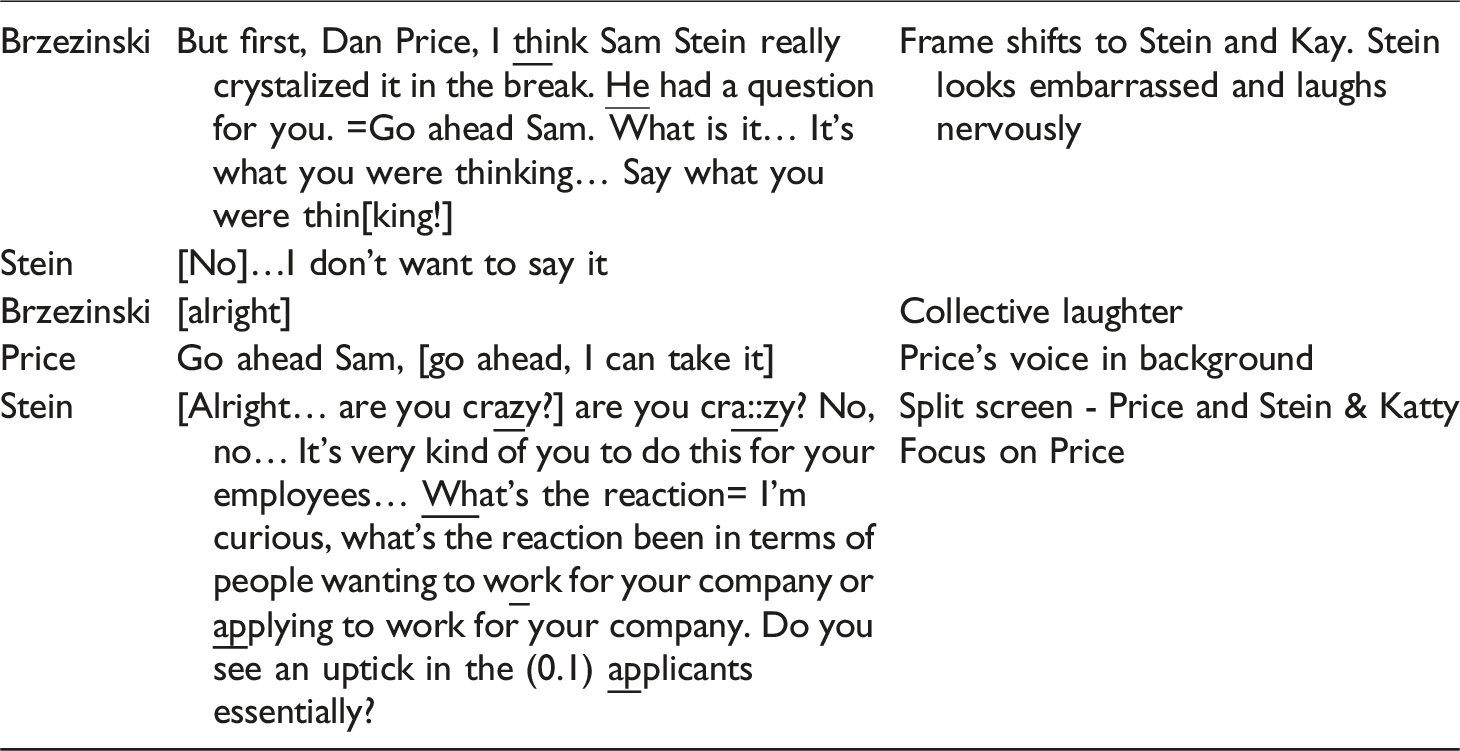
Stein’s critical question (“are you crazy?”) was conveyed through a collective mood of banter, which took the edge off it. Stein immediately backtracked (“It’s very kind of you”), changed gear to pose a rather generic “what was the reaction” question and further pin-pointed positive reactions (uptick in applicants). The result was that Dan Price was invited to discuss the popularity of his company.
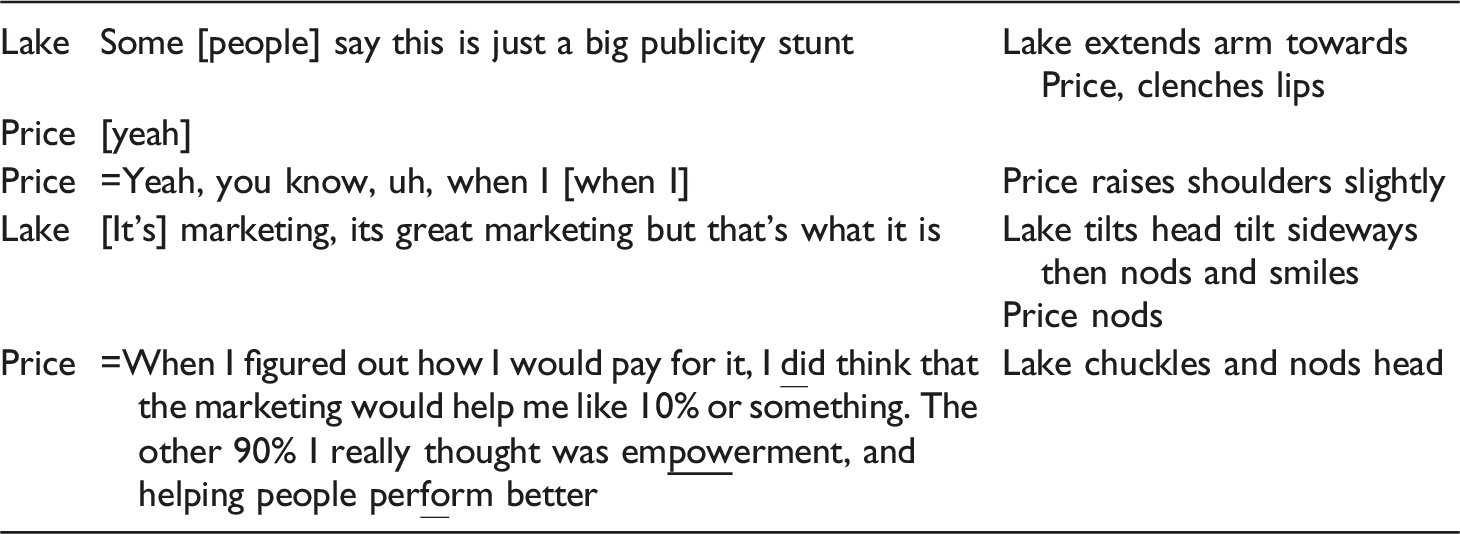
This question (voiced only by Lake and Varney) was unique in its suggestion that Price’s intentions were not devoid of self-interest, however, it too was qualified by other-referencing (“some people say”) and it accepted Price’s response with no further challenge. While Lake displayed assertiveness in in turn-taking – she cut off Price to complete her question – her demeaner was friendly, and she smiled and nodded throughout Price’s response.
Affiliation
Interviewers cued affiliation through explicit and implicit expressions of identification with Price and his cause. Acts of affiliation removed professional detachment, and at times quite literally eroded the boundaries between interviewer and interviewee.
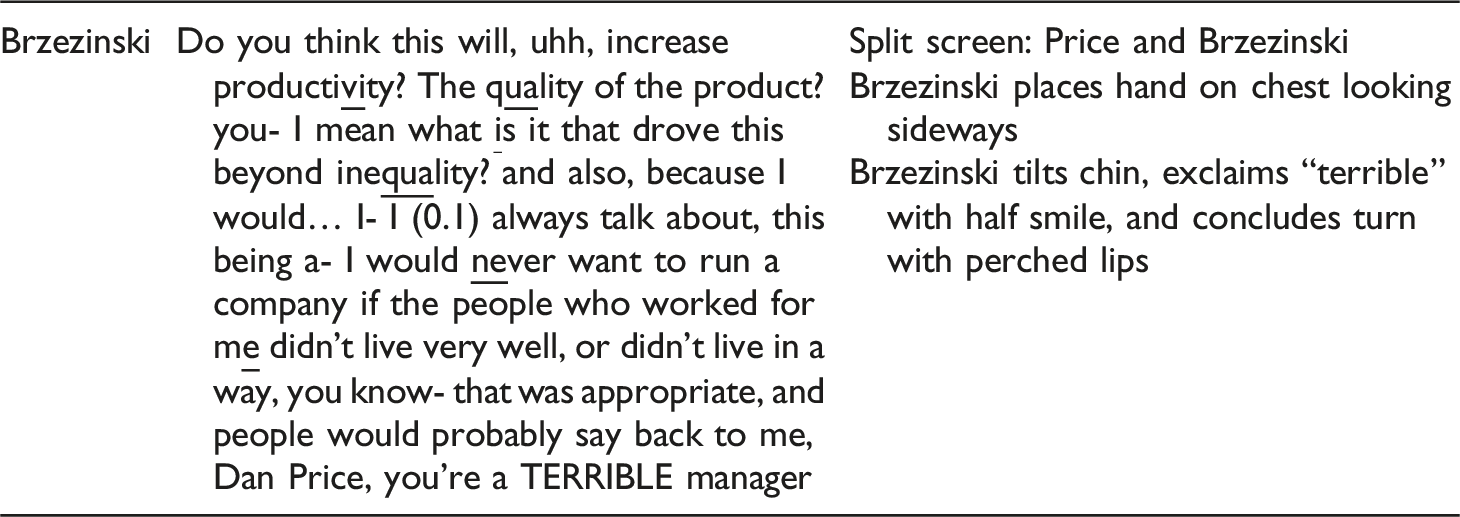
In addition to pseudo-critique (countering challenge to Price’s managerial skills by suggesting potential business benefits, distancing “terrible manager” label with an other-referencing phrase), Brzezinski identified with Price – both in spirit (“I would never want to run a company”) and through combined speech (“people would probably say back to me, Dan Price”). The side-by-side placement of Brzezinski and Price exchanging a friendly demeanor in split screen (see Figure 1) further emphasized affiliation between the two. Mika Brzezinski and Dan price, MSNBC.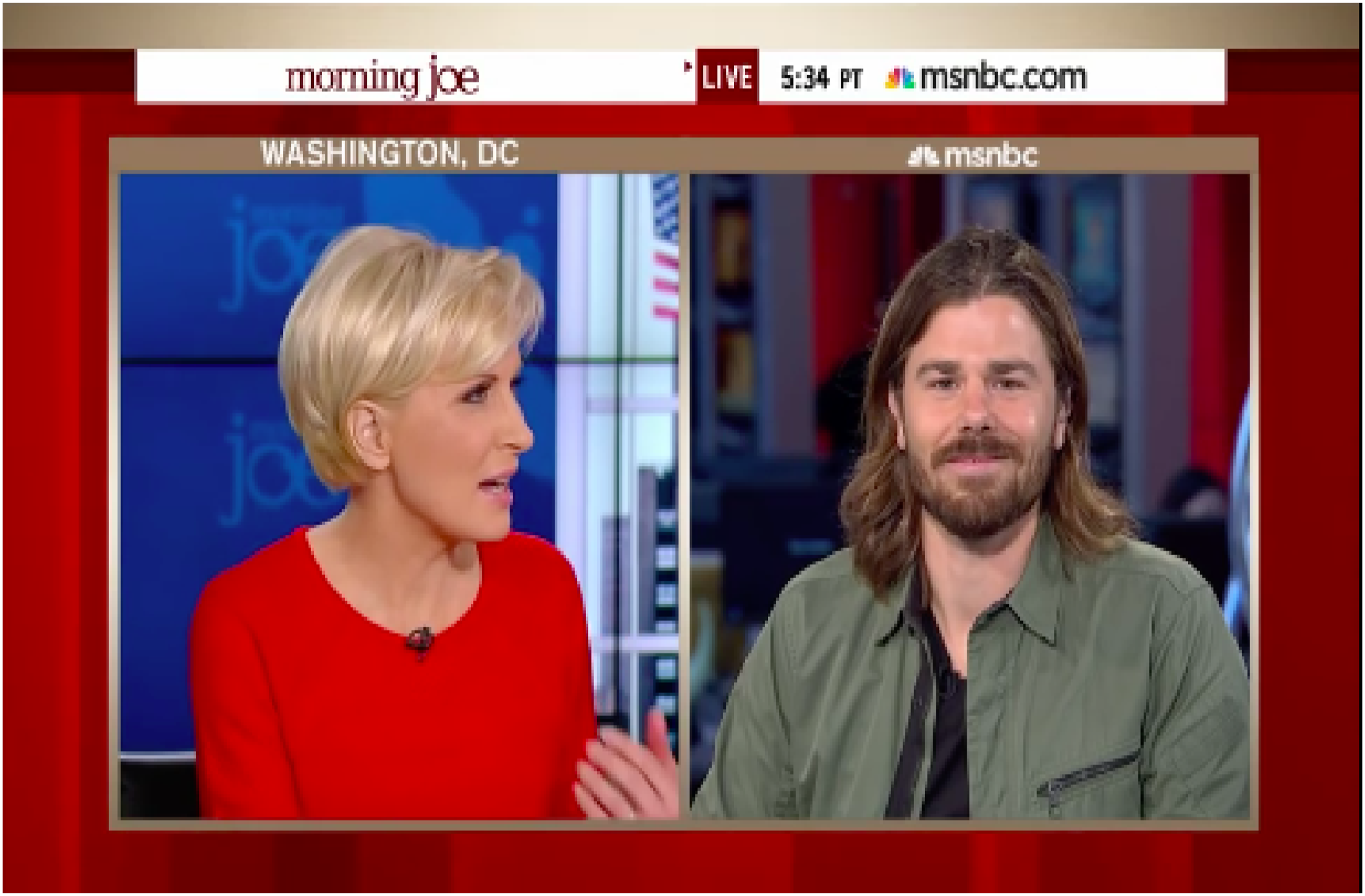
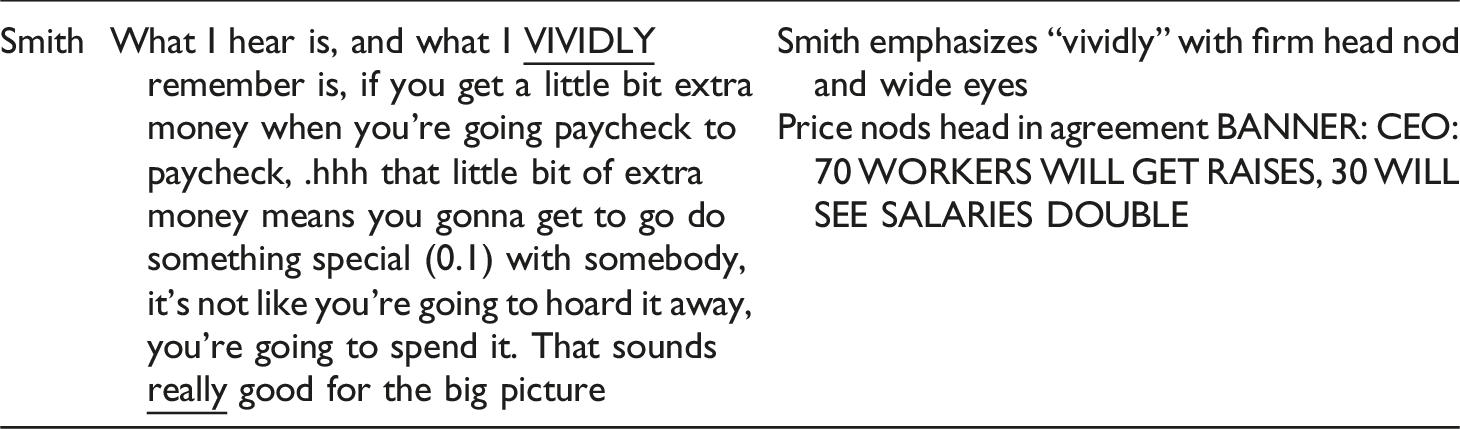
Smith’s statement recruited his own experience to highlight the benefits of the initiative. It moved from a relatable position, revealing a personal history of economic insecurity to a macro-economic argument in favor of consumerism.
Finally, affiliation was cued with flattery and direct expressions of support. For example, in her interview with Price on the NBC Today Show, Hoda Kotb told Price that he was “an all-around nice guy” and that his pledge was “an incredible moment”. A moment of self-aware reverse identification emerged in the interview’s conclusion. After thanking Price, Kotb joked, “and the crew, do not go anywhere near this man, OK? Leave him alone”, conveying a whimsical acknowledgement of the potential threat Price’s vision of wage redistribution posed to people in her position.
In conclusion, interviewers maintained a unique style of presentation while simultaneously converging around similar questions, little substantial challenge, and affiliation. These conditions made a fertile ground for Price to skillfully promote his message to a heterogenous audience.
Dan Price’s appeal to diverse sensibilities
The limited repertoire of questions across interviews enabled a straightforward comparison between Price’s performances. Price’s rhetoric incorporated two overarching frames. One was that he saw income inequality as a social problem, and the other that he was a devout capitalist. Depending on the political leaning of a media outlet, Price incorporated different doses of inequality rhetoric in explaining his motivations.
Strategically dosing inequality talk
The main difference in Price’s conduct across interviews was his rhetoric about the motivation driving the 70K Initiative. In centric and left-leaning channels (CNN, MSNBC, and NBC) Price initiated the topic of income inequality, fusing it with a free market language. Conversely, on right-leaning channels (Fox News and WSJ) Price focused on his capitalistic aspirations, blurring, and to some extent avoiding, the topic of inequality.
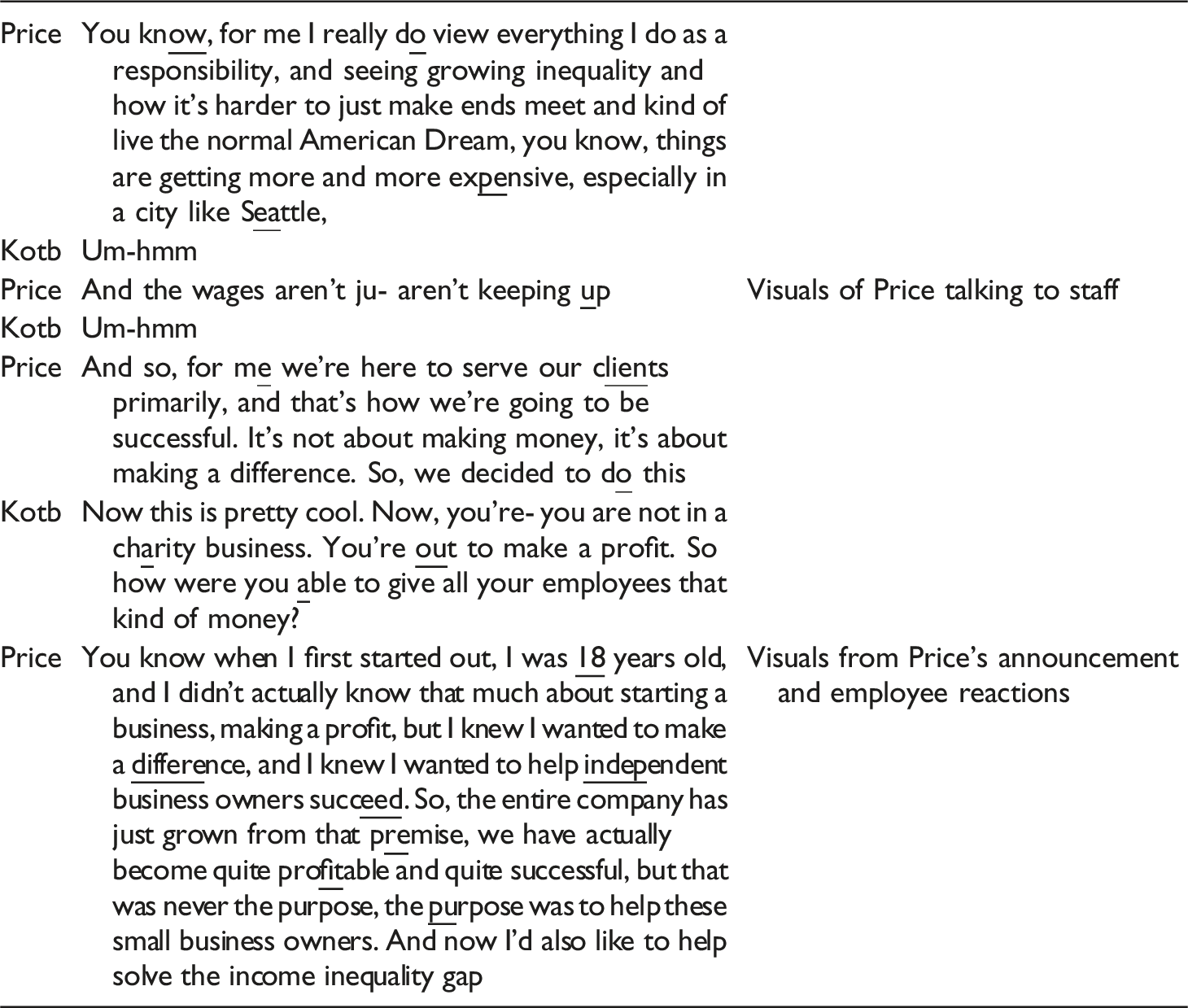
This exchange illustrates two broad patterns that were evident on CNN and MSNBC. First, across interviews Price balanced between a rhetoric of social justice and a rhetoric of profitability. The NBC interview was rather extreme in Price’s professed obliviousness to the bottom line (“it’s not about making money, it’s about making a difference”). In other interviews, Price emphasized the initiative’s financial advantages, typically by describing the happiness of employees as a key to productivity, and money concerns as a “distraction” that removed them from their “passion” for work. Thus the initiative, according to Price was “allowing people to unleash their passion and continue to serve our clients and not being distracted by money”(MSNBC) and his team was “very much passionate, and I don’t want them to be distracted with money” (CNN). Second, Price was explicit and proactive in his framing of income inequality as a social problem, and quite brazen about his desire to solve it. On NBC, Price professed his desire to “help solve the income inequality gap”. On MSNBC, Price argued that he was “trying to find a Capitalist solution to a very large social problem, that just keeps on getting worse and worse” On CNN, Price said “I really think this will inspire people, and I think we’re going to start seeing a reversal of this inequality trend”.
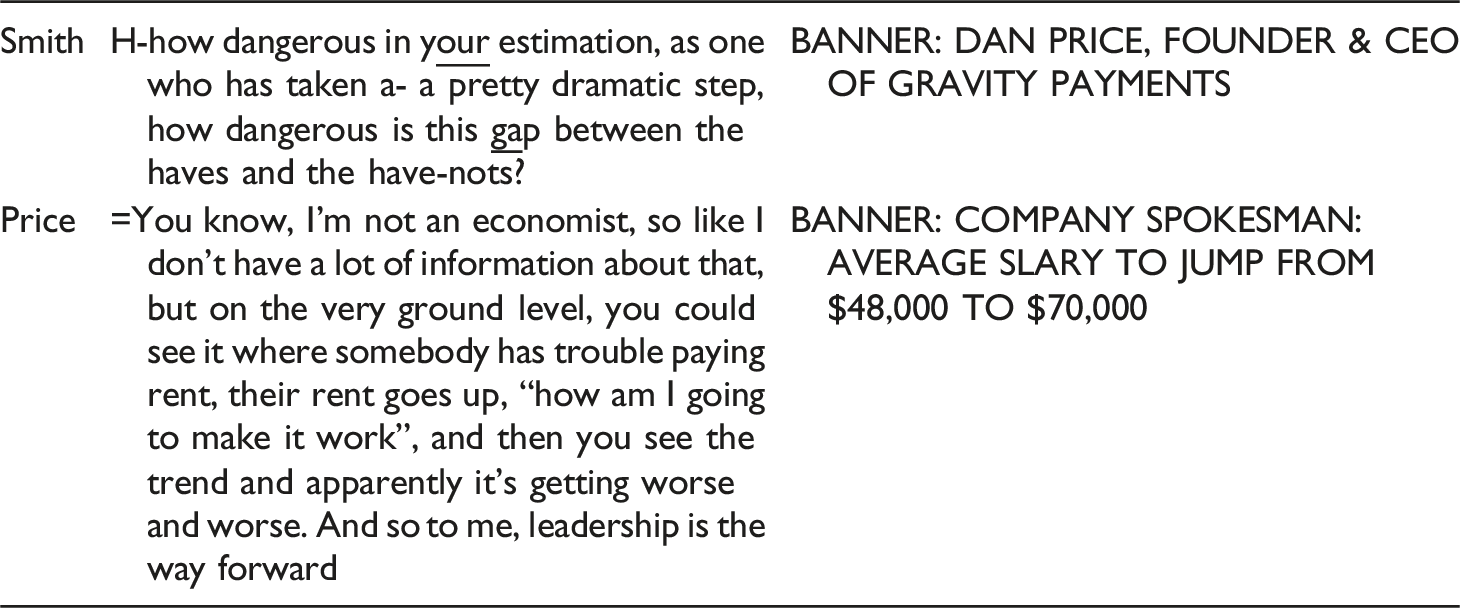
In this exchange, Smith used a terminology (“haves” and “have nots”) that was sympathetic towards a framing of inequality as a social problem. Price, however, maintained distance and minimized his authority to comment on the issue (“I’m not an economist”, “apparently it’s getting worse”). While in other interviews he discussed statistics of inequality and the rising cost of living in Seattle, here he focused on anecdotal and hypothetical experiences of economic hardship.
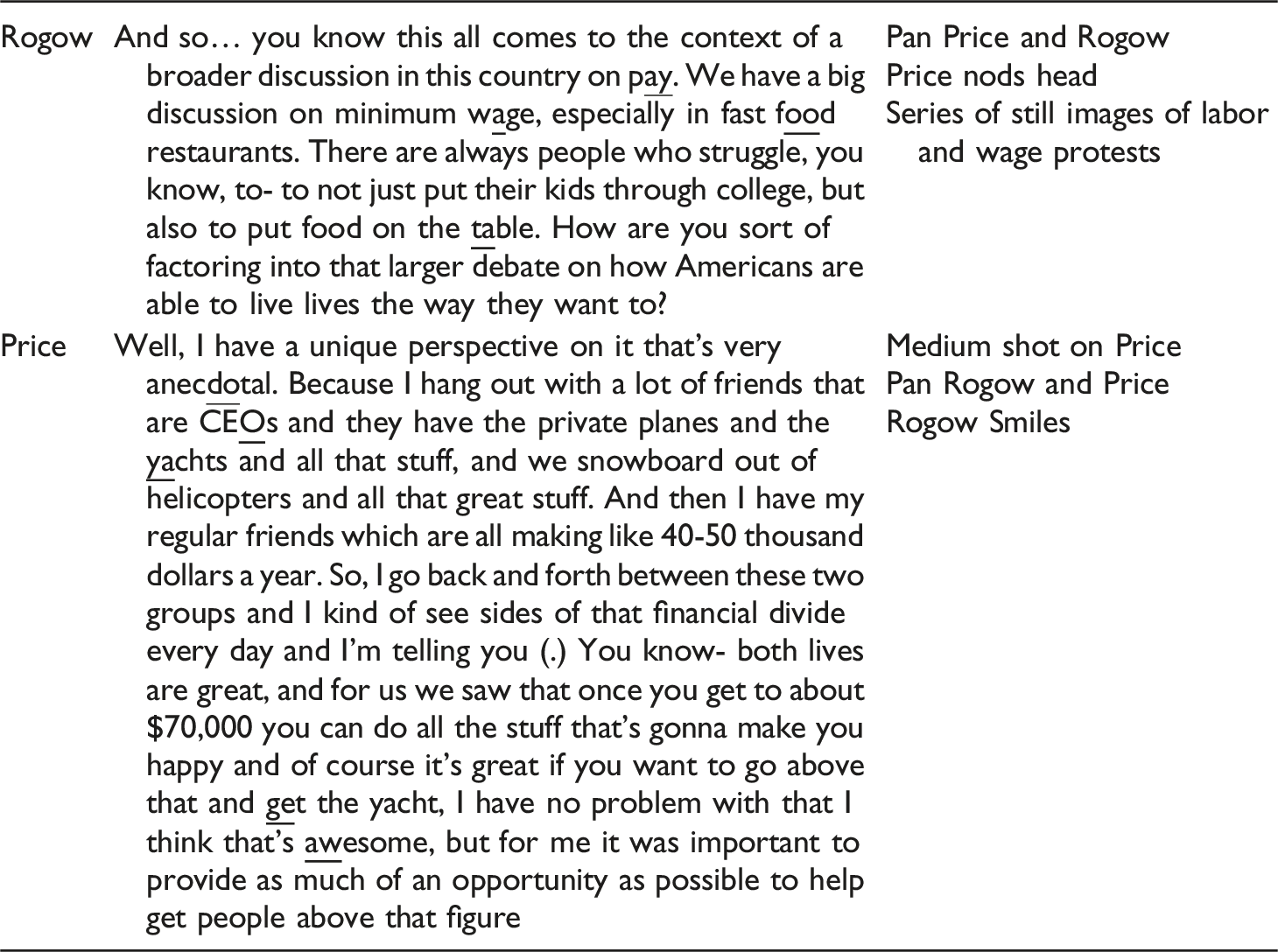
In his response, Price not only minimized his authority to comment about inequality (“a unique perspective that’s very anecdotal”); he in effect suggested that inequality was not a social problem. Price proposed that the life of a millionaire and of a “regular” person earning $40-50K are equally great. His focus of concern was not on the income divide, or the structural factors that maintain it, but on getting people over a threshold for well-being.
Thus, Price’s different rhetoric across the six interviews suggests an attempt to appeal to the perceived sensibilities of different “imagined audiences” (Litt, 2012). Playing out the tension between social justice and return on investment on which CSR is premised, Price performed slightly different versions of himself: the activist on left-leaning outlets and the businessman on right-leaning outlets. In contrast, regardless of an outlet’s political leaning, Price was consistent in presenting a clear message about his product, and an ambiguous message about the solution to social inequality.
Clear message about product, ambiguity about solution
Ambiguity is a common technique in persuasive communication. Politicians often promote obscure policies, hoping that audiences will interpret them according to their point of view. But there is one message about which politicians will never be ambiguous, which is that they – and only they – are the ideal candidates to be elected or to carry out a policy (O’Keefe, 2002). This principle was evident in Dan Price’s performances: He was vague in his social-facing message, but crystal clear in describing his own brand.
Across interviews Price consistently described the service provided by Gravity Payments: “we sell to independent businesses, and we help them reduce their costs and headaches when they accept credit cards” (Wall Street Journal), “our clients are independent businesses, these awesome businesses that you go and patronize in the coolest neighborhoods around the United States” (Shepard Smith), “I'm passionate about independent businesses saving them money giving them good payment processing services” (Varney& Co.). He also repeatedly emphasized his commitment to Gravity Payments clients: “our clients are always on the top of the food chain” (Shepard Smith), “we’re here to serve our clients primarily” (NBC).
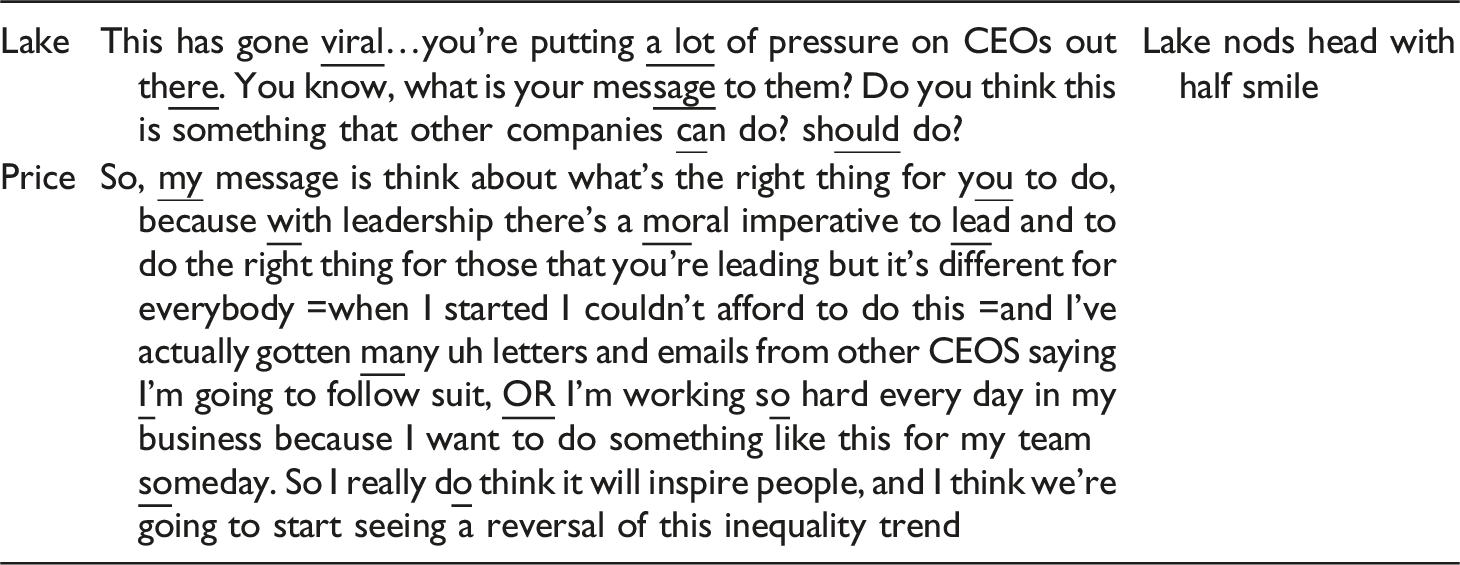
Price only partially answered the question. He didn’t reveal much about the ability of other companies to follow suit beyond the notion that “it’s different for everybody”. He believed others should follow his lead but wasn’t specific about how that should be done. Furthermore, the tautological reasoning of the response (“with leadership there’s a moral imperative to lead”) left ambiguity about what exactly should be done in the first place. Nevertheless, Price conveyed confidence that his initiative is not only a source of inspiration for others, but a force that will ultimately reverse inequality.
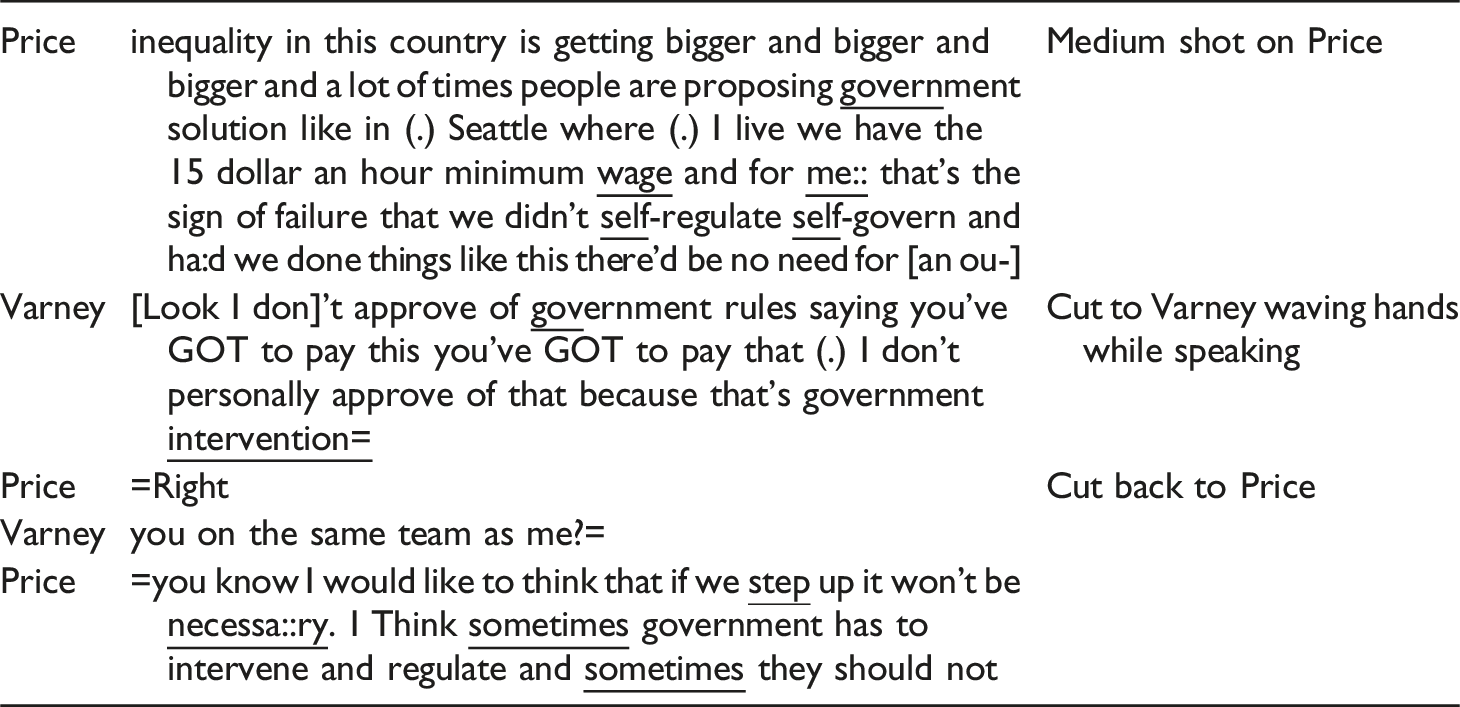
Price’s rhetoric thus demonstrated a strategic use of ambiguity. His leadership talk could be translated to business or government realms of action and his reluctance to affiliate with a clear pro- or anti-intervention stance demonstrates strategic ambiguity. He can attract an audience sympathetic of free-market economics and an audience sympathetic of government regulation, thus enabling “unified diversity” (Eisenberg, 1984) in audience interpretation.
Discussion: CSR as an anchor for double branding
An analysis of six interviews conducted with CEO Dan Price about his plan to significantly raise the minimum salary at his company, demonstrated a symbiotic relationship between interviewers and interviewee in the construction of a righteous narrative about CSR. These interviews gave birth to a benevolent and business-savvy CEO celebrity. The comparative application of Conversation Analysis achieved through the focus on one interviewee talking about the same event in different media settings, was useful for the identification of a double branding process between interviewers and interviewee vis-à-vis Corporate Social Responsibility (CSR). Price was clearly promoting an idea of compassionate capitalism as well as his own brand, much in line with a broader culture of self-promotion (Marwick, 2013; Duffy and Pooley, 2019). Journalists cultivated their individual brand and the “news philosophy” (Becker and Vlad, 2009) of their program (and hosting network/platform) through their idiosyncratic persona and program features.
The celebrity persona that formed around Price proved to be transferable (Tolson, 2001). This was a collaborative effort. Price, on his part, helped his interviewees’ by tailoring his responses to the media outlets’ news philosophies (e.g., presenting a social justice motivation on the left and a merit/ROI motivation on the right). He sometimes also appealed directly to the interviewer’s taste (e.g., saying, to Stuart Varney; “there actually is a competitive element to this which I think you'll like”). Moreover, by maintaining a certain level of (strategic) ambiguity about the path forward, Price made himself palatable to different interviewers and audiences.
On their part, interviewers converged in their embrace of Price. They rarely questioned the Initiative’s applicability and relevance on a larger scale, nor did they confront Price’s grandiose rhetoric about “solving income inequality”. Far from seeking accountability from Price, the interviews blended expert and experiential genres (Montgomery, 2008). Price was introduced as a business expert leading an innovative payment policy, while many of the questions directed at him focused on his experience. Interview genres invite different forms of identification from the audience: “Whereas in the accountability interview the interviewer speaks as if for us and the interviewee is presented as estranged from the audience (“an evasive politician”), in the experiential interview the interviewee is treated as one of us” (Montgomery, 2008).
Price and the interviewers jointly cultivated the tension between extraordinary and normal that is central to the performance of celebrity. Price was presented as exceptional in his success (a 30-year-old owner/CEO), in his approach (talking about caring for workers in a world of job precarity) and in his sincerity (“money where the mouth is” as some commented on Facebook). His rhetoric accepted and complimented these frames, and his informality – both implicit (“I go back and forth between worlds”) and implicit (e.g., his straightforward dress and speech style) were harnessed in the process of “doing being normal” (Tolson, 2001)
Dan Price was thus a perfect celebrity CEO for journalists in corporate media companies who needed to work through the inconsistencies between grave income and wealth inequality and a commitment to the free market. “Responsible capitalism”, a leading value of news production in American network television, captures the belief that market forces work for the prosperity of society (Gans, 2005). While the idea was articulated in newsroom ethnographies conducted in the 1980s it is just as relevant today, with the growing prominence of CSR as a practice that purports to harness market forces for social good. As more and more tech giants stretch the credibility of the Californian Ideology claim that capitalism and technology come together for the good of the nation (as evident in congressional hearings about the risks of social media), Dan Price provided a glimmer of hope in the form of a corporate Robin Hood.
This study is limited by its small scope and focus on a particular case study. More research is needed about CSR in the media to better understand how journalists evaluate claims made by CEOs to address social problems. As a business practice, CSR is mostly a positive evolution of corporate America. There is no dispute that companies should behave ethically, and many companies use CSR for genuine good. However, the idea of win-win through which CSR is framed is rather illusionary; a market-friendly, winner-safe social change, in which the people who have the most to lose from genuine social reform try to solve problems with the tools that caused them in the first place (Fisher, 2009; Giridharadas, 2018). Analyzing broadcast talk between journalists and CEOs is useful for the identification of dialogical collaboration in the construction of meaning around CSR. The case of Dan Price illustrates how the CSR win-win logic plays out in the relationship between CEO and the media, and not necessarily the public. The CEO promotes a non-threatening “solution” (for Gravity Payments, one which was not applicable on a large scale, and indeed changed very little in the industry in retrospect) and a cohesive brand (Gravity Payments indeed grew in the initiative’s aftermath). The media create a celebrity (which they followed up on occasionally, producing more stories), and reaffirm “responsible capitalism”.
Footnotes
Acknowledgements
I am grateful to Edith Boxman, AJ Christian, Wendy Griswold, Blake Hallinan, Zohar Kampf, James Webster, the Ross Priory Broadcast Talk Group, the Journal’s guest editors and the two anonymous reviewers for the valuable comments thy provided on different versions of this paper.
Declaration of conflicting interests
The author(s) declared no potential conflicts of interest with respect to the research, authorship, and/or publication of this article.
Funding
The author(s) received no financial support for the research, authorship, and/or publication of this article.
