




Abstract
Data journalism is increasingly vital in our data-driven society, requiring professionals to gather, analyze, and visualize data for public understanding. While scholars recognize its significance, the audience-centric aspects remain underexplored. This study focuses on Eco-Nai+, a digital geo-journalism platform aiming to be Nigeria’s first. It provides interactive data access via web and mobile apps and tools for geospatial data handling. Employing a multi-method approach, including document analysis, interviews, and platform analysis, this study examines how geo-data enhances data-driven storytelling, fosters cooperation and co-creation in data collection, and creates a new income stream for news organizations. From a business standpoint, Eco-Nai + functions as a “newstech” company, capitalizing on digital age challenges. It offers journalists a means to inform and engage the public and policymakers in vital environmental discussions, especially in environments with limited open data sources. Crowdsourcing data is critical in this context, where open data and freedom of information legislation are lacking. This research contributes to the data journalism discourse by exploring audience involvement in data-driven storytelling and advocating for public participation in data journalism projects to enhance reporting and understand data’s societal role. It also underscores the value of geojournalism skills in delivering spatial products and thematic maps, adding context and insights beyond numerical data. Eco-Nai + exemplifies the potential for data journalism to bridge information gaps and drive meaningful conversations in an increasingly data-centric world.
Introduction
Data journalism has become necessary with the “datafication” of society, requiring that practitioners collect, preprocess, analyze, and visualize data to produce relevant insights and useful knowledge for society (Ausserhofer et al., 2020). Data journalists, therefore, unravel patterns, discover knowledge diamonds, and tell compelling stories (Baack, 2018). As its natural evolution, data journalism has been recognized as “one of the most important subfields of journalism” in the past years (Anderson et al., 2016: 154). Naturally, subfields of data journalism are emerging in the news industry. For example, environmental reporting has found its way onto the agenda of data storytelling due to the increased availability of data sources, such as satellite imagery and aerial photographs (de-Lima-Santos, 2022). Thus, data is used to trace the evolution of the environment and its impact on people’s lives and natural resources (Appelgren and Jönsson, 2021).
Building upon this global trend, the impact of data journalism is significant in the Global South. In these regions, data journalism has emerged as a field dedicated to harnessing the power of data for crafting compelling narratives and enlightening the public. This practice holds exceptional importance in areas where transparency and access to information are often constrained (Mutsvairo et al., 2019). In Africa, civil society organizations have played a pivotal role in promoting data-driven skills within the journalism community, effectively addressing these challenges (Cheruiyot et al., 2019; Cheruiyot and Ferrer-Conill, 2018). Furthermore, the practice has proven indispensable in exposing instances of widespread corruption across Africa, exemplified by cases like “State Capture” (see Moyo and Munoriyarwa, 2021). Nevertheless, there remains a sluggish adoption of data journalism in certain areas, notably sub-Saharan Africa, primarily due to the influence of data politics, which encompasses state actors, market forces, and the existing media landscape (Chiumbu and Munoriyarwa, 2023). External factors such as the COVID-19 pandemic have also highlighted the data-related challenges journalists encounter in these countries to cover the health crisis, ranging from concerns about data availability and quality to the rampant spread of misinformation (Patwa, et al., 2021).
On another perspective, a growing movement of data journalists is building platforms that combine interactive maps with environmental data and traditional reporting to tell stories of the harmful effects of human activities on the environment (Salovaara, 2016). However, scholars have failed to discuss the implications of such approaches from an audience-centered perspective (de-Lima-Santos and Mesquita, 2021a, 2021b). It is important to understand how data journalism projects involve the public in the news processes.
Drawing on user participation, media management, and data journalism theories, this study analyzes the case study of Eco-Nai+, a project that has received funding from Google News Initiative (GNI) Innovation Challenge (see de-Lima-Santos et al., 2023), and it stands as Nigeria’s pioneering digital geojournalism platform, encompassing traditional reporting, tracking tools, and content generated by users. Eco-Nai + also includes tools that span functionality ranging from user-generated data to real-time tracking of environmental phenomena to collect, aggregate, store, process, visualize, interpret and report geo-spatial data. This initiative is supported by Ripples Nigeria, an independent online news platform based in Lagos and founded in May 2015. Ripples primarily concentrates on matters related to politics, policies, and the economy within Nigeria. The platform was designed to be part of Ripples’ new business strategies (de-Lima-Santos et al., 2023).
This research uses a multi-method that combines a devised analysis of documents followed by in-depth interviews with leaders in the organization to understand the process of producing geospatial data-driven stories while working collaboratively for data collection that is shaping Eco-Nai+’s journalism practices. Lastly, we also analyzed the Eco-Nai + platform using the walkthrough method, which allows us to explore its “intended purpose, embedded cultural meanings and implied ideal users and uses” (Light et al., 2018: 881). This is particularly important because the platform’s affordances allow and shape users’ behaviors, perceptions and imaginaries in the news processes. Additionally, we explore how they rely on data-driven products to build new revenue streams. Thus, our ultimate goal is to answer the following questions:
What are the specific functions and contributions of the Eco-Nai + platform, and how does it represent a new source of income for this news organization?
How does geojournalism, as compared to traditional data journalism, utilize geospatial data from users and authoritative sources to address environmental issues, and what distinguishes geojournalism in terms of data collection, analysis, and storytelling for environmental reporting?
How do cooperation and co-creation work as modes of data collection for Eco-Nai + collectively enhance geojournalism and environmental reporting?
How does Eco-Nai + employ strategies to humanize environmental data reporting and engage a diverse audience? This study contributes to this growing body of studies on data journalism, expanding its discussion to the role of the audience in composing data-driven storytelling processes. Additionally, this study enables publishers and the scholarly community to understand the importance of geojournalism and environmental data journalism skills to deliver spatial products and thematic maps that provide context and insights beyond traditional numerical data. Furthermore, it draws on the concept of newstech companies. The study also considers the concept of “newstech” companies, and ultimately encourages greater public participation in data journalism projects for better data reporting and insights into data’s role in society.
Theoretical background
Citizen, crowdsourcing, and collaboration: the power of the public in (data) journalism
The evolving landscape of journalism in the digital age has ushered in a paradigm shift toward increased audience participation. This transformation is propelled by network technologies that foster connections among diverse stakeholders, transcending the traditional boundaries of journalism (Carlson and Lewis, 2015; Serna, 2018). The public, once passive consumers of news, now actively engages in the news production process, participating in data collection, reporting, and dissemination. This inclusive approach enriches news reporting by integrating a wider array of perspectives and sources (Belair-Gagnon and Holton, 2018).
Scholars have coined various terms to describe this multifaceted phenomenon (Singer et al., 2011). Participatory journalism involves involving the public in news content creation, soliciting feedback, comments, and contributions from the audience (Borger et al., 2016; Bowman and Willis, 2003). User-generated content is also a part of participatory journalism (Jönsson and Örnebring, 2011), marking a bottom-up perspective with minimal editorial oversight (Sanseverino & de-Lima-Santos, 2021). Citizen journalism, often interchangeable with these terms, focuses on delivering accounts of significant events, issues, or figures that hold significance for audiences. However, these concepts are usually interchangeable and have been labeled alternately, including peer group journalism, grassroots journalism, and “we-media” (Owen, 2007).
Simultaneously, journalism has embraced collaboration, with civil society organizations and civic movements playing a pivotal role (Waisbord, 2009). This collaborative approach entails a network of organizations and individuals collectively working to cover stories and facilitate information collection, processing, and dissemination (Cheruiyot et al., 2019; Cheruiyot and Ferrer-Conill, 2018). Collaboration involves sharing resources, expertise, and the publication of stories across media outlets (Jenkins and Graves, 2022), operating on technological, social, and content layers (Mesquita and de-Lima-Santos, 2021). Diverse strategies, including crowdsourcing, user-generated content, interactive multimedia, and data-driven storytelling, empower individuals and communities to engage actively (Van Der Haak et al., 2012).
For instance, La Nación’s “Proyecto Naturaleza” in Argentina employs data journalism and public engagement to advocate for environmental action, fostering active public participation (de-Lima-Santos, 2022). In Brazil, certain digital news outlets have actively involved peripheral audiences as a means of implementing data decolonization and activism practices. These aim to dismantle ideologies that are imposed from a superior and privileged perspective to generate more inclusive and representative data (de-Lima-Santos et al., 2023).
The concept of the “wisdom of crowds” or crowdsourcing harnesses collective knowledge and diverse perspectives to improve decision-making, shifting news media from one-way to two-way communication (Surowiecki, 2005). Despite limited adoption of audience-centric approaches in the news industry (Sanseverino and de-Lima-Santos, 2021), exceptions like La Nación’s reciprocal journalism in Argentina (Palomo et al., 2019) and digital outlets in Brazil involving peripheral audiences demonstrate its potential (de-Lima-Santos and Mesquita, 2023).
Crowdsourcing, however, is not without challenges, including groupthink and manipulation (Surowiecki, 2005). Nevertheless, it represents a path for journalism to adapt to societal changes and redefine its role to remain relevant. The dynamic interplay between technology, audience participation, and collaboration is reshaping journalism’s landscape, fostering greater engagement, diversity, and collective intelligence in the news production process.
From Data Journalism to Geojournalism and Environmental Data Journalism: The Rise of Theme-Data Journalism
One of the most noticeable attributes of digital media-enhanced journalism is the plurality of its offerings and its ability to stimulate new forms of journalism. Data journalism is one of these emerging subfields that involves the use of data-driven techniques to pursue stories that would not have been told. The practice comes in an era driven by falsehoods, “alternative facts,” and disputes over the validity of concepts (O’Connor and Weatherall, 2019). By using computational methods to inform the public better and offering a deeper analysis to more closely monitor those in power, data journalism is seen by many through the lens of objectivity and fulfilling its democratic mission (Parasie, 2022). Despite this perception, scholars have highlighted that data journalism is a man-made product, inherently subject to bias and subjectivity (Tong and Zuo, 2021).
Newsrooms worldwide are slowly resonating with data journalism potential and importance to the news industry (Mutsvairo, 2019; Mutsvairo et al., 2019). Conversely, data journalism adoption has been relatively slow in the Global South. The absence of successful data-driven storytelling practices in this region is partially due to the absence of locally-bred journalism models, oppressive media regulations, and limited guidelines for transparency, public access to data, and freedom of information laws (Fahmy and Attia, 2021; Mutsvairo, 2019).
Despite these obstacles, civic society organizations in the African context were identified as promoters of data journalism practices in the continent (Cheruiyot et al., 2019). A similar approach was adopted in Latin America to support journalists and technologists in pursuing data-driven skills (Borges-Rey, 2019; de-Lima-Santos and Mesquita, 2021b). By promoting the adoption of data journalism practices, civil society actors played an important role in enhancing the truth-telling mission of journalism using basic data-driven techniques, diversifying the sources to retrieve data, and promoting citizen participation (de-Lima-Santos, 2022; Palomo et al., 2019).
In fact, the use of data environmental reporting shows the potential of theme-data journalism to expand opportunities for data storytelling in newsrooms (de-Lima-Santos, 2022). In this line, geojournalism emerged as another subfield of data journalism that uses geographic information and tools to enhance the reporting and understanding of news events, such as using maps, satellite imagery, and other geographic visual information. Thus, geojournalism aims to provide a deeper understanding of complex issues and help audiences better comprehend the relationships between people, places, and events. Overall, geojournalism offers a powerful tool for journalists to tell stories in new and engaging ways, making it easier to identify patterns, trends, and correlations in georeferenced data and communicate complex information in a more accessible way (de-Lima-Santos and Mesquita, 2021b).
Using geographic data to gain insights into the environment hinges on active mobilization and engagement. Thus, the effectiveness of environmental participation in geojournalism is rooted in its interventionist and multi-perspective nature. For instance, environmental maps exhibit a continuous and dynamic aspect, undergoing frequent updates and taking on a political character. They unveil eco-social dimensions that encompass issues like inter-species inequalities (Salovaara, 2016). Maps are acknowledged as entities that amalgamate knowledge, power, and influence (Gutierrez, 2019). Consequently, digital mapping practices can be seen as active performances that carry socio-political consequences and influence human consciousness through the use of data (Butler, 2006).
Environmental and geographical issues are complex and prevalent worldwide. However, in Africa, particularly in Nigeria, the country faces heightened vulnerability due to challenges such as flooding, oil pollution, deforestation, waste pollution, and other environmental issues (Ahmad and Elega, 2023; Günay et al., 2021). Nevertheless, geojournalism offers a fresh opportunity to provide comprehensive insights into these environmental concerns using data collected from local individuals and groups in Nigeria (Egwu, 2022).
Managing for the digital age
The era of attributing a notable part of media organizations’ success to “simply being in the right place at the right time,” which generally meant being available where stories break (Küng, 2007: 21), is becoming far gone. Technological advancements have disrupted traditional profit-generation methods, forcing media managers to rethink their strategies (Küng, 2007). In the Global South, journalistic projects increasingly rely on foreign aid, which can sometimes compromise journalistic independence and influence content (Lugo-Ocando, 2020).
To address these challenges, media outlets are adapting survival strategies. They are creating specialized editorial brands to cover pressing issues like the environmental crisis, aiming to attract foreign aid (Granger, 2021). Technological innovation has become a critical factor for competitiveness and sustainability (de-Lima-Santos and Mesquita, 2021c). Managing the multi-platform environment has introduced complexities, transforming the business landscape for media organizations that traditionally followed a “content is king” model and top-down management approach (Järventie-Thesleff et al., 2014). For example, data journalism tools and off-the-shelf solutions are now part of media organizations’ entrepreneurial opportunities, aiding in the production of data-driven stories (de-Lima-Santos et al., 2021). Partnerships and grants from tech giants have also become essential for technological innovation (Papaevangelou, 2023).
Media organizations must adopt strategic approaches to make incremental changes in their management models and the products they offer (Oliver, 2022). Success in this changing media landscape requires openness to innovation and the ability to maintain efficiency while avoiding stagnation (Birkinshaw and Gibson, 2004). These organizations must also creatively devise solutions to retire outdated management styles and products. In this context, technological products have become integral to newsrooms’ core business strategies.
In conclusion, media management is no longer about chance but about deliberate and adaptable strategies. The influence of technology, foreign aid, and innovative solutions has reshaped the way media organizations operate, challenging them to evolve and thrive in a dynamic media environment.
Methodology
To understand how cooperation and co-creation through user participation and crowdsourcing contribute to producing data-driven stories, this study focuses on Google-funded Nigeria’s pioneer interactive digital geojournalism platform, Eco-Nai+. A platform designed to combat environmental changes through media innovation ranging from mundane reportage, use of tracking tools to user-generated content production.
Demographic profile of respondents.
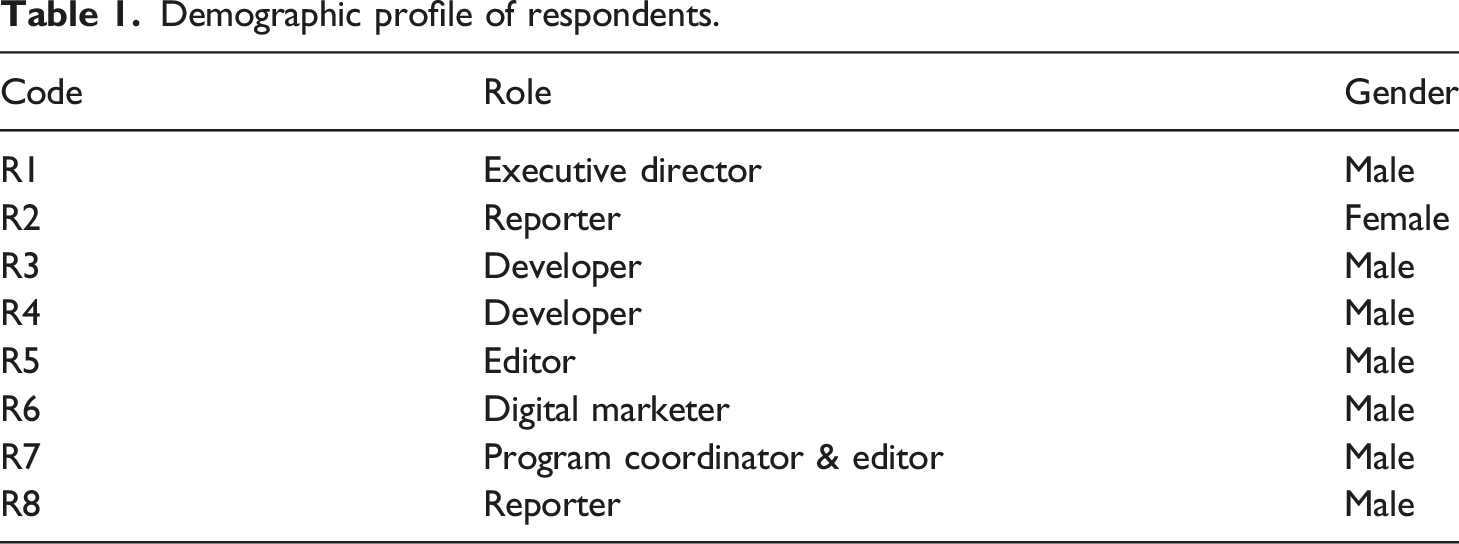
Interviews were conducted from October 24th, 2022 to December 1st, 2022, via Zoom. On average, each had a duration of approximately 50 min. All interactions were conducted in the English language. The interviews were recorded, transcribed, and subjected to coding. In this study, we utilized an inductive thematic analysis method to extract insights from these interviews. This approach offers flexibility, making it suitable for a range of study requirements. It particularly promotes the generation of fresh concepts and insights, thereby enriching the dataset comprehensively and with subtlety (Braun and Clark, 2006).
Second, this study adopts a walkthrough method to interact with geo-data through web and mobile applications. We adopted this method, to understand the user experience of Eco-Nai + site visitors considering that the method provides “a way of engaging directly with an app’s interface to examine its technological mechanisms and embedded cultural references to understand how it guides users and their experiences” (Light et al., 2018: 882). This approach involves examining the “environment of expected use” (889). Our method includes a systematic, step-by-step evaluation of the Eco-Nai + website (mobile and desktop versions). We conducted this evaluation twice: initially on January 15th, 2023, and subsequently as a follow-up analysis between February and March 10th, 2023. To perform this technical walkthrough, each of the three authors individually evaluated the platform and later discussed and reached a consensus. During each visit, we noted variations in design and functionality, acknowledging that the site is live and continuously updated with new features. Therefore, it’s important to note that our analysis is based on the initial stages of the Eco-Nai + deployment.
Using the walkthrough method to understand web and app developments often involves longitudinal approaches, which are not uncommon in such studies. In Kim et al. (2021)’s study where COVID-19 tracking apps were critically examined, a 3-month period was selected to understand South Korea and China’s COVID-19 tracking apps from their user experience. This is because the “public perception toward these technologies is constantly changing” (Kim et al., 2021:7). In our case, this longitudinal approach was taken into account because of this continuing deployment of the platform. Our analysis was based on the site’s interface, design, and functionalities to engage audiences in the data journalism process. The technical walkthrough involved detailed reading and note-taking of the site environment, which we did on both visits.
Findings
News media pivoting to news technological products: a walkthrough Eco-Nai+
Eco-Nai+ was conceived to become Nigeria’s first digital geojournalism platform, designed to offer interactive geospatial data access, thereby elevating reader engagement and fostering the growth of a sustainable news ecosystem. The funding for this project came from the GNI Innovation Challenge scheme, which is accessible to organizations globally and is dedicated to promoting technological innovation within newsrooms. While this initiative presents an opportunity to drive innovation in the realm of news media, past research has indicated that such grants can potentially exacerbate power imbalances between news media and platforms (de-Lima-Santos et al., 2023). In contrast, R2 holds the view that the GNI grant plays a crucial role in the news ecosystem by enabling individuals, including journalists, to “transform [their] innovative ideas into tangible realities.”
As of January 2023, Eco-Nai + benefits from the dedicated efforts of approximately six to seven individuals, whereas Ripples Nigeria’s overall staff consists of more than 20 members. While not all team members are directly involved with Eco-Nai+, they remain readily available to contribute to the project whenever their expertise or support is required (R8).
The Eco-Nai + platform comprises “five mains engines” (R3 and R4), namely Geo-Viz+, Ecober, Trorb, RepoSquare, and Uvreign. The platform emerged with the mission of “digging up hidden facts that can help us build realities” (R1). Thus, climate change is a significant problem, and one aspect of this problem is that those who are currently being impacted by it “often lack access to essential information that could help them make informed decisions” (R2). The platform came with the mission “to build a solution that works for everybody” (R3).
Geo-Viz is a pretty easy to use tool in this platform, requiring only the foundation of spreadsheet skills to create visualizations. This gadget resembles a data journalism out-of-the-box solution, that is, “ready-made software or platforms that match data journalism’s needs but would otherwise require a special development effort” (155). Out-of-the-box tools are limited in what they can do, but considering the limitations of workforce, skills, and resources, they are more readily usable and quick to turn around (de-Lima-Santos et al., 2021). According to R5, “Geo-Viz helps you with all of those data analysis visualizations,” and “there are about 14 types of graphs that can be used to build these visualizations.” In our experiment using the tool, we identified only eight types of data visualizations: bar, area, line, column, pie, donut, bubble, and stepline charts. We faced some limitations in uploading data on the platform, as each cell needed to be uploaded individually, disabling the opportunity to copy and paste data from spreadsheets. Alternatively, users can upload a file in Excel format, which facilitates its use.
In fact, the development of this tool has been very complex. “You’re designing it for different types of people, so you don’t even know what kind of data the next person will visualize. But we do what is needed to build a solution that works for everybody” (R4). To overcome this potential limitation for less data-literate users, the developers relied on supervised machine learning algorithms to check the supervised data and propose the most suitable maps or visualization styles for it.
“Ecober is akin to a community. Let’s consider it a small community of intellects or researchers. It aims to have a similar structure to Facebook. However, Ecober is a community designed for a specific purpose; It’s a focused community (R4). For instance, this tool is designed to serve a diverse community of individuals who can engage in discussions related to journalism, climate change, and related topics.
Regarding Trorb, when the user opens the app, it displays real-time air quality readings for various countries, which may vary depending on the available air quality stations. Additionally, the app provides weather reports and other related information. The data is “updated every 10 to 15 min, ensuring that users receive current and reliable information” (R3). In our experiments, we were able to see air quality data from various cities across Africa, Asia, and Europe. While we found some data from American cities, it was limited primarily to the United States, Chile, and Mexico. We did not find any data from cities in Oceania. Figure 1 shows how this data is exhibited in the Trorb tool. Trorb tool shows data of air quality in Abuja, Nigeria.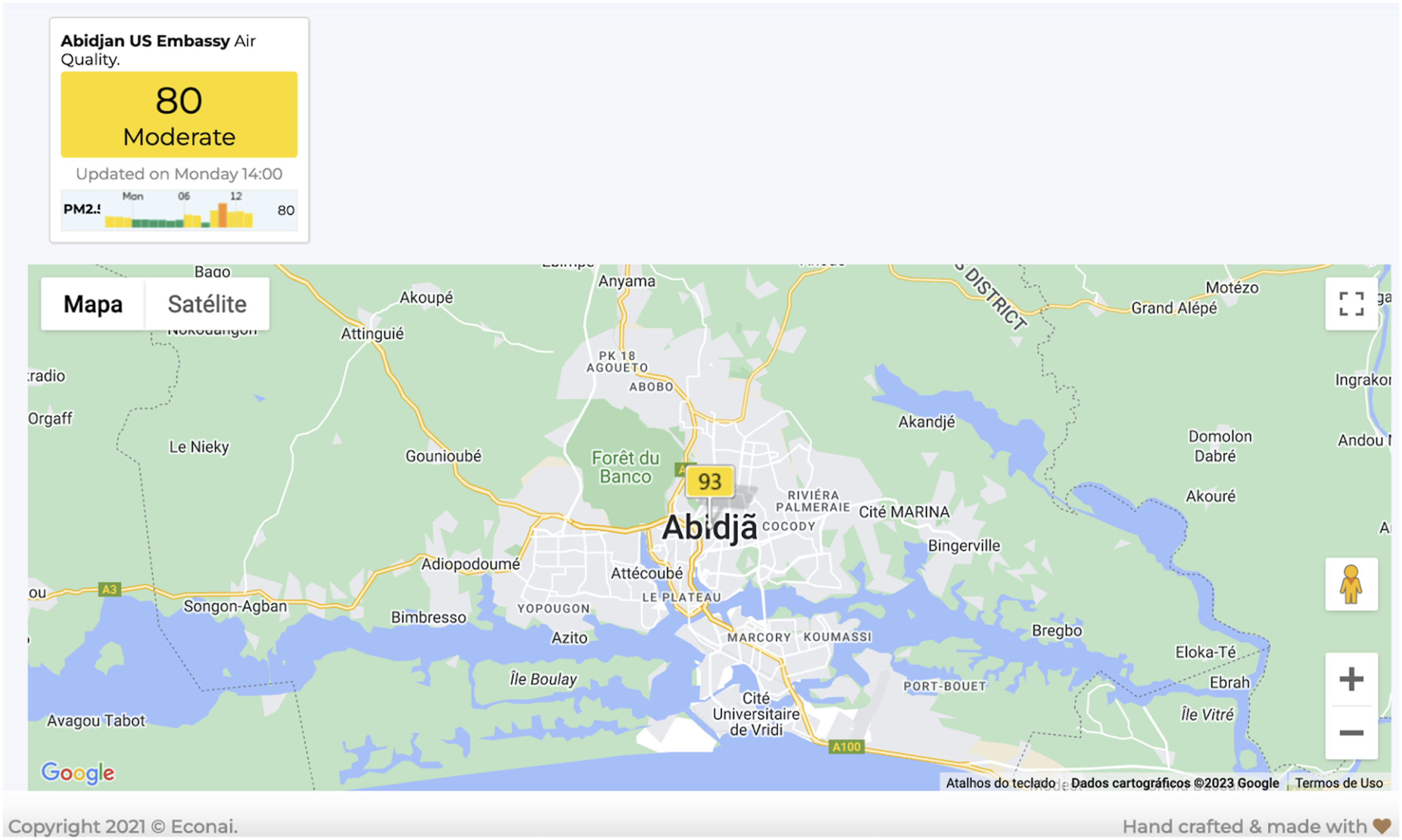
RepoSquare serves as the repository for climate-related data. According to R7, “researchers can access various categories of climate and environmental data, including legal judgments, media reports, government interventions, and international agreements”. In our test, the tool functions more like a search engine, allowing users to research different terms and retrieve results such as news stories, investigative reports, academic papers, policy briefs, and other relevant materials. RepoSquare is regularly updated with new data, “but it requires significant effort and resources to maintain and continue populating,” explained R7.
“The word ‘Uvreign,’ for us, represents a way to redefine the concept of sovereignty by modifying it. The term goes beyond the basic notion of independence, where individuals can exercise their rights and authority as they see fit. This approach emphasizes personal liberty and the freedom to pursue one’s desires” (R1), that is what the Uvreign tool proposes. When reporting a story, Eco-Nai + team wants to ensure that the information presented is accurate and trustworthy. Unlike social media, where false information can easily spread, Uvreign aims to prevent such issues by providing reliable data. To achieve this, the app prompts users to take note of specific details while reporting the story, including their coordinates, the time the picture was taken, and a timestamp for these features, as shown in Figure 2 Uvreign’s pipeline of data submission.
The Eco-Nai + team considers the five-engine platform as the backbone of their product, which they believe significantly improves the journalistic quality of the stories they publish and brings audiences into reporting processes (Bowman and Willis, 2003). According to R5, Sometimes, during the course of our investigative reporting, we require certain data or information to support or enhance the quality of our stories. However, we have found that such data and information are not readily available in Nigeria or Africa. This led us to believe that there was a need for a centralized database that would serve as a go-to resource for anyone seeking information about climate issues in Nigeria or Africa. Thankfully, the Google Initiative challenge presented an opportunity for us to receive support in achieving this goal.
Furthermore, they see the platform as essential for society. “Eco-Nai + involves gathering intelligence since data is a form of intelligence that applies to various fields regardless of the sector involved” (R1). Particularly, related to environmental crises, data is essential. “At Ripples Nigeria, we have produced a significant number of stories on various environmental issues such as climate change, pollution, droughts, and global warming” (R5). “Climate change is a phenomenon that has developed gradually over time. Therefore, it is not enough to simply report on the present situation” (R2). The platform is necessary because the government has tried to “keep data private [such as climate-related information,] and freedom of information legislation has not been enacted to ensure access to such knowledge” (R1). Based on what the respondents said, they are constantly keeping an eye on the latest news developments in the African and global media industry. They were particularly inspired by Code for Africa, an organization that is heavily involved in geojournalism (R6).
Geojournalism: a tool for interdisciplinary interpretation and visualization of geodata
Geojournalism is a form of data journalism that takes information from users and authoritative sources, such as Google Earth and meteorological agencies, to cover issues tied to the question of the environment using scientific data (Milan and Gutierrez, 2018). For R6, one example of using geojournalism data is to capture visual evidence of places affected by erosion, deforestation, or other climate change issues. These pictures can be considered as raw data and can be collected as part of big data that provides new ways to engage with the public and policymakers. According to R6, this is a major difference between geojournalism and data journalism. “In data journalism, dealing with numbers and visualizations is required, while in geojournalism, capturing and analyzing visual evidence is a crucial aspect of generating big data” (R6). For R1 and R7, geojournalism focuses on data gathered about the environment and its surroundings with the aim of using them to tell the story of how the environment is evolving, whether positively or negatively.
According to R5, in contrast to data journalism, which can cover various areas, geojournalism focuses solely on data related to the environment., “Everything requires data, but geojournalism aims to generate and utilize data specifically about climates and environments, setting it apart from data journalism” (R5). These viewpoints contrast with earlier research, which views environmental data journalism as combining journalistic principles with the accuracy of data science to involve audiences in an environmental cause (de-Lima-Santos, 2022), while geojournalism is a method of storytelling that merges geo-tagged narratives on maps with data to support and communicate journalistic stories (de-Lima-Santos and Mesquita, 2021b; Milan and Gutierrez, 2018).
Crowdsourcing and fact-checking audience data
Eco-Nai is not just focused on research and data analysis but also encourages individuals from all over Nigeria and Africa to share their observations on environmental issues. To facilitate this, “we have created an application (Uvreign) where people can share their findings with others. For instance, flooding can be a significant issue in certain areas of Nigeria, and we encourage individuals to share information about it so that others seeking information can be better informed” (R5).
As mentioned by R8, sometimes, to obtain visual evidence for a story, individuals are asked to take photographs or videos. This may be necessary because government agencies, who are often responsible for the subject matter of the story, may not be willing to share such information. In such cases, individuals may be asked to capture and share photographs or videos via WhatsApp or to provide relevant documents from which necessary data can be extracted to help tell the story. “One limitation that we sometimes encounter is that data may not be readily available or easy to obtain.” (R8). Similarly, “obtaining data can be a challenging task as providers of such information may have security concerns, making them hesitant to share.” (R8).
Building stronger relationships with people on the ground is crucial to gathering the data and resources needed to create stories for Eco-Nai+. The team recognizes that data cannot be collected by individuals alone, and therefore, they need to work closely with critical stakeholders and governmental actors to gather data that will become data stories. In other words, they believe collective judgment can be a key factor for its success (Surowiecki, 2005). For example, We aim to collect information from individuals living in rural areas near forests or rivers on how climate change has impacted their surroundings. It is crucial to obtain data on changes that have occurred over time and visual documentation that would support this information. Our goal is to gather data that provides insight into the effects of global warming on local environments (R5).
However, it requires time and dedication, but it will be worthwhile, as highlighted by the respondents.
“Sources tend to provide us with tips or leads on what we should be looking for in terms of stories” (R2). Importantly, users are essentially the providers of the raw data material that are gathered and need to be verified by Eco-Nai + team. “We have two modules for processing the data we collect: the moderators' module and the user module” (R3). Once the user submits the data, they cannot edit or modify it. Then, this data is reviewed by Eco-Nai + before publishing and making it available on the platform. “Although we have automated checks in place, we still need to manually review the data before publishing it” (R4). To make the reviewing process more efficient, the team only focuses on the most important parts of the data, which could be just a few things out of thousands of words. This system has helped the team to reduce the time spent on validating the data, helping to check for spelling errors, typos, and other minor mistakes.
Also, regarding fact-checking, it is not possible to deceive the system. The development team has implemented measures to prevent manipulation of coordinates, even if the user uses a Virtual Private Network (VPN). Google Maps feature does not recognize VPN coordinates, but instead, it captures the GPS data of the user’s device. This GPS data is real-time information and cannot be tampered with. However, users need to turn on their phone’s location to enable this feature. Additionally, when one takes a photo, there is a timestamp embedded in the image. “We use this data to ensure that the images cannot be manipulated either” (R3). “Up to this coming future year, once you put in an image, we’ll launch through Google Search Image engine to see if there is a corresponding one” (R4).
Humanizing data: digestible for the public
The great thing about Eco-Nai+ is that it is not solely focused on individuals conducting research or seeking data on the environment. “It involves virtually every person, regardless of their location in Nigeria or Africa, as everyone is affected by environmental issues. People notice changes happening around them, and we have created an application where they can share their findings with the world” (R5). This allows Eco-Nai + to collect data from a wide range of sources. For example, in certain areas of Nigeria, there were recent issues with flooding. “We encourage people to gather information about these events and share it with us, so that we can utilize the data to inform others who are seeking information on the topic” (R5).
Of course, as in almost every story related to climate change, it is important to humanize it to ensure the public has a better understanding. Respondents highlighted that data analysts help to interpret environmental and climate data, and visualize them in an easier way to understand. But it is also important for creativity to come into play as a journalist. “You need to tell your story and try as much as possible to captivate the public, keeping them hooked right from the beginning” (R5). Another way to effectively communicate the message in the story is through visualizing the data. “By presenting the information in a pictorial or visual form, the audience and readers can easily understand the story. We aim to create visuals that are easily digestible, enabling the audience to comprehend the message we are trying to convey” (R5). “We have an in-house designer because we want to include visuals that enhance our stories and make them more accessible to those who might not have the patience to read through lengthy articles. By presenting the information in a visually appealing way, anyone can quickly grasp the results and act on them” (R1). Thus, Eco-Nai + crafts messages that highlight the environmental conditions’ impacts and dangers aiming to reach a vulnerable segment of the population that could generate impact.
To keep the public engaged, previous studies have shown that newsrooms must adopt audience-centered innovations in delivering content that captivates their imagination and sustains their interest (de-Lima-Santos and Mesquita, 2021a). Ripples has recently organized a masterclass that brought journalists and scientists together to teach them about the tools that they can use to gather and process the data that they need, and then translate it into storytelling that would be easy and easily accessible to the masses (R2).
R2 believes that if they can engage individuals who have been impacted by climate change and environmental crises, as well as those who are interested in combating them, including key stakeholders, they can make significant progress and sustain their project in the long run. “I believe that this movement has the potential to grow, and all we need to do is create additional avenues to encourage participation.” (R1).
To conclude, respondents believe that the platform has great potential to become sustainable in the long run. “Sometimes, ideas may seem obvious, but they need to be carefully cultivated like a baby. They need to be fed with the right nutrients, or they will not survive. This project is like a baby that we need to nurture and grow to reach its full potential.” (R2)
Discussion and conclusions
The disruptions of technology in the media industry are mainly caused by the rise of mediatech companies that can effectively utilize technological advancements while meeting the changing demands of consumers. Examples of mediatech companies include Netflix and Spotify, which have already been responsible for the move away from traditional forms of media and communication production and consumption to harness changes in technology for these processes. Given the reach of the five prominent US big tech companies, namely Meta (formerly known as Facebook), Amazon, Apple, Netflix, and Alphabet (formerly known as Google) or “FAANG,” they have built enormous budgets and resources to dominate these media markets, showing the importance to combine media and digital technology (Oliver, 2022).
From a business perspective, Eco-Nai + acts as a “mediatech” company, which capitalizes on the pain points that have emerged in the digital age. We contend here that this creates a new niche movement of “newstech companies,” which rely on technology to build their journalistic business models. Thus, Eco-Nai+ is not only a project to create mechanisms to rebuild journalism trust and new ways to engage with the audience but also a new business opportunity for news outlets to create a sustainable business model.
The platform’s crowdsourcing feature enables the creation of mechanisms to engage with audiences and generate relevant insights. Geojournalism’s unique approach to data gathering, particularly through the capture of visual evidence, its specialized focus on environmental issues, and its emphasis on storytelling through geo-tagged narratives, set it apart as a valuable tool for interdisciplinary interpretation and visualization of geodata. Visual documentation, in the form of images capturing areas affected by erosion, deforestation, or climate change, is regarded as raw data that contributes to the generation of substantial datasets. These, often vast and diverse, represent a distinctive facet of geojournalism, setting it apart from conventional data journalism, which predominantly relies on numerical data and visualizations. In the context of geojournalism, data is treated as a means to elucidate the evolving state of the environment, be it positive or negative, and to narrate stories that engage audiences in environmental discourse.
The delineation of geojournalism as a distinct subdomain challenges previous notions and expands the possibilities of how data can be leveraged to communicate complex issues. As a result, data journalism becomes audience-centric and focuses on the voices and interests of those being served (de-Lima-Santos and Mesquita, 2023; de-Lima-Santos and Mesquita, 2021a). In the evolving landscape of journalism, geojournalism stands as a testament to the evolving and dynamic nature of data journalism, highlighting the importance of adaptability and innovation in delivering impactful and meaningful stories to a diverse and interconnected audience.
Furthermore, crowdsourcing data is crucial in countries that lack open data sources or freedom of information legislation. The use of collective intelligence has helped create well-known platforms like Google and Wikipedia. Eco-Nai + aims to achieve the same goal through crowdsourcing (Surowiecki, 2005).
As the environmental discourse becomes increasingly vital in the face of global challenges such as climate change, Eco-Nai + offers a potent avenue for journalists and news organizations to not only inform but also engage the public and policymakers in critical conversations about the environment. The Eco-Nai + platform has tremendous potential for growth, but to achieve this potential, it needs to focus on building a loyal user base and adding more features that can enhance the overall user experience. Although the platform has already garnered a significant amount of attention, there is still room for improvement in terms of functionality and user engagement.
Unfortunately, the funding from the GNI Innovation Challenge is limited to only 1 year, which puts pressure on organizations to secure additional funding to sustain the continued development and deployment of these projects. A recent research study has shed light on the significant impact that grants have on technological innovation in the news industry (de-Lima-Santos et al., 2023). The study examined several news organizations that had received grants for technological innovation, and it found that these grants were crucial for their ability to develop and implement new technologies. However, these projects are discontinued due to the lack of resources. Therefore, it is crucial for Eco-Nai + to explore other sources of income and partnerships to ensure the long-term success of the platform. By doing so, the platform can continue to grow and provide valuable insights to its users while simultaneously contributing to the larger goal of improving environmental sustainability.
This study also presents some limitations. One example is the small sample size of interviews, although representative of the population being studied, this limits to an external perspective. Future studies could explore the perspective of users and readers of Eco-Nai+. Additionally, the study may be limited by its methodology. Findings from a single case study may not be generalizable to other cases or populations. Similarly, single case studies often rely heavily on subjective interpretation and analysis of data, which can introduce bias. Future studies could explore different contexts or populations.
Overall we were able, despite the limitations discussed, to highlight some relevant aspects of data journalism practices on Eco-Nai+. Our study contributes to scholarly literature by positioning itself in a spectrum of de-Westernization epistemologies and shedding light on the different conceptualizations of geojournalism and environmental data journalism. Furthermore, it demonstrates how news organizations are deploying technological products as a tool to create sustainable business models and involve the public. In conclusion, this article advocates for increased public participation in data journalism projects, as it not only enhances data reporting but also offers new insights into the role of data in society. As we move forward, it is crucial to recognize and harness the potential of geojournalism in addressing pressing environmental issues and fostering a more informed and engaged society.
Footnotes
Declaration of conflicting interests
The authors declared no potential conflicts of interest with respect to the research, authorship, and/or publication of this article.
Funding
The authors disclosed receipt of the following financial support for the research, authorship, and/or publication of this article: This project was funded by the University of Amsterdam’s RPA Human (e) AI and by the European Union’s Horizon 2020 research and innovation programs No 951911 (AI4Media).
