



Abstract
The effects of graphene oxide (GO) on the rheological properties, performance grade (PG), and aging resistance of asphalt binders (AB) were systematically studied in this work. A series of asphalt samples modified with varying GO concentrations (0.5%, 1%, 1.5%, 2%, and 3%) were prepared and subjected to comprehensive characterization and performance tests, including penetration, softening point, elongation, viscosity, dynamic shear rheometry, and aging evaluation using the Rolling Thin Film Oven Test. The results revealed that incorporating GO into the asphalt matrix led to enhanced stiffness and elasticity, with increased the complex modulus and reduced the phase angle. Furthermore, the modified AB's high-temperature PG improved with increasing GO content, with the 2% and 3% GO-modified binders exhibiting properties comparable to those of PG70. Specifically, the investigation revealed that GO modification minimized the impacts of the aging process on the properties of AB, perhaps enhancing their long-term performance and durability. This research highlights the potential benefits of utilizing GO as an effective asphalt modifier, contributing to the development of more resilient and sustainable pavement systems. The findings provide valuable insights for researchers and engineers aiming to optimize the use of GO in asphalt modification to achieve enhanced performance and aging resistance in various climatic and service conditions.
Introduction
Asphalt binder (herein denoted as AB), a viscoelastic material obtained from the distillation of crude oil, plays a critical role in constructing and maintaining pavements, highways, and road infrastructure. 1 It serves as a strong adhesive, holding together the aggregate particles to form asphalt concrete (AC), the primary component of flexible pavement systems. The versatile nature of AB has made it the material of choice in pavement engineering and road construction projects worldwide. 2 While pavements utilizing ABs exhibit numerous benefits, such as cost-effectiveness, ease of construction, and an ability to accommodate various traffic and environmental conditions, 3 they are not without drawbacks. These limitations include temperature susceptibility, aging, and susceptibility to damage from moisture, which can compromise the long-term durability and functionality of the pavement. 4 Therefore, there is a growing need to investigate and develop innovative techniques to mitigate these shortcomings and improve the overall performance of AC pavements. A diverse range of methodologies and approaches has emerged to address these challenges, with asphalt modification being a key strategy and one of the most promising and effective solutions.5,6 The process of asphalt modification involves the incorporation of additives, modifiers, or recycling agents, which alter the physicochemical properties of the binder and ultimately enhance its performance.
The performance and durability of ABs, the primary binding agent in pavement construction, have long been the subject of extensive research and development. Traditional approaches to improving the properties of ABs involve using classical additives, which modify the binder's behavior to withstand the demands of traffic loads, environmental conditions, and aging processes.7,8 Traditional additives, such as polymers, rubber, and fibers, have been used extensively in modifying ABs to improve their viscoelastic properties, rutting resistance, and fatigue life, among other attributes.6,9–12 Recently, the field of nanotechnology has brought about a revolution in materials science. Nanomaterials such as graphene platelets13–17 and carbon nanotubes,14,18 have showcased enhanced characteristics, leading to significant improvements across diverse industries. Moreover, advancements in understanding nanosystems’ mechanical behavior and transport properties have also contributed to the aforementioned developments.19,20 In particular, the realm of asphalt modification has witnessed new possibilities, as nanomaterials offer promising avenues to enhance the performance of ABs. The development and application of these nanomaterials have garnered considerable attention for their potential to impart unique enhancements to ABs.21–26 Notable examples of common nanomaterials utilized in the process of asphalt modification include nano-silica, carbon nanotubes, nano-alumina, and nano-clay. Especially, graphene oxide (GO), an emerging nanomaterial with high adaptability and usefulness in various applications such as energy storage, environmental remediation, and advanced composites, 27 has recently been identified as a possible addition to the modification of ABs and AC.
Indeed, the utilization of GO in the modification of ABs and AC holds the potential to improve the performance and durability of pavement engineering, opening new avenues for enhanced pavement materials. 28 GO provides a wide range of benefits with ABs and concrete due to its extraordinary physicochemical features, including high mechanical strength, large surface area, and great heat conductivity. The incorporation of GO into AB, producing a synergistic interaction between the two materials, can lead to significant improvements in their viscoelastic properties, resistance to rutting,29,30 fatigue,31,32 and aging.33–35 Specifically, Li et al. 29 demonstrated that the addition of GO enhances the anti-rutting performance of 80/100 penetration grade (PG) and styrene–butadiene–styrene (SBS) modified ABs. Their findings also revealed that GO has a more pronounced influence on the viscoelastic properties of SBS-modified ABs, thereby emphasizing its significant impact on enhancing the shear modulus (G*). In another study by Liu et al., 32 the fatigue performance of ABs incorporating GO and a warm mix additive was investigated. The authors focused on examining the mixing sequence of additives and found it to be a crucial factor influencing the fatigue resistance parameter and fatigue failure temperature. The study revealed a significant range of differences, ranging from 9.1% to 18.1% for the fatigue resistance parameter and 5.1% to 10.5% for the fatigue failure temperature considering different mixing scenarios. Additionally, GO's exceptional thermal conductivity can contribute to reduced temperature susceptibility, enabling the modified binder to perform well under a broader range of temperature conditions.34,36 Incorporating GO-modified binders into AC can also yield substantial benefits. Using GO in AC can improve mechanical properties, including increased stiffness, tensile strength, and resilience.37–39 Moreover, GO-modified AC can exhibit reduced moisture susceptibility, minimizing the risk of moisture-induced damage and extending the pavement's service life.37,38 Furthermore, introducing GO can enhance the AC's resistance to environmental and traffic-induced distresses, contributing to more durable and longer-lasting pavements.
While GO has proven tremendous promise for improving ABs and concrete performance, the existing research on GO-modified ABs has several limitations. These limitations hinder our understanding of the full impact of GO on AB properties and, consequently, the optimal methods for incorporating GO into pavement engineering applications. Firstly, current studies on GO-modified ABs often employ high agitation parameters (speed, time, temperature) during the modification process; however, they lack specific assessments of the effect of aging on the production of GO-modified AB.33–35 Aging is a crucial factor influencing the long-term performance of ABs, and its impact on GO-modified binders remains inadequately explored. Secondly, there is a notable absence of temperature-viscosity curves for GO-modified ABs, established according to the instructions of ASTM 2493. 40 This oversight hinders the accurate determination of the mixing and compacting temperature range for AC using GO-modified ABs, corresponding to the viscosity range of 0.17 ± 0.02 Pa.s to 0.28 ± 0.3 Pa.s. An accurate temperature–viscosity curve is crucial for ensuring the proper mixing, compaction, and overall performance of AC. Lastly, understanding the physical and rheological properties is essential for assessing ABs’ performance. Physical properties such as penetration, softening point, and ductility provide insights into the binder's consistency and ability to withstand temperature variations and deformation. Rheological properties, including viscosity and dynamic shear rheometer (DSR) experiments such as G* and δ, rutting factor, offer information regarding the binder's flow and resistance to deformation. Moreover, the aging response of ABs is a crucial aspect to consider, as it can significantly affect their performance over time. While the literature review provides insights into various aspects of ABs, there remains a gap in understanding the importance and influence of parameters, particularly for specific PG.
In recognizing the existing limitations in GO-modified ABs, this research is tailored to provide a comprehensive analysis and address these critical gaps. The primary objective is to investigate the influence of GO on the properties of 60/70 AB extensively and to optimize its utilization in pavement engineering. The study is structured around three key facets: (1) an in-depth examination of the morphology and chemical composition of GO-modified AB, providing a deeper understanding of the molecular interactions between GO and AB, (2) a comprehensive examination of the effect of GO on the technical parameters of 60/70 AB, with an emphasis on physical and rheological properties such as penetration, softening point, ductility, viscosity, and DSR measurements at high temperatures (i.e. G* and δ), while also evaluating the effect of aging during the mixing process (with preselected stirring parameters) on GO-modified AB properties, and (3) the establishment of a temperature–viscosity relationship curve for GO-modified AB, adhering to the ASTM 2493 standard, which enables the determination of the appropriate mixing and compaction temperature range for AC utilizing GO-modified AB, ensuring optimal performance and durability. By methodically addressing these facets, the study aims to provide a comprehensive understanding of the potentials and challenges associated with using GO-modified AB in pavement engineering, thereby contributing to the progression of more effective and sustainable pavement solutions.
Materials
Graphene oxide
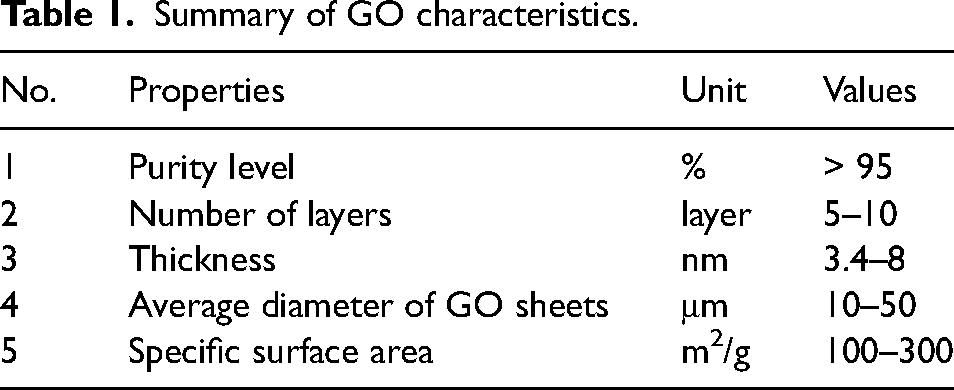
The GO used in this study is a black, two-dimensional material, procured as a commercial product from Tandem Graphen Technology Co., Ltd, Suzhou Province, China. As depicted in Figure 1, the multilayer GO appears as distinct particles, offering a stark contrast against the lighter background. It is crucial to note that the characteristics of GO were provided by the supplier (Table 1). Given the nature of these properties, no explicit standards or benchmarks were referenced by the supplier in the analysis. This information was included to provide a comprehensive overview of GO's inherent quality and properties as employed in the AB modifications.
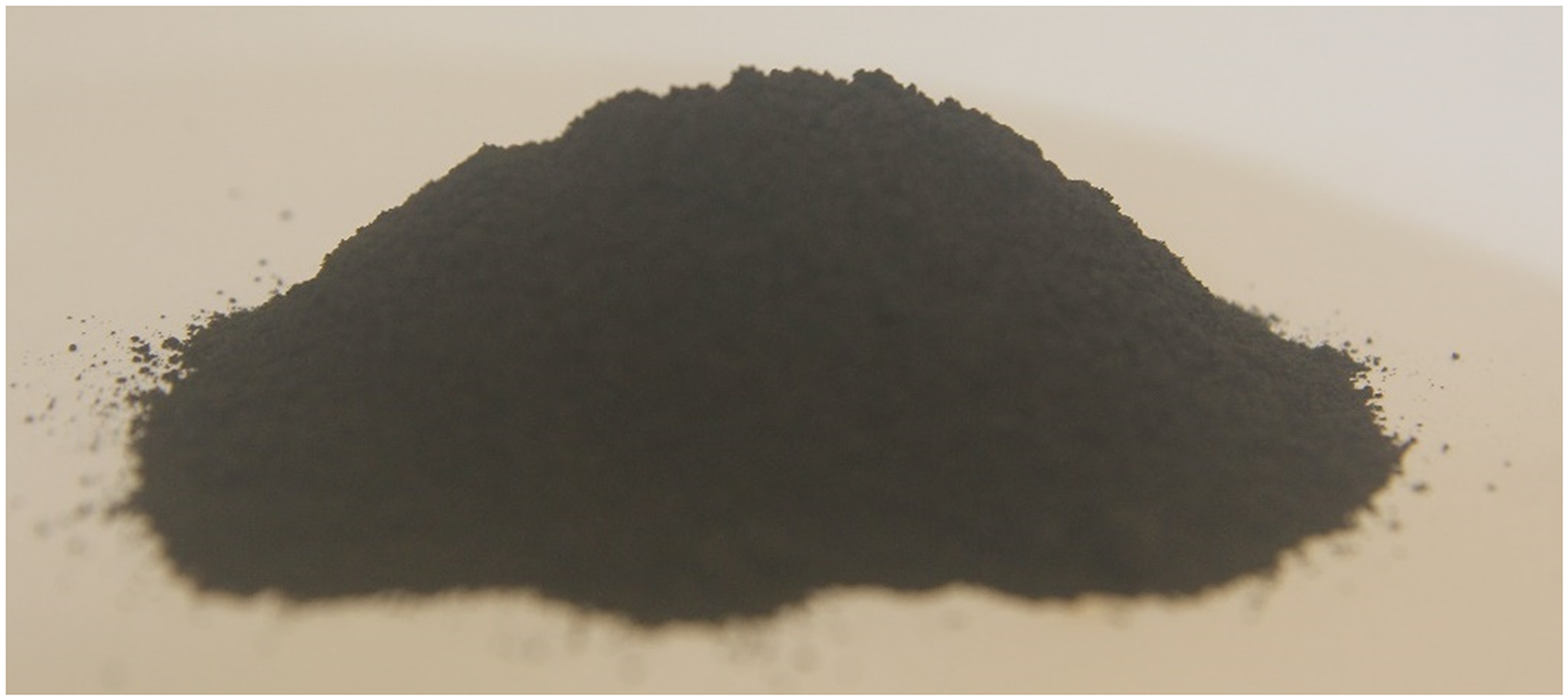
Image of GO particles used in this study.
Summary of GO characteristics.
Asphalt binder
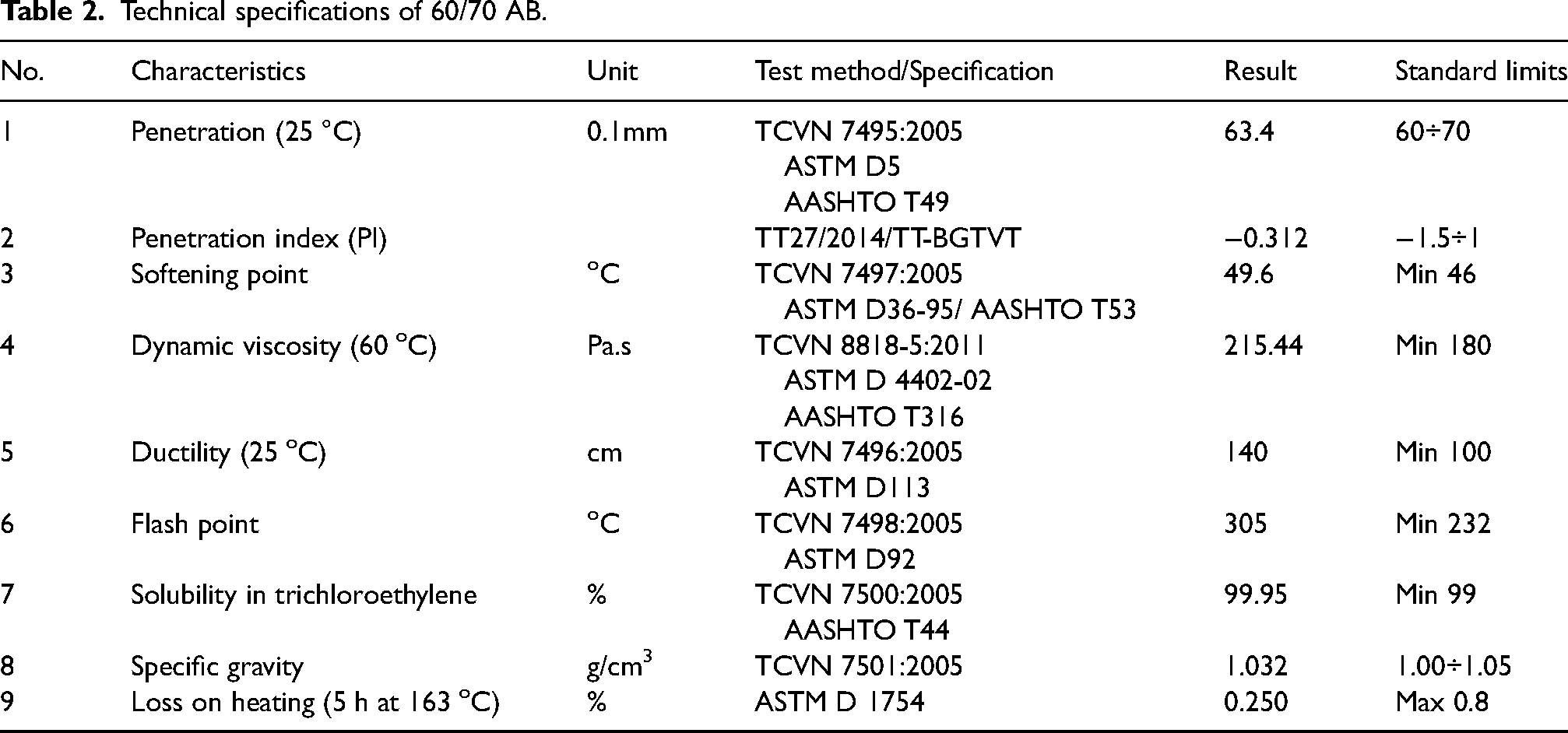
The AB utilized in this work was 60/70, provided by Petrolimex Co., Ltd, Hai Phong, Vietnam. This AB was produced in Singapore following the standards outlined in ASTM D946/D946M-15. This specification covers the requirements for PG ABs, ensuring an appropriate use in pavement construction. It includes parameters such as penetration, softening point, and ductility, among others. Penetration, measured in 0.1 mm, represents the binder's hardness. The softening point, determined via the ring and ball method, indicates the temperature at which the bitumen becomes soft, providing insights into its heat resistance properties. Ductility, measured in centimeters, informs about the binder's elasticity.
A comprehensive listing of these parameters and their respective values is presented in Table 2 to ensure transparency and provide a complete overview of the initial material's properties. The table includes the values and the established standard limits for each parameter according to the standard as outlined. These limits serve as quality control markers, indicating the acceptable range for each characteristic in an optimal binder for pavement construction. The test methods and specifications for ABs are also detailed, wherein each characteristic is assessed following the guidelines set by the Vietnamese standard (TCVN), ASTM, or AASHTO.
Technical specifications of 60/70 AB.
Sample preparation and characterization
Experimental program
In this section, the preparation and characterization of GO-modified AB are detailed. A systematic approach to the methodology is visualized through a comprehensive flowchart, as presented in Figure 2. Initially, the sample preparation process is elucidated. The steps involved in creating GO-modified AB samples, including the mixing conditions, experiment, and sample used, are thoroughly described. A comprehensive characterization of the GO-modified AB samples is undertaken following the sample preparation. This involves a multi-faceted approach, encompassing both morphological and chemical evaluations and an assessment of physical and rheological properties.
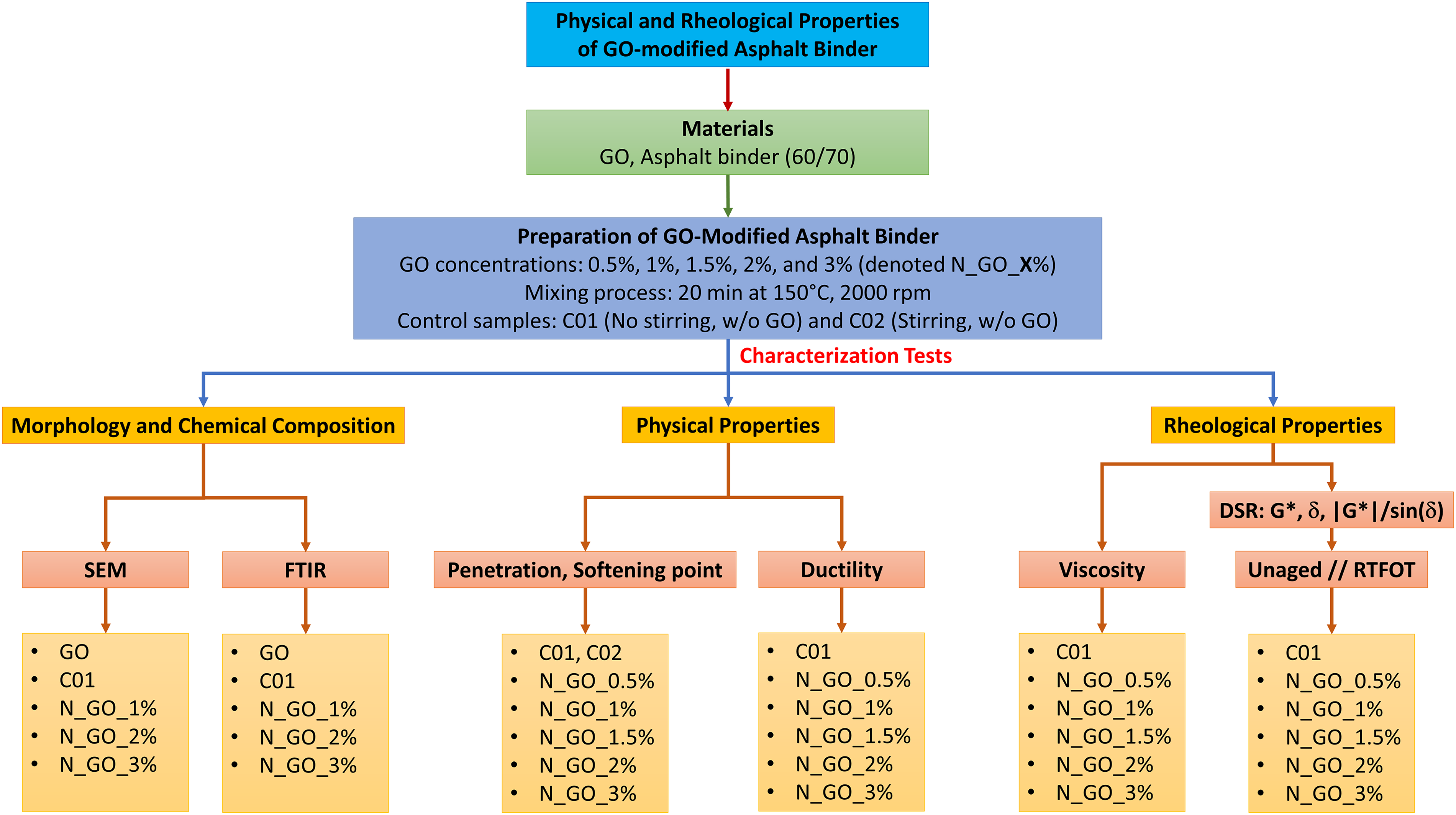
A detailed flowchart explaining the methodology in this study.
Morphological characterization is performed using scanning electron microscopy (SEM), allowing for a detailed inspection of the sample's surface features at the microscale. Concurrently, Fourier transform infrared spectroscopy (FTIR) is utilized to determine the chemical composition of the samples, thereby enabling a deeper understanding of the molecular interactions, if any, between GO and AB.
The physical properties, including penetration, softening point, and ductility, are then assessed. Each property provides a unique perspective on the samples’ behavior and performance characteristics, contributing to a comprehensive understanding of the material. Furthermore, rheological properties are evaluated, including viscosity and DSR experiments. The G*, δ, and rutting factor (|G*|/sinδ) are analyzed for unaged and Rolling Thin Film Oven Test (RTFOT) samples. Each test offers insights into the material's response to applied stress and deformation, thereby informing its potential performance under various service conditions.
The ensuing sections present the detailed procedures for each test, ensuring a complete and thorough characterization of the GO-modified AB samples.
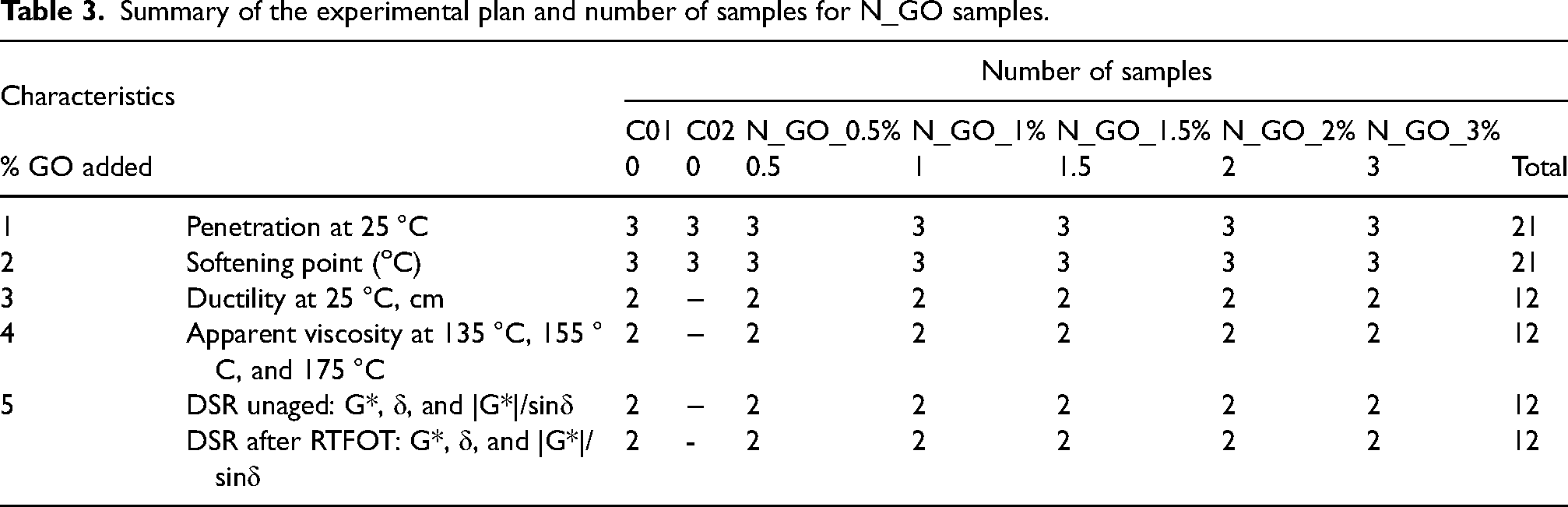
The experimental plan, including the temperature and frequency parameters, can be found in Table 3. For the sake of simplicity, ABs modified with GO are denoted as N_GO, followed by the corresponding percentages of GO added. It should be noted that a rigorous methodology to ensure the validity of the results is utilized in this study. Firstly, each experiment was repeated multiple times, ranging from 2 to 3, to ensure consistency and reduce experimental error. The average results of these repeated trials have been reported. Second, all equipment was properly calibrated and maintained according to manufacturers’ guidelines, minimizing the potential for systematic errors in the measurements.
Summary of the experimental plan and number of samples for N_GO samples.
Preparation of GO-modified asphalt binders
The 60/70 AB was mixed with varying GO concentrations at 0%, 0.5%, 1%, 1.5%, 2%, and 3% to investigate the effects of GO on the asphalt's properties. The mixing process was done at 150 °C for 20 min, stirring at 2000 rpm. In addition, it is crucial to have appropriate control samples, which are those treated in the same way as the experimental samples but without the addition of GO. In the context of the statement provided, control samples were synthesized in order to highlight the effect of GO. Specifically, two types of control samples were considered: one without any consideration of the mixing process, and another with a mixing process at 150 °C for 20 min, with a stirring speed of 2000 rpm. It should be noted that by synthesizing a sample without any mixing, the impact of mixing on the properties of the samples could be identified. This control sample type would also help identify any inherent variability in the synthesis process itself, separate from the effect of GO.
Characterization
Morphology and chemical composition experiments
Scanning electron microscopy
SEM constitutes a vital part of the characterization process of the GO and AB samples. SEM is a powerful analytical tool that employs a focused high-energy electron beam to elicit various signals from the surface of the material under examination. The interactions between the electron beam and the sample generate detailed topographical and compositional information, thus revealing the sample's microstructural characteristics. The process commenced with the preparation of GO powder and 60/70 AB samples, and GO-modified AB samples containing varied concentrations of GO, specifically, 1%, 2%, and 3%. These samples were then scrutinized using a Hitachi S4800 SEM instrument. The GO powder was observed at a magnification of 50,000 times, corresponding to a scale bar of 1 µm. This high magnification rendered a highly detailed image of the intricate two-dimensional structure of GO, demonstrating its unique morphology and layered characteristics. In contrast, the GO-modified AB samples were examined at a lower magnification range, between 5000 and 10,000 times, corresponding to a scale bar of 10 µm. This magnification range was carefully selected to ensure clear visualization of the distribution of GO within the AB. The SEM images allowed for the inspection of how the GO particles interacted with and were dispersed within the AB, an important factor in understanding the enhancement of asphalt properties through GO modification. By utilizing SEM, this research provides visual evidence of the microstructural changes and interfacial interactions occurring within the GO-modified AB, thereby substantiating the observed alterations in physical and rheological properties.
Fourier transform infra-red
FTIR is another key analytical method implemented in this study for the characterization of GO, AB, and GO-modified AB. FTIR spectroscopy is based on the principle that molecules absorb infrared light at specific frequencies, corresponding to their chemical bonds’ vibrational modes. By identifying the unique vibrational signatures, the presence of different functional groups in the samples can be confirmed, thereby offering insights into the substance's chemical composition.
In this research, the FTIR analysis was carried out using a Jasco-Japan FT/IR-4600 infrared spectrometer. The instrument enabled energy conversion from an infrared light source, within the wavenumber range of 400–4000 cm−1, into vibrational energy within the molecules of the studied samples. The samples under consideration for FTIR were identical to those examined using SEM, ensuring consistency across the different analyses. This included the GO powder, the 60/70 AB, and the GO-modified AB samples at varying concentrations of 1%, 2%, and 3% GO.
Physical properties
Penetration, softening point, and ductility
In this study, three key physical properties of the asphalt samples, namely penetration (25 °C, 0.1 mm), softening point (°C), and ductility (25 °C, cm) of the samples, were evaluated following the guidelines specified by ASTM standards. These include ASTM D5 for penetration test, ASTM D36 for softening point test, and ASTM D112 for ductility test. Samples under evaluation consisted of the standard 60/70 AB, denoted as C01, and an additional sample, designated as C02, which underwent the same stirring process as the GO-modified AB samples. The purpose of including sample C02 was to assess the impact of the asphalt aging process on its penetration and softening point during mixing. Additionally, asphalt samples modified with varying concentrations of GO, namely 0.5%, 1%, 1.5%, 2%, and 3%, were also tested for their penetration and softening point. It should be noted that these samples, along with the standard AB (C01), also underwent ductility testing. However, sample C02 was excluded from the ductility evaluation.
Rheological properties
Viscosity
The viscosity of the asphalt samples was systematically assessed using a Brookfield viscometer, adhering to the ASTM D4402-02 standard protocol. The evaluations were carried out at three distinct temperatures, namely 135 °C, 155 °C, and 175 °C, and the measurements were recorded in centipoise (cP) units. To maintain the accuracy and consistency of the results, the viscometer was carefully prepared by preheating and stabilizing at the test temperature for a minimum duration of 90 min. Once the viscometer reached the desired temperature, the asphalt samples were introduced and allowed to equilibrate for at least 15 min. A specific spindle numbered 21 was employed to measure the viscosity of each sample, while the spindle rotation speed was maintained at 20 rpm.
It is important to note that the viscosity testing was conducted in a sequential temperature gradient, starting from the lowest and progressing to the higher temperatures for each sample. The samples that underwent this procedure encompassed the standard C01 and the GO-modified ABs at varying concentrations, namely 0.5%, 1%, 1.5%, 2%, and 3%. These detailed evaluations are essential to understand GO integration's effects on the AB viscosity.
Dynamic shear rheometer
To investigate the rheological parameters of asphalt samples, specifically G*, δ, and the rutting factor, DSR tests were executed following the AASHTO T315 standard protocol. These tests were facilitated by utilizing the Anton Paar MCR 102 equipment. To achieve uniformity and comparability across all measurements, test specimens were prepared with meticulous attention to dimension, ensuring a consistent thickness of 1 mm and a diameter of 25 mm. A displacement-controlled load effect was implemented in the experiment, offering a precise method for analyzing the rheological behavior of the samples.
The DSR tests were systematically conducted at a spectrum of temperatures from 46 °C to 82 °C, specifically at intervals of 46 °C, 52 °C, 58 °C, 64 °C, 70 °C, 76 °C, and 82 °C. This range comprehensively evaluated the asphalt samples’ rheological properties at various temperature conditions. The testing was performed consistently at 10 rad/s (or 1.59 Hz). Moreover, the procedure progressed until the ratio |G*|/sinδ fell below specific thresholds, less than 1 kPa for unaged samples and less than 2.2 kPa for samples subjected to aging using the RTFOT. This distinction allowed for an assessment of the rheological changes induced by the aging process. The samples examined in these DSR tests encompassed the standard 60/70 AB, labeled as C01, and all the GO-modified ABs with varying concentrations, specifically 0.5%, 1%, 1.5%, 2%, and 3%.
The DSR experiment provided critical insights into the performance and stability of the asphalt samples under different operating conditions, which is crucial for understanding the influence of GO on AB's rheological behavior.
Result and discussion
Morphology and chemical composition
SEM analysis
The morphology and dispersion of GO in the AB are presented and discussed in this section. Initially, GO particles are mainly in independent states (Figure 3(a)). During the mixing process, the shear forces break and separate GO from multilayer structures to create monolayer GO particles. This separation process increases the GO's surface area, allowing it to disperse easily and homogeneously into the AB and enhance contact with it. It can be explained by acknowledging the polar properties of both GO and asphalt, as this characteristic facilitates the formation of Van der Waals interactions between these materials. When GO and asphalt molecules come into contact, their respective polar forces generate physical bonds, resulting in enhanced cohesion and adhesion within the modified AB.30,39 Additionally, GO exhibits electrostatic properties, which enable it to interact with asphalt molecules through electrostatic forces. This interaction not only promotes better dispersion of GO within the asphalt matrix but also contributes to an overall improvement in the properties of the modified binder. 30 When examining SEM images of the asphalt samples containing a low concentration of 1% GO, it was found that the morphology was quite similar to that of the original, unmodified asphalt (Figure 3(b) and (c)). At this low concentration, GO particles were not easily discernible within the microstructure of the asphalt matrix. The primary reason for this observation could be attributed to the low GO concentration present in the sample, making it challenging to visually identify individual GO particles. Regarding the SEM images of asphalt samples containing higher concentrations of GO, specifically 2% and 3%, it was observed that the presence of GO within the asphalt matrix became more apparent (Figure 3(d) and (e)). However, as the GO content increased, a notable decrease in the dispersion of GO particles was observed. This phenomenon could be explained as, at lower GO concentrations, the AB encapsulates the particles and remain dispersed on the surface due to the binding action of the asphalt. In this scenario, asphalt serves as a continuous phase, while GO acts as the dispersed phase, uniformly distributed throughout the continuous phase. The oxygen-containing functional groups present in GO assist in maintaining even dispersion by reducing the Van der Waals binding forces between GO molecules, thus minimizing the agglomeration of GO within the asphalt. 30 However, as the GO concentration increases, the interactions between GO molecules become more pronounced, complicating the separation of monolayers and subsequently leading to a reduced dispersion of GO within the asphalt matrix. This observation aligns with the findings of Zeng et al. 39 The addition of GO as an asphalt modifier has been observed to increase the surface roughness, as evidenced by SEM images. This elevated surface roughness is known to enhance the adhesive properties of the asphalt, effectively limiting aggregate sliding and reducing deformation under various stress conditions. This observation suggests that the utilization of GO as an asphalt modifier can significantly improve the overall performance of the modified AB. Optimizing the concentration and dispersion of GO within the asphalt matrix may make it possible to develop a more resilient and efficient pavement material capable of withstanding diverse loading conditions and environmental factors, thus contributing to the durability and longevity of road infrastructure.
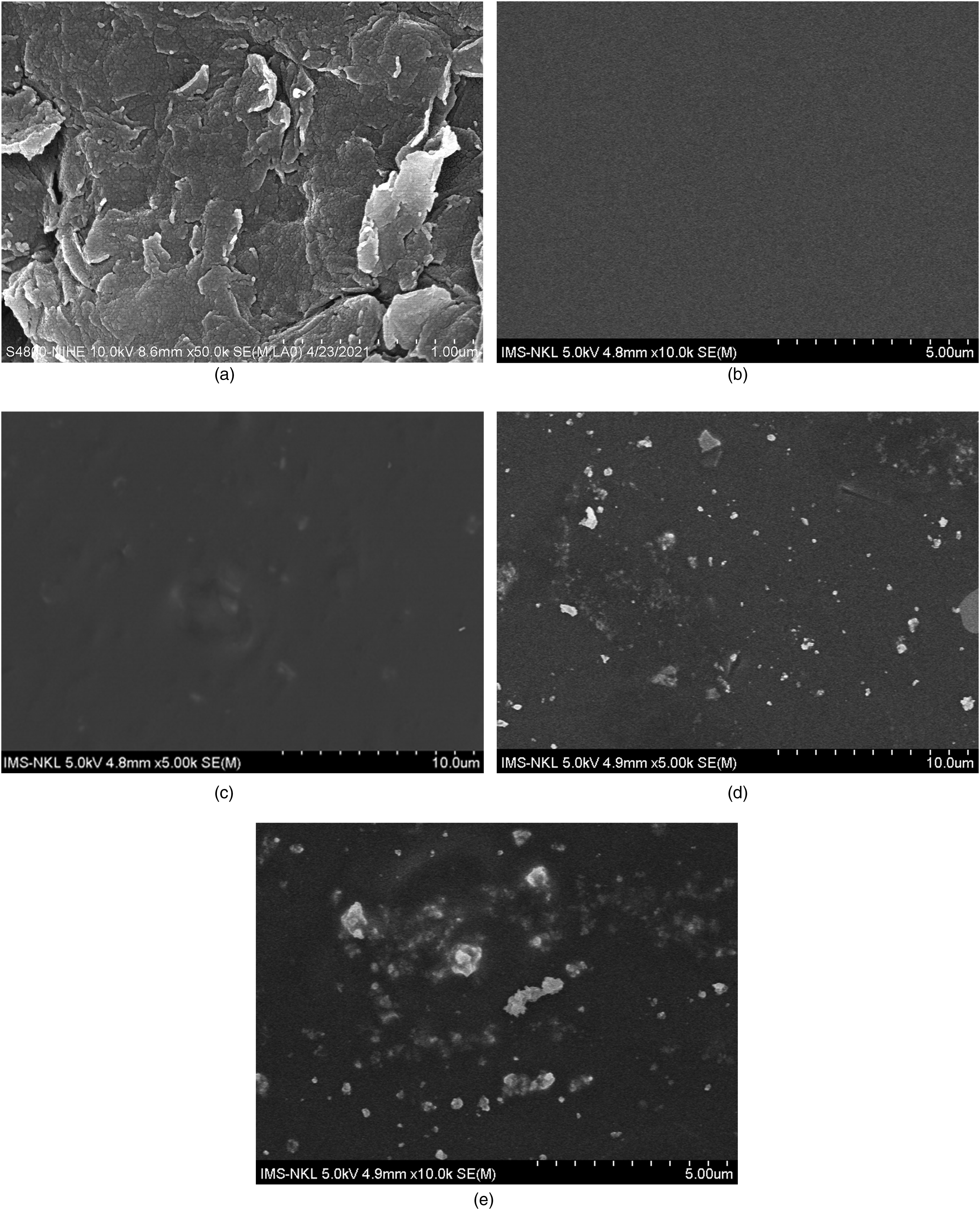
SEM micrographs of GO and N_GO. (a) GO. (b) 60/70. (c) N_GO_1%. (d) N_GO_2%. (e) N_GO_3%.
FTIR analysis
FTIR analysis reveals information about the chemical composition, functional groups, and potential impact of GO on asphalt modification (Figure 4). As can be seen (Figure 4(a)), a broad peak ranging from 2341.16 cm−1 to 3410.49 cm−1, which corresponds to O–H stretching vibrations, can be attributed to the C–OH bonds of hydroxyl functional groups. The peak at 1626.66 cm−1 signifies the adsorption of OH groups from water molecules onto GO, thus highlighting its strong hydrophilic properties. Additionally, two minor peaks detected between approximately 2870 cm−1 and 2920 cm−1 indicate the presence of C–H stretching vibrations associated with the aldehyde functional group. The peak at 1726.94 cm−1 confirms the existence of C = O stretching vibrations, which are characteristic of the carboxylic functional group found at the surface of GO. Furthermore, peaks at 1282.43 cm−1 and 1064.51 cm−1 are typical for the stretching vibrations of C = O in the carboxylic group and C–O in the epoxy group. These findings confirm that GO contains carboxylic, carbonyl, hydroxyl, and epoxy functional groups, contributing to its strong hydrophilic nature. As a result, GO is a stable material capable of enhancing the rheological properties of asphalt materials, making it a promising candidate for developing more resilient and efficient pavement materials.
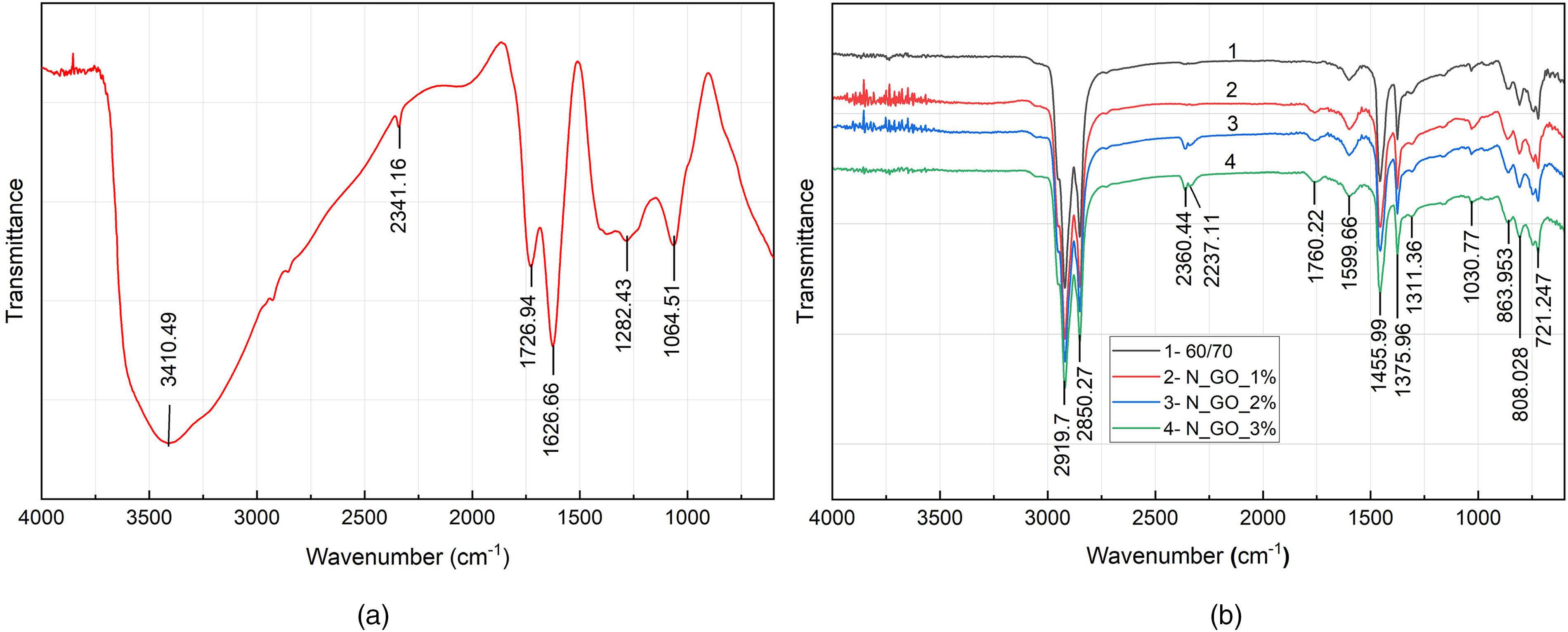
FTIR analysis of (a) GO and (b) GO-modified ABs.
Figure 4(b) presents the FTIR spectra of 60/70 AB modified with various concentrations of GO. The peaks for the bending vibration of the –CH2 group on saturated hydrocarbons in 60/70 AB are observed at 1455.99 cm−1 and 1375.96 cm−1 wavelengths. The peaks at 1599.66 cm−1 and 721.25 cm−1 correspond to C = C tension vibrations on the aromatic ring of the asphalt and bending vibrations of the alkyl group, respectively. Upon adding different concentrations of GO, some changes in the FTIR spectrum are observed. With 2% and 3% GO contents, new absorption peaks emerge at 2360.44 cm−1 and 2237.11 cm−1, which are attributed to CO2 fluctuations. The release of CO2 is probably not due to a chemical reaction between GO and AB but rather from the decomposition of the carboxyl functional group during mixing. This process intensifies with increasing GO content, leading to more prominent peaks, consistent with the findings of Li 29 and Zeng. 34 The peaks of the N_GO binder at all three GO concentrations show minimal change compared to the 60/70 AB, except a new peak at 1760.22 cm−1, which corresponds to C = O stretching oscillation in aldehydes. This new peak could indicate a reaction between GO and the 60/70 AB. The remaining characteristic absorption peaks exhibit minor differences in absorption rates compared to the original asphalt sample, suggesting that GO has a subtle yet noticeable influence on the chemical structure of the modified AB. Comparisons to previous studies reveal both similarities and differences in the findings. Indeed, Singh's study identified a new peak at 1741.63 cm−1, 33 corresponding to the C = O stretching vibration in aldehyde for unaged modified asphalt samples. However, GO-modified AB in Singh's study exhibited a second peak at 1217.02 cm−1, which was not observed in the present study. Adnan 37 reported the appearance of a new peak at 611 cm−1 and the disappearance of a peak at 2186 cm−1 in GO-modified AB, suggesting a chemical reaction between GO and asphalt. In contrast, Zeng et al. 39 detected no new peaks when adding GO to asphalt. The presence of a new peak at 1760.22 cm−1 in this study indicates a certain reaction when mixing GO with AB. Overall, to date, researchers have not reached a unified conclusion regarding the existence of a chemical interaction between GO and AB. As the present study focuses on the macroscopic behavior of GO-modified AB, future research should investigate the microscopic behavior of this interaction in greater depth to elucidate the underlying mechanisms and provide a more comprehensive understanding of the potential benefits of incorporating GO in asphalt materials.
Physical properties
Penetration
The analysis of 25 °C penetration for various samples revealed several key observations (Figure 5). As observed, the penetration of the N_GO samples decreased compared to the C01 and C02 samples, with a gradual reduction in penetration as the GO content increased. This suggests an enhancement in the hardness of the GO-modified AB, which can be attributed to the dispersion of GO particles in the asphalt, increasing its mechanical strength and improving the pavement's deformation resistance. The N_GO_2% sample demonstrated the most significant improvement, with a penetration of 53.1 (0.1 mm). Interestingly, the penetration of the N_GO_3% sample was higher than that of the N_GO_2% sample, indicating that the optimal GO content for improving asphalt hardness is 2%. Additionally, the C02 sample exhibited lower penetration than the C01 sample, signifying that the mixing process caused an insubstantial aging effect on asphalt samples. The aging of AB primarily results from the oxidation process, with samples C02 and N_GO experiencing aging during the mixing process. However, GO can decelerate the aging process of AB by reducing the O2 diffusion rate, thereby inhibiting the evaporation of saturated molecules in the asphalt. 30
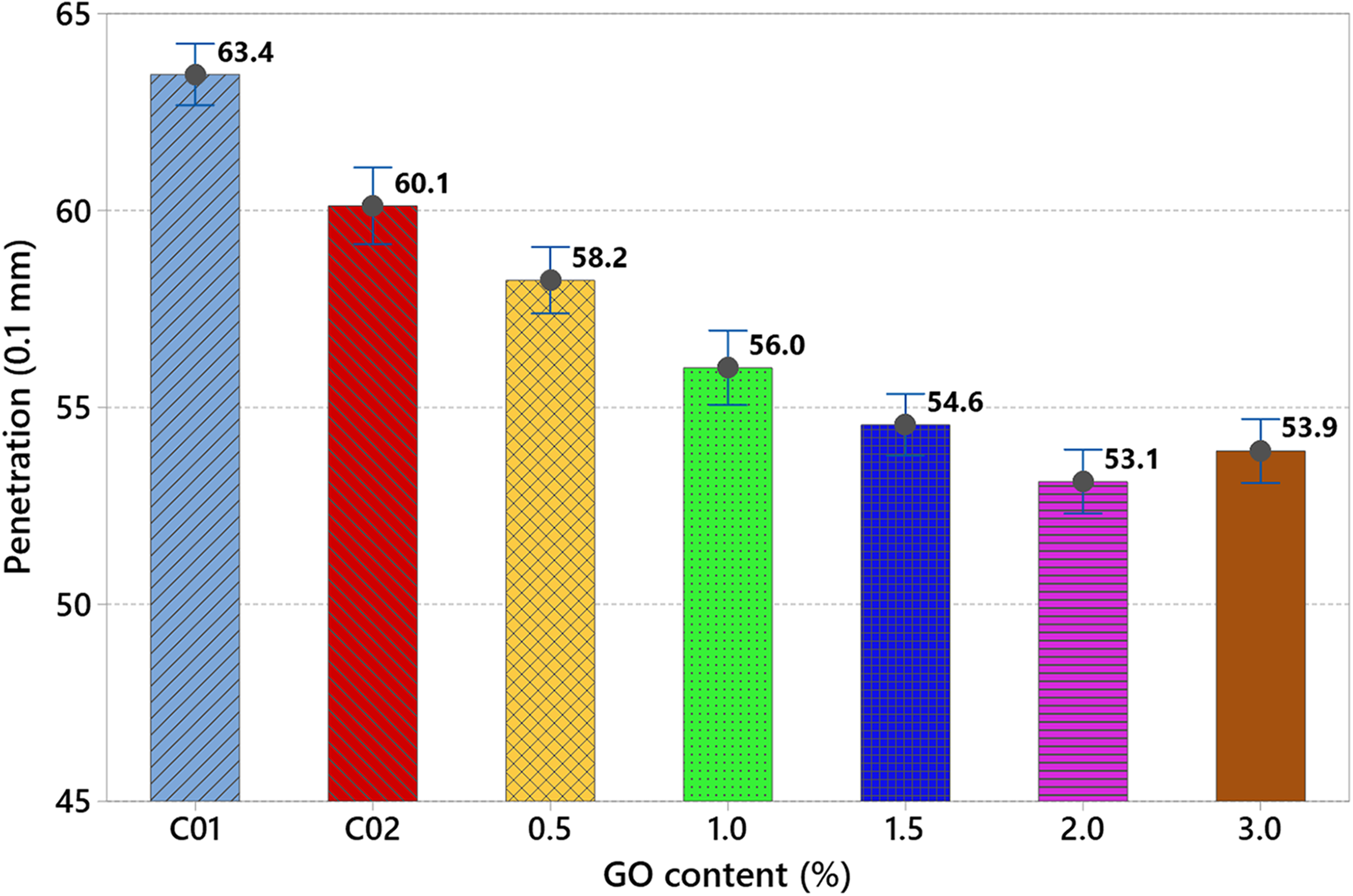
Penetration values of original and GO-modified AB.
Softening point
The analysis of the softening point revealed that it increased with the addition of GO content and was consistently higher than the two control samples (Figure 6). This observation can be attributed to the same theoretical basis as the changes in penetration. As discussed earlier, GO enhances the strength and hardness of the AB, necessitating higher temperatures to soften and melt, which in turn, increases the softening point. A higher softening point corresponds to better high-temperature stability of the asphalt and greater resistance to asphalt pavement subsidence. Notably, the softening point of the N_GO_3% sample was lower than that of the N_GO_2% sample, suggesting that the dispersion of the N_GO_3% binder diminished as the GO content increased. This implies that the excessive amount of GO added did not form a strong bond with the AB due to the reduced dispersibility of GO in the asphalt.34,41 Consequently, adding GO beyond a certain optimal content can negatively affect the asphalt improvement performance.
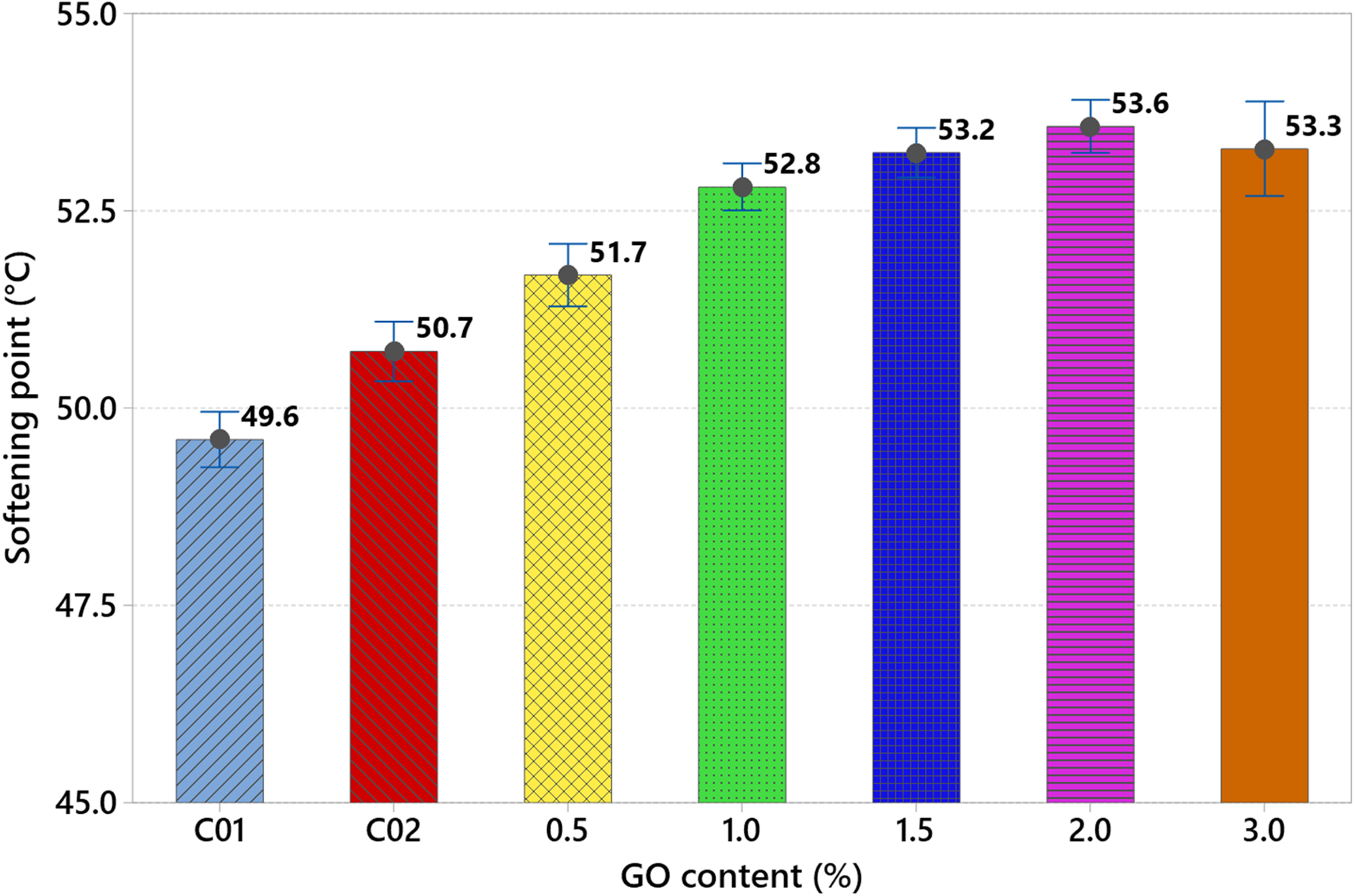
Softening point of original and GO-modified AB.
Ductility
Ductility is a critical parameter in evaluating the plasticity of asphalt, as it reflects the tensile properties of the asphalt material. Based on the findings, it was observed that after the addition of GO, the ductility of the N_GO samples decreased compared to the original AB (Figure 7). This reduction in ductility was more pronounced as the GO content increased, with N_GO_3% exhibiting the smallest ductility representing a decrease of 27.14% compared to the original asphalt. This observation further supports the notion that GO enhances the hardness of asphalt, consequently reducing its plasticity. Despite these reductions, it is important to note that the ductility values of all N_GO samples remained greater than the minimum value specified by the relevant standard (minimum required value of 100 cm at 25 °C). This indicates that the modified asphalt samples still possess acceptable properties, even with the increased hardness imparted by the GO additives. By examining these ductility results in conjunction with other rheological properties, a comprehensive understanding of the impact of GO on asphalt performance and its potential applications in pavement design and construction can thus be derived.
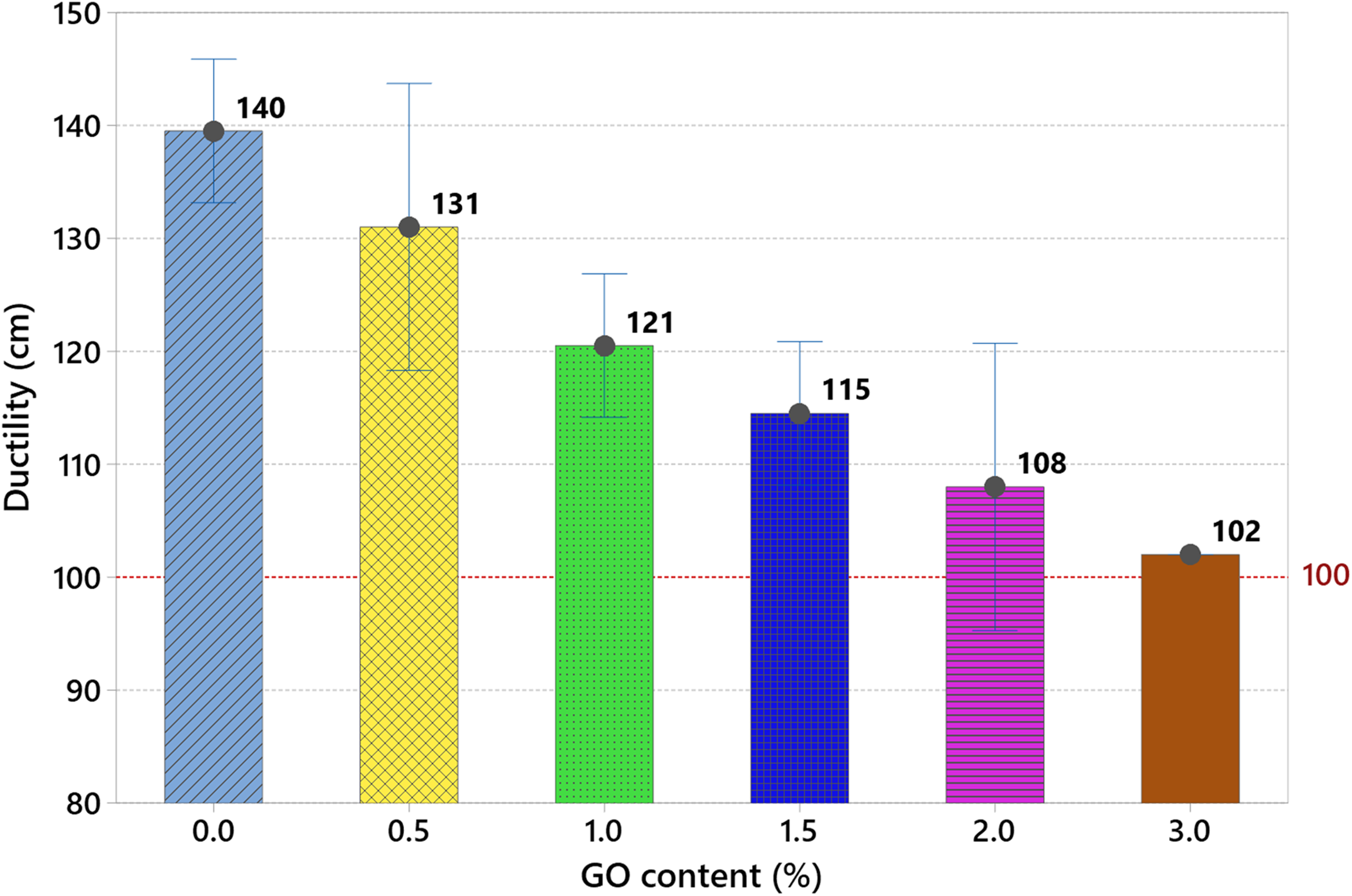
Ductility of original and GO-modified AB.
Rheological properties
Viscosity
The analysis of the viscosity revealed that it decreases as the temperature increases, with the highest viscosity increments of 34.76%, 60.45%, and 88.52% observed at 135 °C, 155 °C, and 175 °C, respectively (Figure 8). Among the samples, the N_GO_2% sample exhibited the highest viscosity compared to the original asphalt. It is important to note that all ABs investigated in this study met the Superpave specification, which stipulates that the viscosity of AB at 135 °C should not exceed 3 Pa.s. This finding suggests that the incorporation of GO into the base asphalt can enhance its workability at elevated temperatures.
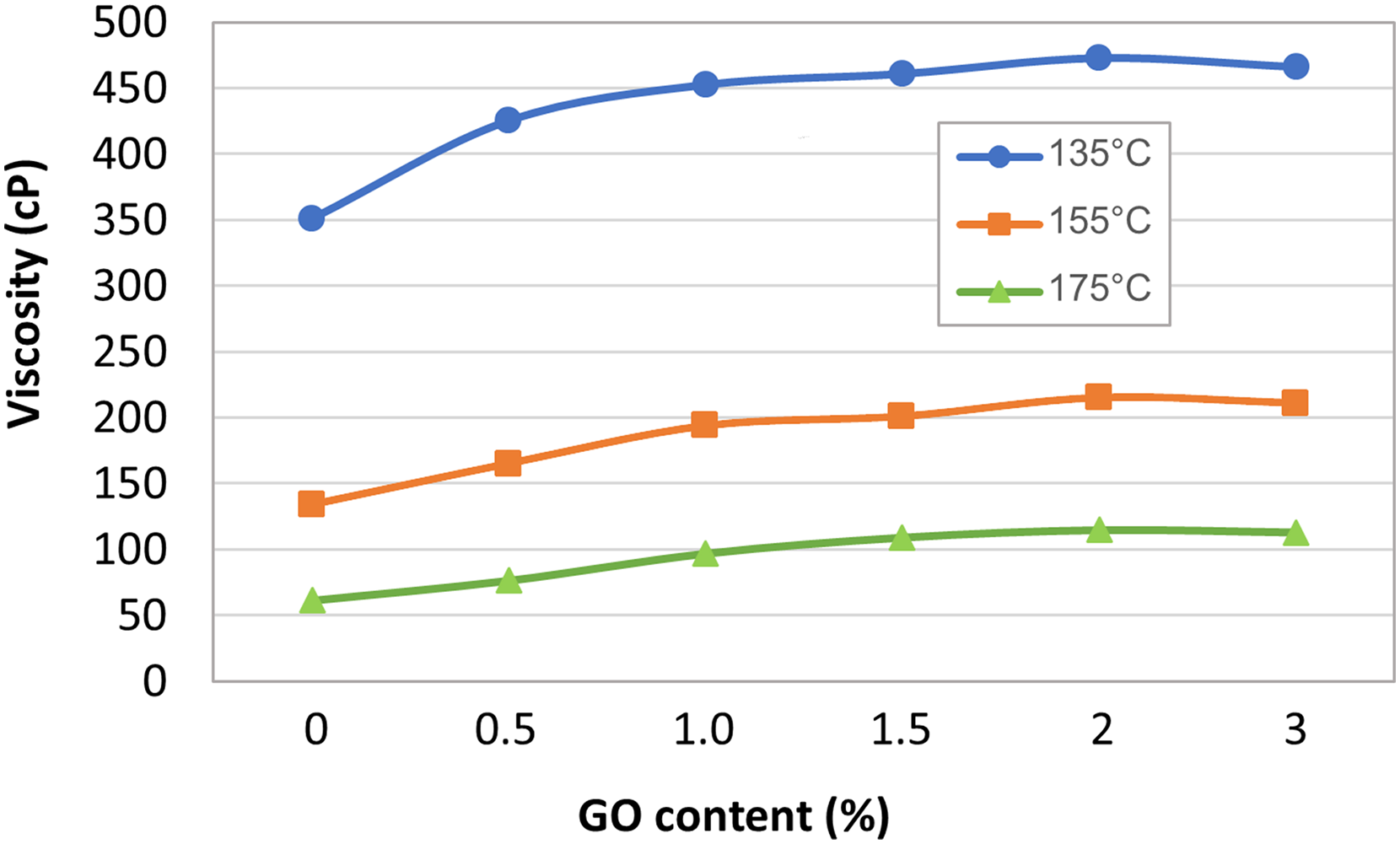
The influence of GO on asphalt's viscosity at different temperatures.
The temperature–viscosity relationship curve, established according to the guidelines of ASTM 2493, 40 is depicted in Figure 9. In the present study, equations of the form y = A.e−Bx were extracted from the experimental values depicted, serving as a method for determining the mixing and compaction temperatures. The A coefficients, derived for 60/70 AB and N_GO at varying concentrations (i.e. 0.5 to 3%), yielded respective values of 814.77, 974.94, 953.61, 913.96, 919.61, and 921.32. Concurrently, the B coefficients were found to be 0.873, 8.859, 0.771, 0.721, 0.705, and 0.709, respectively. Demonstrating robustness, these fit equations resulted in a coefficient of determination (R2) that exceeded 0.992 in each case. Utilization of these equations enabled the determination of the mixing and compaction temperature ranges for the asphalt mixture using 60/70 AB and N_GO, which were found to correspond to viscosity ranges of 0.17 ± 0.02 Pa.s (170 ± 20 cP)–0.28 ± 0.3 Pa.s (280 ± 30 cP), respectively. This analysis allows a better understanding of the optimal conditions for generating AC mixtures using the modified AB with different GO contents.
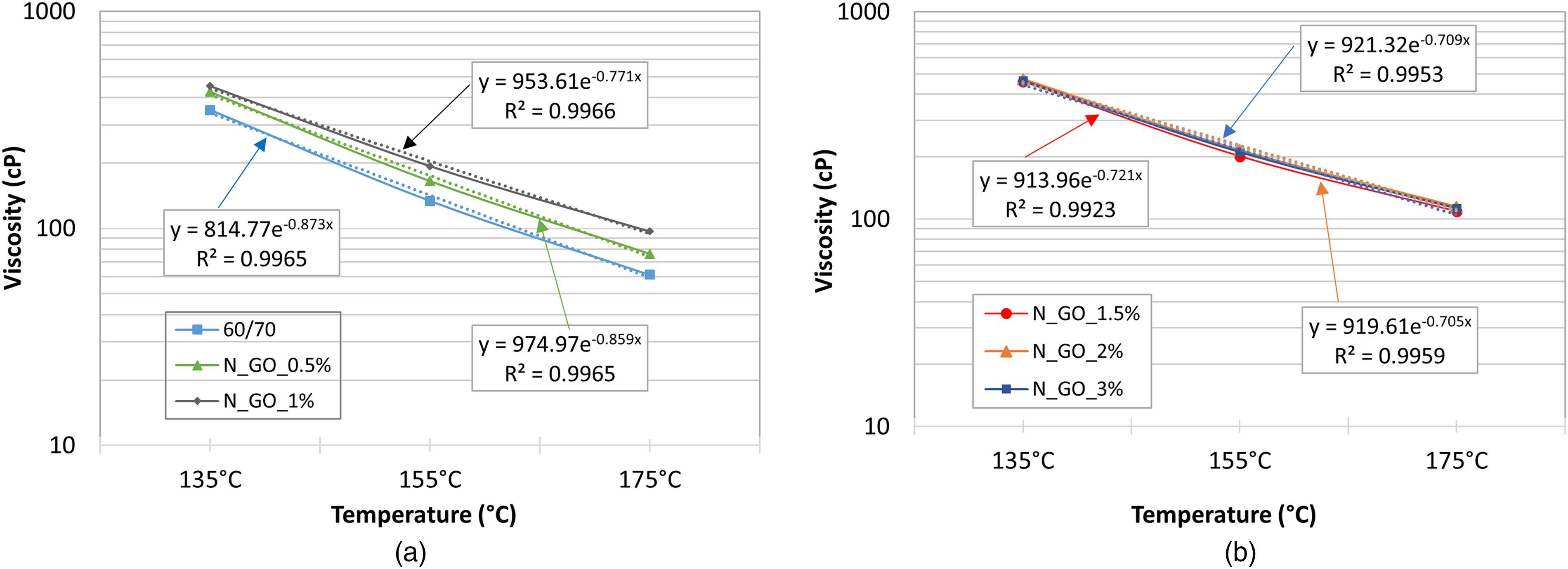
The viscosity–temperature relationships of different GO-modified ABs.
The findings from determining the temperature range for mixing and compacting temperatures of AC using GO-modified AB are presented in Table 4. In general, the incorporation of GO increased the mixing and compaction temperatures for the AC mixture compared to the control AC mixture, ranging from 5 to 8 °C. This demonstrates that the introduction of GO to the binder has a certain impact on the optimal processing conditions, leading to slightly elevated temperatures for both mixing and compaction.
Temperature range determination of mixing and compacting AC using GO-modified AB.

DSR experiments
DSR analysis of unaged N_GO samples
Figure 10 presents the DSR test results of the standard AB, C01, and the GO-modified ABs with varying concentrations (i.e. 0.5%, 1%, 1.5%, 2%, and 3%). It can be observed that both the complex modulus and the rutting factor show a similar trend, as they increase with an increase in the GO content. In contrast, δ decreases with an escalation of GO content.
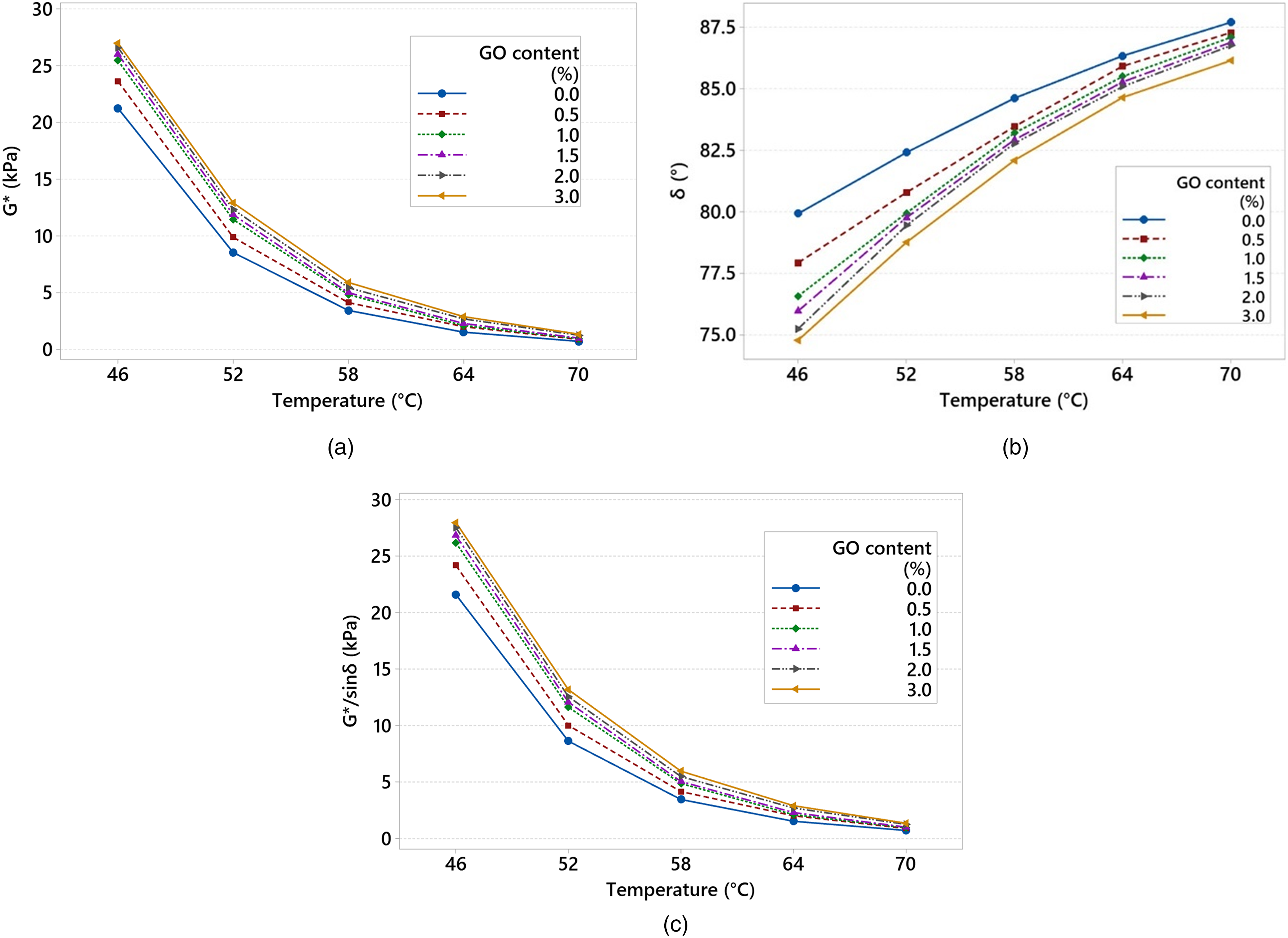
DSR results of unaged 60/70 AB and N_GO at different temperatures: (a) G*; (b) δ; and (c) |G*|/sinδ.
The observed increase in G* signifies enhanced high-temperature performance and rutting resistance. The rutting factor, given by |G*|/sinδ, plays a vital role in pavement engineering; a higher value of the rutting factor signifies the material's ability to resist permanent deformation under high temperature and loading conditions. It serves as an indication of the asphalt's capacity to withstand rutting, a common distress in asphalt pavement, especially in regions with high temperature. Conversely, the decline in δ implies that the modified asphalt manifests a more elastic response and improved deformation recovery capacity. A smaller δ indicates the material's tendency to behave more like an elastic solid, lessening the risk of permanent deformation under repeated loads.
Significant differences can be discerned in G* between 0%, 0.5%, and 1% GO contents. However, from 1% to 3%, the variations in G* become less prominent. For δ, the changes across different GO concentrations are even less noticeable compared with G*. The differences in G*, δ, and the rutting factor are also influenced by temperature. For G* and the rutting factor, the difference between the obtained values diminishes as the temperature increases. For instance, the difference in G* is 7 kPa at 46 °C but only 0.7 kPa at 70 °C, and the rutting factor exhibits a difference of 7 kPa at 46 °C but only 0.6 kPa at 70 °C. Similarly, for δ, the difference is 4.8° at 46 °C, reducing to about 1.5° at 70 °C.
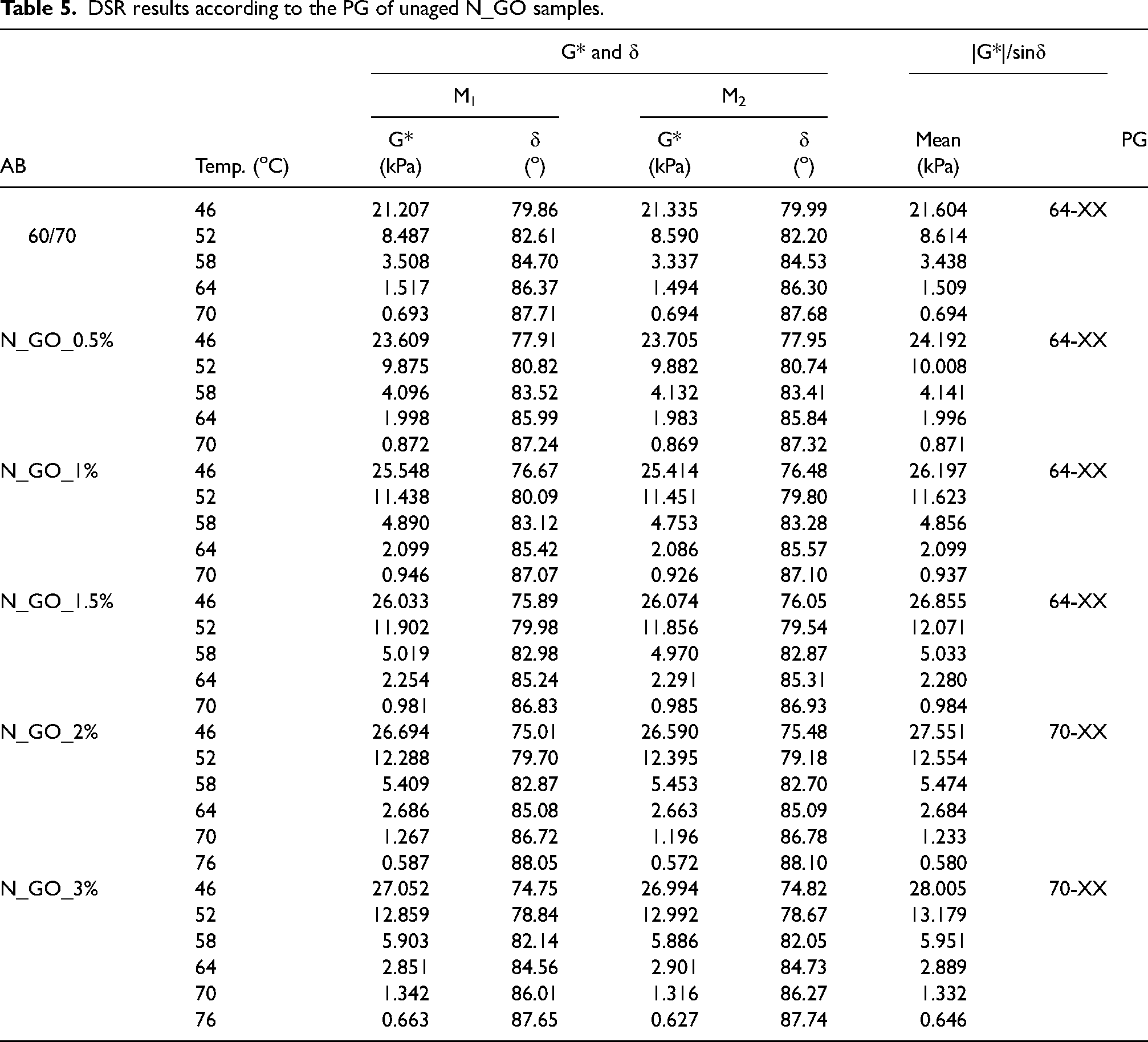
The findings also indicate that 2% and 3% GO concentrations effectively improve the high-temperature performance grade (PG) of GO-modified binders compared to unmodified 60/70 AB. Notably, binders with 2% and 3% GO concentrations exhibit characteristics aligning with PG70, while the remaining GO-modified samples correspond to PG64 properties, as outlined in Table 5. These results highlight the key role of GO content in tailoring ABs’ properties and performance in various climatic and service conditions.
DSR results according to the PG of unaged N_GO samples.
DSR analysis of RTFOT aging N_GO samples
The examination of aged samples post-RTFOT reveals trends in G*, δ, and rutting factor that mirror those found in the unaged samples. Specifically, the PG of the 60/70 AB and the GO-modified ABs remains in alignment with their pre-aging characteristics (Table 6).
DSR results according to the PG of RTFOT aging N_GO samples.
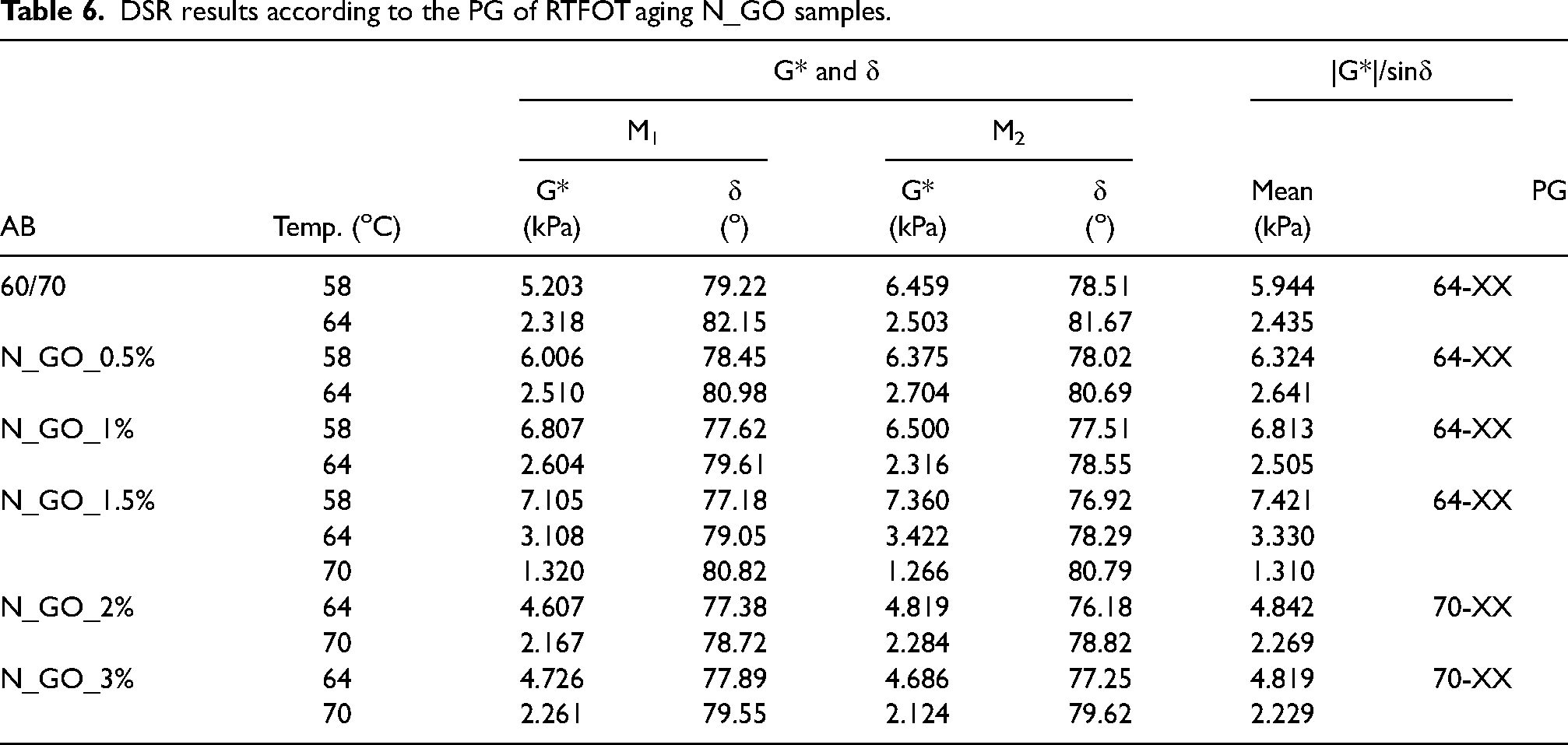
Following the RTFOT aging process, 60/70 AB and GO-modified ABs with 0.5%, 1%, and 1.5% concentrations present properties consistent with PG64. On the other hand, ABs modified with 2% and 3% GO concentrations correspond to PG70 characteristics. Notably, the observed change in the rutting factor for the GO-modified ABs post-RTFOT aging is smaller than that of the 60/70 AB. This observation underscores that the incorporation of GO not only improves the high-temperature stability of the AB but also mitigates the impact of the aging process on its rheological properties. The unique molecular structure of GO enables it to improve the anti-aging performance of AB by limiting the exposure of asphalt to oxygen and decelerating the volatilization of light constituents in the AB. These findings are in agreement with the results reported by Li et al. 29 in their study. It should be noted that tests were terminated at a temperature of 70 °C, with no further measurements taken at 76 °C. This decision was based on the observation that the values at 70 °C were already approaching the threshold, making additional measurements at a higher temperature unnecessary.
Conclusions
In light of the investigations undertaken in this study, GO has been recognized as a significant AB modifier with a notable impact on the physical and rheological properties, PG, and aging resistance. Several key findings can be drawn:
An observed peak development with FTIR analysis, in tandem with CO2 release during the stirring process at higher GO contents (2% and 3%), indicated a notable interaction between GO and AB, enriching the current understanding of the modification process. Regarding the physical properties, penetration and ductility displayed a downward trend, whereas softening point and viscosity followed an upward trajectory with an increase in GO content. This variation led to a rise in the mixing and compacting temperature of the GO-modified AC by 5–8 °C. It was discerned that unaged N_GO_2% and N_GO_3% samples equated to PG70, while for the remaining GO ratios, the N_GO characteristics were equivalent to PG64. A noteworthy performance improvement was detected at 2% GO content, which directly improves the high-temperature performance of the AB. Moreover, GO demonstrated an ability to temper the effect of aging on the rheological properties of the GO-modified AB.
These findings contribute significantly to our collective understanding of the utilization of GO in asphalt modification. From an industry practice perspective, they provide a reference for determining the optimal GO content in asphalt modification to fulfill desired performance characteristics under diverse climatic and service conditions. However, it is important to acknowledge that the present research primarily focused on the macroscopic behavior of GO-modified AB. Future studies should investigate the microscopic behavior of the interaction between GO and asphalt in greater depth to provide a more comprehensive understanding of the underlying mechanisms and potential limitations of GO modification. Furthermore, additional research is needed to explore the cost-effectiveness and environmental impact of using GO as an asphalt modifier, considering the material's production, transportation, and disposal aspects.
Ultimately, the results of this study contribute to a growing body of knowledge on the use of GO in asphalt modification and pave the way for further research and development in this field, with the ultimate aim of promoting more efficient, resilient, and sustainable pavement systems.
Footnotes
Availability of data and material
Data will be made available on request.
Declaration of conflicting interests
The author(s) declared no potential conflicts of interest with respect to the research, authorship, and/or publication of this article.
Funding
The author(s) received no financial support for the research, authorship, and/or publication of this article.
