




Abstract
My daughter has always been drawn to the frightening and the spooky, with a special interest in zombies. When she was four years old, she and I played a zombie video game together which instigated a series of zombie-related events. This article is a collection of metonymic moments rendered in comics and writing, that revisits these events as memories and experiences grouped conceptually, aesthetically, and narratively around zombies. Presented as a series of narrative fragments, this article explores the tension between parenthood and childhood, and considers the chaotic, unpredictable, and pedagogical entanglements between storytelling, literacy, drawing, and playing.
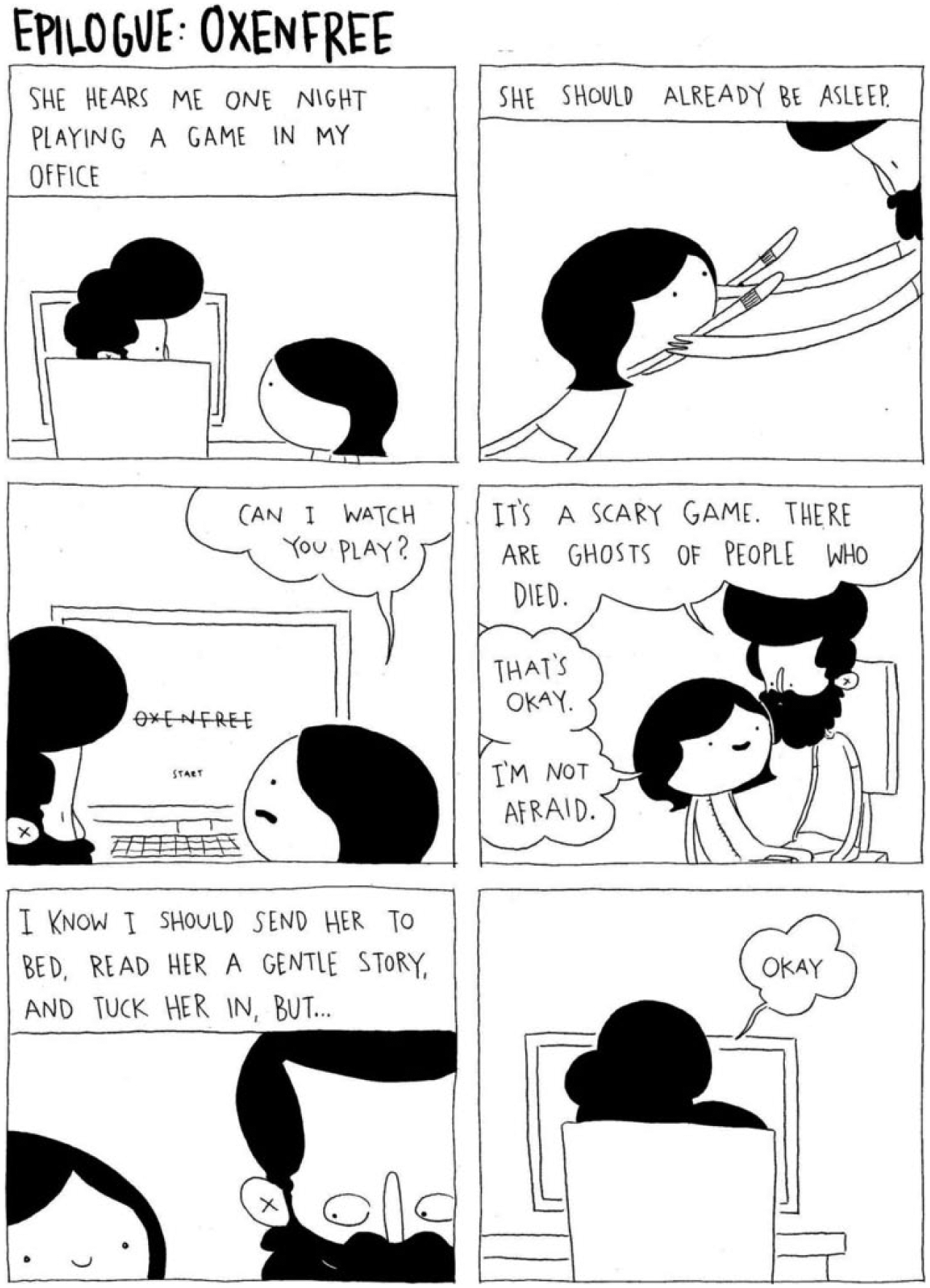
A year ago, my daughter and I sat down to play a zombie video game, Dead Rising. It’s not really a game for a then four-year-old to be playing. The box reminds us that it’s rated “M” for “mature.” Still, she was interested and I figured that if I was there to mediate her experience, then there wasn’t really much harm in playing the game together. It wasn’t her first experience with zombies, anyway. For as long as I can remember, she’s been attracted to the dark and the scary, the spooky and the dangerous. For years, we’ve celebrated Halloween year-round, our house adorned with various skeletons and monsters, and a handmade sign that reads “Happy Halloween.” For her birthday one year, she requested a Halloween cake (and she would have gotten it if we’d been able to find one in July). What follows is a series of metonymic moments, rendered in the form of comic strips and writing, which revisits certain lived experiences from the last few years. These are moments grouped loosely around zombies, but also include conceptually or aesthetically related moments. In rendering these moments in the form of comic strips, I wanted to revisit them, re-enter them, re-experience them. These renderings are as true as any memory, and so probably not so. Some of the dialogue is from transcription, but much of it is from memory. These renderings are not intended to function as representations, analyses, or interpretations of my own or my daughter’s experiences, but rather as experiential and embodied sites. Drawing has a funny way of conjuring up the body, and when I draw these scenes out, I am able to consider and experience them in a new way. Drawing the self is a dis/embodying act, a paradox, a doubling. With every line drawn, these experiences become externalized, take on a shape of their own, and become an object for my consideration, while simultaneously activating my body through sensation and memory. After drawing these comic strips, I revisited them in writing, using them not as data sites, but as points of inspiration. The writing is not an explanation or contextualization of the comic strips, but a separate entity existing in conversation—parentheticals that move within rather than sequentially. If this is anything, it is a project in divergence, an experiment in dispersing, in weaving between and among, in navigating a fragmented landscape. Consider this an embarkation, a wandering of sorts, and, while wandering, a gathering of found objects.
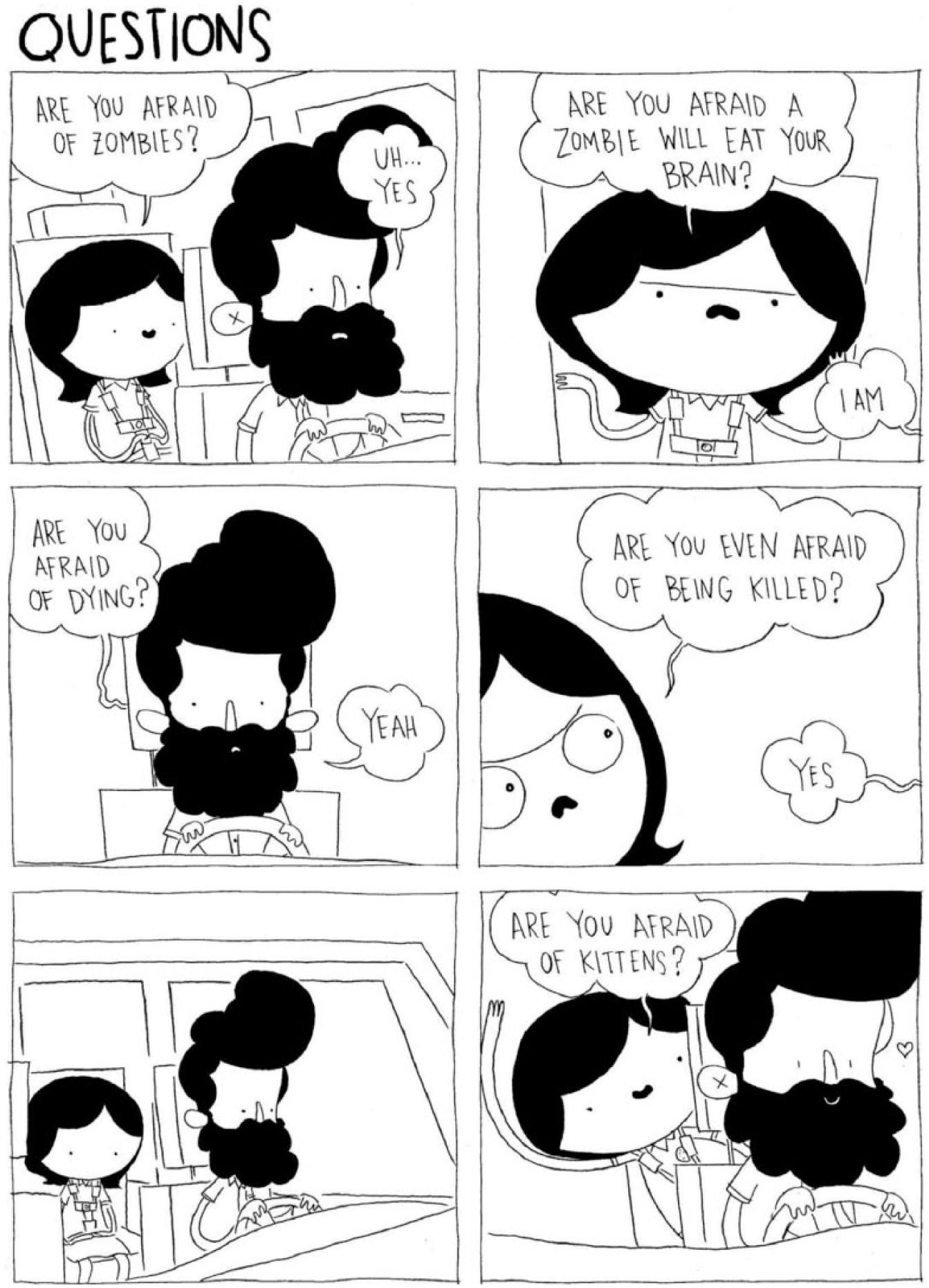
(She asks me a lot of questions. She asks about how things work, what they’re made of. She asks me about my past, my parents, my family. She asks me about places I’ve been and places I’ve never been. Sometimes, she asks me things I can’t answer. But I have to try or she won’t relent. I have to make things up. At times, I think it’s not even about the answer I give her. But in answering her questions, I enter an as-if world, a hypothetical reality—a space she has rendered only in theory, only in language, and one that includes imaginings only possible here. So I do my best to answer her questions, to fall into her traps, to let myself be snared. It’s another kind of intimacy, another way to be close, another way for us to meet. And I think I enjoy it as much as she does.)
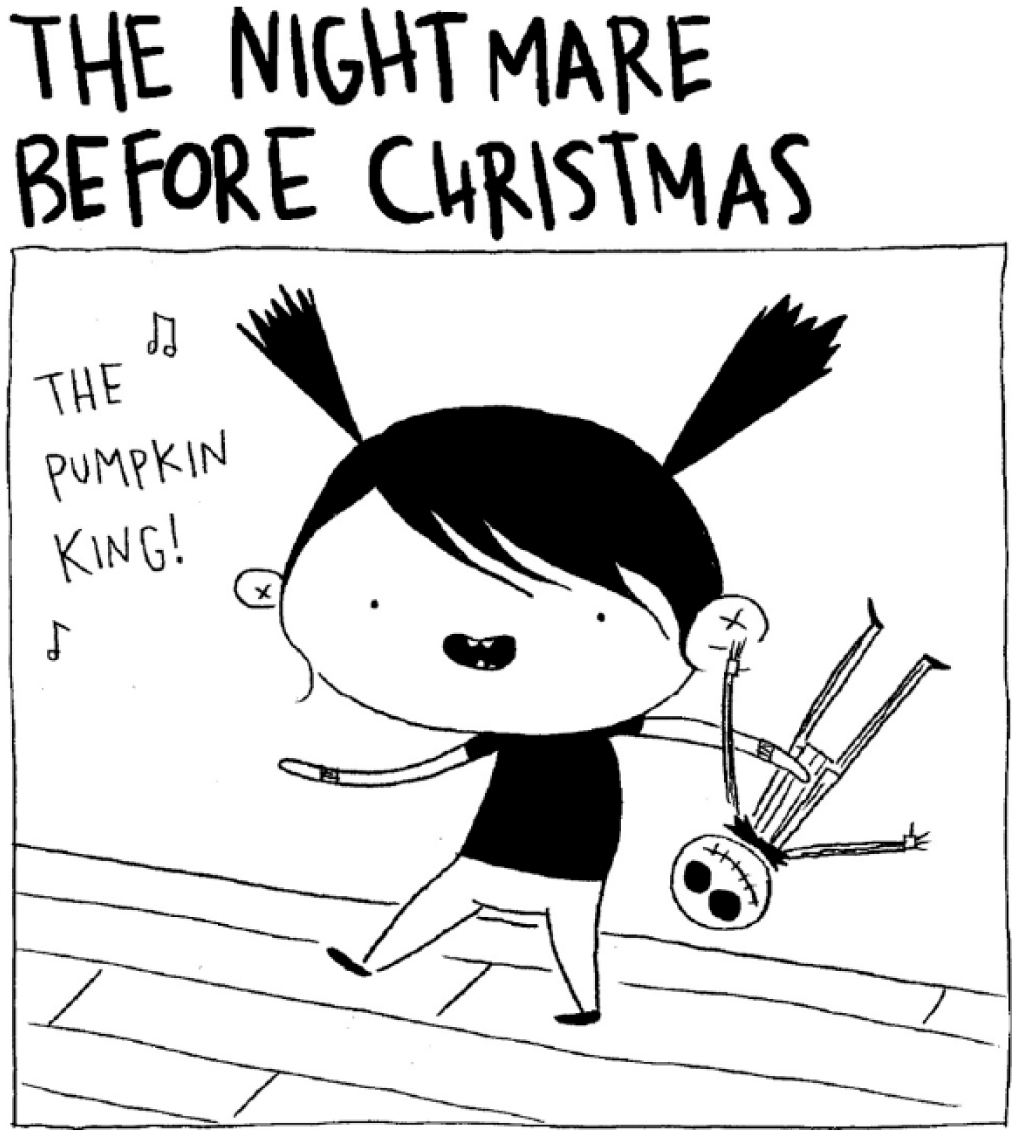
(Her first favorite movie is The Nightmare Before Christmas, a stop-motion animated film based on the book of the same name by Tim Burton. This is also one of my favorite movies. (In fact, it was Tim Burton’s book of short illustrated poems, The Melancholy Death of Oyster Boy and Other Stories, that inspired me to start writing and drawing in the first place.) In The Nightmare Before Christmas, creatures from the world of Halloween, led by a lanky skeleton named Jack, discover Christmas Town, seize control of the holiday, and inevitably ruin it because they don’t quite understand what they’re doing. I play it for her the first time when she is two, in the days leading up to Halloween. We watch this movie repeatedly in the coming months, traversing the entire holiday season. Every time we watch it, I wonder if it is too scary. Really, I am wondering why she is not scared. Instead, she seems enthralled by the monsters and enchanted by the narrative, even learning how to rewind the movie herself to the exact point her favorite song begins. And when it does, she stands, clutching my old plush Jack doll, dancing and singing along. She isn’t afraid of this movie. At two, she isn’t afraid of anything except, inexplicably, a battery-powered talking bear she calls “bad oso.” I put the bear in the basement and then she becomes afraid of the basement, until I throw away the bear in front of her, dropping it in the garbage can and rolling it out to the curb for pick-up. She runs up and hits the garbage can with her hand.)
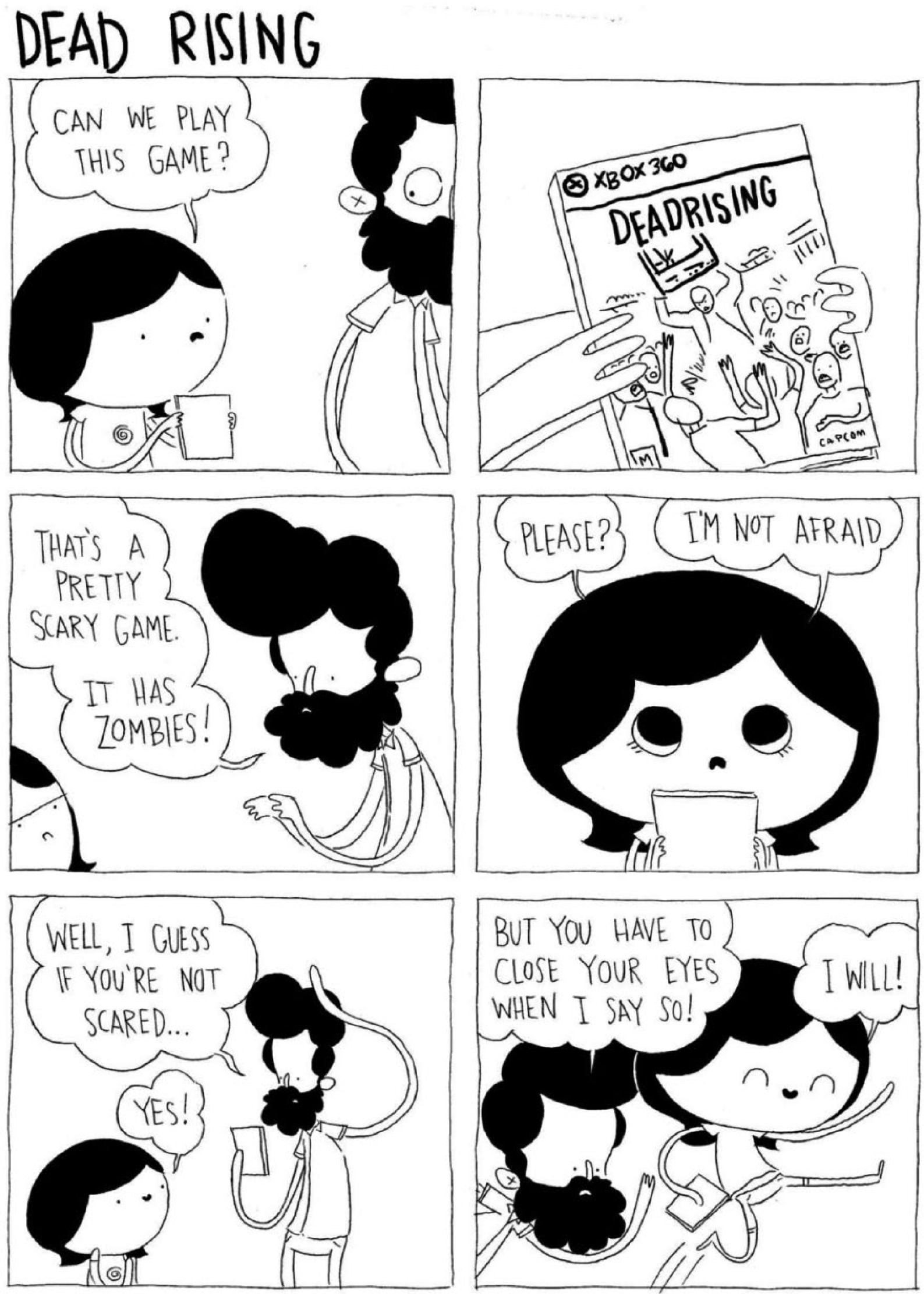
(She turns three shortly after we move south from Pennsylvania to Tampa, Florida. We unpack boxes, claim rooms. We have no furniture, so our things pile up on the floor. Books. Clothes. Toys. The television sits on the floor of the living room. Beside it, an Xbox console and a few games. I don’t really play video games, but she has begun playing some on the Kindle, on her mother’s phone. She picks up the box for a game called Dead Rising, a survival horror about the zombie apocalypse. She wants to play it. The cover alone is horrifying: a man holding a television in the air above his head, ready to slam it down onto the crowd of zombies that surrounds him. He is outnumbered, trapped. It’s not the sort of thing a three-year-old should be playing, I think. I tell her this and she seems unphased. I tell her the controls are too complicated and she tells me I can help her. She will not be dissuaded. I show her other games—Sonic the Hedgehog and a racing game. She is distracted by these games long enough for me to take the zombie game and hide it away. We play the racing game, which is actually not a racing game at all, but a game where you crash into as many cars as possible. I watch her steering her vehicle into traffic, launching her car off a freeway into a parking lot below. Every time, she laughs. There isn’t any blood, no monsters or screaming, but I’m not sure this is any better. Over the next year, I get good at distracting her from the zombie game. We find educational children’s games on the computer to play, ones where you build things, help characters, collect and amass virtual objects. But after her fourth birthday, when she asks me again to play the zombie game, I say okay, warn her it’s scary, and put the game in the machine.)
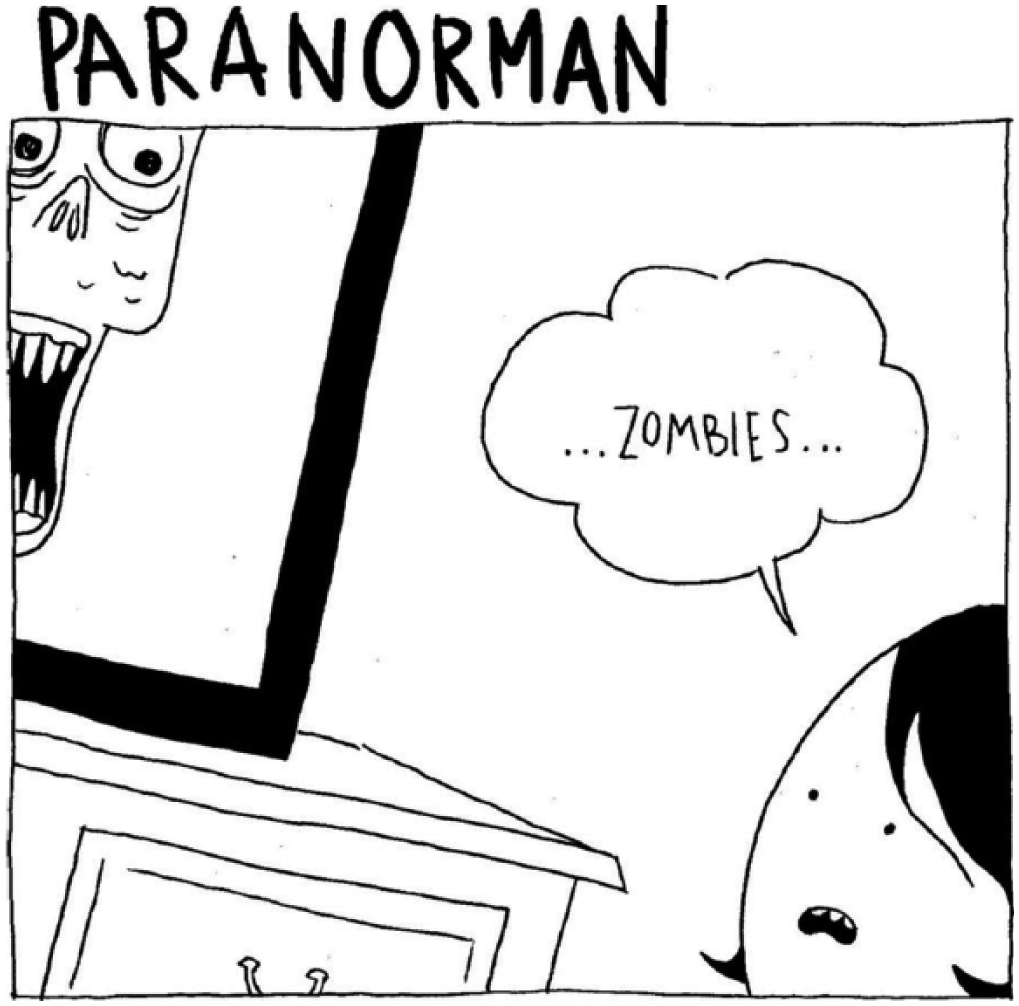
(She learns about zombies from ParaNorman, another stop-motion animated film. It’s scarier, I think, than The Nightmare Before Christmas. In it, Norman discovers that a witch has cursed their town by bringing zombies back from the dead. But the witch is a young girl, put to death hundreds of years before for being a witch, and the zombies are the elders of her village who killed her. It’s intense, troubling, and disturbing. And though we discuss the narrative, it’s the zombies she fixates most on: hulking, frightening-looking creatures, intent on feasting on the flesh of the living. Except, in ParaNorman, they’re not dangerous and they don’t try to eat anyone, and the curse, you come to learn, isn’t even on the town, but on the zombies themselves—forced to return as monsters, hunted, and killed by people. Maybe it was ParaNorman that taught her that monsters could be nice and humans could be cruel.)
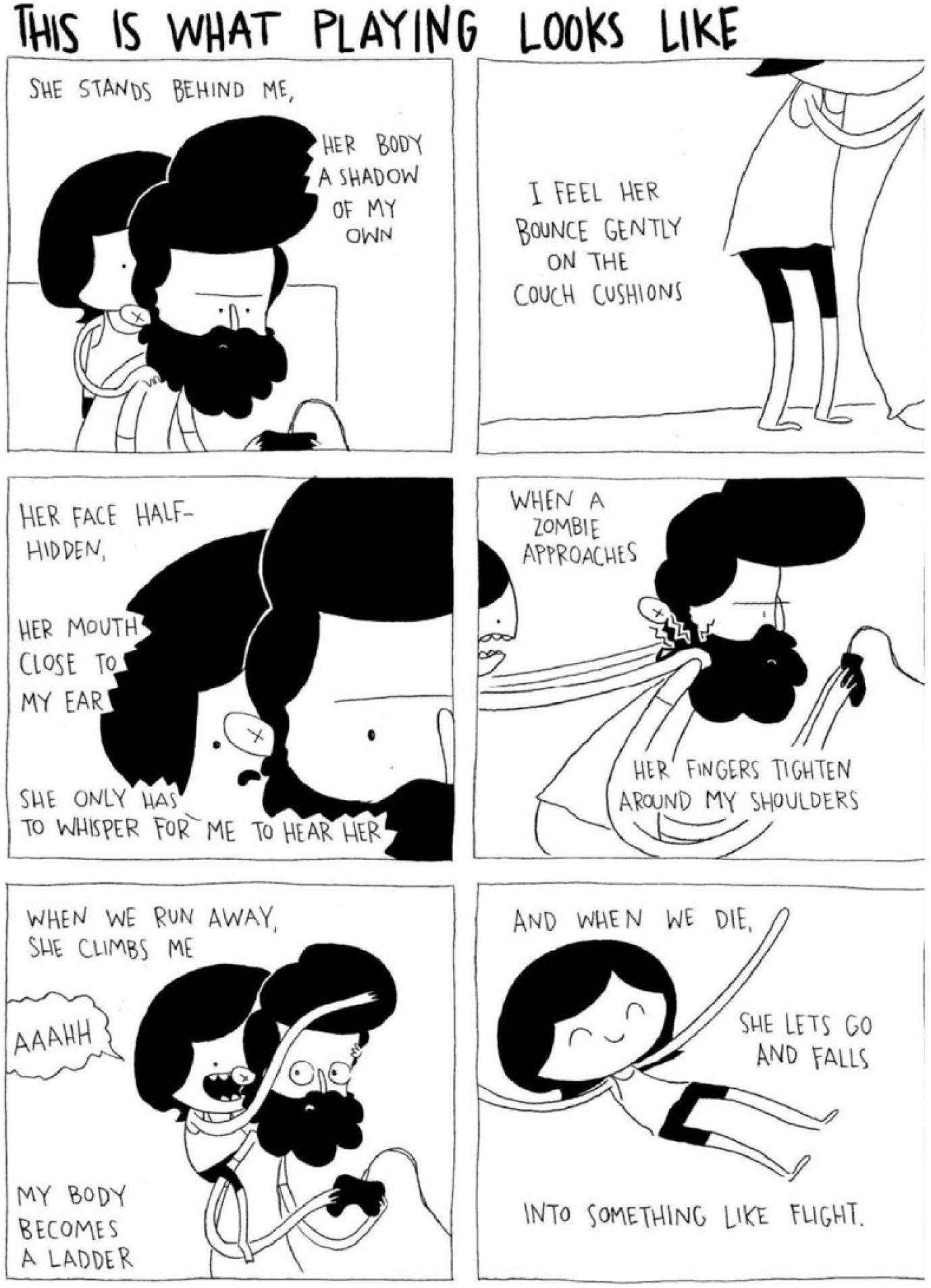
(We develop a routine, a system. She turns on the television and the Xbox, hooks up the controller, and lays it on the floor in front of the couch. She calls me over and I sit down. She climbs behind me and we play. I move the character around on the screen, I manipulate the controls, she shouts ideas, directives, orders. She shrieks. Asks questions. Offers explanations for what is taking place. This is how we play games, but this is also how we read books: she sits on my lap, lies down beside me, and listens as I read. She interrupts me frequently with questions, sometimes about the book, other times about things she’s thinking of. Sometimes I can trace the thread back to the story, other times I can’t, and I wonder if she’s even listening to me. I remember: she is not even two yet, asks me to tell her stories while she goes on the potty. I sit on the edge of the bathtub. We are living in a very small apartment; this is the only bathroom and it is tiny. We both barely fit. She says, “Tell me a story about dinosaurs.” I tell her a story about dinosaurs walking through the forest who stop because they hear something crying, and she interrupts me to tell me what they’ve found: a lost dog. I try to continue the story, but she seizes it from me, and tells the rest of it. They rescue the dog, return it to its owner. Other things happen that seem narratively unrelated: the mother dinosaur gives the baby dinosaur a pacifier. The daddy dinosaur loses his glasses. At some point, the dinosaurs fall into a hole and end up inside the brain of another dinosaur and come out my nose, and she laughs because this is a joke on me. For the next year, we continue this ritual: storytelling during potty time. Each time I start the story, establish the characters and the setting, and then she interrupts, takes the story, and runs away with it.)
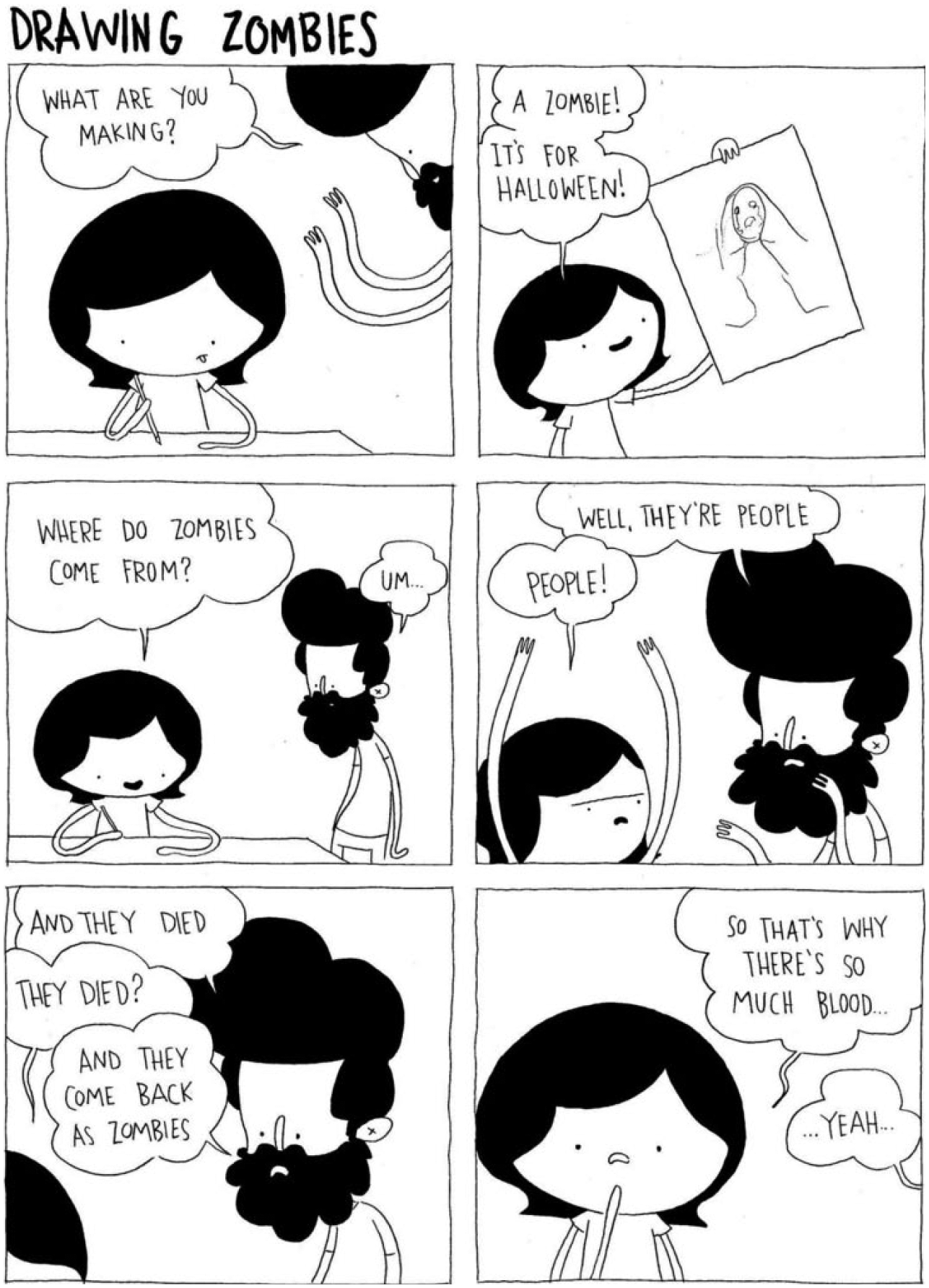
(She asks me to put her table in my office beside my drawing desk so we can draw together. I set her up in there, bring in her crayons, markers, and sketchbook. She sits and draws a few feet away from me. I am drawing pictures of her in a comic strip and she is making shapes in different colors. She asks me what the sun looks like. I open my computer and pull up images of the sun, place them in front of her. She asks me about the varying colors, the sunspots, the solar flares. We look up all these things because I don’t really know anything about them. Each time we learn what something is, she says, “Oh,” extending the vowel as though a mystery has finally been solved, a long-sought conclusion finally reached. She says she wants to learn about the sun when she grows up, about space and the planets. I tell her she can be a scientist, that scientists study the sun and the planets and outer space. And she seems pleased by this. She sits back down at her sketchbook, asks me to keep the image of the sun open. She tells me she wants to draw the sun, but she wants to use science to draw it. I keep the image open and she draws it. I watch her eyes move from her sketchbook page to the image on the screen as she tries to render what she sees and what she knows and also what she doesn’t know.)
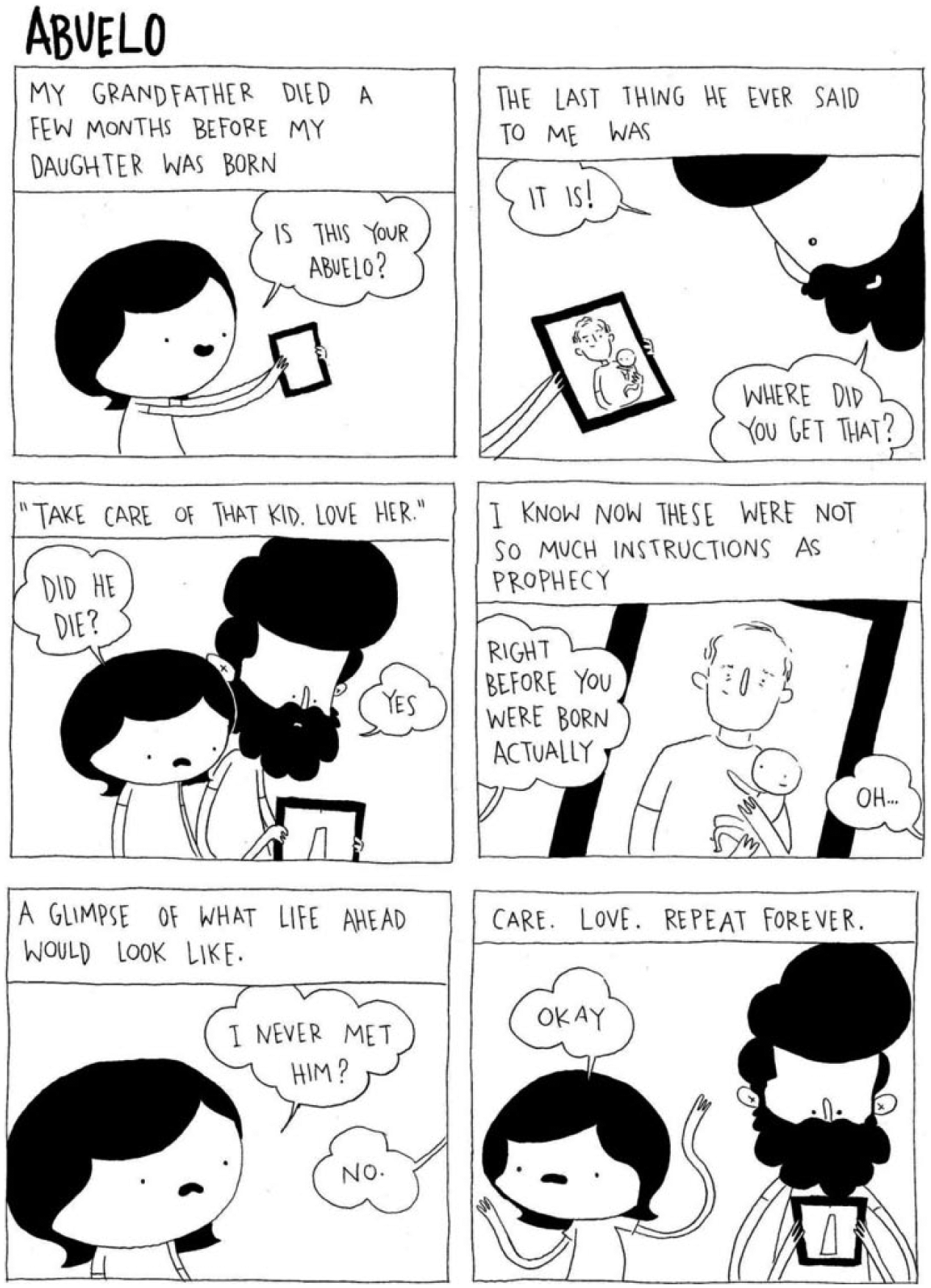
(She is three when she asks me about death. I don’t know if she understands what it means, if she knows what happens when a person dies. She speaks of death as though it were a mundane, domestic experience. And maybe it is. Maybe it’s not that death is inherently difficult to discuss, a concept that evades understanding like the vastness of space and the cosmos. Maybe it’s just the way that word feels when it comes out of our mouths, the way the “d” hits the back of our teeth, the lingering “th” that itself feels like a rattle or a snake, a sound that gently disintegrates as it slithers away. I flinch when she says it, but I also like hearing her say it—a word emptied of its power. Yes, this is your abuelo. Yes, he is dead. And yes, one day we all will be, too.)
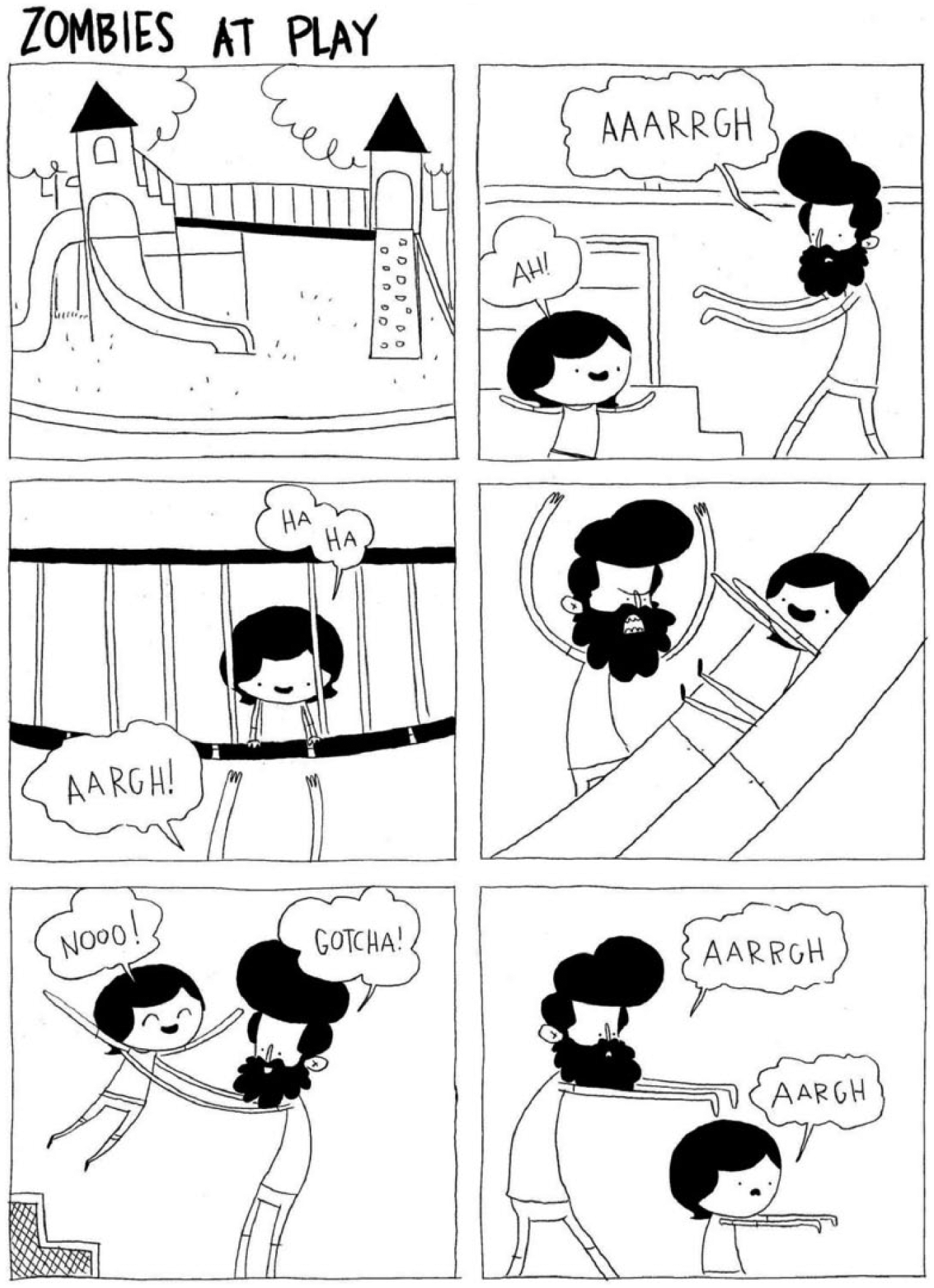
(We play zombies on the playground, which means I walk slowly, growling, my hands extended before me, following her as she sticks to the high ground, running back and forth across the play structure. Of course, she waits for me, puts her limbs in vulnerable places, pretends not to see me until I’m almost on top of her. The fun is in almost being caught, in nearly dying. The exhilaration of escaping at the last possible minute. I watch her and I know she is pretending, but she acts as though it is real, as though there is a true threat of danger, death, being eaten by a zombie. These are games without rules, so I follow her lead. I let her build the structure as we go: sometimes I am a zombie that runs, a zombie that can talk, a zombie that can fly. Sometimes, even, I am a good zombie, helping her escape other imagined bad zombies. And when I catch her, it’s almost always because she lets me, and we become zombies together. I am her “zombie dad” and she is my “zombie kid,” and we walk beside one another, stalking the playground until one of us is cured, inexplicably, and the game starts again. But sometimes, I don’t follow the rules. Sometimes, I run when I should walk. Sometimes, I hide really well, wait for her to turn the corner, and jump out at her and grab her, frighten her for real, pretend to bite her and tell her, “Now you’re a zombie.” She gets scared and then she gets mad and then the game is over.)
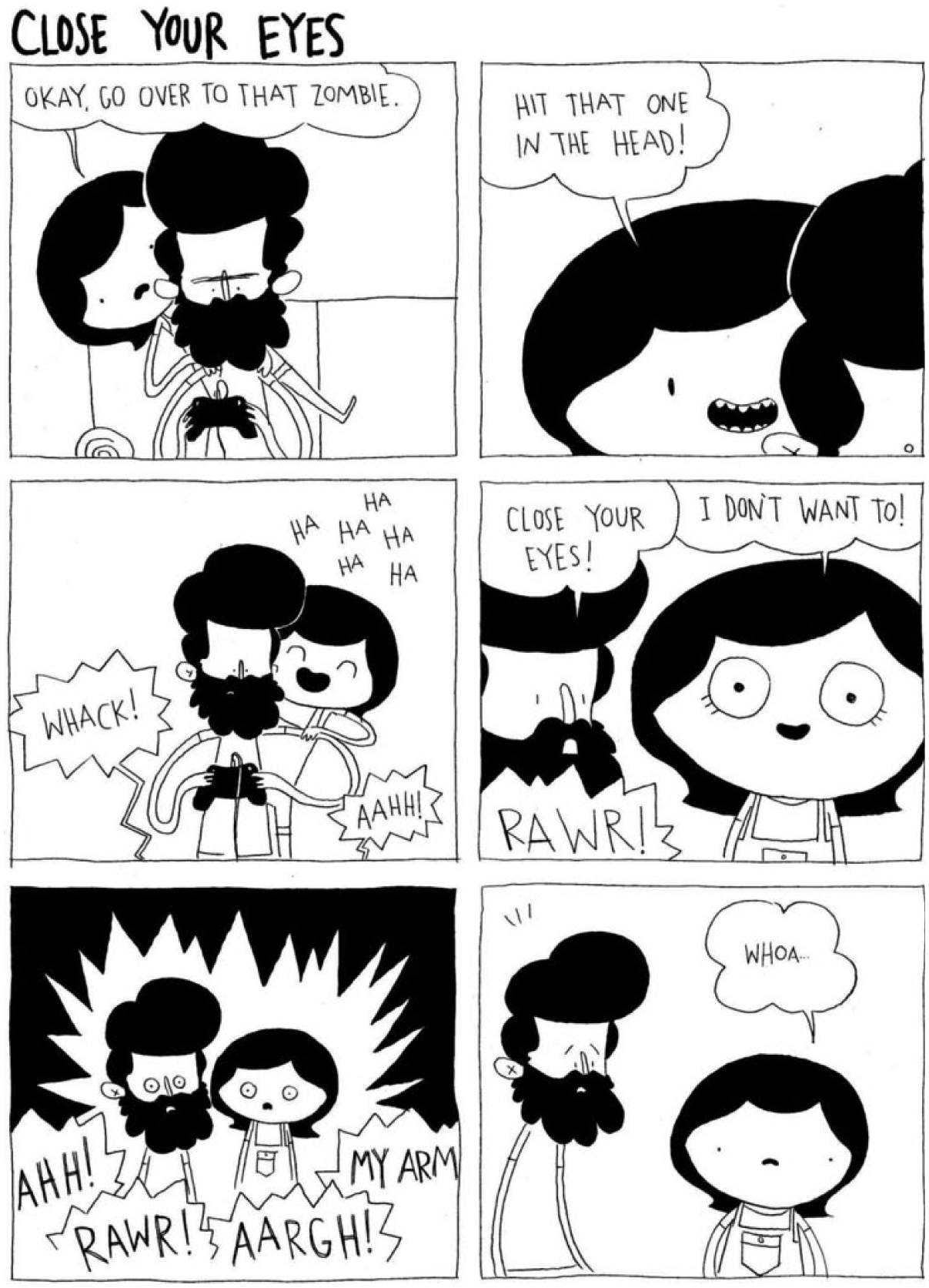
(The longer we play the game, the less cautious she has become. She no longer slinks entirely behind my back. She moves more, grabs my arms, messes my hair. She climbs me, sometimes even flips herself over me on the couch. It is as though her body is moving involuntarily, in ways that seem inhuman. Now, she directs me towards the zombies, asks me to move our character into crowded rooms, places that are inescapable. Her favorite weapons are ones that require close combat: lead pipes, two-by-fours. She likes the chainsaw and laughs when a cartoonish amount of blood shoots out. Her weapon of choice, though, is the hedge clipper: with one snip, we can remove the head of any zombie, send a stream of blood out of the neck. She seems more in awe of the power of this weapon than anything else. All of this makes me unbearably uncomfortable. I reassure myself that we are playing, she is imagining and exploring. But it’s difficult to quiet the voice of the anxious parent, worried about the effects of media. All I want is all any parent wants: not to mess up my child. I know that’s not how it works. I know better, but I can’t help but wonder if we shouldn’t be playing this game. Still, we play. She is having fun. I am, too. And then something happens that hasn’t happened before: a cutscene, a short clip that plays automatically in which I am not in control. A group of zombies moves in on our survivors. We watch them fight back valiantly, but there are too many of them. The screen glows red, the zombies attack an elderly woman, bite at her neck. She screams in horror, blood shoots from her body. It’s awful. And my daughter is watching this. I tell her to close her eyes, but she doesn’t. Instead, she watches. I watch her face: she seems terrified and entertained. I start to panic until I realize I’m making the same face. And we are both terrified and entertained. We are scared and having fun, and I start to think this might be the reason we play this game.)
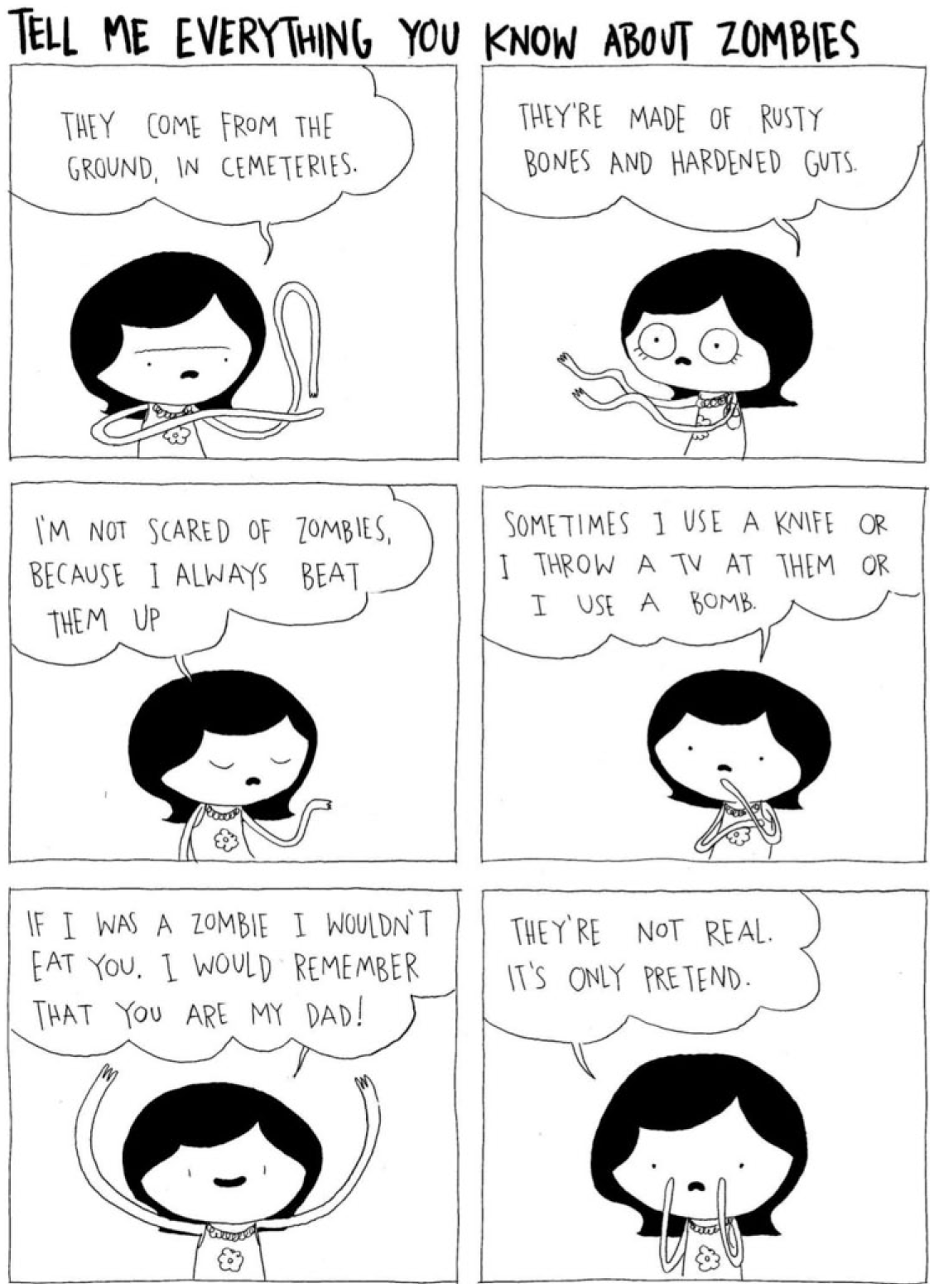
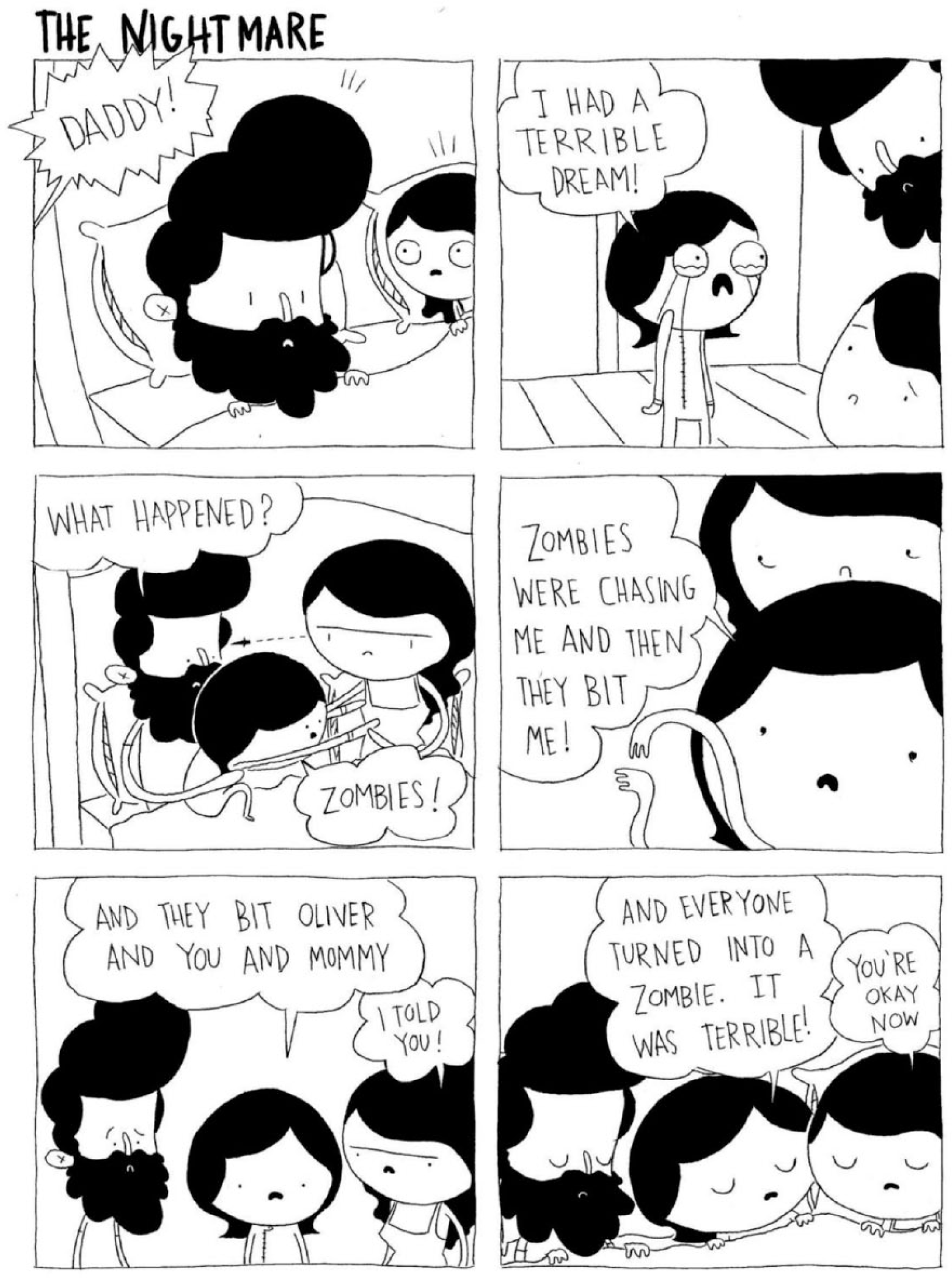
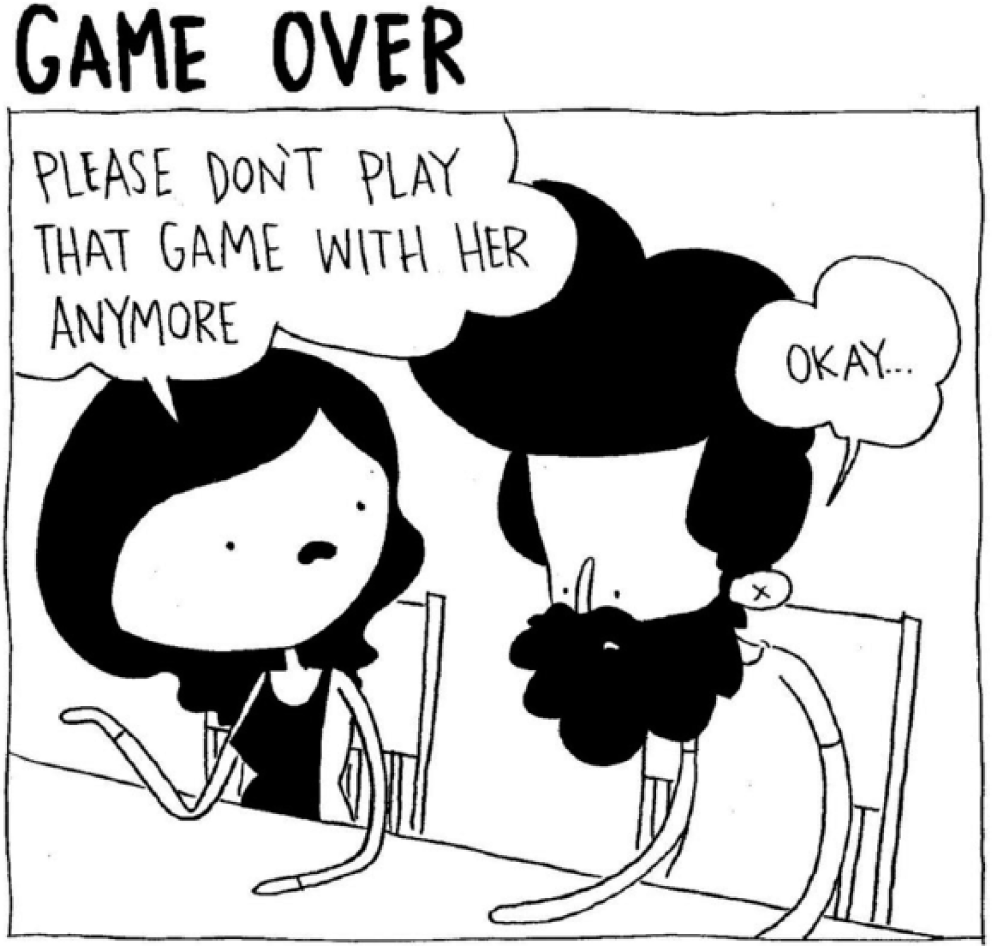
(I try to tell myself I knew this was coming. I try to tell myself that a nightmare is no big deal. I had them when I was a kid. I still have them now, from time to time. The horror of the mind, of the imagination. What comes out while we dream, what we make or what surprises us. I won’t pretend to know anything about dreams, except that they happen and they affect us, and sometimes it’s hard, years later, to remember what was a dream and what was real. And, of course, dreams have consequences. After her nightmare, she didn’t want to play the zombie game again, and I was kind of relieved, because I wasn’t sure it was a good idea anyway. And what did I know about what I was doing? What do any of us know about raising children? Being parents? Guiding our children through a world with our eyes closed, whispering in their ears: it’s not real, it’s only pretend. We say this for their benefit, for sure, but maybe we say it for ourselves as well.)
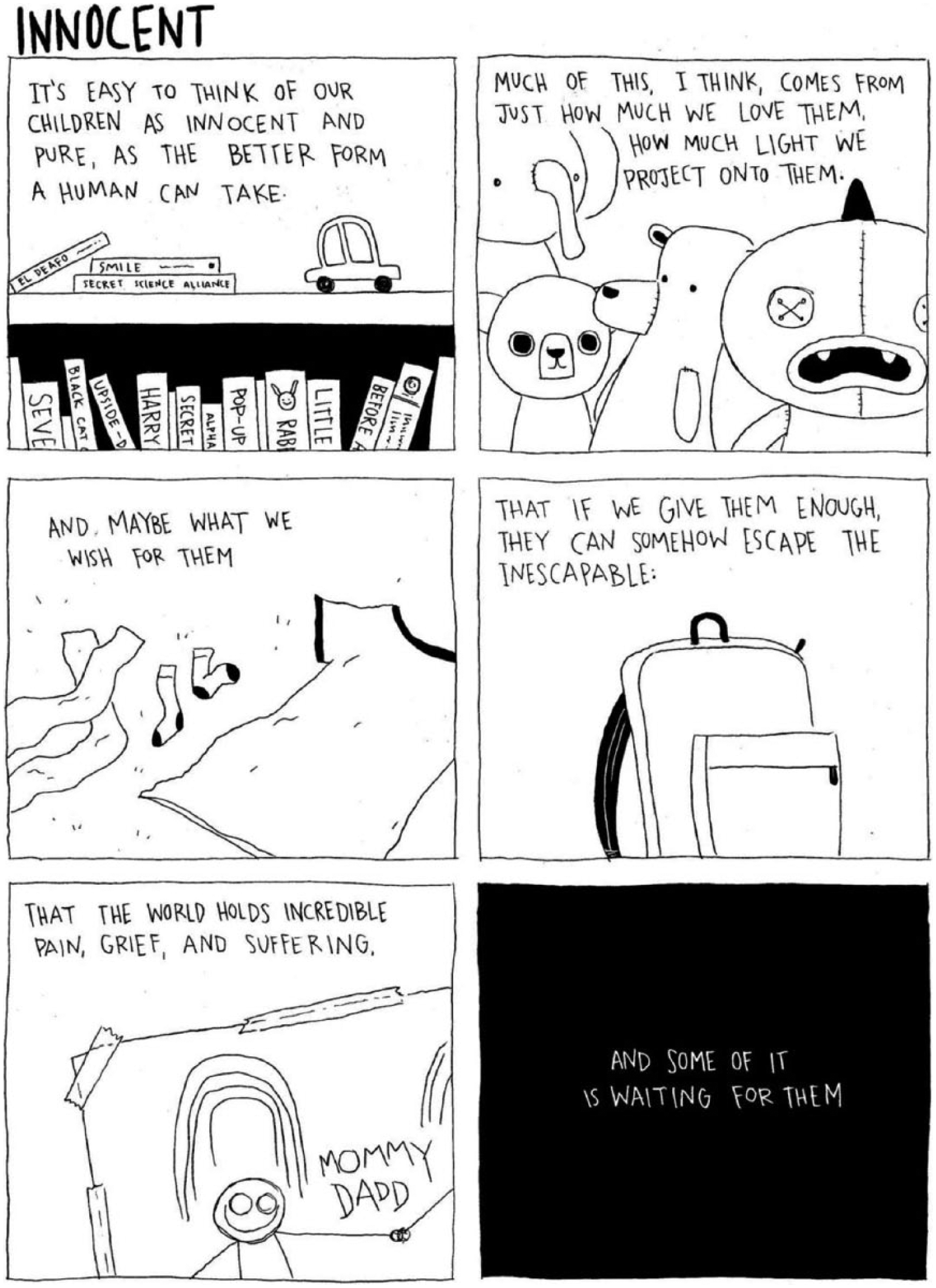
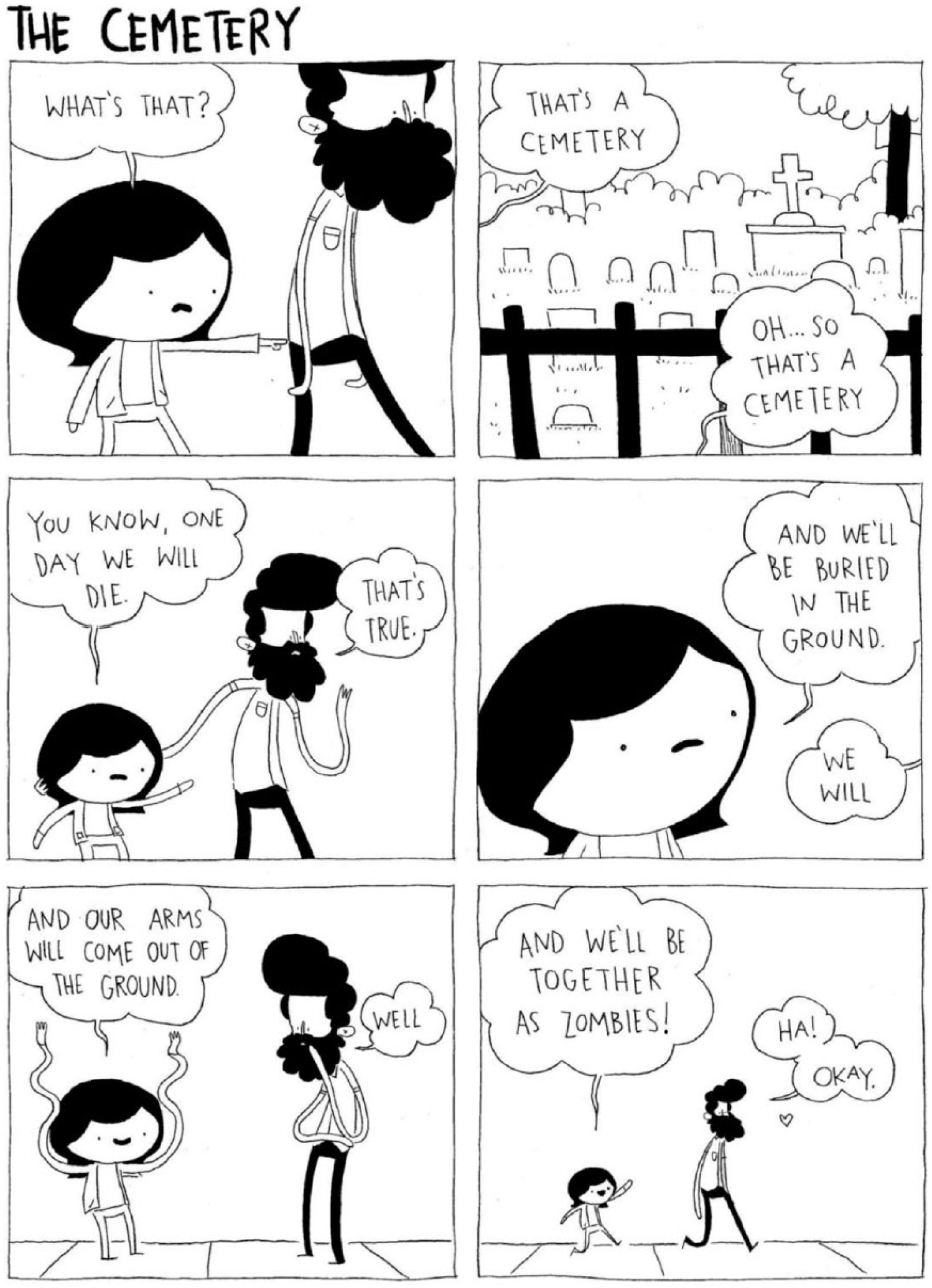
(I’ve never told my daughter anything about the afterlife. Never mentioned a soul or what happens when we die. Still, one day we are at the park after school, and she tells me that when people die they go to heaven. That clouds are just people who have died, and did I know that? As she tells me, I see her make the connection on her own: her grandparents’ dog, my abuelo, all the people she hears about on the news or on television are all in heaven. I respond to her the way I respond to all of her explanations about the world: I affirm her understanding, ask her questions, decide whether an intervention or correction is necessary. The hardest part about discussing these kinds of things with her is that I never really know if she’s pretending or imagining, or if she actually believes this is real. There are times, even, when I’m not so sure there’s a distinction between those, anyway. Still, I almost never correct her, and I don’t now. The world is the way it is, the physics of the universe is set, regardless of our understanding of it. And it doesn’t matter what we believe; the world will correct us itself. One day, she too will feel the unbearable weight of our universe, our nation, our culture, our time. She will live the way we all live, in a place with dangerous demagogues, international tragedies, natural disasters, personal heartbreak, and loss. The world has plenty for us to be afraid of, but right now, in this moment, she has a world where dogs go to heaven, where clouds are people, and when we die we will walk this earth together as zombies.)
Footnotes
Funding
The author(s) received no financial support for the research, authorship, and/or publication of this article.