




Abstract
This article explores vulnerable people’s experiences of the digital and its potential for ‘good’ across four life domains and four digital inclusion levels. Conceptually, it is framed around the notions of the digital good, vulnerability and intersectionality. Methodologically, the study was conducted in 2024 using a social lab framework and the idea of a ‘social lab’ space, in which 19 older people with intersecting vulnerabilities creatively shared insights into their experiences of good aspects of the digital. By combining manual and NVivo-assisted thematic and discourse analysis with visual analysis, we found that the digital good coexists with challenges in the digital domain, and that participants emphasised challenges more than positive experiences in all life domains except education and training. Regarding interventions, they recommended practical assistance, skills training and other support from those with lay knowledge or professional expertise, while discursively placing responsibility for support-seeking on themselves as individual users.
Introduction
This article explores vulnerable people’s experiences of the digital and its potential for ‘good’ in four key life areas: health, social welfare, education and social networking. It draws on an early-stage research project testing a social lab framework for the study of vulnerable people’s digital inclusion. We focus on how older people with intersecting forms of vulnerability (e.g. disability, ethnic minority identity) experience what they understand as the digital good across these four life areas.
The concept of the digital good relates to the positive qualities and benefits of digital technologies, and the idea of a ‘good digital society’ rests on digital technologies that promote principles of equity, resilience and sustainability, among others (Digital Good Network et al., 2024). A ‘good digital society’ is one in which all people have the means to pursue online opportunities and thrive in an increasingly digitally mediated world. Yet, little is known about how the digital good is understood by those who are vulnerable and disproportionately affected by digital inequalities.
Digital inequalities research has shifted from the so-called digital divide to recognising that gaps in digital access, skills and attitudes are intertwined with broader socioeconomic inequalities (Helsper, 2012, 2021; Helsper and Van Deursen, 2017; House of Lords Communications and Digital Committee, 2023; Robinson et al., 2020; Tsatsou, 2011). Digital inclusion is now understood as a spectrum, with individuals ranging from ‘non-users’ and ‘limited users’, who lack digital access and skills to engage with online opportunities, to ‘extensive users’, who have the resources to use digital technologies to their advantage (Helsper, 2012; Quan-Haase et al., 2018; Van Deursen and Helsper, 2015; Yates et al., 2020).
Research has shown that key factors predicting digital exclusion are social class, age, gender, ethnicity and disability, among others (Helsper, 2021; Reisdorf and Rhinesmith, 2020; Yates et al., 2020), and that those at a higher risk are mostly vulnerable groups such as older people, individuals from socioeconomically disadvantaged backgrounds, ethnic minorities and people with disabilities (Helsper, 2021; Tsatsou, 2020). Thus, the concept of vulnerability – understood as increased susceptibility to harm due to social injustices, structural inequalities and personal challenges (Brown et al., 2017) – has started to become central to digital inclusion research (see, for example, Tsatsou, 2022). Empirical studies show that limited digital access and skills prevent people with disabilities from exercising citizenship rights and accessing key social and educational services (Van Toorn and Cox, 2024; Wilson-Menzfeld et al., 2024). Ethnic minorities, including refugees and asylum seekers, also struggle to use essential online services (e.g. health, social housing, counselling) due to limited digital access and/or skills (Polizzi et al., 2024).
As for older people, technological use across the life cycle matters (Hargittai, 2021) and many experience multiple vulnerabilities – from age-related health challenges to intersecting disadvantages linked to ethnicity, disability, socioeconomic status and migration history. Older people’s digital practices are highly heterogeneous, with studies identifying clusters such as ‘innovative traditionalists’, ‘entertainment seekers’ and ‘eclectic media users’ (Gallistl and Nimrod, 2020), ‘rejecters’, ‘utilisers’, ‘browsers’ and ‘augmenters’ (Mason and Pereira, 2011), or ‘non-users’, ‘reluctant users’ and ‘savvy users’ (Quan-Haase et al., 2018). This heterogeneity reflects not only skills and access but also attitudes, trust and leisure repertoires, often mediated by ‘warm experts’ who help older adults navigate complex technological landscapes (Hänninen et al., 2021). Evidence from Spanish ‘silver surfers’ shows wide variation in confidence and trust: some (e.g. ‘daring’ or ‘confident’ users) feel safe and competent in e-commerce and e-government, while others (e.g. ‘sceptical’ or ‘insecure’ users) report low skills, minimal trust and reluctance to perform online transactions without assistance (Llorente-Barroso et al., 2023). Altogether, research shows that older people who lack digital access or cognitive and technical skills (Morris et al., 2007; Wang et al., 2024; Yu et al., 2016) struggle to engage with services, including social welfare (Age UK, 2024; Olsson and Viscovi, 2023; Sheldrick, 2023) and health services (Khanassov et al., 2024; Long et al., 2024), exacerbating vulnerability and isolation (Fang et al., 2025; Seifert et al., 2021; Wang et al., 2024).
It is also well-documented that vulnerable groups cannot be treated as discrete categories. Digital inequalities are complicated by intersecting identity traits (Raihan et al., 2024; Ueno et al., 2023) and personal circumstances including homelessness, personal choice and individuality (Tsatsou, 2020; Williams et al., 2024). Equally, perceptions of digital technologies have a role in engagement with technology: positive perceptions (e.g. saving time, finding employment) motivate use (Eynon and Geniets, 2016; Reisdorf and Groselj, 2017), whereas negative perceptions revolving around scams, fraud, addiction or harmful content deter online engagement and can lead to technophobia, particularly among vulnerable populations such as older adults (Kim et al., 2023; Reid et al., 2024).
This article unpacks vulnerable people’s digital good through the experiences of older people with intersecting vulnerabilities such as ethnicity and disability. It builds on a socio-ecological approach that is mindful of the role of different contexts and actors in shaping digital inclusion (House of Lords Communications and Digital Committee, 2023; McCall et al., 2022; Ramírez-Correa et al., 2025). Thus, it relies on data situated at the intersection of different levels of digital inclusion, capturing the broader networks of support that shape individuals’ and communities’ potential to pursue online opportunities (Ramírez-Correa et al., 2025). The next section outlines the conceptual framework and its operationalisation, followed by the methodology, which is rooted in the early-stage testing of the so-called social lab research framework. The third section presents the findings, followed by discussion and reflection points on the importance of these findings and their implications for future research and practice.
Conceptual framework
The conceptual framework of the study consists of the concepts of the digital good, vulnerability and intersectionality, introduced above.
The concept of the digital good relates to how digital technologies may be harnessed to promote equity, resilience and sustainability (Digital Good Network et al., 2024). Conceived in normative terms, this concept prescribes that interventions are needed to create a positive digital society, with a key action being to ensure that every individual has adequate access and skills for digital inclusion (Digital Good Network et al., 2024). Beyond access and skills, however, the digital good can be understood in terms of benefits and as a necessary condition for overcoming the third-level digital divide – inequalities in offline outcomes derived from the digital (Van Deursen and Helsper, 2015). In testing whether engagement with a certain type of activity is related to ‘collateral’ benefits – areas of digital good – Van Deursen and Helsper (2018) found that what people do online and the skills they have affect outcomes in other domains in ways independent of sociocultural characteristics.
Community-led and bottom-up perspectives on the digital good are particularly important. Abma et al. (2019) advocate for co-produced digital research and inclusive policymaking, emphasising that digital interventions should align with the needs of diverse communities. Thambinathan and Kinsella (2021) propose decolonising digital practices to address power imbalances in technology development and implementation. Such pleas align with the socio-ecological approach (House of Lords Communications and Digital Committee, 2023; McCall et al., 2022; Ramírez-Correa et al., 2025) and inform our focus on experiences of the digital and its potential for ‘good’ across four levels of digital inclusion:
Level 1: Individual empowerment, which involves the intellectual, emotional or professional growth of the individual via the digital.
Level 2: Interpersonal exchange, which involves relationship building and practical problem-solving via the digital.
Level 3: Community involvement, which involves the user’s networking and access to local services via the digital.
Level 4: Societal participation, which involves access to social welfare and participation in socio-political processes via the digital.
As for vulnerability (Brown et al., 2017), digital inclusion research links this concept primarily to age, socioeconomic status, physical or mental disabilities and ethnicity, showing how such parameters create barriers to digital engagement and limit opportunities for participation in the digital world (Pérez-Escolar and Canet, 2022; Tsatsou, 2021, 2022). Individuals facing digital exclusion due to such factors may also face additional obstacles, such as a lack of digital skills, limited access to technology or insufficient support networks, further exacerbating their societal vulnerability (Helsper, 2012; Raihan et al., 2024; Seale, 2013). Yet, counter-narratives from the voices of marginalised older adults living with disability, violence and colonialism show that vulnerability and suffering can coexist with joy, meaning and dignity. Such counter-narratives frame vulnerability as a becoming – a possibility that later life can unfold with complexity and hope – rather than a deficit, while revealing that relationships to the physical, cultural and social environment can both support and hinder this becoming (Côté-Boucher et al., 2024). Understanding the role and dynamics of vulnerability is essential for designing targeted interventions that address disparities in digital engagement and benefits.
To explore experiences of the digital good among older adults with intersecting vulnerabilities, the study also employs intersectionality. Coined by Crenshaw (1989), intersectionality examines how multiple social identities intersect to produce unique experiences of oppression and privilege. It highlights how structural factors shape discrimination (May, 2015). Tsatsou (2021) argues that categories of vulnerability are constructed by shared cultural and stigma-related structures that drive inequalities across digital and non-digital domains. Evidence shows that ageism and ableism are deeply intertwined (Gendron et al., 2024), while place-based stigma intersects with ageing and disability, disproportionately affecting some older adults (McKee et al., 2024). In the digital domain, intersectionality helps explain how individuals articulate and resist intersecting oppressions (Tynes et al., 2016). Tsatsou (2021) supports a digital intersectionality approach that treats intersectionality as both analytical category and praxis. In this study, intersectionality is used to unpack how the dynamics between intersectional identity, marginalisation and agency shape experiences of the digital good.
This conceptual framework was operationalised across four areas of everyday life: (a) social welfare, (b) education and training, (c) health and (d) community and social networking. These domains capture contexts where older adults and other vulnerable groups are particularly likely to experience digital exclusion (Raihan et al., 2024). For example, older adults face skills and access barriers when applying for welfare benefits online (Age UK, 2024; Olsson and Viscovi, 2023), while online learning effectiveness varies across wealthier and poorer nations, and game-based, dialogic, intergenerational and personalised learning appears to be more effective for older people (Gates et al., 2023; Xu et al., 2025). As for health, digital health platforms pose cognitive skills and privacy challenges (Kaihlanen et al., 2022; Khanassov et al., 2024), while in online social networking, older people face a complex set of emotional, physical, technological and other barriers (Galinkala et al., 2024; Janssen et al., 2025; Mohan and Lyons, 2022).
In considering this evidence, the study addresses the following questions:
● In what ways do they encounter both empowering and exclusionary aspects of the digital in their everyday lives? How do intersecing vulnerabilities of age, minority ethnicity and disability shape their experiences of the digital good? How do interpersonal and community networks, as well as individual responsibility influence such experiences?
● What changes in technology design, accessibility and usability are needed to reduce barriers that older adults with intersecting vulnerabilities experience? What is the importance of training, informal learning and community support in enriching their digital experiences? What strategies can improve their sense of safety, trust and systemic support in digital spaces?
Methodology
Research framework
This article draws evidence from an early-stage study that employed the so-called social lab research framework. 1 This framework suggests the creation of a social lab as a physical and metaphorical space in which stakeholders (e.g. civil society practitioners, policymakers) and vulnerable people collaboratively propose initiatives to promote and strengthen digital inclusion. The aim is to foster creative and open dialogue that sheds light on vulnerable people’s needs in the digital world and facilitates the development of optimal interventions.
In more detail, the social lab framework has three pillars. The first is a theoretical pillar that, mindful of the co-existence of multiple vulnerabilities, combines intersectionality theory with Foucauldian social theory, focusing on the notions of power, knowledge, resistance and surveillance (Foucault, 1977 [1975], 2008). The second is an epistemological pillar consisting of a decolonial epistemology, which is critical of dominant knowledge systems shaped by colonial histories and Western perspectives (Thambinathan and Kinsella, 2021). The third is a methodological pillar that drives the implementation of the social lab space, involving collaborative practices and activities for stakeholders and vulnerable participants to work together and learn from each other across three stages of bottom-up and user-centred data collection and knowledge generation.
In the early-stage study, the social lab framework was tested by involving older people with intersecting vulnerabilities, but not stakeholders, as the aim was to first assess the applicability of the three framework pillars and identify potential issues in power dynamics and collaboration between vulnerable groups. This led to the formation and piloting of a social lab in the city of Leicester, England, with the support of AgeUK Rutland & Leicestershire. The lab activities took place over three days in June and July 2024 and AgeUK Rutland & Leicestershire assisted with participant recruitment, venue hire and administrative tasks.
Participatory action research-informed data collection
The implementation of the social lab space was informed by participatory action research’s (PAR) core value of active participation in generating socially impactful research grounded in lived experience (Abma et al., 2019; ICPHR, 2013).
While the study did not involve participants in co-designing the methodological protocols, it innovated in three ways. First, whereas PAR typically embeds participation within existing community or institutional contexts, the research team created a dedicated physical and metaphorical space – the so-called social lab space – to apply experimental, collaborative, intersectional and decolonial practices. Second, within this space, participants were assigned a significant degree of decision-making power to generate narratives, outputs and recommendations during participant-led creative and collective activities. This relied on the epistemological pillar of the social lab framework and on Thambinathan and Kinsella’s (2021) decolonising practices of critical reflexivity, reciprocity and respect for self-determination, embracing ‘other(ed)’ ways of knowing and transformative praxis. The research team incorporated these practices when selecting data collection tools and objects and through self-reflection and participant feedback throughout data collection. Third, unlike PAR studies that often emphasise localised problem-solving, the social lab space had a multi-level socio-ecological orientation (McCall et al., 2022), designed to capture experiences of the digital good across individual, interpersonal, community and societal levels.
Participant profiles
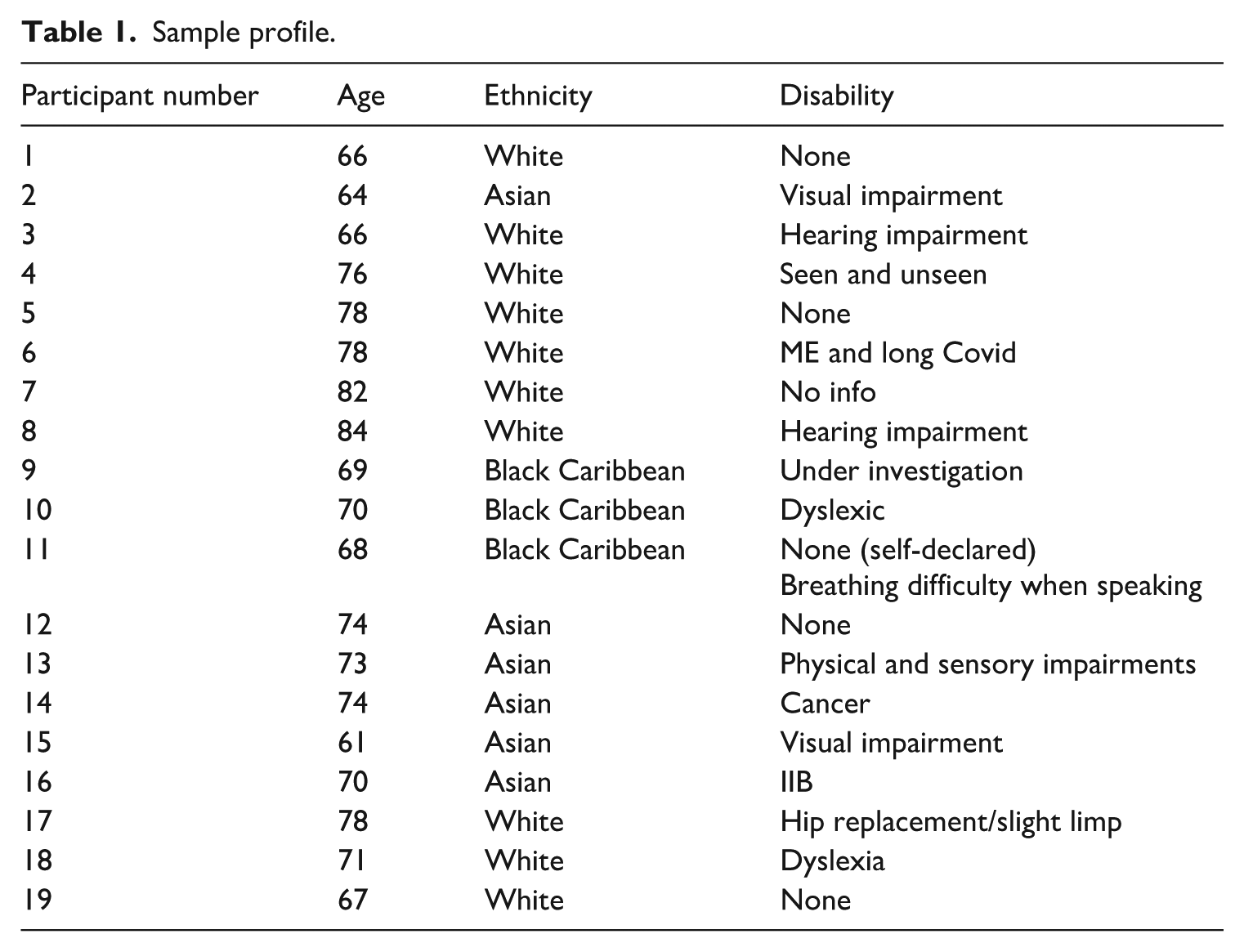
Older people experiencing multiple vulnerabilities participated in the study. Nineteen participants were purposively recruited to represent diversity, primarily in age and secondarily in disability and ethnic background. Several participants embodied two or all three traits, highlighting intersectionality. As shown in Table 1, the participants were eight men and eleven women, most aged 70 or older and represented Asian (mainly Indian), Black African Caribbean and Eastern European backgrounds. Disabilities ranged from visible (e.g. mobility, visual) to less visible (e.g. hearing loss). All participants were pensioners, and some received disability or other benefits, placing them in low- to medium-income categories. Income did not emerge as a salient theme, as the study focused on experiences across four levels of digital inclusion rather than digital materiality.
Sample profile.
All participants provided informed consent, and the research underwent thorough ethical review and approval by the leading research institution’s ethics committee.
Data collection and analysis
In employing the social lab framework and PAR-informed data collection, we designed and carried out eight participant-led activities. In this article, we present two activities specific to the research questions.
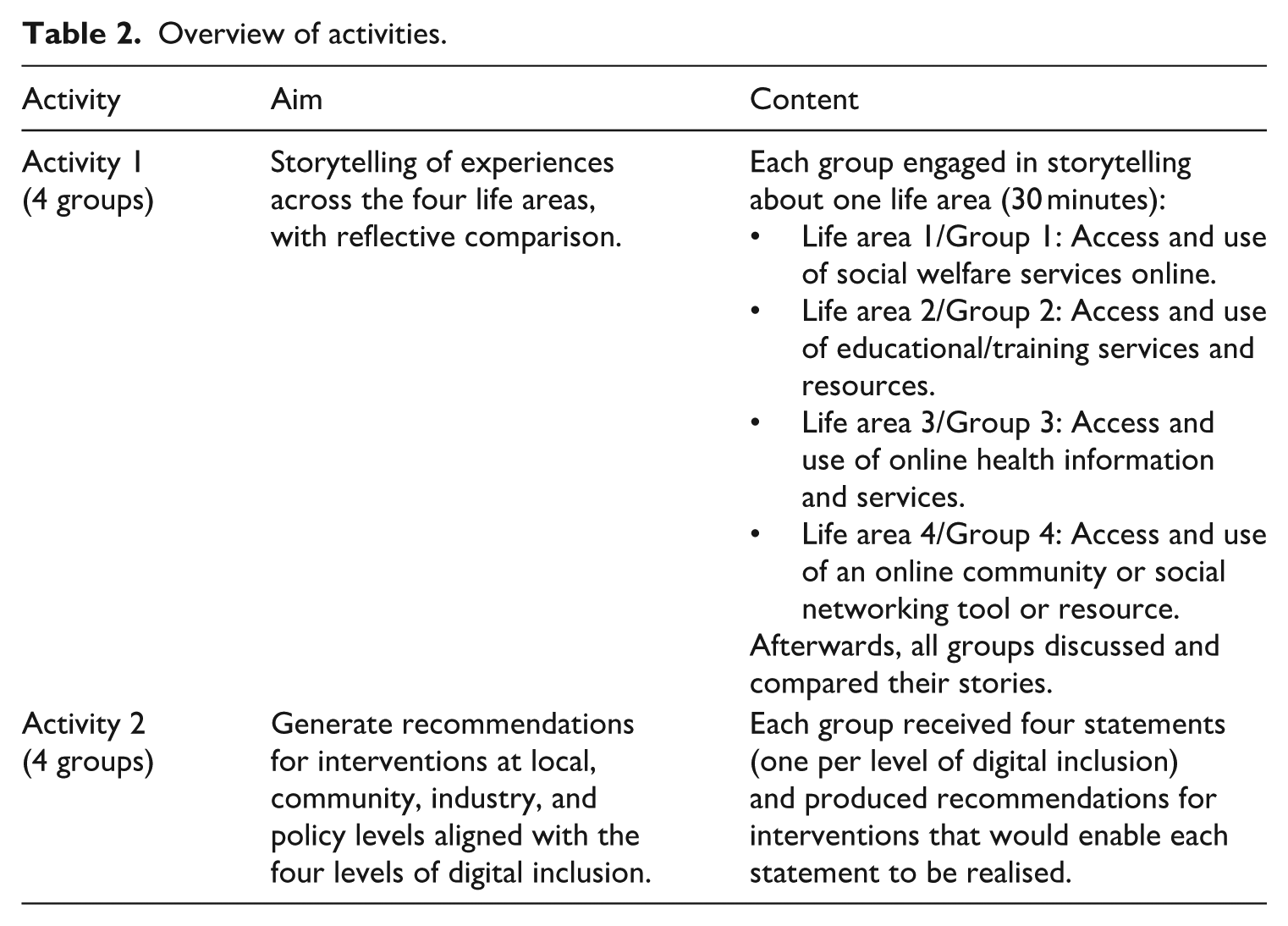
As shown in Table 2, Activity 1 involved storytelling, through which participants shared their personal experiences in their assigned life area and created a collective narrative, followed by reflective comparison across groups. In Activity 2, each group was allocated four statements for the same level of digital inclusion (one per life area). 2 For each statement, groups produced recommendations on needed interventions by answering:
Overview of activities.
For the statement to become true, what:
(a) Resources/WHAT (e.g. technology, software, knowledge, time, energy, good health)
(b) Actors/people/WHO (e.g. teacher, friend, expert, family, comrade, policymaker, seller)
(c) Actions/strategies/HOW (e.g. learn/train, experiment, practice, interact, relax)
are needed?
The objective was to extract recommendations that could be translated into future interventions.
For both activities, the participants used flipchart paper to annotate key concepts and ideas, as well as pens, markers and stickers (e.g. emojis representing different emotions). They also used multi-coloured clay to create objects representing their views and experiences. Once collected, the data – including textual and graphical materials (see Appendices 2 and 3), audio recordings of participant conversations during the activities and observational notes from the research team – were analysed thematically, discursively and visually.
The data were subjected primarily to thematic analysis to (1) descriptively code participants’ views and experiences and (2) aggregate codes into overarching themes (Braun and Clarke, 2006). Thematic analysis was enhanced by discourse analysis, which we used to identify implicit discourses and their linguistic construction through keywords, subject positions, nominations, predications and so forth (Gee, 2014; Wodak and Meyer, 2016). Both analyses were conducted manually and with NVivo, which supported the analysis of lengthy audio data. Because participants used stickers, drawings and multi-coloured clay, we also conducted manual visual analysis, attending to symbolic meanings and emphasis embedded in colour use and visual creation (Rose, 2016).
Findings
Broadly speaking, the multi-level analysis provided rich insights into participants’ experiences of and recommendations for navigating the digital world. Below, we present these insights for each life area in relation to RQ1 (older adults’ experiences of the digital and its ‘good’) and RQ2 (their recommendations for practical interventions).
Digital experiences with health information or services
In storytelling their digital experiences with health information and related services, participants adopted a tone that fluctuated from neutral to slightly negative. The neutral aspect appeared in descriptions of patterns of technology use, whereas negativity emerged in phrases such as ‘cannot use technology’ and ‘I am cut off’. They used minimal colours and stickers in storytelling, offering text-based and primarily descriptive accounts focused on experiences rather than emotions.
As discerned from Figure 1 and the most frequent words in participants’ storytelling, four themes stood out. The first was challenges with technology use. A few participants admitted being unable to use digital technologies for medical help, suggesting limited digital literacy. This connected to and also contrasted with the second theme, accessibility concerns, where participants expressed in their stories concerns about the technical features and design of health-specific websites or tools rather than their own skills. The third theme was mixed experiences with the digital world, with some participants reporting difficulties using National Health Service (NHS) support online, from simple appointment confirmations to more complex interactions. This interrelates with the fourth theme, the usefulness of the NHS App, as participants acknowledged in their stories the practical guidance the NHS App offers for medical help, including how to look up advice on health conditions and prescriptions.
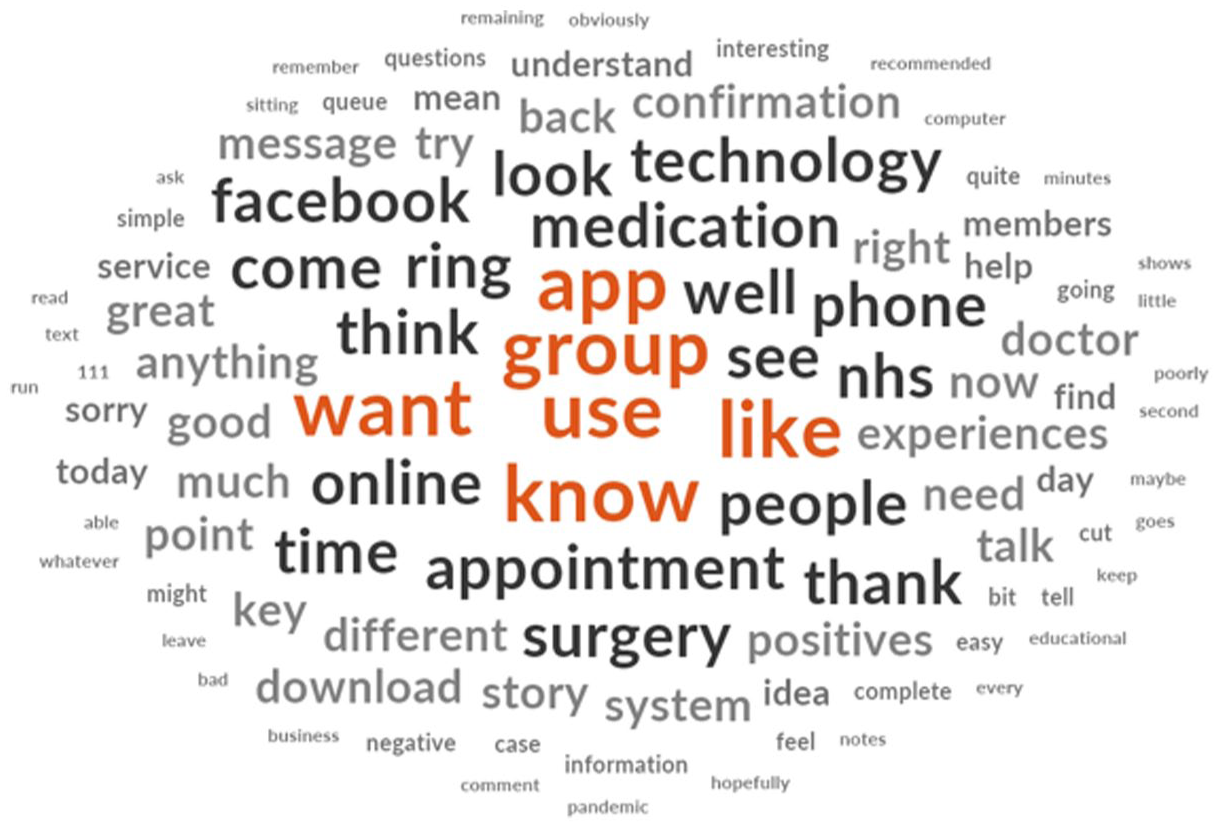
Most frequent words in storytelling about health information or services online.
In Activity 2, participants identified resources, actors and actions that would improve their digital access to and use of health services across all four levels of digital inclusion (Appendix 4). Overall, they identified numerous digital resources, with most relating to access (e.g. connectivity), devices (e.g. laptops, mobile phones) and apps or platforms (e.g. NHS App, Google). Regarding actors, as Figure 2 shows, participants stressed the importance of support from knowledgeable health professionals (GP surgeries, pharmacies, hospitals) and medical support groups.
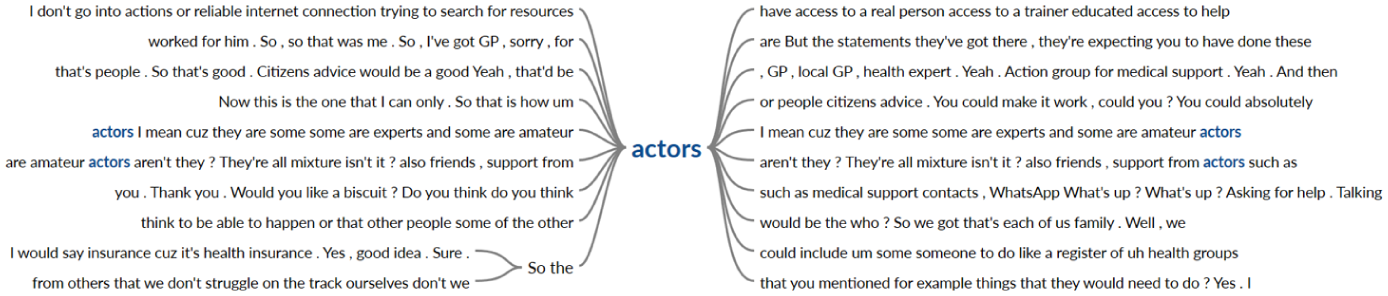
Proposed ‘actors’ for digital good in health information or services.
As for strategies, participants referred to asking relevant actors for help. Interestingly, they framed their reliance on expertise as important, describing health professionals as ‘knowledgeable’, while also valuing lay expertise (e.g. family and friends). At the societal level of digital inclusion though, they acknowledged the need for broader initiatives such as increased funding for health services and more virtual health services. Discursively, although they recognised the importance of actions that involve different actors, they stressed the responsibility of the individual user or non-user – that is, people like them – to seek help and support.
Hence, regarding the first research question, participant stories illustrated both empowering (NHS App usefulness) and exclusionary aspects (lack of skills, inaccessible design) of the digital, hinting that vulnerabilities related to older age (digital literacy gaps) and disability (accessibility concerns) shape their experiences. For the second research question, although they stressed the primary role of health professionals and the importance of systemic support, their recommendations revealed discursive tensions around personal, individual responsibility.
Digital experiences with social welfare services
Participant storytelling around experiences of online access and use of social welfare services brought up the following themes.
Social connectivity and digital inequality
Participants highlighted how, during COVID-19, technology enabled them to stay connected with the outside world and access critical services, mostly related to health and well-being such as General Practitioners (GPs) and Adult Social Care (ASC). At the same time, as shown in Figure 3, words such as ‘vulnerable’ and ‘isolated’ acknowledged that technology can exacerbate isolation when one lacks digital access and/or skills and due to intersecting vulnerabilities such as ageing and disability. The language in their storytelling reflected a contrast between technology’s empowering aspects and its exclusionary effects: while digital technology can keep people connected and fulfil their needs, it is also a source of frustration and alienation for those who cannot easily access or use it.
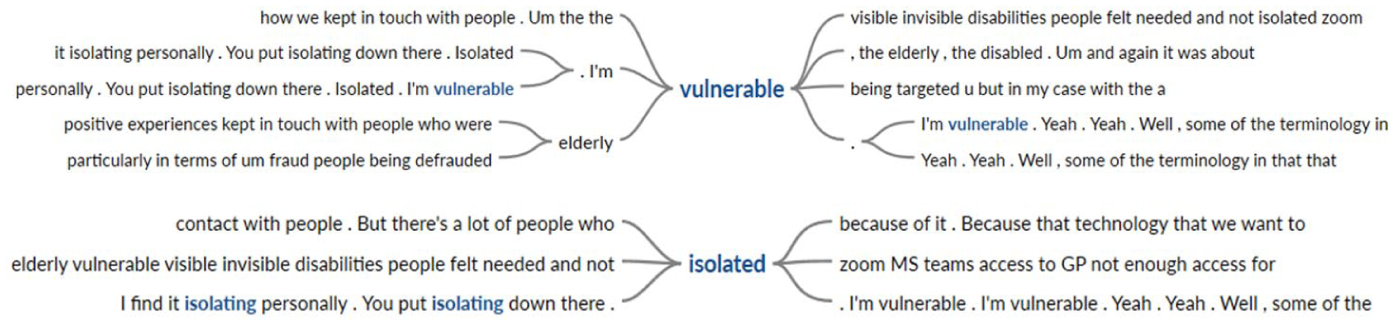
Textual context in storytelling for the words ‘vulnerable’ and ‘isolated’.
Vulnerability to cyber threats and fraud
Participants pointed to increased vulnerability to cyber threats and fraud, noting their susceptibility to online scams. Phrases like ‘Internet fraud’ and ‘elderly caught up in fraud’ reflected concerns that reliance on technology exposes them to cybercrime risks. They expressed scepticism towards digital security and current cybersecurity measures, critiquing them as neither robust nor sufficiently accessible. This suggests participants’ awareness of growing risks in the digital landscape and the need for better safeguards.
Technological barriers and usability
Participants also highlighted technological barriers and usability issues. They emphasised that many digital systems are not user-friendly, especially for those unfamiliar with technology, undermining the support they are offered to adapt to a fast-moving digital landscape. As shown in Figure 4, they referred to inaccessible ‘online benefit forms’ and ‘local authority websites’ and how they exacerbate exclusion from tools meant to serve social welfare needs. They also criticised the rapid pace of technological change – ‘technology is too fast-moving’ – expressing frustration about keeping up with continuously evolving digital tools, as they saw this as creating barriers for those with limited digital literacy.

Textual context in storytelling for ‘online benefit’.
In Activity 2, participants reflected on and identified resources, actors and actions crucial to future interventions (Appendix 5). They highlighted devices (laptops, tablets, phones), connectivity and apps as key resources across all levels of digital inclusion. Key actors included family, friends, neighbours and community stakeholders (e.g. local authorities, libraries, charities, support groups, volunteers). They defined professionals as ‘any knowledgeable person in the relevant offices’. Recommended actions involved contacting key actors or seeking help from friends or neighbours, by phone or in person. As with health services, these recommendations framed future digital good as an individual responsibility, with expert and lay support seen as essential.
Hence, for the first research question, participant stories showed strong ambivalence between empowering and exclusionary aspects of the digital: technology as a lifeline during COVID, but also a source of exclusion when systems are not usable or accessible. These stories hint at the potentially adverse role of vulnerabilities related to age and disability in accounts of difficulty keeping up with change, lack of trust and safety, and usability barriers. As for the second research question, participants’ concerns about fraud, scams and distrust of cybersecurity, alongside limited usability of welfare tools and systems online, pointed towards the need for community and broader support. Yet, participants’ reliance on interpersonal and broader networks remained framed within a broader discourse of individual responsibility.
Digital experiences with education and training services or resources
In participant storytelling about their digital experiences in the third life area, education and training, what stood out was the importance of connectivity, access to information and the practical application of technology.
As shown in Figure 5, participants referred to education and training in broad terms, mostly relating it to online information seeking. For instance, they told stories about online shopping, highlighting information-related activities such as product comparisons, price evaluations and delivery options. They also associated Google with searching for information, news, TV guides and maps. Overall, they perceived such tools as essential for information provision and convenience.
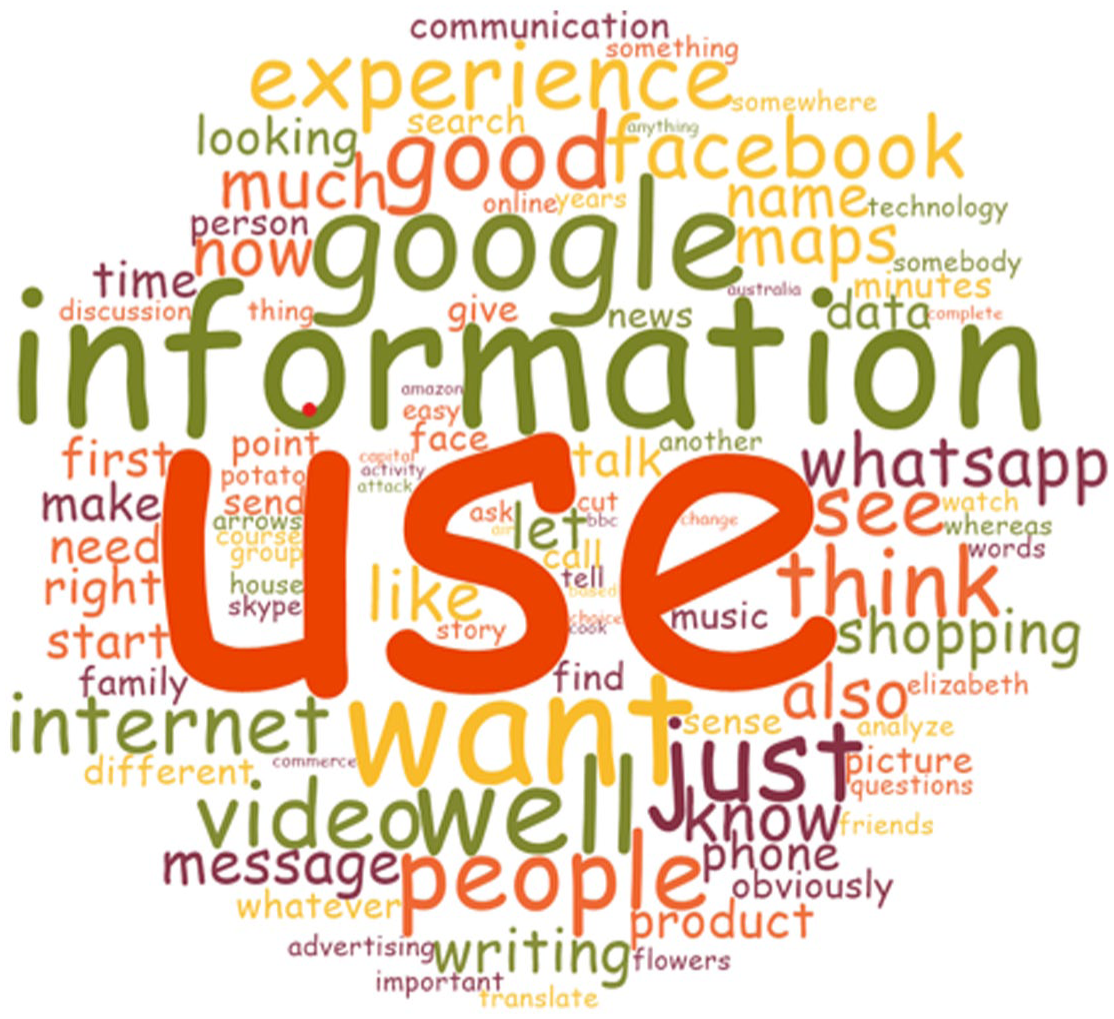
Frequent words in storytelling about education and training online.
The tone in this area of storytelling was primarily neutral to positive. Participants did not articulate overtly negative discourses about technology’s educational or training use and focused instead on benefits and usefulness. They used terms like ‘free’, ‘easy use’, ‘free calling’ and ‘product research’ to discursively construct themes of convenience and accessibility, indicating positive dispositions towards technology’s role in supporting information and knowledge enhancement. Their language was collective, while their shared experiences were described with minimal colours or stickers, similar to the previous life areas.
As for interventions, Figure 6 shows that participants recommended viewing education not only as formal courses and academic learning but also as everyday skills and knowledge development. Thus, opportunities for both formal and informal learning (e.g. adult education provision and YouTube videos) were framed as important. Similar to the previous life areas, key resources included digital tools such as search engines, social networking platforms and YouTube (see Appendix 6). Main actors were technological entities, social media friends and education providers who help access learning opportunities online. Some participants personified technological tools like Alexa, treating them as actors due to perceived ‘intelligence’. Suggested actions ranged from seeking help from key actors to watching YouTube videos to develop new skills and knowledge. As before, participants framed the responsibility for seeking support and learning opportunities online as resting predominantly with themselves.
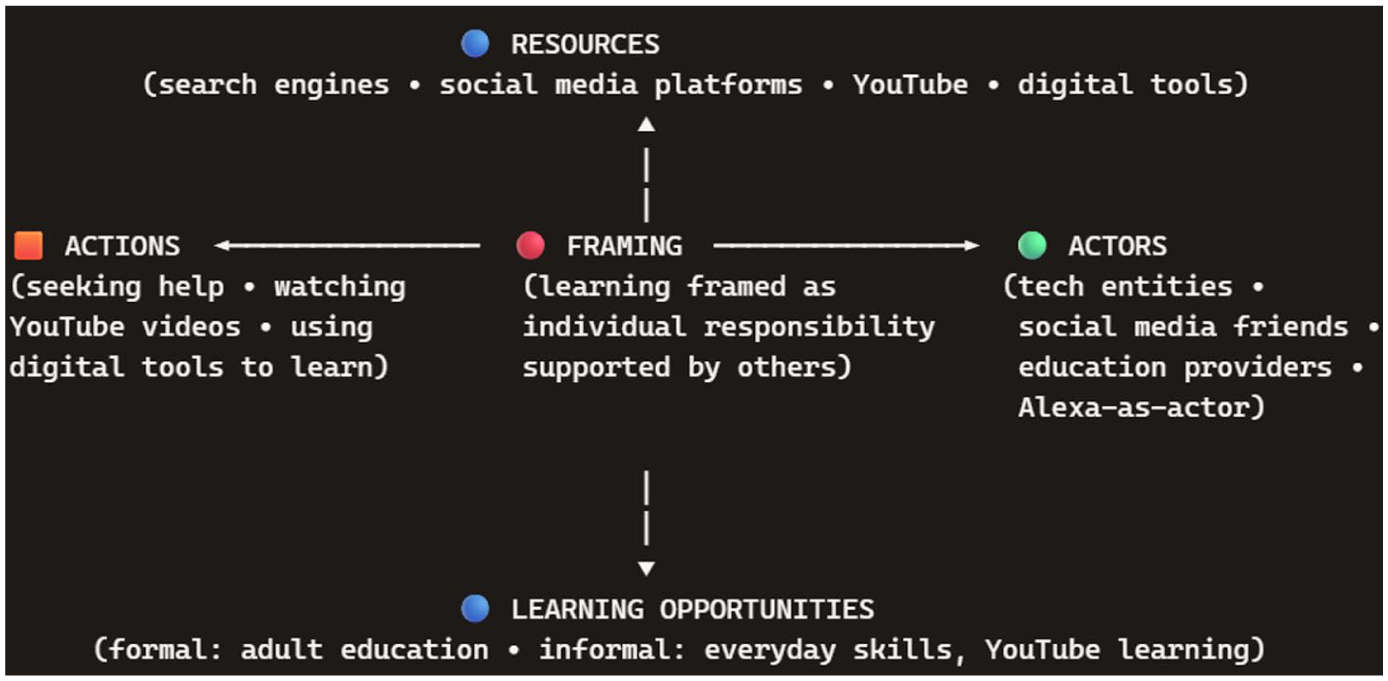
Proposed interventions for digital good in education and training.
Overall, participants’ storytelling presented education as the life domain where empowerment via the digital dominated, with minimal exclusionary experiences. The role of vulnerabilities was less evident in their stories, although older age and possibly minority ethnicity may have shaped participants’ reliance on networks. Regarding the second research question, participants highlighted the importance of adult education, YouTube tutorials and peer/family help, while recognising both human actors and the agency and support provided by technological intelligence. They did not make recommendations on technology design, accessibility or usability, nor did they emphasise strategies for safety, trust or systemic support in this life area.
Digital experiences with community and social networking resources
In the fourth life area – online community and social networking resources – participants focused on social media platforms, primarily Facebook, and on issues of online privacy, safety, advertising and excessive exposure. Overall, they emphasised negative aspects of social media, with shared experiences relating more to downsides than benefits.
As shown in Figure 7, participants used words and phrases such as ‘easy to hack’, ‘no control over it’, ‘personal info’, ‘too open’, ‘dangerous’ and ‘safety’, discursively conveying anxiety about potential dangers and safety concerns. Facebook was portrayed as unsafe and invasive. Participants also remarked that some digital content is ‘annoying’, especially ‘political stuff and pop-up selling adverts’, critiquing commercialisation and political messaging on social media. They expressed concerns about Internet addiction, screentime and idealised self-presentation on social media. Phrases like ‘boasting’ and ‘look at me’ flagged pressures to present an idealised self, which they saw as an external force that undermines users and signals disempowerment. Only a few participants narrated positive experiences, such as receiving updates from friends or reconnecting with people from the past, but these were overshadowed by an overarching negative tone in portraying them as disempowered users with limited agency.

Textual context in storytelling for ‘hacked’ and ‘control’.
Regarding interventions across all four levels of digital inclusion (Figure 8; Appendix 7 for more detail), participants identified digital equipment (e.g. mobile phones, messaging or networking tools) as important resources. They also identified leisure activities, examples of online behaviour and rules around permission as resources that, alongside equipment, could help them feel less lonely and connect with others digitally. Family, friends and mental and legal support providers (e.g. third-sector organisations like Samaritans) were mentioned as key actors supporting those experiencing distressing encounters online, alongside tech companies like Google and technological tools like Alexa. As Figure 9 shows, participants engaged with Alexa as a personified actor they could communicate with directly.
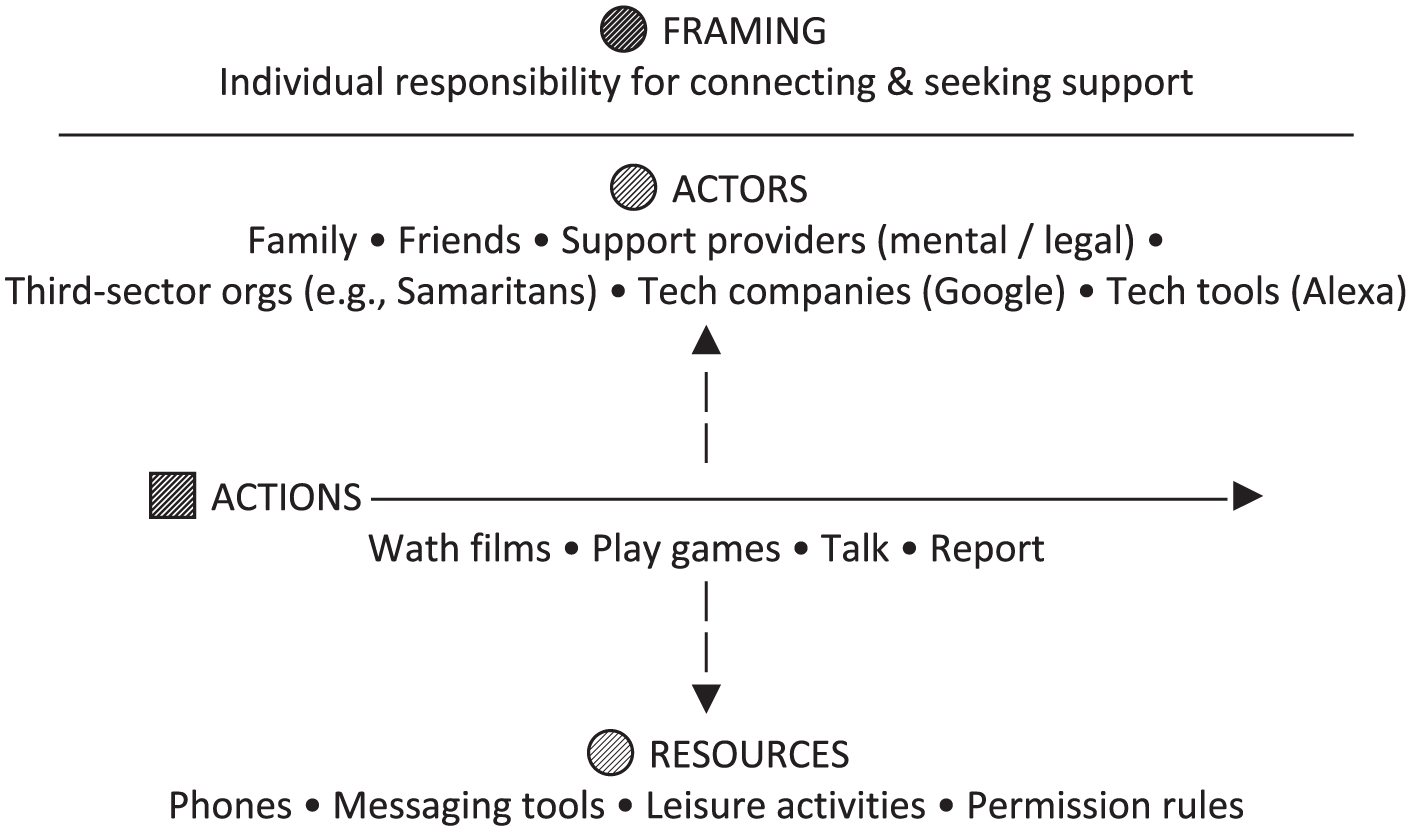
Proposed interventions for digital good in community and social networking spaces.
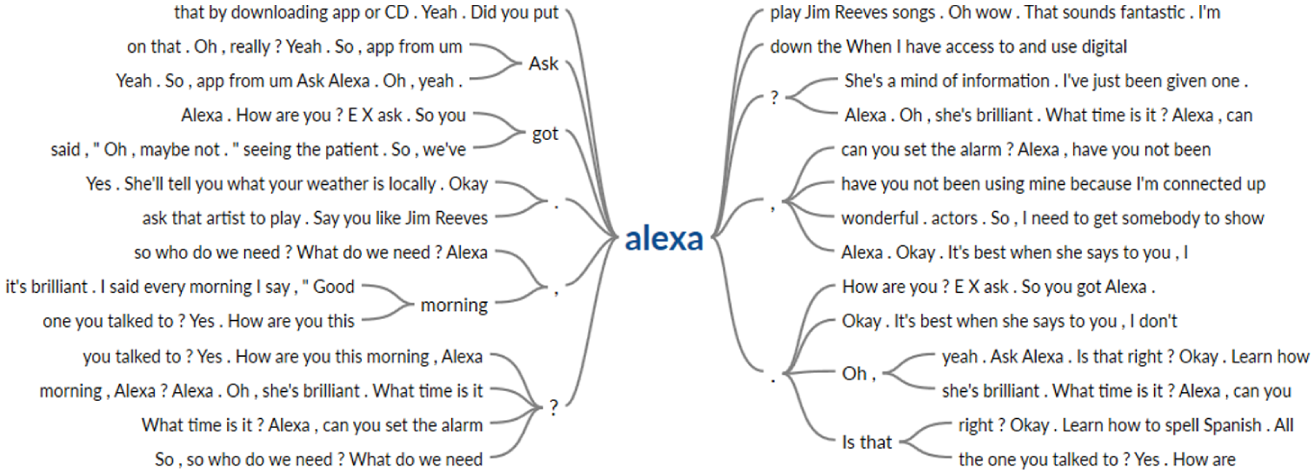
Textual context in the recommendations for ‘Alexa’ as an actor.
Finally, participants recommended strategies for fighting loneliness and connecting with others digitally, ranging from watching films online to playing games, talking to friends and reporting inappropriate content or abuse to platforms or the police. Discursively, as in the other life areas, recommended actions were framed around the individual user’s responsibility to connect with others and seek support from relevant actors when needed.
Overall, in addressing the first research question, participant stories showed overwhelmingly exclusionary experiences, especially on social media (privacy concerns, scams, addiction, disempowerment), with only limited empowerment (reconnecting with friends). The possible role of vulnerabilities such as ageing, disability and ethnicity emerged in the stories, especially in relation to concerns about trust, stigma and safety on social media. This is tied to insights into the second research question, as participant discourses emphasised the role of networks – family, friends, charities, tech companies and the police – as crucial actors for safety and support. Their discourses underscored the limits of individual responsibility, although they did not depart from the idea that the individual user is responsible for seeking help. However, they did not raise issues of technology design, accessibility or usability in their recommendations for this life area.
Discussion
In the broader context of compounded factors predicting digital exclusion – such as social class, age, gender, ethnicity, disability and wider socioeconomic inequalities (Helsper, 2021; Reisdorf and Rhinesmith, 2020; Yates et al., 2020) – our findings reveal both shared patterns and differences in participants’ digital experiences across the four life areas (Figure 10). These findings reinforce the view that digital exclusion is a multidimensional and relational phenomenon (Helsper, 2012, 2021; Robinson et al., 2020). They also extend existing literature by showing that older adults with intersecting vulnerabilities understand the digital good not as a fixed or universal condition but as a context-dependent and uneven set of experiences shaped by their positionalities – an insight that resonates with intersectionality theory (Crenshaw, 1989; May, 2015; Tsatsou, 2021).
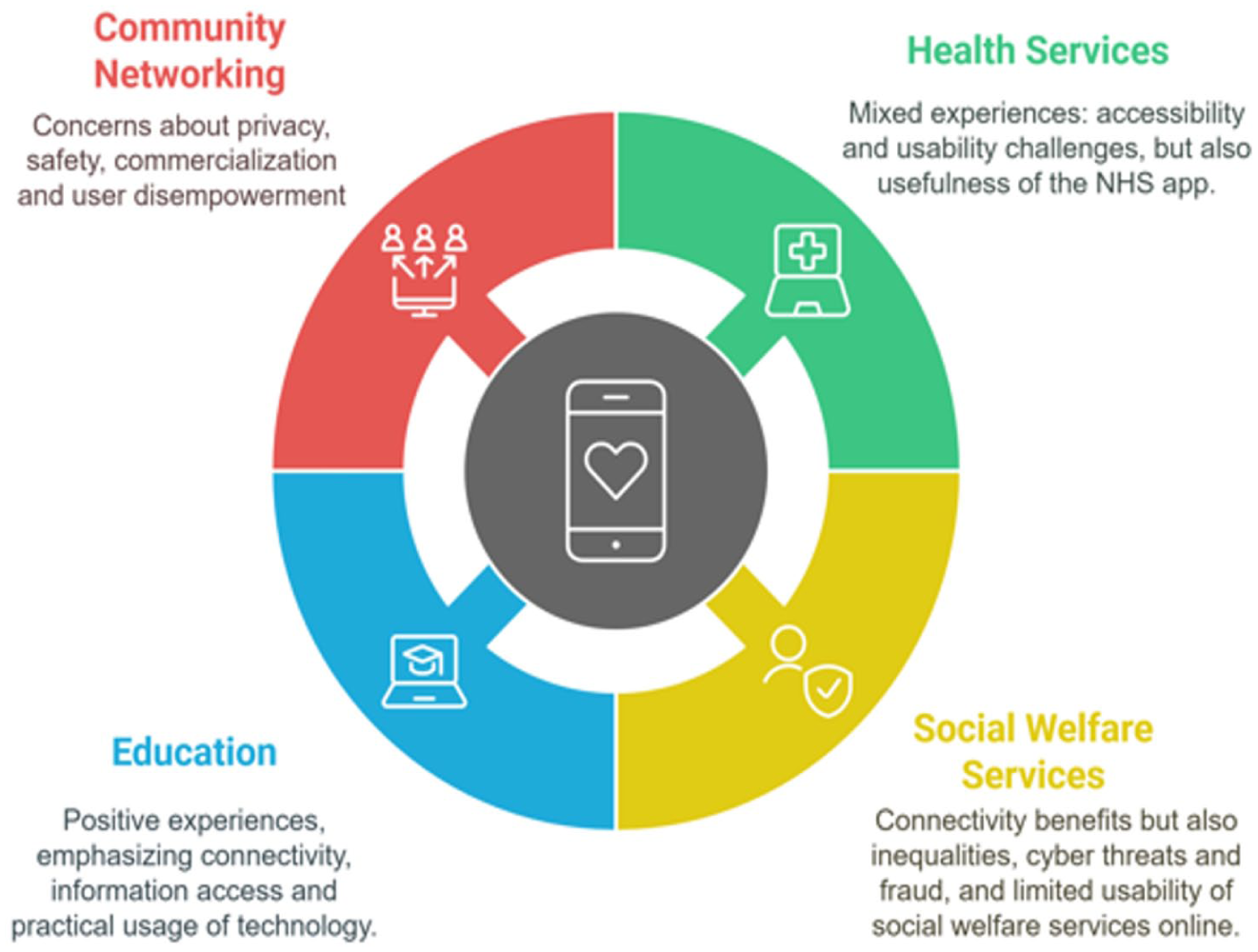
Overview of digital experiences in the four life areas.
In healthcare, participants described a divide between those who use digital technologies effectively and those who struggle. Terms in their storytelling such as ‘useful’ (regarding the NHS App) and ‘differ’ (about experiences) signalled both positive and varying experiences with health-related technological tools. While some valued the NHS App as ‘useful’, others encountered inaccessible design features or lacked the skills needed to engage with digital health services. These narratives echo research on the heterogeneity of older adults’ digital practices (Quan-Haase et al., 2018) and the barriers they face in accessing digital health platforms (Khanassov et al., 2024; Long et al., 2024). At the same time, our findings add nuance to literature emphasising older people’s access- or skills-related barriers (Morris et al., 2007; Wang et al., 2024; Yu et al., 2016), as they demonstrate that participants’ difficulties stem not only from individual skill deficits but also from design, accessibility and usability issues embedded in digital health systems. This supports arguments that digital exclusion is not only user- but also system-based (House of Lords Communications and Digital Committee, 2023; Ramírez-Correa et al., 2025) and aligns with the socio-ecological approach (McCall et al., 2022), which emphasises that digital inclusion emerges from interactions between individuals, technologies and institutions.
In the area of social welfare, participants expressed similar ambivalence. Technology was described as both a lifeline – especially during COVID-19 – and a source of frustration when systems were inaccessible or difficult to navigate. This supports arguments on the complex and unsettling experience of using online welfare systems (Bennett, 2026) and on vulnerability as a dynamic, not a static condition shaped by structural inequalities and lived experience (Brown et al., 2017; Côté-Boucher et al., 2024). In addition, their concerns about cybersecurity, fraud and rapid technological change reinforce evidence on technophobia and distrust among older adults (Kim et al., 2023; Reid et al., 2024). Their accounts also extend evidence on intersecting vulnerabilities – especially disability and ageing (Gendron et al., 2024; McKee et al., 2024) – showing how such vulnerabilities trigger compound difficulties in navigating welfare systems online.
In social networking, participants overwhelmingly described negative experiences. They conveyed anxiety about safety, privacy, commercialisation, political messaging and pressures of idealised self-presentation. Although a minority reported positive experiences, such as reconnecting with friends, these were overshadowed by older adults’ perceptions of online risks that deter engagement (Kim et al., 2023; Reid et al., 2024) and by evidence that social media often fails to deliver meaningful social connection for older people (Galinkala, 2024; Janssen et al., 2025; Mohan and Lyons, 2022). Our findings add a new dimension by showing how participants discursively positioned themselves as disempowered users, reflecting internalised ageism and ableism (Gendron et al., 2024) and highlighting how stigma intersects with their practices (McKee et al., 2024), digital practices in this study. This extends digital intersectionality approaches (Tsatsou, 2021; Tynes et al., 2016) by illustrating how intersecting identities shape not only access but also emotional and discursive orientations towards the digital.
By contrast, education and training emerged as a comparatively positive domain. Using collective language and pointing to shared experiences, participants described digital tools as convenient, accessible and useful for everyday information seeking and informal learning. This challenges narratives that older adults are disengaged from digital learning and supports evidence that personalised, dialogic and informal learning opportunities – such as YouTube tutorials – are effective for older adults (Gates et al., 2023; Xu et al., 2025). Their emphasis on the role of interpersonal networks in supporting learning aligns with research on ‘warm experts’ (Hänninen et al., 2021). Furthermore, their positive orientation towards information seeking extends literature on heterogeneous digital repertoires (Gallistl and Nimrod, 2020; Quan-Haase et al., 2018), suggesting that information-based digital practices may be a domain of greater and more inclusive empowerment.
Turning to proposed interventions, our analysis directly engages with the concept of the digital good, which emphasises that interventions are needed to create a positive digital society (Digital Good Network et al., 2024). Participants identified a wealth of resources, actors and strategies ranging from individual to systemic across all four life areas and levels of digital inclusion. This aligns with socio-ecological models of digital inclusion (McCall et al., 2022) and supports calls for multi-level, systemic approaches that move beyond individualised solutions (Park, 2022; Ramírez-Correa et al., 2025).
First, participants proposed resources relating to access, connectivity, equipment and apps or tools. Their recommendation of digital equipment across all life areas underlines the continuing importance of securing digital access as a fundamental precondition for digital good, confirming persistent first-level digital divides for older adults with intersecting vulnerabilities (Morris et al., 2007; Yu et al., 2016). In education, they additionally referred to opportunities for formal and informal learning online. In social networking, they also identified leisure activities, online behaviour and permission rules as resources. These insights extend existing literature, showing that older adults conceptualise resources not only as material or infrastructural but also as social, behavioural and normative – supporting socio-ecological and intersectional understandings of digital inclusion (May, 2015; McCall et al., 2022; Tsatsou, 2021). These insights also challenge the narrow focus on strategies for overcoming long-standing infrastructural and access-related barriers to older people (e.g. Ma and Sheng, 2024; Mohan and Lyons, 2022) and resonate with decolonial and participatory approaches that emphasise community-defined needs and relational forms of support (Abma et al., 2019; Thambinathan and Kinsella, 2021).
Second, participants also identified a broad range of actors, including knowledgeable experts in community and broader societal contexts, as well as interpersonal networks such as family, friends and neighbours. This confirms the importance of ‘warm experts’ (Hänninen et al., 2021) and support networks (Kuoppamäki et al., 2022) for older people. In education and social networking, they additionally referred to technological entities such as Alexa as actors, adopting discursive personification that blurs boundaries between technological tools and human actors. This extends research on technological personification and anthropomorphism (Griffin and Powell, 2025; Lind, 2025) by suggesting that older adults with intersecting vulnerabilities may attribute supportive or relational qualities to digital assistants, positioning them as quasi-social actors within their digital ecosystems.
Third, participants’ recommended strategies emphasised seeking expert and lay support, including help from professionals and personal networks. In recognising the significance of both formal and informal learning for developing digital skills and knowledge, they added original insights to the limited literature on non-formal digital support for older people (Korpela et al., 2023). In relation to education and social networking, they also suggested using certain content and services online, such as YouTube videos, online films and online games. This supports evidence that older adults increasingly rely on tailored, self-directed and interest-driven learning pathways (Gates et al., 2023; Xu et al., 2025) and extends scholarship on older adults’ digital repertoires (Gallistl and Nimrod, 2020). This reinforces the idea that older people are active agents who draw on diverse resources they actively seek, challenging deficit-based narratives of older adults as passive or reluctant users who internalise ageist stereotypes (Ivan and Cutler, 2021; Lin et al., 2025).
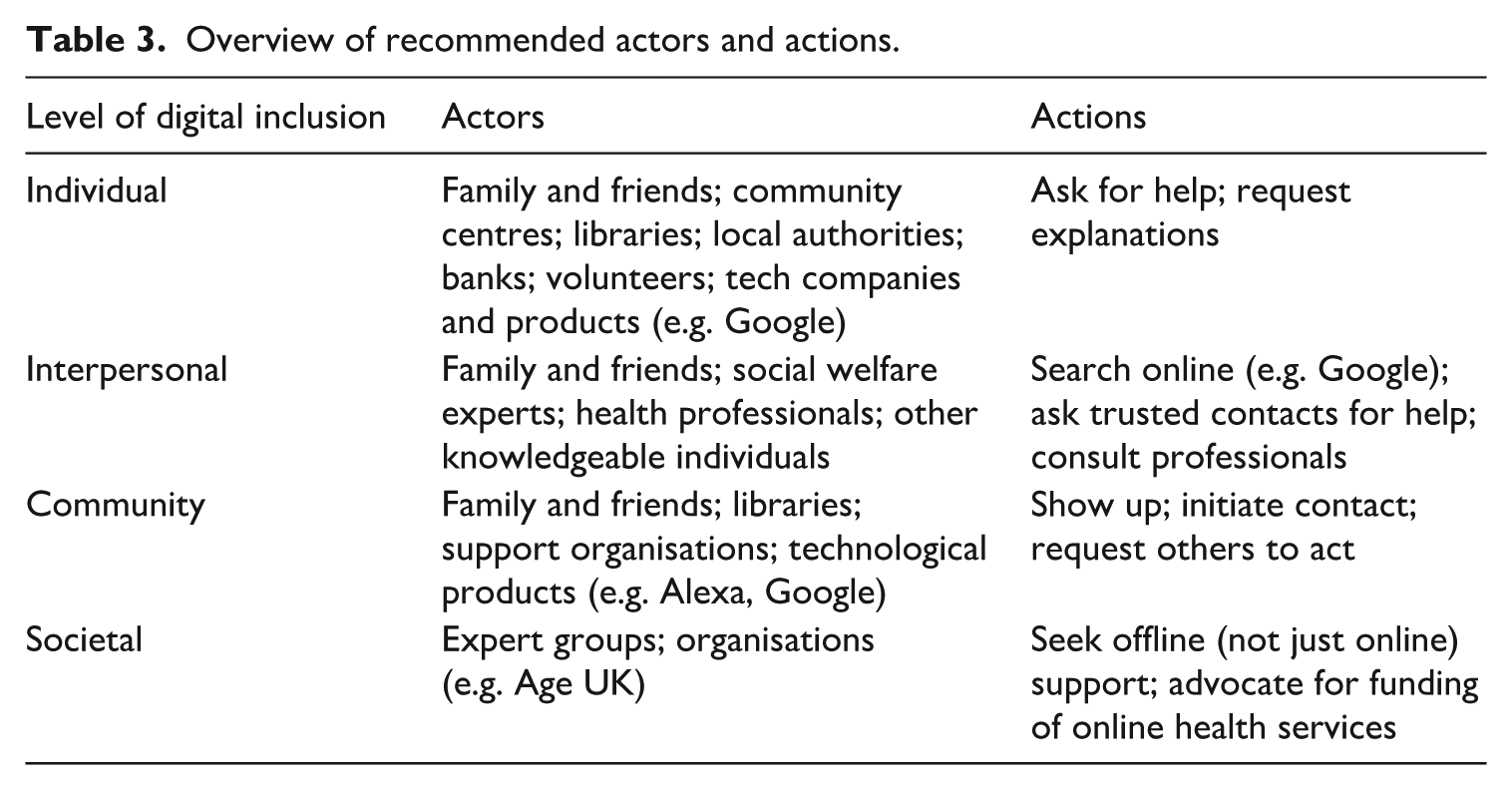
Overall, their recommendations support the socio-ecological view that the responsibility for pursuing online opportunities does not rest solely with the individual but with broader social systems and support networks (McCall et al., 2022). Participants’ recommendations demonstrate that external and systemic resources, actors and strategies are required across all four levels of digital inclusion. Table 3 and the full set of recommendations also demonstrate that collecting data at the intersection of different levels of digital inclusion is essential for capturing the broader contexts and support networks shaping individuals’ digital needs and their ability to pursue online opportunities (Ramírez-Correa et al., 2025).
Overview of recommended actors and actions.
At the discursive level, while participants’ proposed actions and strategies involved a wealth of actors, they were primarily concerned with actively seeking support from those actors – a process that sits largely with the individual. Whereas a small number recognised the importance of more government funding to improve digital engagement with health information and services, most discourses focused on individual-driven action, suggesting that the digital good relies primarily on the responsibility of the user (e.g. asking for help, getting in touch, sharing knowledge). While this highlights agency and self-empowerment, inviting scholarship to explore underexplored areas of older adults’ digital agency and self-efficacy, it also reflects neoliberal discourses that emphasise individual responsibility while obscuring obligations of industry, decision-makers and other stakeholders. This confirms critiques that individualised framings mask structural responsibility (Eubanks, 2018; Sheldrick, 2023; Van Dijk, 2020). Our findings extend this literature by showing how older adults with intersecting vulnerabilities internalise and reproduce neoliberal discourses even while identifying systemic barriers, revealing a tension that remains underexplored.
Conclusion
In this article, we adopted the premise that technological use within the life cycle matters (Hargittai, 2021) and that older people are likely to experience multiple, intersecting vulnerabilities linked to ethnic minority identity and disability. Employing a social lab research framework and adopting a socio-ecological perspective, we studied the digital experiences of older people with intersecting vulnerabilities across four key life areas and four levels of digital inclusion, generating bottom-up insights into how they understand and experience the digital good.
In addressing RQ1, our findings show that participants experienced both empowering and exclusionary aspects of the digital across everyday domains. Yet, the balance between ‘good’ and negative experiences varied markedly across life areas. In healthcare and welfare, participants emphasised barriers rooted in inaccessible design, usability challenges and systemic failures – underscoring that digital exclusion is not merely a matter of individual skills but of structural and institutional responsibility. In social networking, participants’ narratives were dominated by concerns about safety, privacy and stigma, revealing how internalised ageism and ableism shape emotional and discursive orientations towards the digital. By contrast, education and training emerged as a comparatively positive domain, where informal learning, interpersonal support and information-seeking practices fostered a sense of competence and inclusion. Taken together, these insights challenge monolithic portrayals of older adults and highlight the importance of intersectional positionalities in shaping experiences of the digital good.
In answering RQ2, participants’ recommendations pointed to a wide range of interventions spanning all four levels of digital inclusion. They emphasised the need for accessible technologies, reliable connectivity and appropriate devices; the importance of interpersonal and community support; and the value of both formal and informal learning opportunities. While participants frequently framed the pursuit of digital good as an individual responsibility – seeking help, asking questions, sharing knowledge – their accounts simultaneously revealed the limits of individual agency in the face of systemic barriers. This tension highlights the need for industry, policymakers and public institutions to assume greater responsibility for creating accessible, trustworthy and equitable digital environments. These findings extend existing scholarship by showing how older adults with intersecting vulnerabilities both reproduce and resist neoliberal discourses of individual responsibility, while also articulating clear expectations for systemic change.
In embracing the importance of user experiences in relation to digital accessibility, ethical data use and participatory governance (Stirling, 2008), we argue that future research should examine how different vulnerabilities matter across life domains, and how structural inequalities, social contexts and individual agency interact to shape digital inclusion and exclusion. Such work is essential for advancing the vision of a more equitable and just digital society 3 – one in which the digital good is not contingent on individual resilience but supported through collective, relational and systemic forms of responsibility.
Footnotes
Appendices
When I have access to and use digital technologies . . .
When I have access to and use digital technologies:
When I have access to and use digital technologies:
When I have access to and use digital technologies:
Acknowledgements
We would like to thank all participants for their invaluable insights, and AgeUK Rutland & Leicestershire for their support throughout this project. We also extend our gratitude to the colleagues who generously reviewed early drafts of this work.
Funding
The authors disclosed receipt of the following financial support for the research, authorship, and/or publication of this article: This work was generously funded by Round 2, Media FRIS 2023-24, Birmingham City University.
Ethical approval and informed consent statements
This research underwent thorough ethical review and was approved by the ADM Research Ethics Committee of Birmingham City University (approval ref: Tsatsou /#12788 /sub2 /R(B) /2024 /Mar /ADM FAEC). Relatedly, all participants provided informed consent prior to data collection.
