




Abstract
Following the notion that a greater variety of actors can engage in practices of memory work, the aim of our study is to understand how the polyphony of memory evolves in social media networks. We thus conducted an explorative study of accounts for historical figures on Instagram. The accounts were analysed regarding their thematic accentuations, the kind of material employed and presented, the level of professionalism and the social media authenticity they exuded. The result of the study is a typology of accounts for historical personalities on Instagram. We can distinguish between the following six types: virtual exhibition, social media autobiography, artist’s portfolio, inspirational quotes, iconic figure and meme.
Introduction
The availability and possibilities of digital media have transformed processes of remembering (Garde-Hansen, 2011; Hajek et al., 2016): Besides the continuing importance of mass media, physical memorial objects and institutional actors, individual and collective memory practices increasingly include creative digital practices. This allows a larger group of users to partake in creating and maintaining memories. As a result, creating, processing and questioning memories – in and through media – is not just reserved to ‘memory agents’ anymore (Zelizer and Tenenboim-Weinblatt, 2014). The widespread use of social media like Facebook, Instagram and Twitter can thus also be considered at least as a potential for a democratization of memory practices. Social networks create new forms of participation, of possibilities for discussion and criticism of existing memories (Deuze, 2006). Even if the opportunity to participate exists in principle, it has been established that only a small group of users actively post and create content (Jenkins and Carpentier, 2013). Moreover, a distinction has to be made in regards to the visibilities of the mediated memory. Although a Twitter profile with a few hundred followers is seen, liked and possibly retweeted by other Twitter users, mediated memory like that still reaches significantly fewer people than an article on the same topic in the New York Times. But both form part of the entirety of all mediated memories of a historical event and can be considered distinct voices within the polyphony of memory (Schwarzenegger and Lohmeier, 2020).
Against the backdrop of these developments, the aim of this article is to investigate the profiles of historical figures on Instagram. We define historical figures as personalities from different centuries who are well-known due to their work, their biography or their role in society, for example writers, politicians, monarchs, athletes or musicians. Instagram was chosen as it is one of the currently most used and debated social media platforms, which has, in contrast to other platforms (Birkner and Donk, 2020; Dufays et al., 2021; Ekelund, 2022; Niemeyer and Keightley, 2020), not yet gained a lot of memory research attention. Moreover, its visual and emotive character provides specific affordances for memory topics. The contribution is exploratory both on a conceptual as well as on a methodological level: We aim to reconstruct and analyse relevant thematic and stylistic/creative aspects as well as communicative/representational modes in which historical content is presented on Instagram. We thereby aim to develop a typology of Instagram accounts engaged in the memory of historical figures.
To do so, we will first outline the conceptual framework of the presented project, which is then followed by the methodology. Finally, we discuss selected accounts in depth and offer a typology as part of our results.
History and memory in social media environments
Media-boundness of memory
The role of media (technologies) is decisive for memory-related practices. Hoskins (2009) speaks of a mediatization of memory. This term indicates that the documenting, curating, disseminating, but also negotiating and questioning of memories are all necessarily connected to the means of expression, communicatively constructed and collectivized. Similarly, Meyen (2019) refers to a ‘widespread consensus that collective memory and mind could not exist without media’ (p. 77). On one hand, this concerns everyday memories in families (Lohmeier and Böhling, 2017), groups of friends or couple constellations which are realized through photo albums, old letters or saved messenger messages. In addition, and especially, institutionalized memory carriers like history books, monuments, museums or archives as well as other physical and material representations of the past are also dependent on media resources. With a transformation of media and communication technologies as can be observed in the course of digitalization, storage, expression, dissemination, and participation opportunities of and around memories change. Digital media and communication technologies have changed how important historical moments and life events can be recorded (Birkner and Donk, 2020). Media and communication technologies also affect our relationship to memory, to (historical) knowledge and to history in general as at the time, available media technologies determine what it means ‘to know’ or ‘to remember’. Both individual and collective memories are formed within cultural contexts and on the foundation of cultural knowledge as well as through media (Schwarzenegger, 2020; Van Dijck, 2007).
This becomes especially pertinent in digital media environments as hierarchical separations between official and personal sources and representations become fluid. In user timelines, everything is on the same level at first and is subsequently either explored or ignored. Among other things, digital media facilitates that new players, new arenas and new forms of articulation of public communication gain social relevance. In other words, media publics are becoming more plural, more diverse and potentially more dissonant (Pfetsch et al., 2018).
Remediation, bricolage and participation
Remediation, bricolage and participation (Deuze, 2006) are driving components of digital communication culture: This means users can become active participants instead of merely consuming stakeholders and thus are also actively involved in the process of sense-making. Options for expression and presentation of old and new media, old and new sources, old and new narrative forms become linked to one another and old media are expressed through the forms of articulation and logic of the new. To ‘bring to life’ a historical epoch or a historical personality in a social media profile or a social media narrative, the respective content has to fit the representational logic of the respective platform. The various content pieces and (media) sources are transferred and translated into adequate forms of expression. Users and laypeople become part of the negotiation, representation and reflection of history and memory, whose design they can actively influence as hobbyists. Media material is playfully embedded, reinterpreted and remixed (Markham, 2013). The easy and quick, though not always copyrighted, availability of images and documents on the Internet contributes significantly to this (Schreiber, 2017). Working with historical materials is thus not only reserved to professional actors, the material is not only stored in exclusive archives, but openly accessible.
As a result, Instagram accounts for historical figures were created in recent years. While some of these accounts are operated by museums or associations following a certain branding logic (Van Dijck and Poell, 2013), the authorship of many accounts remains unclear or is deliberately concealed. In our study, we focus on accounts representing the online identities of historical figures that use already existing historical documents, pictures, quotes and narratives and transfer them to the presentational logic of Instagram. We are not evaluating the accuracy of depiction but rather focus on typical narratives and styles of remediation.
Following Bolter and Grusin (2000), two main strategies of remediation can be differentiated: Firstly, transparency in the sense of seeking ‘to erase the medium so that viewers feel as if they were in the presence of the object or scene represented’ (Bolter, 2016: 4). The media framework is largely ‘invisible’, the user feels connected to the portrayed. The historical accounts that construct social media autobiographies (see section ‘“Social media autobiography” type’) through role-playing/re-enactment can be seen as transparent remediations. In the opposite strategy known as hypermediacy, the peculiarity of the media staging is not only clearly visible but sometimes even emphasized and celebrated (Bolter, 2016), for instance, by caricaturing historical personalities and events or translating them into memes. We will return to this point in our ‘Results’ section.
Furthermore, the authors of the historical Instagram accounts can single out certain aspects of a personality, highlight and emphasize them whereas others remain unexposed or vague. The accounts always show a selection of content, a certain perspective on the personality. Moreover, the tonality of the captions and the style of the pictures that are used suggest different communicative frames (Goffman, 1959; Matthes, 2014) or purposes (Herring, 2007; Shifman, 2013). In terms of a polyphony of memory, different interpretation patterns of memories are in interaction or conflict with one another, memory discourses become multifaceted. We reconstructed the communicators’ strategically intended way of presentation through the concrete displays in their accounts; some content creators also participated in a survey, as will be elaborated in section ‘Content creator perspective – communicative/representational frames’.
Current research on social media and memory
Not only does the participatory nature of digital communication culture enable the low-threshold participation of new and different voices in the memory discourse and establish new platforms as important arenas for this discourse; memory can also be presented in a new media setting and in new dissemination contexts that closely connect to the users’ lifeworlds, established usage modes as well as representational conventions and reception expectations. Digital and social media environments can become relevant arenas for memory discourse and informal historical knowledge transfer.
Focusing on performative practices of making history and memory is an especially helpful perspective when it comes to research about history on social media. Pickering and Keightley (2006) call for research
to recognize the various ways in which people are involved in putting the situated past into some form of narrative order for themselves, or in critically negotiating mediated representations of the past for their relations to collective identities and experiences. (p. 925)
They introduce the concept of nostalgia to understand the distinct and specific relationships of the present with the past in different sites of meaning making, which are in their view too often framed as regressive while they might also hold progressive potential. Moreover, they find ‘a constant tendency to slide inexorably towards either cultural elitism or cultural populism in critical assessments of nostalgia’ (Pickering and Keightley, 2006: 934). Since their study in 2006, the potential and dynamic of digital and social media for memory practices have changed massively. Hoskins (2018) sees the recent digital revolution as shaping the ‘new memory ecology’ and a collective memory culture shifting to an era of memory of the multitude. Research on remembering on and through social media definitely shows a range of diverse practices and dynamics that are entangled with the various platforms’ affordances.
In his study on retrospective Facebook groups for example, Ekelund (2022) identified three modes of mood work that are dominant in these groups: fascination, nostalgia and knowledge desire. Expression of fascination through the Facebook reaction buttons of wows and likes signals a general positive attitude towards historical content that aligns with the platform’s logic of affective feedback loops. Nostalgic posts express a bittersweet longing for the past, often inviting others to share their own memories regarding a specific object or period of time. The least common posts are those expressing a desire for knowledge, which adopt a neutral and objective language while providing information on the past. As we will elaborate in our findings, we also found different styles of expression similar to ‘moods’ in the Instagram accounts we studied. The character of interactions in the groups is described as rather fragmented and general as the platform constrains more elaborate and reflexive collective engagements (Ekelund, 2022: 10). Moreover, Ekelund (2022) identified visuals as emotional canvases onto which members ‘paint their own experiences and memories’ (p. 6), primarily those with high-aesthetic quality. In general, he finds that Facebook groups afford an interface that feeds into ‘retrotopian tendencies of the present’ (Ekelund, 2022: 13), producing the past in rather reductive and simplistic ways. This poses the question what kind of memory culture Instagram’s interface promotes or affords.
‘Pastness’ and nostalgia can also become objects of economic interests, which might result in a tension between or an overlap of creative agency and commercial exploitation, as Niemeyer and Keightley (2020) point out in their study about the Facebook page and ‘nostalgia business’ of DoYouRemember.com. They describe a remembering practice that involves ‘intermingling the playfulness of pastiche and the fulfilment of consumerist desires with a search for temporal moorings, mnemonic connections and narrative identities’ (Niemeyer and Keightley, 2020: 1640).
More recently, TikTok has gained scholarly attention as a medium for historical content, especially in the context of the holocaust. Based on the analysis of several TikTok accounts of holocaust memorials like former concentration camps, Ebbrecht-Hartmann and Divon (2022) found six modes of historical storytelling (commemorative, responsive, explanatory, educational, visit, testimony). These modes allow education and commemoration in forms that harness the platform’s features, aesthetics and dialects by creatively unpacking complex topics.
Contemporary history seems to be a particularly popular epoch for (research on) content creation on social media (Halstead, 2021; Makhortykh, 2020). Social media discourses on history and memory are often related to current social movements (Merrill et al., 2020), contested issues (Birkner and Donk, 2020; Dufays et al., 2021) or even counter narratives (Liu, 2018). Another strand of research studies how historically relevant places, especially memorials, are pictured and therefore co-constructed through visual media online (Adriaansen, 2020; Bareither, 2021; Commane and Potton, 2019) or how museums curate their online presence (Manca, 2021). The relatively new phenomenon of online memorials often relates museal remembrance with activist practices like the studies of Cherasia (2022) and Davidjants and Tiidenberg (2022) show. Historical content that has social relevance in the present seems to be prominent on social media or at least in research on social media as it connects retrospective with prospective memory narration, like Davidjants and Tiidenberg elaborate referring to Tenenboim-Weinblatt (2013).
Other projects or initiatives have explicit didactic or educational aims and are usually hosted by institutional actors. The German public media project ‘@ichbinsophiescholl’, for example, translated the last months of the life of the young resistance fighter Sophie Scholl to Instagram, provoking discussions about respectful ways of commemoration (Korsche, 2022). A German citizen science project 1 looks into history on Instagram and TikTok while also trying to engage users in critical content production (Bunnenberg et al., 2021). There are even more examples of interactive presentations beyond social media, like ‘spur.lab’, a website that develops digital forms of storytelling about concentration camps in Brandenburg.
Democratization of memory: opportunities and risks
The potential diversity of concurrent voices, facilitated by digitalization and contributing on different levels, from different positions and with different intentions to the overall memory discourse, has been described by Schwarzenegger and Lohmeier (2020) as a ‘polyphony of memory’. It concerns, for example, groups that are underrepresented and even marginalized in the ‘official memory discourse’ of certain periods, like women, people of colour or specific ethnic or religious groups that can challenge or break dominant narratives or actor constellations. In the process, new groups of actors can enrich, nuance and add neglected aspects of memory matters.
However, polyphonic memory contributions in digital media environments do not simply represent an expansion of possibilities in a positive sense but create new ambivalences. Forms of encountering and dealing with history, historical content and occasions of remembrance that happen outside of formal institutional contexts and in addition or contrast to traditional memory actors can contain the positive potential to reach different and new groups of people in their lifeworld through memory-related content and topics. This creates opportunities to confront users with historical memory contexts in a comprehensible, everyday and accessible way. Yet, they also harbour potential disadvantages.
If the dissemination of historical knowledge and memory work largely happens in the context of social institutions such as museums or schools, these institutions or their actors can also directly be made responsible for the content, chosen modes of presentation and forms of communication as well as their interpretations, comments and assessments. With social institutions’ claim to validity of memory communication comes the possibility of recalling, challenging or denying that claim, namely following the rules of scientific or public discourse, which allows for criticism and correction.
Historic or memory-related content that is shared or produced in digital media environments does not, however, have to meet or follow these requirements. Moreover, while some content might be understood by the audience as a historically reliable (re)presentation, it might not fit or claim this role nor be able to bear any of the related responsibility. Digital media also increases the risk of content being historically misrepresented (with or without revisionist intention). Memory discourses can be increasingly distorted and alienated (Birkner and Donk, 2020). Problematic perspectives on history can get widespread attention. In general, studies on the competence to critically assess information online as well as to recognize false information and deception are not very optimistic (Edgerly, 2017; Hargittai et al., 2010) – especially since the cognitive effort to try a review is often not taken on at all.
Instamemories: historical personalities on Instagram
Research questions and approach to the field
In our study, we aim to reconstruct and analyse relevant thematic and creative aspects of historical content on Instagram as well as communicative/representational frames in which this content is presented. We are interested in the expression repertoires and how typical social media genres come into play. We chose to study accounts that exclusively represent historically relevant individuals as it seemed interesting how the structural affordances of Instagram and the biographical–chronological logic of the accounts co-construct this specific kind of historical content. Based on the emerging typology, we will critically discuss if and how practices of remembrance on Instagram can function as potential enrichment or as a risk to historical awareness and understanding or facilitate an emotive connection in memory communities.
Instagram as a research field is becoming more dynamic. The platform has existed since 2010, has been part of Meta since 2012, and has 1 billion active users per month. Instagram was originally developed as a smartphone app, all functions and affordances are therefore closely related to the possibilities of this specific hardware and its integrated camera (Schreiber, 2020). At the moment, Instagram is not only the most important social network for (especially female) users in the age group of 15–34 (Kemp, 2022), influencers and advertisers, but also a central element of popular culture, of the media zeitgeist and thus also the advertising industry. With a clear focus on images as the main element, Instagram essentially accelerated the rising importance of visual communication and aestheticization in social media (Leaver et al., 2020). The accounts examined in this article mainly use existing historical picture collections and therefore a rather atypical picture genre for Instagram.
Recently, video content gained more relevance on Instagram, as the competitor TikTok managed to attract even younger users with respective functions. In order to use Instagram, an account must be set up with which other accounts can be subscribed to, to get their postings and stories displayed in your own feed when you open the app. The posts are algorithmically sorted based on their relevance and chronology. All accounts which are examined here are public. Accounts can be verified, which means that ‘Instagram has confirmed that an account is the authentic presence of the public figure, celebrity or brand it represents’ (Instagram, 2022). In our sample, this most likely applies to the accounts of the type ‘virtual exhibition’ (see section ‘“Virtual exhibition” type’).
In this article, only feed posts (see Figure 1) are included as data, as that is the primary channel through which the examined accounts communicate. Each post consists of an image that is framed by the user icon and username, location tag (through the picture), number of likes, caption (optional incl. hashtags), date of posting and comments.
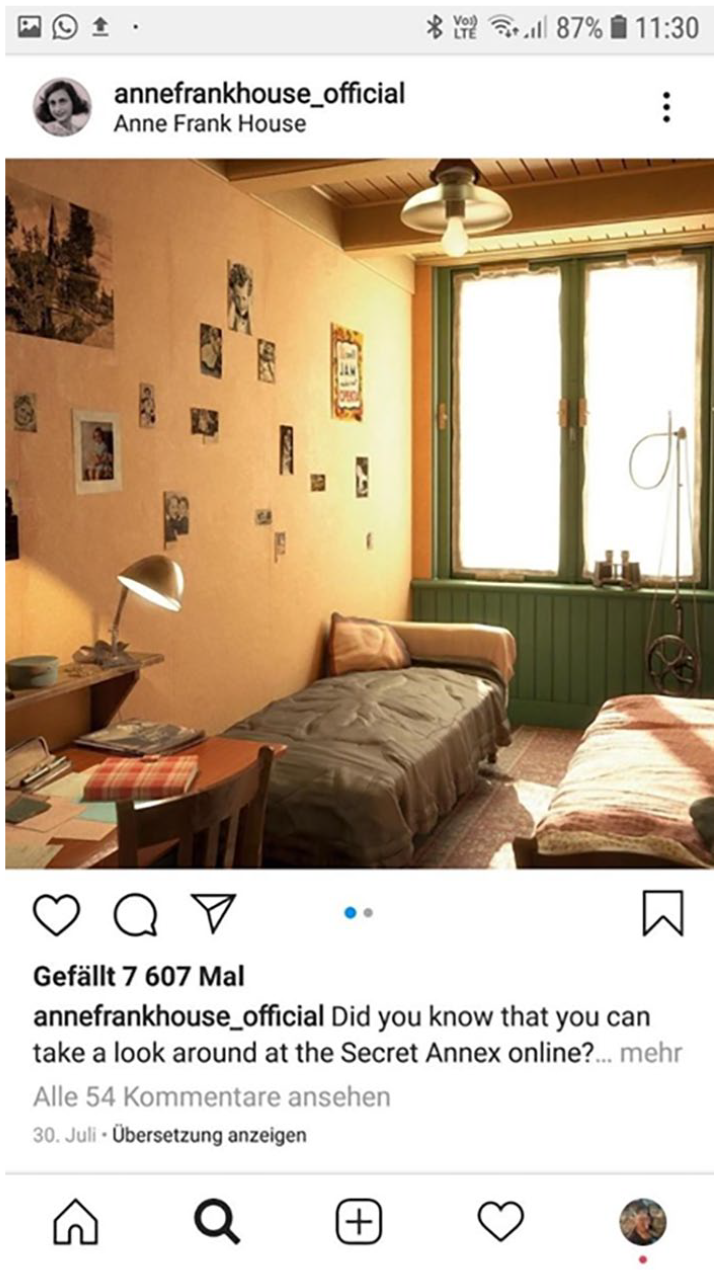
The structure of a post.
Methodological approach
The aim of the exploratory study was to qualitatively reconstruct typical narratives and styles in profiles of historical figures on Instagram, resulting in a typology. Finding the accounts of historical figures on Instagram turned out to be challenging. Accounts were found through (1) a targeted search of famous historical figures (e.g. Cleopatra, Napoleon) and museums, (2) suggestions through Instagram and by (3) searching through hashtags, like #instahistory #museum #history #geschichte (German for ‘history’). The targeted search turned out to be the best strategy as the Instagram algorithm and the search through hashtags often delivered accounts with historical content but not fitting our requirements of dedicated accounts of historical figures. The sample of this study thus originated exploratively and we analysed 35 Instagram accounts in total.
Following a circular and iterative approach in the tradition of grounded theory, we aimed at a theoretical saturation regarding the different thematic accentuations and communicative frames of the accounts. Our sample contains a variety of accounts (see Appendix 1), for example, those of Marie Antoinette (@marieantoinetteofficiel) and Napoleon Bonaparte (@napoleonbonaparte_officiel) as well as Elvis (@elvis), Ursula K. LeGuin (@ursulakleguin), Stalin (@josefstalinofficial) and Franz Josef Strauss (@fjsoffiziell). After a first inspection of the accounts in May 2020, the team of authors discussed possible categories of analysis. They were elaborated, adapted and again empirically reviewed and critically discussed. To enable a qualitative type formation (Przyborski and Wohlrab-Sahr, 2014: 384), the implicit, latent design patterns of the accounts were compared in relation to four structurally relevant categories (elaborated in more detail below), resulting in six types. Two years after the first data collection, a few more accounts were identified and used to test the typology. The typology is presented in the following section ‘Historical figures on Instagram – a typology’.
To learn more about the content creators who host the accounts, we designed a short online survey asking about the nature of their interest in the historical figure, how much time they spend on the account, what they know about their followers and so on. We contacted them in spring 2022 through direct messages to the accounts and also through commenting on recent postings; however, even after multiple attempts, only five people hosting four different accounts replied. Nevertheless, these four accounts represent a diverse range of approaches to historical content creation and their responses offered helpful and interesting insights. The insights we gained through the survey are summarized in section ‘Content creator perspective – communicative/representational frames’.
Historical figures on Instagram – a typology
The historical figures can be systematized according to the following four aspects:
Thematic accentuations. Some accounts focus on the person’s biography, others on their performance and their work, others present a mix of biography, performance and work. Naturally, accounts of artists often show their artistic work, for example, painted images, performances of songs or quotes from literary works and so on. If a historical person is notorious for their private life, the account emphasizes biographical elements (e.g. Queen Victoria).
In addition, it is relevant how much and what kind of material of and about the person exists. Which technologies were available during the person’s lifetime? What was technically possible, for example are there paintings, photographs, videos?
The level of professionalism ranges from institutional memory work (in the sense of Kuhn, 2010) to curating from a fan perspective; sometimes the accounts use a fake first-person perspective; often it is not clear who is running the accounts. Therefore, the agenda or strategy of the account is seldom transparent. The spectrum ranges from officially verified accounts of estates or political parties to hobby sites hosted by private individuals.
Finally, the degree of social media authenticity varies. Authenticity in this context means that typical elements are used, such as hashtags, memes, shareables, filters, tags, and screenshots of tweets and that the accounts interact with the followers.
Based on these four analytical categories and inspired by the blog typology of Herring et al. (2004), a matrix typology with two relevant axes emerged (see Figure 2).
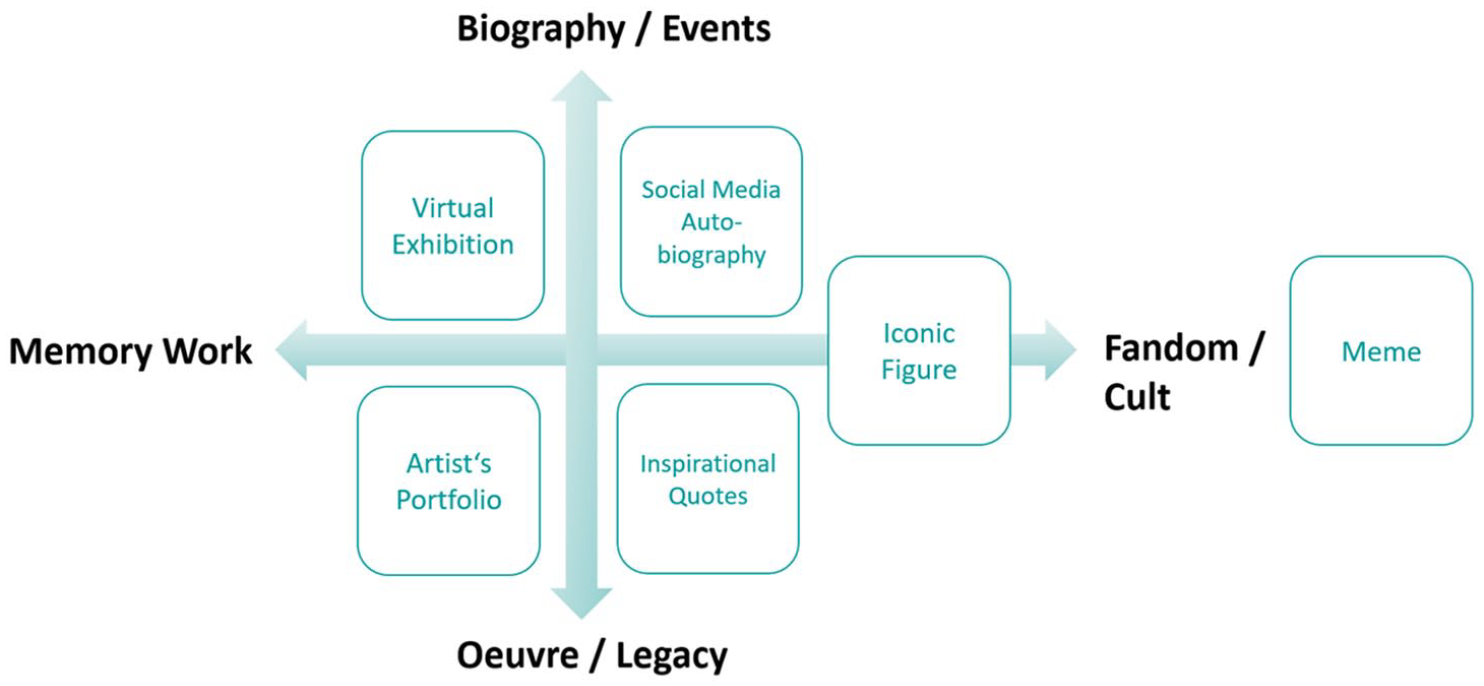
Typology of historical personalities on Instagram.
The horizontal axis from memory work to fandom describes the level of professionalism and whether the account has an institutional or fan background. The vertical axis describes the thematic focus of the account, ranging from those who mainly elaborate the biography of a historical figure to those who focus on their oeuvre (usually artists, writers, painters, etc.). Within this matrix, six types of accounts with specific combinations of characteristics can be located, which do not always exist in their pure form.
While the ‘virtual exhibition’ and ‘social media autobiography’ types share a focus on biographical content, like family life, places of residence or accomplishments, the ‘artist portfolio’ and ‘inspirational quotes’ type highlight the oeuvre of the historical figure, showing their paintings, performances or quotes from literary works. The last two types, ‘iconic figure’ and ‘meme’, neither focus on the work nor the biography of a historical figure, but the featured personalities are iconic enough to just stand for themselves. They either become the subject of intense fandom, as in the ‘iconic figure’ type or are used as memetic elements in a humorous or ironic way, as in the ‘meme’ type. The six types will now be elaborated in more detail.
‘Virtual exhibition’ type
Accounts that are assigned to this type, are usually professionally curated and often times hosted by the institutions responsible for the legacy of the historical figure.
Images in these accounts show the person themself and other relevant people that are related to the biography of that person. The captions contain detailed descriptions and sometimes archival references. This type thus resembles a classic museum exhibition that wants to comprehensively inform about the historical personality. The tonality is mostly neutral-affirmative, rarely critical. As can be seen in Figure 3, important moments from the life or career of the person are shown in professional pictures and labelled accordingly. The account of Muhammad Ali is officially verified by Instagram, which is marked by the blue checkmark next to the account name. This verification usually only happens with proof of the responsibility for the legacy. Muhammad Ali’s account has 3.8 million subscribers and describes itself as follows: ‘Paying tribute to the life & legacy of Muhammad Ali’. Nevertheless, it remains unclear who exactly is responsible. A link in the description leads directly to a web shop for merchandise. This is where the virtual exhibition overlaps with the iconic figure (see section ‘“Iconic figure” type’). The account consists of high-quality historical photo and video documents in colour and black and white; however, there are also stylized quotes and graphics (see Figure 4). It becomes clear that it is not just about the memory of a top athlete, but also about Ali’s socio-political position and his work against racism. Ali is shown fighting, but also in interview situations. The captions of the postings include descriptions of famous fights or inspiring quotes (‘I’ve never let anyone talk me into not believing myself’. – #MuhammadAli) and references to the values for which Ali stood up: ‘March is dedicated to #MuhammadAli’s core principle, Respect. #Ali believed in treating others equally and respectfully, no matter their race or social status’.
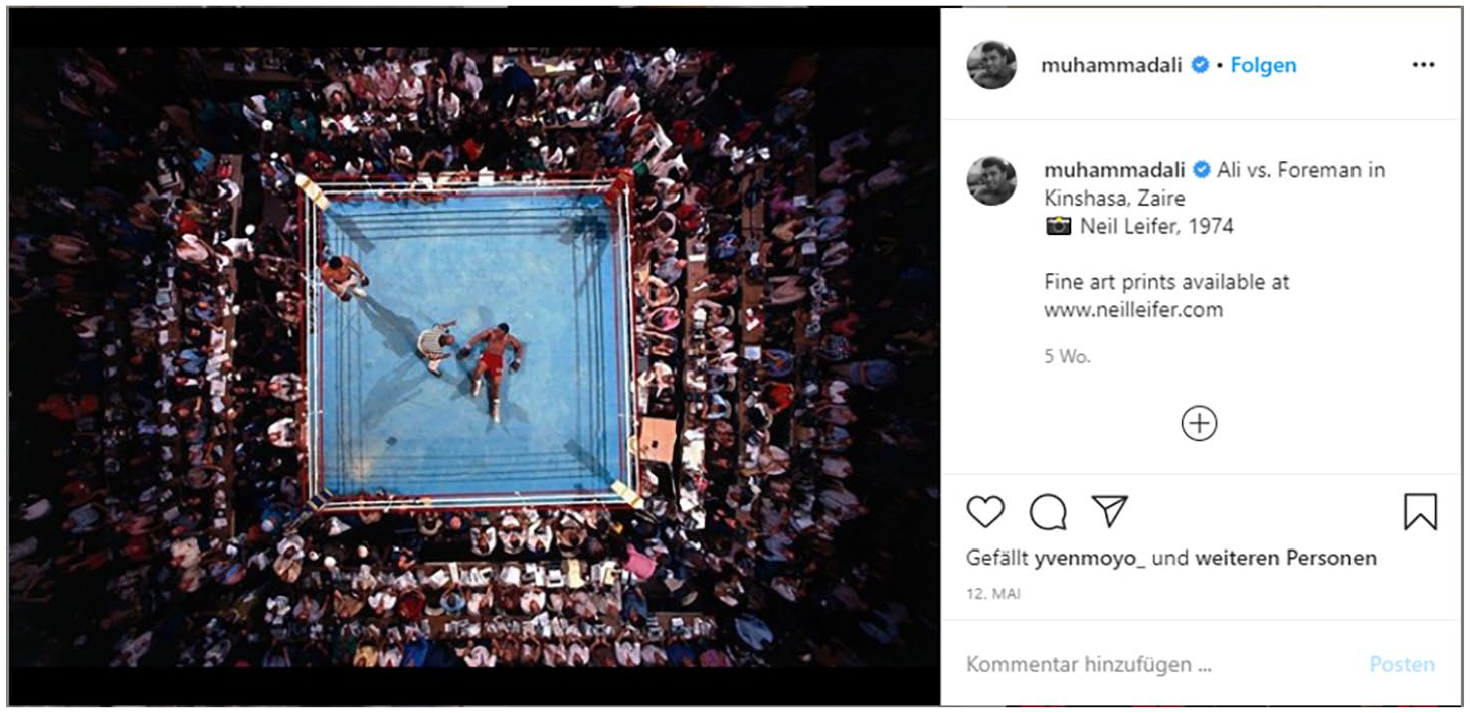
Screenshot post (https://www.instagram.com/p/CAF4kaEnMZD/).
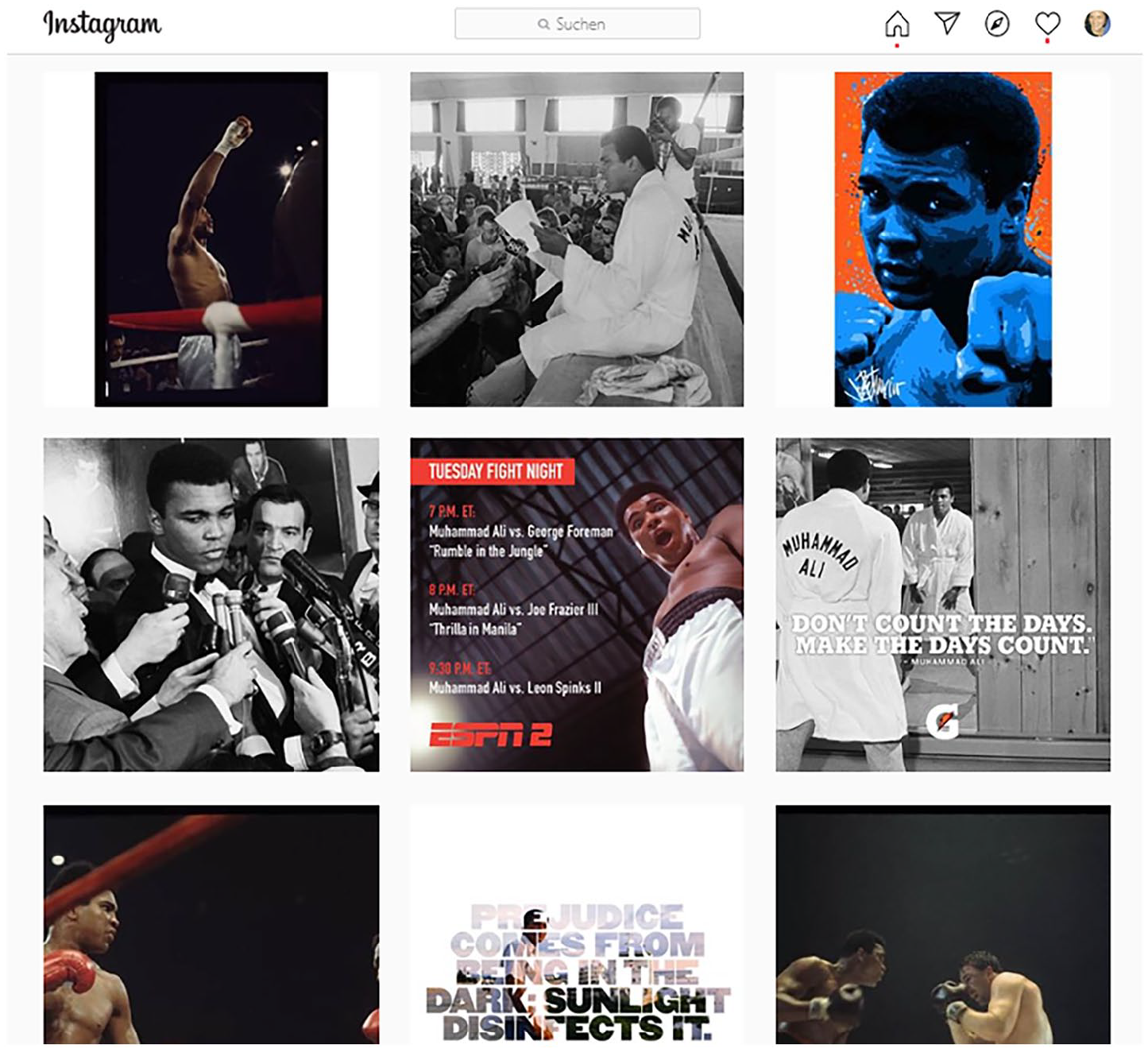
Cropped screenshot of account overview (https://www.instagram.com/muhammadali/).
‘Social media autobiography’ type
This type is characterized by role-playing as the biography is told by the historical personalities themselves. Similar material is used as in the first type; however, the first-person perspective increases the authenticity of the account and creates a narrative and temporal structure. Most of the time, it is unclear who is behind such accounts or curates them. The account marieantoinetteofficiel (23,400 subscribers) tells the life of the monarch (1755–1793) from her own perspective, describing her in the bio as follows: ‘Born in 1755. Queen of France. Follow me for daily information about my royal life’. This account cannot be related to an official institution, but it curates both historical paintings as well as photographs of palaces and former residences of the Queen with attention to detail and a lot of effort. Therefore, baroque opulence, lots of gold and pastel dominate, as can be seen in the screenshot of the feed (Figure 5). The account enables a short journey through time to the heyday of the French monarchy. Its abrupt and brutal end is rarely addressed. Marie Antoinette remembers events such as her wedding and her wedding gifts 250 years ago. People close to her will also be introduced and described in a personal way: ‘Portrait of my dear friend Princesse de Lamballe by Anton Hickel, 1788. Marie-Therese de Lamballe stayed with me in the Tuileries until 1792 when she was atrociously murdered’. The descriptions of the places where she lived feature references to her everyday life as a ‘normal’ mother: ‘The Queen’s bedroom in Versailles. On each side of the bed, secret doors to access directly the rooms of my kids’. The first-person perspective and personal insights create intimacy and proximity. The captions accompanying the opulent pictures translate the lifeworld of the historical personality to their modern and less aristocratic followers.
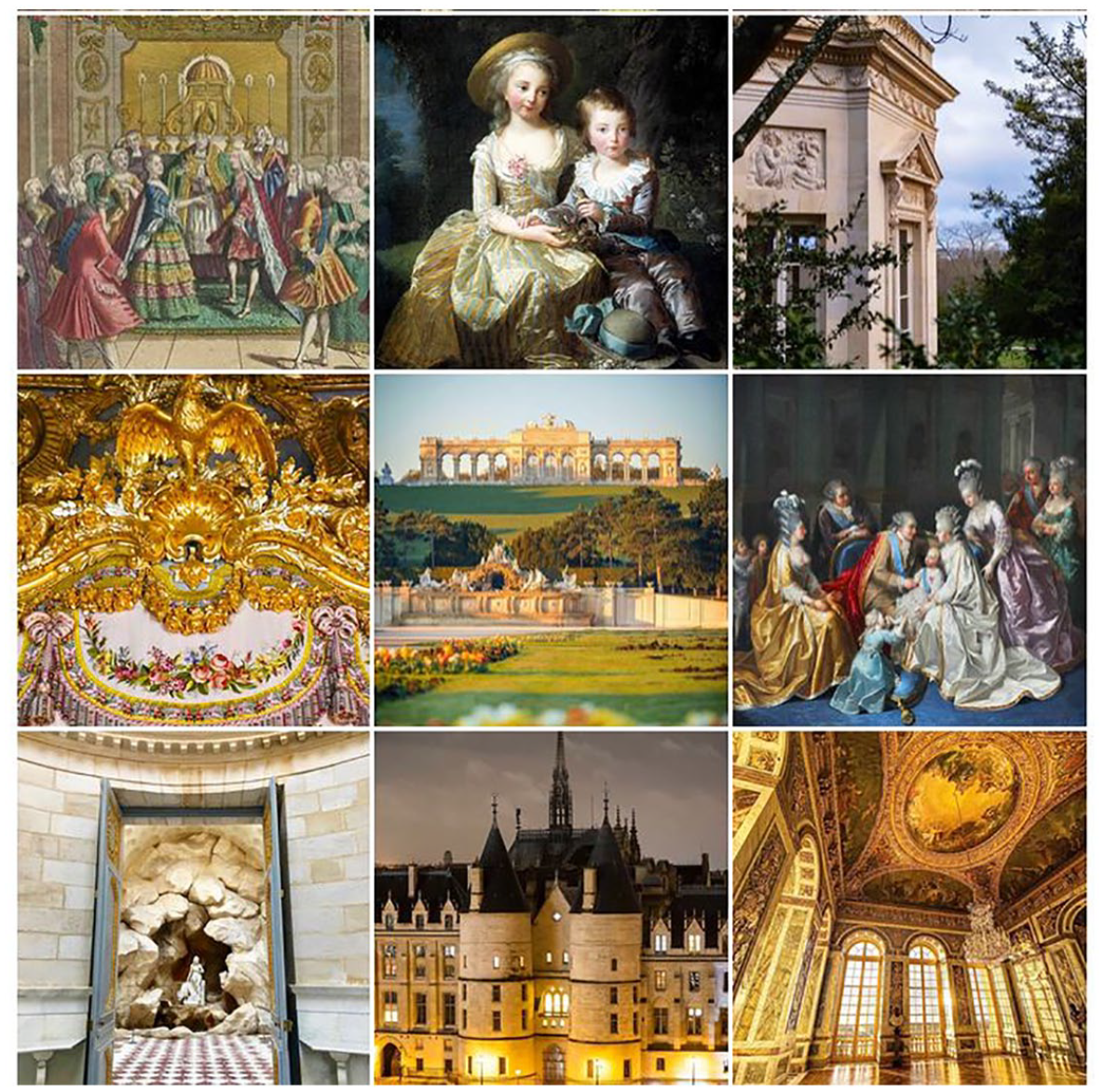
Cropped screenshot of account overview (https://www.instagram.com/marieantoinetteofficiel).
‘Artist portfolio’ type
This type contains mainly those historical personalities who were artists or creators of some kind; their output is either presented as speaking for itself, like paintings (e.g. Leonardo da Vinci, Frida Kahlo) or music (e.g. Frank Sinatra, Figure 6). The account functions as a portfolio which presents the work of the person in a mostly neutral and rather professional manner, similar to the type ‘virtual exhibition’, but focusing on the creative output rather than the biography. Captions usually contain titles of artworks, like in a catalogue. Here, too, it is mostly unclear who operates the account.
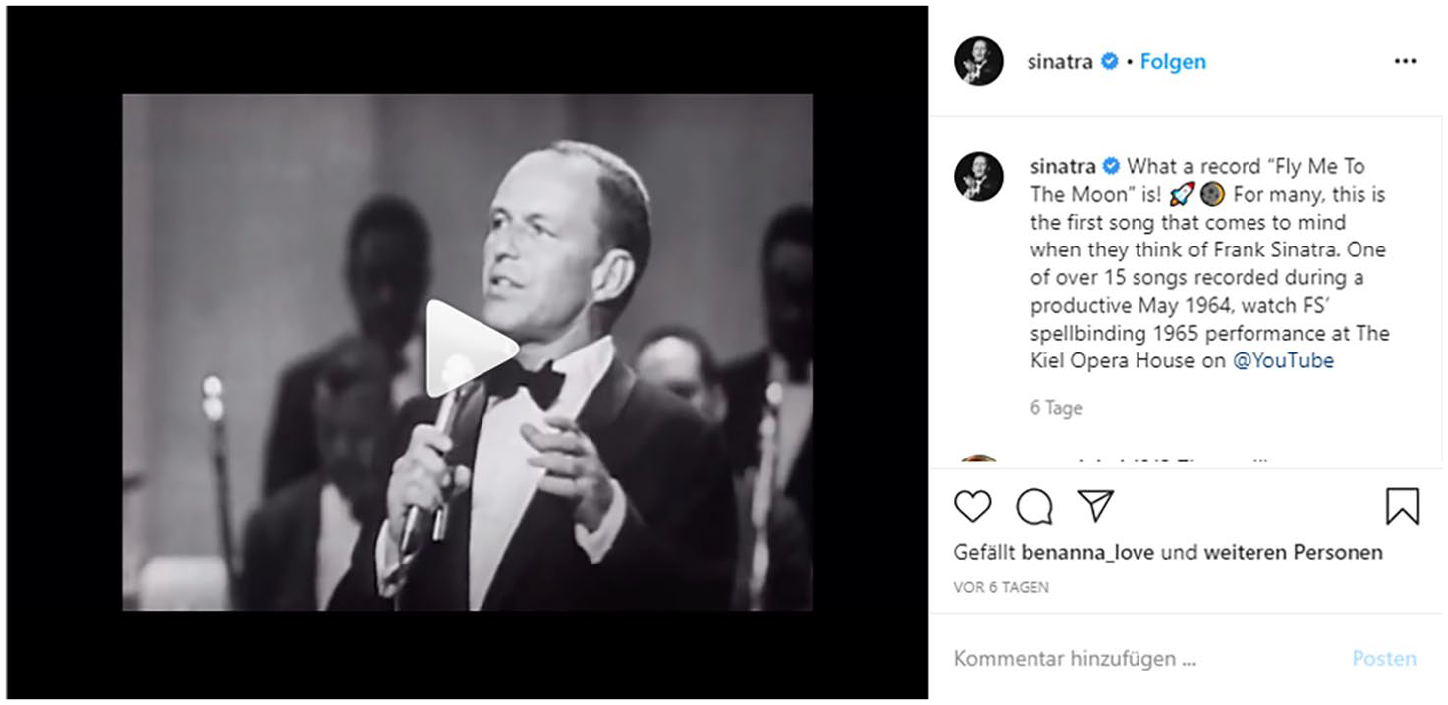
Screenshot post (https://www.instagram.com/p/CBTYuxLAO5m/).
‘Inspirational quotes’ type
Like the ‘artist portfolio’ type, the ‘inspirational quotes’ type focuses on work and output of a specific personality. However, the form of presentation is a bit different as it speaks to a fan audience and has a stronger social media authenticity than the previous type, for example, through offering shareable content. A recurring genre of ‘shareables’ is quotes from historical figures who made meaningful statements (e.g. Malcolm X, Maya Angelou, Nikola Tesla). These posts mostly contain carefully designed quotes, sometimes featuring portraits of the personalities (see Figure 7). Institutions as hosts of these accounts can be found sporadically, but often it is also unclear who is behind them.
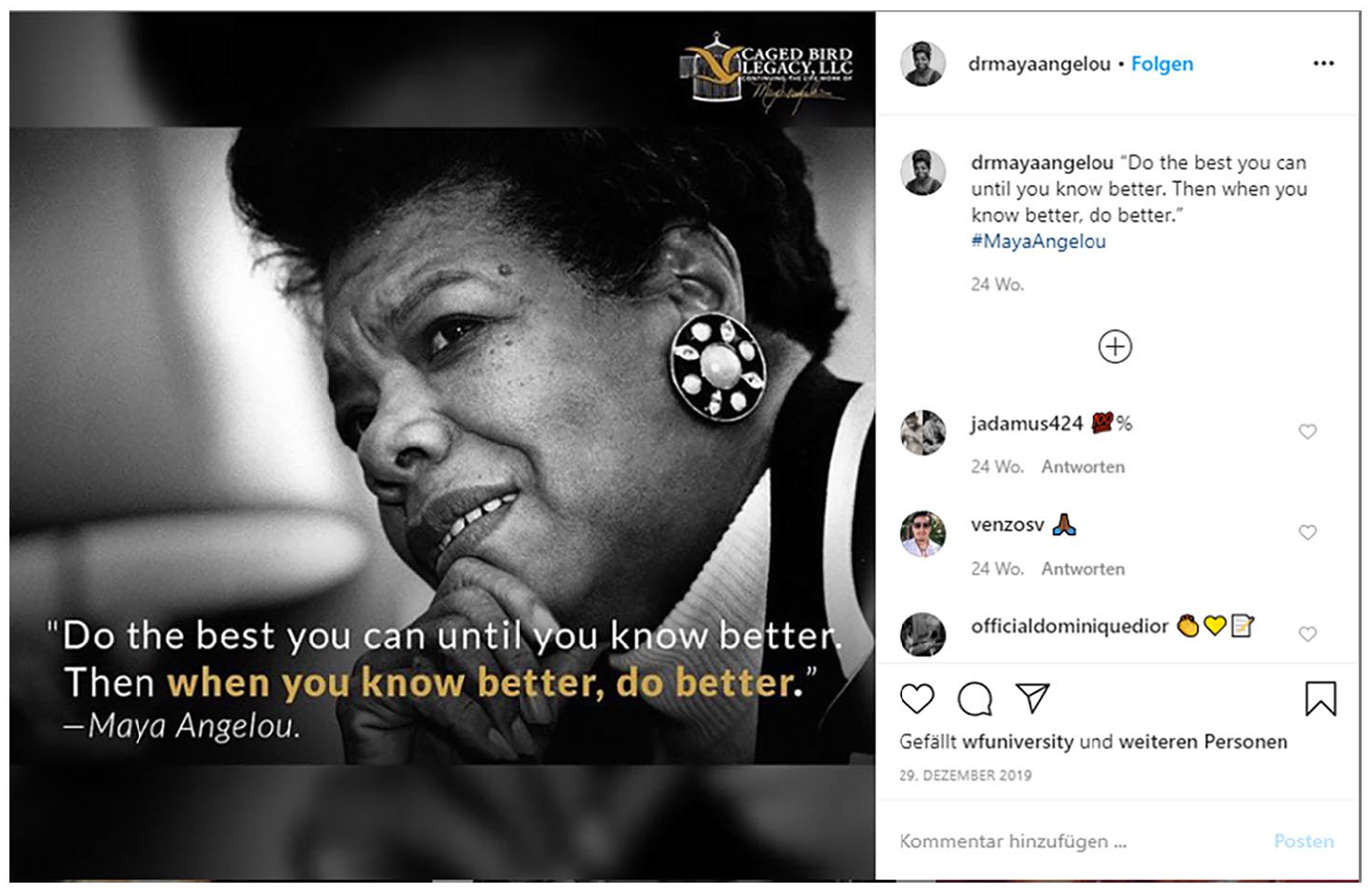
Screenshot post (https://www.instagram.com/p/B6qc1wpHlTe/).
‘Iconic figure’ type
Accounts of the ‘iconic figure’ type contain similar content like those of the ‘virtual exhibition’ type; however, the content is framed differently. Descriptions of personality are not formulated historically neutral, but admiringly and in a glorifying way. Usually, the impression of a fan account arises, insider jokes, allusions and memes related to the person are shown based on different image material (film stills, cartoons, photos, etc.). Accounts of this type usually also contain product advertising, for example, for books, compact discs (CDs) and merchandise. Biography and work are strongly mixed. Overall, this type has a high level of social media authenticity which means that typical communication elements are used like hashtags, memes, shareables, filters, tags, screenshots of tweets and so on. Moreover, there is more intensive interaction with the followers than with the other types.
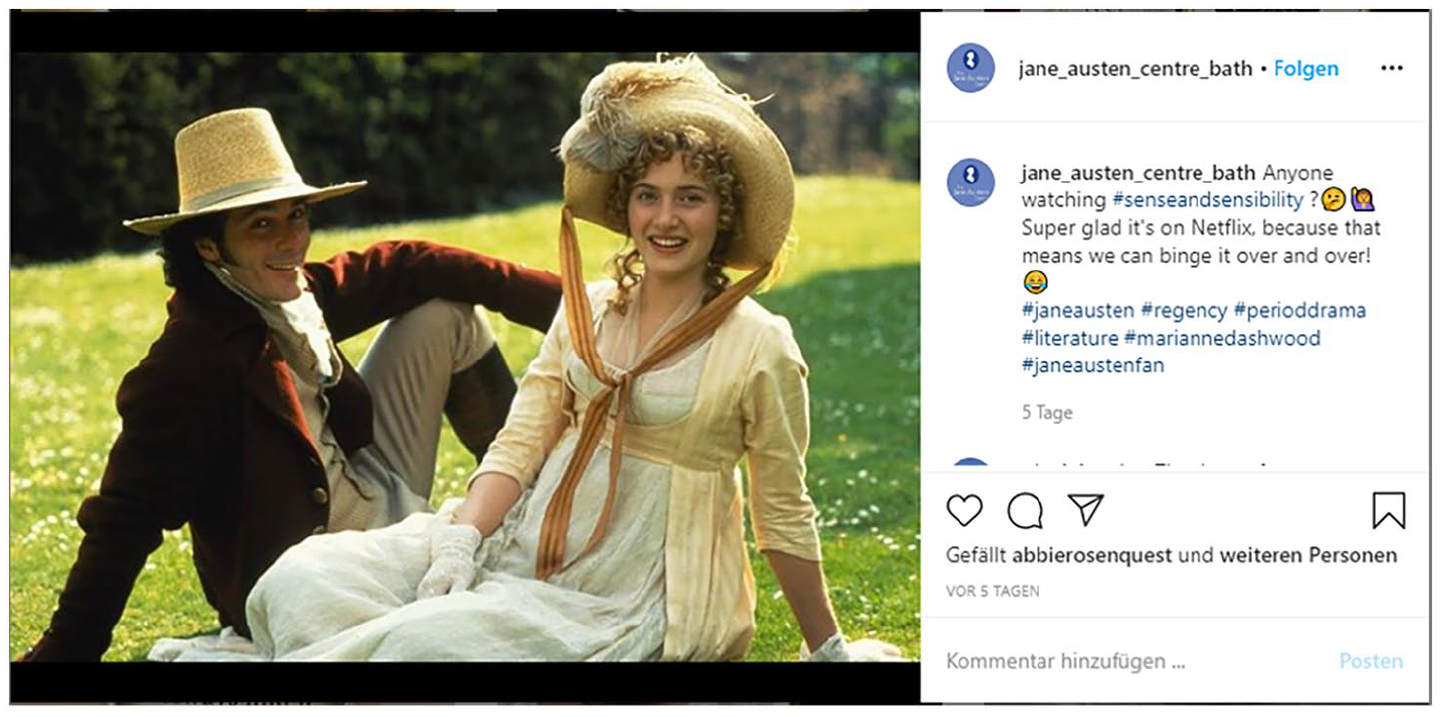
A good example is the account @jane_austen_centre_bath (42,300 subscribers): As can be seen in Figure 8, screenshots from film adaptations of Austen’s books alternate here with tweets, shareables, tests and media reports. A wide range of current social media references to the author’s work is offered and thus transferred into the present. The tweet in the middle of the picture – ‘Jane Austen made idleness, waiting, and not touching people seem a lot hotter than it is’ – is a great example for timely relevance: It was posted during the COVID-19 lockdowns and ironically discusses how romantic encounters in these circumstances have to happen like in the time of Jane Austen. The account offers inside jokes for loyal fans, but also speaks to those followers that are fascinated by the regency era aesthetic and it also advertises fan merchandise (cups, jewellery, card games, books, porcelain figurines).
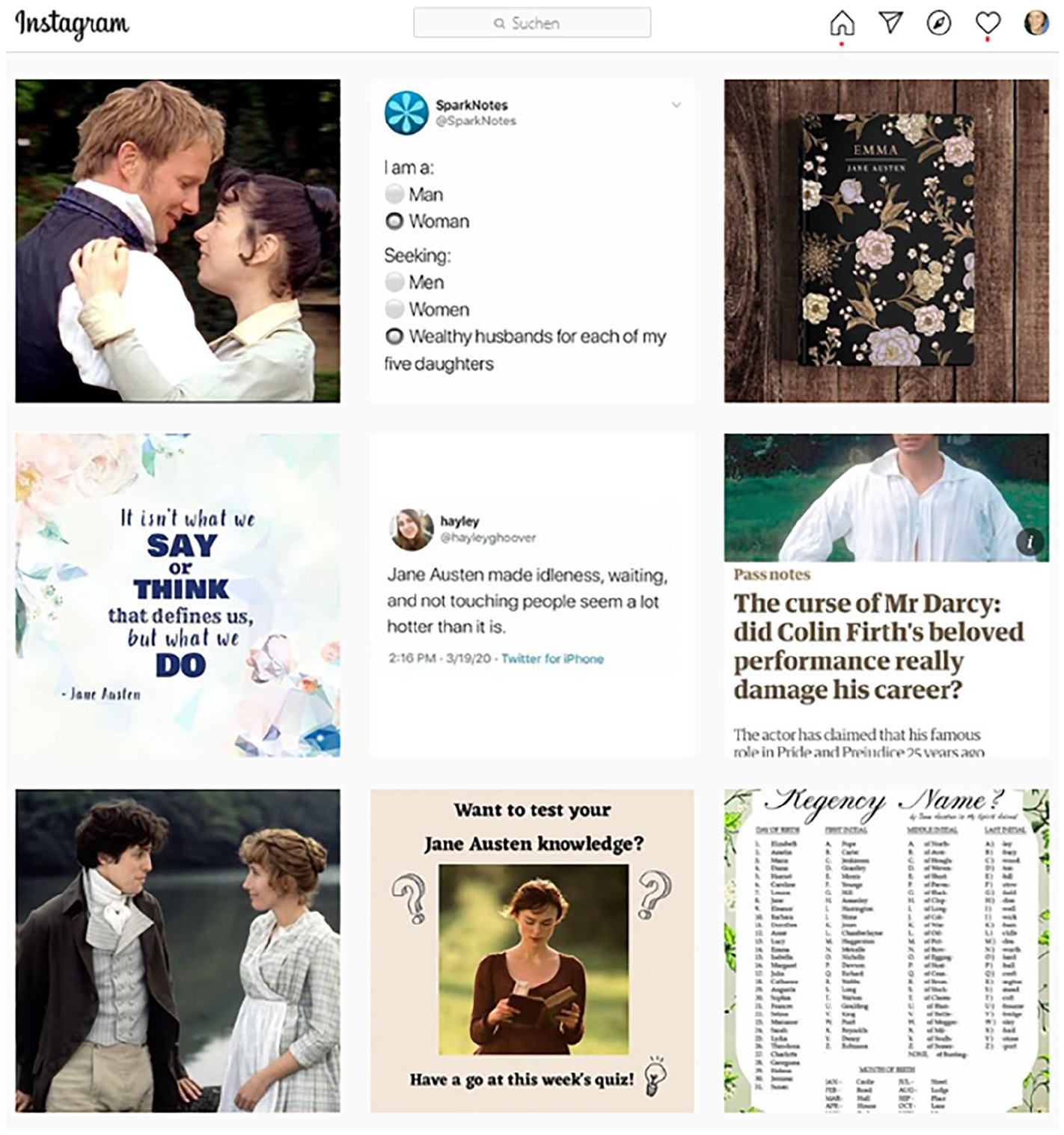
Cropped screenshot of account overview (https://www.instagram.com/jane_austen_centre_bath/).
Figure 9 shows a post that announces that a famous Jane Austen movie adaptation is now available on Netflix. The author’s work is thus re-mediatized several times: as a movie adaptation of the book, as a Netflix offer of the movie, as a film still from Netflix on Instagram.
Screenshot post (https://www.instagram.com/p/CBYI4fDByDY/).
‘Meme’ type
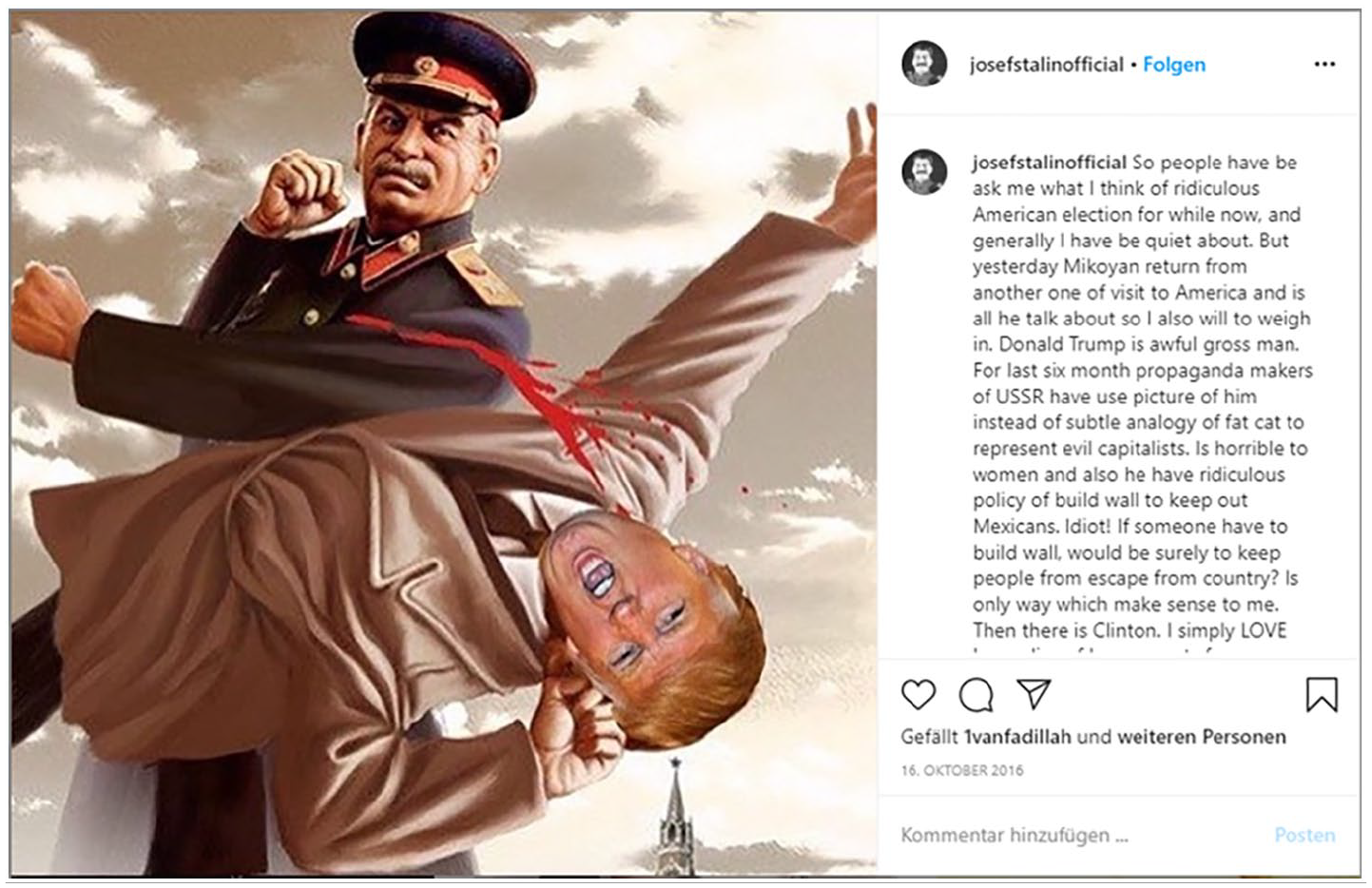
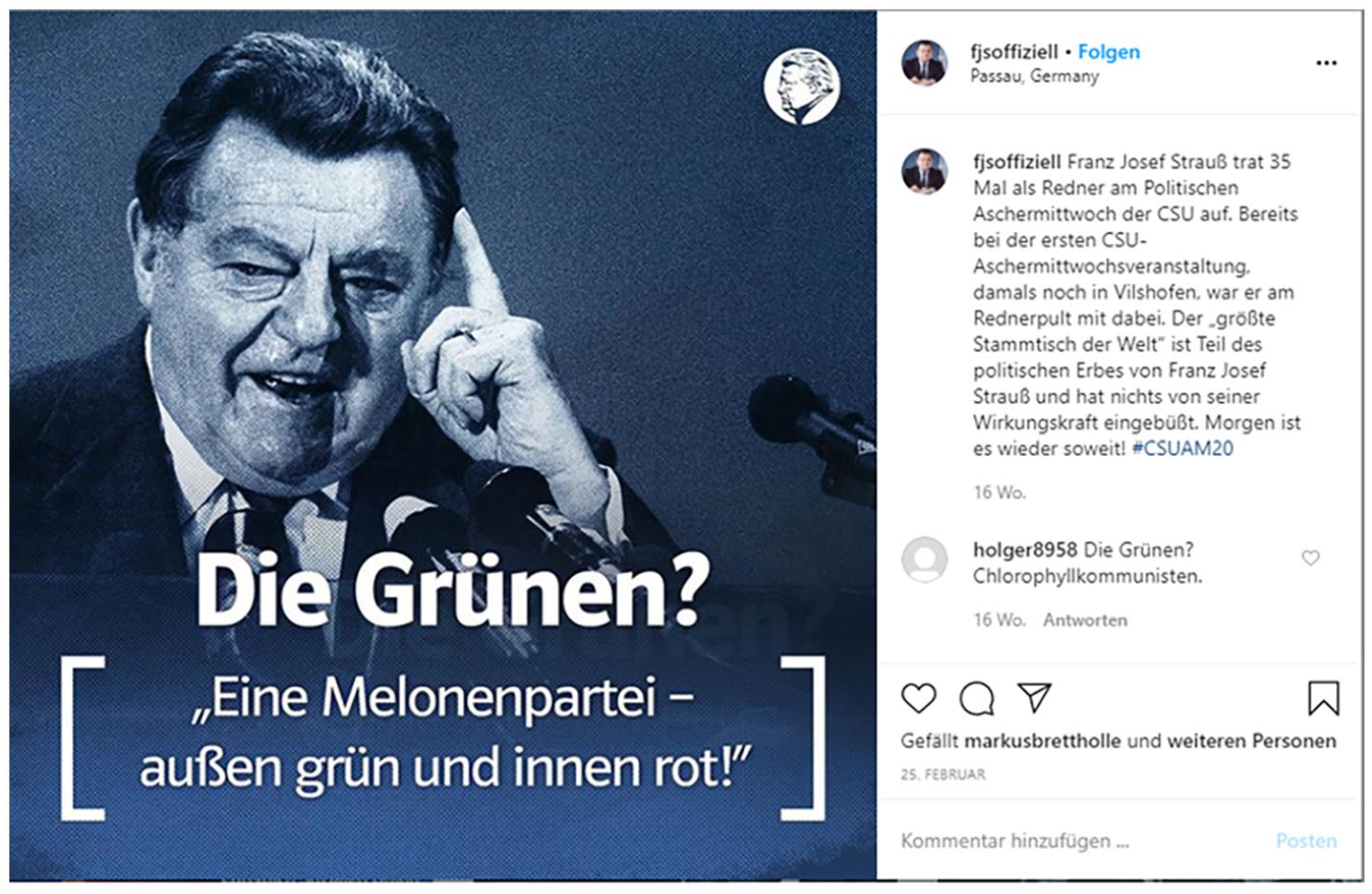
This type is formally similar to the ‘iconic figure’ type but is not established from a fan or memory work perspective and is therefore beyond our typological categories. It uses the historical person as a memetic element or piece of content to comment on the present. Biography and work of the person are usually either criticized or revered, but mostly used to communicate or emphasize the content creator’s position towards current events. In our sample, we found two striking examples of political personalities, namely Soviet dictator Josef Stalin and Bavarian conservative politician Franz Josef Strauss. The historical person is ‘memefied’, as they are re-contextualized, updated and brought back to life to comment on the present from the past. Josef Stalin, for example, comments on Donald Trump and calls him an ‘awful gross man’, which is accompanied by a comic-like, brutal image (Figure 10). Franz Josef Strauss, however, is summoned like an ancestor or pillar saint in the post (Figure 11) and his statement is used as a comment on the current German political situation. While most meme accounts clearly have a humorous, critical or ironic agenda (see section ‘Content creator perspective – communicative/representational frames’ for more details about the Stalin account), the Strauss account is actually operated by the German conservative party itself.
Screenshot post (https://www.instagram.com/p/BLmeMKOBkD8/).
Screenshot posting (https://www.instagram.com/p/B8_102rIN9d/).
Content creator perspective – communicative/representational frames
As already mentioned earlier, only five content creators replied to our survey. However, those who answered represent an interesting and diverse range of strategies and backgrounds.
Two accounts are hosted as part of professional employments in institutional settings (@sigmundfreudmuseum and @ursulakleguin) and would be categorized as ‘virtual exhibition’ accounts (see section ‘“Virtual exhibition” type’) or ‘artist portfolio’ (section ‘“Artist portfolio” type’) in our typology. Both accounts primarily aim to inform and educate visitors and fans of the personalities and they also host similar accounts on Facebook and Twitter. While @sigmundfreudmuseum is hosted by museum personnel, the account of the author Ursula K. Le Guin is managed by her literary trust and primarily her son. Both describe their audience as either fans or institutional and professional followers like psychotherapists, museums, writers, publishers, and so on.
The account @_charlesdickens is clearly designed from a fan perspective and would be an ‘inspirational quotes’ (4.4) type in our framework. Two people behind the account completed our survey, describing their aim as wanting to share their fascination with Dickens’ prose, although they seem to have different motivations, one doing it just for ‘self-enjoyment’, the other wanting to reach a ‘beautiful group of people who really appreciate the beauty of language’. The account seems to be a meeting place for the fan community, as the followers of the account are described as very supportive and ‘some of their comments just make my day. And, some people just like to amuse themselves by passing ironic comments’.
The account @josefstalinofficial was started as ‘a way to joke with my friends. A lot of the situations Stalin gets up to reference jokes we have/follow events in my life’. In our typology, the account is already described as a ‘meme’ type (section ‘“Meme” type’), as Josef Stalin is not represented from a primarily positive fan perspective but rather used as a comic element in memes that are related to current political events or the personal life of the content creator. The creator describes her followers as ‘A mix of history fans, Russians who think it’s serious, baby communists’. While the account was meant to be a joke ‘that made fun of Stalin for his arrogance and insecurities’, the host is surprised that a lot of people who follow the account do not seem to be in on the joke and take it all seriously. This became especially apparent when Russia invaded Ukraine: ‘When I posted in solidarity with Ukraine I lost hundreds of followers who were apparently all pro-Russian militarism’.
These three perspectives and strategies of content creation that we reconstructed based on the survey – professional/institutional, fandom and meme/joke – represent prototypical frames for social media content. As already elaborated in section ‘History and memory in social media environments’, the mediatization and digitalization of history and memory diversified the range of participating perspectives and ways of talking about and representing historical personalities. Clearly, the polyphony in memory discourses has increased, not only regarding the participating actors, but also regarding the style and communicative function of the content, whether history and memory content is presented and edited within an educational, fan or meme frame.
Conclusion: the polyphony and polymodality of memory on social media
In this contribution, we investigated Instagram as a venue for practices of remembrance and memory work in informal conditions. With the increasing importance of digital communication and social media for society, education and everyday life in general, memory discourses are also becoming a topic in the digital environment. Instagram or social media more generally offer a relatively new site for engaging with historical content and creating interrelations of past, present and future in different ways.
In our analysis, we were able to identify a variety of forms of content and modes of presentation of memory topics and historical figures on Instagram which we understand as ‘polymodality’ alongside the ‘polyphony of memory’. We infer that these various forms of representation imply different communicative purposes and contexts and, moreover, different relationships between past and present that might be more or less constructive, creative and conservative.
A typology always has limitations because it schematically separates types that are not necessarily mutually exclusive in the empirical practice and often mix different forms. Similarly, the types which are assigned to individual accounts can change over time or even from post to post. Furthermore, content creation practices are influenced by current trends, the respective zeitgeist and ephemeral staging conventions that for their part, in turn, do not outlast time.
Because digital media is a natural environment of everyday communication between people, it also offers a chance to produce and consume historical content and figures as well as commemorative events and culture. As became apparent, memory is brought alive and re-mediatized in a variety of contexts, ranging from professional, institutionalized memory practices to playful meme creation. A focus on traditional actors and arenas of memory work or the mass media as the primary mediator of public communication is therefore no longer sufficient to achieve the complex functions and entanglements of mediated memory.
To study the polyphony of memory discourses in more detail, it would be fruitful to not only investigate different personalities and forms of representation, but to compare different accounts representing the same personality.
Like any social media content, historical content can also be presented in misleading, distorted ways. However, this does not necessarily apply to the particularly hypermediated forms of representation, like in the type ‘memes’. Their artificial appearance might also stimulate more dispute, research and critical engagement with the respective content. However, types such as ‘biography’ or ‘virtual exhibition’ convey credibility and correctness of the presented content through their design and are therefore probably deemed more trustworthy. However, the actual appropriation, perception, and use of such content have to be studied in more detail in future audience research.
Footnotes
Appendix 1
List of Instagram accounts included in the data collection from May to October 2020:
@_prince._.albert_
@_queen__.victoria_ society_anne
@alberteinstein
@annefrankhouse_official
@astridlindgrenofficial
@drmayaangelou
@earnest.hemingway
@elvis
@fjsoffiziell
@fridakahlo
@friedrich_nietzsche.official
@gaius_marius_
@her.majesty_queen.victoria/
@jane_austen_centre_bath
@josefstalinofficial
@julius_caesar_official_
@kofiannan
@leonardo_davinci_
@marieantoinetteofficiel
@marilynmonroe
@michaeljackson
@muhammadali
@napoleonbonaparte_officiel
@neilarmstrongofficial
@nikola__tesla
@official.malcolm.x
@sigmundfreudmuseum
@sinatra
@sir_arthurconandoyle
@the_official_abe_lincoln_
@ursulakleguin
@vincent_van_gogh_1853
@william.shakespeare.official
Funding
The author(s) received no financial support for the research, authorship, and/or publication of this article.
