




Abstract
Digital nomads (DNs) are highly mobile professionals who work while travelling and travel while working. Their lifestyle has gained increasing academic attention, also from a communication perspective. Despite initial work on the topic, little is known about the self-presentation practices of DNs on social media. To address this lack of evidence and focusing on Instagram as a key platform for this group, we adopt a Goffmanian perspective. By using semi-structured interviews, we provide an in-depth analysis of their self-presentational practices, specifically their content strategies, imagined audience and use of platform affordances. The interviews included photo elicitation as a central element. The findings show how DNs highlight independence and freedom, de-emphasize work in favour of leisure and travel, develop audience management strategies that are mindful of the imagined audiences’ situation, while trying to foster reliability and authenticity and greatly value the flexibility and ephemerality of the Stories feature.
Keywords
Introduction
The term ‘digital nomad’ (DN) depicts individuals who continuously travel and work remotely (Hannonen, 2020; Hemsley et al., 2020; Reichenberger, 2018; Thompson, 2019). Hannonen (2020) describes DNs as ‘a rapidly emerging class of highly mobile professionals, whose work is location independent. Thus, they work while traveling on (semi)permanent basis and vice versa, forming a new mobile lifestyle’ (p. 346). Most studies about DNs focus on the nature of work and mobility (Hemsley et al., 2020), work–leisure balance (Cook, 2020; Reichenberger, 2018) and lifestyle (Krivtsova et al., 2019; Mancinelli, 2020). However, there is little research about how DNs use social media (Bonneau et al., 2023; Miguel et al., 2023; Willment, 2020). DNs combine different social media platforms for specific purposes such as showcasing the places they visit (Thompson, 2019; Willment, 2020), professional self-promotion (Bonneau et al., 2023; Krivtsova et al., 2019), socializing and fostering personal relationships (De Loryn, 2022), as well as community building through exchange with other DNs (Miguel et al., 2023).
Nowadays, social media emerge as a crucial venue for self-presentation and impression management (IM). Following Hogan (2010), Miguel (2016: 5) explains that user profiles are ‘cultural artefacts, which are tools for self-presentation and impression management’. The affordances of specific social media platforms shape how self-presentation enfolds (Bucher and Helmond, 2017; Hedman, 2020; Meisner and Ledbetter, 2020). This is equally the case in general and among DNs (Bonneau et al., 2023; Mancinelli, 2020). DNs and Instagram are a ‘good match’ since digital nomadism ‘is a lifestyle that looks really good on pictures’ (Atanasova and Eckhardt, 2021: 92). However, as reported by Atanasova and Eckhardt (2021), perhaps the goal of DNs when using Instagram is not so much showing off to others but showing to themselves that they achieved the lifestyle they desire. Little research exists on how DNs use social media to represent their identities and values (Willment, 2020), with Bozzi (2020) highlighting that ‘critical accounts of digital nomad presence on Instagram are missing from scholarly discourse’ (7). Similarly, Hannonen (2020) points out that more research is needed to better understand how DNs portray their lifestyle via social media.
To fill this gap and understand DNs’ self-presentation practices on social media better, this study investigates the following research questions: (1) What are the main identity markers and content used by DNs to represent themselves on Instagram? (2) What is the role of their imagined audience in their content production strategy? and (3) How do DNs manage the representation of their identity by using different Instagram platform affordances? Following Goffman’s (1956) theory of IM, this study analyses both the front and back stages of DNs when performing their identities on Instagram to their (imagined) audiences. We also examine the specific affordances of Instagram that DNs rely on to represent their identity and values since those play a key role in self-presentation (Duffy and Hund, 2019; Kreling et al., 2022; Sukmayadi and Yahya, 2019; Triệu and Baym, 2020). The study is based on 30 in-depth interviews, including self-curated photo elicitation (Marcella-Hood, 2021), where participants were requested to choose Instagram posts/stories indicative of their DN identity to reflect on their self-presentation choices.
Literature review
Impression management
In his landmark book, The Presentation of Self in Everyday Life, Erving Goffman (1956) developed IM theory from a dramaturgical lens to describe self-presentation within social interactions. Goffman (1956) argued that social life is a ‘performance’ divided into activities of the non-performing ‘back stage’ and the performing ‘front stage’. The front stage is constructed primarily through one’s ‘appearance’ and ‘manner’ – aiming to provide others (the ‘imagined audience’) with impressions of themselves in line with their goals. The front stage is constructed in co-operation with the performing team (e.g. composed of other Instagram-present DNs). This co-constructed front stage assumes that, apart from ‘dramaturgical discipline’ and ‘dramaturgical circumspection’ (realized by anticipating and avoiding situations potentially harmful to one’s desired front stage), managing the audience’s impressions also requires performers to employ ‘dramaturgical loyalty’ to the performing team (Goffman, 1956). Goffman’s (1956) IM theory – construction of (online) identities and IM – has been extensively applied to the study of self-presentation on image-based social media platforms (Broms et al., 2022; Lo and McKercher, 2015; Michaelidou et al., 2021; Stsiampkouskaya et al., 2021; Tiidenberg and Baym, 2017; Willment, 2020; Yoo, 2021).
When using Instagram for IM, young Swedish equestrians (high school students) reported feeling the peer-pressure to front stage only idealized, non-muddy versions of themselves and their sport. Failing to keep the authentic side private, that is, failing to show dramaturgical loyalty to the other young equestrians (performing team), might (1) expose them to ‘harsh comments and criticism’ and (2) prevent them from achieving the goal of their Instagram performance: being perceived as attractive (slim), successful and employable professionals (Broms et al., 2022: 7). In terms of the representation of lifestyle, Michaelidou et al. (2021) show how ‘Ultra-high-net-worth’ individuals developed four Instagram strategies for sharing their lifestyle: the luxury was displayed both intentionally (‘Ostentatious’ strategy) and unintentionally (‘Revealed’) but was also found strategically downplayed by engaging in ‘ordinary life narratives’ (‘Humble’) and avoiding posts on expensive items (‘Hidden’) unless showing them was part of an advertising campaign. Similarly, Yoo (2021) found that South Korean sports stars display personal wealth and social connectedness on Instagram when feeling the need to increase the distance between them and the audience (and mystify their lifestyle) but made posts on details of their everyday activities and promoted modesty when wanting to decrease the same distance. Related to DNs, Willment (2020) shows how travel bloggers revealed a part of their authentic self by employing the staged authenticity strategy, that is, by ‘complicating’ the front and back stage. Namely, they embraced DNs’ identity, which enabled them to front stage activities that typically belong to travel bloggers’ back stage but are by default a part of DNs’ front stage (e.g. ‘physically working on a laptop’). On the contrary, similar activities that might be less representative of digital nomadism, such as taking pictures, remained hidden in the back stage (Willment, 2020).
Furthermore, different studies (Lowe-Calverley and Grieve, 2018; Stsiampkouskaya et al., 2021) show how audiences play a crucial role when choosing the content to post on social media insofar as they assess the self-presentation and leave public feedback. According to Harris and Bardey (2019), the Instagram audience perceives users’ personality through the shared selfies, the way their face is shown in the photos, the Instagram grid layout and the presence of bad manners (e.g. spreading misinformation). Exhibiting features of dramaturgical circumspection, users consider the audience’s expectations prior to posting an Instagram photo and are receptive to feedback (Stsiampkouskaya et al., 2021). The well-received content could be reposted but only ‘after a period of time’ and ‘if accompanied by a suitable caption’ (Stsiampkouskaya et al., 2021: 1). A Less positive feedback induced the respondents improving their content and reposting it.
Social media affordances
The concept of affordances was coined by Gibson (1977) in the context of animal–environment interactions. Affordances are concerned with the possibilities that the environment offers for action (Gibson, 1977). Norman (1988: 9) took up the original notion of affordances but re-oriented it towards design, seeing affordances as ‘fundamental properties that determine just how the thing could be used. A chair affords (is for) support and therefore affords sitting’. The concept of affordances can be applied in various contexts and is evolving alongside society. Hutchby (2001) developed the notion of ‘communicative affordances’ to refer to the ‘possibilities for action’ that emerge from specific technological forms. Specifically talking about mobile media, Schrock (2015) defines communicative affordances as ‘the interaction between subjective perceptions of usefulness and objective qualities of the technology that modify communicative practices’ (p. 1232).
In the context of social media, Ronzhyn et al. (2022: 14) explain that affordances are ‘the perceived actual or imagined properties of social media, emerging through the relation of technological, social, and contextual [aspects], that enable and constrain specific uses of the platforms’. Within social media research, Bucher and Helmond (2017) offered a helpful contribution by distinguishing high-level affordances from low-level affordances. High-level affordances describe the ‘dynamics and conditions enabled by technical devices, platforms and media’ (Bucher and Helmond, 2017: 12) and are more general and abstract. They include frequently discussed affordances such as persistency, replicability, searchability and scalability (boyd, 2010); visibility and editability (Treem and Leonardi, 2013); interactivity and anonymity (e.g. Ciuchita et al., 2022); and ephemerality (Duffy and Hund, 2019; Kreling et al., 2022). By contrast, low-level affordances focus on the tangible aspects of design such as buttons, screens and interfaces. Low-level affordances facilitate synchronous (e.g. live streaming) vs asynchronous (e.g. comments, likes) interaction modalities (Meisner and Ledbetter, 2020).
Instagram offers users four self-presentation features: Posts, Stories, Highlights, and Reels. Squared photo feed posts are the original Instagram feature since the platform was launched in 2010 and always permanent on the user’s profile, while Stories (launched in 2016) last only 24 hours (Instagram, n.d.). Stories include user-friendly filters and other fun tools (i.e. polls, gifts), which play a key role in motivating Instagram users to share content via this feature (Sukmayadi and Yahya, 2019). A few studies (e.g. Choi et al., 2020; Duffy and Hund, 2019; Kreling et al., 2022; Sukmayadi and Yahya, 2019; Triệu and Baym, 2020) have examined differences between self-presentation via (Instagram) feed posts and stories focusing on the (lack of) visibility of the interactions with other users and the persistence/ephemerality. In terms of visibility, Triệu and Baym (2020) found that since stories are less open to public feedback, users’ expectations for them were lower, which, in turn, reduced users’ pressure for managing others’ impressions and made the activity of sharing more frequent and more relaxed. Similar findings emerged in studies by Sukmayadi and Yahya (2019) and Duffy and Hund (2019). In relation to persistence/ephemerality, Choi et al. (2020) analysed how self-presentation on social media influences the way people view themselves by comparing self-presentation practices on persistent posts versus ephemeral ones. Results show that ephemerality lowers concerns about IM and allows for nonstrategic self-presentation (Choi et al., 2020).
Instagram (communicative) affordances have considerably expanded over the last years, as expressed by the launch of new features such as Stories, Highlights (Instagram, 2017) and Reels in 2020 (Instagram, 2020). Despite Highlights transforming the ephemeral nature of Stories into permanent content, this feature has not been acknowledged in previous studies (Duffy and Hund, 2019; Kreling et al., 2022; Sukmayadi and Yahya, 2019; Triệu and Baym, 2020). On the contrary, Reels allow users to create and share short vertical videos, with socially rewarding self-promotion and entertainment being the main motives for using Instagram Reels (Menon, 2022).
Methodology
This study adopts an inductive and exploratory approach (Bryman, 2016), including 30 in-depth interviews to explore how DNs represent their values and lifestyle on Instagram. We chose to focus on Instagram since it represents a versatile and flexible platform for self-presentation and is very popular among DNs (Bozzi, 2020; Miguel et al., 2023; Willment, 2020). Instagram’s visual nature (Leaver et al., 2020) aligns well with DNs’ fast-paced lifestyle and travel preferences. Specifically, DNs tend to be location-independent, constantly on the go, and travelling to new destinations, with Instagram letting them easily share their experiences through photos and videos (Willment, 2020). We used purposive sampling to identify participants, as we were looking to interview people who identified themselves as DNs (Etikan et al., 2016). To recruit interviewees, a call for participants was published on different social media (Facebook, Slack, and LinkedIn), DN groups and the researchers’ personal accounts. Thirty interviews were performed throughout 2022, with informed consent being obtained before all interviews.
All participants were in their mid-20s to early 40s. There were two couples of DNs who did the interview together and are considered as one single participant since they reported similar points of view through the interview. Participants were originally from Argentina, Canada, Colombia, Denmark, Estonia, France, Italy, Ireland, Mexico, The Netherlands, Peru, the Philippines, Poland, Portugal, Syria, the United States and the United Kingdom. They resided in different cities during the time of the interviews, mostly in Lisbon, Bali, Chiang Mai, and Medellin, and changed their location frequently. Two-thirds of participants became DNs during the COVID-19 pandemic. As De Almeida et al. (2021) explain, many workers took advantage of the pandemic to test the DN lifestyle. Most participants were freelancers, while one-third of the DNs studied were employed by a company. Nevertheless, our sample did not include armchair or wannabe DNs (Cook, 2023; De Almeida et al., 2022), since among the employees, the minimum time a participant had been a DN was 8 months. On average, participants had been enjoying the DN lifestyle for 2.5 years. The aliases, time as DN when the interviews were conducted, whether they are employed or freelancing, and their occupation can be found in Table 1.
List of participants.
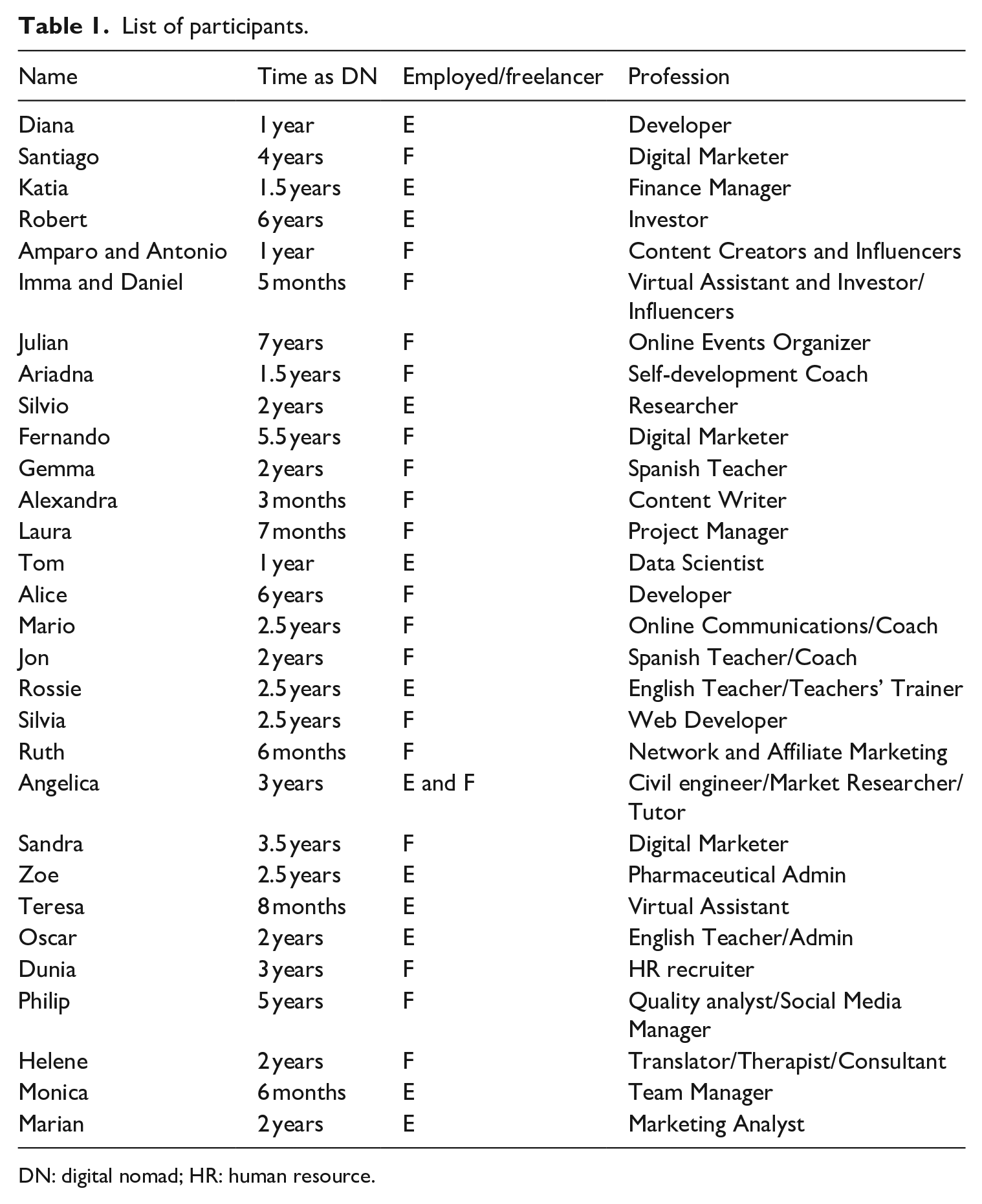
DN: digital nomad; HR: human resource.
In one part of the interview, we used the photo elicitation technique to make the DNs discuss and reflect on their own self-presentation and self-branding practices (Clark-Ibáñez, 2004; Harper, 2002). We used this approach as it enables the participant to connect more vividly with core definitions of themselves through the selection and discussion of photographs that were part of their Instagram posts. This approach has been successfully adopted in the context of Instagram and identity among other groups such as personal style influencers (Marcella-Hood, 2021), but not yet with DNs. Specifically, the participants were asked before the interview to select —three to five pictures that represent their identity as a DN. During the interview, questions such as ‘What’s the story behind the picture? Which values does it represent? Why did you choose to include that caption and those hashtags?’ encouraged the DNs to discuss their own self-presentational choices and subjective meanings with concrete examples.
The interviews were recorded using MS Teams, and an initial transcription was conducted using commercially available automated natural language processing tools (i.e. Otter.ai). Thematic analysis was then conducted following the approach suggested by Clarke et al. (2015) for the generation of initial codes and the identification of themes. NVivo was used to facilitate this process. In addition, to ensure internal validity, each interview transcript was coded by two independent coders (Campbell et al., 2013). In the writing process, the data were anonymized by using pseudonyms following the principles of maximizing the participants’ identity protection and maintaining the value and integrity of the data (Saunders et al., 2015). In addition, inspired by previous work that aims to protect the anonymity of users on social media (see Markham, 2012; Tiidenberg and Baym, 2017), we digitally modified the images where people appear using Canva to reduce the possibility of finding the images by using tools such as Google Image.
Results and discussion
Performing DNs’ lifestyle and values
As an introductory insight, our interviewees almost unanimously reported living a non-conventional lifestyle and enjoying its alternativeness. Different studies about DNs’ lifestyle imaginaries highlight DNs’ desire for a feeling of freedom (Kannisto, 2014; Reichenberger, 2018; Thompson, 2019). Thompson (2019) refers to DNs’ capacity to ‘use their freedom from an office to travel the world’ (p. 27). Indeed, the advantages from the DN lifestyle that participants valued the most was freedom. At the fundamental level, this was related to the freedom of movement, of travelling around and visiting distant places (see Figures 1 and 2). Figure 2 (Rossie) shows a post about her busy travel schedule presented in an adventurous and positive light.
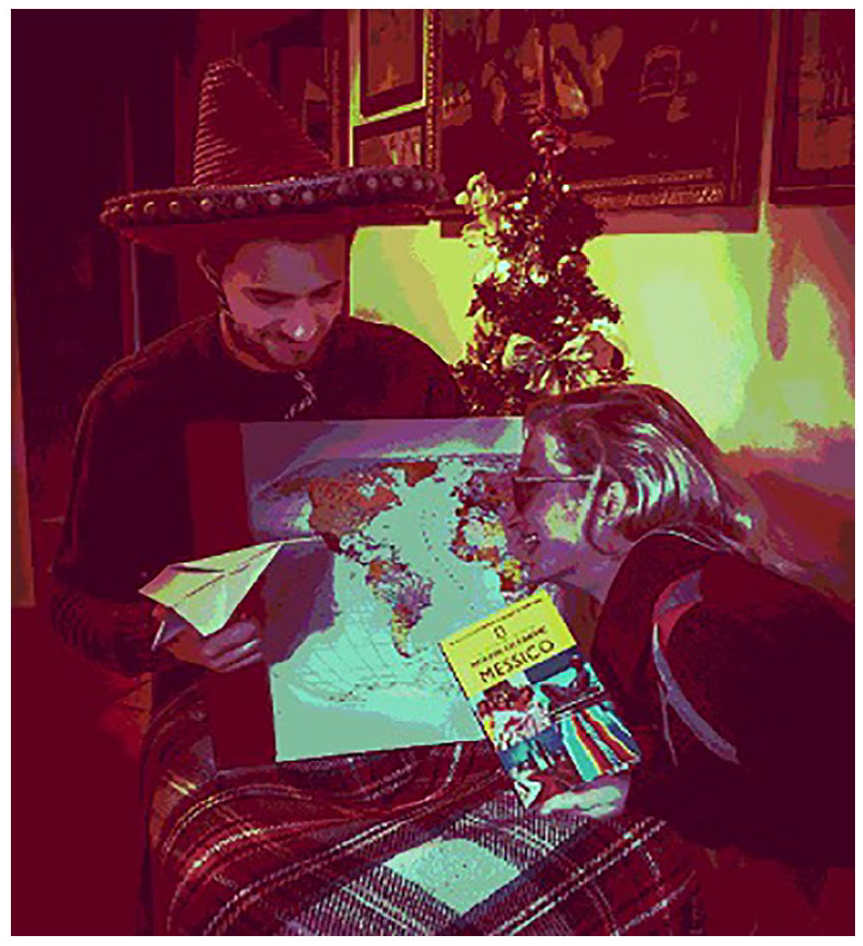
DNs planning next trip to Mexico.
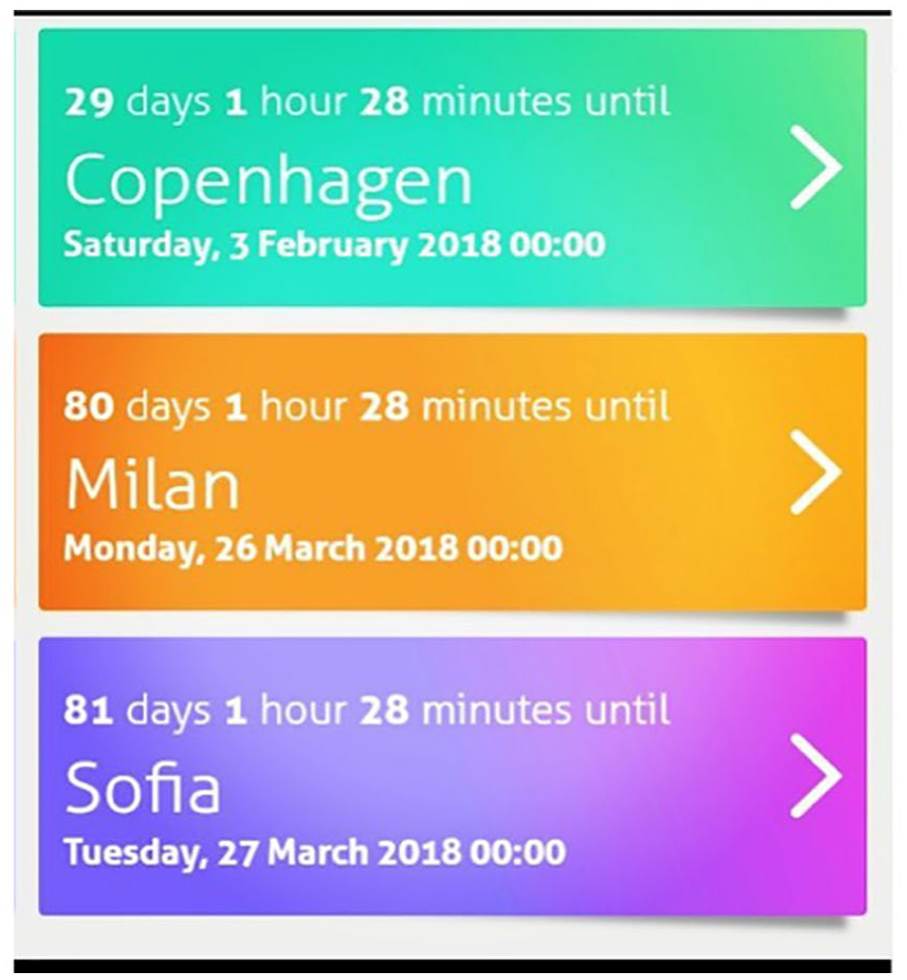
DN’s travel schedule.
DNs’ freedom was connected to a sense of adventure and hedonism, also related to their work flexibility, that is, work–leisure balance. Different scholars (Kannisto, 2014; Reichenberger, 2018) identified the prioritization of leisure over work as a distinctive feature of digital nomadism. In line with Müller’s (2016) research, DNs who took part in this study valued ‘labour productivity’ as an important feature in the DNs’ lifestyle. Rather than prioritizing leisure over work, most participants reported to pursue a better work–leisure balance with the DNs’ lifestyle as opposed to a nine-to-five job. The achieved balance was manifested in (posting about) having non-repetitive leisure time (see Figure 3) and/or having fun while working:
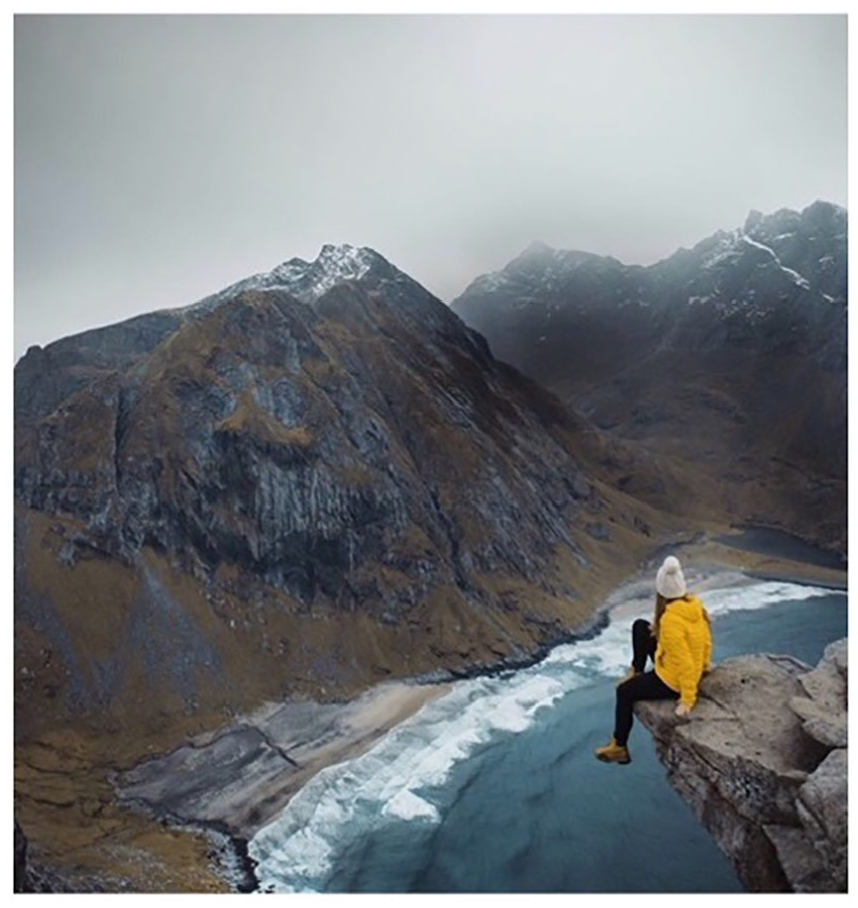
DN enjoying the mountains.
Most important value in my life is freedom to choose something for myself . . .. (Therefore, the selected stories) show how you can live your life when you are working but you still feel your life fully . . . you are just so flexible that you can find a way to take everything together . . . to work and to have fun sometimes together (Diana).
As Bozzi (2020) observed, DNs use Instagram ‘for the diffusion of an ethos of productive leisure’. On the contrary, maintaining (and posting about) the advanced level of work–leisure balance created the impression among the DNs’ contacts that they were on permanent holiday rather than working remotely. Therefore, some participants felt the need to justify the work aspect of their lifestyle and (re)establish themselves as professionals: Some of my close friends, and even family members, think that I haven’t worked for the last ten, six years . . . that I just live from nothing. So yeah, it’s important for me to try to show that I’m not just traveling and having a good life . . . I have to justify that this is not just a long-time tourism trip, but a way of living a lifestyle that includes working . . .. (Julian)
A few participants explained that it was sometimes hard to navigate the tension between simultaneously creating content around an interesting lifestyle and justifying that they were working. One of the reasons was them perceiving the work aspect as less interesting, somewhat boring: When working a lot, I was worried about not being able to deliver interesting content . . . I didn’t put stories every day . . . This should be an inspirational profile for them [the readers]. They just don’t want to see the same thing that they can see when simply turning to a colleague (in the office) (Amparo and Antonio).
Figure 4 shows Selina’s laptop turned on over her bed with the foreign city view being blurred in the background, implying she stayed focused on her (boring) work while enjoying the view.
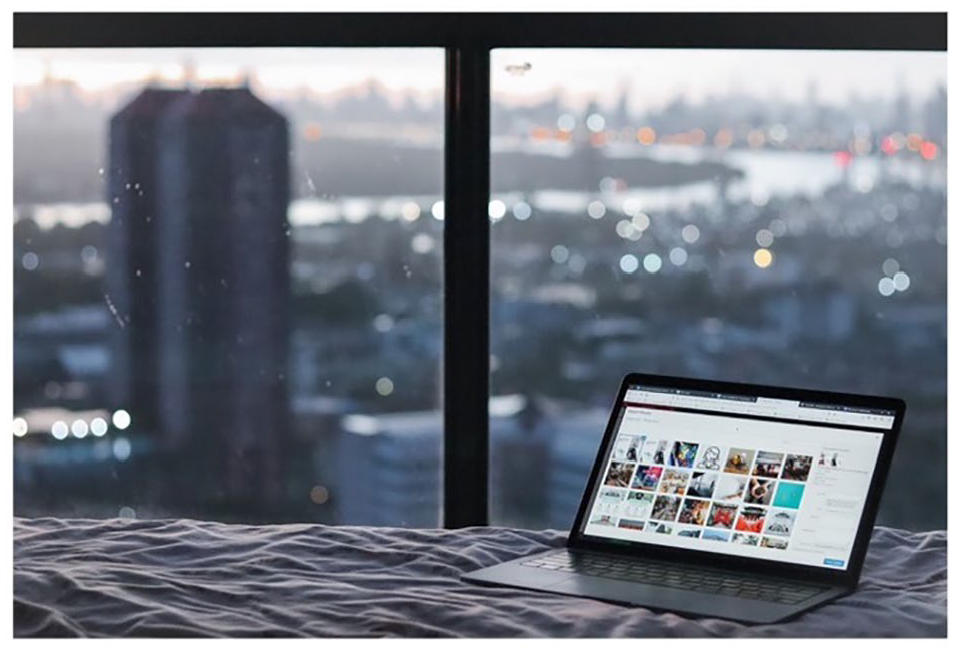
DN working with a view.
Closely related to the value of work–leisure balance, another identified theme was health and multifaceted sustainability. As Kannisto (2014) observed, DNs ‘enjoy a healthier lifestyle, and do things they consider meaningful instead of just earning money and paying bills’ (p. 118). In connection to doing things they considered meaningful, a few participants posted about minimalism. Kannisto (2014) claims that DNs prefer ‘to consume less and keep their freedom than earn more money’ (p. 116). Also, DNs often have to reduce the amount of their possessions in function of airline baggage allowances (Hannonen, 2020). Therefore, minimalism represents a characteristic usually associated with their lifestyle (Nash et al., 2018). However, despite positively contributing to sustainability, some participants commented on having (only) few things with them also as a disadvantage of the DN lifestyle, and they did not celebrate minimalism or posted much content about that topic on Instagram.
To conclude, in relation to Goffman’s (1956) IM theory, DNs aiming to make their Instagram profile/frontstage reliable – via both the ‘appearance’ and ‘manner’, that is, consistent frequency of similar-type posts – indicates the presence of dramaturgical discipline (see also Harris and Bardey, 2019). Furthermore, the DNs reported living a non-conventional lifestyle of continuous travel and adventure, which takes courage to start but is ultimately extremely rewarding. It provides freedom realized through autonomy and flexibility. These core values shown on DNs Instagram accounts are in line with the commonly reported DN values (Kannisto, 2014; Reichenberger, 2018; Thompson, 2019), which indicates our interviewees’ dramaturgical loyalty to the performing team (Goffman, 1956), in this case, the DN community. Finally, dramaturgical loyalty of our DNs might also explain their persistence in showing on Instagram their advanced level of work–leisure balance (see: Bozzi, 2020; Müller, 2016). Namely, an overworked DN not showing interesting content on Instagram is at risk of being labelled as non-adventurous/boring, while those who overshare leisure activities risk acting overly touristy. Neither of these impressions correspond with the (ideal-type) DN identity and thus should be avoided (Chevtaeva and Denizci-Guillet, 2021; Willment, 2020).
Audience-driven content and authenticity
The need to be unique, to offer a unique selling proposition (Gómez, 2019) even within their own self-portrayed roles as part of their communities, was important for some DNs. For instance, a distinctive element could be from other aspects of their personal life such as being a couple. Amparo and Antonio, for example, realized that focusing specifically on being a couple of riders provided them with more engagement (views, likes and comments) and decided to focus their profile on couple pictures. Figure 5 shows Amparo and Antonio showcasing they are in a romantic relationship, as well as the importance to live in the present moment and be willing to ‘hit the pause button’ (in the middle of a ride) to exchange emotional support.
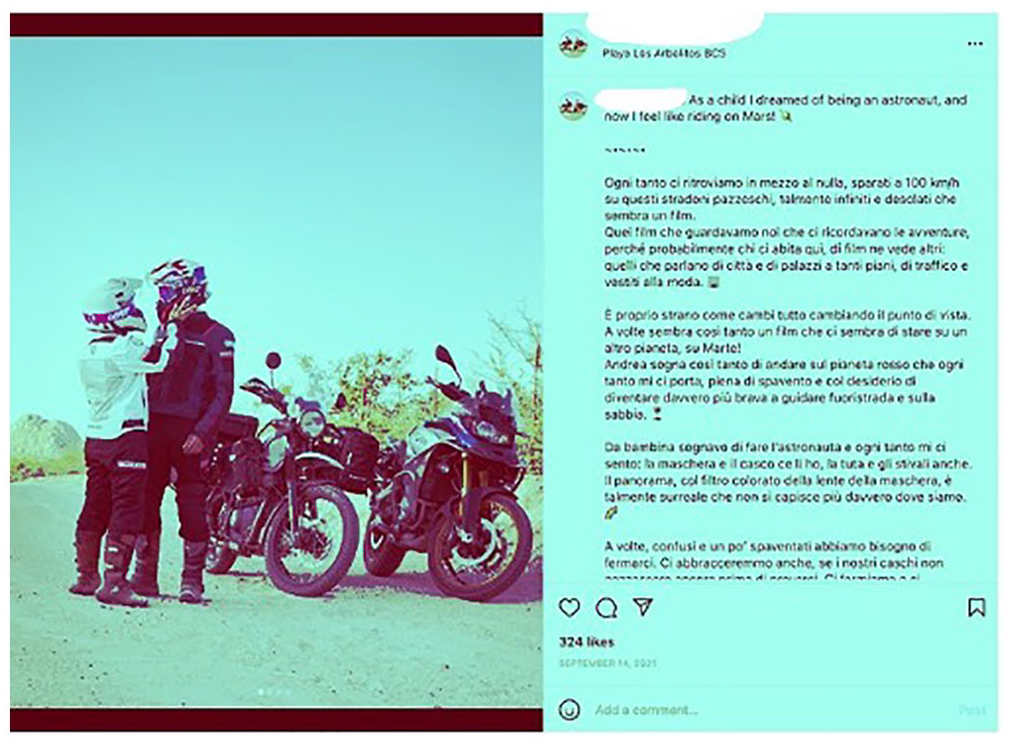
DNs raiders’ post showing ‘couple goals’.
In their study about DN promoters, Bonneau et al. (2023) identified four archetypes based on their online narratives: the inspirator, the teacher, the community manager and the influencer. In this study, most participants belonged to some extent to the inspirator category, which is characterized by motivating others to become DNs by sharing success recipes. One participant (Julian) fit the ‘community manager’ archetype since he organized DNs conferences and had a dedicated DN Instagram account. Another one (Ruth) was ‘the teacher’ archetype, as part of her job was teaching aspiring DNs about affiliate marketing, while the two couples were (part-time) ‘influencers’. Thus, one of the main reasons for posting content about their DN lifestyle was to inspire others. Their imagined audience (Goffman, 1956) was aspiring DNs – or armchair DNs (Cook, 2023) – who often interacted with them to show appreciation for their lifestyle: I’m showing my nomad life and most people who are ‘normal’ they’re looking at it and make comments like “oh my god, you live such nice life” . . . I’m just sharing something to show people that they can (live similar life too) (Diana).
Similarly, other participants like Marian, whose chosen images were all related to her DN journey, aimed to inspire with their Instagram content to wannabe DNs to take the leap. As Bonneau et al. (2023: 74) explain, inspirators post ‘stories revolving around their own success, coupled with motivating lines such as ‘I can do it why can’t you do it too?’’. Despite some participants promoting on Instagram that digital nomadism is a lifestyle anyone can potentially engage in, other participants observed that they have a lot of freedom to move around because of their Western passports. Dunia (who was born in Argentina) chose an Instagram post from 2018 (see Figure 6) showing her new Italian passport (which took her 12 years to obtain) as one of the pictures that represents her as a DN. Even though she became a DN 1 year later, a European passport was a very important milestone in her DN journey since it allows her to travel around the world with lesser restrictions than with her Argentinian passport.
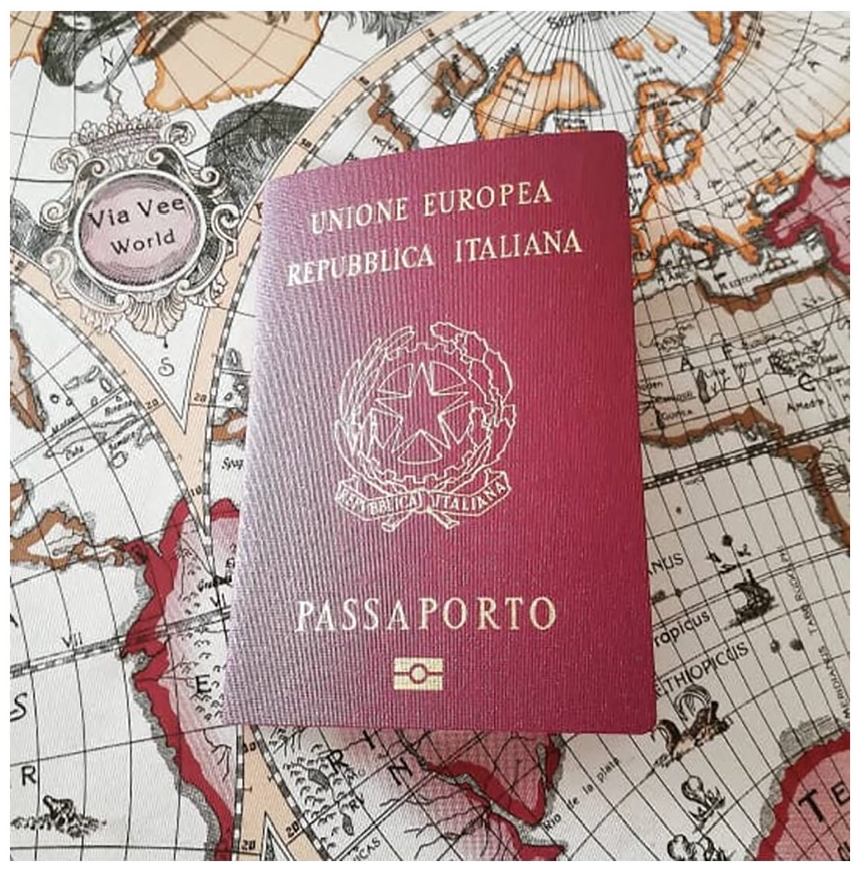
Dunia’s post of her new Italian passport.
One participant avoided talking too much about the DN lifestyle on Instagram since he knew many people around the world could not afford this lifestyle: I try not to talk about being a DN in a way (although it’s difficult to not be perceived that) because we are quite lucky in our society. Not everyone can become a DN like we are able to do so, we are a little bit privileged. So, I tried to avoid showing a little bit too much easiness of being a nomad, because not everyone has the same access to that we have with our family life, with our current economic situation (coming from a reasonable rich country). So, I just avoid going too into that because it’s unfair to a lot of people and I try to understand that. (Julian)
In line with existing research on self-presentation (Hollenbaugh, 2021; Lowe-Calverley and Grieve, 2018; Stsiampkouskaya et al., 2021), participants reflected on their audiences when posting on Instagram. A few DNs reported to constrain themselves from posting about topics that they deemed controversial with claims such as ‘I do not talk about politics. I do not talk about religion. I try to avoid controversial topics’ (Fernando), while several participants did not share content on Instagram that they considered to be personal or intimate. In addition, many participants also reported reducing the amount of leisure posts during the game-changing events on a global scale (e.g. the coronavirus pandemic, the war in Ukraine), for instance: I have a little bit of conflict now about continuing to post about (the lifestyle) because it does feel a little bit like . . . you know, I’m doing cool things that other people can’t do or don’t have access to do. And it feels unnecessary to rub it in too much. (. . .) (At the time) I stopped posting it was driven by some amount of like, not quite a guilt, but like, a damage control to avoid potential guilt because it was still COVID (Tom).
Julian and Tom’s explanations align with Hogan’s (2010) concept of the lowest common denominator. Accordingly, social media users carefully deliberate what to post based on both their positive audience (i.e. other people who are interested in and appreciative of the content) and their negative audience (e.g. audience members with different tastes who would find the content problematic). Especially on wide-audience platforms such as Instagram or Twitter, context collapse (Marwick and boyd, 2011) means that users resort to uncontroversial self-presentation, refraining from sharing overly political or explicit content. In the context of DNs, the fact that many DNs are freelancers who rely on a positive reputation among their clients might exacerbate these dynamics (Blyth et al., 2022).
At the same time and in line with such a strong audience orientation, many participants commented how they monitor engagement with their content. Some of them even recognized adjusting content based on the audience feedback: I pay close attention to what people say in the feedback and comments. Sometimes I have adjusted (my content). I posted something in Portuguese, and someone said: ‘Maybe you could post this in English . . . ’ and then I started posting more things in English . . . (Ariadna).
Although some participants adjusted their content to fulfil their audience’s wishes, in general, DNs in this study were concerned about authenticity. For example: I’m kind of always monitoring myself that I don’t fall into the trap of inauthenticity and self-editing. (. . .) I’m very disciplined about being careful to be genuine, authentic . . . because I suppose that’s really what it’s about it (Silvio).
In fact, authenticity is proven to be an integral part of self-presentation (Duffy and Hund, 2019) since it involves the representation of one’s personality in an authentic way. Interestingly, a few participants referred to how following Instagram content creation mentoring programmes downgraded their authenticity. Most participants chose to disclose mainly happy moments of their DNs lifestyle. As Katia put it: ‘I try to present myself as happy . . .. I’m posting happy moments, things I’m proud of or I could be proud of’. Hannonen (2020: 345) observed how digital nomadism is often promoted by DNs via social media ‘as a happier and more fulfilling’ lifestyle. However, on some occasions, DNs chose to publish about their problems (i.e. having issues with their bikes, being sick, having connectivity issues) because it contributed to create an authentic image.
Authenticity was an important aspect valued by participants, especially for the ones who wanted to monetize their accounts (Duffy and Hund, 2019). Contrary to other studies (Bonneau et al., 2023; Ehn et al., 2022), who focus on DNs who monetize their lifestyle from the advertising on their DN-related YouTube channels or selling products/services associated with it, this study includes DNs from a broad range of occupations (see Table 1), and only a few of them obtained revenue from the content they created on social media about the lifestyle. In fact, only three participants had a YouTube channel, and only two of them monetized it. These participants also included their struggles since they did not want to pretend that everything was always shiny and glamorous (Miguel et al., 2023), which can be considered a staged authenticity strategy (Willment, 2020). For example, Alice, who wanted to start monetizing her Instagram account, was particularly concerned about showcasing authenticity: If I have like a bad day or whatever or some issues, I just as well publish it because it’s important to know that to travel or whatever nomadic lifestyle is, you know, has its downsides. It’s not always paradise (Alice).
In line with Lo and McKercher (2015) and Stsiampkouskaya et al. (2021), our interviewees’ frontstage was co-constructed by their imagined audience (other DNs, external active supporters and sporadic readers). As the frontstage co-construction was performed by being responsive to the audience’s feedback, avoiding posting about sensitive topics (e.g. politics, religion), and being mindful of the DNs’ personal situation (e.g. inability to work remotely and live the desired lifestyle), it seems reasonable to confirm the presence of dramaturgical circumspection (Goffman, 1956). The DNs relied on the staged authenticity technique (Willment, 2020), which constructed the frontstage by mixing the common DN frontstage elements/values with their own, authentic, back stage or private side-values such as healthy eating and minimalism. Finally, the DNs embraced being looked upon by their audience and accepted the role model ‘responsibility’. In line with the South Korean sports stars (Yoo, 2021), to demystify the lifestyle and make it look (easily) achievable, they aimed to decrease the distance between them and the audience by making posts about their everyday life/private side.
DNs’ use of Instagram features
Using both stories and posts, as observed by some authors (Stsiampkouskaya et al., 2021; Sukmayadi and Yahya, 2019) is an efficient strategy for engaging the audience. In this study, most participants preferred stories over posts, and there were only a few participants who published reels or videos in posts. The interviewees preferred stories because they were seen as a less permanent format: ‘I use mostly stories because it’s more fleeting, it doesn’t stay there forever. It’s not so permanent’ (Alexandra). This ephemerality affordance (Duffy and Hund, 2019; Kreling et al., 2022), coupled with how easy it is to create stories, generates a sense of spontaneity that for some DNs led to higher engagement: ‘Most stories are simpler (than posts), I feel it’s simpler to create stories, people engage way more, I can reach more people . . . I feel there is more room for spontaneous things, things that are lighter and funnier . . .’ (Ariadna).
However, despite Triệu and Baym (2020) showing that the lack of public feedback (the affordance of visibility as per Treem and Leonardi, 2013) made the activity of sharing stories more frequent and relaxed, for Diana the lack of feedback (association affordance) was a handicap of the format: ‘I don’t really know (why I stopped using posts), but stories were much more convenient way to share information for me. . .even though they sort of offer limited space for hearing feedback’ (Diana).
Some DNs employed stories situationally and strategically, for example, to mirror the dynamism of travelling and being on the move and to provide travel tips of the places they visit to showcase their self-efficacy: I only post a lot of stories when I am traveling, so just like now, like a lot of stories. But on a daily basis, when I’m just working, I don’t usually post anything, so I only get excited with Instagram stories when I am traveling. (Philip) When I travel people get sick of me. I will have like 10–15 stories of the places. And sometimes I’ll just add like small notes on the places that I’m seeing and what I find interesting and what you can do in a certain city. At some point, I would like to have a known travel blog. (Alexandra)
Some participants also reported using stories to inform friends, family and other DNs about their whereabouts and they even ended up attracting people to less popular locations, for example: But it’s a good way to keep up with people. If someone posts on their story (their location) or something like that. You can be like: ‘Oh, no way you’re there. How long are you there?’, like that whole conversation can happen. (Tom) I don’t need to like update every single person what I’m doing, you know, like before you had to send the pictures or something: ‘I’m here. I’m here. I’m here’. So, it actually works in that way. When I was in Albania. I brought many people to Albania because they saw that it’s so beautiful, it’s safe and I think I brought like six people there. (Zoe)
The flexibility of stories allowed some DNs to combine them with features such as polls, thus tapping into the interactivity affordance of Instagram (Ciuchita et al., 2022). In that regard, the participants engaged in audience-oriented self-presentation to convey a sense of curiosity and learning: I do try to engage people in polls, especially when I’m at a new destination, I try to make them guess something about the place. And for me, and this is something that I’m very clear about, it’s not for me to make them feel stupid. It’s for them to learn something. Because if you get something wrong, you will actually learn something out of it. And in my stories, I really do take the time to explain. For me, it’s not just about posting pretty pictures. I’m nothing like that. If I’m in a destination, I will go out of my way to explain what the destination is all about. (Marian)
With the introduction of highlights in 2017 (Instagram, 2017), Instagram offers users a way to make the otherwise ephemeral stories permanent – a feature that has remained unacknowledged in previous research on Instagram and self-presentation. Among our interviewees, highlights were flexibly used by some to expand the repertoire of options: ‘I share the stories and then just save them on the highlights’ (Angelica). However, others preferred not to use them, for example, to retain a sense of privacy. Thus, the feature presents interesting implications for the visibility affordance (Treem and Leonardi, 2013) in relation to the persistency/ephemerality affordance (boyd, 2010; Kreling et al., 2022) of social media: I don’t have highlights, no, because I still love to be mysterious, like I don’t want . . .. My Instagram is open, but I don’t want them (followers) to see everything. So that’s why it’s not on the highlights . . . Usually people who are traveling, they would create highlights – like Dubai. I don’t, I don’t usually do that because I feel like even if Instagram is very public, I still have a choice to keep something from people. (Philip)
Despite the preference for stories among many, regular posts were still common. In that regard, some interviewees chose to use only one picture per post, while others preferred using carrousel and some of them even the maximum number of pictures per post (10). Most posts were more curated travel-related content that DNs deemed especially relevant and deserved the persistency (boyd, 2010) of the format: ‘I post something like when I complete a trip that I did. So, I post mostly for that. Let’s say that I would be a month in Mexico and then I would make a post of that’. (Angelica) ‘It has to be a very special moment for me, a very significant place for me like climbing a volcano and watching the dawn. Things like that, very significant’. (Gemma)
In addition to regular posts, stories and highlights, Instagram introduced reels (short vertical videos) in 2020 as a reaction to the popularity of TikTok. Among the DNs in our study, reels were less popular than stories as an outlet for videos. A main reason why many participants refrained from using reels is that they were seen as more effortful to create than stories or regular posts. For the few DNs who relied on reels more regularly, the format allowed them to expand the visual repertoire for more creative and unique storytelling. At the same time, a few participants described a sense of pressure to use the format. For example: I find actually that the introduction of videos, reels and in general the motion really enhances Instagram. I mean everyone kind of felt the pressure of changing to reels and I’ve done a few (. . .). But I think it is good because video captures even more than a picture in the sense that someone said something, or the actual scenery is more like that you can actually see it in motion. I would say that it resonates more with the receiver rather than just a flat picture. (Angelica)
In relation to the searchability (boyd, 2010) and visibility (Treem and Leonardi, 2013) affordances, participants also made frequent use of hashtags for their content to be findable and maximize reach, for example: ‘Sometimes I use hashtags that I know are popular on Instagram . . . (the ones) that are supposed to work (well) with the algorithm, and maybe you have more chances of showing up on other people’s profiles’ (Ariadna). However, some participants highlighted that although hashtags ‘used to work some time ago . . . I don’t think they bring you like any reach’ (Imma and Daniel) and claimed that there was not much ‘difference between putting random hashtags to putting the really cool ones’ (Laura). Interestingly, Alice observed that although hashtags may increase exposure among non-followers, they also decrease the reach among followers: ‘When I use more hashtags, I get more people who are not following me to see my posts. But at the same time, less of my followers see the posts . . .’. Therefore, some participants reported just including a few hashtags ‘that may be new or interesting’ (Laura). In particular, Robert often includes local hashtags to connect with local communities: ‘For me, it’s important to bring local hashtags to my posts because I think it’s nice to immerse yourself in the community . . ., sometimes I even write in the local language’.
In terms of captions, a few participants reported always writing a long paragraph, but the tendency was to write a short paragraph ‘. . . because we don’t want to bore people’ (Imma and Daniel). Some participants reported that the content of the captions was usually funny. The DNs often enrich the captions with elements such as hashtags, emojis, mentions or references to the place through location tagging: ‘I tag my friends and stuff. That’s fun. But I never really post links at all. Just tag friends and maybe wearing certain brands that want to show them like a bathing suit’ (Teresa). As explained by Javier, tagging increases the reach and is done to foster audience engagement: ‘Usually, these establishments when you tag them, they repost you. And that allows you to reach more people. I mean, not a lot . . . but yeah, they start following you because they find interest in what you do’.
The extensive use of different formats and features Instagram provides (stories, posts, highlights, hashtags, carousels, captions, emojis) points to a strong awareness of the social media eco-system and technological curiosity and versatility among DNS. Unlike offline, where a setting is the physical environment in which the performance takes places and which shapes the IM, online environments such as social media furnish self-presentation through their high- and low-level affordances (Bucher and Helmond, 2017). The heavy use of stories shows how the DNs enjoy a setting that allows them to display their preferred performance effortlessly and spontaneously, and where their emotions can be shown.
Conclusion
This study extends existing work on how DNs document their lifestyle on social media (Bozzi, 2020; Hemsley et al., 2020) by focusing on Instagram as a key venue for self-presentation. Our findings suggest that DNs carefully choose the setting and narrative that they try to build with their posts. DNs pay special attention to the positive aspects of their lifestyle, priming posts that represent freedom, enjoyment, adventure and healthy living over less desirable aspects. A relevant contribution with regards to identity markers and content is the absence of work-related posts in the DNs’ self-presentation for most part. Among the pictures selected for the photo elicitation, only few showed work-related themes. The focus on leisure over work might have to do with the context: Instagram tends to be leisure-oriented in general and other platforms such as LinkedIn cover work-related needs, but the finding also relates with DNs’ prioritization of a healthy work–life balance and their opposition to a culture of overwork (Thompson, 2021).
Our research contributes to earlier work on the imagined audience on social media (Litt and Hargittai, 2016; Stsiampkouskaya et al., 2021). The DNs devised audience-focused strategies such as finding a unique niche, posting less or nothing when their content might have rubbed the audience the wrong way (COVID-19, Ukraine war), or implementing feedback they had received as a comment. This shows how DNs are aware of their own position and think about the social acceptability of their lifestyle. Many participants paid attention to the authenticity of their self-presentation on Instagram, sometimes not opting to post content that could be perceived as insensitive or overly boastful. Thus, the DNs were mindful of their (imagined) audience. An important audience group for certain participants were aspiring DNs, for whom the interviewees tried to provide inspiration and helpful content. Overall, the staged authenticity approach Willment (2020) discussed for travel bloggers also applies to DNs. Given the relative novelty of digital nomadism, navigating audience perceptions, and fostering an authentic image can be challenging and fraught with uncertainty. Future research should therefore explore the audience side of DNs’ self-presentation on Instagram in more depth, investigating how different content strategies are received and perceived.
Finally, the DNs we interviewed used the affordances of Instagram, such as the ephemerality of Instagram stories (Duffy and Hund, 2019; Kreling et al., 2022), strategically to convey an authentic and likable image that resonates with fellow DNs as well as outside communities. We found that the participants rely strongly on stories and value the versatility of the format as well as the engagement it creates. In the eyes of the DNs, stories afford spontaneity and flexibility, thus fulfilling important authenticity needs. Stories were mainly used to showcase destinations and provide travel tips, as well as to keep family and friends informed about DNs’ whereabouts. Highlights were employed to create quick video/photo albums of countries to portray DNs’ identity as ‘globetrotters’, while posts (which were also mostly travel-related) took longer time to prepare and were seen as less fluid and not as authentic as the stories. By contrast, reels were less used but were seen as a dynamic format to experiment with among some, especially the more commercially oriented DNs interested in monetizing their content. In general, and with a few exceptions, the participants relied on low-threshold affordances and modes of self-presentation that require little editing and can be done spontaneously from a mobile device. Our findings connect to emerging research on the platform-specific affordances of social media for self-presentation and self-branding (Blyth et al., 2022; Duffy et al., 2017). Among content creators more generally, Instagram serves as a key platform due to its (large) user base that is interested in topics such as food, art and travel, its highly visual nature and its specific design choices such as the square image format (Scolere et al., 2018). We showed how the technologically savvy group of DNs engages platform-specific affordances for self-presentation flexibly and openly, making conscious format choices to speak to their audience’ needs.
Our study has limitations that future research can address. First, despite reaching saturation and rich insights based on the depth of the interviews, our research is not generalizable to all DNs. Second, our study was focused on Instagram. While Instagram is a key platform in today’s social media eco-system, DNs often combine various platforms (Miguel et al., 2023). Future research on IM among DNs could adopt a holistic perspective where the different platforms are compared in terms of their self-presentational affordances and constraints (Scolere et al., 2018). Future research, especially longitudinal one, could investigate how temporal trajectories and events affect DNs’ self-presentation on social media. Third, while we were able to thoroughly analyse the participants’ self-presentational practices on Instagram, our interview and photo-elicitation approach could not fully capture certain aspects of digital nomadism that are more prevalent offline or in dedicated online communities such as Reddit (De Almeida et al., 2021, 2022; Pita et al., 2022). Future research could, for example, study the practices of resource sharing among DNs and the role of self-efficacy, investigating how useful resources such as tools and insider knowledge are distributed over time. Social network analysis would be a promising method to do so, with social cognitive theory and diffusion of innovation theory serving as useful theoretical lenses. Finally, this study did not focus on some critical aspects of self-presentation and representation (e.g. in terms of gender, race, sexual orientation, and so on). Future work could focus on exploring how DNs with different identities adapt to a global audience and ‘one-size-fits-all’ platforms such as Instagram.
Footnotes
Funding
Research Council of Norway (Norges Forsknigsrådet), grant agreement 275347.
