



Abstract
This two-study package examines sense of common humanity—a subcomponent of the psychological construct of self-compassion—in relation to political divisiveness. Study 1 (n = 1010) employs a survey with a probability sample representative of the US population to show that sense of common humanity—recognizing that feeling bad about oneself is a common human experience—is associated with feeling competent to form relationships with those one disagrees with politically. This finding paved the way for Study 2, an experiment (n = 955) that showed sense of common humanity can be primed using meme-like posts on Facebook, and, as a result, lead people to have more positive attitudes toward their political outgroup. From a theoretical perspective, this study demonstrates the relevance of using self-compassion as a framework for addressing political divisiveness, and that a sense of common humanity can be primed in the computer-mediated space of Facebook.
Affective polarization—the dislike or even hatred of political outgroups—has been on the rise for decades, particularly in the United States (Iyengar et al., 2019). The populist wave (Pierson, 2017) that brought Donald J. Trump into power there in 2016, the tumultuous years that followed his presidency (Hout and Maggio, 2021), and the divisiveness amplified during the COVID-19 pandemic (Druckman et al., 2021) have exacerbated these schisms, particularly on social media (Kubin and Von Sikorski, 2021; Tucker et al., 2018). These entrenched divisions can make it impossible for people to talk with those they disagree with or even listen to the other side (Iyengar et al., 2019; Marchal, 2022). This is normatively problematic because cross-cutting discussions are linked to greater understanding of others’ views, tolerance for divergent beliefs, and the type of collaboration that can yield more beneficial solutions to societal problems (e.g. Delli Carpini et al., 2004). Furthermore, talking to those one disagrees with politically may open people to alternative perspectives, help them empathize with outgroup members (Mendelberg, 2002), and, ultimately, train people to engage with political leaders (e.g. Schmitt-Beck and Grill, 2020).
Many efforts to attack this problem have examined using groups to bring people with divergent perspectives together through repeated contact either offline or online or both (e.g. Bakshy et al., 2015; Huckfeldt et al., 2004; Marchal, 2022; Wojcieszak and Warner, 2020). While these efforts have produced some limited success, they require getting groups together, which is not always possible or even advisable for some sub-groups, such as minoritized persons, because this contact could place them at risk (e.g. Overgaard et al., 2022; Sobieraj, 2020). Scholars have also tried approaches using media, particularly social media, to bring divided audiences together. One study found that news coverage that focuses on the strategy or horse-race aspects of politics can decrease outparty hostility, compared to more issue-based coverage (e.g. Zoizner et al., 2021) even though strategy coverage may lead to greater political cynicism and reduced political knowledge (Zoizner, 2021). Another study found that if journalists include a combination of facts and sources’ personal experiences in political coverage, it can bridge divides between political adversaries (e.g. Kubin et al., 2023). And in 7 out of 10 experiments, tweets designed to engage diverse audiences did so, more so than control tweets (Saveski et al., 2021).
This study takes a new approach to tackling the problem of political divisiveness by focusing on shifting individuals’ beliefs by considering whether the psychological concept of self-compassion (Neff et al., 2021) could play a role in getting people to have more positive attitudes toward their political outgroups, and, if so, whether self-compassion can be primed through meme-like Facebook posts to have this effect. While no research has specifically linked self-compassion to positive relationships with outgroups, I argue studies have shown that self-compassionate people are happier, more emotionally intelligent (e.g. Hollis-Walker and Colosimo, 2011; Neff and Costigan, 2014; Shapira and Mongrain, 2010), and more likely to compromise (Yarnell and Neff, 2013)—qualities that might help people perceive their outgroup more favorably. I posit that this works similarly to Levendusky’s (2018) finding that priming a shared identity can help people see political outgroup members in less partisan ways.
Thus, this manuscript paves new theoretical ground by making two contributions. First, I use a survey (n = 1010) with a probability sample representative of the US population (Study 1) to show that one aspect of self-compassion called sense of common humanity—recognizing that feeling bad about oneself is a common human experience—is associated with feeling competent to form relationships with those one disagrees with politically. This finding paved the way for Study 2, an experiment (n = 955) that showed sense of common humanity can be primed using meme-like Facebook posts, and, as a result, lead people to have more positive attitudes toward their political outgroup. From a theoretical perspective, this study demonstrates the relevance of using self-compassion as a framework for addressing political divisiveness and that a sense of common humanity can be primed on Facebook.
Theoretical framework: self-compassion
An overwhelming body of literature demonstrates that people who are self-compassionate—kind toward themselves during instances of pain or failure (Neff, 2003a, 2003b) —experience positive benefits, such as modulating reactions to negative events (Leary et al., 2007). Self-compassion is related to the idea of compassion, which involves being touched by the suffering of others with open awareness without disconnecting from the pain (Neff, 2003b). Similarly, self-compassion involves being aware of and open to one’s own suffering and witnessing it nonjudgmentally without avoiding or disconnecting from the pain (Neff, 2003b). Self-compassion consists of three main sub-concepts: self-kindness (versus self-judgment), which involves being patient with one’s own flaws; sense of common humanity (versus isolation), which includes a recognition that feeling down or failing are common human experiences; and mindfulness (versus over-identification), which involves being present in the moment of suffering without ignoring or ruminating about it (Neff, 2003a, 2003b; Neff and Costigan, 2014). Self-compassion generates positive feelings about the self by encouraging people to accept themselves and their flaws and to fully feel their pain. Thus, a self-compassionate person does not judge the self as either good or bad, just human. Notably, self-compassion is distinct from self-esteem, which relates to how positively people evaluate themselves in a particular situation (Leary et al., 2007), while self-compassion involves more emotional stability than self-esteem because it is not linked to others’ evaluations or to circumstances (Neff, 2003a; Neff and Costigan, 2014).
Self-compassion and political divisiveness
I posit that self-compassion may be a balm for political divisiveness based on the following argument: If self-compassionate people exhibit positive qualities like happiness, emotional intelligence (e.g. Hollis-Walker and Colosimo, 2011; Neff and Costigan, 2014; Shapira and Mongrain, 2010), and greater likelihood to compromise (Yarnell and Neff, 2013), these same qualities might help people view their outgroups in a more favorable light or get along better with those they disagree with politically. The theory of connective democracy (Overgaard et al., 2022) underscores this point. This theory proposes that connectivity, a “willingness to prioritize relationships over competitiveness and engage in conversation with one’s political adversaries to genuinely understand their viewpoints” (Overgaard et al., 2022: 4; see also Bennett and Segerberg, 2012), is vital to bridging political divides. I argue that this type of connectivity is more likely among people who have the type of happy, emotional intelligent, and compromising disposition linked to self-compassion. Connective democracy, furthermore, proposes that all types of divisiveness between political groups are not equally aversive (Overgaard et al., 2022). For instance, the theory asserts that ideological polarization, which focuses on differences in beliefs, and issue polarization, which deals with disagreement on specific political policies, are less normatively problematic than affective polarization (Overgaard et al., 2022), which refers to people’s dislike or hatred for their outgroup (Iyengar et al., 2019). The reason affective polarization may be worse is that it has potential to create schisms between people that are deeper than a mere policy or issue. Also, people’s perceptions of affective polarization tend to be exaggerated (Druckman et al., 2022), highlighting the problematic nature of this concept for intergroup relationships and democracy. Thus, in Study 1, I focus on affective polarization and the related concept of perception of affective polarization, which is how affectively polarized people perceive society in general to be. Perception of affective polarization was considered because people’s perceptions about political experiences can shape their attitudes toward partisans (Wagner, 2021). Furthermore, I considered people’s relationship skills toward their outgroup, a dependent variable directly linked to the idea of connective democracy—that people who exhibit connectivity are more open to understanding their outgroups (Overgaard et al., 2022).
Based on the above-discussed literature, I predicted relationships between exhibiting self-compassion and affective polarization, perception of affective polarization, and relationship skills toward the outgroup. I specifically focused on two types of self-compassion, self-kindness and sense of common humanity because these sub-categories relate more directly to the type of psychological traits that would be expected to generate greater connectivity with the outgroup. However, given the dearth of literature directly considering these variable, I posed non-directional exploratory research questions to determine whether self-compassion has usefulness as a variable to discourage divisiveness:
RQ1: Are self-kindness or sense of common humanity related to (a) affective polarization, (b) perception of affective polarization, or (c) relationship skills toward the outgroup.
Method, Study 1
Survey procedures and sample
Participants (n = 1010) were surveyed through the National Opinion Research Center’s (NORC) 1 AmeriSpeak Panel, which uses probability-based sampling of sub-groups and statistical weighting to be representative of the US adult population. AmeriSpeak uses 48 sampling strata in total, including age, race/ethnicity, education, and gender, to create a stratified probability sample where the size of the selected sample per sampling stratum is determined by the population distribution for each stratum. Also, expected differences in survey completion rates for various demographic groups are taken into account to enhance representativeness of the sample. Data are weighted to more accurately reflect the population. Table 1 provides demographics compared to the US adult population.
Study demographics compared to the US adult population.
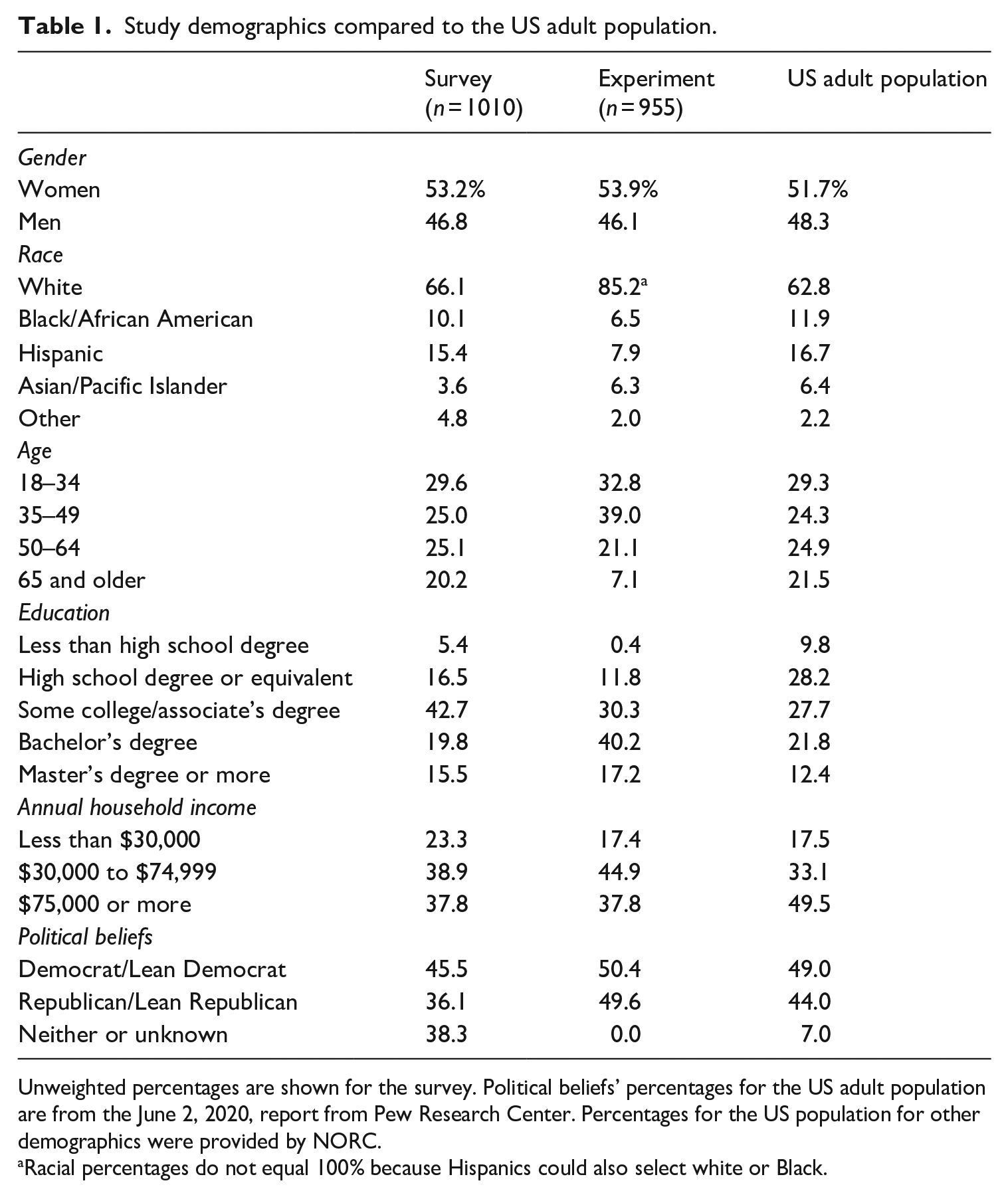
Unweighted percentages are shown for the survey. Political beliefs’ percentages for the US adult population are from the June 2, 2020, report from Pew Research Center. Percentages for the US population for other demographics were provided by NORC.
Racial percentages do not equal 100% because Hispanics could also select white or Black.
A total of 3706 people were initially invited to the survey, and 1010 participated for a completed rate of 27.3%. The completion rate is calculated by dividing the total number of people invited by the total number who completed the survey, in accordance with guidelines of the American Association for Public Opinion Research (AAPOR; see Baker et al., 2010). The margin of error for the sample is 4.09 percentage points, based on a 95% confidence level. Institutional Review Board approval was granted for the project at the author’s university, and NORC collected the data in August 2020. People could participate in either English or Spanish, and 978 people participated online and 32 through phone interviews.
Operational definitions
Independent variables
Two types of self-compassion were considered, self-kindness and sense of common humanity (Neff, 2003a). For self-kindness, participants rated on a 1 (almost never) to 5 (almost always) scale their feelings about the following statements: “I try to be understanding and patient towards those aspects of my personality I don’t like,” “I’m kind to myself when I’m experiencing suffering,” “When I’m going through a very hard time, I give myself the caring and tenderness I need,” “I’m tolerant of my own flaws and inadequacies,” and “I try to be loving towards myself when I’m feeling emotional pain.” For sense of common humanity, participants rated their feelings on the same scale for the following statements: “When I feel inadequate in some way, I try to remind myself that feelings of inadequacy are shared by most people,” “I try to see my failings as part of the human condition,” “When I’m down and out, I remind myself that there are lots of other people in the world feeling like I am,” and “When things are going badly for me, I see the difficulties as part of life that everyone goes through.” A principal component analysis (PCA) with promax rotation showed these statements loaded on two factors, as established by Neff (2003a). Self-kindness items were averaged into a reliable index, M = 3.23, SD = 0.79, Cronbach’s α = .86. Sense of common humanity items were averaged into a reliable index, M = 3.35, SD = 0.85, Cronbach’s α = .83.
Dependent variables
Affective polarization was measured in accordance with literature (Iyengar et al., 2019) using a “feeling thermometer.” Participants were given this prompt:
We’d like to get your feelings toward a number of people and groups. A rating of 0 means you feel extremely negative. A rating of 10 means you feel extremely positive. A rating of 5 means that you don’t feel particularly positive or negative.
Based on this prompt, respondents rated “Republicans” and “Democrats” on a 0–10 scale. Affective polarization was defined as the absolute value of the difference between feelings toward one’s in-party and feelings toward one’s outparty, M = 4.40, SD = 3.36.
Perception of affective polarization also was operationalized using a “feeling thermometer” (e.g. Banks et al., 2021). Participants were given this prompt:
Using the same scale, how do you think Democrats and Republicans generally feel toward one another. Again, a rating of 0 means you think they feel extremely negative. A rating of 10 means you think they feel extremely positive. A rating of 5 means you think that they don’t feel particularly positive or negative.
Perception of affective polarization was defined as the absolute value of the difference between perceptions of the polarization of Democrats and perceptions of the polarization of Republicans, M = 1.27, SD = 1.91.
Relationship skills toward outgroup was measured using a single item. Participants rated on a 1 (strongly disagree) to 5 (strongly agree) scale their agreement or disagreement with the following: “I am confident that I have the skills to develop positive relationships with those who disagree with me politically,” M = 3.72, SD = 0.92.
Results, Study 1
Three ordinary least squares (OLS) regression analyses were conducted to answer R1, which asked whether self-kindness or sense of common humanity, were related to (a) affective polarization, (b) perception of affective polarization, or (c) relationship skills toward the outgroup. For each analysis, age, education, gender, political beliefs,2 and race were entered into the models as controls, and both self-kindness and sense of common humanity were entered as focal independent variables. As shown on Table 2, results showed that people who scored higher on sense of common humanity were significantly more likely to feel they have skills to form relationships with their outgroup members, answering RQ1c, but the effect size was small (β = 0.13, p < .001). Those with higher income (β = 0.12, p < .001) and younger people (β = −0.07, p = .03) were significantly more likely to feel competent to form relationships with those they disagree with. Education, gender, race, and political beliefs showed no significant relationships.
Final models for three ordinary least squares (OLS) regression equations for Study 1.
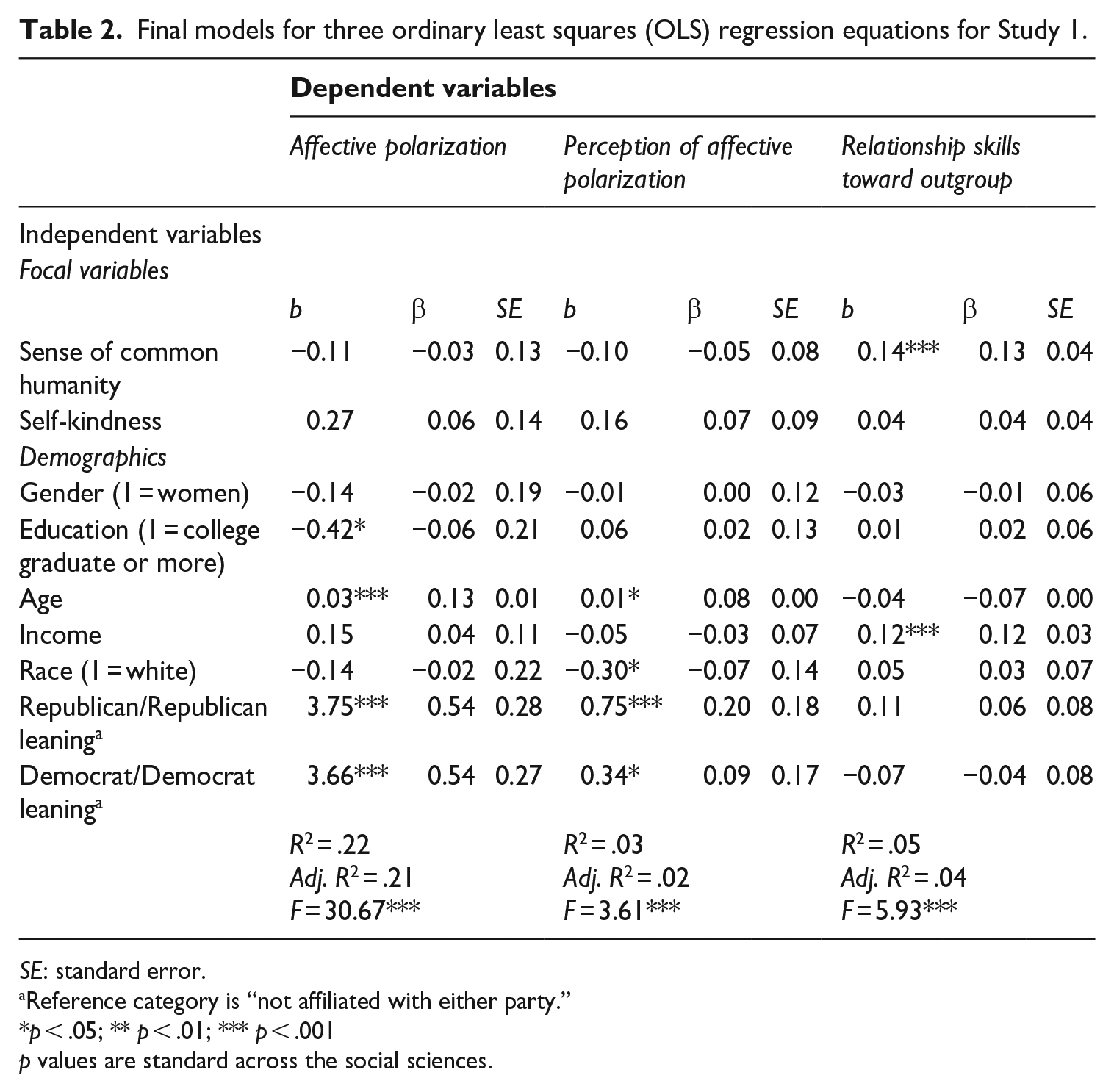
SE: standard error.
Reference category is “not affiliated with either party.”
p < .05; ** p < .01; *** p < .001
p values are standard across the social sciences.
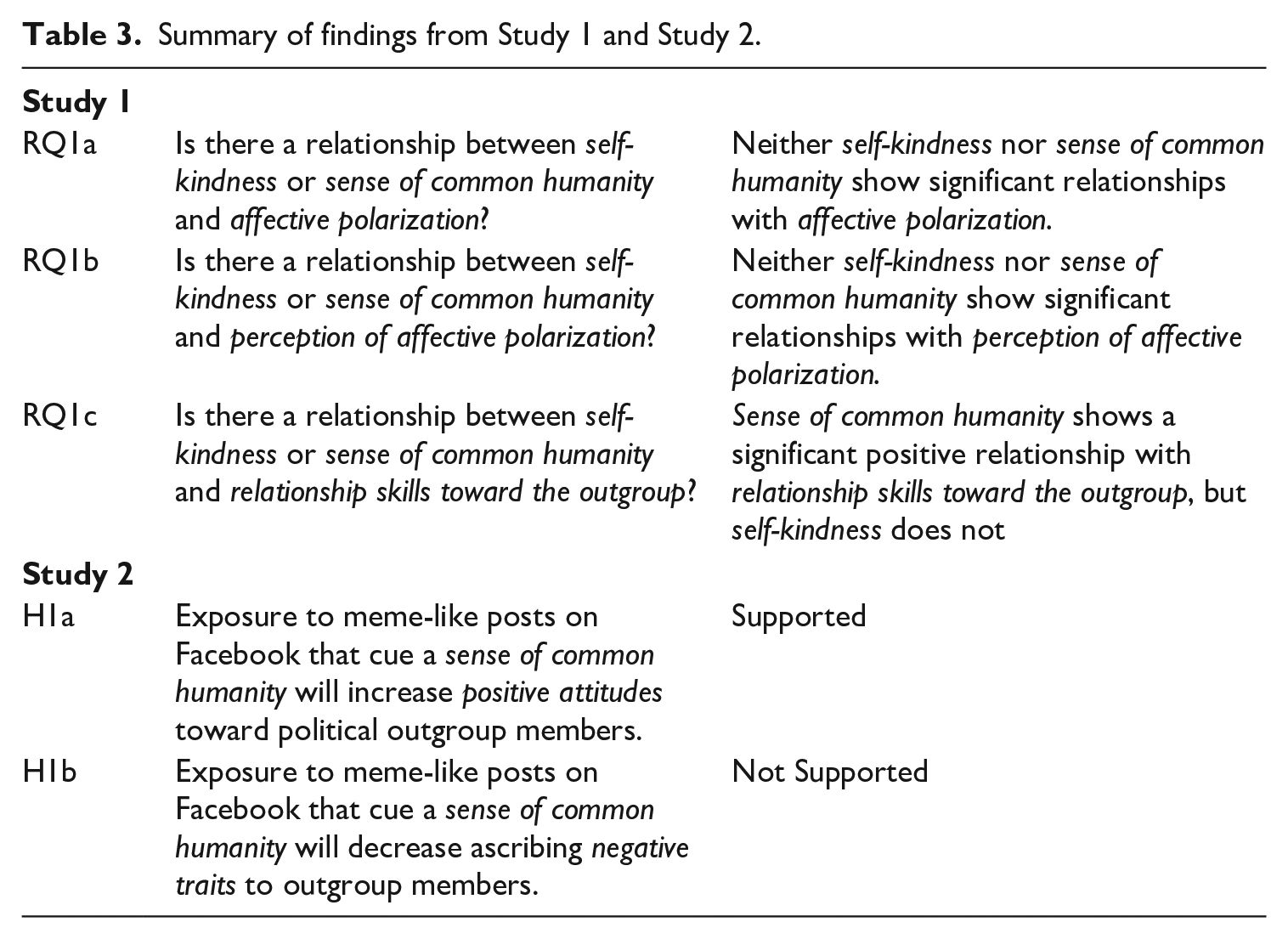
However, sense of common humanity showed no relationships with either affective polarization or perception of affective polarization, answering RQ1a and RQ1b, respectively. In addition, the independent variable self-kindness showed no relationship to any of the dependent variables. In sum, these findings show that people who are self-compassionate are more likely to feel competent to form relationships with their outgroup members, but that variable has no relationship with their feelings of affective polarization or perception of affective polarization (Table 3 summarizes findings).
Summary of findings from Study 1 and Study 2.
Discussion, Study 1
The most important finding from Study 1 is that people who were high in a sense of common humanity were more likely to feel they have the skills to develop relationships with those they disagree with politically. This finding is important because it suggests that there is merit in considering the variable sense of common humanity in relation to understanding people’s feelings toward political outgroup members. While Study 1 is correlational, it employed a sample representative of the US population, so this finding offers evidence that the psychological variable of sense of common humanity may be useful in helping people perceive their outgroups differently. This finding paved the way for Study 2, which tested whether fostering a sense of common humanity could be experimentally fostered in people through exposure to meme-like Facebook posts. In essence, Study 1, showed that sense of common humanity may have relevance to how people see their outgroup members, and, as a result, it offers the theoretical foundation for manipulating sense of common humanity in Study 2 to make people see their outgroup more favorably.
However, it is noteworthy that in Study 1, sense of common humanity showed no relationship with either of the other dependent variables, affective polarization or perception of affective polarization. In addition, self-kindness showed no relationship with affective polarization, perception of affective polarization, or relationship skills toward the outgroup. Because of those null findings, self-kindness was not considered for Study 2, and neither were affective polarization or perception of affective polarization.
Synopsis of Study 2
Based on the findings for Study 1, Study 2 builds on the first study by testing whether this key element of self-compassion can be primed by showing people something they likely see every day online—meme-like posts that are spread virally online (Bene, 2017; Guenther et al., 2020), at least in the United States. The basis for testing this experimentally is research that shows that self-compassion can be primed through long and short interventions (Breines and Chen, 2012; Neff and Germer, 2017; Shapira and Mongrain, 2010), although notably, no study has primed self-compassion as this current study, using Facebook meme-like posts.
I call these depictions meme-like posts because, while they have some elements of memes—defined as “remixed, iterated message that can be rapidly diffused by members of participatory digital culture” (Wiggins, 2019: 11)—they do not fit all criteria of being memetic (Milner, 2018; Shifman, 2013). Shifman (2013) argues persuasively that for a meme to be truly a meme, it must include three elements: content, which is text that references ideas and ideologies; form, which includes visual or audible elements; and stance, which is how people imitate a position or shift a discursive orientation to convey how they feel about the issue at hand. Furthermore, Milner (2018) asserts that memes are culturally infused digital content that makes a point, connection, or joke. The meme-like posts in this study are more simplified forms of content “that possess both cultural and social attributes as they are produced” (Wiggins and Bowers, 2015: 1891) and require digital or mediated transmission (Wiggins, 2019). I focused on this type of content because they are produced and transmitted for “discursive purposes” (Wiggins and Bowers, 2015), meaning to repeat a theme or idea. Even brief exposure to this type of content may have potent effects (Geniole et al., 2022; Paciello et al., 2021). Facebook was the focus because meme-like posts like the ones in this study are frequently spread on social-networking platforms (Bene, 2017; Guenther et al., 2020; Paciello et al., 2021), and Facebook is the largest such platform worldwide (Brailovskaia et al., 2020). Nearly 3 billion people use Facebook worldwide, including 240 million in the United States, 3 where this study was conducted.
Given the discursive potential and ubiquity of meme-like images, I considered whether they could be used to foster a sense of common humanity (Neff, 2003a) in people by cuing this type of self-compassion (Shapira and Mongrain, 2010), and, as a result, improve attitudes toward political outgroup members. Support for this notion came from Study 1, which found that common humanity was the type of self-compassion that predicted improved relationship skills toward the outgroup in Study 1. Thus, I predicted that exposure to Internet meme-like images that cue a sense of common humanity would lead to more positive attitudes toward political outgroup members and decrease ascribing negative traits to outgroup members, two conceptualizations of attitudes toward outgroup members drawn from the political communication literature (Wojcieszak and Warner, 2020). I did not use the dependent variable from Study 1, relationship skills toward the outgroup, in Study 2 for several reasons. First, relationship skills toward the outgroup is a perception, not an attitude, which makes it less suitable for an experiment like Study 2, where a manipulation is predicted to produce a causal effect. Related to this, positive attitudes toward the political outgroup and describing negative traits to outgroup members are attitudes, and attitudes have been found to predict behaviors (Ajzen and Fishbein, 1980), so they are particularly meaningful for an experiment like Study 2. Thus,
H1: Exposure to meme-like posts on Facebook that cue a sense of common humanity will (a) increase positive attitudes toward political outgroup members, and (b) decrease ascribing negative traits to outgroup members, relative to a control condition.
Method, Study 2
Design and procedures
After consenting, participants were randomly assigned to view either a thread of Facebook posts that included meme-like images designed to encourage people to think about their common humanity with others or a thread of generic posts with images, which was the control condition. All the posts were shown on a functional replica of a Facebook feed that was fully interactive. After exposure to the posts, participants answered the dependent variables, measuring their positive attitudes toward their outgroup and the negative traits they would ascribe to this outgroup, along with demographic questions (age, gender, race, income, education, political beliefs). The dependent measures are operationalized below.
Sample recruitment
The participants (n = 955) 4 were recruited through CloudResearch, which elicits participants from Amazon Mechanical Turk (MTurk), an online platform where participants can self-select to do tasks for a fee (Paolacci et al., 2010). Particularly in experimental research, MTurk has been found to provide reliable data (Mortensen and Hughes, 2018) from more varied samples than other recruitment strategies, such as Internet samples or college students (Buhrmester et al., 2011). CloudResearch screens out participants who have answered demographic questions inconsistently or who have suspicious geolocations indicating they may be bots to provide higher-quality MTurk data (Litman et al., 2017). Participants were paid US$1.40 each to complete the survey, which took 6.37 minutes on average for completion. Participants had to be at least 18 years old and live in the United States. Quotas were set up to ensure recruitment of roughly half participants who are Democrats or have Democrat-leaning views and half who are Republican or have Republican-leaning views, A series of chi-square tests with Bonferonni corrections for each demographic variable by the experimental condition showed that random assignment was successful, and neither of the experimental conditions had significantly more of one demographic category (Table 1).
Stimuli
In both the treatment and control conditions, participants were exposed to a functional replica of a Facebook feed that looked just like a real Facebook feed, but participants did not have to log into their accounts to see the feed because they were not actually on Facebook. Thus, participants only were exposed to the posts that were in the treatment or control conditions, not actual algorithmic curation of real posts. In the treatment condition, participants were exposed to six meme-like posts that pilot testing (described below) showed primed a sense of common humanity. In the control condition, participants were exposed to six generic posts. In both conditions, additional generic posts (e.g. “Does anybody have any good book recommendations”) were interspersed within the feed to make it more realistic. The posts were randomized by subject to control for order effects in both the treatment and control conditions. Each post appeared to come from a Facebook user.
Stimuli design and creation
The following steps were followed to create stimuli. Initially, undergraduate students created 24 meme-like posts using free online meme-creating software, after being explained the concept of common humanity (Neff et al., 2021), and half the meme-like images were intended to convey common humanity and half were intended not to convey this construct. To ensure the meme-like images were being perceived as intended and to determine which ones most potently communicated common humanity, 126 5 participants recruited through CloudResearch before the experiment pilot tested them. These participants were screened out from participating in the experiment. The meme-like posts were called memes in the survey for simplicity.
Pilot test participants first received this prompt:
Now we will show you a series of pictorial memes, like the ones people share on Facebook or Instagram. You will answer one question about each meme. We want you to consider whether you think the meme shows a
Then they rated whether the meme they saw “shows a
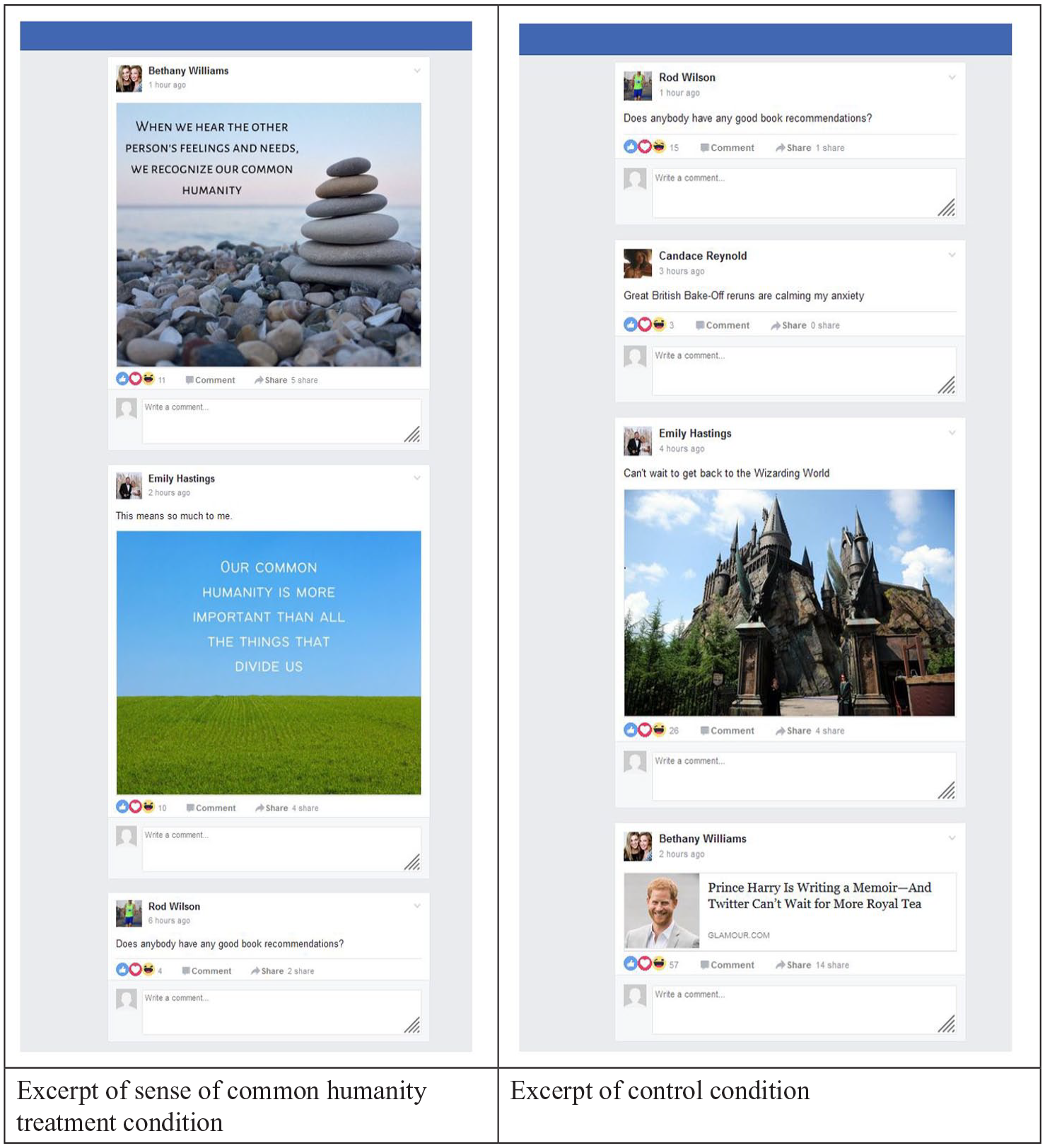
Stimuli examples.
Dependent measures
Positive attitudes toward the outgroup was measured by asking participants to rate how much five adjectives applied to people they disagree with politically on a 1 (not at all) to 7 (very much) scale. The adjectives were as follows: “sympathetic,” “soft-hearted,” “warm,” “compassionate,” and “tender.” They were averaged into a reliable index, M = 2.97, SD = 1.97, Cronbach’s α = .97.
Ascribing negative traits to outgroup members was operationalized using a scale adapted from Wojcieszak and Warner (2020). Participants rated 11 adjectives on a 1 (not at all) to 7 (very much) scale. These were as follows: “brainwashed,” “racist,” “hateful,” “misinformed,” “misguided,” “selfish,” “mean,” “reasonable,” “honest,” “caring,” and “informed.” The last four items were reversed scored, so a higher mean was more negative perceptions, and then all were averaged into a reliable index, M = 4.46, SD = 1.35, Cronbach’s α = .93.
Results, Study 2
A multivariate analysis of covariance (MANCOVA) was conducted to test H1, which predicted that meme-like posts that cue a sense of common humanity will (a) increase positive attitudes toward political outgroup members and (b) decrease ascribing negative traits to outgroup members. The focal factor was the experimental condition, and political beliefs was entered as a control. Results showed the common humanity meme-like posts had a small but significant effect on positive attitudes toward the outgroup, F(1, 922) = 15.11, p < .001, partial η2 = 0.02, supporting H1a, but no effect on ascribing negative traits to the outgroup, F(1, 922) = 0.02, p = .92, partial η2 = 0.01, rejecting H1b. Subjects exposed to the common humanity meme-like posts rated positive attitudes toward their outgroup on average at 3.17 (SE = 0.07), compared to those in the control condition (M = 2.77, SE = 0.07). Ascribing negative traits to the outgroup was statistically equal regardless of whether subjects were exposed to the common humanity meme-like posts (M = 4.45, SE = 0.06) or the control posts (M = 4.46, SE = 0.06). Regardless of condition, Democrats or those who lean toward Democrat views had significantly more positive attitudes toward the outgroup, F(1, 922) = 19.22, p = .01, partial η2 = 0.01, and ascribed significantly more negative traits to the outgroup than Republicans or those who lean toward Republican views, F(1, 922) = 76.65, p < .001, partial η2 = 0.05. 6
Discussion, Study 2
Overall, the findings from Study 2 show that priming a sense of common humanity through Facebook meme-like posts is possible and that it can lead people to have more positive attitudes toward their political outgroup. This is positive news from a normative perspective, as it demonstrates a new way to address the increasing problem of political polarization by attacking it in a way that does not require people to join online groups intended to bring outgroups together or talk offline with outgroup members. It also suggests that something simple and ubiquitous—Facebook meme-like posts—has at least enough power to influence attitudes. Study 2 complements Study 1, which showed that sense of common humanity correlated with improved relationship skills toward the outgroup. Study 2 establishes that there is a causal relationship between sense of common humanity and having more positive attitudes toward the outgroup, offering further evidence that types of self-compassion can be induced through interventions (Breines and Chen, 2012; Neff and Germer, 2017; Shapira and Mongrain, 2010). It also offers the first experimental evidence of the currency of sense of common humanity as a balm for political divisiveness. However, it is notable, that the self-compassion meme-like posts had no effect on ascribing negative traits to the outparty, though they boosted positive attitudes toward the outparty. Further research is needed to understand this effect more fully, but one theory is that it may be easier to shift positive attitudes, while negative attitudes may be more entrenched, and, thus, harder to influence. Support for that argument comes from research that shows people tend to have a negativity bias, so that people attend more to negative experiences (Shoemaker, 1996), and these experiences have more lasting power (e.g. Baumeister et al., 2001). The findings regarding partisanship also deserve some unpacking. My findings suggest that those with Democratic views may be more polarized against those with Republican views, while Republicans in my sample had less polarized views.
General discussion
The goal of this study was to examine whether self-compassion—a psychological concept that involves having kindness and understanding of the self during times of pain or failure (Neff, 2003a, 2003b)—could be useful to help battle the political divisiveness that has been on the rise for decades, particularly in the United States where the study was located (Iyengar et al., 2019). Specifically, two sub-concepts of self-compassion were considered: sense of common humanity, which includes a recognition that feeling down or failing are common human experiences, and self-kindness, which involves being patient with one’s own flaws (Neff, 2003a, 2003b; Neff and Costigan, 2014). Findings offered some limited support for the relevance of self-compassion as a tool in combatting divisiveness. Study 1 showed that people who were high in self-compassion feel more competent to form relationships with those they disagree with politically. Study 2 built on this knowledge by demonstrating the sense of common humanity can be primed using Facebook meme-like posts and lead to more positive attitudes toward the political outgroup.
These findings make important theoretical contributions. From a theoretical standpoint, they offer limited support for attacking the problem of political divisiveness without requiring people to join online groups intended to bring outgroups together or talk offline with outgroup members in contrast to much research (e.g. Bakshy et al., 2015; Huckfeldt et al., 2004; Marchal, 2022; McClurg, 2006; Wojcieszak and Warner, 2020). This is important because interventions that require that people from divergent groups be brought together generally require repeated contact to be successful, which may be impossible or inadvisable, particularly for those from minoritized groups (Overgaard et al., 2022; Sobieraj, 2020). In addition, sometimes it is not feasible or practical to bring divergent groups together. This is not to say that contact between groups is not advisable in many instances. Rather, I suggest that the problem of political divisiveness is so big that many different solutions should attack the problem in different ways. Thus, my findings augment work that shows how journalism and social media can be used to bring diverse groups together (e.g. Kubin et al., 2023; Saveski et al., 2021; Zoizner et al., 2021).
Further these studies show evidence that self-compassion—and more specifically the sub-concept of sense of common humanity—has relevance for understanding and managing the problem of political divisiveness. This extends a psychological concept and theoretical framework to the political science domain, offering a richer way of examining and solving the problems related to accelerating polarization. Specifically, these findings show self-compassion can be induced, adding to the growing literature on such interventions (Breines and Chen, 2012; Neff and Germer, 2017; Shapira and Mongrain, 2010). However, importantly, priming a sense of common humanity is just one potential solution, but certainly not the only one. Further, these findings support the new theory of connective democracy, which posits that bridging political differences requires a willingness to understand and appreciate the outgroup (Overgaard et al., 2022). The qualities associated with self-compassionate people—happiness, emotional intelligence, and greater likelihood to compromise—may be important to the process of understanding outgroup members’ views.
However, it is worth unpacking why sense of common humanity was not related to either affective polarization or perception of affective polarization, although it did predict having relationship skills toward the outgroup. Why this occurred requires more research, but this null finding suggests that sense of common humanity may play more of a role in perceptions of forming relationships with others, rather than actual polarization, which is more predicted by political beliefs. Furthermore, is also notable that priming a sense of common humanity had no effect on diminishing people’s attribution of negative traits to their outgroup members, although it did boost positive attitudes toward the outgroup. Again, more research is urged in this area, but these findings support the idea that positive and negative are not necessarily corollaries of each other and that boosting positive attitudes is an easier task than decreasing negative attitudes because of a negativity bias (Baumeister et al., 2001; Shoemaker, 1996).
Limitations and directions for future research
These findings point to several fruitful areas of research. First, more research is needed on how self-compassion, and specifically sense of common humanity, can be used as an intervention to help bridge political divides. This study is limited as it used one intervention on one social media platform in one country. To enhance generalizability, scholars should consider multiple interventions across platforms in other countries to consider whether affordances of specific platforms influence results and to expand the contribution regarding culturally infused memetic devices (Milner, 2018). Future research also could test longer-term effects to see if the more positive attitudes toward the outgroup that were generated in this study can persist over time and to unpack the underlying mechanisms in these changes. Finally, these findings suggest scholars should examine the potentiality of using self-compassion meme-like posts as a tool of media literacy, an area that has received scant research (see Burnham et al., 2022 for a notable exception).
Footnotes
Appendix 1
All the meme-like posts that were in the treatment and control conditions are shown. These posts appeared on a functional replica of a Facebook feed, and were randomized by subject to control for order effects.
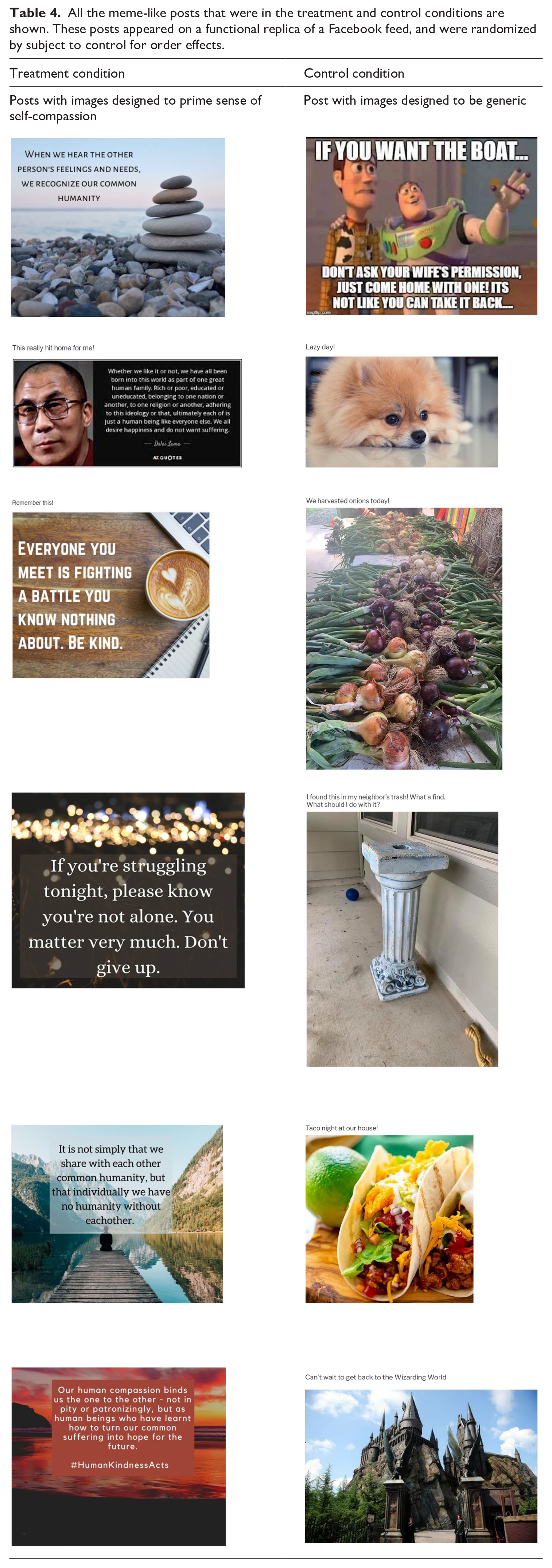
| Treatment condition | Control condition |
|---|---|
| Posts with images designed to prime sense of self-compassion | Post with images designed to be generic |
Acknowledgements
The author is grateful to members of the Center for Media Engagement (CME) team for valuable feedback on an earlier draft of this paper.
Funding
The author disclosed receipt of the following financial support for the research, authorship, and/or publication of this article: This research is a project of the Center for Media Engagement (CME), Moody College of Communication, at The University of Texas at Austin, United States. It is part of the center’s connective democracy initiative, which is supported through a grant from the John S. and James L. Knight Foundation. An earlier version of this manuscript was presented to the American Political Science Association at its annual meeting, September 2022, in Montreal, Canada.
