




Abstract
This article proposes the concept of anticipated affordances as an analytical supplement to affordance theory. ‘Anticipated affordances’ refers to how actors anticipate or speculate on a technology’s affordances before they have any direct use experience with it. To demonstrate the consequences of such speculation on the social life of new technologies, the article analyses why teachers in Norwegian schools have expressed scepticism towards AV1: a telepresence robot meant to reconnect ‘homebound’ children with their school. Drawing on qualitative interviews, the article finds that teachers anticipated three undesirable affordances from having AV1 in their classrooms: peeping, broadcasting, and parental auditing. The article also discusses how these anticipations intersected with issues of domestication, gatekeeping and experiences of AV1’s actual affordances. In sum, the article advances anticipated affordances as a central topic of inquiry for new media studies, which can complement existing analytical foci and shed new light on the (non)adoption of technology.
Introduction
Affordances is a key concept for understanding subject–object relations in media and communication studies. While long ‘mired by misuse, overuse, false binaries, and inadequate treatment of dynamic subjects and circumstances’ (Davis, 2020: 7), the past decade has seen several theoretical advancements in the form of relationally and contextually sensitive theories that more carefully tread the waters between technological and social determinism. In contrast to naïve conceptions where affordance ‘is either used as synonymous with “features” of technology’ or ‘defined in the negative, referring to all that is not the work of (human) users’ (Nagy and Neff, 2015: 2), these later conceptions highlight the multi-faceted nature of subject–object relationships. Affordances are then seen as emergent properties of the relation between users, technologies, and the circumstances under which these interact (Davis, 2020).
With this article, I propose the concept of anticipated affordances as a novel empirical focus for affordance studies. By combining newer insights from affordance theory with the emphasis on imagination and symbolism in domestication theory (Berker et al., 2006), the concept shifts our attention to how actors speculate on a technology’s opportunities for action before they have any direct user experience with it. This speculation can be crucial for the early social life of new technologies. By forming a basis for how actors act towards a technology, anticipated affordances have significant bearing on whether and how actors experience the technology’s actual affordances. The concept thus highlights fundamental pre-use concerns that should be added to our ongoing discussions about affordances.
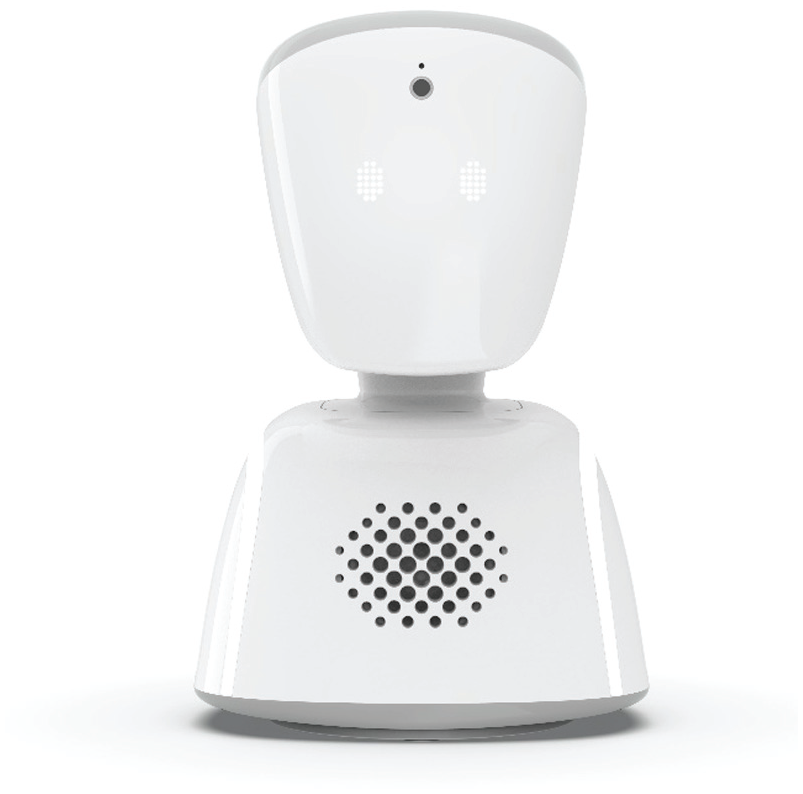
To illustrate and elaborate the concept of anticipated affordances, I present a case study of the telepresence robot AV1 (Figure 1). AV1 is a communication device for ‘homebound’ students who cannot attend school physically. By functioning as the equivalent of a mobile web camera, AV1 is meant to act as the child’s ‘eyes, ears and voice in the classroom’, thus facilitating learning and social contact for the homebound student (No Isolation, 2022).
AV1 (photo: No Isolation).
To the surprise of both users and the producers of AV1, the robot has been met with significant scepticism by many school workers in Norway. Several schools have refused the use of the robot, and many have put restrictions on its use. Concerns have also been made public in the form of op-eds in Norwegian newspapers (Dagbladet, 2017; Utdanningsnytt, 2019).
To understand the reasoning behind this scepticism, I draw on interviews with 30 teachers across 24 schools in Norway to analytically reconstruct a series of anticipated affordances related to the robot’s core feature: its capacity to transmit audio and video out of the classroom. While not all interviewees expressed scepticism towards AV1, many did, and a key reason for this was that the robot could allow or encourage three undesirable actions—peeping, broadcasting, and parental auditing—all of which made them reluctant to accept the use of AV1 in their classrooms. As such, their anticipated affordances posed a significant barrier for those seeking to use AV1 in school, potentially precluding them from experiencing the robots’ actual affordances.
Besides fleshing out the concept of anticipated affordances itself, the case of AV1 contributes with important insights into issues of technological scepticism and how anticipations intersect with organizational frameworks and power relationships (including processes of technological gatekeeping and boundary maintenance). As elaborated in the next section, the article also engages affordance theory with domestication theory and contributes to the latter by highlighting the largely forgotten phase of ‘imagination’ and shedding light on processes of failed domestication. Finally, the article also provides a social scientific analysis of telepresence robots, a technology that has received limited attention in new media studies. While telepresence robots display interesting similarities with other communication technologies (e.g. telephones and video chat solutions), they also offer somewhat different designs and features that stimulate sensemaking among their prospective users. Telepresence robots are therefore an interesting case to think with in order to learn more about more established communication technologies as these are used both inside and outside of schooling.
Affordances, anticipation, and domestication
The concept of affordance was introduced over half a century ago by the ecological psychologist James Gibson (1979). Gibson (1979: 127) spoke of affordances in relation to ‘environments’ and ‘animals’ and provided the classic statement that ‘[the] affordances of the environment are what it offers the animal, what it provides or furnishes, either for good or ill’. According to Kammer (2020: 337), this definition provides a ‘conceptual core’ that has remained fairly stable ever since Gibson’s seminal contribution—namely, that affordances are the possibilities for action that an environment or artefact offers a living being. At the same time, however, it is commonly recognized that the concept has been subject to a proliferation of definitions and (mis)understandings as it spread to various fields and disciplines, including design studies, science and technology studies, communication studies, education, anthropology, and sociology (Davis, 2020: 21–22).
In the past decade, a key development has been a series of relational and conditional understandings of affordances (Costa, 2018; Davis, 2020; Davis and Chouinard, 2016; Evans et al., 2017; Jones, 2020; McVeigh-Schultz and Baym, 2015; Nagy and Neff, 2015; Shaw, 2017). One of the latest examples is Davis’ (2020) ‘mechanisms and conditions framework’ (see also Davis and Chouinard, 2016), which urges a shift from the reductionist question of ‘what do objects afford?’ to the more multi-faceted question of ‘how do objects afford, for whom, and under what circumstances?’ This allows the analyst to capture more ‘nuanced relationships between technical features and their effects on humans’ (Davis, 2020: 10), including variations across subjects and circumstances, thus providing an analytical tool that ‘lets analysts interrogate the effects of emergent technologies while avoiding hardline determinism’ (Davis, 2020: 7).
This article finds inspiration in these newer developments, while also proposing a shift in empirical focus. Hitherto, affordance theory has mainly centred on ‘embodied human practices in real time situated interaction involving technologies’ (Hutchby, 2003: 582). In other words, the focus has been on people’s functional use of technology, as they explore and cease on its opportunities for action. As a supplemental analytical focus, this article seeks to highlight how actors anticipate or speculate on affordances before they have any direct use experience with a technology; hence, the proposed concept of anticipated affordances. To anticipate means ‘to imagine or expect that something will happen’ (Cambridge Dictionary, n.d.). In anticipating affordances, actors speculate on what possibilities for action an artefact might offer its prospective users, prior to them having actually seen these affordances play out in real-world interactions with the artefact. To speak of anticipated affordances is thus to bracket these speculations as analytically distinct from explorations of actual affordances, which has been the main focus of affordance theory.
With its focus on anticipation and speculation, the concept of anticipated affordances resembles that of imagined affordances. According to Nagy and Neff (2015: 1), imagined affordances ‘emerge between users’ perceptions, attitudes, and expectations; between the materiality and functionality of technologies; and between the intentions and perceptions of designers’. Besides highlighting ‘users’ perceptions, attitudes, and expectations’, Nagy and Neff (2015: 4) also advocate for a deeper attention to users’ imagination, stating how affordances ‘can include the expectations and beliefs of users, whether or not they are “true” or ‘right’’. While all this is closely aligned with the concept of anticipated affordances, the proposed concept differs from imagined affordances by putting the users’ expectations and anticipations front and centre, rather than treating this as simply one aspect among others. 1 In so doing, the analytical focus of anticipated affordances more closely resembles that of domestication theory (Silverstone and Hirsch, 1992), which has a long tradition for investigating how new technologies become ‘tamed’ as they are ‘integrated into our universes of symbols and meaning’ (Lie and Sørensen, 1996: 1).
With its strong emphasis on interpretation and symbolism, the concept of anticipated affordances puts less emphasis on materiality than is traditional for affordance studies. While materiality is important for stimulating sensemaking, an actor’s anticipations can be more or less decoupled from what a technology might actually offer. A sceptical reader might then object that anticipated affordances have little to do with affordances; after all, as Jones (2019: 208) emphasizes, ‘if users can imagine something but not do it, then it is not an affordance’ (see also Evans et al., 2017: 39). However, while this might be true for studies of actual affordances, it is less applicable to the study of anticipated affordances because the latter is focused on the pre-use phase of technology adoption. More specifically, the empirical focus of anticipated affordances is what domestication theory refers to as the ‘imagination’ phase of a domestication process (Silverstone, 1994: 125–126). This largely forgotten phase 2 of domestication precedes the subsequent and more well-known phase of ‘appropriation’, in which an object ‘is taken possession of by an individual or household and owned’ (Silverstone et al., 1992: 21). In the imagination phase, actors have yet to experience the technology in practice. Instead, they confront publicly available information with their own interests, beliefs, and assumptions to construct an image of the technology as more or less desirable, useful, and valuable (Silverstone, 1994). Crucially, this ‘imaginative work’ (Hynes and Rommes, 2006: 128) plays a key role for their stance towards the technology. If they, as in the present case, reach the conclusion that a technology is not desirable, the imagination phase might be the end station for the domestication process—and the actors will never get to experience the technology’s actual affordances. This makes anticipated affordances a central topic of inquiry for new media studies, which can complement existing analytical foci and shed new light on the (non)adoption of new technology.
Data and methods
To elaborate the concept of anticipated affordances, this study explores teachers’ reactions to the telepresence robot AV1. A telepresence robot is a video communication device fitted onto an anthropomorphic ‘body’ that can be controlled from a remote location (Kristoffersson et al., 2013). The telepresence robot under study, AV1, was released in 2016 by the Norwegian start-up company No Isolation. As of April 2022, there are roughly 2000 active robots in Norway, Sweden, Denmark, Germany, the United Kingdom and several other European countries, according to the producers. As with other telepresence robots, AV1 connects two remote parties: a homebound child or adolescent and teachers and classmates in school. The robot is typically placed in the classroom, whereas the homebound child follows the robot via an app on their phone or tablet, which enables them to see, hear and talk to those in class. The user can also direct their ‘gaze’ by rotating the robot’s head. In contrast to other telepresence robots, however, AV1 cannot move around on its own; instead, it is designed as a 27-cm tall bust that can be carried around easily by teachers or classmates.
Data for this article is drawn from a larger and mainly interview-based study of AV1, comprising 159 semi-structured interviews with users, producers, school workers and other stakeholders of the robot in Norway, conducted between the fall of 2018 and the spring of 2021 (Johannessen et al., 2023). Qualitative interviews are apt for studying anticipated affordances, as the method allows interviewees to articulate their hopes, dreams, fears and worries about new technology (cf. Lamont and Swidler, 2014).
For this article, I focus most closely on the 36 interviews done with 30 teachers across 24 schools in Norway. Of the 30 interviewees, 19 were female and 11 male; 4 were aged between 20 and 29 years, 8 between 30 and 39, 10 between 40 and 49, 3 between 50 and 59 and 2 were aged 60 years or older (3 were not asked/did not provide their age). Fourteen worked in primary school (ages 6–12), 5 in secondary school (ages 13–15) and 11 in upper secondary school (ages 16–18). Most were recruited through snowball sampling via users. Accordingly, most had also been asked to use AV1. Some had said yes without reservation, others had been hesitant, and some had refused to adopt the robot at all. This article focuses mostly on accounts by those who expressed various degrees of scepticism towards the robot; based on a rough count, these comprised 15 of 30 interviewees (I will return to the ‘non-sceptical’ accounts in the Discussion section). 3
Of the 36 interviews, 13 were conducted face-to-face and 23 were conducted by phone. The face-to-face interviews typically took place at school, which gave salient contextual information that was lost when conducting phone interviews. The telephone interviews also inevitably entailed the loss of other data, such as the interviewee’s body language. However, the use of phone interviews gave the interviewees great flexibility in when and where to conduct the interview, thus significantly increasing the pool of informants and allowing for a geographically more diverse sample (Oltmann, 2016).
All interviews were carried out using a semi-structured interview guide. This article builds mostly on accounts about what the interviewees thought about the robot prior to using it. For those who had not (yet) used the robot, I rely on their accounts of how they imagined it would be to adopt AV1 in their school day; for those who had started using it, I rely mostly on retrospective accounts of what they thought about the robot before adopting it.
The study was reported to the Norwegian Centre for Research Data (NSD) and approved in September 2018. All interviewees have given their written consent to participate in the study. To ensure confidentiality, their names and other identifying information have been made anonymous. All interviews were transcribed verbatim. The included quotes have been translated from Norwegian, making minor grammatical and aesthetical adjustments.
In coding and categorizing data for this article, I was interested in how teachers made sense of the robot prior to having actually used it. While not all teachers expressed scepticism towards the robot, I paid particular attention to those who did, in part because it was puzzling to both the producers and the homebound users how anyone could be sceptical towards such a well-meant device. This led me to analytically reconstruct a series of reasons for teachers’ scepticism. My theorizing of these as ‘anticipated affordances’ grew out of in-depth engagement with the literature on affordances. Reading this in tandem with my data analysis, I was struck by how the teachers speculated on how AV1’s material features could allow or encourage a series of undesirable action opportunities. As the teachers were anticipating what AV1 could afford a specific set of users under a specific set of circumstances, I landed on the concept of anticipated affordances, which I see as complementary to the more common focus on actual affordances. When reanalysing my material through this new analytical lens, I more specifically came to identify three anticipated affordances, which I present in the next section.
Results
This section focuses on why teachers frequently expressed scepticism towards AV1, at times even refusing to use the robot in their classroom. While the interviews revealed several concerns (see Johannessen et al., in press, for a general overview), I will zoom in on a subset of worries related to a fundamental feature of AV1: its capacity to transmit audio and video out of the classroom. In addition to providing a methodologically apt focus, this feature is highlighted because it points to a fundamental tension around AV1’s core concept of providing a communication channel between a homebound child and their teachers and classmates in school. While the producers intended this feature to afford social inclusion and education for homebound students, many teachers anticipated that the transmission of audio and video could afford a series of unintended and surveillance-related actions. I refer to these as anticipated affordances and unpack them by drawing on an adapted version of Davis’ (2020) mechanisms and conditions framework, in which the analytical gaze is directed towards how social actors anticipate affordances as emerging between technologies, users, and environments. In other words, I focus on teachers’ speculations about how AV1 might come to afford, for whom, and under what circumstances. 4
Before proceeding, it should be mentioned that the producers had taken several measures to prevent misuse of the robot (in part to appease teachers, but mostly to address the privacy concerns of regulators). For instance, the robot is programmed to only live-stream and not record content; can only be linked to a single external device; requires the homebound user to enter a personal password every time they log on; is technically prevented from taking screenshots; and is designed to make it evident to everyone when the user begins streaming (as the robot then raises its head and several lights turn on). The homebound user is also required to sign an agreement stating that only they will use the robot. For all these reasons, the producers believed that it was highly unlikely that anyone would misuse the robot; indeed, they perceived no practical difference between having a student or their robot in class.
Many teachers, however, begged to differ. The following sections explore why.
Peeping
A first fear among teachers was that AV1 could afford ‘peeping’ on classmates and teachers. This was evident in frequent references to AV1 as a ‘peephole’ into the classroom, a metaphor suggesting voyeuristic intentions on behalf of AV1’s users. Some reference was made to the possibility of students engaging in voyeuristic actions alone, simply finding gratification in being an unobserved observer. Much more common, however, was speculation on how the homebound student could be tempted or pressured to share the video stream with copresent friends or siblings. The teachers here screened AV1 through their beliefs about the social dynamics of childhood, with children—and ‘pre-teens’ and teenagers in particular—being considered prone to detrimental group dynamics, in search of entertainment, status, the thrill of transgressing norms (or simply ‘to generate interest among others’, as one secondary school teacher phrased it [interviewee #10]).
Notably, some teachers considered the likelihood of ‘peeping’ to be increased by the fact that AV1 offers two-way audio but only one-way video (from the class and to the child). This means that while the homebound child can both see and hear the class, the class can only hear the child. Instead of a screen showing the child’s face, the robot has a small, anonymous face with two LED eyes—a design choice meant to protect the homebound children who might not want to show themselves, for reasons such as looking tired or shabby, being connected to tubes, or losing their hair due to chemotherapy. While praised by many of the homebound children we interviewed, several of our teacher informants expressed a fear that this informational asymmetry could facilitate a series of unwanted actions—including students ‘peeping’ on those in the receiving end of AV1. Indeed, this possibility for observing without being observed was exactly why some referred to the robot as a ‘peephole’ to begin with. In terms of Davis’ (2020) mechanisms, then, such peeping behaviour was deemed to not just be allowed, but also to some extent encouraged by the robot’s technical features.
Adding to this, some teachers also saw ‘peeping’ as being encouraged by the mobility of AV1. As the robot comes with 4G cellular network technology, it can be used also outside of the classroom (e.g. for school trips, assemblies or birthday parties). While meant to increase the homebound students’ opportunities for educational or social inclusion, the teachers speculated on how this mobility could also increase the potential for misuse. For instance, a teacher in secondary school warned of how the robot could be used as part of various schemes outside of the classroom: Let’s say you’re at a party, and you know that someone’s going into a bedroom—and you have put AV1 there, and then you call him [the robot’s user] and say, ‘turn it on’. There are a lot of odd things . . . Adolescents are probably more imaginative than me, concerning what to use it [the robot] for, if they’re allowed to bring it everywhere. And that’s why I think you shouldn’t let it loose completely [. . .] It can be used for surveillance, it can be turned on using one’s iPad, so if it’s placed somewhere it’s not supposed to be, then he [the user] can see something he maybe shouldn’t be seeing. In a restroom or what-not. Hidden somewhere, to be funny, as adolescents are prone to. (Interviewee #7)
While brief, her account conveys a clear view of adolescents as a group who finds creative ways of breaking the rules; it is this generalized idea about the user group of ‘adolescents’—and their (stereo)typical courses of action—that stimulates her scepticism towards the robot. Her remark that this is done to be ‘funny’ gives some sense of this character’s motivation: she is attributing misuse less to maliciousness and more to a proneness towards antics and capers—things that may be done in relatively good faith, yet with little understanding of the potential ramifications. We should also note the gendered connotations of her account, as evident not just in her talk about misuse by a male user, but also in her depiction of a stereotypically masculine type of misuse. Her account seems to echo a broader cultural trope about ‘harmless peeping Toms’, in which voyeuristic behaviour is considered an almost obligatory rite of passage into adulthood for teenage boys (as seen in everything from romance novels to the teenage sex comedies of the 1980s; see The Pop Culture Detective Agency, 2022). This hints at a gendered subdivision within the larger group of ‘students’ that might be highly relevant for teachers’ anticipations. We thus begin to see how teachers interpreted the robot through an interpretive grid of beliefs about the everyday realities of adolescence, gender relations and schooling, and how this conjures a series of speculations about how the robot could afford misuse both inside and outside of the classroom.
Broadcasting
The second anticipated affordance shifts the focus to how the homebound child could use AV1 to broadcast school-related actions. This builds on the previous category but puts greater emphasis on the possibility of students using AV1 to record and share material online. ‘Broadcasting’ thus refers to the general act of spreading information to large groups of people (rather than the more specific sense of sending programmes over TV or radio).
While AV1’s software precludes users from recording or screenshotting its video stream, this fact was given little emphasis by most of the teachers we talked to. Whereas some erroneously believed that the robot itself could be used for recording, most stressed how students could easily work their way around the producers’ privacy measures. A common objection was that students might simply use a separate device, such as their phone, to record the video stream. Similar to Davis (2020: 70), then, many teachers stress how technological ‘fixes’ ‘remain vulnerable to unexpected and creative user agencies’.
When accounting for why students would want to engage in such actions, teachers often related the use of AV1 to a broader media ecology, focusing in particular on the many devices, apps and platforms that encourage widespread sharing of photos and videos, and how these together form what can reasonably be dubbed a ‘camera culture’ among school-aged children (especially those who are old enough to use social media). Students were described as both victims and perpetrators of this culture, as illustrated in the account of a teacher in upper secondary school who stated that her students were ‘rabid’ users of Snapchat—sharing content non-stop and without permission—and how this had made them anxiously aware of the possibility of being recorded without consent. As she claimed, ‘We’re living in a society where people have a realistic fear of being recorded without knowing’ (interviewee #18). 5
As evidence for this larger narrative of our ‘camera culture’, teachers frequently cited specific stories of inappropriate camera use. For instance, several teachers referenced media reports about younger people sharing images without consent, thus highlighting a link between teachers’ concerns and the broader discourse about social media in the Norwegian public sphere. Some also referenced their own direct experiences, as in the following account by a teacher in upper secondary school: About a month ago, there was a student who had a panic attack in class—she laid down, scratched at her throat, shook all over the floor, hyperventilated and stuff like that. And then—instead of helping the student—there are of course some students who eye the opportunity to make a ‘snap’ and share this across social media. In the end, this and other schools in the city know that there’s been a panic attack by this particular student. So, it’s clear that these kinds of things are uncomfortable and unnecessary, and it’s maybe situations like these that . . . well, that might happen with this AV1 robot as well, if you have a camera rolling all the time. (Interviewee #12)
The teacher offered this story as an example of how things might spiral out of control if AV1 is introduced in class. It is worth pausing on the analogical character of his reasoning. The teacher is using stories about familiar objects and practices to make sense of a new and unknown technology, thus deducing misuse of AV1 from how perceivably similar technologies—smartphones and Snapchat—have been used in the classroom. It can also be noted that his anecdote is a typical example of the many atrocity stories (Dingwall, 1977) professionals tell to illustrate—and warn of—the difficult scenarios they must navigate in their job. While this particular tale was told in a research interview, we can reasonably expect teachers to tell similar stories in breakrooms and similar settings (Johannessen, 2018), thus acquiring a stock of exemplars for anticipating risks in their environment. Atrocity stories thus function as a salient interpretive grid through which technologies like AV1 are filtered, enabling teachers to anticipate undesirable affordances in the technologies they encounter.
Parental auditing
The third anticipated affordance shifts the focus towards a new user group—parents—and how they might use AV1 to audit or scrutinize the teacher’s actions in class. While the previous two categories pertained mainly to pre-teen and teenage users, this category of misuse was considered equally valid in cases where younger children were the intended users of the robot. What the teachers feared was the following: When a robot enters the classroom, parents may, through ill-will or happenstance, come to observe something they do not like through AV1. This might then lead them to stir up trouble for the teacher—through informal slander, formal complaints, or a combination of the two.
While potentially a risk with all parents, some articulated the problem to be especially grave with a particular type of parent, described as follows by a teacher in primary school: There are always those parents who can be a bit . . . they’re against the school, so to speak, no matter what. And it’s clear that if they’re going to sit there and observe when the student watches the teacher, then I know some [teachers] have thought, ‘could this be used against you?’ (Interviewee #4)
As she makes clear, the problem is the disapproving parent—someone who is ‘against’ the school and may seek to make the teacher’s life more difficult. As evidenced in the anticipatory character of her account (with phrases such as ‘if they’re going to sit there and observe’ and ‘could this be used against you?’), the teacher is not referencing concrete experiences with AV1 but drawing on her knowledge of this category of parent, and their likely actions, to speculate on what the robot might afford if it is introduced in the classroom. Thus, while she had not actually experienced parental intrusion through AV1, she could imagine it, and this made her uneasy.
When picturing themselves through the eyes of the ‘disapproving parent’, many teachers seemed to conjure a series of images about classroom behaviour and what this would look like to such a critical observer. For instance, when asked why she disliked the thought of parents monitoring her teaching, another primary school teacher replied as follows: What would have been uncomfortable is, for instance, if you reprimand a student [. . .] The way it’s done, it might be like, ‘okay, was it sufficiently pedagogical this time? Should I have excused the rest of the class?’ You know, all those decisions you make, that you don’t have time to make, where the decision maybe isn’t as pedagogical as it could have been—and then you think, ‘it’s a bummer if they think this is what I do every time’—you know? It could have been a bad day, it could have been an unfortunate moment, but then that’s what they’re judging you on. (Interviewee #6)
This quote, along with numerous others, tells of a school day where pedagogical ideals can be difficult to achieve—and how the teachers suspect that their ‘failings’ will be met with little understanding by critical parents. As the teacher reveals, she particularly fears that her new audience is too far removed from the everyday workings of the school and might therefore demand adherence to ideals without properly understanding the challenges of those in the frontline. Her reference to ‘unfortunate moments’ is also telling, as it highlights a concern that ‘disapproving parents’ might take exceptions to be the rule and, thus, blow them out of proportion.
Notably, some teachers emphasized how the robot’s technical features might exacerbate the problem: as a camera with a particular viewpoint, the robot might capture only the teacher’s reactions and miss the actions that provoked them in the first place. As above, AV1’s absence of a screen was also claimed to increase teachers’ uncertainty, as they had no way of telling who were actually observing them via the robot. All this put teachers on their toes. As a primary school teacher explained, ‘When we’re in the classroom with students, we never think about [being observed]. But as soon as others get the opportunity to observe you, you start thinking, “now I have to do things correctly all of the time”’ (interviewee #4). Such accounts foretell the emergence of a panopticon-like arrangement, with teachers starting to act as if they are being watched at all times (Foucault, 1977). 6
These teachers thus feared that the introduction of AV1 could transform the classroom from a semi-private ‘backstage’ area (Goffman, 1959)—reserved for insiders who share some understanding of the everyday realities of schooling—to a semi-public or ‘frontstage’ area, accessible to outsiders who might demand strict adherence to ‘unattainable’ pedagogic ideals. This would challenge not just teachers’ autonomy but also the symbolic boundaries of the classroom itself—a particularly salient space within teachers’ cultural universe. Described by some commentators as ‘the black box of schooling’ (Braster et al., 2011), the classroom has traditionally been a clearly demarcated space, with solid walls imposing firm boundaries between insiders and outsiders. By virtually extending the classroom, AV1 is feared to challenge this symbolic order, thus threatening a hallmark of teachers’ authority and identity.
Discussion and concluding remarks
This article has proposed the concept of anticipated affordances as an analytical supplement to affordance theory. Anticipated affordances refers to how actors anticipate or speculate on affordances before they have any direct use experience with a technology. This process might have significant consequences for the social life of new technologies, as demonstrated in my analysis of why teachers expressed scepticism towards the telepresence robot AV1. As shown, the ‘sceptical’ teachers anticipated that AV1’s camera features might allow or encourage three undesirable actions—peeping, broadcasting, and parental auditing—all of which made them reluctant to accept the use of AV1 in their classrooms.
In closing, I will now discuss some theoretically salient aspects of these findings, related to issues of anticipation, domestication, and gatekeeping.
To begin, it should be emphasized that this study covers only a subset of teachers’ anticipations. For one, as most interviewees were recruited through snowball sampling via the homebound children and their families, most had also been asked to use the robot—a request that typically led teachers to do some research on this novel technology. Accordingly, most interviewees had a fairly accurate impression of the robot’s technical features, and this seems to have narrowed the scope of their ‘imaginative work’ (Hynes and Rommes, 2006). Had I interviewed teachers who were less familiar with AV1, the decoupling between material features and anticipated affordances would likely have been greater, as teachers would have then had to speculate based on a ‘looser’ impression of what the robot can and cannot do. 7
Moreover, as the analysis has focused on the interviewees who expressed scepticism towards the robot, it is important to reiterate that not all interviewees anticipated equally problematic consequences from having AV1 in their classroom. In fact, some interviewees aligned more closely with the producer’s view that the robot was harmless and could afford several benefits for students, making little or no reference to the risks of peeping, broadcasting, or parental auditing. 8 There are several possible explanations for these differences, including variations in personality traits and attitudes towards technology. What stood out most clearly in my data, however, is the fact that teachers seemed to have different students in mind when anticipating the robot’s affordances. The interviews clearly revealed that teachers did not consider surveillance to be an equal risk in all cases of robot use; this depended, in part, on the level of trust they had with the student and family in question. The teachers seemed to have few objections against robot use among ‘trustworthy’ students and families; as one upper secondary school teacher said, she had such great trust in her student that using AV1 would be like talking to the student over the phone (interviewee #13). Conversely, some teachers explicitly emphasized the risks of allowing robot use by less reliable students or families. This relates to why some teachers showed little faith in the producer’s privacy measures: as less trustworthy families are considered unlikely to abide by formalities or technical limitations, teachers did not believe such measures would help in the cases where they are most needed. Thus, the issue of (mis)trust poses a significant barrier to implementing AV1 on a large-scale basis, as many teachers are reluctant towards the idea that just anyone might get a robot if they are homebound for some time. This illustrates the importance of inquiring deeply into Davis’ (2020) questions of ‘for whom?’ and ‘under which circumstances?’ when studying anticipated affordances.
By highlighting how anticipated affordances intersect with issues of trust and scepticism, this study also sheds light on processes of failed domestication. As others have pointed out, studies of domestication have paid limited attention to ‘domestication processes that are problematic, reversed, stopped altogether, or influenced by factors such as the availability of resources’ (Hynes and Rommes, 2006: 125; see also Karlsen and Syvertsen, 2016). This might be related to the very metaphor of domestication itself, as this—with its focus on the taming of ‘wild’ technology (Silverstone, 1994: 96)—can make us overlook the multiplicity of people’s reactions to new technologies. Indeed, as shown in the present case, ‘avoidance’ or ‘hostility’ can be equally likely—and metaphorically valid—responses to ‘the wild’. A greater focus on the domestication phase of ‘imagination’, and the anticipatory work that actors engage in before acquiring an artefact, can help appreciate this fact and counteract the bias towards ‘taming’ in domestication theory.
The present case also highlights how anticipated affordances intersect with power relationships, as teachers’ anticipations had consequences not just for themselves but also the homebound students who wanted to use AV1. By acting on their anticipations, the ‘sceptical’ teachers precluded homebound students from experiencing the robot’s potential for positive affordances, such as socializing and learning. The ‘sceptical’ teachers thus acted as technological gatekeepers, whose anticipations had bearing on the technology (non)use of others. 9
It is worth mentioning that the teachers’ gatekeeping powers derived, in part, from the dominant structural arrangement for acquiring and implementing AV1 in Norway. At the time of writing, most students acquire a robot through a charity model—a ‘bottom up’ arrangement that means that students (or their guardians) themselves must convince their school to use the robot. If the robot had instead been institutionalized ‘top-down’, as a legal right in the school system, the ‘sceptical’ teachers would have had less discretion to oppose the robot. Thus, while the Thomas theorem famously states that interpretation informs action—‘if men define situations as real, they are real in their consequences’ (Thomas and Thomas, 1928: 572)—it is equally evident that some actors have the power to make their definitions ‘more real’ than others (Goffman, 1974: 1). These power differences are crucial when considering the consequences of an actor’s anticipated affordances and provide further illustration of how ‘power relationships re-shape affordances through processes of contestation, negotiation, and resistance’ (Dinsmore, 2019: 666).
This talk of power, gatekeeping, and failed domestication is not to suggest, however, that ‘taming’ never took place. Several of the ‘sceptical’ teachers did eventually say yes to using AV1, and many of these, in turn, emphasized that the robot appeared significantly less wild after a while. 10 Finding little evidence of misuse, they gradually grew accustomed to the robot, at times even forgetting its presence in class. Thus, as ‘sceptical’ teachers saw that their anticipated affordances failed to translate into actual affordances, the prospect of using the robot seemed significantly less daunting. However, for this taming to take place, someone like a persuasive parent or an insisting principal had to convince the hesitant teachers to give the robot (and its users) the benefit of the doubt. If not, the teachers would get little evidence for refuting their hypothetical scenarios, making their scepticism easier to maintain.
The present case also highlights how ‘taming’ can take place through experiences with other and perceivably similar technologies. Specifically, as the COVID-19 pandemic resulted in an unprecedented adoption of videoconferencing tools in teaching, there are indications that teachers have become more accepting of cameras and streaming. Some support for this was given in the six interviews I conducted after the onset of the pandemic, where several teachers told me that they had grown more comfortable with being on camera. If this represents a common experience, the pandemic might have lowered the bar for using telepresence robots in schools. At the same time, taming should never be seen as a given. Increased use of videoconferencing can also stimulate more scepticism towards telepresence technology, as is reported to be the case in some US schools (Tennessee Star, 2020). Both anticipated and actual affordances will vary with sociocultural context, which highlights the importance of approaching these issues empirically.
Finally, it is worth pausing on how this article focuses mainly on anticipations of the ‘negative’ kind. Besides its empirical motivation, I see this focus as having broader relevance as scepticism, gatekeeping, and boundary management are common reactions toward new technologies (cf. Martínez and Olsson, 2021; Marvin, 1990; Umble, 1992). This is not to suggest, however, that actors cannot anticipate ‘positive’ or ‘desirable’ affordances. Quite the contrary: As hype, optimism and fascination are all central themes in studies of new media (cf. Liao and Iliadis, 2021; Mosco, 2004; Nye, 1996), future research could fruitfully explore the role of positive anticipations across a range of novel technologies—from those said to bring forth a new age of computing (such as artificial intelligence or virtual reality) to the more mundane devices that are continuously being introduced in everyday and institutional life. Future research is also encouraged to investigate the myriad relationships between anticipated and actual affordances, with an even deeper view to how anticipations intersect with actors’ experiences, negotiations, and (non)use of technology. 11
Affordance theory has come a long way since Gibson (1979) coined the term affordance over half a decade ago. This article has sought to advance the field further by proposing anticipated affordances as a supplementary analytical concept, shifting the focus towards how actors anticipate or speculate on affordances before they have any direct use experience with a technology. As I have sought to demonstrate, such speculations can be critical for the early social life of new technologies, as they form a basis for how actors act towards a technology and can thus have significant consequences for whether and how actors experience the technology’s actual affordances. Anticipated affordances thus highlights fundamental pre-use concerns that should be added to discussions about affordances across communication studies, science and technology studies, and the various other fields and disciplines in which affordances is a key concept.
Footnotes
Acknowledgements
I would like to thank Erik B. Rasmussen, Gunnar Aakvaag, Marit Haldar, Atle Wehn Hegnes, Gemma Hughes, Håkon Larsen, Maja Nordtug, Mats Lillehagen and Tore Rafoss for feedback on earlier drafts of this article. I am also grateful for the comments I received from my anonymous reviewers, from participants in the science and technology session of the 2019 conference of the European Sociological Association, and from participants in the cultural sociology session of the 2020 winter seminar of the Norwegian Sociological Association.
Funding
The author(s) disclosed receipt of the following financial support for the research, authorship, and/or publication of this article: The project received funding from The Gjensidige Foundation and from the Research Council of Norway (Funding ID: 301840).
