




Abstract
This article investigates the interaction between digital capital and some offline components (economic, cultural, political, social and personal) that represent the background against which we access and use the Internet. Based on a stratified sample of the UK population (868), six indexes (one for each component) were generated through factor analysis and univariate analysis. We summarised them into a unique model by performing a multiple linear regression to evaluate the role-played by offline components in the development/reinforcement of digital capital. The interaction between these new indexes and the digital capital index shows that, with the exception of the political component, all offline backgrounds positively contribute to digital capital. Moreover, the multiple regression analysis shows that the economic and social components have the strongest influence on digital capital.
Introduction
The role-played by socio-cultural and economic backgrounds in influencing digital inequalities has attracted the attention of scholars since the very beginning of Internet studies (DiMaggio et al., 2001). Researchers have increasingly explored the relationship between digital and social inequalities by showing some interdependencies between the pre-existing backgrounds of individuals and their related degree of digital skills and experience in using the Internet (Blank and Groselj, 2015; Van Deursen et al., 2015). The main contribution of this article is to conceptualise and measure how various components of individuals’ everyday lives (economic, social, cultural, personal and political components: referred to as the 5Cs from now on) contribute to the creation of digital capital. Our research builds on previous studies that have shown how individual backgrounds and the context in which people grow up influence how individuals approach (Gui and Argentin, 2011), use (Van Deursen and Van Dijk, 2014) and engage (Robinson, 2009) with digital technologies. More specifically, our research aims to analyse to what extent individual backgrounds influence the increase of digital capital, by following the path of other studies that underlined a connection between the cultural, social and economic backgrounds of users, and their Internet access and use (Helsper, 2012; Van Deursen et al., 2014; Van Deursen and Van Dijk, 2015). Adding to these studies, this work contributes to the investigation of the interaction between social (Bourdieu, 1985; Coleman, 1990; Putnam, 1995), political (Syed and Whiteley, 1997), economic (Bourdieu, 1985), personal (Becker, 1996) cultural (Bourdieu, 1985) and digital capital.
Indicators of components to include in this study were guided by the literature on the relationship between existing backgrounds and online experiences. In contrast, digital capital is a novel concept open to debate, which needs to be explored to identify its constitutive elements. To fill this gap in the research, this contribution adopts the concept of digital capital provided by Ragnedda (2018) and further developed by Ragnedda and Ruiu (2020), according to whom, digital capital is defined as ‘the accumulation of digital competencies (information, communication, safety, content-creation and problem-solving), and digital technology’ (Ragnedda, 2018). Findings by Ragnedda et al. (2020) show that digital capital is a specific capital and results from both digital competencies and access to digital technology. However, this article adds to Ragnedda et al.’s (2020) work by exploring the interaction between internalised capacities – digital competencies – and externalised resources – digital technologies – with existing components (5Cs), to understand what contributes to the formation of digital capital. In this direction, the originality of this article relies upon the inclusion of all these components (5Cs) in a unique model to observe how personal, cultural, economic, political and social backgrounds symbolically interact with individual digital competencies and digital access, thus enhancing the increase accumulation of digital capital. Therefore, against this background, the investigation is guided by the following research question:
RQ. To what extent do existing backgrounds interact with digital capital in terms of accumulating specific digital competencies and access to technology?
Answering this research question helps in understanding how digital capital can differ in relation to different socio-cultural backgrounds and shed light on the intertwined relationship between social and digital inequalities (Ragnedda, 2020). To provide an answer to this overall question, the article is split into five sections. The first section introduces the theoretical background at the base of this research, and the sets of hypotheses formulated to address the research question. The second section (and its related sub-sections) illustrates the methods applied to develop five indexes used to capture the 5Cs and the strategy of analysis adopted. The third section presents the main results of this research. The fourth section discusses the results obtained from multiple regression analyses that investigate the relationships between the six indexes considered (5Cs plus digital capital). Finally, some conclusions will highlight the implications and limits of this work and suggest further direction for continued research.
Theoretical background
Since the early research on the digital divide, the influence of socio-economic and cultural backgrounds on the Internet experience has been the focus of multiple studies. Scholars often interpreted the gap in accessing (Cammaerts et al., 2003) and using information and communication technologies (ICTs) (Van Deursen et al., 2011; Van Dijk, 2006) in terms of the availability of social, cultural and economic resources. These interpretations also suggest that these socio-economic and cultural inequalities are the causes of the digital divide (Van Deursen and Van Dijk, 2015). More specifically, a domain of extensive research in the digital divide field is devoted to exploring the role of different forms of capital in widening digital inequalities (Ragnedda and Ruiu, 2017). In this vein, several theoretical and empirical studies have analysed the digital divide in relation to economic capital (Fuchs, 2009), social capital (Chen et al., 2014; Choi and DiNitto, 2013) and cultural capital (Morgan, 2010; Paino and Renzulli, 2013). The literature has acknowledged an interaction – either positive or negative – between social, economic, cultural, political and personal capital and the way individuals access and use the Internet.
Conceptualising capitals/components
The authors are aware of how capitals are conceptualised (see, e.g. the different definitions of social capital provided by Bourdieu, 1985; Coleman, 1988; Putnam, 2000) and operationalised (Alder and Kwon, 2002; Lin, 1999) plays a key role in determining the results of the interaction between the 5Cs and digital capital. For this reason, in this section, we briefly explain how each capital/component has been conceptualised, while in the ‘Methodology’ section, we will explain how we have operationalised each of them.
Social capital/component
We adopted the Bourdieusian (1985) approach to social capital, defined as the resources embedded in networks of relationships that individuals can activate and use to facilitate purposeful actions. Following this definition, the social dimension considered in this study is defined as the combination of social commitment, bonding ties and social network as a facilitator of individual agency and embedded in a wider capital exchange (e.g. by facilitating the accumulation of other capitals, see Bourdieu, 1985). Social capital plays a primary role in generating/reinforcing certain social ties (Williams, 2007) and influencing the ways people interact both off- and online and is nested in a wider process of capital exchange/transfer/accumulation. In this direction, Williams (2006) developed an Internet Social Capital Scale, which adapts social capital indicators to the Internet dimension to show the existence of virtual social capital. The literature has often focussed on the impact of Internet use and access (digital capital) in influencing/determining social capital (DiMaggio et al., 2004; Geraci et al., 2018; Neves, 2015; Pénard and Poussing, 2010), showing a positive relationship between Internet usage and several components of social capital.
Cultural capital/component
Similar to social capital, cultural capital has been conceptualised in Bourdieusian terms by considering cultural capital as objectified (cultural products), embodied (internalised and intangible) and institutionalised (officially accredited) (Bourdieu, 1985). The literature shows some attempts to connect the role of the Internet to the generation of cultural capital, such as, for example, in the case of generating memes (intended as products of embodied and institutionalised cultural tendencies) that can be interpreted as an expression of cultural capital (Nissenbaum and Shifman, 2017). Research into the role of digital media in engaging with cultural activities (e.g. museums and galleries) shows that digital technologies can offer an opportunity to promote cultural participation (Nesta, 2017). However, in line with our research’s aims, we follow the path established by previous studies, such as Meng and Hsieh (2013: 86) who pointed out how embodied cultural capital and objectified cultural capital are crucial factors that differentiate digital learning opportunities. We are, therefore, interested in analysing how previous cultural backgrounds can be reinvested/transferred into the digital arena (Calderon, 2021; Robinson, 2009).
Economic capital/component
Along with social and cultural capitals, significant attention has been given to the role-played by economic capital in influencing the digital divide. Earlier studies have highlighted how lack of economic resources, or economic capital, is one of the main reasons for the gap in accessing the Internet and, thus, it is at the base of the first level of the digital divide (Fairlie, 2004; Pohjola, 2003). Since the digital divide evolved and produced inequalities in its usage – known as the second level of the digital divide – researchers have begun to analyse the role-played by the economic, cultural and social variables in determining digital skills/competencies. In this vein, Jara et al. (2015), Van Deursen and Van Dijk (2015) and Fuchs (2009), among others, found a positive relationship between the economic component and level of digital skills.
Personal capital/component
In addition to traditional forms of capital, studies on the interrelationship between the Internet and existing backgrounds also involve personal capital, here defined as the accumulation of all previous personal experiences that affect an individual’s present and future preferences and make engagement in particular activities more worthwhile for them (Becker, 1996). The majority of studies focussed on the influence of the Internet on leisure activities, by showing positive associations with certain types of entertainment (Baric et al., 2018; Zacha and Lissitsa, 2016). These studies show that the Internet might influence choices related to lifestyle, fitness and nutrition, medical knowledge (Cole et al., 2016) and searching for other people’s opinions/advice, with lifestyle bloggers identified as ‘today’s lifestyle gurus’ (Baker and Rojek, 2020). Moreover, the Internet was found to influence people’s diet (Levine and Harrison, 2009), reinforce eating disorders (Almenara et al., 2019) and daily physical activities through some phone apps (Maher et al., 2016). However, a limited number of studies have attempted to analyse how personal experience influences how people access and use the Internet, which instead is a focus of this research.
Political capital/component
Finally, this work considers, in the analysis of digital inequalities, political background. It must be noted that not everybody agrees that political capital should be analysed independently from social capital. Putnam (1995), among others, includes political capital in social capital, disputing the idea that political capital is a discrete capital. However, according to Sørensen and Torfing (2007), social capital refers to the trust-building process derived from social interaction in civil society, while political capital is the cumulative participation and engagement in interactive political processes, which enables people to act politically. In this vein, the literature shows contrasting results in terms of the influence produced by both the Internet and social media on individuals’ political engagement, by showing either positive (DiMaggio et al., 2004; Krueger, 2002; Polat, 2005) or insubstantial/negative associations (Boulianne, 2009; Fenton and Barassi, 2011; Quintelier and Vissers, 2008). However, there is a gap in the literature in understanding the impact that political capital/background might have on the rise of digital capital.
Hypotheses
The overall hypothesis that leads this research is that the existing components are positively associated with digital capital. More specifically, we are assuming the following:
H1. The social component (social commitment, bonding ties and social networks) is positively associated with digital capital.
Given the variety of dimensions identified by the literature as constitutive of social capital, and in the attempt to be more specific, this study focusses on three aspects of the social dimension, such as social commitment, bonding ties and social network. Previous studies highlighted an intertwined relationship between social capital and digital inequalities by showing, for instance, how higher Internet use increases participation in voluntary organisations (Filsinger et al., 2019; Wellman et al., 2001), enhances bonding ties offline (Williams, 2019) and plays a bridging function by enlarging users’ online social network (Li et al., 2019; Williams, 2006, 2007). However, these studies mainly focus on how the Internet either generates or reinforces offline returns in social terms by overshadowing the opposite direction of this bi-directional process. In contrast, scarce attention has been paid to exploring how the aforementioned social components interact with the accumulation of digital advantage and the role-played in forming digital capital. In this way, this research fills a gap in the literature by examining the interaction between the social component of the existing background – intended as the intertwined relationship between social commitment, bonding ties and social network – and digital capital. We are aware of the impossibility of separating such a social component from the digital dimension of it (as also suggested by the virtual social capital identified by Williams, 2006) as well as from other forms of capital, as suggested by Bourdieu (1985). However, the definition adopted of social capital here also includes its interactive character and interdependence with other forms of capital.
H2. The cultural component (cultural activities and education) is positively associated with digital capital.
As with social components, we assume that cultural activities and education positively influence digital capital. Previous studies considered the digital experience as a mere indicator of cultural capital (Roscigno and Ainsworth-Darnell, 1999; Vryonides, 2007), by defining it as individual ‘techno-dispositions’ (Rojas et al., 2004), while other studies explored the use of ICTs as a way to increase cultural capital (Maitland and Obeysekare, 2015). Our hypothesis is based on the assumption that digital capital is not a mere subset of cultural capital but a specific capital ‘that includes all the attributes described by Bourdieu, especially in terms of accumulation, conversion, and profitability’ (Ragnedda and Ruiu, 2020, p. 29). With this conceptualisation of capital in mind and following the path of research underlined by Meng and Hsieh (2013), Robinson (2009) and Calderon (2021), the cultural component can be assumed to be a predictor of digital capital.
H3. The economic component (incomes, job status, saving and property) is positively associated with digital capital.
Economic inequalities have been at the centre of digital inequalities studies. Even though several studies adopted different approaches and methods, they have increasingly shown how a higher economic status positively influences Internet adoption and level of digital skills (DiMaggio et al., 2004; Hargittai, 2010; Peter and Valkenburg, 2006; Van Dijk, 2005). Our hypothesis moves across these lines, thus suggesting that individuals with higher economic components have a higher level of digital capital.
H4. The personal component (interest in information connected to health, lifestyle and opinions) is positively associated with digital capital.
The personal component is conceptualised as personal experiences that affect an individual’s present and future preferences (Becker, 1996, pp. 4–6). Previous studies have analysed how the use of the Internet influences leisure activities. However, there is still a need to investigate how a variety of personal interests influence Internet experiences. We suggest that the personal component positively contributes to digital capital.
H5. The political component (political involvement and political engagement) is positively associated with digital capital.
Following Sørensen and Torfing (2007), we assume that social and political components need to be analysed and operationalised separately. Previous studies focussed on the effects of the Internet on political engagement, producing contrasting results in terms of the influence generated by the Internet on individuals’ political engagement (Marco et al., 2017; Papagiannidis and Manika, 2016). However, there is a lack of literature analysing how this component interacts with the way users access and use the Internet. Therefore, this study explores the interaction of both political involvement and engagement with digital capital, hypothesising a positive relationship.
Methodology
This study is based on a sample of the UK population (868 respondents), selected by Toluna, that appropriately captures the demographic stratification of the UK population. The sample was stratified according to gender, age, level of education and income. In total, we aimed to obtain a dataset with approximately 850 respondents over the age of 18. A total of 868 responses were collected over 2 weeks in January 2019. The sample size (868 respondents) was calculated as having a 3.33% margin of error at a 95% confidence level. Table 1 shows the distribution of the sample by gender, age, level of education and income (Table 1).
Sample demographics (n = 868).
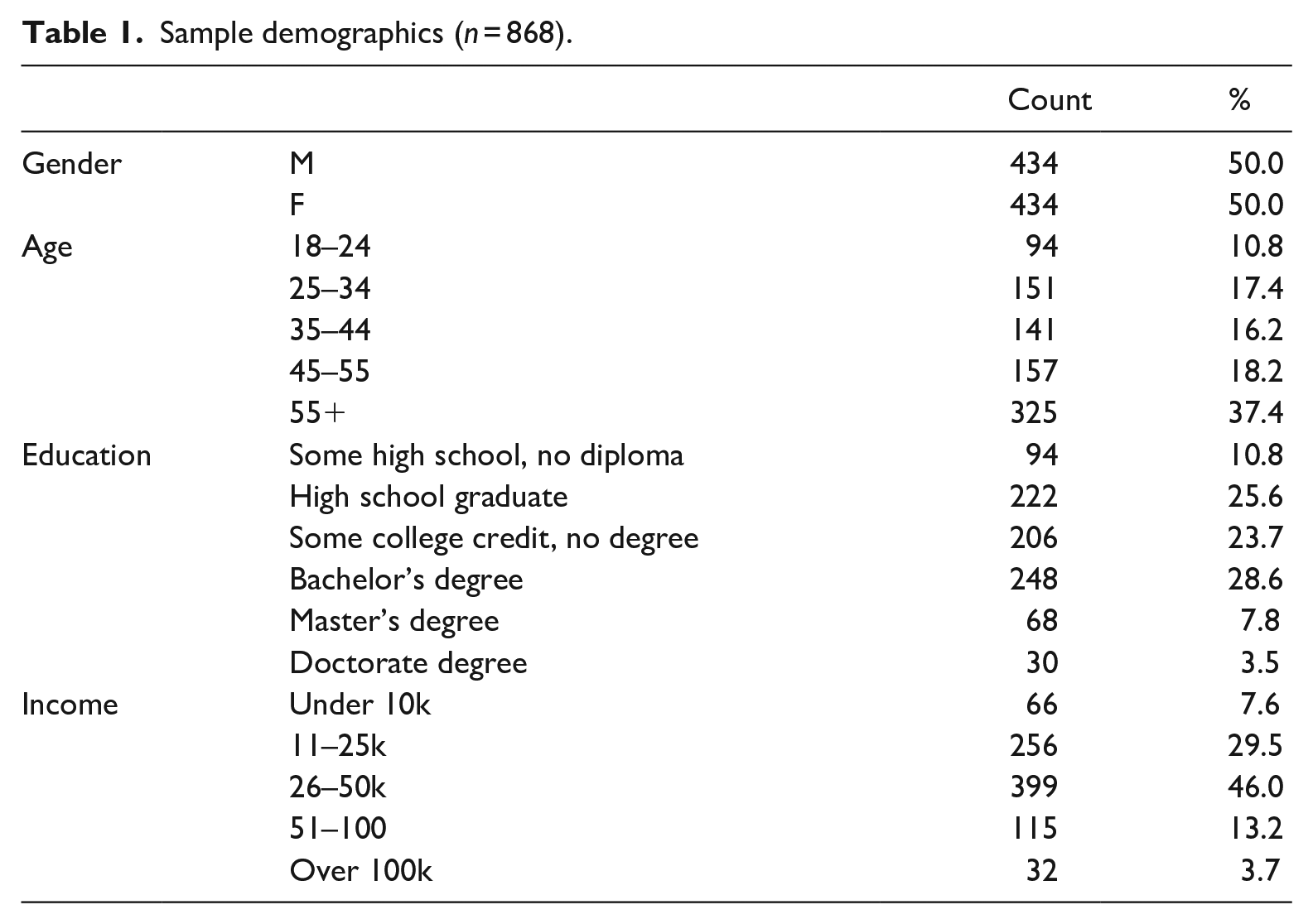
The online survey used software that checked for missing responses and then prompted users to respond. The survey was pilot tested with 20 Internet users over two rounds. Amendments were made based on the feedback provided. The average time required to complete the survey was 25 minutes.
Measures and analysis
To answer the overall research question and test the hypotheses, we performed univariate analyses and factor analysis (FA) to create an index for each component. The choice of focussing on specific ‘components/signifiers’ derives from scientific disagreement about the characteristics needed to define each existing capital. This is particularly debated when considering the Bourdieusian attempt to integrate phenomenology and objectivist analysis in his perspective (Atkinson, 2010), which suggests a variety of situations that might be identified as components of existing capitals. A further step of the research included multiple regression analyses to explore the relationship between each component and digital capital.
The operationalisation and the measurement of digital capital followed the proposal and the procedures provided by Ragnedda et al. (2019). They identified digital access and digital competencies as the two main components of digital capital. Specifically, digital access includes four domains: (a) digital equipment used to access ICTs, (b) location of access, (c) historical time spent online and (d) support in using it. Digital competencies were measured by adopting the DigComp 2.1 framework, which includes five domains, namely, (a) information and data literacy, (b) c and collaboration, (c) digital content creation, (d) safety and (e) problem-solving. A simplified version of this index is shown in Figure 1.
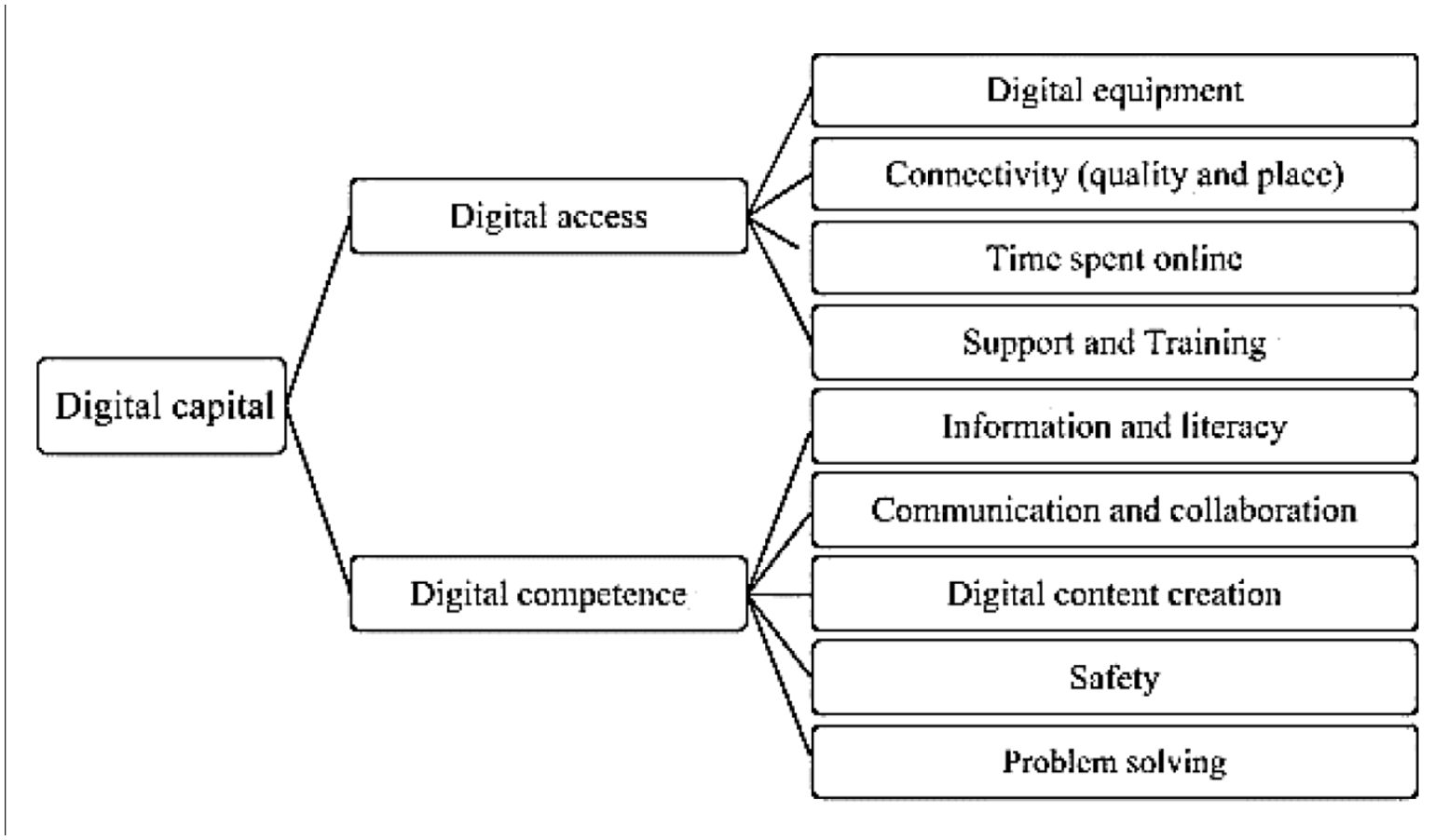
Constitutive components of digital capital (Ragnedda and Ruiu, 2020, p. 42).
For each of these two components of digital capital, Ragnedda et al. (2020) developed an index by performing an FA. A digital access index (DAI) and a digital competences index (DCoI) were then created. These two indexes (DAI and the DCoI) were combined through a further extraction of a single factor to generate a digital capital index (DCI). The new variable was converted to a range from 0 to 100 to simplify its interpretation. In this article, the DCI is used as a dependent variable to investigate the effects that the existing components produce on it.
The indicators used to measure the 5Cs (independent variables) were selected based on the theoretical assumptions, definitions and conceptualisations provided by the literature. The previous sections showed that some studies focussed on the role of the Internet in influencing specific offline behaviours but neglected the influence of existing resources on pointing the Internet experience in specific directions.
Specifically, the social characteristics (labelled as the ‘social component’) were operationalised by including variables, such as trust, social ties, family contact, social support, participation and resource exchange (Bourdieu, 1977, 1980, 1985, 2002; Coleman, 1988, 1990; Putnam, 1993, 2000). The cultural characteristics (labelled as the ‘cultural component’) were operationalised by including cultural consumption and level of education. We operationalised this component by combining the three forms of cultural background, namely, embodied (people’s values, skills, knowledge and tastes), objectified (possession of cultural goods) and institutionalised (educational attainment) assets. In the case of the embodied dimension, we focussed on participation in cultural activities (Yaish and Katz-Gerro, 2010), whereas for the objectified component, we focussed not on the material possession of goods, but on the form of resources, such as ‘listening to classical music’ or ‘doing arts and crafts’ that build a sense of entitlement. Finally, the institutionalised form of cultural background is operationalised through educational qualifications.
On the other hand, the economic characteristics (labelled as the ‘economic component’) were operationalised in terms of personal annual incomes, employment status, property and savings. The political characteristics (labelled as the ‘political component’) were operationalised by looking at both political involvement and political engagement (Sørensen and Torfing, 2007). Finally, the personal characteristics (labelled as the ‘personal component’) included variables that focussed on personal interests and motivation (Becker, 1996).
A FA was performed to construct two indexes related to the social and personal components, whereas univariate analyses were performed to create an index for the cultural, political and economic components. The modalities through which the five indexes were developed are clarified in the following sub-sections.
Social Component Index
Since the literature has produced several conflicting definitions of social capital (Lin, 1995; Portes, 1998; Rovai, 2001), we focussed on those social characteristics that are mostly recognised to be interconnected with the Internet. The social component multidimensionality was measured by sets of questions in relation to support, bonding ties and social networks. Each set of questions was first transformed into a single variable and then combined into the social component index (SCI). As shown in Table 2, given the dichotomous nature of the sub-variables included in the operational definition of the ‘support dimension’, they were synthesised into a single variable by counting the number of affirmative responses (‘yes’) given by each respondent. A higher number of ‘yeses’ suggests greater involvement and social commitment.
Operational definition of the variables combined to measure the SCI.
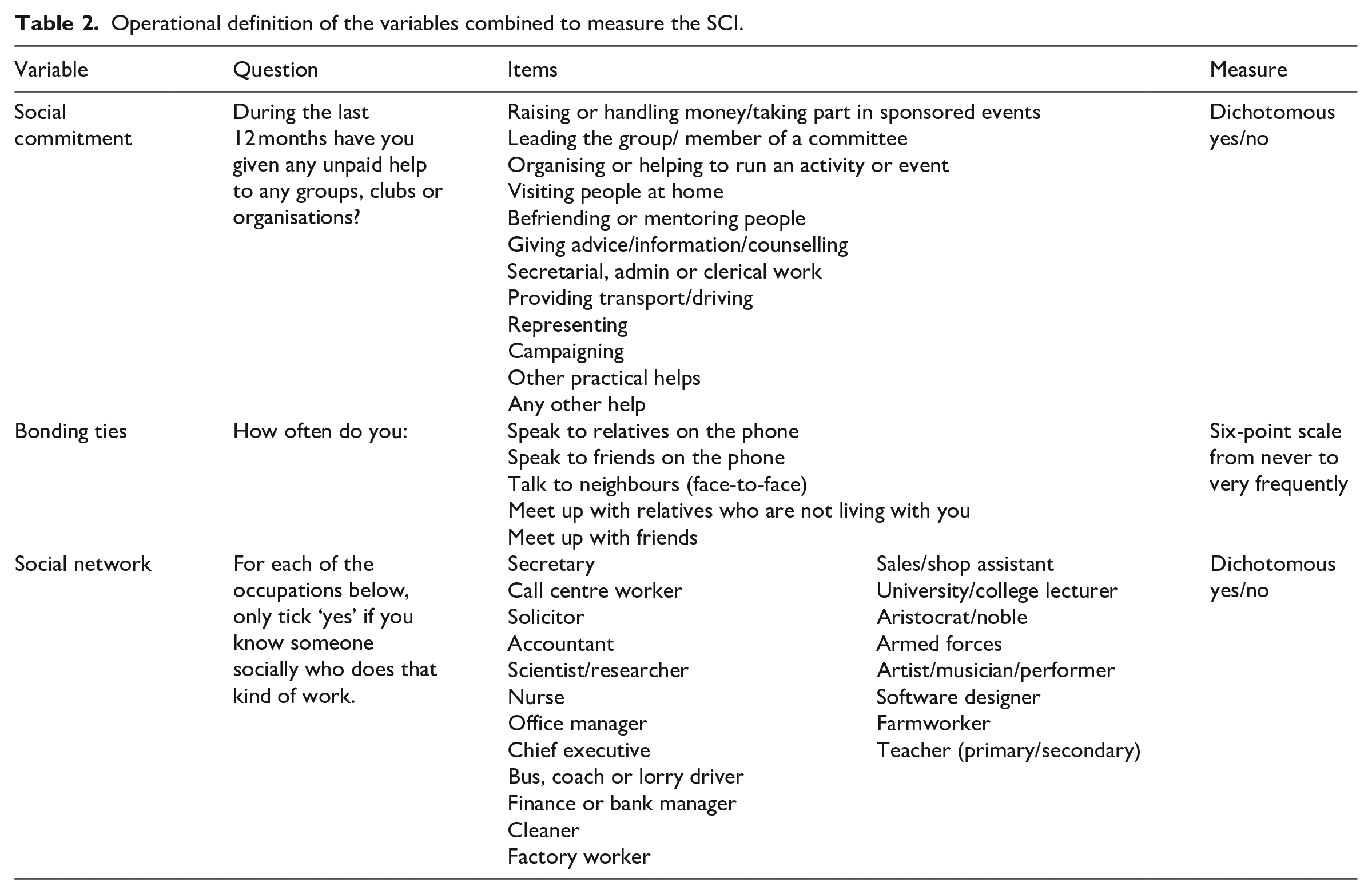
Moreover, items related to the bonding ties were synthesised by creating a summated index, assuming that the higher the value the more intense the contacts/relationships a person has with relatives and friends. This is a fundamental and constitutive part of the social component since it shows the network of trusted people that an individual can rely upon.
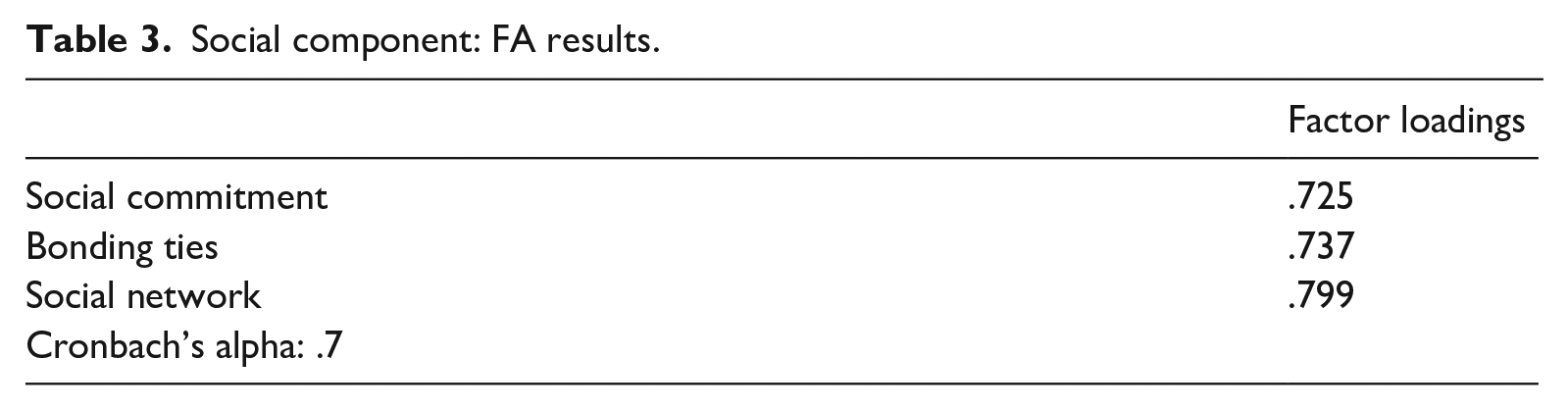
The questions related to the extension of the social network have been synthesised into a new variable by counting the number of affirmative responses (‘yes’) a respondent provided. Higher numbers of ‘yeses’, suggest bigger networks (higher numbers of different kinds of people that a person knows). More specifically, we reduced the 37 occupations coded in the widely validated Cambridge Social Interaction and Stratification (CAMSIS) scale to 20. With this question, we were able to assess how many of the 20 occupations they reported to be in contact with, thus showing the width of their social network. Finally, the three variables (social commitment, bonding ties and social network) were subject to an FA to verify if they could be reduced into an index representing the social component dimension. Results show that each variable has a high and positive factor loading on the first component: this means that a single factor could be extracted from this set of variables. This factor has been named after the SCI and included in the regression model (Table 3).
Social component: FA results.
Cultural Component Index
The cultural component index (CCI) included questions about the respondents’ cultural consumption combined with their educational level. The index creation followed a two-step procedure. First, a new variable named cultural consumption was generated by combining those answers relative to cultural activities (see Table 4). This variable measured both the extension and the intensity of the cultural activities in which respondents participated. The higher the score, the wider the range and the variety of their cultural consumption is.
Operational definition of the variables combined to measure the CCI variable.
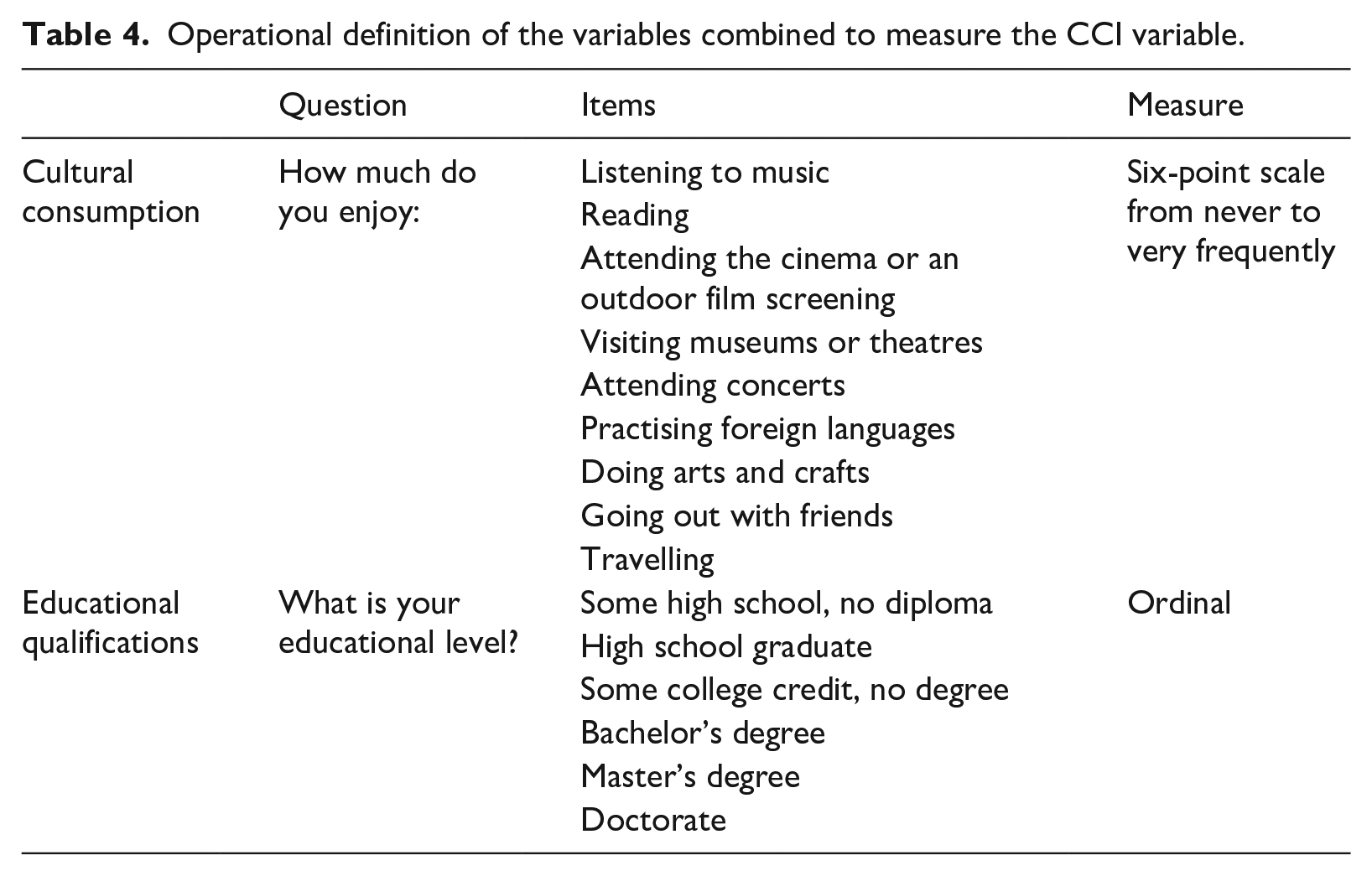
The second step was to measure cultural consumption by educational level, to obtain a valid proxy of the cultural capital owned by each respondent. Specifically, the individual cultural consumption score was combined with the related educational outcome. The result is a CCI in which the higher the score suggests a higher cultural component (Table 5).
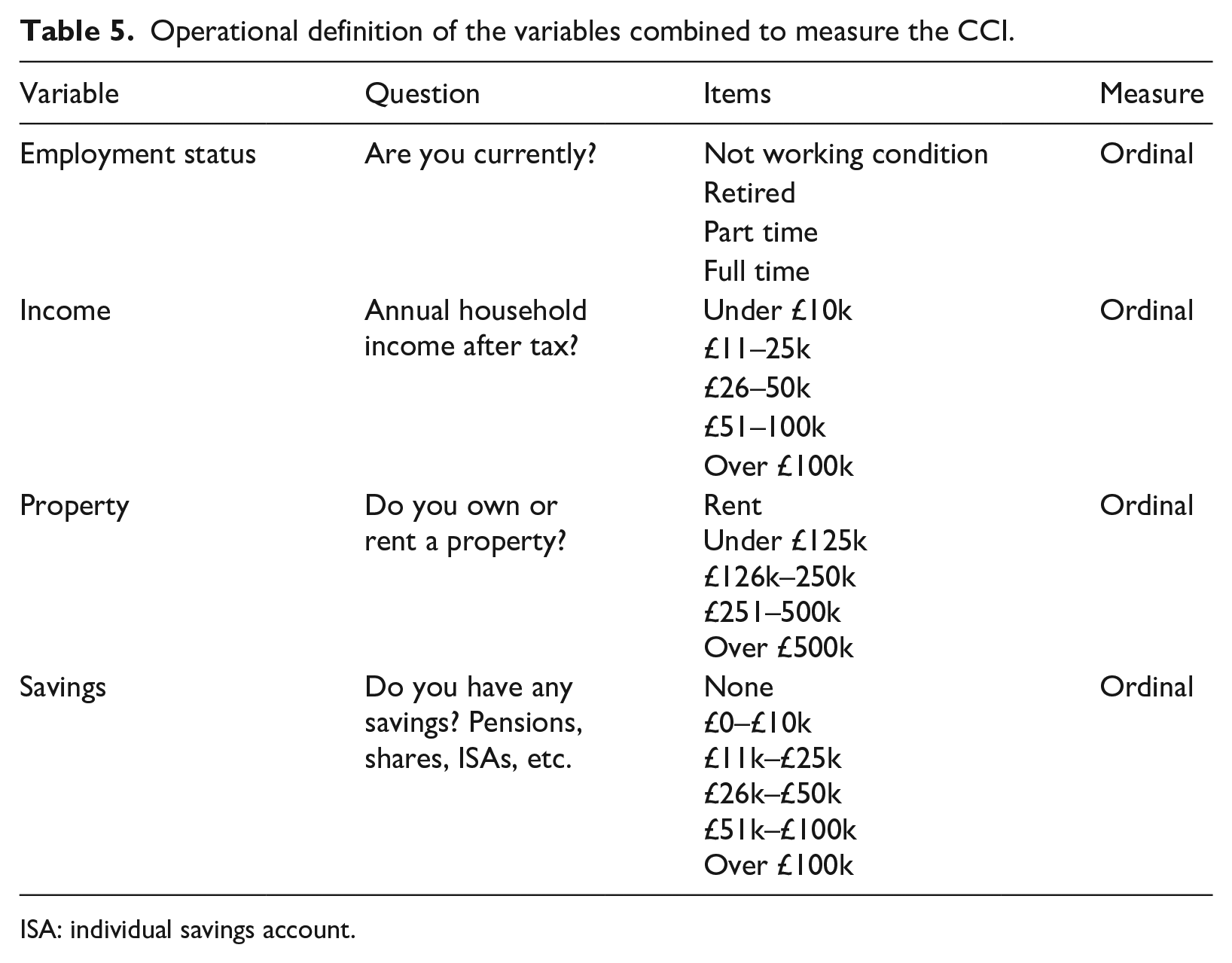
Operational definition of the variables combined to measure the CCI.
ISA: individual savings account.
Economic Component Index
The economic component index (ECI) was created by combining the following four ordinal variables related to the current financial and employment status of the respondents: employment status (from unemployed to full-time employed), income level (from under £10k to over £100k), property (from renting to owning property worth more than £500k) and savings (from none to over £100k). The higher the value, the higher the ECI is.
Personal Component Index
The personal component index (PeCI) was created by performing an FA that included a set of items meant to measure respondents’ propensity to develop some individual features. Respondents were asked to rate how often they perform an individual activity on a six-point scale from ‘Never’ to ‘Very frequently’. The FA’s results confirmed the extraction of a single factor named after the PeCI (Table 6).
Personal component: FA results.
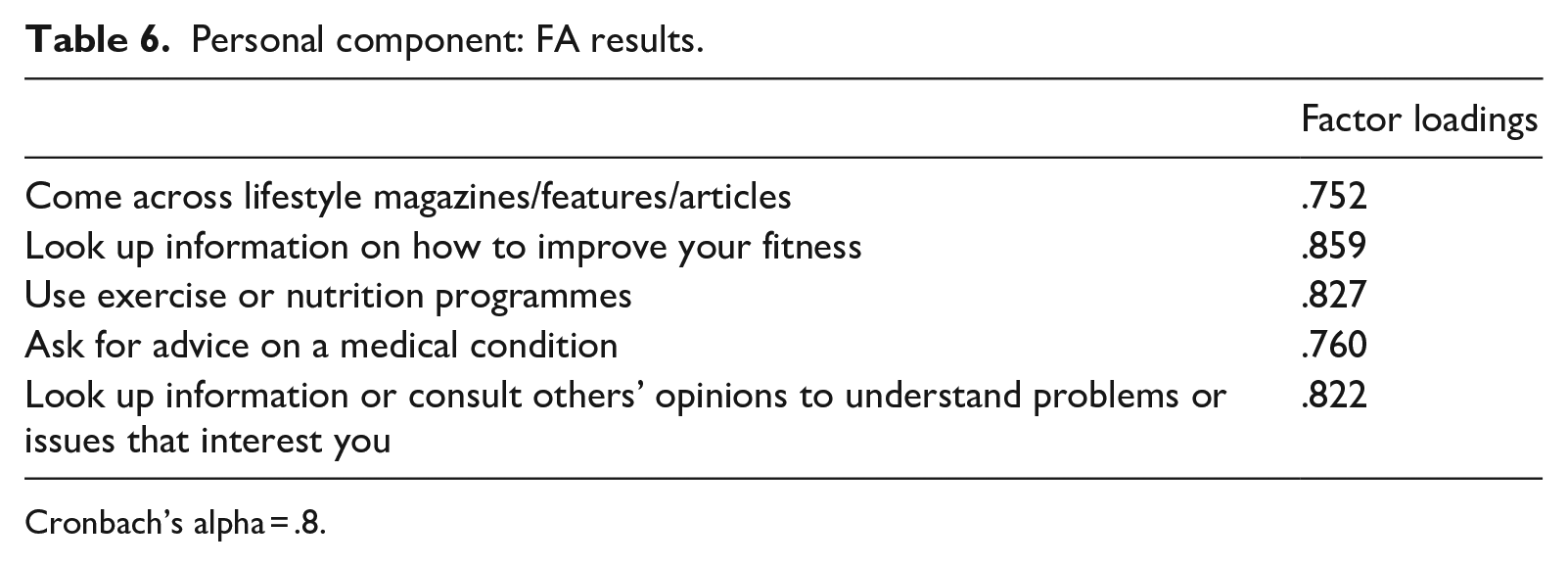
Cronbach’s alpha = .8.
Political Component Index
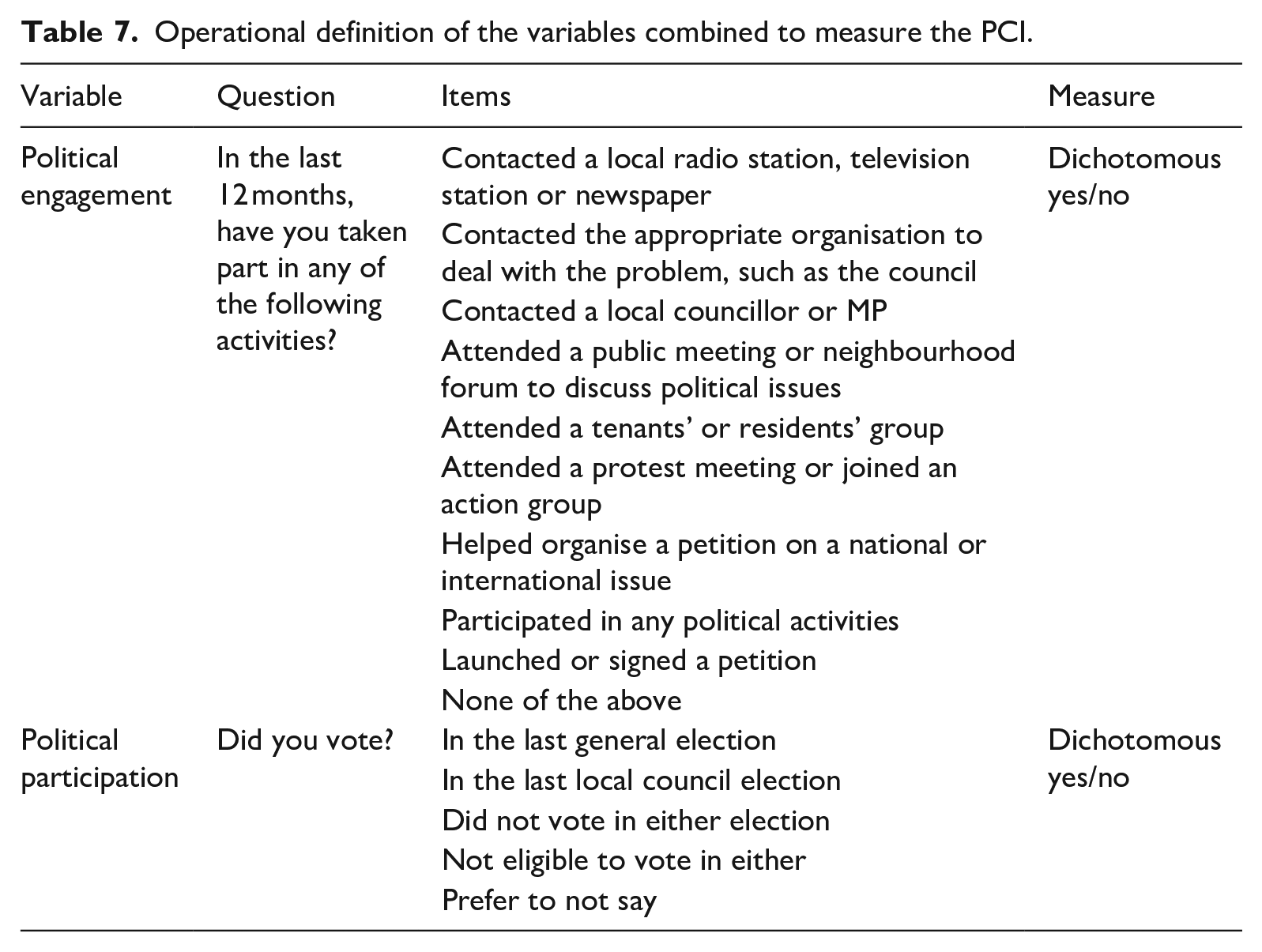
The political component index (PCI) is a composite indicator developed by following a similar strategy to that adopted to create the variables aggregated into the SCI. The political component was measured with two sets of items: the first represents political engagement, while the second represents political participation. The two variables were combined into a single variable by counting the number of ‘yeses’ a respondent gave. The higher the number of affirmative responses, the higher the political involvement and engagement (Table 7).
Operational definition of the variables combined to measure the PCI.
Following the creation of an index for each component, either through FA or univariate analysis, we summarised these indexes into a unique model by performing a multiple regression analysis where digital capital is used as a dependent variable and existing components are used as independent variables (Table 8).
Influence of 5Cs on digital capital.
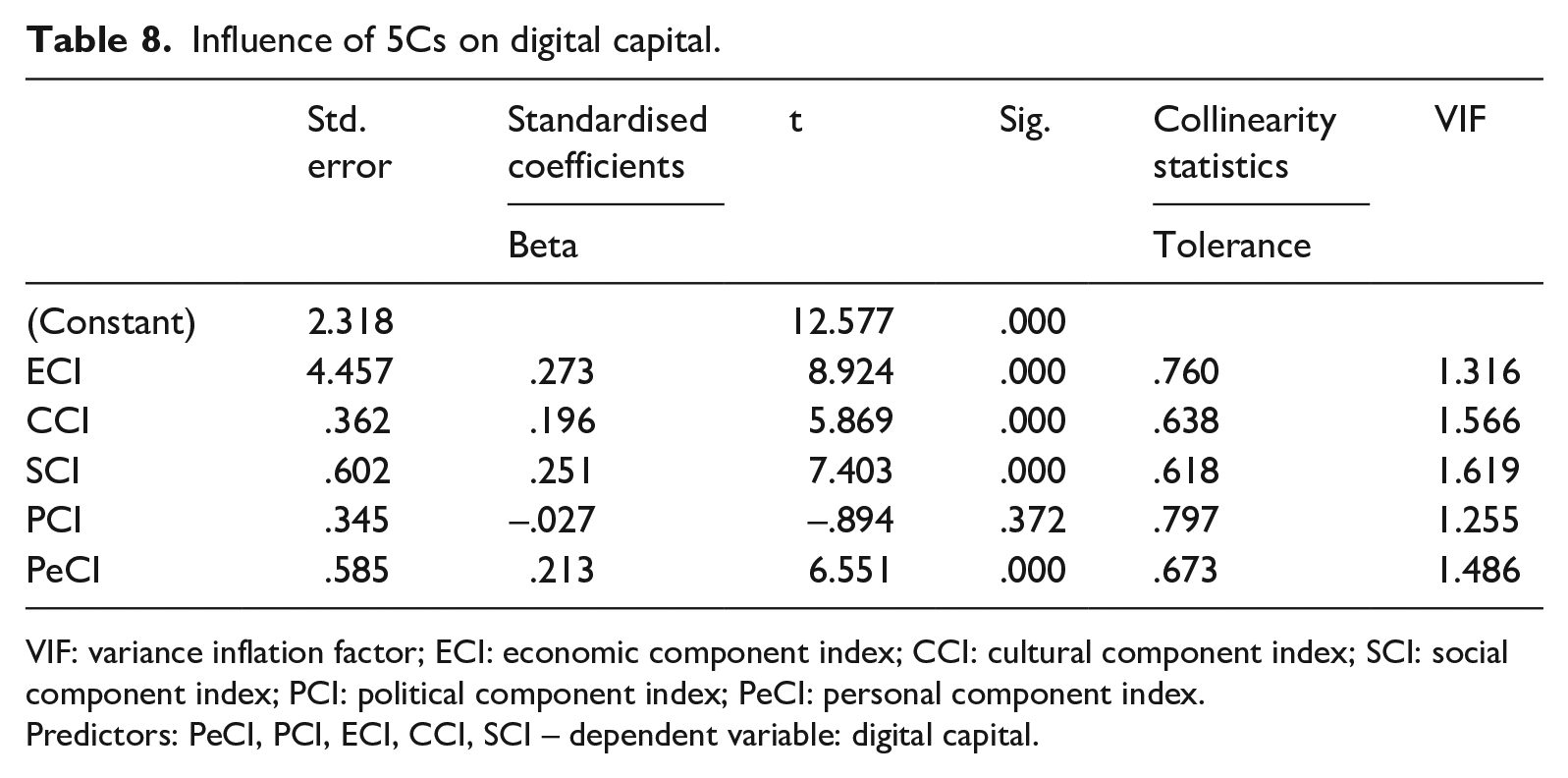
VIF: variance inflation factor; ECI: economic component index; CCI: cultural component index; SCI: social component index; PCI: political component index; PeCI: personal component index.
Predictors: PeCI, PCI, ECI, CCI, SCI – dependent variable: digital capital.
Results and discussions
The results (Table 8) show a picture in which digital capital is positively related to the existence of four previous components.
The model explains approximately 47.2% of the variance of the independent variable. G, the value of the adjusted R2 (.468) is close to that of the R2 (.472), there is no significant loss of predictive power (shrinkage) (Field, 2017). The Durbin–Watson value is between 1.5 and 2.5, suggesting that there is no linear autocorrelation in the data (Ho, 2014, p. 296). There is no multicollinearity given tolerance values above .1 and variance inflation factor (VIF) values under 10 (Field, 2017; Ho, 2014, p. 309). Finally, education and income have not been used as control variables because the former is part of the CCI, the latter has been considered to create the ECI. Furthermore, the ECI was normalised by age before entering the regression model, enabling us to remove the effect of age on the economic component (since younger respondents are more likely to have had less time to accumulate savings or buy a house).
The results show that existing backgrounds have a positive and statistically significant effect on digital capital with the only exception being the political component (p > .05). Thus, the economic, social, personal and cultural components (listed here from the highest to the lowest standardised beta score) have an impact on digital capital: the higher an existing component, the higher the digital capital level is.
Digging deeper into each of the above-mentioned components and following our hypotheses’ order, our data show how the increase in the social component is positively associated with increase in digital capital. Previous studies, from one side, did not use digital capital as a holistic concept and index, and from the other side, did not analyse how the social components influence digital capital. Our research fills both of these gaps, responding to a need to identify a comprehensive index that might facilitate the investigation of the relationship between existing social backgrounds and the accumulation of digital capital. Our investigation shows a positive relationship between the social component and digital capital. Conceiving digital capital as a whole (competencies plus access) might help facilitate understanding of its interaction with social inequalities. In this specific case, it helps explain the connection between the digital and some social components, in turn pointing policymaking towards measures aimed at increasing social commitment, reinforcement of the bonding social component and enlargement of social networks. This supports what was suggested by the first hypothesis, by showing how an increase in the social component corresponds to an increase in digital capital. This is useful, for example, in terms of facilitating policymakers in the investigation of how differences in terms of social background correspond to differences in digital capital.
The second hypothesis explored the association of the cultural component and digital capital. Several studies (Calderon, 2021; Cruz-Jesus et al., 2016; Ragnedda et al., 2020; Van Deursen et al., 2014) showed how education is positively related to both digital access and digital competencies. Our data move across these lines, by showing not only that education is positively related to both access and competencies, but also that cultural activities impact on digital capital. Thus, as suggested by the second hypothesis, individuals with more sophisticated cultural backgrounds are more likely to have a high level of digital capital. Digital capital interacts with existing backgrounds, but it is not just a simple reflection of the cultural component. Therefore, this contributes to the interpretation of digital capital as a specific capital and not a mere subset of cultural capital (Nissenbaum and Shifman, 2015; Paino and Renzulli, 2013).
In the same vein, the third hypothesis related to the influence of the economic component – here intended as a combination of income, job status, savings and property – on digital capital is supported by the analysis. Previous research demonstrated how the economic component positively influences both access (NTIA, 1995, 1998) and competencies (Fuchs, 2009; Hargittai, 2010) in using ICTs. However, this result adds to previous findings by shedding light on the possibility of considering the digital experience as a specific component in its interaction with other possessions (such as owning a house or having a specific job/income). One of the primary characteristics of the different forms of capital is the possibility of reinvesting them into new forms of capital. For example, economic capital can be invested in cultural capital (e.g. higher education), which in turn may be reinvested in other capitals (e.g. digital capital) (Ignatow and Robinson, 2017). Therefore, while economic capital might be also invested to acquire both access to ICTs and cultural advantages, cultural capital might be invested in acquiring digital skills. In this direction, studies that investigate the position occupied by social actors within their field of action should also take into account the accumulation of digital capital in addition to traditional forms of capital.
The same applies to the personal component, thus supporting the fourth hypothesis. Personal choices in lifestyle and problem-solving information, as well as personal interests, are positively associated with digital capital. While the literature has mainly investigated how use of the Internet might impact personal lifestyle and interests, our research analysed whether the personal component is a predictor of digital capital. The results of our research confirmed this hypothesis, showing how those who have a higher level of the personal component tend to also have a higher level of digital capital.
Finally, the fifth hypothesis related to the influence of the political component on digital capital is not supported by the analysis. The present study supports a negative, but not significant association between the political component and digital capital. This result might be read in light of those findings discussed in the literature review section. The investigation of the relation between digital activities and increase in political engagement has produced controversial and contrasting results.
Furthermore, in terms of what component influences digital capital the most, the multiple regression analysis shows that the economic component is the strongest predictor. Together with the social component, it has the strongest influence on digital capital. This suggests that these existing backgrounds have a positive effect on the digital experience. In turn, the influence of these components on digital capital supports interconnections between social inequalities and digital inequalities. However, the economic component should not be perceived as synonymous with ‘class’ which also includes, from a Weberian perspective, status and prestige, and is thus determined by cultural and social capital. For this reason, the overall result of the multiple regression analysis is in line with the literature that has demonstrated how higher socio-economic status (SES) groups are more likely to use the Internet for capital-enhancing activities (DiMaggio et al., 2004) and to reinforce their social position in society (Ragnedda, 2017; Van Deursen and Van Dijk, 2014). Accordingly, as previous research has suggested, the use of the Internet by higher SES groups is more sophisticated and elaborate than their counterparts (Bonfadelli, 2002; Peter and Valkenburg, 2006; Van Dijk, 2005). In this vein, the present results support that those with higher cultural, economic, social and personal status have higher quality digital experiences and, therefore, more sophisticated and elaborate digital access and competencies in using the Internet. This is a useful insight into digital policymaking because it provides a set of characteristics that might be prioritised to enhance the development of digital capital in different contexts.
What is original in this approach relates to facilitating the creation of ‘typologies’ of users in relation to their existing backgrounds that might facilitate the development of ad hoc intervention to enhance the accumulation of digital capital. In this direction, some discussion should be devoted to the implications of this work in policy terms at the international level. The development of a digital index might become particularly useful to shed light on some aspects that are neglected by the 2030 sustainable development goals (SDGs) established by the United Nations in 2015. The SDGs do not include a specific goal concerning digital inequalities, which are not even considered under the social inequalities umbrella. Despite a recognition of the transversal importance of ICTs in achieving the SDGs by the literature (Ericsson, 2015; Tjoa and Tjoa, 2016), they are only specifically mentioned as a component of Goal 9 (‘industry, innovation and infrastructure’). However, the two indicators included in these goals refer to access to both mobile broadband and the Internet, without considering the transformative role of ICTs and their impacts on achieving sustainability goals. The two indicators still focus on one component of digital capital (access), which is not sufficient to capture inequalities at different levels of the digital divide. These are in turn linked to digital competence and individual capacity to benefit from the use of the Internet. The role of ICTs has become a focus for policymakers to drive development in line with the SDGs (O’Donnell and Sweetman, 2018). However, the SDGs conceptualise their importance mainly in terms of access, thus undervaluing digital competencies and the capacity to turn experience of using the Internet into social benefits that might improve quality of life. Therefore, the integration of such a digital index might be pivotal to understanding both positives and negatives of the interrelation between digital advances and other SDGs in different contexts, its related ethical challenges (e.g. in terms of spreading misinformation) and the need for international action (Souter, 2021). Moreover, given that the COVID-19 crisis forced services, resources and opportunities to migrate online, access to and proper use of ICTs for everyday life have become essential to being fully included in society. At the same time, existing social inequalities influence digital capital and, ultimately, individuals’ life chances. Therefore, this article highlights the need to simultaneously analyse digital and social inequalities, to drive development in line with the SDGs. Finally, some lessons learned from this study might be translated into policy recommendations. Specifically, the increase in digital competencies goes hand in hand with stronger economic, social, personal and cultural backgrounds, which suggests that intervening on these variables can have considerable effects on the increase in digital capital that, in turn, might help tackle social inequalities.
Conclusion
This work contributes towards showing that digital capital – conceived as a capital that includes both competencies and access to ICTs – can help facilitate understanding of the interaction between digital and social inequalities. This means that, when both researchers and policymakers attempt to tackle digital inequalities, they need to take into account the intertwined relationship between existing backgrounds and the digital experience. Based on a specific context, represented by the United Kingdom, this study offered an analysis of the effects produced by different existing backgrounds on the accumulation of digital capital by establishing some priorities that might be of interest for policymaking. Intervening in increasing the levels of specific types of components may help simultaneously tackle both social and digital inequalities. Moreover, this article offers a model that might be applied to different contexts to see whether the same priorities emerge.
As highlighted by our research, existent backgrounds interact with digital capital, which in turn reinforces digital differences. This reflects the bridging character of such components that might be further explored to understand a potential double-loop process (offline → online → offline) in which social inequalities produce digital inequalities, which in turn might reinforce social inequalities. Metaphorically speaking, this article investigated the first part of the bridge, in terms of the relationship between previous resources and experiences and the way individuals access and use the Internet. Further research is needed to investigate ‘the second part of the bridge’, which is related to how and to what extent digital capital influences observable outcomes (known as the third level of the digital divide) in each of the five areas illustrated in this article. Finally, another possible direction future research might take is to look more deeply at how digital capital impacts ‘wellbeing’, by focussing on its correlation with variables, such as ‘success’ or ‘happiness’.
There are several limitations to this study that should be emphasised. First of all, in analysing the impact of existing backgrounds on digital capital, it would be impossible to perfectly separate the ‘existing components’ from their digital dimension. The risk might be to have the independent variable (existing component) not independent from the dependent variable (digital capital). To overcome this limit, we adopted component definitions and operationalisations that also include their interactive character and interdependence from other forms of capital. This is in line with Bourdieu’s conceptualisation of capital as a result of phenomenological and objective dimensions. However, we are aware that measures cannot always be teased apart from their online expression. Second, the results are shaped by the operational definition of each component that we provided. Many more variables could have been included in the empirical research. However, each component was operationalised by following previous studies and models that sounded pertinent to the project. For example, to create the SCI, we identified some indicators – inter alia social activities, individuals’ commitments, social ties and social network – broadly recognised by the literature as indicators of individual social components and combined them to explore the general effects of such a combination on the digital experience. We are aware that this way of measuring SCI might be problematic, and further studies might expand (or reduce) the indicators included in the SCI, or identify additional components to better reflect the social and cultural contexts in which the research is carried out. Furthermore, additional limits relate to the interaction between various capitals, and this makes it difficult to isolate the different components of capitals. For this reason, we relied on the literature for the identification used to capture the 5Cs. Finally, confirmative research is necessary to reveal whether these hypotheses, tested and verified with a stratified sample of the UK population, are replicable in other socio-cultural contexts.
Moreover, this research intended, for the very first time, to establish whether digital capital is positively associated (as we hypothesised) with other capitals/backgrounds. The fact that the results are in line with previous findings further supports the validity of the digital capital construct as a specific capital, despite its connections with cultural, social, economic, personal and political components. Rather than using different and partial indicators of the digital experience, this study identified a comprehensive index (digital capital) that might facilitate an investigation of the relationship between existing backgrounds and digital inequalities.
In conclusion, this research supports the idea that digital inequalities are intertwined with previous backgrounds. This suggests that policymaking needs to take into account the influence of these existing components on digital inequalities. The results of this study underscore the role of digital capital as an indicator of larger social, economic, personal and cultural inequalities found across society.
Footnotes
Funding
The author(s) disclosed receipt of the following financial support for the research, authorship, and/or publication of this article: The author(s) received financial support for the research from British Academy SRG18R1\180983.
