




Abstract
Research on conspiracy theories in digital media has grown considerably in recent years. As a result, the field of research has become more multidisciplinary and diverse. To bridge disciplinary boundaries, identify foci of analysis and research gaps, this study provides an interdisciplinary systematic literature review (2007–2020), analyzing current research on conspiracy theorizing online, both quantitatively and qualitatively. Findings show that the majority of studies lack a definition of conspiracy theories and fail to conceptually delineate conspiracy theories from other forms of deceptive content. We also found that while the field employs a variety of methodological approaches, most studies have focused on individual, “mainstream” social media platforms, “Western” countries, English-language communication, and single conspiracy theories. We use the findings of our review to remedy conceptual and empirical shortcomings and to provide suggestions on how to move forward in research on conspiracy theories online.
Keywords
Introduction
Conspiracy theories—defined as alternative explanations of historical or ongoing events claiming that people or groups with sinister intentions are engaged in conspiratorial plotting (Uscinski, 2018)—have permeated online communication (Wood and Douglas, 2015), news media coverage (Waisbord, 2018), popular culture (Bell and Bennion-Nixon, 2000), and political rhetoric (Mede and Schäfer, 2020), among other fields.
For a long time, conspiracy theories were perceived as harmless phenomena that were “silly and without merit” (Keeley, 1999: 109) or only existed as “‘soft’ beliefs” (Sunstein and Vermeule, 2009: 220) that people quietly kept but rarely acted upon. Profound changes in the media and platform ecosystem and particularly the advent of social media platforms, which have enabled faster communication about and dissemination of conspiratorial narratives, have changed this, however. Thus, the last few decades have seen a plethora of “high-profile conspiracy theorizing” (Uscinski, 2018: 233) around topics such as vaccination, climate change, the 9/11 attacks (Mahl et al., 2021), or, most recently, the COVID-19 pandemic (Zeng and Schäfer, 2021).
As a result, research on conspiracy theories in digital environments has grown across disciplines and become more diverse in terms of concepts, analytical approaches, and method(ologie)s. Against this backdrop, the contribution of this article is twofold. First, we systematically review research on conspiracy theorizing in online environments across disciplines to synthesize existing knowledge and to identify limitations and blind spots. Second, this synthesis provides conceptual and empirical building blocks to inform future research.
Research on conspiracy theories in online environments
The genesis of a research field
Starting with Hofstadter’s (1965) foundational work on conspiracy theorizing as the manifestation of a “paranoid style,” distinctive strands of research have emerged, now spanning half a century and a multitude of disciplines (for overviews, see Butter and Knight, 2015; Uscinski, 2018). While historical approaches have investigated structural and historical features as indicators of societal crises (e.g. Davis, 1971; Wood, 1982), cultural, philosophical, and epistemological accounts have explored what defines conspiracy theories and their epistemological characteristics (e.g. Clarke, 2002; Knight, 1999). Socio-psychological and political approaches, by contrast, have focused on individuals, aiming to identify factors that drive people to adopt conspiratorial beliefs (e.g. Swami et al., 2010; Wood and Douglas, 2013).
In recent years, triggered by the advent of digital technologies, the visibility of conspiracy theories has increased. The architecture of online environments, such as technological affordances of social media platforms, has facilitated the dissemination of conspiratorial narratives, for instance, by circumventing traditional and institutionalized gatekeepers. This allows conspiracy communities to emerge and grow over time. In turn, the increased visibility of such content encourages more individuals to publicly share their support and to connect with like-minded people (cf. DeWitt et al., 2018). These shifts in digital ecosystems have led to the emergence of a new research field: information- and communication-related studies interrogating the interplay between conspiracy theorizing and digital media, that is, online (news) media, social media platforms, and instant messengers (e.g. Theocharis et al., 2021; Tingley and Wagner, 2017).
A closer look at scholarship on conspiracy theories online points to two constituting characteristics. First, a multitude of disciplines contribute to the research field. Research on conspiracy theories in digital environments can be roughly grouped into two strands: on the one hand, studies analyzing why people hold conspiracy beliefs and how digital media affect such beliefs (e.g. Allington et al., 2020; Mancosu and Vegetti, 2020), and on the other hand, studies interrogating how conspiracy theories are communicated online (e.g. Bruns et al., 2020; Mahl et al., 2021). Both research strands correspond very well with the core research interests of various disciplines such as sociology, psychology, communication science, and beyond. In addition, the wealth of conspiratorial narratives around topics as diverse as science, medicine and public health, the environment, terrorism, political, or cultural affairs underlines that the growing interest in conspiracy theories online is not bound to specific disciplines. While the multidisciplinary nature of the research field greatly enhances our understanding of the phenomenon by drawing on a wide range of disciplinary perspectives on both the conceptual and analytical level, it also entails different understandings of conspiracy theories and can thwart conceptual advancement.
Second, the field is characterized by multiple definitions of conspiracy theories. Scholars with different disciplinary backgrounds conceptualize conspiracy theories differently by emphasizing various facets of it them. For instance, in attempting to pin down the term, some have accentuated the epistemological nature or status of conspiracy theories and defined them as a form of “stigmatized” (Barkun, 2016) or “deviant” knowledge (Keeley, 1999). Others highlight the content of conspiracy theories by defining them as alternative explanations that accuse powerful individuals of acting in secret to bring about change in society (e.g. Uscinski, 2018). Yet others draw attention to the context in which conspiracy theories are likely to emerge, such as in times of societal crises (e.g. van Prooijen and Douglas, 2017). It is important to note that it is not a problem per se that different definitions emphasize different facets of conspiracy theories—in fact, for a concept under study in multiple disciplines this is almost unavoidable—as long as the majority of the field agrees on the fundamental elements of the phenomenon.An agreement on the fundamentals might even help to clarify the conceptual boundaries of conspiracy theories. This is crucial since digital technologies have not only given rise to conspiratorial narratives but also to related forms of deceptive content, such as misinformation (i.e. non-intentional deception), disinformation (i.e. intentional deception), fake news (i.e. a label to delegitimize news media or a genre of fabricated news reports), and rumors (i.e. unverified information) (for frameworks defining these concepts, see Egelhofer and Lecheler, 2019; Wardle and Derakhshan, 2017; Zeng, 2021). 1 What distinguishes conspiracy theories from these concepts is that they provide alternative explanations—which entails the essential and still debated question of whether they are necessarily false or merely alternative (Uscinski, 2018: 236f.). With respect to conceptual boundaries, various scholars have criticized that conspiracy theories and other forms of deceptive content are often not delineated clearly (Schatto-Eckrodt et al., 2020; Uscinski, 2018; Zeng, 2021).
The necessity of an interdisciplinary literature review
Due to the growing number of studies on conspiracy theories in online environments and the broad thematic, conceptual, methodological, and disciplinary spectrum that they represent, it has become difficult to keep track of all research activity. In such situations, systematic literature reviews integrating insights from different research strands and disciplines, identifying analytical foci as well as blind spots and limitations in current work, can help. They can consolidate knowledge in a field of research and foster scientific progress—and in this case, help to fully comprehend how conspiracy theorizing interacts with digital media.
The article at hand provides such a systematic review. We start with investigating the multi- and interdisciplinary character of research on conspiracy theories online and the field’s development over time. Thus, our first research question (RQ1) reads, How has research on conspiracy theories online developed over time and across disciplines?
Second, we are interested in whether and how conspiracy theories are defined and delineated from other forms of deceptive content, and how conspiracy theories are conceptualized. This leads to our second research question (RQ2): How are conspiracy theories online conceptualized in scholarship?
In addition, we map the empirical assessment of prevalent conspiracy theorizing online, that is, conspiracy theory topics, online environments, countries and languages, methodological approaches, and the main research objects under investigation. Hence, our third research question (RQ3) asks, How are conspiracy theories online analyzed empirically in scholarship?
Data and methods
Literature search and sample
To identify relevant publications, we used Scopus, one of the most comprehensive scholarly databases covering a wide range of disciplines. Compared to the Web of Science database, Scopus also includes edited volumes, book chapters, and conference proceedings (Mongeon and Paul-Hus, 2016). At the same time, it is less inclusive than Google Scholar, which also contains (under)graduate theses or conference presentations (Gusenbauer and Haddaway, 2020).
We performed a database search including all publications (i.e. journal articles, books, book chapters, and proceedings) that contained the following search terms in the title, abstract, or keywords: conspira* AND (online OR web OR internet OR social media OR platform OR messenger) 2 . Search results were not restricted to any specific time period. This search was the first of several selection steps (see Figure 1).
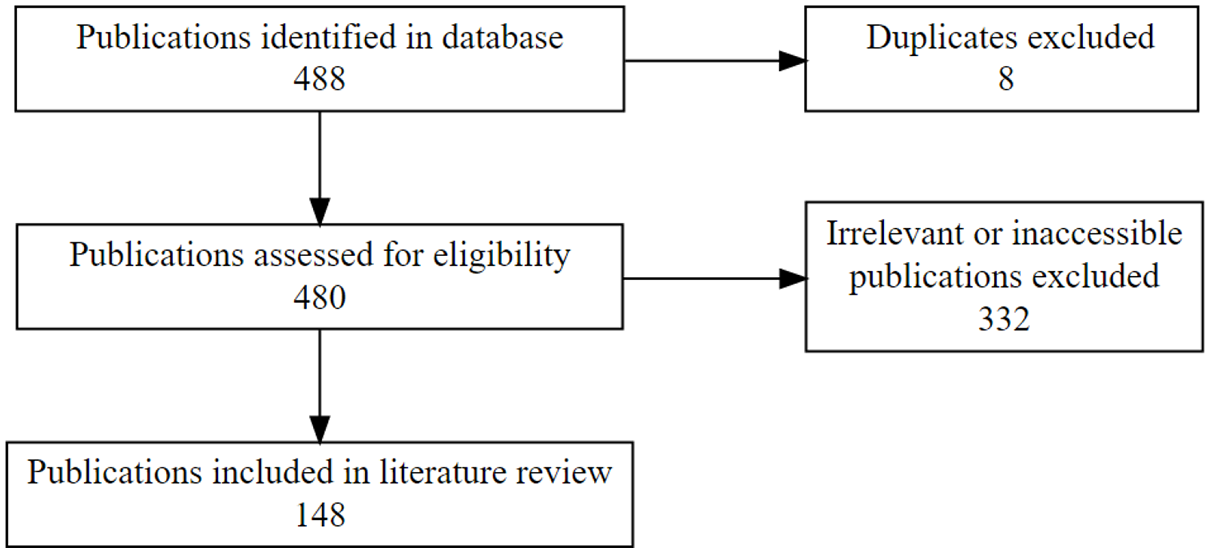
Literature selection process.
After this, all articles were checked in detail by screening the abstracts and critically assessing the full texts according to the following two inclusion criteria: the empirical analysis or the theoretical argument of the given publication had to focus on (1) conspiracy theories, including the communication of and belief in them, in (2) online environments. On this basis, two coders decided about the inclusion of articles. Some publications contained all search terms, yet nevertheless did not address conspiracy theories online. For instance, there were articles that did analyze deceptive content, yet mentioned conspiracy theories only in passing; or articles that did investigate conspiracy theories, but not in the context of online environments, even though they mentioned the respective search terms in the abstract (for instance, referring to online surveys). Intercoder reliability based on a random sample of 48 articles (approx. 10%) showed high agreement (Krippendorff’s α = .87). Eventually, 148 publications (81.8% journal articles, 17.6% conference proceedings, and 0.7% book chapters) met our inclusion criteria and thus were selected for analysis.
Literature categorization and coded variables
With respect to RQ1, the first set of variables was used to assess the field’s evolution over time and across disciplines (for a detailed overview of all variables, see Supplementary Material Table B1). For each article, we coded the type of publication, that is, whether it is an empirical analysis or a theoretical–conceptual contribution. In addition, we recorded the discipline of the authors according to their institutional affiliation. While the affiliation of the first author was used to assign the publication to a discipline and to assess the multidisciplinary character of the research field, the affiliation of all authors was coded to identify interdisciplinary cooperation 3 . Apart from this, we were interested in whether authors publish outside of their main discipline in either mono- or multidisciplinary journals—which can also be seen as a form of multidisciplinarity. To evaluate this, we identified the discipline of journals based on journal categories classified in the ISI Web of Science Journal Citation Report (JCR).
The second block of variables aimed at conceptual approaches (RQ2) and covered whether a definition of “conspiracy theory” was provided; if so, which conceptual elements were used in the definition (e.g. responsible actors or targets) and the foci of the definition (e.g. referring to the content or function of conspiracy theories). In addition, we coded whether references were cited to define conspiracy theories; and if so, which ones. To empirically assess the often-diagnosed lack of conceptual clarity of conspiracy theories and related forms of deceptive content, we also recorded whether the study mentioned the concepts of misinformation, disinformation, fake news, or rumors without explicitly defining or differentiating them from conspiratorial narratives. Furthermore, we coded whether and which theoretical-conceptual frameworks were used or developed.
A third set of variables was only coded for empirical studies. Our interest in empirical-methodological approaches (RQ3) spanned the analyzed conspiracy theory discourse (i.e. a specific topic, such as the 9/11 attacks, or generic phenomena, such as conspiratorial narratives), online environment (i.e. the type of online environment, such as social media platform, and the specific platform, such as Twitter), country (i.e. a specific country or a language-based sample), and language. Following this, we recorded the applied research design, that is, whether it was a case study, a cross-sectional analysis comparing different topics and/or countries and/or languages, or a multi-sectional study combining different topics and/or countries and/or languages, and whether it applied a longitudinal design. In addition, we coded the modality of data (e.g. text-based or visual content), analytical approach (e.g. inductive/exploratory or deductive/hypothesis-driven), and the method used (e.g. survey or network analysis). At the end of this block, the main research object under investigation was qualitatively reviewed and pooled into overarching categories based on similarity in meaning.
Intercoder reliability calculation regarding the above-mentioned variables was carried out by two coders using a random sample of 15 articles (approx. 10%) and showed very good reliability scores (Krippendorff’s α ⩾.83; see Supplementary Material Table B1).
Results
In line with our research questions, this chapter is divided into three subsections: We start with the development of the research field (RQ1), then continue with conceptual approaches (RQ2), followed by empirical-methodological aspects and the main research objects (RQ3).
The research field over time and across disciplines
Rising academic attention
A look at the distribution of articles over time shows a sharp increase in academic attention to conspiracy theories online across all disciplines—with the last 2 years accounting for more than half of all publications dealing with the issue since 2007. As Figure 2 illustrates, only very few articles appeared between 2007 and 2017, followed by a first slight rise in 2018 and 2019, and a sharp 180% increase in 2020 over the previous year. Likely, this growth is backed by the high proliferation of conspiracy theories online during the COVID-19 pandemic.
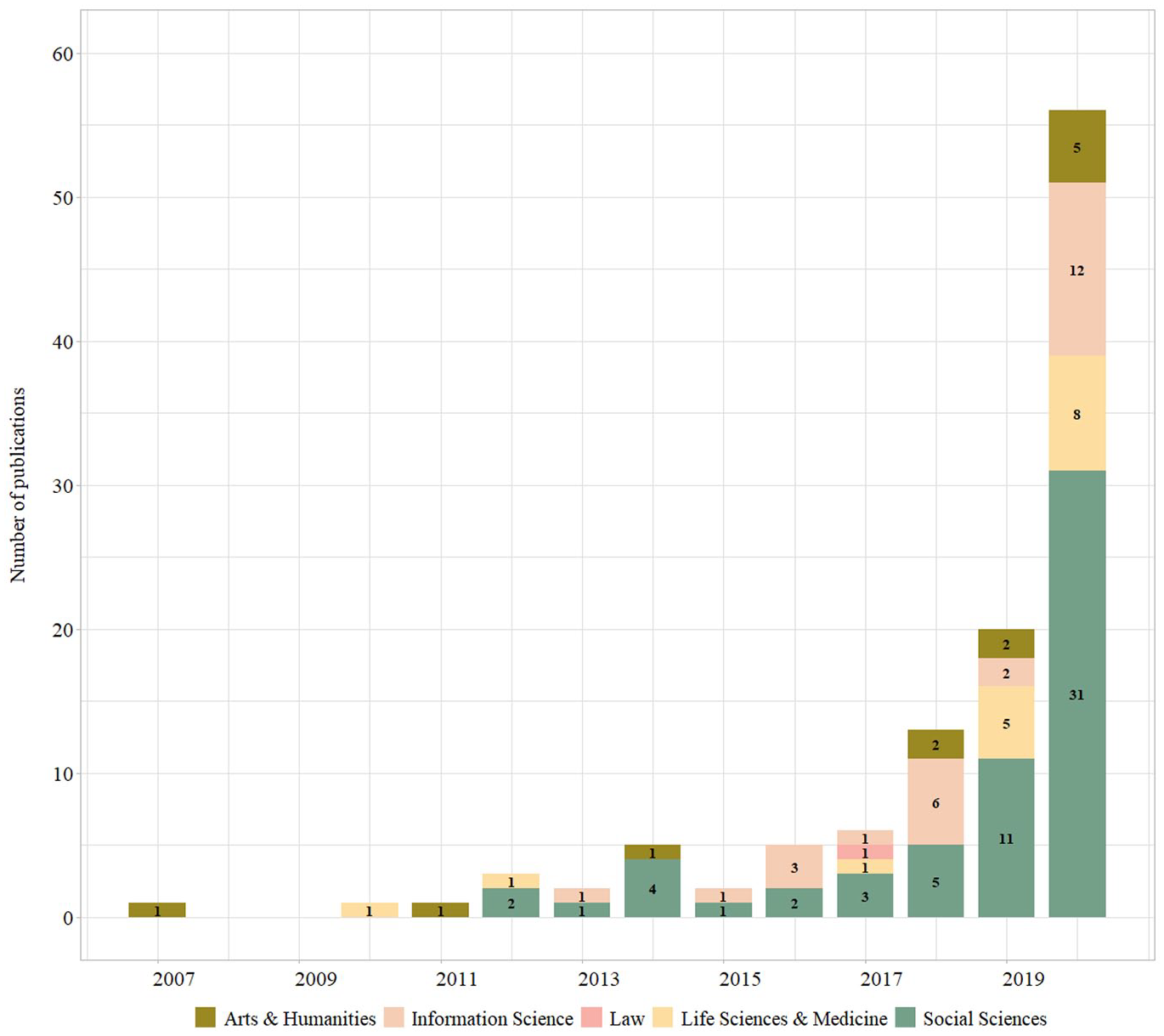
Number of studies investigating conspiracy theories online.
Mostly empirical studies
The overwhelming majority of publications are empirical analyses (87.2%). In contrast, only 6.1% introduce a novel methodological approach, for instance, to automatically detect conspiracy theory-related content (Samory and Mitra, 2018bA; Conti et al., 2017A) 4 . Overall, 4.1% of all publications primarily aimed to make a theoretical-conceptual contribution while still empirically examining data—such as Neudert et al. (2019A), who introduced an empirically grounded typology of political news and information on social media and compared sourcing and consumption during three elections. A very small minority of 2.7% of publications were entirely theoretical or conceptual in nature—outlining frameworks such as the “anti-public sphere,” an online space which includes conspiratorial or alt-right content (Davis, 2021A).
High multi- and interdisciplinarity
Our review reveals that research on conspiracy theories in online environments spans a multitude of disciplines. We aggregated them into social sciences (40.5%) and information science (17.6%), which were the most prominent, followed by life sciences and medicine (10.8%), arts and humanities (8.1%), and law (0.7%). Taking a closer look at the multidisciplinarity of the field, we found that 33.9% of all articles were published in monodisciplinary journals outside of the respective authors’ main discipline. Here, disciplinary differences appeared: While social scientists published most frequently outside of their field (16.5%), for instance, in life sciences journals about health-related conspiracy theories, life scientists strictly stayed within their disciplinary boundaries. Information scientists (8.7%) and humanities scholars (7.8%) mainly chose social scientific journals as outlets. Across disciplines, 5.2% of all studies were published in multidisciplinary journals such as PLoS ONE. It is worth noting that publishing in mono- or multidisciplinary journals outside of the home discipline does not imply that these articles are interdisciplinary in nature because this does not necessarily encourage an active exchange between or integration of disciplines.
With respect to the interdisciplinarity of the field, our findings point toward a high degree of collaboration across disciplinary boundaries: 41.9% of all studies include authors from at least two disciplines. However, most of these collaborations stayed within the same broader research tradition, for example when social scientists from communication science and sociology work together.
Conceptual perspective
Lack of definitions, but agreement on basic conceptual elements
Turning toward the conceptual perspective of conspiracy theories, our research shows that among the 148 articles coded, only 38.5% provided a definition of the term “conspiracy theory.” Therefore, most of the articles in our sample studied conspiracy theories online without explicitly defining the main object of their research.
The studies that did provide such a definition, however, agree on specific foci and conceptual elements of conspiracy theories (see Figure 3). Most of these definitions emphasized the content of conspiratorial narratives (93%) by defining them as “an allegation regarding the existence of a secret plot between powerful people or organizations” (Chen et al., 2020b: 1344A following Wood and Douglas (2015)). In contrast, 17.5% highlighted the function of conspiracy theorizing, as they “reduce the complexity of reality” (Mocanu et al., 2015: 1198A) or “‘help’ people make sense of the world” (van den Bulck and Hyzen, 2020: 45A). Only 5.3% accentuated the context in which conspiratorial narratives emerge by stating that they arise from people’s “desire to understand critical events occurring in the society” (Andrei et al., 2019: 1433A, following van Prooijen and Douglas (2017)).
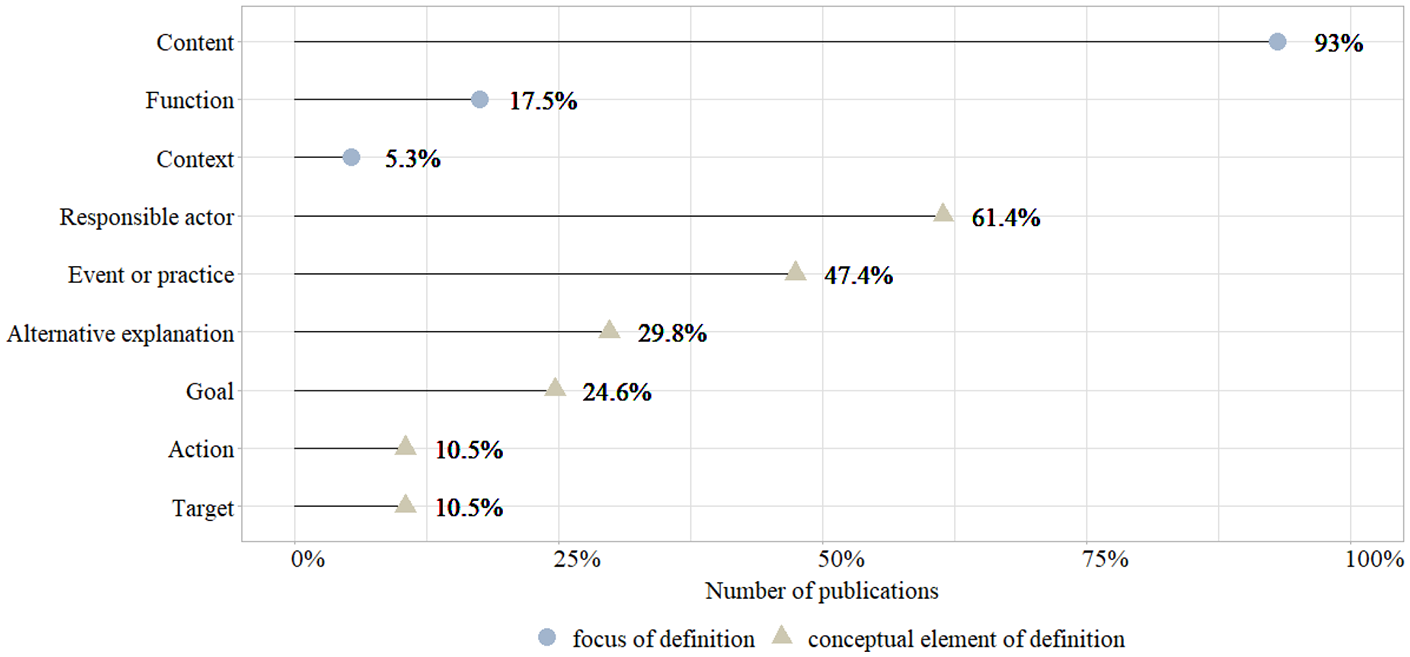
Foci and conceptual elements of definitions.
Looking at frequently used conceptual elements to define conspiracy theories, studies often referred to responsible, often secretly operating actors (61.4%) or historical events or practices (47.4%). Others pointed out that conspiracy theories provide alternative explanations that run counter to official accounts (29.8%) or point to the goals (24.6%), actions (10.5%), or targets (10.5%) of conspiracy theorizing. The majority of articles defined conspiracy theories using several of these elements, with the following occurring most often together: actors and events (24.6%), actors and their goals (10.5%), events and alternative explanations (5.3%), or events, actors, and goals (5.3%).
Of the 57 studies that provided a definition, 68.4% relied on definitions introduced in prior scholarship. The definition cited most often in our sample (8.7%) was the one by Sunstein and Vermeule (2009: 205), who understand conspiracy theories as “an effort to explain some event or practice by reference to the machinations of powerful people, who attempt to conceal their role”—which largely corresponds with the most frequently used conceptual elements found in our analysis.
Blurred conceptual boundaries
Scholars have criticized that conspiracy theories and other forms of deceptive content such as mis- and disinformation are often not delineated in a meaningful way (Schatto-Eckrodt et al., 2020; Uscinski, 2018; Zeng, 2021). Our results empirically support this concern: 72.3% of all studies examining conspiracy theories also refer to or mention the concepts of misinformation, disinformation, fake news, or rumors without explicitly defining and differentiating them from each other. Most studies mix conspiracy theories and misinformation (69.2%), followed by rumors (41.1%), fake news (38.3%), and disinformation (18.7%). Notably, almost half of all studies (43.9%) refer to several of these concepts simultaneously without clearly delineating them. Most strikingly, the proportion of studies that conflate conspiracy theories with other forms of deceptive content has seen a sharp increase over time: While only few articles intermixed these terms until 2018 (approximately 3.5% per year), we see a disproportional rise in 2019 (17.8%) and even more so in 2020 (50.5%).
Lack of theoretical frameworks
Although the multidisciplinary nature of the research field suggests that the analyses would use a wealth of theoretical and conceptual frameworks, our results indicate otherwise. First, only 34.5% of all studies explicitly embedded their empirical investigation in a theoretical or conceptual framework at all, for example, by deriving research questions, hypotheses, or analytical dimensions from an established or newly developed conceptual framework. Many of them provide a brief summary of empirical findings from prior research—which is certainly valuable, but lacks sufficient theoretical reflection, may make generalization beyond the analyzed cases more difficult, and could even produce empirical artifacts. Second, studies which did name theoretical or conceptual frameworks mainly used work from the social sciences, such as the health believe model (e.g. Briones et al., 2012A), framing (e.g. Yang et al., 2014A), or motivated reasoning (e.g. Bode and Vraga, 2018A). It should be noted that these results may be due to different disciplinary traditions. Thus, it seems that theoretical and conceptual frameworks are used more frequently in the social sciences than in the humanities or life sciences.
Empirical-methodological perspective
Focus on single conspiracy theory topics
Most studies take one of the following two approaches: they either analyze conspiracy theories as a generic, abstract phenomenon, or they focus on specific, single conspiracy theory topics. In total, about one-third of all empirical studies in our sample (N = 144) followed the first approach (29.9%) and examined, for instance, generic conspiratorial beliefs and ideation (Essam et al., 2019A) or different online environments known to contain conspiratorial content such as BitChute (Trujillo et al., 2020A).
Most of the studies in our sample took the second approach and analyzed individual conspiracy theories (70.1%; see Figure 4). They interrogated health- and science-related conspiracy theory topics linked to the COVID-19 pandemic (16.7%), vaccination in general (13.9%), human papillomavirus (HPV; 5.6%), the Zika virus (4.2%), measles, mumps, and rubella (MMR; 2.8%), climate change (2.1%), or flat earth (2.1%). Others addressed more overarching polarizing topics centered around chemtrails (4.2%) or anti-Semitic narratives (2.1%). Some analyzed conspiracy theories related to events such as the 9/11 attacks (4.2%), the moon landing (1.4%), Pizzagate (1.4%), or the Sandy Hook shooting (1.4%). Cross-topic designs that allow for comparisons between different conspiracy theories were the minority, accounting for only 4.2% of all articles.
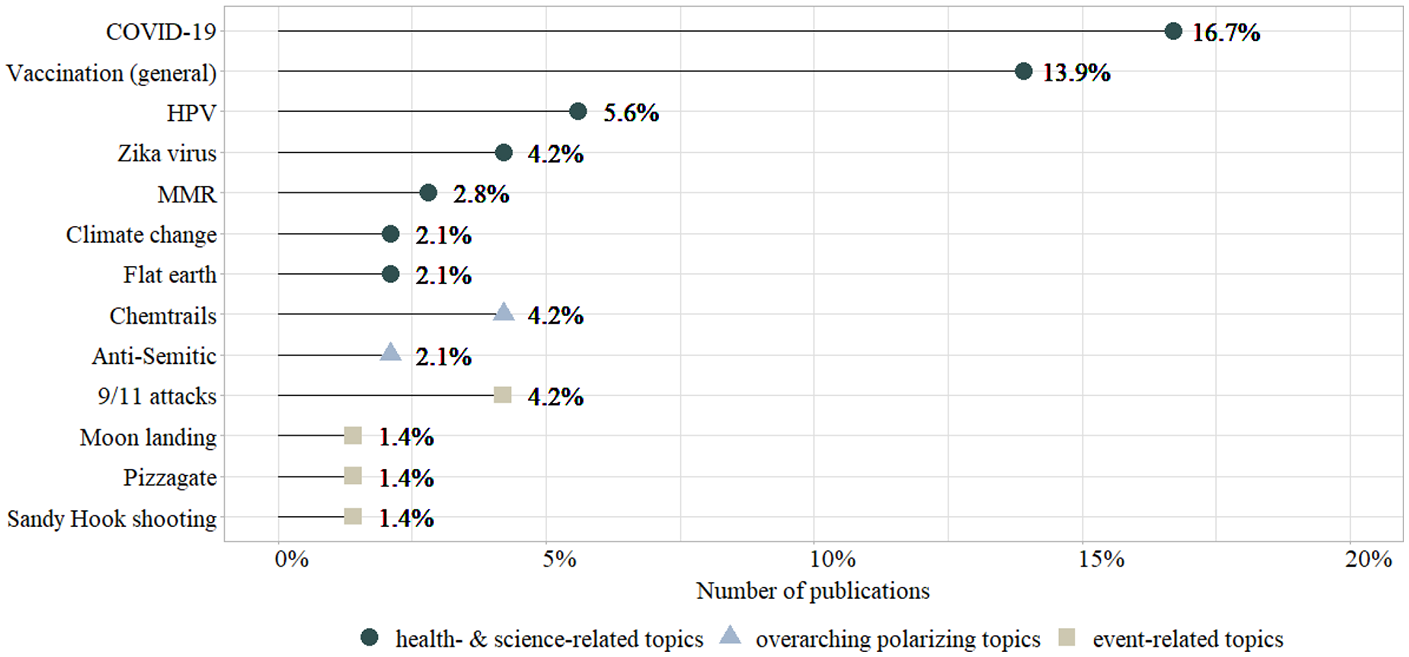
Analyzed conspiracy theory topics.
Focus on “mainstream” social media platforms
In terms of analyzed online environments, the large majority of analyses are single platform studies (81.2%) focusing mostly on social media platforms (70.1%; see Figure 5). The most frequently analyzed platforms are Facebook (23.6%), Twitter (20.1%), and YouTube (11.8%). In contrast, Reddit (6.2%), Instagram (4.9%), 4chan (2.1%), or Weibo (2.1%) were the minority. Furthermore, scholars empirically interrogated online news media (16%), followed by blogs and personal websites (6.2%), instant messengers (2.8%), search engines (2.1%), or discussion forums (2.1%). Only a minority of publications studied conspiracy theories in the context of fact-checking sites (1.4%) and news aggregators (1.4%).
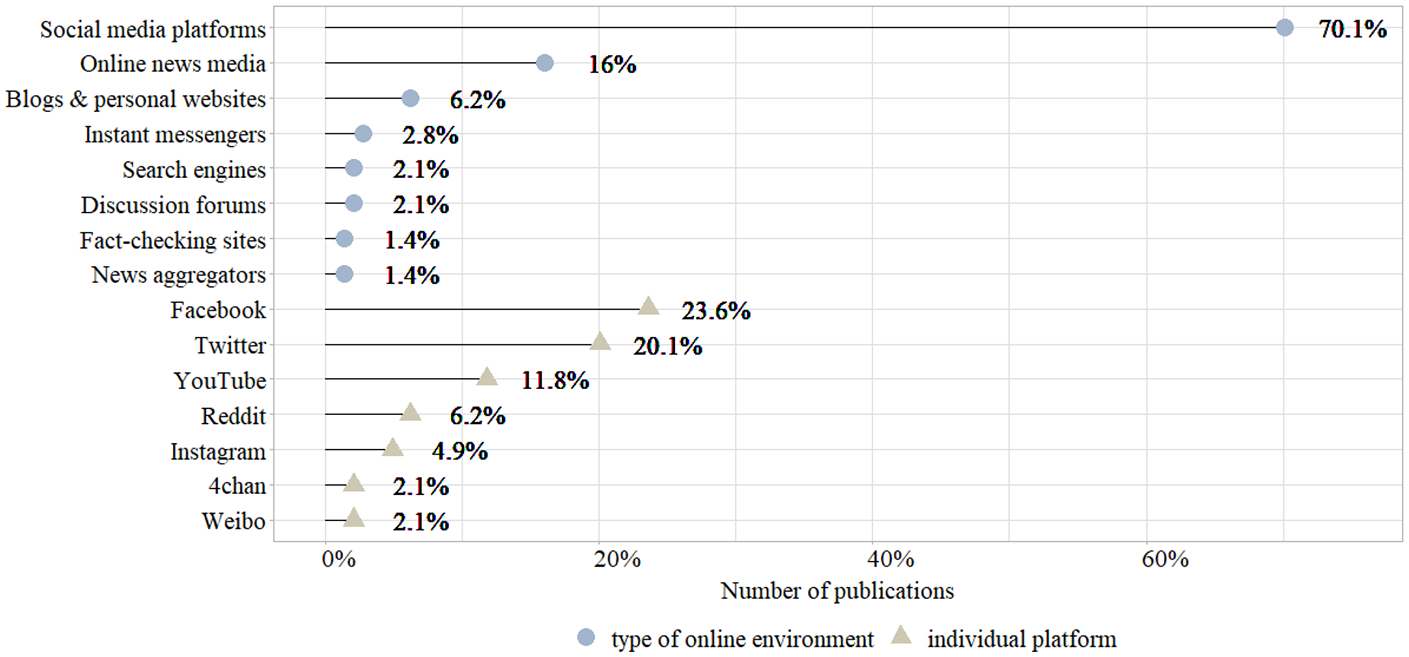
Analyzed online environments.
Interest in conspiracy theories on online platforms has heightened from 2018 onward, in line with the general growth of research on conspiracy theories online. Platforms which are less regulated, such as Gab, 8kun, or 4chan, have only recently become an object of empirical analyses (e.g., Bagavathi et al., 2019A; Zannettou et al., 2018A).
Focus on “Western” countries and English-language communication
Another bias in the research field emerges in terms of the countries studied (see Table 1): a predominant focus on “Western” countries, that is, Europe with 23.6% of all empirical analyses, followed by North America with 15.3% and Oceania with 2.1%. Within these regions, however, research is diverse, with studies covering Italy (e.g. Mocanu et al., 2015A), the United Kingdom (e.g. Freeman et al., 2020A), Romania (e.g. Cmeciu and Coman, 2020A), Denmark (e.g. Stæhr, 2014A), Russia (e.g. Poberezhskaya, 2018A), the Netherlands (e.g. Lutkenhaus et al., 2019A), or Norway (e.g. Fangen and Holter, 2020A), among others. In addition, scholars have analyzed Asian regions (7.6%), such as China (e.g. Yang et al., 2014A), Bangladesh (e.g. Barua et al., 2020A), Japan (e.g. Okuhara et al., 2018A), Malaysia (e.g. Wong et al., 2020A), and Taiwan (e.g. Nefes, 2014A). Studies on Eastern European countries such as Bulgaria (e.g. Slavtcheva-Petkova, 2016A), the Czech Republic (e.g. Štětka et al., 2021A), Poland (e.g. Żuk and Żuk, 2020A), or the Ukraine (e.g. Zakharchenko et al., 2019A) are the minority, as are analyses on African (e.g. Essam et al., 2019A) or South American countries such as Chile (e.g. Halpern et al., 2019A). Only a few studies employed cross-country designs and analyzed more than one nation (4.2%).
Overview of countries and languages analyzed.
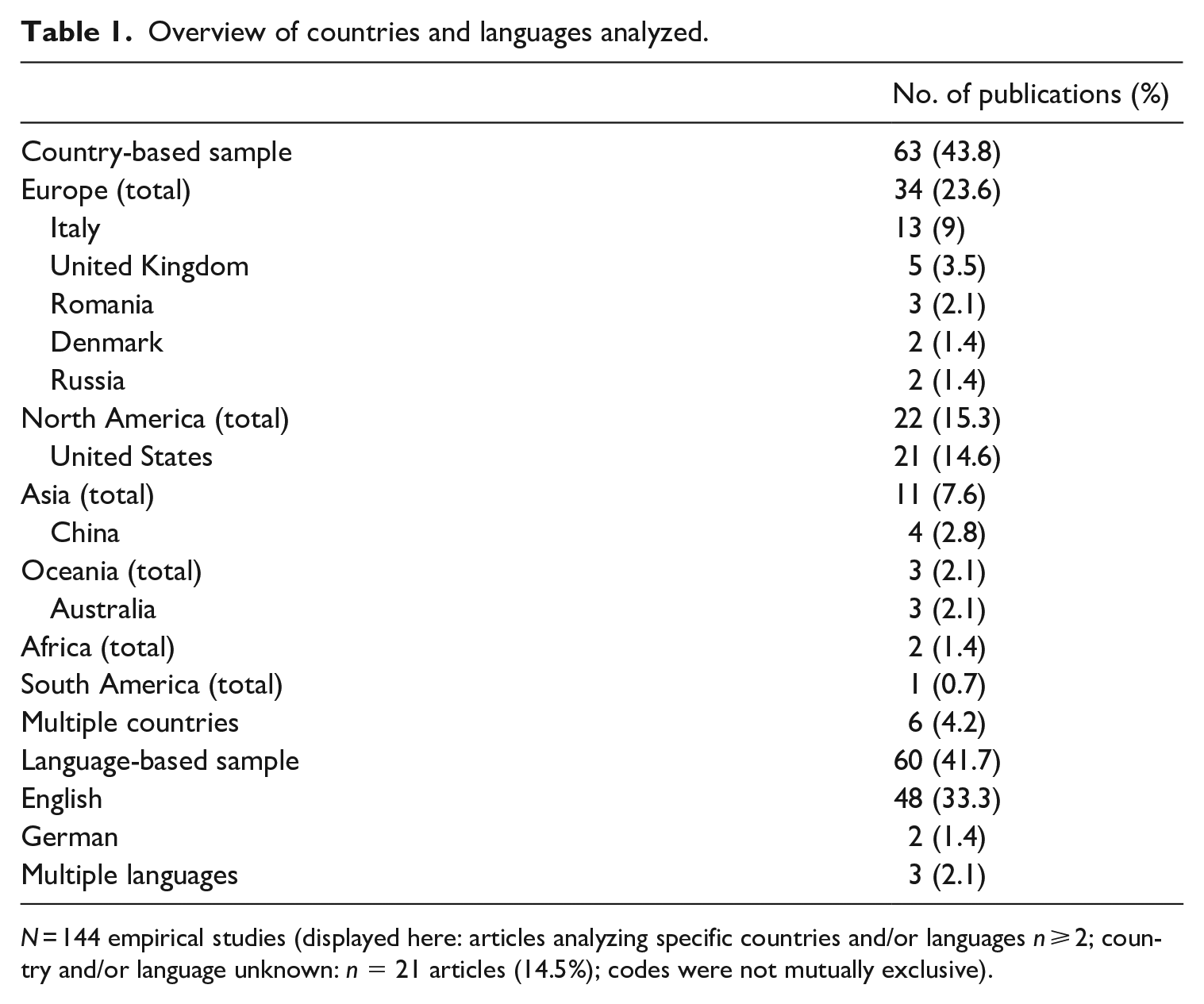
N = 144 empirical studies (displayed here: articles analyzing specific countries and/or languages n ⩾ 2; country and/or language unknown: n = 21 articles (14.5%); codes were not mutually exclusive).
This “Western” focus is also present in those empirical analyses which focus on a specific language rather than a certain country (41.7% of all publications): In total, 33.3% of all empirical analyses focus on English-language communication, 1.4% on German, and 2.1% on multiple languages.
Focus on text-based content and exploratory approaches
Research on conspiracy theories online is diverse in its analytical and methodological approaches (see Table 2). In terms of applied research designs, half of all coded studies are case studies focusing on one conspiracy theory in one online environment within one national context. However, 12.5% of all empirical studies in our sample were case studies analyzing temporal developments by applying a longitudinal design. A total of 21.5% articles compared different conspiracy theory topics and/or online environments and/or countries in cross-sectional studies, while 4.9% combined, for instance, different online media without explicitly comparing them with each other.
Overview of analytical and methodological approaches.
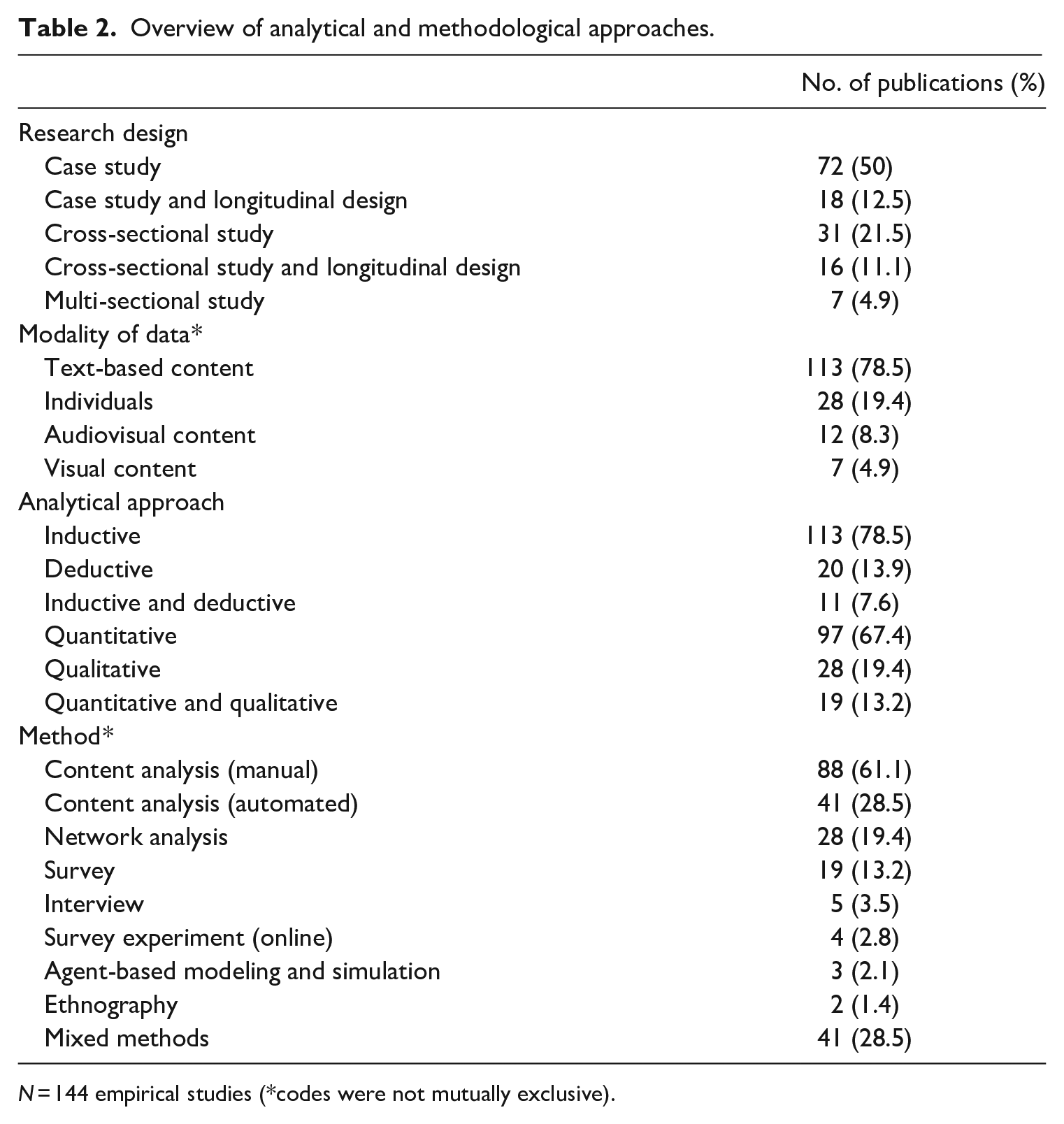
N = 144 empirical studies (*codes were not mutually exclusive).
Looking at the modality of data examined, a clear bias toward text-based content appears, which is analyzed in 78.5% of all coded articles. Other than these communication-centered studies, some publications focus on individuals (19.4%) as they explore the relationship between conspiratorial beliefs and digital media. Audiovisual and visual contents are less frequently studied, with only 8.3% and 4.9%, respectively.
In terms of analytical approaches, most articles used quantitative methods (67.4%) and an inductive approach (78.5%). By contrast, only 7.6% combined inductive and deductive approaches or qualitative and quantitative methods (13.2%).
Although the field of research is characterized by a variety of methods, manual content analysis is the most frequent (61.1%), followed by automated content (28.5%) and network analysis (19.4%). Research on individuals’ beliefs in conspiracy theories mostly relies on surveys (13.2%), interviews (3.5%), and survey experiments (2.8%). Simulation (2.1%) or ethnographical studies (1.4%) were only a small minority. At 28.5%, almost one-third of all empirical investigations leveraged mixed methods.
Research objects
With regard to research objects, six thematic categories emerged in a qualitative reading and synthesis of all empirical studies of our sample (N = 144): (1) representation, (2) production, (3) dissemination, (4) debunking, (5) consumption of conspiracy theories online, and (6) predictors and consequences of conspiratorial beliefs 5 .
Representation
The first and by far largest category includes empirical studies examining how conspiratorial content is represented in digital media (n = 47). This includes investigating specific conspiracy theory topics, the structure of conspiratorial language, and socio-political discourses in which conspiracy content emerges. In this sense, often identified research objects span (sub)topics or themes, frames, discursive patterns, and rhetorical strategies linked to discourses around climate change (e.g. Poberezhskaya, 2018A), vaccination (e.g. Numerato et al., 2019A), the Zika virus (e.g. Kou et al., 2017A), or COVID-19 (e.g. Li et al., 2020A). Others cover more abstract aspects, such as the communication of sentiments of distrust toward science (Colella, 2016A), the use of conspiracy theorizing by radical extremist organizations (Rousis et al., 2020A), or narratives denoting mistrust in official information (Samory and Mitra, 2018bA). In addition, some studies analyze issue-specific discourses, but identify content attributes which are of interest for the broader field of conspiracy theorizing online. Kata’s (2010A) study of narrative arguments proffered on anti-vaccination websites is an example. She developed an extensive list of content attributes, such as misrepresentations, anti-science narratives, or the presentation of privileged knowledge. In addition to thematic and rhetorical patterns, articles have studied narrative stances, that is, the support or rejection of conspiratorial content as well as positive, negative, and emotional sentiments in online discourses (e.g. Mitra et al., 2016A). In this vein, Wood and Douglas (2013), for example, used a socio-psychological approach to examine the promotion and rejection of alternative explanations in online discussions of 9/11-related conspiracy theories. Finally, only a minority of articles examined the utilization of memes and visual rhetoric, such as the use of triple parentheses as a form of memetic antagonism (Tuters and Hagen, 2020A) or the circulation of Mahatma Gandhi and mercury memes in anti-vaccination discourses (Buts, 2020A).
Production
The second thematic category captures empirical studies exploring different aspects related to the production of conspiratorial content online (n = 19). This includes individuals creating and communicating conspiracy narratives, digital platforms containing conspiracy theories, and intermediaries such as journalists investigating them. Frequently explored research objects cover the characterization and structure of different sources, that is, user communities propagating (e.g. Klein et al., 2018A) or digital platforms containing conspiracy theories (e.g. Trujillo et al., 2020A). Fangen and Holter (2020A), for instance, conducted interviews with people who spread conspiratorial (as well as racist and discriminatory) content to characterize their self-concepts and their concepts of adversaries. Using a computational approach, Bessi (2016A) classified personality traits of users supporting scientific or conspiratorial narratives according to their online behavior. Other articles draw comparisons between sources such as neutral or “mainstream” news outlets and conspiratorial or “alternative” platforms (e.g. Bradshaw et al., 2020bA). In addition, studies have surveyed the repertoire of information sources conspiracy theory communities use to back their argumentation (Schatto-Eckrodt et al., 2020). In terms of intermediaries investigating conspiratorial content, only one article in our sample conducted in-depth interviews with journalists to explore how they report on online misinformation and conspiracy theories (McClure Haughey et al., 2020A).
Dissemination
Another category of studies analyzes the dissemination and spread of conspiracy theories in online environments (n = 19), focusing, for example, on the prevalence of specific conspiracy theories or conspiratorial talk (e.g., Dobreva et al., 2020A; Glenski et al., 2018A), information flows and dynamics (e.g. Bruns et al., 2020; Paolillo, 2018A), or factors contributing to the spread of conspiracy content (e.g. Del Vicario et al., 2016aA; Sharma et al., 2017A). For example, Hussein et al. (2020A) investigated whether personalization and user activities contribute to the amplification of misinformation and conspiratorial content. In addition, Lobato et al. (2020A) explored how factors such as conspiracy ideation or political orientation predict a willingness to share COVID-19-related conspiracy narratives. Finally, scholars were interested in user engagement with conspiratorial content online (e.g. Horne et al., 2019A). For instance, Bessi et al. (2017A) interrogated the relationship between content diversity and popularity, that is, liking or sharing content, by comparing conspiratorial and science-related Facebook pages.
Debunking
Studies in the fourth category develop and evaluate debunking strategies (n = 9) and cover research objects related to media literacy, that is, users’ ability to recognize conspiratorial content online (e.g. Porshnev and Miltsov, 2020A) or correction mechanisms and their efficacy (e.g. Bode and Vraga, 2018A). In this light, Roozenbeek and van der Linden (2019A) explored the effects of psychological intervention on people’s ability to spot and resist false information and deceptive content. For this purpose, the authors evaluated an online browser game which aims to familiarize people with common strategies of misinformation and conspiracy theories. Others, such as Porshnev and Miltsov (2020A), investigated the role of rational thinking, news consumption patterns, media literacy, and fact-checking behavior on users’ ability to differentiate between true and false news. Finally, scholars developed and empirically exemplified methodological approaches to automatically detect conspiratorial content online (e.g. Conti et al., 2017A; Tangherlini et al., 2020A).
Consumption
Only few studies in our sample (n = 3) focused primarily on the audiences’ consumption of and exposure to conspiracy theories online without testing how this translates into conspiratorial beliefs. This includes the analysis of users’ news consumption patterns of websites spreading conspiratorial content (Štětka et al., 2021A) or people’s exposure to conspiratorial narratives and false information (Halpern et al., 2019A). Another study focused on Internet search behavior related to COVID-19 information (Rovetta and Bhagavathula, 2020A).
Predictors and consequences of conspiratorial beliefs
While the majority of the above-mentioned categories ask how conspiracy theories are communicated online, the last category of research objects investigates the corresponding effects. The respective, scholars attempt to understand how digital media use and endorsement of conspiratorial content affect people’s willingness to believe or support such narratives (n = 10) and, in turn, how this translates into attitudinal or behavioral consequences (n = 7). Thus, research has investigated multiple predictors of conspiracy beliefs, such as online media use and exposure to conspiracy theories, personality traits, and social and political factors. Mancosu and Vegetti (2020), for instance, employed a survey experiment and tested whether the content of news (conspiratorial vs debunking) and the type of media outlet publishing it (mainstream vs independent) affect people’s perceptions of the plausibility of news. Featherstone et al. (2019A) assessed how health information sources people rely upon and their political ideologies are associated with the acceptance of vaccine conspiracies. In addition, several studies have explored how exposure to conspiratorial content in digital media not only affects people’s willingness to believe and support such content but also how this translates into attitudes (e.g. science denial) or behavior and behavioral intentions (e.g. health-related choices) (e.g. Earnshaw et al., 2020A; Freeman et al., 2020A). In this vein, Allington et al. (2020) investigated, for example, the relationship between social media use, conspiracy beliefs, and health-protective behaviors with regard to COVID-19.
The way ahead: Directions for future research
Digital technologies have catalyzed the dissemination of and communication about conspiracy theories. Not only did they amplify their visibility; they also led to an increase in research on conspiracy theorizing online. By providing the first comprehensive literature review of research on conspiracy theories in digital environments across disciplinary fields, we investigated the evolution of the field (RQ1) as well as conceptual (RQ2) and empirical-methodological approaches and the main research objects under investigation (RQ3).
Our review showed that research on conspiracy theorizing online grew considerably, especially over the last 2 years, in a multitude of disciplines ranging from the arts and humanities to the life sciences, social sciences, and information science. We also found that researchers frequently publish outside of their home discipline in either mono- or multidisciplinary journals and work in interdisciplinary teams—most of these cooperations, however, remain within the same broader research tradition. Looking at the conceptual level of conspiracy theory research, our results show that the majority of studies lack a definition of conspiracy theories and fail to clarify the conceptual boundaries between conspiratorial narratives and other forms of deceptive content. However, those that did offer a definition shared a basic understanding of the phenomenon and its fundamental conceptual elements. Finally, our analysis highlights that the field suffers from empirical biases in four respects: it focuses strongly on single “mainstream” social media platforms, “Western” countries, English-language communication, and single conspiracy theory topics. By contrast, the field employs a variety of methodological approaches and investigates a host of research objects, such as the representation, dissemination, or debunking of conspiracy theories.
Based on these findings, the following sections provide conceptual and empirical building blocks that could help to remedy the identified shortcomings of current research and to set up new lines of research.
Clarifying the conceptual core and boundaries of conspiracy theories
To develop a better understanding of how conspiracy theories content—compared to other forms of deceptive information—operate in online environments, it is important to clarify their conceptual core and boundaries. In this vein, we identified the most frequently cited conceptual elements to define conspiracy theories to provide a definition that reflects the common understanding within the field—which, we hope, ensures broad applicability. Accordingly, conspiracy theories can be defined as unique epistemological accounts that refute official accounts and instead propose alternative explanations of events or practices by referring to individuals or groups acting in secret.An important facet of conspiracy theories that rarely receives (critical) attention is the notion of power (cf. Uscinski, 2018). Here, it is important to note that (alleged) conspirators—although typically defined as such by scholars—do not necessarily have to be powerful or elites. Such an attribution would disregard the fact that many autocratic rulers utilize conspiracy theories to legitimize actions against oppositional or marginalized groups, accusing them of hatching secret plans 6 . Conceptualizing conspiracy theories as alternative explanations that refer to secret machinations also helps to delineate them from other forms of deceptive content, such as misinformation (unintentionally false information) or disinformation (strategically false information).
Acknowledging reconfigurations of the platform ecosystem
Apart from conceptual shortcomings, our literature review indicates that research is dominated by a handful of “mainstream” social media platforms. While the respective scholarship has considerably enhanced our understanding of the characteristics and impacts of communicating conspiracy theories on specific platforms, future studies should move beyond single platform studies and focus more on the connectivity and dynamics of the wider platform ecology. This will generate more fruitful insights into how the convergence of new media technologies shapes the communication of conspiracy theories and how to improve related counterstrategies.Essentially, both the dissemination and regulation of conspiracy theories online should be perceived and analyzed as cross-platform phenomena. As evidenced by the recent trend of deplatforming (Rogers, 2020), that is, removing actors for violating platform rules, or deplatformization (van Dijck et al., 2021), that is, pushing back entire platforms to the edge of the ecosystem, the intensified crackdown on conspiratorial content by leading social media platforms such as Facebook or Twitter fosters the expansion of dark platforms (Zeng and Schäfer, 2021) which market themselves as hubs of “free speech” without “censorship”. These platforms largely abstain from content moderation and regulation, making them attractive for deplatformed actors. However, dark platforms, their governance strategies, user communities, and technological infrastructure remain largely underresearched. In addition, more research on the impacts of such counterstrategies implemented by major tech companies is required. Recent advances in computational methods have facilitated more comprehensive cross-platform investigations of user practices and information transmission.
Acknowledging national, cultural, and socio-political contexts
Another shortcoming of prior research concerns the predominant focus on single, often “Western” countries and English-language communication, which makes it difficult to detect the nuances in national, cultural, and socio-political differences in the characteristics and impacts of conspiracy theories. Gray (2008: 167) correctly pointed out that there is “no single theory of conspiracism that simply and neatly can explain conspiracism, much less one that can be taken from the Western experience.” To take the particularities of the local political, economic, and cultural climate into consideration, scholars need to provide more cross-national comparative research.
In addition, we found a predominant focus on single conspiracy theory topics, which is problematic as previous studies suggests that conspiracy beliefs tend to “stick together” (Douglas et al., 2019: 7); thus, people who believe in one conspiracy theory are likely to also turn to others (van Prooijen, 2018). Moreover, research has shown that many online communities do not only evolve around one specific conspiracy topic, but often disseminate different conspiratorial narratives simultaneously (Mahl et al., 2021). To understand how conspiracy theories are aligned, and how national, cultural, and socio-political factors help to explain alignments between conspiracy theories, comparative studies across topics would provide important insights to develop contextualized counterstrategies.
Overall, this review has demonstrated that there is a trove of research on the interplay between conspiracy theorizing and digital media. However, it has also highlighted that further work is required—both on the conceptual and empirical level and with the help of interdisciplinary cooperation. We believe that our outlined suggestions offer valuable pathways to achieve these goals.
Supplemental Material
sj-pdf-1-nms-10.1177_14614448221075759 – Supplemental material for Conspiracy theories in online environments: An interdisciplinary literature review and agenda for future research
Supplemental material, sj-pdf-1-nms-10.1177_14614448221075759 for Conspiracy theories in online environments: An interdisciplinary literature review and agenda for future research by Daniela Mahl, Mike S. Schäfer and Jing Zeng in New Media & Society
Footnotes
Acknowledgements
The authors thank the two anonymous reviewers whose remarks substantially improved this article, as well as and Salome Bosshard and Lukas Tribelhorn for their assistance throughout the coding process.
Author agreement
All authors have agreed to this submission. We confirm that the article is not currently being considered for publication by any other print or electronic journal.
Funding
The author(s) disclosed receipt of the following financial support for the research, authorship, and/or publication of this article: This work is part of the research project “Science-related conspiracy theories online: Mapping their characteristics, prevalence, and distribution internationally and developing contextualized counter-strategies,” funded by the Swiss National Science Foundation (SNSF; Grant No. IZBRZ1_186296).

Supplemental material
Supplemental material for this article is available online.
Notes
Author biographies
References
Supplementary Material
Please find the following supplemental material available below.
For Open Access articles published under a Creative Commons License, all supplemental material carries the same license as the article it is associated with.
For non-Open Access articles published, all supplemental material carries a non-exclusive license, and permission requests for re-use of supplemental material or any part of supplemental material shall be sent directly to the copyright owner as specified in the copyright notice associated with the article.
