



Abstract
Even before the COVID-19 pandemic, providing digital texts as learning material had become a common practice in academia. But little is known about who profits from and who loses out when moving from print to digital reading in higher education. In this study, we connect digital reading to digital divides, and draw on a unique data set of university students digital reading practices obtained by a quantitative survey during the lockdown semester in three European countries. Based on the statistical results for digital reading access, attitudes, motivation, skills, behavior, and support, we argue that varying digital reading experiences of students are linked to inequalities in higher education opportunities. In conclusion, our results contrast current digital policies of merely improving access to digital texts in academia to democratize higher education.
Over the past two decades, digitization has doubly impacted higher education by changing enrollment, teaching materials, and teaching practices, and by moving all three aspects partially to digital spaces (Tømte et al., 2019). At the same time, higher education policies have tended to ignore emerging inequalities or have classified these as temporal conditions, which students and faculty can compensate for by individual engagement (Kottmann et al., 2019). This notion concurred with earlier predictions that digitization might further democratize higher education. Recently, however, scholars have argued that digital education has not lived up to that potential, instead creating new social inequality and digital divides (Hill and Lawton, 2019; Robinson et al., 2015).
One of the earliest and most advanced aspects of digitization in higher education is providing digital texts as learning material and moving reading as a primary learning activity on screen. As academic reading is treated rather peripherally in academic institutions (Dawidowski, 2012: 107), this article is the first to analyze digital academic reading and its consequences for higher education opportunities. We conceptualize reading as a complex practice and connect digital reading experiences to digital reading divides, which arise from varying access, attitudes, motivations, skills, behavior, and support (Van Dijk, 2020). We argue that these experiences are linked to inequalities in higher education opportunities.
We contribute to current research in several ways: using an exploratory approach, we outline initial results and interpretations to stimulate further research in the underresearched fields of academic and digital reading research (Kuhn and Hagenhoff, 2017; Mangen and Van der Weel, 2016). We also extend digital divide research to digital technologies and media.
We first briefly review existing research on academic and digital reading. Second, we adapt the theoretical concept of the digital divide as a framework for discussing digital reading inequalities. Third, we draw on statistical data from a 2020 Network for Reading Research survey to analyze and discuss how digital reading experiences relate to digital divides. Finally, we consolidate inequalities in higher education opportunities by suggesting four types of digital academic reader, either privileged or underprivileged by the digitization of academic reading.
Research to date
Complex texts and text networks are pivotal in higher education (Antos et al., 2011: 638). Installed as basic teaching and learning material, they feed into all academic activities (Boakye et al., 2014). Serving educational purposes, reading uniquely fosters cognitive and affective development, and manifoldly contributes to imparting knowledge and developing skills through specific ways of understanding, reflecting on, and interpreting information (Hiebel, 2017; Mangen, 2020: 98; Mizrachi, 2015: 301). Reading comprehension and reading behavior thus determine student performance and success (Frauen, 2007: 9).
Higher education students need advanced reading and language skills to decode and unlock written knowledge (Strube, 2003: 80; Tenopir et al., 2009: 19). As a rule, students need to perform four key operations: first, they must identify and consolidate statements by describing, excerpting, and referencing information. Second, they need to relate the extracted statements to existing knowledge (in other texts) so as to develop correlations and associative knowledge stocks. They carry out this task by categorizing, systemizing, contrasting, and combining information. Third, they need to read statements and evaluate the developed knowledge contexts. This requires tagging statements as important, complementing available knowledge, classifying statements by context, and commenting on statements. Fourth, students need to logically structure their findings and remember them as new knowledge.
Performing this complex textual work involves two distinct, yet related reading strategies: students use discontinuous reading strategies (e.g. scanning or skimming) to identify relevant paragraphs and to unearth underlying structural information about the content, argumentation, and logic of a text. These strategies constitute the preliminary stage of continuous reading. Involving in-depth reading and working on selected paragraphs (Brummett, 2010), this strategy enables holistically understanding written knowledge. Such deep reading requires mental processes involving all brain areas, expenditure of time, and high cognitive load (Wolf and Barzillai, 2009). This type of reading is therefore highly susceptible to disruption and demands motivation, attentiveness, and concentration. In sum, academic reading involves highly developed reading skills.
Increasing digital mediatization is changing socialized reading skills and practices, and thus creating a growing discrepancy with academic reading requirements (Andrianatos, 2018: 219; MacMillan, 2014: 943). Reading is becoming progressively defined by outcome and less by experience (Baron, 2015; Kovač and Van der Weel, 2018; Kuhn and Hagenhoff, 2015; Mangen, 2020; Mangen and Van der Weel, 2016): reading materials are becoming shorter, information is increasingly absorbed in fragments, and discontinuous reading strategies are beginning to dominate how students engage with written content. Furthermore, digital reading is now frequently embedded in multimedia applications and communication. Both are associated with entertaining media practices (Andrianatos, 2018: 30–31), and therefore are persistently distracting (Copeland et al., 2016: 30).
Defying the shifts in reading caused by digital media, and despite academic reading ideals contrasting with various principles of digital communication (e.g. networking, velocity, or convergence; Kuhn, 2019: 20), the proportion of digital texts in higher education has risen exponentially since the 1990s (Cutajar, 2019). Today, digital texts are the norm of academic reading rather than the exception (Mariën and Prodnik, 2014: 37).
Political and institutional decisions to provide digital texts in higher education rest on cost reduction strategies and on the assumption that ubiquitous text access improves program quality (Foasberg, 2014: 719). However, experiments comparing reading on paper versus reading on screen show that deep reading on screen fails to produce the same level of text comprehension (Clinton, 2019; Delgado et al., 2018; Kong et al., 2018; Mangen et al., 2013; Singer and Alexander, 2017). Moreover, the sensorimotor contingencies of digital texts provide neither kinesthetic feedback on reading progress nor physical, tactile, or spatiotemporally fixed cues to text length and reading position (Mangen and Kuiken, 2014). Disconnection from content (Farinosi et al., 2016), disorientation regarding the temporospatial structure of texts (Mangen et al., 2019), as well as loss of concentration (Baron, 2015; Baron et al., 2017) may become crucial when reading on screen. Notwithstanding such generalizations, the reported effects are probably not simply due to screen technology or biology, but even more to complex underlying mechanisms (e.g. socialized [digital] reading practices, reading media, and text design), as well as to social inequalities in education, income, or normative values.
Nevertheless, the outlined results suggest that the digitization of texts and reading may produce or reproduce inequalities in higher education: students who capitalize on digital texts and digital reading more easily will enjoy learning advantages and thus greater success. Differing reading skills will also multiply inequalities because they are also fundamental to acquiring digital skills (Bawden, 2008; Van Deursen and Van Dijk, 2016).
Theoretical framework
Digital divide research emerged from diffusion and adoption theories and examines the knowledge gaps arising from using classical print versus audiovisual media. In the 1990s, researchers therefore predicted that accessing and mastering digital technologies would influence individual progress more than any other previous technology (e.g. Bower and Christensen, 1995). Although the Internet promised to make information more generally accessible, especially socially privileged population groups profit from improved digital technologies. Therefore, the already evidenced knowledge gaps resulting from using media information (Lind and Boomgarden, 2019) and the associated social divides grow even larger, because using digital information successfully requires even more knowledge, skills, networks, and appropriate information behavior (Bonfadelli, 2002; Marr and Zillien, 2010; Riehm and Krings, 2006; Scheerder et al., 2017).
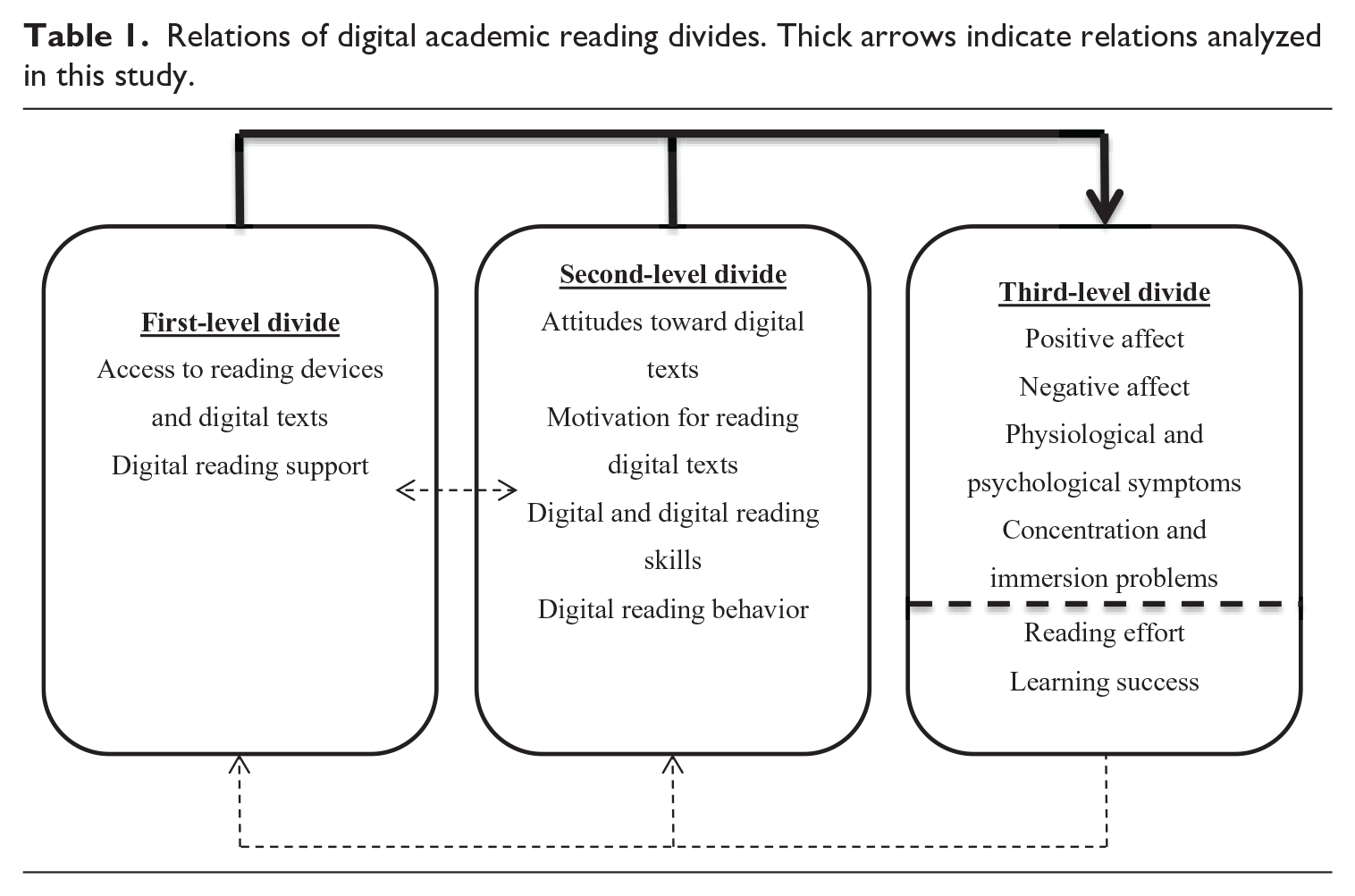
Early digital divide research focused on technical access to the Internet and its effects on income, education level, and political participation. In the past decade, however, the field has gradually become more complex and more detailed. Thus, the current definition of digital divides is associated more with digital technologies than with the Internet, besides accentuating usage inequality more prominently than previously (Scheerder et al., 2017: 2). Today’s concepts, methods, and criteria of digital inequality research are connected to social inequalities, as mirrored by digital inequalities (Stiakakis et al., 2009: 44). Most recently, Van Dijk (2020) established a three-level framework for analyzing digital divides (pp. 7–14):
(1) First-level digital divides result from social inequalities impacting technical access to digital technologies and media. Research on this level zooms in on the material requirements of adopting digital information, and investigates whether and how access inequalities affect societies, organizations, or individuals by comparing digital participation possibilities. Analysis on this level therefore focuses on which technologies are used in which spatial contexts (physical access), which technical equipment and software are available (material access), and which digital information is accessible (conditional access). Unequal technical access relates to unequal usage and effects by primarily impacting technology usage and the quality of digital information.
(2) Second-level digital divides result from social inequalities impacting the adoption of digital technologies and media, and thereby create or reinforce these divides. Adoption inequalities are not based on individual preferences, but on the structural aspects of sociocultural environments (Büchi et al., 2016). Structural aspects materialize through different attitudes toward digital technologies, diverse user motivations, differing digital skills, and varied usage behavior. Unequal adoption relates to technical access and impacts the potential benefits of using digital technologies and media.
(3) Third-level digital divides exceed access and adoption inequalities by addressing their effects (Van Deursen, 2015). Research on this level describes digital inequalities by analyzing outcomes such as education, economics, or social inclusion. Furthermore, research correlates types of use with the human benefits of using digital technologies and media. At the same time, outcome inequalities are said to impact first- and second-level digital divides.
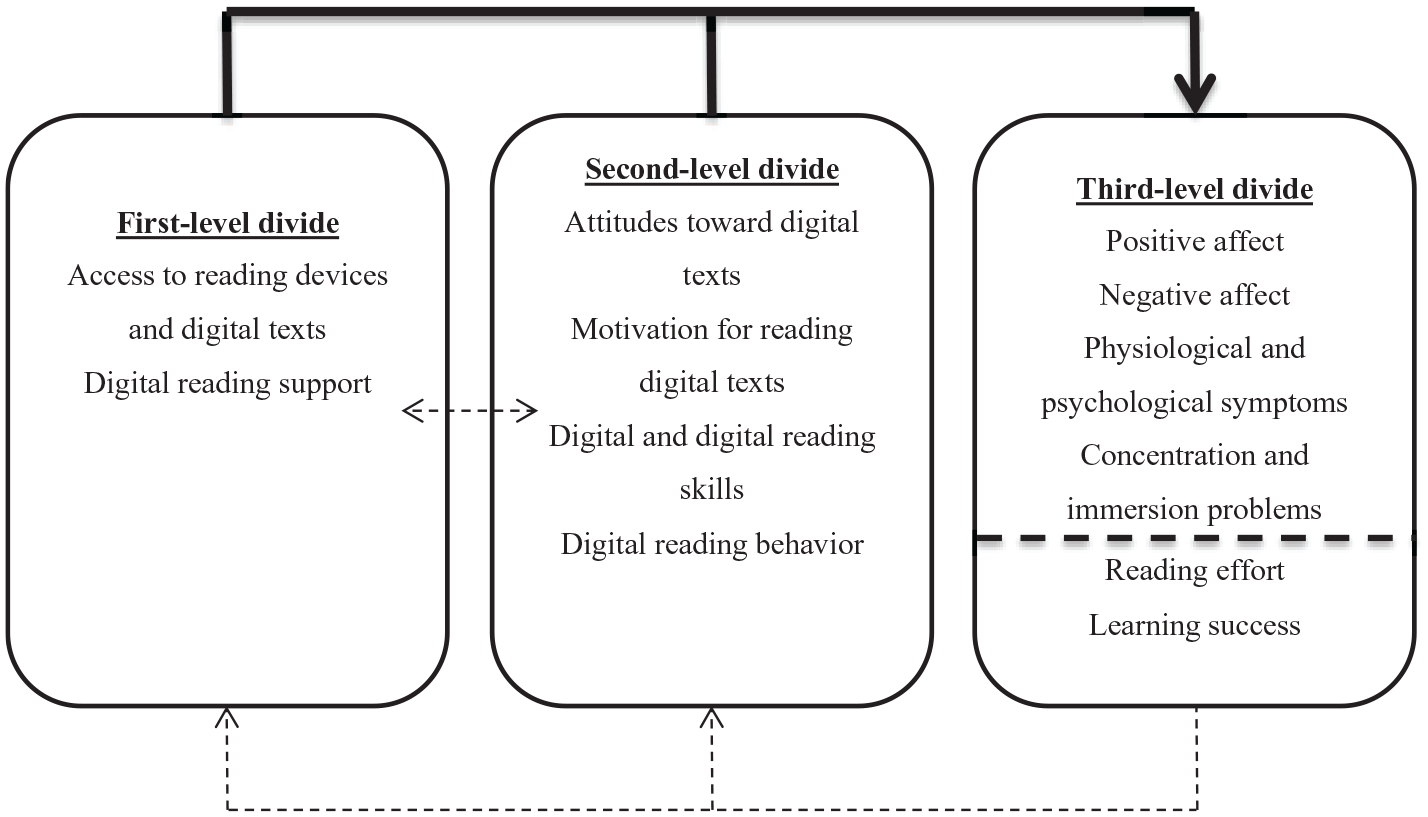
Our study adapts Van Dijk’s (2020) framework to digital academic reading (see Table 1) by analyzing outcome inequalities, which manifest in positive and negative affect, physical and psychological response, as well as concentration and immersion (Mariën and Prodnik, 2014: 38). As differing experiences, these outcome inequalities in turn create third-level digital divides by inequalities in perceived and evaluated academic reading effort and success (Stanley, 2003: 413). Outcomes offer deeper insights by being linked to both first- and second-level digital divides. These are defined by differences in digital text access, in attitudes toward digital texts, in motivations for digital reading, in digital (reading) skills, in reading behavior, and in institutional support for digital reading.
Relations of digital academic reading divides. Thick arrows indicate relations analyzed in this study.
(a) Access is defined as a prerequisite for digital academic reading participation. Given that digital texts are already established as teaching and learning material, not conditional access is the issue, but how the quality of content dissemination correlates with differences between reading devices and text formats. The question of access therefore touches on which reading and text technologies are available to students, whether students can use digital texts without operational or presentational problems, and whether reading devices and text formats adequately address learning requirements (Van Dijk, 2020: 48–49).
(b) Attitudes are individual feelings that make students embrace or shun digital texts and that determine their willingness to use such texts for learning purposes (Divya and Mohamed Haneefa, 2020: 1). They are shaped by complex networks of socialized digital reading experiences, by routinized digital reading practices, by digital media knowledge, by moral concepts of digitization, by observations on the individual or social effects of digital media, and by subcultural identities integrating digital texts into everyday life (Stanley, 2003). Expressed as beliefs about the usefulness of digital texts (i.e. ease of use or enjoyment), attitudes also include rational aspects (e.g. the gratification to be gained or the consequences to be expected) and emotional ones (e.g. fear, satisfaction, or amusement) (Antón et al., 2017). As subjective stances, attitudes often unconsciously determine cognitive and affective reactions to digital texts, reading performances, and experiences and often rest on stable positive or negative assessments of digital reading (Boakye et al., 2014: 179–181).
(c) Compared with attitudes, the motivation for digital academic reading is more consciously related to specific gratification (expected, experienced, or gained), and therefore is based on actual and previous evaluations of perception, usability, usage, and the effect of digital (academic) texts (Andrianatos, 2018: 38; Reisdorf and Groselj, 2017: 1158). Developing self-motivation for academic reading has proven pivotal not only to text comprehension in higher education (Boakye et al., 2014: 177), but also to increasing students’ engagement, enjoyment, and knowledge gain.
(d) Participating in digital academic reading also hinges on having the practical skills to deal with digital texts. As more elaborate concepts such as (digital) literacy or competency would have gone beyond our study design, we conceptualized the skills identified in digital divide research in terms of technology-based successful reader–text interaction (Van Dijk, 2020: 62f.): medium-related skills are operational skills (i.e. actions needed to operate a digital medium) and formal skills (i.e. the ability to handle the formal structure of a medium), which are needed to perform content-related skills. The latter are so-called twenty-first-century skills: technical and information skills, communication, collaboration, creativity, critical thinking, and problem-solving (Van Laar et al., 2017).
(e) Regarding digital academic reading behavior, we refer to digital reading practices as typical reading patterns for educational purposes. These patterns are defined by the text, its content, the reading device, the reader (including their knowledge, goals, and strategies), as well as the temporospatial reading environment (Kuhn, 2019: 22f.). In our study, we reduced the complexity of reading practices by students’ need to print digital texts for study purposes instead of using them in their original digital media environment. Printing digital texts implies varying digital access (insufficient perception and textual work), attitudes (disliking on-screen reading), motivation (unlikely to attain reading goals or negative on-screen reading experiences), and skills (unable to use digital texts properly).
(f) Social support (from families and peer groups) has been identified as important for adopting digital technologies and media, as well as for learning about the potential benefits of such technologies (Courtois and Verdegem, 2016: 1512). Therefore, digital academic reading attitudes, motivation, skills, and behavior are likely also influenced by institutional support. Technical support is important, of course. But to overcome digital reading deficiencies, students benefit even more from support in developing their media and reading skills, as well as from basic didactic advice on self-studying based on both reading support and “moral support” (Wilmers et al., 2020). In turn, support potentially affects digital text access, attitudes toward digitals texts, digital (reading) skills, and digital academic reading behavior.
Method
With most higher education institutions closed due to the COVID-19 pandemic, digital texts in 2020 became more important than ever before as teaching and learning material. We used this unique opportunity and composed an explorative survey to map the state of digital reading in higher education and to identify needs for action. We conducted our survey as a standardized online questionnaire aimed at measuring various technical and organizational aspects of digital reading, digital reading behavior, digital reading experiences, and learning success via digital reading. We used custom-designed scales with partially added open-ended questions. The fully anonymized questionnaire and data evaluation were classified as standard research which adheres to the ethical guidelines by the Institutional Review Board of the Department of Communication, University Vienna. Before data collection, the questionnaire was pretested on 183 participants.
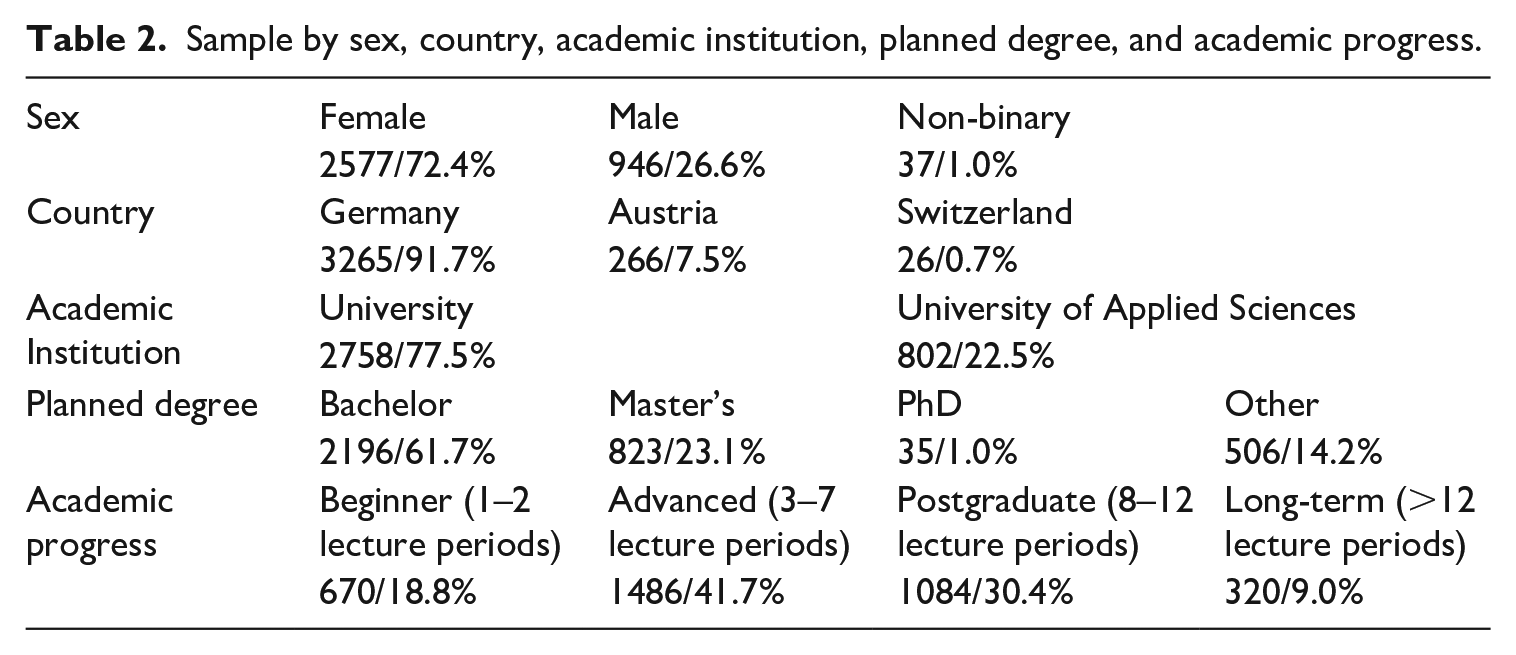
In order to ensure a cross-section of students, between spring and summer 2020, all universities in Germany, Austria, and Switzerland with over 1000 students were contacted and asked to distribute the questionnaire regardless of discipline or program. The participating 92 universities and applied universities controlled the dissemination of the questionnaire at their own discretion, creating a convenience sample without specified response rate. The adjusted sample of returned questionnaires comprises 3560 students and is differentiated as shown in Table 2.
Sample by sex, country, academic institution, planned degree, and academic progress.
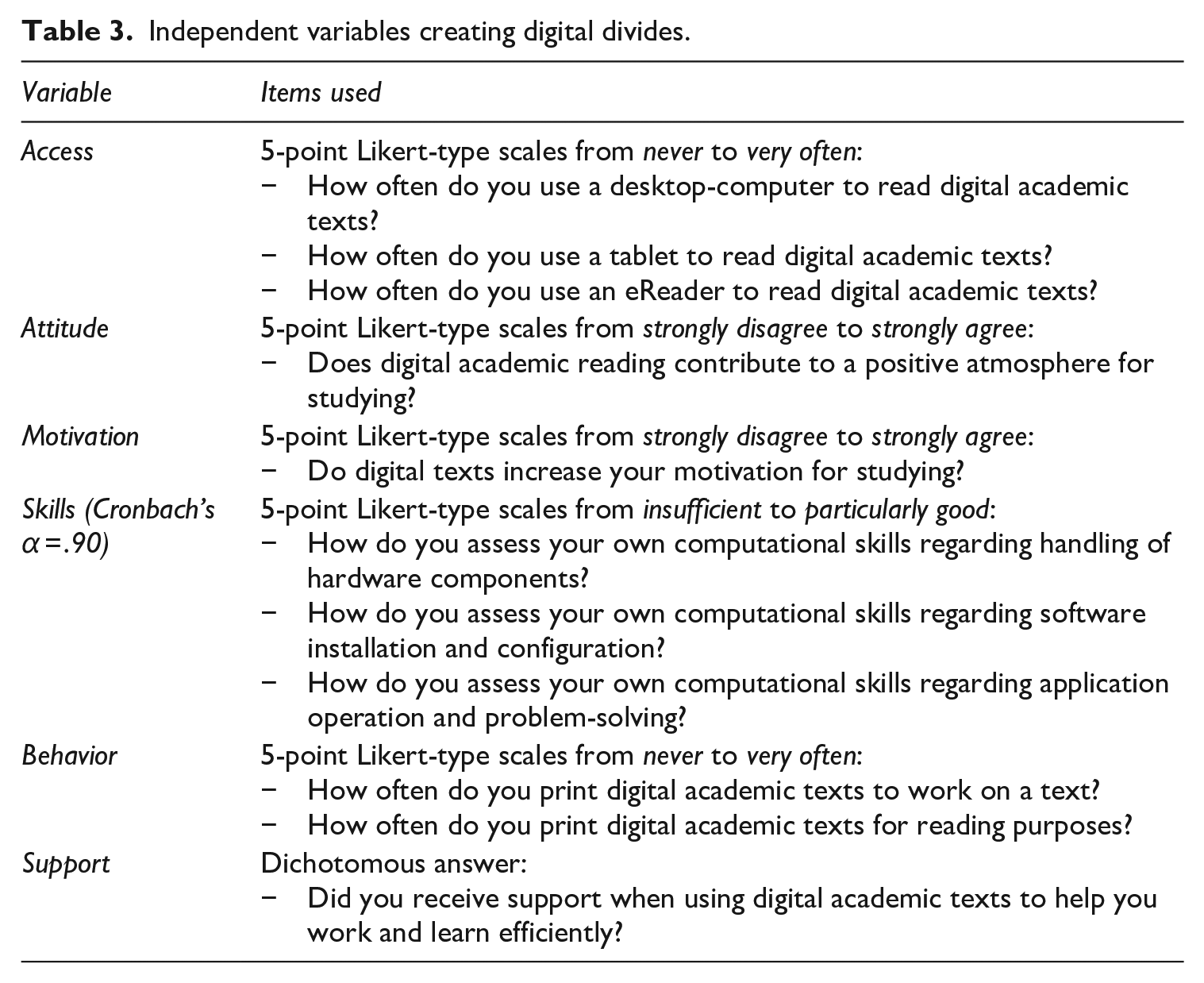
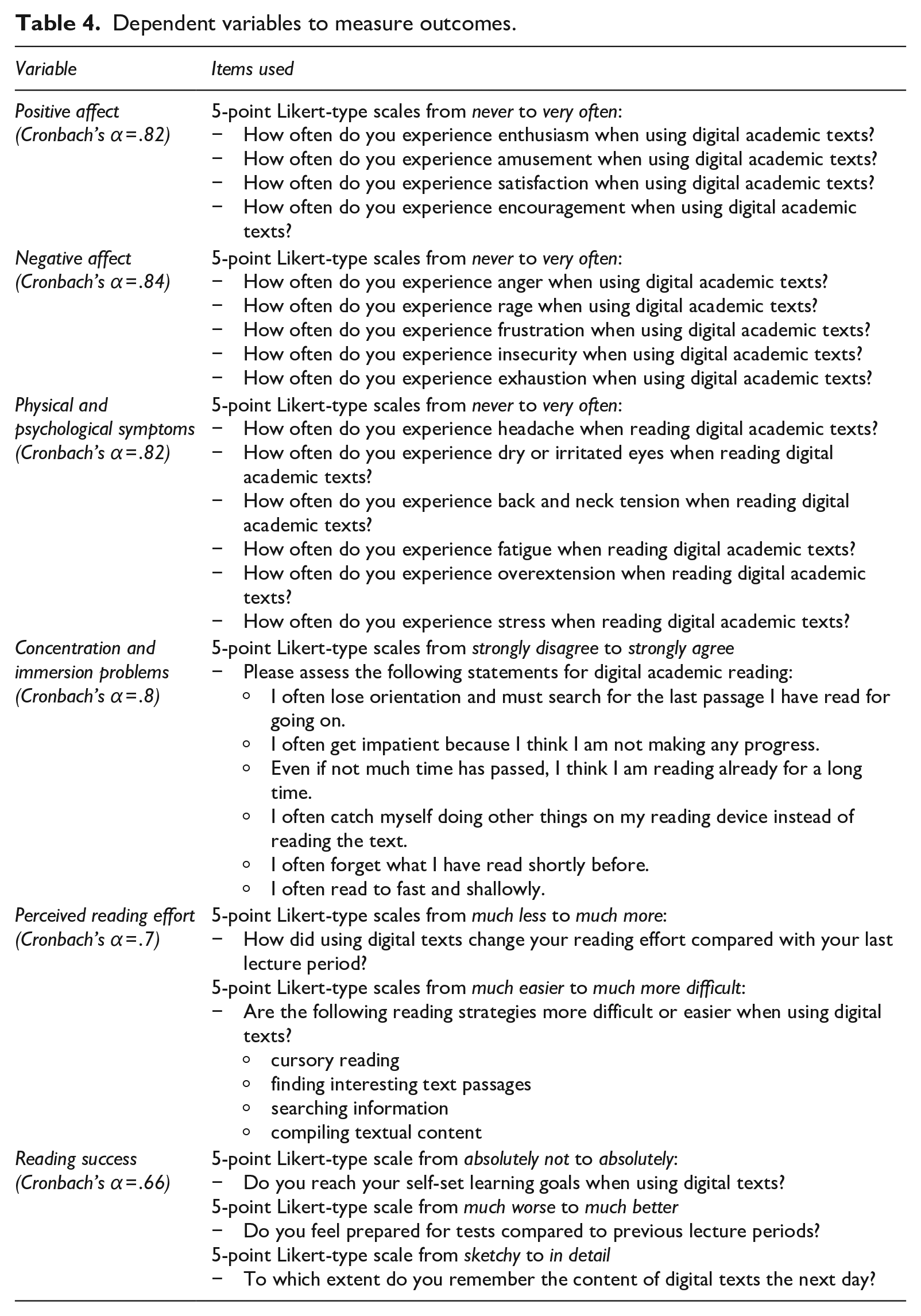
To measure the dependent and independent variables of digital academic reading divides, we used 40 items of the questionnaire as shown in Tables 3 and 4.
Independent variables creating digital divides.
Dependent variables to measure outcomes.
Analysis
We utilized multiple linear regression analyses for each dimension as an indication of digital reading inequalities. None of the correlations among the independent variables exceeded r = .|58,| while the largest variance inflation factor (VIF) was VIF = 1.60, indicating that multicollinearity does not limit the regression model. All regression models were significant, most of them with a large adjusted R², except for the model with concentration/immersion-problems as the criterion variable, where the R² was medium. As control variables, we used gender, country, first language, duration of study, university type, and area of study. Furthermore, we conducted a k-means cluster analysis to identify correlations between all dimensions and to build comprehensible digital academic reader types. Because the digital divide literature research established four levels of development stages (Brandtzæg et al., 2011), we set the number of clusters to four (k = 4).
Results
Access to an additional reading device—whose advantages include display size (desktop-PC), display technology (E-reader), display rotation (tablet), operational controls (desktop-PC, tablet), textual working tools (tablet), or flexibility of reading practices (tablet, E-reader)—significantly affects digital reading experiences by increasing concentration and immersion. In addition, access slightly increases positive emotions. Options for using different digital reading devices also relate slightly to positive digital reading attitudes, improved digital skills, and adequate digital reading behavior.
The results confirm that attitudes toward digital academic texts impact outcomes most significantly and most strongly when digital reading serves learning purposes or course preparation. The more positive students’ attitudes are, the more likely positive emotions and perceived success in accomplishing self-set learning objectives occur. At the same time, positive attitudes reduce negative emotions as well as physical and psychological symptoms (e.g. headache, tension, irritated eyes, fatigue, overextension, and stress). Consequently, concentration and immersion problems during reading are less likely to occur, and thus reduce the perceived reading effort.
Positive attitudes also correlate with reading motivation, which is again positively linked to positive emotions. Digital reading motivation also reduces negative emotions, physical and psychological symptoms, perceived reading effort, as well as concentration and immersion problems. Hence, positive attitudes toward digital texts and intrinsic motivation for digital reading improve digital academic reading practices and perceived learning success.
Our results for self-assessed digital skills confirm significant, yet weak effects. Respondents’ perception of sufficient digital skills has a slightly positive influence on experiencing positive emotions when using digital texts while reducing negative emotions. When respondents rate their digital skills as sufficient, their physical and psychological symptoms, as well as their perceived reading effort, appear reduced. Concentration and immersion appear to be slightly increased when such respondents use digital texts. Experiencing digital skills as sufficient also increases the perception of attaining self-set learning goals and reading success.
Printing behavior revealed significant and consistent findings across the outcome variables: students favoring printing digital texts were also more likely to report physical and psychological symptoms due to digital reading. Accordingly, students tending to print digital texts reported less concentration, less immersion, less success, and more effort when using digital texts. This finding also concurs with greater negative affect toward digital reading, whereas the less strong, yet still significant positive relationship of printing with positive affect runs counter to our previous results.
Surprisingly, only slightly significant and weak effects were evident in students who received institutional support (e.g. guidance on reading, working, and learning efficiently and effectively with digital texts). Once more, our results are inconclusive, as receiving support slightly increases positive and negative emotions (Table 5).
Multiple linear regression analysis.
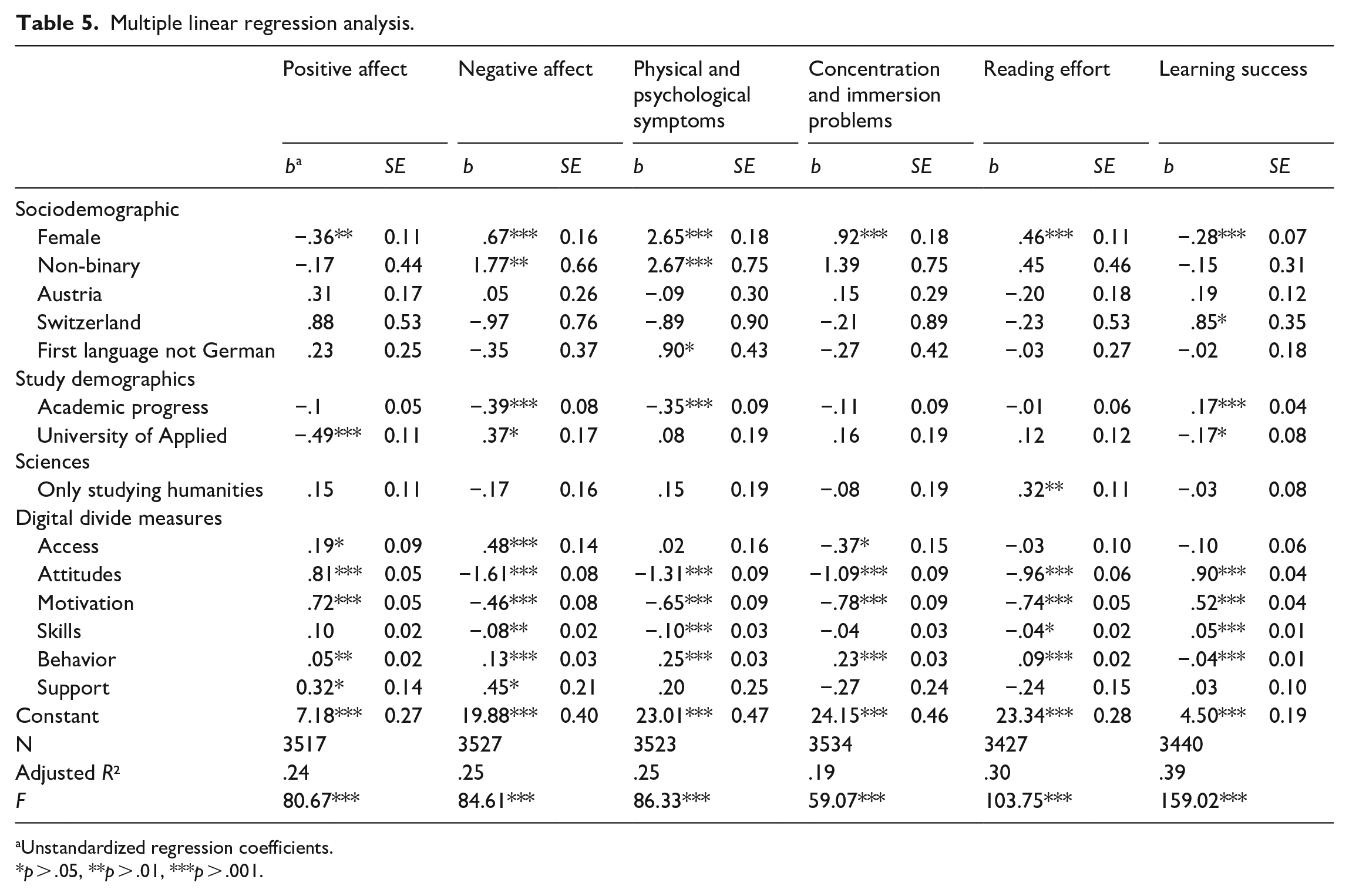
Unstandardized regression coefficients.
p > .05, **p > .01, ***p > .001.
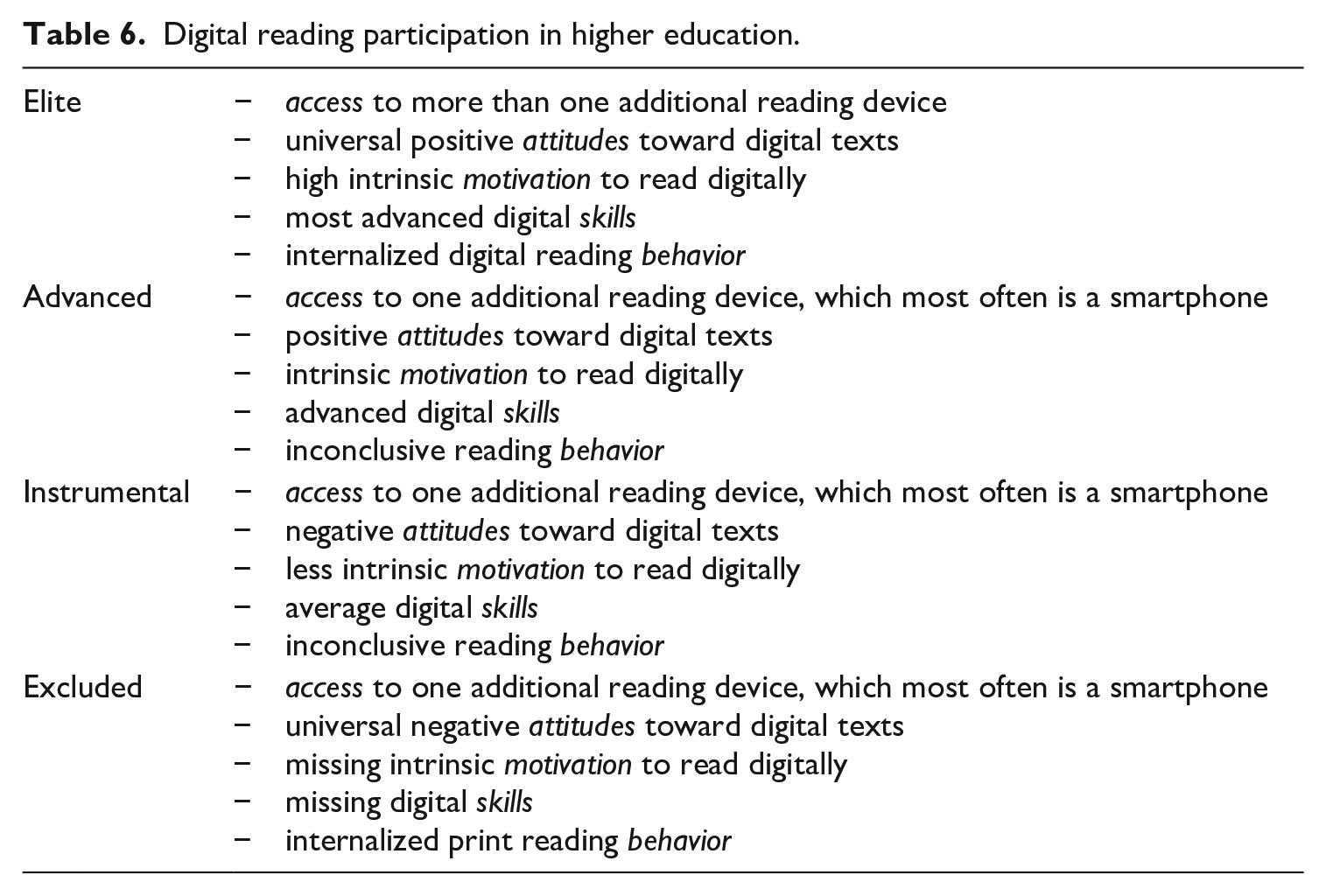
The cluster analysis of access, attitudes, motivation, skills, and behavior reveals a multidimensional continuum of digital academic reading participation, which can be summarized by four different clusters as shown in Table 6.
Digital reading participation in higher education.
Discussion
Reading inequalities related to first- and second-level digital divides
By defining academic and digital literacy as prerequisites for studying, universities often consider technical text access, sufficient (digital) reading skills, and adequate (digital) reading practices for learning to be students’ personal responsibility. Our results, however, indicate multidimensional inequalities and differences: students do not equally fulfill these requirements, thus preventing them from participating sufficiently in digital academic reading, and hence excluding them increasingly from courses, self-study, academic debate, and higher education success (Mariën and Prodnik, 2014: 38).
Unconstrained access to digital texts is crucial for students’ reading flow, textual immersion, and concentration, three factors mutually influencing perceived reading effort and learning success. But because reading devices possess multiple qualities (e.g. display technology, display size, display rotation, operational controls, and facilitating flexible reading practices), they have different advantages and disadvantages regarding readability, navigation, options for textual work, and autonomy of using digital texts, as preferred by diverse learning practices (Foasberg, 2014: 706–707; Hillesund, 2010; Park et al., 2015 Seet and Goh, 2012).
The most used reading device among university students is the notebook (Mizrachi, 2015: 304; confirmed by our data). It is usually complemented by a smartphone, as a highly situational reading device, when a notebook is neither suitable nor available (Rietvelt, 2020: 103, confirmed by our data). Our survey revealed, however, that using a different device (desktop-PC, tablet, E-reader), or having the option to use a different device, positively impacts academic reading experience, perceived reading effort, and learning success. When academic institutions tell students that digital reading devices are their personal responsibility, they contribute to unequal access: first, because students are differently informed about the advantages and disadvantages of reading devices; second, and more seriously, because many students have low incomes, or receive only limited support from their families. Both factors increase social inequality and privilege better-off students.
Our data confirm that attitudes toward digital reading and digital texts are the single most important factor for their acceptance, adoption, and dissemination as learning material (Bao, 2020: 144; Divya and Mohamed Haneefa, 2020; Reisdorf and Groselj, 2017: 1171). Attitudes basically determine students’ willingness to read digital academic texts, to experiment with digital reading applications, and to convert knowledge between analog and digital reading practices. As a rule, attitudes relate to socialization processes and to specific milieus. Therefore, they are closely linked to social and educational inequalities (e.g. in terms of class, gender, family background, and the associated sociocultural norms). Moreover, academic reading is informed by strong, historically grown, and persistent ideals of print as the most important medium, besides possessing the greatest information quality (Kuhn, 2013).
In this regard, rejecting digital reading partly stems from believing that digitization does not in itself provide greater educational benefits. This explains why even younger people’s enthusiasm about digital texts and reading often fails to translate into enjoying digital academic reading (Andrianatos, 2018: 30). Several studies have shown that many students prefer print formats in educational settings, as they promise better comprehension and greater knowledge gain (Mizrachi, 2015: 740). Our results reflect the conflicting values of printed reading and using digital technologies: attitudes toward digital academic reading range from enthusiasm to hesitation to outright hostility (Corlett-Rivera and Hackman, 2014: 276). Thus, students include pure book lovers, who prefer printed texts, pragmatic readers, who read whatever format suits their actual needs, and technophile readers, who prefer digital technologies whenever possible (Foasberg, 2014: 706).
Linked directly to attitudes, the motivation to engage in digital texts, to experiment with digital reading applications, and to acknowledge the gratification gained also correlates with general findings about extrinsic and intrinsic reading motivation (e.g. Troyer et al., 2018). As academic reading is often imposed (e.g. by tasks and tests set up by faculty and programs), digital reading potentially creates additional reading inequalities among students: having to use digital texts without other options likely leads many students to experience academic reading as enforced, time-consuming, and curtailing leisure activities. Furthermore, comprehension, feelings of success, and mental satisfaction may become less likely (Blackwell et al., 2014: 88). In contrast, those students who are intrinsically motivated to use digital technology, due to attitude or access, are less likely to feel anxious about not using digital texts effectively enough. They will more frequently read digital academic texts, experience improved digital reading skills, and receive positive feedback from faculty.
Furthermore, our data confirmed that academic participation via digital reading also depends on sufficient digital (reading) skills (Van Dijk, 2020: 77), whose existence or lack exacerbates existing social and educational inequalities (Van Dijk and Van Deursen, 2010). For instance, Robinson et al. (2015: 570) found that digital skill gaps affect many people, even those considered regular and habitual users of digital technologies and media. Accordingly, students’ digital reading skills depend largely on their socialization and previous education. Using digital texts seems to require low computational skills, at least at first glance. Nevertheless, these “tech” skills must be evaluated in conjunction with complex academic reading skills.
This kind of evaluation reveals that self-awareness of reading success related to digital reading practices and digital reading formats is often missing, also in relation to the operational skills required to adjust digital text presentation and to apply textual working tools. Even if students prefer digital texts on account of their ubiquitous and convenient access, whether their on-screen skills are adequate for learning purposes and whether they are properly gauging their digital reading skills remains questionable (Singer and Alexander, 2017: 165f.). These skills are also linked to higher education success because they are interrelated with key learning skills (e.g. self-organization, problem-solving, teamwork, and communication). Once more, differing skills and skills perception create inequalities regarding digital reading participation: if necessary, students must acquire operational, formal, and content-related digital skills to optimally benefit from digital reading. If they do not, as our data show, students suffer even more educational disadvantages than in the predigital age.
Access, attitudes, motivations, and skills impact academic reading behavior by transforming reading practices, processes, and effects due to varying interfaces and affordances such as multimodal perception or haptics (Mangen, 2016). One persistent practice among students, also evident in our data, is printing digital texts for reading and learning purposes. While causality cannot be assessed by direction, printing digital texts evidently reduces negative outcomes related to digital reading practices for many students (Bao, 2020). This option is especially important for students already lacking adequate reading skills, as digital texts do not reduce academic reading inequalities, but augment them (Van Deursen and Van Dijk, 2016: 22).
Hence, inequalities may result from lacking printing possibilities: digital academic texts often fall short of the requirements for high-quality transformation into printed formats, as they are provided by media-inadequate scans of printed texts or by ill-designed digital formats, which lack the necessary readability for fluent and deep reading. Also, specific features of digital text presentation (e.g. hyperlinks or multimedia applications) are no longer directly accessible when printed. Finally, students having to print texts to ensure academic participation also need access to printing equipment, which creates further costs (time and money). Thus, highlighting digital reading practices as ideal in higher education and ignoring demands for printed reading practices excludes students from preferred reading practices and reduces learning success.
Many German-speaking universities do not consider providing technical support or training students to use digital technologies to be an educational task (Pensel and Hofhues, 2017). It is therefore barely surprising that only few students in our survey received support—contrary to students’ expectations and requests. Many perceived their basic digital and reading skills as sufficient but wanted more support in using generic and specific reading software. Support requests correspond to the findings of studies by the Educause Center for Analysis and Research (ECAR), according to which roughly one-third of participants wished they had been better prepared for using institution-specific technology and basic software in order to ensure educational participation (Galanek et al., 2016: 21). Galanek et al. (2016) concluded that digital technologies can increase student engagement in fundamental academic practices such as reading and that educational institutions should provide adequate technical support and training. This support (which includes preparing students for using institution-specific technology) seems especially important because students often leave established social networks offering support with digital technologies and media—only to be left alone with higher education reading requirements until they have established new social support networks (Courtois and Verdegem, 2016).
Yet digital reading support may also have limitations because not all students benefit equally from support offerings: our inconclusive results for institutional support indicate the complexity of and the differences in academic prerequisites among university entrants. Obviously, digital reading support is particularly important in the first year of study, when no individual digital academic reading experiences exist, and when students’ conceptions of reading may still differ from academic requirements. Student effort (and hence success) in support programs may also vary because the factors associated with digital reading (i.e. access, attitude, motivation, skills, and behavior) are individually different. Finally, Wei et al. (2020: 181) noted that support is most effective if digital access and skills have already achieved a higher level. Consequently, the most excluded group of students (i.e. those with least access and the lowest skills) even fails to benefit from digital reading support.
Inequalities in higher education opportunities
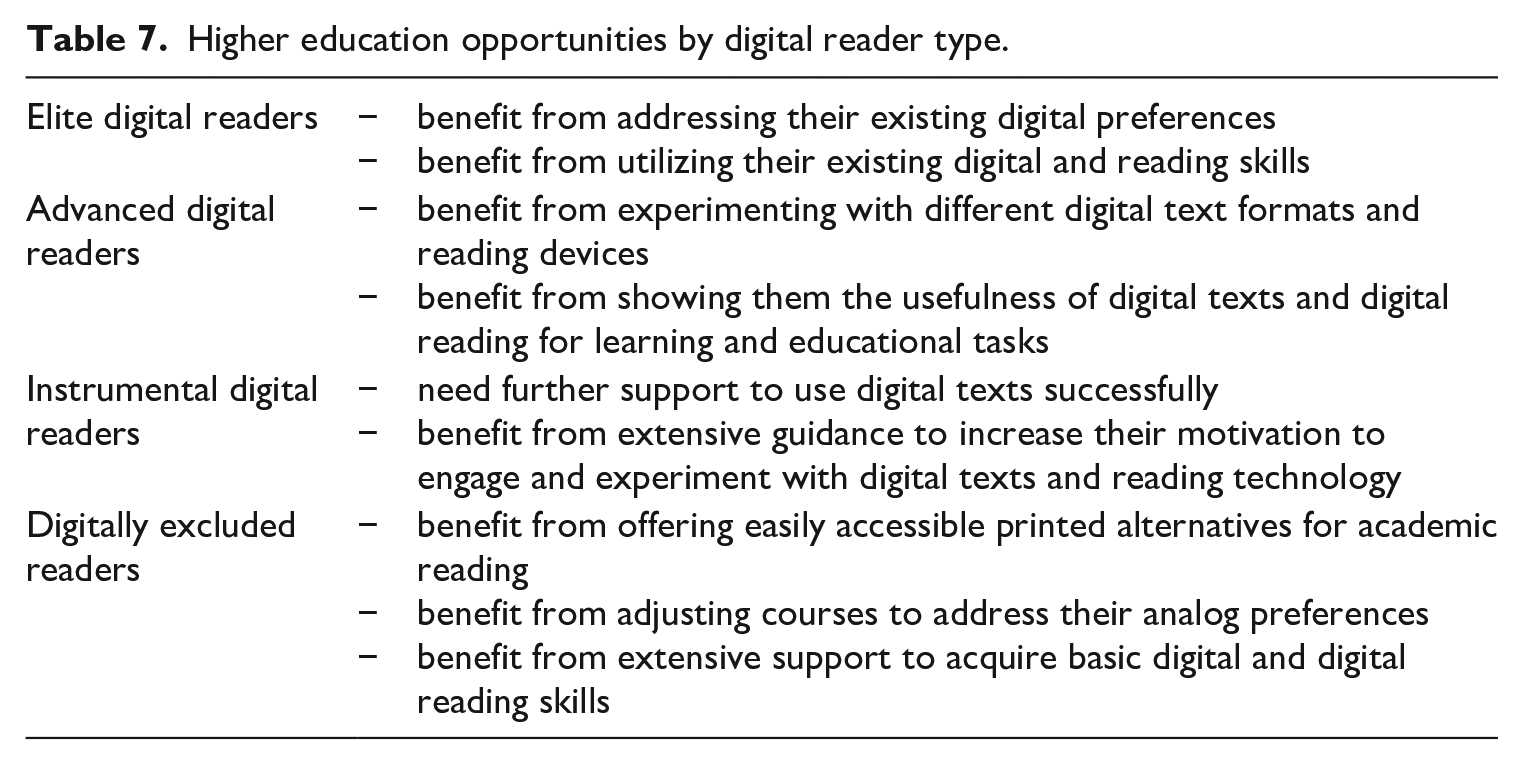
While a more detailed typology would need to be grounded in qualitative data, the four identified clusters of digital reading participation in our data indicate four digital reader types along which higher education students differ in terms of higher education opportunities (summarized in Table 7).
Higher education opportunities by digital reader type.
(1) The digital participation “elite” among students has access to multiple digital reading devices and supplemental technologies for academic reading. Their attitudes toward digital texts and digital technologies are largely positive, which reduces barriers to successful adoption. They are intrinsically motivated to read digitally and use digital texts autonomously and proactively. These fully included students acquire the necessary digital skills and develop adequate digital reading behavior before entering university, and thus can easily integrate digital reading into their academic practices. These students benefit from further digitization in higher education by strengthening their existing preferences and by utilizing their current skills, and thereby also profit from merging academic requirements and digital possibilities. Given that these students also tend to possess the most advanced reading skills, the digitization of academic reading practices offers this group considerably better higher education opportunities.
(2) Advanced digital readers, who have access to a laptop and a smartphone as digital reading devices, have already developed different digital practices and have positive attitudes for further integrating digital technologies, provided they experience these as beneficial for specific tasks. Hence, these students often regard digital texts and textual working technologies as an opportunity and are intrinsically motivated to experiment with digital reading and learning. They also consider which media formats are beneficial in specific academic situations and use digital formats accordingly as well as printing digital texts (behavior) while steadily increasing their digital reading skills. Therefore, they benefit from experiencing the usefulness of digital texts and digital reading in educational tasks. Their higher education opportunities are increased by digitization of academic texts and reading, if their usefulness becomes apparent.
(3) The group of instrumental digital readers consists of students who participate instrumentally in digital academic reading and access digital texts by notebook and smartphone. They accept the necessity of engaging with digital texts in higher education notwithstanding negative attitudes. Because they participate in digital reading only out of necessity, these students are often not motivated to increase their digital reading skills or to experiment with digital texts to gain additional educational value. And because they do not automatically accept digital texts as reading and learning material, they invest additional time and effort searching for alternative ways of accessing information (behavior). These students as a rule do not consciously consider the benefits and risks, and therefore are often unable to benefit from digital technologies and digital texts. Their higher education opportunities are decreased by further digitization of academic reading unless extensive support and guidance is provided.
(4) Digitally excluded students access digital texts only with a laptop or smartphone, reject digital texts and digital reading practices by negative attitudes, and only participate when necessary. They switch to printed texts whenever possible (behavior). Furthermore, their missing skills characterize digital reading as too demanding and they therefore develop no intrinsic motivation to do so. If left unassisted, this group often feels unable to cope with tasks associated with digital texts. Consequently, they use digital texts and supplemental technologies for academic reading only if required and solely to (passively) access information, to fulfill basic communication needs, and to perform extrinsically motivated coursework. Their higher education opportunities are decreased extensively by further digitization of academic texts and reading, which can only be slightly improved by offering accessible printed alternatives, adjusting courses to analog preferences, and extensive support.
Conclusion
The ongoing digitization of academic texts is increasing socialized reading inequalities and creating new divides in higher education opportunities. Our conclusion contrasts with current digital policies in academia, which claim that inequalities will disappear with the further development and wider diffusion of digital technologies (Riehm and Krings, 2006: 76f.). With the digitization of higher education becoming more widely debated, neither the wholesale denial of digital academic reading nor its glorification constitutes a constructive approach. Instead, it needs to be evaluated and integrated into curricula as a complex and diverse educational practice. At the same time, we need to acknowledge the interdependent inequalities (Van Deursen and Van Dijk, 2015: 387) caused by digital reading attitudes and motivations, digital media access, digital reading skills, and digital academic reading behavior.
Currently, these inequalities are still addressed primarily by improving access to digital texts via libraries and digital learning platforms. Access, however, does not guarantee digital success (Bonfadelli, 2002: 81; Brandtzæg et al., 2011: 124; Helsper and Van Deursen, 2015: 129). Because inequalities in attitudes, skills, and behavior correlate with social inequalities, higher education must provide digital reading support via academic institutions, disciplines, and faculty (Brandtzæg, 2010: 941). It must do so to change attitudes toward digital texts, and to motivate students to participate in digital academic reading, not only out of necessity (i.e. to fulfill requirements) but also to achieve functional value and educational success. Academic reading and digital media skills are necessary, and therefore need to be promoted, represented, and practiced in teaching. Students must be made aware of their own digital academic reading practices and be encouraged to reflect on the associated outcomes in terms of affects, physical and psychological symptoms, perceived reading effort, and learning success.
Limitations
This study has argued that differing digital academic reading skills create complex inequalities in higher education opportunities and success. We have exploratively established a multidimensional framework for exploring digital academic reading divides. However, we have merely outlined digital academic reading attitudes, motivation, access, skills, behavior, and support (particularly digital reading skills and reading behavior) and only considered a few variables (based on a secondary data analysis). We acknowledge that this preliminary investigation may fall short of robustly explaining the reasons and consequences involved. Hence, every inequality dimension and its relations need to be further investigated in separate and more detailed studies. And although we narrowed the focus from digital reading to digital academic reading, reading complexity remains simplified in our study, not least because several studies have described distinct reading practices in different academic disciplines (e.g. Shanahan et al., 2011). Hence, generic digital reader types merely illustrate that students benefit unequally from the digitization of academic texts and may also experience severe disadvantages as a result.
