



Abstract
The concept of ‘place-making’ emerged in media studies in 2015, but to date, there has been little theoretical engagement with the term. The primary research question this scoping review answers is how is ‘place-making’ defined across disciplines and which methodologies have been applied to creative and digital projects? A bibliometric analysis of 1974 publications from Web of Science (published in the last 30 years) were analysed to (1) define ‘place-making’ across disciplines, (2) model common themes in scholarship, (3) identify the methodologies used and (4) understand the impacts on citizens. The results show that ‘place-making’ first appeared in geography/urban studies in 1960s, was then adopted as ‘creative placemaking’ in the creative industries, and in the past 5 years (since 2015), it has appeared as ‘digital placemaking’ in media studies. It also highlighted areas (i.e. gaps) for future research into ‘creative placemaking’ and ‘digital place-making’ practices for cultural heritage sites.
Keywords
Introduction
The concept and practice of ‘digital place-making’ is emerging in creative tourism and the cultural heritage sector, but the term ‘place-making’ can be traced back to the 1960s when architects, urban planners and designers engaged in ‘place-making’ to rediscover and renew public spaces, modify the image of a city and develop tourism destinations (Paquin, 2019). Since the 1960s, ‘placemaking’ has been studied under different keywords with variant spellings, such as ‘cultural mapping’ (Duxbury et al., 2015), ‘creative placemaking’ and ‘digital placemaking’ by scholars from different disciplines. Lew (2017) drew attention to and contextualised the intended meanings behind the spelling variations for ‘place making’, ‘place-making’ and ‘placemaking’ in existing scholarly literature. The term ‘place-making’ is most frequently used in its contracted form when it is applied to ‘creative placemaking’ and ‘digital placemaking’ contexts, and therefore, the contracted spelling is used in this article when discussing existing literature. However, based on the results of the following scoping review, this article argues for a move towards the intended meaning of ‘place-making’ (hyphenated spelling) as a bottom-up or colaborative approach in future research on creative and digital applications. For this reason, the hyphenated ‘digital place-making’ is used throughout this article when referring to future scholarship in media studies and for its application to a creative narrative approach to making heritage places, which in turn also nods back to its original meaning for developing tourism destinations.
The recent appearance of the term ‘creative placemaking’ describes the use of arts, cultural and creative thinking to enhance the interest of a place by using digital technologies and narrative, such as through public art walks and mobile games (Ryan et al., 2016). Particularly in the past 5 years, there has been an emerging focus on more creative applications of ‘digital place-making’ that involve the combination of resources (tangible and intangible), meanings (emotions) and creativity to capture public attention through narratives (Richards and Duif, 2018). For example, the related concept of ‘cultural mapping’ is a methodological tool used in urban planning, cultural sustainability and community development to highlight local stories, practices relationships, memories and rituals that make places meaningful locations (Duxbury et al., 2015). ‘Digital placemaking’ practices in the heritage sector have focused on (1) engaging the public in ‘immersive’ experiences, (2) pedagogically teaching students about history and (3) creating scientific realism for rebuilding the past through historical digital simulations (Champion, 2015). These three thematic foci have largely come together in the form of interactive digital narratives (e.g. serious games, interactive documentaries, transmedia stories) to offer ‘edutainment’ experiences where digital users are educated in an entertaining manner to maintain their interest (Pan et al., 2008). Existing ‘edutainment’ research has often focused on the impact of digital media on user experiences rather than the narrative impact. These narrative-focused projects have led to the development of new ‘digital places’ that provide an interactive user experience. Since ‘place-making’ has recently expanded from geography and urban studies into the creative sectors, an accepted definition, a common theoretical understanding and an outline of the methodologies used for ‘digital placemaking’ are not yet well-established in the literature.
The following scoping review looks at the origin, transformation and adoption of the term ‘place-making’ across disciplines to empirically show how it has been applied in creative contexts and to develop digital narrative experiences targeted to the public’s interaction with heritage places. This review involved (1) examining the use of the term (as its variants) across disciplines, (2) modelling the common themes in scholarship across disciplines, (3) identifying the research methodologies used and (4) examining the impacts on citizens affected by place-making practices. The results provide a cross-disciplinary understanding of the term ‘place-making’ and highlight areas for development for future research (i.e. gaps in the existing literature) in its applications for ‘creative placemaking’ and ‘digital place making’.
Background on digital place-making and heritage narratives
Geographers specialise in the analysis of spatial organisation and have a clear understanding of its meaning and the methods suited to its analysis, but place has been given multiple meanings (Tuan, 1979: 387). Place is a unit that is linked to other units of a location, but place is unique in that it has a history and meaning, it ‘incarnates the experiences and aspirations of a people’ (Tuan, 1979: 387). Therefore, a ‘sense of place’ is a feeling or emotions tied to a unit of space that results from human experience and history, which is often communicated or remembered through stories. Augé (1995: 82) explains that ‘space’ is a more abstract than the term ‘place’, which refers to an event, myth or history. Therefore, places are made (i.e. the act of place-making) through social interactions. To date, the concepts of ‘place-making’, ‘creative placemaking’ and ‘digital place-making’ have been most frequently studied in urban studies/geography; creative tourism; and media studies contexts. Since the bibliometric results provide further details on these meanings, the background literature highlighted here draws attention to some key themes in current research (i.e. the inspiration behind this investigation) and demonstrates how narrative and storytelling techniques are beginning to emerge under the keywords ‘creative placemaking’ and ‘digital place-making’ in the past 5 years.
Place-making in urban environments – ‘Smart Cities’
The concept of ‘place-making’ has a long history of use in geography and urban design research, which provides foundational approaches for how space can be strategically changed. Although, largely focused on city planning and economic improvements, Thomas (2016) argues that urban design (i.e. place-making) should take a combined approach that includes citizen consultation and synthesises multiple points of views. The combination of media studies, technology and place also appears in the work of Foth (2009), who specialises in Urban Informatics, and explains how Smart Cities and creativity can support citizen participation; Halegoua (2020) who has highlighted the drawbacks and benefits to urban life of technology-focused approaches to developing Smart Cities; and De Waal (2013) who shows how technologies contribute to individualisation and liberalisation of urban society and allow citizens to feel a sense of ownership through engagement with urban design. Annually, scholars studying this intersection come together at the Media Architecture Biennale (2020), which has moved from a focus on integrating interactive digital displays into facades and urban screens towards multiple technologies and platforms in city design. The increase in popularity of ‘digital placemaking’ in diverse applications in media studies is also evidenced by the recent special issue of Convergence (Halegoua and Polson, 2021), which covers topics including mobile social media, gamification, location intelligence, tourism, migration and ‘placemaking experiences’ during COVID-19. The origins of the term ‘place-making’ and the later incorporation of digital media have largely focused on designing urban environments, citizen participation and its social impacts rather than on digital narrative applications or heritage places.
The ‘Narrative Turn’ in the heritage sector – emerging digital spaces and places
The so-called ‘narrative turn’ in the heritage sector was initiated by new media technologies. Galleries, libraries, archives and museums have developed new visitor experiences that are more creative; they involve more storytelling aspects and digital media, such as virtual reality, augmented reality, 360-degree photography and three-dimensional (3D) reconstructions of buildings or sites, for example (Kidd, 2016). These places of memory (i.e. memory institutions) are increasingly developing websites (‘digital spaces’), using digital installations within buildings like museums (‘digital places’), and location-based mobile applications with narratives about significant places of memory along heritage trails (Basaraba et al., 2019). These emerging digital spaces and places are attracting public visitors/tourists. Although out of scope for this paper, it is noted that location-based mobile storytelling has also grown exponentially within fictional narrative genres, such as in ‘hybrid cityscapes’ (De Souza e Silva, 2017), ‘ambient literature’ (Dovey et al., 2021; Hancox, 2021) and incorporating different facets of culture in future digital places in urban environments (Bristol+Bath Creative R+D, n.d.). With this new creative media experimentation in digital narrative experiences comes a lot of theoretical and practical questions that traverse different disciplines. Considering the new media storytelling approaches are being increasingly used in these different ‘immersive’ spaces and places, it calls attention to the added value that the domain knowledge of scholars in geography/urban studies, media studies, literary studies and heritage tourism studies can contribute.
A convergence of narrative theory and geography – the location-based story
Looking at the theory behind the convergence of narrative and space, Ryan et al. (2016: 212) investigated and elaborated, through a series of examples, how space is and can be narrated. The authors explain how the narrative space (i.e. the storyworld) contributes to the cognitive understanding of stories. In the context of travel literature and historic sites, they discuss the spatial and temporal distance between narrator and audience, which impacts story comprehension (Ryan et al., 2016). Conversely, Ryan et al. (2016) also explain how space plays a role in narratives by exemplifying how space is occupied by narratives in different media, such as museums and multimedia storytelling, and how immovable materials in the natural environment support narrative in physical spaces, such as through architecture or trees. This theoretical interaction between space and narrative is a move towards a ‘narrative geography’ (Ryan et al., 2016), which I argue could contribute to narrative-focused ‘digital place-making’ techniques in the future. Similarly, Tally (2011, 2015, 2016) has published multiple books on ‘literary cartography’, where he explores how space plays a role in postmodernity, postcolonialism and globalisation as well as in specific works of literature to provide a rich approach to spatial literary analysis, including fictional genres. These narrative-focused theoretical convergences increase our understanding of the relationships between stories and space. However, to date, there has yet to be a theoretical reflection on the methods of how digital narratives and creative approaches are being used to re-invent physical places (i.e. place-making), which is what this article investigates empirically.
Creative digital place-making: a transdisciplinary narrative approach going forward
As this brief background shows, media studies have been combined with geography and urban studies, heritage/memory institutions have begun developing place-based digital experiences and narrative scholars have outlined the theoretical relationship between space, place, ‘sense of place’ and meaning-making among readers/members of the public in the context of storytelling. As the keywords ‘creative placemaking’ and ‘digital place-making’ are appearing more frequently in the literature, the following study addresses how the concept has been used across disciplines to allow for a transdisciplinary sharing of theories and practices to progress the field and to benefit different publics, such as citizens and visitors/tourists who are affected by place-making at heritage places.
Methodology
The following scoping review across disciplines was based on a bibliometric analysis using the database, Web of Science (WoS). A scoping literature review is ‘concerned with discovering the breadth of studies, not the quality, and critical reviews should include studies of all quality levels to reveal the full picture’ (Xiao and Watson, 2019: 106). Therefore, it is clarified that this method was used to gain a ‘big picture’, cross-discipline understanding of the conceptual use of ‘place-making’ and its newly emergent variant spellings rather than an in-depth critical analysis of specific case studies. The eight steps to achieve this were (1) formulate the research problem; (2) develop and validate the review protocol; (3) search the literature; (4) screen for inclusion, publication language and date range of publication; (5) assess quality; (6) extract data; (7) analyse and synthesise data; and (8) report the findings (Xiao and Watson, 2019: 102).
The research problem, objective and questions
The research problem is that the term ‘place-making’ has been adopted in recent years by media scholars and the cross-disciplinary application of the concept has left a gap in understanding the theoretical context of the term and the types of methodologies applied, which can impact the successful future implementation of place-making processes. The primary research questions (i.e. research problem) this scoping review answered were how is ‘place-making’ defined across disciplines and which methodologies have been applied to digital and creative projects? This bibliometric review aims to inform the development of future projects so they can apply creative practices, with a narrative approach, to ‘digital place-making’ for cultural heritage sites and tourism purposes. The following subsequent research questions identify the specific qualities that were investigated (i.e. the review protocol) during the distant and close reading analyses.
Theoretical scoping of the domain
Which disciplines and journals are focusing on ‘place-making’?
Which places/regions are most common for ‘place-making’ activities?
Which years did ‘place-making’, ‘creative placemaking’ and ‘digital place-making’ terms appear in the literature?
How are the terms ‘placemaking’, ‘creative placemaking’ and ‘digital place-making’ defined?
Methodologies and media used
5. Which methodologies are used for ‘place-making’ activities?
6. Which media are most used for ‘place-making’ activities?
7. Are cases of disabilities considered in ‘digital place-making’ projects?
8. Have ‘digital place-making’ products included options for personalisation of information delivery (e.g. user model customisation, artificial intelligence)?
Creative/narrative approaches
9. If narrative is used, how is it employed (e.g. point of views, fiction/non-fiction, characters)?
10. Which narrative topics are most common (e.g. architecture, nature, history)?
11. Has the public been invited to participate? If yes, how (e.g. crowdsourcing)?
The literature screening process
As there are three concepts under investigation in this literature review, namely ‘place-making’, ‘creative placemaking’ and ‘digital placemaking’, the overarching technique of distant reading was used to first establish a bibliometric overview of the usage of these terms in the literature and to identify the common disciplines, journals and key authors publishing in the domain. Distant reading is a technique where computational tools can identify key areas for further investigation, known as close reading. Distant reading, Jänicke et al. (2015: 84) explains, helps generate an abstract view by visualising global features of multiple texts (rather than observing individual textual content towards), which for a scoping review is highly useful. Distant reading allowed for the identification of publications of interest for further close reading, which involves the ‘thorough interpretation of a text passage by the determination of central themes and the analysis of their development’ (Jänicke et al., 2015: 84). Close reading allowed for the manual coding of the creative and narrative qualities of interest as identified in the sub-questions above.
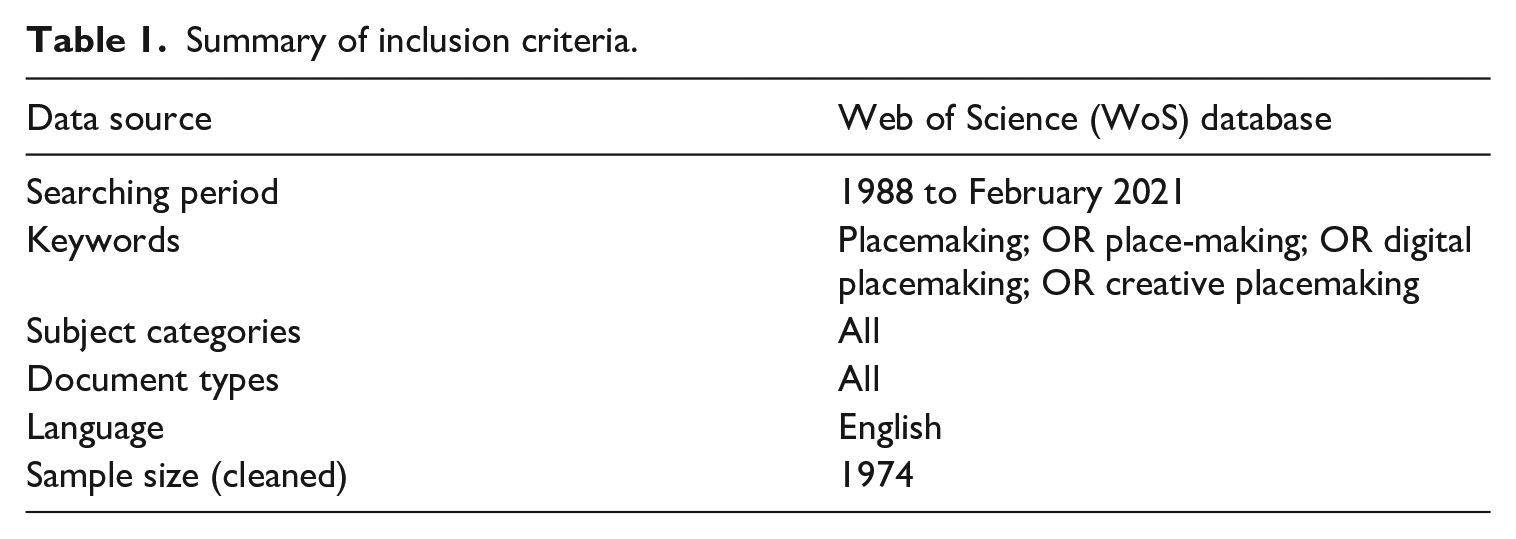
The literature screening process was conducted using the WoS database because it includes a collection of over 21,000 peer-reviewed, high-quality scholarly journals and conference proceedings published in the science, social sciences and humanities disciplines. Compared to other literature databases, it also allows for the easy export of citation data and the metadata of interest for this study including the ‘category’ (i.e. discipline tag), journal titles, authors, years and publication type (e.g. journal and book chapter). 1 Since the purpose of a scoping review is to map the entire domain, it ‘requires an exhaustive and comprehensive search of literature. Gray literature, such as reports, theses, and conference proceedings’ (Xiao and Watson, 2019: 105). Therefore, all English-language publications from the years available in the WoS database, which were from 1988 to 16 February 2021, were included in the screening process. The WoS database was searched with the following keywords: ‘placemaking’, ‘place-making’, ‘creative placemaking’ and ‘digital placemaking’. A search for ‘digital place-making’ and ‘creative place-making’ revealed that no new data entries were present beyond the results that were already collected with the other keywords. The data were exported from the WoS database as ‘Full records with citations’ in .txt files. The associated metadata were also manually copied and saved in .xls files for each keyword search.
The initial results of the keyword searches in WoS Core collection included 1547 entries for ‘place-making’, 478 entries for ‘placemaking’, 84 for ‘creative placemaking’ and 38 for ‘digital placemaking’. The search results already revealed that the term ‘place-making’ is more commonly used in the existing literature than ‘placemaking’. The combined results from each keyword search totalled 2144 entries; however, since the same keyword was used in combination with ‘digital’ and ‘creative’, there were duplicate entries, which necessitated a data cleaning process. The types of publications included in this dataset (2144 including duplicates) were articles; biographical item; book chapter; book review; correction/retraction; early access; editorial material; meeting abstract; proceedings paper; review and reprints. However, 78% were journal articles and 11.6% were proceedings papers. To clean the dataset, the results were sorted alphabetically by the author(s)’ surnames considering that some authors have published multiple papers. The papers with the same author, title and publication year were removed as duplicates (total 170). The 1974 entries remaining were examined to gain a bibliometric overview of how the definition and techniques associated with the concept of ‘place-making’ appear in this sample.
Software used for distant reading
The extracted data from WoS (.txt files) were analysed with the aid of computational software namely, VOSviewer – a visualisation tool that shows bibliometric network connections, such as the prominence of journals and keywords (Visser et al., 2021). Ding and Yang (2020) used VOSviewer in their bibliometric analysis of ‘platform research’ across management, business and economics disciplines. Their structure of reporting results was replicated in this study since VOSviewer produces the same categories of visualisations, namely disciplines, journals, frequently used words (i.e. topics) and key authors. The quantitative results of the bibliometric analysis were used to answer the theoretically based research questions of this scoping literature review, which involved a closer examination of the following data categories: publication year; publication type; subject area/disciplines; popular journals; key authors (based on cross-references in VOSviewer and number of citations); and countries. The assessment of the literature’s quality was not completed during this distant reading phase because WoS is a database of scientific publications, so the standard of peer review is assumed. A further quality assessment was conducted during the close reading of sampled papers, resulting in a reduced sample.
Selection criteria for further close reading
A review of the full sample’s paper titles was used to determine which papers had ‘place making’, ‘place-making’ or ‘placemaking’ in the title and would be included in the reduced sample for further close reading analysis. This reduced the sample size from 1976 to 1137 papers, which was still too large for a close reading and for coding the presence and absence of the qualities of interest in this investigation, which fell into the categories of theoretical, technical and creative as per the subsequent research questions. Thus, a further step was taken to determine which papers covered the more specific concepts of digital and creative placemaking. The paper titles were saved as a text file (.txt) and uploaded to Voyant Tools to identify the most frequently used words as per the ‘Document Terms’ tool (Sinclair and Rockwell, 2021). The keywords selected to provide a topical systematic selection for close reading, based on the paper titles, were ‘creative’ (60 occurrences), ‘tourism’ (49 occurrences), ‘heritage’ (45 occurrences), ‘cultural’ (39), ‘art’ (38), ‘media’ (34), ‘digital’ (27) and ‘mobile’ (24). The number of papers that contained these keywords in the titles was still too high for a close reading, thus papers that included the combined keywords of ‘creative placemaking’ (23 in total, but only 21 were accessible digitally); and papers containing the terms ‘digital’, ‘virtual’, ‘mobile’, ‘play’, 2 ‘locative’ and ‘location-based’ were selected because these terms are often used interchangeably and they encompass the meaning behind ‘digital placemaking’ (this totaled 43 papers, but only 37 were accessible digitally). The selected sample of ‘creative placemaking’ and ‘digital placemaking’ papers excluded full books and book reviews on these topics because they included too large of a sample to qualitatively code due to the number of individual chapters by different authors. This selected sample was used to provide an overview of existing techniques used in digital and creative placemaking while considering the role and impact on the public/citizens/community. Prior to conducting the close reading, a content analysis ‘coding sheet’ was developed to identify the specific qualities that were of interest to this investigation of the emerging use of ‘place-making’ in digital and creative contexts. The coding sheet was based on the subsequent research questions and the examples provided in Jänicke et al. (2015) and Revi et al. (2020) (see Supplemental Material).
Results and discussion
The prominence and expansion of ‘place-making’ across disciplines
In the sample of 1974 publications, the terms ‘place-making’/‘placemaking’ appeared in approximately 80 disciplinary categories in the WoS database and the average number of publications per category was 25. Looking at the categories with more than 25 publications, many could be grouped together with similar disciplines that commonly appear within university faculties (see Figure 1). Place-making appears most frequently in geo and spatial sciences (including the WoS categories of ‘area studies’, ‘regional urban planning’, ‘urban studies’, ‘architecture’); second in the historical and cultural disciplines (including ‘anthropology’, ‘archaeology’, ‘cultural studies’ and ‘history’); and finally in the social sciences (including ‘communication’, ‘humanities multidisciplinary’, ‘sociology’, ‘social science’ and ‘interdisciplinary’). Notably absent in these results are disciplines in the fine arts and arts with a combined total of 48 publications across the WoS categories of ‘art’, ‘dance’, ‘folklore’, ‘literature’ and ‘music’. This result also supports that ‘creative placemaking’ is a relatively new and emerging concept in the literature.
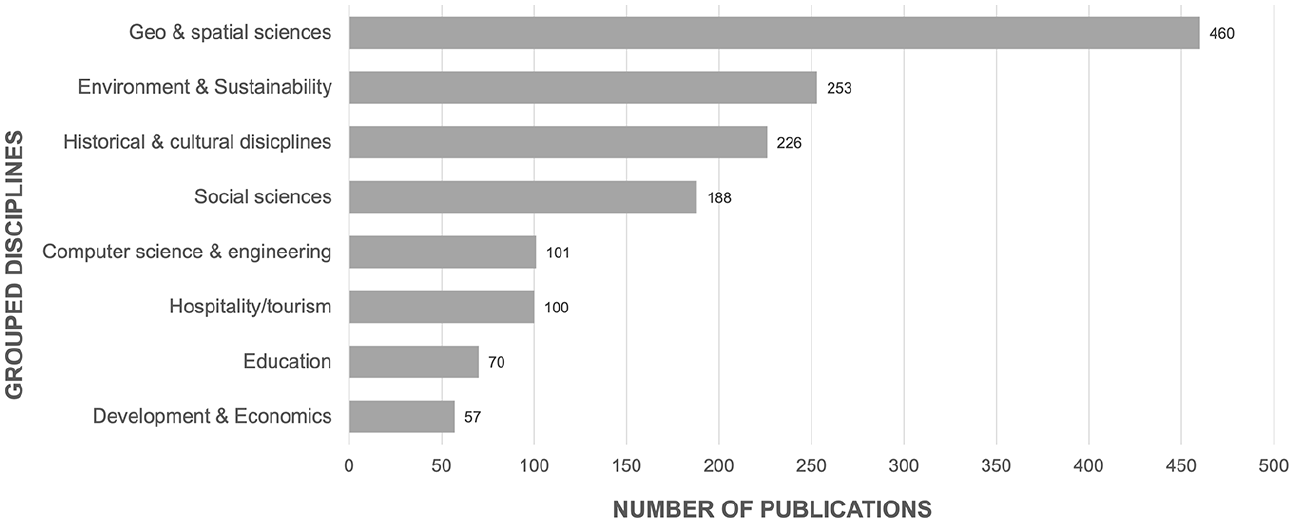
Grouped disciplines publishing on place-making via WoS.
The publication year was included in the WoS metadata for a total of 1880 publications. Prior to 2002, there were an average of only four publications on ‘place-making’ per year. Two significant rises occurred in 2005 and in 2015, which were investigated further during the close reading process. These results indicate that ‘place-making’ hit a tipping point and became a popular term in the literature in the last 5 years (2015–2020) with the annual number of publications reaching over 100.
Using the VOSviewer tool, the different keywords appearing in the title and abstracts of the individual publications revealed interesting insights into correlations between concepts and disciplines. The green coloured clusters in Figure 2 were centred around ‘politic and geography’; the blue cluster around ‘migration’; the red cluster around ‘planning and model’; and the yellow cluster around ‘technology’. These clusters demonstrate key topics that scholars publishing about ‘place-making’ are covering. A close reading showed that many journals published four papers on the topic of ‘place-making’ between 1988 and 2021. A threshold of five publications per journal narrowed down the list of journals to 73 and a total of 615 papers, considered to be the most frequent publishers on ‘place-making’. A further close reading of these 73 journals’ disciplinary categories shows that ‘place-making’ is most often used in ‘urban studies and planning’ and ‘geography’ (see Figure 3).
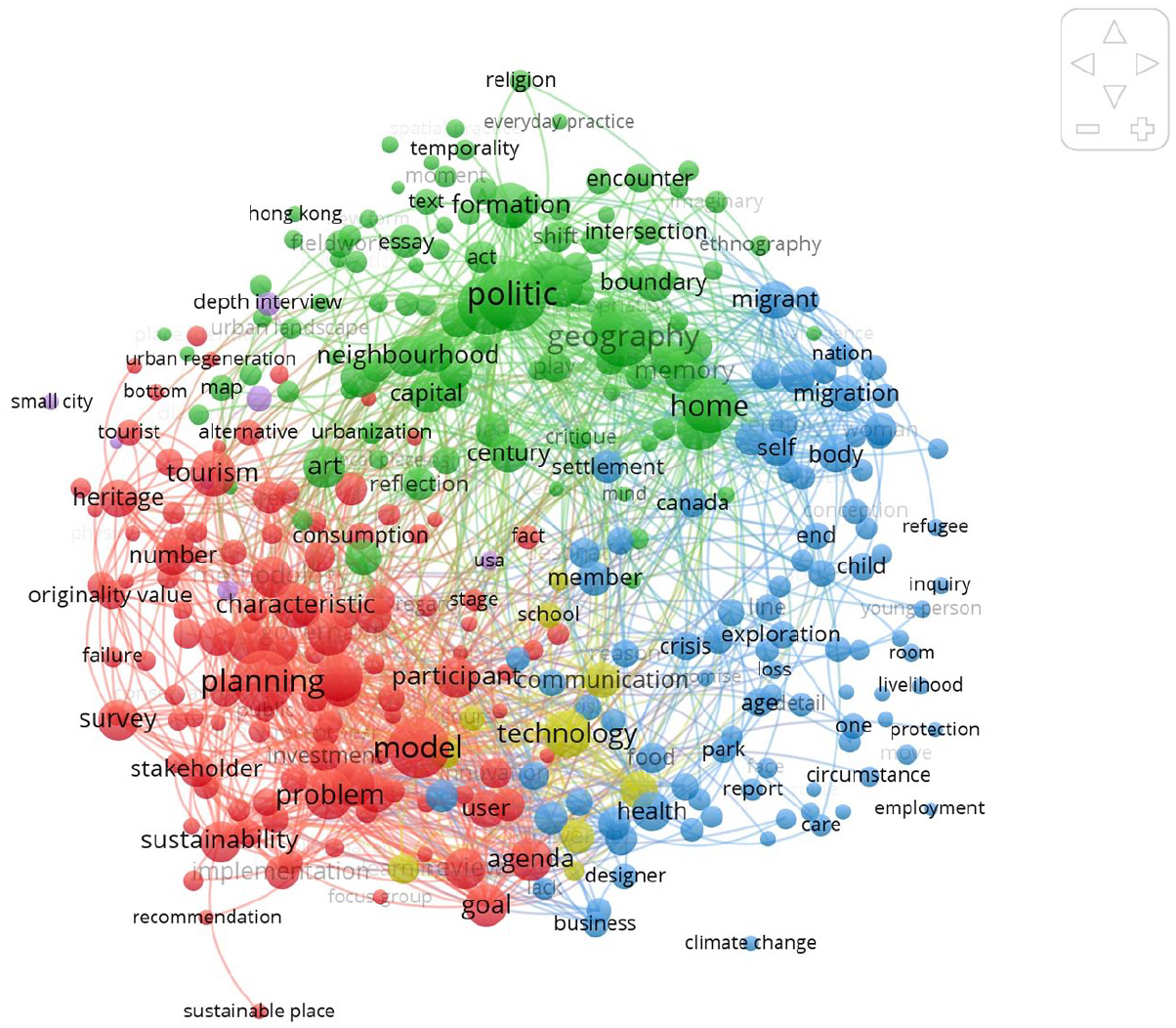
VOSviewer cluster results from full sample.
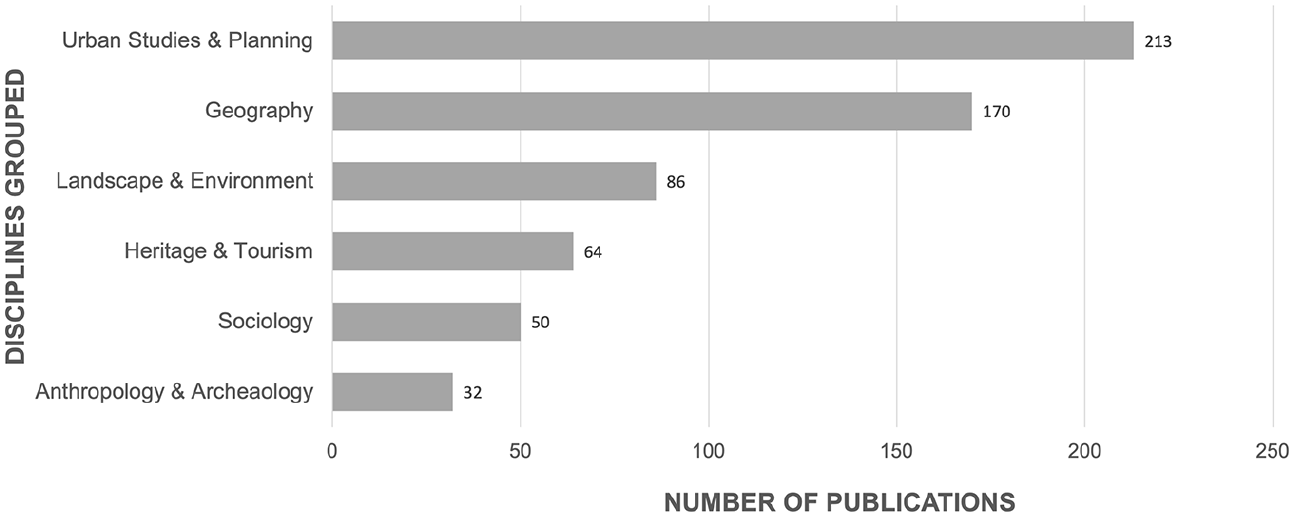
Top disciplines of journals publishing on place-making.
Looking closer at the publication in the key years of 2005 and 2015, the term ‘place-making’ was published in journals of geography up until 2005, when it then appeared in other disciplines in the Journal of Ethnic and Migration; Journal of Social Archaeology; Journal of Urban Technology; and Places–A Forum of Environmental Design. It first appeared in heritage studies journals in 2008, tourism journals in 2009 and the Mobile Media and Communication journal in 2017, which shows that it is only very recently began being applied in media and communications. One explanation for the later adoption of ‘place-making’ into media and communication studies is that Unicode for the World Wide Web became standardised in 2004/2005 and the ubiquity of location-based mobile services and game-like applications is also a more recent development (gaining popularity in the last 5–10 years). Location-based services laid the required technical foundation for new developments in digital content and narratives on mobile phones tagged to specific to places (i.e. digital place-making). For example, this technology now allows designers to re-construct historical places using digital media and geo-tag the content to the same location that is now occupied by the present-day natural or build environment(s).
Since the most frequently publishing journals did not include any fine arts disciplines, the full sample was reviewed to determine that the first year ‘place-making’ appeared in fine arts was in 2006 in Australiasian Drama Studies, which reiterates that the extension of the term outside of geography into creative applications occurred around 2005. VOSviewer also highlighted topical keywords that frequently appeared in the journals’ titles and abstracts. Zooming in on the keywords of particular interest to this article’s focus on the emergence of ‘place-making’ in creative, digital and heritage contexts were ‘heritage’ and ‘tourism’ which showed similar keyword connections and ‘creative placemaking’ (see Figure 4). A second topic of interest was ‘sense of place’ and ‘identity’, which were associated with terms including ‘public art’, ‘community’ and ‘migration’ (see Figure 5).
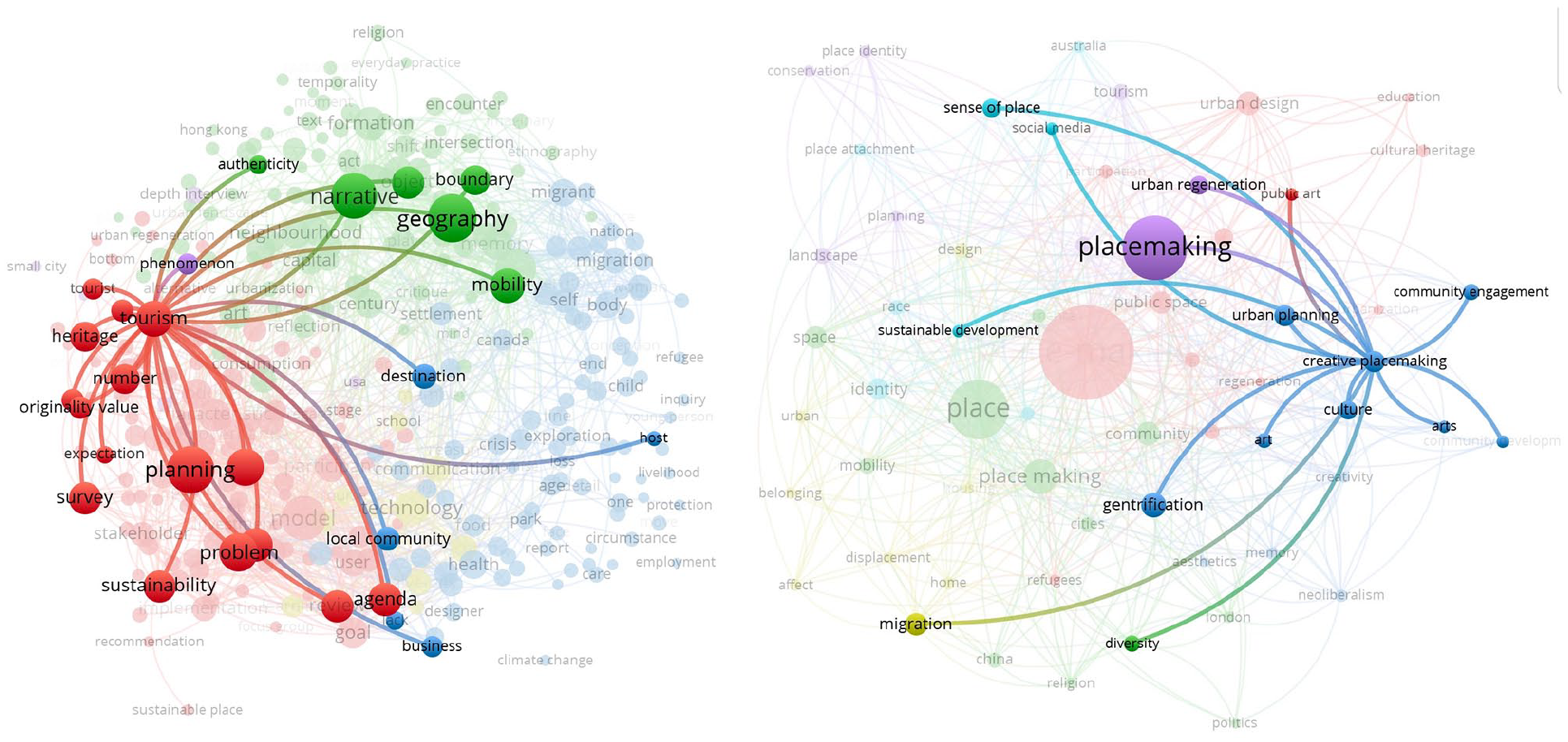
VOSviewer keywords – ‘Tourism’ (left) and ‘Creative placemaking’ (right).
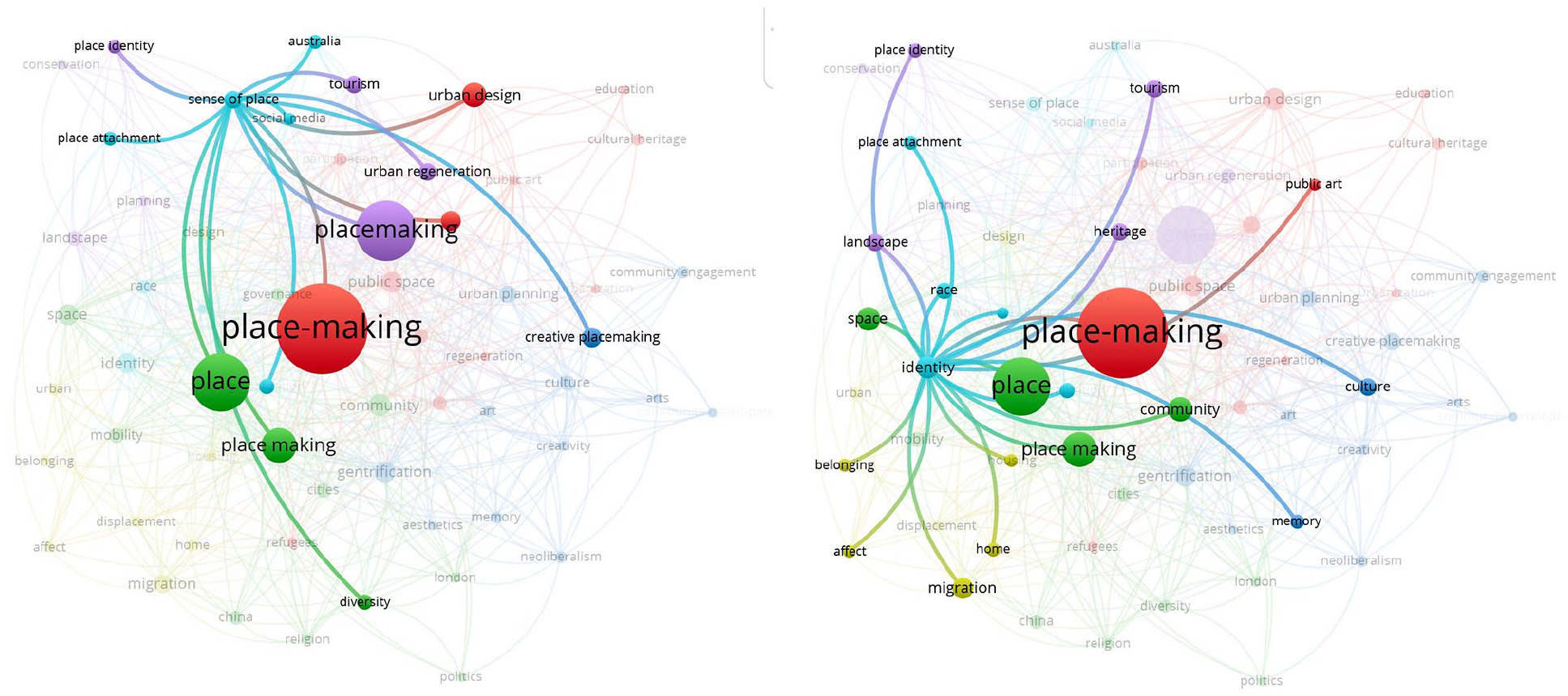
VOSviewer keywords – ‘Sense of Place’ (left) and ‘Identity’ (right).
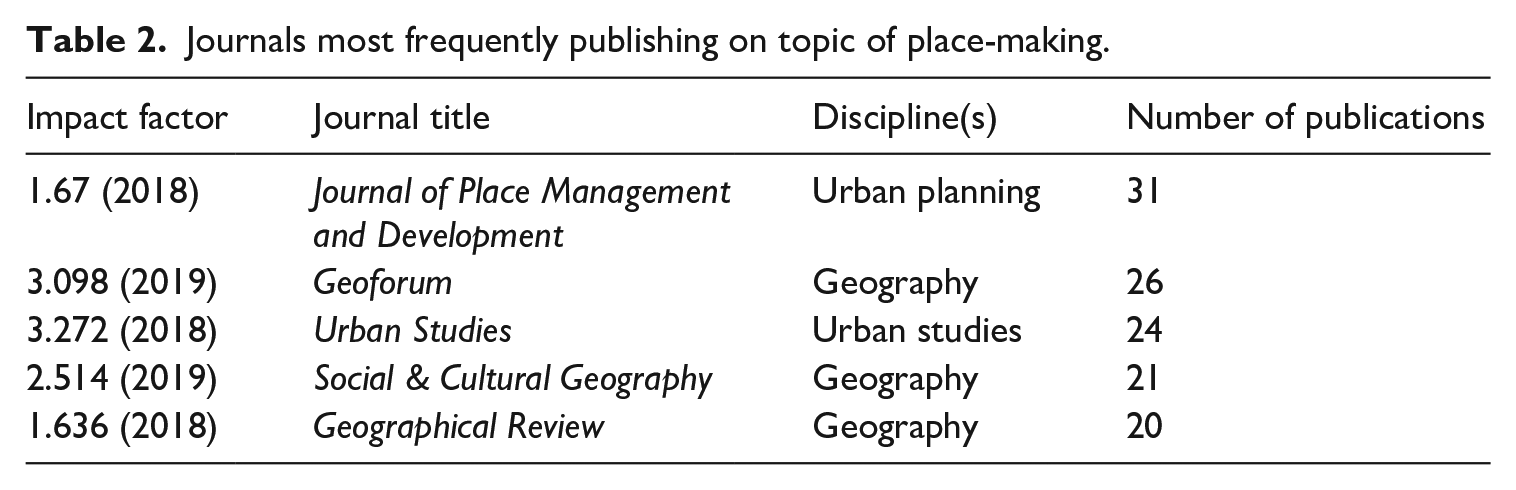
The five journals publishing most frequently on the topic of ‘place-making’ to date are in the disciplines of geography and urban studies/planning with a collective total of 122 papers published from 1988 to 2021 (see Table 2). The titles (and abstracts when necessary) for these five journals were reviewed through a close reading to determine the main topics in the place-making literature. Ten categories emerged based on a semantic analysis of the papers’ titles (see Figure 6). The most popular category (27% of the 122 papers) was ‘Specific Communities and Movement of People’, and it was also the most diverse with papers focusing on topics of migration; displacement; gentrification; race and nationality; lesbian, gay, bisexual, trans and queer + (LGBTQ+) communities; and senior citizens. Within the ‘Tourism and Heritage’ category, a few notable topics were a focus on food, religion and memories associated with historical places, such as the multifunctionality of heritage food (Littaye, 2016). Papers on ‘creative placemaking’ looked at the incorporation of stories, art and music into places.
Summary of inclusion criteria.
Journals most frequently publishing on topic of place-making.
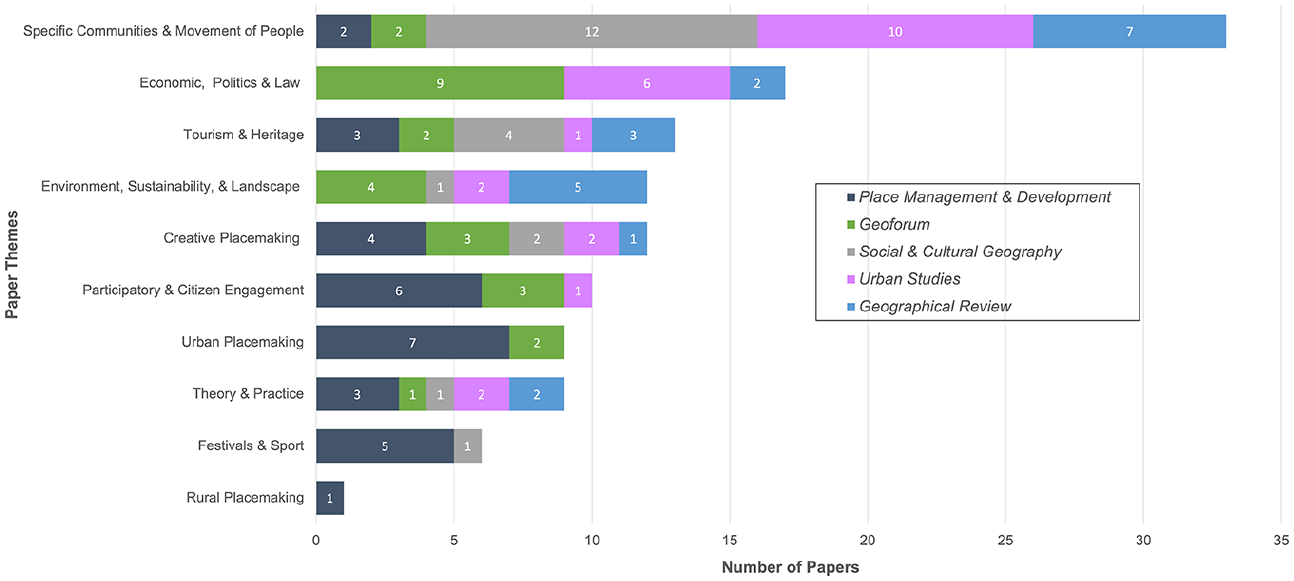
Common topics of the five journals publishing most frequently on place-making.
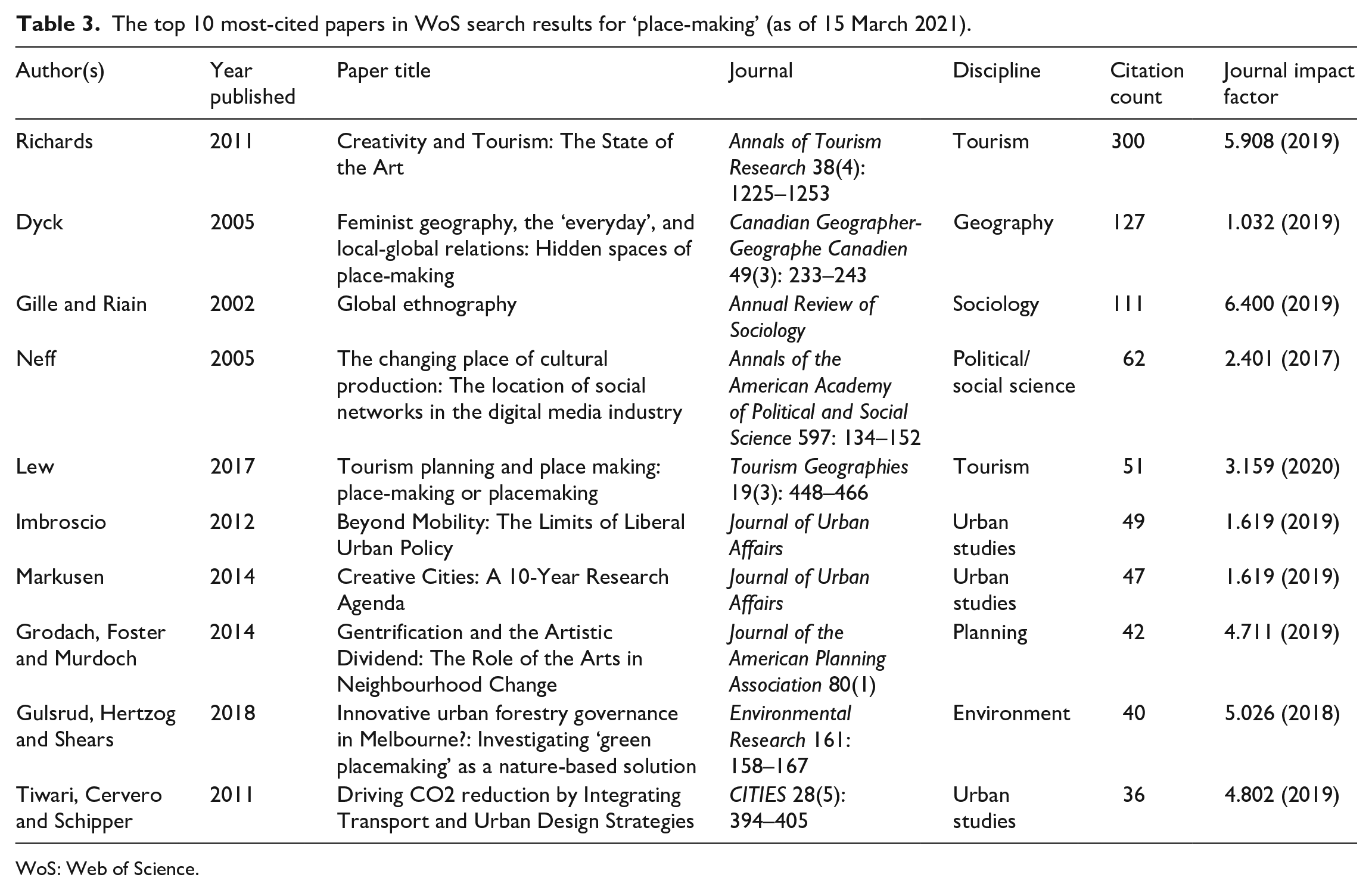
Key authors identified in the VOSviewer results were Yigitcanalr, Guaralda and Pancholi – who were linked through authorship and citations – and Marsden and Pierce who were unlinked outliers. The number of publications per author was gathered from the WoS metadata, which highlighted another key author namely, Cilliers who has more than five publications. The data suggest that these six authors, who are based in geography and urban studies, are the most prolific publishers on ‘place-making’. An analysis of the impact factors of the journals that the most prolific authors (Yigitcanalr, Guaralda and Pancholi) published in and the journals listed in Table 3 do not indicate a clear metric correlation with the number of citations. Yigitcanalr, Guaralda and Pancholi’s papers focused on best practices and specific case studies of urban placemaking in Australia, while the most-cited papers provide a more global review of the ‘state of the art’ and suggestions for ways forward.
The top 10 most-cited papers in WoS search results for ‘place-making’ (as of 15 March 2021).
WoS: Web of Science.
The bibliometric information was used to determine which journal papers to select for close reading. The first step was to identify the most-cited papers, considering the implication that they are influential to scholarship in the field (see Table 3). The results showed that the five most-cited papers fall within tourism and cultural studies disciplines and second within geography and urban studies. This again supports the finding that there appears to be two main disciplinary applications of the term ‘place-making’. Interestingly, the seminal papers – in terms of the number of citations – were published in 2005 and 2014, which correspond to the previously identified tipping points in ‘place-making’ literature (in Figure 7). The papers by Dyck (2005) and Neff (2005) both emphasise a shift towards global and digital perspectives, which could explain the increase in the number of publications seen to rise in 2007. The second peak in 2015 follows the highly cited papers by Markusen (2014) and Grodach et al. (2014). Although these quantitative results point to an increase in publications and coverage of ‘place-making’ in the literature, a close reading of these 10 papers (see Table 3) was done to provide more insight into their semantic impact on the field of study. A final observation of this list in Table 3 highlights that the most prolific authors writing on ‘place-making’ do not appear in the most-cited papers list.
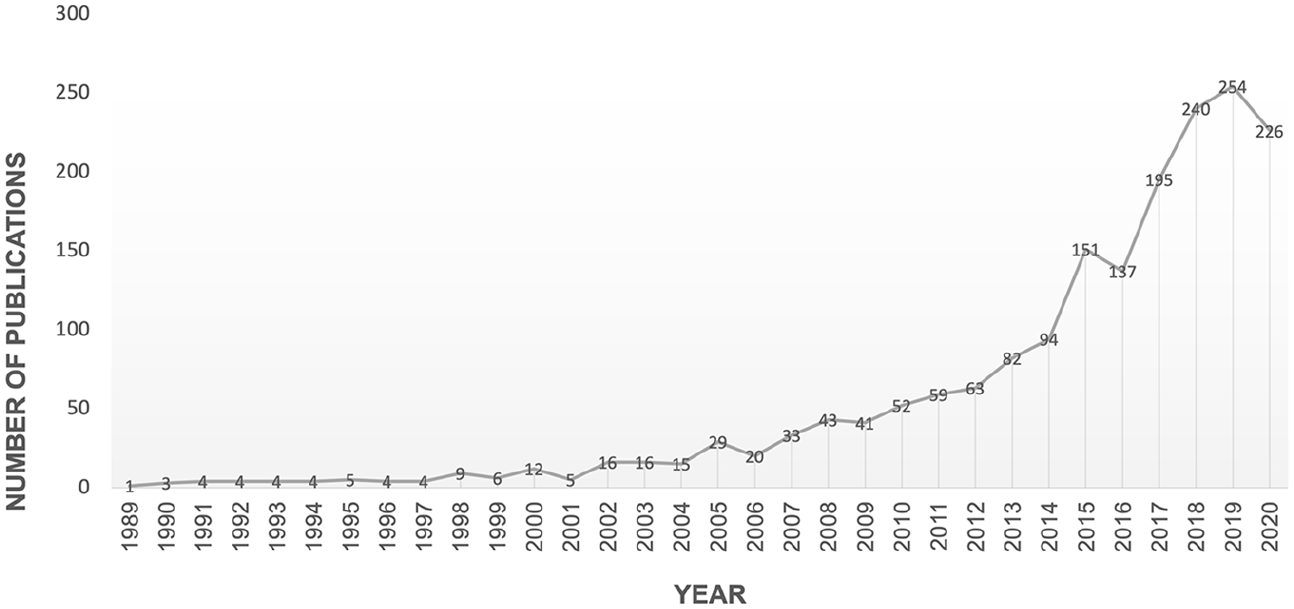
Number of publications per annum from 1988 to 2020.a
The origins and definition of place-making
The philosophical differentiation between ‘space’ and ‘place’
The close reading of papers written by the most frequently publishing authors on ‘place-making’ in this sample, Yigitcanalr, Panchoili and Guaralda – who are all from the same university (Queensland University of Technology, Australia) – revealed that they co-authored many of the papers. Therefore, they are collectively the most prolific because they are evidently a team of researchers working on ‘place-making’. These authors apply ‘place-making’ to knowledge and innovation spaces (KIS) in urban districts which aim to attract a talented and knowledgeable workforce (Pancholi et al., 2015). They define ‘place-making’ by referring to Lefebvre’s (1991), The Production of Space, in multiple papers as a ‘classic work’. Its classic status is reiterated by Pierce and Martin (2015) who state that Lefebvre’s concept of space, as a social product, has been used as a ‘framework guiding urban and political critique’ for anglophone geography. Pierce and Martin (2015: 1280) provide a brief, yet comprehensive overview of how Lefebvre’s concept of (social) space differs from its ‘operationalisation’ in more contemporary scholars in the context of placemaking. They note that there are ‘important but incomplete parallels between contemporary theories of place and Lefebvre’s 1970’s-era conceptualizations of space’ (Pierce and Martin, 2015: 1280). Lefebvre (1991) focused on a combined triadic understanding of space through the idea of ‘conceived space’, interpreted as physical and material place; the ‘perceived space’, measured through observation of the movement of people and objects; and the ‘directly lived space’, which involves inquiry into the experience and understandings of individuals (Pierce and Martin, 2015: 1293). Pierce and Martin (2015: 1280) explain that Lefebvre explored the materiality of space as an object, and that more recent ‘hybrid theories of place-making’ focus on diverse threads of place through ‘theorizations of relationality’. Geographers essentially used The Production of Space (Lefebvre, 1991) as a ‘roadmap’ to critique the spatialities of capitalism (Pierce and Martin, 2015: 1280). Lefebvre (1991) focused on the conceptualisation of space, but geographers moved away from his ontology towards examining space empirically (Pierce and Martin, 2015: 1286). As the approaches changed overtime, the word ‘place’ has persisted in the literature in contrast to the ‘more expansive conceptualization of space’, and ‘place’ has become associated with particularly local contexts, such as events, sites where people live, work and move (Pierce and Martin, 2015: 1287). Pierce and Martin (2015: 1288) note that there are many potential ontological dimensions of ‘place’, which geographers have since applied based on a variety of different aspects rather than considering it as a ‘coherent, unitary whole’ (Pierce and Martin, 2015: 1294). Thus, this highlights that the origins of ‘place-making’ can be traced to Lefebvre’s work where it was transformed from a more philosophical concept of space into practical applications in the analyses of regional places associated with economic impact when it came into common use by anglophone geographers, but it still leaves the question of how the concept is defined?
Defining ‘place-making’ in geography and urban studies
Specific definition of ‘place-making’ is clarified by Cilliers and Timmermans (2014) who discuss (1) the importance of public participation in urban planning and design and (2) how storytelling is being incorporated into urban spaces. Cilliers and Timmermans (2014: 413–414) clarify that place is an interpretation of geographical space that carries meaning and place-making can ‘be regarded as the process of transforming spaces into qualitative places by focusing on the social dimension of planning, linking meaning and function to the spaces’. To date, place-making has been understood as a process that makes places ‘liveable and meaningful’ and it involves both planners and the residents who are the users of the space to co-create meaning (Cilliers and Timmermans, 2014: 414). They argue that place-making is a ‘socially constructed process that is shaping cities largely through capital investment designs to generate economic growth and promote cultural tourism’ (Cilliers and Timmermans, 2014: 414). This definition of place-making notes a few important qualities namely, that (1) it is a social process, (2) has most often been applied in cities or urban places rather than rural or more remote locations (which presents a gap in the existing research) and (3) aims to have positive economic outcomes in the cultural tourism sector.
In terms of techniques of participatory ‘place-making’, Cilliers and Timmermans (2014: 419) recommend gaining willing members of the public (e.g. residents and users of the space) through on-site interventions. Noted challenges with participatory design include identifying relevant and diverse stakeholders from different sectors and interest fields and determining their level of participation (Cilliers and Timmermans, 2014: 419–420). Cilliers and Timmermans (2014: 427) discuss five methods for participatory ‘place-making’, four of which are ‘creative’. For example, the ‘meet my street’ method involves citizens filming portions of their street and photographing an empty space as a ‘creative technique’ to identify what is valuable and meaningful to them so that planners can then review the photos to determine the locals’ needs (Cilliers and Timmermans, 2014: 425). A point of contrast here between disciplines is that media scholars or creative professionals might question whether citizens’ use of film and photos to document a place is in fact ‘creative’ or consider it as a visual format of documenting space and a method of employing civic labour. The authors provide little commentary on the nature of this citizen documentation and do not discuss the local storytelling aspect. This raises a point for future scholarly engagement on how the more specific term of ‘creative placemaking’ is used in terms of further clarifying the role of public participation from a theoretical perspective before it is further applied by media scholars and creative industries. There could be a series of different definitions and levels of public participation and creative co-creation than that which is expressed in this case by Cilliers and Timmermans (2014) who write from the disciplinary perspective of urban planning.
The adoption of ‘place-making’ into other disciplines – identifying themes
The close reading of the top 10 seminal (i.e. most-cited) papers showed the expansion of the term and its influence into other disciplines with four main themes being focused on, namely (1) urban policy, (2) green placemaking, (3) creative cities and (4) creative tourism. Three of the 10 seminal papers did not define ‘place-making’, but instead focused on approaches to urban policy making (Gille and Riain, 2002; Imbroscio, 2012) and ‘home-making’ (Dyck, 2005). Gille and O’Riain (2002) propose a global approach to ethnography of place-making, which understands places not only as localised but also globalised with multiple external connections. Imbroscio (2012) argues that urban policy makers in the United States should shift their approach from a ‘mobility paradigm’ to a ‘placemaking paradigm’ that focuses on connecting the ‘urban poor’ to economic opportunities nearby, mitigating displacement and confronting racial inequalities. Dyck (2005) focused on women’s ‘hidden work’ (i.e. domestic care duties and cleaning) in the context of ‘place-making’ as a form of home-making. Her paper was the only one, in the most-cited list, that applied the concept of ‘place-making’ to an indoor space. Environmental or ‘green-placemaking’ in Australia was the theme of both Tiwari et al.’s (2011) and Gulsrud et al.’s (2018) papers. Tiwari et al. (2011) discuss different options for urban transportation, such as buses and light rail, to reduce CO2 emissions in Perth, Australia. Gulsrud et al. (2018: 154–165) detail how the City of Melbourne trained ‘citizen foresters’ to collect samples of Elm trees to help evaluate the resilience to pests and disease, and plan future tree plantings based on time and place-specific local preferences. They argue that a ‘green placemaking approach’ can include ‘other knowledge systems outside of modern science’ like local place-based perspectives (Gulsrud et al., 2018: 165), and thus, they advocate for an interdisciplinary approach.
Also taking a practical application-focused approach of ‘place-making’ to creative cities were Neff (2005), Grodach et al. (2014) and Markusen (2014). Neff’s (2005) case study showed how the so-called Silicon Alley in New York City became recognised as the Internet industry district due to the number of social/networking events taking place in a specific part of Manhattan. She argues that the location of social networking spaces for the creative industries taking place after hours could ‘exacerbate inequalities in geographic development’ and alienate employees who cannot participate in the nightlife activities (Neff, 2005: 150). On a larger scale, Grodach et al. (2014: 22) examined 100 cities in the United States with a population over 500,000 and found that fine arts activities are more likely associated with revitalising a slow-growth neighbourhood and ‘commercial arts industries are strongly associated with gentrification’ of fast-changing areas. They categorised fine arts as performing arts, museums and arts schools, which they argue rarely lead to further developments in the area, while commercial arts, such as film, music and design-based industries, often lead to the displacement of residents because they serve as growth catalysts (Grodach et al.’s, 2014: 27), which is informative for urban planning projects. Markusen (2014) takes a more citizen-focused approach and provides insight into the location preferences of artists, arts organisations and arts participants to inform city leaders on policy making and funding planning decisions for creative cities. She provides an overview of the economic and intrinsic contributions of art and culture (e.g. increasing quality of life, beautifying neighbourhoods and opportunities for problem-solving) and raises a series of meta-research questions regarding inequality and impacts of gentrification as well as the experience of participants and artists at arts venues (Markusen, 2014: 569). Markusen (2014), like Gulsrud et al. (2018), also advocates for a cross-discipline approach to researching creative cities. These papers on creative cities collectively emphasise the need to consider the local impacts associated with top-down creative place-making practices.
Richards (2011) and Lew (2017) provided the most detailed context for the concept of ‘place-making’ in digital and creative applications. These researchers highlighted the semantic differentiation between creative tourism, creative place-making, as well as the different approaches/methodologies. Richards (2011: 1237) notes that the concept of ‘creative tourism’ was first mentioned in 1993 by Pearce and Butler and it brought attention not only to cities but also to rural areas. Creative tourism involves participative learning in the arts, heritage and special character of a place including connections to residences (United Nations Educational, Scientific and Cultural Organization [UNESCO], 2006: 3 as cited in Richards, 2011). Richards (2011: 1236) argues that ‘tourists effectively become “placemakers,” adding to the vitality and liveliness of cities as well inhabiting new areas of cross-cultural communication and creativity’. He does not discuss ‘place-making’ in detail, nor does he provide examples of how tourists or artists participate in it, but he provides an overview of the economic implications through three methods of creative tourism, which are ‘creative spectacles’ (e.g. events), ‘creative spaces’ (e.g. districts) and ‘creative tourism’ (e.g. UNESCO Creative Cities programme) (Richards, 2011: 1239–1242).
Unlike the other most-cited papers and most prolific authors on ‘place-making’, Lew (2017) surveyed the literature and specifically clarifies the definition and meaning behind the different spellings and applications of ‘place making’, ‘place-making’ and ‘placemaking’ in the context of methods for tourism planning. Therefore, from a theoretical perspective, Lew’s (2017) paper is arguably the largest contributor to the development and application of the term to digital and creative places since Lefebvre’s (1991) work was adopted by anglophone scholars. Lew (2017: 449) explains that ‘Place making’, ‘place-making’ and ‘placemaking’ are three ways of spelling a popular concept that has at least two broad definitions in the academic literature, as well as many finer definitions. Although these definitions exist, there is no consensus on how they might be associated with the three ways that the concept can be spelled. A review of 62 publications that make use of at least one of the three spellings found 40 of them (64.5%) using ‘place-making’, 16 (26%) used ‘placemaking’ and 9 (14.5%) used ‘place making.
Lew (2017) explains that the concept of ‘place-making’ is used in the context of citizen driven and organic/natural processes, while ‘placemaking’ is often strategic and government-driven (or by tourism authorities), and finally ‘place making’ is the spelling he uses to represent the most inclusive use of the concept for which it stands for. He argues that ‘place-making and placemaking are ends on a continuum of options, with most places having a mix of local and global elements’ (Lew, 2017: 448). Lew (2017: 449) traces the first broad meaning of ‘place making’ back to cultural geography’s tradition of a ‘sense of place’ created by cultures organically and these places often become tourist destinations later (e.g. Chinatowns, Korea towns and Little Italy) with a focus on cuisine as well as clothing and arts/crafts. The top-down approach, on the other hand, involves professional design to influence people’s behaviour and perception of a place, which is commonly used in urban planning and the spelling of ‘placemaking’ is used in the ‘deliberate and purposeful approach to place creation’ (Lew, 2017: 449–450). One of the most significant criticisms of planned ‘placemaking’ is that it is part of the larger process of gentrification (Lew, 2017: 458), which comes along with many political and social issues. Overall, Lew (2017: 460) poses questions for future research into ‘place making’ (as his preferred spelling) and asks ‘whose story is being told through placemaking?’ because it can overlook underrepresented or oppressed groups in a community. He also questions how tourists contribute to ‘place making’ because they often create place-based stories using social media and they become co-producers and co-performers in ‘place-making’ (Lew, 2017: 461). Therefore, these papers by Lew (2017) and Richards (2011) highlight the societal challenges and potentially negative impacts on the local environment for creative place-making activities, which are intended to revive selected places. Throughout the rest of this article, the use of the term ‘place-making’ in digital applications emphasises a focus on citizen participation over the more top-down approach of ‘placemaking’ by local authorities.
Methods and media in creative and digital place-making
The distant reading of the full paper sample and the close reading of the most frequently publishing authors and the most-cited papers was used to answer the research questions on the ‘theoretical scoping of the domain.’ This was followed by the close reading of 58 papers with the keywords ‘creative placemaking’ and ‘digital placemaking’ which were coded to answer the research questions regarding the methodologies, types of media employed and the way narrative is used, or not used. Although Lew (2017) argues that ‘place-making’ and ‘place making’ are more inclusive of citizens’ perspectives rather than the more common top-down urban design projects for ‘placemaking’, it is notable that in this sample, ‘creative placemaking’ and ‘digital placemaking’ were most often spelled as a non-hyphenated word and the results confirm that a more top-down approach was taken in these cases.
Figure 8 displays the primary method of data gathering across the sample of 58 papers. The results showed that 20% of papers (12/58) discussed ‘place-making’ from a theoretical or policy perspective (e.g. literature reviews, developing theoretical frameworks for ‘place-making’ and governance/policy review of funding for the arts). These ‘theoretical/review’ papers were more common in those categorised as ‘creative placemaking’. The most common methodology in the papers categorised as ‘digital placemaking’ was ethnographic and case studies (38%) with many papers using two to three methods of data collection (such as a combination of fieldwork observations and interviews). The methods used for digital data analysis (12% of this sample) were user-generated content on social media (e.g. Weibo, Instagram, Twitter; Foursquare, Facebook), digital library records and digitally crowdsourced information. The concept of ‘place-making’ is about specific places, but on-site methods appear in only 29% (17/58) of this sample of papers (i.e. field work and field trials), which raises questions of how well the public’s use of physical places is understood. However, an equal proportion of papers (29%) interviewed or held focus groups with members of the public and/or stakeholders and 71% of papers did directly consult the community members through other methodologies (e.g. digital data collection, user testing). A surprising finding in the context of the ‘digital placemaking’ papers was the lower focus on digital data collection and user testing, which was used in only 22% of this sample.
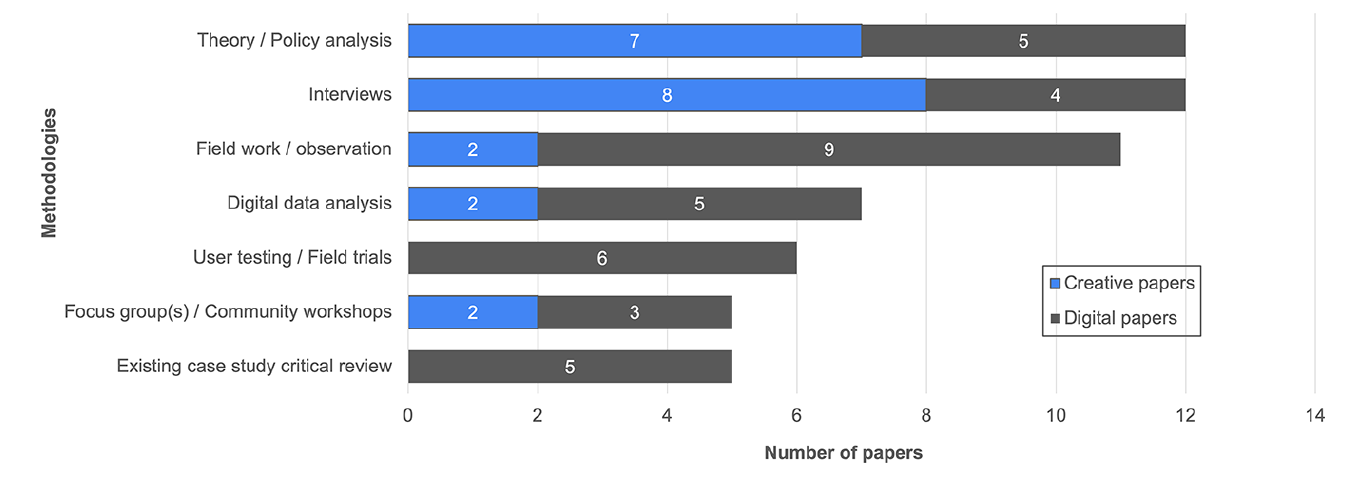
Methods used in creative and digital placemaking papers.
Regarding public participation in the ‘creative placemaking’ and ‘digital placemaking’ projects, this was largely done in terms of interviews (33%), observations (24%) and crowdsourcing (16%). In ‘creative placemaking’ papers, interviews were mostly conducted with artists and other stakeholders (e.g. city commissioner, business owners) rather than members of the public who use the space. However, there was very little co-creation except for the studies that used focus groups and workshops as a methodology. For example, many of the ‘creative placemaking’ papers interviewed artists who created artworks in relation to a project, but as Harles (2018) noted, although a primary objective was to collaborate with local communities, in practice, it was only realised in a small number of individual art projects. ‘Digital placemaking’ papers primarily used ethnographic methods that combined data gathering from both observations and interviews. The researchers measured the way the public uses or interacts with the digital media to determine whether it had the desired impact and to make improvements for future iterations of the digital product or for new projects. For example, Morrison et al. (2011) conducted field trials with mobile augmented reality and paper-based maps to compare how participants used these different media in public spaces. Overall, ethnographic methods were the most common and informative for ‘digital placemaking’ practices, and crowdsourcing in the form of co-creation workshops provided members of the public with the most agency to contribute to the projects.
An examination of the location in which ‘place-making’ activities occurred was in urban environments (97%) and only two papers (3%) focused on ‘rural placemaking’ in libraries and farms, respectively (Gallagher, 2020; Mackay et al., 2018). The focus on urban areas speaks to the origin of ‘place-making’ coming from urban studies and geography, and perhaps there is a readily accessible population that would benefit from the ‘place-making’ activity or to inform the practice of ‘place-making’. Figure 9 shows the continents where creative and digital ‘place-making’ has been studied, with some papers having completed an international comparative study across continents (which is accounted for in the numerical tallies). It is noted that Asia, Africa and South America may publish about the concept in different languages and therefore may not be adequately represented in this English-language-focused sample.
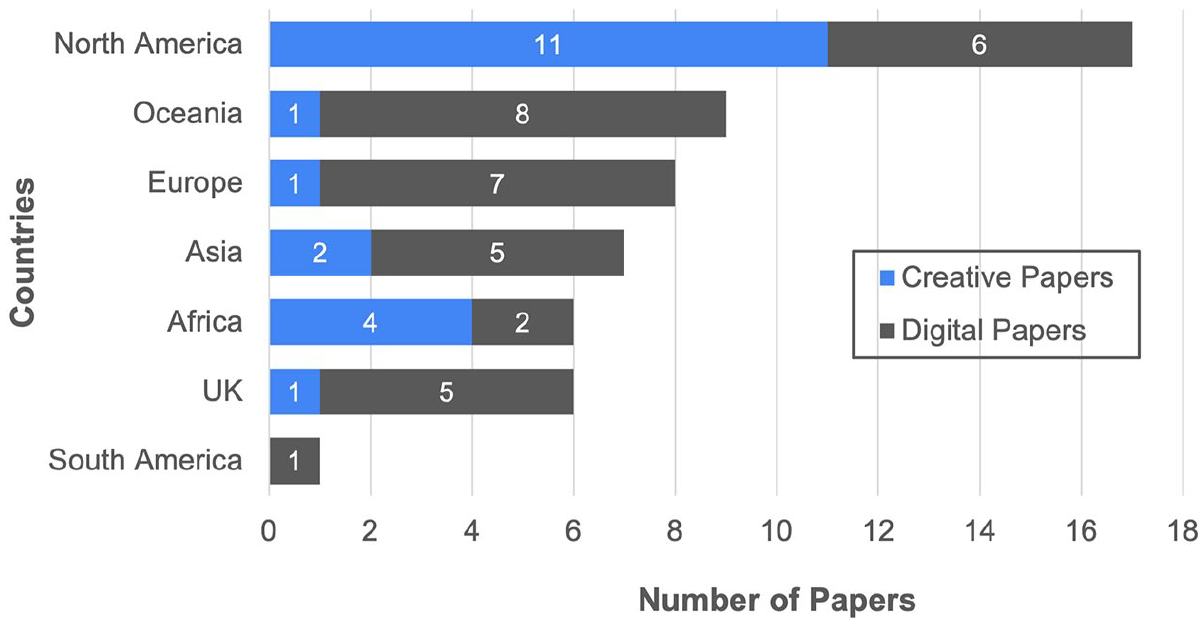
Continents where place-making activities were reported on.
In terms of types of media used in ‘place-making’ activities, digital media were used in 43% (25/58) of papers as the primary experiential modality for end users and were also employed in some of the transmedia projects (see Figure 10). As with qualitative coding, not all papers had each quality noted in the coding sheet (see Supplemental Material). For example, only two papers considered accessibility in ‘place-making’ projects. Han et al. (2019) discussed accessibility in the context of digital media displays and found that the location of digital displays near trees or walls helps users feel physically protected from traffic and other potential exposures, and they assessed the level of Internet usage and comfort level in interacting with a digital display through user surveys. The other paper that considered physical disabilities involved crowdsourcing information about obstacles for those with disabilities within the urban environment (Cornelio and Ardévol, 2011). This presents another area or topic that is underrepresented in the literature. A second aspect in the investigation into ‘digital place-making’ that appeared in only four papers was the inclusion of options for personalising content delivery. The methods of personalisation included location-based bus stop information and privacy control (Pang et al., 2020); modifying the appearance of avatars and improvising activities within the 3D virtual environment (Tan and Yee, 2010); a notation on the limitation of peer review websites not allowing for personalisation of user preferences and situational contexts, such as being new immigrants (Barkhuus and Wohn, 2019); and the ability to digitally display of personal photos on the large screen installation in public space (Han et al., 2019).
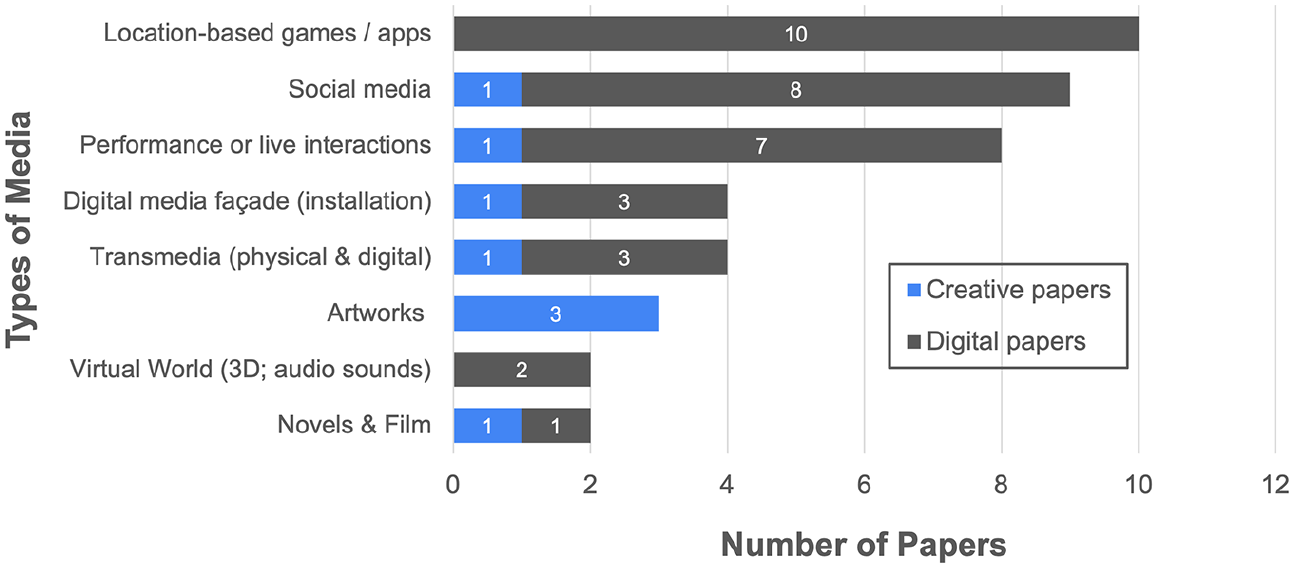
Medium of delivery for creative and digital place-making activities.
In both ‘creative placemaking’ and ‘digital placemaking’ applications, a narrative approach was used in only 33% of cases. In all the papers where a narrative approach was used (32% of the sample), only one referenced fictional narrative from novels (Livesey, 2017). In the ‘creative placemaking’ sample, the common theme of presenting ‘counter narratives’ arose in four (out of a total of five) cases (19%) where a narrative approach was used. For example, video installations and performances were used to communicate the heritage, transformation and recovery of Old Dhaka (Bangladesh) as a counter-narrative to the rise of Islamic Nationalism in the country (Harles, 2018). Another counter-narrative was the deconstruction of colonial patterns in Cameroon and France through street-based fashion shows and local dancers (Duconseille and Saner, 2020). In the ‘digital placemaking’ paper sample, a narrative approach appeared in 14 papers (38%) and included counter-narratives but many aimed to capture the stories and public use of spaces, or to persuade publics on how to interact with places. For example, park-goers in Shangai marked their locations using social media so that followers could attend their artistic performances (Brunnberg and Frigo, 2012), and another paper tracked which locations groups of people chose to freely explore based on urban design/flow without using a map while listening to music (Mushiba and Heissmeyer, 2018). Examples of the persuasive rhetoric the narratives aimed to achieve were to encourage children to play outside (Wood et al., 2019) and update the reputation of Roskilde in Denmark from a ‘Viking town’ to a ‘Music Valley’ (Baerenholdt and Haldrup, 2006). Therefore, the narratives communicated how the public interacted with the specific places, which often related to arts-related activities rather than a historical narrative or infrastructural information about the specific location.
Conclusion
This scoping review traced the origins of the term ‘place-making’, identified when it was adopted into other disciplines and which research themes emerged with this divergence, helped lay a foundation for definitions that carry different meanings and intentions across disciplines, identified key shifts and gaps in the literature, the common methodologies and media used in creative and digital placemaking projects and identified areas for further research. The results showed that ‘place-making’ became a key concept in English-language-published geography journals after Lefebvre’s (1991) book and was adopted into other disciplines after 2005 when it appeared in heritage studies, and after 2015 in media and communications journals. Its popularity in media and tourism disciplines is evidenced by the huge increase in publications in 2015 (with 151 papers that year). ‘Place-making’ in its hyphenated spelling and meaning is understood, across disciplines, as a socially constructed process used in urban design that changes cities and promotes economic growth largely through cultural tourism (Cilliers and Timmermans, 2014: 414). Existing applications in the most frequently publishing journals in urban studies and geography show a research focus on specific communities and the movement of people followed by economic, politics and law and finally in tourism in heritage. Common themes of interest for ‘place-making’ in other disciplines are ‘sense of place’, migration, identity, green place-making and counter-narratives. The close readings on ‘creative placemaking’ and creative tourism highlighted that the movement or displacement of current residents can result from top-down placemaking as a form of gentrification. This article demonstrated and argues that for future projects on ‘digital place-making’, citizens’ needs to be considered before projects are implemented and when appropriate be permitted to participate through co-creation, thus moving towards the intended meaning behind the hyphenated spelling ‘place-making’ as explained by Lew (2017).
Questions (or gaps) identified through this scoping review for future research by media scholars are (1) how can the public be more involved in co-creation as a bottom-up approach to ‘place-making’ rather than a top-down (i.e. governmental) ‘placemaking’ approach? (2) what methods can be used to better consider accessibility and personalisation in ‘digital place-making’ initiatives? (3) how can creative and ‘digital place-making’ techniques be applied to rural or more remote locations and (4) how can a narrative approach be used in ‘digital place-making’ be applied to cultural heritage tourism? Considering the societal changes resulting from travel restrictions due to COVID-19, an investigation into creative and digital techniques for place-making is timely and offers new opportunities for developing virtual tourism and socially distanced tourism experiences in a way that involves and considers the impacts on both citizens and visitors.
Supplemental Material
sj-xslx-1-nms-10.1177_14614448211044942 – Supplemental material for The emergence of creative and digital place-making: A scoping review across disciplines
Supplemental material, sj-xslx-1-nms-10.1177_14614448211044942 for The emergence of creative and digital place-making: A scoping review across disciplines by Nicole Basaraba in New Media & Society
Footnotes
Funding
The author(s) received no financial support for the research, authorship and/or publication of this article.

Supplemental material
Supplemental material for this article is available online.
Notes
Author biography
References
Supplementary Material
Please find the following supplemental material available below.
For Open Access articles published under a Creative Commons License, all supplemental material carries the same license as the article it is associated with.
For non-Open Access articles published, all supplemental material carries a non-exclusive license, and permission requests for re-use of supplemental material or any part of supplemental material shall be sent directly to the copyright owner as specified in the copyright notice associated with the article.
