




Abstract
The parallel media related to sports, gaming and gambling are expanding, exemplified by the emergence of esports and game-related gambling (e.g. loot boxes, esports betting). The increasing convergence of these phenomena means it is essential to understand how they interact. Given the expanding consumer base of esports, it is important to know how individuals’ backgrounds and consumption of game media may lead to esports betting. This study employs survey data (N = 1368) to investigate how demographics, alongside consumption of video games, esports and gambling can predict esports betting activity. Results reveal that both spectating esports and participation in general forms of gambling are associated with increased esports betting, no direct association was observed between the consumption of video games and esports betting. Findings suggest that while games may act as a vehicle for gambling content, highlighting the convergence of gaming and gambling, there is no intrinsic aspect which directly encourages gambling behaviours.
Introduction
The increased role of video gaming as a social and cultural force, combined with the development of online multiplayer games and video streaming services, has resulted in the growth of esports as a consumable media product. With its roots in the arcade culture of the 1980s and LAN parties of the 1990s, esports is very much a phenomenon that has emerged from the video gaming community (Borowy and Jin, 2013; Taylor and Witkowski, 2010). Its rapid growth and wide appeal has seen it gather increasing attention from mainstream media and, due to the appeal it holds for millennial audiences, businesses (Jenny et al., 2018; Newzoo, 2018).
Alongside the development and expansion of esports, a parallel trend can be observed: gambling as related to video games, and to esports in particular. Indeed, the two seemed to be inextricably linked, with the online technologies enabling contemporary esports also facilitating mass participation in previously localised practices (Scholz, 2011). There are, for example, emergent forms of in-game gambling in which in-game virtual items and currencies are used as stakes in-game events ultimately determined by random number generators. Furthermore, the online streaming of competitive video game play means that established gambling activities, such as sportsbook-style betting, can be transposed to this new arena (Macey and Hamari, 2019).
Recent years have seen the creation of a number of gambling activities directly associated with computer games. This includes those which have emerged from within the gaming community, such as skins lotteries and crash betting (Macey and Hamari, 2018, 2019), and those used to drive monetisation of games, such as loot boxes (Hamari and Lehdonvirta, 2010; King and Delfabbro, 2019). Concerns raised about the use of virtual items mean that the market is in a state of flux and that estimates of its size are constantly being revised. A further complicating factor is the fact that many sites offering gambling activities related to video games are not licenced. Indeed, there is an ongoing debate as to whether or not many of these activities can even be considered gambling and, consequently, whether or not they are subject to regulation (Abarbanel, 2018; Holden and Ehrlich, 2017; Macey and Hamari, 2019).
As the popularity of esports has grown, many established gambling operators have begun to offer sports books on esports events (Dos Reis, 2017). As a result, the size of the esports-related gambling market can be estimated with much greater confidence. The annual esports gambling market is estimated to be worth between US$2.3 billion (Eilers & Krejcik, 2018) and US$50 billion (Juniper Research, 2018), a significant increase in the size of the esports market itself, which in 2018 was valued between US$800 million (PwC, 2019) and US$869 million (Goldman Sachs, 2018). It is important, however, to maintain a sense of caution when considering such estimates as the underlying methodology is typically opaque in nature and may be used to further a specific agenda, such as encouraging investment.
Given the continued development of esports, ever-increasing prize-pools and an expanding consumer base, the already significant gambling market is also likely to continue growing. As such, it is important to understand how individuals’ habits of gaming, gambling and consuming esports as well as demographic factors are associated with participation in esports betting. Many esports gambling opportunities are inextricably tied to video games, including both play and spectatorship activities. For example, player versus player (PvP) betting, in which video gamers can bet against one another based on their own performance, is growing in popularity (Grove, 2016). Gambling industry sponsorship of esports events, meanwhile, provides increasing exposure of gambling activities to esports spectators (Luongo, 2018). With this in mind, it is important to establish a holistic picture of the ways in which esports betting is associated with the consumption habits of media directly connected to the practice in order to understand how they interact with one another. This approach, therefore, lays the groundwork for further studies investigating these newly emergent practices and their relationships with existing behaviours. As such, this research is guided by the following question:
RQ: How are demographic characteristics and the consumption of video game-related media (video games, esports and gambling) associated with esports betting activity?
This research will provide an overview of the changing ways in which video games are being consumed, both in the emergence of esports and of the betting activities associated therewith. Subsequently, this article outlines the hypothesised relationships between demographic characteristics, media consumption practices and esports betting practices before describing the research model employed in this study. After outlining the methods, measures, participants and procedures this article presents, the results of the study in reference to demographic characteristics and measures of consumption. The findings are discussed alongside their theoretical and practical implications, potential avenues of future research, and the limitations of this work.
This research will thus contribute to the growing body of literature related to the convergence of gambling and (video) gaming. Specifically, this study investigates the interrelations between the motivations for consuming esports, consumption of digital media products associated with esports and participation in esports betting. As such, this work will provide evidence as to whether esports betting replicates relationships present in traditional sports betting, or if this emergent activity is accompanied by novel relationships.
Background
The consumption of video games as sports
The emergence of arcade gaming has been presented as a key point marking the shift from the traditional, Fordist, approach to capitalism to a post-modern approach based around the commodification of experiences (Borowy and Jin, 2013). This early period of esports, as it is now known, combined the approach of traditional sporting events, technology and the marketing of experience as a commodity in itself. The scope of these experiences ranged from watching celebrity players compete in local tournaments, to the showcase performances of the US National Video Game Team at events across the country. However, the transition to mainstream acceptance of arcade gaming as a sport seems to have been hampered by the constraints of the technology at the time; head-to-head competition between players was not possible, with performances instead being measured by high score (Borowy and Jin, 2013).
It was only with the introduction of Local Area Networks, and associated technologies, that competitive video gaming could move away from the player-versus-machine dynamic towards one characterised by PvP interactions (Griffiths et al., 2003). In this way, competitive video gaming could realistically be conceptualised as constituting a sporting venture.
This trend continued with the emergence of IPTV (Scholz, 2011) and streaming technologies (Hamilton et al., 2014; Hamari and Sjöblom, 2017) which have been credited with the rise of online communities centred around user-generated content. Such environments mean that developing and maintaining a community centred around esports has become much more feasible with contemporary consumption of esports taking place in a ‘mediascape’ of blogs, streams, podcasts and on-demand video (Taylor, 2012). Indeed, the development of streaming has facilitated and promoted both the consumption of esports and, in the wider context, of video game play as a media product in itself. Previous works have highlighted the ways in which esports has enabled gaming culture to move from the private domain into the public, and the new socio-technological relationships that this has engendered (Johnson and Woodcock, 2017; Taylor, 2018). Further research has examined the interactions between the consumers and the producers of streamed content, whether this be in regard to underlying motivations for consumption (Sjöblom and Hamari, 2017), or the changing dimensions of such shared experiences (Scully-Blaker et al., 2017).
The development of video game play as an entertainment product highlights the fact that online media constitute the basis upon which contemporary esports is built; facilitating large-scale consumption through online platforms and paving the way for the subsequent involvement of mainstream broadcast media. In this way, the development of esports can be seen to mirror that of traditional sports, where the introduction of mass media technologies was an event of huge historical significance (Carter and Gibbs, 2013; McChesney, 2008). The popularity of contemporary media services providing the means to spectate esports is, therefore, a natural and predictable development.
Modern live esports events often attract tens of thousands of attendees, sometimes even reaching over 100,000 spectators (ESL, 2019; Needleman, 2015; Taylor, 2016). The act of consuming video games simply as a spectator, rather than a player, or as both a player and spectator, is a problematic concept for many in wider society, where notions of consumption are focused on the interaction between the player and the game. However, both spectating and playing video games present aspects of a single spectrum rather than existing as distinct, binary states (Taylor and Witkowski, 2010). Previous work has also established the diversity of roles present in contemporary consumption practices associated with video games, revealing that there are many associated behaviours which also require attention (Seo and Jung, 2016).
Despite an ongoing debate within Game Studies concerning the nature of audience in relation to an actional, rather than passive media, spectating play has always been a fundamental aspect of the gaming experience (Taylor, 2016) and of other forms of play, including sports (Carter and Gibbs, 2013; Sutton-Smith, 2009). The role of technology and media in the popularisation of esports has been likened to that of traditional sports due to the way in which technological advances have facilitated mass consumption through new media (Carter and Gibbs, 2013).
A consistent theme within the scientific literature on esports has been the location of the activity in reference to established concepts of sport (Cheung and Huang, 2011; Jenny et al., 2017; Witkowski, 2012). Discussions have focused on defining esports, documenting it as a cultural phenomenon (Karhulahti, 2016; Taylor, 2012) and positioning the practice in relation to both traditional sports and to video games (Carter and Gibbs, 2013; Hamari and Sjöblom, 2017; Jonasson and Thiborg, 2010; Witkowski, 2012).
The study of digital play, and players, in physical environments has continued as esports has developed (Taylor, 2016; Taylor et al., 2014), while another consistent theme has been the motivations underlying esports consumption (Hamari and Sjöblom, 2017; Lee and Schoenstedt, 2011; Weiss and Schiele, 2013). Exploratory studies, such as that by Cohen and Avrahami (2005) have shown that measures designed for assessing sports in general, such as the Sports Fan Motivation Scale (SFMS: Wann, 1995) and the Motivation Scale for Sports Consumption (MSSC: Trail, 2012; Trail and James, 2001), can be applied to specific types of sport and in different cultural contexts. In addition, they can be used to differentiate between attendance at live events, ‘active participation’, and watching at home, ‘passive participation’ (Cohen and Avrahami, 2005).
With this in mind, the use of such measures to assess motivations for consuming esports is a natural and logical step (Hamari and Sjöblom, 2017; Lee and Schoenstedt, 2011), and early esports studies have revealed that spectators share many of the same motivations as traditional sports fans (Cheung and Huang, 2011).
Research into sports spectatorship and gambling motivational dimensions demonstrates a clear relationship. For some sports spectators, for example, gambling serves as a means of adding excitement to the spectating experience (Nelson et al., 2012; Petry, 2003). For others, it is the potential financial gains that drive a person’s gambling during sports spectatorship (Wann, 1995). Gambling research has found similar motivational dimensions for sports betting (Abarbanel, 2014; Challet-Bouju et al., 2014; Flack and Stevens, 2019).
The MSSC (Trail and James, 2001) includes a series of constructs that parallel motives for gambling, such as ‘vicarious achievement’, ‘acquisition of knowledge’, ‘drama’ and ‘escape’. The MSSC itself has also been shown to be associated with increased gambling behaviour, with individual sub-scales exhibiting varying degrees of influence (Karg and McDonald, 2009; Lopez-Gonzalez et al., 2018).
The MSSC was selected as the measurement instrument for this research as, like the SFMS, it has been found to be an appropriate measure for investigating the motivational drivers of sports consumption across different sports and contexts. However, unlike the SFMS, the MSSC has been used to investigate the motivations underlying the consumption of both esports and gambling, meaning that it is more likely to constitute an appropriate measure for investigating esports betting. For a full discussion of extant measures assessing motivations for sports consumption, see Hamari and Sjöblom (2017).
Esports and betting
For purposes of this article, esports betting refers to wagering on any type of esports or video gaming event, irrespective of currency used (e.g. fiat currency, skins), licenced versus offshore site, and professional versus amateur competition. Furthermore, this article specifically investigates wagering behaviours and preferences as they relate to esports events and competition, and not gambling specific to video game play (e.g. loot boxes, casino/themed games in video games, in-game PvP gambling activities, or skins betting). While these gambling phenomena are all tied to video games, a focus on wagering parallels research of behaviours that centre upon the spectatorship of competition.
This focus on esports betting is also seen with traditional bookmakers, who are increasingly establishing esports markets within their offerings and sponsoring major esports events (Byrne, 2019). Meanwhile, the relationship between gambling and esports is a complex one. In esports, there are ongoing debates on the relationship between esports and sports, particularly in how the terms are defined (Jenny et al., 2017). This has a particular impact on betting markets, as many jurisdictions differentiate games, events and sports under different regulatory structures (Owens, 2016). And the rapid growth of esports, combined with its grassroots nature, does not exist within the same cohesive governance that is present for many sports (e.g. Fédération Internationale de Football Association for football, or the National Basketball Association for basketball; Dos Reis, 2017). Thus, potential game integrity issues (such as match-fixing or other forms of cheating) threaten gambling market integrity needs, and esports spectators do not always recognise the severity of integrity issues (Abarbanel and Johnson, 2019). While a significant portion of the esports betting market is still conducted in the opaque offshore markets (Eilers & Krejcik, 2018; Juniper Research, 2018), there is now a burgeoning field of research into esports betting behaviours, establishing a foundation for further research.
Early research in the field found that US esports fans were twice as likely to have gambled online than the average US-based Internet user. In addition, one-third of US esports spectators had gambled (measured across all gambling games) more than a few times per week in the prior year (Newzoo, 2016). We note, however, that these findings were published by market researchers and must be viewed with caution due to the lack of methodological transparency. However, given the lack of comparable academic research, they provide an indication of gambling habits in the contemporary esports environment. In another early survey of US esports bettors, Grove (2016) found that esports event wagering was the dominant form of gambling, followed by casino-style wagers using virtual items from video games (e.g. skins). A later study used a global reach, finding that esports bettors typically placed wagers on two different sites, with the most popular sites being traditional bookmakers (Grove and Abarbanel, 2016).
Existing research has shown that betting on traditional sports is influenced by both experiential and economic motives (Humphreys et al., 2013). Many of the same motives that influence fan spectatorship also influence sports bettors, such as closely matched games between high-quality opponents (Humphreys et al., 2013). Recent market research has also found that the ability to bet on sports drives TV spectatorship, with sports bettors most interested in placing wagers on championship games and teams they follow (Bridge, 2019).
Esports bettors have been found to have higher involvement in gambling than sports bettors, demonstrating higher gambling involvement (e.g. higher frequency of play, greater number of games and platforms used), and are more likely to use unlicensed gambling sites (Gainsbury et al., 2017).
A 2017 report from the UK Gambling Commission estimated that 58% of esports bettors were men, and the predominant age group for esports betting was 25 years to 34 years (Gambling Commission, 2017). It is of note, however, that this report did not include adolescent respondents. A 2018 UK Gambling Commission study on youth gambling behaviour found that 3% had placed wagers using skins acquired from computer or app games, though the specific form of wagering was not specified (Gambling Commission, 2018).
Finally, research into associations between video gaming and gambling behaviours has produced mixed results. While several studies have found significant relationships between video gaming and gambling (Gainsbury et al., 2016; Kim et al., 2014), others have found that gambling may not be particularly associated with video game consumption (King et al., 2012; Forrest et al., 2016).
Macey and Hamari (2018) investigated the relationship between video gaming behaviours, esports spectatorship behaviours, and gambling behaviours, with a focus on problematic gambling. They found that esports spectatorship (measured by frequency of spectatorship, time and monetary spend) was associated with increased online and video game related gambling. Subsequent research builds upon this, finding that betting is the most popular online gambling activity among esports spectators (Macey and Hamari, 2019).
The research described earlier, justifies the formulation of a research model that includes interactions between esports spectatorship motivations, demographic characteristics, consumption of digital media and participation in established forms of gambling.
The research model
Stemming from the earlier discussion, the research model of this study is operationalised to investigate how individuals’ consumption of video games, esports and gambling, in addition to demographic factors, are associated with esports betting behaviour. Moreover, as the motivations of esports spectating are pertinent to both esports consumption and esports betting, the model also investigates its association with the esports consumption and esports. This research utilises an involvement model (Binde, 2013) as, while both motivational factors and gambling involvement variables are included, the latter are more numerous.
Consistent with the discussion in the ‘Background’ section, we hypothesise that the MSSC will be positively associated with the consumption of esports (H1), esports betting (H2) and the use of dedicated esports betting sites (H3).
In addition to the established relationship between sport consumption and gambling, previous research has shown that increased engagement with esports is associated with increased gambling connected to esports (Macey and Hamari, 2018). Therefore, the consumption of esports is expected to be positively correlated with both esports betting (H4) and the use of dedicated esports betting sites (H5).
Previous research has also shown that the spectating of esports has been associated with young males (Hamari and Sjöblom, 2017; Macey and Hamari, 2019), above average levels of educational attainment and household income (PwC, 2016). As such, the consumption of esports is expected to negatively correlate with age and to be associated with males, higher levels of education and higher levels of household income (H6).
The consumption of video games has been increasing as wider cultural acceptance of gaming has spread (Kuo et al., 2017; Muriel and Crawford, 2018) and, despite increasing numbers of women playing games, existing research has shown that it is positively associated with young males located in urban areas and with access to newer technologies (Borowiecki and Prieto-Rodriguez, 2015). The widespread consumption of video games – 60% of Americans play video games daily, with almost every household having a dedicated gaming device (ESA, 2018) – suggest that although game play is associated with younger males, it is unlikely to correlate with other demographics (H7).
Consumers of video games in general, and esports in particular, are younger than average demographic (Borowiecki and Prieto-Rodriguez, 2015; Seo, 2013), while gambling activities associated with these media are almost exclusively facilitated online (Macey and Hamari, 2018, 2019). As such, demographic characteristics associated with gambling consumption are likely to mirror those of (predominantly) online gamblers, rather than traditional profiles (H8), as seen in the work of Gainsbury et al. (2017).
Due to the prevalence of esports betting in the online context (Macey and Hamari, 2019), it is expected that esports betting participants will display the following similar characteristics: younger males, higher levels of education and household income (H9). It is not expected that any correlation will be found in regard to marital status. As the use of dedicated betting sites is dependent upon actual participation in esports betting activities, it is expected that the same demographic characteristics will be correlated with the use of dedicated sites (H10).
Esports is fundamentally characterised as competitive video game play (Hamari and Sjöblom, 2017). Therefore, it is expected that increased consumption of video games will also be positively associated with increased betting on esports (H11), as has been found in previous research (Macey and Hamari, 2018).
Previous works have also shown that as gambling involvement grows, the number of different activities and channels of participation also grows (Gainsbury et al., 2012; Macey and Hamari, 2018). As such, it is expected that increased participation in general forms of gambling will be reflected in increased esports betting (H12).
The path model used to investigate the research question stated earlier is presented below (Figure 1).
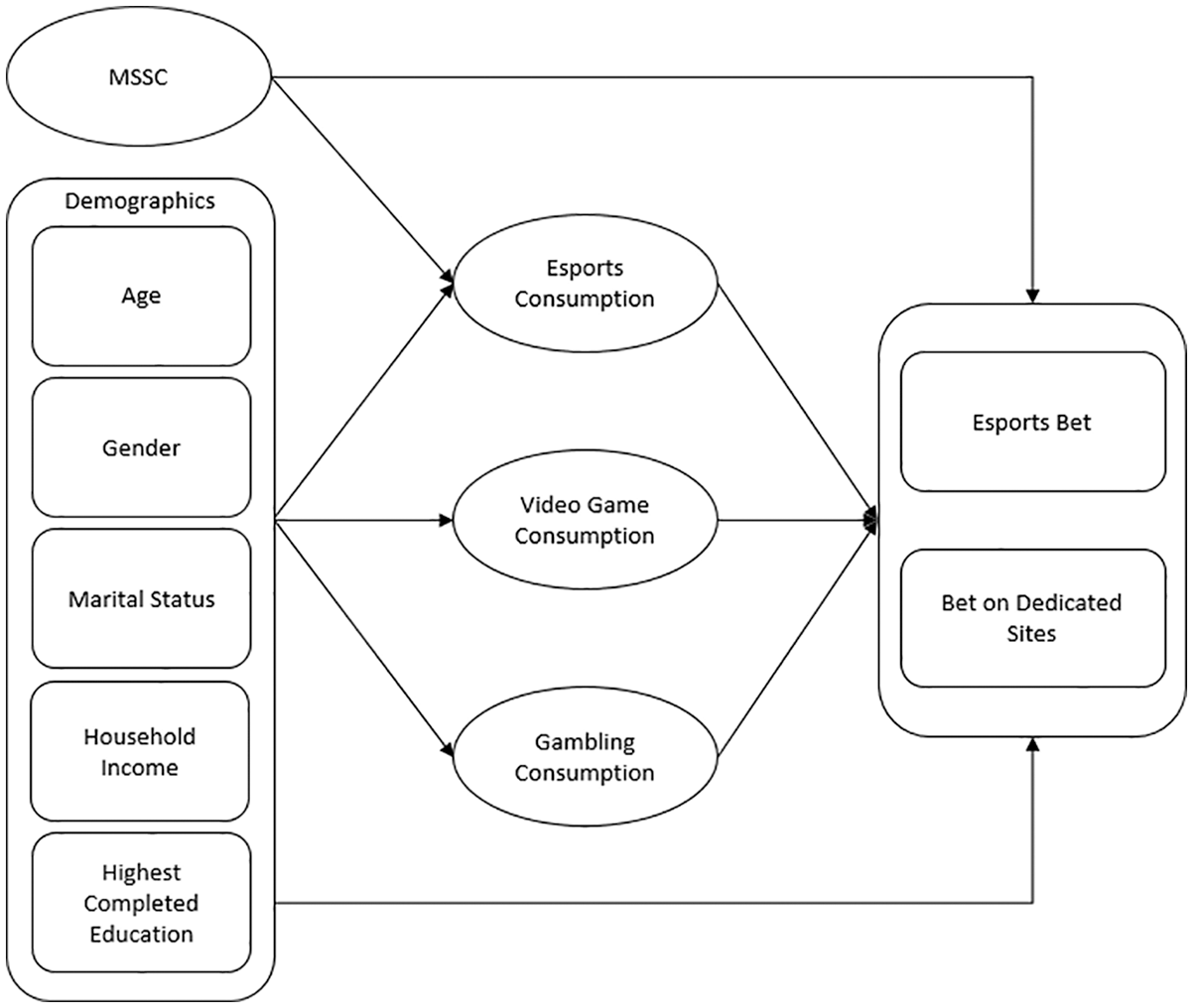
Research model.
Method
A survey was used to collect data, with participants recruited from an online panel maintained by the market research company Qualtrics. The survey remained open during the period 11–19 April 2018. Due to the nature of the research, the following inclusion criteria were stipulated that participants be aged 18 years or older and that they had played video games or watched esports at least once in the previous 12 months. The principles of informed consent were followed, with potential participants being advised that participation was entirely voluntary and that it could be withdrawn at any time. The informed consent document notified respondents that the survey was about video games, game play, spectating and gambling. Participants were required to sign a consent form prior to accessing the survey. No incentive was provided for completing the survey. Ethical approval for this study was provided by the Institutional Review Board at (University blinded for review).
A total of 2035 responses were received, 400 incomplete responses were removed, and a further 230 were removed as they did not meet the inclusion criteria. A total of 37 univariate and multivariate outliers were also removed, resulting in a finalised dataset of 1368 records. Participants were asked to complete items measuring the following demographic information: Age, Gender, Marital Status, Annual Household Income and Educational Attainment. Age was recorded as a continuous variable, meaning there were no pre-defined brackets or ranges that could be selected. Both Gender and Marital Status were nominal items, with the following response options: male, female, other/non-binary; single, married, unmarried (cohabiting), separated, divorced, widowed, other. Annual Household Income and Educational Attainment were ordinal variables, response options were: from ‘under US$20,000’ to ‘over US$1,000,000’; and from ‘Less than High School/Secondary/Equivalent’ to ‘Graduate Degree’.
Measures
In addition to the demographic information listed earlier, the survey included items measuring the consumption of video games, esports and gambling activities. Motivations for consuming esports content were also collected through the inclusion of an esports-adapted MSSC (Trail and James, 2001). This research employs the updated version of the MSSC (Trail, 2012), a previously validated scale used in general terms and in reference to specific sports from Wrestling (Schaeperkoetter et al., 2016) to South African soccer (Stander and van Zyl, 2016). It has also been adapted for use in a wide range of sporting contexts, such as disability sports (Cottingham et al., 2014) and esports (Hamari and Sjöblom, 2017). The MSSC is a 31-item measure, with items being rated on a five-point Likert-type scale, possible responses range from ‘strongly disagree’ (1) to ‘strongly agree’ (5). The scale utilises 10 sub-constructs to assess consumer motivations and has been designed for use in multiple contexts. In order to reflect the focus of this research, ‘esports’ was inserted in the relevant fields throughout the scale, as per the manual (Trail, 2012). An example of an updated item is ‘An individual player’s “sex appeal” is a big reason why I watch esports’. In the structural model here, MSSC will be utilised as a single latent variable, rather than 10 distinct constructs. A Cronbach’s Alpha value of .956 established the internal consistency of the scale.
The consumption of video games was assessed using a formative variable, Video Game Consumption, consisting of items measuring frequency of video game play, average hours spent per gaming session and the social context of game play. All questions were asked in reference to video game play habits over the preceding 12 months.
In addition to video games, the model also included items that constituted the independent variable Esports Consumption. As with any sporting activity, consumption can take the form of spectating or participating. As this research was concerned solely with spectating behaviours, all items explicitly asked respondents to consider the questions in respect to watching esports. Similar to Video Game Consumption, Esports Consumption utilised a formative variable consisting of several distinct aspects: prior year frequency of watching esports, average hours spent watching esports per session, the social context of watching esports and the type of esports broadcasts (live or pre-recorded) consumed.
Regarding the independent variable Gambling Consumption, participants were asked to provide information regarding their participation in gambling activities in the previous 12 months, no distinction was made between different forms of gambling (online versus offline, for example). Once again, consumption habits were assessed using a formative variable that included the following items: frequency of gambling, average hours spent per gambling session, and average dollar spend per gambling session.
Finally, the model included two dependent variables to specifically measure esports betting behaviour. The first, Esports Bet asked whether participants had wagered money on the outcome of an esports event in the past year, response options were yes, no and I cannot remember. The second dependent variable, Esports Bet–Dedicated Site, is an ordinal variable measuring whether participants placed wagers through dedicated esports betting sites (e.g. Unikrn), general sportsbook providers (e.g. bet365), or both.
This study employs Structural Equating Modelling as the statistical techniques for analysing the data. SEM is a combination confirmatory factor analysis and multiple linear regression. In particular, we employ Partial Least Squares-Structural Equation Modelling (PLS-SEM analysed with SmartPLS 3 software package) which uses an iterative approach for maximising the explained variance of endogenous constructs, using a combination of multiple linear regression and confirmatory factor analysis, and more efficiently addressing the issue of multicollinearity in regression problems (Fornell and Bookstein, 1982; Wold et al., 1984). PLS-SEM is advisable when the model includes a combination of both formative and reflective latent variables and where the focus is on prediction rather than in trying to established the most fitting model (Chin et al., 2003; Hair et al., 2016). Descriptive statistics were produced using SPSS version 24 for Windows.
Results
Established methods for assessing validity and reliability are based on reflective constructs. However, the specified research model utilises formative constructs to measure consumption habits, meaning that standard practices are not applicable (Diamantopoulos and Winklhofer, 2001; Wang et al., 2015). Construct validity is thus established here using assessment of Variance Inflation Factors (VIFs). All VIF values except 1, were under 3, with the largest VIF value still under the standard threshold of 5, indicating that collinearity was not present and meaning that the constructs used were robust (Diamantopoulos and Siguaw, 2006; Hair et al., 2016). In the MSSC variable, 27 of the 30 items have outer VIF values lower than 3, all were under the threshold of 5.
Demographics
Participants ranged from 18 years to 80 years of age (M = 37.83), with the majority reporting their gender as male (58.4%). Participants reported being either single or married at approximately equal rates, 35.1% and 37.9%, respectively, the majority (56.9%) earned less than US$50,000 per year per household, with a minority having completed a 2-year college/university degree or higher qualification (37.8%). Full details of demographic statistics are provided in Online Appendices A to E, with a summary table provided in Online Appendix F. Participants were overwhelmingly from the United States (N = 1152; 97.9% of those who provided their nationality). The data sample included a further 21 nationalities, of which none totalled more than 0.2% of the sample.
The mean age in the sample is higher than in some similar studies investigating gambling, video game play, and spectatorship (e.g. Macey and Hamari, 2018, 2019), but is in line with others (e.g. Gainsbury et al., 2017). This sample is also more balanced in gender distribution (recent studies have ranged from 62%–91% male, for example), but represents lower income and education levels. Given the relative youth of this field, however, we note that there is not currently a baseline for what constitutes a truly representative sample.
Consumption measures
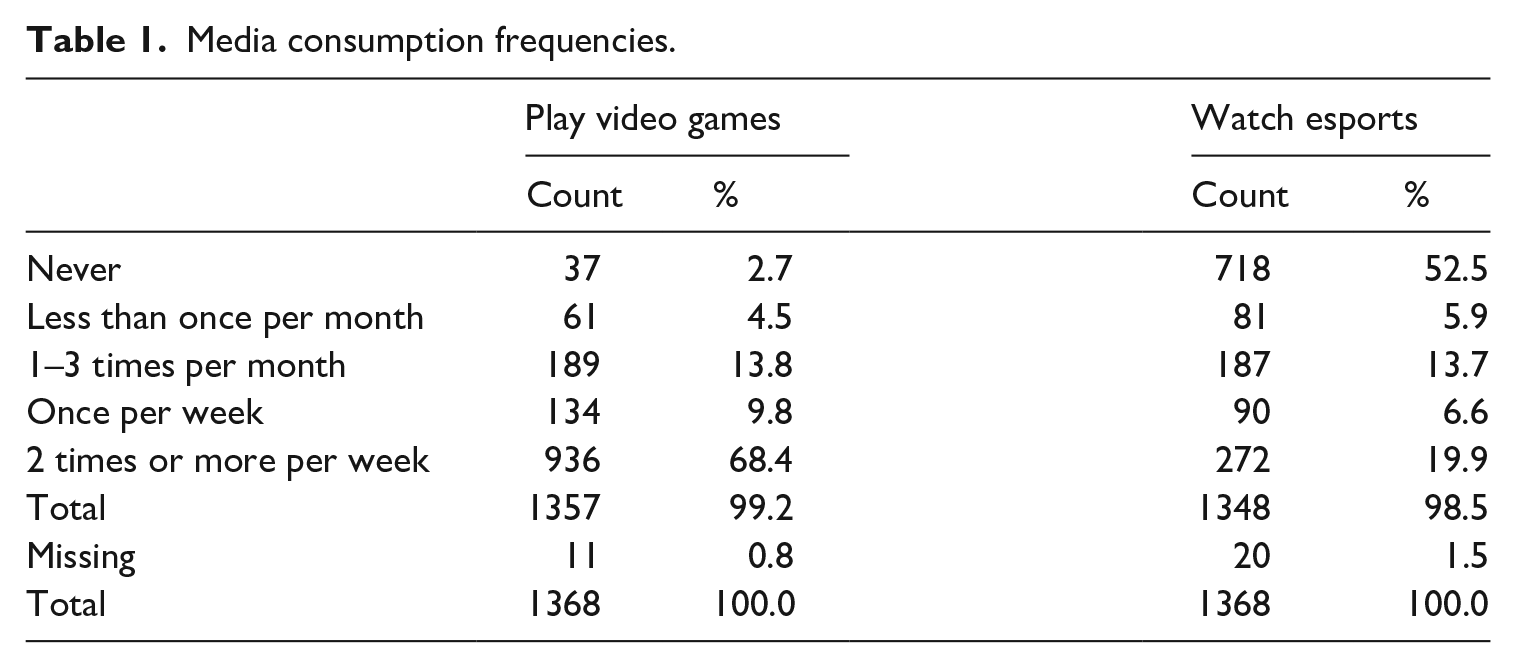
The majority of participants (68.4%) reported playing video games at least twice a week or more, with average play sessions of up to 2 hours (57%). The mean length of play sessions was 3.92 hours (Table 1).
Media consumption frequencies.
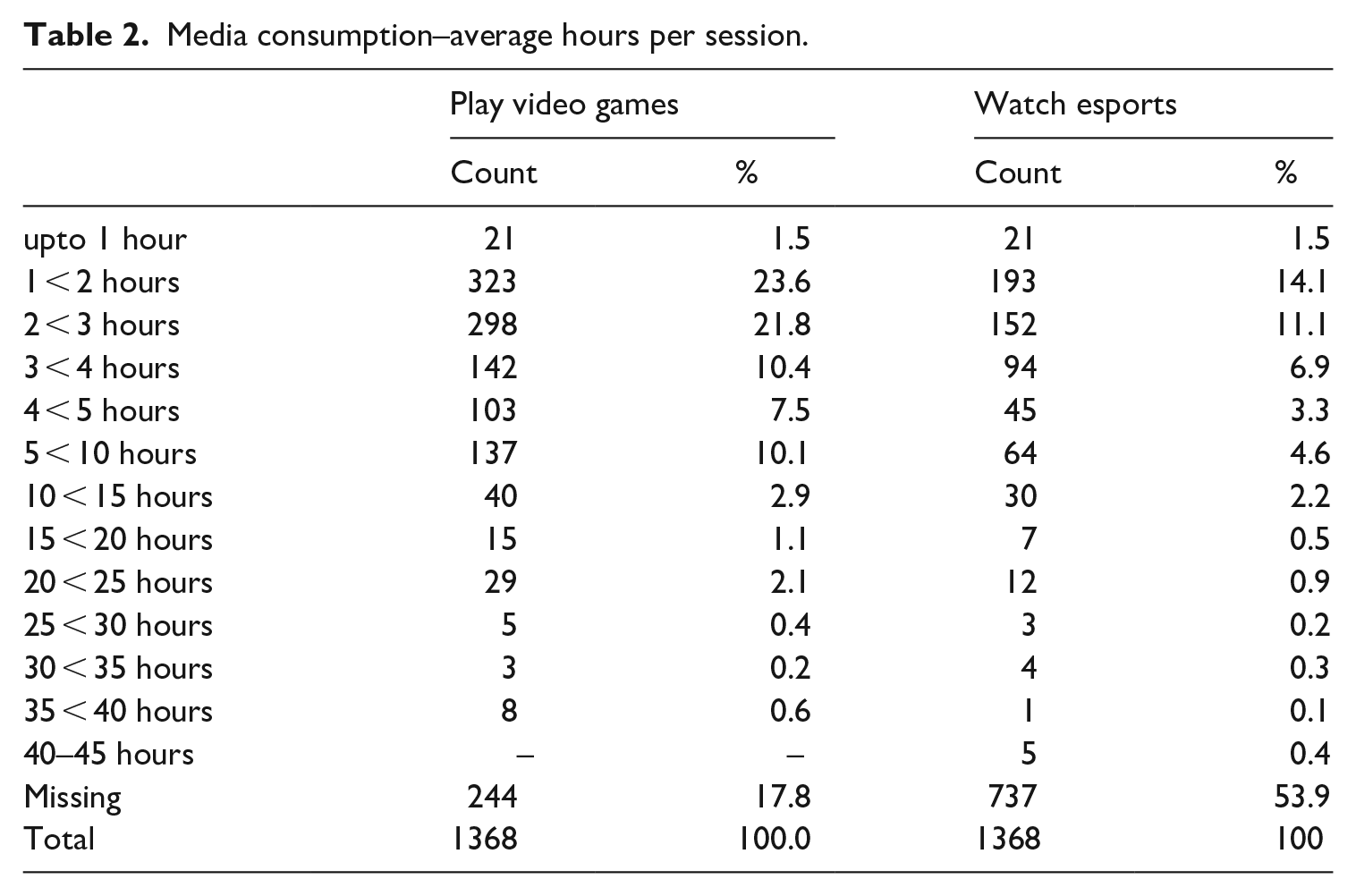
Almost half (47.5%) of the participants reported watching esports, of whom 47.3% reported watching twice a week or more. Esports spectating mirrored video game consumption with the median average session length being 2 hours. The majority of respondents (58%) reported average spectating sessions of up to 2 hours, and the mean duration of sessions spent watching esports was 3.94 hours (Table 2).
Media consumption–average hours per session.
In total, 718 respondents reported playing video games but not watching esports (52.5%), 37 reported watching esports but not playing video games (2.7%), and 613 (44.8%) reported both playing video games and watching esports within the previous 12 months.
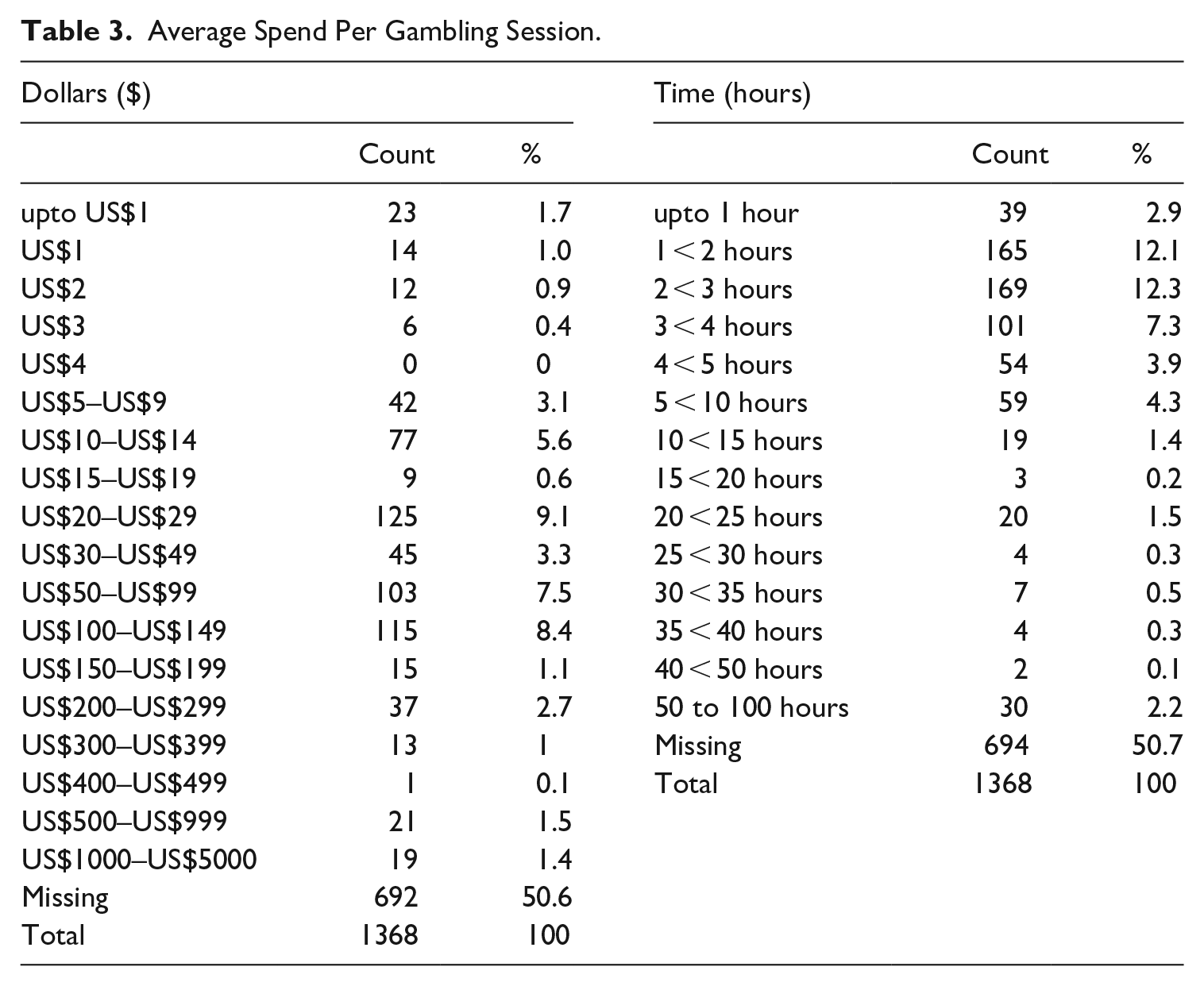
The majority (52.1%) of respondents reported gambling at least once within the previous 12 months, however, a notable minority (approximately 13.5%) gambled once a week or more. Most participants reported average length of gambling sessions of up to 2 hours (55.3%, median: 2 hours). The mean length of gambling sessions was 7.06 hours. Participants reported spending between US$0 and US$5000 per session, with median spend at US$40 and mean spend at US$108.27 (Table 3). Online Appendix G shows reported gambling frequencies.
Average Spend Per Gambling Session.
For the purposes of analysis, participants who answered ‘I can’t remember’ for the Esports Bet item were coded as non-bettors. Of those who reported betting on esports, an overwhelming majority reported using only dedicated esports betting sites (71.74%), with a further 13.77% using both dedicated and general betting sites.
Figure 2 shows the total effects for the research model. For purposes of clarity, only statistically significant relationships are displayed. A table detailing all direct and indirect effects is provided below in Table 4.
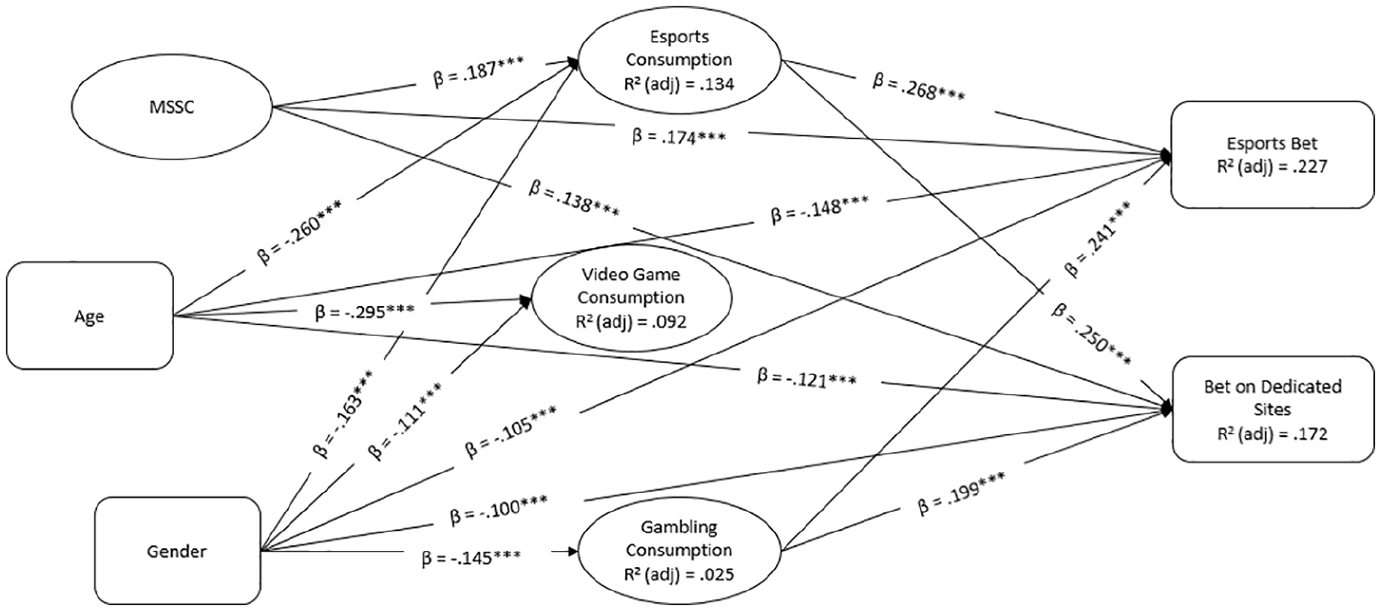
Path model showing total effects, significant relationships only.
Direct and total effects.
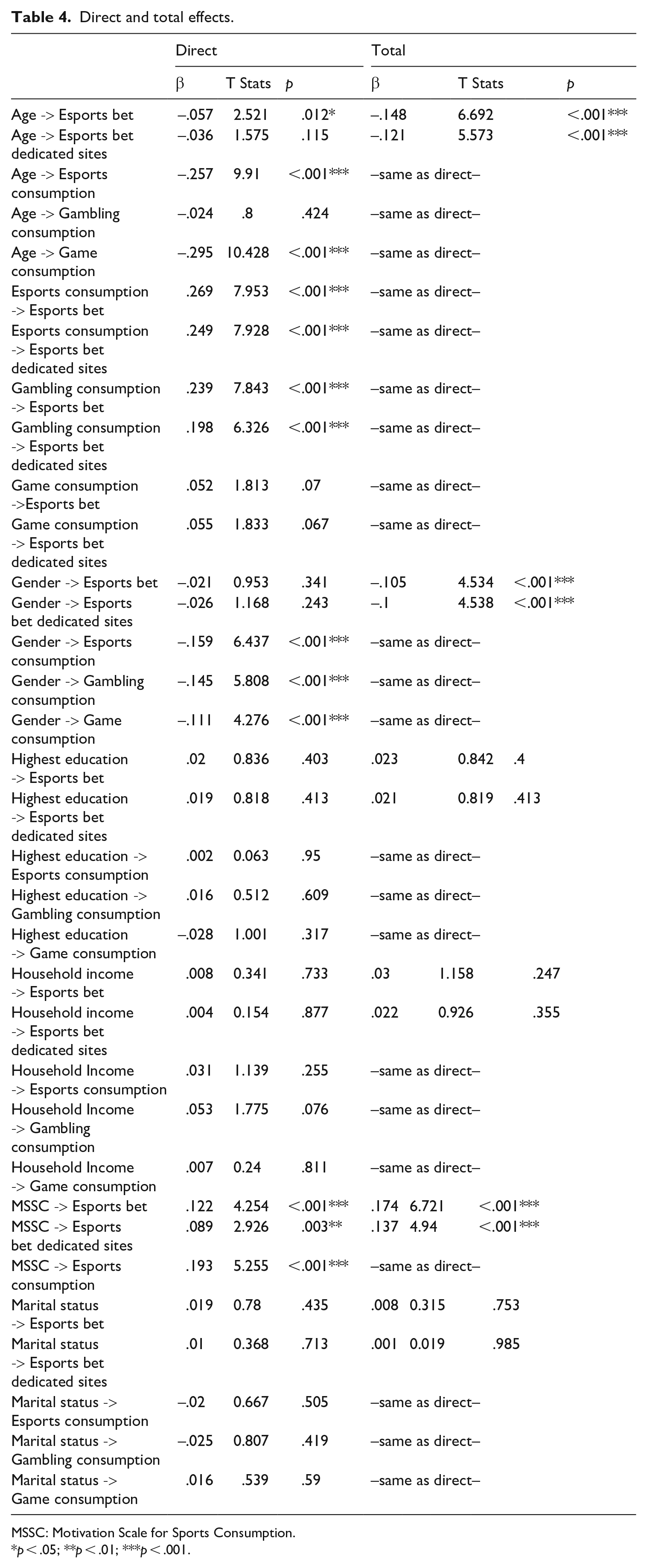
MSSC: Motivation Scale for Sports Consumption.
p < .05; **p < .01; ***p < .001.
The MSSC was found to positively correlate with esports consumption, as stated in H1, however, the path coefficient can be considered weak, β = .187, p < .001 (Cohen, 1988). Both H2 and H3 were also supported, as the MSSC was found to positively correlate with both esports betting and the use of dedicated sites, albeit with weak overall effects, (β = .174, p < .001 and β = .138, p < .001, respectively). The consumption of esports was also found to have positive correlations, of moderate strength, with both esports betting and the use of dedicated esports betting sites (β = .268, p < .001 and β = .250, p < .001, respectively), supporting both H4 and H5.
While the consumption of esports was found to be associated with younger participants (β = −.260, p < .001) and male gender (β = −.163, p < .001), no statistically significant relationships were observed with respect to marital status, annual household income, or highest level of educational attainment, in partial support of H6. As predicted, the consumption of video games was also associated with younger males, but no other demographic characteristics (H7).
Of all demographics, only gender was found to have a statistically significant relationship with the general consumption of gambling activities, meaning that H8 was unsupported: Gender - > Gambling Consumption β = −.145, p < .001.
As with H6, participation in esports betting was associated with younger males (β = −.148, p < .001 and β = −.105, p < .001, respectively), but no other demographic measure. Therefore, H9 was partially supported. H10 was supported, as the relationship between esports betting and demographic characteristics was replicated, almost exactly, in the use of dedicated esports betting sites.
Contrary to expectations, no statistically significant relationships were observed between the consumption of video games and esports betting activity, meaning H11 was not supported.
Finally, H12 was supported, with increased participation in general forms of gambling positively associated with increased betting on esports and the use of dedicated sites (β = .241, p < .001 and β = .199, p < .001, respectively).
Discussion
Investigating relationships between the use of digital media associated with video games and gambling activities has revealed that as consumption of esports and general gambling increases, so does esports betting. However, consumption of video games was not associated with increased betting on esports. In addition, a MSSC motivations adapted for use in esports shows only weak predictive power in this context, while also demonstrating small, but statistically significant, associations with esports betting activity. The MSSC was positively associated with the consumption of esports (H1), betting on esports (H2) and the use of dedicated esports betting sites (H3), meaning all three hypotheses are supported. However, the path coefficients were weak in magnitude, despite previous works finding that the MSSC is a good predictor of both sports consumption and sports gambling participation (Karg and McDonald, 2009; Lopez-Gonzalez et al., 2018; Trail and James, 2001). As such, it may not be the optimal measure for assessing motivations underlying esports consumption. This is further supported by the findings of previous studies which show that only a limited number of MSSC constructs exhibit statistically significant relationships in the context of esports consumption (Hamari and Sjöblom, 2017).
The finding that consumption of esports positively correlates with betting on esports (H4) mirrors established practices in traditional sports betting; increased consumption serves to build the knowledge base utilised in sports betting. In addition, there is ample evidence of sports fans demonstrating sentiment bias by betting on a positive result for their favoured team (Feddersen et al., 2017). Somewhat counter-intuitively, the reverse is also true. Some studies have found that fans may bet against their own team in order to lessen the blow of a negative result, a practice known as ‘hedging’ (Agha and Tyler, 2017). The concept of fandom may be a particularly strong driver for betting in the context of esports due to its robust and vibrant community, also potentially explaining the preference for the use of dedicated esports betting websites (H5), with many of these sites developed from within the community. This is in contrast to established sports betting companies, who may have only recently added esports lines to their books. As those who spectate esports are more familiar with the games, they may potentially look to sites that are specifically focused on these games, rather than a site that is designed for more general gambling/sports betting. Such behaviours support the perspective that esports consumers are more than simply players or spectators, and that there are numerous interrelated practices associated with the consumption of video game play (Seo and Jung, 2016).
The fact that only age and gender demographic items have statistically significant relationships with the consumption of esports (H6) serves to confirm the findings of previous research (Gainsbury et al., 2017; Hamari and Sjöblom, 2017; Macey and Hamari, 2019). Similarly, the consumption of video games is only associated with younger consumers (H7). These results tell us that consumption of media related to video games is becoming more mainstream as its reach extends across nearly all socio-economic markers, something which has been well documented by both academia and market research organisations.
The relationships of age and gender with consumption measures (H6 and H7) appears to confirm results of previous research, in that they suggest a stronger association with the consumption of esports and video games than that which is presented by market research organisations. It may be that this is a result of the eligibility requirements for this survey (participants qualified if they had gamed or gambled in the prior 12 months), but as other studies have had different criteria for inclusion it is unlikely.
Given that previous works have found that esports bettors are similar in demographic makeup to early adopters of online betting (Gainsbury et al., 2017), it was somewhat surprising that similar characteristics were not present in this study. It may be that as the consumption of digital media associated with both video games and esports becomes ever more widespread, socio-economic distinctions are becoming less apparent, as discussed earlier.
The results of H9 and H10 conform to existing knowledge concerning participation in sports betting. Increased participation is associated with males, although esports betting has a less pronounced division than traditional sports betting (Gainsbury et al., 2017). In addition, it confirms that there is a significant, and fairly robust, association between the consumption of esports and wagering on esports events, as discussed in the ‘Background’ section.
Increased consumption of video games was expected to be associated with increased participation in esports betting activity (H11), however, no statistically significant relationships were observed. That the p values were in the region of .07 suggests that this finding may just be a characteristic of the data sample employed in this research, and as such it is worthy of further investigation. Conversely, it may be that games simply act as a mediator for esports betting, a relationship observed in previous research. In addition, this study looked at all forms of gambling related to video games, not solely esports betting (Macey and Hamari, 2018).
The statistically significant relationship between increased consumption other forms of gambling with betting on esports (H12) also reinforces findings from previous works (Gainsbury et al., 2012; Macey and Hamari, 2018). We can see, therefore, that the emergence of gambling activities associated with esports is neither novel, nor unexpected.
Implications
The findings of H1-3 suggest that the MSSC may not be the most appropriate measure for assessing motivational drivers of esports consumption. As such, it feeds into the ongoing discussion concerning the equivalence of esports to traditional sports (Jenny et al., 2017) and, while the competitive nature of esports is undeniable, it may be that the computer-mediated context of consumption fulfils different motivational needs for consumers.
An avenue for future study would be the assessment of the MSSC in the context of esports consumption. Indeed, the field would benefit from such work in relation to all extant measures. Such work would establish whether any existing scales are valid measures for esports, or if the development of a dedicated scale is required. Given the highly mediated nature of esports consumption, it may also be that motivations differ between online consumption and attendance at live events.
This research supports previous works that found stronger associations between the consumption of video games, spectating esports, gender, and age, than those presented in published market research and discussed in the ‘Background’ section of this work. Therefore, a valuable direction for future work would be to continue to build on consumer studies in order to establish a reliable picture of contemporary media consumers by market segment (e.g. video games, esports, other streams).
Given the established findings that betting appears to be a significant aspect of engaged esports fandom, it is no surprise to see similar relationships present in this sample. A potential avenue for future work could be to understand whether this behaviour is derived from similar motivations to traditional sports (e.g. Vicarious Achievement, Drama, etc.) or as the result of video game consumption (e.g. self-perception of increased skill development leading to a preference for skill games rather than chance games).
Finally, the findings associated with H11 lend weight to a growing body of work that questions the traditional position that video game play is associated with increased participation in gambling (Delfabbro et al., 2009; Forrest et al., 2016).
Limitations
The most significant limitation of this study was the use of a questionnaire distributed to an online panel. Participants are self-selected, and this form of recruitment may oversample higher games, spectating and gambling involvement, particularly considering that the survey specifically sought those who had participated in video games or esports. As such, the results may not reflect the wider population and, consequently, lack generalisability. The limitations of survey-based research, indeed any form of data collection which relies of self-reported data, also extend to the potential for responses to be influenced by the participants’ desire to be perceived favourably, or through inaccurate recollection. However, the use of a third-party organisation to recruit participants may also reduce the potential for self-selection bias to affect results. Indeed, using a third-party organisation in this case resulted in a sample that was more representative of wider society than many other recent works in the field.
The primary aim of this research is to investigate the ways in which the consumption of esports video content, video game play and gambling activities are related to participation in esports betting. As such, the eligibility criteria for participants were that they had played video games and/or watched esports within the prior 12 months. With this in mind, results here may not be applicable to people who bet on esports, but do not watch esports nor play video games.
This research also only investigated the relationships between betting and spectating esports when defined at the level of competitive video game play, and not within individual sub-genres. As such, a fruitful avenue for future study would be the comparison of consumption behaviours between different esports genres, such as First-Person Shooter (FPS) or Multiplayer Online Battle Area (MOBA) games. Considering the distinct structural characteristics of the games, the former has a much shorter and quicker rounds that the latter, there may be different betting behaviours associated with each.
This work utilised a version of the MSSC adapted for use in the context of esports consumption. While all amendments were made in accordance with the stipulations of the original measure, the predictive power was not as strong as had been anticipated. As such, it may be that the MSSC is not the optimal measure for assessing motivations underlying the consumption of esports.
Conclusion
This study examined how the consumption of video games, esports and gambling are associated with esports betting. The results demonstrate associations between spectating esports and betting on esports, a pattern also observed with respect to participation in more established gambling activities. Contrary to the stated hypotheses, no direct association was observed between the consumption of video games and betting on esports. It may be that video games act as a mediator, as there cannot be esports without video games, yet there is no intrinsic aspect of game play that was associated with gambling behaviours. This finding builds on an existing body of research that questions such relationships in contemporary digital culture. However, the associations between spectating esports, participating in gambling and participation in esports betting mirror gambling behaviour in traditional sports betting. Although causality cannot be established, such findings serve to highlight the growing convergence of video gaming and gambling in digital media as a result of games and gaming culture being incorporated into novel contexts.
Finally, adapting the MSSC for use in the context of esports revealed that there is a potential need to develop a dedicated measure for assessing motivations for consuming esports. Such a measure is likely to provide a valuable contribution to theoretical discussions surrounding distinctions between traditional sports content and that of esports.
Supplemental Material
RR2_Appendices_What_predicts_esports_betting_Macey_Abarbanel_and_Hamari – Supplemental material for What predicts esports betting? A study on consumption of video games, esports, gambling and demographic factors
Supplemental material, RR2_Appendices_What_predicts_esports_betting_Macey_Abarbanel_and_Hamari for What predicts esports betting? A study on consumption of video games, esports, gambling and demographic factors by Joseph Macey, Brett Abarbanel and Juho Hamari in New Media & Society
Footnotes
Funding
The author(s) disclosed receipt of the following financial support for the research, authorship and/or publication of this article: Dr. Abarbanel has received funding in 2019 from The State of California Office of Problem Gambling, GLG Consulting, MGM Resorts International, and ProPress Germany. Dr. Abarbanel has received reimbursement for travel in 2019 from University of Salford and National Collegiate Athletic Association (USA). During part of 2019, Dr. Abarbanel was a member of the Singapore National Council on Problem Gambling International Advisory Panel, for which Dr. Abarbanel was reimbursed for her time. In addition, this research was supported by a Grant from The Finnish Foundation for Alcohol Studies.

Supplemental material
Supplemental material for this article is available online.
Author biographies
References
Supplementary Material
Please find the following supplemental material available below.
For Open Access articles published under a Creative Commons License, all supplemental material carries the same license as the article it is associated with.
For non-Open Access articles published, all supplemental material carries a non-exclusive license, and permission requests for re-use of supplemental material or any part of supplemental material shall be sent directly to the copyright owner as specified in the copyright notice associated with the article.
