




Abstract
The eSports industry is growing at a rapid pace. The expansion of streaming services such as Twitch and YouTube Live played an important role in this leap and greatly contributed to the rise in popularity of electronic sports. Despite this success, there is no research on the topic of streaming demand of eSports to date. This paper aims to fill this gap using a demand approach of traditional sports to analyze the streaming demand of an eSports discipline, the Counter-Strike: Global Offensive. The dataset comprises 865 matches between 2018 and 2021. Multiple Linear Regressions are taken as econometric tools. Main findings indicate that eSports enthusiasts value factors such as quality of tournament, match quality, and individual skill of the athletes when watching matches. In addition, the obtained results reveal that the Uncertainty of Outcome plays a significant role at streaming broadcasts of Counter-Strike: Global Offensive, where viewers prefer to watch those games in which there is a high level of competitiveness between the participants. Current research contributes to the existing eSports literature with a new framework for analyzing streaming demand. The empirical findings could be of the interest of tournament organizers as well as streaming platforms for maximizing audiences.
Introduction
Traditional sport disciplines (e.g., American football, basketball, football, tennis, etc.) have been the main settings for different sports management studies for decades (Borland and Macdonald, 2003). In particular, the demand for sports was and it still is one of the keystone topics in this field. Nonetheless, the eSports (electronic sports) have not been much discussed yet and the number of papers on this topic, including demand analysis, is reduced, and can certainly be expanded (Schreyer and Ansari, 2022).
The emergence of streaming services in different areas has seriously changed the world. Nowadays, it is not necessary to download single music tracks and albums; through a music streaming application (e.g., Spotify, Apple Music, etc.), by subscription, people have access to all the music and broadcast it directly to their headphones. It is the same with streaming content through digital holders. Cable shows, television shows of sporting events are gradually being diluted with streaming services. Moreover, in addition to streaming movies, TV series on sites such as Netflix or Disney +, there is another category of video streaming platforms that broadcast digital content in real-time produced by the streamers themselves. Such platforms include, for example, the video hosting of game content Twitch, where participants can both broadcast and watch other people’s broadcasts and is massively used for eSports.
In the last decade, eSport made a huge jump in recognition across the world. However, many people still experience difficulties in defining the definition of electronic sports, as well as differences and, most importantly, similarities between eSports and traditional sports.
Witkowski (2009) analyzed the sportiness of eSports and shared several arguments about similarities between gamers and athletes: training, strategizing, competition, organization, records, etc. Moreover, in another article in 2012, based on the studies from various sports sociologists (Caillois, 2001; Guttman, 2004; Giulianotti, 2005; Coakley, 2008; Witkowski, 2012) defined four prominent characteristics of sports, which are physicality, rules, competition, and regulations. While eSports successfully satisfy the last three criteria, the issue of physicality required additional analysis. Using the example of an offline (LAN) tournament in the computer game Counter-Strike, the author presented several key factors which can be considered as requiring physical activity. Such aspects as ‘seeing while moving’, ‘balanced body’, ‘haptic engagement between players and technologies’, which players were doing while sitting in their chairs in front of their computers, are the examples of physical performances which are crucial in the highly competitive game.
According to the Cambridge Dictionary Online (no date), eSport is an activity in which people compete against each other in computer games on the Internet. These matches are regularly played for money, where other spectators watch them online, but sometimes these competitions are also organized at special events. Hamari and Sjöblom, (2017) analyzed several studies, definitions, opinions on this topic, conceptualized the differences and defined eSports as ‘a form of sports where the primary aspects of the sport are facilitated by electronic systems; the input of players and teams, as well as the output of the eSports system, are mediated by human-computer interfaces’. Cranmer et al., (2021) proposed an eSports matrix which consisted of four dimensions that distinguish eSports: sports digitalization, competitive multiplayer games experience, digitally enhanced sports, and immersive reality sports. All blocks are arranged depending on the level of physical activity (active or passive), the level of technology, and the gaming environment.
eSport has grown rapidly in recent years and its popularity is increasing exponentially. The first video game, called ‘Tennis for Two’, was invented in 1958 and in 1972 the world’s first eSport tournament was held at Stanford University with only 24 participants (Winkie, 2019). The evolution of personal computers (PCs), as well as the fact that every year they became more and more accessible, allowed games to enter many homes. The development of the Internet through local area networks (LAN) gave gamers opportunities to play and test their competitive skills against each other despite their current location. The creation of streaming platform called ‘Twitch.tv’ in 2011 opened up the opportunities for online broadcasting and brought competitive gaming and tournaments across a variety of games like Counter-Strike, Dota 2, League of Legends, Fortnite to the masses and spread them all over the globe (Kokinda and Rodeghero, 2023). Since then, the popularity of eSports events has skyrocketed. Many games and companies-developers organize their own tournaments, cooperate with sponsors, and create events (Shenkman et al., 2022).
Building on this success, awareness and rapid growth, even football clubs these days are creating eSports divisions depending on the category of the game. As a result, in 2020 the total audience of eSports viewers approximately exceeded more than 490 million people (Johnson, 2020). Moreover, the eSports global streams in 2020 generated revenue of more than 1 billion dollars which represents further evidence of the giant leap in popularity of electronic sports broadcasts.
Roles description.
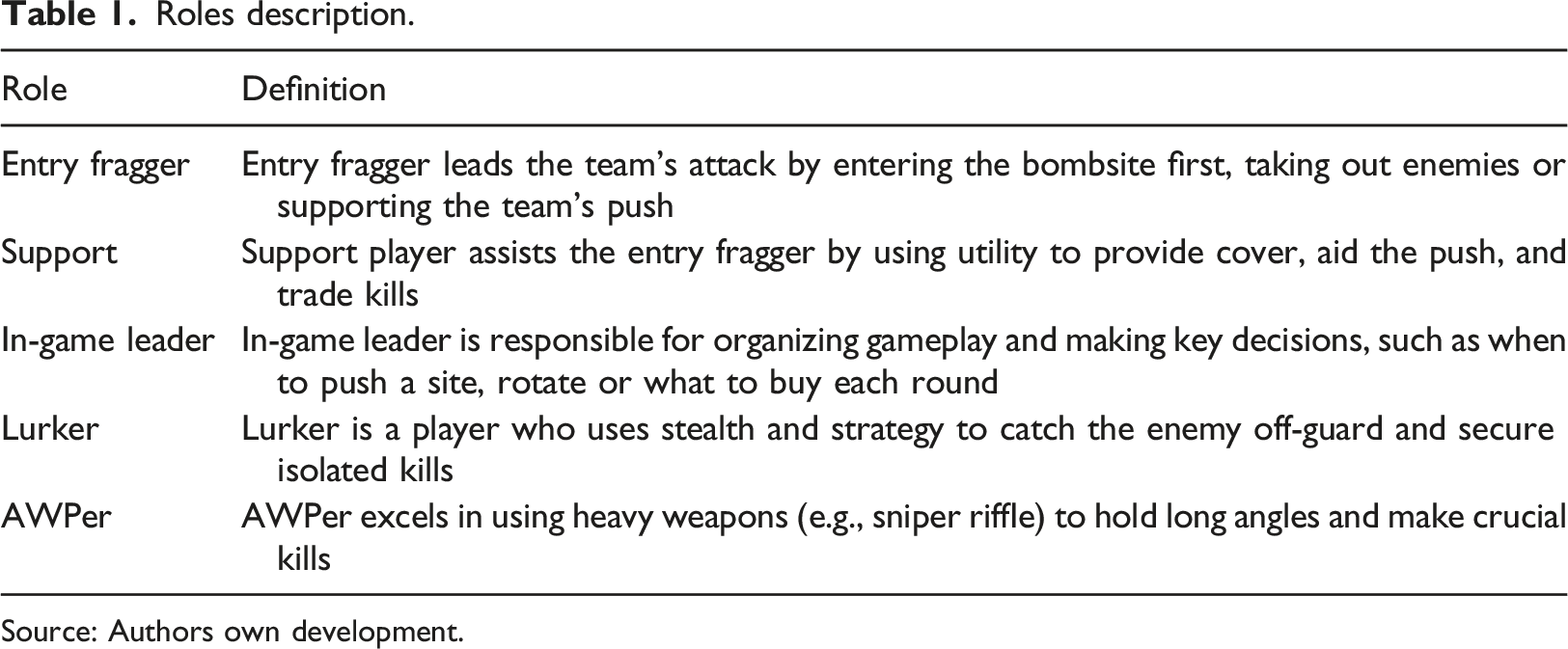
Source: Authors own development.
Since the game’s introduction in 2012, it has become one of the leaders of competitive online gaming and its popularity continues to grow. More than 100 different tournaments are held annually, watched by hundreds of thousands of spectators from different parts of the world. Moreover, some events attract the attention of millions, and the prize pool reaches a million-dollar mark. Additionally, according to daily statistics from the distributor of many games ‘Steam’, over one million players play CS:GO every day which makes it the most popular game on the platform (Steam, n.d.).
Despite the fast grow of eSports and their massive popularity, as well as the emergence and substantial appeal of streaming platforms, the determinants of demand for eSports matches are still unknown, which constitutes a valuable gap to be filled. Therefore, the aim of the present research is to identify the decisive factors that lead to an increase in viewership rates on competitive eSports matches.
This paper is divided into the following sections: the theoretical background provides an overview of the current literature on eSports as well as a brief outline regarding demand for sports research and its potential connection with eSports that is overlooked until now. The third section (Methods) details the data collection procedures, methodology and econometric modeling design. The Results and Discussion sections present the main empirical findings and discuss them with prior research. The key contribution from this paper as well as suggestions for further research is also presented there. Lastly, the Conclusion section summarizes the current work showing our main conclusions.
Theoretical background
Determinants of demand for traditional sport disciplines
The literature on determinants of demand for traditional sport is extensive. It started several decades ago, when Rottenberg (1956) first analyzed the effect of the uncertainty of outcome and how it influences attendance at sporting events. Borland and Macdonald (2003) reviewed the literature on the demand in traditional sports and studied the key determinants of attendance which included uncertainty of outcome, TV broadcasting effect, quality of the match (weather, stadium age, etc.), contest quality, price, among others. Authors conceptualized two approaches in order to find the Uncertainty of Outcome: through the difference between positions in the league table and by using information from betting odds. Additionally, scientists divided the Uncertainty of outcome factor into 3 parts: match-level, season-level, and long-run. The first measurement of match-level Uncertainty included difference in winning percentages or league ranking of teams and the second was based on winning probability derived from betting odds.
Schreyer and Ansari (2022) offer the latest literature review on this field. Analyzing almost 200 papers, they highlight that most of the literature still focuses on traditional sports, such as associate football, baseball, American football, hockey, basketball, and rugby, with few exceptions in other sport disciplines. Although the dominant determinants corroborate with the framework presented by Borland and Macdonald (2003), they notice that the latest papers are examining specific themes and trying to reveal factors once overlooked. Nonetheless, an important insight from that systematic scoping review is the lack of research on niche sport disciplines, electronic sports, women’s sports, and emerging markets. Therefore, despite the increasing popularity of eSports, there is a scarcity of research on the determinants of demand for this emerging form of competition, which highlights the need for further investigation into the factors that drive its growth and popularity.
Determinants of eSports demand
Recently, various researchers have explored the topic of eSport consumption and identified consumer needs: either to watch or to play competitive video games. Lee and Schoenstedt (2011), in their article comparing traditional sports and eSports, analyzed this theme from the perspective of gamers’ consumption motives. For the survey, authors introduced 14 eSports (social interaction, competition, sports knowledge, etc.) and 7 traditional sports (game participation, televised sports viewing, etc.) consumption motives. Even though the study analyzed aspects of playing video games, overall, it provided important insights about gamers’ consumption motives. As a result, competition and skill showed positive significance and influence on the video games playing time while peer pressure, on the other hand, had a negative impact. Moreover, the authors made an important comparison with traditional sports motives. Similarities in consumption were found between the five aspects, which follow in descending order: televised sports viewing, Internet usage specific to sport, game participation, radio listenership, team merchandise purchase.
Several studies have explored the motives behind eSports consumption, both for players and spectators. Weiss and Schiele (2013) found that competition, challenge, and escapism were the primary motivators for playing competitive eSports, whereas Hamari and Sjöblom (2017) found that escapism, acquisition of game knowledge, novelty, and aggression were positively related to consumption frequency. In contrast, Pizzo et al. (2018) found that vicarious achievement, family bonding, skill of the athletes, and entertainment were significant factors influencing attendance at eSports LAN events. Xiao (2019) found that escapism, aesthetics, and drama were positively related to intentions to watch eSports, while Jang et al. (2021) found that eSports live-streaming mediated the relationship between entertainment gameplay and eSports competitive events broadcasts.
Moreover, Kim & Kim (2020) explored the connection between live-streaming technology, virtual environments, and motives influencing the spectators’ flow experience and subjective well-being. Their findings suggest that the flow is influenced by achievements, drama, skill of the involved players, while well-being is highly connected to friendship and social dimensions, supporting the conclusions of other researchers in the field. Additionally, Ma et al. (2021) further examined how different game genres, live-streaming types, and motives impact eSports live-streaming consumption. They found that the interaction between game genres, live-streaming types, and motives influenced eSports live-streaming consumption, as different game genres provide different match types, visuals, strategy schemes, etc.
Emotional attachment to a person, thing, or event can greatly affect people’s behavior. This is particularly evident in sports, where many fans have strong emotional ties to their favorite teams or sports. eSports is no exception and offers a hedonic gaming experience, which refers to the enjoyment and pleasure derived from playing video games. In fact, Hollebeek et al. (2022) have introduced a seven-dimensional perspective of the hedonic gaming consumption experience, which includes escapism, fantasy, role-projection, emotional involvement, enjoyment, arousal, and sensory experience that draw people into video games.
Fans can follow teams from their own region or be interested in foreign organizations. Moreover, the development of eSports has led to the emergence of multinational squads. The impact of cultural diversity on team performance has been studied by Parshakov et al. (2018), who found that the absence of cultural diversity negatively affects the results, while the presence of players who speak different languages worsens performance.
In both traditional sports and eSports, the live presence of fans can significantly affect players' performance and viewing frequency. Bowman et al., (2013) analyzed the impact of audience presence on the performance of gamers during the game and found that the live presence of fans at matches affected performance. High-skilled players were positively influenced by the audience, while low-skilled players experienced difficulties. This may indicate that LAN tournaments provide higher skill and attractiveness of the matches for both offline and online spectators.
As the growth of eSports continues to accelerate, the role of streaming platforms in shaping the industry is becoming increasingly significant. With vast amounts of data available through these platforms, there is a unique opportunity for researchers to analyze demand for eSports and gain insights into consumer behavior.
Streaming as a key platform for eSports audiences
Streaming has played a major role in the widespread and rapid development of eSports around the world. Thanks to the availability of online streaming, more and more people become interested in the industry each year. Spilker and Colbjørnsen (2020) describe streaming as the transmission of digital content through TCP/IP networks that is transported on a remote server. Unlike downloading, the information is stored for a certain period of time on the user’s device. Streaming has also introduced two key trends – professional and user-generated content (UGC) – to the world of eSports. The professional aspect deals with eSports leagues, live broadcasting of tournaments, and a more detailed attention to the competitive side of gaming. UGC allows streaming services to become a major force in Internet media.
As a platform for broadcasting various events, streaming platforms are competitors to traditional broadcasting systems, such as television. Therefore, in order to attract and retain an audience, streaming platforms must have attributes that give them an advantage. Scheibe et al. (2016) issued the topic of behavior on social live-streaming platforms on the example of YouNow. The findings suggest that one of the main motives to use streaming services is the simplicity of usage. Streaming gives spectators the opportunity to connect to the broadcast of the person of interest in the shortest possible time. Additionally, the respondents noted that a unique feature of streaming is interaction with other users and the streamer through chat or donation functions. Overall, these factors, as well as the general gamification of the viewing process, create a feeling of virtual presence and seriously affect the desire to watch.
In order to understand why people prefer to keep watching live-streaming platforms, Hu et al. (2017) conducted a research in China. The findings confirm the idea that spectators’ identification with broadcasters is important and positively associated with intentions to consume content in the long-term. Moreover, the desire to continuously watch depends on the type of content and varies with live-streaming genres. Similar conclusions are supported by Xu and Ye (2020), who analyzed viewers’ behavior and motivations to watch live streaming in China.
Emotional attachment to a person, thing, and event greatly affects people’s behavior. Similarly, in sports, many fans have special emotions for their favorite team or sport. eSports is no exception and offers a hedonic gaming experience which states for enjoyment and pleasure from playing a video game. Hollebeek et al. (2022) introduced seven-dimensional perspective of hedonic gaming consumption experience including escapism, fantasy, role-projection, emotional involvement, enjoyment, arousal, and sensory experience which draw people into video games.
In eSports, as in traditional sports, the live presence of fans can significantly affect players performance and, on other hand, influence viewing frequency. Bowman et al. (2013) analyzed the impact of audience presence on the performance of gamers during the game. In general, the results showed that the live presence of fans at the matches affected the performance: the audience had a positive effect on the game of high-skilled players, while low-skilled ones experienced difficulties. This may indicate that LAN tournaments provide higher skill and attractiveness of the matches both for offline and online spectators.
Twitch is now one of the leaders in the streaming industry and (in most cases) the main and primary platform for broadcasting eSports disciplines. As of March 2023, the platform had over 140 million unique visits and more than 30 million daily active users (Ruby, 2023). The motivation for Twitch usage was investigated by Gros et al. (2017). The main conclusions are that socialization, entertainment, and information drive spectators’ intentions to watch streams. In terms of entertainment, the streams share similarities to traditional TV broadcast, while the Information factor is revealed as a chance to learn gaming aspects and strategies. Moreover, unlike TV broadcasting, Socialization factor gives viewers a unique opportunity to interact with each other through donation messages, chat, etc.
Conceptual framework and hypothesis
Overall, several researchers (Scheibe et al., 2016; Hu et al., 2017; Spilker and Colbjørnsen, 2020; Xu and Ye, 2020) investigated the concepts of streaming, its rapid ascent, features and reasons why many people find streaming services such as Twitch or YouNow interesting and important, preferring them to traditional broadcasters of information and content. Main findings suggested that simplicity, interactions with other users and streamer through chat, gamification of the spectating process are the key features of streaming that viewers enjoy the most and that allow streaming platforms to stand out from the background. Moreover, eSports studies presented patterns of consumers motives (Lee and Schoenstedt, 2011; Weiss and Schiele, 2013; Hamari & Sjo;blom, 2017; Bowman et al., 2013; Xiao, 2019), such as vicarious achievement, skill of the athletes, entertainment, etc. Many researchers in traditional sports analyzed the attendance demand (Garcia and Rodriguez, 2002; Borland and Macdonald, 2003; Wilson and Sim, 1995; Forrest and Simmons, 2006; Buraimo, 2008; Madalozzo and Villar, 2009) and listed important factors: day of the week, quality of the game, quality of the teams, uncertainty of outcome, etc. However, despite the existence of the described papers, in accordance with the findings of Schreyer and Ansari (2022) who conducted the recent analysis of the existing literature on stadium attendance demand, currently no stadium attendance demand studies have been conducted for eSports, especially in games such as Dota 2, League of Legends and, as with the case of the current article, Counter-Strike: Global Offensive. Figure 1 illustrates the conceptual model employed in this paper. Conceptual model.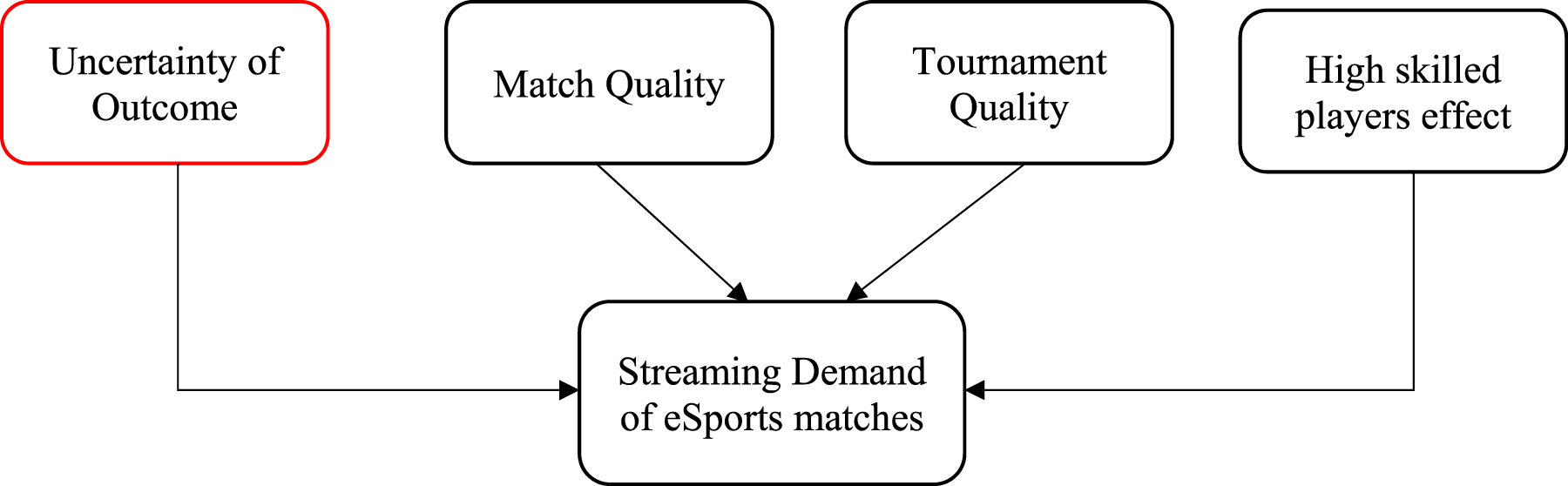
Summing up, the research gap in the existing literature is that the scope of current eSports studies about streaming demand for electronic sports is still limited. To the best of our knowledge, this paper is the first one empirically investigating the demand for eSports. Authors in the field of eSports have presented a wide range of factors that influence viewers’ interest, but no previous study has looked at the streaming demand on eSports disciplines. This study utilizes existing eSports literature as well as demand research frameworks on traditional sports. The hypothesis to be tested here follows the idea that eSports are sports disciplines and, therefore, the uncertainty of outcome may play a significant role increasing audiences – as it is detected in most of other traditional sports. The hypothesis 1 is following:
Uncertainty of Outcome positively influences the demand for eSports competitive matches in the Counter-Strike: Global Offensive
Methods
Data
Data collection was divided into two parts: collecting data about the viewership and collecting data related to the determinants of the demand. The first source is eSports website ‘escharts.com’ which tracks events and statistics from eSports online broadcasting. The second website is ‘hltv.org’ – one of the biggest sources of news, in-game statistics, reviews, forums related to Counter-Strike: Global Offensive. The data has been scraped and modeled using RStudio.
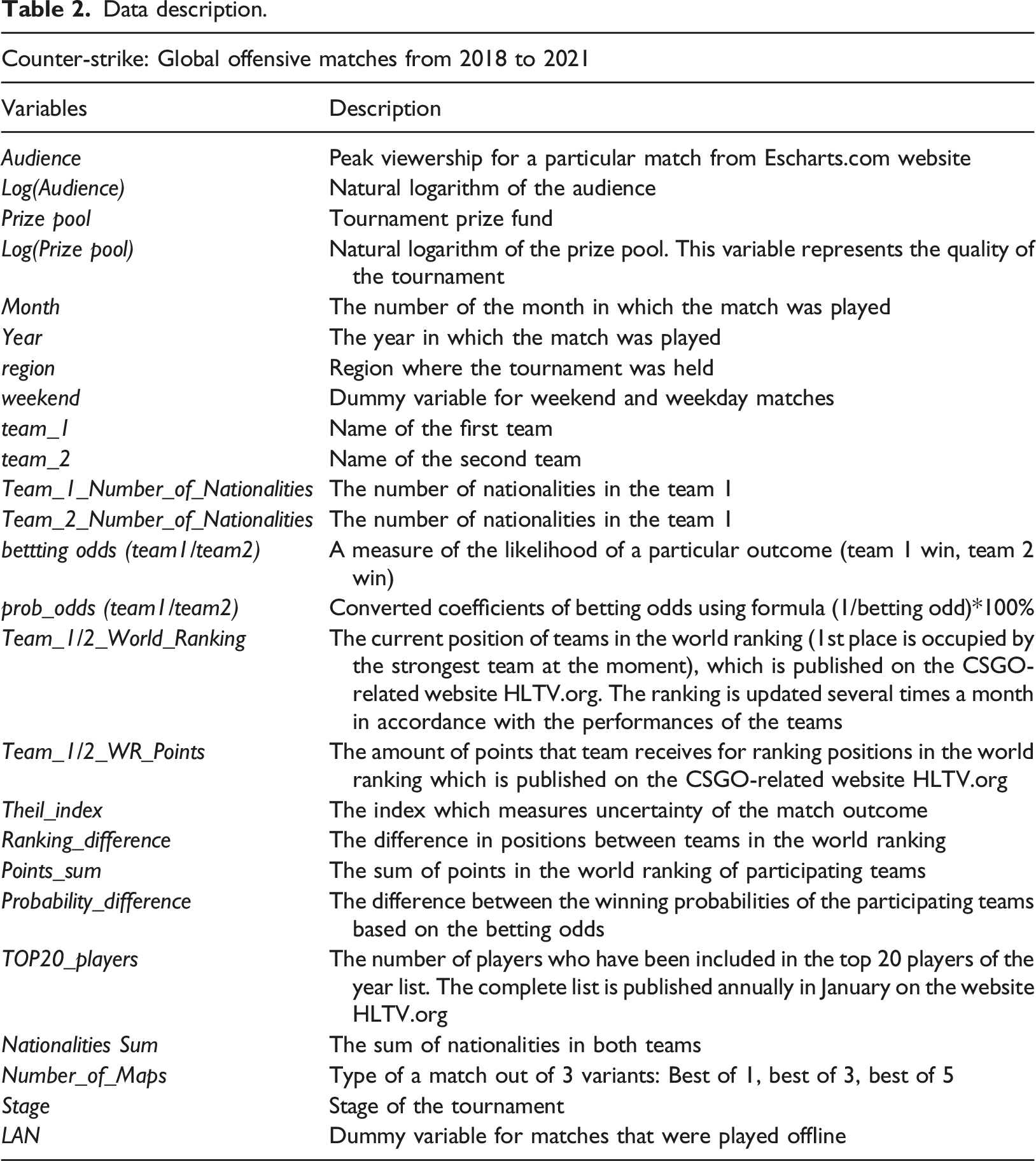
Data description.
Modeling design
This research has a quantitative approach in order to analyze data on the viewership of eSports competitive matches and identifying decisive factors. Multiple Linear Regression is chosen as the econometric tool to study the effect of explanatory variables on the streaming demand of Counter-Strike: Global Offensive.
The model estimates the streaming audience of Counter-Strike: Global Offensive matches (audience) which is driven by Prize Pool (q) as a proxy of Tournament Quality, Sum of Points in Ranking (p) as a proxy of Match Quality, Star-quality players from TOP 20 World Ranking (r), national diversity in participating teams (n), dummy variables for Weekend (w) capturing the effect of matches scheduled on weekends, LAN (l) capturing of the effect of games at the stadiums in front of the fans, Number of Maps (f) for different types of matches and remained control variables such as region, month, season. The main variables of interest are those related to the Uncertainty of Outcome (UO) – three models are regressed taking different proxies. For the fourth model, an additional control variable of Stage (s) is added, which aims to control and capture the effect of different stages of the Tournament. Since no previous research has addressed the streaming demand on eSports disciplines, there was no specific framework to be used. However, we consider the key determinants of sports demand according to Borland and Macdonald (2003) and Schreyer and Ansari (2022) to build up our model, adapting it to specific characteristics of eSports as well.
The general equation is as follows:
Variables
Peak view is chosen as dependent variable. The most traditional measure of audience (i.e., total number of viewers) faces an important issue when assessing the live-streaming demand: individuals can access the content of a match afterward. That is, the content is available online pre-recorded and, hence, people can watch it at any day and time. In this sense, the demand for the live content is not correctly estimated and the total number tends to grow over time. The peak view, in turn, protects the data from getting unnecessary information, representing the maximum number of people connected in a stream platform at the same time, which would be naturally during the live event. It is important to mention that the audience distribution (Figure 2) is significantly skewed to the left. Therefore, it has been taken in natural logarithm distribution. Audience distribution and Logarithm of the audience distribution.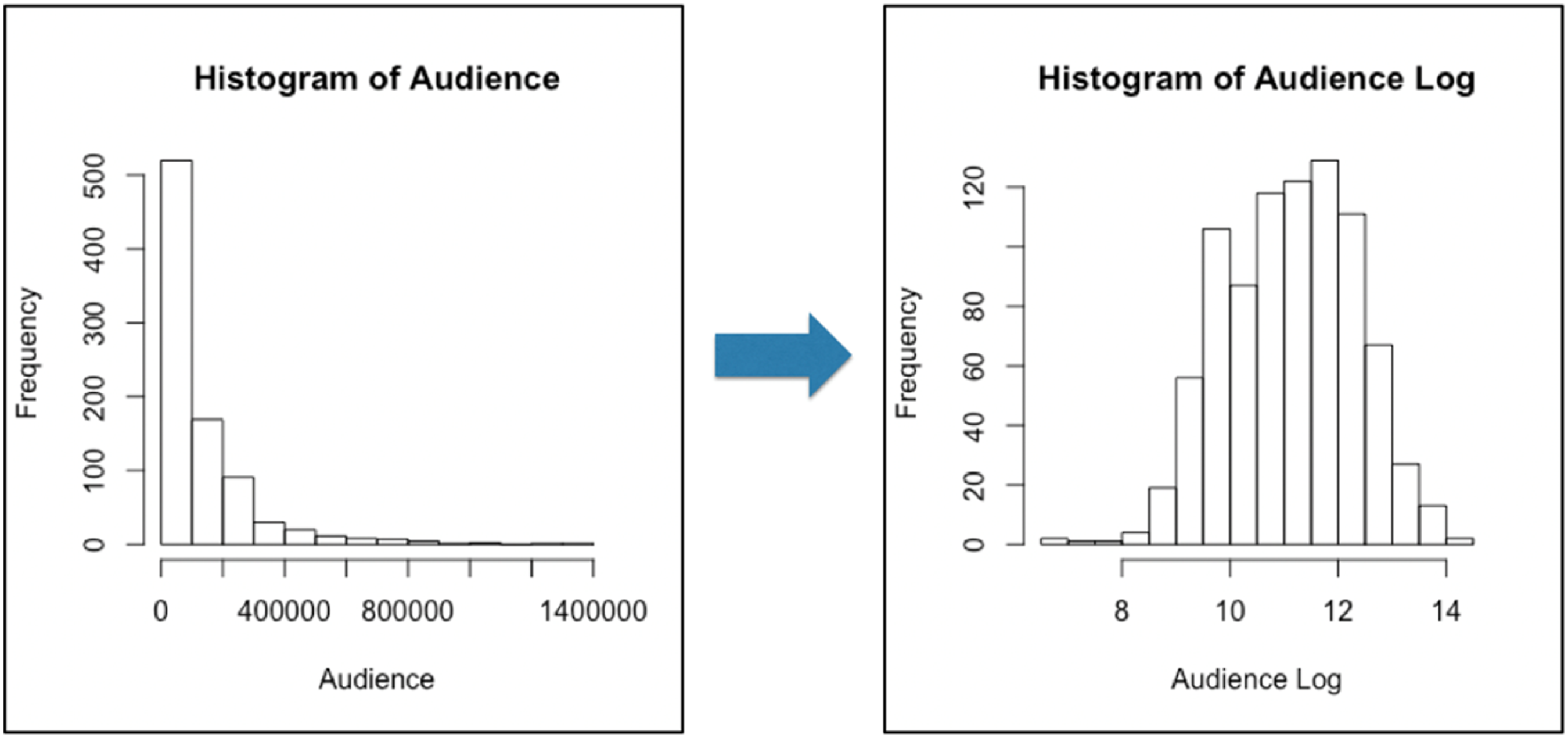
Explanatory variables are divided into 5 main groups, following the theoretical framework presented here: Teams related variables (1), Tournament specifications (2), Match specifications (3), Quality of the game (4), and Uncertainty of Outcome (5).
The first group (1) includes ratings, Number of Top 20 players, and Number of Nationalities. Pizzo et al. (2018) singled out that the factor of the skill of the athletes is an important aspect, which is positively associated with the intentions to watch eSports matches. Additionally, in the traditional sports areas, Wilson and Sim (1995), Buraimo (2008) highlighted the importance of having star players in the lineups, as this tendency had a positive effect on game attendance. The number of the Top 20 players is the list of the best players of the year, which is compiled annually by the independent Counter-Strike related website htlv.org.
The rating is compiled both based on the performances of the teams during the calendar year, and on the basis of the personal performances of athletes, their achievements, awards, statistics. Furthermore, it is worth highlighting the conclusions from Parshakov et al. (2018) article, which emphasized that the lack of diversity negatively affects the results of the team. The number of nationalities represents the number of different countries that the players are from. Teams can either consist of players of the same nationality and represent one country, or they can be mixes in which different representatives are gathered Tournament specifications (2) is another group of variables, and it includes Location of the Tournament, Stage, Prize Pool, LAN/Online type. The location represents the place where the tournament was organized, and the matches took place. Some tournaments were held online, in which case the host-region was chosen as the location. The stages include various variables from the Group stage to the Grand Final.
The structure is similar to some tournaments in traditional sports. Teams from the same group play each other, after which the best teams qualify for the play-offs, where they move through the tournament grid to the Grand Final. Moreover, in the case of eSports, the tournament bracket system (upper and lower brackets) is also often used. In this bracket system, the contestant has a chance to lose once and continue playing in the tournament. After the first loss, the losers move on to lower brackets and make their way back to the final where the winner of the loser’s brackets (lower brackets) will play the winner of the winner’s bracket (upper brackets) for first place.
The Prize Pool (in dollars) is a variable representing the total winnings bank owned by the organizer for payout to winners, prize winners and participants. Many electronic sports enthusiasts enjoy competition and vicarious achievements as elements of competitive gaming (Lee and Schoenstedt, 2011; Pizzo et al., 2018; Weiss and Schiele, 2013), therefore, the Prize Pool variable is seen as an indicator of the quality of the tournament, as this factor varies widely from small online games to large million-dollar Major-tournaments. Some events do not have prize money, but the winners receive quotas for competitions in more prestigious tournaments. In this case, the Prize Pool money will be calculated as 0.
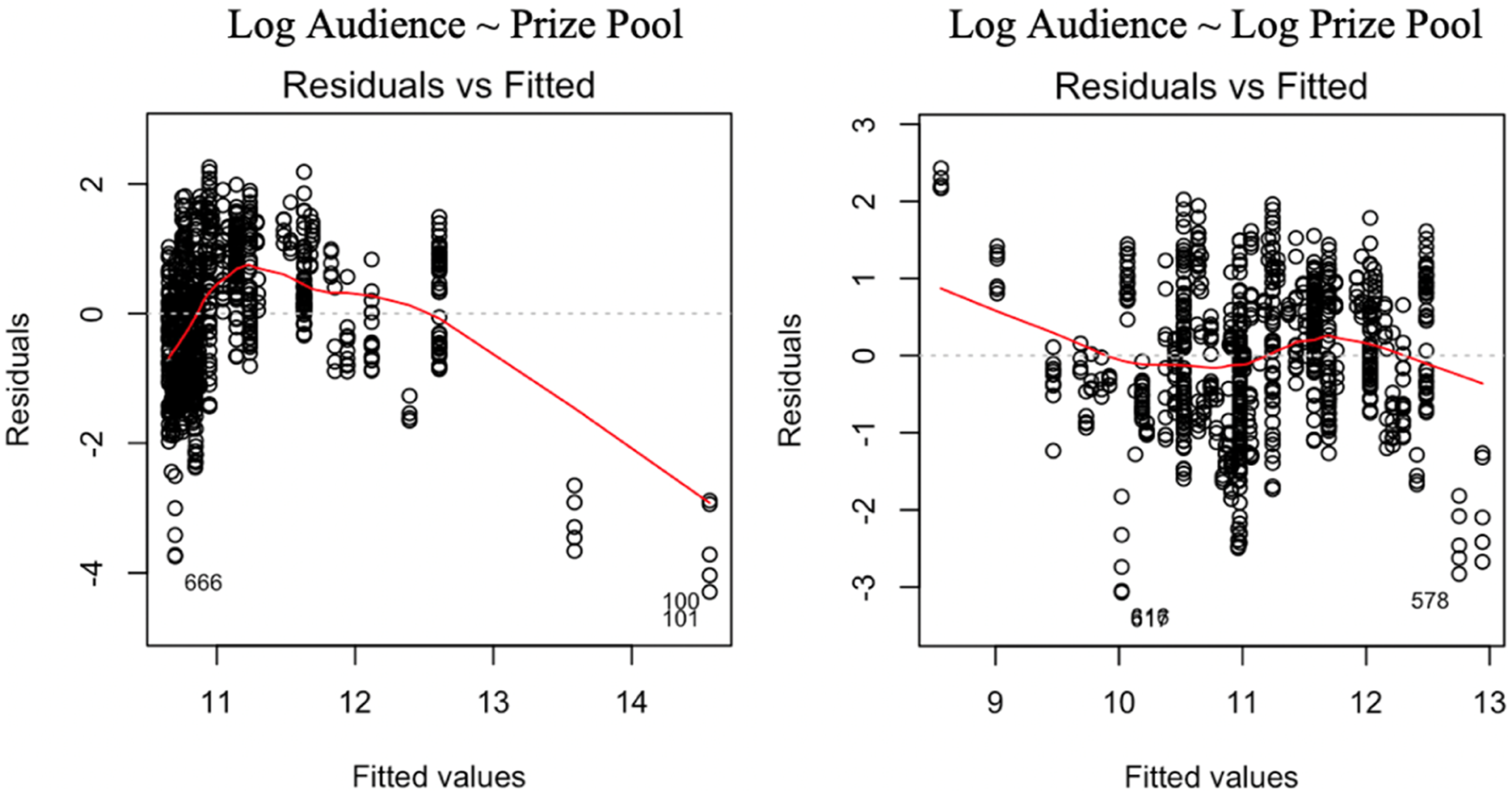
Prior to launching the models participating in the study, independent variables were checked for compliance with regression model assumptions. The distribution of the Prize Pool is abnormal, highly shifted to the left (Figure 3). In this regard, additional steps were taken to correctly evaluate this determinant. A linear model was launched, based on which diagnostic plots were built. Figure 4 illustrates the comparison of Residuals diagnostic plots which are one the basic tools to check the fit. Original Prize Pool does not follow linear assumption while Log argument is close to linearity. Hence, the natural logarithmic transformation was applied to the Prize Pool parameter before running main models. Prize Pool distribution and Logarithm of the Prize Pool distribution. The comparison Prize Pool and Log Prize Pool Residuals Diagnostic Plots.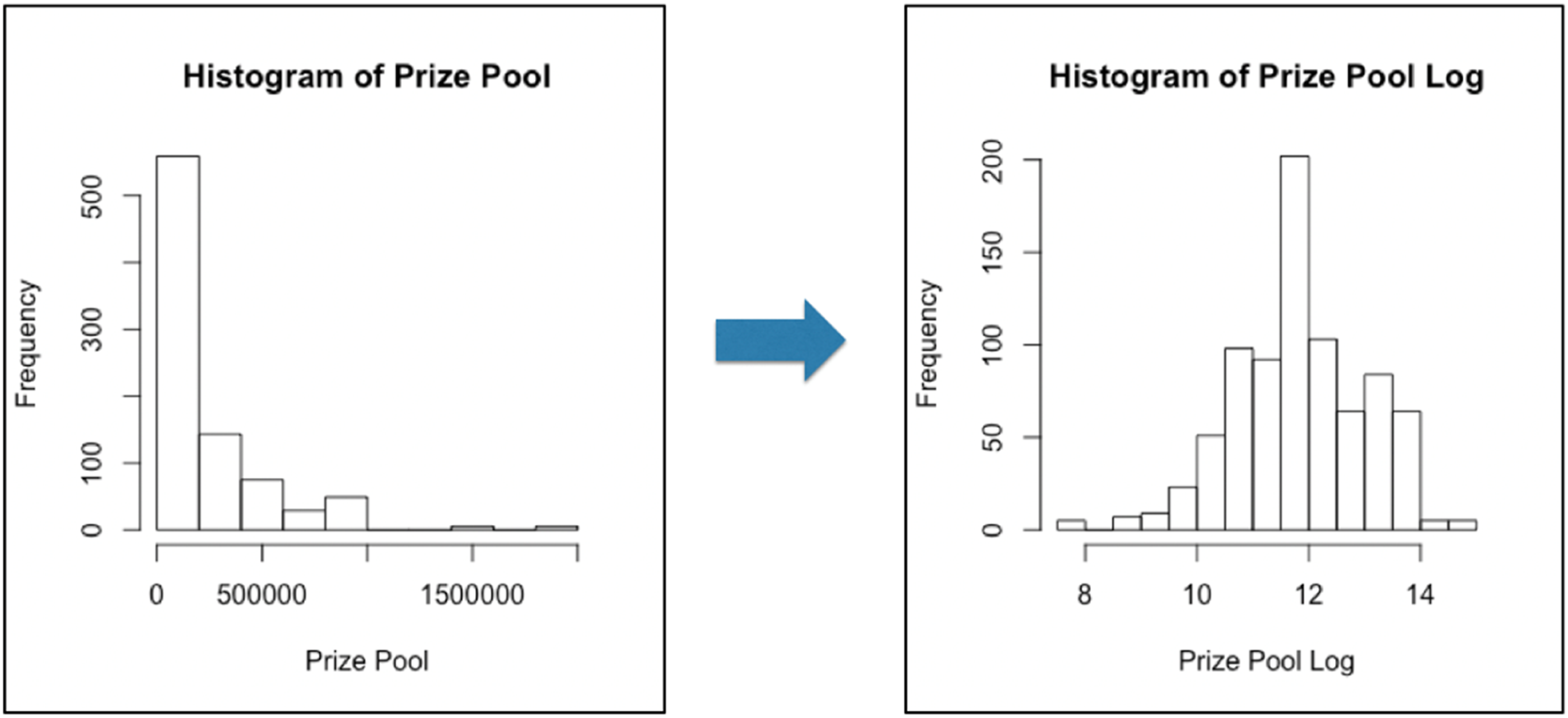
Tournaments are divided into online, where each participant remotely takes part in matches, and offline (LAN), which represents the format with games at the stadiums in front of the fans. Bowman et al. (2013) found out that the live presence of fans at the matches affects the performance, and the impact is different for low-skilled and high-skilled athletes. For research purposes, this factor is taken as a dummy variable, where 1 is LAN tournaments, and 0 is online.
The next cohort of variables is associated with Match specifications: Month, Year, Weekend, Number of Maps. This portion of dummy variables is included as controls. Month and Weekend relate to the parameters of the date and its effect on the number of viewers. The weekend is a dummy variable, where 1 is assigned for matches during the weekend and 0 for weekdays games. The Number of maps is a set of three match options: best of 1, best of 3, best of 5. Best of 1 is a type of match in which the winner is determined by the result on 1 map, in the best of 3, in order to win team needs to win 2 maps out of 3, and in the best of 5–3 maps out of 5.
The Uncertainty of Outcome effect on the stadium attendance rate has been discussed by many authors in the field of both traditional sports and football, in particular. Garcia and Rodriguez (2003) calculated this factor as a difference in league standings and stated that closer teams to each other in the league would result in higher attendance. Buraimo and Simmons (2008), Baidina et al. (2021) used the Theil index and Betting odds in their studies and discovered that the teams’ chances of success in the match affect the fans' intentions to visit the stadium. For a more detailed analysis of the impact of the Uncertainty of Outcome variable, four different models are carried out. UO is measured by Theil Index in models 1 and 3, while is measured my World Rankin differences in model 2 and differences in the winning probabilities in model 3.
Match quality represents a parameter that illustrates the level of the participating teams, which can influence the viewers’ decision to watch the game. In the context of this study, this variable is calculated as the sum of the points of the teams from the World Rankings. The World Ranking of teams is presented on the largest Counter-Strike–related website HLTV.org. This rating is based on the results of teams over a certain period of time and is updated several times monthly. In addition to ranking positions, teams are also awarded points. The maximum number of points a team can receive is 1000. In addition to the World Ranking, there is also a Regional table, in which the number of points is also duplicated, but the teams are ranked according to their level and strength in the region. In this study, this division was used only in cases when the team is not included in the overall rating.
Betting odds are also collected from the website HLTV.org. For occasions when HLTV.org lacks information about betting odds, they were taken from betting website Csgolounge.com. Like the Theil index, Winning probability is a reflection of the degree of Uncertainty of Outcome. Therefore, variables for each Team Winning Probabilities are calculated by converting the coefficients from betting odds and the distributions are shown in the Figure 5. The distribution of Team 1 & Team 2 Winning Probabilities, %.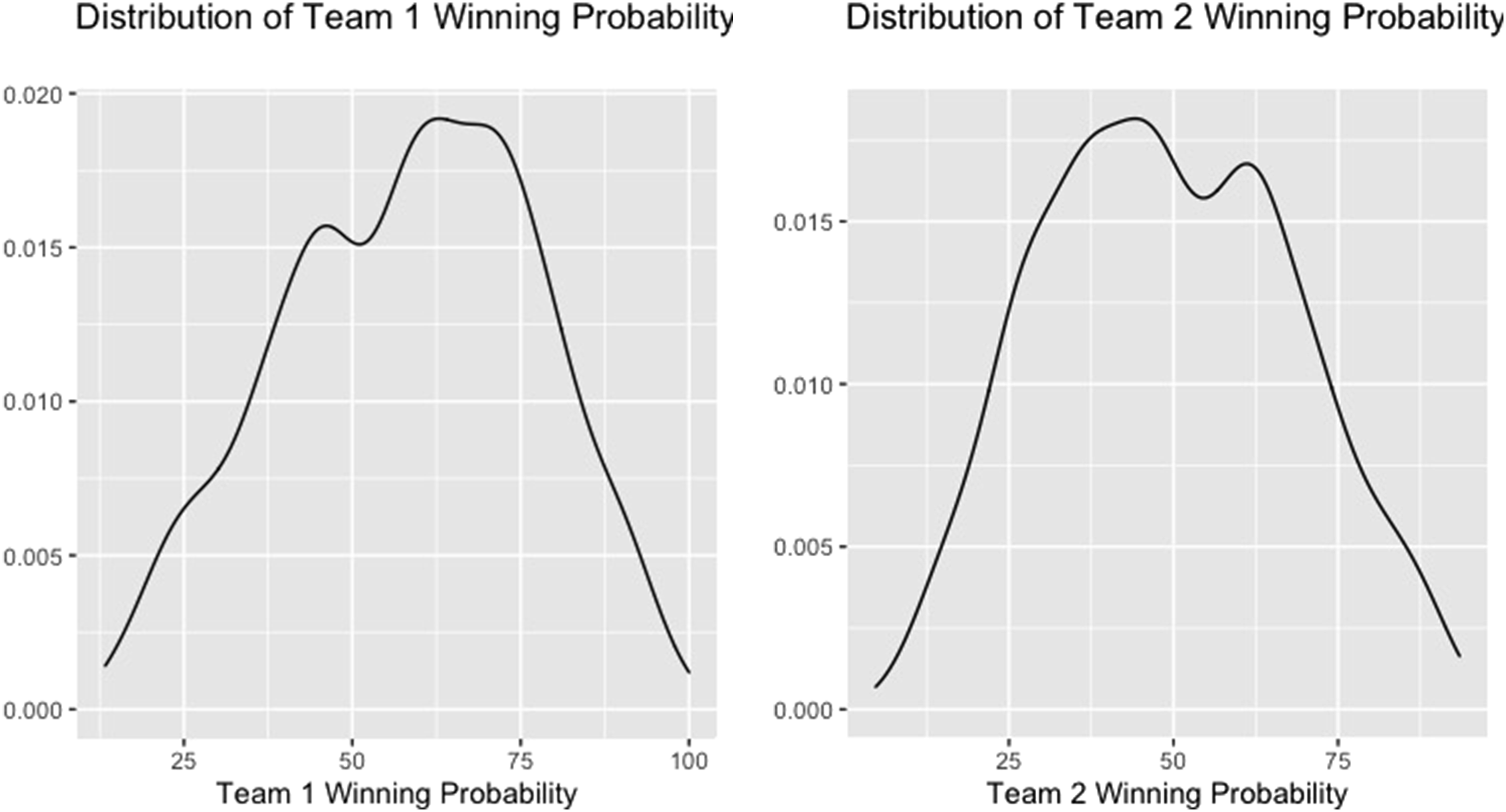
It should also be noted that in eSports, apart from the small number of matches with specific conditions, there can be no draw option. Teams compete until one participant achieves the desired result. If the winner is not selected in regular time, then additional rounds in Overtime are assigned and this process will be repeated until one team remains. Moreover, in eSports, there is no such division into the categories of home or away teams, since in the case of online competitions, matches are held remotely. The only exception is when the venue of the tournament coincides with the nationality of some of the participants, but there are no additional advantages in the form of, for example, a personal arena, and the choice of location is based on the preferences of the event organizers, sponsors, and general development of electronic sports in the region.
Results and Discussions
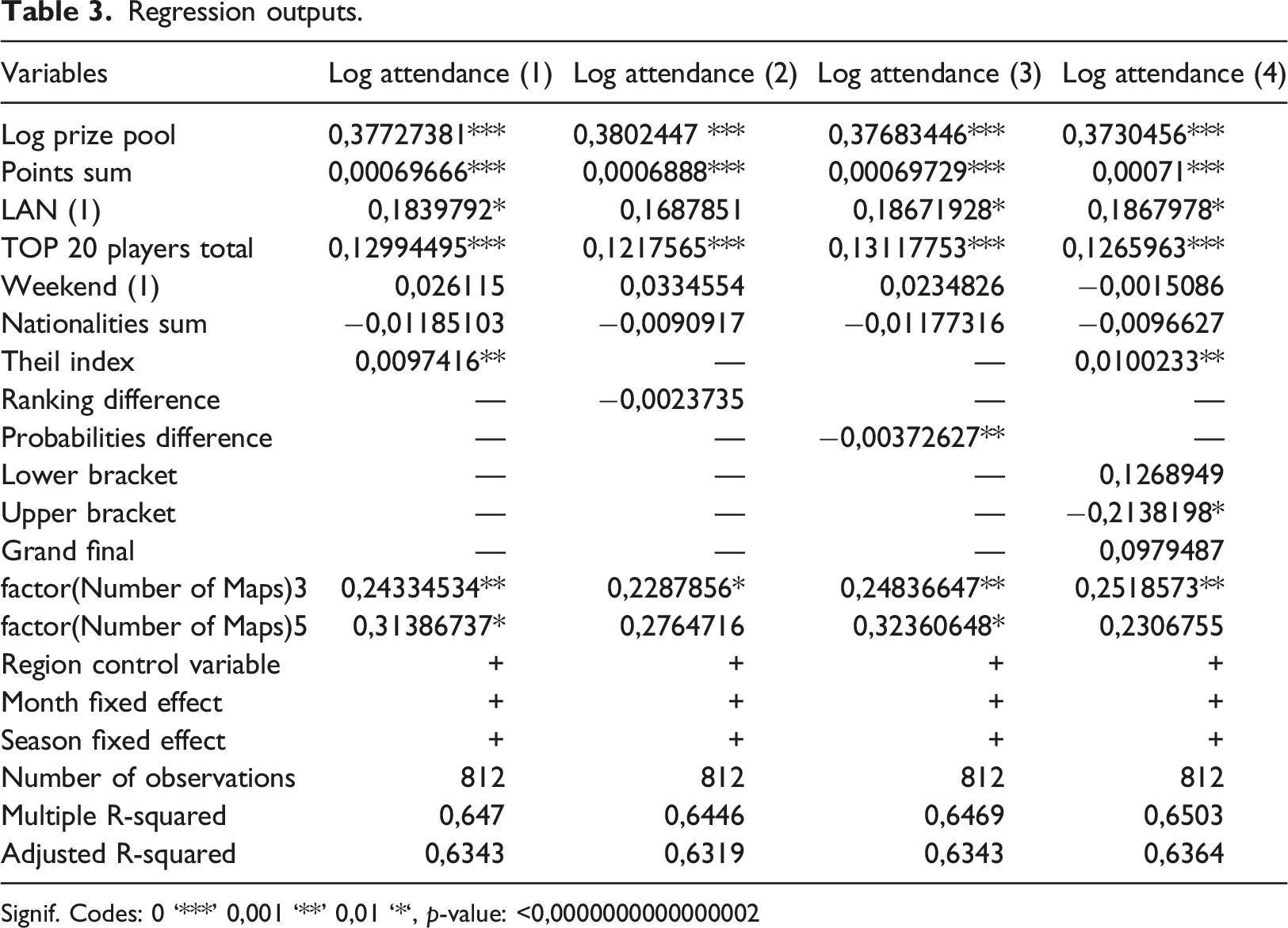
Regression outputs.
Signif. Codes: 0 ‘***’ 0,001 ‘**’ 0,01 ‘*‘, p-value: <0,0000000000000002
Prize Pool has one of the biggest impacts on the dependent variable. For every 1% increase in the Prize Pool funds, the audience increases by about 0,377%. The money aspect plays a relevant role in eSports. The amount of prize money is growing every year, more and more famous and wealthy sponsors are turning their attention to this area. The largest events, which are called Majors, and which are analogous to the World and Continental Cups in traditional sports, usually attract both the maximum number of spectators and money to the prize funds. Furthermore, since Prize Pool is seen as an indicator of the quality of the tournament, the empirical outputs support previous assumptions about eSports as competition and vicarious achievement (Lee and Schoenstedt, 2011; Pizzo et al., 2018; Weiss and Schiele, 2013), where spectators’ desire to watch relevant matches.
The variable of the Quality of the Match, as well as the amount of the prize money, is one of the main factors influencing the desire of viewers to watch a particular game. The regression results showed that every additional point in the sum of teams’ points in the World Ranking prior to the game leads to 0.07% growth of the viewership. This result also empirically confirms the findings of various authors in the field of eSports (Hamari and Sjöblom, 2017; Pizzo et al., 2018; Weiss and Schiele, 2013; Xiao, 2019) who have highlighted competition and skill of the players as important patterns in the consumption motives of eSports audience.
The dummy variable LAN-matches is associated with an offline format with games at the stadiums in front of the fans. Offline tournaments attract approximately 20% more viewers to streaming broadcasts of the game. A similar result was expected since such a format is inherent in high-level events, which are often considered the final part of many qualifying mini-tournaments. The participating teams prepare for such competitions with particular zeal, and the advertising and awareness of the event is high, resulting in heightened audience interest. Such conclusion supports the ideas of Bowman, et al. (2013) who have identified positive traits between the live presence of fans during games and the performance of the players.
Every additional player from the TOP 20 players Ranking list increases the audience variable by about 13.6%. In addition to the high level of play, strong players are distinguished by increased aggression in game situations, more often make unexpected maneuvers, show incredible and memorable actions, compete between each other in order to reach the top of individual rankings. Previous authors (Hamari and Sjöblom, 2017; Kim and Kim, 2020; Pizzo et al., 2018; Xiao, 2019) have also highlighted athletes’ skill of athletes and their aggressiveness as some of the most important patterns that positively influence the frequency of spectating eSports tournaments. Additionally, traditional football literature (Wilson and Sim, 1995) also supports these outputs where the number of star players in the starting squad showcases the team quality and determines the attendance in the Semi-Pro Football League of Malaysia.
Between three different match formats (Best of 1, Best of 3, Best of 5), BO3 games had a comparatively higher viewership rate than others. This format is the most popular in competitive gaming and is considered the most balanced. As a result, at the largest events, Best of 3 was adopted as the optimal.
Other variables like the Number of Nationalities, Weekend/Weekday factor have not shown significant statistical impact. The first parameter might be assumed that fans and spectators are commonly interested by specific teams and the level of play of the athletes themselves. As a result, diversity fades into the background. Consequently, it may be stated that despite the fact that the factor of multi-nationality can positively affect the squad’s results (Parshakov et al., 2018), on the other hand, this indicator does not have an impact on streaming demand. In the context of streaming platforms, scheduling variables may have a subtle effect for several reasons. First of all, the matches and tournaments themselves are held in different parts of the world, in different time zones. Moreover, the ease of use of the platform for viewing, a large number of simultaneous broadcasts creates a situation when viewers constantly flow from one broadcast to another, from one streamer to another.
In regard to the impact of the Uncertainty of Outcome, the empirical results indicate that viewers of streaming broadcasts of Counter-Strike: Global Offensive matches are interested in watching those games in which there is a high level of competitiveness between the participants. Furthermore, despite studies on demand in football suggest that Uncertainty of Outcome calculated from Theil Index or Winning Probabilities either negatively correlates with the demand (Baidina et al., 2021; Buraimo and Simmons, 2008; Gasparetto and Barajas, 2018) or is not significant at all (Forrest and Simmons, 2006), Model 1 and Model 3 illustrate that eSports enthusiasts prefer games with higher Uncertainty. In addition, Model 4, in which the outcomes are additionally controlled with the Stage of the Tournament variable, also supports the conclusion that there is a positive relationship between Uncertainty and streaming demand. One of the possible explanations is that, unlike traditional sports, there is no division into home and away teams in eSports which minimizes the visiting team effect. Model 2 supports Garcia and Rodriguez (2002) findings that suggest that closer positions in the league lead to greater uncertainty and higher attendance rate. In the case of eSports, closer the teams are to each other in the Team World Ranking, higher the competition and rivalry between them due to the more equal level of participants.
Overall, it can be stated that eSports enthusiasts and viewers prefer to watch streams of matches with higher level of Uncertainty. The fact of a potential clash between teams, whose chances of winning do not give the opportunity to choose an obvious favorite, leads to an increase in the audience level. Therefore, we offer here evidence that the demand for eSports matches are significantly driven by higher levels of Uncertainty of Outcome, corroborating seminal papers as Rottenberg (1956) and Neale (1964).
Contribution
The current paper examines the streaming demand of electronic sports on the example of the multiplayer game Counter-Strike: Global Offensive, focusing on various factors that can influence viewers’ decisions to watch a broadcast. In addition to the motives derived from the literature in the field of eSports, such as the skill of athletes, match specifications, etc., this article for the first time examines the impact of the Uncertainty of Outcome hypotheses. The main findings provide evidence that CS:GO eSports fans and enthusiasts appreciate the uncertainty prior to the match and are more likely to connect broadcasts to those games where teams are close to each other in terms of skill and competitiveness. This statement is supported by the results of the Uncertainty of Outcome variable in various models, where this indicator was calculated in diverse formats (Theil index, Ranking difference, Winning probability difference), which shows the possibility of using a similar methodology in future studies.
This article contributes to the eSports literature by being one of the first studies in the field of eSports which investigates the streaming demand of eSports matches. Many other papers concentrated on spectators’ motives to watch or play eSports games where authors utilized such methods as surveys, questionnaires in order to understand reasons why people decide to play or watch competitive eSports tournaments. This study takes a completely different approach to analysis that has not been tested in this area, namely, it uses the demand theory of traditional sports, especially football, and applies it in a new field.
More specifically, in the course of the work, popular factors from traditional sports-related articles such as Match quality, Weekend, Star players effect, etc. were investigated. Moreover, the current paper complements the theory and conclusions about eSports fans’ consumption motives and not only affirms the patterns deduced in the past (Skill of the athletes, Comparison between Offline and Online matches, Gamers’ aggressiveness) with empirical confirmations, but also introduces new ones. Most importantly, the current research applies the Uncertainty of Outcome to the framework, using various methods for calculating this variable and examining how it impacts the streaming demand of Counter-Strike: Global Offensive matches.
In the context of practical contribution, the results of this paper provide ample scope for new studies. First of all, the derived methodology based on viewers consumption motives that affect the intentions to watch or play eSports games, as well as supplemented with ideas from works in traditional sports, among which the main core is the Uncertainty of Outcome factor, can be used in further research regarding online streaming demand.
For tournament and match organizers, the article provides the necessary information about the behavior of viewers. The obtained data indicate that the streaming audience is sensitive to the quality of the content viewed, as well as to the level of the participating athletes. In this regard, the developments and frameworks derived in the course of this study can be used to analyze and change the organization of events, the structure of prize payments, strategies for scheduling game days, the system of selection of participating teams.
Further research
eSports is growing at a fast pace, so the areas for potential new research are vast as well. Moreover, the current work has various ways of further development associated with the analysis of streaming demand of the Counter-Strike: Global Offensive multiplayer game. The first interesting topic is the analysis of the effect of teams’ social media on the demand. Nowadays, many eSports teams are owned by already well-established and popular organizations with a long history and a large fanbase. For example, before the creation of a unit in the game Counter-Strike: Global Offensive, the FaZe Clan organization was already quite popular on the Internet thanks to the success in another game called Call of Duty. They started out as a YouTube entertainment content team, then created a roster to compete in various competitions, and only later added a CS:GO division.
The second potential idea is that the effect of in-game statistics, performance characteristics and features were not fully considered along the article. However, these in-game statistics seriously affect the attitude of fans towards the teams. Not a single year is complete without constant discussions of the best teams, the best players at the end of the season, and the main arguments are based on in-game performance indicators, such as the number of kills, assists, K/D ratio, MVPs, clutches. This proposal also includes other attributes, namely the number of planted bombs, the amounts of defuses, preferred maps, etc. which illustrate teams’ tactics and ideology.
Thirdly, as it was briefly mentioned in the literature review section, the sphere of streaming is closely related to the interaction of viewers of broadcasts, both among themselves and with participants of the event. This interaction takes place thanks to the chat or donation functions. Many users choose streaming services precisely because of such things, which allow them to directly contact streamers and associate themselves with eSports athletes. In this case, future potential research could investigate the effect of the described factors.
In some cases, the location of offline tournaments may coincide with the nationality of the participating teams. Potential support of the audience in the stadiums, which cheers for the teams representing the host country, can seriously affect the performance. Additionally, the attendance of such events may differ from those where there is no host team. In this regard, further development of this topic can yield findings that can be compared with studies of demand for traditional team sports such as football where there is a strict division into home and away teams.
The worldwide popularity of computer games, as well as the widespread availability of the Internet, has seriously strengthened the position of eSports in the world. As a result, many tournaments are held in different parts of the planet. Streaming services allow viewers to watch matches regardless of their current location. However, the start time of the event, for example, in the North American region will be inconvenient for a European resident due to the time difference. Consequently, further additional research is needed in order to understand the relationships between match start-time, local time, and viewership rates.
It is important to highlight the transition to an ‘online era’ experienced by CS:GO eSports between 2020 and 2021, with a majority of tournaments being conducted online. Despite the participation of tier 1 players, the absence of live audience attendance during LAN tournaments like IEM Katowice 2020 and IEM Cologne 2020 was necessary due to COVID-19 restrictions. It is worth mentioning that subsequent tournaments, starting from 2022, have witnessed the return of live attendees, marking a shift in the eSports landscape. Another aspect not explored in this paper is the absence of a CS:GO Major in 2020, with only one Major taking place in 2021. We acknowledge a particular limitation that is not directly addressed here. However, it is important to note that this limitation does not undermine the validity or relevance of our findings. Although these factors are not directly related to the current study, they offer potential avenues for further research. Future studies should explore the implications of the online era on CS:GO, as well as on other eSports disciplines, including an investigation into how the demands of eSports viewership were met or modified during this period, taking into account the return of live attendees in recent tournaments.
The range of different video games is huge. Several eSports disciplines and categories have their own competitive tournaments, events and show matches. While the current article addresses the topic of demand in the context of Counter-Strike: Global multiplayer game, there is a need for similar research in other competitive games such as Dota 2, Fortnite, League of Legends, since each game is unique, has a special atmosphere, idea and is characterized by personal in-game characteristics. Overall, the implementation of mentioned ideas can reveal in more detail the topic of streaming demand, including the specifics of a particular discipline.
Finally, in the course of the study, due to the quality and, most importantly, the availability of the data, streaming demand is measured using variables divided into 4 main groups, namely: Uncertainty of Outcome, Match Quality, Tournament Quality, High skilled players effect. Consequently, further research may present a variety of other concepts, and eventually it will be possible to compare them with the empirical results of the current article. Among these ideas, it is worth exploring various additional data sources. This study utilizes data from the ‘Escharts.com’ website, which has its own restrictions such as providing the 5 most popular matches of each tournament. Secondly, the entire range of streaming platforms, with their specific features, was not covered in the current work. There are other fairly popular and famous streaming services, especially in the Asian region, and specifically Chinese services, Douyu, Huya, and Bilibili which were not available for analysis. Furthermore, the effect of in-game statistics, performance characteristics and features, namely the number of planted bombs, the amounts of defuses, clutches, kills from different riffles, assists, K/D ratio can provide additional information and insights which were not available during this study.
Conclusion
The current paper provides an analysis of the streaming demand of eSports on the example of Counter-Strike: Global Offensive multiplayer game. This is one of the first attempts to explore such a topic in the field of electronic sports which utilizes attendance demand papers of traditional sports. In the course of the work, the impact of Uncertainty of Outcome on enhancing streaming audience of competitive matches has been estimated. Viewers of streaming broadcasts of Counter-Strike: Global Offensive matches are interested in watching those games in which there is a high level of competitiveness between the participants. Furthermore, all the different models of calculating the Uncertainty effect, including the Theil index, the Ranking difference, the Difference in the winning probabilities provided similar trends, supporting the idea of tighter competition. Besides, other factors such as Match Quality in the form of Sum Points of the teams from the World Ranking, Tournament Quality in the form of a Prize Pool and participation of players from TOP 20 rating positively influenced the viewership rate.
The obtained results produce an estimate of streaming demand, and also lay the foundation for further investigations in the area of eSports. Additional research should be focused on exploring determinants that can also influence demand, such as in-game characteristics of the game, features of streaming platforms. Further analysis of other competitive eSports video games like Valorant, Fortnite, Dota 2, etc. is also needed, as these games may contain specific insights, outcomes and patterns.
Footnotes
Declaration of conflicting interests
The author(s) declared no potential conflicts of interest with respect to the research, authorship, and/or publication of this article.
Funding
The author(s) received no financial support for the research, authorship, and/or publication of this article.
