




Abstract
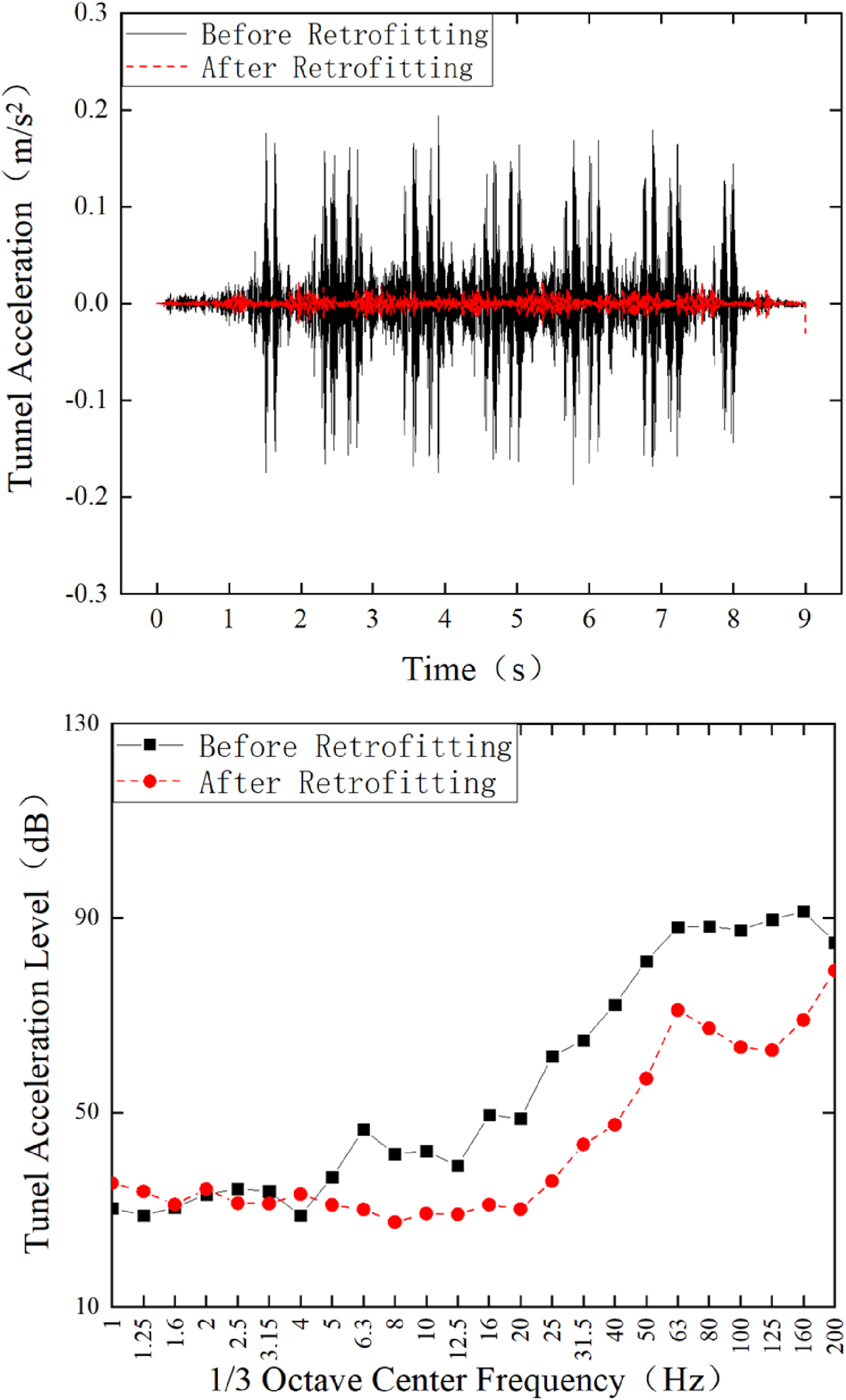
This study evaluates a newly developed steel U-shaped embedded track system designed for vibration and noise mitigation in existing metro lines. The system enables rapid modular installation and provides a compliant polymer support layer for improved vibration isolation. Comprehensive before–after field measurements were conducted on rail and tunnel vibration, in-train noise, and building structure-borne noise. The peak rail acceleration decreased from 219 to 85 m/s2, and the peak tunnel-wall acceleration was reduced from 0.194 to 0.025 m/s2. and lowered indoor structure-borne noise by 4.9 - 6.1 dB(A). In-train A-weighted noise decreased by 4.1 - 5.1 dB(A). The results confirm that the proposed embedded track provides an effective and practical retrofit solution that meets relevant vibration and noise limits and significantly improves the environmental performance of existing metro lines.
Keywords
By 2025, China’s urban metro network has surpassed 9,000 kilometers in operation. While metro systems greatly facilitate urban mobility, the vibrations and noise they generate negatively impact nearby residents. 1 Controlling these vibrations and noise is essential to improve living quality and support harmonious urban development.
To address railway-induced environmental vibration, a variety of vibration-mitigation track systems have been developed and widely applied worldwide. These systems can be broadly categorized into
Embedded rail track systems have attracted considerable attention since their inception owing to their
In China, research on embedded track systems has advanced rapidly in recent years. Yang Gang et al. 12 conducted frequency response function and longitudinal attenuation tests on embedded and fastened rails along Guangzhou Metro Line 14, showing that embedded tracks provide superior vibration reduction within the 550–1200 Hz range, particularly above 750 Hz. Shi Xiaodi 13 applied explicit dynamic finite element analysis and a three-dimensional high-speed wheel–rail rolling model to investigate the impact forces generated by trains running at 400 km/h over embedded tracks with varying irregularities. He Aonan et al. 14 applied hyperelastic constitutive theory to explore the influence of polymer material properties on wheel–rail dynamic interaction, concluding that polymers have limited suppression capability for low-frequency vibrations below 400 Hz. Han Jian et al.15–19 developed a coupled metro train–embedded track dynamic model incorporating the inertia, elasticity, and damping properties of polymer materials. Their studies systematically evaluated how vertical and lateral polymer stiffness, slab support stiffness, and slab dimensions affect the dynamic response of embedded tracks and vehicle ride comfort. He Yuanpeng, Zhao Yue et al.20–22 established a coupled wheel–embedded track model based on wheel–rail rolling sound radiation theory and finite element–boundary element methods, revealing the effects of vehicle elasticity, wheel–rail friction coefficient, and groove polymer modulus on rail vibration and acoustic radiation. Lei Xiaoyan et al. 23 conducted hammer impact tests on a 5 m full-scale embedded track model to analyze acceleration admittance characteristics and found that polymer infill materials effectively restrain rail vibration within the 100–300 Hz frequency band.
However, most of the aforementioned studies primarily focused on newly constructed lines or laboratory-scale simulations, while research on the retrofit application of embedded tracks to existing metro lines remains limited. In particular, few studies have provided full-scale field measurements to quantitatively evaluate the vibration and noise control performance of embedded track systems under real operating conditions. Moreover, the complex coupling among rail, tunnel structure, and surrounding buildings has not been fully validated through in-situ testing. To bridge this gap, the present study conducts an integrated experimental investigation on a metro line retrofitted with a newly developed steel U-shaped embedded track, systematically assessing its effectiveness in mitigating track and tunnel vibration, in-train noise, and building structure-borne noise. Section 1 introduces the design concept, structural characteristics, and construction method of the steel U-shaped embedded track. Section 2 describes the field test methodology and measurement point layout. Section 3 presents the test results and corresponding analysis of vibration and noise performance before and after the track retrofit.
1. Introduction of the steel U-shaped embedded track
The
The Structure diagram of steel groove embedded continuous support track.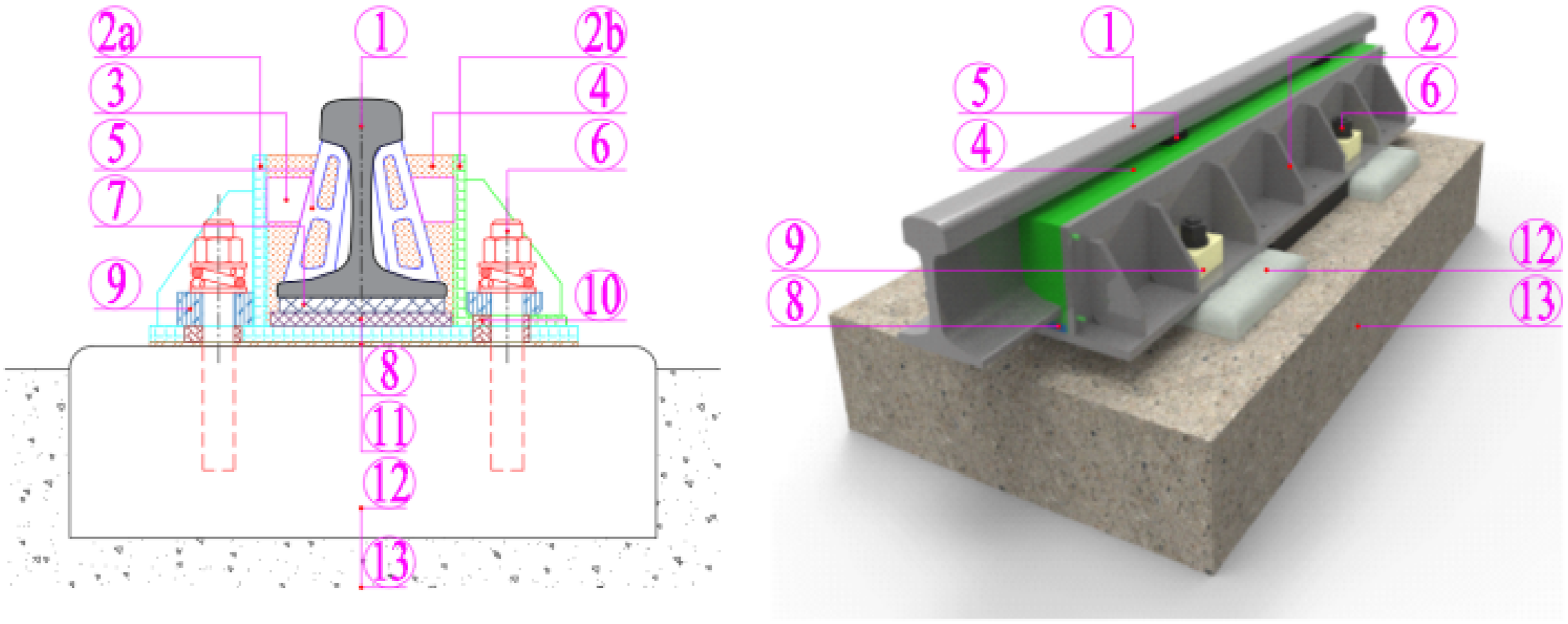
The
The continuous support structure completely eliminates the pinned–pinned resonance modes of the rail,
24
effectively suppresses corrugation formation. Moreover, since more than two-thirds of the rail surface is wrapped with polymer damping material, the rail web and base radiated noise are substantially suppressed, resulting in a significant reduction of interior noise of trains. The
2. Experimental setup and overview
The retrofitted section of the line is located near a station with a burial depth of approximately 15 m. Residential communities are situated to the south and north of the station, with the nearest buildings located about 25 m from the line (Figure 2). The line operates with eight-car Type A trains at a maximum speed of 80 km/h. Because the measurement section is located close to a station, the train speed varies as trains decelerate into and accelerate out of the platform. During all tests, the operating speed at the measurement point ranged approximately from 40 to 55 km/h. All trains followed the scheduled timetable and exhibited nearly identical speed profiles at this location. To address noise complaints from the nearby communities, embedded track systems were adopted to Overview of the measurements. Changes in the track structure before and after the retrofit.

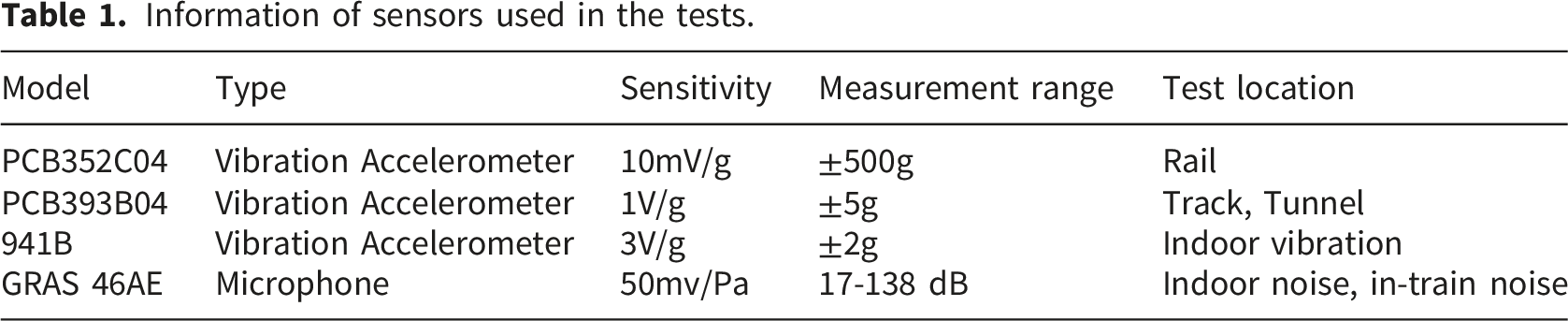
To comprehensively assess how retrofitting the line with embedded track affects vibrations of the track, vehicles, and surrounding buildings, vibration and acoustic sensors were deployed trackside, on board, and within nearby buildings, and a comprehensive measurement campaign was conducted before and after the retrofit. The detailed spatial arrangement of all vibration sensors, including their measurement directions and relative locations on the rail, track slab and tunnel wall, is shown in Figure 4. Rail vibration accelerometers were installed on the rail foot to measure vertical rail vibration. For the slab track, accelerometers were mounted at the center of the track slab. Tunnel wall vibration measurements were conducted at a height of Layout of trackside measurement points.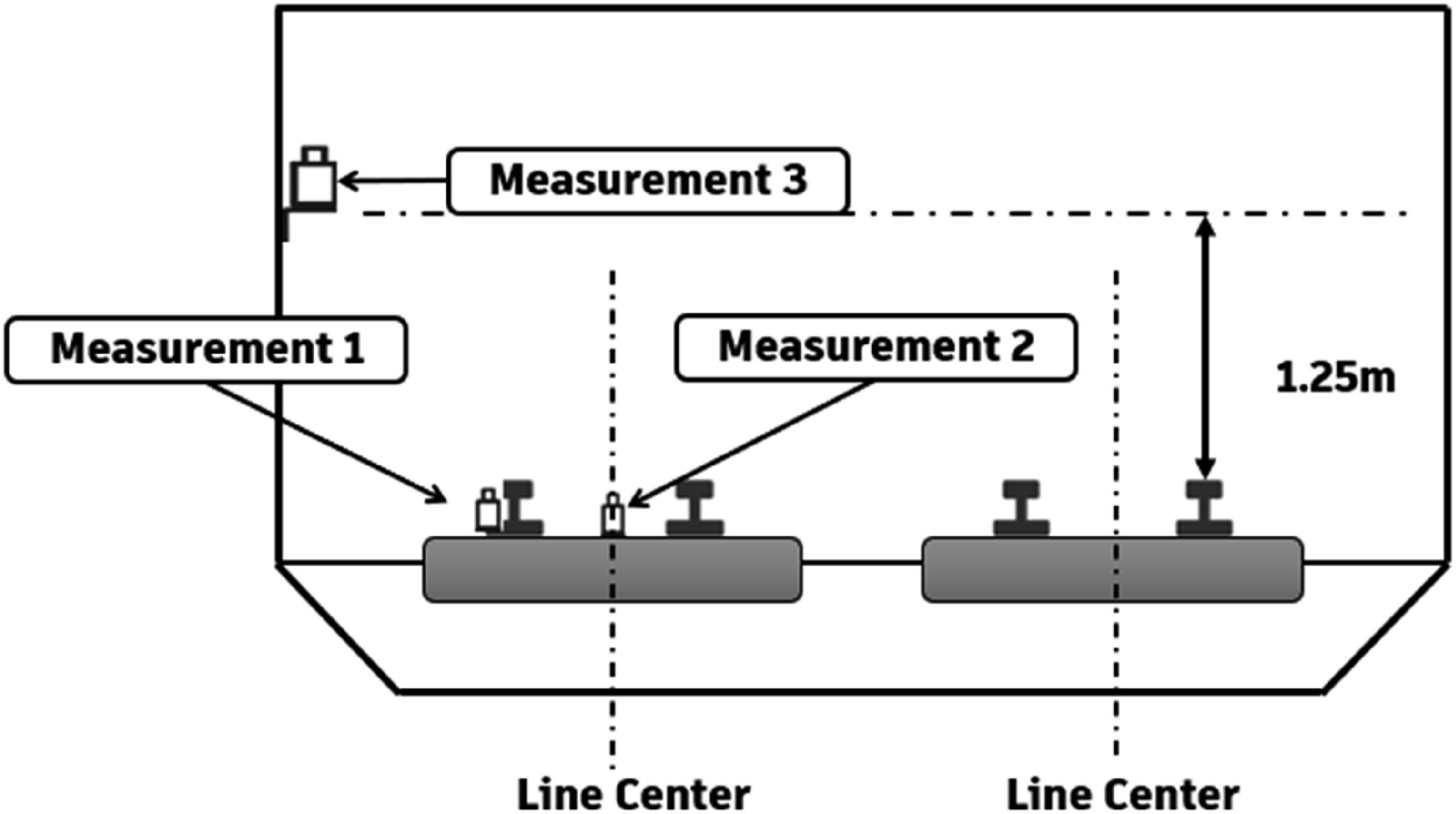
Indoor vibration testing in the building was conducted in an unrenovated, unfurnished room. The measurements included floor vibrations in different rooms (bedroom and living room) and in-room structural noise. Noise measurements were conducted using a GRAS 46AE 1/2-inch free-field microphone, and vibration measurements used a low-frequency, high-sensitivity 941B sensor (Figure 5). Building vibration and noise measurements.
Car interior noise measurements were conducted in accordance with Layout of in-train noise measurement points.
Information of sensors used in the tests.
3. Experimental results and discussion
To verify the vibration and noise reduction performance of this track system during mainline operation, in-situ comparative measurements were conducted on sections before retrofitting (conventional fastened track on monolithic slab) and after retrofitting (steel-groove embedded track). The measurements included track and tunnel vibration, in-vehicle noise, and interior secondary structure noise within adjacent buildings (Figure 7). Vibration time history and frequency spectrum of rail before and after retrofitting.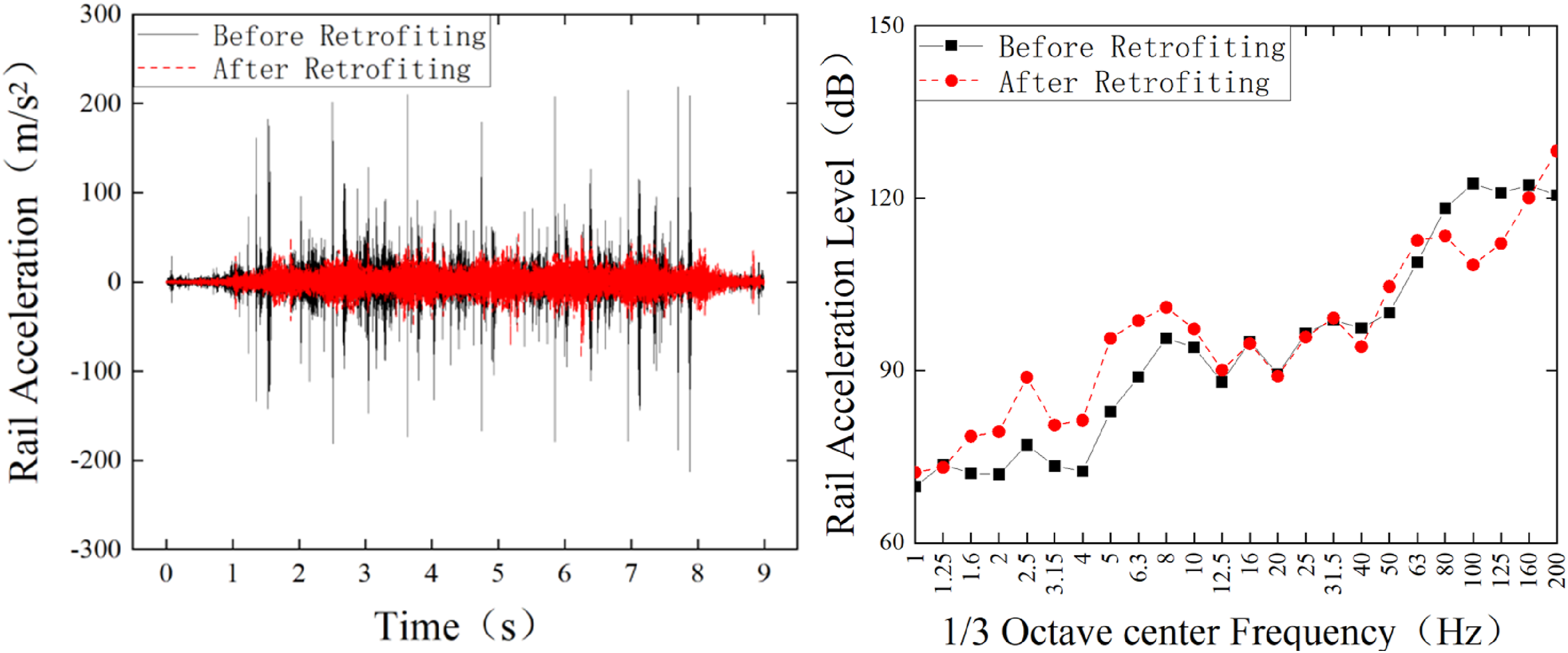
3.1. Track and tunnel vibration measurement and analysis
To visually demonstrate the source-level vibration control provided by the steel-groove embedded track, comparisons were made between the rail and tunnel wall acceleration time histories, acceleration level spectra, and maximum Z vibration levels before and after retrofitting, as shown in Figure 8. The acceleration level (in dB) was calculated using an unweighted (Z-weighted) formulation. The reference acceleration was taken as Vibration time history and frequency spectrum of tunnel before and after retrofitting.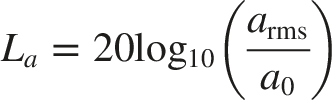
Peak and effective value of vibration acceleration of rail and tunnel before and after retrofitting.
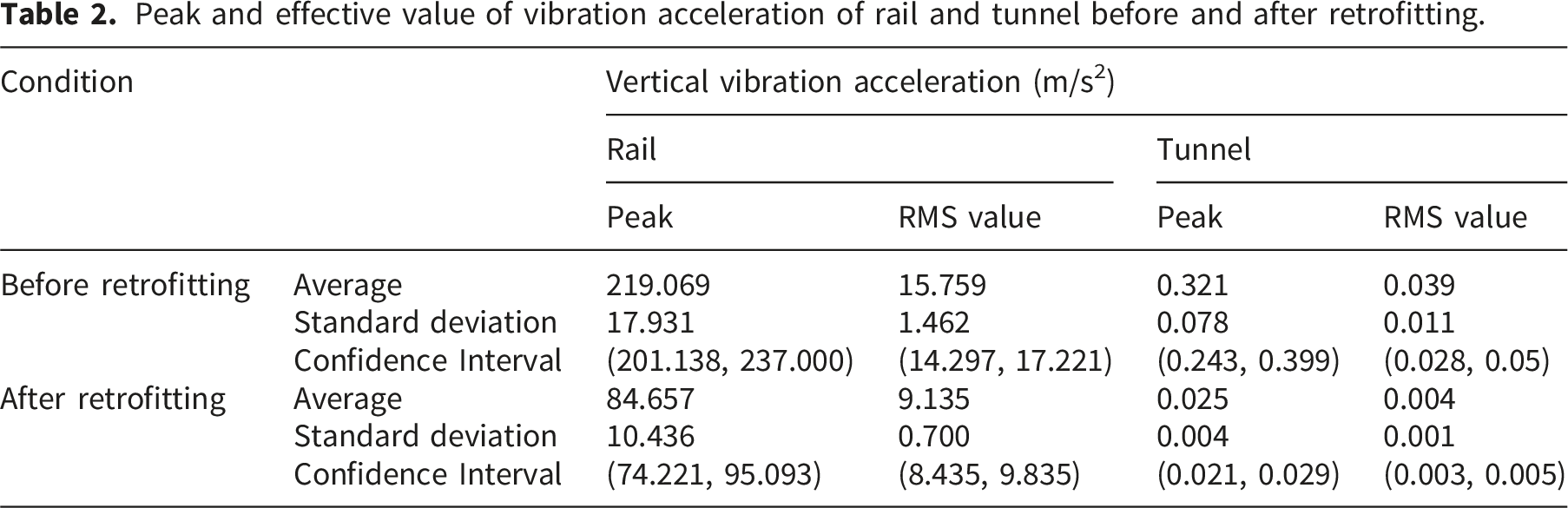
Figure 9(a) and (b) show the time–frequency maps of rail vibration before and after the retrofit, analyzed using the short-time Fourier transform (STFT). A Hanning window with a window length of fs/30 (approximately 33 ms) was adopted, with a 30% overlap and an FFT length of 1024. The corresponding frequency resolution is fs/1024. A pronounced difference is observed in the 700–1400 Hz band: the conventional track exhibits a broad affected range, indicating a relatively low vibration attenuation rate, whereas the embedded track effectively suppresses vibration propagation within this band, which is highly favorable for noise control. Time–frequency spectrograms of rail vibration before and after the retrofit. (a) Before retrofitting. (b) After retrofitting.
3.2. In-vehicle noise measurement and analysis
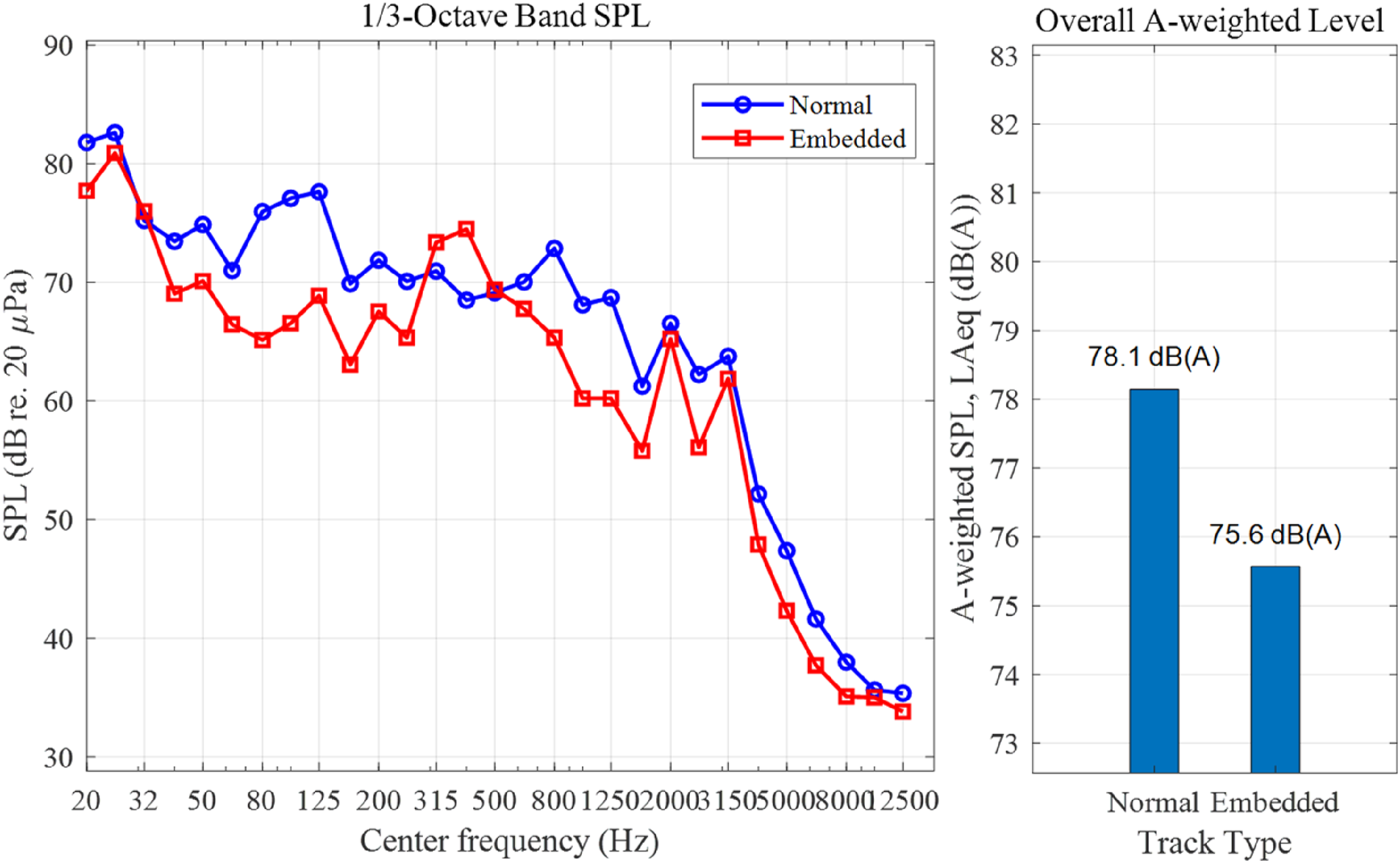
To provide a clear demonstration of the noise control effectiveness of the steel-groove embedded track, the single-value sound pressure levels and corresponding spectra inside the carriage before and after the retrofit are compared, as shown in Figure 10. The results indicate that, following the retrofit, the interior-train equivalent sound pressure level and the maximum sound pressure level are reduced by 5.1 dB(A) and 4.1 dB(A), respectively. Moreover, a pronounced reduction in sound pressure is observed across the 20–2000 Hz frequency range. These findings confirm that the U-shape embedded track can significantly suppress interior noise levels. Comparison of A-weighted sound pressure levels inside the train before and after the track retrofit.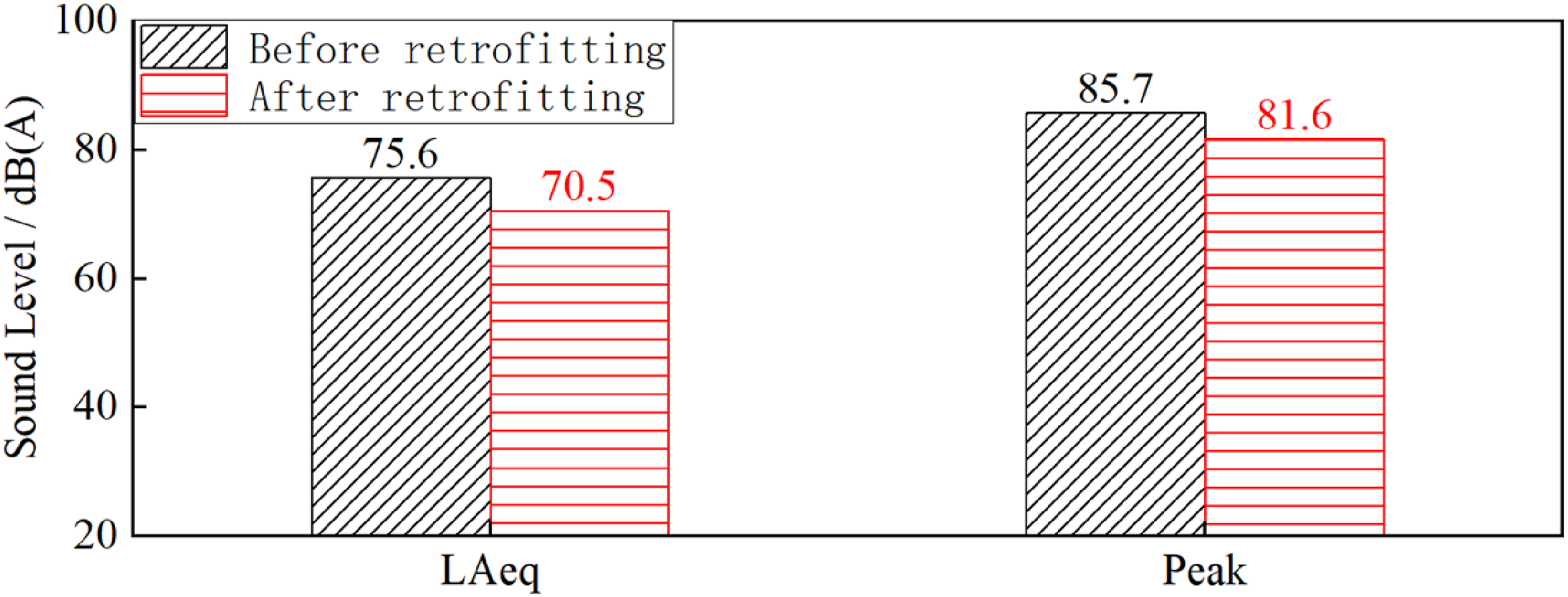
The highlighted area represents the embedded track zone, where the acoustic characteristics change markedly. Before the retrofit, strong noise components were observed around 700 Hz and 1200 Hz (Figure 11). After entering the embedded track section, these components were largely eliminated, and the dominant energy shifted to 300–400 Hz, consistent with the rail vibration analysis. Figure 12 compares the noise spectra of the conventional and embedded tracks. The results indicate effective suppression of noise in the 80–125 Hz and 800–1250 Hz bands, while the 300–400 Hz component becomes more pronounced. Overall, the A-weighted sound pressure level decreased by about Time–frequency distribution of in-train noise in the retrofitted section with the embedded track. Comparison of sound pressure levels between the conventional and embedded tracks.
3.3. Building structure-borne noise
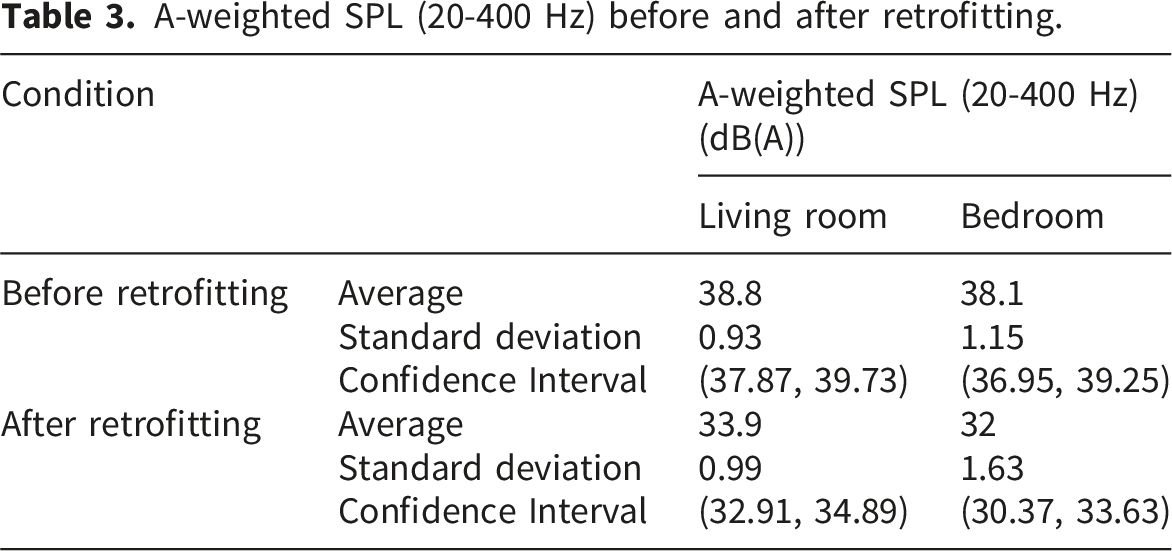
To evaluate the effectiveness of the embedded track in controlling structure-borne noise in nearby buildings, the indoor noise levels in the living room and bedroom were compared before and after the track retrofit. Figure 13 presents the comparison of A-weighted sound pressure levels in the 20–400 Hz range, which is typically used to characterize structural noise. It can be observed that after the retrofit, the equivalent A-weighted sound pressure levels of secondary noise in the living room and bedroom decreased by 4.9 dB(A) and 6.1 dB(A), respectively. The A-weighted sound pressure level was calculated following the Chinese standard Comparison of structural noise in the living room and bedroom before and after the track retrofit.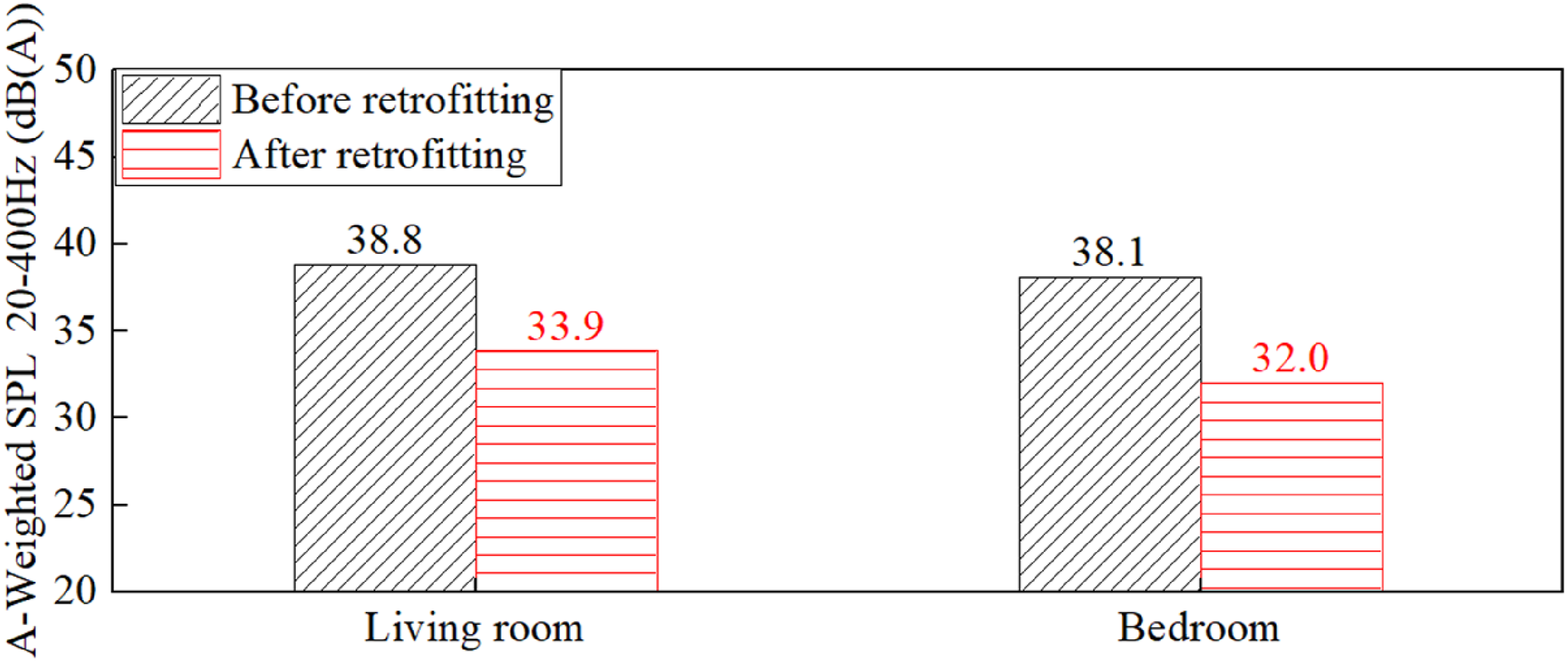
To further analyze the frequency characteristics of the secondary structural noise, one-third-octave-band sound pressure levels within the 31.5–250 Hz range were evaluated according to GB 50355-2018. The Figure 14 results show that the band-limited A-weighted levels decreased by 2.7–10.3 dB(A) in the living room and 7.1–16.3 dB(A) in the bedroom, both below the Class I limit specified in the standard. Therefore, the steel-channel embedded track effectively reduces secondary structural noise in buildings. Figure 15 shows that the indoor vibration levels decreased slightly in the Comparison of octave band sound pressure levels in the living room and bedroom before and after the track retrofit. Comparison of 1/3 octave band vibration levels in the living bedroom before and after the track retrofit. A-weighted SPL (20-400 Hz) before and after retrofitting.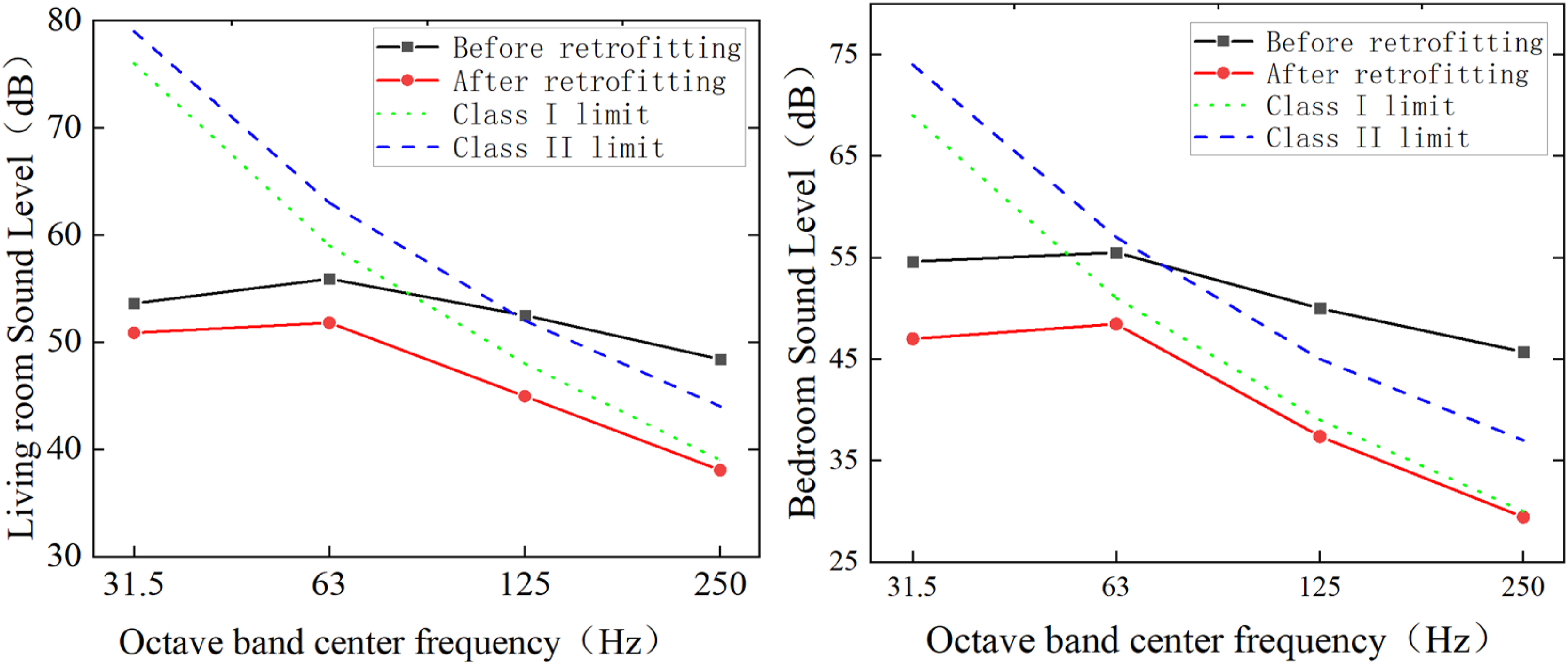

4. Results and discussion
This study evaluated a newly developed U-shaped steel embedded track system designed for retrofitting existing metro lines. Comprehensive before-and-after field measurements demonstrate that the system provides substantial improvements in vibration and noise control. (1) rail and tunnel vibration: Peak rail acceleration decreased from 219 m/s2 to 85 m/s2, and peak tunnel wall acceleration from 0.20 m/s2 to 0.02 m/s2. The retrofit reduced rail vibration by up to 9 dB near 80 Hz and tunnel vibration by 16–24 dB within 6.3–200 Hz. (2) In-vehicle noise: The In-vehicle equivalent and maximum sound pressure levels were reduced by 5.1 dB(A) and 4.1 dB(A), respectively, following the retrofit. Noise components in the 80–125 Hz and 800–1250 Hz frequency bands were effectively suppressed, though energy in the 300–400 Hz band became more prominent. (3) Building structure-borne noise: Indoor secondary structural noise in nearby residences decreased by 4.9–6.1 dB(A), and one-third-octave A-weighted levels in the 31.5–250 Hz bands were reduced by 2.7–16.3 dB(A), meeting the Class I limits of GB 50355-2018.
Overall, the newly developed steel U-shaped embedded track demonstrates clear effectiveness in reducing rail–tunnel vibration transmission and building structure-borne noise, offering a practical and quantifiable retrofit solution for existing metro and tram lines.
The embedded track system introduces a continuous polymer layer that lowers the rail support stiffness and increases the effective vibration participation mass. These changes shift the dominant resonance of the track toward lower frequencies and redistribute vibration energy across the spectrum. As a result, rail vibration may increase slightly at very low frequencies, while mid-frequency components (e.g., 20–200 Hz) are significantly reduced and less energy is transmitted to the tunnel and surrounding buildings. Furthermore, the polymer layer provides substantial damping, which attenuates high-frequency vibration propagation. These mechanisms collectively explain the observed vibration reduction in the tunnel wall and buildings, despite localized changes in the rail response.
In the future, a long-term monitoring program (at 6 and 12 months after installation) has been planned to evaluate potential aging or stiffness changes of the polymer layer, and the results will be reported in future work.
Footnotes

Funding
The authors received no financial support for the research, authorship, and/or publication of this article.
Declaration of conflicting interests
The authors declared no potential conflicts of interest with respect to the research, authorship, and/or publication of this article.