




Abstract
This study examines one of the fundamental fractional nonlinear evolutionary wave equations, extensively utilized in modeling diverse nonlinear processes and phenomena in physical and engineering systems, which is called the time-fractional nonlinear Sharma–Tasso–Olver (STO) equation under varying initial conditions. This equation is investigated and analyzed under two different initial conditions using three different methodologies: the Tantawy technique and two transformed methods, namely, the Adomian decomposition method (ADM) and the homotopy perturbation method (HPM), in the framework of the Yang transform. The last two hybrid methods are known as the Yang transform decomposition method (YTDM) and the homotopy perturbation transform method (HPTM). These transformed methods (HPTM and YTDM) necessitate the decomposition of all nonlinear terms in the problem at hand, in contrast to the Tantawy technique, which does not require any decomposition for any term in the problem under consideration and deals with all terms in the same way. The Tantawy technique depends on assuming the solution of the fractional partial differential equation in a polynomial form, and by determining the values of the polynomial coefficients, we can get the final approximations of the problem under consideration. In general, these approaches calculate the approximations as convergent series solutions. Two test examples of the physical fractional STO equation with various initial conditions are numerically investigated. The efficiency and dependability of the proposed techniques are confirmed by executing suitable numerical simulations and comparing the obtained results with the exact solutions for the integer cases. Furthermore, the results of using the proposed techniques at different fractional orders are analyzed, showing that their accuracy increases as the value goes from fractional order to integer order. Consequently, these techniques can be utilized to examine and explore various physical phenomena requiring precise measurements, tackle intricate engineering problems, and address other more complicated fractional issues.
Keywords
Introduction
Differential equations (DEs) and various mathematical tools have played a significant role in modeling numerous physical, engineering, and other problems related to various sciences.1,2,3,4,5 On the other hand, fractional calculus has garnered significant attention owing to its substantial relevance in both theoretical and applied disciplines, since it elucidates numerous natural phenomena and uncovers behaviors unattainable by integer differential equations. FC can be extended to a complex set and is characterized as a generalization of classical calculus in which we explore fractional-order differential and integral operators. Many mathematicians have developed several fractional differential and integral operators in the last few decades, strengthening this idea.6,7 The non-locality of the fractional operators is used to demonstrate the progressive functioning of the classical derivatives. Fractional operators specify complex memory and various objects that can be examined with standard mathematical techniques such as classical differential calculus. In recent years, non-local fractional operators without a unique kernel have been described and proposed. However, applying the FC concept in different fields of study is still in its early stages. FC has recently become a promising technique because of its broader applicability in complex nonlinear phenomenon dynamics. Several researchers have used the basic theory and operator characteristics shown in the fractional calculus framework to investigate models of signal processing, 8 chaos theory, 9 continuum mechanics, 10 optimal control problems, 11 complex networks, 12 and other areas.13,14,15 In recent years, more researchers have begun to use this calculus to study a range of natural processes because scientists were unaware of its importance.16,17,18 The communication between Leibniz and L’Hospital is where the concept of fractional calculus was first developed. Furthermore, it was shown that FC is far more appropriate than traditional calculus to handle the most challenging real-world problems. The richness of applied research in fractional calculus has increased over time. Numerous studies have demonstrated its ability to address a wide range of the issues, especially in scientific disciplines such as image processing, 19 biological population models, 20 robotics, 21 viscoelasticity, 22 and several others.23,24,25,26,27 Fractional counterparts are significantly more reserved for obtaining sufficient exact solutions for highly nonlinear issues than their integer-order counterparts. Numerous analytical and numerical methods have been created to address this class of issues. FC and its operators have garnered much interest in advancing classical physics theory because of its significance in applied physics fields, including probability, fluid mechanics, statistics, chemical kinematics, plasma physics, optical fibers, etc. Fractional differential equations (FDEs) have a long history. However, scientists have been drawn to them in recent decades because of their wide range of applications in various fields of science and engineering.28,29,30,31,32
Many different areas of physics and engineering have seen a growing interest in mathematical modeling in practical applications in recent years, which typically leads to nonlinear FDEs. As a result, their numerous applications have recently generated significant interest in them. In practical mathematics, it is crucial to find analytic numerical solutions for these FDEs. Finding approximate solutions is essential in science because no method generally provides an exact solution for FDEs. The literature has used a variety of methods to solve fractional PDEs (FPDEs), including the Yang transform decomposition method (YTAM),33,34 Laplace residual power series method (RPSM), 35 homotopy perturbation transform method,36,37 approximate analytical method, 38 homotopy analysis method (HAM) 39 and many more.29,40,41,42,43 An essential aspect of studying the nonlinear field is investigating soliton solutions of complex nonlinear evolution equations. These answers provide valuable insights into the fundamentals of nonlinear science. In this study, we consider the following nonlinear fractional STO equation with two different initial conditions:
Case (I)44,45,46,47,48:



Case (II), the following new IC for equation (1) is considered48,49:


The STO equation (1) is a Korteweg-de Vries (KdV)-like equation utilized to characterize various physical processes related to the evolution and interaction of nonlinear waves, including aerodynamics, fluid dynamics, continuum mechanics, turbulence, solitary waves (shocks), etc. 50 It has an infinite number of symmetries and a bi-Hamiltonian structure. When the Hamiltonian of a conservative system is formulated with fractional derivatives, the resultant equations of motion may exhibit non-conservative behavior. This enables the accurate modeling of certain real physical processes through FDEs instead of integer-order equations. 50 Many scholars have suggested various strategies and methods to address distinct categories of nonlinear fractional differential equations. Nevertheless, the STO equation has garnered minimal attention despite the existence of various studies on it. For instance, equation (1) was solved using the Adomian decomposition method (ADM), the homotopy perturbation method (HPM), and the variational iteration method (VIM) to derive some rational approximations up to the second-order approximation for this equation. 49 The fractional reduced differential transform method (FRDTM) in the framework of the Caputo sense was applied to solve equation (1). The obtained approximations have been compared with the approximations derived by HAM, VIM, and ADM. 46 The LRPSM was used to solve equation (1). The HAM was used to generate an analytical approximation for equation (1). The authors discovered that the derived analytical approximation converges quickly to the exact solution by selecting a suitable auxiliary parameter. 51 The fractional complex transform with the new iterative method was applied to solve equation (1). 52 The natural transform decomposition method was carried out in the Caputo sense framework for analyzing equation (1). 45 Equation (1) was solved using the optimal homotopy asymptotic method (OHAM) within the Caputo derivative. 53
One objective of this work is to implement the Yang transform decomposition method (YTDM) and the homotopy perturbation transform method (HPTM) with the help of the Caputo sense to analyze the fractional STO models to generate some analytical approximations to model and describe the fractional shock waves. The YTDM and HPTM are hybrids of the Yang transform 54 with both the ADM55,56 and the HPM.57,58 These two methods provide analytical approximations in the form of a convergence series solution. The series solutions (or the obtained approximations) provide precise solutions to the basic equations when considered in closed form. Scholars can use this work as a central reference to investigate these methods and use it in various applications to obtain approximate results in a few easy steps. The unique feature of this effort is the depiction of two innovative methods for solving STO with minimal and consecutive steps. The representation of two novel approaches to solving STO with few and sequential stages is what makes this endeavor unique. These two methods provide analytical approximations in the form of a convergence series solution. When considered in closed form, the series solutions (or the obtained approximations) provide precise solutions to the basic equations. Moreover, we present the Tantawy technique, one of the most recent and highly accurate methods discovered in early 2025, in light of the challenges that many researchers may encounter when attempting to apply HPTM and YTDM for analyzing strong nonlinear FDEs. The Tantawy technique has successfully analyzed many fractional partial differential equations (FPDEs) with high accuracy compared to other methods, which are also considered among the most accurate methods for analyzing various nonlinear FDEs, such as the RPSM and the new iteration method (NIM) in the framework of various transforms (e.g., Aboodh transform). These investigations demonstrate that the Tantawy technique is straightforward to implement and can be used to analyze all fractional partial differential equations without any complications during the application process, in stark contrast to other methods. For instance, the fractional Burgers-type equations were solved using the Aboodh NIM (ANIM), Aboodh RPSM (ARPSM), and the Tantawy technique in the framework of Caputo sense. 59 The authors found that all derived approximations using the Tantawy technique outperformed those derived using other methods in accuracy. They also discussed this technique in detail to illustrate its ability to analyze and solve FPDEs without necessitating any of the procedures (linearization, perturbation, decomposition, etc.) required by the other methods. Subsequent to this work, the same research team also examined the fractional Fokker–Planck equation’s family and analyzed them using the optimal auxiliary function method (OAFM) and the Tantawy technique. 60 Many different approximations for this family have been generated and discussed numerically by calculating their absolute error. The authors concluded that all derived approximations using the Tantawy technique also outperformed the accuracy of the approximations derived by the OAFM. Then, some research studies followed in which the Tantawy technique was used along with some other methods to analyze various types of nonlinear FDEs, such as the analysis of the fourth-order time-fractional Cahn–Hilliard (TFCH) models. 61 The authors also implemented the homotopy perturbation transform method (HPTM) and the variational iteration transform method (VITM) within the Yang transform for analyzing the fourth-order TFCH models. The authors concluded that all derived approximations using the HPTM and the Tantawy technique are completely identical. However, the obtained approximations using the Tantawy technique and the HPTM outperform those derived using the VITM. The Tantawy technique was ultimately employed on a prominent fractional evolutionary wave equation (EWE), specifically referred to as the fractional KdV equation, 62 which is commonly utilized to elucidate various nonlinear phenomena in plasma physics, engineering, optical fibers, seawater waves, and beyond. In this study, the fluid equations for an unmagnetized electronegative plasma, comprising inertial positive and negative ions alongside non-Maxwellian inertialess electrons, were reduced to the fractional planar KdV equation using the reductive perturbation approach and an appropriate transformation. Subsequently, this equation was examined via the Tantawy technique and the Laplace NIM (LNIM) for modeling fractional solitary waves. Numerous approximations for this equation were generated and investigated numerically. The absolute errors of these approximations were compared, revealing that the generated approximations by the Tantawy technique surpass those produced by the LNIM. 62 From this perspective, and considering the favorable outcomes obtained by the Tantawy technique, we aim to implement this technique alongside the HPTM and YTDM to analyze equation (1), derive some analytical approximations for this equation, and compare them to assess the accuracy and efficacy of the Tantawy technique in the analysis of various FDEs.
Preliminaries
Here, we provide some basic concepts of fractional operators and Yang transform (YT) properties.
Definition
The Caputo fractional derivative (CFD) for the function

Definition
The non-integer integral Riemann–Liouville (RL) is defined as63,64

Definition
The YT of the function

Several significant features of the YT are provided by

The inverse YT (IYT) to F(u) yields

Definition
The YT of the function having n
th
derivative is defined as
65

Definition
The YT of the CFD of order δ to the function

A brief overview of the methods used in this study
In this investigation, we will examine three contemporary and efficient approaches to analyze and solve fractional differential equations, including the Tantawy technique, the HPTM, and the YTDM. The Tantawy technique, developed in 2025, is a contemporary method for straightforwardly analyzing many forms of fractional partial differential equations, circumventing the difficulties associated with alternative approaches. It is devoid of complexities, is fast to compute, and does not require high-performance processors. Using this technique, any personal computer can solve more complicated FPDEs, regardless of their nonlinear complexity. The following general FPDE is introduced to apply the proposed techniques for analyzing and solving it:


The Tantawy technique for analyzing FPDEs
This technique can be discussed and summarized in the following brief steps59,60,61,62:
Step (1) According to this technique, the solution for any FPDE is introduced in the following Ansatz formula:

Step (2) Inserting the Ansatz (15) into equation (13) yields


Step (3) The CFD of order δ to the function Ψ, can be estimated using the MATHEMATICA command “CaputoD[

Step (4) By inserting equation (18) into equation (17) and collecting the coefficients of the same power of t
iδ
∀ i = 0, 1, 2, 3, …, we get


Step (5) Now, by equating the coefficients M0, M1, M2, … to zero and solving the obtained equations in Ψ1, Ψ2, Ψ3, …, We ultimately obtain the values of Ψ1, Ψ2, Ψ3, …, as follows:

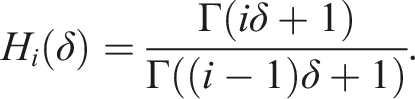
Step (6) By including the value of the IC Ψ0 given in equation (14) into the obtained system (21), we get the explicit values of Ψ1, Ψ2, Ψ3, …. After that, by collecting the obtained values of Ψ1, Ψ2, Ψ3, … in the Ansatz (15), we ultimately obtain the analytical approximation to the problem (13) as follows:

Transformed methods: HPTM & YTDM
Before applying HPTM or YTDM to solve and analyze the fractional STO equation (13), we first take YT to equation (13), which leads to

After using the definition of


By taking IYT to equation (24), we get

HPTM for analyzing FPDEs
In the context of HPM, equation (25) can be expressed as follows:

According to HPTM, the series form solution in terms of the homotopy parameter ϵ can be defined as

The nonlinear term may be expressed as follows:

Here, H
k
(Ψ) represents He’s polynomials, which is given by

Inserting equations (27) and (28) into equation (26) yields

After collecting the various coefficients of ϵ, and setting them to zero, and then solving the obtained resultant, we obtain
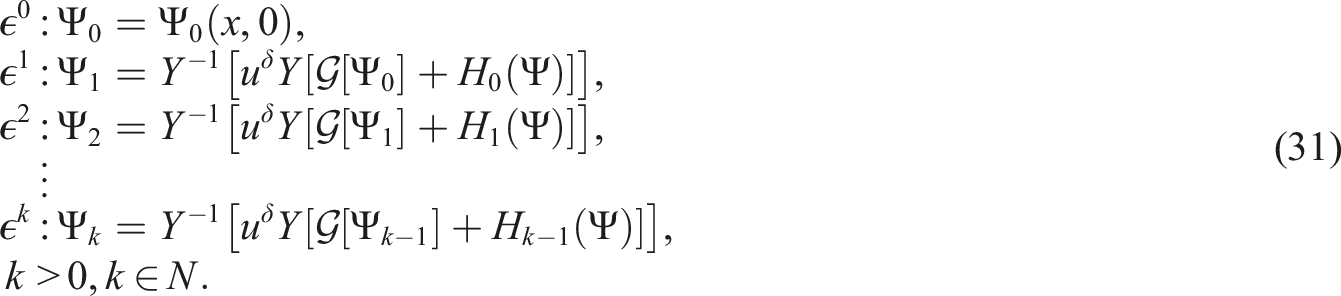
We finally obtain the approximate solution to problem (13) as follows

YTDM for analyzing FPDEs
To analyze problem (13) using YTDM, we start with equation (25) and assume the approximation for this equation in the following series form solution

According to the ADM, the nonlinear term can be constructed as follows:


The substitution of equations (33) and (34) into equation (25) yields

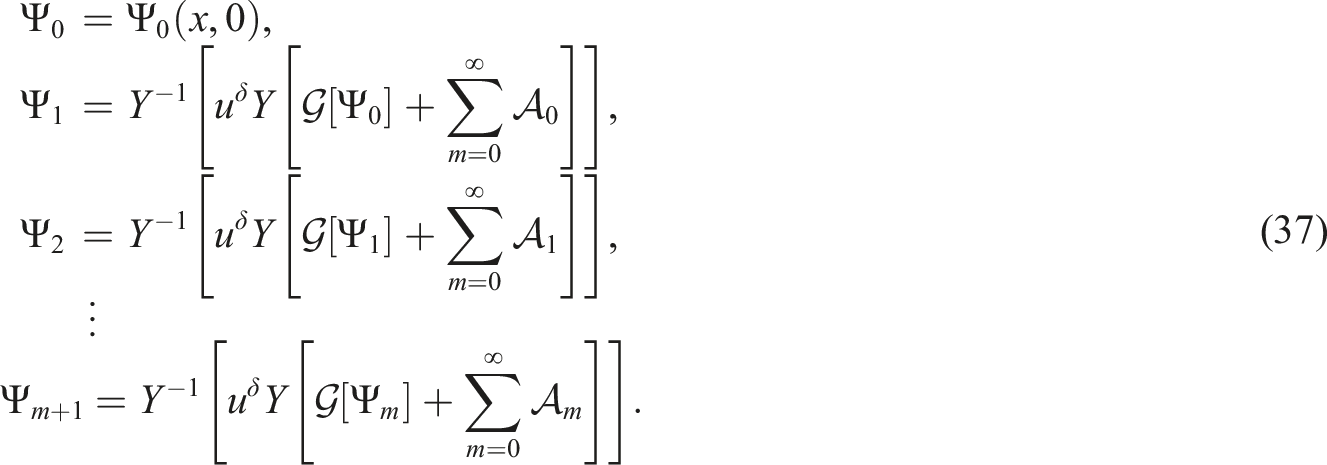
Accordingly, we get the following values of Ψ0, Ψ1, Ψ2, ⋯:
Application
Here, two test examples are introduced for analyzing them using the Tantawy technique, HPTM and YTDM.
Example-(I)
Assume the following fractional STO equation44,45,46,47,48


Using the tanh method, the following exact solutions for equation (38) at δ = 1, are obtained


The Tantawy technique for analyzing Example-(I)
It should be mentioned here that the Tantawy technique deals with all terms, whether linear or nonlinear, in the same way, and the nonlinear terms do not require special treatments like HPM and the ADM.59,60,61,62 As demonstrated above, we follow the same steps mentioned in the explanation of this technique to solve and analyze equation (38).
Step (1) Assuming the solution for equation (38) in following Ansatz formula

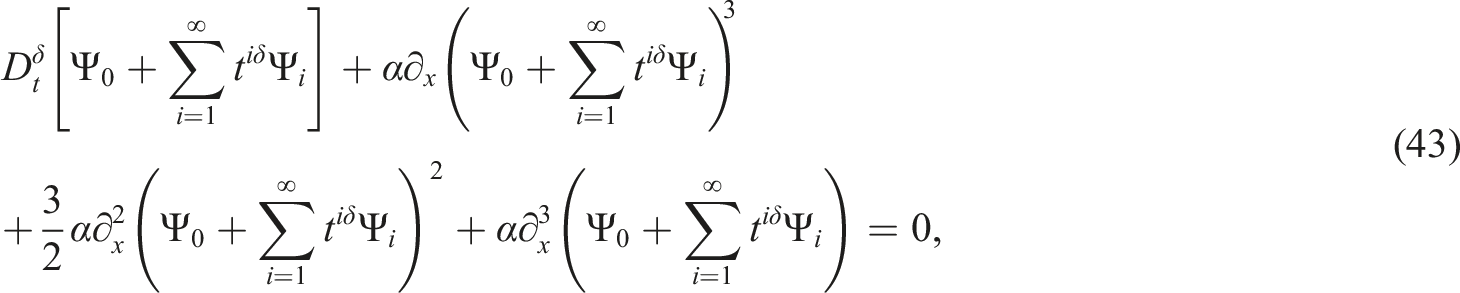
Step (2) Inserting the Ansatz (42) into equation (38) yields
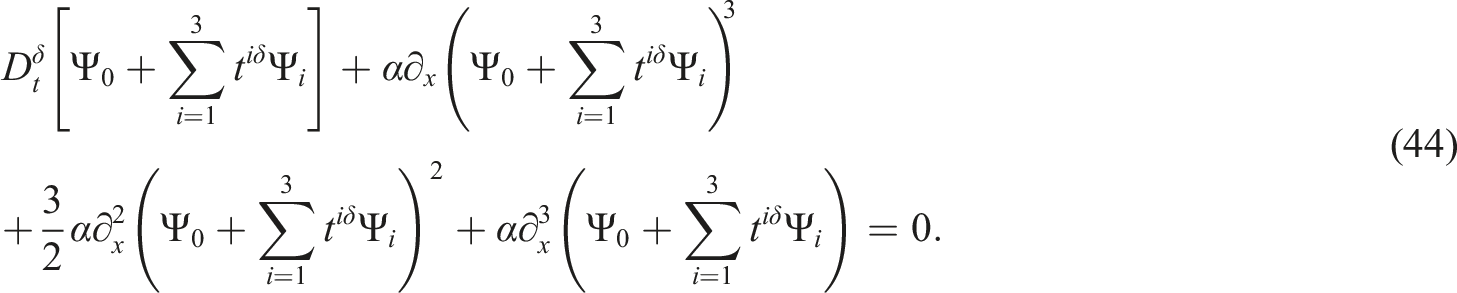
Step (3) Using the definition of the CFD of order δ to the function Ψ as given in equation (18)

Step (4) By substituting the definition (45) into equation (43) and collecting the coefficients of the same power of t
iδ
∀ i = 0, 1, 2, 3, …, we get

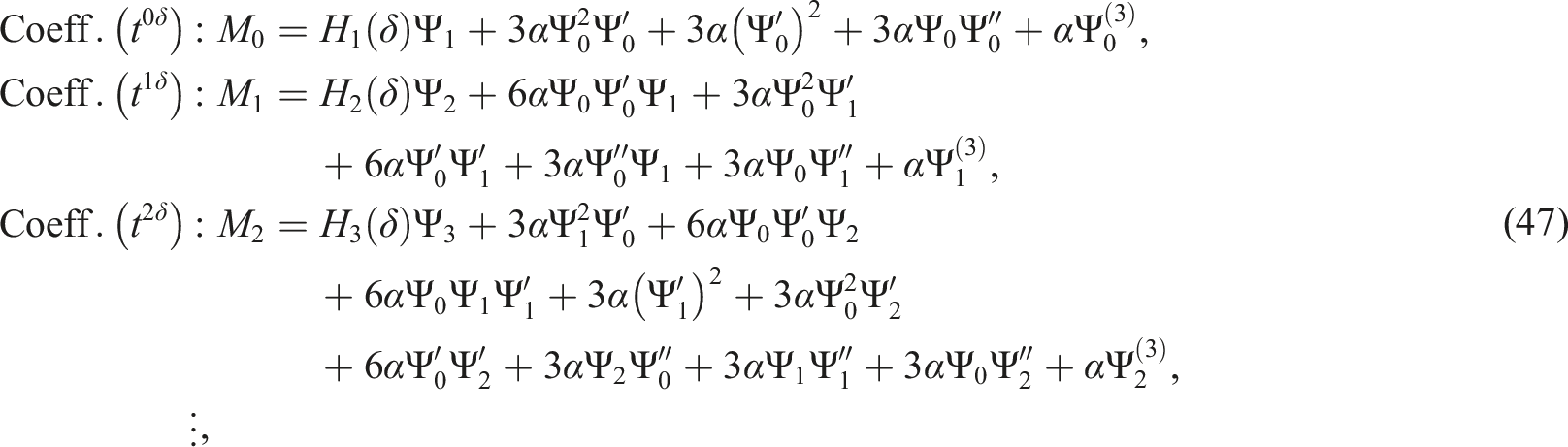
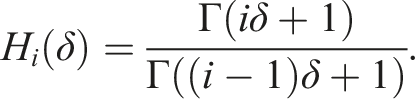
Step (5) Now, by equating the coefficients M0, M1, M2, …, to zero and solving the obtained equations in Ψ1, Ψ2, Ψ3, …, we finally get the values of Ψ1, Ψ2, Ψ3, …, as functions of the IC Ψ0:
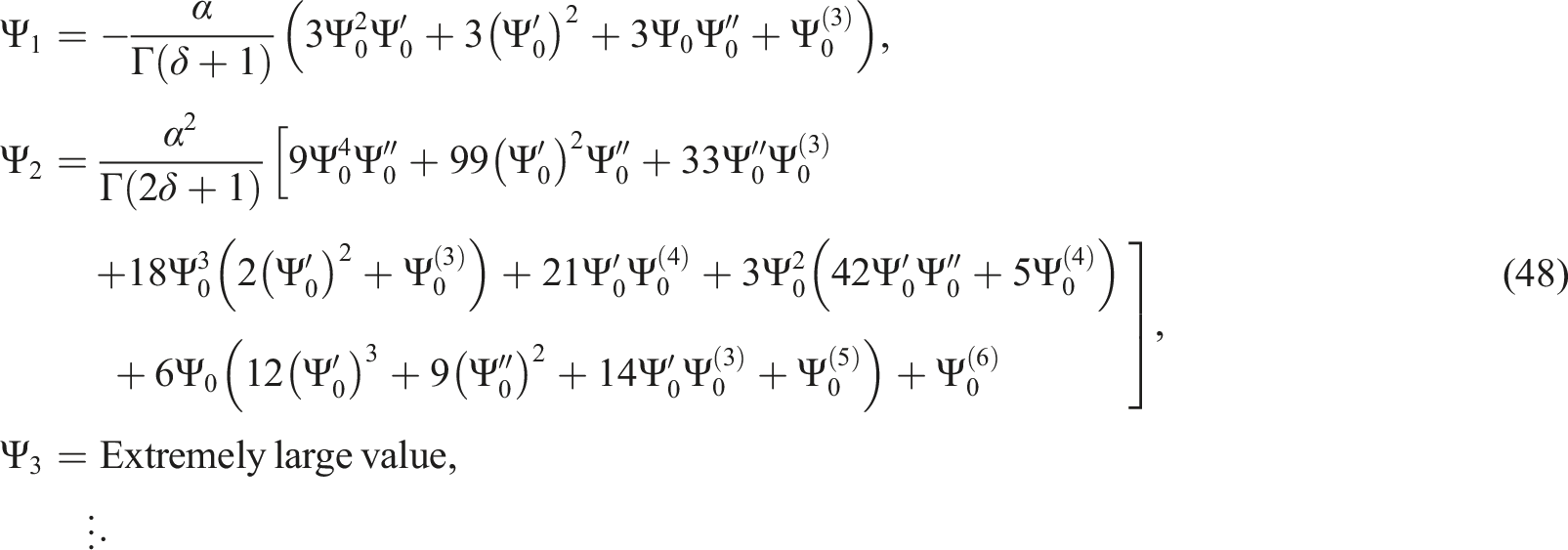
Step (6) By inserting the value of the IC Ψ0 given in equation (39) into the obtained system (48), we get the explicit values of Ψ1, Ψ2, Ψ3, …, as follows:
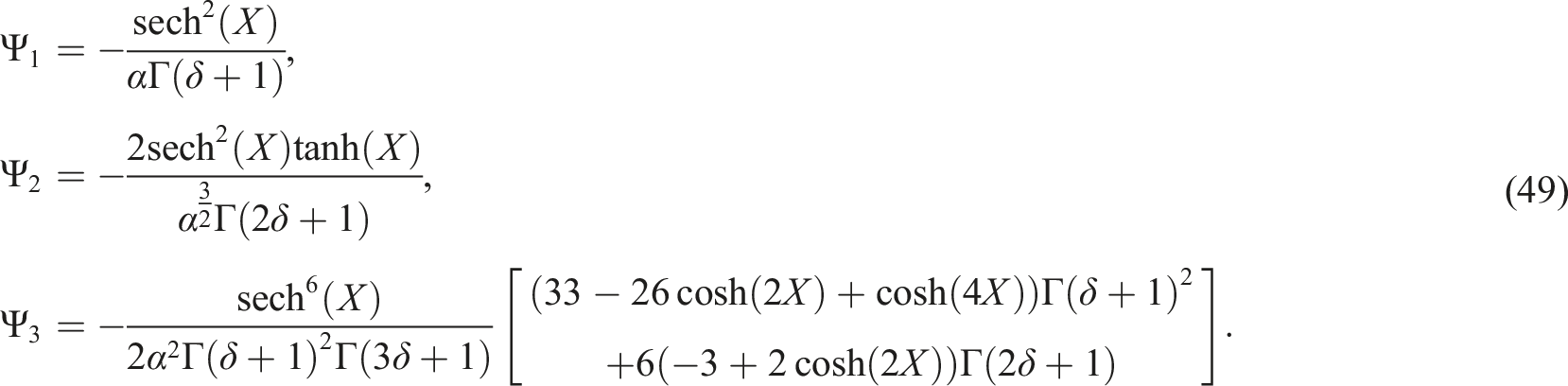
Step (7) Now, by collecting the obtained values of Ψ1, Ψ2, Ψ3, … given in equation (49) in the Ansatz (42), we ultimately obtain the analytical approximation to the problem (38) as follows:

Transformed methods for analyzing Example-(I): HPTM & YTDM
Before applying both HPM and ADM for analyzing equation (38), we first apply YT to equation (38), we get

Using the definition of


Applying IYT to equation (53) yields

At this point, we can apply both HPTM and YTDM to analyze problem (38).
HPTM for analyzing Example-(I)
In the context of HPM and with He’s polynomial

Collecting the coefficients of different orders ϵ and equating them to zero, and solving the obtained resultant, we have
Zeroth-order approximation

First-order approximation

Second-order approximation

Third-order approximation


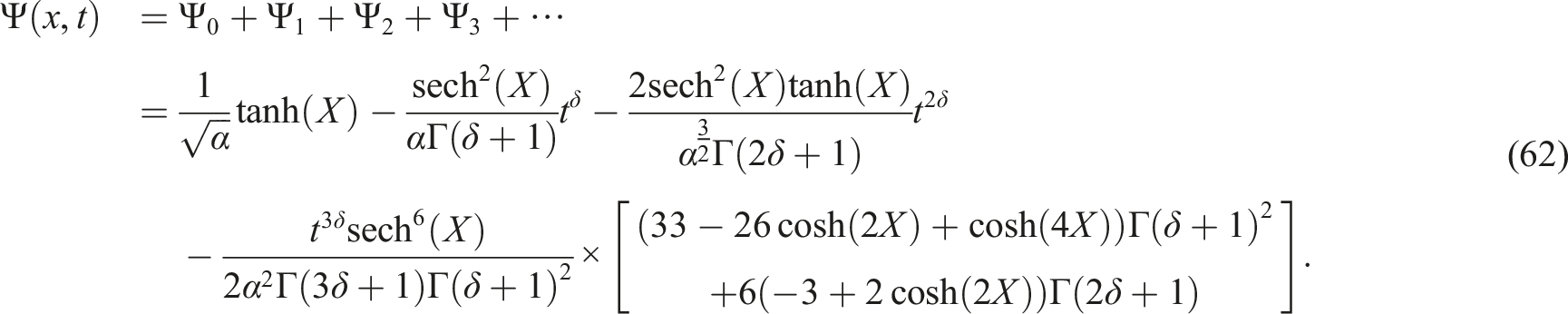
By collecting the various order approximations, we finally get the approximation of equation (38) in terms of HPTM as follows:

YTDM for analyzing Example-(I)
According to YTDM, the following series solution is considered.

According to ADM, the nonlinear terms of equation (38) can be defined by the Adomian polynomial as follows:
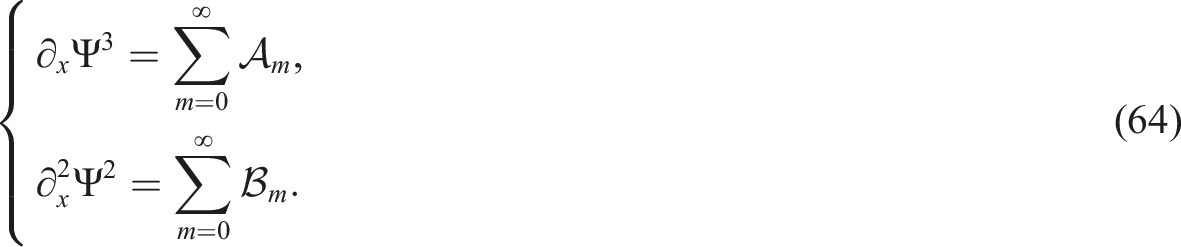
Now, by inserting equations (63) and (64) into equation (54), we get

From equation (65), the following approximations are obtained:
Zeroth-order approximation

First-order approximation

Second-order approximation

Third-order approximation

Hence, we obtain the solution of the fractional STO equation (38) in terms of YTDM as follows:
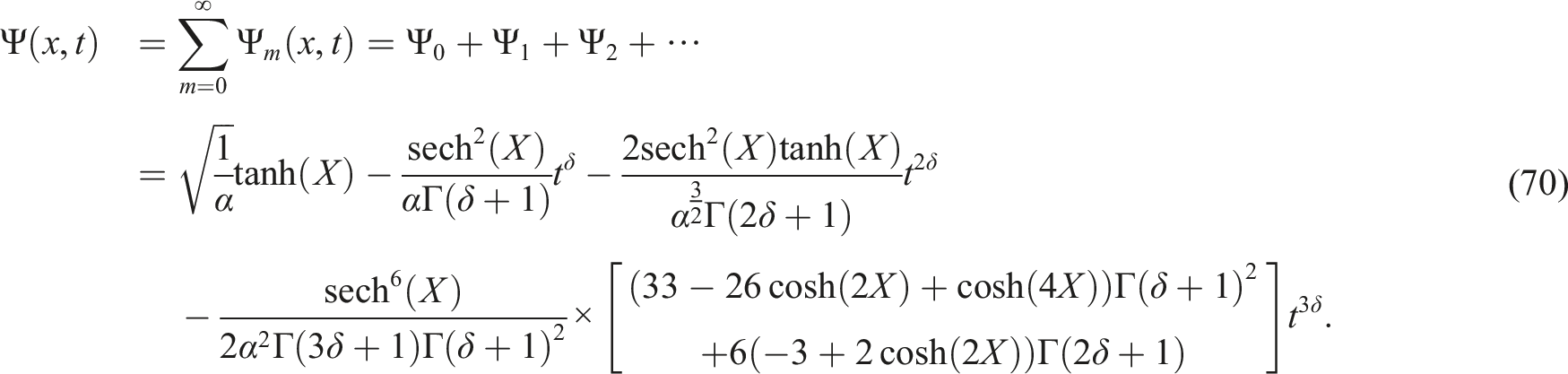
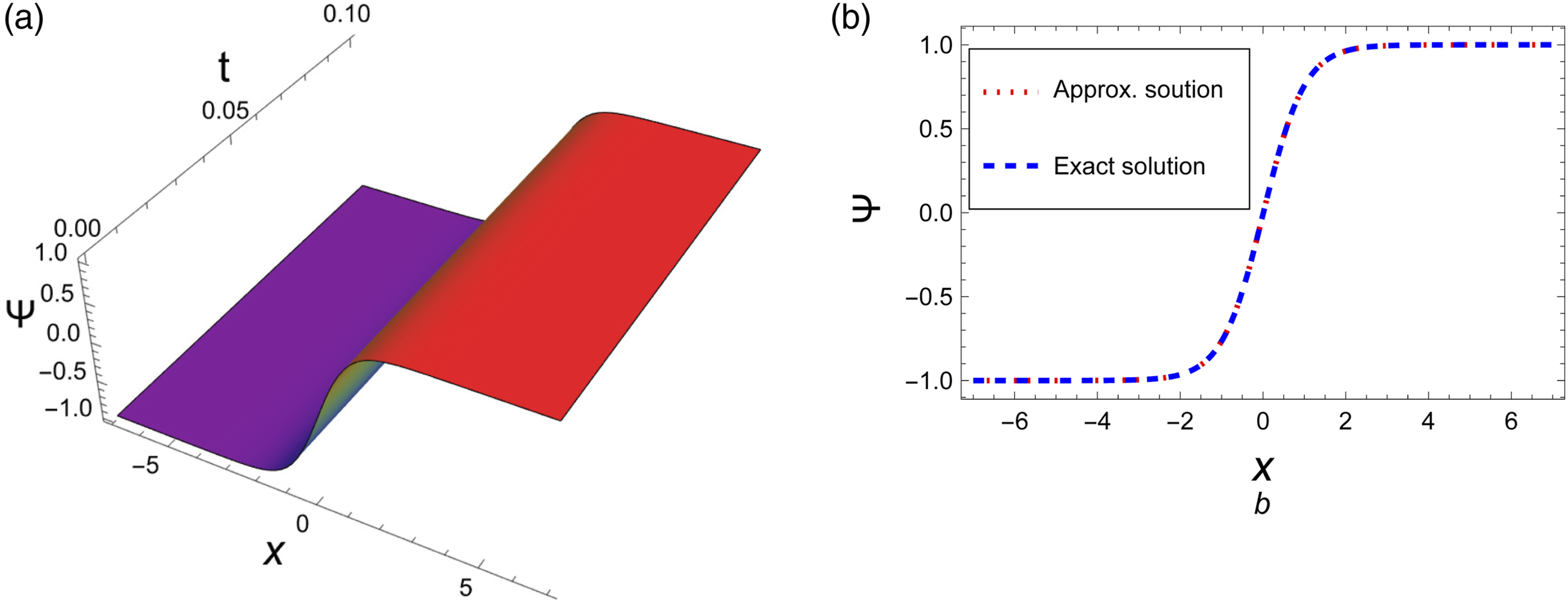
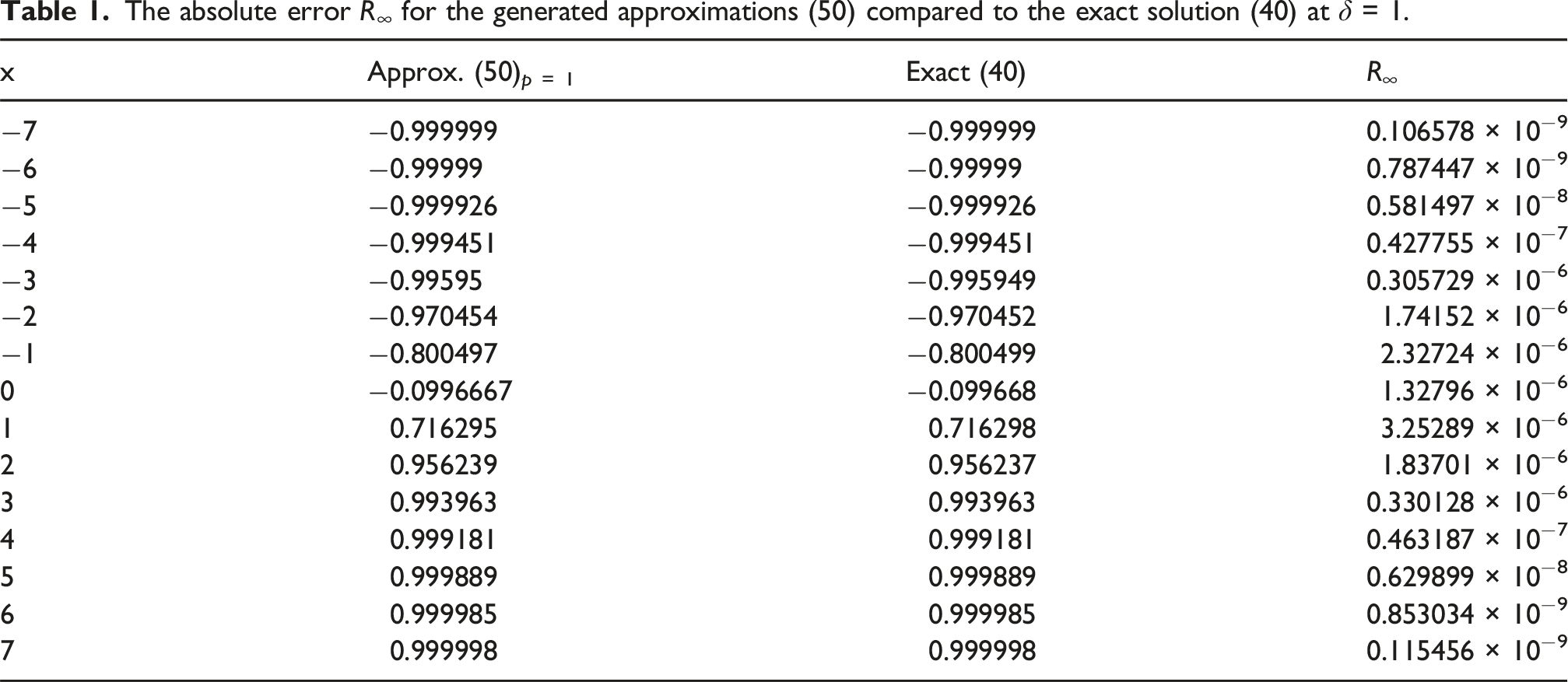
It is clear from equations (50), (62), and (70) that all derived approximations (50), (62), and (70) using the Tantawy technique and the two transformed methods (HPTM and YTDM) are completely consistent for the two study models. To understand the dynamics of the fractional nonlinear structures described by these approximations, we analyzed one of them, as shown in Figure 1, against fractionality δ. Figure 1 depicts the effect of the fractionality δ on the shock wave profile. This impact may reveal specific characteristics of the wave propagation dynamics that exact solutions for the integer case could not disclose. Also, Figure 2 illustrates the comparison between the generated approximation (50) at δ = 1 and the exact solution (40), for case (I). The decomposition findings demonstrate a strong concordance between these approximations and the exact solution for the integer case, which enhances the accuracy of the derived approximations and the efficiency of the used methods. Furthermore, Table 1 displays the absolute error of the approximation (50) at δ = 1 as compared to the exact solution (40). These results display the efficiency of the suggested strategies in gaining highly accurate approximations for the suggested problem. One notable drawback of HPTM and YTDM is their challenging application for junior researchers in analyzing strongly nonlinear evolutionary wave equations (EWEs). Furthermore, these methods necessitate making perturbations and decompositions during the analysis of the fractional EWEs. Thus, the Tantawy technique overcomes all these difficulties and opens up horizons for many physics and applied science researchers, allowing them to analyze their problems without any of the challenges they previously faced when applying other similar methods. The profile of the shock wave approximation (50) to example-(I) is investigated against the fractional-order parameter δ: (a) 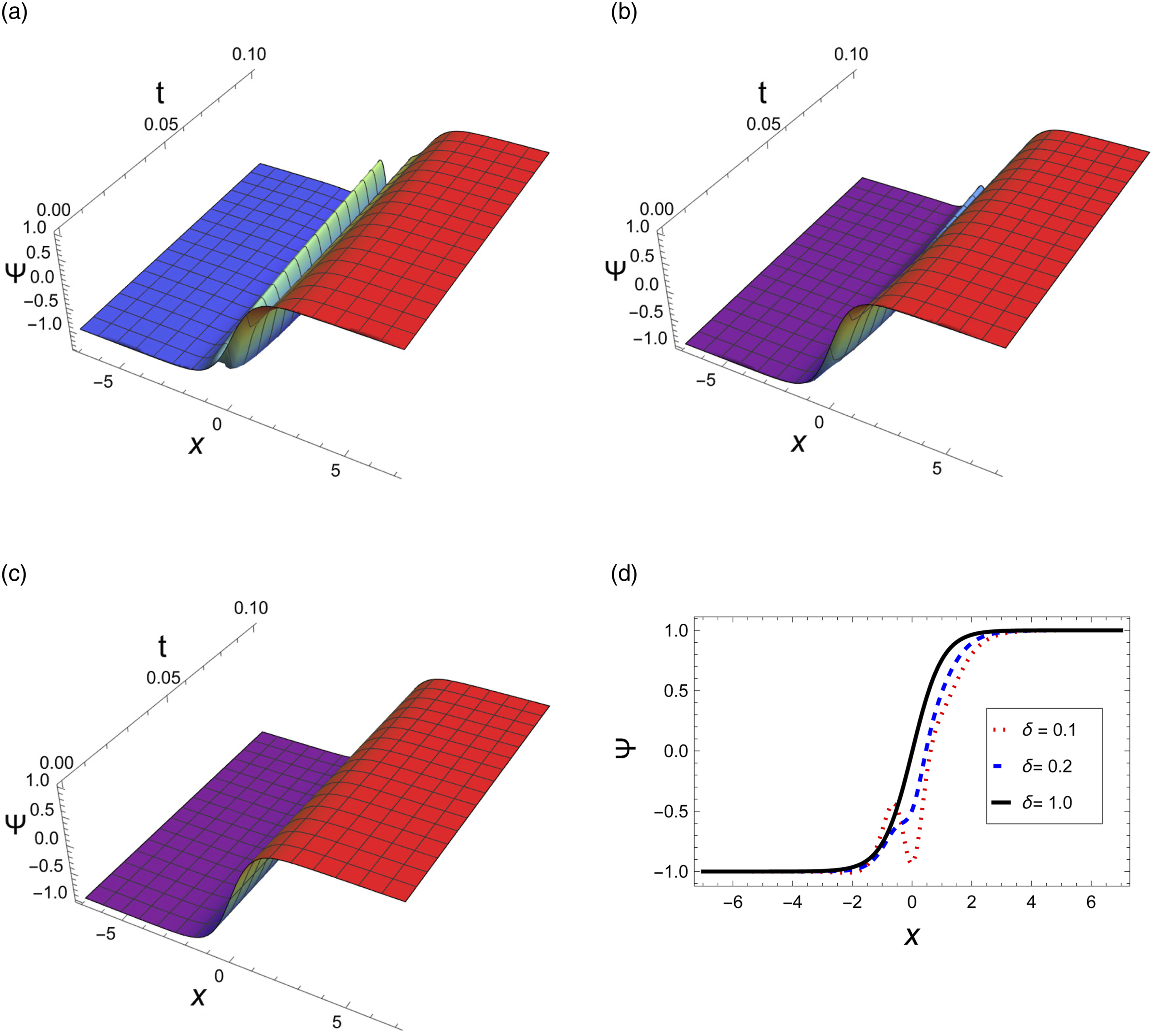
Example-(II)
In this example, we use the same equation (38)

Also, we have an exact solution for the integer order of equation (71) at δ = 1, reads
In this example, we further implement the three suggested techniques for analyzing problem (71).
The Tantawy technique for analyzing Example-(II)
While analyzing case (I) using the Tantawy technique, a general formulation for the first three-order approximations is derived as functions of the general IC. Consequently, any type of IC for equation (38) or (71) can be used to derive new analytical approximations for this equation up to the third-order approximation. Accordingly, to get a new analytical approximation for equation (71) utilizing the IC (73), we follow the same steps (Steps (1)–(5)) for case (I) and substitute the new IC (72) into equation (48), we ultimately obtain a new analytical approximation to equation (71) based on the IC (72) as follows:
Step (1) We start from the system (48), and by inserting the new IC (72) into equation (48), we obtain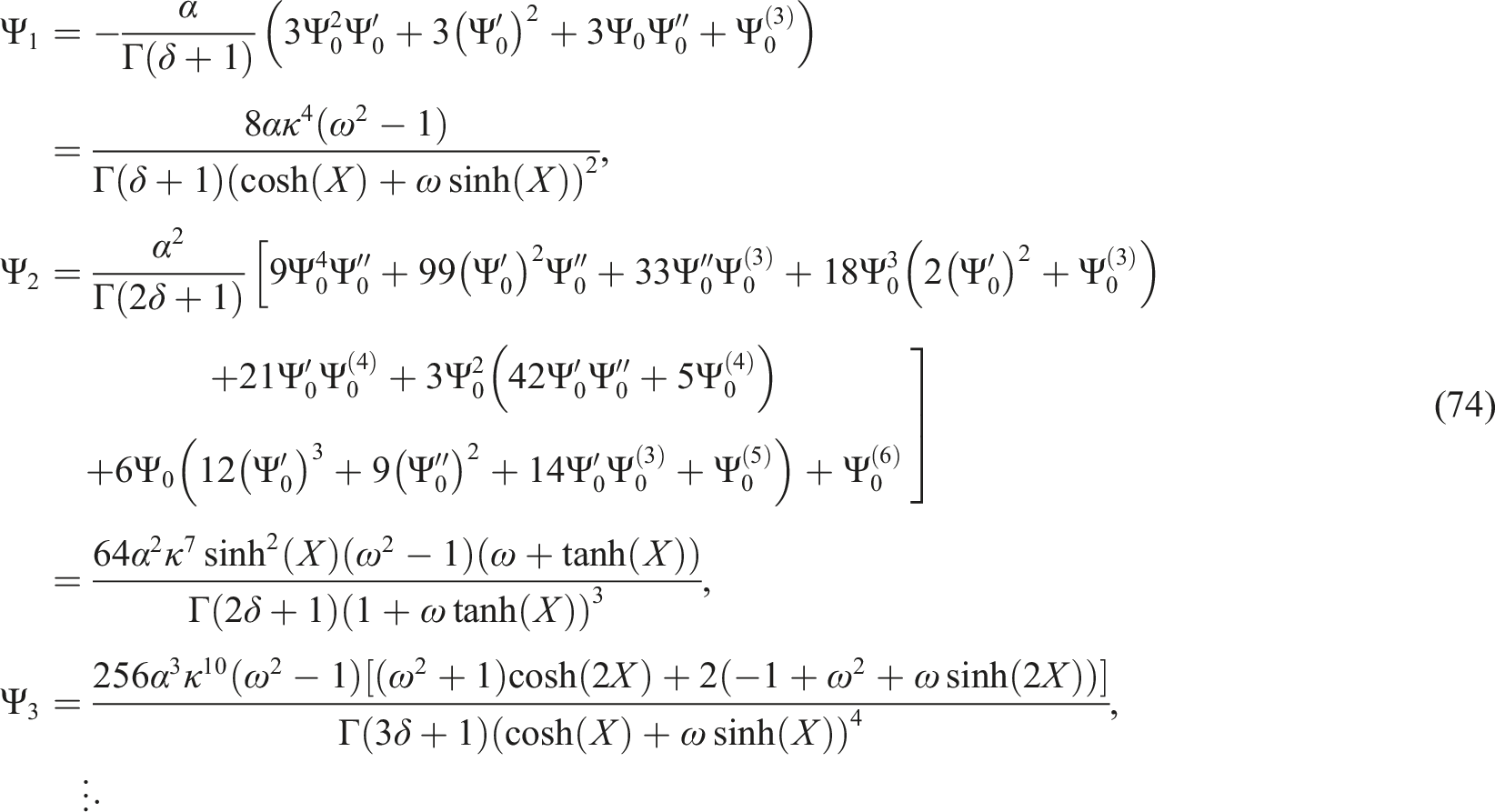
Step (2) Now, by collecting the obtained values of Ψ1, Ψ2, Ψ3, … given in equation (74) in the Ansatz (42), we ultimately obtain the new analytical approximation to the problem (71) as follows: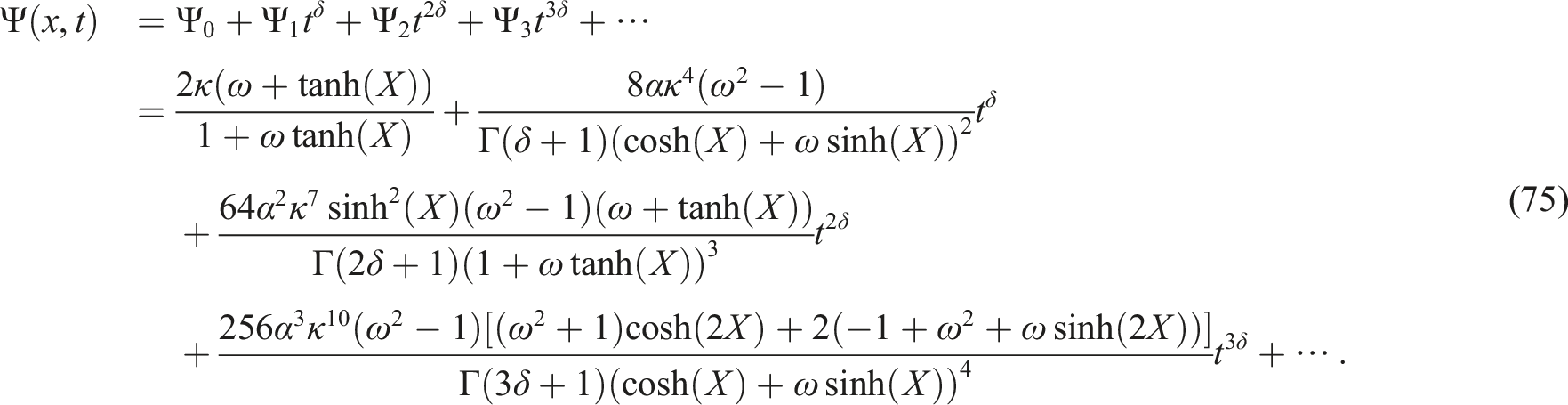
Transformed methods for analyzing Example-(II): HPTM & YTDM
Before applying both HPM and ADM for analyzing equation (71), we first apply YT to equation (71), we get
Using the definition of 

By taking the IYT to equation (78), we get
At this point, we can apply both HPTM and YTDM to analyze problem (71).
HPTM for analyzing Example-(II)
In the context of HPM and with He’s polynomial 
Collecting the coefficients of different orders of ϵ and equating them to zero, and solving the obtained resultant, we have
Zeroth-order approximation
First-order approximation
Second-order approximation
Third-order approximation

By collecting the various order approximations, we finally get the approximation of equation (71) in terms of HPTM as follows: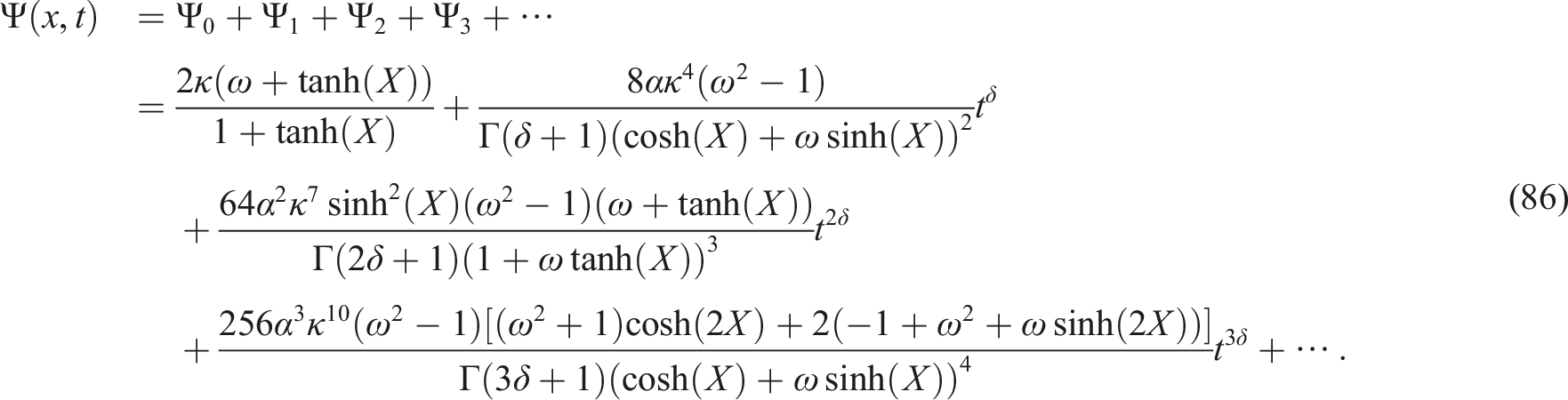
YTDM for analyzing Example-(II)
According to YTDM, the following series solution is considered
According to ADM, the nonlinear terms of equation (71) can be defined by Adomian polynomial as follows: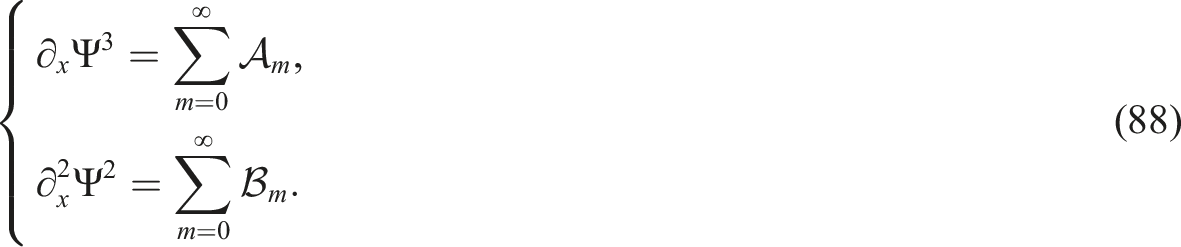
Thus, equation (79) becomes
From equation (89), the following approximations are obtained:
Zeroth-order approximation 
First-order approximation 
Second-order approximation 
Third-order approximation 
Hence, we obtain the solution of the fractional STO equation (71) in terms of YTDM as follows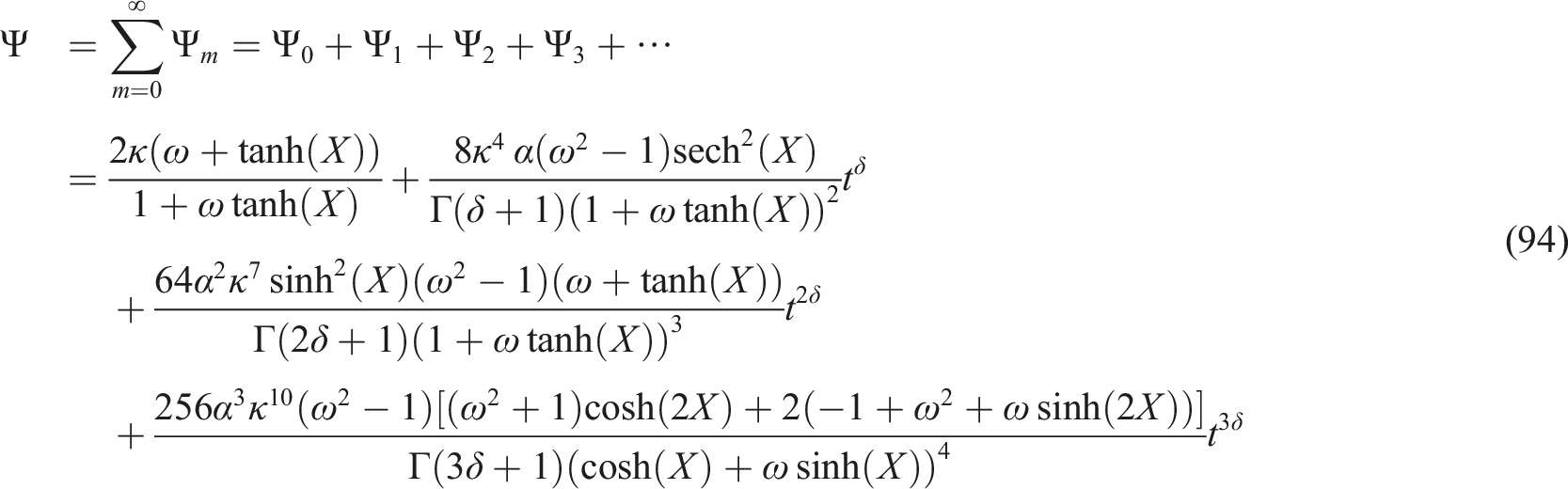
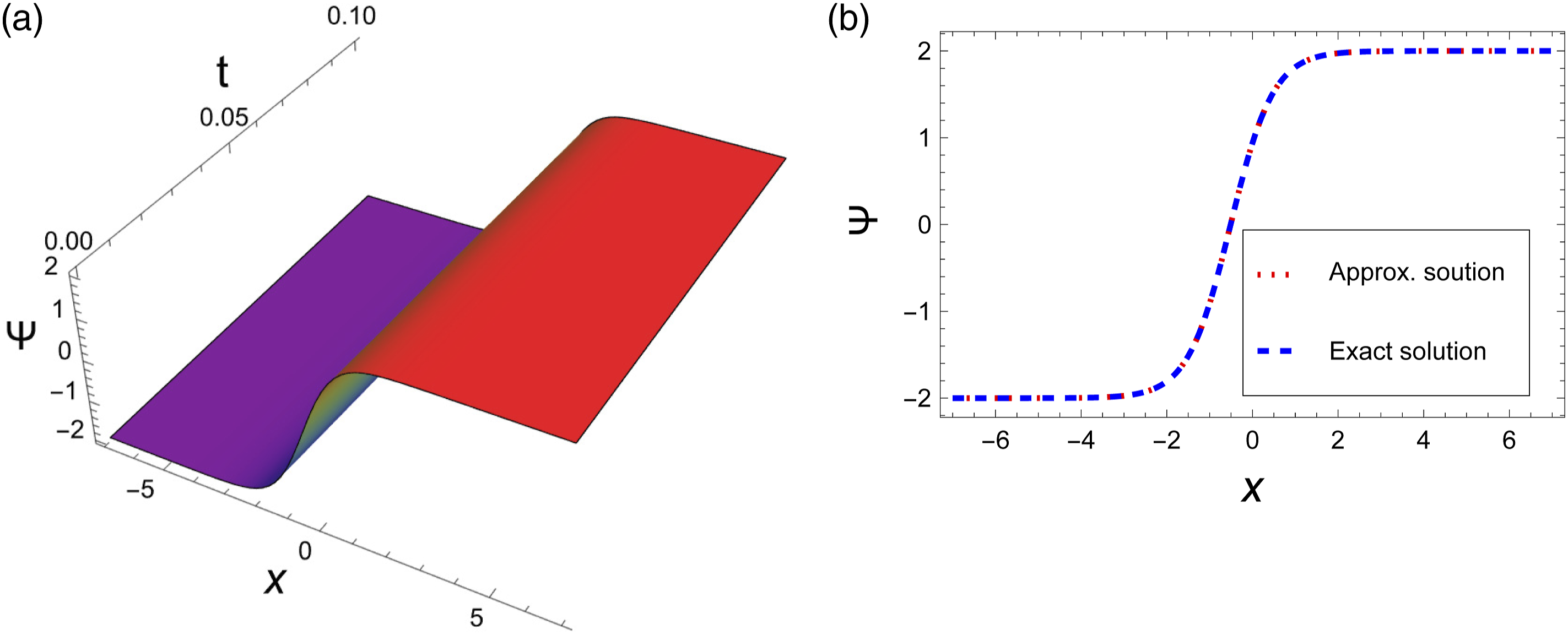
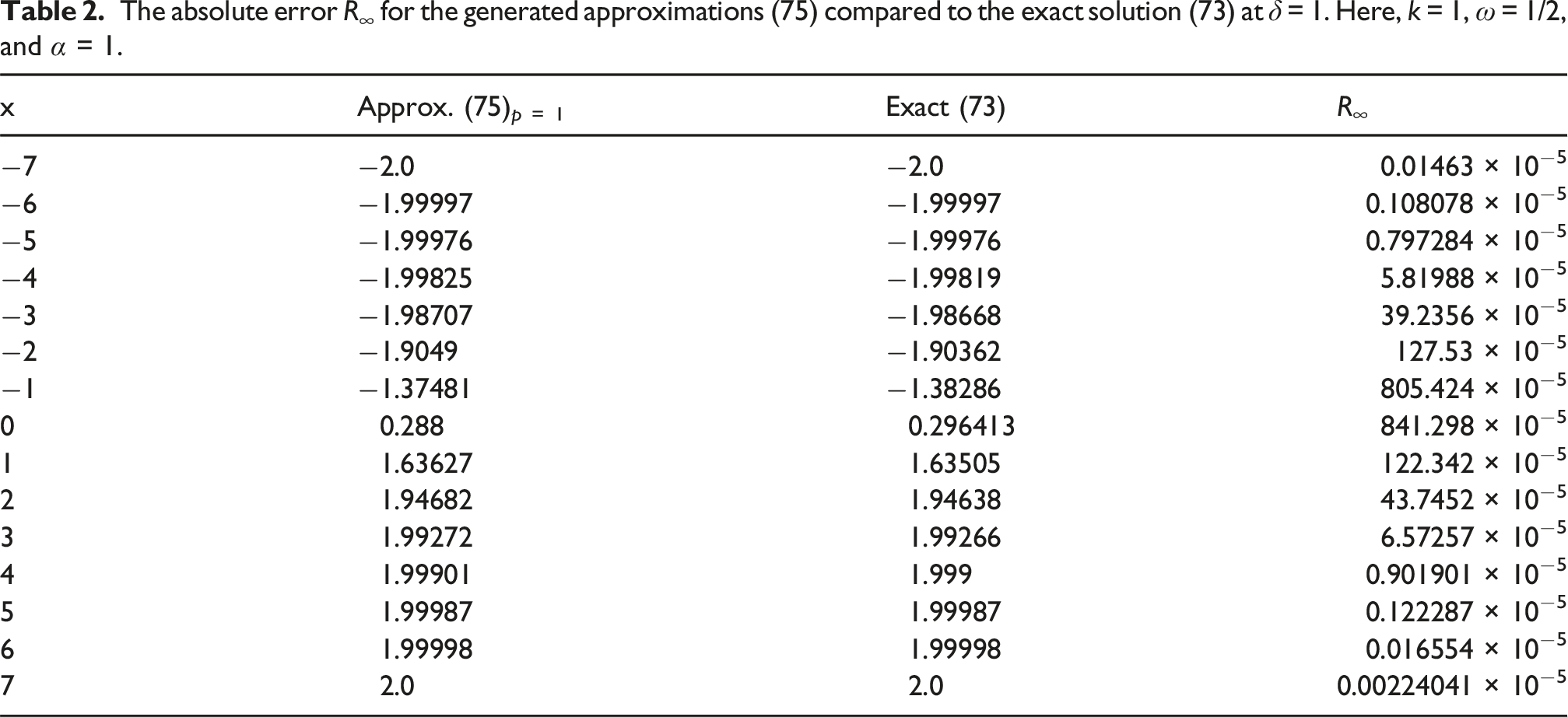
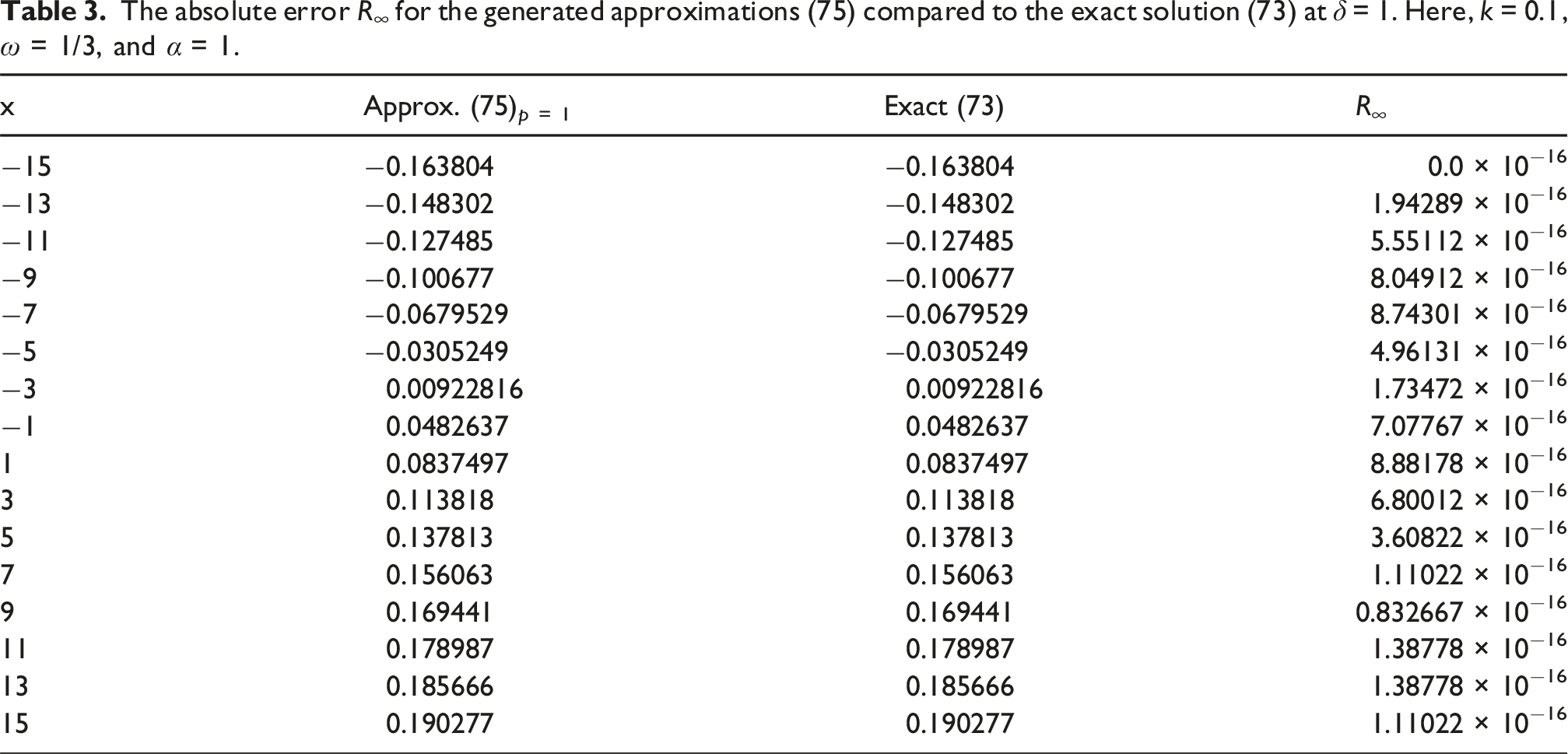
For case (II), it is clear that the three generated approximations (75), (86), and (94) utilizing the proposed three techniques are completely identical. Consequently, to comprehend the influence of the fractionality δ on the fractional shock wave profile, we examine only one of these approximations. Figure 3 illustrates the impact of the fractionality δ on the characteristics of the shock wave profile. This figure demonstrates that the fractional operator employed in the examined model yields intriguing results and validates the model, particularly maintaining temporal and historical characteristics. Also, the generated approximations at δ = 1 are graphically contrasted with the exact solution (73) in Figure 4 to assess their accuracy and stability across the whole study domain. Furthermore, the absolute error The profile of the shock wave approximation (75) to example-(I) is investigated against the fractional-order parameter δ: (a) 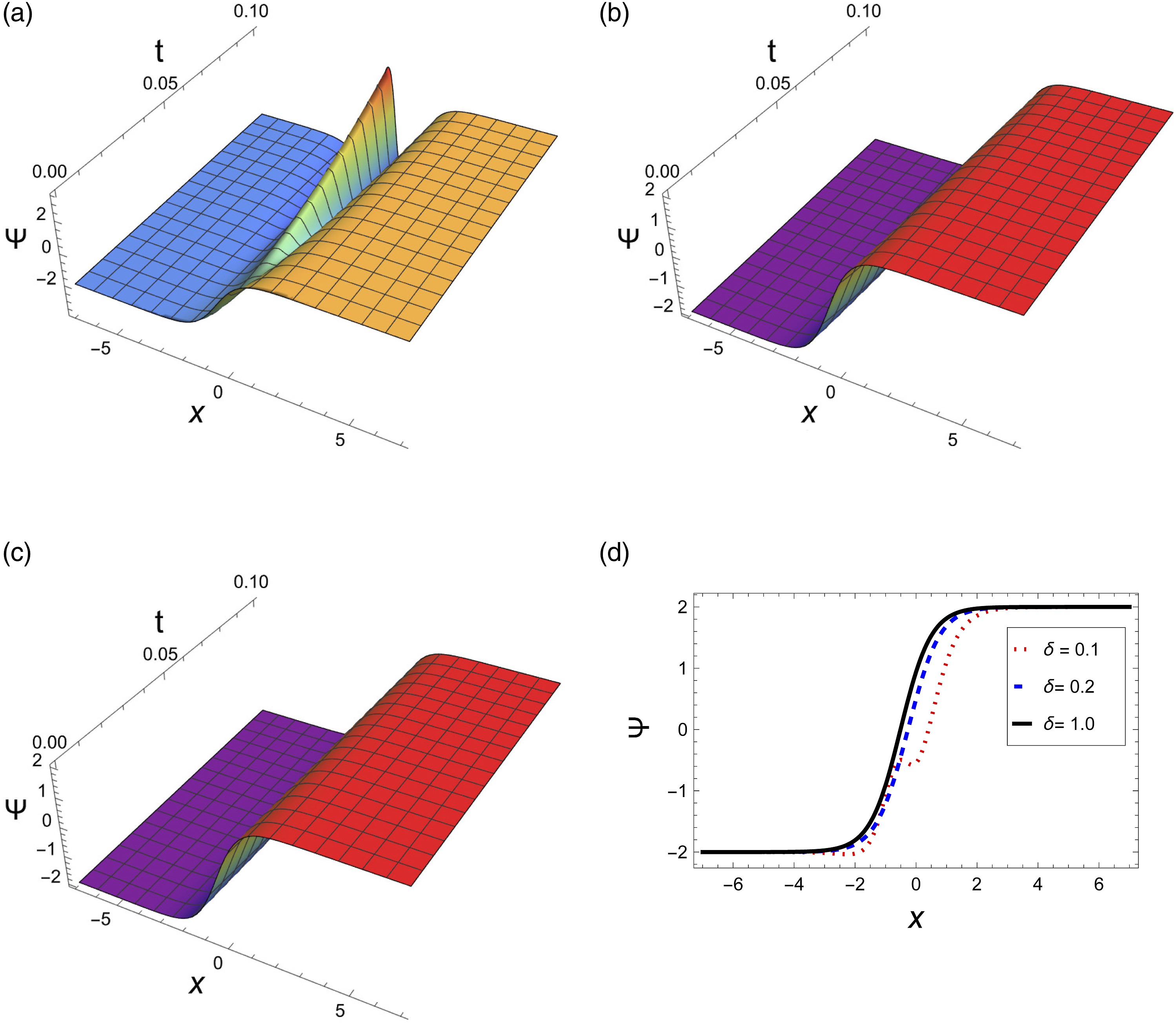
Conclusion
In this investigation, the fractional STO equation has been solved and analyzed using the Tantawy technique and two transformed methods, namely, the Adomian decomposition method (ADM) and the homotopy perturbation method (HPM) in the framework of the Yang transform. Two cases for the initial conditions of the fractional STO equation have been examined. Using the three proposed techniques, some analytical approximations to the fractional STO equation have been derived up to third-order approximations. All derived approximations obtained by the proposed methods were completely identical. The approximations derived for the two studied cases using the three proposed techniques have been numerically investigated against the fractional-order parameter δ to understand the characteristic dynamics of the fractional nonlinear shock waves. Two tests have been conducted to verify the accuracy of the derived approximations by graphically comparing these approximations with the exact solution for the integer cases, and a perfect agreement was observed between them. Additionally, the absolute error of all the derived approximations has been computed, showing that they exhibit high accuracy and more stability throughout the study domain. This, in turn, demonstrates the accuracy and efficiency of the used methods in the current analysis. Despite the whole identity of all derived approximations for each situation, the Tantawy technique is considered the most straightforward and fastest method for studying various fractional nonlinear differential equations. Moreover, it does not necessitate decomposition for any term of the fractional differential equation and addresses all linear and nonlinear terms uniformly. Consequently, we broadly advocate this technique to all engineering and physics researchers, specifically in plasma physics, due to its straightforward applicability to all fractional partial differential equations without complications, in contrast to alternative methods.
In conclusion, the generated approximations for the proposed problems are characterized by high accuracy and more stability over the whole study domain. Consequently, the findings obtained illustrate the efficacy of the used approaches in analyzing various nonlinear FDEs. Nevertheless, the Tantawy technique requires low-cost computations and less effort compared to the other two methods. Consequently, we intend to apply the Tantawy technique to tackle additional fractional strong nonlinear partial differential equations relevant to modeling various problems in engineering, biology, chemistry, and physics, particularly evolutionary wave equations utilized for modeling nonlinear plasma waves.
Future work
Due to the simplicity and straightforward of employing the Tantawy techniqu59,60,61,62 to analyze various types of fractional nonlinear PDEs and their encouraging outcomes, we are currently working on a series of forthcoming studies utilizing this technique to examine various fractional EWEs, such as the family of the fractional KdV equation,67,68,69,70 the family of the fractional Kawahara equation,71,72,73,74 and the family of the fractional nonlinear Schrödinger equation75,76,77,78 pertinent to plasma physics to model nonlinear phenomena that arise and propagate in different plasma systems, such as solitons, shocks, cnoidal waves, and rogue waves. Moreover, we are enhancing the Tantawy technique by combining it with other methods to achieve more accuracy, which the new hybrid shall be referred to as the optimal Tantawy technique.
Footnotes
Acknowledgments
The authors express their gratitude to Princess Nourah bint Abdulrahman University Researchers Supporting Project number (PNURSP2025R229), Princess Nourah bint Abdulrahman University, Riyadh, Saudi Arabia. This study is supported via funding from Prince sattam bin Abdulaziz University project number (PSAU/2025/R/1446).

Author contributions
All authors contributed to the development of the information provided in this current manuscript and all authors agreed on the final version of it.
Funding
The authors disclosed receipt of the following financial support for the research, authorship, and/or publication of this article: This work was supported by Princess Nourah bint Abdulrahman University Researchers Supporting Project number (PNURSP2025R229), Princess Nourah bint Abdulrahman University, Riyadh, Saudi Arabia. This study is supported via funding from Prince sattam bin Abdulaziz University project number (PSAU/2025/R/1446).
Declaration of conflicting interests
The authors declared no potential conflicts of interest with respect to the research, authorship, and/or publication of this article.