




Abstract
This paper presents a theoretical and experimental study of the acoustic characteristics of a class of Acoustic Black Hole waveguides (ABH) with Functionally Graded Perforated Rings (FGPR) which are sandwiching Sound Absorbing Layers (SAL). This class of ABH has enhanced energy dissipation characteristics derived from the simultaneous flow through the perforations and the sound absorbing layers. With such capabilities, the proposed ABH/FGPR provides rapid attenuation of the propagating waves as it travels along the length of the waveguide. The prediction of the behavior and the optimal design of the proposed ABH/FGPR are carried out using a COMSOL-based finite element modeling (FEM) approach. Numerical simulations are conducted to demonstrate the merits and behavior of various favorable configurations of the proposed ABH. The predictions of the FEM are compared to validate their accuracies. The theoretical predictions are further validated against experimental results using the ACUPRO impedance tube. Comparisons between the predictions and measurements reveal close agreements. Furthermore, the obtained results emphasize the importance of using SAL in extending the energy absorbing characteristics of the proposed ABH/FGPR over broad frequency range even with fewer number of rings.
Keywords
Introduction
Acoustic black holes (ABH) have attracted the interest over an extended period of time because of their simplicity and effectiveness in providing broadband attenuation of acoustic wave propagation. Conventional ABH waveguides have relied in their operation on an array of solid-flat rings of decreasing inner radius to generate the black hole effect. This effect manifests itself by a gradual reduction in the speed of the wave propagation which eventually brings the wave to a complete stop when the end of the waveguide is reached. Accordingly, reflections are prevented and the ABH acts, in effect, as an acoustic termination.
In 2002, Mironov and Pislyakov 1 have introduced the ABH effect by using waveguides with rings of decreasing inner radii or increasing outer radii 2 following a power law taper. The ABH effect was also demonstrated by El Ouahabi et al.3,4 by using rings with linearly or quadratically tapered profiles.
Comprehensive analysis of the acoustic characteristics of conventional ABH have been studied by Guasch et al. 5 and Deng et al. 6 via the development of transfer matrix models (TMM). The developed models are utilized to investigate the effect of various design parameters of the rings on the reflection properties of the conventional ABH.
In 2021, Mi et al. 7 have presented a theoretical and experimental investigation of an open-end ABH with rings having inner radii configured according to a quadratic taper. The obtained results emphasize the continuous decay of the wave propagation velocity along the ABH.
In 2022, Abbas Mousavi et al. 8 developed a frequency-domain finite element simulation to study cylindrical ABH waveguides. The predictions of the finite element simulations have been verified experimentally.
Finally, Hollkamp and Semperlotti 9 have introduced Fractional order models to account for the absorbing behavior of nonlinearly tapered ABH termination in an acoustic duct.
Recently, great interest has been focused on providing the ABH with energy dissipative capabilities by integrating it with micro-perforated boundaries. With such an arrangement, a broadband sound control can be achieved by combining the low frequency sound mitigation capabilities of the ABH with the high frequency absorption characteristics of the micro-perforated boundaries. Examples of the recent efforts include the original configuration where by the ABH is augmented with a perforated cone that fits inside the gradually decreasing space confined between the rings of the ABH as in the work of Zhang and Cheng 10 and Li et al. 11 On the other hand, Liang et al. 12 and Meng et al. 13 developed a composite that combined the ABH with a set of perforated plates of decreasing diameters each of which complement an appropriate ring of the ABH to form an array of parallel rings. The outer part of these rings is solid whereas the inner part is perforated. Furthermore, the composite has included also a perforated cone similar to that Zhang and Cheng 10 as well as that of Li et al. 11 along with a set of Helmholtz resonators in order to enhance the broadband characteristics of the composite.
Furmanova et al. 14 developed an ABH with gradually changing rigid walls that have slits filled with sound absorbing porous material. The optimal profile of these walls is optimized by minimizing the reflection coefficient using a model based on a Riccati Equation which governs the wave propagation in their proposed ABH configuration.
Bravo and Maury 15 developed an open-ended ABH muffler which is coated with a micro-perforated panel in order to achieve maximum dissipation of the incident acoustic waves over a broadband frequency range.
Recently another approach has been developed by Petrover and Baz 16 which relies in its operation on an array of optimally designed functionally graded perforated rings (FGPRs). In this manner, the developed ABH is provided with built-in energy dissipation characteristics generated by virtue of the flow through perforations, which enhances its acoustic absorption behavior and makes the speed of the propagating waves vanish faster when reaching the end of the waveguide. This approach results in a much simple configuration of the ABH which is very easy to manufacture and furthermore enables sandwiching of additional porous absorbing layers between the rings to further boost the absorption characteristics of the proposed ABH.
In this paper, a transfer matrix model (TMM) developed by Petrover and Baz 16 is used to predict the effect of the functionally graded perforated rings (FGPR) when passive fibrous sound absorbing layers are sandwiched between these rings. The TMM predictions are used to validate, on one hand, the predictions of a developed COMSOL-based finite element model (FEM). On the other hand, the predictions of both the TMM and the COMSOL-FEM models are validated experimentally using two practical and favorable configurations of the ABH/FGPR. All the presented theoretical and experimental tools aim at demonstrating the merits of the proposed ABH as an effective means for absorbing sound propagation.
Accordingly, the paper is organized in six sections and an appendix. In Section 1, a brief introduction is presented. The concept and favorable configurations of the acoustic black hole with functionally graded perforated rings are introduced in Section 2. The finite element modeling (FEM) is outlined in Section 3. The validation of the predictions of both the TMM and the FEM against experimental results available in the literature is presented in Section 4. The performance characteristics of two practical configurations of the ABH with FGRP are outlined also in Section 5 along with comparisons of the characteristics when sound absorbing layers are used or not. Section 6 summarizes the conclusions of the present study and the potential for its future extensions. The appendix summarizes briefly the Transfer Matrix Method of the ABH/FGPR with and without sound absorbing layers, of Petrover and Baz, 16 for the sake of completion.
Concept of acoustic black hole with functionally graded perforated rings
The proposed ABH with FGPR takes the form of one of two radically different configurations as shown in Figures 1(a) and (b). This ABH is provided with a complete set of perforated rings which have high porosity at the input end and lower porosities of the rings that follow along the direction of propagation towards the end. In Figure 1(a), it is shown that the first ring has pores of diameter d
1
whereas the second and third rings, for example, have functionally graded pores of diameter d
2
and d
3
such that: d
1
>d
2
>d
3
>…, etc. With such an arrangement, the proposed ABH is envisioned to have inherent energy dissipation characteristics generated by the flow of acoustic waves through the pores. These characteristics result in slowing the wave propagation speed towards the end of the waveguide. More importantly, the proposed design of the perforated rings, as shown in Figure 1(a), makes it to sandwich layers of sound absorbing layers between the consecutive rings to further increase the energy dissipation characteristics of the proposed ABH. Therefore, the new class of ABH is designed to generate the black hole effect via effective dissipative means unlike the conventional ABH which employs reactive means to achieve the same effect. Configurations the acoustic black hole with functionally graded perforated rings.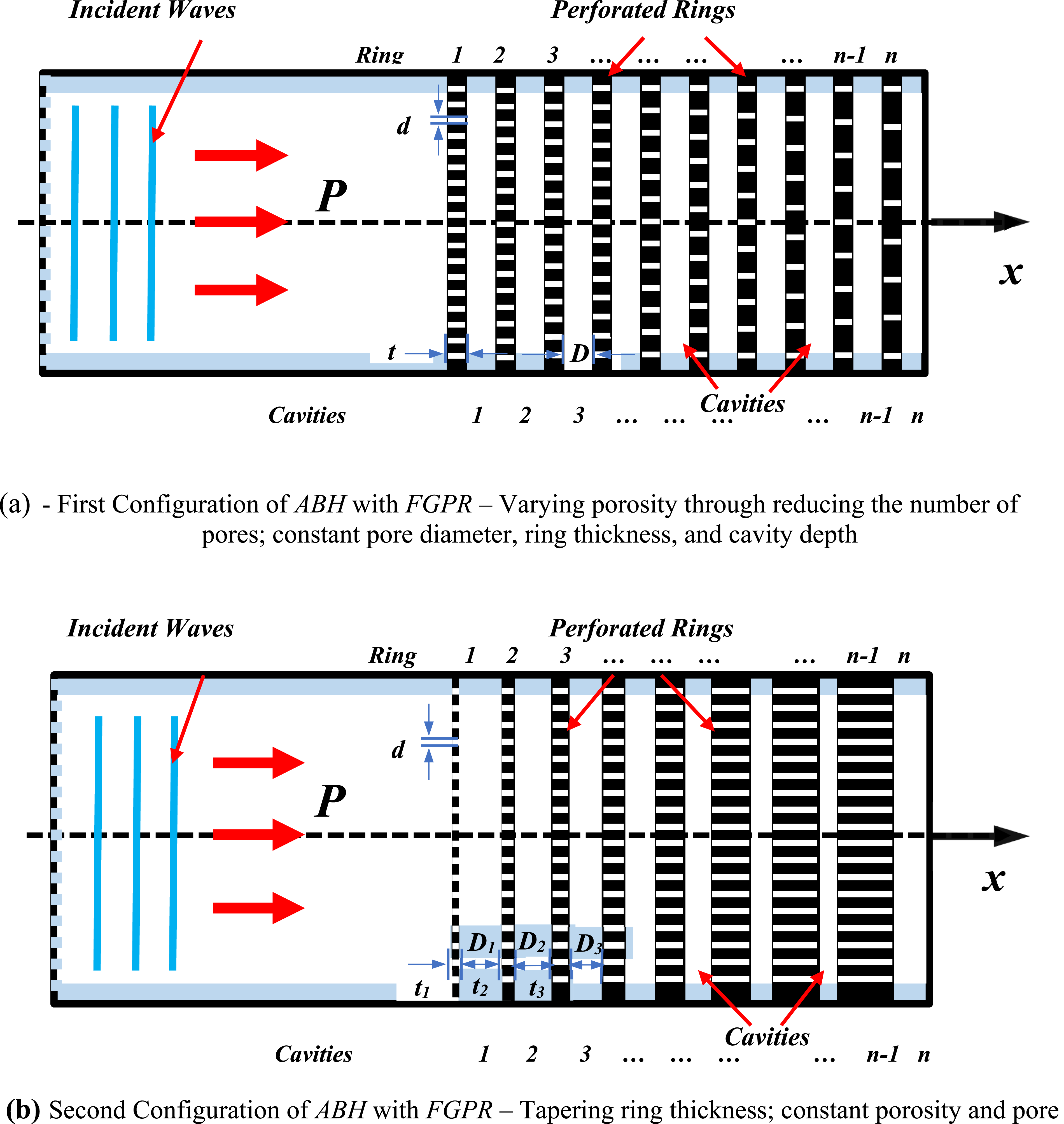
In this paper, two preferred configurations of the ABH with FGPR are considered as displayed in Figures 1(a) and (b) in order to avoid manufacturing ABH with very small diameter pores.
In the first configuration, as shown below in Figure 1(a), the black hole effect is achieved by holding the pore diameter constant while varying porosity along the ABH.
In the second configuration, as shown below in Figure 1(b), the ring thickness is increased along the direction of propagation. Both ABH with FGPR configurations, as depicted in Figures 1(a) and (b), yield the black hole effect through dissipative means rather than the reactive means of the conventional ABH. Finally, these two configurations permit the addition of porous sound absorbing layers between the FGPR’s to further increase the broadband absorption capabilities.
Finite element method
Overview
In this section, the FEM model is implemented by using the commercial software package COMSOL Multiphysics in order to validate the predictions of the TMM model developed by Petrover and Baz.
16
The finite element mesh of the developed models, with and without the sound absorbing layers, are shown in Figures 2(a) and (b), respectively. COMSOL Multiphysics FEM mesh of the ABH with FGPR.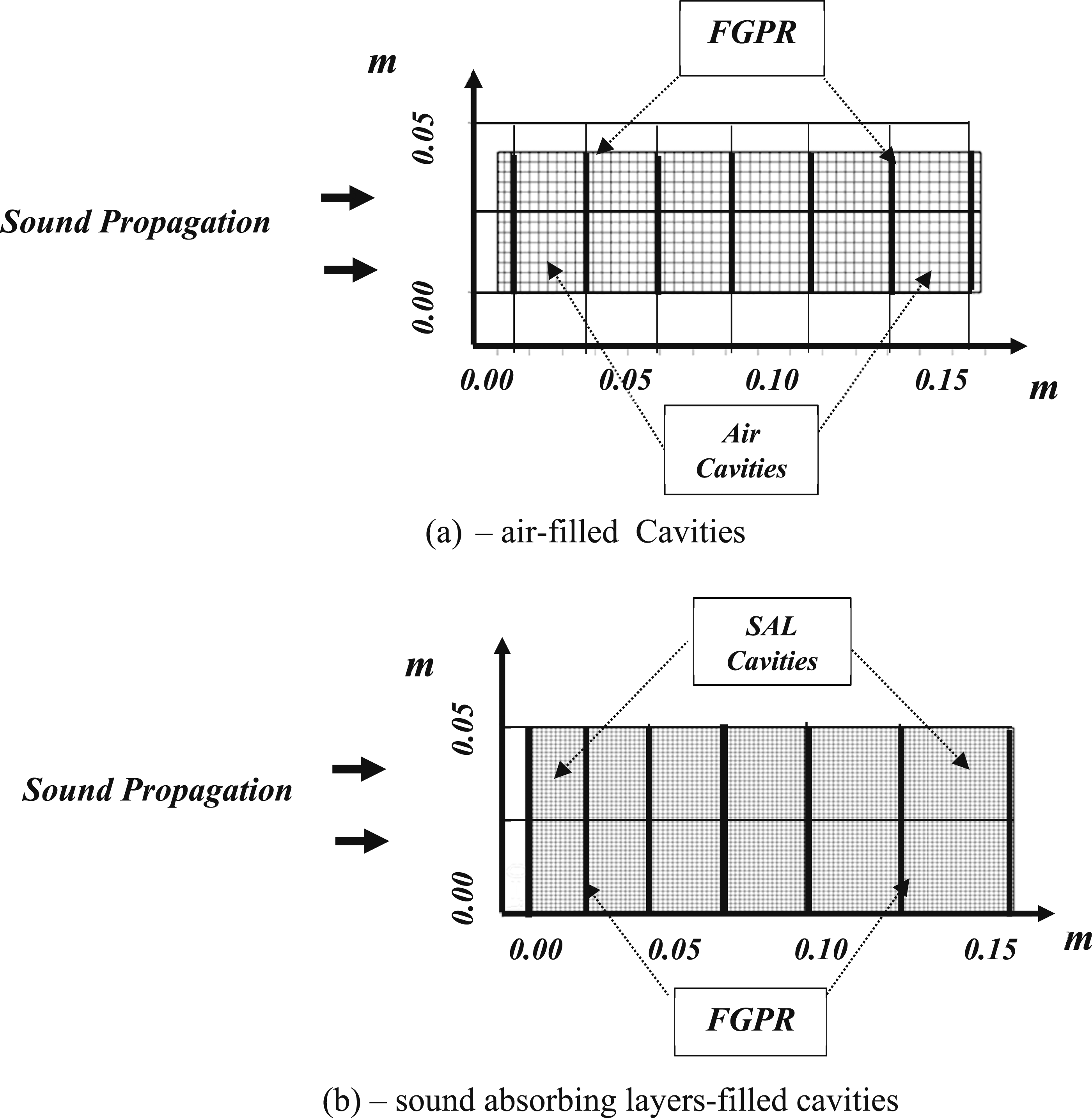
Figure 2(a) shows an axisymmetric mesh of the ABH with FGPR with air-filled cavities consisting of 360 domain elements and 168 boundary elements with a minimum quality: 1.0 and average quality: 1.0. However, Figure 2(b) shows the ABH with FGPR sandwiched with porous absorbing layers consisting of 728 domain elements and 230 boundary elements with a minimum quality: 1.0 and average quality: 1.0. The following constraints are applied. The solid vertical boundary is set to sound-hard, the topmost horizontal boundary is assigned as the entrance port with an incident wave excitation of amplitude 1 Pa, and the bottommost boundary is designated as the exit port with no excitation. From the COMSOL Pressure Acoustic module, the perforated plate interior boundary is applied to each of the FGPR, indicated by the six interior horizontal lines with the respective pore diameter and ring thickness from top to bottom. The sound speed c of air is taken to be complex such that c = 340 (1 + 0.05i) m/s. For the ABH with FGPR with absorbing layers, the porous material domain from the Poro-acoustics module is assigned to the seven layers using the Delany-Bazly-Miki poro-acoustic model. A porosity ϵ of 95.66% and airflow resistivity R f of 3769.2 Ns/m 4 , for a glass wool-like material, is used.17–23 Glass wool has been selected because of its excellent sound absorption characteristics due to its high density that enables it to absorb nearly 90% of incident sound waves. Also, it is fire resistant and can withstand high operating temperatures. Glass wool is a durable material that can operate effectively for many years without any degradation of its sound absorbing properties, and more importantly it is a cost-effective sound absorbing material as compared to other materials such as mass-loaded vinyl or acoustic foam.24,25
From the COMSOL Pressure Acoustic module, the perforated plate interior boundary is applied to each of the FGPR. These boundaries are indicated by the dark interior horizontal lines with the respective pore diameter and ring thickness as shown in Figure 2.
Considered configurations of ABH/FGPR
The COMSOL finite element approach described in Section 3.1 is used to analyze the two configurations of the ABH/FGPR shown schematically inFigures 1(a) and (b).
The detailed geometrical parameters of the first configuration are shown in Figure 3. This configuration consists of six rings with thickness t = 700 μm, pore diameter d = 150 μm, and cavity depth D = 24.4 mm. The porosities of the 6 rings are such that ϕ = 100% x [0.45 0.23 0.15 0.10 0.63 0.32]. These design parameters have been optimized to be manufacturable with micro-drilling. Detailed geometrical parameters of the first configuration of the ABH with FGPR.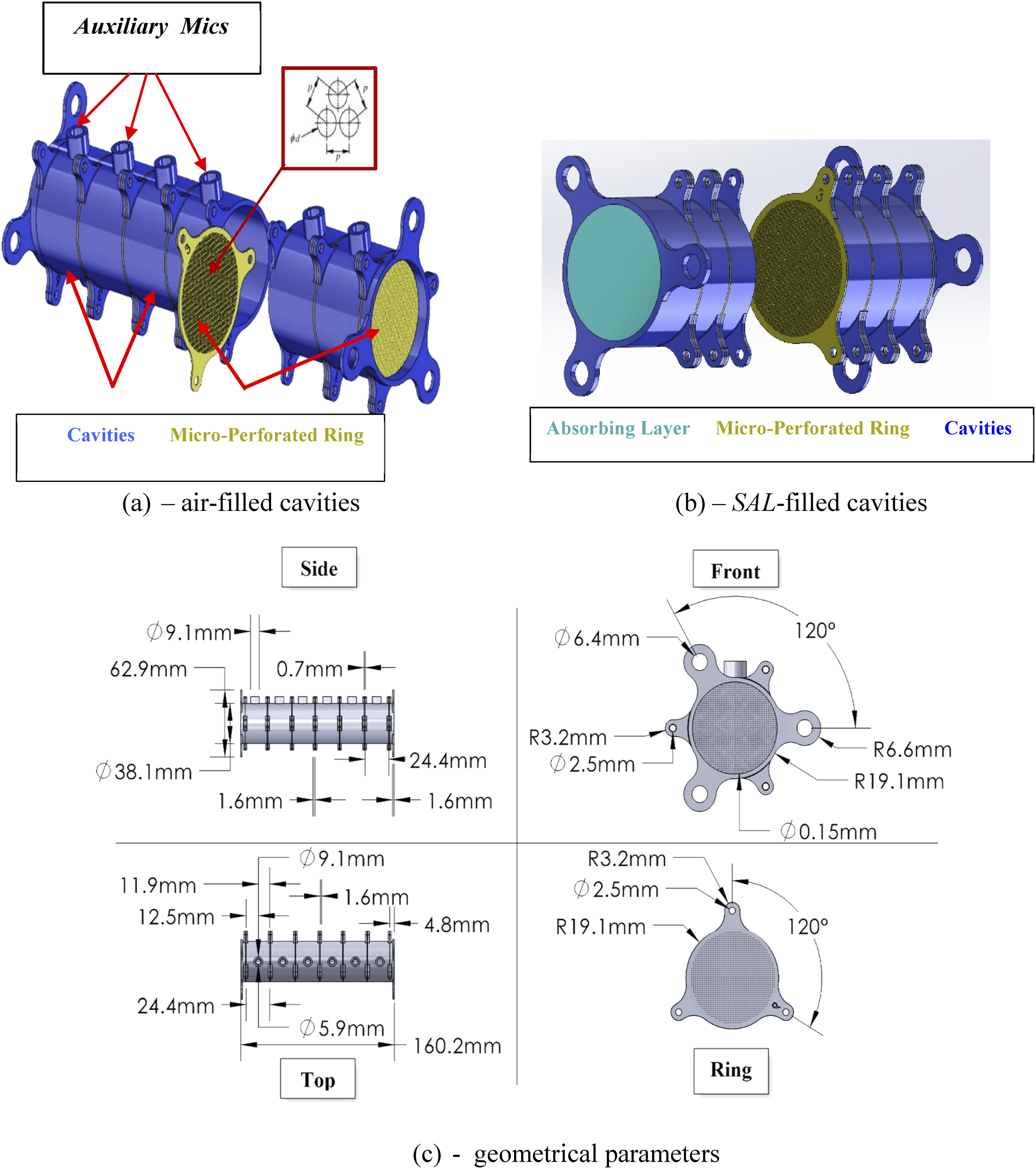
The corresponding geometrical parameters of the second configuration are shown in Figure 4. This configuration consists of six rings with porosity ϕ = 15.51% and pore diameter d = 400 μm. Respectively, the ring thicknesses and the cavity depths are as follows, t = [0.7 2 3.4 5.3 8.7 19.4] mm and D = [24.4 21.6 18.8 16.5 14.5 11.7] mm. These design parameters have been optimized to be compatible with fabrication by using additive manufacturing (AM). Detailed geometrical parameters of the second configuration of the ABH with FGPR.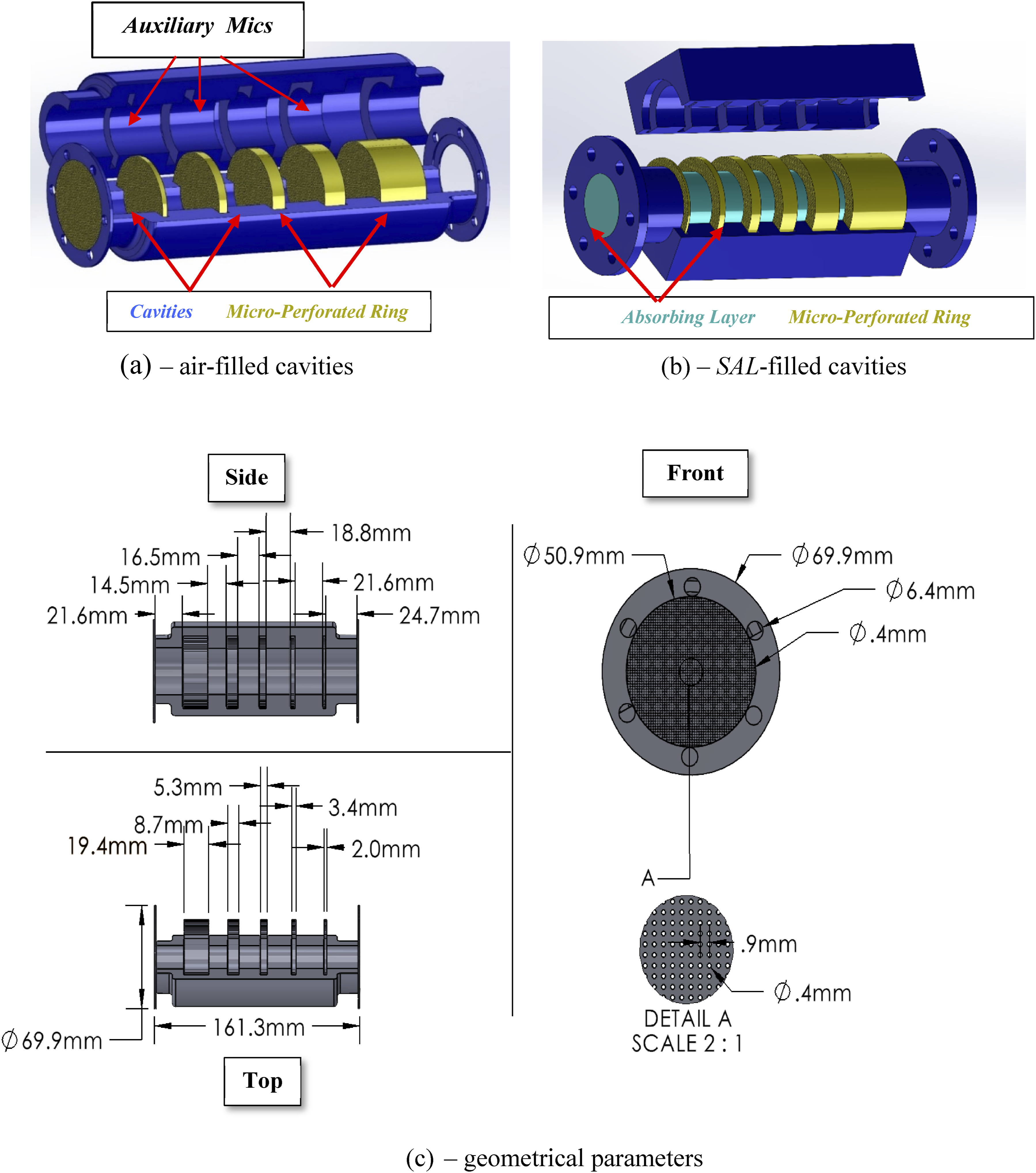
The optimization problem is formulated as follows:
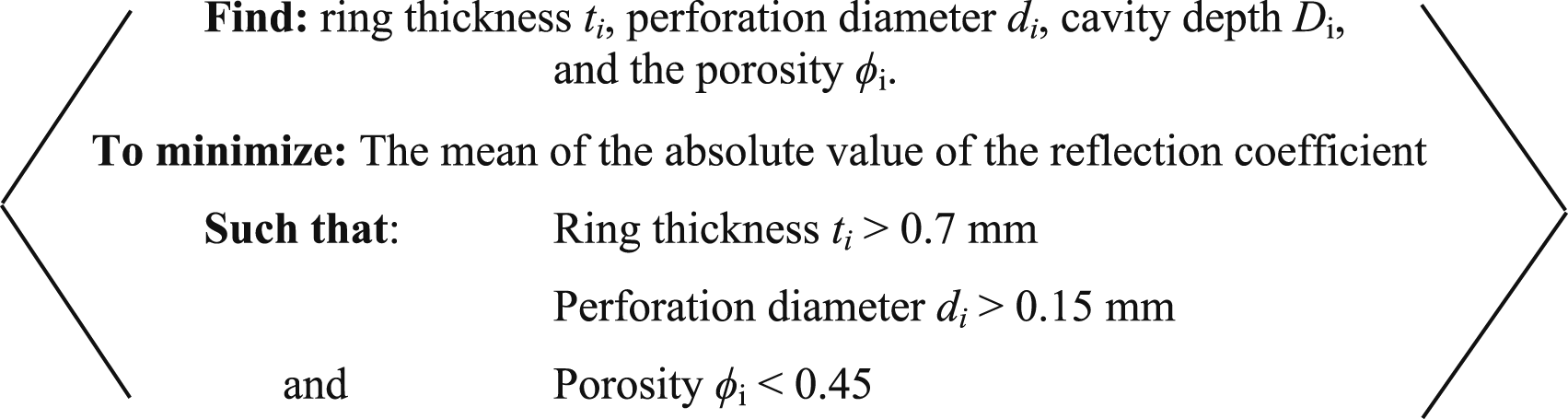
Note that the above constraints are imposed by the available manufacturing capabilities.
The optimization problem is solved using the nonlinear constrained function minimization algorithm toolbox of MATLAB “fmincon” which utilizes the Sequential Quadratic Programming (SQP) method. In this method, a Quadratic Programming (QP) subproblem is solved at each iteration with estimates of the Hessian of the Lagrangian.26,27
Characteristics of the ABH/FGPR as obtained by the FEM and TMM
Configuration 1
Figure 5(a) shows the absorption coefficient α of the air-filled configuration 1 of the proposed ABH as it propagates through each of the six FGPR and a closed-backing cavity as predicted by the TMM approach. Note that the sound speed is taken to be non-complex such that c = 340 m/s. Absorption and reflection coefficients of configuration 1 of the ABH/FGPR with and without sound absorbing material.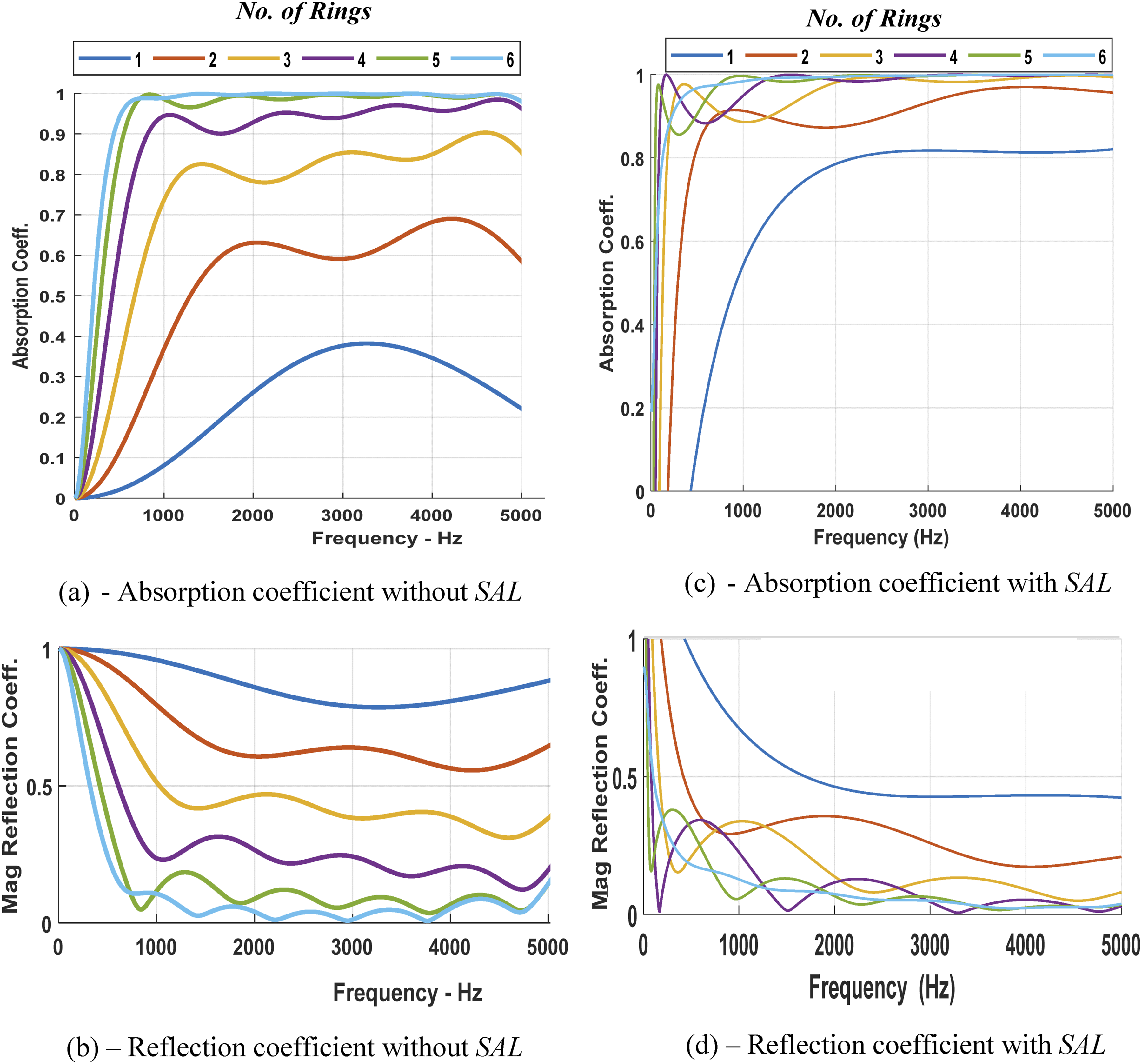
The figure indicates that the absorption coefficient characteristics exhibit resonance at a number of frequencies equal to the number of employed rings. With 6 rings, it can be seen that the proposed ABH displays broadband absorption characteristics over a range of frequencies between 500 Hz and 5000 Hz. Such a characteristic constitutes the main attractive attributes of the proposed ABH as the obtained absorption coefficient plateaus close to 0.999 over a broadband range. Hence, the effectiveness of the proposed ABH with FGPR is attributed primarily to its broadband high energy dissipation characteristics.
Figure 5(b) displays the reflection coefficient R of the proposed air-filled ABH with 1 to 6 FGPR when it is provided with a closed backing cavity. The figure shows that the reflection coefficient characteristics exhibit the inverse behavior of the absorption coefficient. This feature emphasizes that the working principle of the proposed ABH with FGPR is due to its inherent high energy dissipation and not reflectivity.
Figures 5(c) and (d) show the corresponding characteristics of the absorption and reflection coefficients of the ABH/FGPR when the cavities are filled with sound absorbing layers (SAL), respectively. Figure 5(c) indicates significantly higher absorption coefficients as compared to that of the air-filled ABH/FGPR as shown in Figure 5(a). Also, Figure 5(d) shows significantly lower reflection coefficients as compared to that of the air-filled ABH/FGPR as shown in Figure 5(b). These characteristics demonstrate the effectiveness of using SAL in enhancing the acoustic characteristics of the ABH/FGPR.
Figures 6(a) and (b) display the contours of the dissipated acoustic energy along the ABH as shown as a function of the location and operating frequency without and with SAL, respectively. Such energy dissipation is quantified by the transmission loss in dB. Transmission loss contours of the first configuration of ABH/FGPR with and without sound absorbing material as function of location and frequency.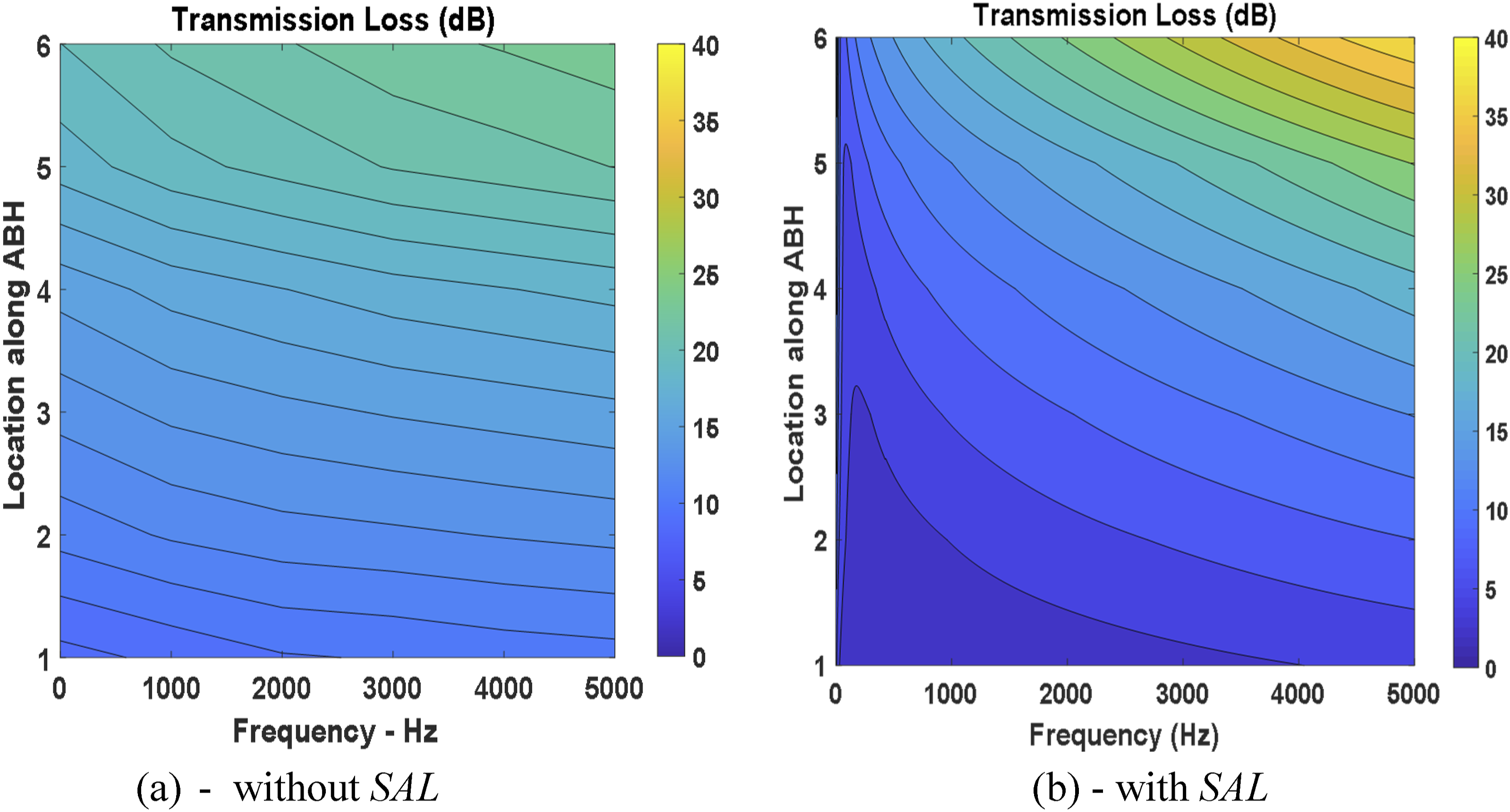
It is evident that as the acoustic waves propagate along the proposed ABH, energy is dissipated very fast and when the end of the waveguide is reached, a transmission loss of about 30 dB when no SAL are used and increased dramatically to about 40 dB when SAL are included.
Configuration 2
Figure 7(a) shows the corresponding characteristics of the absorption coefficient α of configuration 2 of the proposed air-filled ABH as it propagates through each of the six FGPR and a closed-backing cavity as predicted by the TMM approach. Note that the sound speed is taken to be non-complex such that c = 340 m/s. Absorption and reflection coefficients of configuration 2 of the ABH/FGPR with and without sound absorbing material.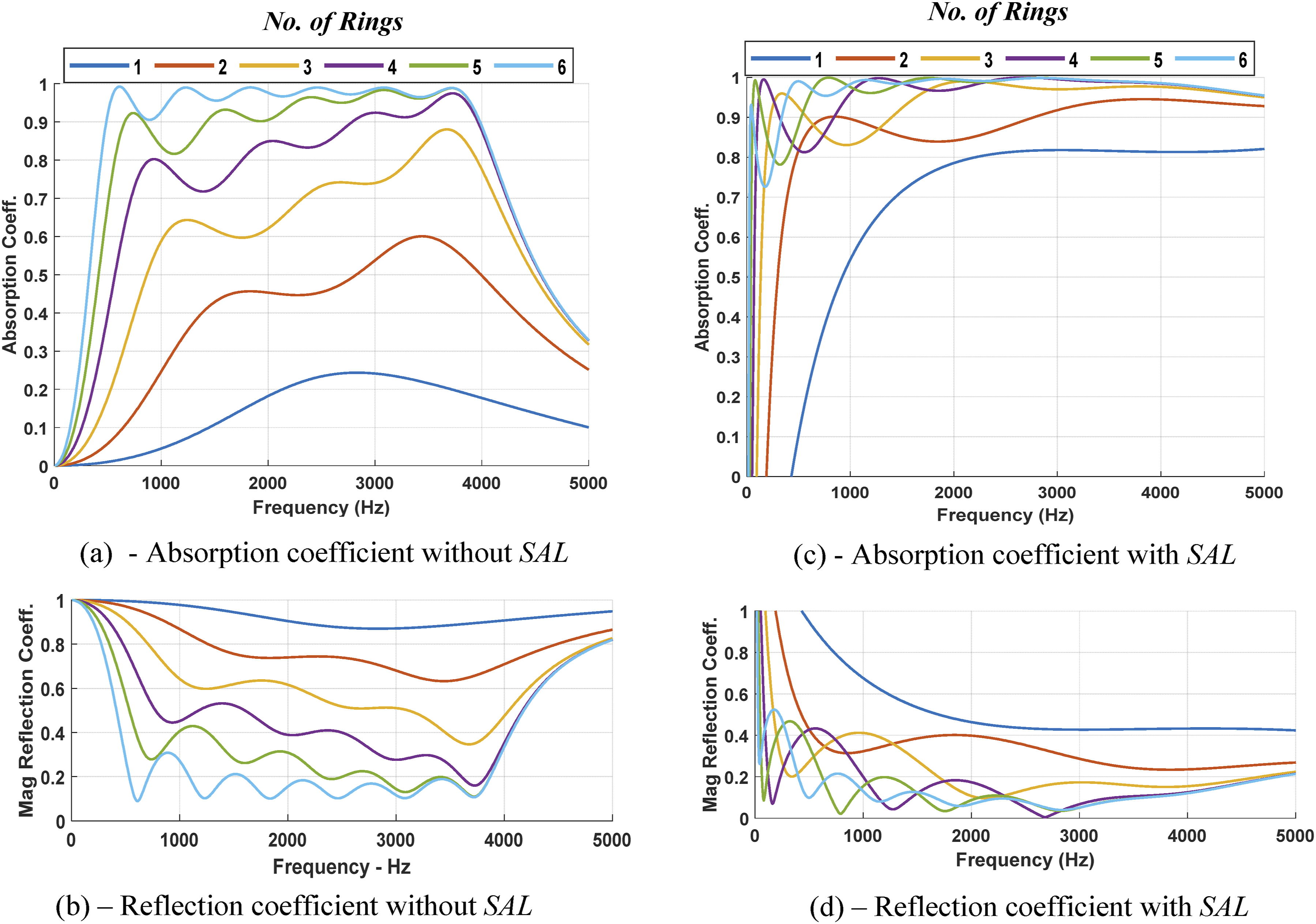
Figure 7(b) displays the reflection coefficient R of the proposed air-filled ABH with 1 to 6 FGPR when it is provided with a closed backing cavity. The figure shows that the reflection coefficient characteristics exhibit the inverse behavior of the absorption coefficient. This feature emphasizes that the working principle of the proposed ABH with FGPR is due to its inherent high energy dissipation and not reflectivity.
Figures 7(c) and (d) show the corresponding characteristics of the absorption and reflection coefficients of the ABH/FGPR when the cavities are filled with sound absorbing layers (SAL), respectively. Figure 7(c) indicates significantly higher absorption coefficients as compared to that of the air-filled ABH/FGPR as shown in Figure 7(a). Also, Figure 7(d) shows significantly lower reflection coefficients as compared to that of the air-filled ABH/FGPR as shown in Figure 7(b). These characteristics emphasize the effectiveness of using SAL in improving the acoustic characteristics of the ABH/FGPR.
Figures 8(a) and (b) display the contours of the dissipated acoustic energy along the ABH as shown as a function of the location and operating frequency without and with SAL, respectively. Such energy dissipation is quantified by the transmission loss in dB. Transmission loss contours of the second configuration of the ABH with FGPR with and without sound absorbing material as function of location and frequency.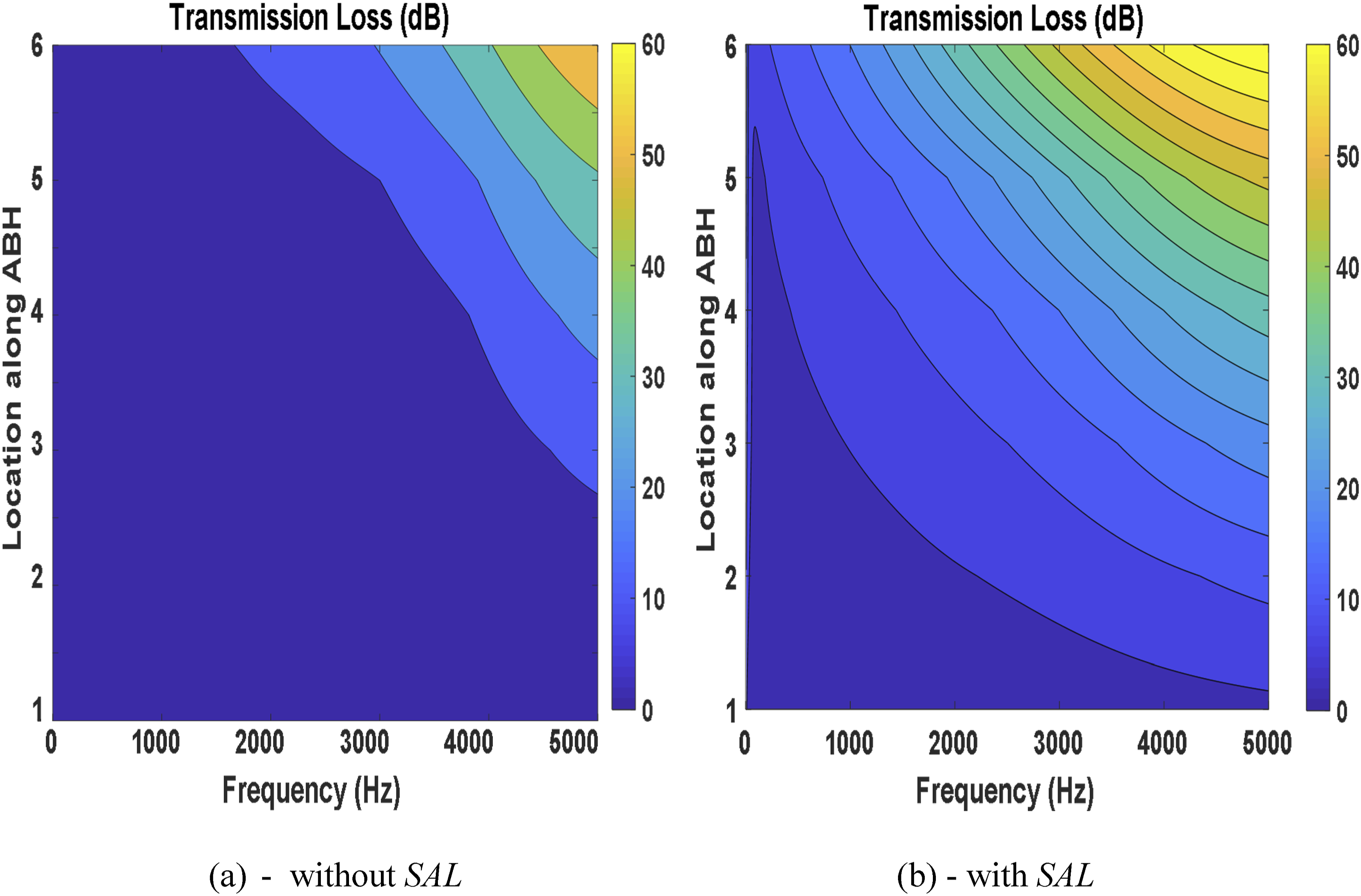
This characteristic is very important when compared with that of Configuration1 which is displayed in Figure 5. It is important to note that the maximum transmission loss attained by Configuration 1 is 30 dB when it is air-filled and 40 dB when it is SAL-filled whereas the maximum transmission loss achieved by Configuration 2 is 60 dB, that is, nearly 2.4 times. Such a significantly higher energy dissipation characteristics is attributed to the fact that Configuration 2 relies in its operation on much thicker rings than those used in Configuration 1. Note that all the rings of Configuration 1 have the same thickness of 0.7 mm whereas in the rings of Configuration 2 have thicknesses varying from 0.7 mm to 19.4 mm. These significantly thicker rings of Configuration 2 add considerable resistance to the flow along the ABH/FGPR.
Performance characteristics of the experimental prototypes
Experimental setup
Experiments are carried out to measure the sound absorption coefficient, reflection coefficient, and transmission loss through the ABH with FGPR using the ACUPRO Impedance tube (IT). For the sound absorption coefficient and reflection coefficient collection, the measurement system consists of the main tube, the absorption coefficient tube, the rigid and anechoic terminations, two 1/4 of inch PCB microphones, the JBL 2426J Compression Driver, and a 4-Channel DAQ DT9837A, as depicted below in Figure 9. There are two calibration loads. Load A is the open-ended termination which uses the anechoic an absorbing layer termination, and load B is the rigid-ended termination which uses the rigid termination. These calibration loads are used according to the ASTM E2611 standard which is commonly called the “two-load method.”
28
ACUPRO Impedance Tube for Sound Absorption Coefficient (SAC) measurements.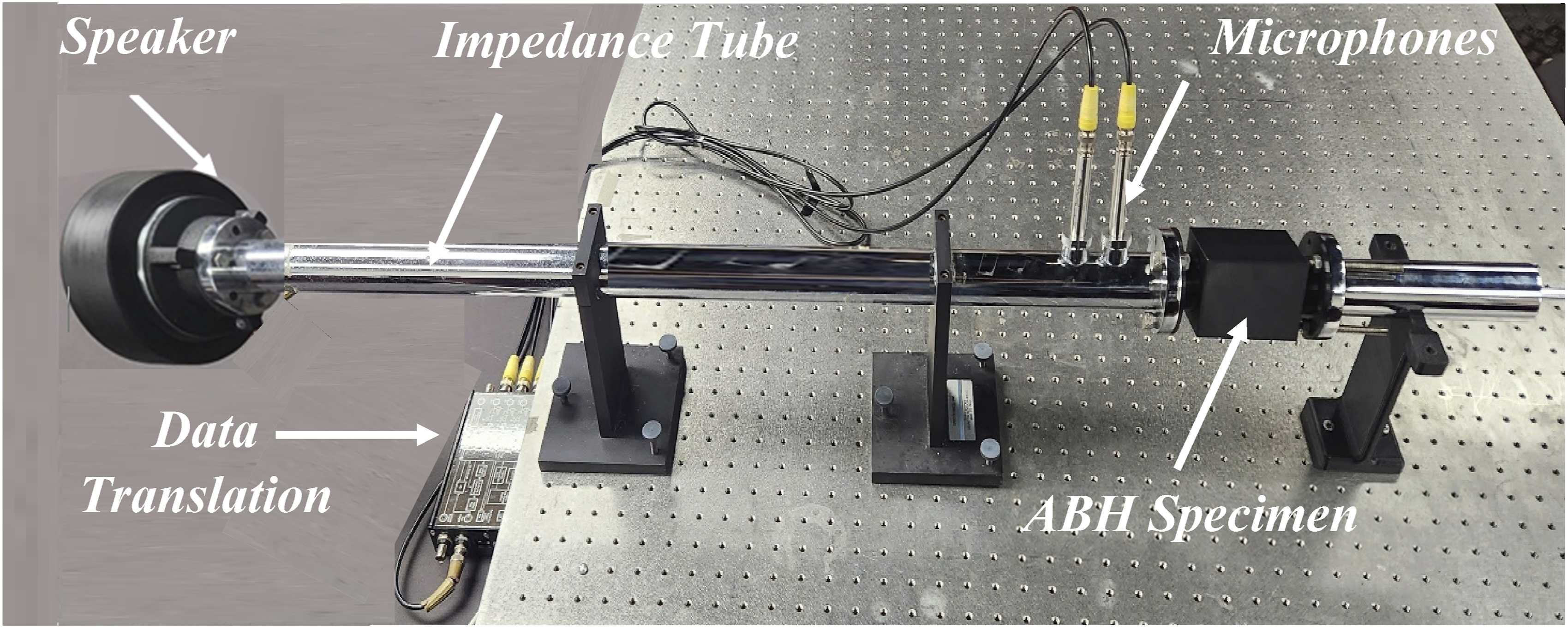
Experimental characteristics of configuration 1
Figures 10(a) and (b) show comparisons between the experimental absorption and reflection coefficients and the corresponding values as predicted by the TMM and COMSOL FEM for ABH/FGPR without SAL. Figure 10(a) shows that there is adequate agreement between the TMM and FEM models and the measured results particularly over the frequency range between 500 and 4000 Hz. Outside this range, there are some discrepancies which are attributed to the imperfect fabrication of the samples. The difficulty to achieve perfect fabrication is attributed to the small pore size, high porosity, and small thickness of the rings. It is worth noting that the manufacturing has been carried out by using a CNC machine (Genmitsu 3018) with pro-drilling capabilities followed by high pressure air blowing of the residues. Comparison between the experiments and theoretical predictions of the absorption (a) and reflection (b) coefficients of configuration 1 with and without sound absorbing material as obtained by the TMM approach and COMSOL FEM.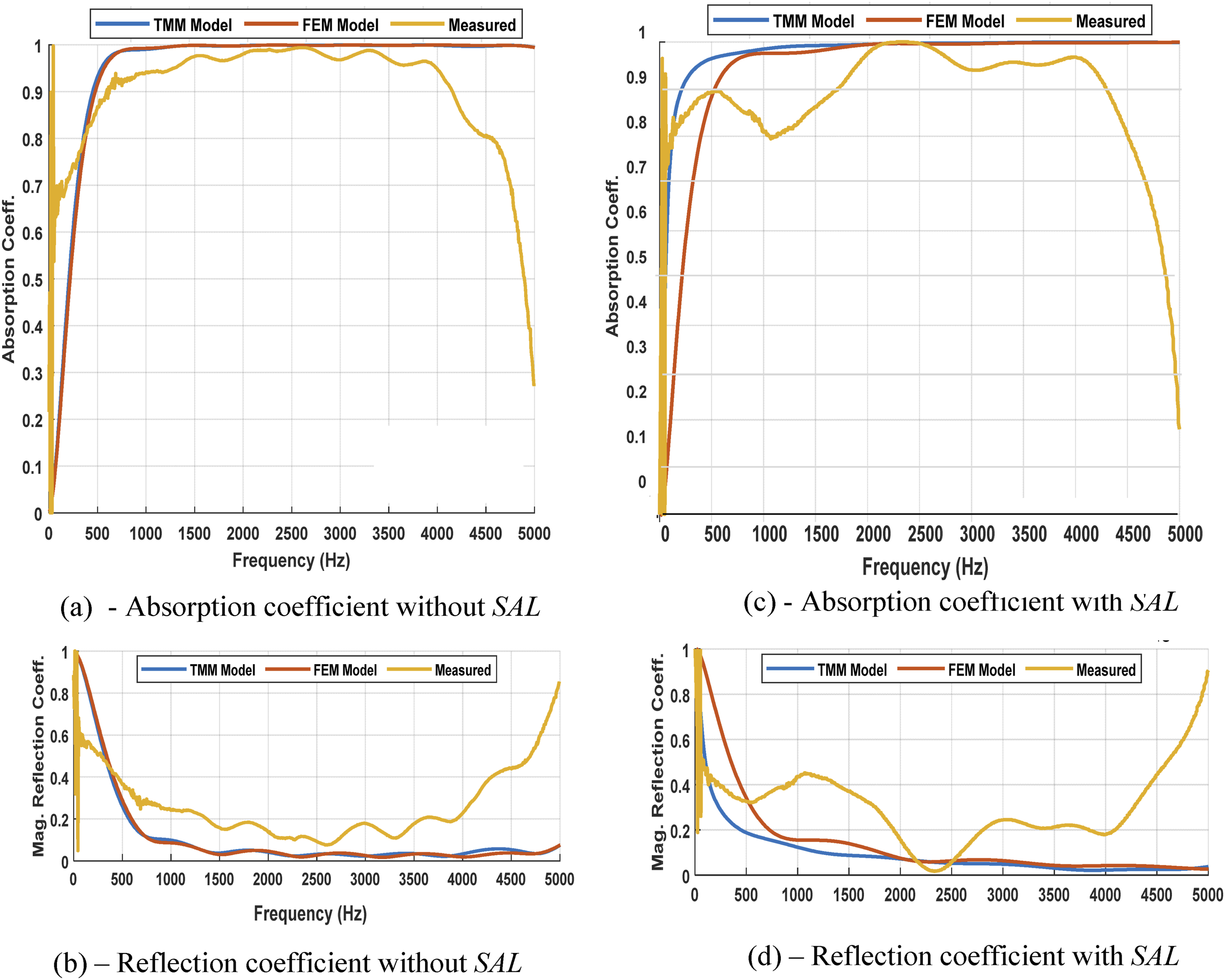
In spite of these difficulties, a high absorption coefficient is attained with 6 rings reaching above 0.95 over a frequency range between 1000 and 4000 Hz.
Figure 10(b) shows the corresponding comparison between the experimental reflection coefficient and the theoretical values as predicted by the TMM and COMSOL FEM. It can be seen that there is adequate agreement between the TMM and FEM models and the measured results particularly over the frequency range between 500 and 4000 Hz. Within this frequency range, the magnitude of the reflection coefficient remains below 0.2.
Figures 10(c) and (d) show the corresponding characteristics of the absorption and reflection coefficients of the ABH/FGPR when the cavities are filled with sound absorbing layers (SAL), respectively.
Experimental characteristics of configuration 2
Figures 11(a) and (b) display comparisons between the experimental absorption and reflection coefficients and the corresponding values as predicted by the TMM and COMSOL FEM for ABH/FGPR without SAL. Adequate agreement between the TMM and FEM models and the measured results is observed particularly over the frequency range between 500 and 3500 Hz. Outside this range, there are some discrepancies which are attributed to the imperfect fabrication of the samples. These samples are manufactured by Additive manufacturing (AM) using laser power bed fusion (LPBF) was used. The AM machine available, SLM 280, was only limited by the smallest pore diameter and porosity that it could reliably create, since it extrudes the 2D ring face. Therefore, the pore diameter and porosity were constrained to remain the same value for all rings and the ring thicknesses and cavity depths were allowed to vary from ring to ring within a set range. The EDM easily sliced rings as thin as 0.7 mm. Comparison between the experiments and theoretical predictions of the absorption and reflection coefficients of configuration 2 with and without sound absorbing material as obtained by the TMM approach and COMSOL FEM.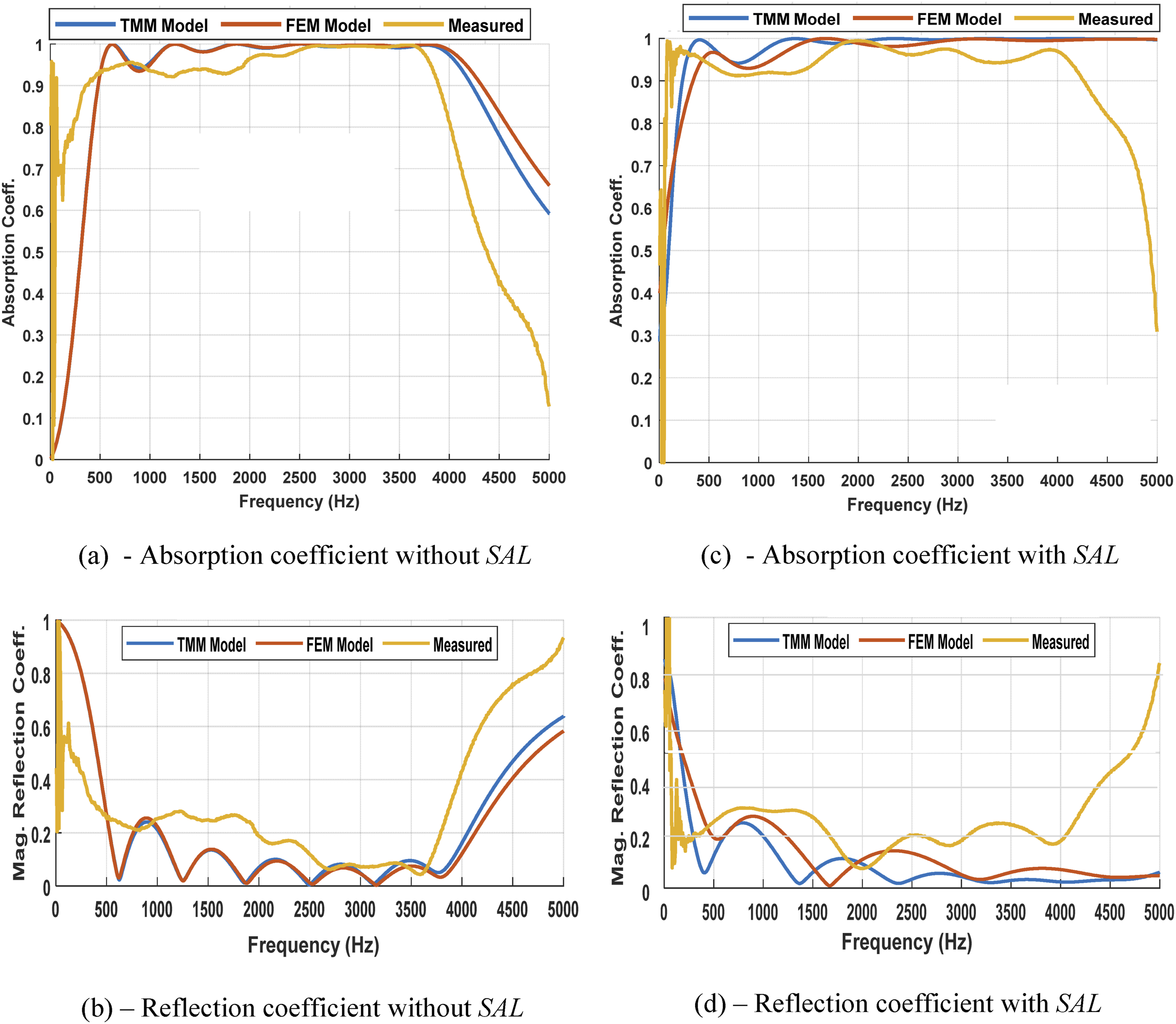
The final feasible constraints were as follows, we were able to extrude pores of diameter 0.4 mm and edge-to-edge pore spacing of 0.5 mm. EDM slicing was used to slice the AM extrusion creating slices as thin as 0.7 mm.
An air compressor was used to remove the metal residue. The dimensions on these rings are most likely accurate than those for the first configuration. Thus, the difference between the predicted results from the models and the measured acoustic properties from the experiment is expected to be smaller than those of the first configuration.
In spite of these difficulties, a high absorption coefficient is attained with 6 rings reaching above 0.95 over a frequency range between 1000 and 4000 Hz as shown in Figure 11(b).
Figures 11(c) and (d) show the corresponding characteristics of the absorption and reflection coefficients of the ABH/FGPR when the cavities are filled with sound absorbing layers (SAL), respectively. The effect of adding the SLA on the absorption coefficient is evident in broadening the frequency range of operating near and above 0.9 as shown in Figure 11(c) as compared to the case of ABH/FGPR without SAL which is shown in Figure 11(a).
Velocity distributions inside the ABH/FGPR configurations
In this section, the important characteristics of the ABH/FGPR as a novel and effective means for reducing gradually the velocity of the acoustic waves and bringing it to a complete stop are revealed.
Figures 12(a) and (b) display the experimental wave propagation speeds along the ABH/FGPR such for the two configurations for frequencies of 1500, 2500, and 4500 Hz The wave propagation velocity distributions inside the two configurations of the ABH/FGPR.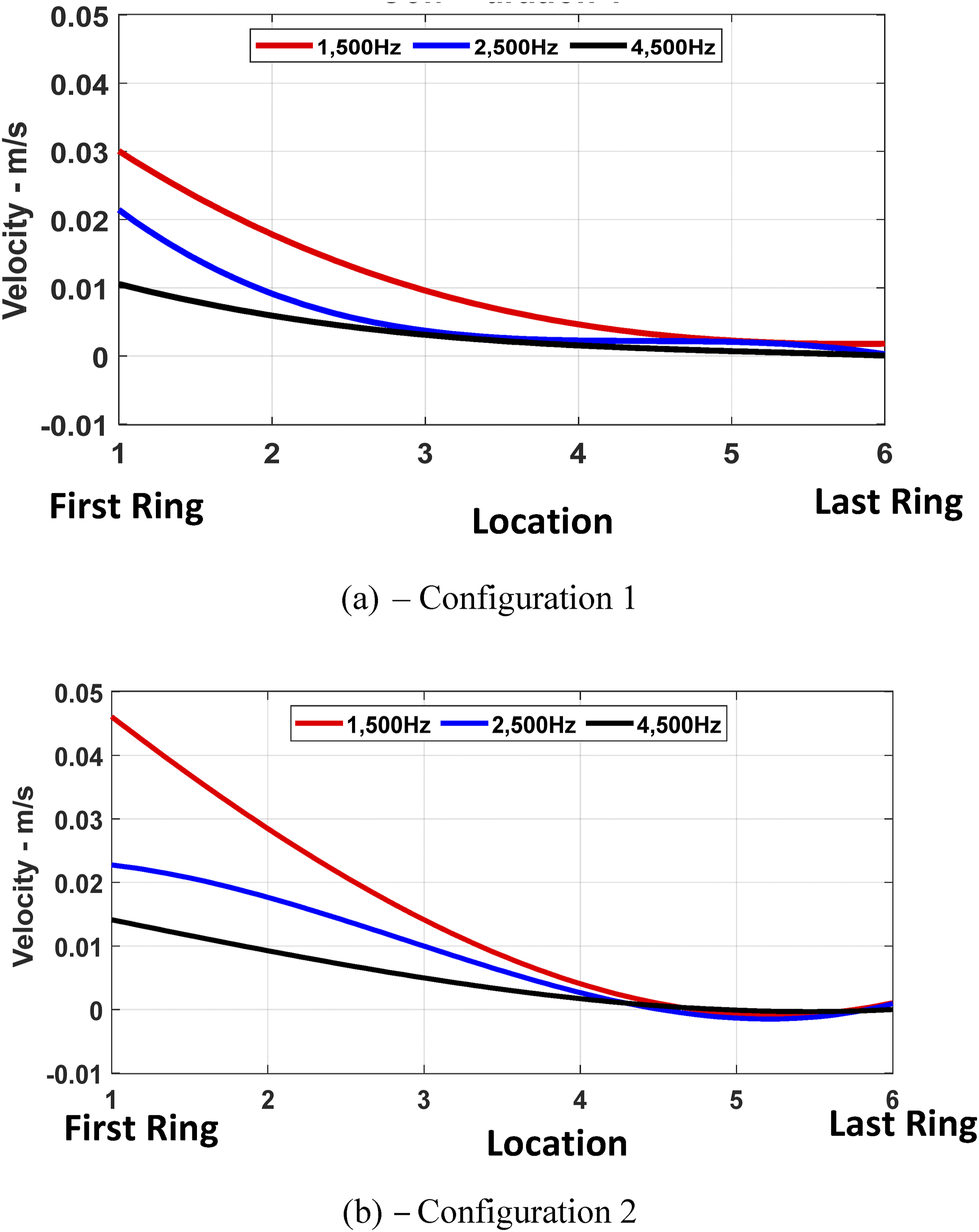
Figure 12 reveals very clearly that the wave propagation velocity along the two configurations of the ABH/FGPR decay gradually between the first and the last rings. As a matter of fact, the velocity vanishes completely as it reaches the last ring preventing any reflections at that boundary.
The figure indicates also that the velocity decay is more significant for configuration 2 than that achieved by configuration 1.
Conclusions
A comprehensive theoretical and experimental investigation is presented of a new class of acoustic black hole waveguides (ABH) which utilizes an array of optimally designed Functionally Graded Perforated Rings (FGPR). This proposed ABH/FGPR has an inherent energy dissipation behavior resulting from the flow of acoustic waves through the micro-pores. Such dissipative behavior plays a major role in attenuating the wave propagation and hence reducing its speed as it travels along the ABH/FGPR. With proper design, the proposed ABH can bring the speed of wave propagation to complete stop when the end of the waveguide is reached. This flow-induced energy dissipation mechanism is further enhanced by incorporating sound absorbing layers between the perforated rings.
Emphasis is placed here on utilizing the transfer matrix modeling (TMM) approach of Petrover and Baz 16 to predict the absorption and reflection characteristics of the proposed ABH in order to optimally select their design parameters.
The predictions of the TMM model are validated against the predictions of the commercial software COMSOL FEM models. The obtained results indicated good agreement between the predictions of the TMM and the COMSOL FEM model.
Furthermore, the obtained results revealed that the addition of the sound absorbing layers enhances considerably the absorption characteristics and minimizes the reflection behavior. Accordingly, the proposed ABH relies primarily on the energy dissipation to generate the desired acoustic black hole effect. This in contrast to the conventional ABH which generates the black hole effect through reactive means. 16
Experimental validation of the theoretical predictions is determined using the two preferred configurations of the ABH with FGPR. The prototypes of the proposed ABH concepts have been built by using 3D printing, EDM, and CNC micro-drilling techniques in order to manufacture small pore sizes with high porosities in thin rings. Testing of these configurations produced results that are in good agreement with the predictions of both the TMM and FEM models. Hence, validating both numerical models.
Impedance tube technique is used to measure the reflection and absorption coefficients of the two configurations of the ABH with FGPR. The obtained results show good agreement with the predictions of the numerical models and emphasizing the effectiveness of using the ABH with FGPR for broadband noise control.
It is important to note that the use of the sound absorbing layers has resulted in eliminating the sharp drop, in the absorption coefficient, at high frequencies as observed in the case of ABH/FGPR without SAL. The resulting enhanced broadband characteristics of the absorption coefficient are clear from the obtained results which are displayed particularly in Figures 5 and 7.
Further work is needed to seek better manufacturing capabilities, especially the capabilities of handling thinner panels with smaller diameter pores which so far pose manufacturing challenges and added cost. With such capabilities, it would be possible to have a more compact ABH with FGPR design while maintaining their high and broadband energy absorption characteristics.
Also, more work is needed to fine tune the analysis and the synthesis approaches of the proposed ABH to enhance its broadband absorption capabilities using the approaches introduced, for example, by Pradhan and Mohanty, 29 and Červenka and Bednařík. 30 A natural extension of the present work is to provide the ABH with enhanced low frequency absorption capabilities such as the multi-slit coiled configurations proposed by Lee et al. 31 as well as other more innovative approaches using smart material technology. 32
Finally, it is important to capitalize on the periodic and aperiodic structure of the ABH to investigate the bandgap characteristics as proposed by Deng and Guasch 33 and even the localization capabilities.
Footnotes

Author contributions
Funding
The authors disclosed receipt of the following financial support for the research, authorship, and/or publication of this article: Supported by the In-House Laboratory Independent Research (ILIR) program at the Naval Warfare Center Carderock Division funded by the Office of Naval Research.
Declaration of conflicting interests
The authors declared no potential conflicts of interest with respect to the research, authorship, and/or publication of this article.
Data Availability Statement
The datasets generated and supporting the findings of this article are obtainable from the corresponding author upon reasonable request.