




Abstract
Acoustic black holes, as a commonly used and effective vibration reduction technique, require a precise structural dynamic modeling method. In this paper, the dynamic modeling method of an acoustic black hole beam with elastic boundary constraints is established by combining the isogeometric method and the energy formula. Firstly, based on the Euler-Bernoulli beam theory, the energy equations for uniform regions, ABH regions, and boundaries are derived. Then, the vibration control differential equations and power flow are obtained by using the geometric method and finite element ideal. Finally, the accuracy of the present solution for these beams is tested by comparing the ones with the numerical results obtained by COMSOL Multiphysics. Additionally, a systematic analysis of the dynamic response and energy distribution characteristics using the present method is presented. Numerical results show that the present method can accurately predict the aggregation effect of bending waves and vibration energy of an acoustic black hole beam with elastic constraint. The research provides a new analysis idea for the ABH design and effect analysis in these beams in engineering applications.
Introduction
For vibration isolation, absorption, and transmission of vibration energy, passive control techniques are an effective means of suppressing the vibration of structures, such as X-plate dampers, 1 friction dampers, 2 and acoustic black hole techniques. As a passive control technology, Acoustic black hole (ABH) achieves effective vibration and noise reduction through a special structural design. 3 This technology uses the aggregation effect of bending waves to show efficient energy concentration ability in a wide frequency range. It can dissipate energy evenly through a certain design, making it a wide application development in structural vibration and noise control. Since the ABH technology was proposed, this technology has been used widely in different fields of structural mechanics,4,5 and has also been applied in the fields of vibrational energy harvesting 6 and wave manipulation.7,8
In recent years, research about ABH has focused on the application of one-dimensional and two-dimensional structures, as well as efforts to optimize their structures or parameters for enhancing the vibration suppression effect. For example, based on an ABH beam with the integration of a nonlinear energy sink, Wang et al. 9 studied a bistable enhanced passive absorber and proved that this device has excellent damping effect and robustness in a wide frequency band. Deng 10 added an ABH profile to the foundation beam and analyzed the effect on the vibration suppression of the three types of ABH beams. For a two-dimensional ABH profile, Zhen 11 studied ABH plates combining passive with active piezoelectric networks and obtained the best reduction function for vibration by optimizing electrical component parameters. To achieve broadband sound absorption, Meng et al. 12 proposed a structure composed of combining ABH and microperforated plates, which provided a new idea for ultra-wideband acoustic wave control. Although ABH structures have efficient vibrational reduction capabilities, many scholars are still exploring new optimization methods to improve their vibration and noise reduction capabilities. Deng et al. extended the analysis of dispersion variation behavior in one-dimensional (1-D) to two-dimensional (2-D) periodic ABH arrays, 13 and then verified that proper damping in an 1-D periodic ABH beam reduces effectively vibrations while in 2-D periodic ABH plates, the proposed method can reduce vibrations in high-frequencies. 14 Bu et al. 15 proposed that the self-suppression of pipeline vibration can be achieved by integrating periodic ABH wedges, and the formation of ultra-long band gaps and their transmission to low-frequency bands can be realized by adjusting the system parameters.
As a typical application example, the ABH shape of these beams generally refers to the local thickness in beam structures decreasing according to the specified power-law function and finally approaching zero. The gradual thinning configuration is used to slow down the speed of the sound waves entering the region and accumulate inside the ABH region. Then the vibration energy is absorbed for vibration and noise reduction. Because of limitations of materials and manufacturing process, however, the tip of the ABH beam cannot approach zero, and there is a truncated thickness, leading to the wave reflection or scattering at the truncated thickness, thereby weakening the ABH aggregation effect. 16 In the study of Deng et al., the influence of the damping layer on the vibration suppression effect was considered, and the finite element simulation and experiments verified that the passive confinement elastic layer can achieve better results. 17 As a material with significant advantages such as efficient energy conversion and dissipation, piezoelectric materials are often used as good choices for efficient energy harvesting in ABH structures. Zhao et al. 18 presented an energy harvesting method for the vibration of the beam by pasting a piezoelectric patch, then they carried out experiments on an aluminum conical plate structure with multiple ABH profiles to investigate energy harvesting. 19
In order to analyze the generation and influence of the ABH effect deeply, realistically describing the energy distribution and transmission in acoustic black hole beams is necessary. Power flow, 20 as an important parameter to describe energy transfer in a complex structure, has been widely used for energy transfer in complex structures.21,22 As one of the most used numerical simulation methods, the finite element method (FEM) was used in the field of acoustic black holes, and many scholars have carried out related work.23–25 In addition to FEM methods, many scholars have also worked on the development of different types of semi-analytical modeling techniques,26–28 which have become a powerful tool for the efficient calculation of ABH through and the ability to deal with complex geometries, especially in engineering applications that require rapid design and optimization. However, these models have limited accuracy in the calculation of higher-order displacement functions, and their applicability to deal with very complex problems is insufficient to provide the accuracy required to deal with complex acoustic black hole structures and boundary conditions. As an excellent finite element theory, the isogeometric analysis (IGA) method 29 is based on the idea of isoparametric elements, using the basis function in CAD for the solution domain, which has high-order continuity, and the ability to avoid the geometric approximation error in the traditional FEM. In addition, it can effectively reduce the number of meshes and improve computational efficiency at high precision. In addition, the NURBS function used in IGA can also provide higher smoothness and continuity, which is beneficial for accurately describing complex structural and physical phenomena in ABH beam structures.
Based on the description above, a dynamic model for an ABH beam with elastic constraints is established by combining isogeometric methods and energy formulas in this paper. By comparing the numerical results from the proposed method with others, the correctness and effectiveness of the present method are verified. Then the proposed model is used to analyze the influence of ABH beam structure on energy distribution and transfer, which provides a new method for the mechanical behavior analysis and engineering application, which can more accurately describe the dynamic characteristics of ABH beam.
Theoretical formulas
ABH description
The ABH beam considered is given in Figure 1, where the beam’s left end is set as the coordinate origin, and the entire beam structure is symmetrical with respect to the x-axis. The ABH beam has a width b and a length L. At the x
f
position, a force F(t) is applied along the negative direction of the z-axis. Damping layers with a thickness h
d
and a width b
d
is symmetrically bonded in the interval of [x
d
∼L] on the beam, and they are fully coupled to the beam. Two springs with stiffnesses k
w
and k
b
are fixed at the left end of this beam. Then, by setting the spring stiffness, different boundary conditions are simulated. The complex Young’s modulus Structural model of an acoustic black hole beam with elastic boundary constraints.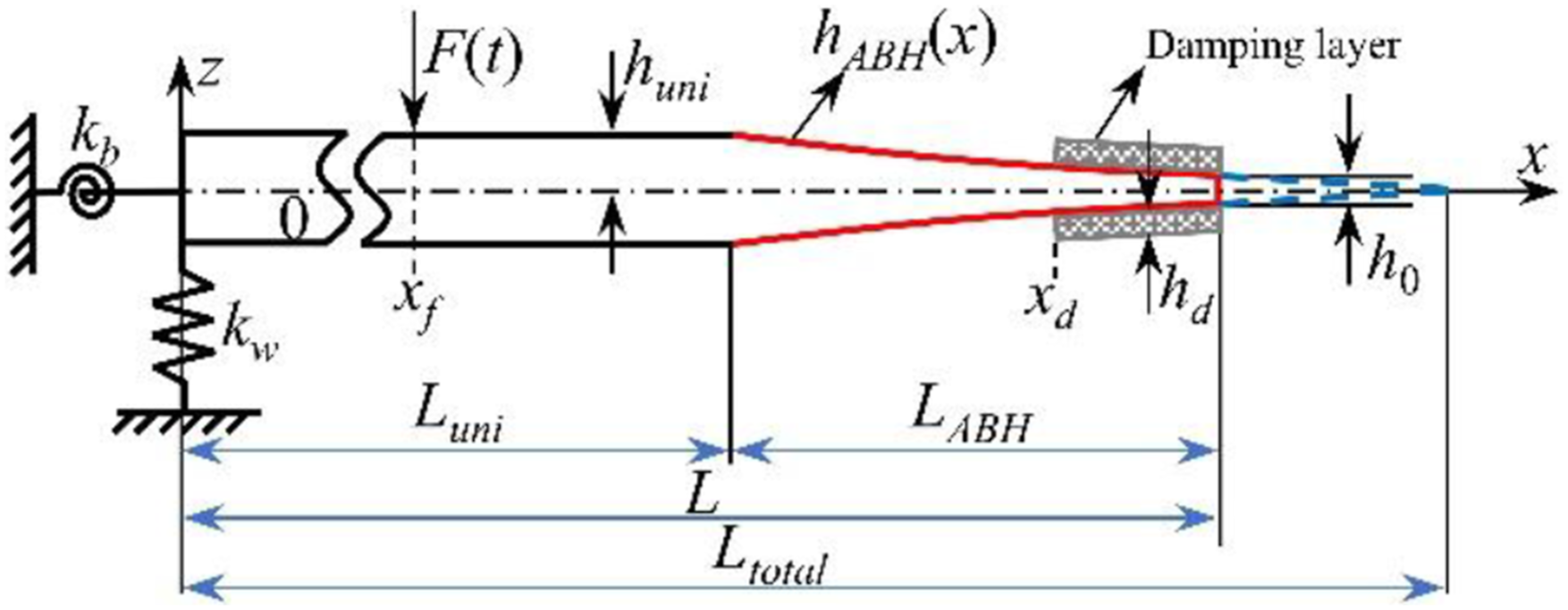
The thickness function of this considered beam is set as h(x). The whole ABH beam contains two parts in the length direction: the acoustic black hole region and the uniform region are expressed as

The total length L
total
and the truncated thickness h0 of the acoustic black hole contour without truncation satisfy the following relationship:

Dynamical equations for acoustic black hole beams
According to the Euler-Bernoulli beam theory, the following displacement functions of time t and position x can be expressed as

The strain at any point on the ABH beam is denoted as

The stress-strain relationship of acoustic black hole beams is as follows:




Combined with the equations mentioned above, the Lagrangian function L
a
of the beam is written as

Isogeometric solution of acoustic black hole beams
In the isogeometric method, non-uniform rational B-splines (NURBS) functions in CAD are used to represent the displacement field. Given a monotonically non-decreasing node vector

To describe an arbitrary curve exactly, the NURBS basis function is obtained by introducing weights:

More details about the B-spline and NURBS basis functions can be found in the Ref. 29.
Then geometries and displacements of acoustic black hole beams are

According to the Hamilton principle, the dynamic governing equations of ABH beams are given by the following expressions:


The element matrices for the stiffness matrix and mass part in the non-damping region are defined as





The element stiffness matrix for the effect of the boundary spring is

Structural intensity and power flow
In vibration wave systems, power flow is often expressed as instantaneous or average power through a certain cross-section when structural vibrations are discussed.

The average input power is usually expressed as a complex conjugate.

Structural intensity describes the energy flow in a structure, is a frequency-dependent time-averaged steady-state physical quantity, defined as the flow of vibrational energy through a unit area per unit of time.


Numerical results and analysis
Based on the theoretical formulas mentioned above, the dynamic behavior and energy distribution of ABH beams are analyzed and discussed. Firstly, these results with the present method are tested by comparing them with ones from the COMSOL simulation software. The energy distribution characteristics of ABH beams are explored to reveal their behavior at different frequencies. Finally, the damping layer is considered and its influence on the vibration control and energy distribution characteristics of ABH beams is discussed to provide a more comprehensive investigation and optimal design guidance for enhancing the ABH effect. Boundary constraints are modeled by spring stiffness by introducing the penalty function, and then the solution of the energy equation is more complex. When the value of the spring stiffness is very large, it may cause the results instability in the calculation. A cantilever beam is selected to simulate the boundary condition clamped-free by setting the boundary spring stiffness at x = 0 to infinity (k w = 1×10¹² N/m、k b = 1×10¹²Nm/rad).
Model validation
Geometric parameters and material properties of ABH structure.

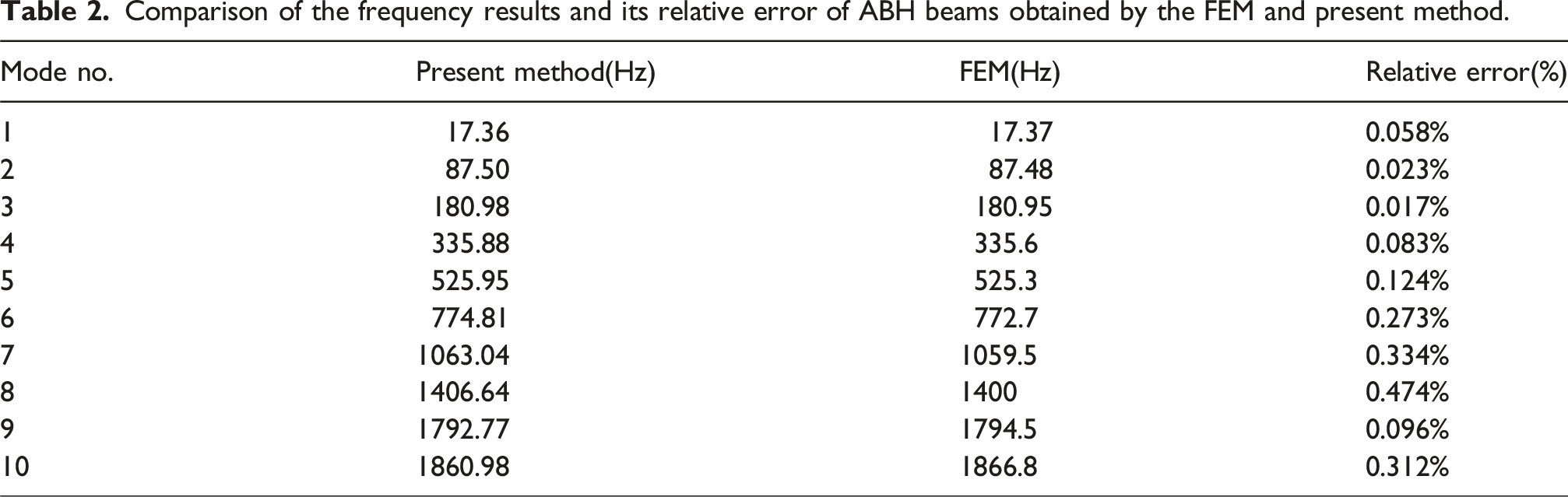
Comparison of the frequency results and its relative error of ABH beams obtained by the FEM and present method.
To verify the correctness of model shapes by the present method, the first-order, fifth-order, and fifteenth-order normalized mode shapes of the ABH beams are given in Figure 2. By comparing the normalized mode shapes, it can be found that the present method can predict the mode shapes of acoustic black hole beams well even at higher orders. Meanwhile, it is seen that the wavelength becomes shorter in the higher-order mode, and the wave energy gathers in the ABH region, resulting in wave compression and an increase in the amplitude of the ABH region. The normalized mode shapes of ABH beams with the present method and FEM.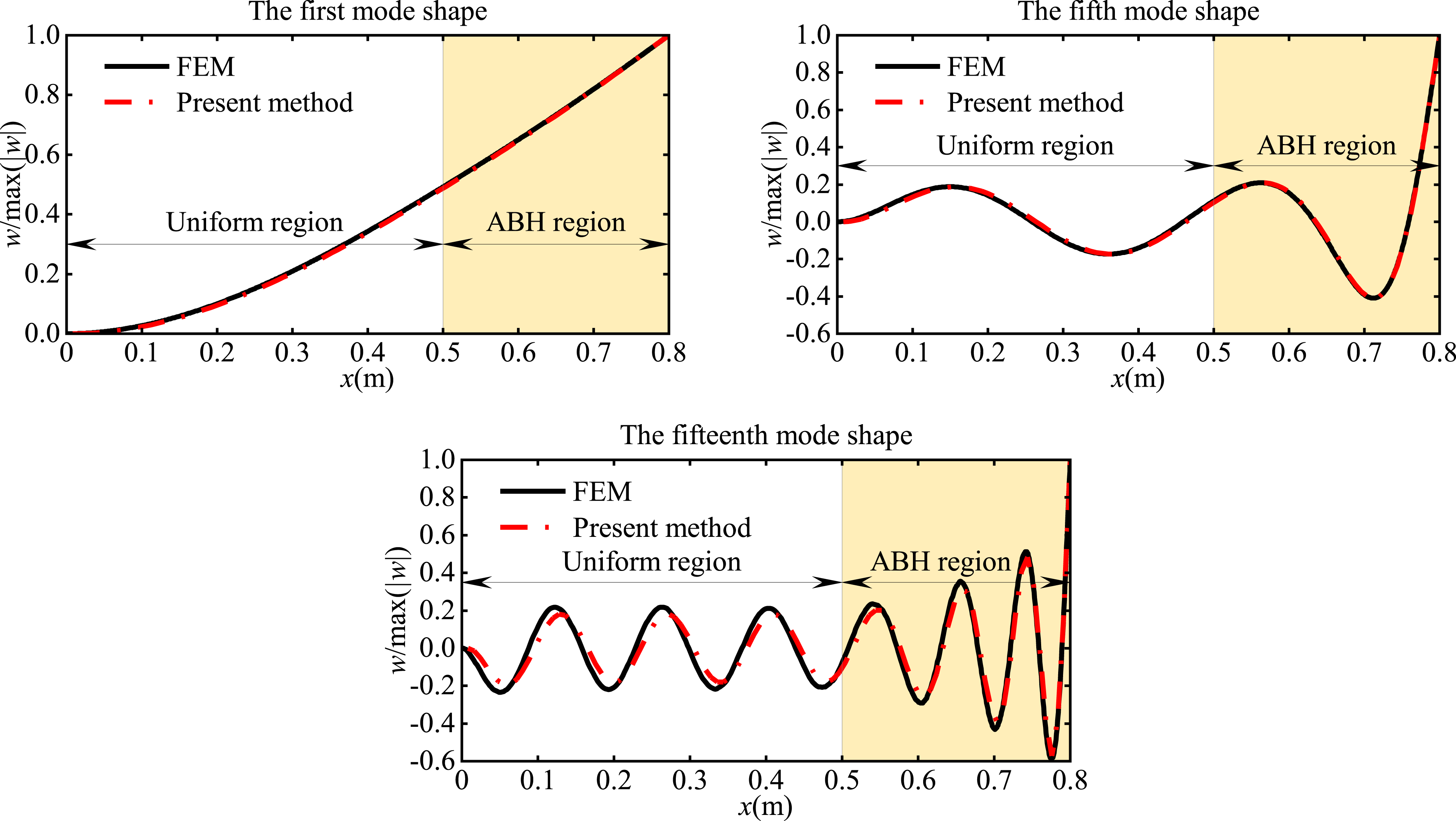
In Figure 3, the velocity response obtained by the FEM and the present method at two different positions of the ABH beam are given, and the velocity is given as 20log10(abs(v/v
ref
)) (dB), and the reference velocity is set to v
ref
= 1e-9 m/s. where x = 0.72 m and x = 0.40 m are respectively located in the ABH with uniform regions of this beam. It is seen that the velocity responses by the present method and the FEM are consistent. Combined with the verification results above, it is concluded that this dynamic model constructed by isogeometric method combined with energy formulas can accurately solve the dynamic behaviors of these ABH beams, and has sufficient accuracy to effectively approximate the dynamic characteristics of the ABH beam, so as to effectively and reliably analyze the vibration characteristics and energy distribution of ABH beams. Comparison of velocity frequency responses at different positions of ABH beams.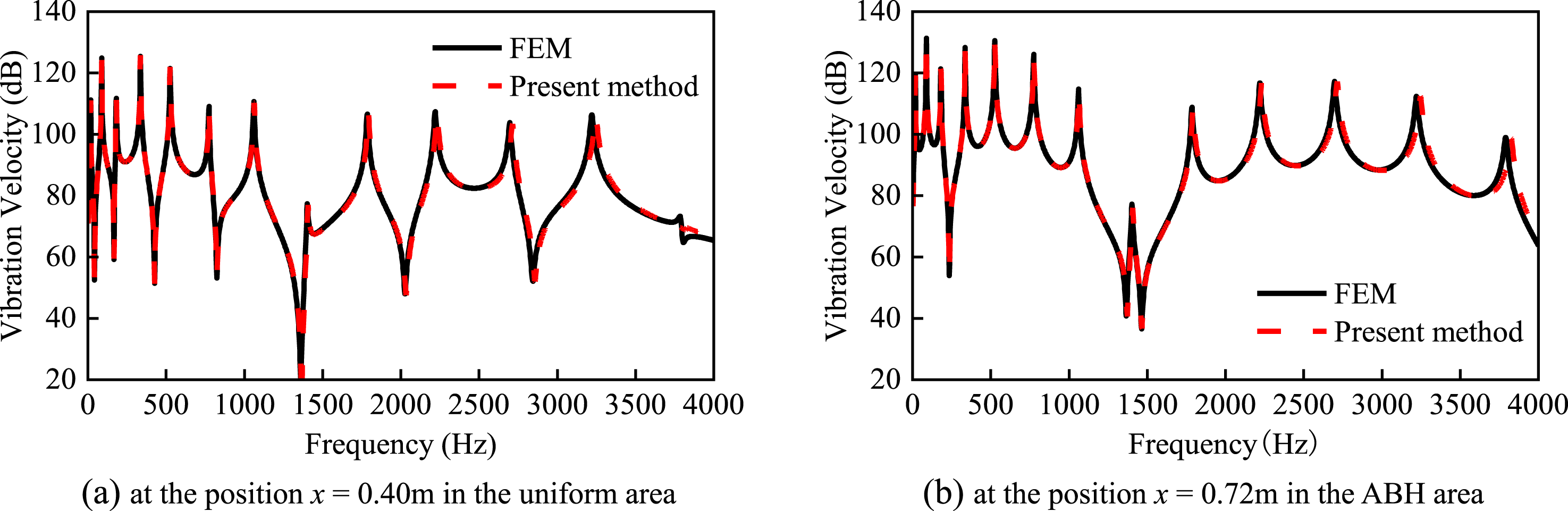
Material properties and geometric parameters used for the ABH beam in the experiment.

Figure 4 shows the experimental setup diagram. In this experiment, the acoustic black hole beam is hung by two flexible strings, and the other end of the string is connected with a thicker elastic rope, and the two elastic ropes are hung on two shield carriers. Through this treatment, the boundary conditions free of the acoustic black hole beam are effectively simulated. In this experiment, n 086C01-type PCB modal hammer was used to strike the ABH beam. Then, a 352C33-type PCB sensor was used to be pasted on the surface in the uniform area of the beam to gain the acceleration signal which was timely acquired by an NI PXie-4492 instrument, and the vibration signal was processed by the computer. Diagram of the free-boundary ABH beam experimental setup.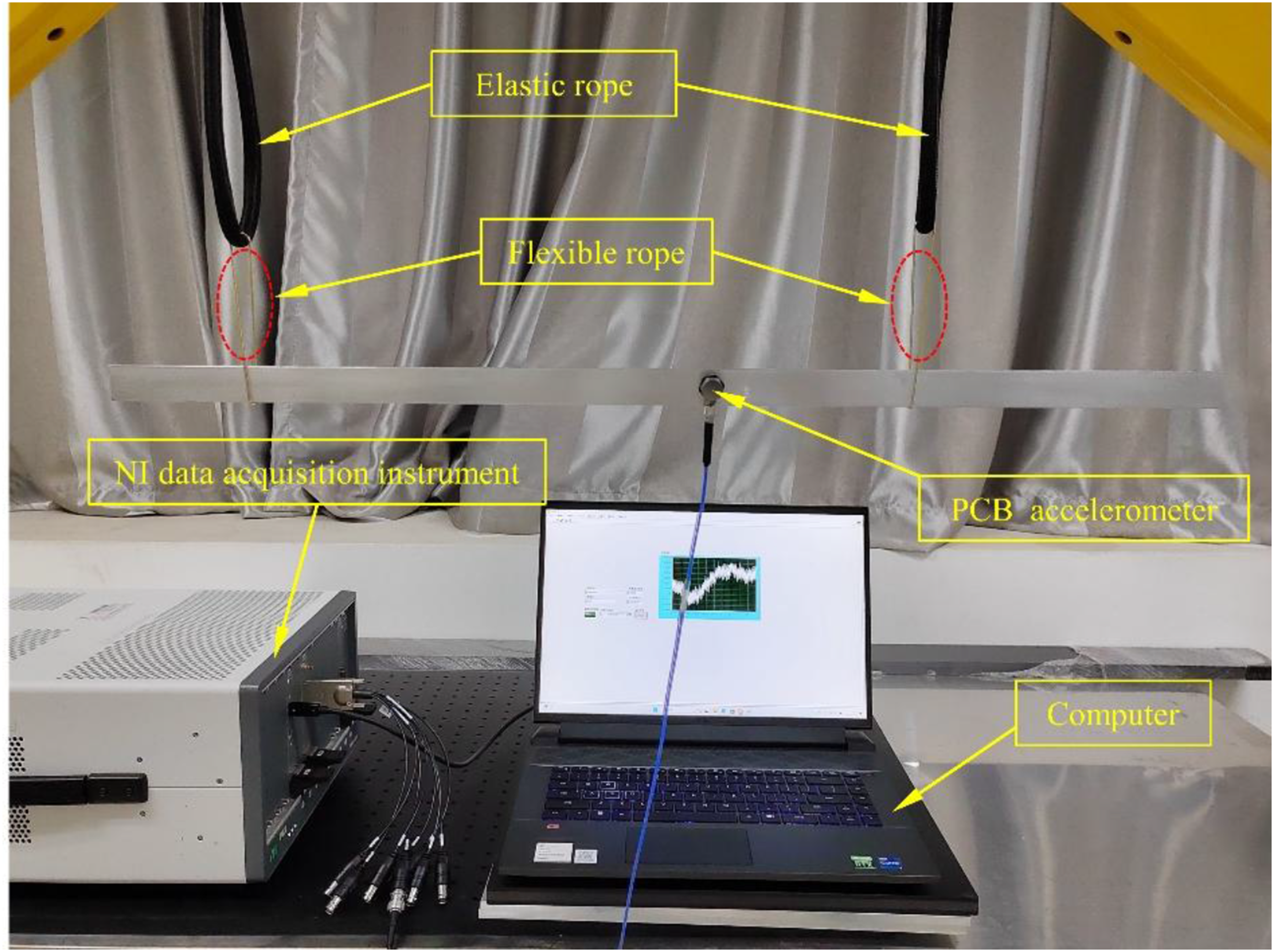
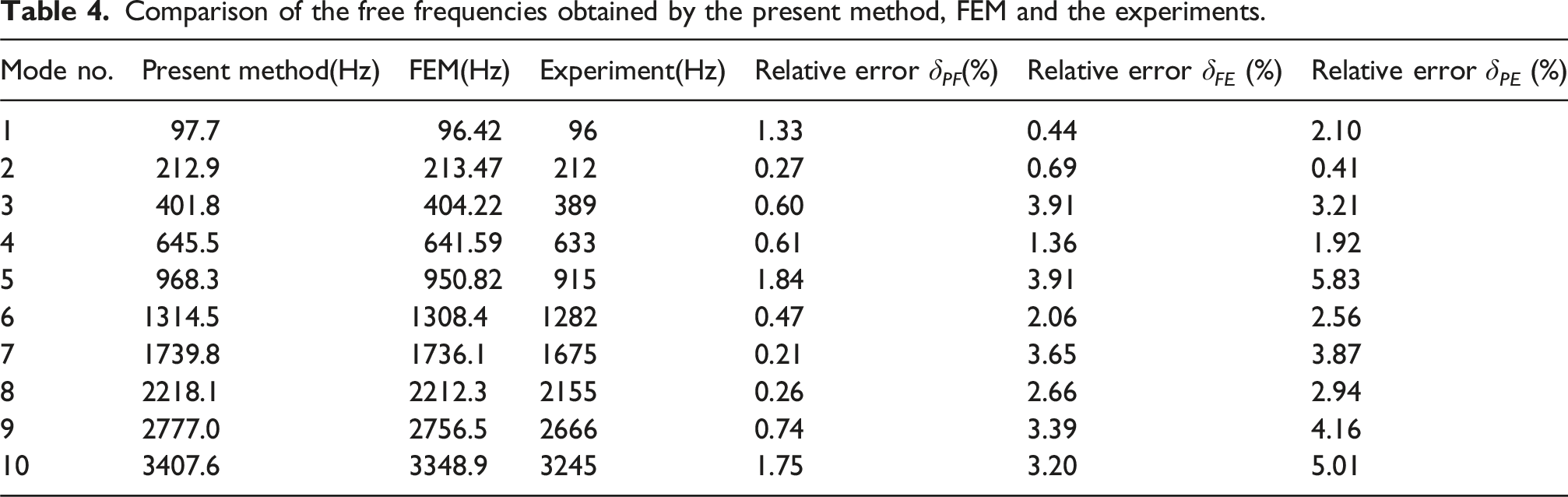
Comparison of the free frequencies obtained by the present method, FEM and the experiments.
Study on the characteristics of vibrational energy distribution
The energy transfer characteristics inside acoustic black hole beams can be studied in this section. The input power flow is generally estimated by the amplitude of the force and vibration velocity at the excitation position x
f
= 0.16 m, in the uniform area. Figure 5 compares the frequency response results of the input power of the ABH beam obtained by the FEM with the present method. By comparison, the input power flow calculated by this method is in good agreement, which indicates that the present method has the ability to estimate effectively the energy transfer characteristics of this beam. Frequency responses of the input power of the ABH beam obtained by the FEM and the present.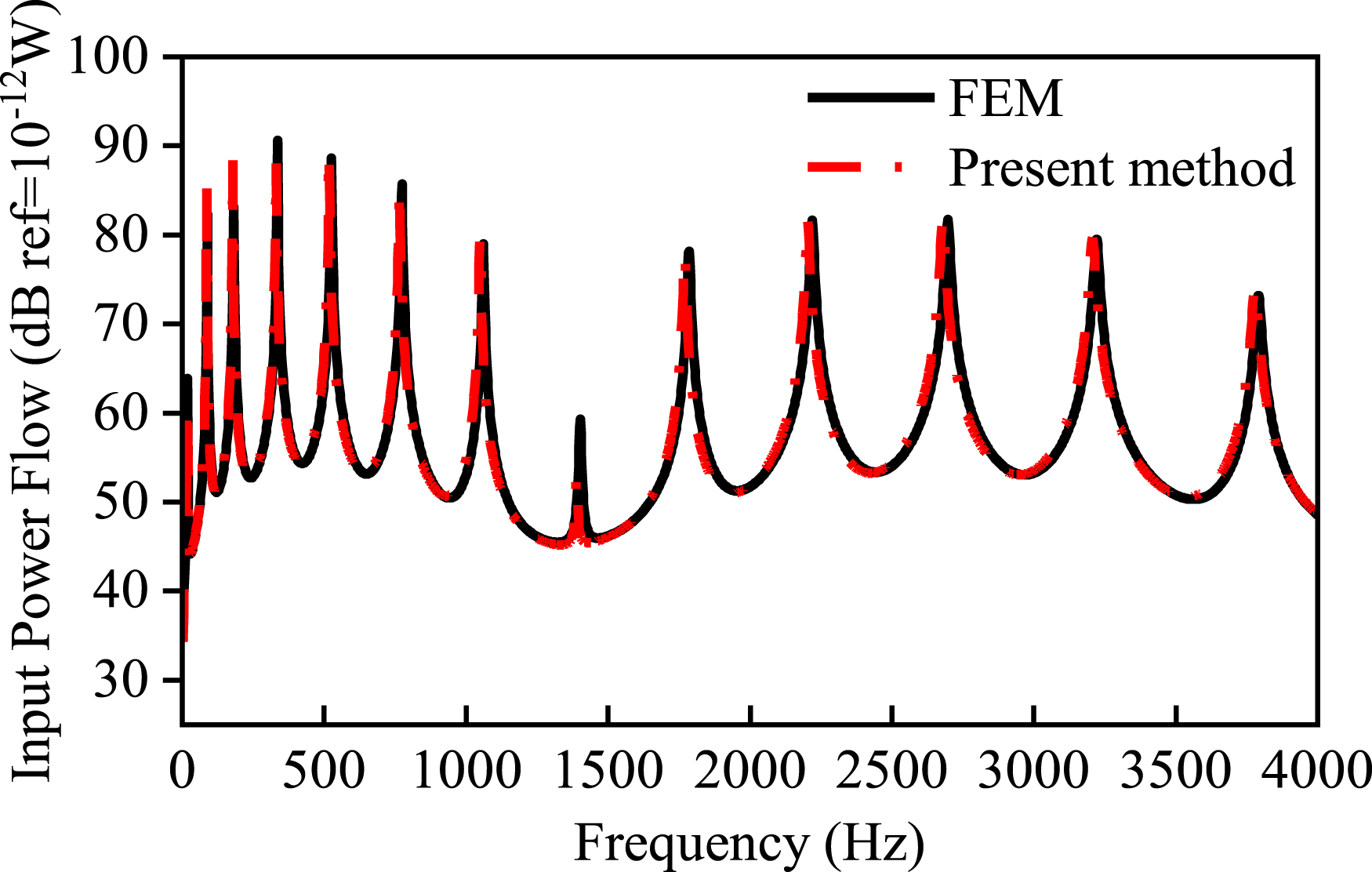
Material properties and geometric parameters of the damping layer.

To explain these effects of the ABH profile and damping materials on the energy accumulation efficiency of this beam, Figure 6 shows the normalized power (Pnormalized = Poutput/Pinput) at x = 0.72 m in the ABH region for the structural beam without and with the ABH profile and damping materials. The normalized power can be regarded as the ratio of the total energy passing through any point on an ABH beam to the input energy. In this way, the transmission characteristics of vibrational energy in the ABH beam are intuitively and unambiguously observed when vibrational energy is input at different excitation points at different frequencies. The blue and yellow colors in the diagram represent the normalized power increments caused by setting up the ABH profile and coupling the damping layer on the ABH beam, respectively. It is seen that with setting up the ABH profile, the vibration energy flowing to the ABH in this beam at the whole frequency domain is significantly increased. With coupling damping materials, the vibrational energy flowing towards the ABH region becomes more abundant. The main reasons are summarized in two points. On the one hand, an ABH profile has a gathering vibration energy, so that the ABH area vibration energy flowing will not be scattered or reflected in general. On the other hand, by coupling the damping materials at the ABH region, the damping effect is further significantly enhanced due to the larger vibration velocity response in the ABH region. When the vibration energy reaches the end of the ABH structure, the energy will be rapidly dissipated, and this timely dissipation effect forces more energy to continue to concentrate at ABH, resulting in the overall vibrational energy accumulation in the ABH region. It is noticed that at 1372 Hz, there is no vibration energy flowing in this beam, whether it is a uniform beam or an ABH beam. This phenomenon, known as ABH failure,
30
indicates that the ABH effect is not effective at all frequencies. At certain frequencies, the vibration waves of the structure may be reflected, weakening or losing the ABH effect. Moreover, due to the limited size of the actual ABH structure, it is impossible to achieve the ideal of being infinitely thin. As a result, the bending wave is reflected, which in turn makes the acoustic black hole effect fail at certain frequencies. Normalized power flow frequency response curves at x = 0.72 m in the ABH region for beams with or without ABH and damping layers.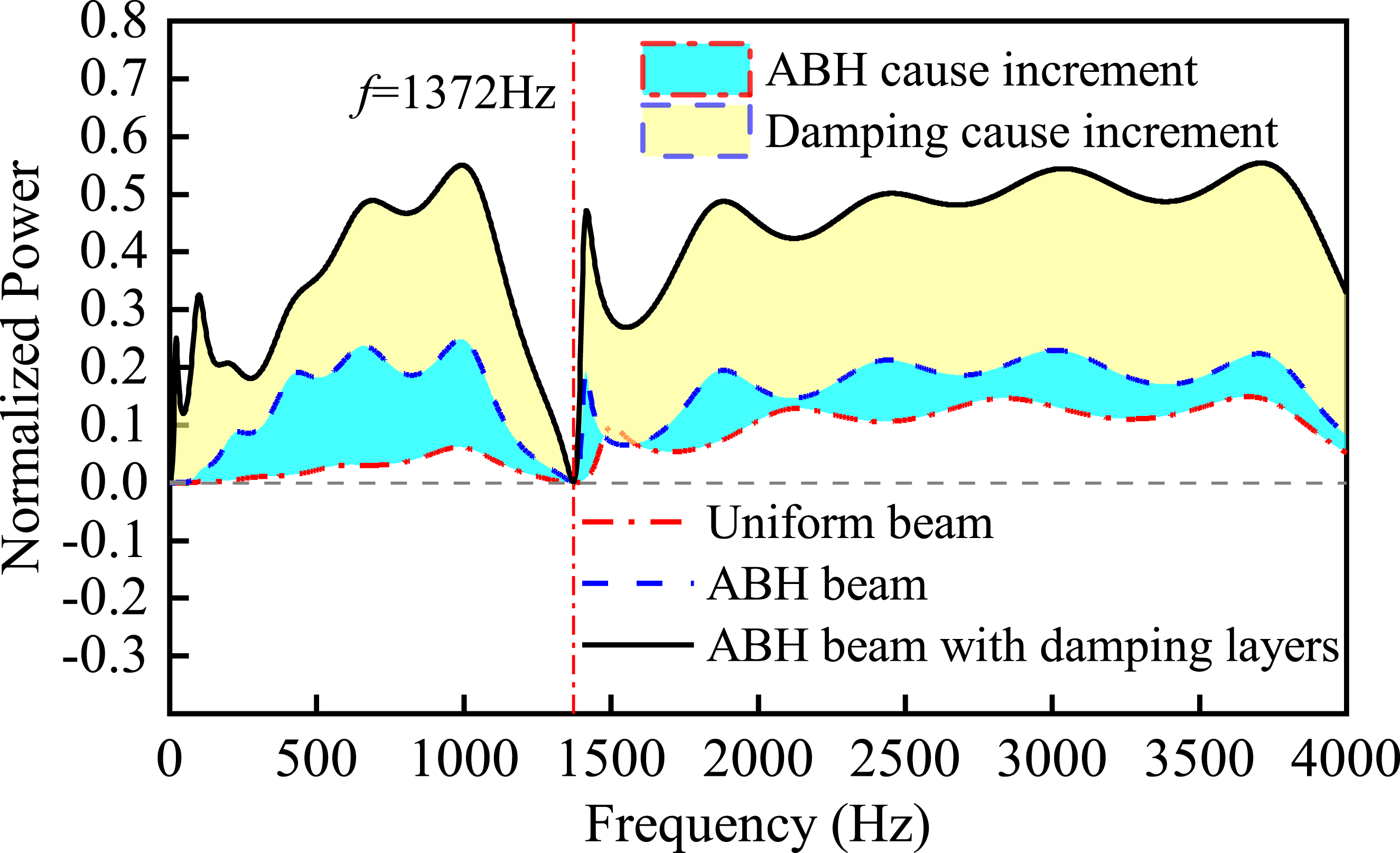
Figure 7 shows the energy transfer characteristics inside the ABH beam near the failure frequency. Normalized structural intensity has negative with positive values, which represent respectively the vibration energy from the excitation position through any cross-section at the uniform with ABH parts. This figure shows that in these frequencies near the ABH failure, the vibrational energy flows almost completely from the force position to the left side of this beam and is dissipated at the left boundary. This further confirms the reason why the normalized power at x = 0.72 m in the ABH area, as seen in Figure 6, is almost zero. Structural intensity at frequency f = 1372 Hz of the ABH beam with damping layers.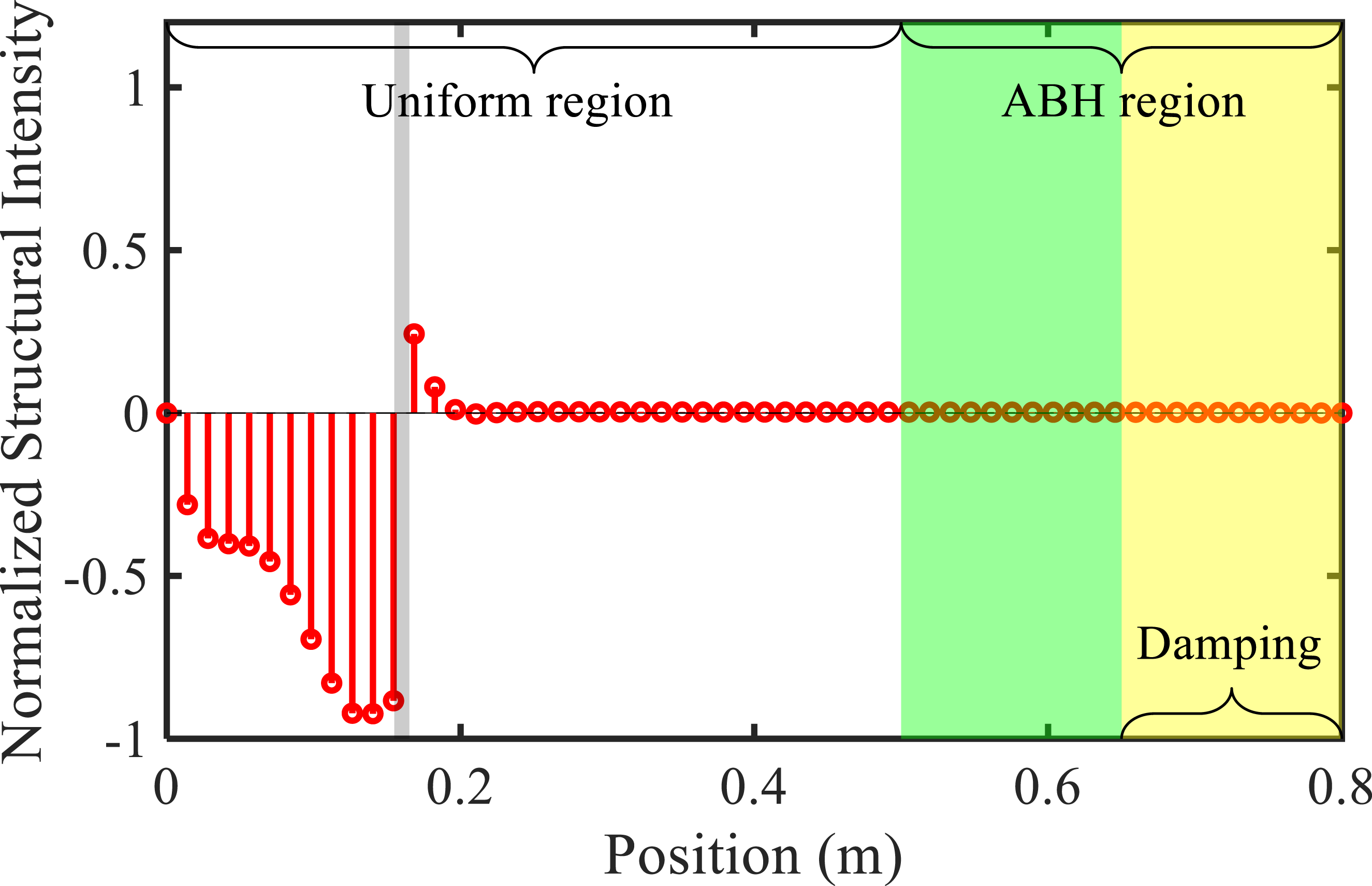
On the basis of the above, the subsequent research is analyzed under the condition of the coupling damping materials. Shear forces and bending moments are the main mechanical factors that cause vibrations inside the beam. In Figure 8, the frequency response results of the power flow and its components through point x = 0.72 m are shown. Due to the damping of the beam structure, it is seen that the transmitted power flow obviously dissipates, and the changing trend of the bending and shear components in the whole frequency domain is almost the same as the input power trend. Frequency response curve of power flow and its energy component through x = 0.72 m.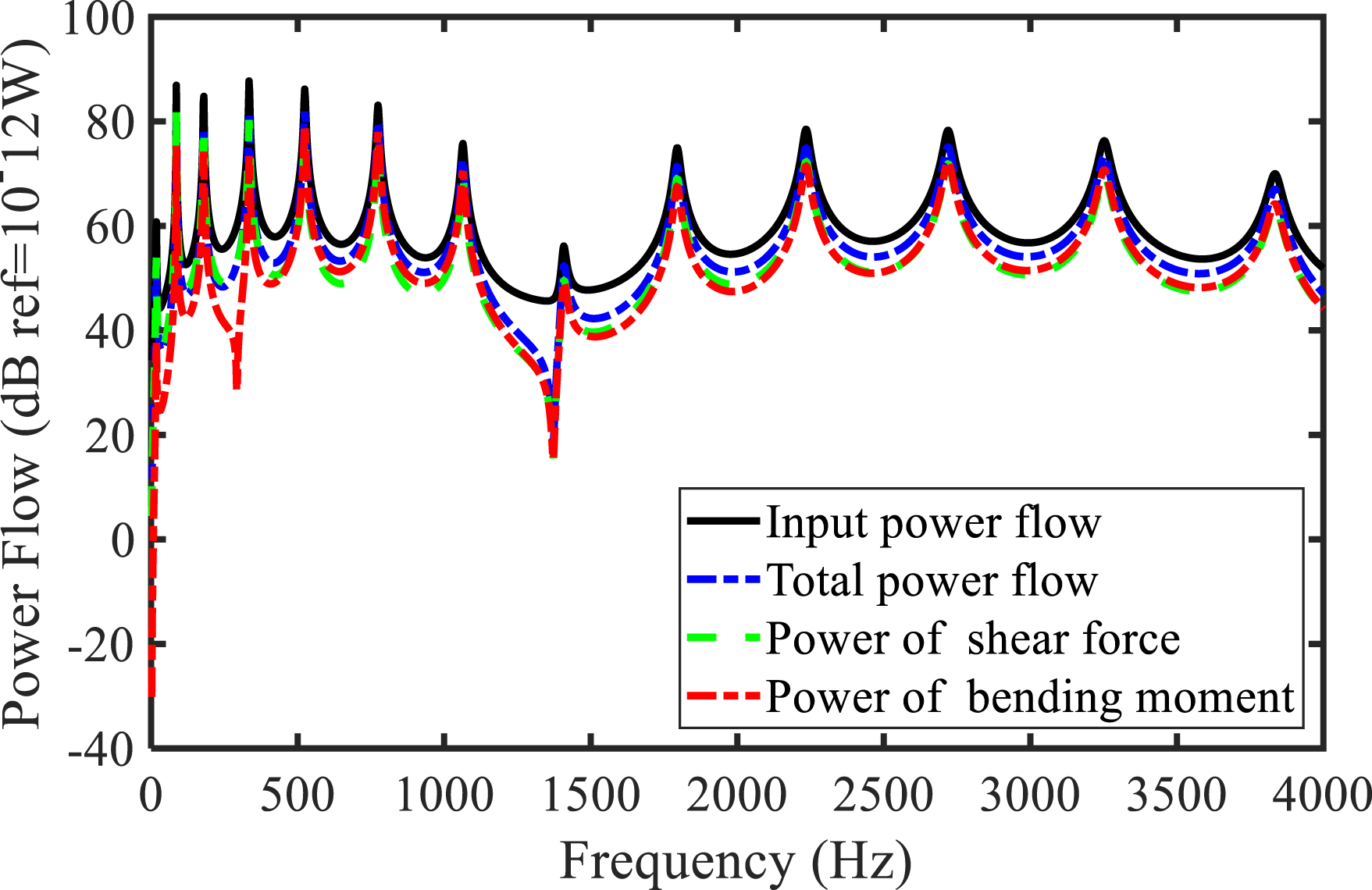
Figure 9 depicts the transfer and dissipation of energy across different locations in the ABH beam. The uniform thickness (x = 0.24 m), the connection point between the uniform thickness with the ABH region (x = 0.5 m), and the acoustic black hole coupling damping layer (x = 0.76 m) are selected for the three observation points at different locations, respectively. By comparison, it is found that the trend of the transmitted and input power flow at variable positions is almost the same in the whole frequency domain, but the power flow amplitude decreases gradually as the observation point gradually moves away from the excitation position. More notably, compared with the others at two positions, the transmitted power flow at x = 0.76 m decreases significantly in the entire frequency domain after entering the acoustic black hole region. There are two main reasons: first, there is an obvious damping effect in the ABH region, which causes the energy to gradually decay with increasing propagation distance. Second, the ABH structural peculiarity leads to the continuous absorption and dissipation of energy during propagation. In addition, the damping material at high efficiency can dissipate the vibrational energy in time, which further explains why the energy decreases significantly in the entire frequency domain after entering the acoustic black hole. Power flow frequency response curves through different positions for the ABH beam.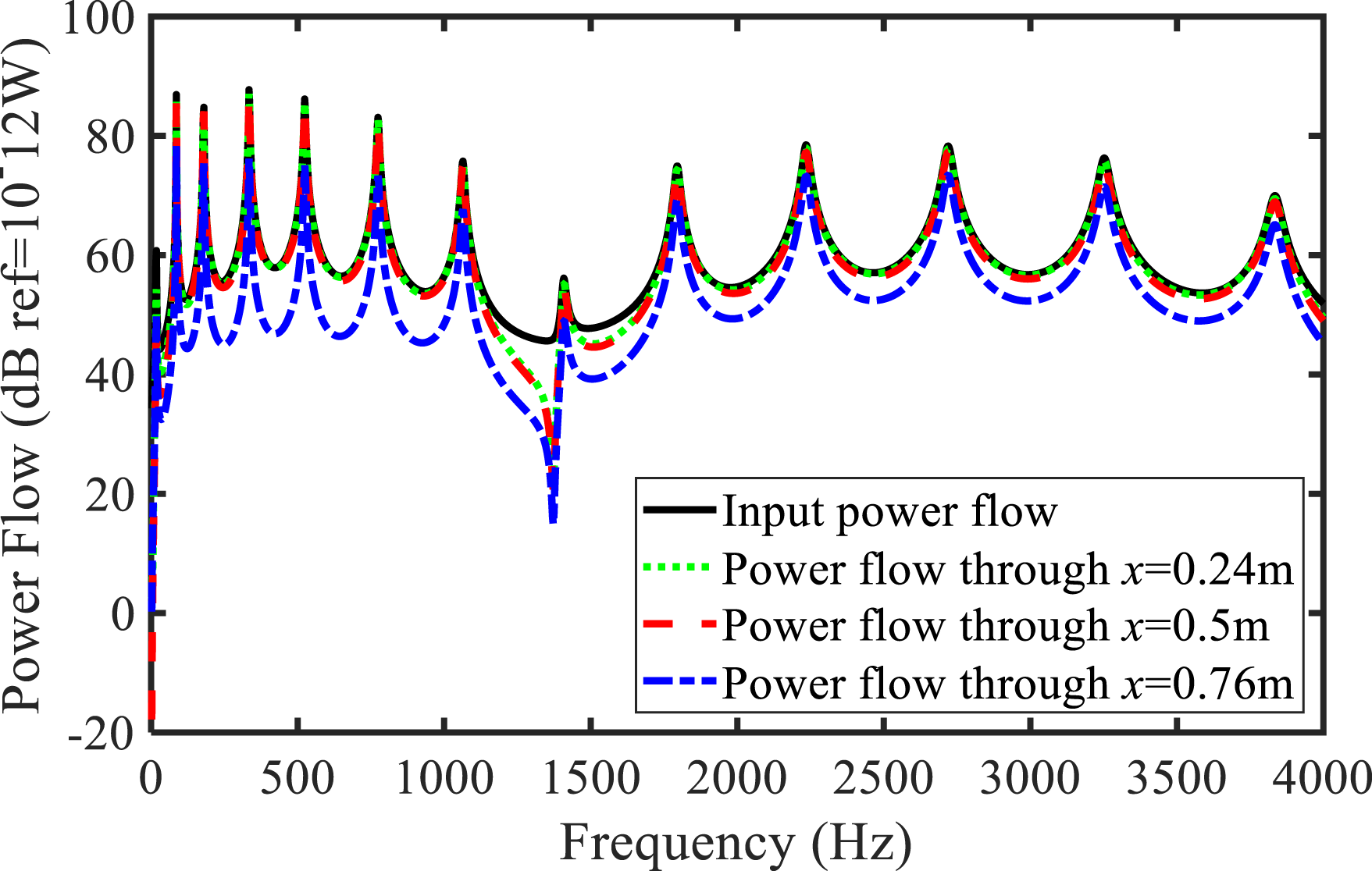
The bending waves of an ABH beam at different excitation frequencies are shown in Figure 10. It can be observed that as excitation frequencies increase, the phenomenon of vibration waves gathering in the ABH region becomes more obvious, the wavelength gradually becomes shorter, and the amplitude increases accordingly. The reason for this is that the short-wavelength nature of high-frequency waves makes the tapering geometry of the ABH region more effective in capturing the waves. High-frequency vibration waves are more likely to be captured in the ABH region, resulting in efficient energy absorption and wave attenuation. This result is consistent with the wave compression and wave manipulation achieved by the expected ABH effect. Bending waves with different excitation frequencies for the ABH beam.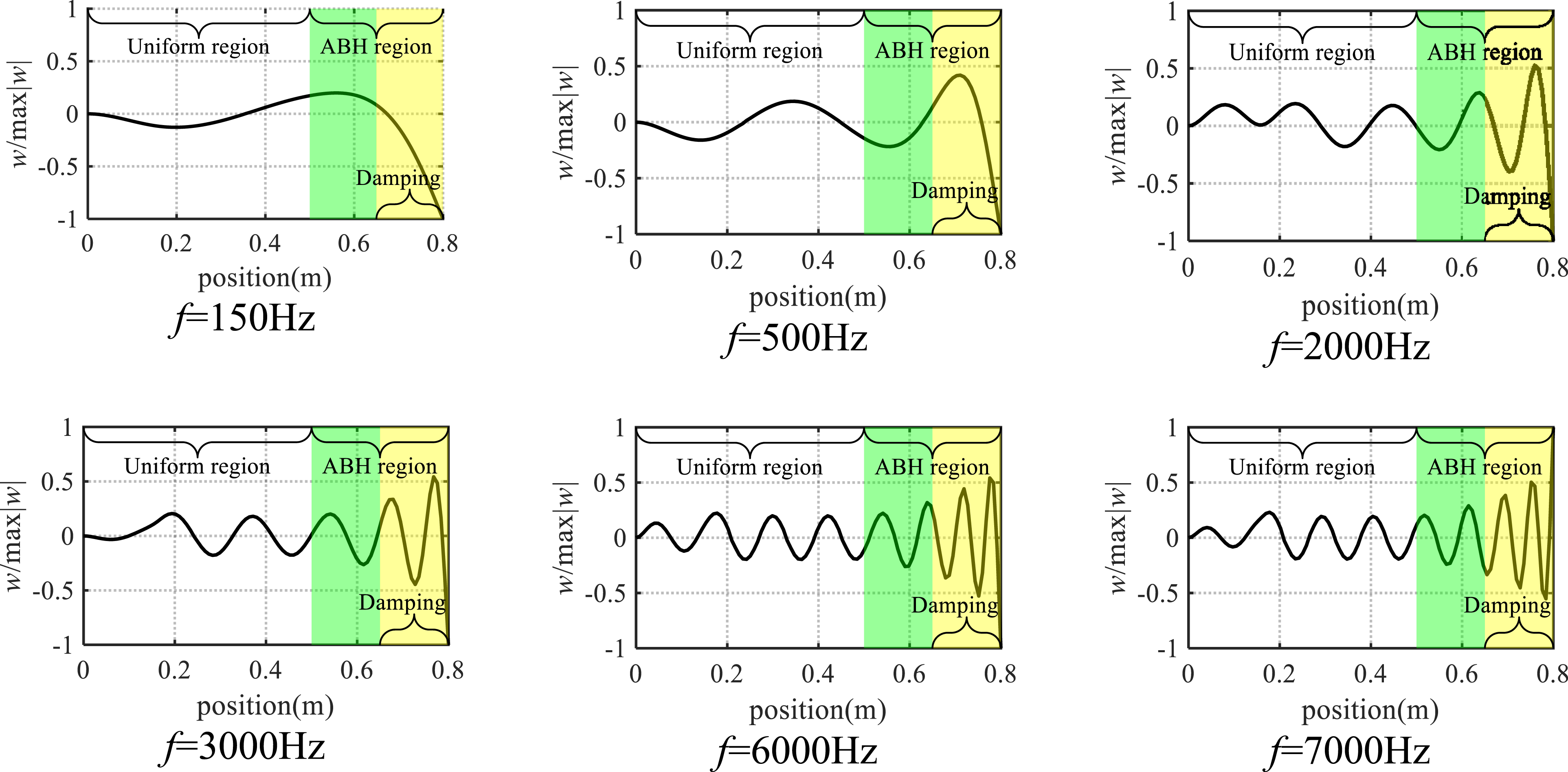
To better analyze the dissipation of energy on the acoustic black hole beam at different frequencies, the natural frequencies at the 9th order (f9 = 1795 Hz) and the 20th order (f20 = 7440 Hz) were selected in Figure 11. The results show that the vibration energy mainly flows to the uniform region of this beam, but the energy dissipation in the uniform thickness part is small. In the ABH region, especially in the region of the coupled damping layer, the energy dissipation accelerates significantly. This indicates that, except for the energy dissipation caused by the damping effect of the ABH structure, the energy is mainly concentrated in the ABH region, especially the coupled damping material region. It is also observed from this figure that the energy dissipation becomes more uniform as the frequency increases. There are several reasons. First of all, the high-frequency vibration corresponds to a shorter wavelength, which makes the vibrational energy propagation path in this structure shorter, which is more likely to be dissipated due to the damping effect, and makes ABH more effective in absorbing and dissipating the vibration energy. Secondly, under the excitation of high frequency, the ABH effect is enhanced, and the vibration response with high frequency further enhances the damping effect, resulting in more energy flowing into the acoustic black hole region, which is dissipated in time and effectively. Structural intensity with various frequencies for an ABH beam.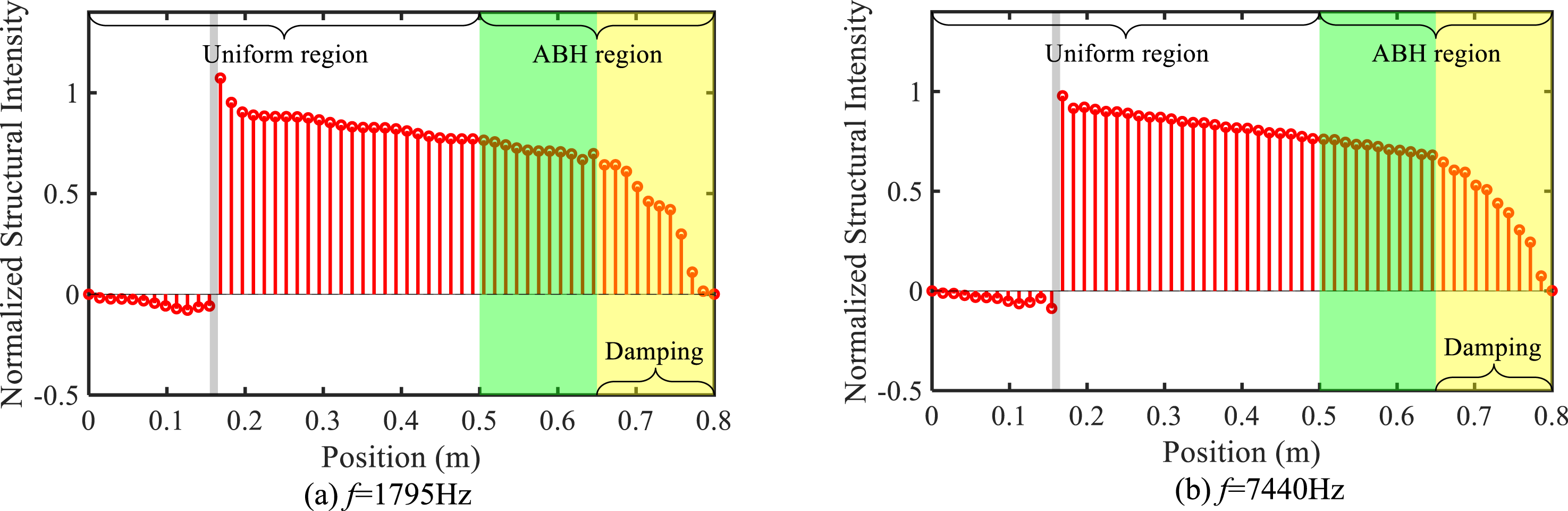
Figure 12 shows the bending, shear components, and total structural intensity in the ABH beam. With the increasing frequency, the variation trends of the total structural intensity and its components from the initial alternating oscillation to smooth on the right side of the beam, which meets with the ABH effect at high frequencies mentioned above, which makes the energy more uniformly concentrated and dissipated. Normalized structural sound intensities and their components of ABH beams at different frequencies.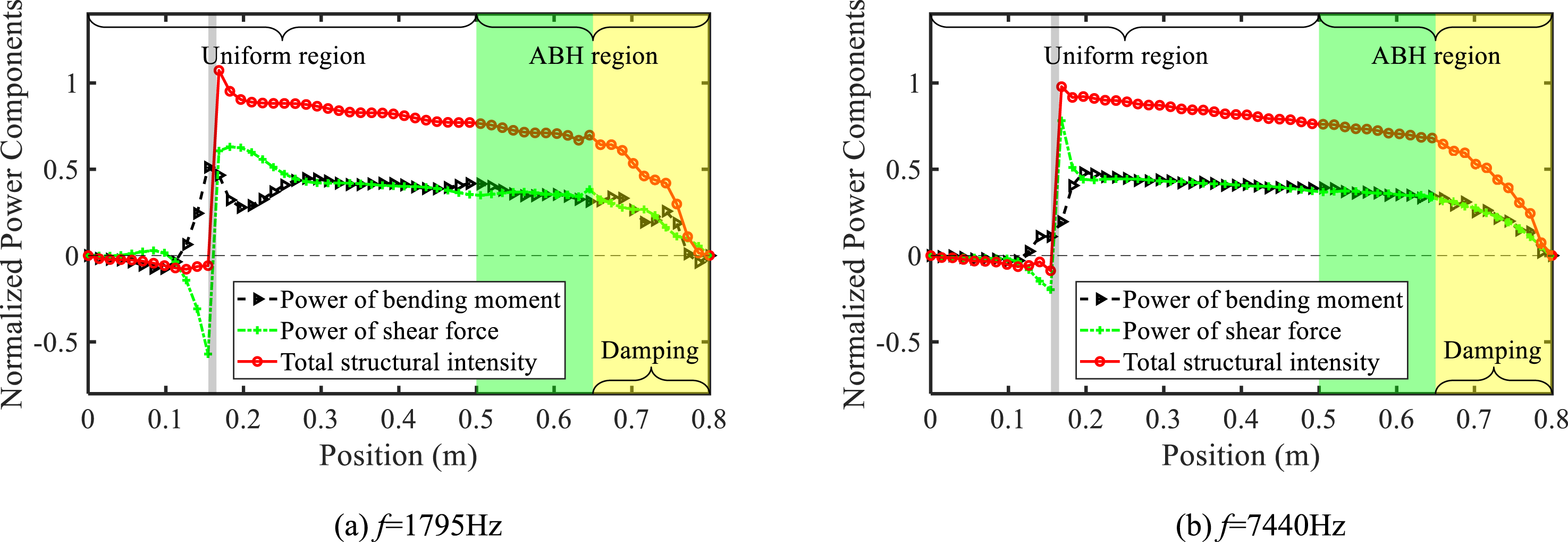
In order to further understand the influence of the damping material on the ABH effect and energy dissipation, the energy accumulation and dissipation in the ABH beam with or without coupled damping layers are analyzed in Figure 13. The results show that the energy will be dissipated almost linearly without coupled damping layers. Although the energy dissipates in the ABH region more obviously than in the uniform thickness part, the expected ABH effect is not achieved. It indicates that the damping material is the major factor to enhance the ABH effect for truncated thickness, which significantly improves the energy absorption efficiency and ABH vibration suppression effect. In addition, the damping layer not only significantly enhances the energy accumulation but also greatly accelerates the timely energy dissipation rate, so as to effectively avoid the energy reflection or scattering at the boundary caused by the truncated thickness. Normalized structural intensity of ABH beams without and with damping material at different frequencies.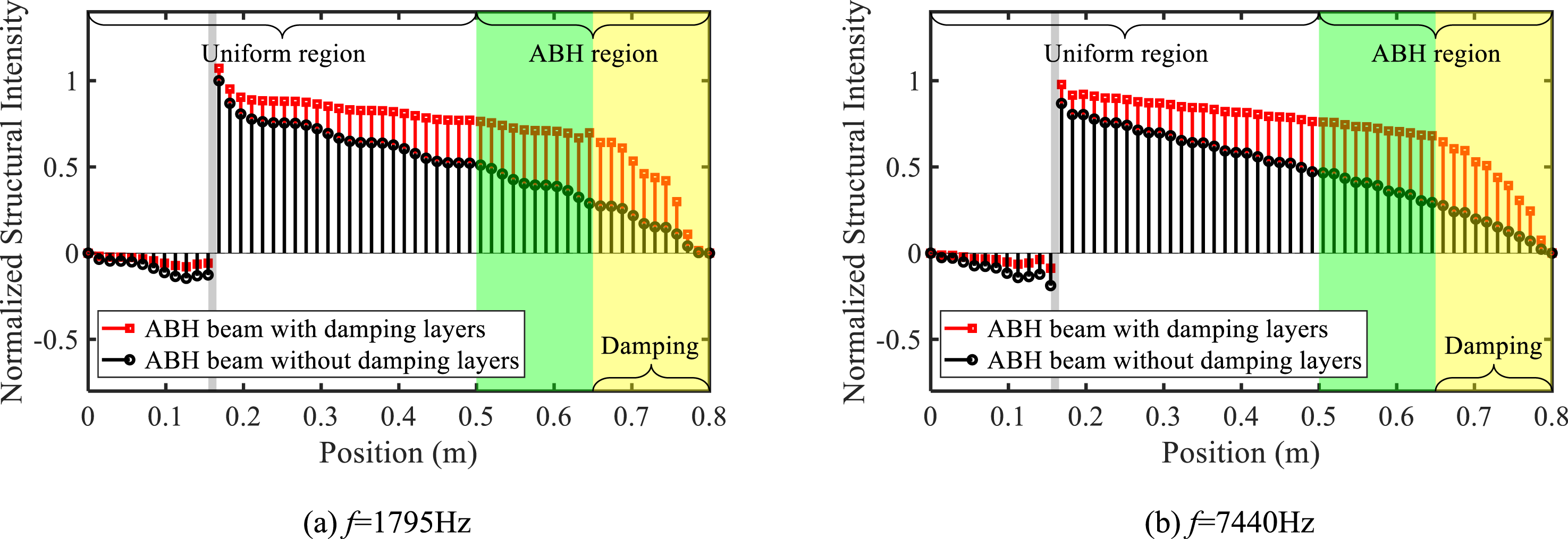
To investigate the influence of the elastic boundary conditions on the ABH effect and energy dissipation, the normalized structural intensity of ABH beams with damping material under elastic boundary conditions at f = 1795 Hz is presented in Figure 14. In this analysis, other parameters are the same as those used in Figure 13, except for the boundary spring constraint. When analyzing one of the elastic spring parameters, the value of the stiffness of another spring is set to 1e7, as seen in Figure 14(a) and Figure 14(b). From the figure, it can be seen that the sensitivity ranges of linear and torsion stiffness springs are [1e7,1e8] and [1e6,1e7], respectively. It can also be seen from this figure, energy flow from the excitation position to the ABH region decreases, while the energy flow to the spring constraint portion increases as the stiffness of the spring decreases. The reason is that more energy from the excitation position flows towards the spring and is converted into spring potential energy. Therefore, by adjusting the values in the spring stiffness sensitive area to match the ABH profile, the distribution of structural intensity can be effectively changed. Normalized structural intensity of ABH beams with damping material under elastic boundary conditions at f = 1795 Hz.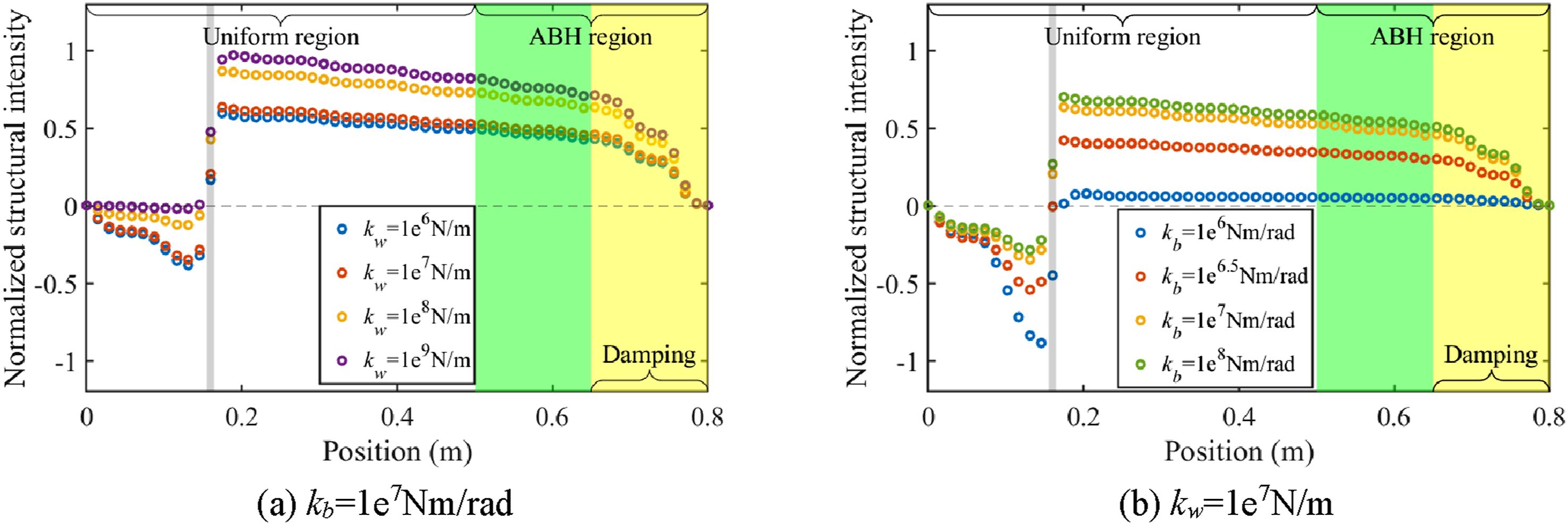
Conclusions
In this paper, a prediction model of the vibration and energy distribution characteristics of acoustic black hole beams with elastic boundary constraints is established by using the isogeometric method combined with the energy principle. By comparing with the results of the traditional finite element method, it is verified that the established model has sufficient accuracy and can effectively approximate the dynamic characteristics of the acoustic black hole beam. On this basis, the influence of acoustic black hole structure on energy accumulation and dissipation is studied by using this model. By analyzing the distribution of bending waves of acoustic black hole beams at different excitation frequencies, the wave manipulation law under different excitation frequencies is studied. Finally, the influence of the damping material on the occurrence and energy dissipation of the acoustic black hole effect is studied. The main conclusions are as follows: (1) The present dynamic model can predict the dynamic behavior of the acoustic black hole beam with elastic boundary constraints and has high accuracy. (2) Under high-frequency excitation, the acoustic black hole effect is significantly enhanced, and the accumulation and dissipation of vibrational energy are more obvious. (3) The damping layer is very essential to enhance the acoustic black hole effect, which improves the energy gathering and dissipation efficiency of the acoustic black hole, avoids the energy reflection or scattering at the boundary caused by the truncated thickness, making the energy dissipated in the coupled damping layer.
Footnotes

Funding
The authors disclosed receipt of the following financial support for the research, authorship, and/or publication of this article: The paper is supported by the National Natural Science Foundation of China (Nos. 52205091 and 52461044), the Guizhou University Undergraduate Student Innovation and Entrepreneurship Training Program (gzusc2024056), and Open Laboratory Project of Guizhou University (SYSKF2025-060).
Declaration of conflicting interests
The authors declared no potential conflicts of interest with respect to the research, authorship, and/or publication of this article.
Data availability statement
The datasets used and/or analyzed during the current study are available from the corresponding author on reasonable request.