




Abstract
This paper explores some innovative and modern techniques for analyzing the family of fractional Burgers-type equations, which are extensively utilized in studying shock waves in plasma physics and marine environments. The most notable novel and effective technique employed in this study for the first time is the “Tantawy Technique,” named after its creator, Prof. Samir El-Tantawy. Two other effective methods, known as, the Aboodh residual power series method (ARPSM) and the Aboodh new iteration method (ANIM), are also applied to analyze the suggested problems and compare them with the Tantawy Technique results. We employ these methods to address the complexities associated with fractional partial differential equations (PDEs), specifically using the Caputo operator for fractional derivatives. The study provides a comprehensive analysis of the convergence and accuracy of the proposed methods through various numerical examples. All three proposed methods can effectively yield precise and rapid solutions for fractional Burgers’ type equations. We assess the precision of all derived approximations by comparing them with the exact solutions for the integer case and calculating the absolute errors for these approximations. This work contributes significantly to fractional calculus and nonlinear differential equations, offering practical tools for scientists and engineers to solve complex fractional PDEs with enhanced accuracy. The results will improve our understanding and investigation of several complex phenomena that occur in nature and different nonlinear media, such as optics fiber, fluid mechanics, and plasma physics. As real-world applications for this study, we will investigate various evolutionary equations, such as the Burgers and KdV–Burgers equations used in plasma physics, to explain the properties of fractional shock waves while considering viscosity.
Keywords
Introduction
Fractional calculus (FC) is a branch of mathematics that deals with the fractional order’s derivative. In the middle of the 16th century, researchers explored the concept of FC. They found it to be a more exciting part of mathematics, as it provided comprehensive detail of any physical phenomena. FC is also known as non-Newtonian calculus.1–4 FC has gained significant utility across a wide range of scientific fields.5–10 Though not all of them are frequently utilized, fractional derivatives can be defined in several ways. Among fractional derivatives, Riemann–Liouville (R–L), Caputo fractional derivative (CFD), Atangana–Baleanu, and Caputo–Fabrizio are the most popular, and many more.11–23 In some situations, fractional derivatives may be more useful than integer-order derivatives for modeling complicated systems and advanced non-linear processes. This is because of two primary aspects. Firstly, we are no longer limited to an integer order for the derivative operator; instead, we are free to select an arbitrary order. Second, when the system has a long-term memory, non-integer-order derivatives are advantageous because they depend on both the past and current situations.
Consider the fractional KdV Burgers (KdVB) equation as24–27

Burgers’ equation was first proposed by Bateman
28
in 1918. In his studies from 1939 until 1965, Burgers provided further detail on this subject.
29
Burgers equation is used in several domains, including number theory, gas dynamics, fluid mechanics, elastic waves, and hydrodynamic waves.30–32 Scholars have searched widely for a numerical or analytical solution to equation (1). For example, Ozis and Ozdes
33
used a simple variational approach to solve Burgers’ equation. To solve Burgers’ equation, Aksan and Ozdes
34
developed a variational technique utilizing the discretization in time method. Using finite difference methods, Kutluay et al.
35
discovered the numerical solution to Burgers equation. In their work, Varolu and Finn used a weighted residue method.
36
Wanless and Caldwell
37
had some success with finite elements. Evans and Abdullah used a group explicit approach.
38
Consider the following fractional Burgers equation39–41

Singhal and Mittal 42 employed the Galerkin approach to discover numerical solutions to Burgers’ equation. Given this, it’s reasonable to assume that scientists have put in considerable effort to find an analytical and/or numerical solution to the fractional Burgers’ equation. Esen and Tasbozan 43 used cubic B-spline finite elements for the Burger equation solution. According to Esen et al., 44 the time-fractional Burgers’ equation was essentially solved analytically using HAM. The fractional Riccati expansion approach was also used by Abdel Salam et al. 45 to solve Burgers’ equation of fractional order.
It was in 2013 that Omar Abu Arqub created RPSM. 46 We combine the residual error function and the Taylor series to form it. An infinite convergence series gives the solution for DEs. 47 Various types of DEs, including KdV Burger’s equation, fuzzy DEs, Boussinesq DEs, and many more, have prompted the development of novel RPSM algorithms that aim to produce effective and accurate approximation solutions.48–54 Researchers combined two effective methods to solve fractional-order differential equations (FODEs) to create a unique methodology.55–60 In this study, we used a novel combination approach known as the ARPSM to discover both approximate and precise solutions for time-fractional partial differential equations (PDEs) with changing coefficients. This innovative approach is remarkable because it combines the RPSM with the Aboodh transform method.61,62
One major area for improvement with the approaches outlined earlier is their required amount of computing work and complexity. We came up with a new technique to solve the time-fractional biological population model, 63 which is the Aboodh new iterative method (ANIM). Combining the Aboodh transform (AT) with the new iterative method significantly reduces computing effort and complexity. The suggested approach yields a convergent series solution.64,65
As stated in References61–65 the two least complicated approaches to solving fractional differential equations are the Aboodh residual power series method (ARPSM) and the ANIM. These methods provide not only analytical solutions that are completely transparent and instantaneous but also numerical solutions to PDEs without discretization. The main aim of this work is to investigate the efficiency of ARPSM and ANIM in resolving the KdV Burgers (KdVB) and Burgers equations. These two techniques have specifically handled numerous fractional linear PDEs and nonlinear PDEs.
Moreover, this investigation will introduce a novel analytical technique that will make the analysis of both linear and nonlinear fractional differential equations easier and help overcome the most challenging problems in analyzing more complicated ones. A vital attribute of the “Tantawy Technique” is its lack of necessity for discretization, Adomian polynomials, linearization, or intricate calculations like other methods to produce higher-order approximations. Thus, owing to its simplicity and rapidity, it is anticipated that it will spread very swiftly among researchers to examine several intricate physical, engineering, and biological challenges that were previously tough to assess using alternative methods or were evaluated with inadequate precision. This new technique is designated as the “Tantawy Technique” in honor of Prof. Samir El-Tantawy to safeguard intellectual property rights. Our analysis will demonstrate through various examples that the “Tantawy Technique” surpasses most others that necessitate intricate calculations, which are time-consuming and may demand high-performance computers. In contrast, the “Tantawy Technique” is the most straightforward, accessible, and faster than all other techniques.
In this paper, we solve and analyze the fractional Burgers equation and fractional KdVB equation using ARPSM, ANIM, and Tantawy Technique. These methods provide numerical solutions that are more accurate and precise than other numerical techniques. The numerical findings undergo a comparative study of the employed methods to ascertain their respective accuracies. We shall demonstrate that the outcomes of the offered methodologies are predominantly consistent, indicating their efficacy and reliability. Nonetheless, the novel method, the “Tantawy Technique,” surpasses the other two approaches, augmenting its worth and efficiency. This work will provide a foundation for researchers to efficiently solve and analyze various partial differential equations due to the effectiveness of the presented approaches.
Definitions
66
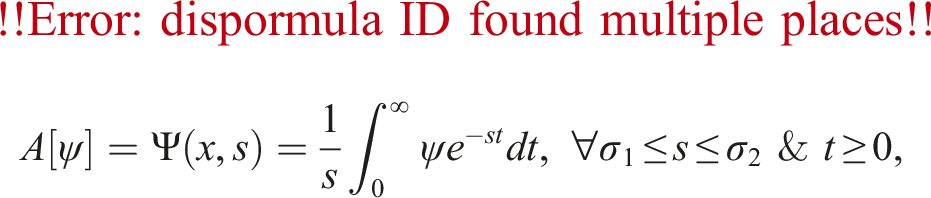
The Aboodh transform (AT) for the exponential-order and piecewise continuous function
And the inverse AT (IAT) reads
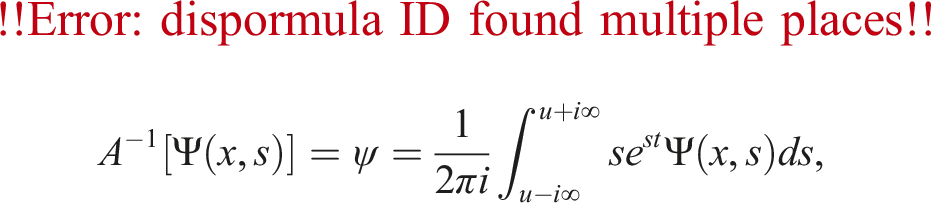
where
67,68 Let’s consider two exponentially order and piecewise continuous functions ψ1 ≡ ψ1(x, t) and ψ2 ≡ ψ2(x, t) in the interval [0, ∞[. The AT for these functions read A[ψ1] = Ψ1(x, s) and A[ψ2] = Ψ2(x, s). Consequently, the subsequent characteristics are fulfilled: 1. A [ϱ1ψ1 + ϱ2ψ2] = ϱ1Ψ1 (x, s) + ϱ2Ψ2 (x, s), 2. A−1 [ϱ1Ψ1 (x, s) + ϱ2Ψ2 (x, s)] = ϱ1ψ1 (x, t) + ϱ2ψ2 (x, t), 3. 4.
where
69
The derivative of the function ψ ≡ ψ(x, t) of fractional-order p in the Caputo sense reads where

70
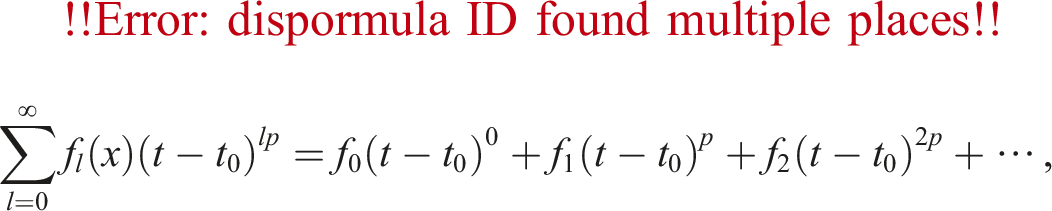
The multiple fractional power series (MFPS) about t = t0 is given by
Suppose that ψ ≡ ψ(x, t) is an exponential order function and its AT reads: A[ψ] = Ψ(x, s). Hence, we get

Consider ψ ≡ ψ(x, t) to be the exponential order function and its AT reads: A[ψ] = Ψ(x, s). Accordingly, the power series expansion (PSE) for Ψ(x, s) is given by

Let us assume that the function A[ψ] = Ψ(x, s) has an MFPS representation in the new form of Taylor’s series (4). Thus, we have

Suppose that the MFPS for the function A[ψ] = Ψ(x, s) is defined as


If

Methodologies
This section provides a concise overview of both ARPSM, ANIM, followed by their use in fractional KdVB and Burgers equations analysis. The “Tantawy Technique” will be further discussed in the subsequent segments of this section.
ARPSM for analyzing fractional differential equations
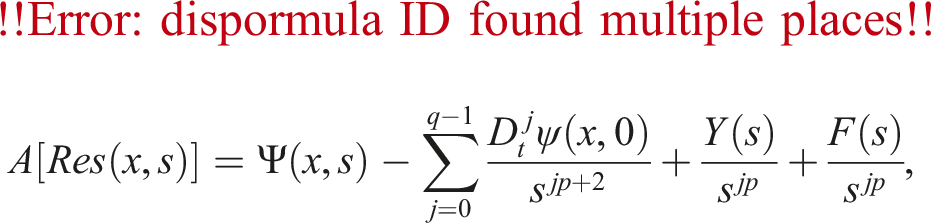
Here, we describe some steps for solving PDE using ARPSM: Step (1) Introduce the following general form to the FPDE Step (2) Applying AT on equation (8) yields Step (4) Based on the RPSM, the solution of equation (11) can be rewritten in the following PSE Step (5) According to the properties of AT defined in the first Lemma, we have Step (6) The rth truncated series of Ψ(x, s) reads Step (7) To determine the unknown functions f
l
(x) present in equation (13), we formulate the Aboodh residual function (ARF): Step (8) Substituting the expansion form of Ψ
r
(x, s) given in equation (13) into equation (14), we finally get Step (9) Multiplying equation (15) by srp+2, and then take lims→∞ for the obtained result Step (10) Solving the subsequent equation for f
r
(x) Step (11) Inserting the obtained values of f
r
(x) into equation (13), we get Ψ
r
(x, s). By applying IAT on the obtained results, then the solution ψ
r
(x, t) is obtained.












In the following sections, we shall employ this methodology to tackle prevalent physical issues in plasma physics, including fractional KdVB equation and Burgers equation.
ARPSM for analyzing KdVB equation
The fluid theory helps one to explain and characterize numerous nonlinear phenomena occurring in plasma physics and fluid media. Using this theory, the fluid equations (continuity and momentum equations for inertial fluid charged particles, inertialess charged particles that follow (non)-Maxwellian distribution, and Poisson’s equation) controlling the motion of plasma-charged particles can be reduced to an evolution equation by an appropriate approach, such as a reductive perturbation technique. Then, numerous analytical and numerical methods are dedicated to solving the given evolution equation to characterize the feature properties of the nonlinear waves described by this evolutionary equation. For example, El-Tantawy
24
reduced the fluid-governed equations of a homogeneous unmagnetized electronegative dusty plasma composed of inertialess thermal electrons and negative ions and fluid inertial positive ions as well as stationary negative charged dust grains using the fluid theory for the integer-order KdVB equation
24

Now, by using a suitable transformation, we can convert the planar KdVB equation (17) to the following fractional KdVB equation


The exact solution for equation (18) at p = 1, that is, the exact solution for equation (17) reads

By applying AT on equation (18) and with the help of IC (19), we get
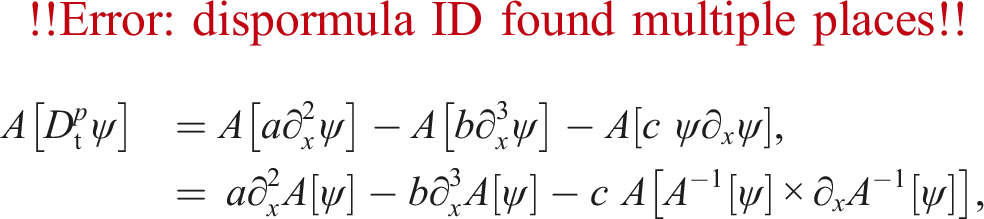

Based on the RPSM, the solution of equation (21) can be rewritten in the following series form


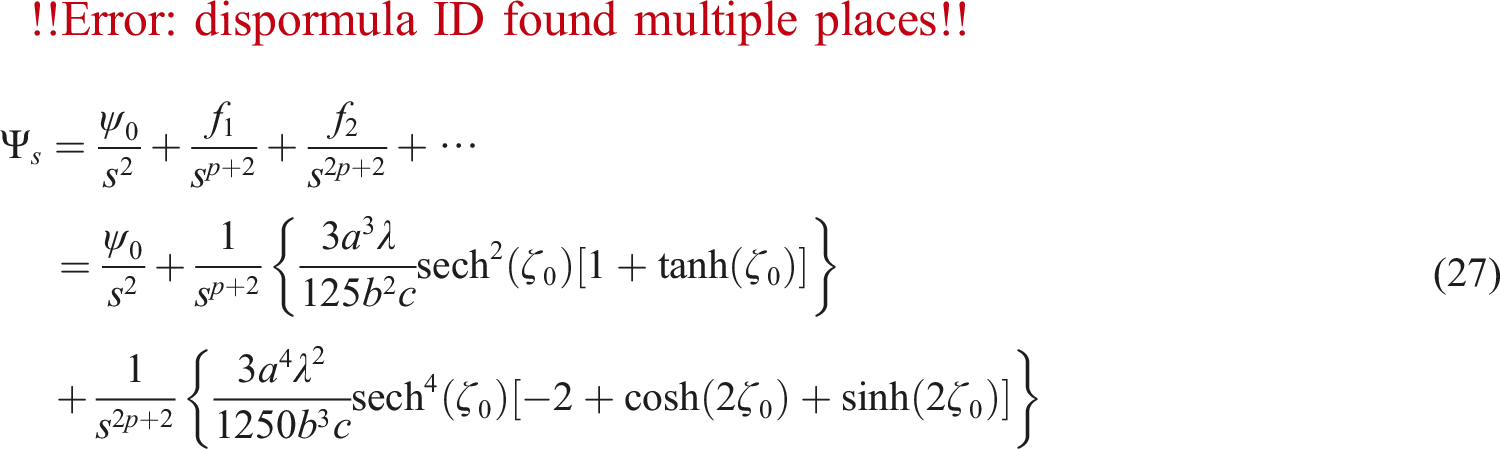
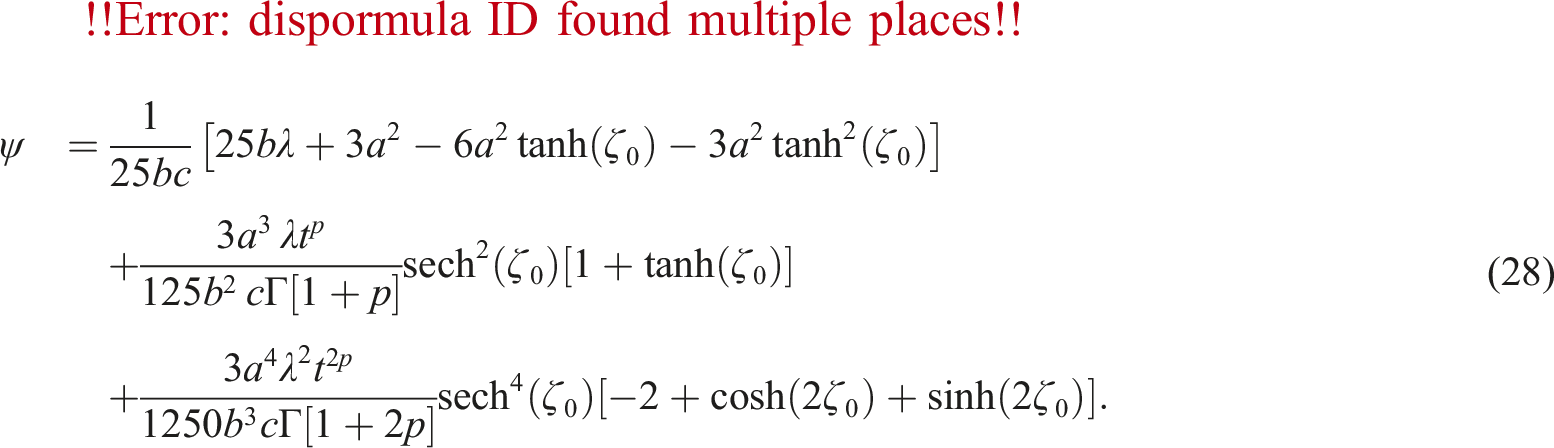
The ARF of equation (21) reads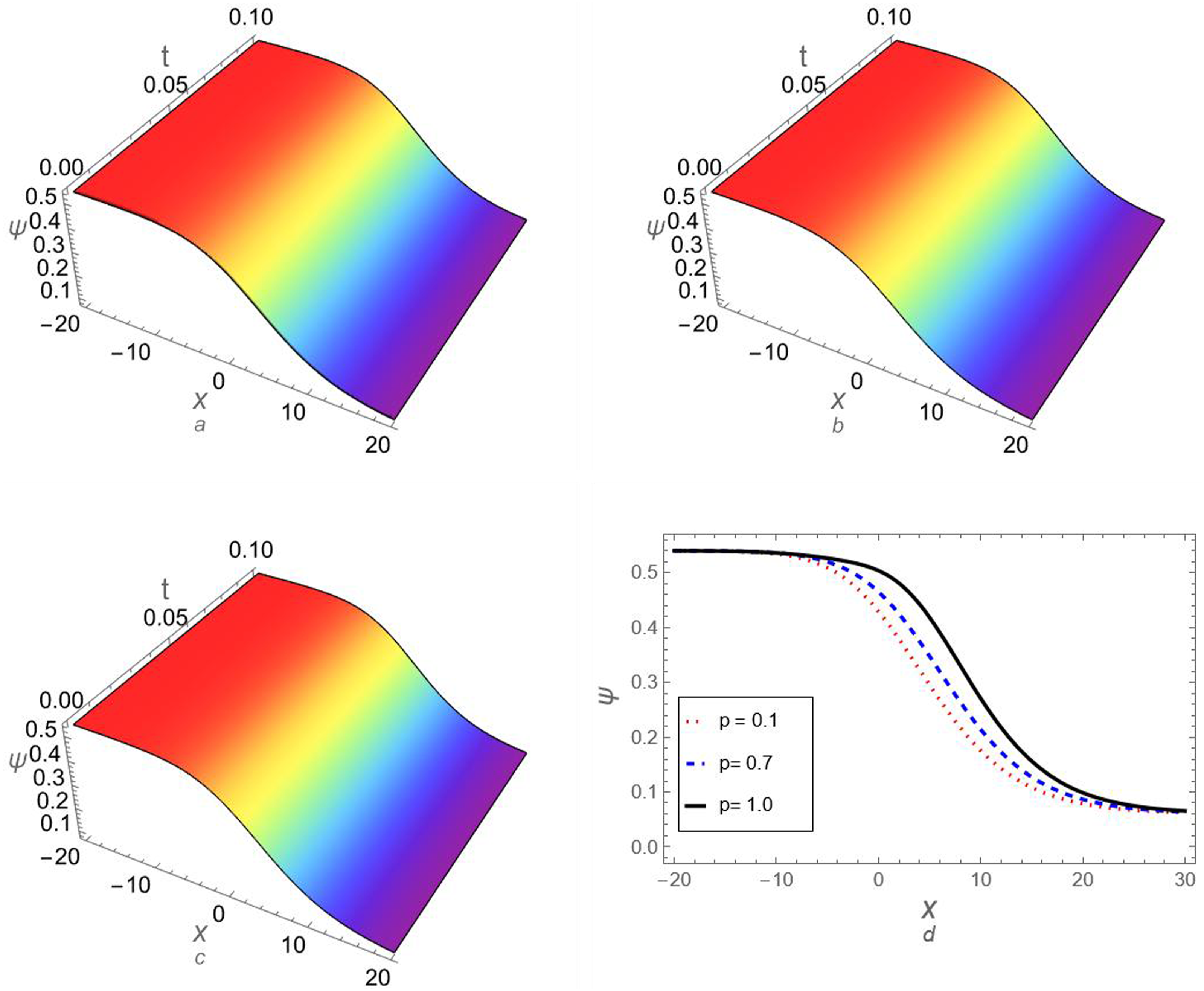


ARPSM for analyzing Burgers Equation
Tamang and Saha
39
studied the phase analysis of dust-acoustic waves (DAWs) in strongly coupled dust plasmas composed of Maxwellian ions and electrons using the Burgers equation. The RPT was applied to reduce the fluid govern equations for this plasma model to the following Burgers equation



The exact solution to equation (30) at p = 1, reads

Applying AT to equation (30) and with the help of the IC (31), we get

Based on the RPSM, the solution of equation (30) can be rewritten in the following series form
According to the RPSM and for the r
th
-term in the solution series, we have


The ARF for equation (33) is defined by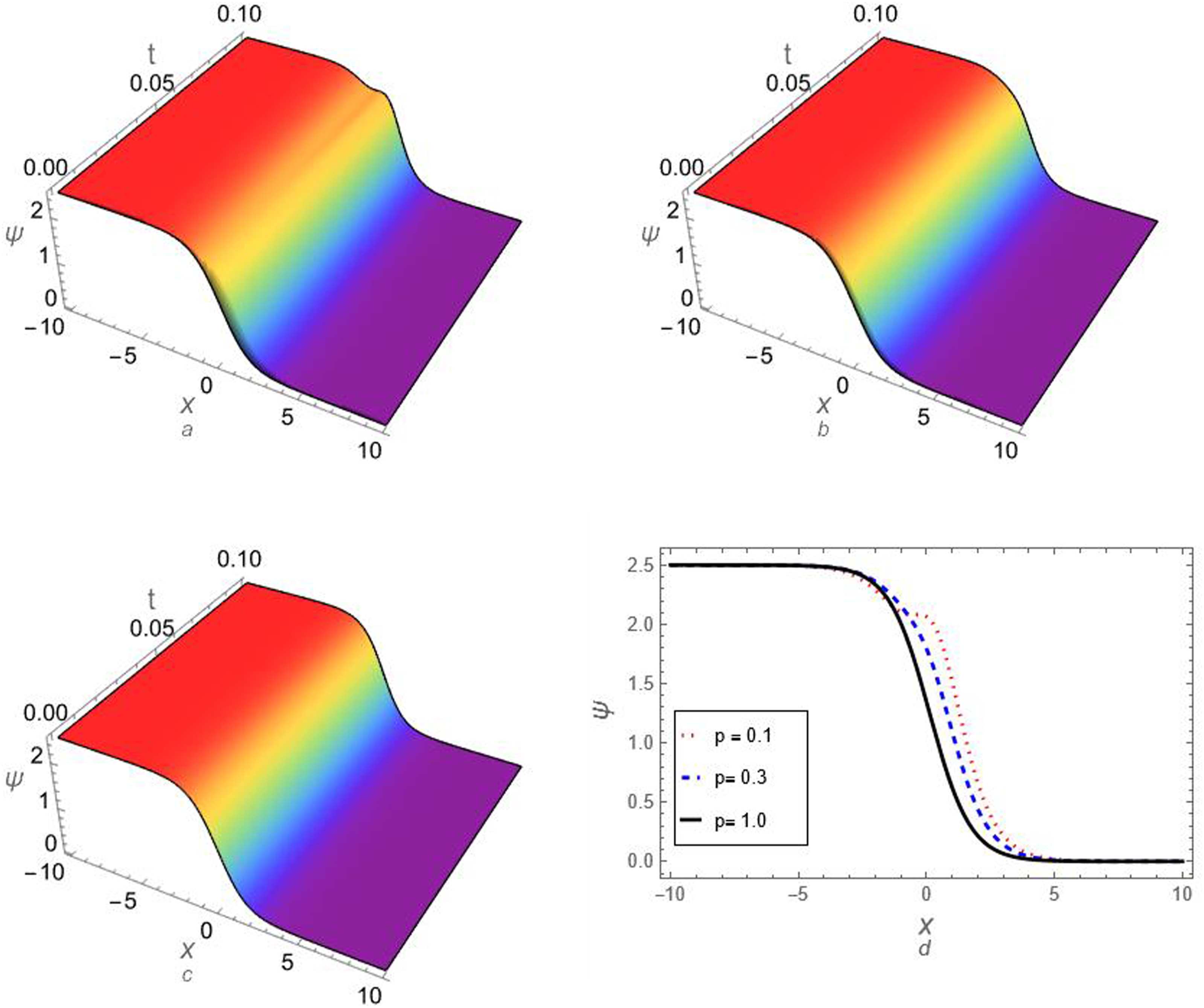





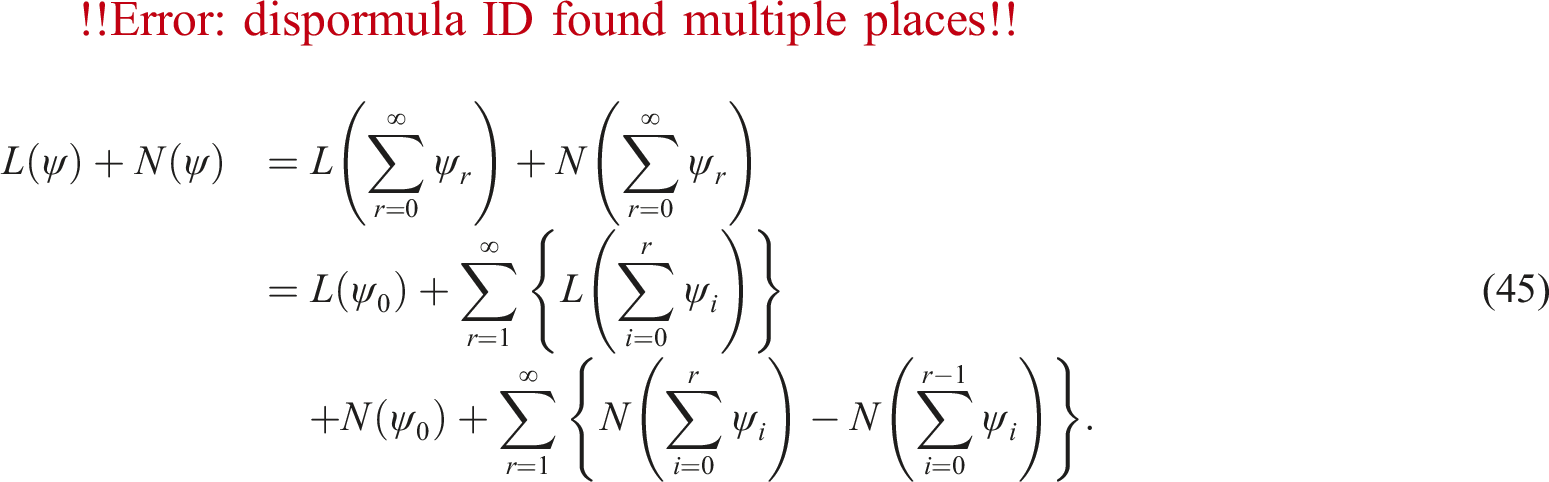
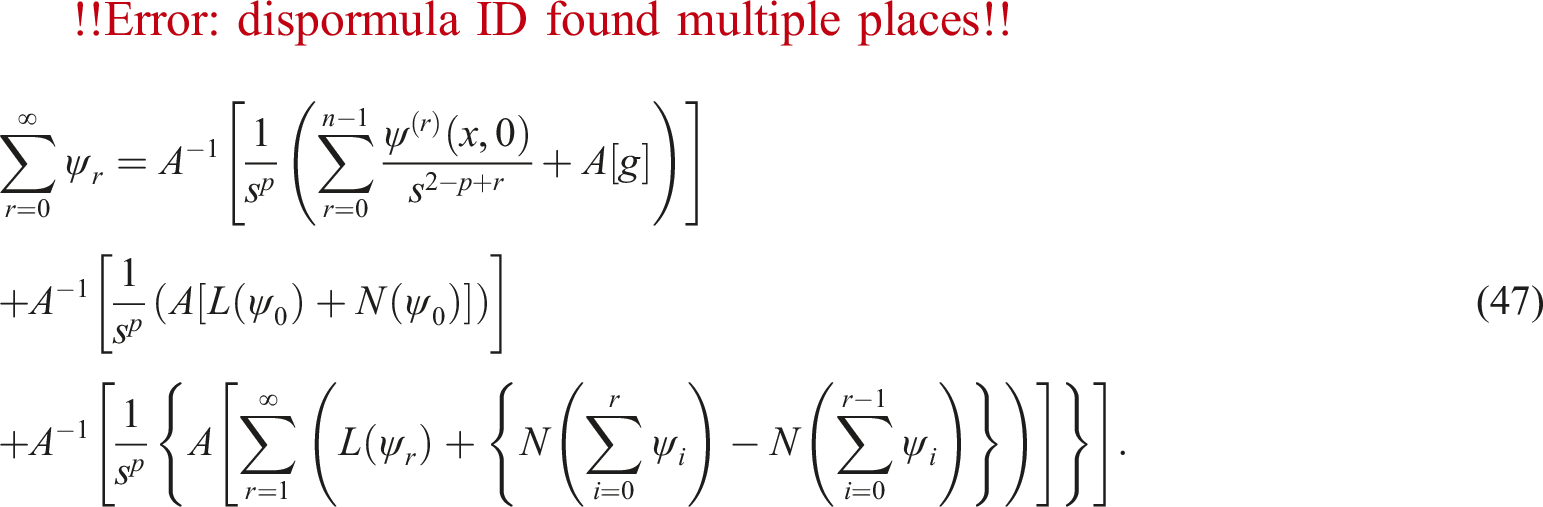
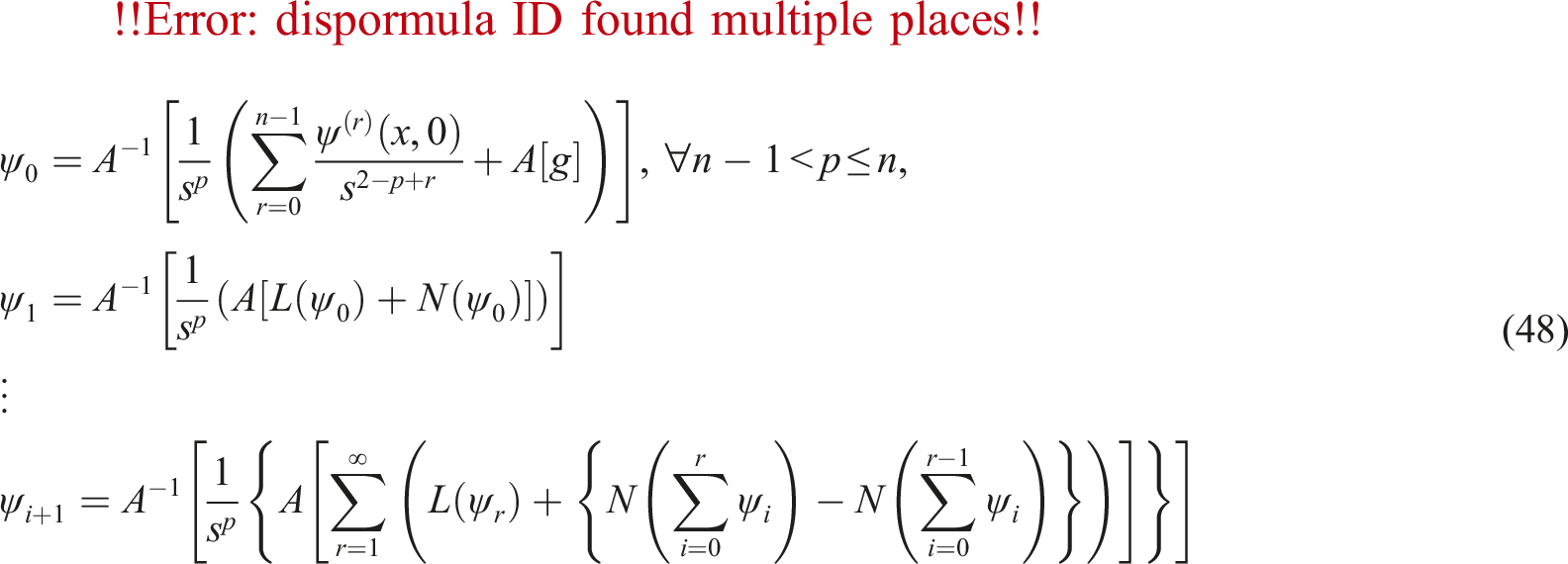
ANIM for analyzing fractional differential equations
Let consider the following general FPDE


Applying AT on equation (41) yields




ANIM for analyzing KdVB equation
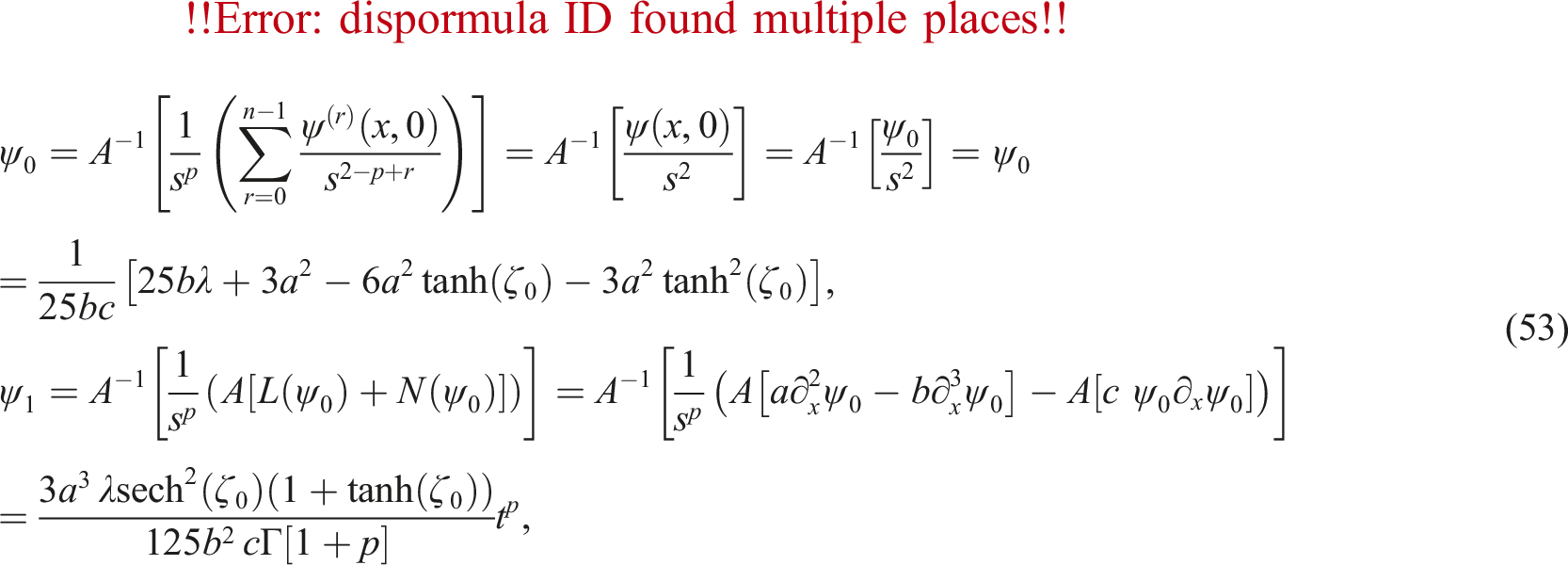
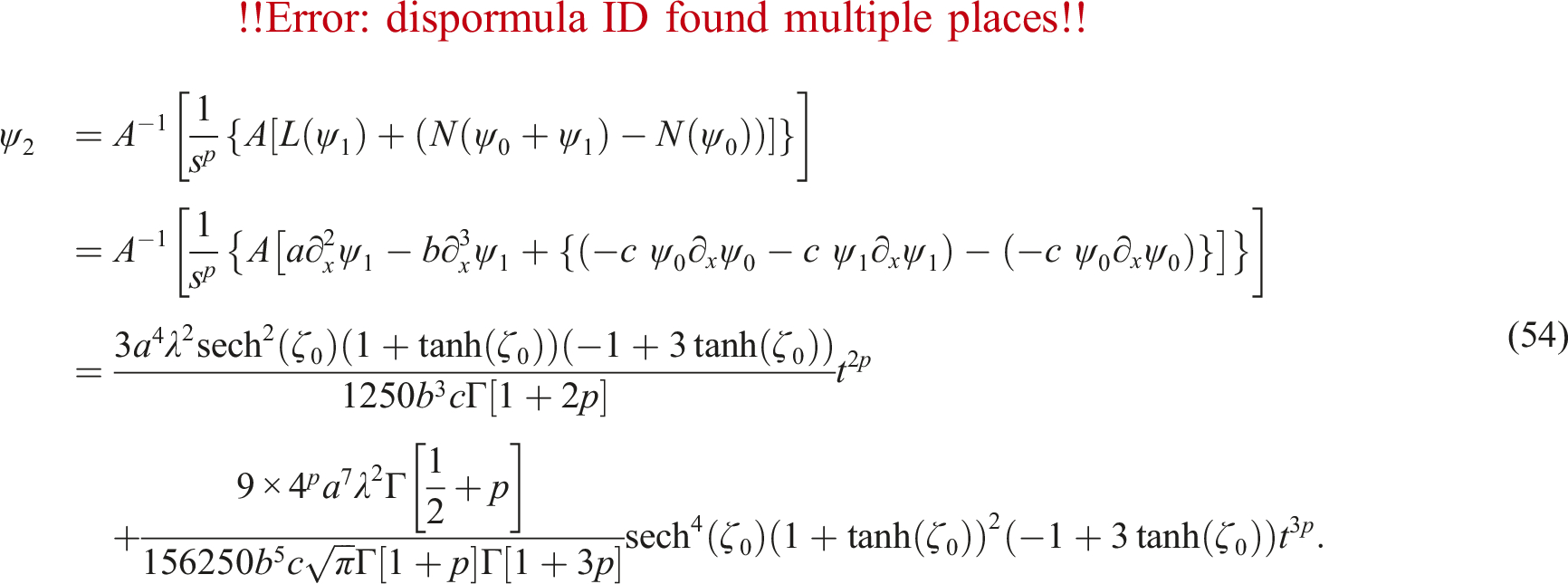
To apply ANIM for analyzing equation (18), we initially reformulate it in the following manner

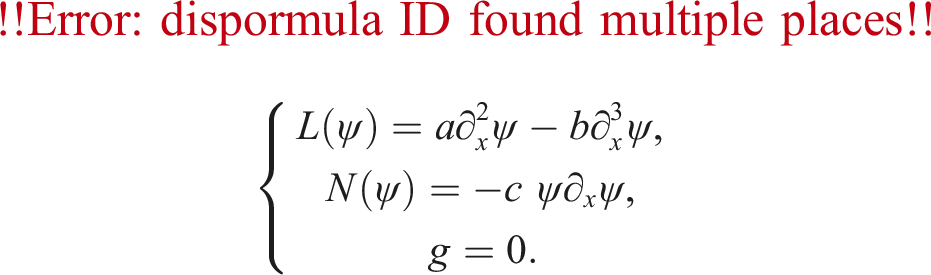
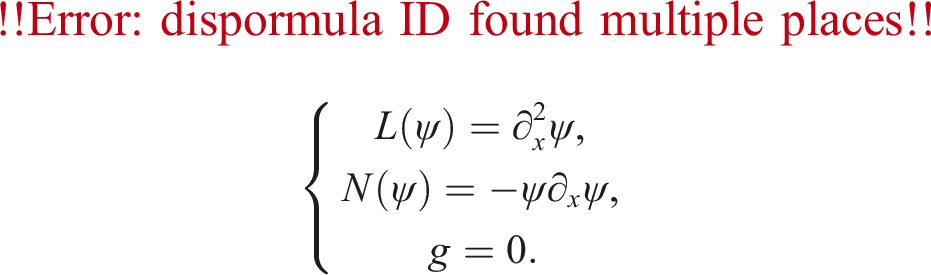
According to equation (50), the linear and nonlinear operators and function source are, respectively, read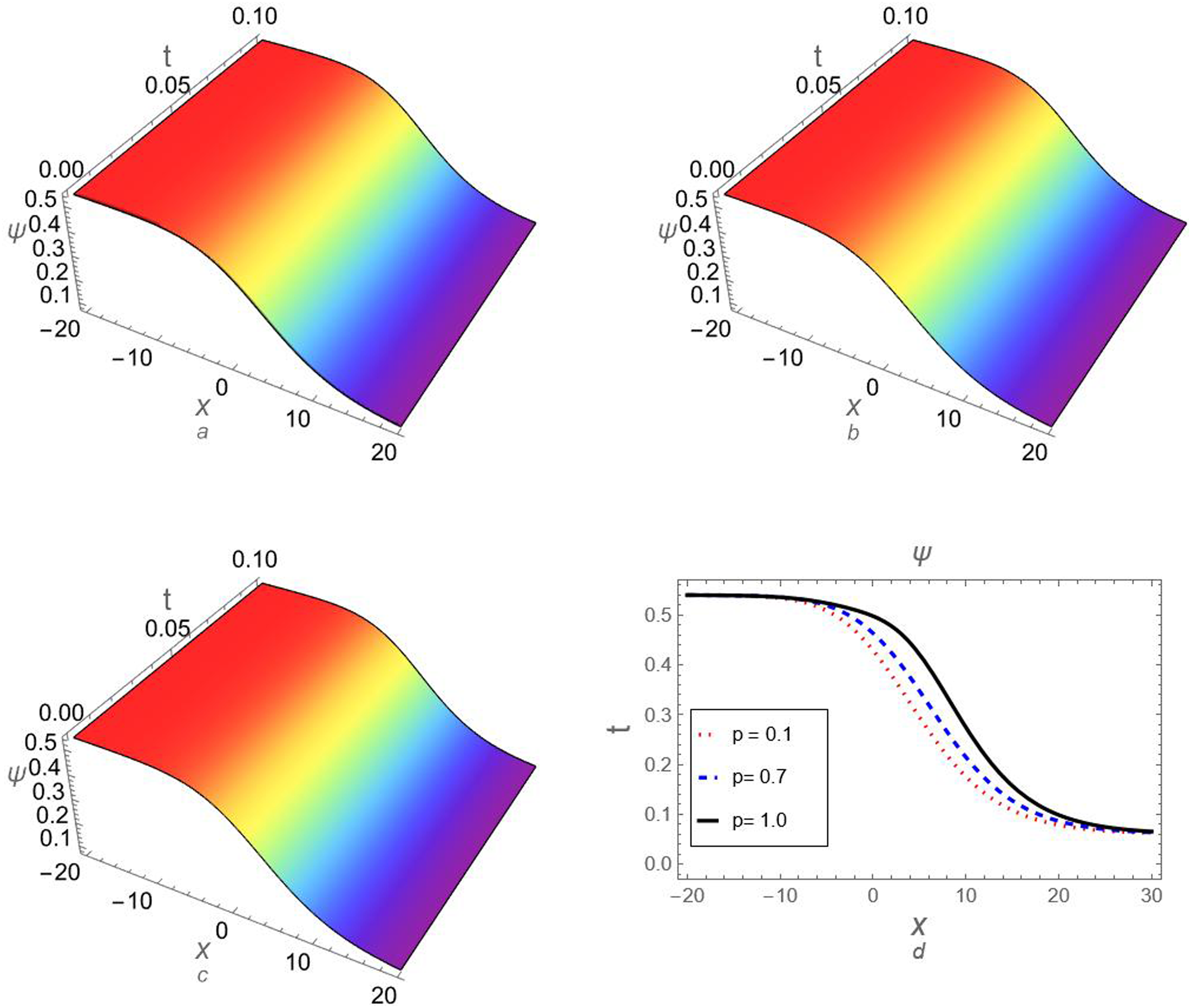


ANIM for analyzing Burgers Equation
Consider the following fractional Burgers equation


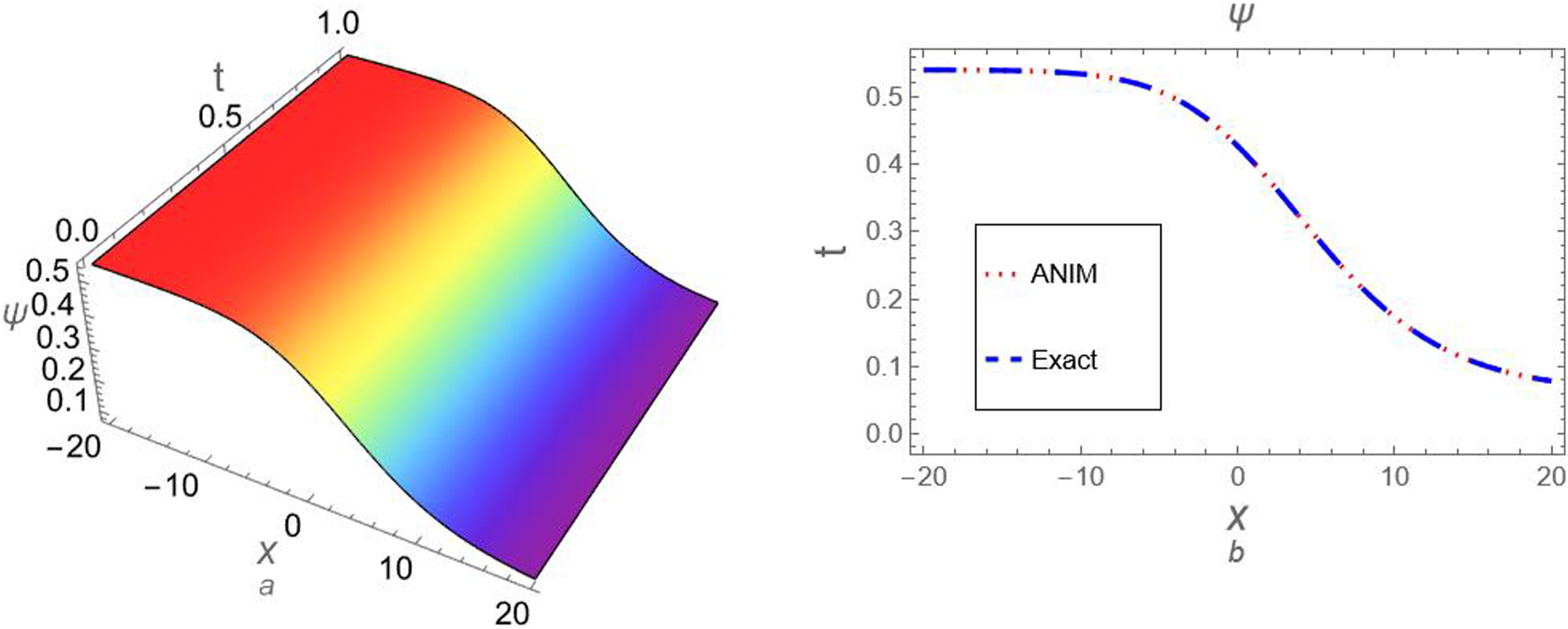
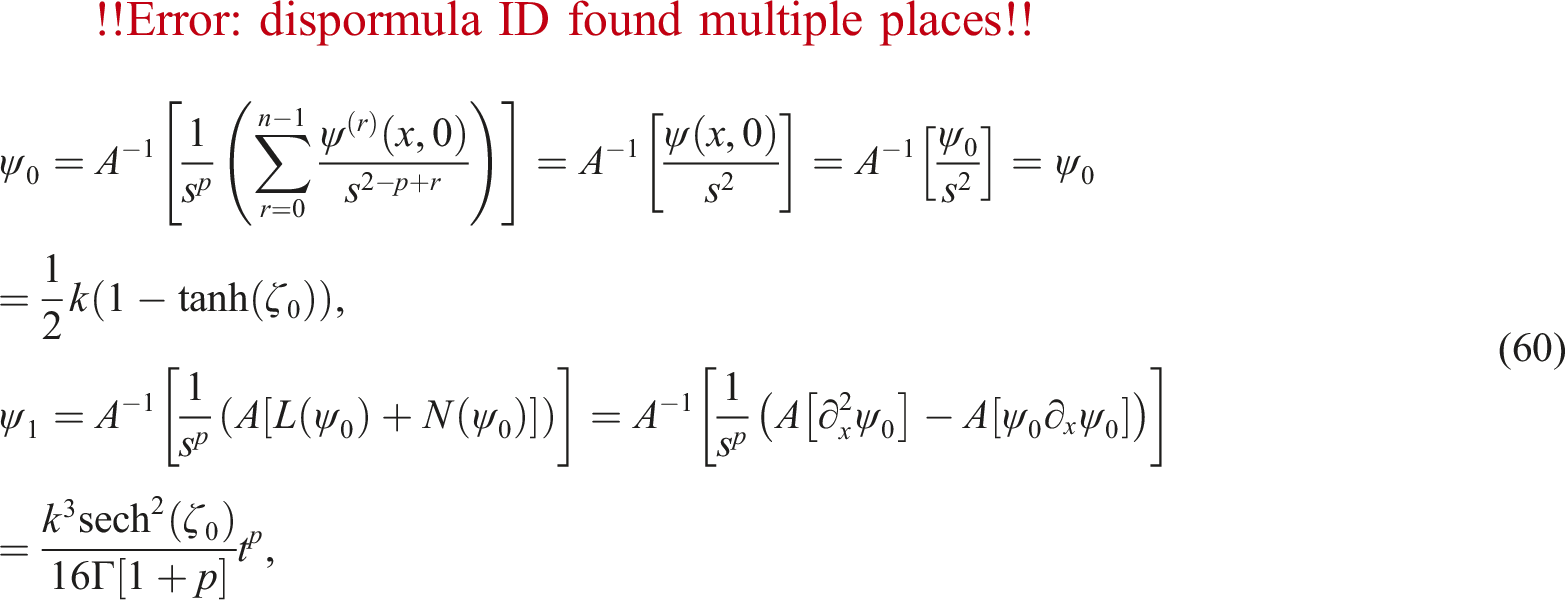
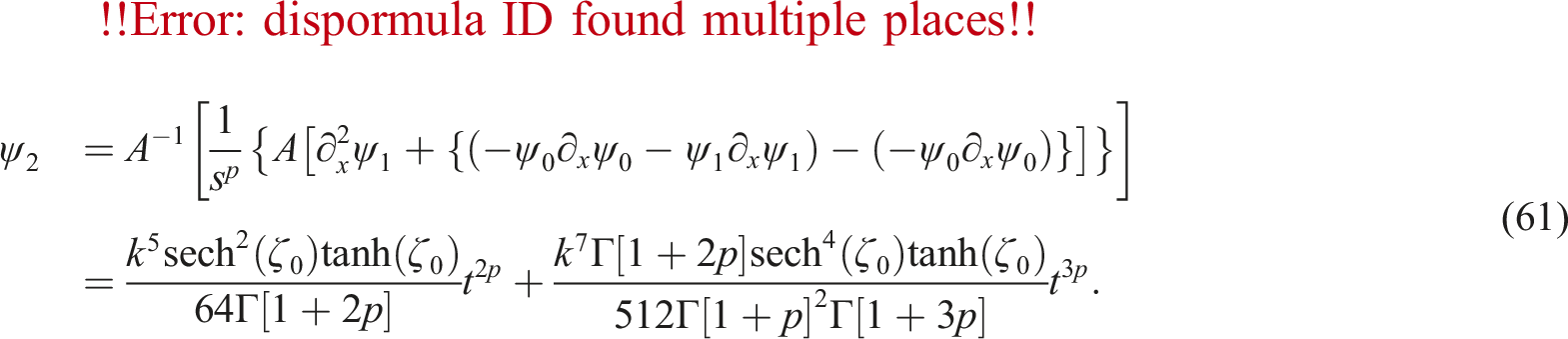
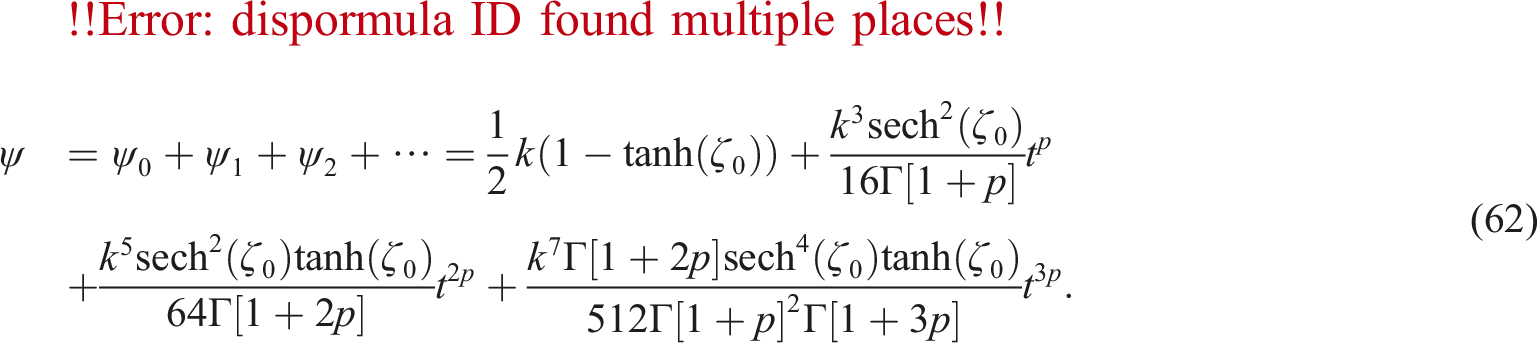
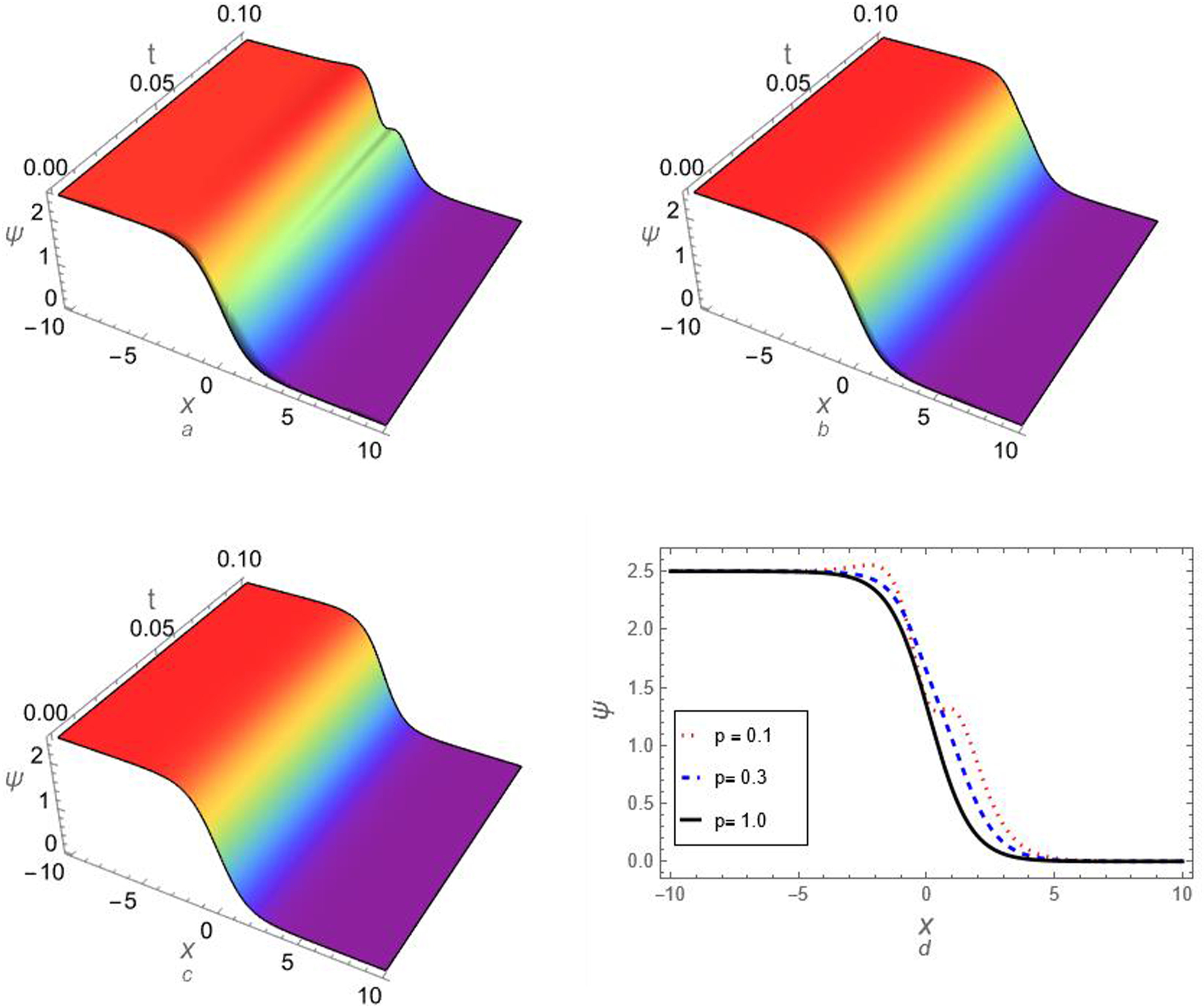
According to equation (56), the linear and nonlinear operators and function source are, respectively, read The approximation (62) of Burgers equation (30) using ANIM is analyzed graphically against p in (a) 3D graphic for p = .1, (b) 3D graphic for p = .3, (c) 3D graphic for p = 1, and (d) 2D graphic for t = 0.1. Here, k = 2.5.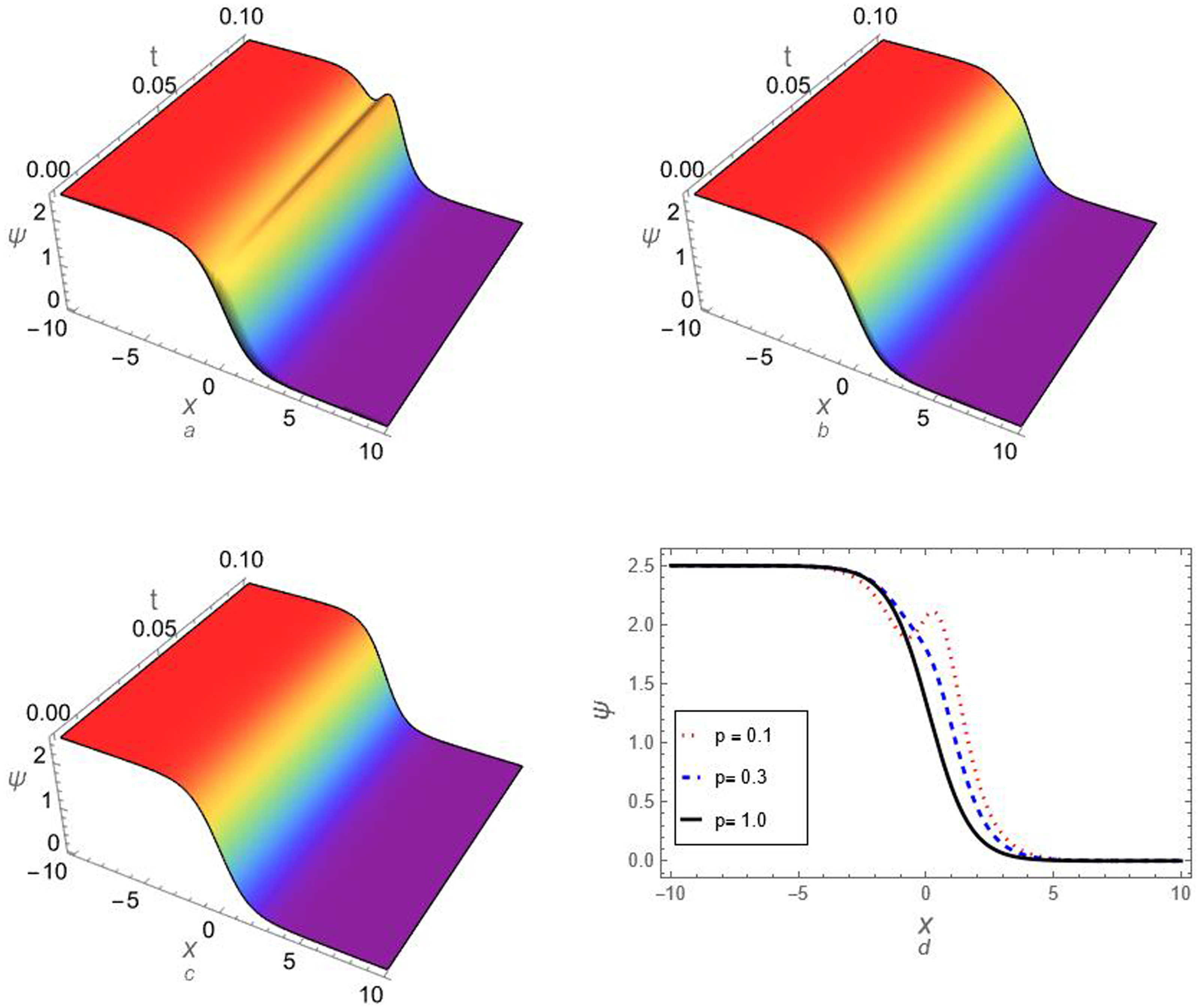


The “Tantawy Technique” for analyzing fractional differential equations
The examination of FDEs has garnered considerable interest in recent years owing to its capacity to represent complex physical and engineering problems. While various approaches and techniques have been developed to address these equations, many researchers still face difficulties and challenges while applying the existing methods (RPSM, NIM, ADM, HPM, VIM, etc.) to analyze various fractional evolutionary wave equations associated with several physical phenomena. Consequently, significant work has been devoted to developing a user-friendly method that any researcher can use to analyze all fractional differential equations without requiring costly computations. The efforts resulted in the “Tantawy Technique,” which does not require costly computations, perturbation techniques, Adomian polynomials, linearization, or discretization. Prof. Samir El-Tantawy is the exclusive inventor of this novel technique, so it is called in his honor.
In light of the novelty of the “Tantawy Technique,” we shall now delineate it in detailed aspects as follows Step (1) Let us introduce the following fractional differential equation Step (2) For analyzing problem (63) using the “Tantawy Technique,” the following Ansatz is introduced



in equation (63) to get

where Step (3) By considering n
th
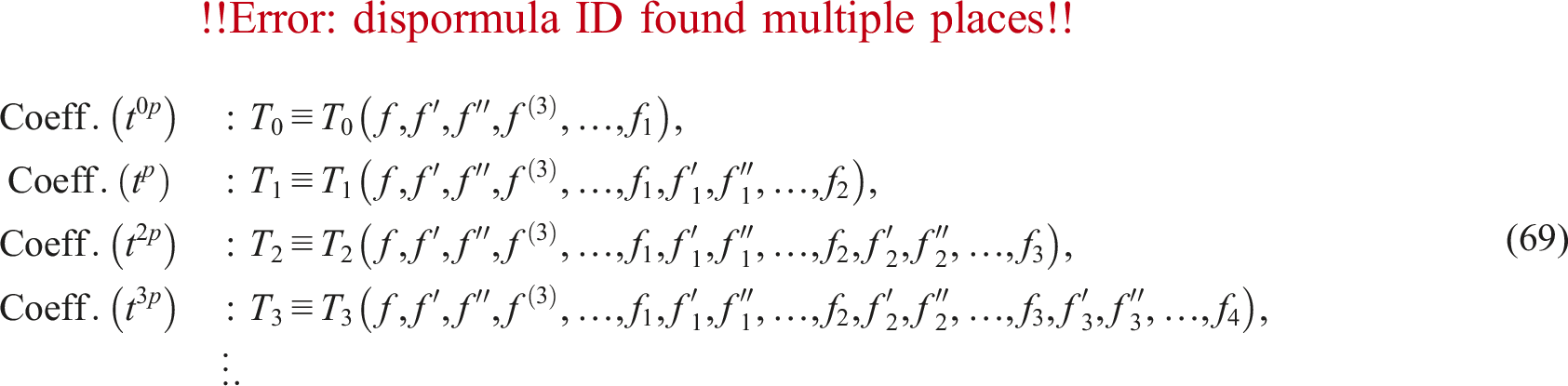
-order in the solution series (65), then equation (66) can be rewritten as Step (4) Applying Caputo/Jumarie fractional derivative operator (CFDO) and, collecting all terms corresponding to the same power of t
ip
∀ i = 0, 1, 2, 3, …, we get


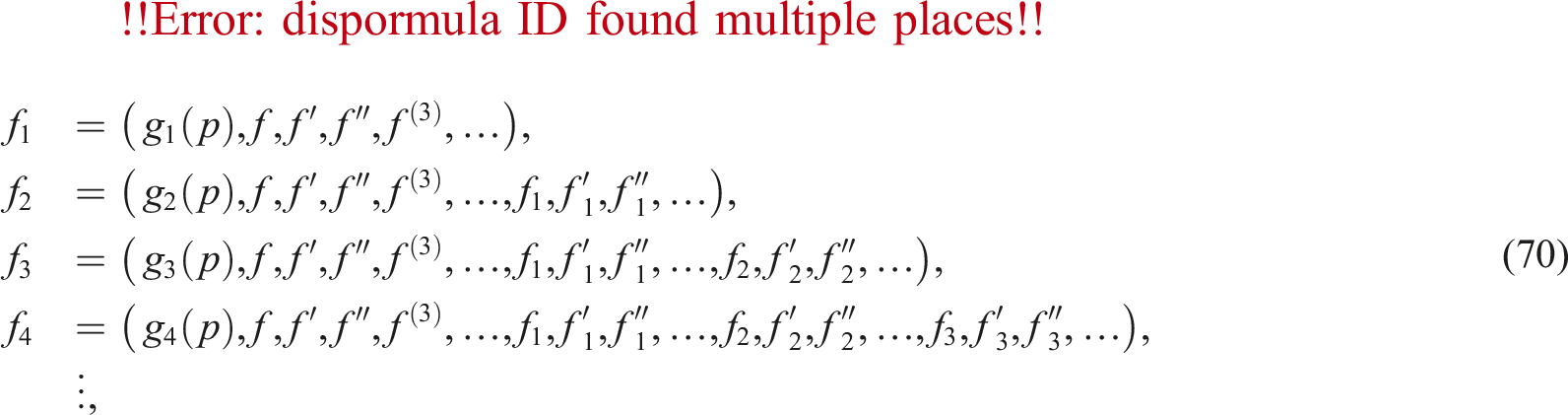
with Step (5) Equating the coefficients T
i
∀ i = 0, 1, 2, 3, …, to zero, we get a system of equations and by solving this system in f1, f2, f3, we finally get implicit values for f
i
as functions of f and its derivatives
where
The “Tantawy Technique” for analyzing KdVB equation
The subsequent steps can be presented to apply the “Tantawy Technique” for analyzing example (1): Step (1) Inserting the Ansatz (65) up to nth-order

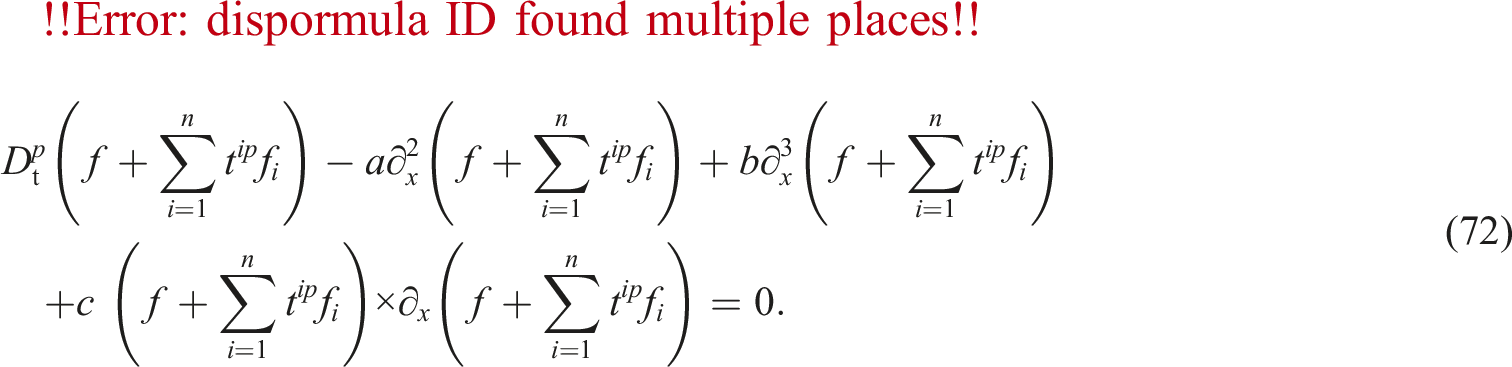
into the problem (18), yields Step (2) Using the definition of the Caputo/Jumarie derivative operator in equation (72) and collecting all terms corresponding to the same power of t
ip
∀ i = 0, 1, 2, 3, …, we get

with
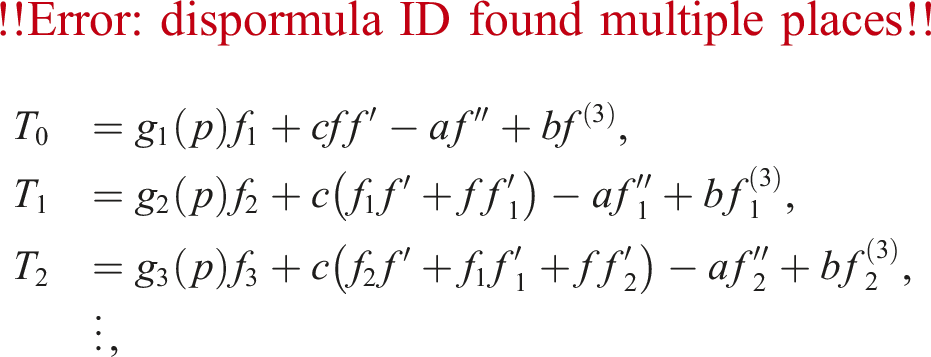
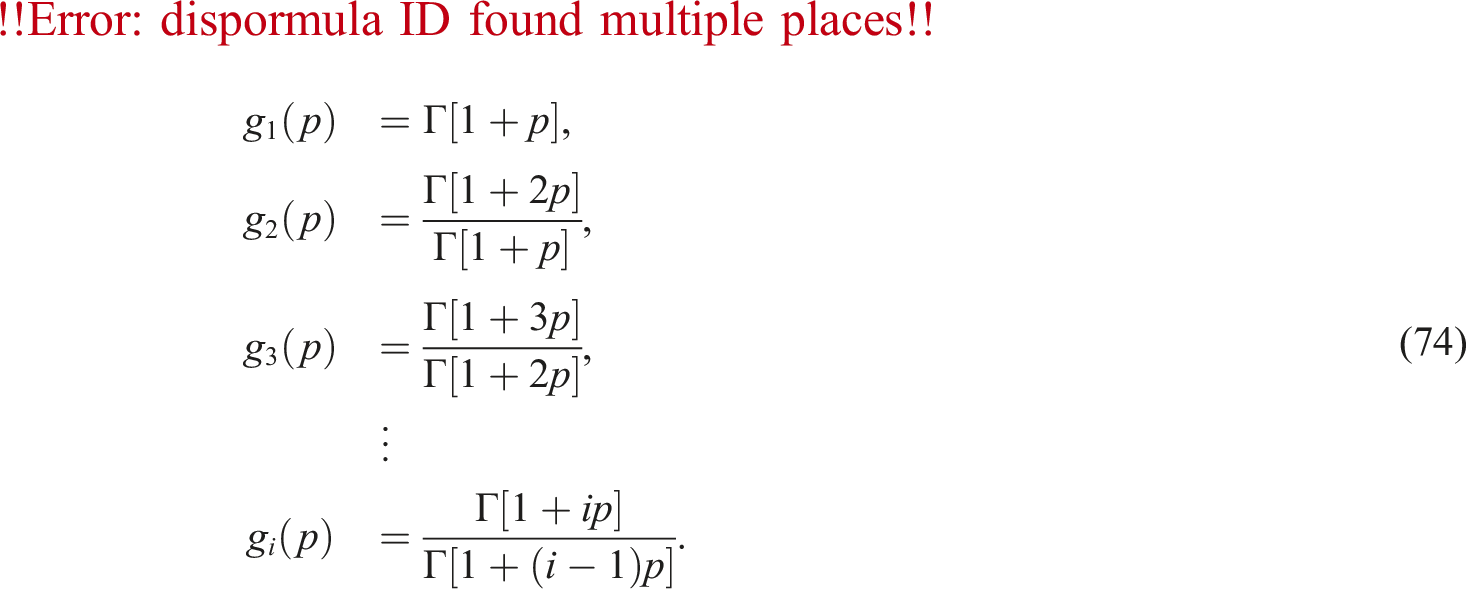
and the values of Step (3) By setting the coefficients T0, T1, T1, … to zero and solving them for f1, f2, f3, we ultimately obtain the implicit values of f
i
as functions of f Step (4) By substituting the value of the IC f




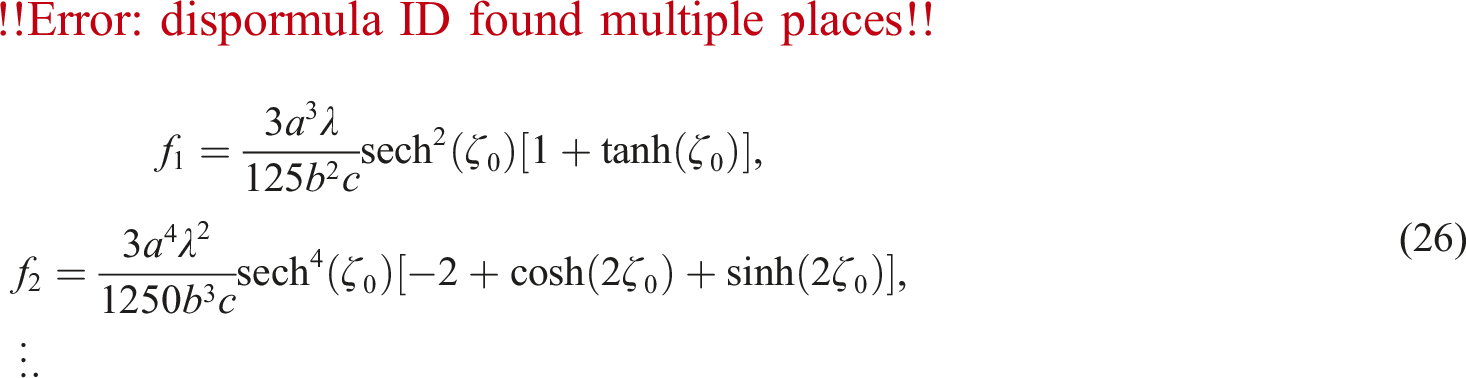
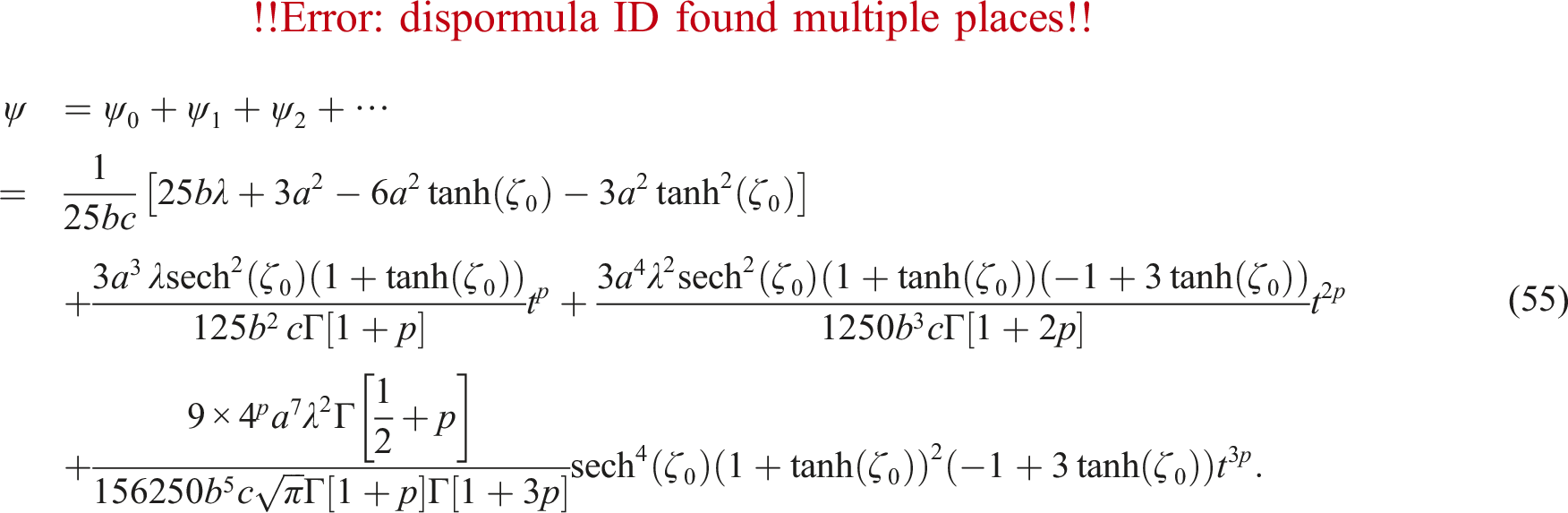
into the values of f1, f2, f3 given in equation (75) –(77), we get Step (5) By substituting the acquired values of f1, f2, f3, into Ansatz (71), we can get the approximate solution for example (1) until the third-order approximation as follows
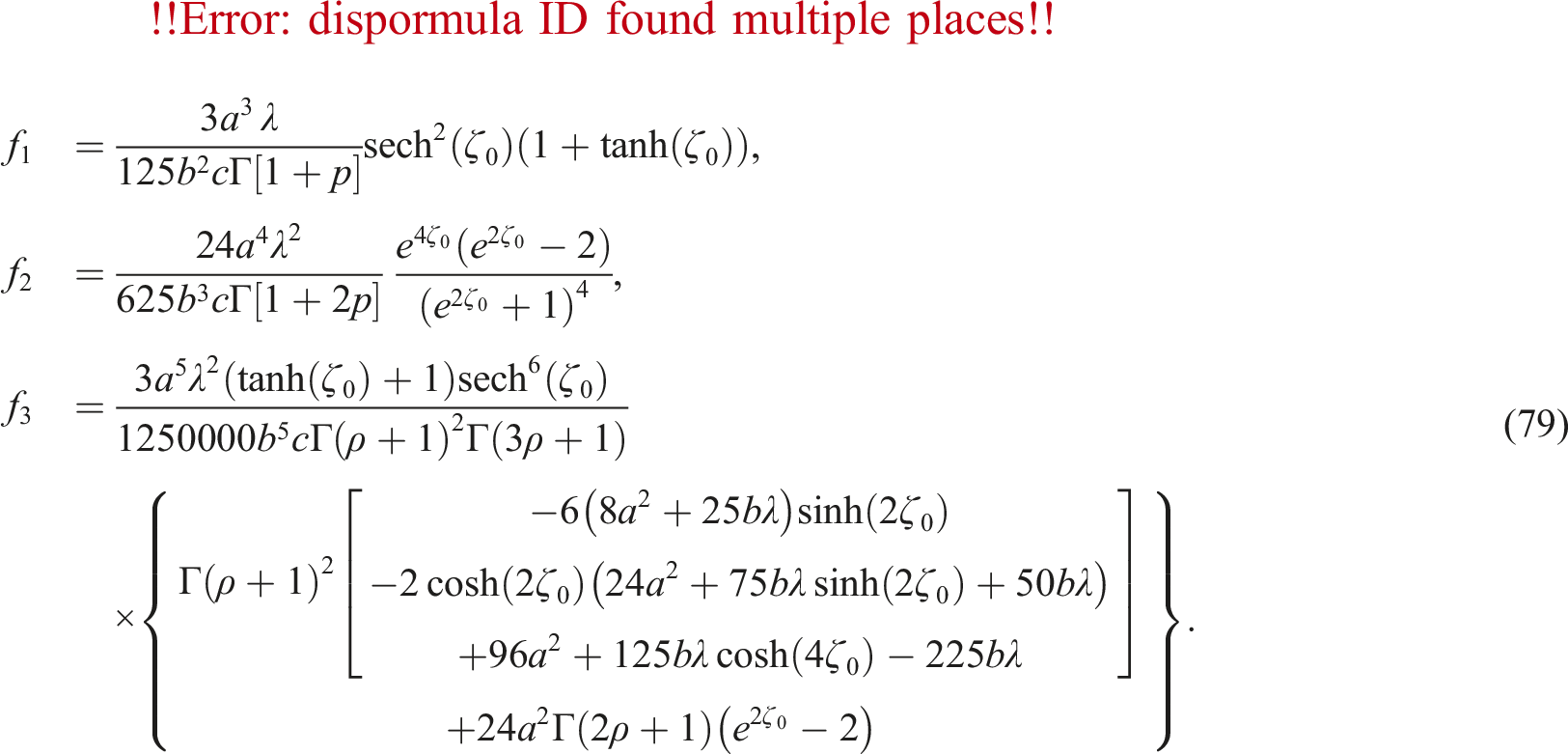
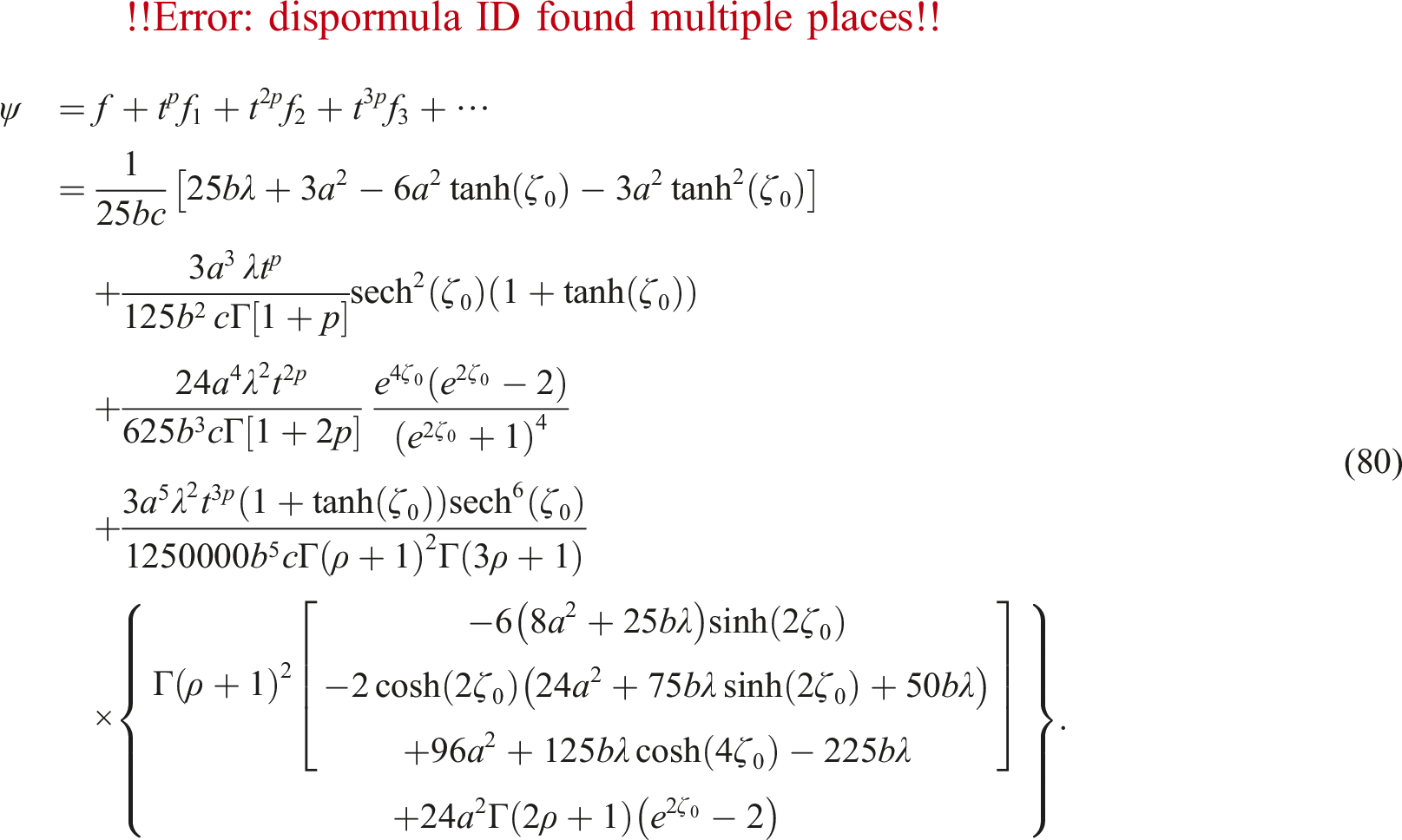
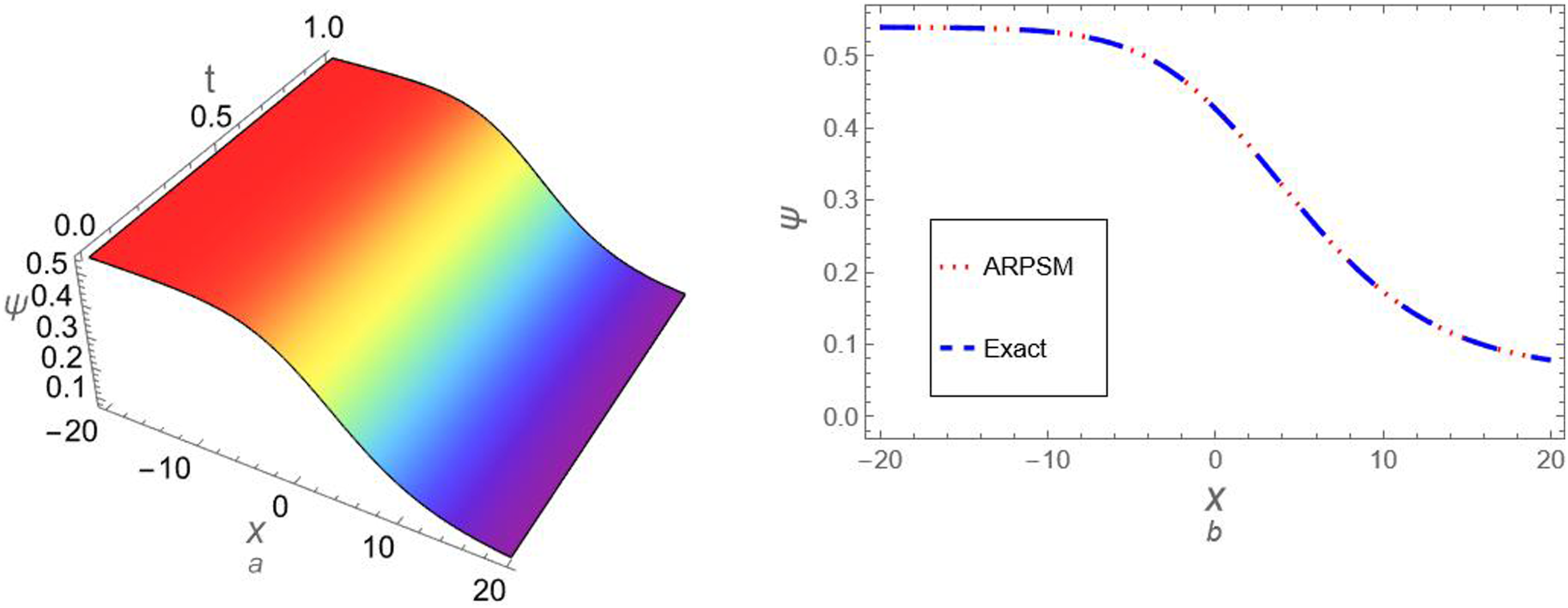
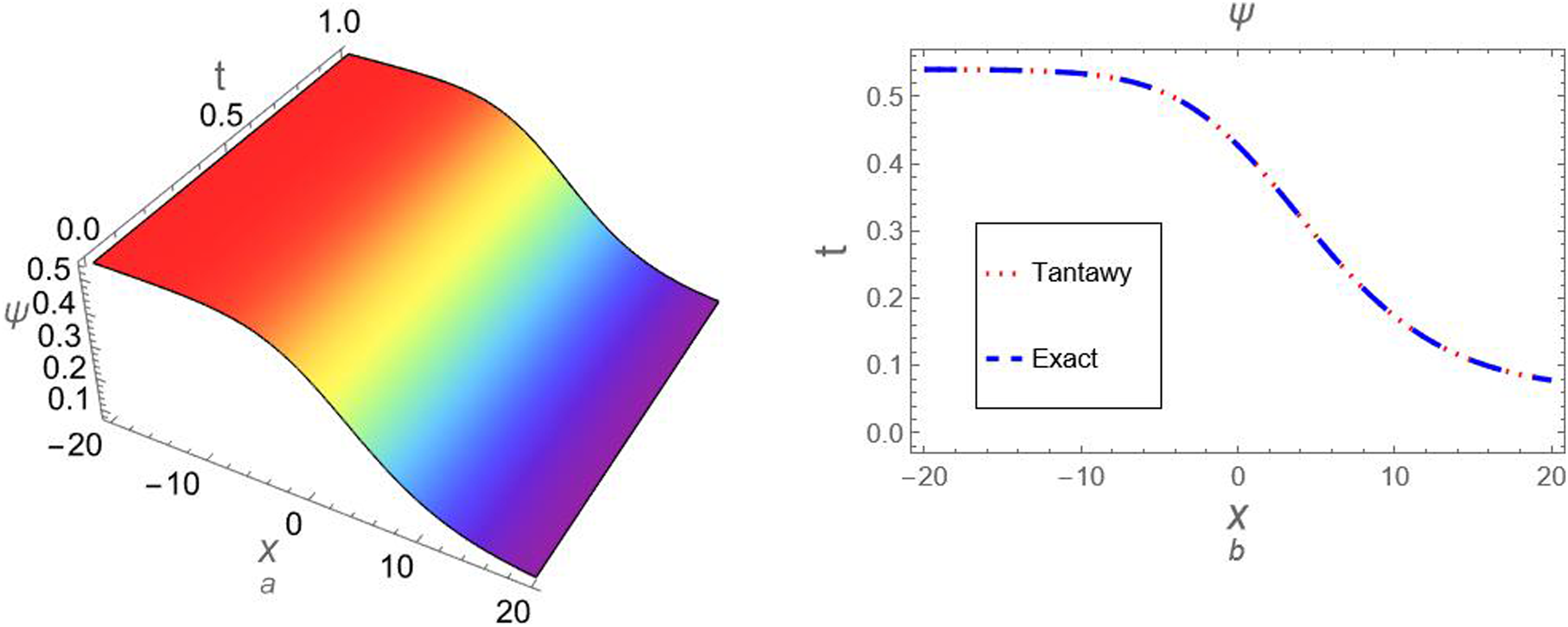
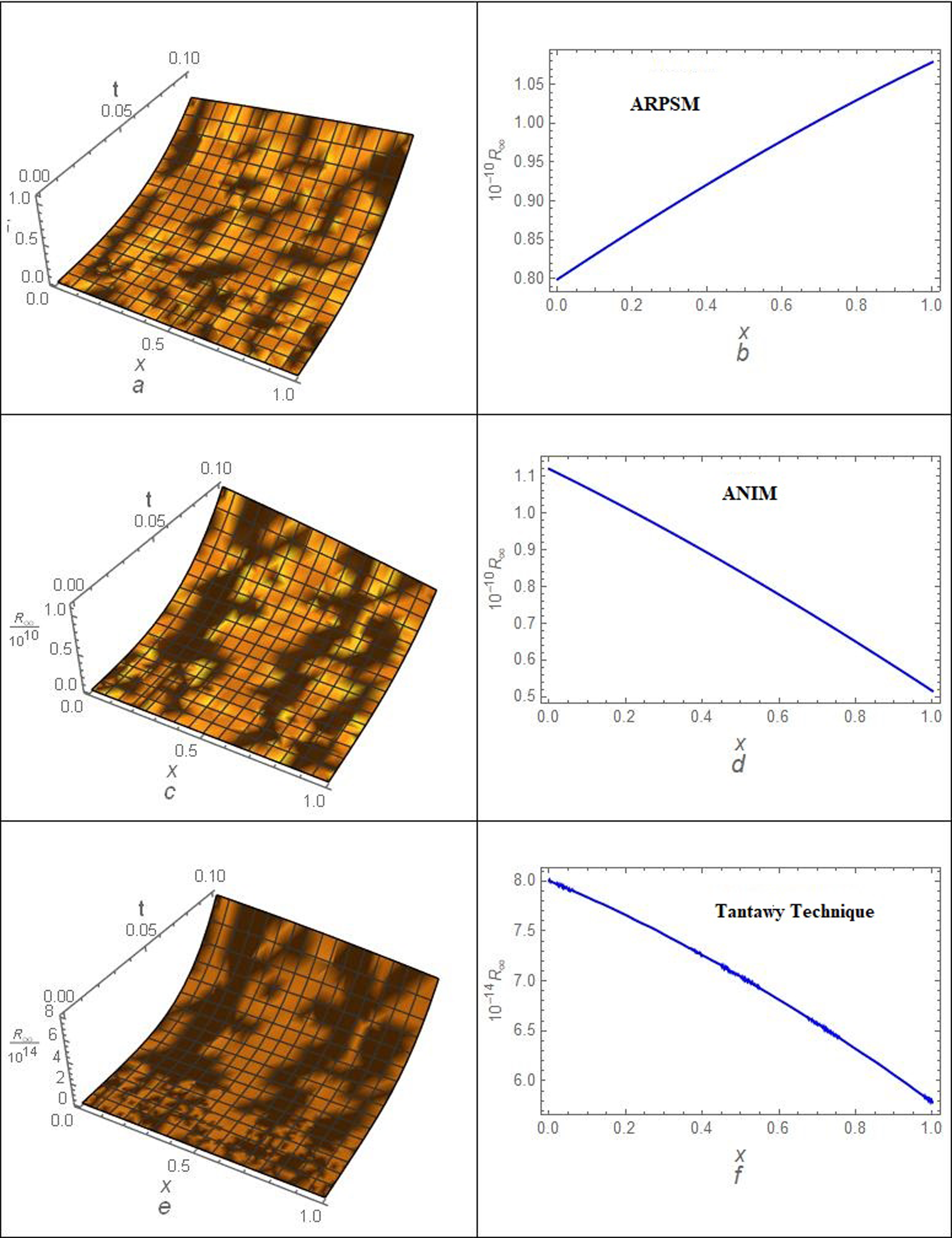
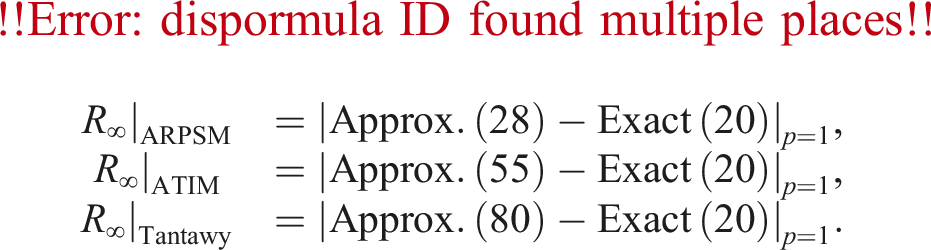
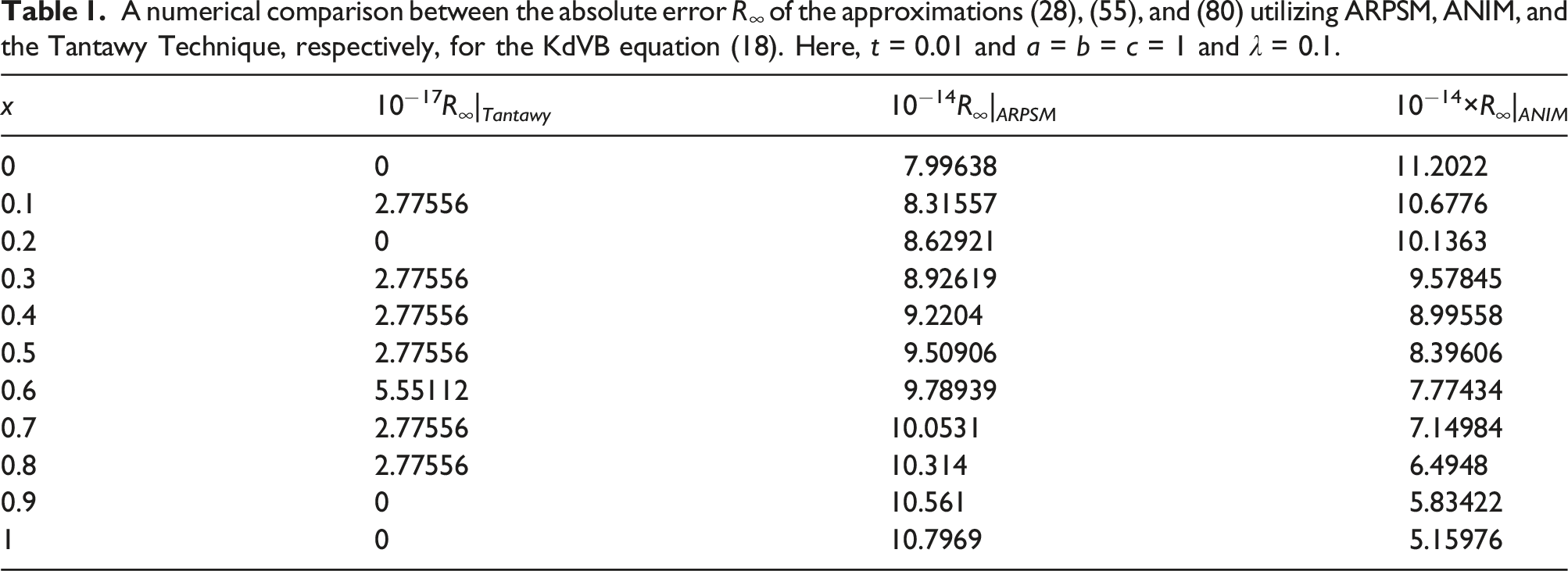
Figure 9 illustrates the approximation (80) employing the Tantawy Technique against p for the problem (1). Additionally, we compared the approximation (80) with the exact solution (20) for the problem (1) at p = 1, as seen in Figure 10. Furthermore, the absolute error R
∞
of the approximations (28), (55), and (80) using ARPSM, ATIM, and the Tantawy Technique are estimated, respectively, as illustrated in Figure 11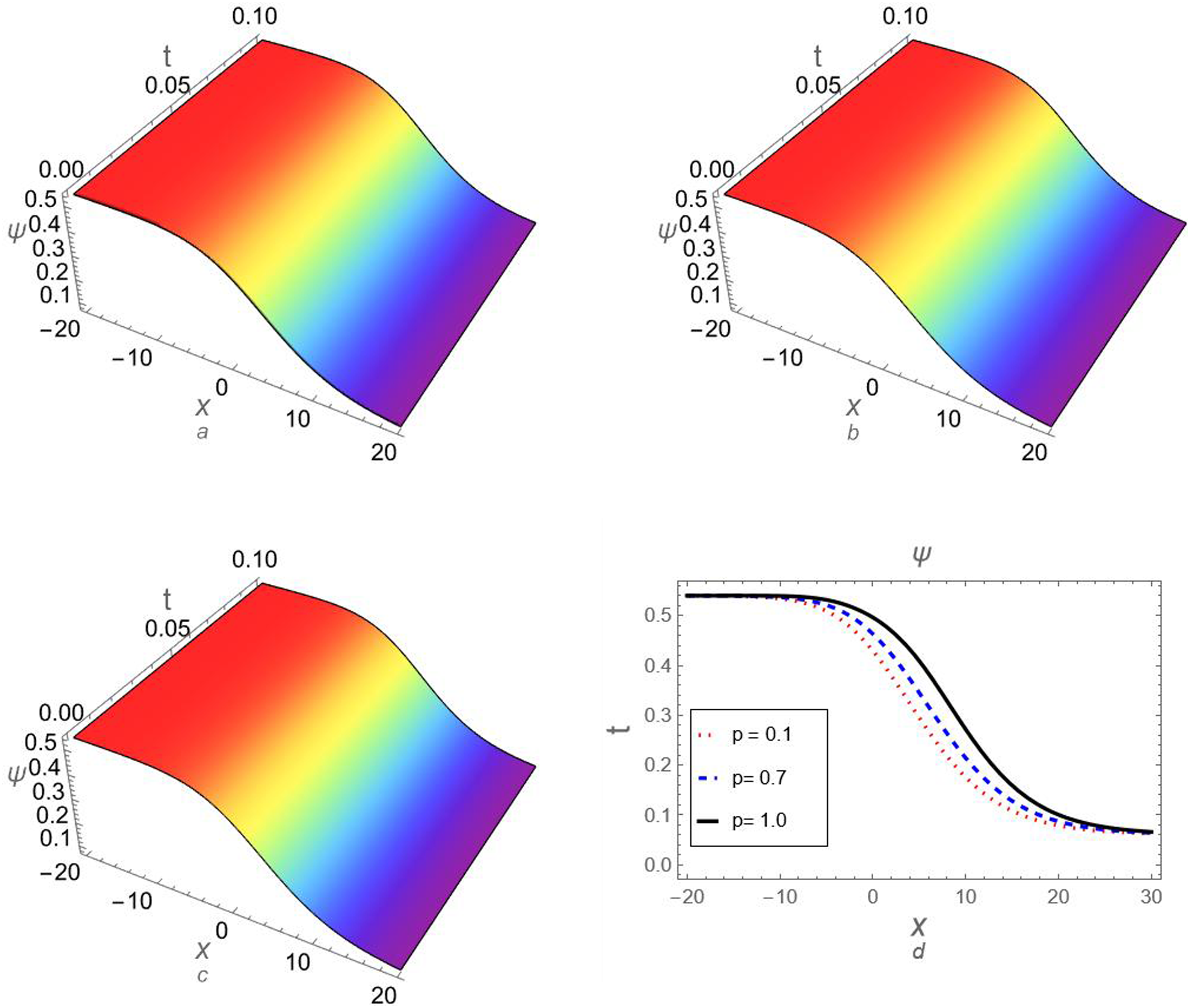
The “Tantawy Technique” for analyzing Burgers Equation
Here, we can summarize the main steps of the “Tantawy Technique” for analyzing example (2): Step (1) Inserting the Ansatz (65) up to nth-order

into the problem (30) Step (2) By using the definition of the Caputo/Jumarie derivative operator in equation (82) and collecting all terms of the same power of t
ip
∀ i = 0, 1, 2, 3, …, we get

with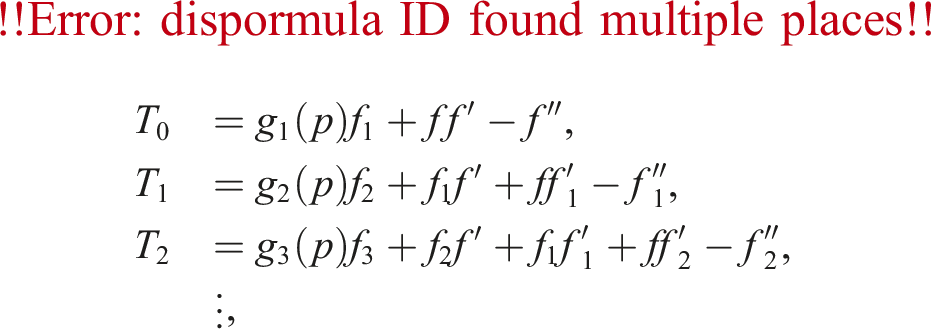
where the values of Step (3) Equating the coefficients T0, T1, T1, … to zero and solving them for f1, f2, f3, the following implicit values of f
i
as functions of f are obtained


and Step (4) Inserting the value of the IC f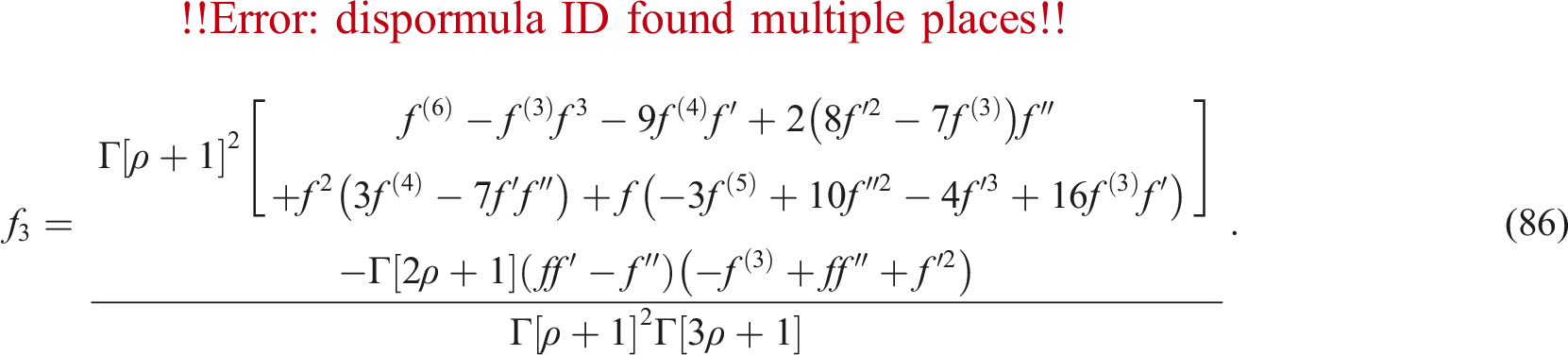

into the values of f1, f2, f3 given in equation (84)–(86), we get Step (5) By substituting the acquired values of f1, f2, f3, into Ansatz (71), we can get the approximate solution for example (2) until the third-order approximation as follows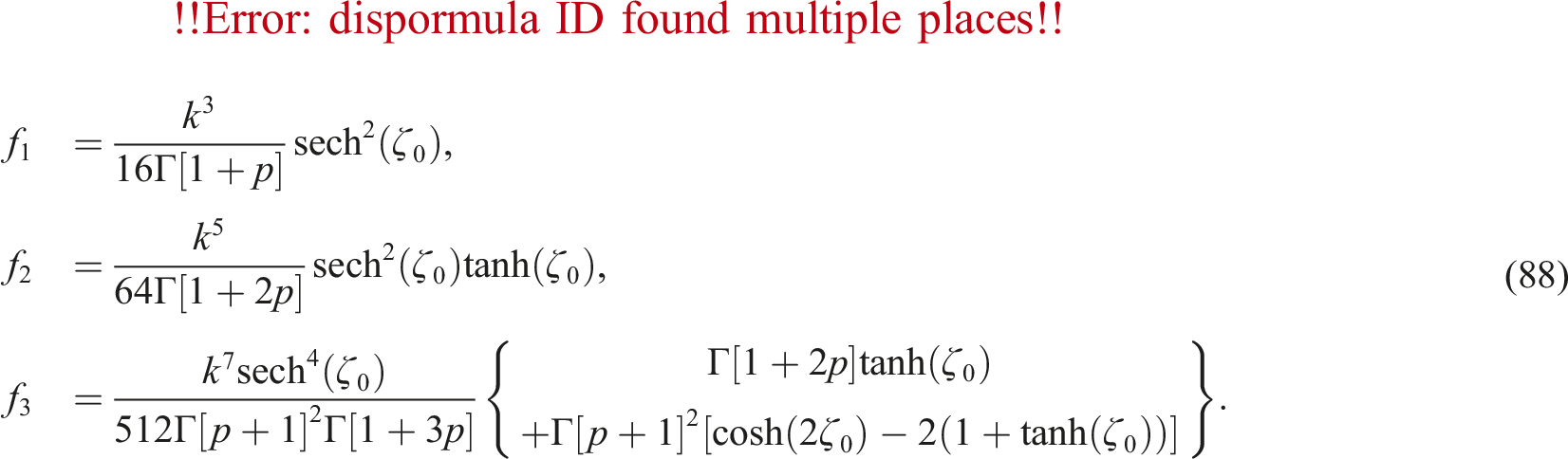
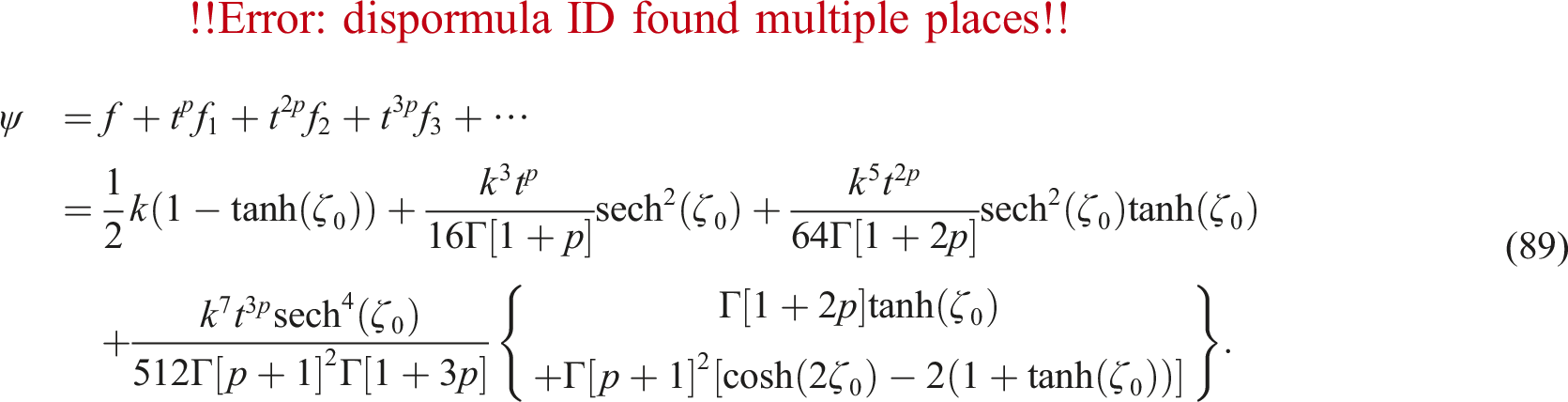
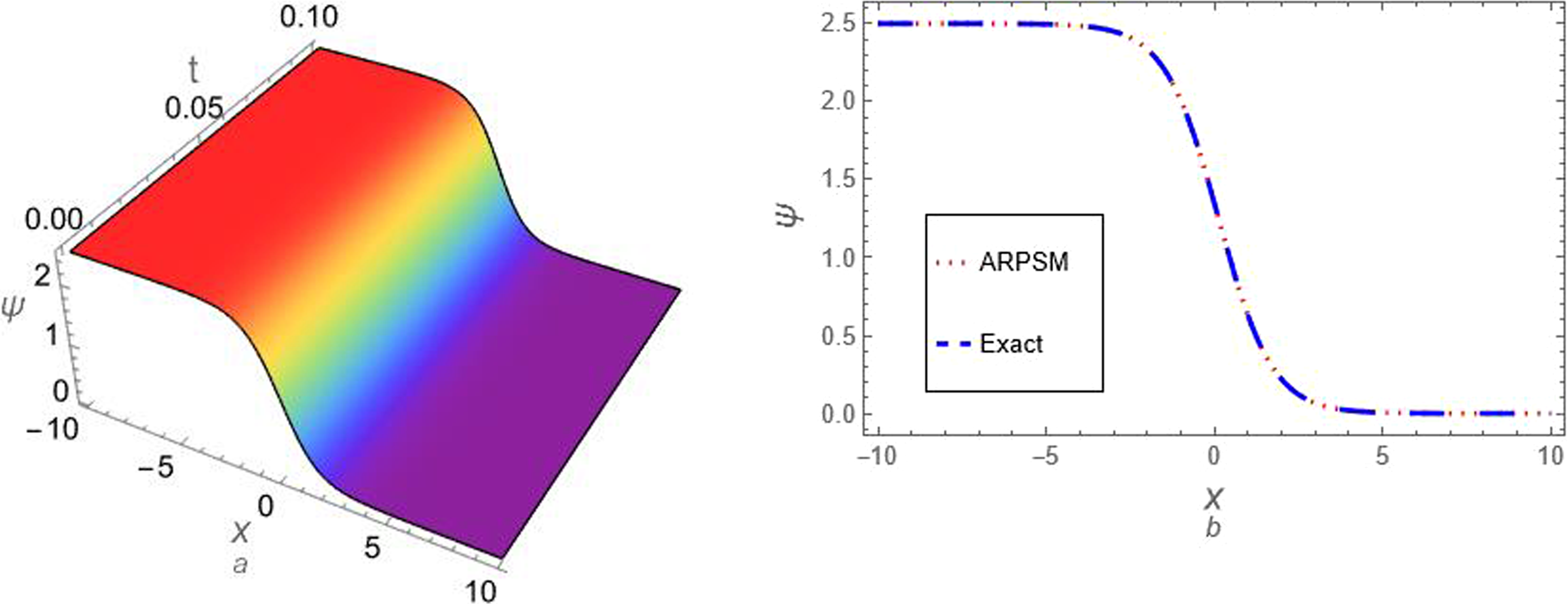
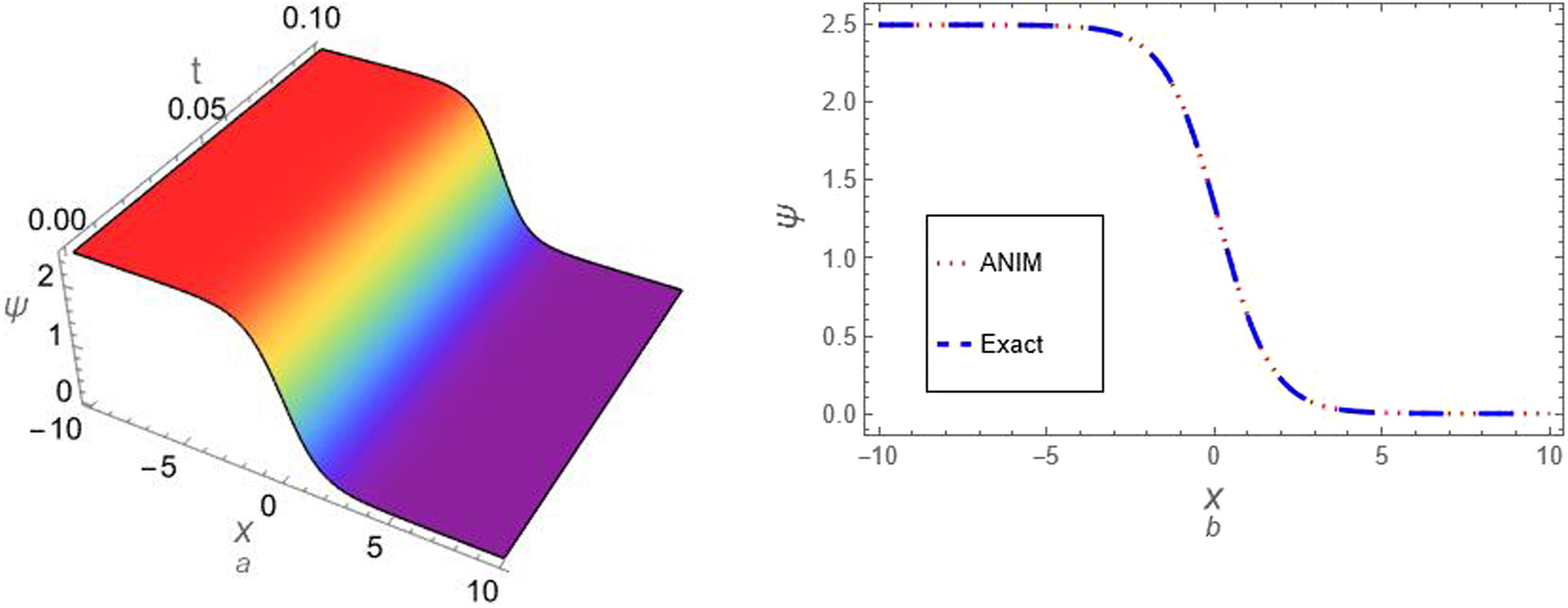
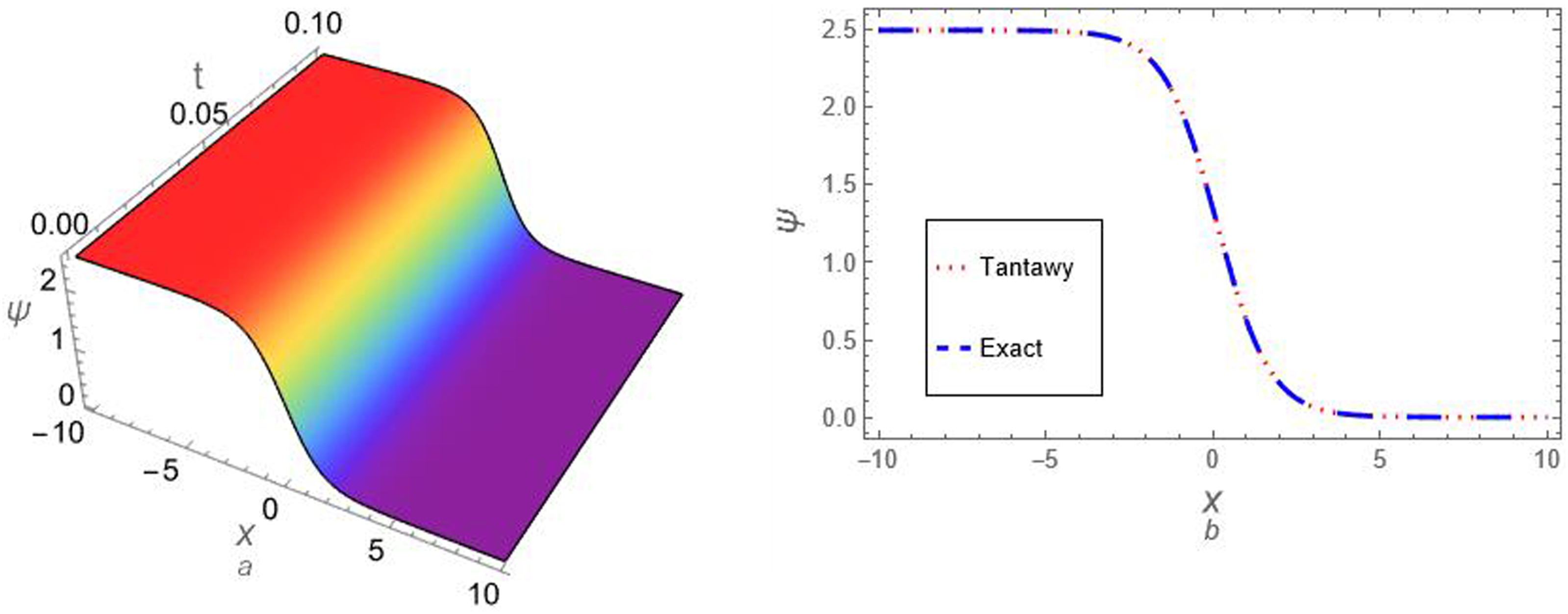
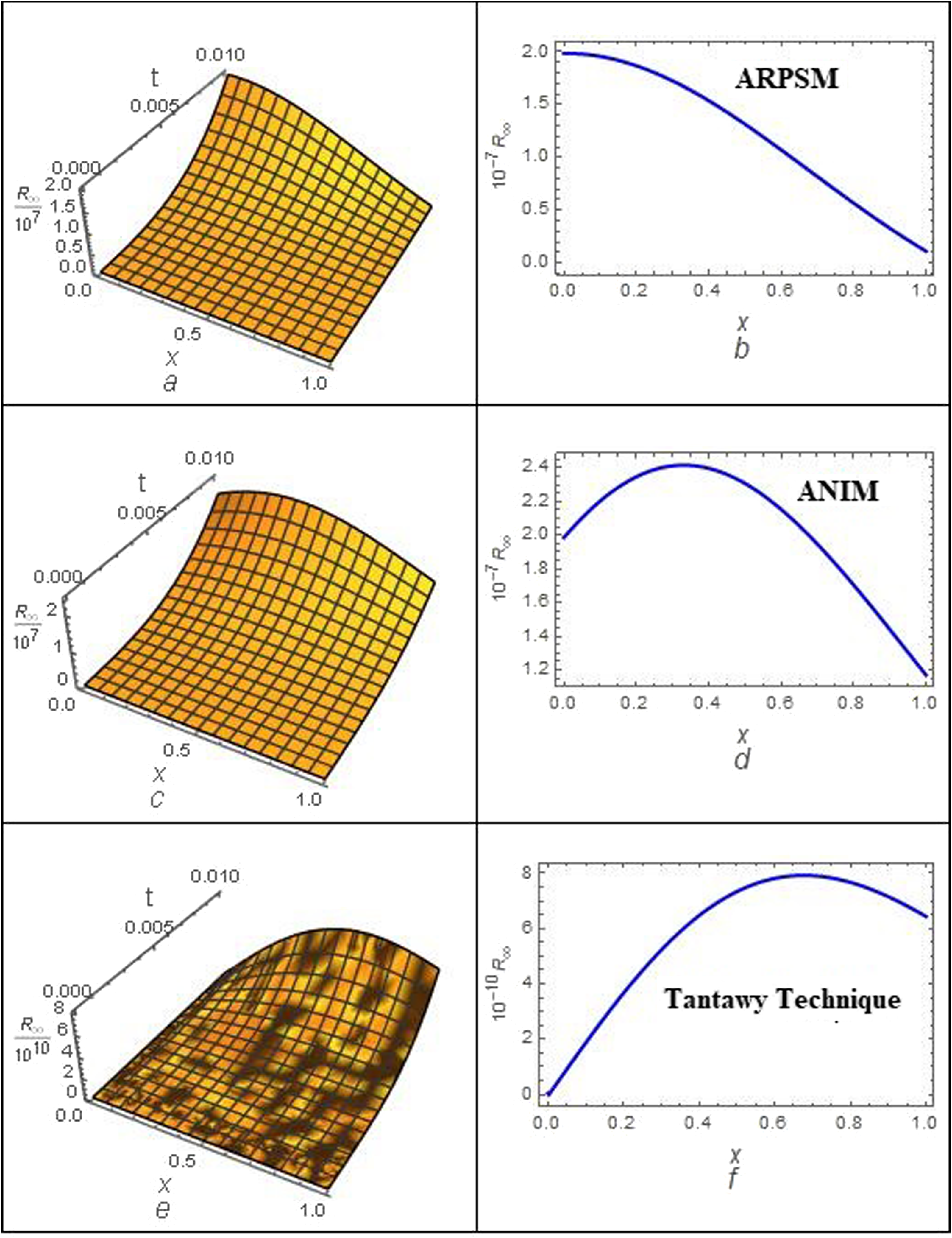
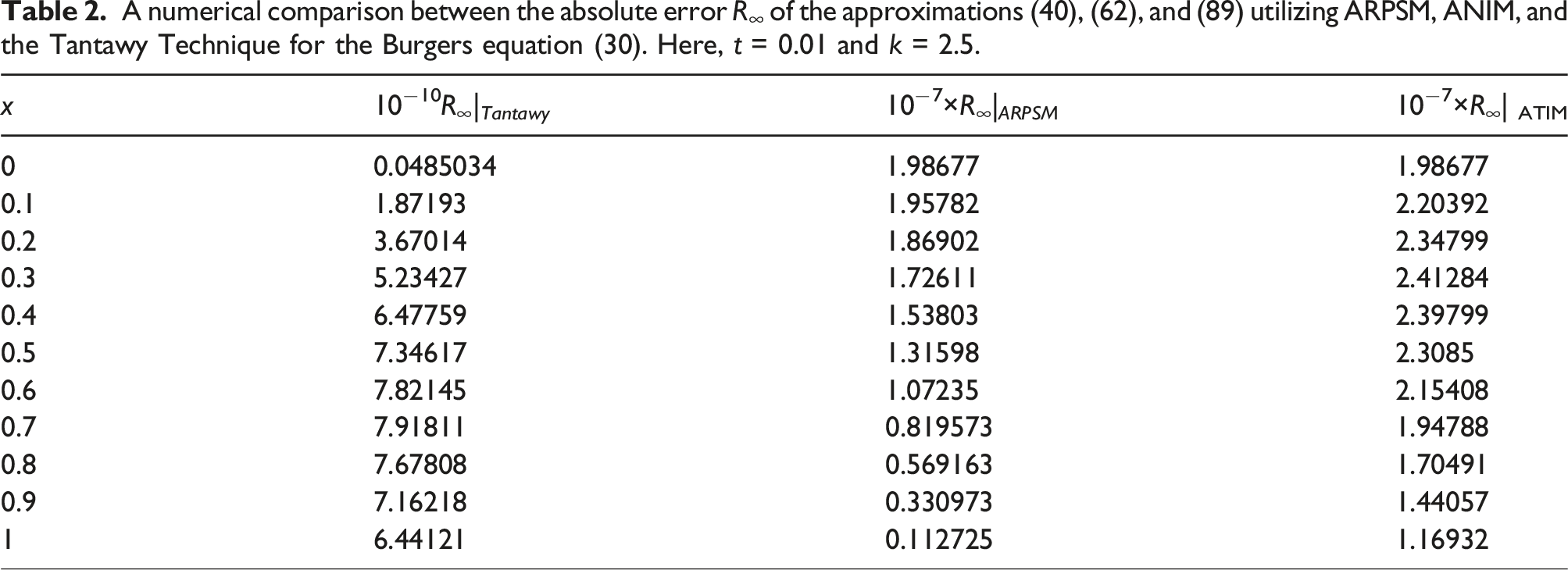
The approximation (89) of example (2) utilizing the “Tantawy Technique” is examined against the fractional parameter p, as illustrated in Figure 12. Furthermore, Figure 13 visually contrasts the approximation (89) with the exact solution (32) for the problem (2) at p = 1. Also, the absolute error of the approximations (40), (62), and (89) utilizing ARPSM, ATIM, and the Tantawy Technique are evaluated, respectively, as illustrated in Figure 3 A comparison between the approximation (89) using the Tantawy Technique and the exact solution (32): (a) 3D graphic in the 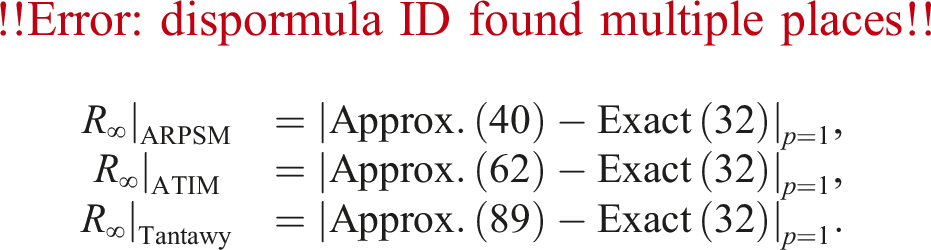
Summary and conclusion
In this study, Aboodh residual power series method (ARPSM), Aboodh new iteration method (ANIM), and the novel “Tantawy Technique” have been applied to analyze and solve the most common evolutionary equations in plasma physics and fluid mechanics, including the time fractional KdV-Burgers and Burgers equations. This class of evolutionary equations is used to describe the shock wave propagation that appears in viscosity plasma systems. 24 These approaches, in conjunction with the Caputo operator for managing fractional derivatives, have demonstrated their efficacy in delivering precise and efficient solutions. The two aforementioned evolutionary equations were analyzed using the proposed methods, and several approximate solutions were obtained until the second/or third-order approximation with high accuracy. We also analyzed these approximations graphically and numerically to verify their accuracy and the efficiency of the used methods. Moreover, we calculated and analyzed the absolute error of all derived approximations to also verify the accuracy of the derived approximations. Through the results we obtained, the accuracy and stability of the derived solutions were proven, which enhanced the efficiency of the methods used in analyzing many nonlinear and complicated fractional evolutionary equations. However, it was also found that ARPSM is more accurate than ANIM in analyzing fractional equations. However, the “Tantawy Technique” has shown impressive results despite its application simplicity and performance speed. As real applications for the current study, we used some different plasma models that were reduced from their fluid-governed equations to the fractional Burgers and KdV-Burgers equations. We implemented the two suggested approaches on this set of fractional partial differential equations (PDEs) to get analytical approximations that characterize the fractional shock waves propagating in various plasma systems. Furthermore, we investigated the impact of the fractional parameter on the characteristics of these waves to get insight into the dynamics of their propagation within the plasma medium.
In conclusion, our comprehensive analysis and numerical examples demonstrate that ARPSM and ATIM are robust tools for addressing the complexities of fractional PDEs. Nonetheless, implementing these methods may pose particular difficulties, particularly in complicated and strong nonlinearity problems. The “Tantawy Technique” surpasses all these procedures in terms of application simplicity, analytical speed, and result accuracy, notably superior to other techniques. We have validated the convergence and accuracy of these methods through detailed comparisons with known solutions, highlighting their potential for solving a wide range of fractional differential equations. These methods enhance the precision of the solutions and simplify the computational process, making them valuable for researchers and practitioners in various fields of science and engineering.
Future work: • In the coming works, the Tantawy technique can be compared with various alternative methods, including the homotopy perturbation method (HPM) with Mohand Transform,
71
HPM in the framework of two-scale transform,
72
He–Laplace method,
73
Laplace HPM,
74
and many others in analyzing and studying various fractional evolutionary equations. • The promising results demonstrated by the “Tantawy Technique” in analyzing the suggested problems indicate their applicability to the examination of various strong nonlinearity evolutionary wave equations in their fractional forms that govern the propagation of nonlinear waves across numerous physical and engineering systems, including plasma physics, optical fibers, and the propagation of water and fluid waves. For instance, the Tantawy Technique can be utilized for analyzing strong nonlinearity plasma wave equations in their fractional form, such as the KdV-type equations,75–80 the Kawahara-type equations81–83 the modified Kawahara-type equations,84–87 the Gardner Kawahara-type equations,88,89 the NLSE-type equations,90–94 and others various of evolutionary wave equations. Consequently, in forthcoming studies, plasma physics researchers may employ the “Tantawy Technique” to examine the influence of the fractional-order parameter on the dynamics of various nonlinear waves that arise and propagate in diverse plasma systems.
Footnotes
Acknowledgments
The authors extend their appreciation to the Deanship of Scientific Research and Libraries in Princess Nourah bint Abdulrahman University for funding this research work through the Research Group project, Grant No. (RG-1445-0005).
Author’s Note
A sole inventor of the “Tantawy Technique”: Samir A El-Tantawy.
Authors Contributions
All authors contributed equally and approved the final version of the current manuscript.
Declaration of conflicting interests
The author(s) declared no potential conflicts of interest with respect to the research, authorship, and/or publication of this article.
Funding
The author(s) disclosed receipt of the following financial support for the research, authorship, and/or publication of this article: The authors extend their appreciation to the Deanship of Scientific Research and Libraries in Princess Nourah bint Abdulrahman University for funding this research work through the Research Group project, Grant No. (RG-1445-0005).
Use of artificial intelligence (AI) tools declaration
The authors declare they have not used AI tools in the creation of this article.
