




Abstract
Leaf springs play a vital role in heavy-duty vehicles by offering substantial load support, durability, and convenient maintenance. Lightweight leaf springs enhance vehicle performance, offering benefits like improved fuel efficiency and a smoother ride. Glass fiber reinforced composites enhance fuel efficiency and durability, providing corrosion resistance. Their design flexibility improves ride comfort, and damping properties enhance vehicle stability. The examination conducted through finite element analysis, utilizing ANSYS software, demonstrated a substantial 75.32% decrease in weight for the E-Glass-Epoxy composite leaf spring (GECLS), affirming its efficacy in enhancing strength, reducing weight, and enhancing stiffness. This underscores its superiority as a viable alternative to traditional steel leaf springs (SLS) in vehicular applications. The mono-GECLS exhibited a natural frequency that was found to be 1.9 times higher than that observed in the traditional SLS. It indicates the potential to mitigate resonance issues. After analysing the SLS and GECLS using ANSYS, it was observed that the GECLS exhibits greater values in deflection, natural frequency, and strain energy, measuring 4.659 mm, 29.98 Hz, and 440.68 mJ, respectively, compared to its steel counterpart. Conversely, the SLS demonstrates elevated values in stress, mass, and density, with readings of 283.84 MPa, 3.7695 kg, and 5920 kg/m³, respectively.
Keywords
Introduction
Leaf springs are crucial for heavy-duty vehicles like trucks, providing robust load support and capacity. Their simple design ensures durability and reliability with minimal maintenance, making them cost-effective for manufacturing and upkeep. Leaf springs excel in stability, control, and off-road performance, ideal for challenging terrains and heavy loads. Additionally, their modular design allows for easy maintenance, as individual springs can be replaced without overhauling the entire suspension system. Despite newer suspension technologies, leaf springs remain valued for their practicality and effectiveness in vehicles requiring durability, load-carrying capacity, and straightforward maintenance.
Conventional leaf springs, often made of multiple steel leaves, suffer from drawbacks in material properties. Their weight reduces specific modulus and strength, while assembly increases product weight. Compared to composites, steel leaf springs have lower corrosion resistance and damping capacity, limiting their ability to address vibrations and shocks. High carbon steel is commonly used for cost-effectiveness, despite potential corrosion issues. Alloy steel, with elements like chromium and vanadium, can increase manufacturing costs. Metallic leaf springs, including stainless steel, face challenges like weight affecting fuel efficiency and limited flexibility impacting ride comfort. The automotive industry explores composites as potential solutions, selecting materials based on specific applications. 1 These materials consist of carbon steels classified under the SAE system, and they undergo an initial pre-stressing process to improve the load-carrying capacity of the springs. 2 In automotive and railroad springs, materials like 50Cr1 and 55Si2Mn90 are hardened and tempered. C55 and 40Si2Mn90 are water-hardened for resilience, while C75 and 55Si2Mn90 are oil-hardened for strength and wear resistance. 3
In contemporary automotive development, a key focus is on minimizing weight to conserve natural resources and enhance energy efficiency. This goal can be accomplished by incorporating advanced materials, optimizing design, and improving fabrication processes to achieve weight reduction in vehicles. 4 The leaf spring in the suspension system represents a prospective component for reducing the weight of automobiles. The reduction in weight can be primarily attained through the implementation of superior materials, optimizing the design, and employing more advanced manufacturing processes. These measures contribute to the development of vehicles with enhanced riding characteristics. 5 Integration of lightweight leaf springs signifies a harmonious balance between performance, efficiency, and environmental considerations in contemporary vehicle design. Leaf spring represents 10 to 20 % of the vehicle’s unsprung-weight, and reducing this weight can enhance ride quality and fuel efficiency. Adoption of fiber reinforced plastic in leaf springs enables the replacement of traditional multi-leaf steel springs with a single composite leaf, resulting in a substantial weight reduction of approximately 80 to 90 %.6–12 Lightweight leaf springs are vital for vehicle performance and efficiency, enhancing fuel efficiency and handling. Reduced weight improves responsiveness, agility, and manoeuvrability, ensuring a smoother ride on uneven surfaces. It also enhances braking performance, reducing carbon emissions and aligning with sustainable automotive technologies. Sheharyar et.al study shows significant stress and deflection reductions in lightweight leaf springs, maintaining permissible stresses and elevating strain energy. 13
Polymer composites are crucial in leaf spring fabrication, offering lightweight design for improved fuel efficiency and vehicle performance. Their corrosion resistance extends service life, requiring less maintenance, especially in harsh conditions. 14 Manufacturers customize composite materials for specific performance, optimizing leaf springs for strength and flexibility, enhancing ride comfort and handling. Polymer composites absorb vibrations, enhancing vehicle stability and smoothness. Their adoption in leaf spring construction offers various benefits, making them valuable in the automotive industry. Ehab et al. examined static and dynamic properties of CFRPC-CLSs, demonstrating advantages such as superior strength-to-weight ratio and increased natural frequencies, reducing resonance risk. 15 Mayur et. al’s work revealed a weight difference of 67.70% between the EN 46 leaf spring and the GFRP leaf spring. Their work also highlighted percentage differences, indicating 3.93% for deflection, 4.06% for stiffness, 3.94% for absorbed energy, and 5.25% for natural frequency. These differences are deemed satisfactory. 16 Suresh et. al developed a hybrid composite with jute, E-glass, and epoxy resin, showing superior elastic strain energy storage for comfort. Substituting it for conventional SLS can cut weight by 55%, reducing fuel consumption. 17 Krishnamurthy et. al found CFRPC with minimal deformation compared to steel, making carbon fiber the preferred choice for leaf springs. 18 The mono-CLS, with its lightweight laminate structure, offers enhanced vehicle efficiency and reduced fuel consumption. It boasts high damping capacity, minimal vibration and noise, and commendable corrosion resistance, making it ideal for durable, efficient, and environmentally friendly applications.
Different polymer composites are utilized in automotive components like leaf springs, clutches, and brakes. Selection depends on specific requirements such as strength, weight, and cost. Glass fiber reinforced polymer composites offer lightweight, corrosion-resistant solutions, while CFRPCs provide exceptional strength and stiffness. Kevlar-reinforced polymers are durable and impact-resistant. Natural fiber reinforced polymers offer an eco-friendly alternative, while nanocomposites enhance mechanical properties. Epoxy resin composites, polyurethanes, and others are chosen for adhesion, chemical resistance, and flexibility. Manufacturers tailor materials to meet performance needs, increasing thickness of composite leaf springs for steel-like strength, reducing weight and cost. 19 They offer advantages over CFRPC. GFRP is economical, balancing strength and weight for enhanced fuel efficiency. Its commendable corrosion resistance ensures durability. While CFRPC offers superior strength and stiffness, GFRP is practical in budget-conscious applications. Using glass-epoxy (G-Ep) layers creates a composite multi-leaf spring matching SLS dimensions. Material selection and dimensions are crucial, with fiberglass-reinforced epoxy enhancing effectiveness, enduring heavy loads without failure. 20 Examination of the G-Ep mono-leaf spring revealed significant variations in weight, fatigue, stress, and deflection weight when comparing the CLS and SLS. Additionally, it attains an elevated safety factor. While the composite leaf’s natural frequency is lower than the existing one, it remains above 12 Hz (road frequency), ensuring comfort, and effectively mitigates resonance. 21 Glass fibers, with lower strength and rigidity than carbon fibers but greater density, offer an economical blend of properties. S2 glass surpasses E glass in mechanical qualities, yet ongoing research favors glass fibers as reinforcement. 22
Scientists have demonstrated the efficacy of substituting conventional leaf springs with FRP, emphasizing benefits like weight reduction and cost efficiency. However, limited attention has been given to studying its vibration characteristics. Current study intends to explore the vibration response of a CLS under road-induced excitation. Vibration is a common cause of leaf spring fatigue failure, making it crucial to assess the maximum stresses and deflection resulting from these vibrations.
Materials and methodology
The methodology comprises two categories: the first involves design and fabrication of CLS, while second entails examining and comparing the fabricated CLS with conventional SLS. The second part incorporates theoretical calculations, modeling, and analysis using ANSYS.
Materials employed include E-glass fabrics woven, with a weight of 600 g/m2 and fiber diameters varying between 10 and 13 µm. LY556 epoxy resin and HY951 hardener are used in the present work. For fabrication, the resin and the hardener are mixed at a weight ratio of 10:1 at room temperature.
For the design of conventional SLS, a frequently employed leaf spring of Tata Ace with the semi-elliptical shape, with three graduated leaves is used. These leaves are initially provided with a curvature or camber of 90 mm, causing them to tend toward straightening when subjected to a load. Material properties, often quantitative and intensive, aid in comparing. In case of SLS, it exhibits isotropic properties, remaining constant irrespective of the measurement direction. For comparative analysis, the attributes of 65Si7 steel are taken into account, encompassing material properties such as a Young’s modulus (E) of 2.1 × 10⁵ MPa, a Poisson’s ratio (υ) of 0.266, an ultimate tensile strength of 1272 MPa, a tensile yield strength of 1158 MPa, and a density (ρ) of 7.86 × 10⁻⁶ Kg/mm³.
Hand layup method is employed to fabricate the CLS. 50 volume percent of each reinforcement and the resin is used in the present work. The fabrication process started with the preparation of a wooden mold, carefully tailored to with length of 860 mm, width 60 mm, and a thickness of 8 mm dimensions. 23 Then manually laying the cut glass fabric onto a prepared mold, each layer impregnated with an epoxy resin mixture. Using a roller to eliminate air bubbles, this procedure is iterated until the preferred thickness is achieved. After 24 h of curing, the composite is demolded and trimmed for the final product.
As composite materials exhibit orthotropic properties, acquiring their material characteristics involves several procedural steps. Autodesk Simulation Composite Design software is utilized to obtain these properties. Initially, choose the fiber and matrix type for the woven composite and input the desired values. The software then computes the remaining parameters based on predefined fiber and matrix volume fractions. The volume to weight conversion using the software is depicted in Figure 1(a). Next, open fabric builder, select the woven fiber, and proceed with a 0/90 plain weave, as shown in Figure 1(b) and (c). Consider the glass fabric’s longitudinal and transverse directions as warp and weft, respectively. Determine the fiber volume percentage, choosing E-glass fiber and LY556 epoxy resin. Input the fiber weight percentage and void percentage to determine fabric thickness, as illustrated in Figure 1(d) and (e). Lamina thickness is automatically calculated as shown in Figure 1(f) after proceeding to the next step in Figure 1(e). With a spring thickness of 24mm, dividing by 0.542622 yields 45, indicating the number of required plies for stacking. Utilize the “repeat” and “symmetric” options to generate 45 layers. Calculated 2D and 3D properties of the woven laminate are depicted in Figure 1(g). (a) Volume to weight conversion, (b) selection of woven fiber, (c) selection of fiber orientation, (d) weft and warp percentage, (e) user defined lamina, (f) thickness of lamina, and (g) calculated laminate properties.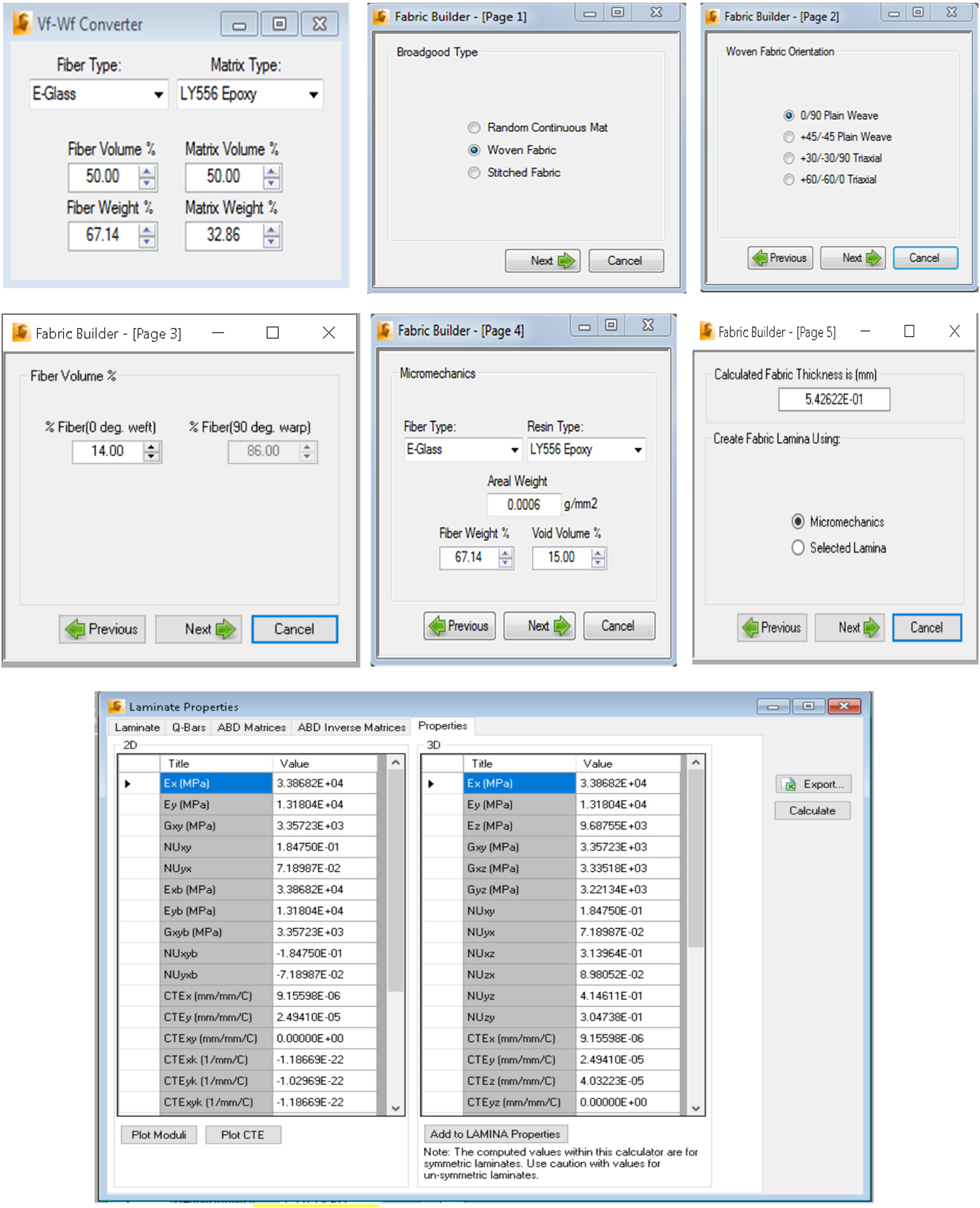
Design and calculations
Multi-leaf and mono-leaf springs are distinct vehicle suspension systems. Multi-leaf springs, with progressively stacked thin leaves, offer flexible, progressive spring rates for heavy-duty use, like trucks. In contrast, mono-leaf springs feature a single, thicker leaf for a stiffer, consistently rated suspension, ideal for predictable ride quality and weight savings. The choice depends on factors like intended use, load capacity, and desired ride characteristics, with multi-leaf for heavy-duty and mono-leaf for simplicity and reduced weight. In leaf springs, vibration results from oscillatory movement due to external forces like uneven roads or dynamic vehicle manoeuvres. Sources include road irregularities causing forces and vehicle dynamics during acceleration, braking, and steering. Resonance, aligning excitation frequency with natural frequency, can amplify vibrations. Understanding leaf spring vibration is vital for assessing fatigue resistance, as prolonged vibrational loading can lead to failure. Engineers must optimize designs for durability and performance in various operating conditions.
Specific design data
The design of the leaf spring is as shown in Figure 2. The leaf spring assembly parameters are as follows: each leaf has a length of 860 mm and a width of 60 mm. Three leaves are utilized in total, with each leaf featuring a camber of 75 mm and a thickness of 8 mm. In total, the assembly can withstand a maximum load of 4168 N. These parameters collectively determine the structural characteristics and load-bearing capacity of the leaf spring assembly, crucial factors in its performance and functionality within various mechanical systems. Designed leaf spring.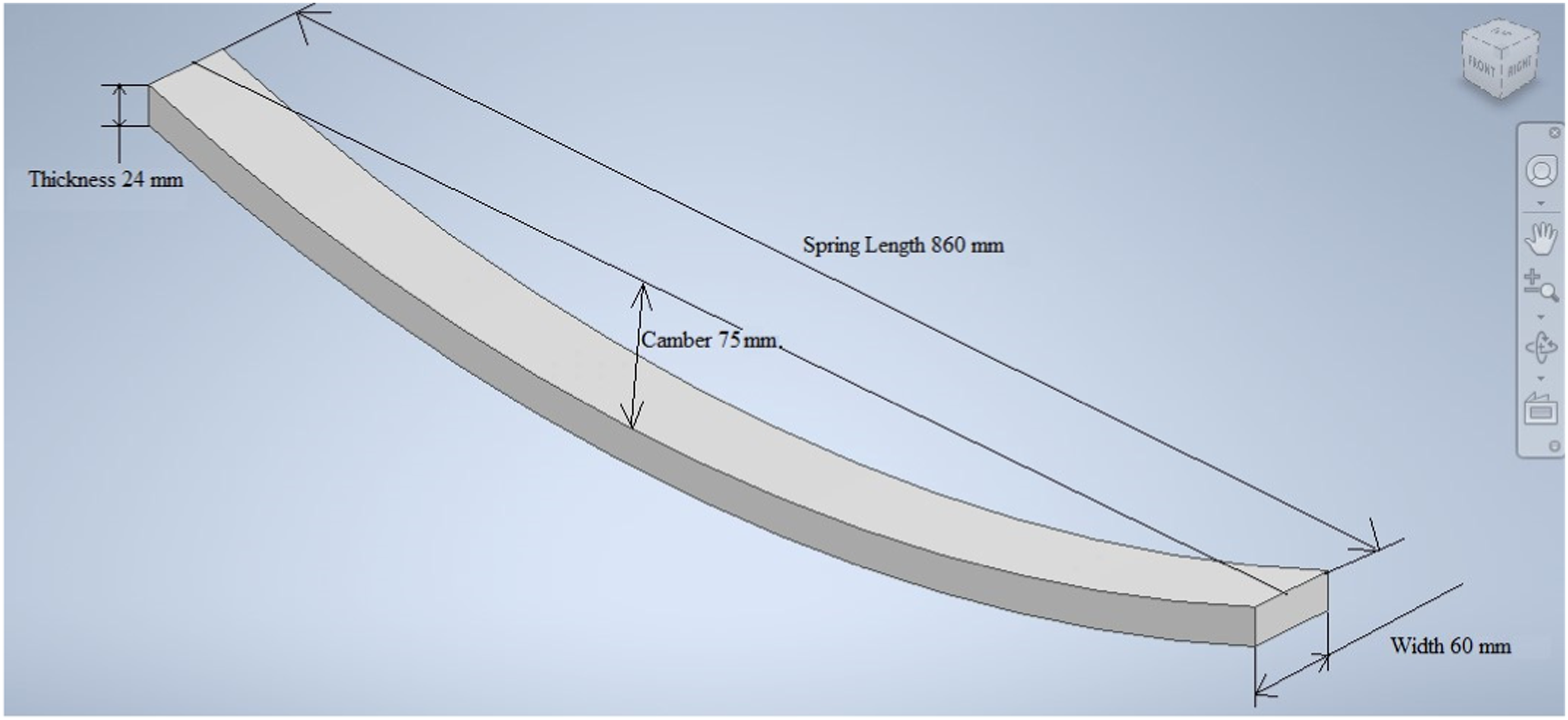
The design of prototypes for the traditional SLS, mono-GECLS, and wooden mold is created using NX software and shown in Figure 3(a), (b) and (c) which shows design of SLS, design of mold, and design of mono-GECLS, respectively. (a) SLS design, (b) mold design, and (c) mono-GECLS design.
The weight and approximate dimensions of the four-wheeler “TATA ACE”, light commercial vehicle has been considered for the calculations.
Vehicle mass = 700 kg
Maximum load capacity = 1000 kg
Overall mass = 1700 kg
Factor of safety (FOS) = 2
Acceleration (g) = 9.81 m/s2
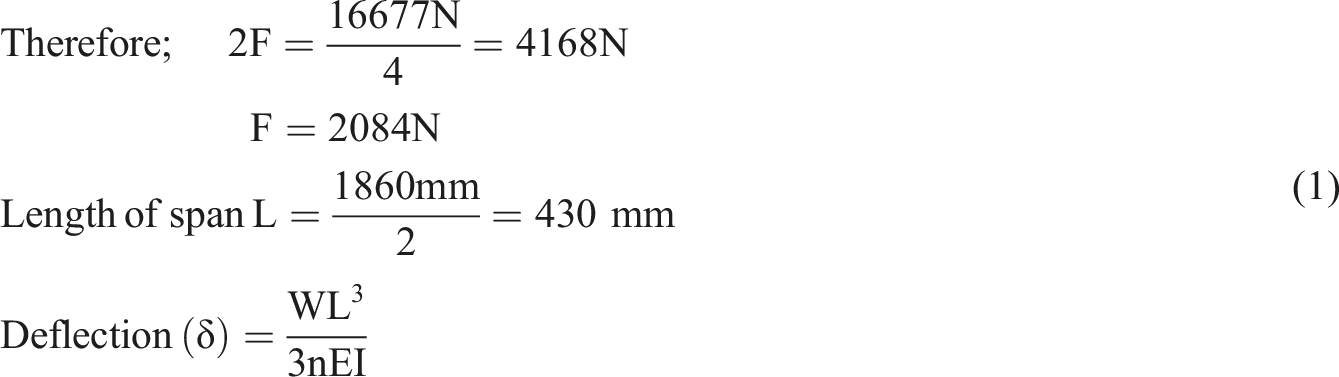
Overall weight = 1700 × 9.81 = 16677N
As the vehicle is equipped with four wheels, each leaf spring associated with a wheel bears one-fourth of the total weight

=
Composite spring design
The calculation of the mono-GECLS thickness involves the application of equations (3) and (5), assuming equivalence in stiffness between the composite leaf and the conventional leaf spring for consistent ride quality and performance. Autodesk® Simulation Composite Design 2014 is employed to determine the properties of various composite laminates. This software integrates a comprehensive material database with values derived from ASTM standard, aiding in the selection of commercially available fibers, matrices, and laminas for the mono-GECLS. The use of this software streamlines the decision-making process, ensuring optimal composition, and performance of the composite materials






Result and discussions
Experiment
Various tools and equipment are available for measuring vibrations in engineering applications such as accelerometers, laser vibrometers, strain gauges, displacement transducers, vibration meters, piezoelectric sensors, FFT analyzers, fast fourier transform analyzers, modal analysis systems, and data acquisition systems.
The choice of equipment is contingent upon the particular demands of the vibration measurement assignment, encompassing factors such as the nature of the structure, the desired frequency range, and the level of measurement accuracy required. Data acquisition techniques for mono-GECLS vibration measurement involve precise sensor selection, calibration, and optimization of sampling rates to capture relevant frequency components without aliasing. Real-time monitoring, modal analysis, and frequency response function measurements offer insights, while signal processing techniques extract crucial information. Storage, archiving, and dedicated analysis software facilitate comprehensive post-processing. Remote access and control capabilities ensure flexibility for field testing. These techniques contribute to a thorough understanding of dynamic behavior, enabling engineers to optimize leaf spring designs for enhanced durability and performance across varied conditions.
The composite leaf is positioned with one end on the edge of the table as shown in the Figure 4, while the other end is left free. The end resting on the table is secured using a C-clamp, and at the opposite end, an accelerometer with a range of −50g to +50g is affixed using wax. The accelerometer’s wire is linked to port A0 of the DAQ, serving as the input, and the output of the DAQ is connected to a computer. A MATLAB program is then created on the computer. A preliminary disturbance is applied at the unfixed extremity of the leaf, and the program is then run to compute the natural frequency. Evaluation of modal analysis.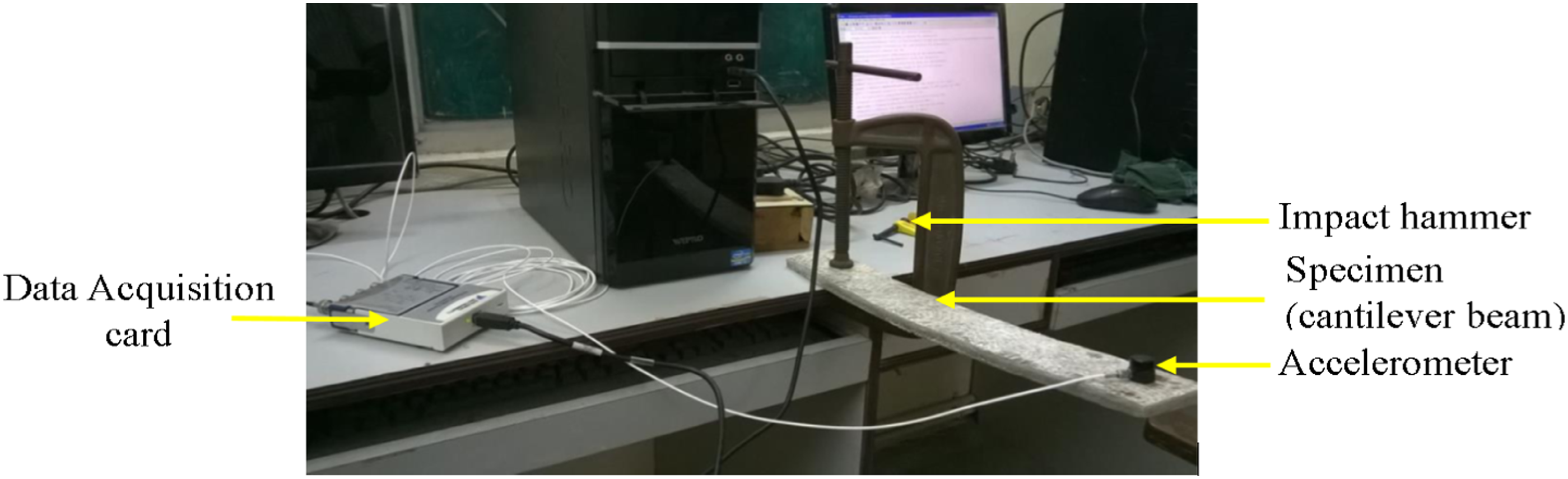
Analysis
Analysis of steel leaf spring
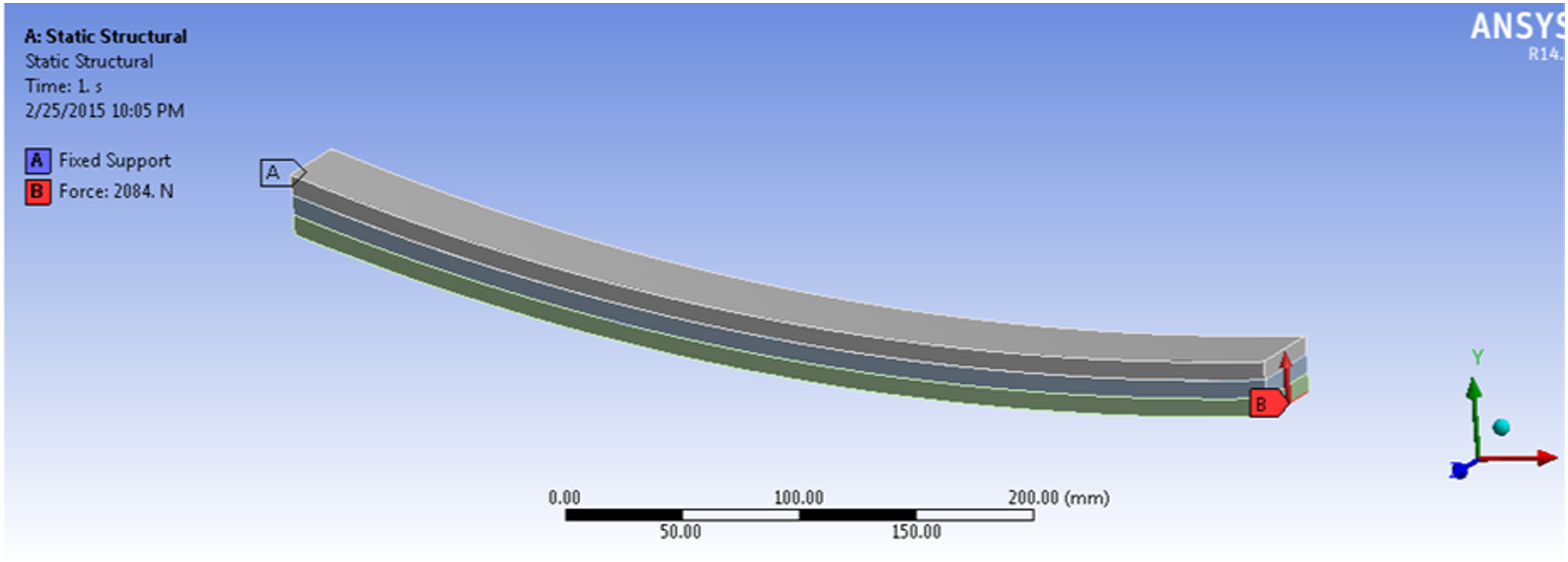
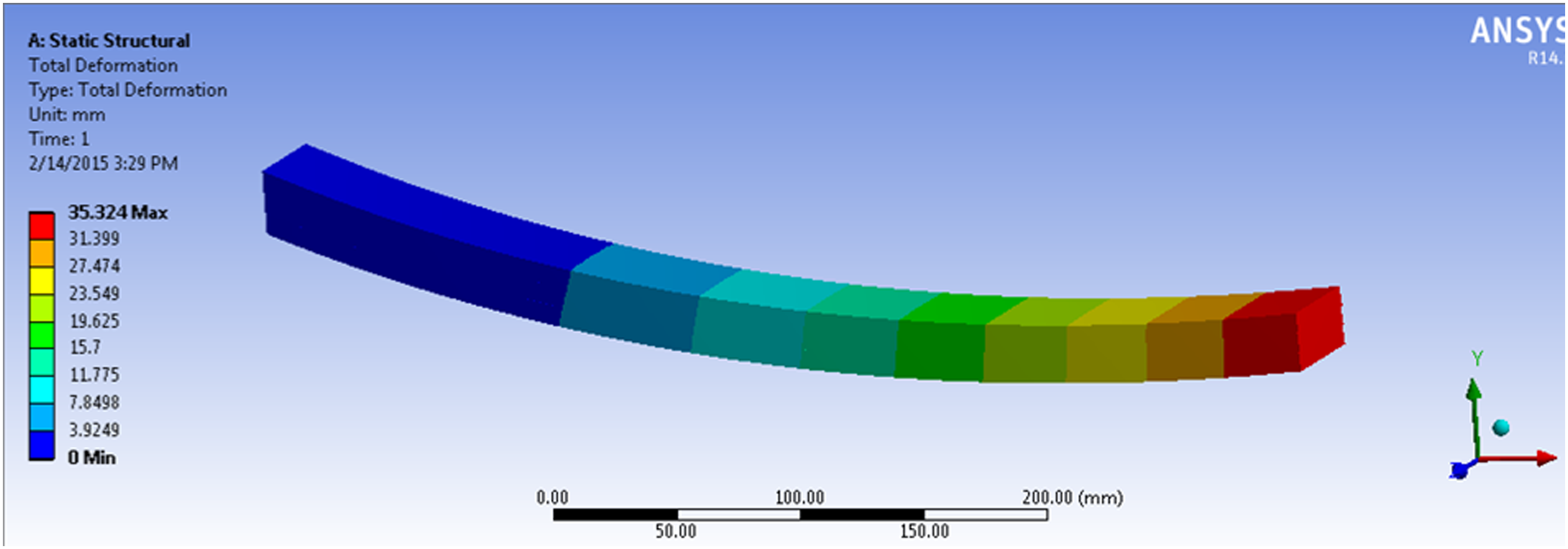
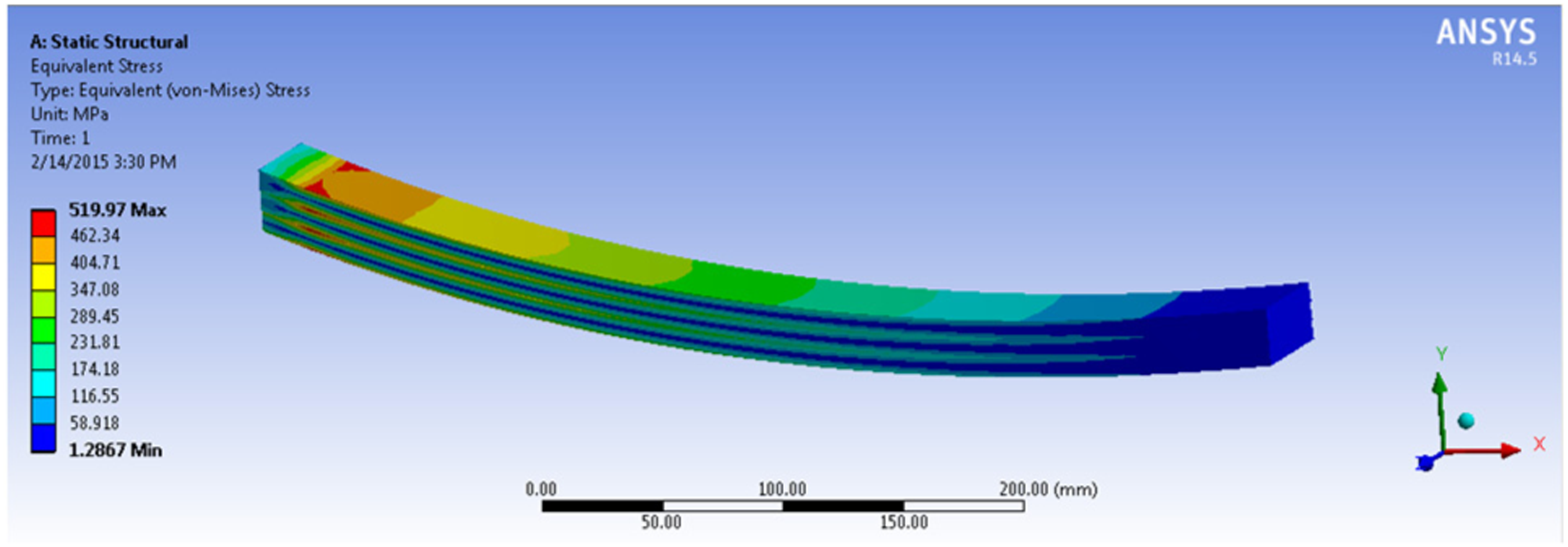
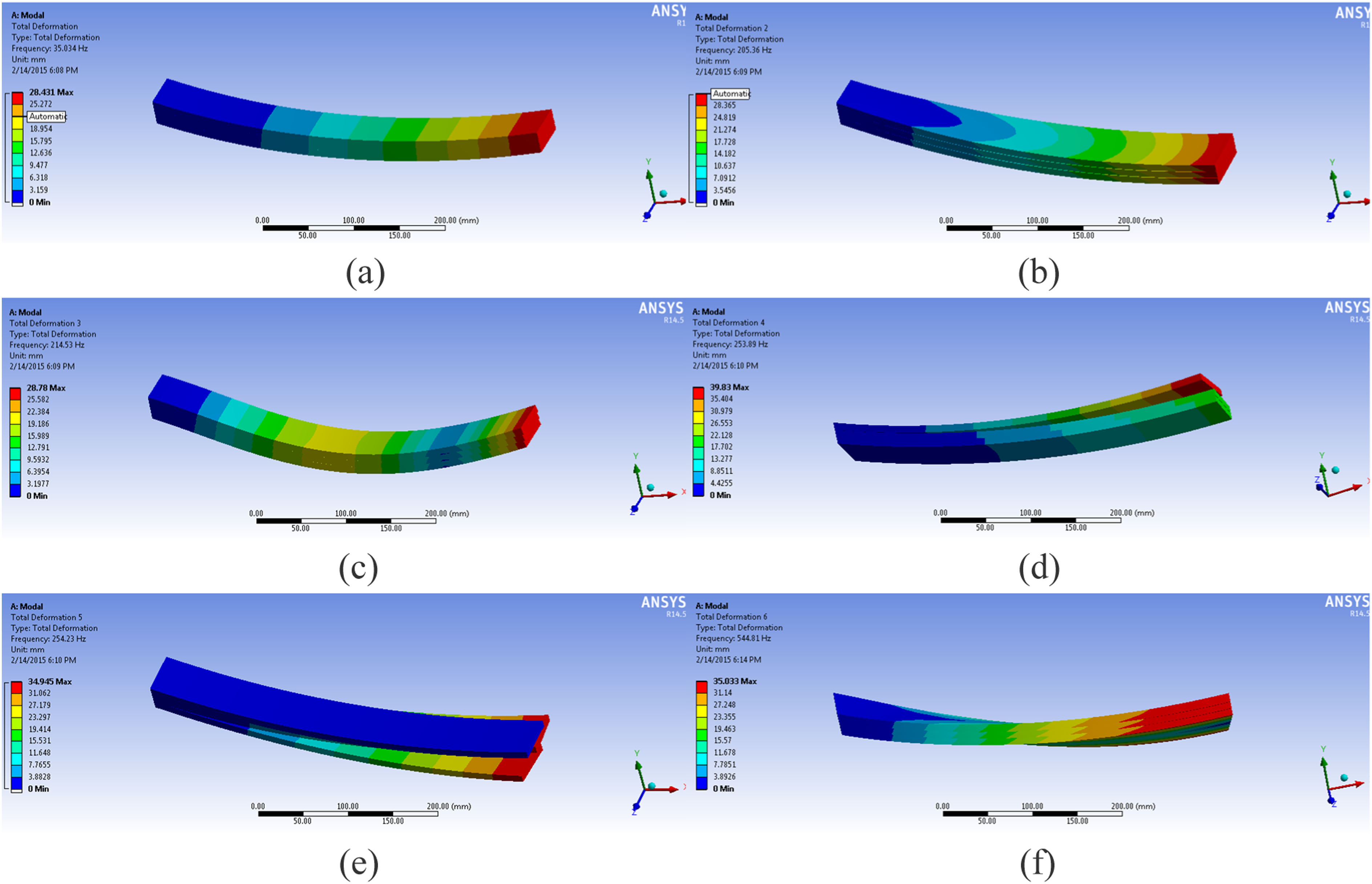
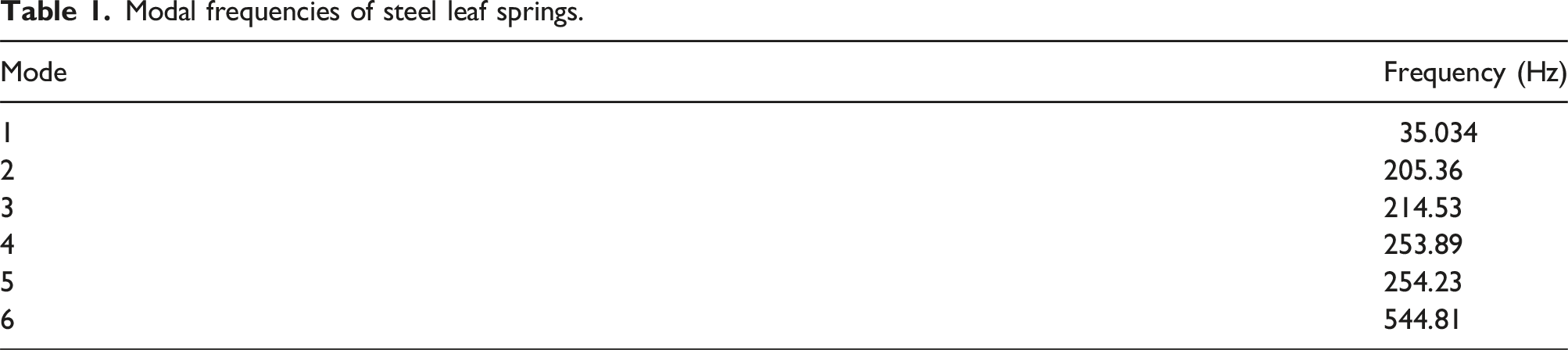
The model is created using NX, and the format is transformed into.iges. The analysis is performed exclusively within ANSYS, which is a powerful tool that utilizes the principles of finite element analysis (FEA) to conduct simulations and analyze the behavior of structures or systems under different conditions. It provides a user-friendly interface and a wide range of functionalities to perform FEA simulations efficiently. Material properties for both steel and composite are input manually into the engineering data. The analysis includes evaluating deflection, stress, modal analysis, and natural frequency. Element size of 5 is employed, and the steel leaf weight for the analysis is established at 5 kg. (i) Boundary condition: One end of the spring (A) is restrained, while a load of 2084N is applied upward in the line element at the other end (B) as shown in Figure 5. (ii) Deflection: After applying the load, the SLS demonstrates a deflection of 35.324 mm, as illustrated in Figure 6, with the greatest deflection observed at the free end. (iii) Stress: With a load of 2084N, the SLS experiences a stress of 519.97 MPa shown in Figure 7, with the maximum stress occurring at the fixed end. (iv) Modal analysis: Modal analysis involves examining the dynamic characteristics of structures subjected to vibrational excitation. It encompasses the measurement and analysis of the dynamic response of structures during excitation. Mode shapes of SLS are depicted in Figure 8 (a)–(f), and Table 1 presents the corresponding frequencies (Hz) observed during the modal analysis. (v) Natural frequency: The intrinsic oscillation frequency of steel, referred to as its natural frequency, is a fundamental attribute that significantly influences the dynamic response and behavior of structures under external disturbances. Figure 9 shows the natural frequency observed as 33.6 Hz. SLS boundary constraints. Deformation observed in SLS. Stress induced in SLS. (a) First mode shape of SLS, (b) second mode shape of SLS, (c) third mode shape of SLS, (d) fourth mode shape of SLS, (e) fifth mode shape of SLS, and (f) sixth mode shape of SLS. Modal frequencies of steel leaf springs. Natural frequency of SLS.
Analysis of composite leaf spring
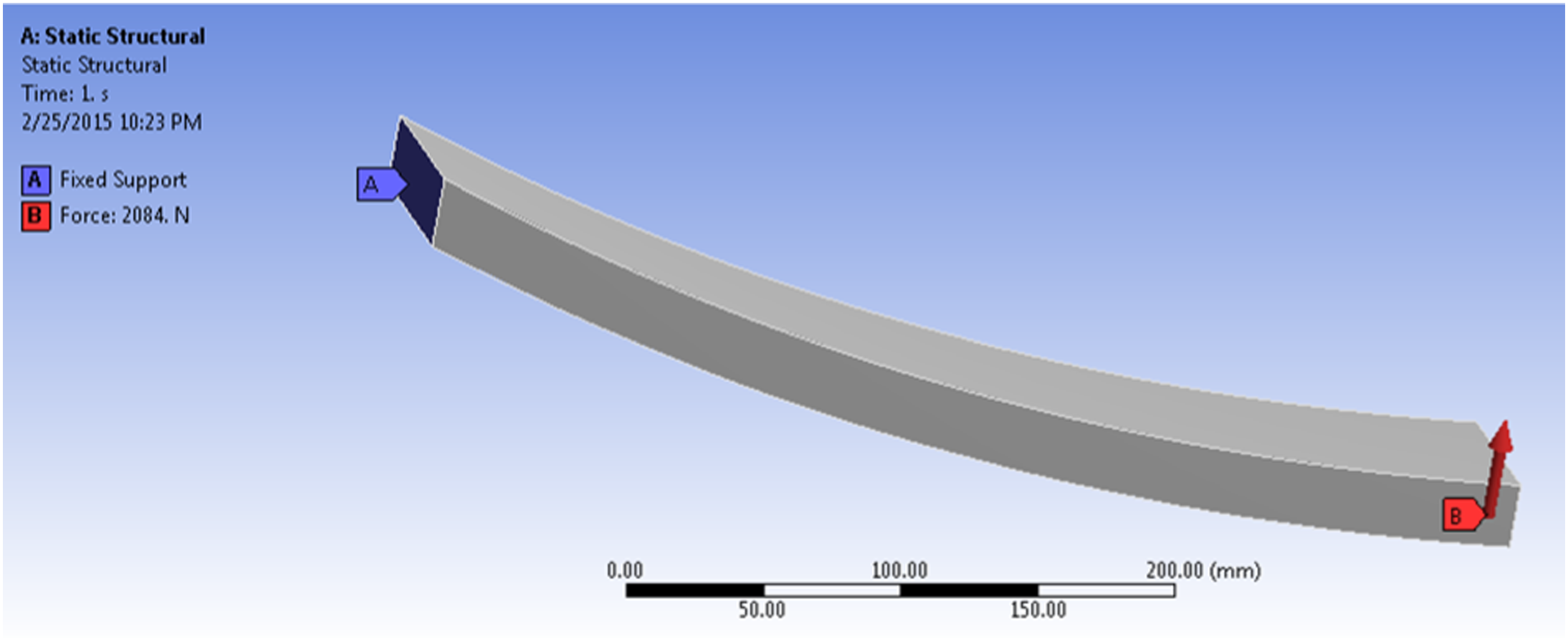
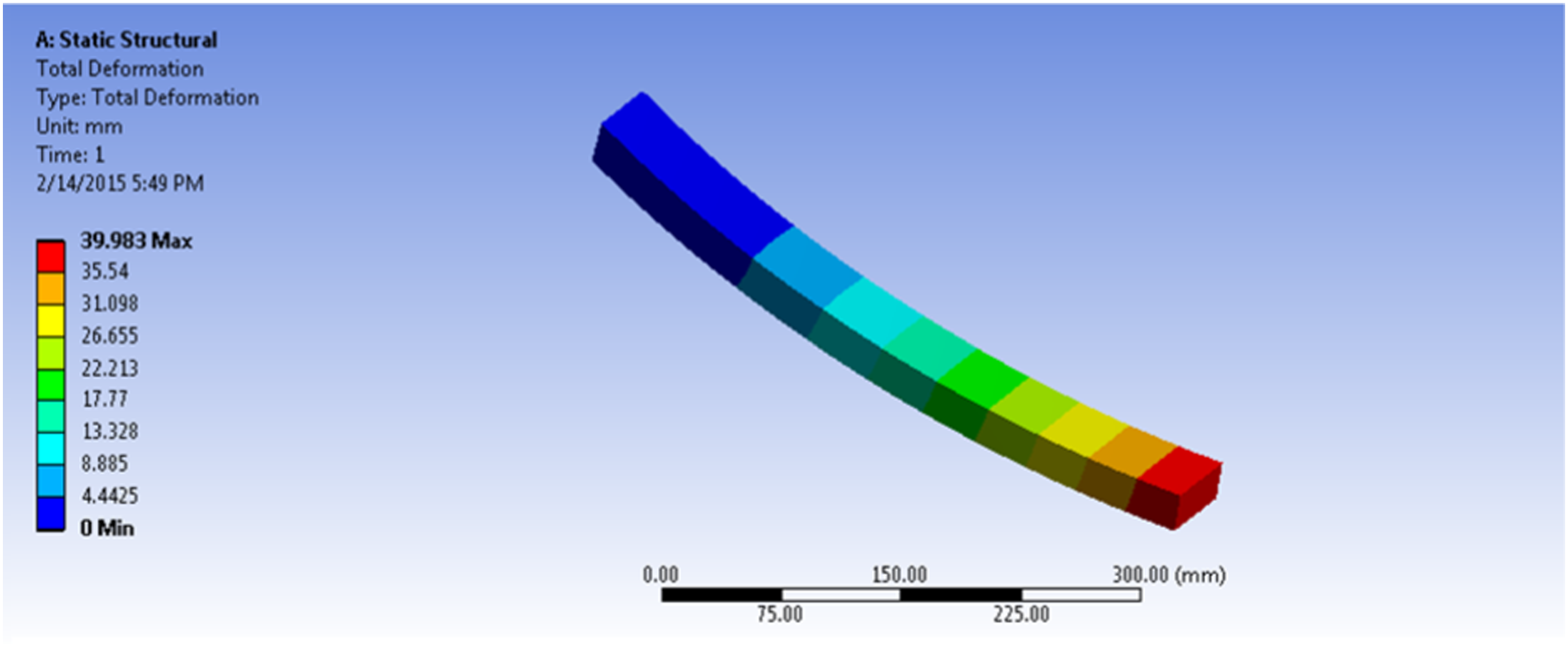
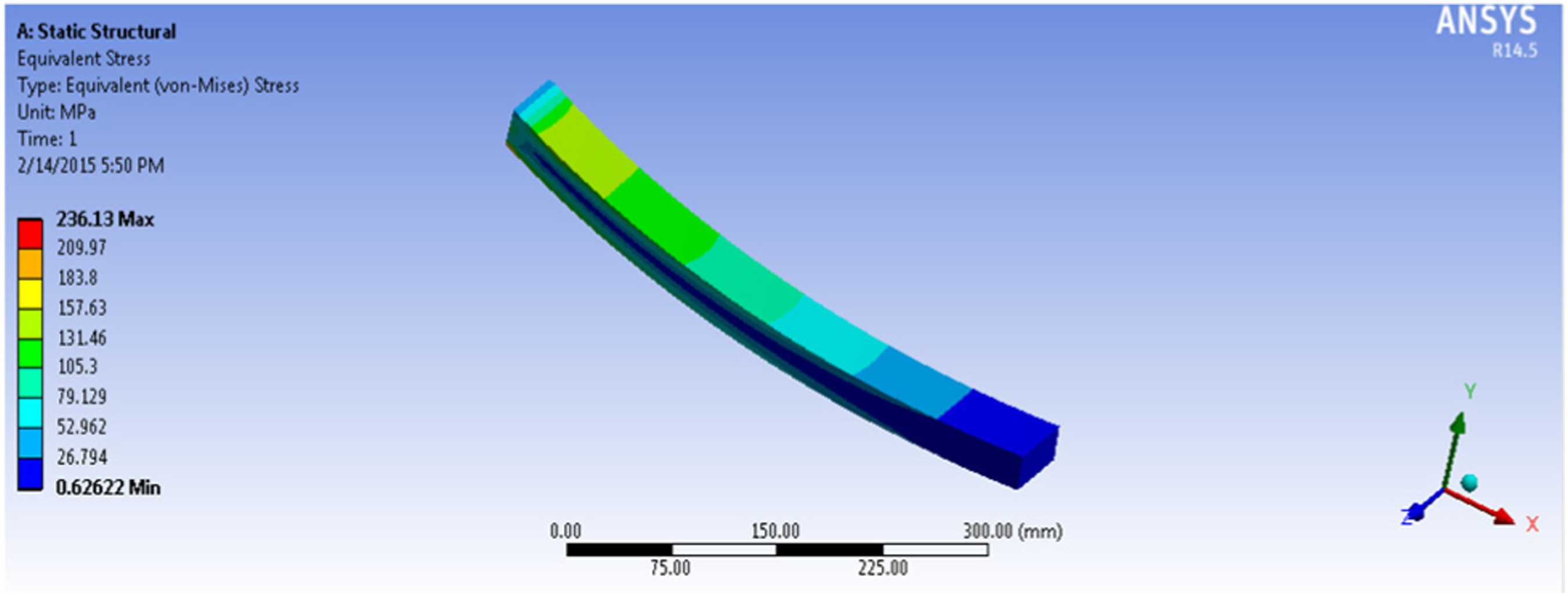
Analysis such as deflection, stress, modal analysis, and natural frequency is determined. Element size is taken as 5. The weight of steel leaf in analysis is 1.25 kg. (i) Boundary Condition: The spring is constrained on one end (A). On the other end (B), the load of 2084N is applied on upward direction in line element as shown in Figure 10. (ii) Deflection: Upon the application of the load, the CLS exhibits a deflection of 39.953 mm, with the greatest deflection occurring at the free end, as illustrated in Figure 11. (iii) Stress: Under a load of 2084N, the stress developed in the Composite Leaf Spring (CLS) is measured at 236.13 MPa, as depicted in Figure 12. The highest stress is observed at the fixed end. (iv) Modal Analysis: The modal shapes, representing distinct vibrational patterns of CLS, are visually represented in Figure 13(a)–(f). This graphical representation provides a qualitative understanding of the system’s dynamic response to external stimuli. GECLS boundary constraints. Deformation observed in GECLS. Stress induced in GECLS. (a) First mode shape of GECLS, Fig. 13,(b) second mode shape of GECLS, (c) third mode shape of GECLS, (d) fourth mode shape of GECLS, (e) fifth mode shape of GECLS, and (f) sixth mode shape of GECLS.
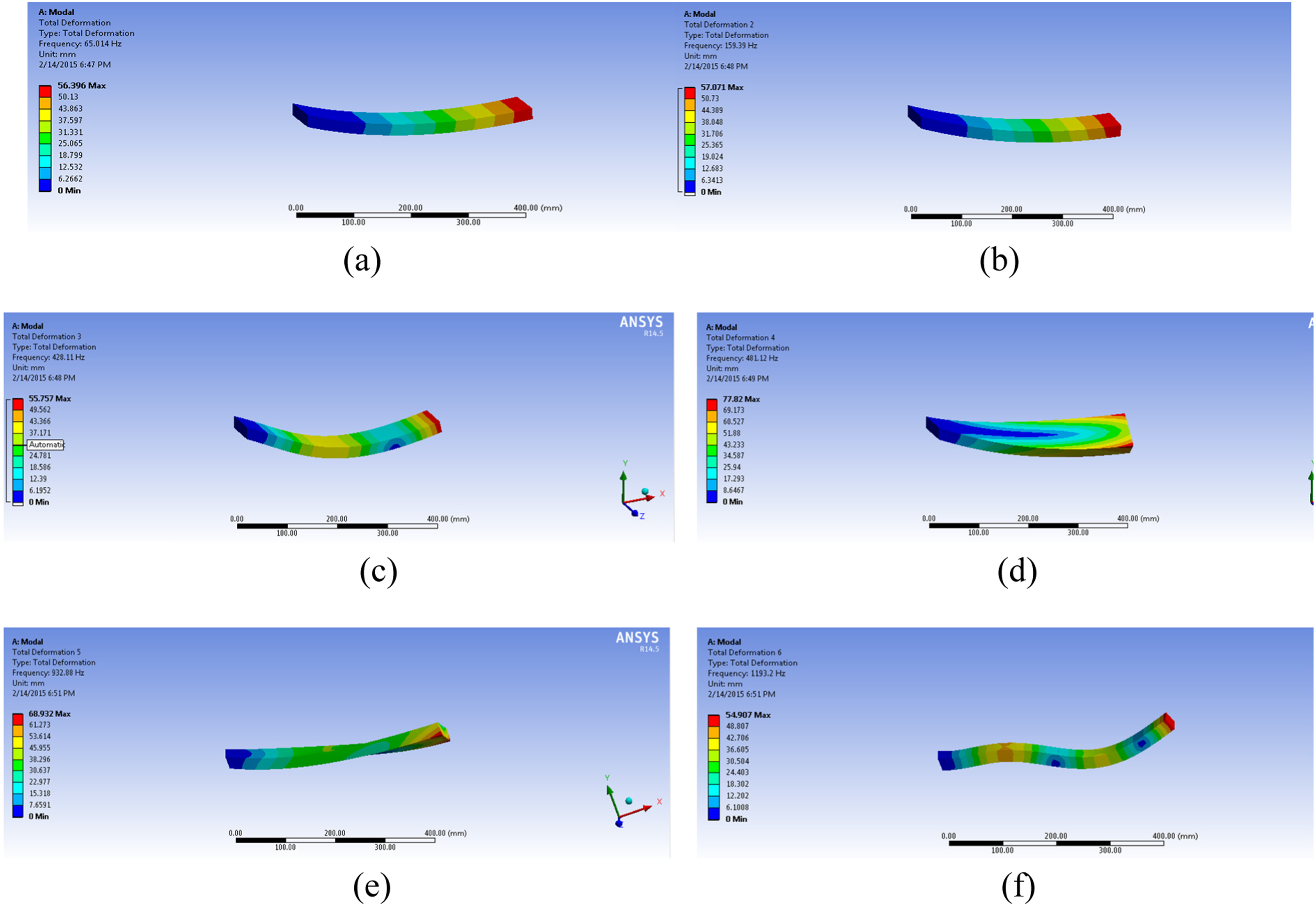
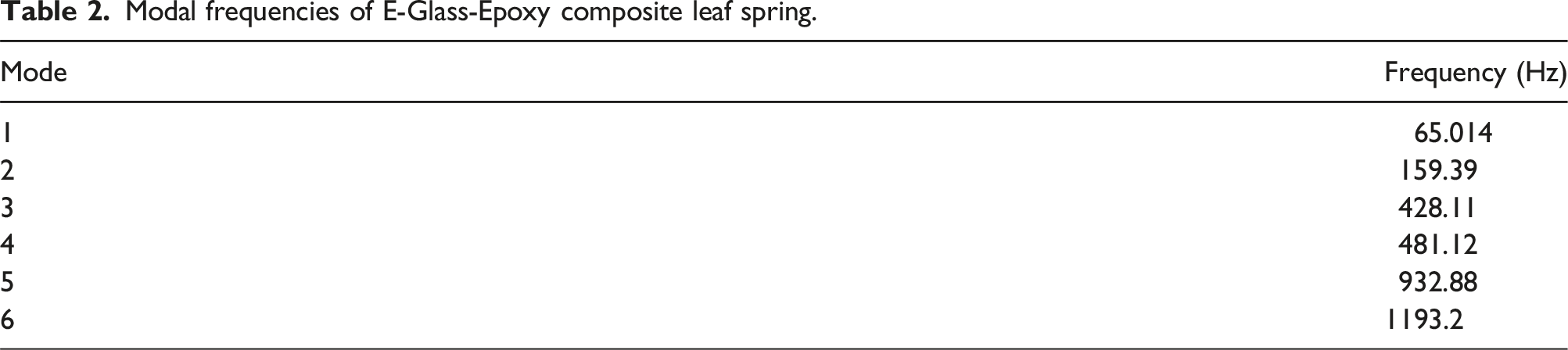
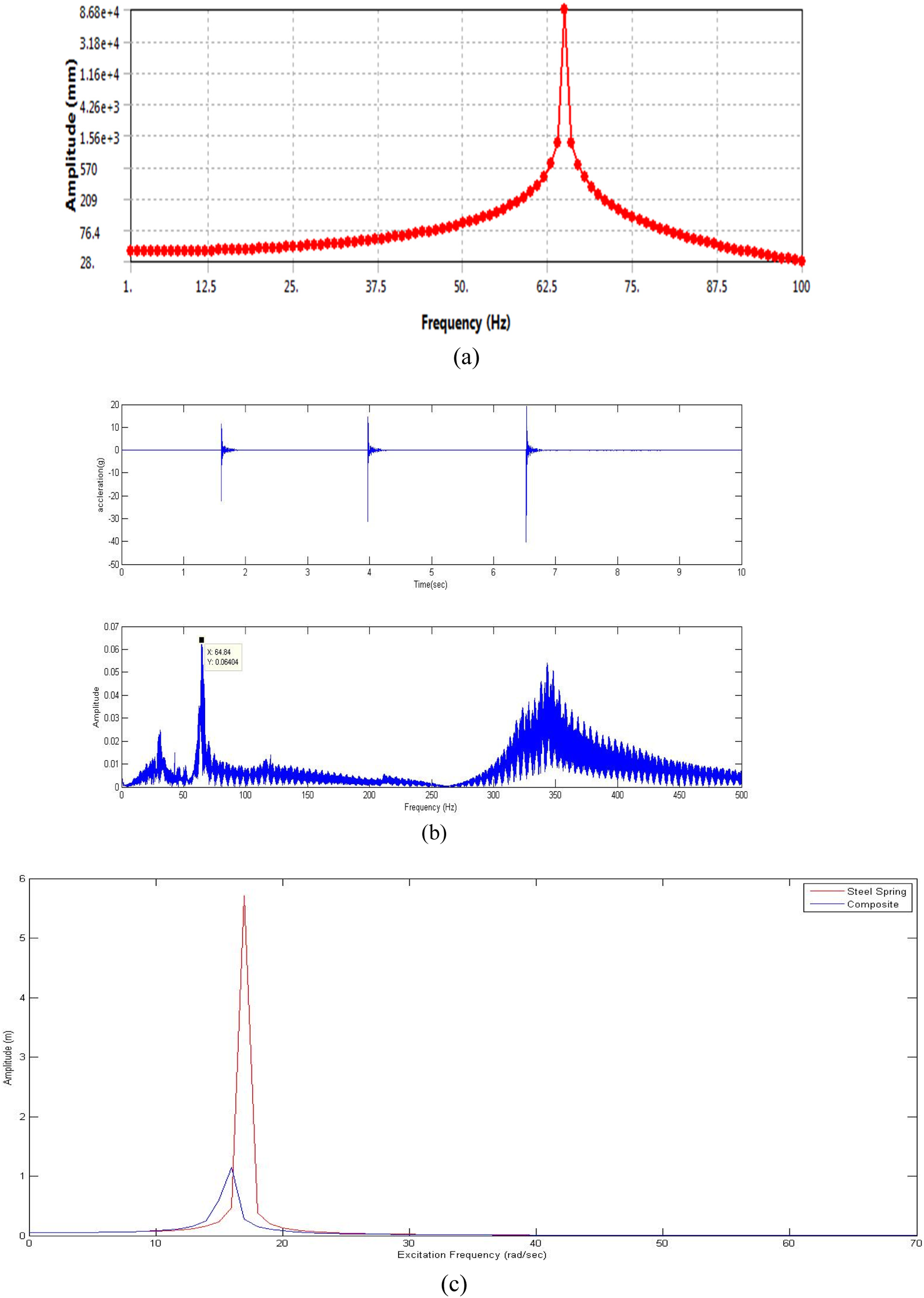
Several factors contribute to the display of diverse mode shapes in glass fiber reinforced epoxy composite leaf springs. Initially, the anisotropic nature of composite materials such as glass fiber reinforced epoxy leads to directional disparities in mechanical properties, impacting the mode shapes. Furthermore, the composite’s microstructure, encompassing the arrangement and orientation of reinforcing fibers within the epoxy matrix, is pivotal. Variations in fiber distribution, alignment, and the bonding between fibers and matrix can yield various vibrational responses and mode shapes. Additionally, the damping properties of the composite material also influence mode shapes by affecting the dissipation of vibrational energy. Collectively, these factors contribute to the emergence of differing mode shapes in glass fiber reinforced epoxy composite leaf springs. To complement the visual data, detailed numerical values associated with these modal shapes are presented in Table 2. v) Natural Frequency: In Figure 14(a), the illustration represents the observed natural frequency in the GECLS, revealing natural frequency of 65.014 Hz, which is 1.9 times greater than SLS. It indicates an effective prevention of resonance.
24
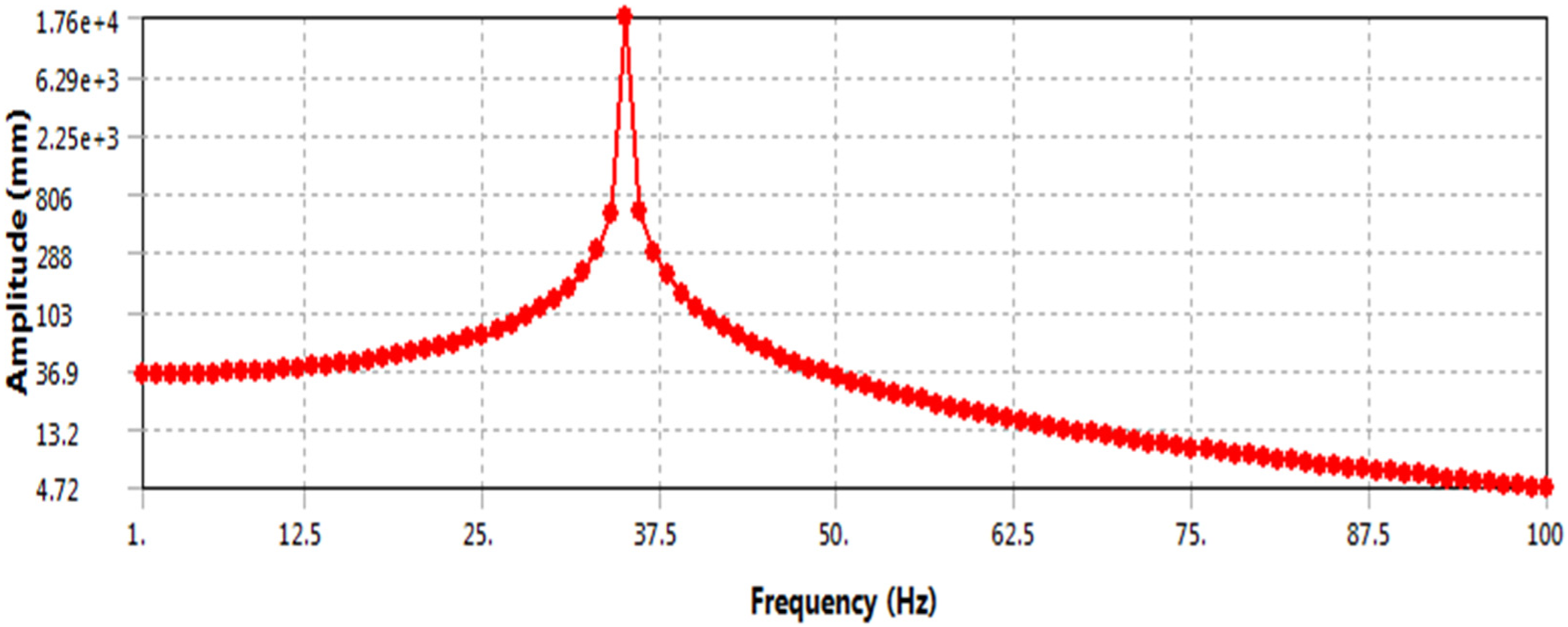
The experimental measurement determines the natural frequency of the GECLS to be 64.84 Hz, as depicted in Figure 14(b). Additionally, Figure 14(c) illustrates the curve correlating excitation frequency and amplitude. Modal frequencies of E-Glass-Epoxy composite leaf spring. (a) Natural frequency of mono-GECLS, (b) experimental natural frequency of GECLS, and (c) excitation frequency versus amplitude curve of GECLS.
Varying stress values in the leaf springs may result from differences in material properties between steel and glass fiber reinforced epoxy composite, despite uniform geometric details and boundary conditions. 25 Though assessing safety factors is crucial, comprehending the root causes of stress disparities offers valuable insights into material performance and potential constraints in particular applications. Additionally, it’s noteworthy that we maintained a factor of safety of 2 for both materials and conducted a comparison.
Comparison of steel leaf springs and E-Glass-Epoxy composite leaf spring.
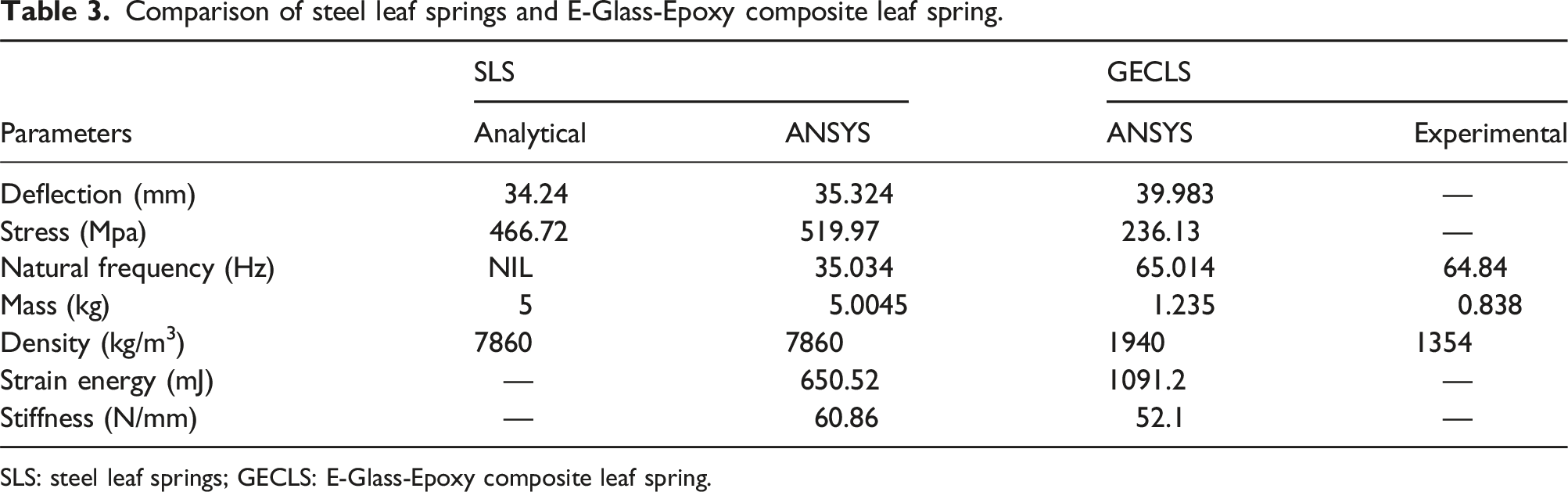
SLS: steel leaf springs; GECLS: E-Glass-Epoxy composite leaf spring.
Some of the observed advantages of fabricated Glass Fiber Reinforced Epoxy Composites (GECLS) over Conventional Steel Leaf Springs (SLS) as highlighted below. • Superior Strength-to-Weight Ratio: GECLS offers a better strength-to-weight ratio compared to SLS, allowing it to provide equal stiffness and load-bearing capability in the same dimensions. • Reduced Stresses and Increased Natural Frequency: In modal analysis and static load scenarios, GECLS showed reduced stresses and an increased natural frequency compared to SLS, indicating better performance under various conditions. • Weight Reduction: GECLS exhibited a significant weight decrease of 75.32% compared to SLS, making it a more lightweight option, which is crucial for applications such as automobiles. • Improved Metrics: GECLS outperforms SLS in important metrics such as deflection, natural frequency, and strain energy. • Higher Natural Frequency: The natural frequency of mono-GECLS was found to be 1.9 times higher than that of traditional SLS, indicating better dynamic behavior. • Customizable Designs: GECLS can be customized to optimize natural frequency while accommodating increased deflection, offering versatility in design and application.
These advantages highlight how GECLS offers improved performance and efficiency compared to traditional SLS, particularly in terms of weight reduction, dynamic behavior, and design flexibility.
Conclusion
E-glass epoxy composite leaf spring (GECLS) is used in this investigation in place of a steel leaf spring (SLS) because of its superior strength-to-weight ratio, which allowed it to provide equal stiffness and load-bearing capability in the same dimensions. In modal analysis and static load scenarios, the mono-GECLS showed reduced stresses and an increased natural frequency in comparison to the SLS. The analysis results verified the GECLS’s efficacy by matching theoretical and experimental results. The variance in mode shapes between steel and glass fiber reinforced epoxy composite leaf springs is predominantly attributed to differences in their material properties and structural attributes. Steel leaf springs typically demonstrate isotropic behavior, where mechanical properties remain uniform regardless of direction, while composites like glass fiber reinforced epoxy exhibit anisotropic characteristics, with properties varying directionally. This discrepancy results in unique vibrational patterns and mode shapes. Furthermore, variations in microstructure, bonding between fibers and matrix, fiber alignment, and damping properties also contribute to the differentiation in mode shapes observed between these materials. A comparison analysis showed that the GECLS had a significant weight decrease of 75.32%, which made it a better option than steel when compared to SLS in automobiles. The study indicates that the GECLS outperforms SLS in important metrics like deflection, natural frequency, and strain energy. The mono-GECLS exhibited a natural frequency that was found to be 1.9 times higher than that observed in the traditional SLS; in comparison, the stress, mass, and density of the SLS are higher. The discrepancy between the deflection of composite and steel leaf springs, despite the composite leaf spring having a higher natural frequency, can be explained by differences in material properties and design. Composites can achieve a higher natural frequency despite lower stiffness by optimizing mass distribution. Additionally, composites may exhibit lower damping, enhancing energy transfer. Customized designs can further improve natural frequency while accommodating increased deflection. This demonstrates how the two materials behave differently, with the steel offering higher strength and mass and the composite showing greater flexibility and energy storage.
Footnotes
Declaration of conflicting interests
The author(s) declared no potential conflicts of interest with respect to the research, authorship, and/or publication of this article.
Funding
The author(s) received no financial support for the research, authorship, and/or publication of this article.
