




Abstract
Grass carp’s roes should be agglomerated together for maximizing their survival rate against various predators. Any vibration induced by any environmental perturbation should be attenuated immediately. A Toda-like fractal-fractional oscillator is established, which shows a low-frequency property for most cases; however, the grass carp has evolved a very ability to attenuate the perturbated vibration by sticky adhesion. The pull-down stability of the roes’ vibration is discovered through the results of phase diagrams. The mathematical analysis reveals that there is a pull-down plateau for the attenuating process, the plateau’s height and width are discussed graphically, and the main factors affecting the plateau’s properties are elucidated. The paper offers a totally new window for biomechanics, especially for biomimicking design of chatter vibration systems inspired by the agglomerated roes.
Introduction
Grass carp’s roes on the water surface cannot move, so they drift with the waves and their survival is greatly affected by their environment.1–3 The spatial distribution of roes is limited by their environmental factors such as the flow velocity, flow direction, and hydrological conditions. In natural rivers, the speed of water flow plays a leading role in roes drift. Grass carp’s roes should be agglomerated together to maximize their survival rate against various predators. Any vibration induced by any environmental perturbation should be attenuated immediately. When the amplitude is too large, a roe may escape from the agglomeration, and this leads to a death destiny. During the concentrated spawning period of fish, it is necessary to maintain the minimum flow rate for safe drift of roes and to promote the natural reproduction of drift-spawning fish. In Refs. [4–5], an Euler–Lagrange model was developed to deal with the drift of roes, the roes were generalized as spherical particles scattered in the flow field, and the horizontal position change within the time step was established using Newton’s second law to establish a motion equation taking into account the fluid’s convection and turbulence. The model’s variables included not only biological behaviors but also mean velocities and eddy diffusivities of the flow field.
Combining a two-dimensional shallow water model and a three-dimensional roe particle tracking, the agglomeration of grass carp’s roes also conforms to a Toda-like system, which can be described as a particle system with nonlinear spring connections, as shown in Figure 1. It is of great significance to study the mechanism of roes’ agglomeration by using a Toda-like oscillator. (a) Roes aggregation. (b) Roes dynamic motion affected by water flow.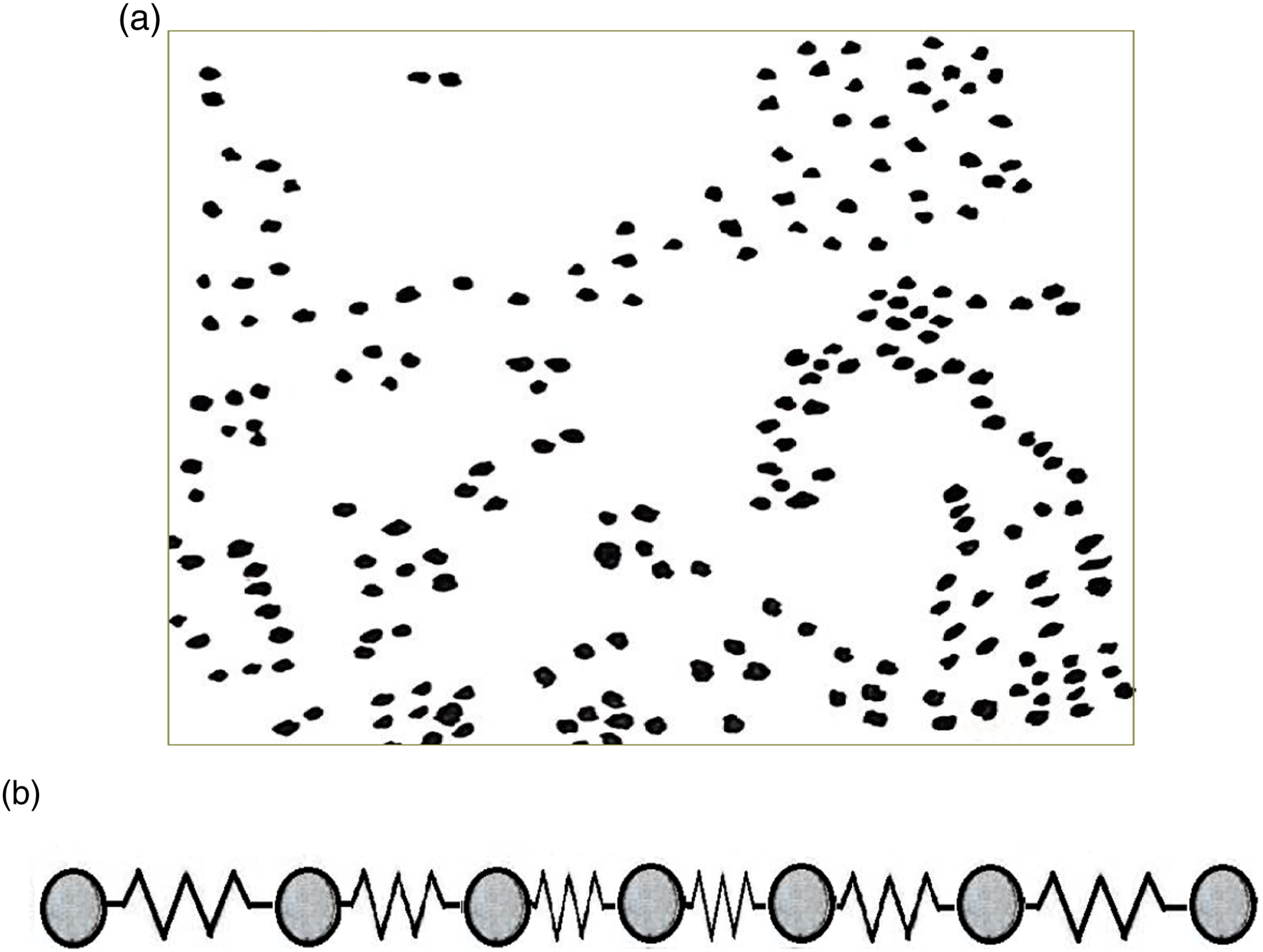
The Toda oscillator 6 has emerged with its dynamic characteristics and is widely used in various fields. Its particularly important property is the instability motion, which is an inherent property for a nonlinear system with even nonlinearity, 7 just like pull-in phenomenon in a MEMS system. 8
Much literature has conducted extensive analysis on the dynamic pull-in of MEMS models because it is important for the efficient operation and reliability of the device.9–12 For example, Anjum et al. proposed a variational iteration method for predicting the pull-in instability condition. 13 He et al. explained the pull-in voltage. 14 Yang studied a mathematical control for the pseudo-pull-in stability of the MEMS system. 15
Consider the MEMS oscillator as follows16,17

Figure 2 shows the dynamic motions when Phase trajectories for different values of 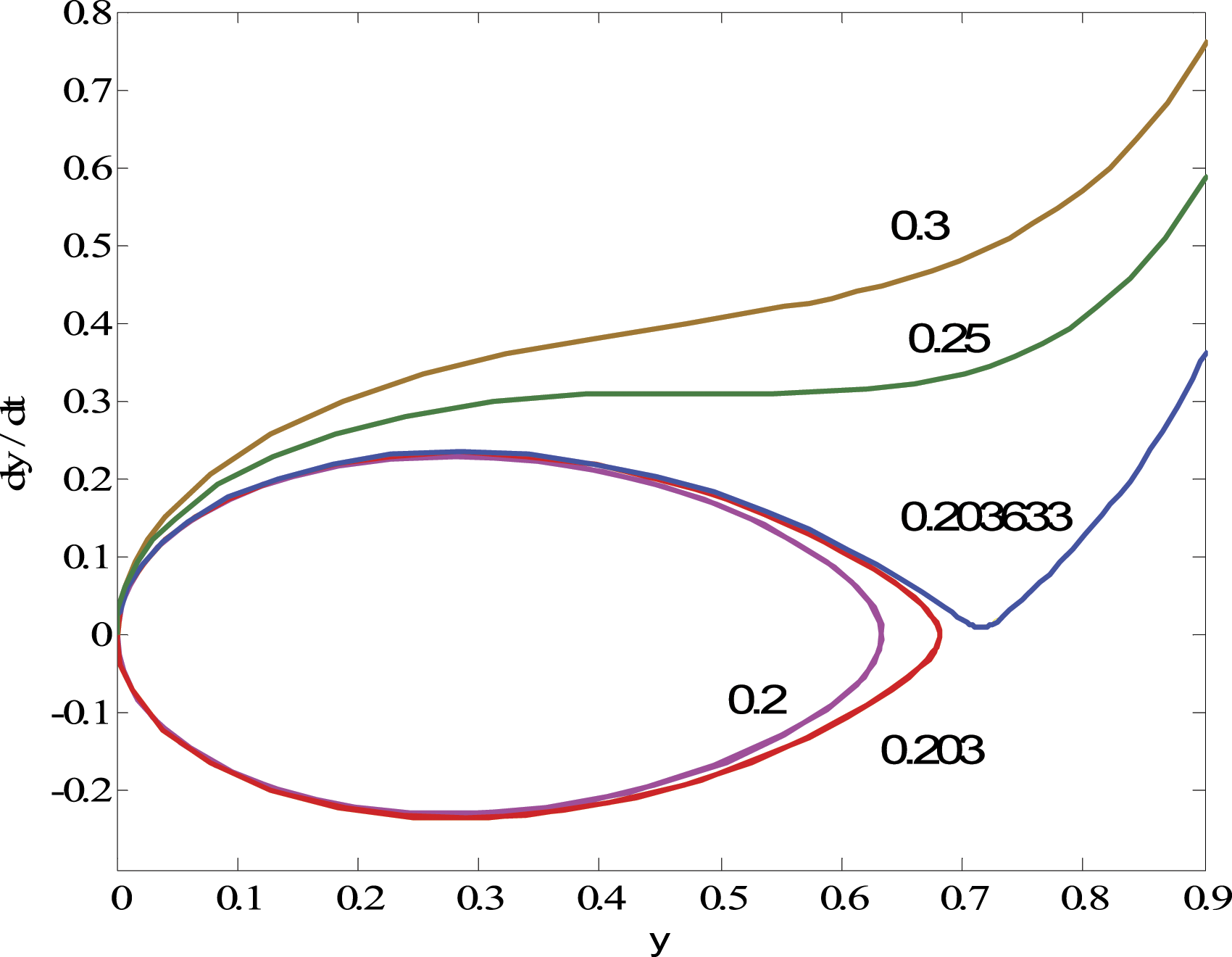
If the MEMS oscillator works in a porous medium, it should be considered in a fractal space. So, Tian and her co-authors proposed a new MEMS system, namely, a fractal MEMS system, and proved that the fractal system can overcome pull-in instability by properly selecting the fractal dimension.18–20 This discovery opens up a new way to design the optimal and reliable MEMS system with a long operation period. A variational principle of the fractal MEMS oscillator has been studied in Ref. [21].
Based on equation (1), the fractal MEMS oscillator is in the form
22

When
Along with the pull-in phenomenon has become increasingly important, similar instability characteristics of nonlinear systems have also begun to be studied. In the past, the Toda oscillator was generally assumed to perform in periodic motion and unsymmetrical oscillation. However, sometimes its motion characteristics will be suddenly changed and become unstable after a seemingly periodic motion, eventually the periodic motion is prohibited.21,22 This phenomenon is called as the pull-down instability by Professor He, 23 and the nonlinear vibration systems with quadratic nonlinearities7,24,25 always lead to a pull-down instability.
The pull-down instability is an important phenomenon in the Toda oscillator, 26 just as the pull-in instability in the MEMS system. Unfortunately, the pull-down instability of the oscillator was not caught much attention yet though the fractional-order convolutional neural network27,28 was now used for dealing with chatter vibration systems.
In this paper, we propose a Toda-like fractal-fractional oscillator and study the pull-down stability of grass carp’s roes’ vibration, which is a new concept for explaining the local stability of the pull-down motion. The existence time of local stability is closely related to the fractal order; this new discovery is helpful to control the gathering environment of grass carp’s roes with the required pull-down stability time. The results of phase diagrams and periodic solutions are obtained by the fourth-order Runge–Kutta method.
Math model
The vibration of roes’ agglomeration can be described as a particle system with nonlinear spring connections as shown in Figure 3, similar to a nanobeam system.8,29–31 It consists of a roe with mass m, which is connected to other roes by springs. It is also adsorbed by the entire system. Near the equilibrium position, the adsorption force is the highest, while the larger the displacement x, the smaller the adsorption force. If it runs too far, the adsorption force will disappear and roes’ diffusion will arise. Grass carp’s roes’ aggregation system.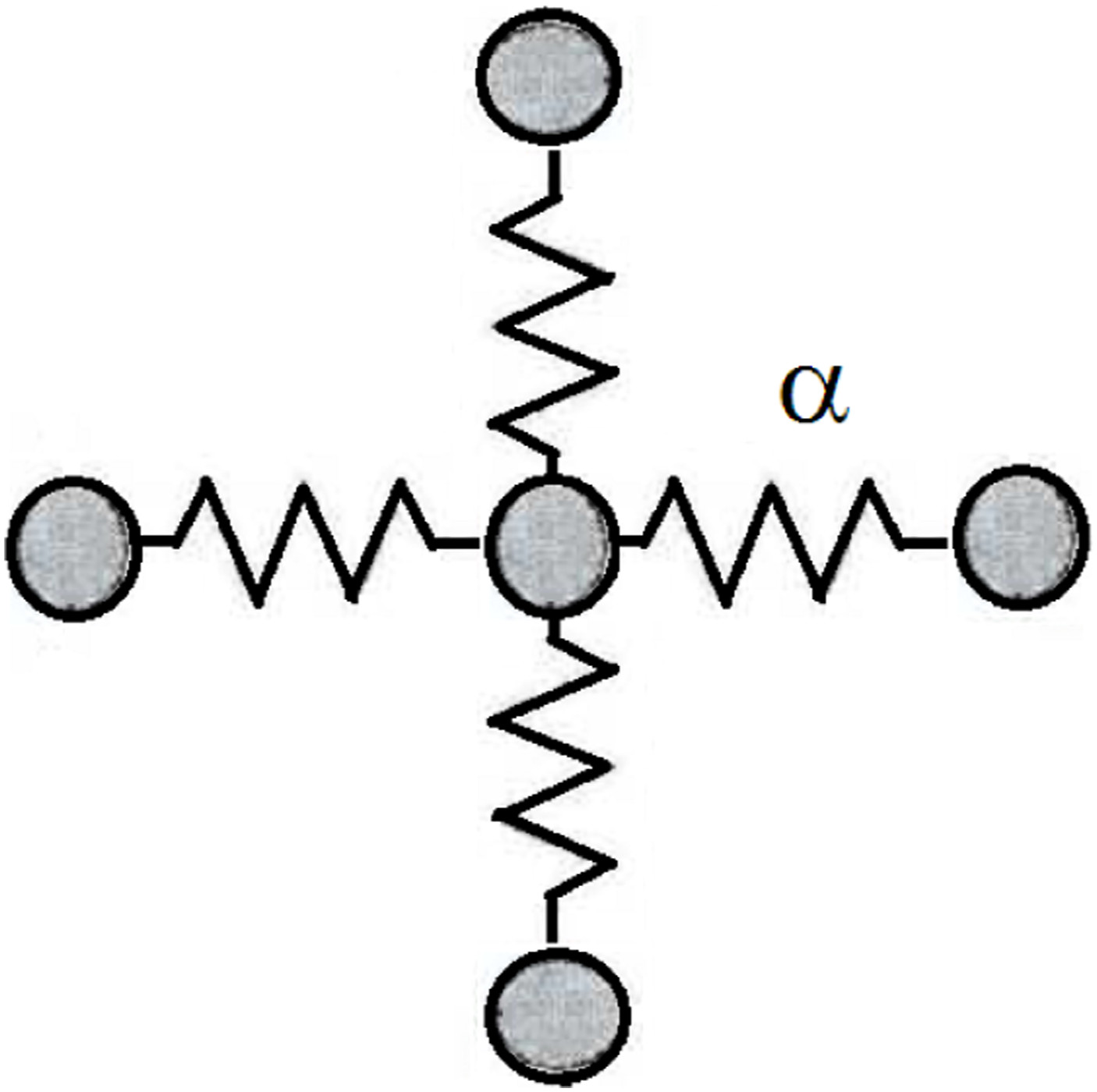
The equation of motion is governed by Newton’s second law as follows

Using Taylor series, equation (3) can be changed into the form

Employing the following transformation

where

Equation (4) is rearranged in the form

For simplicity, we consider

Equation (8) can be effectively solved by the homotopy perturbation method.17,32–36 The previous studies are all based on a continuous space, but in reality, roes are located in discontinuous space,37–40 so it is necessary to consider the fractal agglomeration to study discontinuous nonlinear vibrations. In a fractal space, equation (8) can be described as follows

Equation (9) is called as a Toda-like fractal-fractional oscillator. The low-frequency property was found in various fractal vibration systems, see, for example, References 41–44 and the property is also important in the present study.
Pull-down plateau
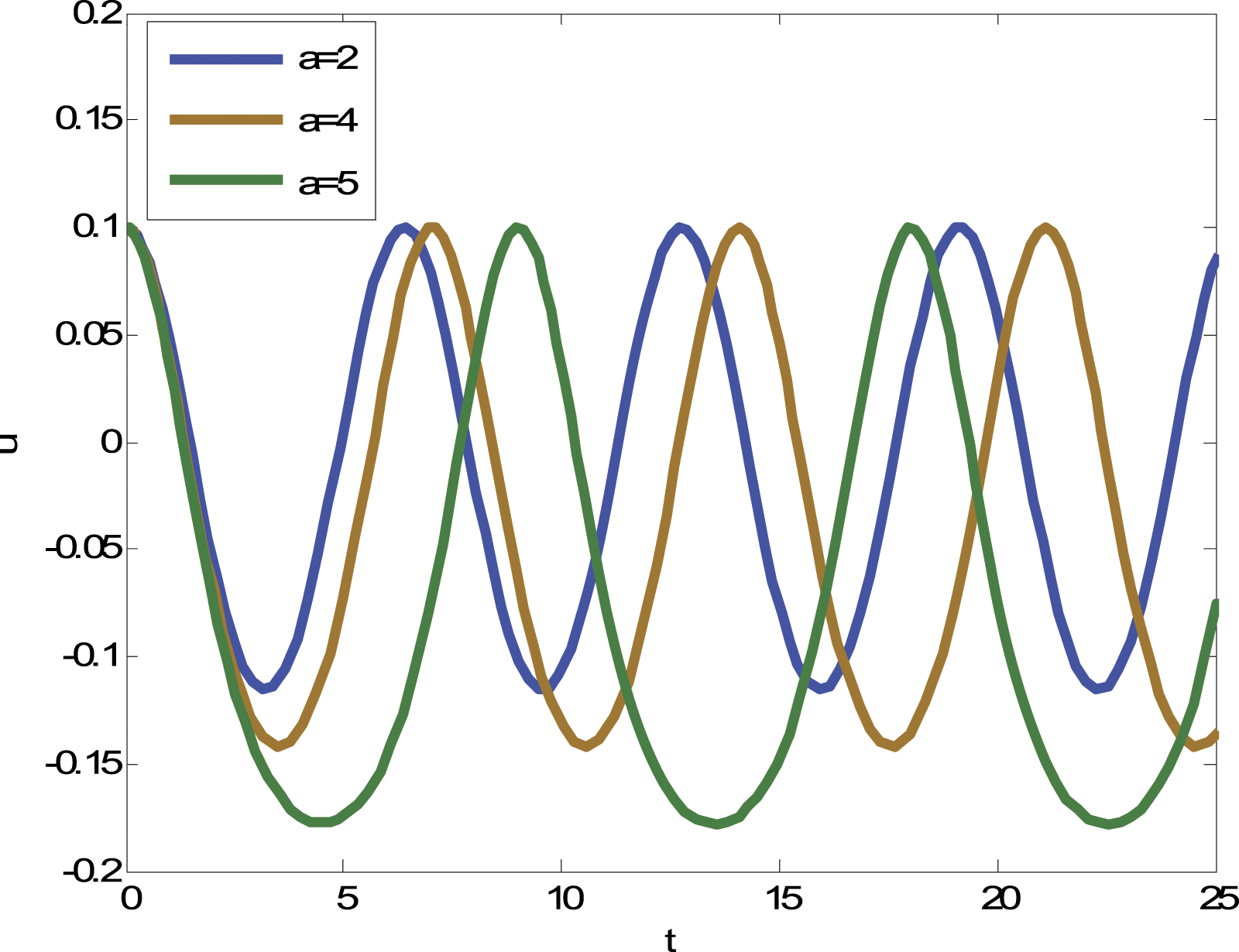
The Toda-like fractal-fractional oscillator was generally assumed to have a periodic motion, while it displays a pseudo-periodic motion. Figure 4 shows the phase diagrams for different values of a when the fractal exponent Phase trajectories for different values of a with Periodic motion with Pull-down stability with 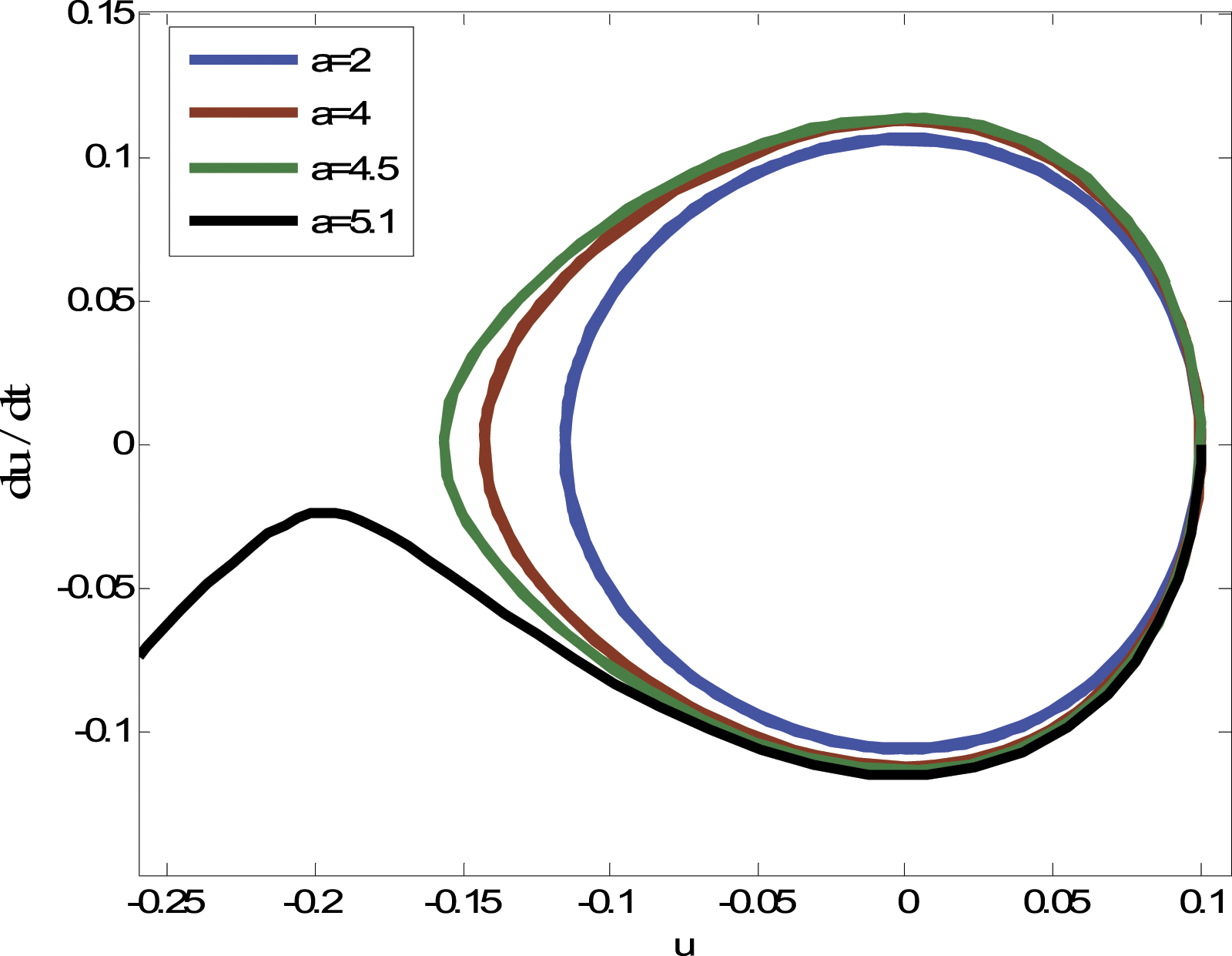
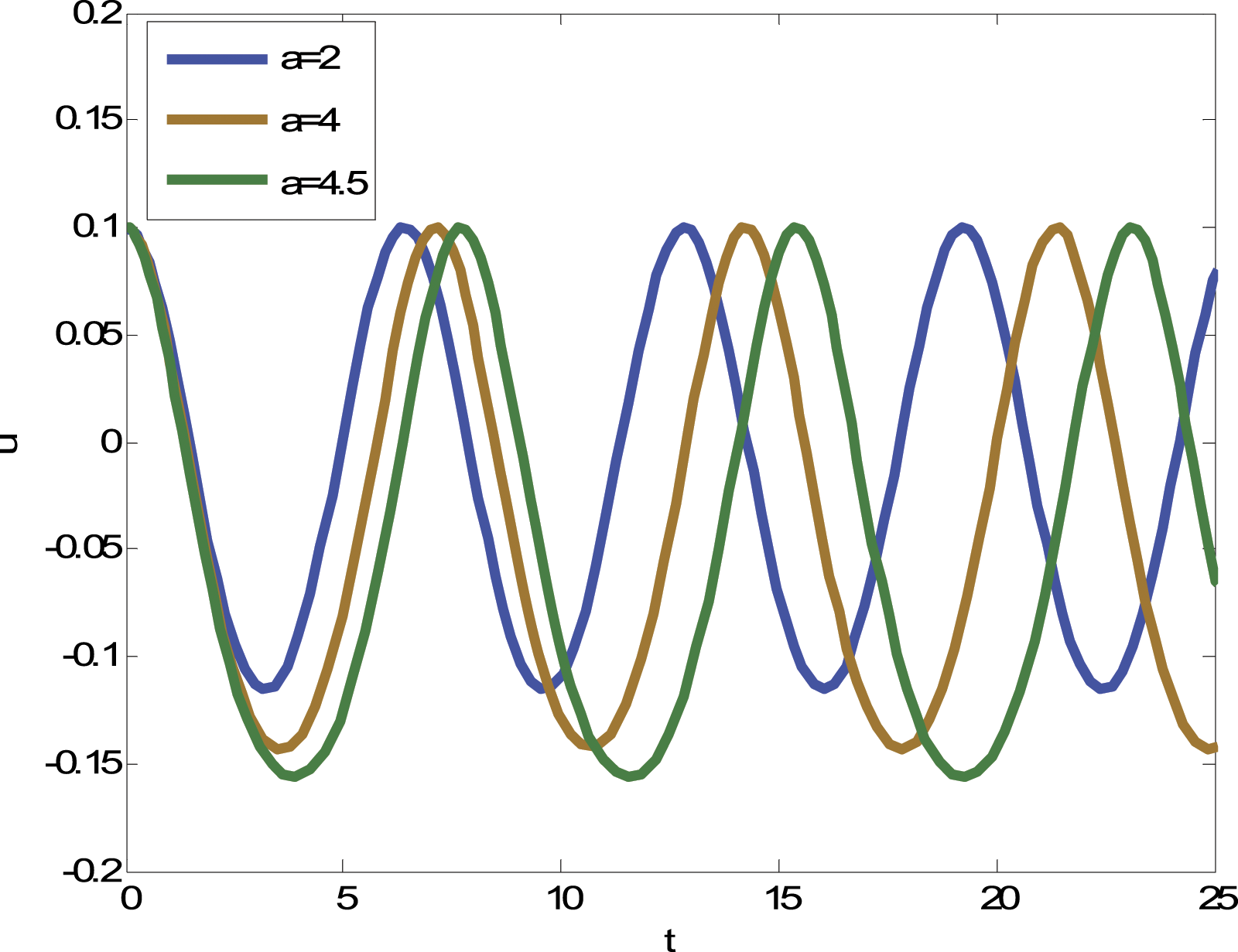
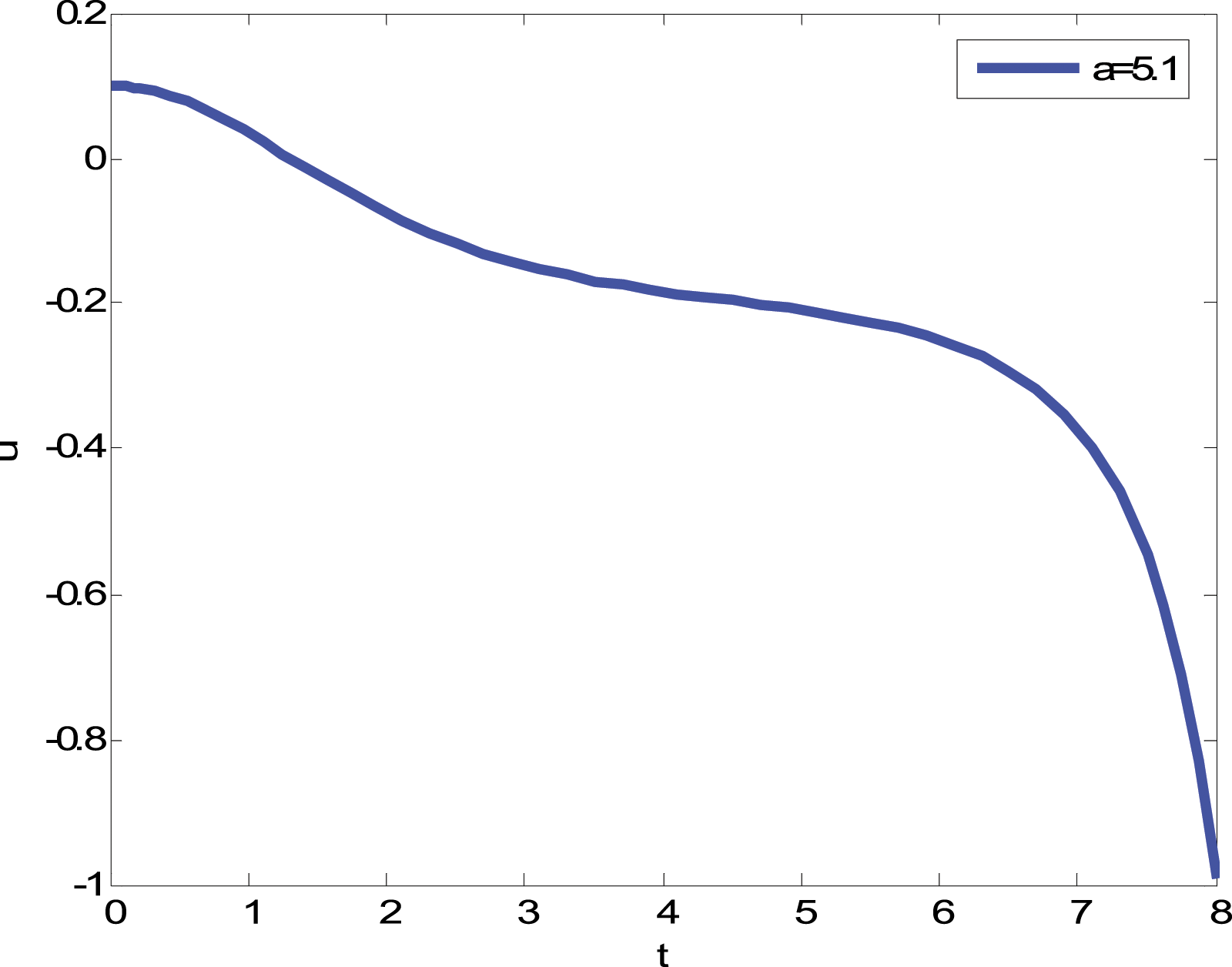
We consider various parameter values, and the results are illustrated in Figures 7–9. The threshold value is a = 5.2 when Phase trajectories for different values of a with Periodic motion with Pull-down stability with 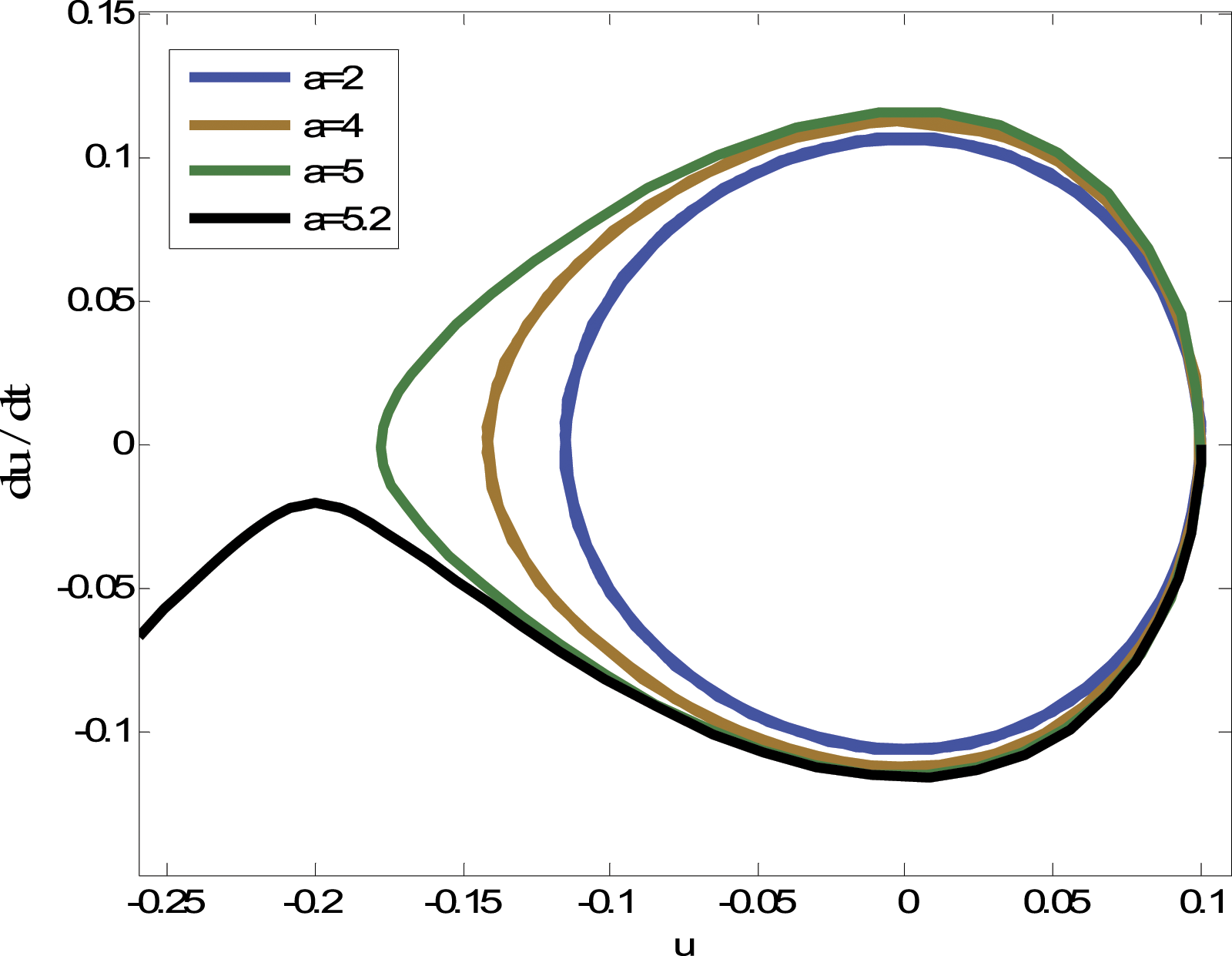
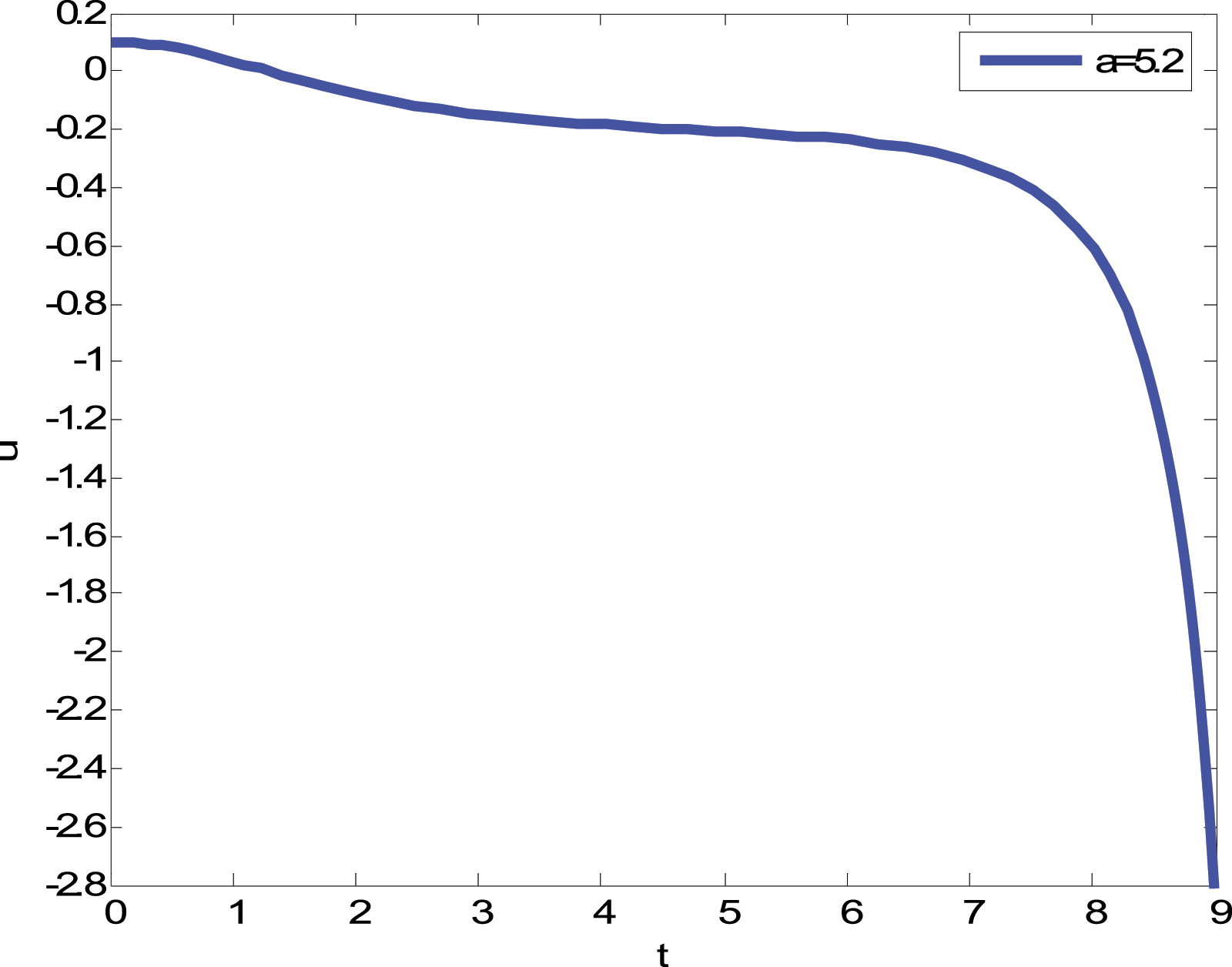
Professor Ji-Huan He and his students proposed a novel concept for qualifying the pull-in stability, which is called as He’s pull-in plateau. 23 Also, the pull-down instability of a quadratic nonlinear oscillator was suggested by He and co-workers. 7 Applying the ideas directly from Refs. [7] and [23] we study He’s pull-down plateau of the Toda-like fractal-fractional oscillator to illustrate the roes’ agglomeration.
Firstly, the previous work on He’s pull-in plateau of the fractal MEMS oscillator was presented in Ref. [23], it appears that when the acceleration of equation (2) becomes extremely small until to zero and then slowly increases. As shown in Figure 10, the plateau’s width becomes larger when the fractal parameter Pull-in phenomenon for different values of 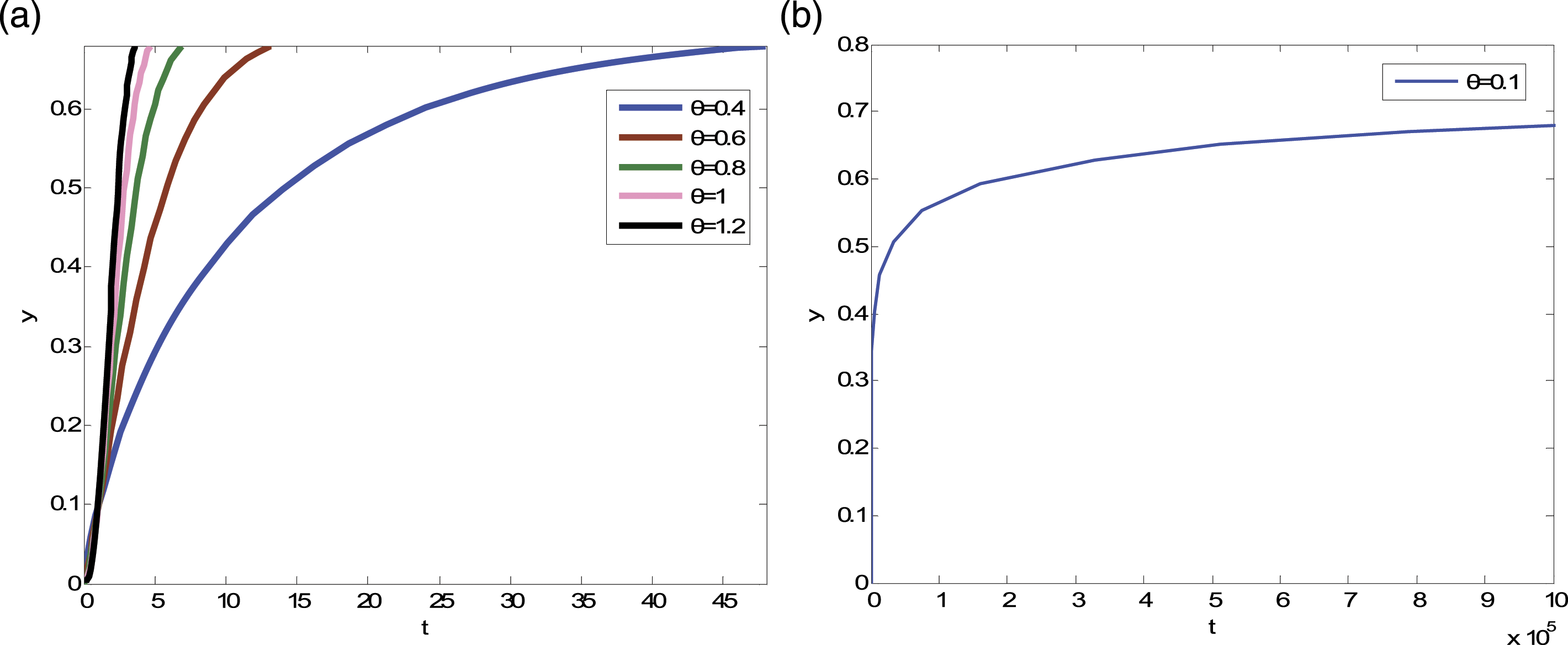
Similarly, four sequences of the parameter θ are considered for equation (9) and shown together in Figure 11. It is easy to find that the occurrence of the pull-down motion is almost instantaneous for θ = 1.2. When θ = 1, the pull-down will happen very soon. As θ decreases, the occurrence will become slower. It can be seen that the vibration attenuation is greater with the increase of fractal exponent θ. The smaller the value of θ, the longer the platform becomes. Pull-down phenomenon for different values of 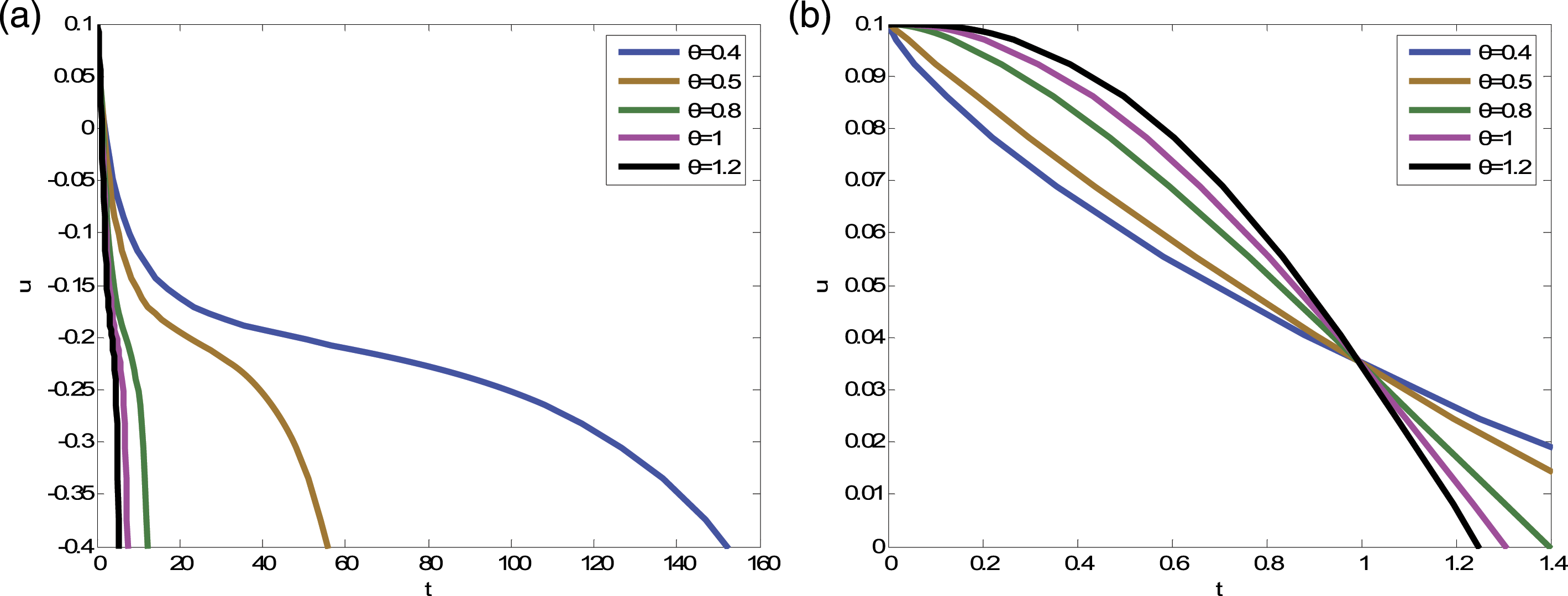
Employing equation (9), we can easily get the acceleration of the Toda-like fractal-fractional oscillator



The variational approach to analysis of the vibration property and wave property is available in Refs. [45–50]. When the acceleration of the system becomes smaller and smaller until zero, and then increases very slowly, He’s pull-down plateau will occur.
Inserting
Figure 12 shows He’s pull-down plateau when Pull-down plateau AC.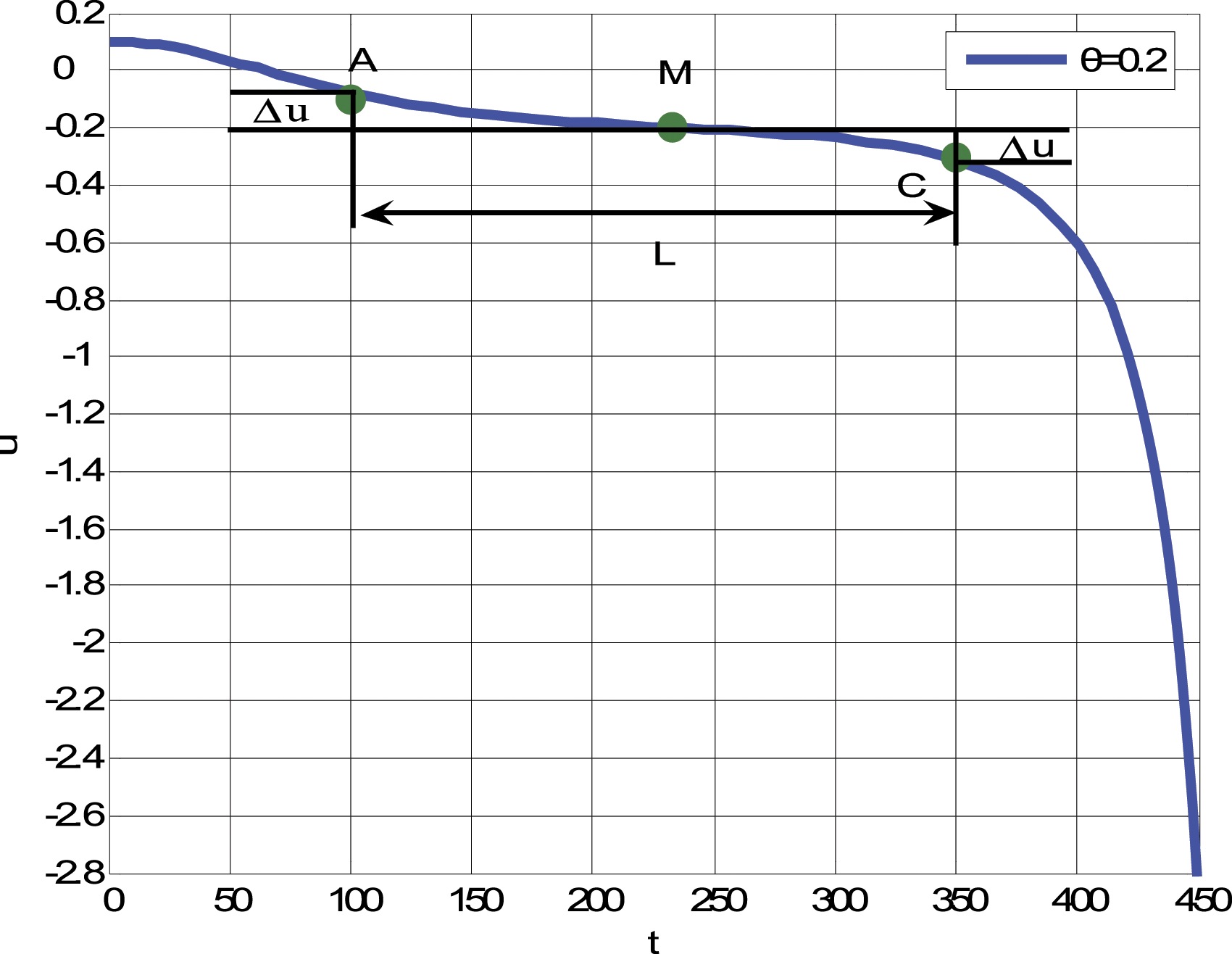
The change of displacement from A to M is

It is noticed that He’s pull-down plateau’s height and width depend upon mainly the velocity change. The fractional parameter does not affect the plateau’s height but affects the width. The value of θ becomes smaller and the width becomes longer. Especially when
If the temperature is relatively suitable, the grass carp’s roes need 30–40 h of incubation time, but during this process, they are easily affected by external factors. During the incubation time, it is important to maintain the stability of the grass carp’s roes’ agglomeration system by choosing an appropriate fractal dimension parameter, thus improving the hatchability of fish fry. The grass carp can attenuate the perturbated vibration by sticky adhesion and it relates to the pull-down stability of the grass carp’s roes. Strong adhesion will accelerate the time for pull-down stability to occur.
The specific environmental perturbations that the grass carp’s roes are located in can also affect the roes’ vibration. As the flow rate increases, the number of grass carp’s roes decreases. This may be due to the fact that the flow rate is too fast, which disperses a portion of the roes and prevents them from aggregating.
After the release of grass carp’s roes on the water surface, they quickly sink due to their higher density than water, and the turbulent effect also promotes the suspension of the roe particles. Therefore, the roes do not all sink to the bottom of the bed but remain in a relatively stable position after reaching a relative equilibrium state. During the process of drifting downstream, there is a small fluctuation up and down with the uplift and cutting of the riverbed.
It was found that grass carp’s roes mainly drift passively in high-speed flow areas of rivers. In strong current regions, the diffusion effect of roes is much less significant than passive drift, while in weak current regions, its diffusion range is relatively large. Fractal diffusion37,51,52 and fractal agglomeration are two sides of a coin, fractal diffusion is also important for grass carp’s roes on the water surface. Compared with the classical diffusion model, a differential model with fractal-fractional derivatives can describe the dynamics of roes’ diffusion process. On the molecule’s scale, the water becomes a discontinuous medium and water molecules can be considered as a Toda-like lattice. A roe will certainly enter into the porosity and an adjacent roe will follow the trajectory of the fore-going roe. The diffusion process depends upon water molecules’ distribution.
Conclusion
In this paper, the agglomeration of roes is described as a Toda-like system and the unstable state of grass carp’s roes on the water surface is analyzed with the aid of the Toda-like fractal-fractional system. The dynamic characteristics of the fractal-fractional oscillator show a low-frequency property for most cases illustrated and the pull-down plateau for the attenuating process is found for the first time ever. He’s pull-down plateau will occur when the acceleration of the Toda-like oscillator becomes smaller until to zero and then increases very slowly. The plateau’s height and width are discussed graphically, and the main factors affecting the plateau’s properties are elucidated. The influence of the fractal derivative order on the pull-down plateau is introduced in detail and displayed in the figures. The mathematical analysis reveals that the fractal exponent θ affects the pull-down instability greatly. Shortening or extending the time of the pull-down stability can guide the roes’ agglomeration to perform more efficiently. This discovery offers a totally new window for biomechanics, especially for biomimicking design of chatter vibration systems inspired by the agglomerated roes.
Footnotes
Declaration of Conflicting Interests
The author(s) declared no potential conflicts of interest with respect to the research, authorship, and/or publication of this article.
Funding
The author(s) received no financial support for the research, authorship, and/or publication of this article.
