




Abstract
The acoustic black hole (ABH) has been proved to reduce broadband vibration response in beams and plates. While the traditional analytical and semi-analytical methods can only deal with the response of simple ABH structures; for complex ABH structures, the numerical methods such as the finite element method (FEM) have to be resorted and these methods are too often time-consuming. In this work, the vibration isolation by a beam structure embedded with periodic embedded symmetric ABHs is investigated. The vibration transmission of a single embedded symmetric ABH beam unit is first studied by the Riccati transfer matrix method (RTMM). A comparative analysis of the convergence speed and the computation efficiency of the unit by the RTMM and the FEM demonstrates the computation time using the RTMM increases linearly with the number of segments while that using the FEM increases exponentially and quickly exceeds the former as the number of segments increases. The computation time is consistent with the computational complexity associated with their respective algorithms. A hybrid dynamics method (HDM) is then proposed to derive for the vibration transmission solution of the beam with single and multiple periodically embedded symmetric ABHs. A comparison of the responses with those calculated by the RTMM demonstrates that the proposed HDM provides an efficient tool for solving the vibration response of the finite beam with periodic embedded ABHs, leading to much improved computational efficiency with ensured numerical stability and accuracy. This advantage in computation efficiency becomes even more obvious for larger structures when the number of the ABH units increased considerably. The proposed hybrid dynamic approach provides a basis for solving the vibration transmission/isolation problems of more complex ABH structures.
Keywords
Introduction
Vibration isolation as one of the key technologies of vibration control, has played essential roles in precision manufacturing, aerospace, marine, civil engineering, etc.1–3 The advancement in these fields has proposed increasing demand for vibration control and new requirements for vibration isolation technology are being put forward. Passive vibration isolation has the advantages of being simple in construction, easy to implement, reliable in operation, and not requiring an external energy supply, 4 compared with active and semi-active vibration isolation. However, conventional passive vibration isolators can merely work within a narrow frequency band, and may lose effect in situations where the disturbance frequency varies greatly. Achieving low-frequency and broadband vibration isolation is a challenging issue facing the passive vibration isolation.
Acoustic Black Holes (ABHs) are an acoustic analog of the concept of black holes in astrophysics. Mironov 5 found in 1988 that in a wedge structure, when the thickness of the structure decreases with a certain power function, the velocity of the bending wave decreases with the thickness, and ideally the wave velocity can be reduced to zero to achieve zero reflection of the wave. This wedge structure is called an ABH (or vibrational black hole, to differentiate from the sonic black hole 6 ). Krylov 7 was the first to apply ABH to beam structures for controlling the propagation of bending waves by utilizing the variation of the thickness of the structure. ABH can achieve broadband vibration isolation above its critical frequency, and can thus overcome the drawback of narrow band for traditional passive vibration isolators.8–10 Therefore, passive vibration isolation devices using the ABH principle have good research prospects.
There are several methods to study the ABH problem computationally. 11 When the propagation of the bending wave in the ABH structure satisfies the basic assumption of geometric acoustics, 12 that is, the variation of the wavenumber is small enough within a distance comparable to the wavelength, the structural vibration can be calculated using the geometric acoustic method. The assumption for geometric acoustics does not hold near the edge of the ABH tip and this method too often applies merely for the semi-infinite ABH structure. To overcome these limitations, semi-analytical approaches are proposed to solve the response of a finite structure.13–15 The key to this approach is to find suitable basis functions as shape functions to fit the deflection of the structure especially at the wedge tip with rapidly varying wavelength, such as wavelet function13,14and Gaussian basis function. 15 The semi-analytical method has a high accuracy when a suitable shape function is found, but it is more difficult to construct the equation when the structure of the object of study is more complex. The finite element method (FEM) allows easier modeling of complex structures, and can provide powerful post-processing functions and good performance in the study of beam and plate vibration response and acoustic radiation, 16 while its numerical accuracy and computational time are closely related to the mesh division. The transfer matrix method (TMM) and the multibody system transfer matrix method (MSTMM)17–19 have been widely used in engineering practice due to their feature of fast calculation and not requiring the overall dynamic equations of the system. MSTMM extends TMM from one dimensional to higher dimensional system and can deal with many complex problems TMM cannot solve such as dynamics of multi-rigid-body systems and of rigid-flexible coupling system, especially with time-varying feature, nonlinearity and large motion characteristics. Riccati transformation is also combined with TMM to form the Riccati transfer matrix method (RTMM) 20 originally for linear chain systems, to improve the numerical stability at higher frequencies or for long chains. RTMM is then extended by Bin He et al. 21 to a general chain system with large overall motion, by J. Gu et al.22,23 to general linear systems with trees and closed loops topology and by X. Rui and D. Bestle 24 to a more general system with various topology and time-variance, nonlinearity and large motion. RTMM has been recently used by Cameron A. McCormick et al. 25 To solve and optimize the vibration response of a beam with a single asymmetric ABH termination. Despite that, the RTMM requires the calculation of intermediate quantities, which reduces the matrix order but increases the number of calculations. Besides, the RTMM has not been applied to more complex ABH structure, which might need more efficient computation tool to be developed.
In this paper, the vibration transmission of a finite-size beam embedded with periodic symmetric ABHs is calculated to investigate the vibration isolation effect of the embedded ABHs. The vibration response of a single embedded symmetric ABH beam unit is first studied by the RTMM. A comparative analysis of the convergence speed and the computation efficiency of the unit by the RTMM and by the FEM is conducted. A hybrid dynamic method (HDM) with the combined advantage of TMM and FEM is then derived for the response of the beam with single and multiple periodically embedded symmetric ABHs or multi-unit ABH beam, so as to further improve the computational speed while ensure the numerical stability. A comparison of the response with that calculated by the RTMM demonstrates that the proposed HDM provides an efficient tool for solving the vibration response of a finite beam with one and multiple embedded ABHs, which provides a basis for solving the vibration transmission/isolation problems of more complex ABH structures.
Vibration transmission of a beam with an embedded symmetric ABH using the RTMM
Theoretical modeling using the RTMM
Figure 1 shows a sketch of a finite-sized ABH beam. The geometrical and material parameters of the beam are presented in Table 1. The damping is introduced to the beam by using the complex Young’s modulus, that is, Schematic of a beam with an embedded symmetric ABH. Parameters related to ABH beam.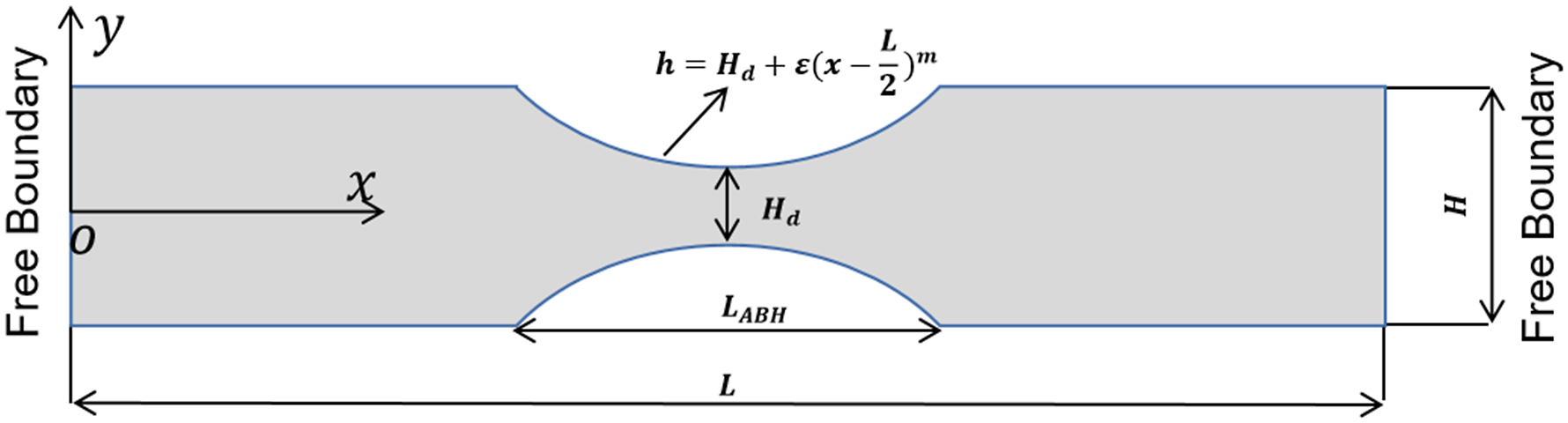

The ABH beam shown in Figure 1 has a uniform thickness section and a varying thickness section (tapered section) in the structure, which needs to be discretized before frequency response calculation using the MSTMM or RTMM, and the discretization is shown in Figure 2. The discretization of the ABH beam.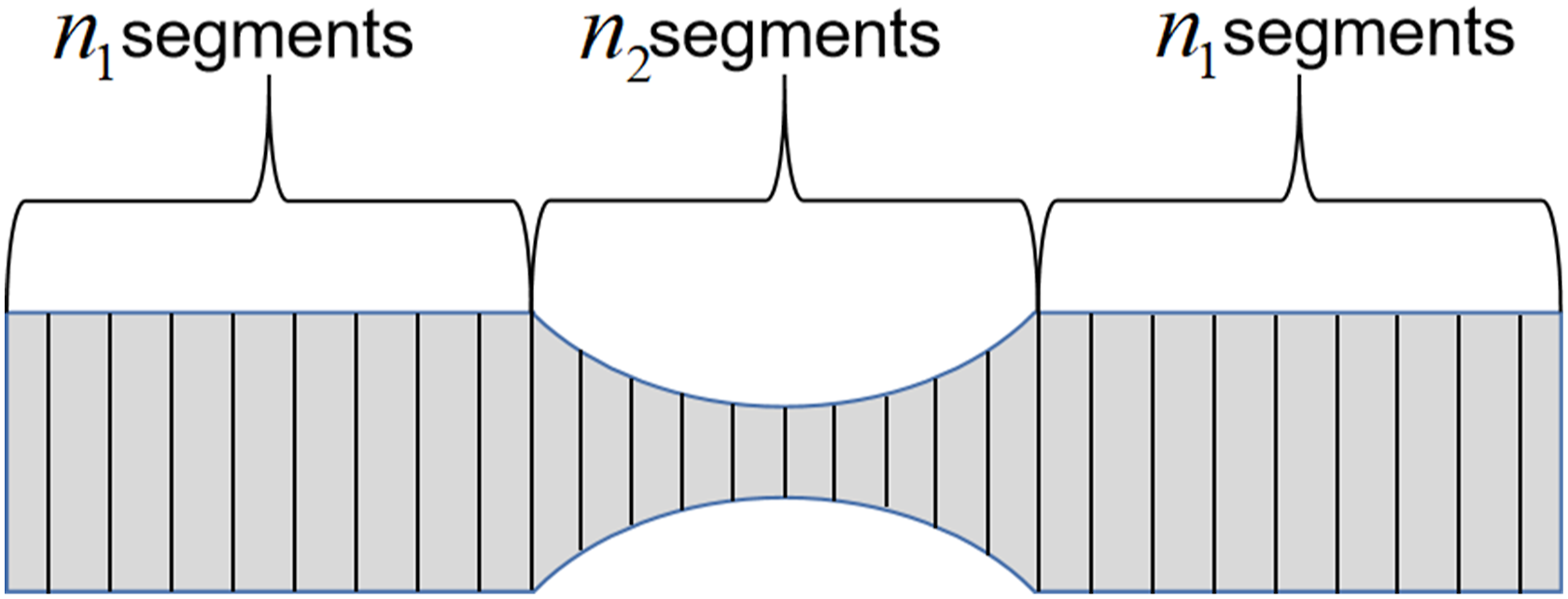
The number of segments of the uniform part of the beam on the left and right sides is Equivalent of the taper segment.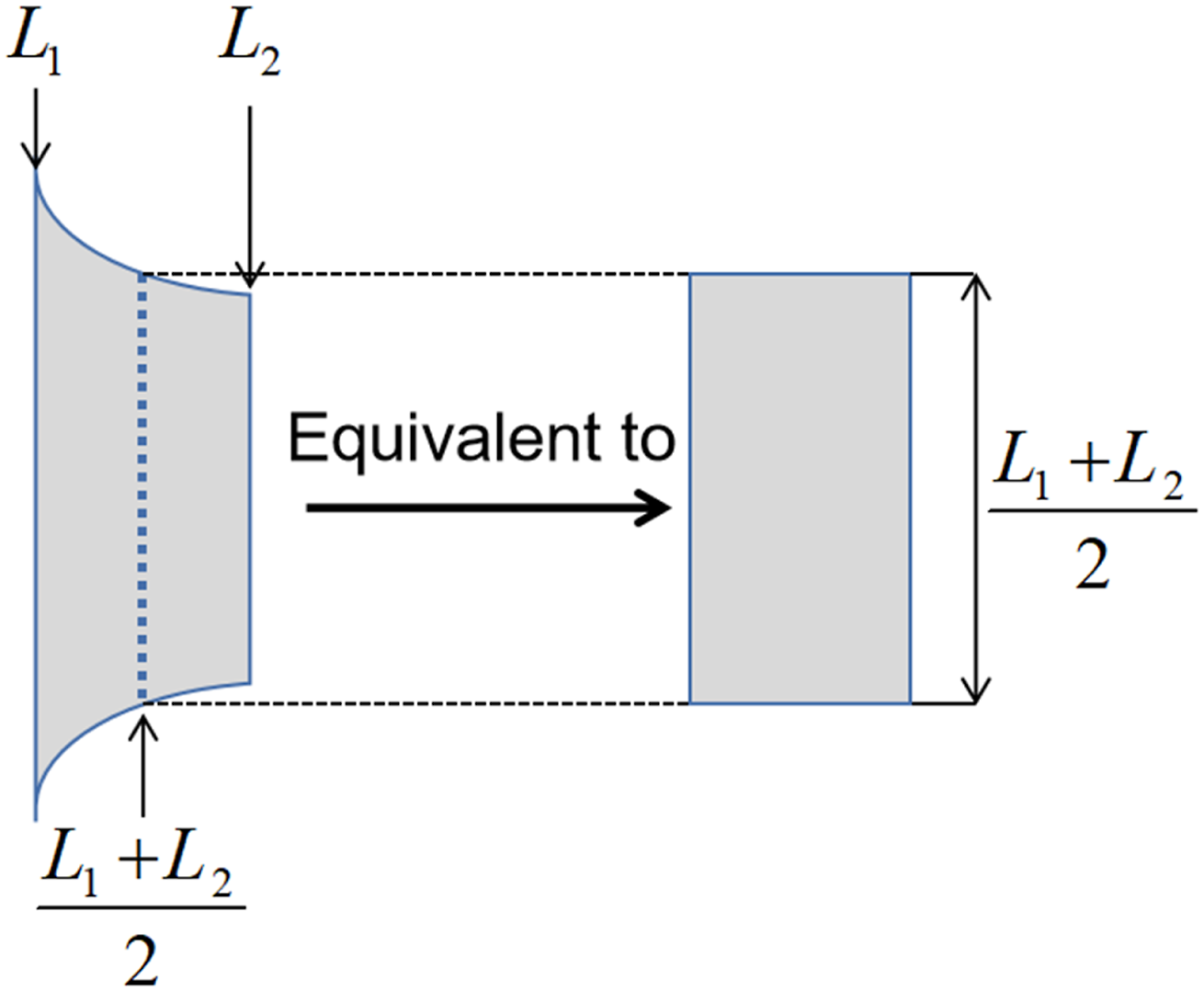
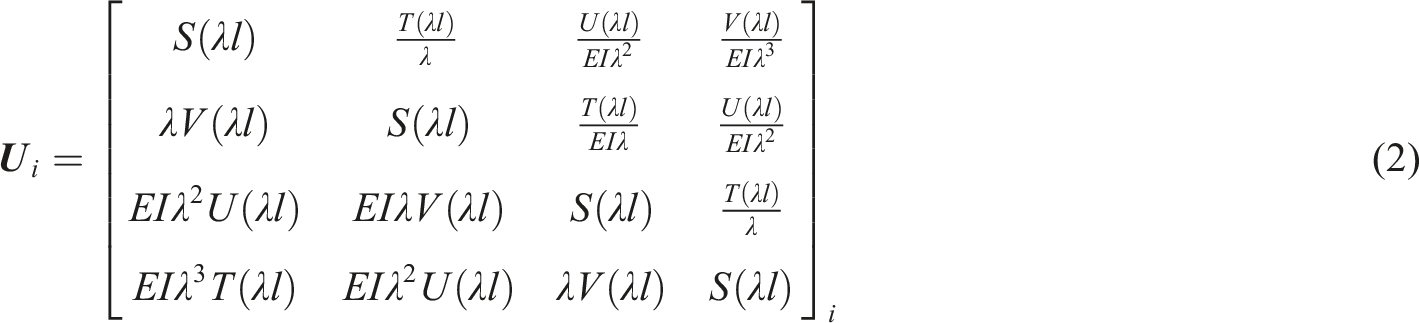
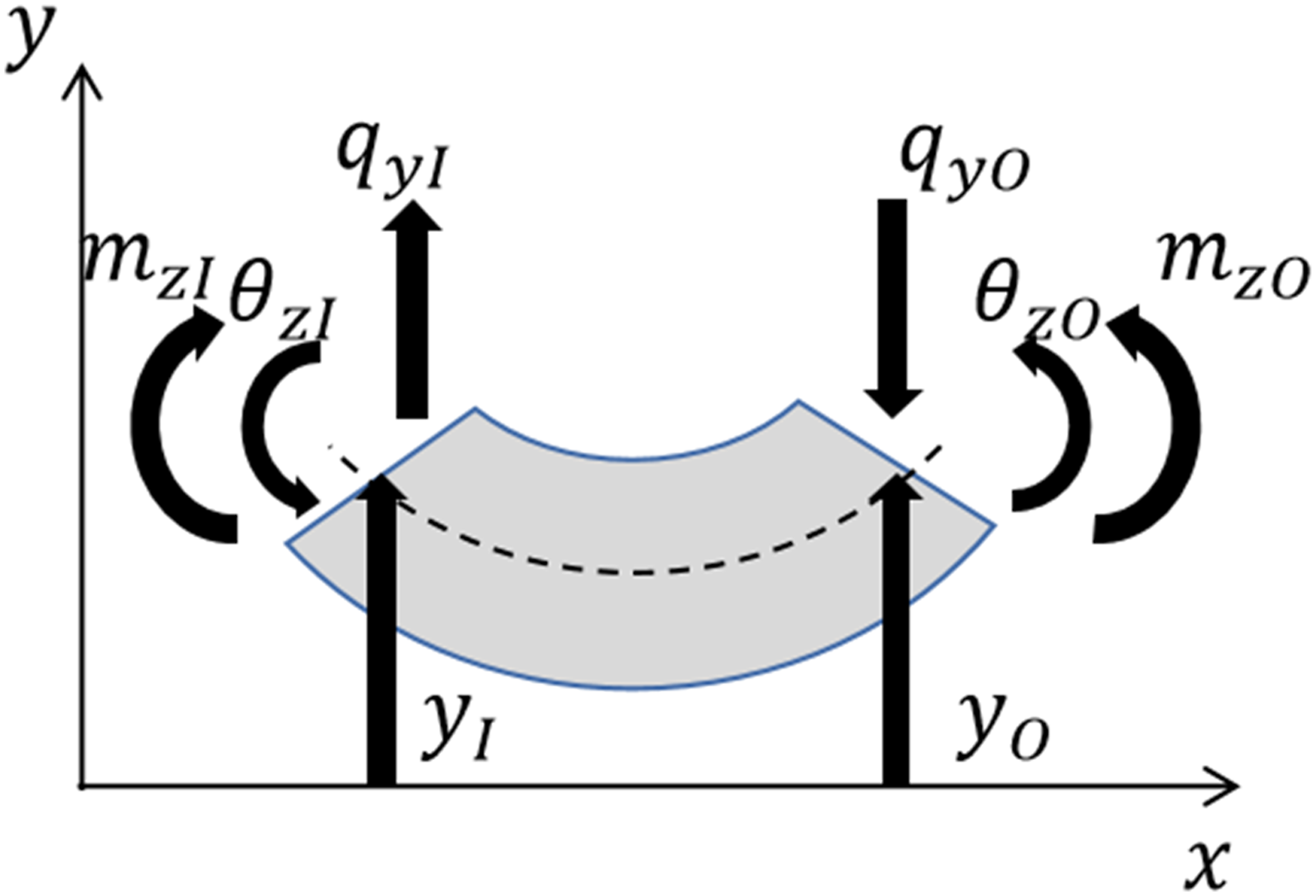
In the MSTMM library, the transfer equation describing the relationship between the state vectors at the input and output of the ith component or here Euler–Bernoulli beam segment, as shown in Figure 4, is
17
Euler–Bernoulli beam segment in the library of MSTMM.


Thus the overall transfer matrix 
The natural frequencies can be obtained by substituting the boundary conditions into the overall transfer equation without the load function (
The forced vibration response of a uniform beam with free-free boundary condition excited by a harmonic force with amplitude 1 N is calculated using the above TMM. The density and Young’s modulus are the same as in Table 1. Two cases are considered: 1. A beam with length 2. A longer beam with length Forced vibration response of a uniform beam with L = 2 m. Forced vibration response of a uniform beam with L = 4 m.
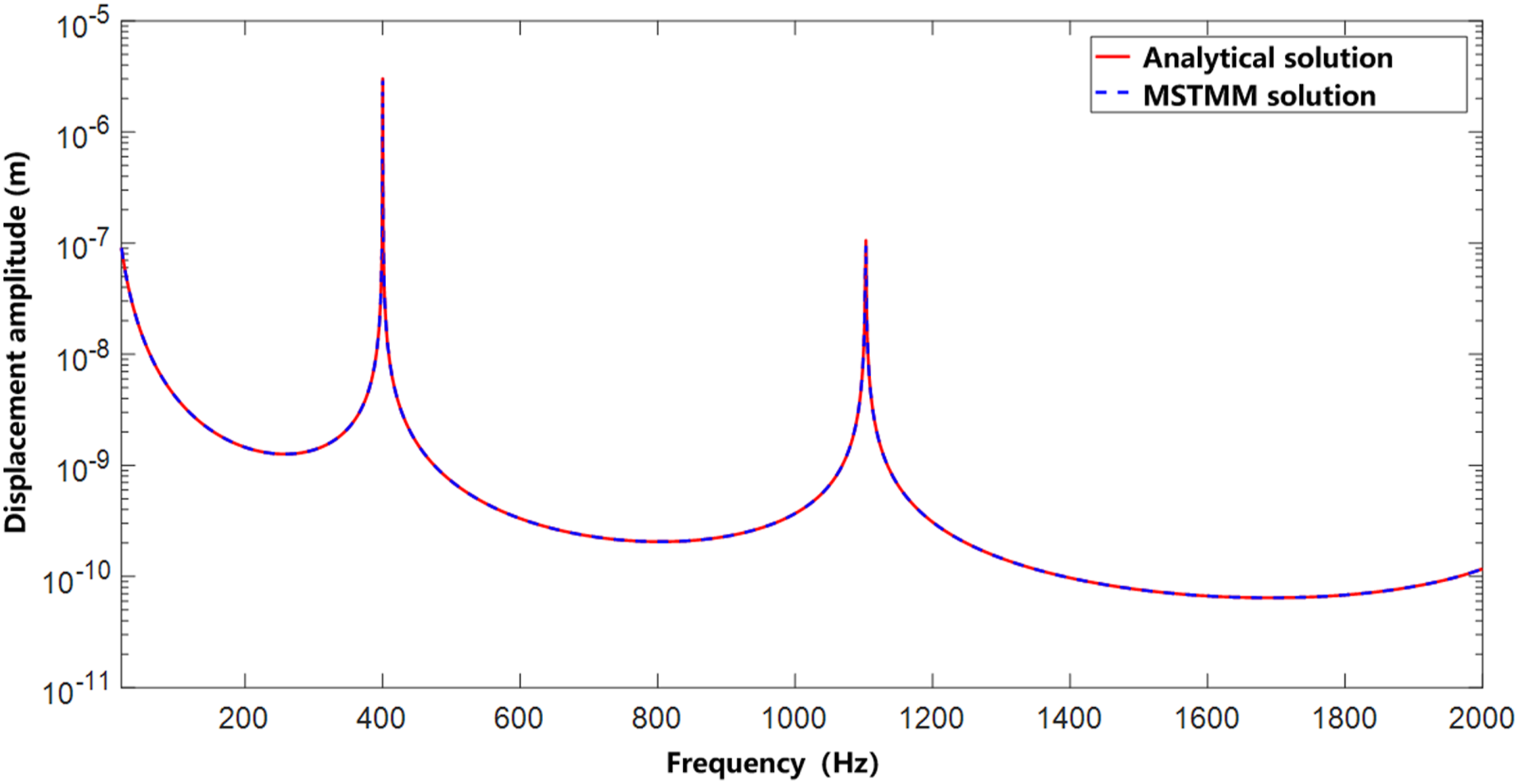
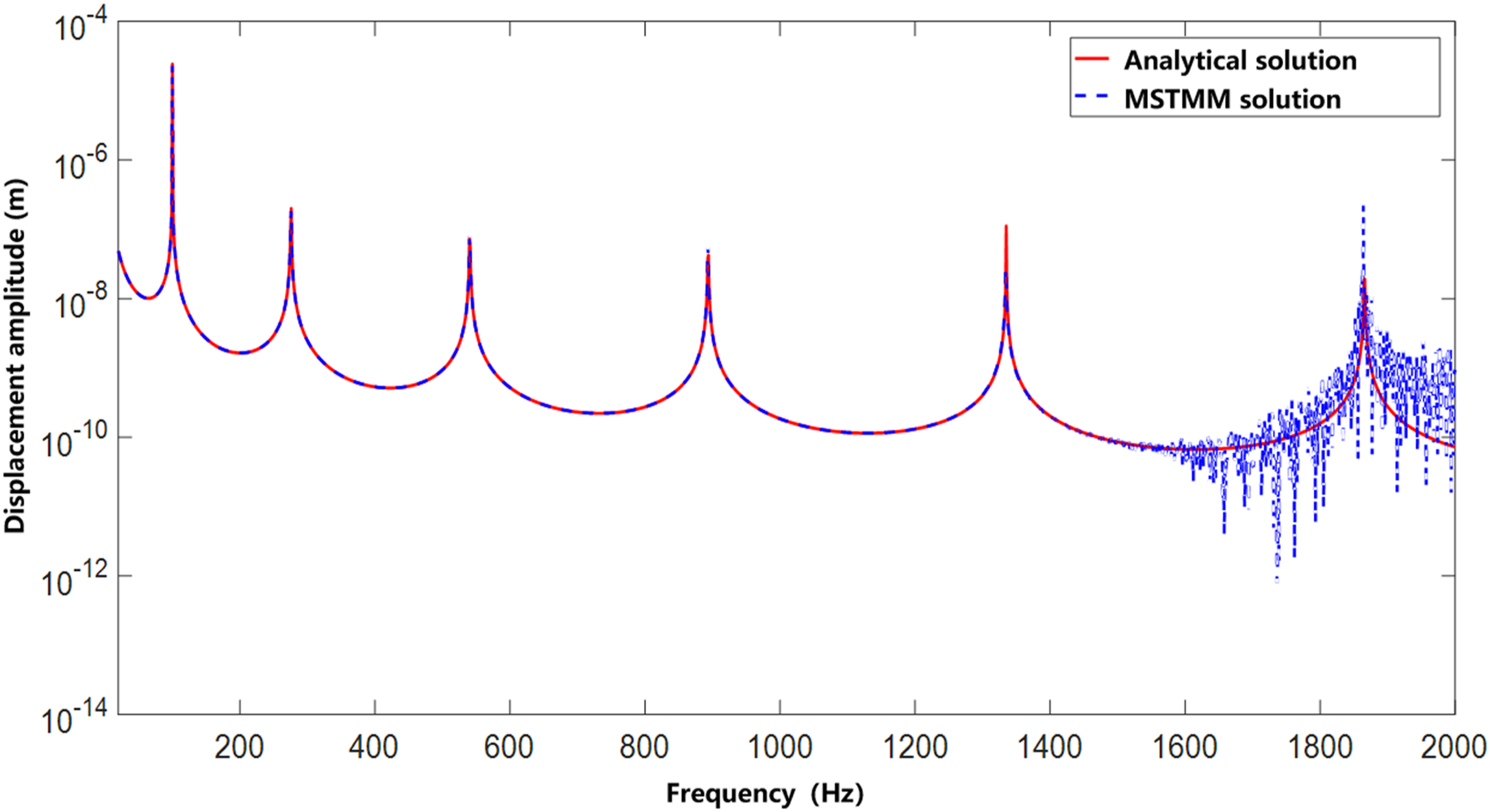
It can be seen from Figure 6 that if the overall transfer matrix is used directly to calculate the frequency response of the beam, the increase in the length of the structure and thus the increase in the number of segments will lead to numerical instabilities at the higher frequencies. This is due to the fact that the condition number of the associated overall transfer matrix is very large when the number of segments becomes large. The problem can be effectively solved using the RTMM17,20,22 briefly described as follows:
Recalling the relationship between the state vector at the input and output of component 
The equation (6) is divided as follows:
Introduce the following Riccati transformation


The 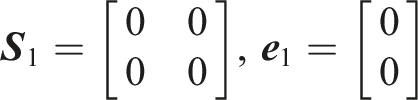
The input and output state vectors of each component can thus be obtained by recursive relations and boundary conditions. By using RTMM, the number of matrix dimensions involved in the calculation can be reduced to half. Note that
Comparison of vibration transmission calculated by RTMM and FEM
The frequency response of the beam with an embedded symmetric ABH in Figure 1 from 20 Hz to 2000 Hz under 1 N harmonic excitation force is calculated by the RTMM. The vibration transmission T is defined as
In order to ensure the correctness of the calculation results, a convergence analysis is performed first. The vibration transmission of the ABH beam shown in Figure 1 is calculated at different number of segments, and the results are shown in Figures 7 and 8. Vibration transmission with different segments for uniform section of the ABH beam. Vibration transmission with different segments for tapered section of the ABH beam.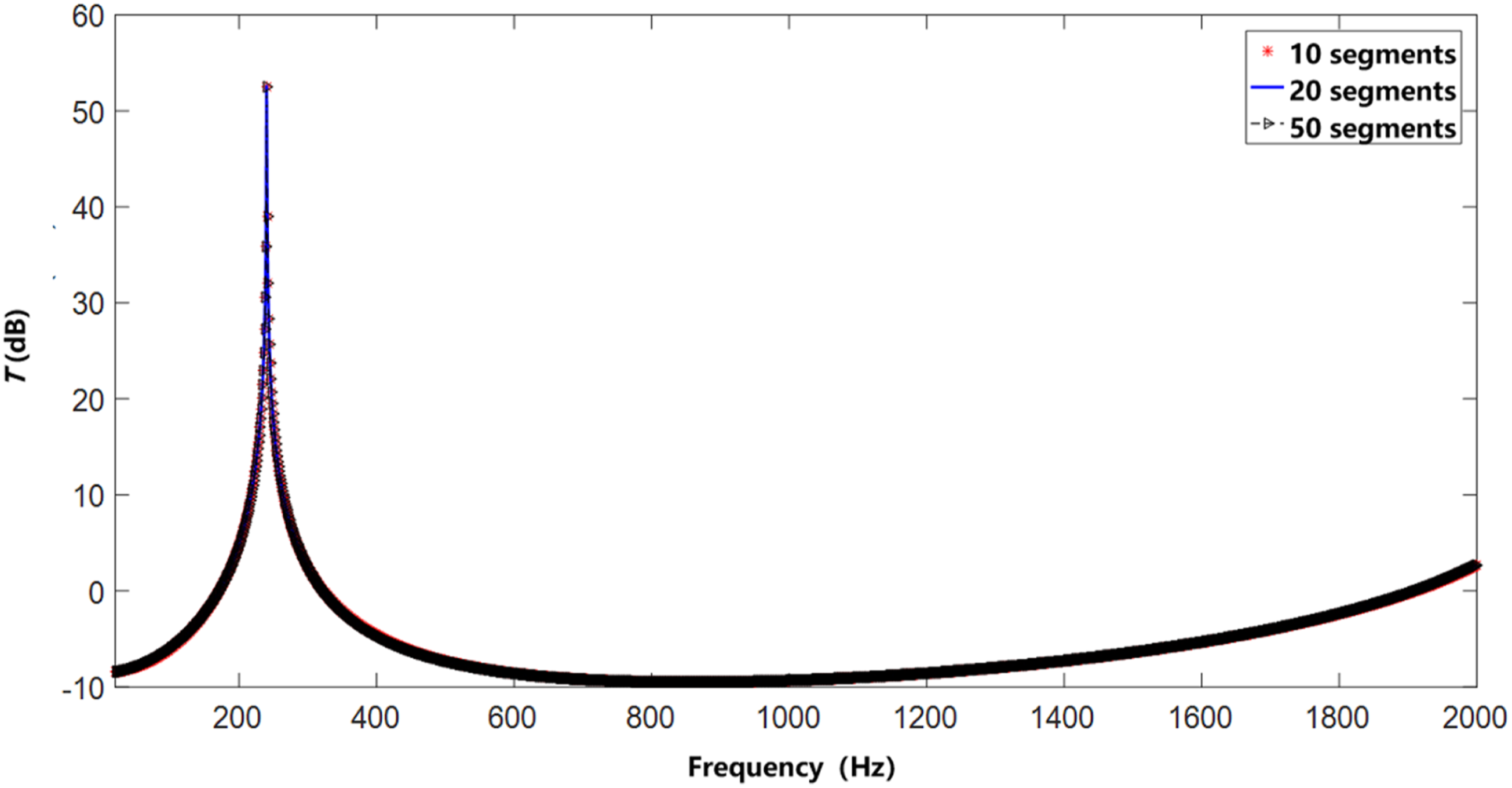
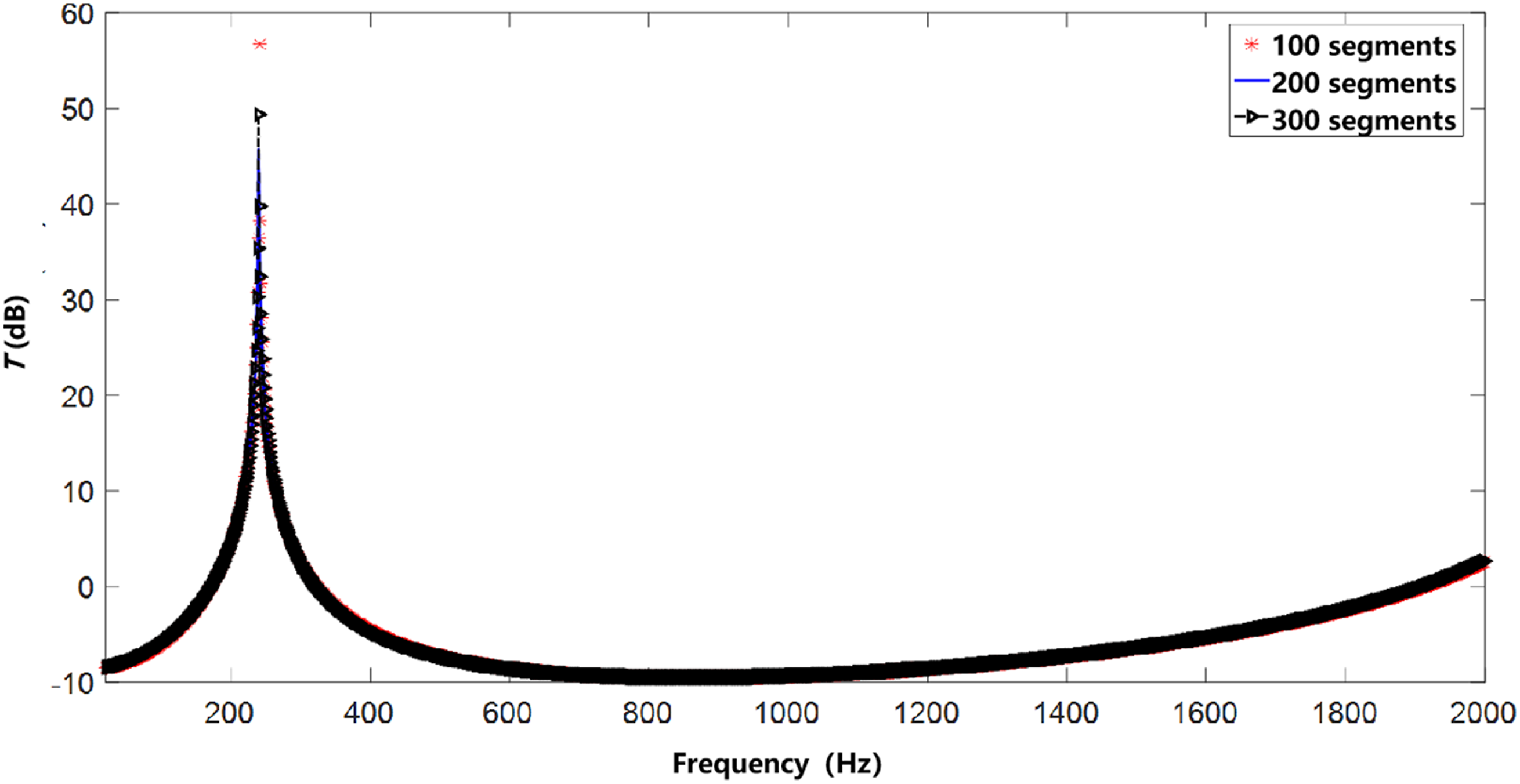
Figures 7 and 8 show the transmission T calculated by taking different numbers of segments for the uniform section, with the number of segments for the tapered section fixed at 200. It can be seen in Figure 7 that there is no obvious differences in the calculated results for all concerned frequencies when the number of segments for the uniform section is 10, 20, and 50. Figure 8 shows the transmission calculated by taking different numbers of segments for the tapered section, where the number of segments for uniform section is fixed at 10. It can be seen that the transmission at non-resonant frequencies is nearly unchanged when the number of segments for the tapered section varies. The latter has a great influence mainly on the peak T at the resonant frequency. So the convergence of the peak T at the resonant frequency can be taken as the convergence criterion for T.
Figure 9 shows the convergence curve of the transmission T at the resonant frequency by using RTMM and FEM, respectively. It can be seen that as the number of segments for the tapered section gradually increases, the transmission T calculated by both methods first fluctuates and then converted to a certain value. Peak T against the number of segments for tapered section of the ABH beam.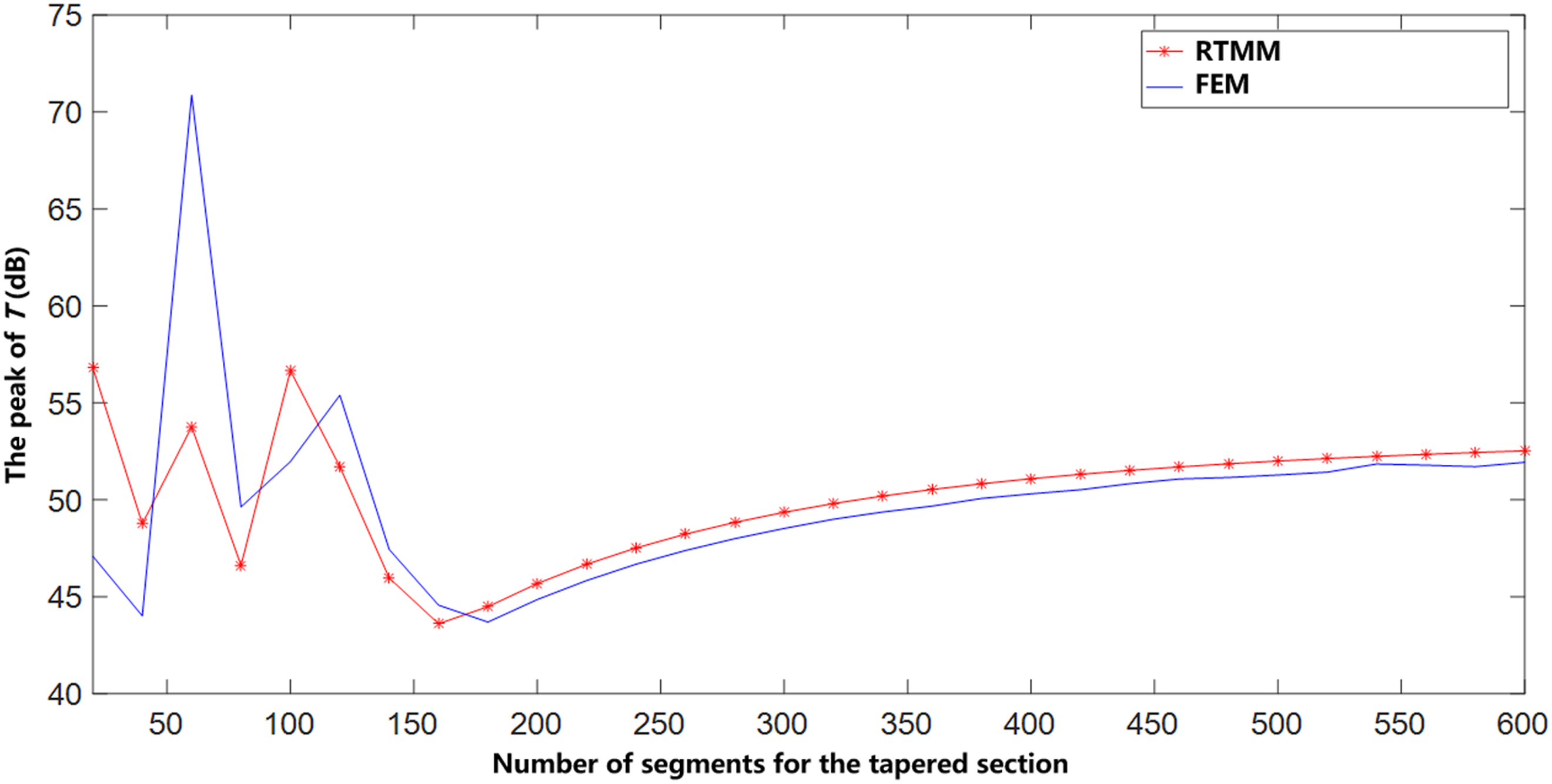
Both the FEM and RTMM have basically achieved convergence when the number of segments in the tapered section reaches 600. To achieve a high accuracy, for both methods the tapered section is divided into 1000 segments for the calculation of T. The transmissions using the two methods are compared in Figure 10, which shows good agreement with each other. A comparison of vibration transmission calculated by RTMM and FEM.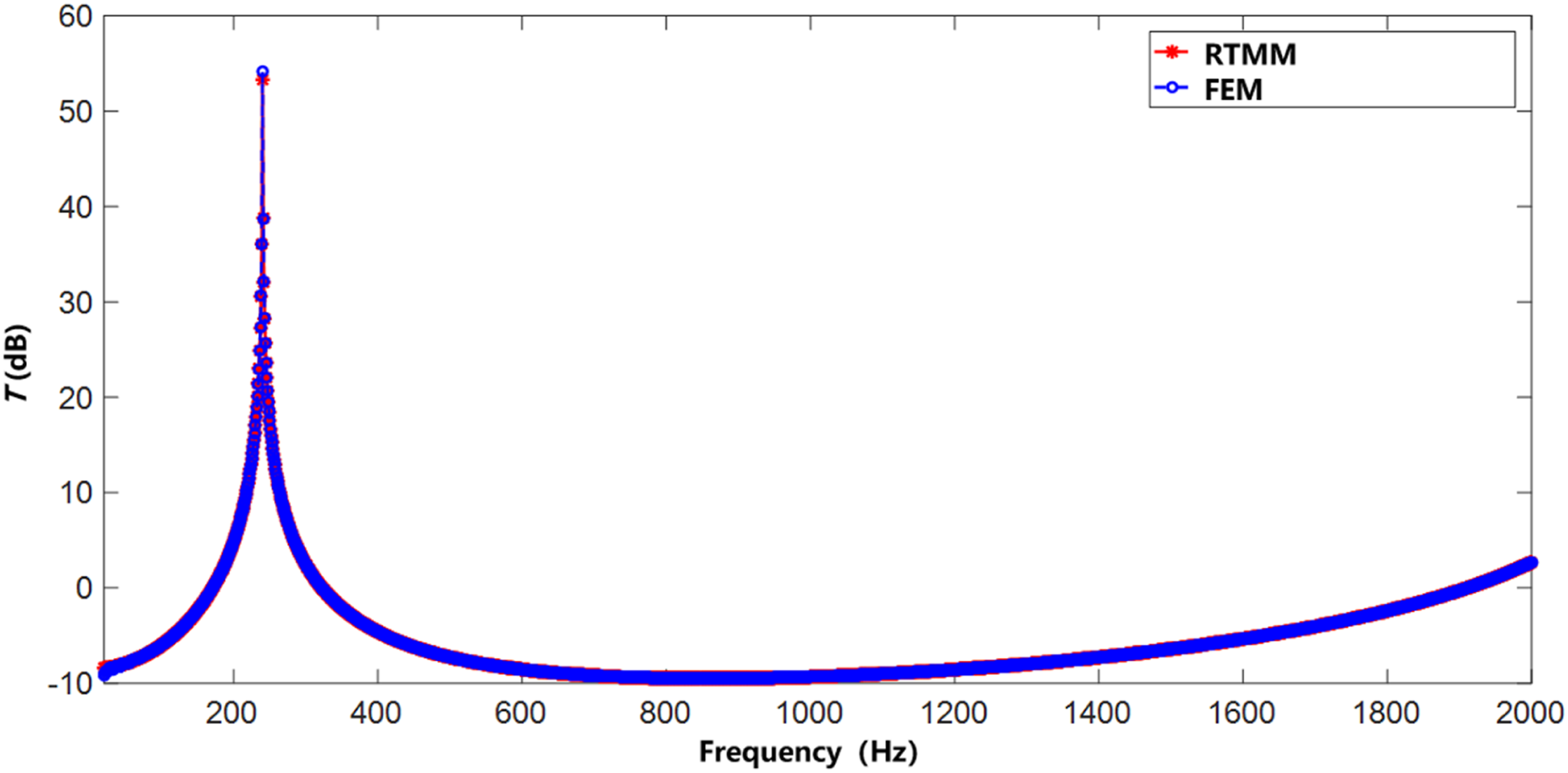
The time complexity of the two computation methods
26
are also compared. For the FEM, since that the stiffness array and the mass array of each segment are both
A comparison of the computation time using the RTMM and FEM is shown in Figure 11. From Figure 11, it can be seen that generally the computation time using the RTMM increases linearly with the number of segments while that using the FEM shows an exponential increase and quickly exceeds the former as the number of segments increases. Both curves are consistent with the computational complexity associated with their respective algorithms. Variation of computation time with increasing number of segments in the taper section of an ABH beam.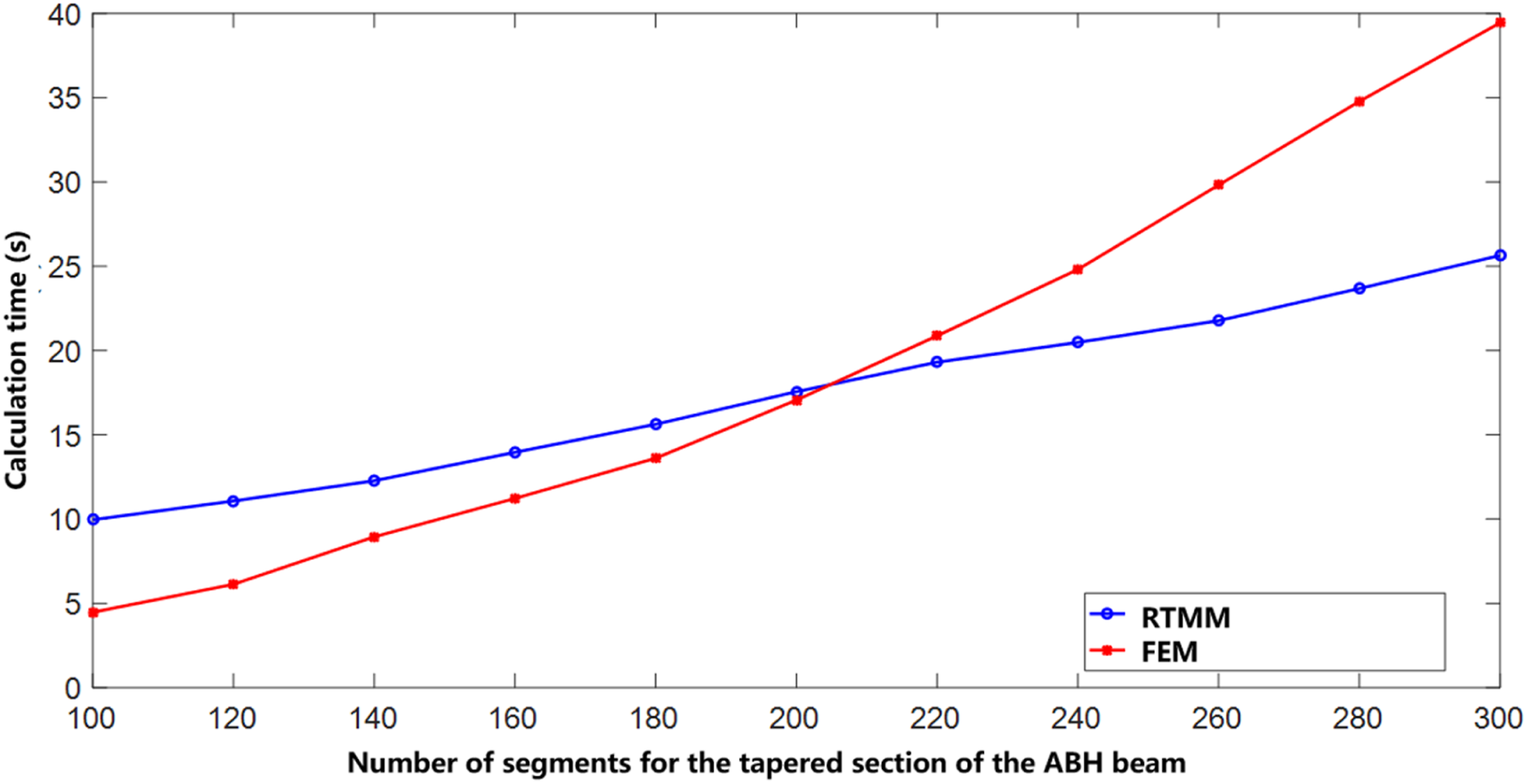
HDM for solving the vibration transmission of a beam with an embedded symmetric ABH
In solving the dynamic problem, the MSTMM can ensure that the order of the matrix does not expand during the calculation, thus reducing the time complexity of the calculation, but with the increase in structure complexity and in turn the increase in the number of structure components, the overall transfer matrix is prone to cause numerical problems in the solution. The RTMM requires the calculation of intermediate quantities, which reduces the matrix order but increases the number of calculations. The FEM does not require multiplication of multiple matrices when solving the problem so that avoid such numerical problems, but the order of the resulting matrix expands with the number of meshes, thus increasing the computation time rapidly. The HDM 27 combines the advantages of FEM and TMM, in terms of both reducing the matrix dimension to increase the computational speed and maintaining numerical stability. The HDM will thus be used to study the aforementioned vibration transmission problem of a beam with an embedded symmetric ABH.
Theoretical modeling using the HDM
In this section, the theoretical modeling of the aforementioned beam with an embedded symmetric ABH using HDM is derived, which is based on combined FEM and TMM. In the HDM analysis,27,28 the Euler–Bernoulli beam segment is shown in Figure 12. The planar beam segment used in the HDM.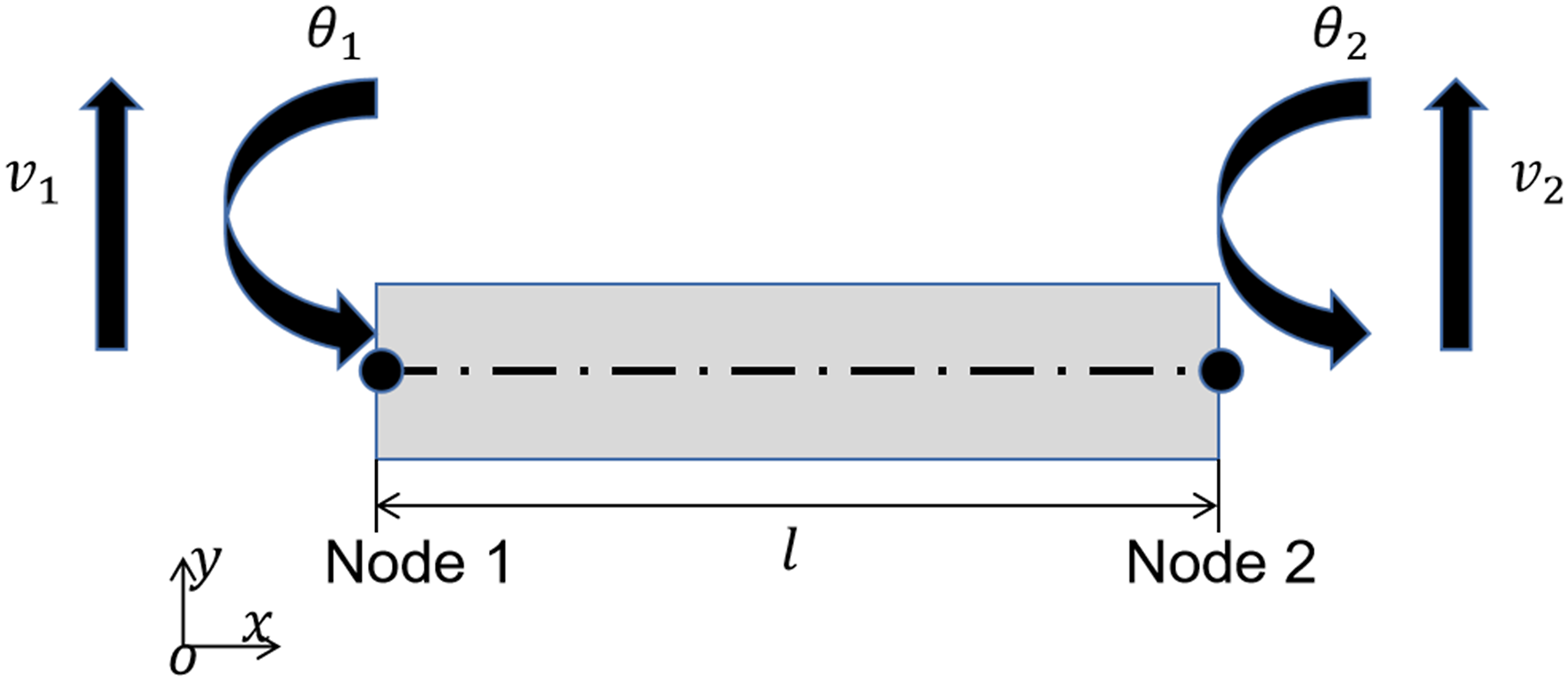
For this beam segment, the nodal displacement array and nodal force array are

The equilibrium equation of the ABH beam segment can be obtained from the principle of minimum potential energy
The equilibrium equation of each segment is constructed and then assembled into the overall equilibrium equation

Therefore equation (13) can be expressed as
Letting 
The transverse displacement can thus be obtained by solving the equation (16). In the Figure 12, the left end is chosen as node one and the input end (denoted as I), and the right end is node two and the output end (denoted as O). The ABH beam is discretized and the transfer matrix is calculated for each segment. 27
The overall transfer matrix of the ABH beam can be obtained
The overall transfer equation of the ABH beam is



the overall transfer equation (18) can be rewritten in the form of a finite element equation. And equation (21) has the same form as equation (16).

In equation (22), the negative sign in the second row of
Comparison of the vibration transmission by HDM and RTMM
The vibration transmission problem in Vibration Transmission of a Beam with an Embedded Symmetric ABH Using the RTMM is recalculated by using the derived HDM and the results are compared with those by the RTMM, as shown in Figure 13. As shown in Figure 13, the results obtained by the HDM and RTMM are consistent, which verifies the correctness of the method. A comparison of vibration transmission calculated by HDM and by RTMM.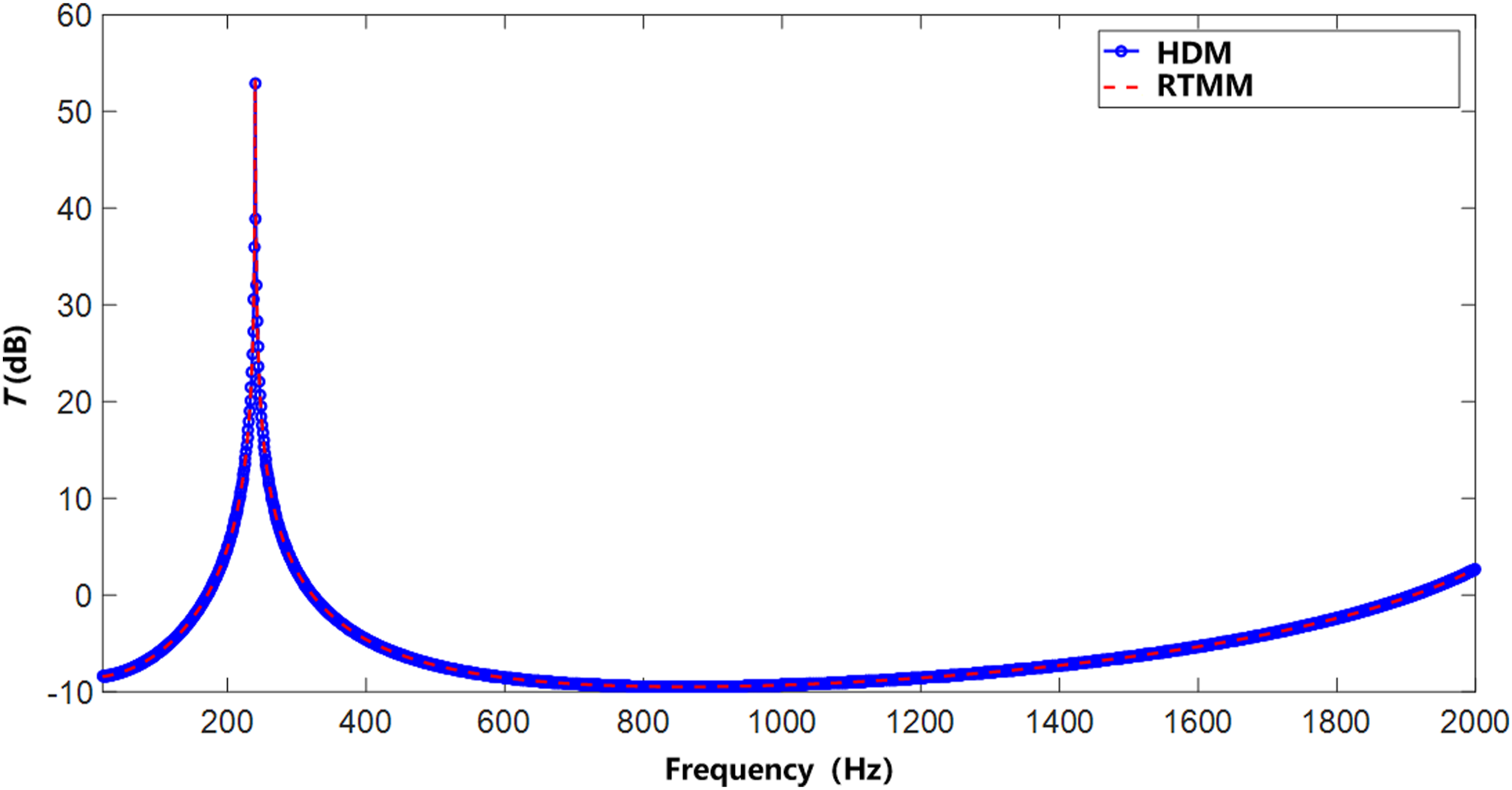
A comparison of the computation time of the two methods is then shown in Figure 14. As shown in Figure 14, the computation time cost by HDM is less than 1/4 of that of the RTMM. With the number of segments increases, the advantages of HDM become more and more obvious, which can be explained as follows. As the number of segments enhances, the FEM does not require multiple matrix multiplication in the calculation process, thus avoiding the associated numerical instability, but it will expand the matrix order as the number of segments increases, leading to a decrease in computational efficiency. The RTMM does not expand the order of the matrix during the computation, but too many matrix multiplications can bring about ill-conditioned matrix. The results in Figures 13 and 14 verify that the HDM can combine the advantages of the FEM and RTMM to ensure the numerical stability, computational efficiency as well as the accuracy. A comparison of the computation time of the vibration transmission using HDM and RTMM.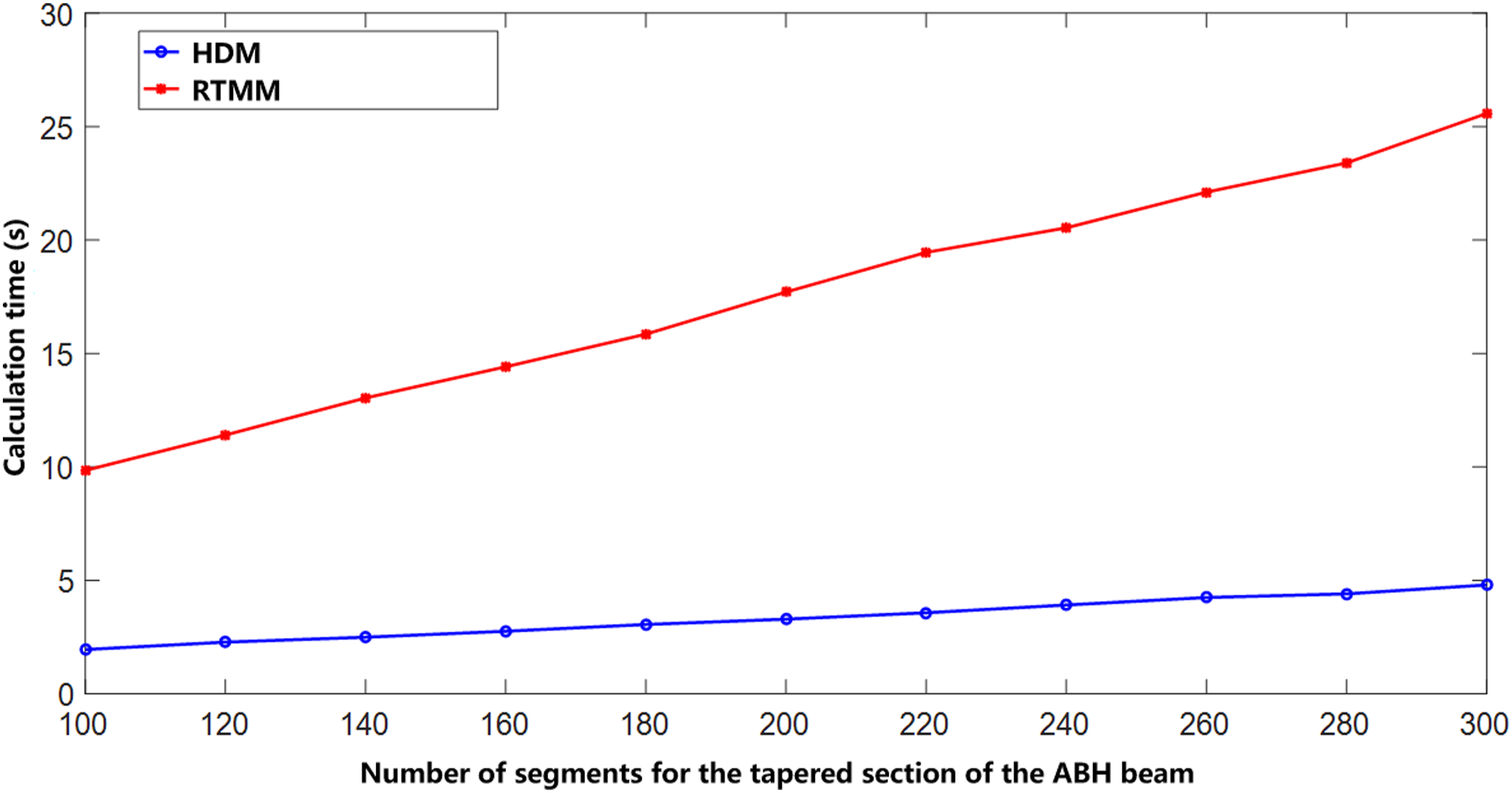
Vibration transmission of a beam with multiple embedded symmetric ABHs by HDM
In practical applications, an ABH beam with multiple embedded symmetric ABHs can perform better in order to achieve sufficient vibration isolation efficiency. The vibration transmission of such a beam is investigated by applying the HDM in this section. Figure 15 shows an ABH beam with multiple embedded symmetric ABHs, which is formed by connecting multiple aforementioned ABH beams shown in Figure 1 in series. A beam with multiple embedded symmetric ABHs.
Vibration transmission for three embedded symmetric ABHs
First, we take the beam with three embedded symmetric ABHs as an example and divide it into three units with nodes according to the FEM, as shown in Figure 16. Unit and nodes division of a beam with three embedded symmetric ABHs.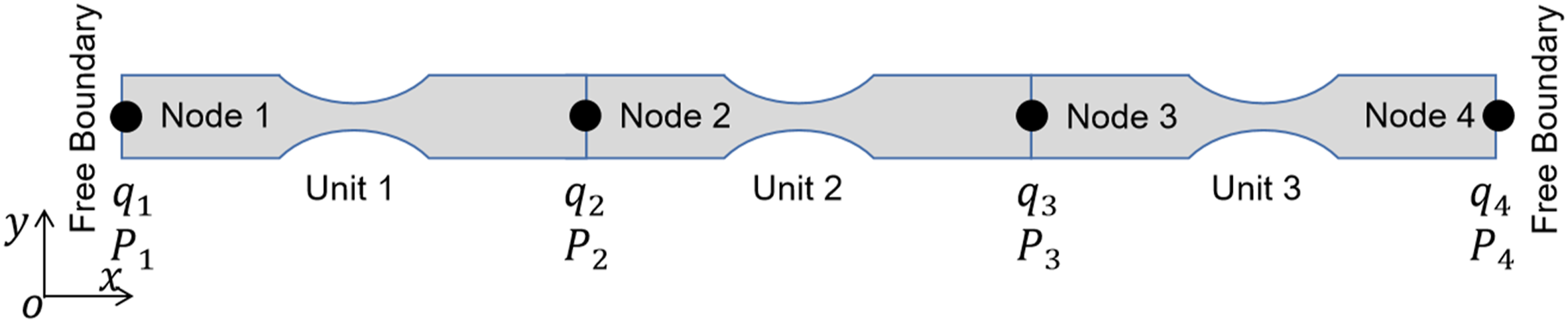
After the unit division is completed, the following equations holds for each unit according to equation (21) in the HDM derived for a single ABH beam unit in Theoretical Modeling Using the HDM, and the superscript of 
Combining the above equations yields


The vibration transmission of this three-unit ABH beam from 20 Hz to 2000 Hz under 1 N harmonic excitation force is calculated by HDM and the results are compared with those calculated by RTMM in Figure 17. From Figure 17, it can be seen that the results from the two methods matches very well with the relative error less than 2.2%, which demonstrates that the HDM has good computation accuracy on calculating the vibration of a beam with multiple embedded ABHs. Calculation results of HDM for three-unit ABH beam.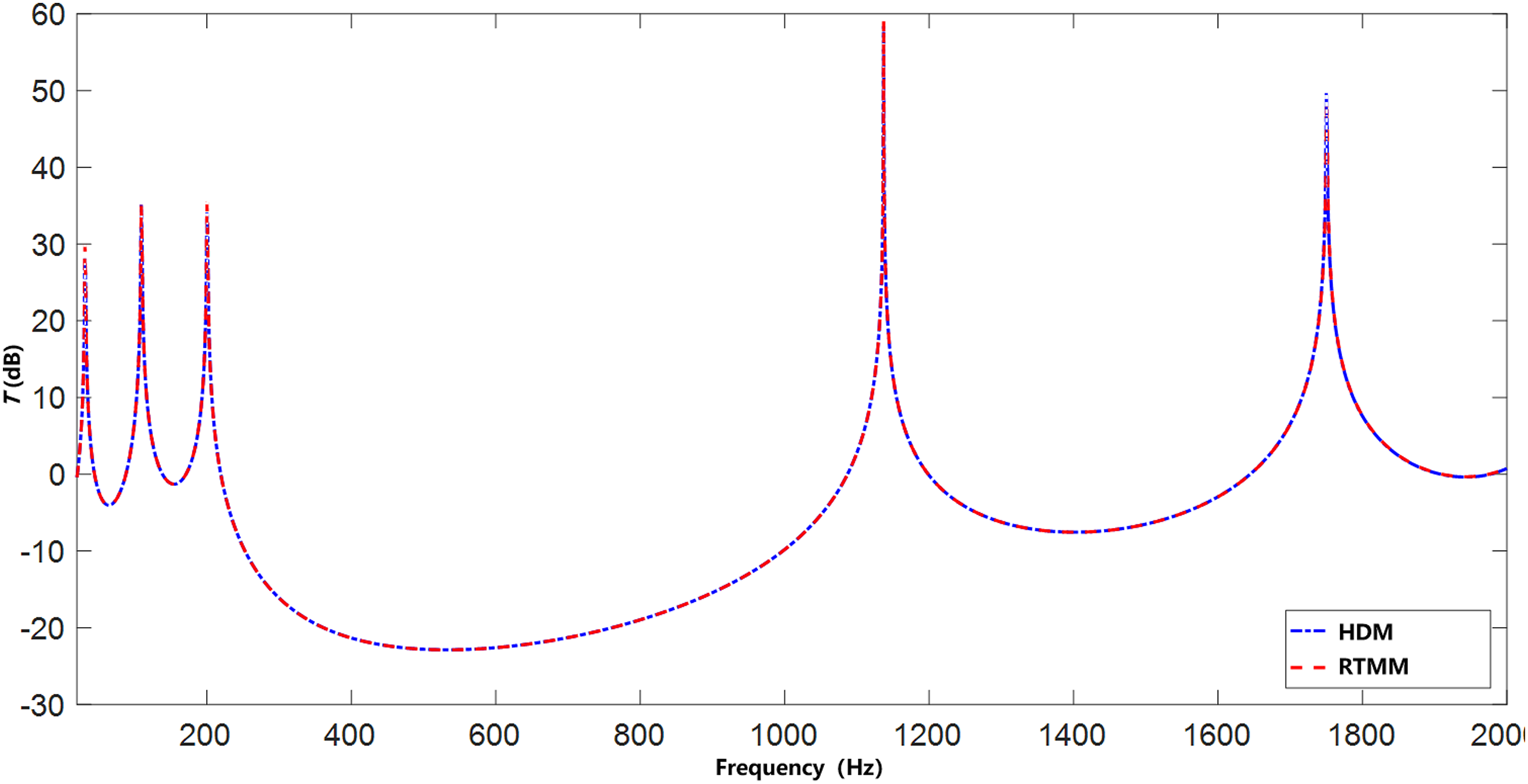
Vibration transmission for multiple embedded symmetric ABHs
In this section, the vibration transmission of a beam with multiple embedded symmetric ABHs or with three, five, seven, and nine embedded symmetric ABHs were carried out by HDM, respectively, and the calculation results are shown in Figure 18(a). As can be seen from Figure 18(a), for a beam with nine embedded symmetric ABHs or nine ABH units, the transmission becomes much attenuated (maximally by over 50 dB) in a broad frequency band, corresponding to the band gap predicted by the free vibration of the infinite periodic ABH beam, as shown in the blue area in Figure 18(b). For a beam embedded with only a small number of ABHs, the vibration attenuation in the attenuation region is less obvious and the boundaries of attenuation region are somewhat deviated from the bounding frequencies of the band gap and the larger number of units, the less the deviation.
29
(a) T of finite beams with different number of ABH units, and (b) Dispersion curves of an infinite periodic beam.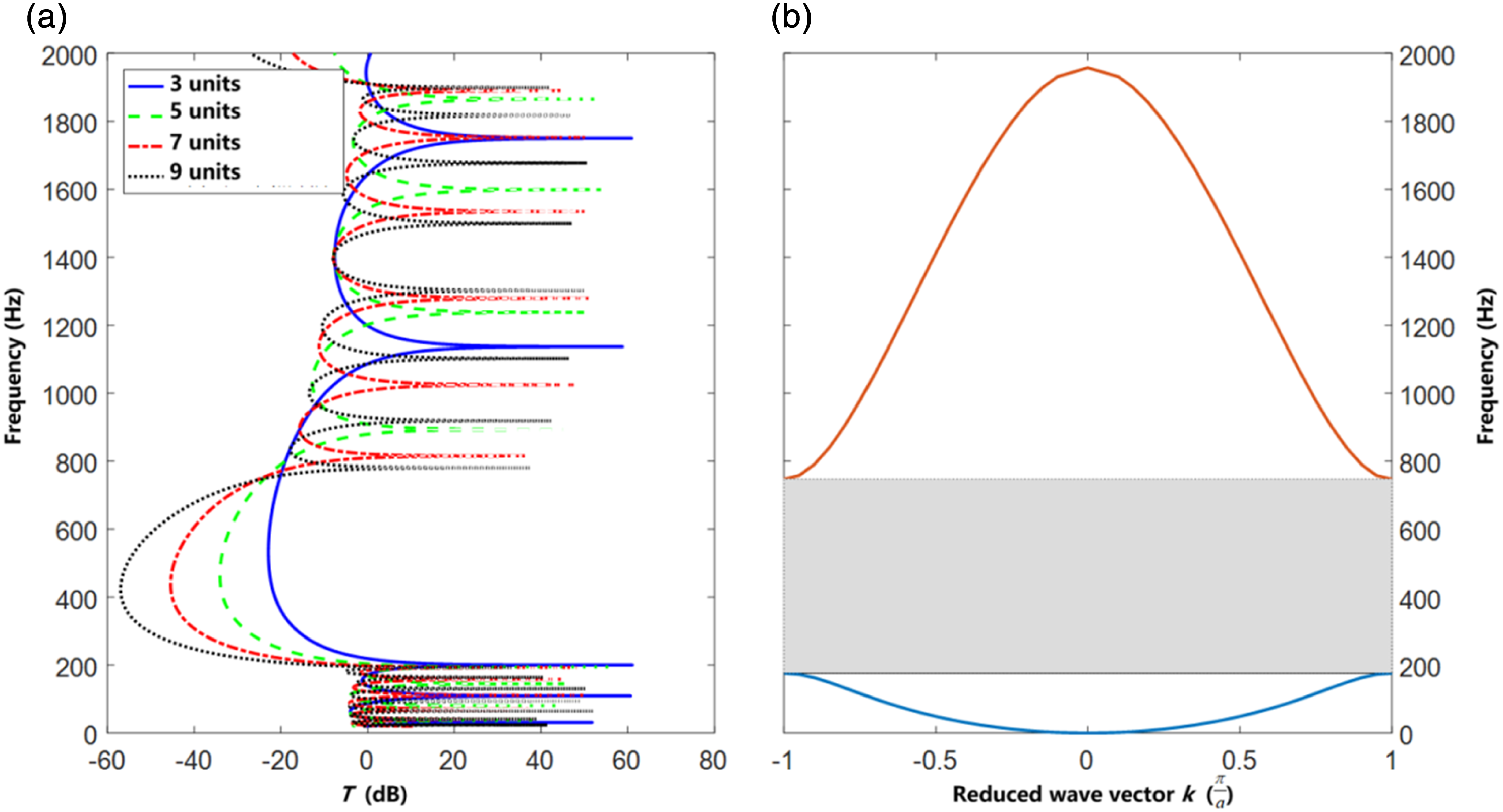
Figure 19 shows the variation of the computation time against the number of ABH units by RTMM and HDM, respectively. As is shown in Figure 19, as the number of ABHs units increases, the computation time required by RTMM increases rapidly, while that by the HDM increases much slowly. The latter method is approximately five times (for three ABHs) and even six times (for seven ABHs) faster than the former. The high computation efficiency of the HDM can be attributed to the fact that only the physical quantities at the nodes need to be solved during the calculation, so the number of calculations can be greatly reduced when the physical quantities between the nodes do not need to be solved. For the physical quantities between the nodes, the response can be calculated by multiplying the physical quantities obtained at the nodes with the corresponding transfer matrix. Computation times against the number of ABH units.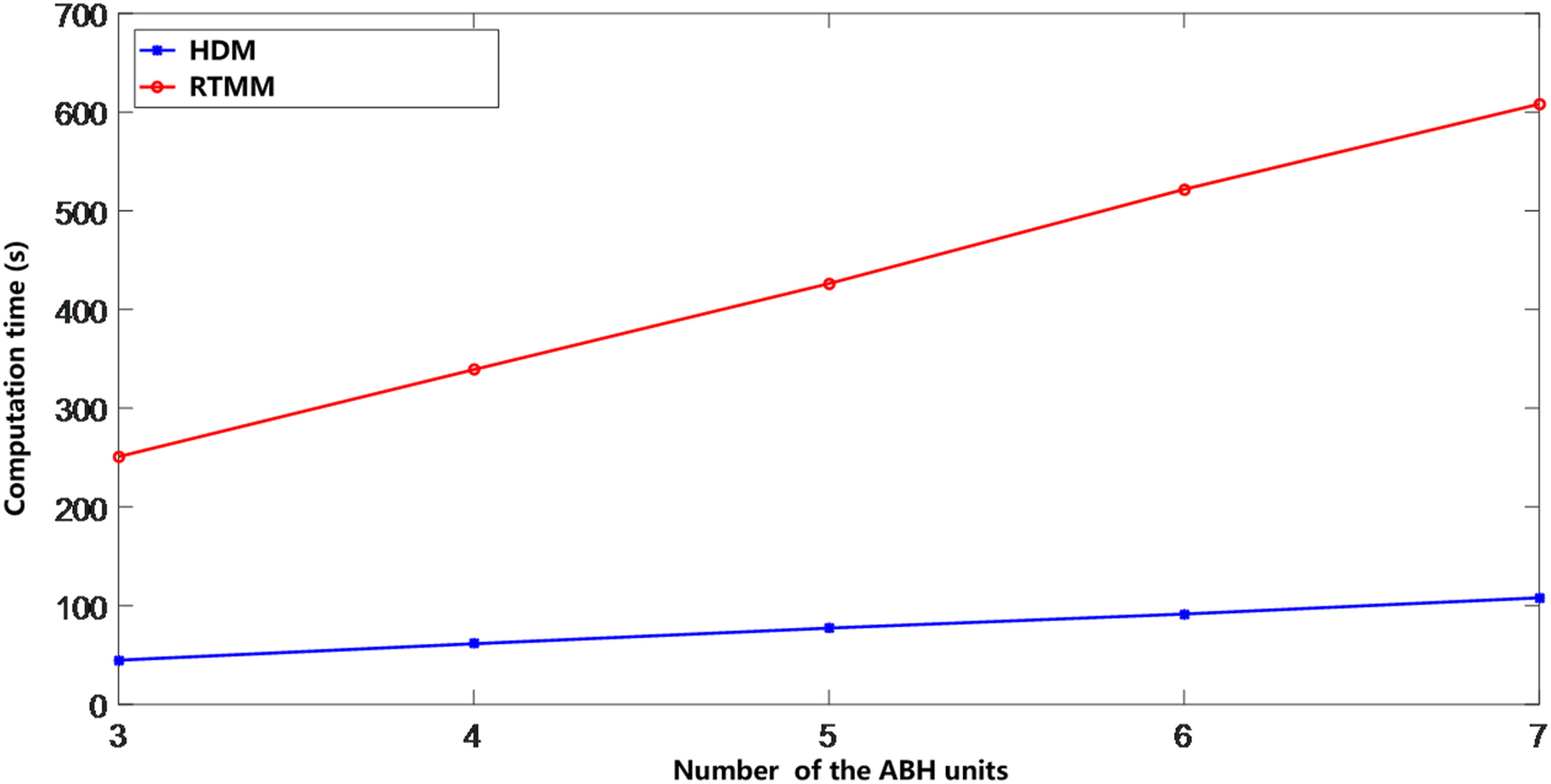
The above analysis demonstrates that the HDM only requires the calculation of the overall transfer matrix between the nodes compared to the RTMM, avoiding the numerical problems associated with the multiplication of multiple transfer matrices. Compared with the RTMM, the HDM calculates only the physical quantities at the nodes, reducing the calculation of intermediate quantities; compared with the FEM, the HDM greatly reduces the matrix order and greatly enhances the calculation speed while ensures the accuracy.
Conclusions
This paper is dedicated to the fast calculation of the vibration response of a beam structure with periodic embedded ABHs. The vibration response of a single embedded symmetric ABH beam unit is first studied by the RTMM or a combined TMM with Riccati transformation. A comparative analysis of the convergence speed and the computation efficiency of the unit by the RTMM and by the FEM demonstrates the computation time using the RTMM increases linearly with the number of segments while that using the FEM shows an exponential increase and quickly exceeds the former as the number of segments increases. The computation time is consistent with the computational complexity associated with their respective algorithms.
HDM with the combined advantage of TMM and FEM is then derived for the response of the beam with single and multiple periodically embedded symmetric ABHs (or multi-unit ABH beam), respectively, so as to further improve the computational speed while ensuring the numerical stability.
Results show that the HDM only requires the calculation of the overall transfer matrix between the nodes compared to the RTMM, avoiding the numerical problems associated with the multiplication of multiple transfer matrices. Compared with the RTMM, the HDM calculates only the physical quantities at the nodes, reducing the calculation of intermediate quantities; compared with the FEM, the HDM greatly reduces the matrix order and greatly enhances the calculation speed while ensures the accuracy.
A comparison of the responses with those calculated by the RTMM demonstrates that the proposed HDM provides an efficient tool for solving the vibration response of the finite beam with periodic embedded ABHs, leading to much improved computational efficiency with ensured numerical stability and accuracy. This advantage of HDM in the computation efficiency becomes even more obvious for larger structures when the number of the ABH units increased considerably. The proposed hybrid dynamic approach thus provides a basis for solving the vibration transmission/isolation problems of more complex ABH structures.
Footnotes
Declaration of conflicting interests
The author(s) declared no potential conflicts of interest with respect to the research, authorship, and/or publication of this article.
Funding
The author(s) disclosed receipt of the following financial support for the research, authorship, and/or publication of this article: This work was supported by the National Natural Science Foundation of China (Grant No. 11874303), the Equipment Pre-Research Field Fund (Grant No. 80910010102), and Shuangchuang Program of Jiangsu Province (Grant No. JSSCBS20210240).
