




Abstract
This paper focuses on the numerical investigation of a fractal modification of capillary oscillator by using a coupling technique based on the two-scale transformation and the global residue harmonic balance method. This fractal oscillator can be transformed as the classical capillary oscillator with the help of the two-scale transformation. We further obtain an approximated oscillator by using Taylor approximation. The approximations or frequencies are given by applying the global residue harmonic balance method without discretization. Numerical sensitive analysis of the approximations about different parameters is considered in detail. Compared results with Runge–Kutta method and homotopy perturbation method are given to illustrate the efficiency and stability of the present technology.
Introduction
Capillary oscillator has become a hot topic in the area of vibration and has wide applications in blood dynamics, biology and textile engineering.1–6 Generally, the mass or heat transmission in porous media can be modelled by the capillary-type oscillators. When the vibration is based on the small and uniform tube, the wetting property and air permeability of the nanofibre membrane was investigated by its low-frequency property.1,2,5 For the nonuniform capillary flows, the capillary oscillator can be used to simulate the behaviour of a deforming capillary with periodic boundary. By capillary force and fluid weight on a deforming capillary tube with Lotus-rhizome-node-like structure (see Figure 1), we can construct the following nonlinear capillary oscillator7,8 A deforming capillary tube with Lotus-rhizome-node-like structure.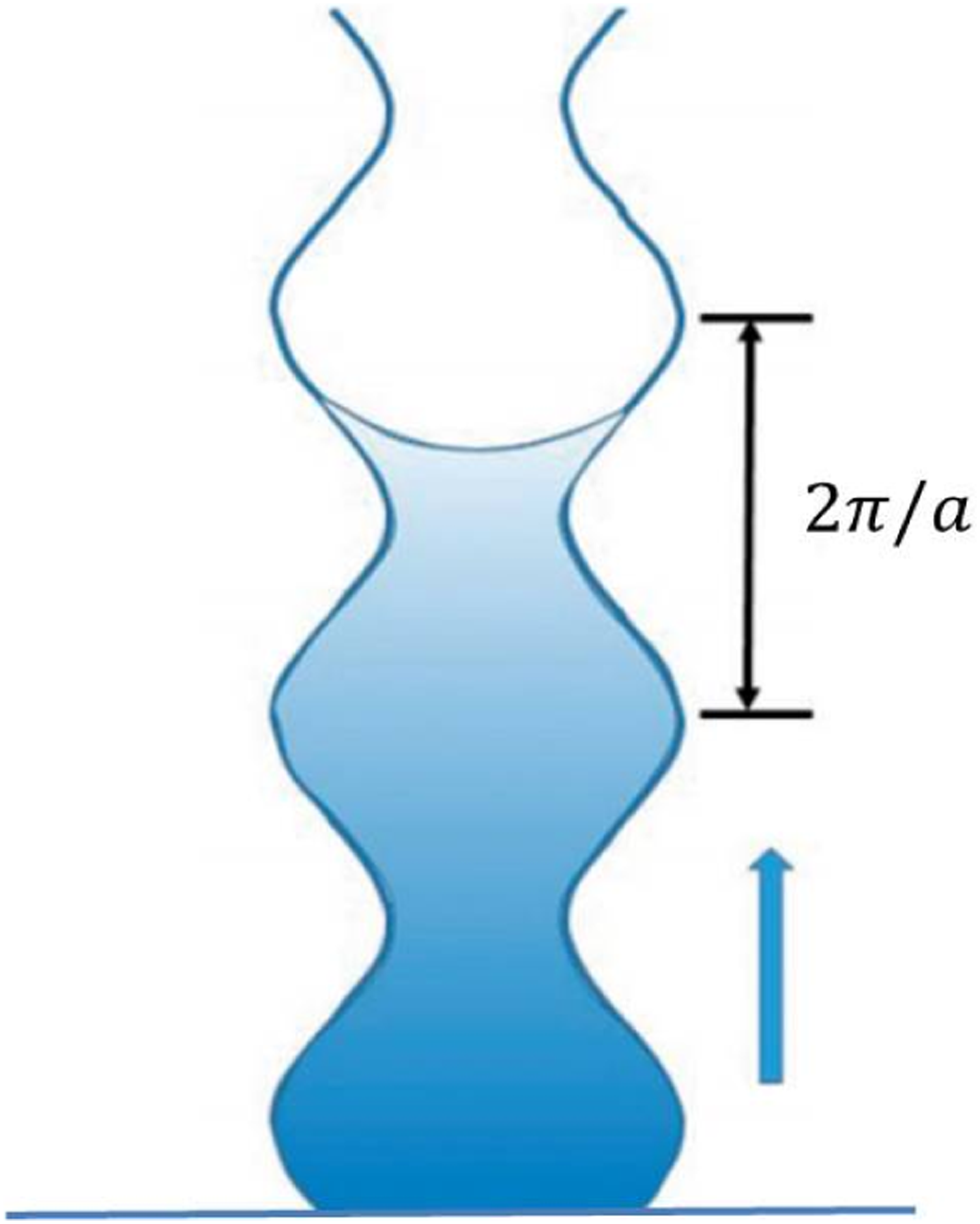

The frequency–amplitude dependence of (1) was investigated by variational iteration method, variational principle, frequency formulation, Taylor series method and homotopy perturbation method.7,9 Big-Alabo and Chidozie considered the approximated period of (1) by using the quasi-static quintication method.
8
Recently, there are lots of work on the fractal modifications of the nonlinear oscillators that can be found in the literatures.10–14 This topic focused on fractal N/MEMS system, fractal Zhiber-Shabat oscillator, fractal Duffing–Van der Pol oscillator, fractal Toda oscillator and fractal Yao-Cheng oscillator and others. Some numerical or analytical techniques were suggested for solving these fractal oscillators, including variational principle,15,16 He’s frequency formulation,
17
homotopy perturbation method18,19 and so on. Motivated by these improvements, this paper considers a fractal modification of the capillary oscillator (1) in the following form

Here,


with a given amplitude A. The motivation of this paper is that the numerical investigation of the fractal capillary oscillator will be helpful for understanding the physics behind this nonlinear oscillator. We will give the numerical analysis of the above fractal oscillator by a combined technique named as TST-GRHBM. This approach was first proposed by Lu and Chen for the numerical analysis of the fractal Yao-Cheng oscillator in a fractal space. 14 TST-GRHBM consists of two steps, the fractal nonlinear oscillator is first represented as a classical nonlinear oscillator by the two-scale transformation (TST) proposed by He20–26 and the approximations for the transformed oscillator can be obtained by the global residue harmonic balance method (GRHBM).14,27–30 For illustrating the procedure of TST-GRHBM for (2), we first transform the fractal capillary oscillator as the classical capillary oscillator by using the two-scale fractal transformation. In order to balance the accuracy and stability of the approximations, Taylor approximation with fifth order of the nonlinear term sin(u) is suggested to approximate the capillary oscillator. We provide the approximated solutions and frequencies for the approximated capillary oscillator by applying GRHBM. Comparisons with homotopy perturbation method and Runge–Kutta method are provided. The frequency–amplitude dependence of (2) is further considered. Numerical sensitive analysis shows that TST-GRHBM is efficient and stable for solving the fractal capillary oscillator with different parameters. Some conclusions and comments are finally given.
Analysis of fractal capillary oscillator by TST-GRHBM
The difficulty for solving the fractal capillary oscillator (2) lies in two sides, where one is the fractal operator defined by He’s derivative and the other is that how many nonlinear approximated terms of sin(u) are required for different amplitudes A. For releasing the fractal operator in (2), we consider the two-scale transformation20–26 and transform the original fractal capillary oscillator as the classical capillary oscillator. By using the two-scale transformation given by T = t
α
, we have the following capillary oscillator7,8


We remark that the physical explanation of the two-scale transformation was given in the references.21–26 For two adjacent hierarchical levels of a Carton set, 21 when we measure it by using a large-scale, it is a continuous line, and when we consider it on a small scale, it becomes discontinuous.
For the second issue, we find that the approximated oscillator for (5) with large amplitudes may show the deviation phenomena by using the approximation sin(u) ≈ u −
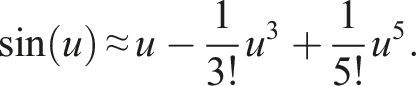

Different with the approaches in the literatures,7,8 we apply GRHBM for solving (7). The GRHBM can be seen as an improvement of the harmonic balance method and the homotopy perturbation method. One can read the main idea of GRHBM in the existing literatures.14,27–30 It assumes that the approximations for the nonlinear oscillator can be formulated in p-term. The residual parts are used for modifying the approximated frequencies and solutions. We show the details below.
We first introduce an auxiliary variable τ = ωT and obtain


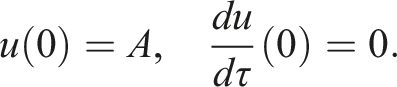
We then consider an initial approximation to (8) given by







By substituting (14) into (8), and collecting the coefficients of p, it follows the nonlinear function F1(τ, ω2, ρ). Together with F1(τ, ω2, ρ) and R1(τ), we have the following nonlinear system



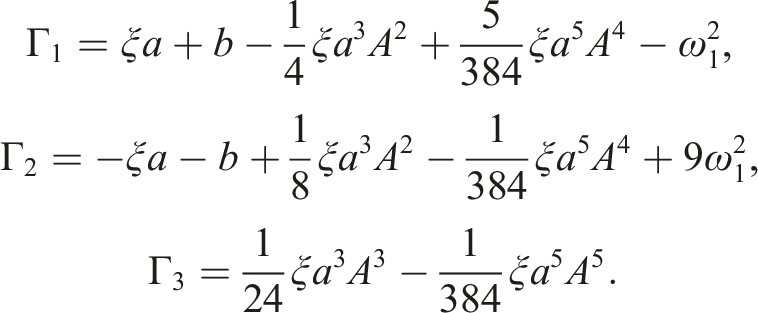



Numerical results
In this section, the initial value problem for the fractal capillary oscillator (2) in previous section is investigated to illustrate its oscillation behaviour. We compare the performance of TST-GRHBM with the existing methods including homotopy perturbation method (HPM)7,9,31 and Runge–Kutta method (RK). We remark that the approximations and different parameters can be given by Matlab software. Numerical results for the fractal capillary oscillator consist of two parts, where one is the sensitive analysis of the original capillary oscillator and the other is the investigation for the fractal oscillator with different fractal orders α.
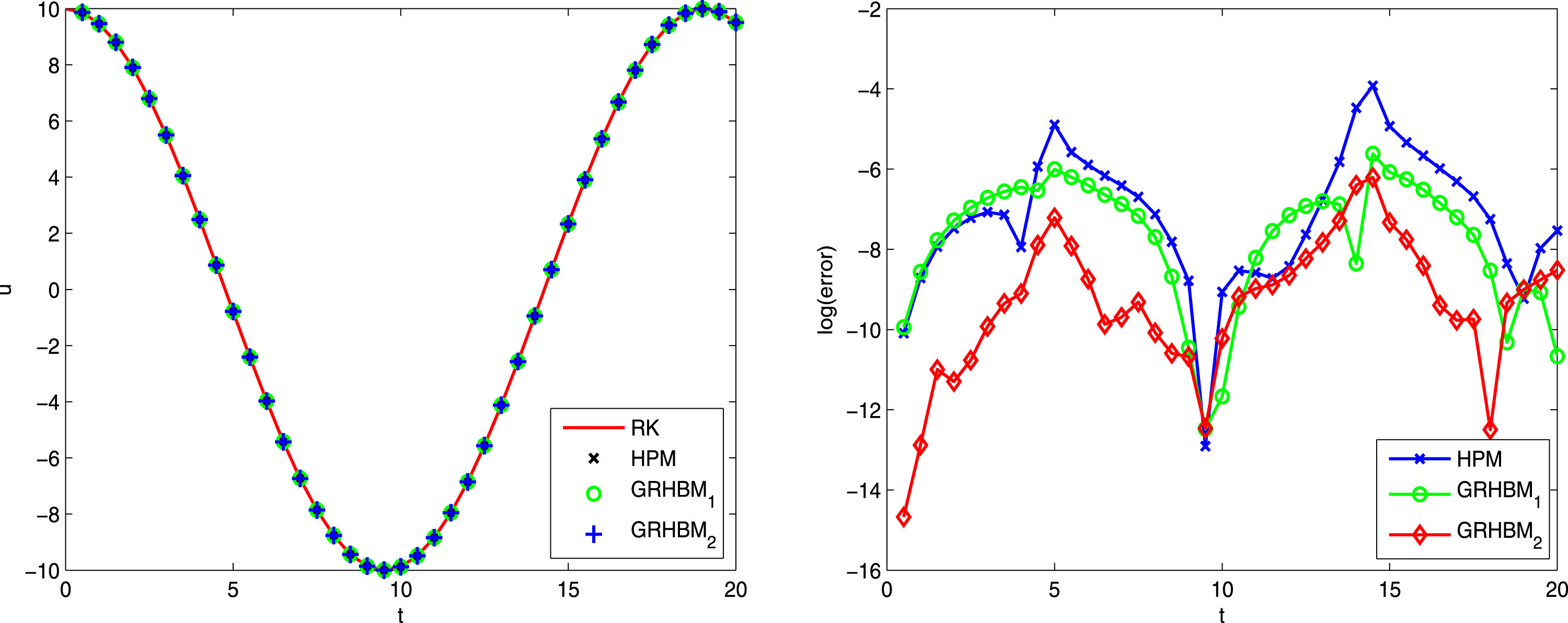
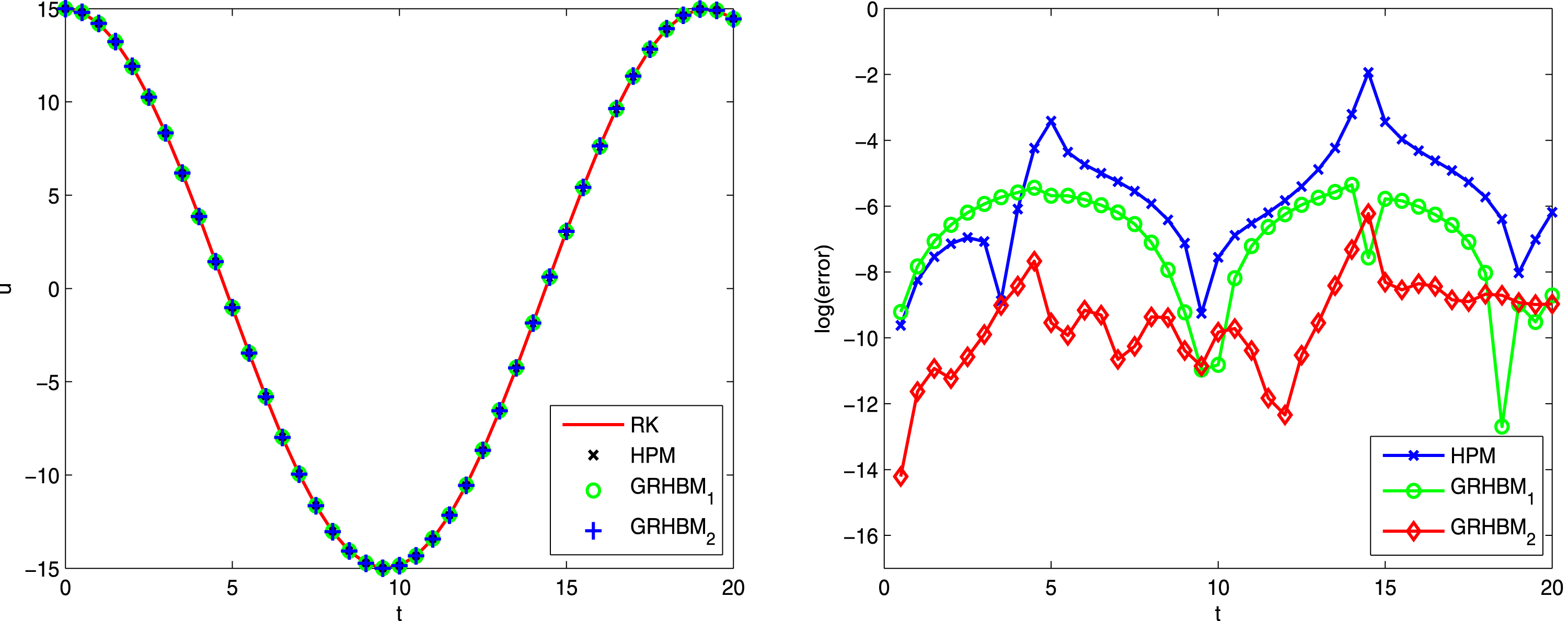
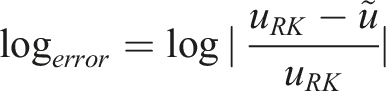
We first consider the numerical analysis of the fractal capillary oscillator (2) with an integer order α = 1. In this example, we use the parameters ξ = a = b = 0.1. For illustrating the sensitivity of the amplitude A on the approximations, we test three different cases including A = 5.10,15 The first- and second-order approximations given by TST-GRHBM are denoted by GRHBM1 and GRHBM2, respectively. Figures 2–4 show the numerical comparisons for the classical capillary oscillator with different amplitudes. Figure 2 (left) presents the oscillation behaviour of the approximated solutions given by RK, HPM and TST-GRHBM. In order to verify the accuracy of the approximations, we define the log error of different approximated solutions as follows Compared results for the test methods with A = 5. Compared results for the test methods with A = 10. Compared results for the test methods with A = 15.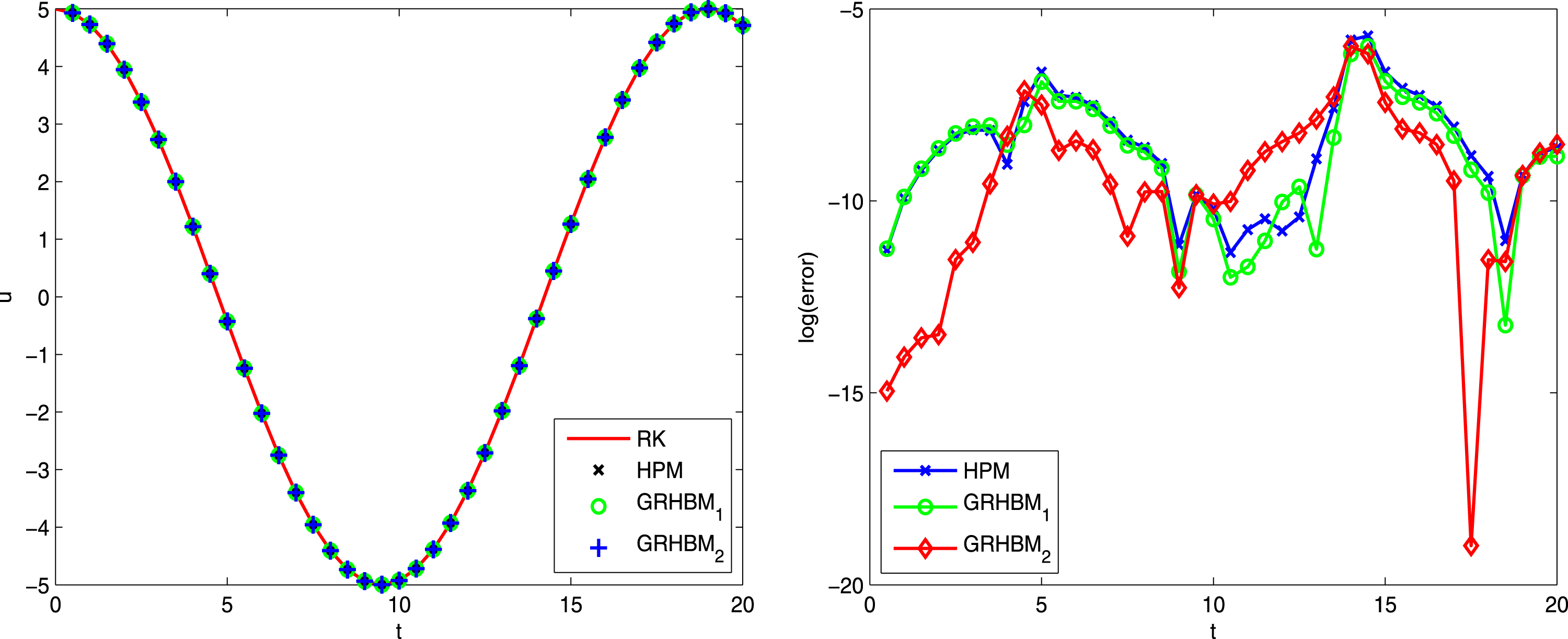
with
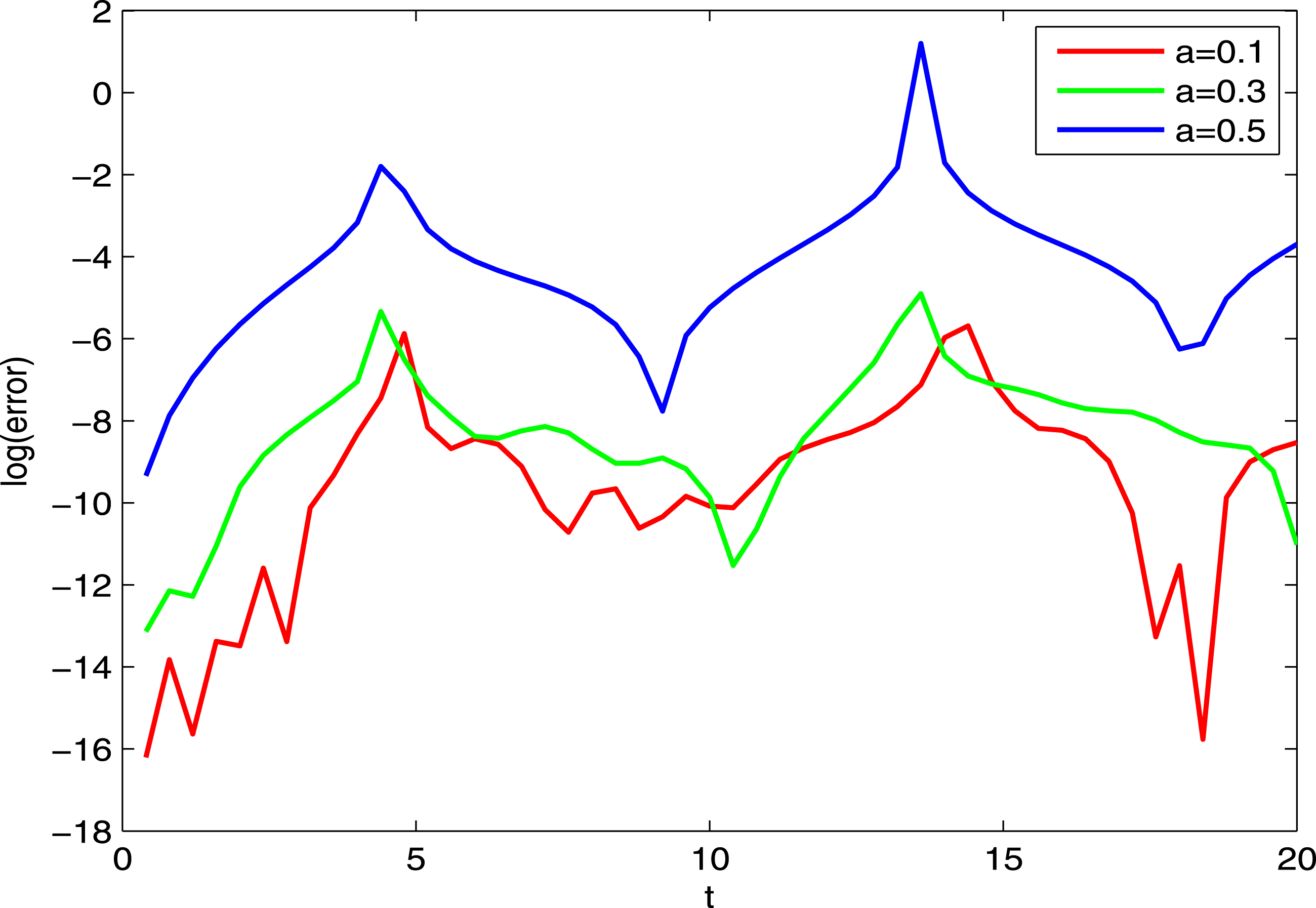
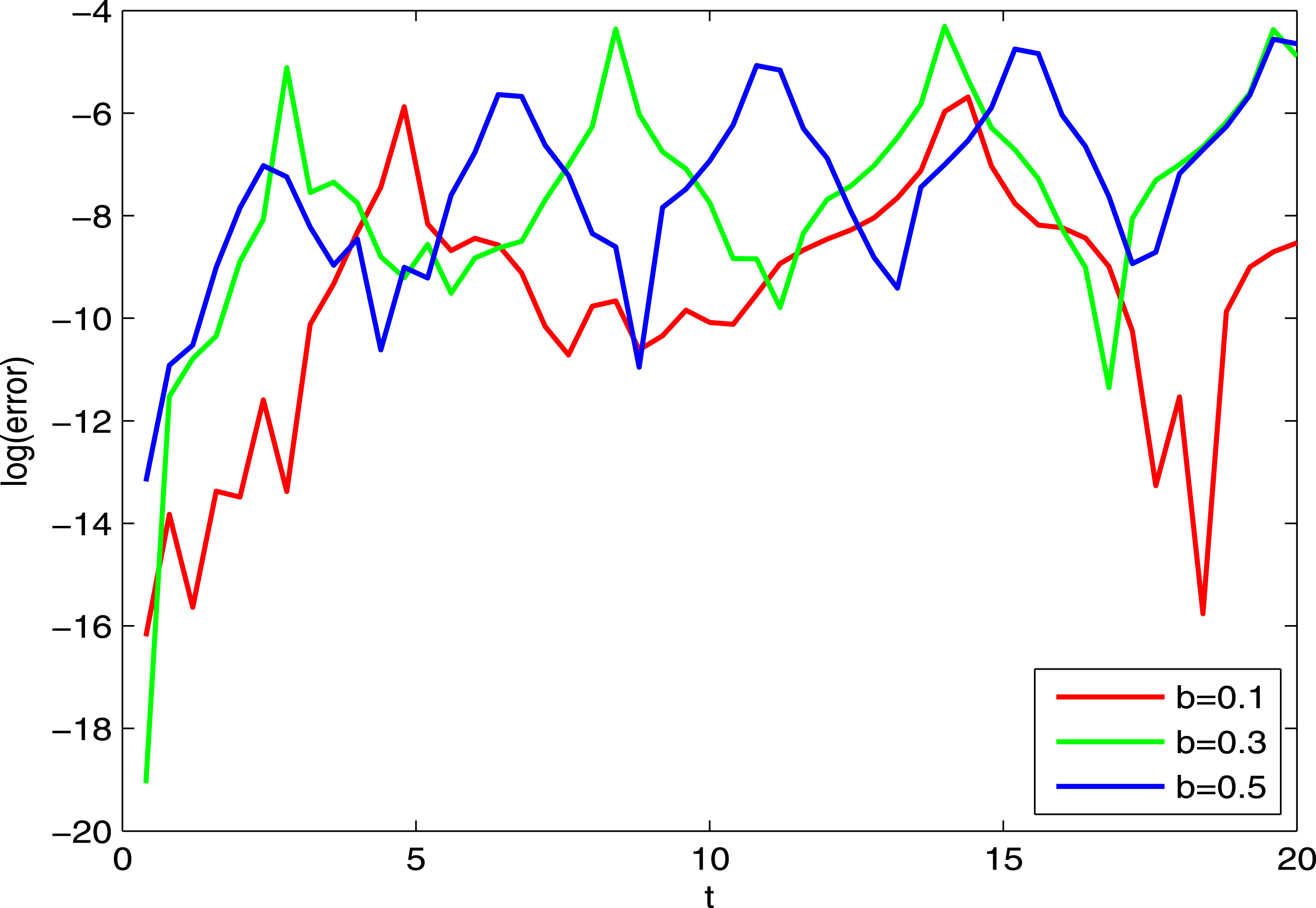
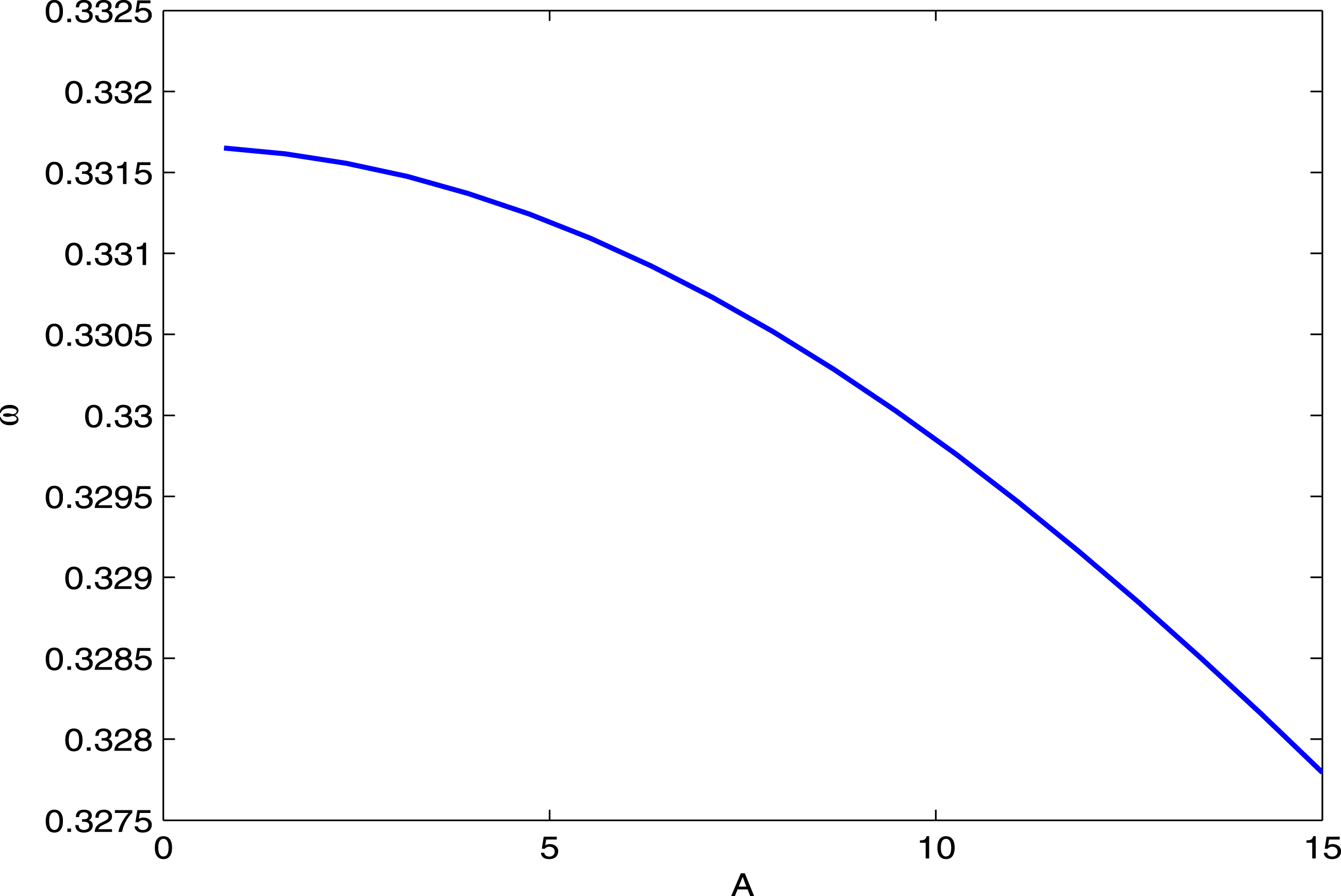
We then test the sensitive analysis of the tested algorithms about different parameters including ξ, a and b. We focus on the approximations GRHBM2 with the amplitude A = 5. Figure 5 indicates that the log error of GRHBM solutions increases monotonically about the parameter ξ, when the parameters a and b are equal to 0.1. By Figures 6 and 7, we can see the similar impact of the rest of the parameters a and b on the approximations given by TST-GRHBM. The numerical sensitive analysis of the approximated solutions with other large amplitudes is similar, and we omit it. We also consider the numerical behaviour of the frequency Comparisons of log errors of TST-GRHBM for (2) with variable ξ. Comparisons of log errors of TST-GRHBM for (2) with variable a. Comparisons of log errors of TST-GRHBM for (2) with variable b. Approximated frequency curve 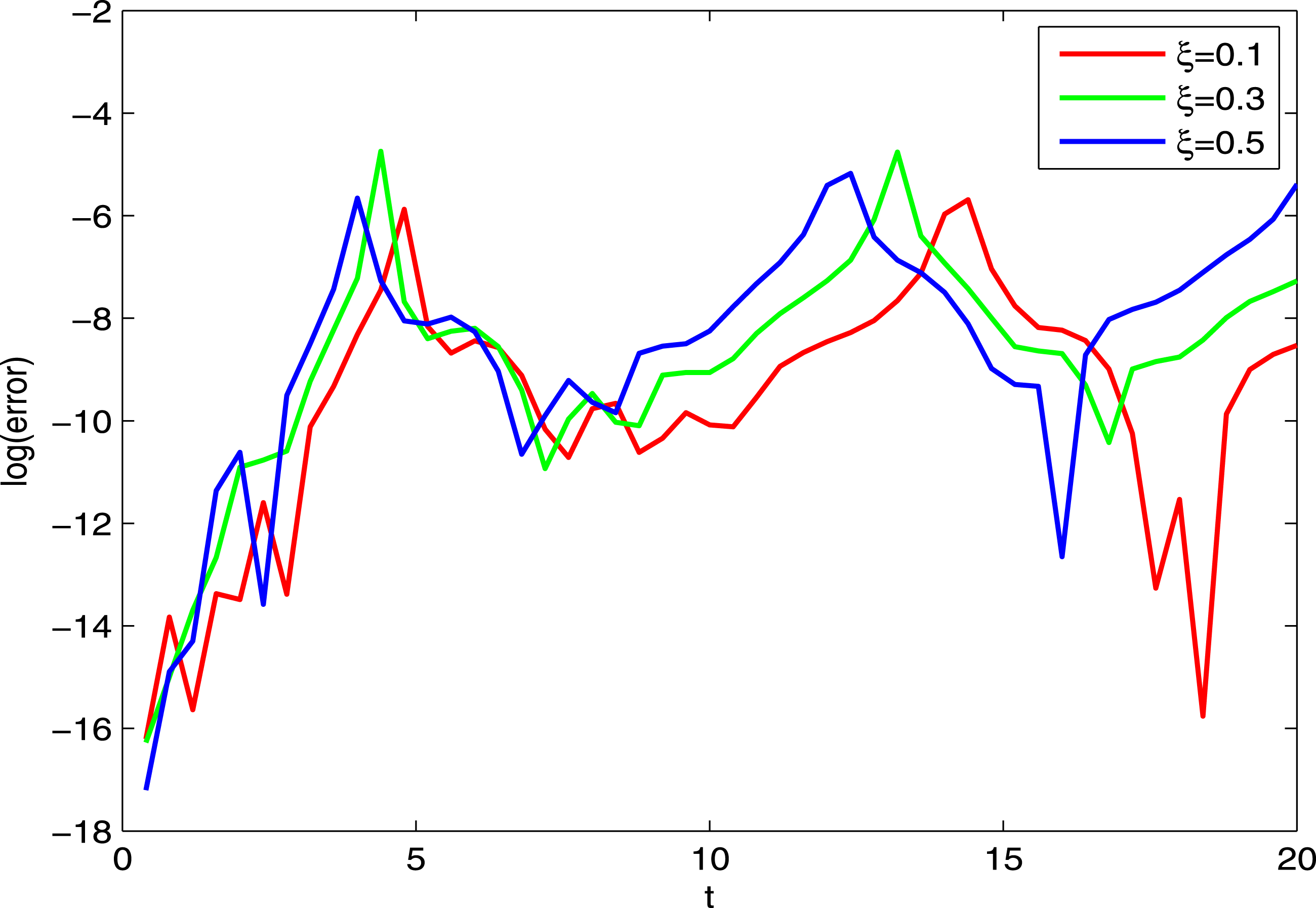
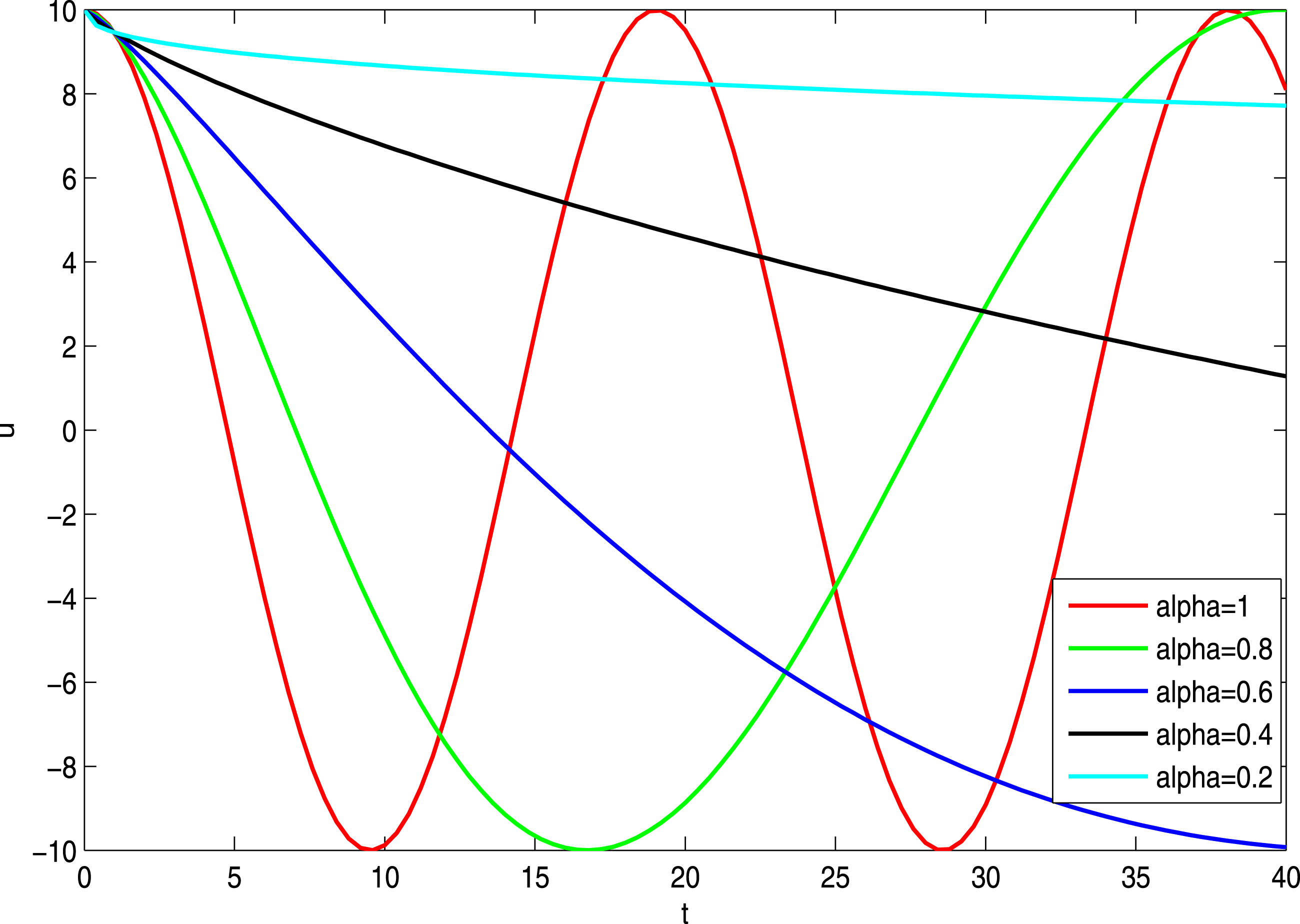
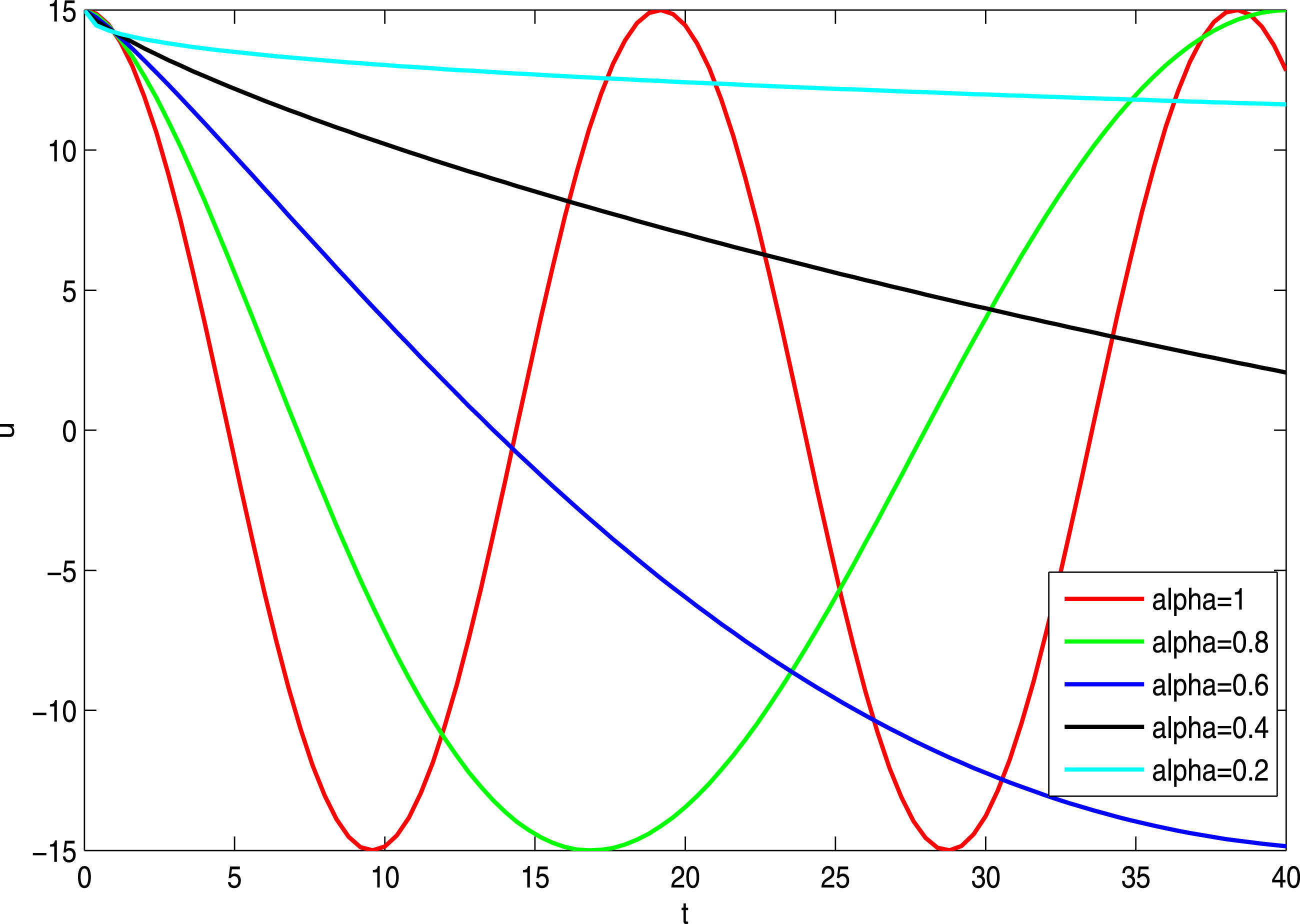
We finally consider TST-GRHBM for solving the fractal oscillator (2) with different orders α. The parameters used in the fractal case are the same as those in previous part. We focus on the second-order approximations with different amplitudes and the fractal order α ∈ (0, 1). Figure 9 plots the fractal oscillation curves with A = 5. It is easy to find that the oscillation behaviour becomes nonlinear and complex when the fractal order α approaches to small value. Similar oscillation behaviour can be seen from Figures 10 and 11. Thus, TST-GRHBM also works well for the fractal capillary oscillator. Oscillation behaviour of GRHBM2 with A = 5. Oscillation behaviour of GRHBM2 with A = 10. Oscillation behaviour of GRHBM2 with A = 15.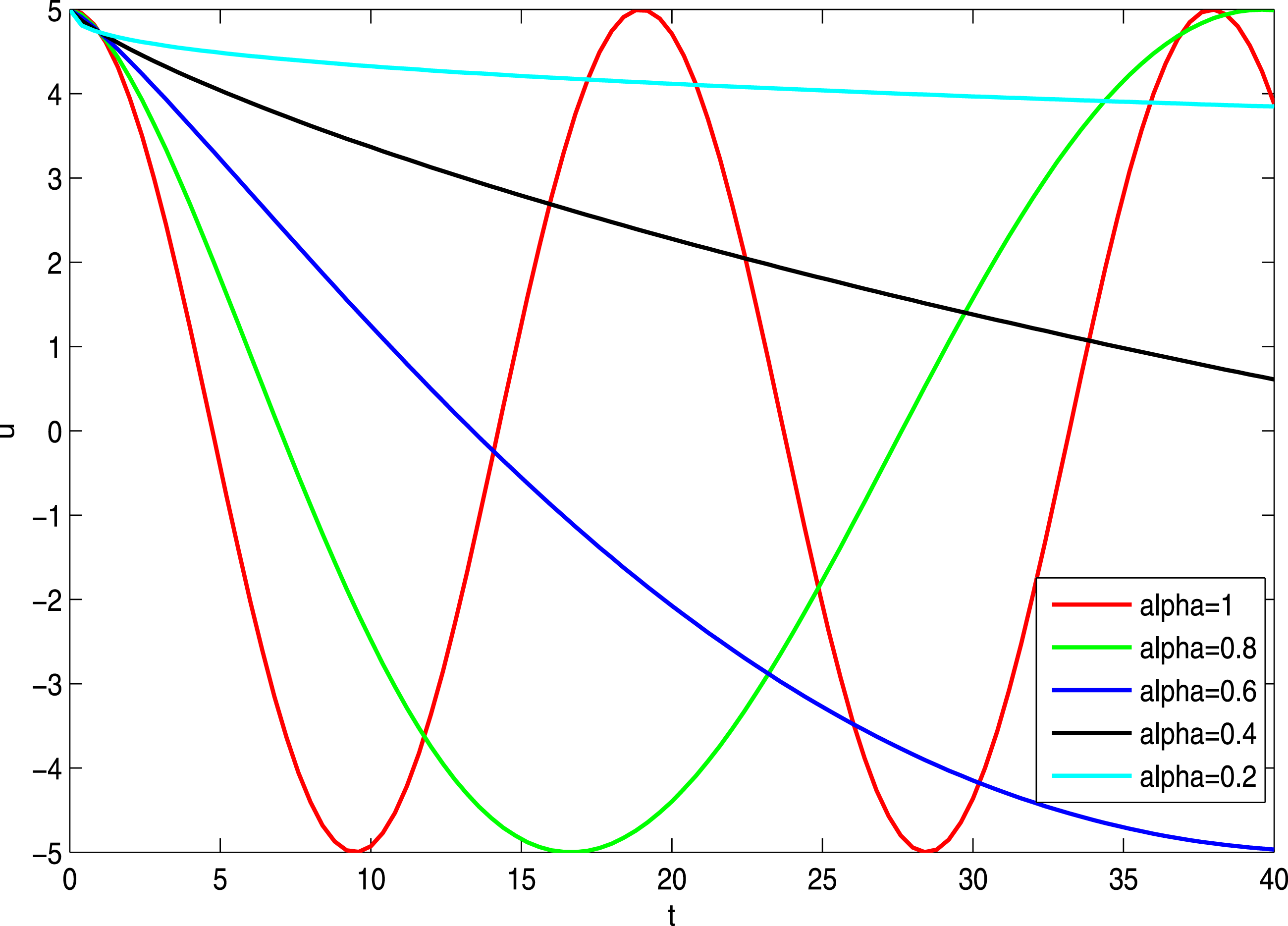
Conclusions
This paper focused on the numerical analysis of the fractal capillary oscillator by using the TST-GRHBM technique. The initial value problem associated with this oscillator was considered in detail. Numerical results showed that the approximated solutions given by TST-GRHBM agree well with the solutions given by the Runge–Kutta method (RK). Comparisons with RK and HPM further confirmed its efficiency. Sensitive analysis of different parameters on the log error of the approximations showed the monotonic increasing property. The analysis of frequency–amplitude dependence suggested its monotonic decreasing characteristic. The approximations of this fractal capillary oscillator were also investigated to illustrate the numerical behaviour. The numerical investigation of this fractal capillary oscillator will be helpful for understanding the capillary effect in nanotechnology, microdevices and textile engineering. However, the optimal combination of the approximation of sin(u) and the harmonic terms of GRHBM requires further investigation. The TST-GRHBM technique for the fractal modification of other nonlinear oscillators also needs to be optimized.30,32,33 These two open problems will be considered in our future work.
Footnotes
Declaration of conflicting interests
The author(s) declared no potential conflicts of interest with respect to the research, authorship, and/or publication of this article.
Funding
The author(s) received no financial support for the research, authorship, and/or publication of this article.
