




Abstract
Frequent vibration events on the long stay cables highlight the need to control their multi-mode vibrations. Compared to commonly used viscous dampers for cable vibration control, the negative stiffness damper (NSD) demonstrates its superior performance. However, a single NSD is incapable of providing sufficient supplemental damping for a super-long cable, especially for the multi-mode vibration mitigation. The combined internal high damping rubber (HDR) dampers and the external NSD for cable vibration control is proposed to achieve better multi-mode control performance in this study. First, the complex modal analysis of a taut cable coupled with an external NSD and two internal HDR dampers is conducted to reveal the coupling performance of the damping system. The asymptotic and iterative solutions of transcendental equation obtained in complex modal analysis are derived, respectively. Subsequently, the comparison of asymptotic and iterative solutions verifies the applicability of asymptotic solutions. Finally, parametric studies are performed to investigate the effect of the parameters of NSD and the coupling configuration on their combined control performance. Results show that the coupling schemes with different configurations can possess a wider effective modal range or a better damping effect in the narrower modal ranges according to different damping targets. It provides a diversified solution for multi-mode damping enhancement of stay cables.
Keywords
Introduction
Cable-stayed bridge is one of the most important types of long-span bridges, which is the most popular bridge worldwide due to its advantages, that is, economic advantage, lightweight, and high structural efficiency. As a critical structural component in cable-stayed bridges, the low structural damping and complex dynamic behavior of stay cables make them susceptible to oscillations under dynamic excitations such as direct loads on the cable from wind or combination of wind and rain, earthquake, and traffic loads.1-3 Frequent and unexpected large oscillations may lead to fatigue failure of cables and reduce life spans of cables. Therefore, various solutions, that is, including cable surface treatment, cross-tie and mechanical damper, have been proposed to suppress cable vibrations to guarantee structural safety.4-7
Mechanical dampers are one of the most effective solutions to suppress cable vibrations. Due to its practicability and reliability, the cable-damper system has been extensively investigated.8-13 There are many methods for modeling and analyzing the vibrations of cables with discrete elements. These methods include accurate analytical solutions obtained from Green’s function, Laplace transform and Fourier transform, and approximate methods obtained from finite element method, finite difference method and Galerkin method.14-18 Krenk 19 developed a simple iterative solution of the frequency equation for the cable-damper system by assuming the mode shape function as sinusoidal curves, and obtained an asymptotic approximation of modal damping ratios for the lower modes. Yang et al. 20 derived a considerably accurate and explicit formula for calculating the modal damping ratios of the cable-damper system, which could forecast the modal damping ratios both for lower and higher modes, and proposed a closed-form solution for the optimal damping coefficient. Weber et al. 21 presented a systematic and easy applicable design method of linear viscous dampers (VDs) to achieve several target cable modes by constraining the minimum damping added to cable. Moreover, the effects of the cable sag,22,23 the cable flexural rigidity,24,25 the damper stiffness, 11 and the damper support stiffness 26 or their coexistence9,12,27-29 on the damping optimization of the cable-damper system were studied theoretically and experimentally. It is found that by combining the lateral damper with rotational dampers, the optimal damping of the cable increased significantly as compared with a single lateral damper for the clamped and pinned support configurations.30,31 Nevertheless, the installation location of a VD is restricted to a few percentage points of the cable length from the cable anchorage, which limits its efficiency. 19 Since passive VDs cannot offer sufficient damping for super-long cables, it is necessary to combine available countermeasures to improve mitigation efficiency of cable vibrations.32-34
Recently, the negative stiffness mechanism has become the research focus for improving vibration mitigation performance.35-37 Several recent studies proved the effectiveness of negative stiffness dampers (NSD) in cable vibration control through theoretical and experimental investigations.38-40 Shi et al. 41 modeled the passive NSD as a mixture of negative stiffness spring and linear VD, revealing that the NSD could reduce cable vibrations more effectively than traditional passive VD. Javanbakht et al. 42 developed an analytical model of a cable with an NSD, and verified that the NSDs can present superior performance over the positive stiffness dampers (PSDs) in cable vibration control. The typical inertial mass dampers43-48 and tuned inerter dampers 49,50 have been well studied, and their effectiveness for improving the modal damping ratio of cables were theoretically and experimentally verified.
When the cable length increases, a single damper is difficult to provide sufficient supplementary modal damping due to its limited installation height. Hence, some hybrid techniques have been further proposed to suppress cable vibrations. A combination strategy of external dampers with cross-ties for cable vibration control was proposed, which not only can overcome their respective deficiencies but also retains their respective merits.51-53 In addition, application of two external mechanical dampers54-58 or two internal high damping rubber (HDR) dampers 59 on a cable was proposed. Results show that the damping effect of two dampers at the same cable end is weaker than a single damper situation. In contrast, two dampers at opposite ends can increase the supplemental damping effect. In practice, rubber bushings are commonly mounted on cables at cable anchorages for reducing the bending stresses due to the live loadings. Javaid Ahmad 60 investigated the modal behavior of a taut cable with a neoprene rubber bushing and an NSD, and the approximate solution as well as the exact approach solution was obtained. It was suggested to use NSD to improve the damping of stay cables equipped with rubber bushings, and the expression of effective damper position and design damping curves was proposed. Di et al. 61 analyzed the comprehensive influences of VD and rubber bushing on stay cables, deduced the asymptotic design formulas of two dampers installed close to one cable end and two cable ends, respectively, and verified the influence of HDR on VD performance through experiments. The bushings have been modeled as springs in previous studies, while they actually have energy dissipation effects.55,61 When a single mechanical damper is inadequate for cable vibration control, it is straightforward to replace the bushing by an HDR damper to improve cable’s damping ratio. They are known to be effective for suppressing high-frequency vibrations of cables. 62 The combination of an internal HDR damper and external dampers or two internal HDR dampers has been used to suppress the vibration of cables in actual cable-stayed bridges.63-66
The previously mentioned literatures show that NSD and hybrid techniques are preferable for cable vibration control compared to conventional a single VD. HDR dampers can be installed inside cable pipes, which can effectively suppress the high-frequency vibration of cables. When a single mechanical damper is inadequate for cable vibration control, it is feasible to replace the commonly used bushing by an HDR damper to improve cable’s damping ratio. The coupling forms of internal HDR dampers and external mechanical damper are very important for their combined control performance. However, existing studies are restricted to the combination of a mechanical damper and an HDR damper mounted at opposite ends or at the same end. The case of an NSD installed on the cable with HDR dampers at both ends has not been comprehensively investigated. To suppress the multi-mode vibrations of super-long stay cables, the dampers are required to provide sufficient damping for higher modes, and the effective mode range should be wider. 67 However, the design of damper often focuses on adding damping to the first several cable modes in current damping design. The effects of the parameters (i.e. damping coefficient and negative stiffness coefficient) of NSD and the coupling forms of the HDR dampers and NSD on their combined multi-mode control performance have not been comprehensively investigated.
This study aims to clarify the coupling damping effects of a stay cable with an NSD and HDR dampers, and obtain the interaction mechanism between dampers. This paper is organized as follows. First, the complex wavenumber equations of the cable-HDR-NSD system are formulated by using complex modal analysis. Subsequently, the asymptotic and iterative design solutions are derived for the cable-damper system with HDR dampers and NSD, and the applicability of asymptotic solution is then evaluated. Finally, parametric studies are performed to investigate the effect of the parameters of NSD and the coupling configuration on their combined control performance.
Formulation of the cable-HDR-NSD system
A taut cable attached with two HDR dampers and an NSD is shown in Figure 1. The cable length is denoted by l, the cable axial tension is indicated by T, and the mass per unit length is denoted by m. The coordinate system defines that the x-axis and the y-axis are along the cable chord and the transverse direction, respectively, and The taut cable attached with two HDR dampers and an NSD.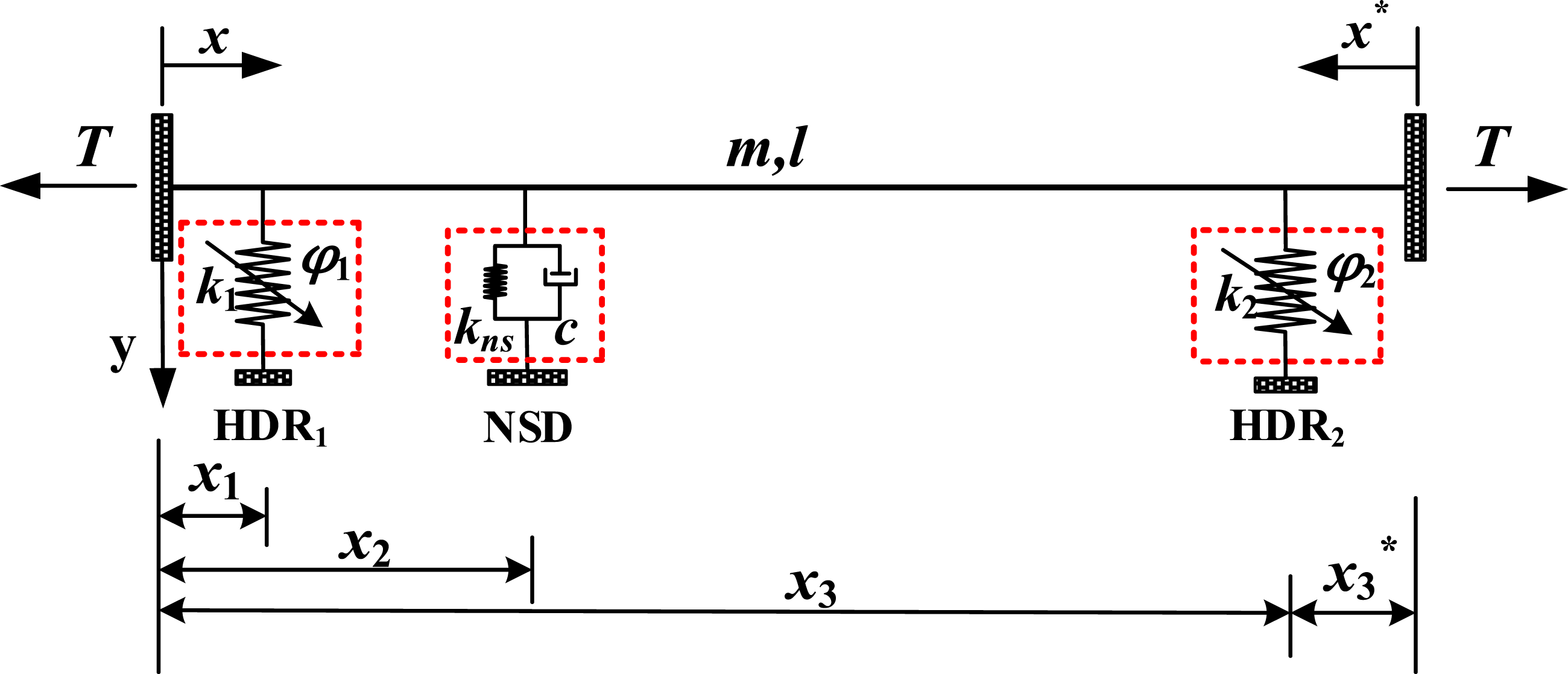

For free vibration of the cable, applying separation of variables, the transverse displacement of the cable and the force of the dampers can be expressed as

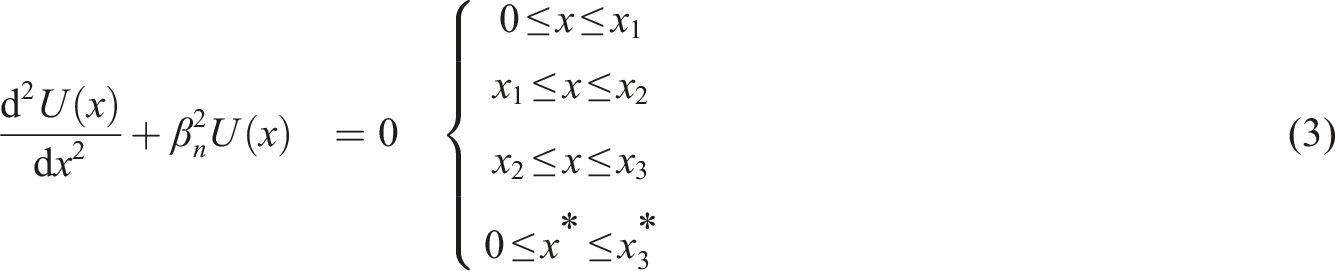
Applying boundary conditions at cable ends, that is,
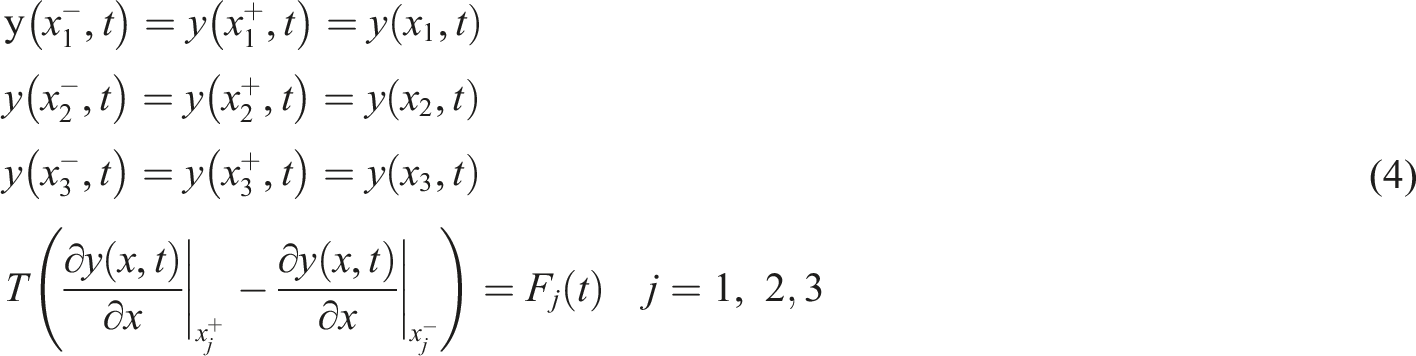
The general solution of equation (3) can be written in the form
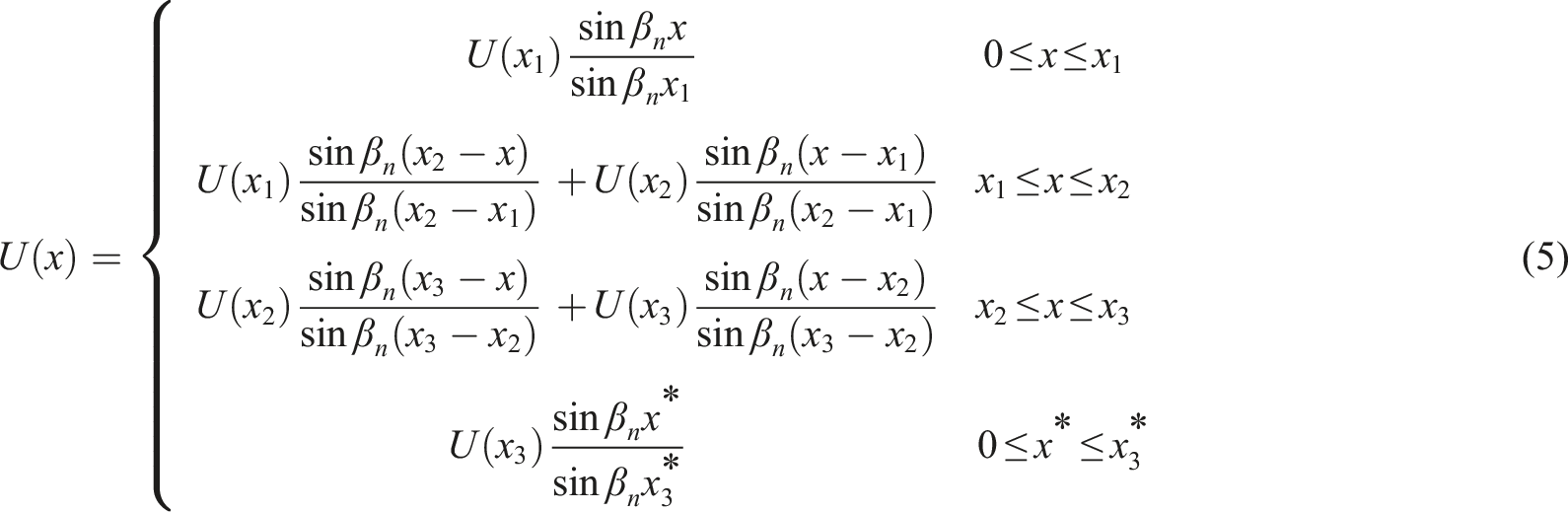
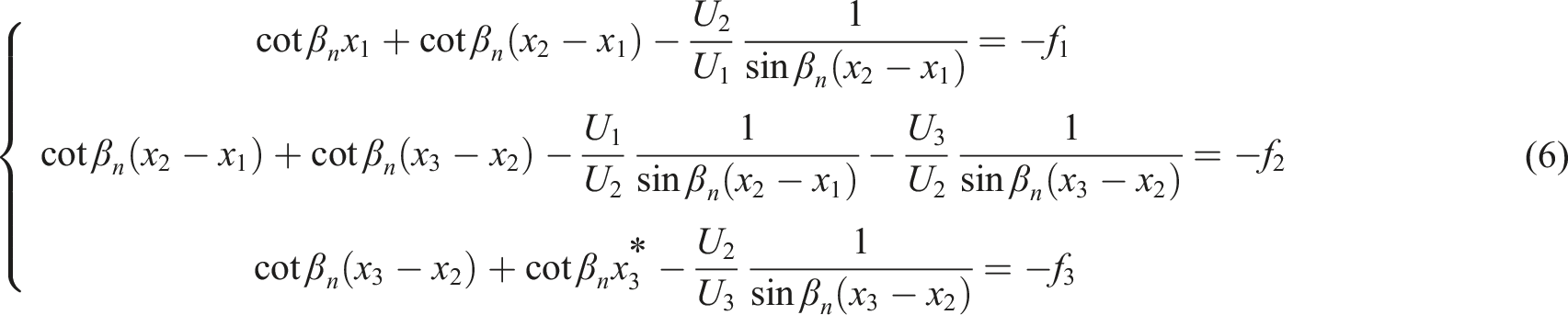
Substituting equation (5) into equation (4) yields

It can be further rearranged as



When the damping force F j is known, the equation can be used to characterize the dynamic characteristics of the taut cable with various types of dampers installed as shown in Figure 1.
The iterative solution of the complex wavenumber

The complex frequency is related to the damping ratio as


Modal damping of a cable with HDR dampers and NSD
Cable with two HDR dampers and an NSD
The damping forces of the HDR dampers and the NSD can be expressed as55,68

Substituting equation (12) into equation (8), it can be rearranged as

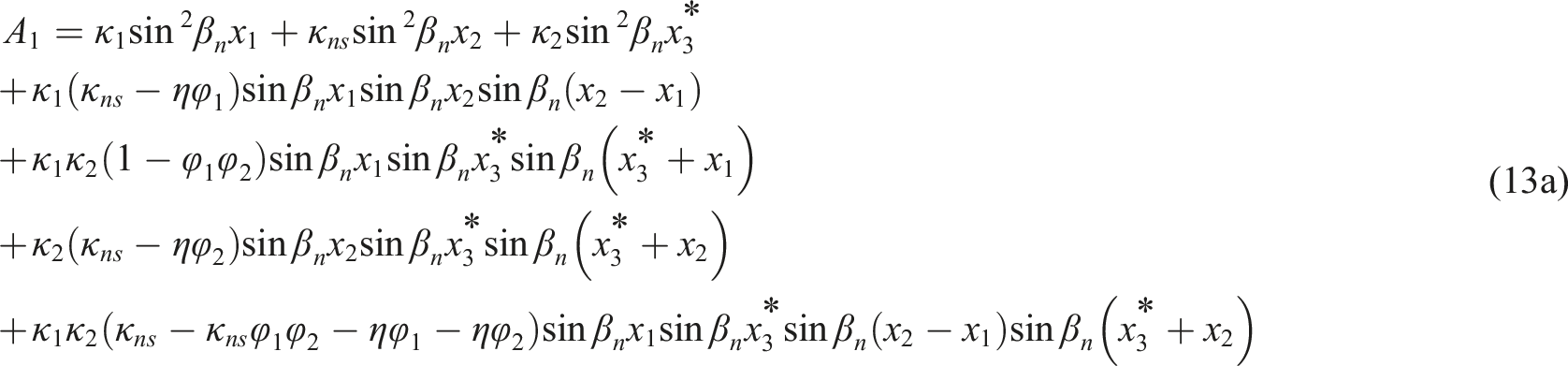
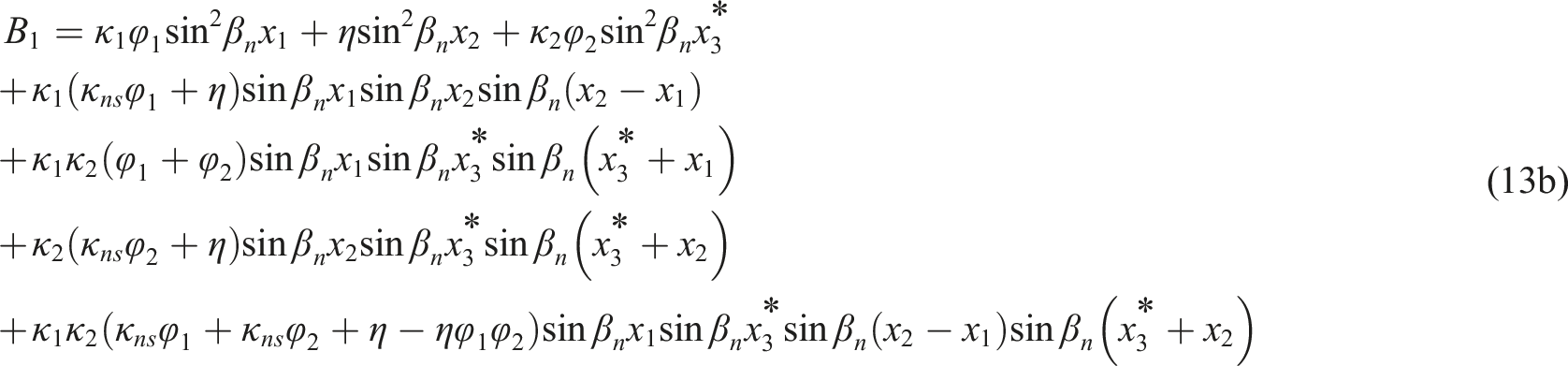
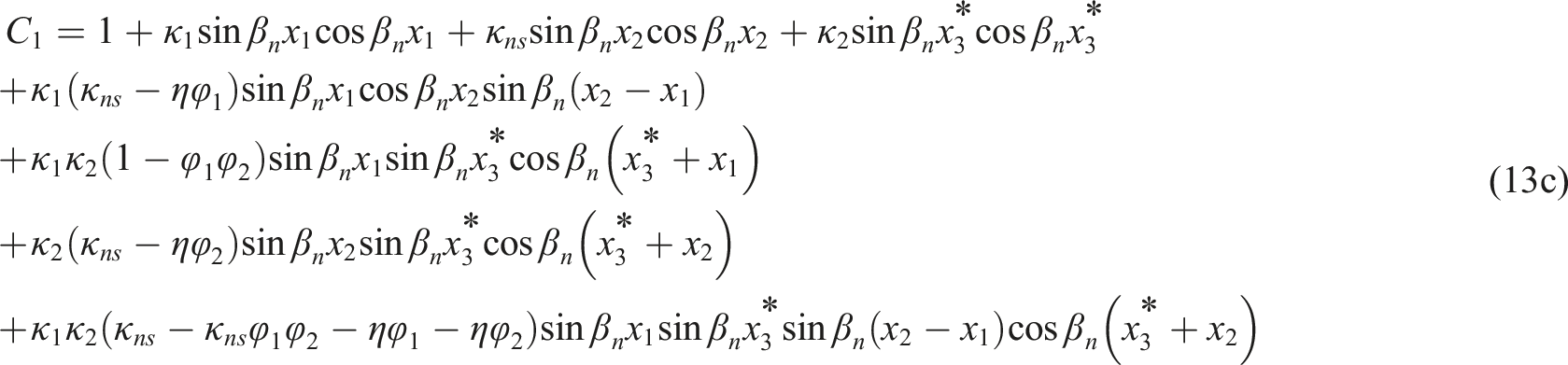
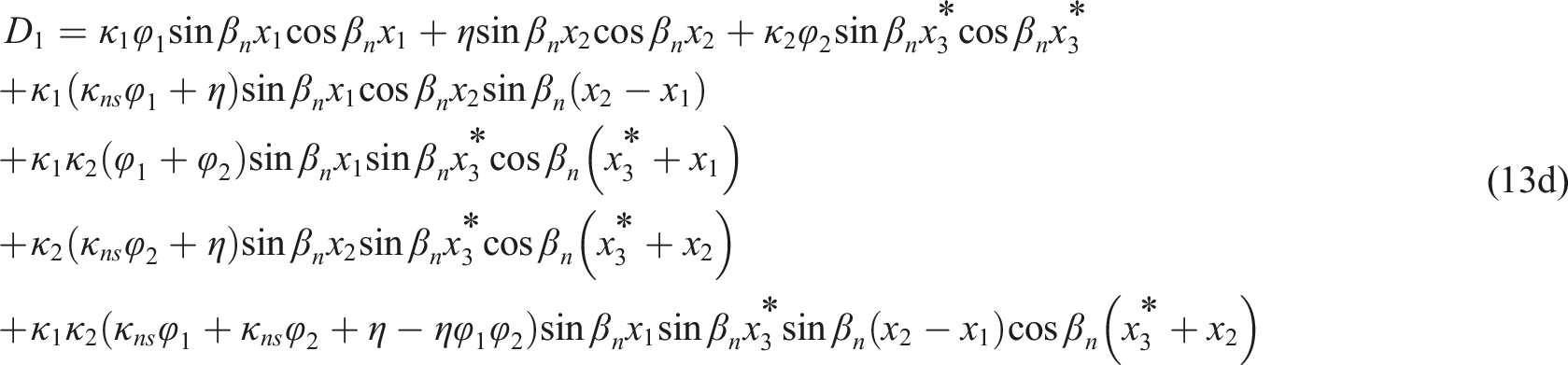
After the wavenumber is solved by equation (9), the supplementary modal damping ratio of the cable can be calculated by equation (11).
The following assumptions are introduced55,58: (1) the HDR dampers and the NSD are installed near the left cable end, that is,

The asymptotic solution for the complex wavenumber β
n
can be expressed as





Substituting equation (15) into equation (11), the asymptotic solution of the n
th
supplemental modal damping ratio of the cable can be derived as

Figure 2 shows the comparison of asymptotic and iterative complex wavenumbers of the cable with two HDR dampers ( Comparisons of the asymptotic and iterative complex wavenumbers of a cable with two HDR dampers and an NSD (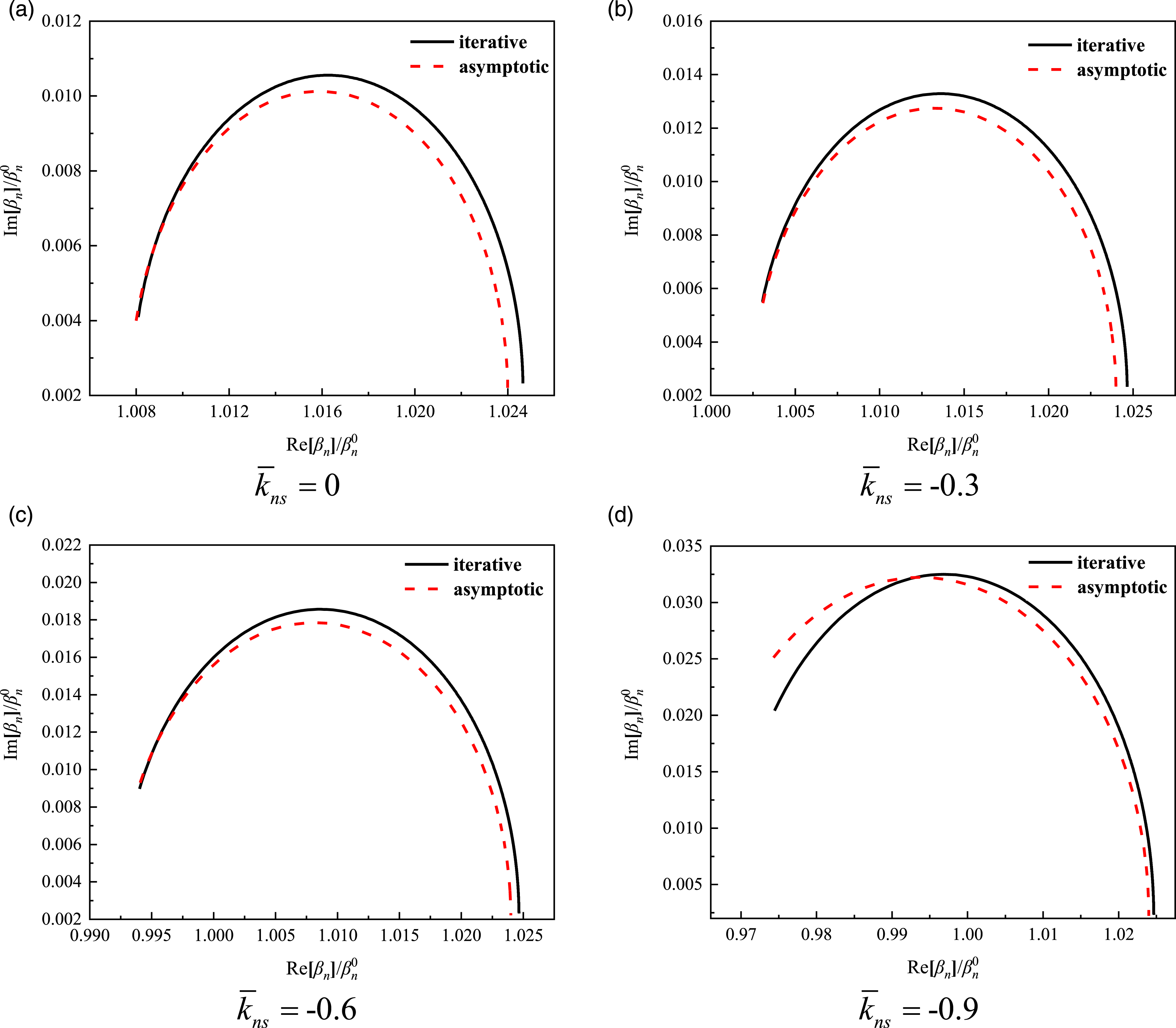
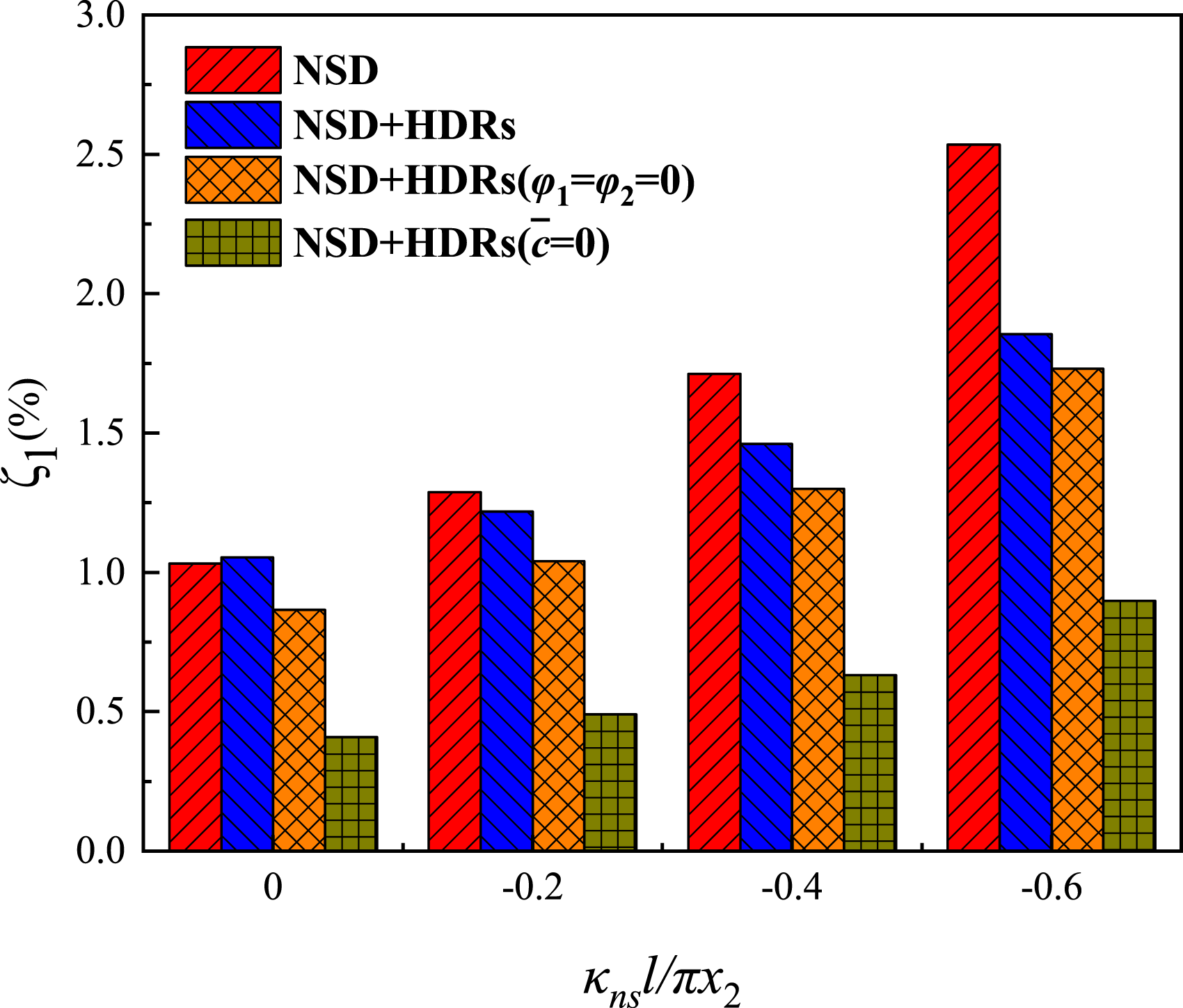
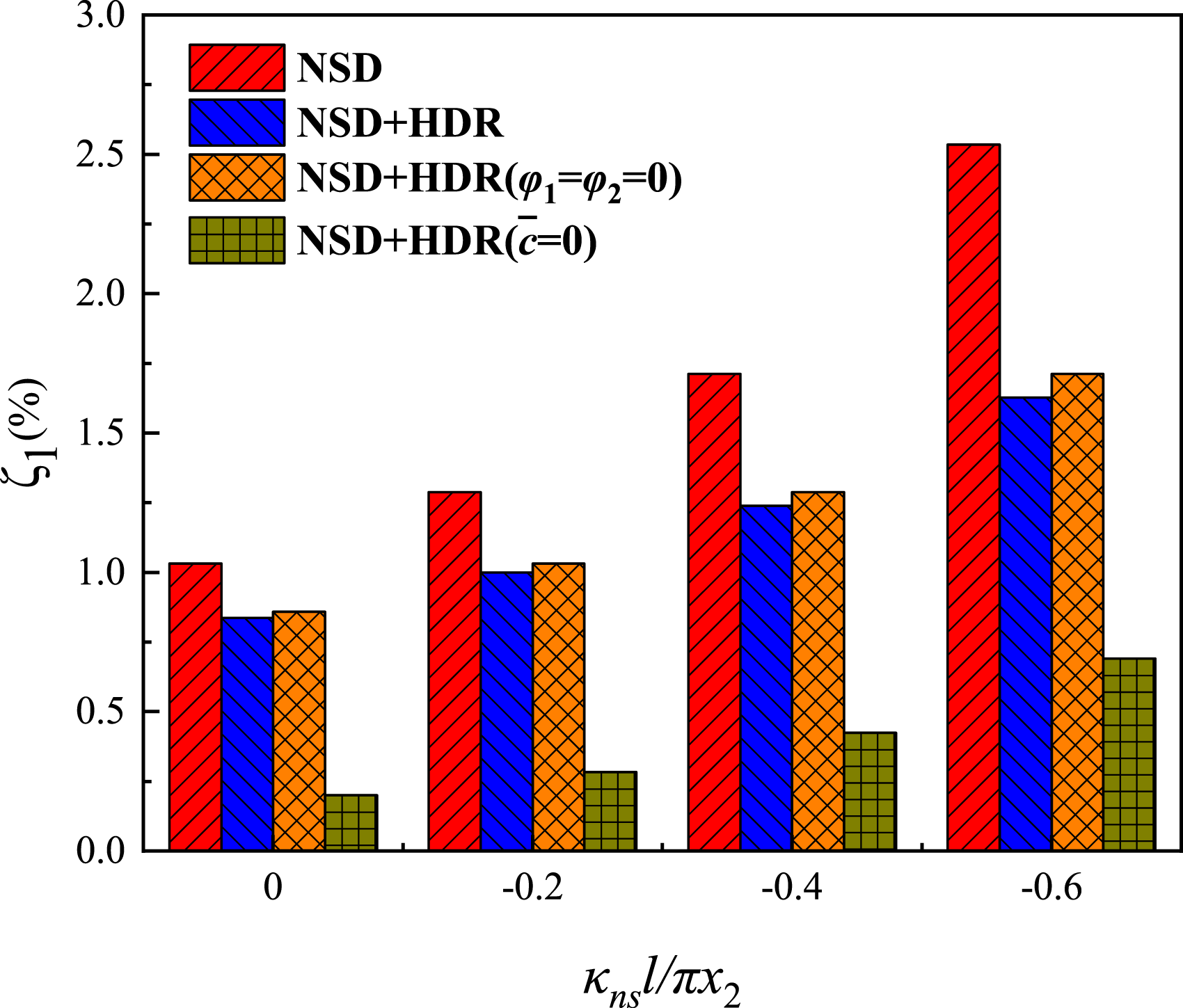
The 3D plot in Figure 3 depicts the variations of the cable’s first supplemental modal damping ratio with different stiffness and damping coefficients when the NSD is installed at Variation of cable damping ratio ( The maximum first supplemental modal damping ratio (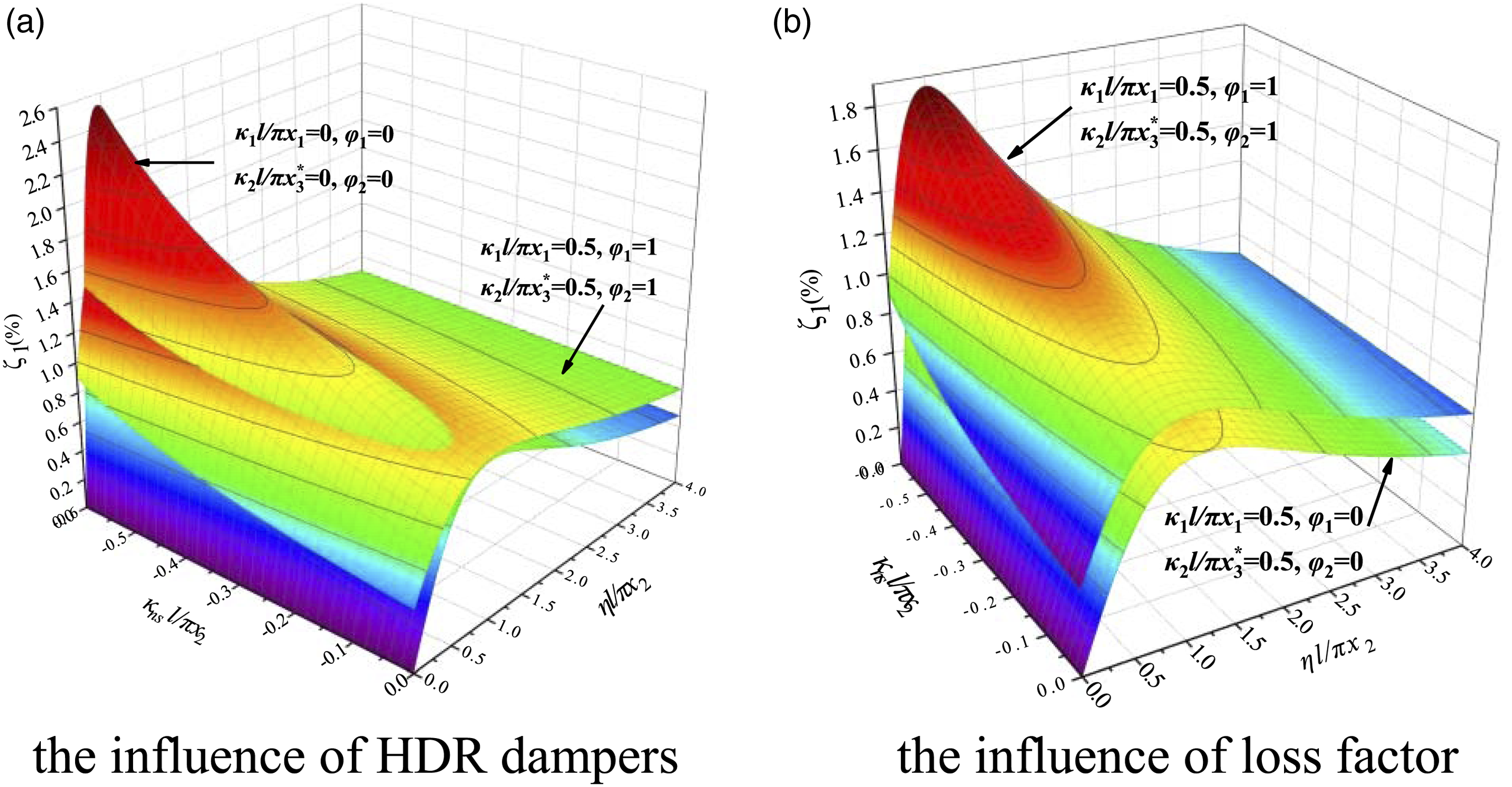
The NSD and the HDR damper at the same cable end
When the NSD is installed at the





After solving numerically for the wavenumber by equation (9), the supplemental modal damping ratio of a cable with an HDR damper and an NSD at the same end can be determined from equation (11).
Similar to the case of two HDR dampers and an NSD, assuming the HDR damper and the NSD locations

From Equation (18) and Equation (11), the asymptotic solution of the n
th
supplemental modal damping ratio of the cable can be derived as

The 3D plot in Figure 5 depicts the variations of the cable’s first supplemental modal damping ratio with stiffness and damping coefficients of NSD when the NSD is installed at Variation of cable damping ratio ( The maximum first supplemental modal damping ratio (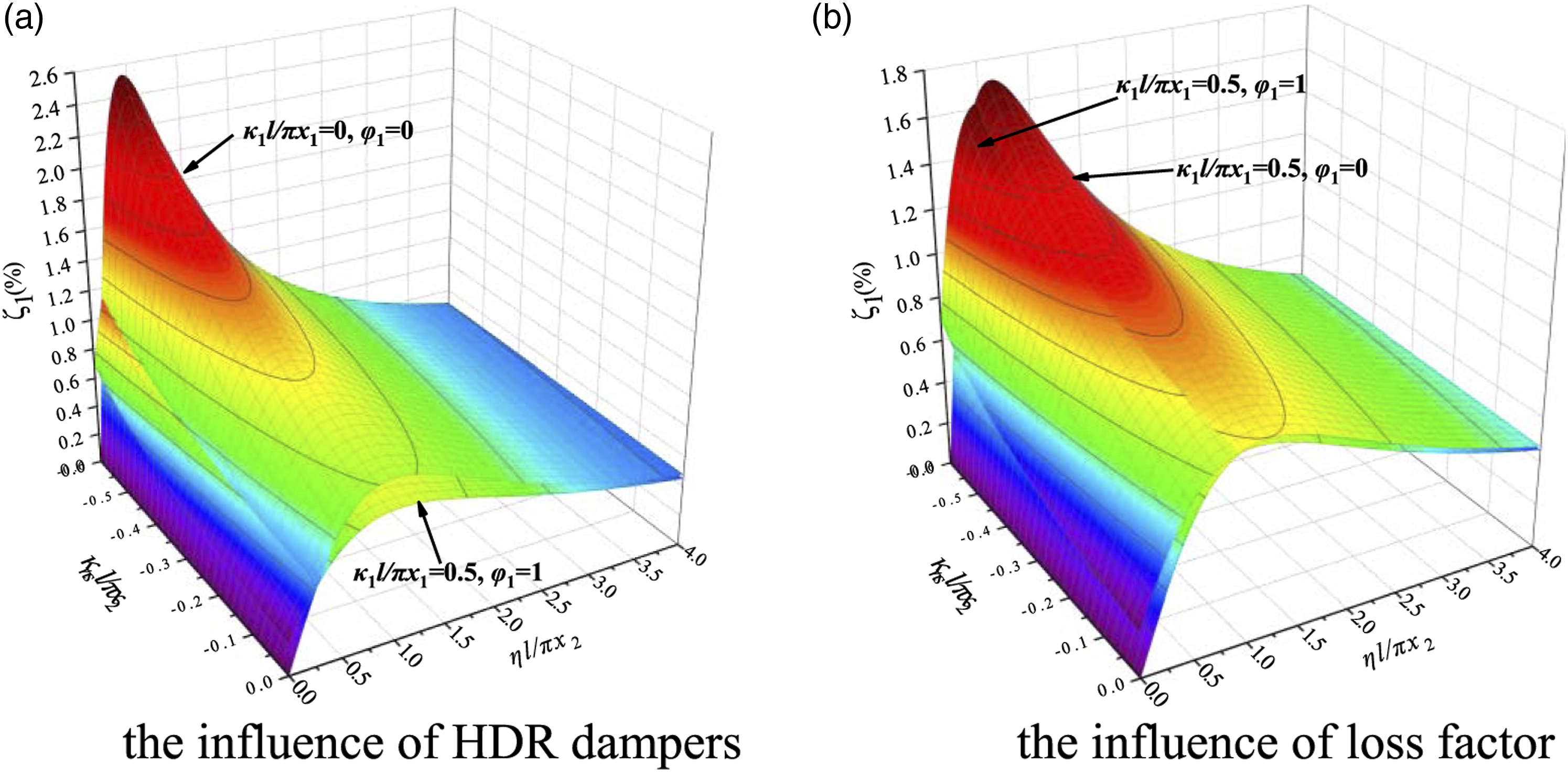
The NSD and the HDR damper at opposite cable ends
When the NSD is installed at the





After solving numerically for the wavenumber by equation (9), the supplemental modal damping ratio of a cable with an HDR damper and an NSD at the opposite ends can be determined from equation (11).
Assuming the HDR damper and the NSD locations

Substituting equation (21) into equation (11), the asymptotic solution of the n
th
supplemental modal damping ratio of the cable can be derived as

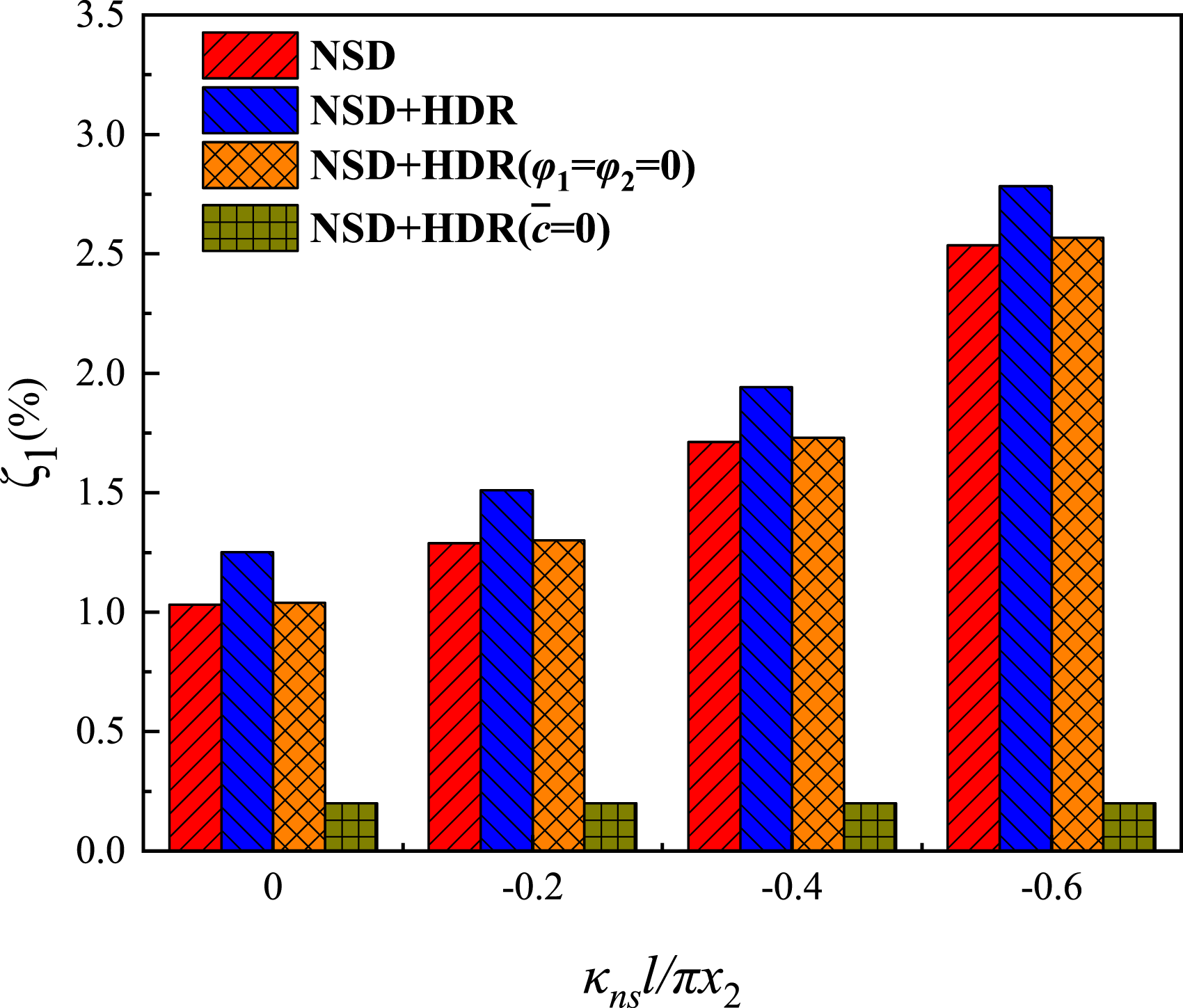
The 3D plot in Figure 7 depicts the variations of the first supplemental modal damping ratio with the stiffness and damping coefficients of NSD when the NSD is installed at Variation of cable damping ratio ( The maximum first supplemental modal damping ratio (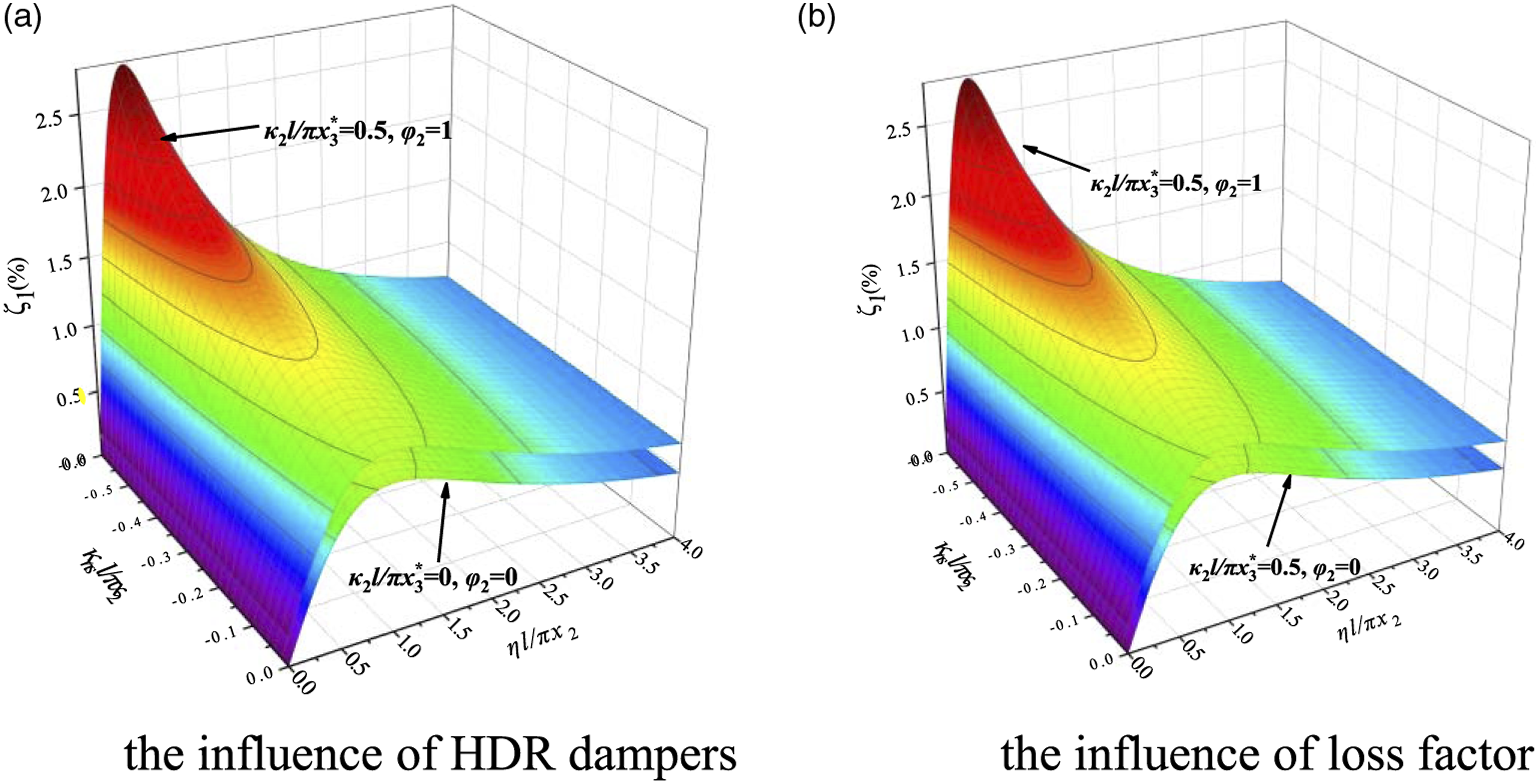
Multi-mode damping effect of the cable with HDR dampers and NSD
Parameters of the stay cable.

Effect of damping coefficient of NSD on cable damping
Figure 9 shows the relationship between the cable’s multi-mode damping ratios and the dimensionless damping coefficient The relationship between the multi-mode damping ratios (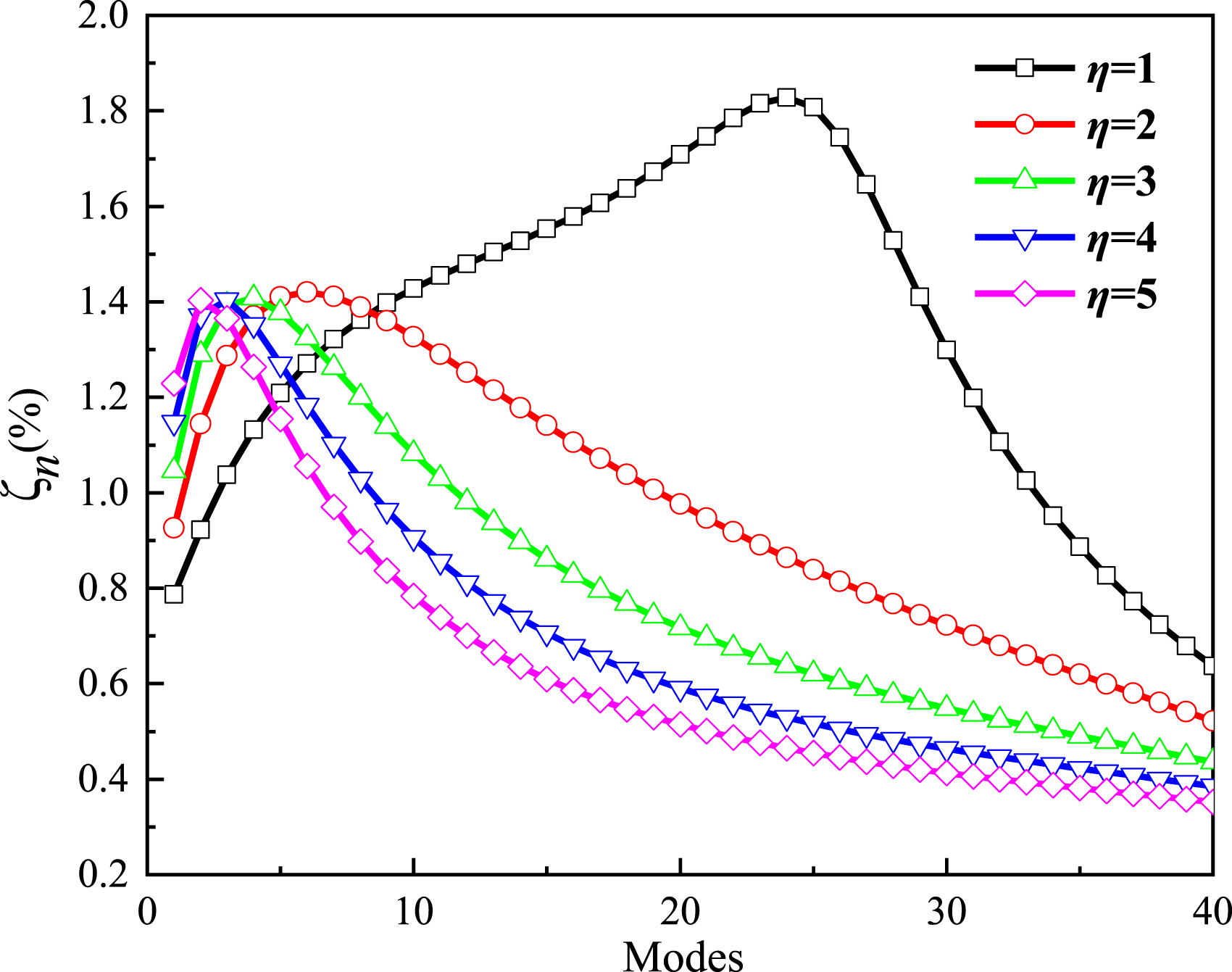
Effect of negative stiffness coefficient of NSD on cable damping
Figure 10 shows the relationship between the multi-mode damping ratios of the cable and the dimensionless negative damping coefficient The relationship between the multi-mode damping ratios (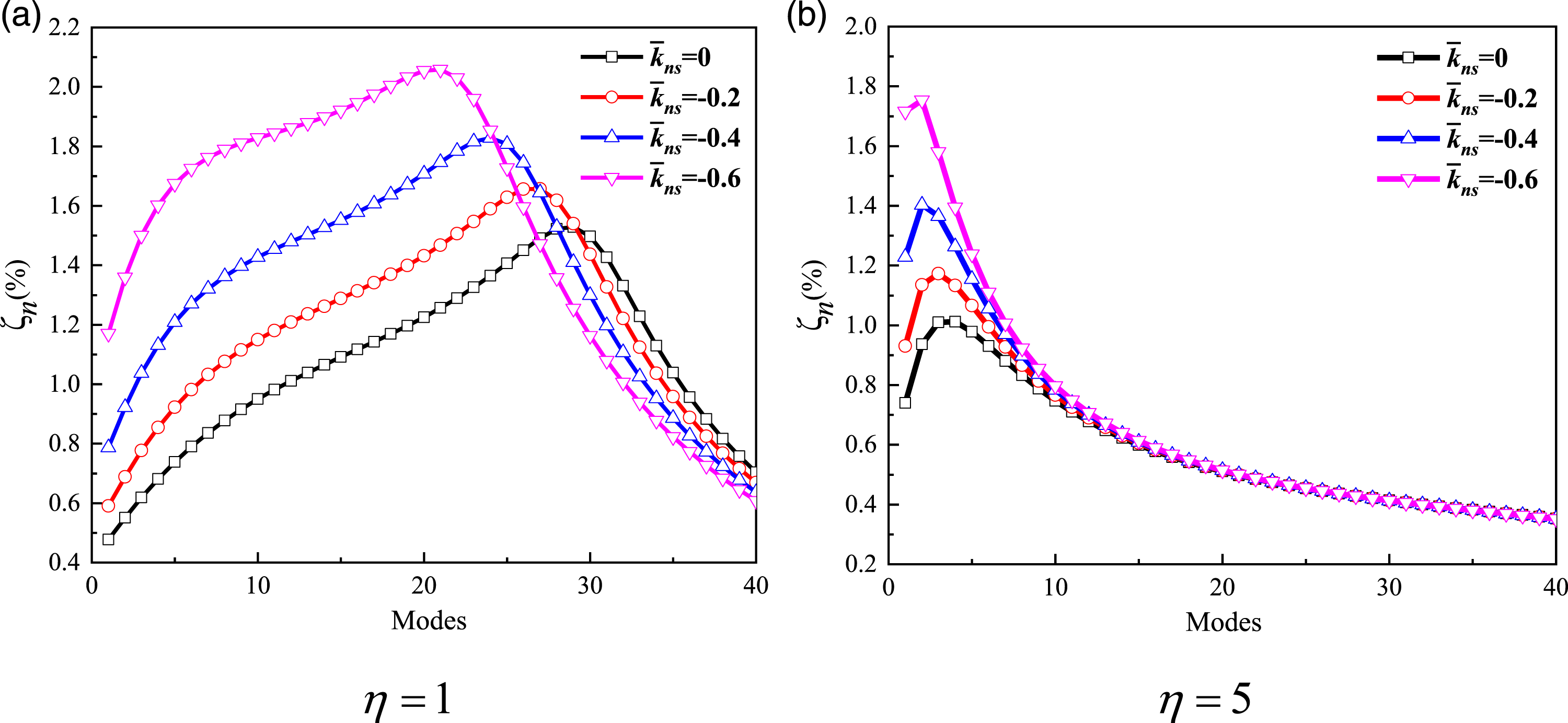
Effect of coupling configuration on cable damping
Figure 11 shows the relationship between the multi-mode damping ratios of the cable and the various coupling form of HDR dampers and NSD, where the dimensionless stiffness coefficient of the NSD is −0.4. It can be seen from Figure 11(a) that when the HDR damper is installed on the same end as the NSD, different from the previous studies, the HDR damper increases the modal damping ratio in the first two modes of the cable. When the two identical HDR dampers are symmetrically installed at the cable, it is found that the damping ratios of the all 40 modes are larger than 0.6 percent. In Figure 11(b), for the first six modes, the damping ratios have an obvious reduction due to the influence of HDR damper when the NSD and the HDR damper at the same cable end. When the two HDR dampers are symmetrically installed at the cable, the damping ratios of the first four modes would decrease due to the influence of the HDR damper close to the NSD. When NSD and HDR damper are installed at opposite cable ends, the modal damping ratio decreases rapidly with the increase of mode number (above the second mode). Compared with other coupling forms, the maximum attainable modal damping ratio of the cable can be significantly increased in this coupling form. In other words, the coupling form of single HDR damper and NSD installed at opposite cable ends can perform better damping effect in the narrower modal ranges. The relationship between the multi-mode damping ratios (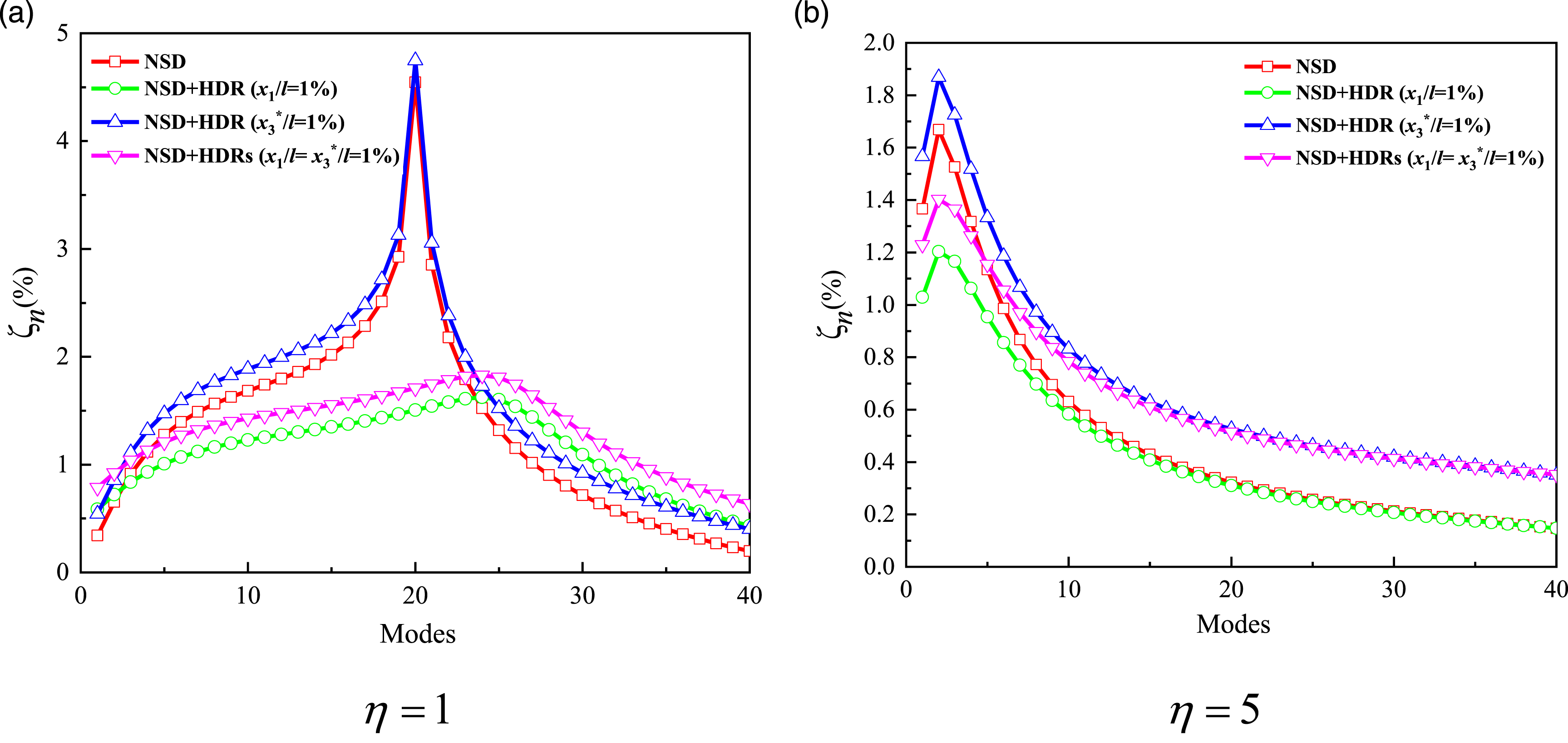
Conclusions
In this paper, the combined damping effects of negative stiffness damper (NSD) and high damping rubber (HDR) dampers on a stay cable are theoretically and numerically investigated. Both asymptotic and iterative design solutions are derived for the modal behavior of the cable-HDR-NSD system. Parametric studies are carried out to reveal the impact of the internal HDR dampers on the performance of the external NSD. Moreover, a case study based on a cable-damper system of the Sutong Bridge is conducted to analyze the influence of the NSD parameters and the coupling configurations on multi-mode damping effects of the cable. The main conclusions of the current study are summarized in the following. 1. The asymptotic and iterative solutions are compared to validate the applicability of asymptotic solutions. The combined damping effect of HDR dampers and NSD can be explicitly evaluated by the proposed asymptotic solution. Moreover, in the damper design, the theoretical and numerical methods provided in this study can be used to evaluate the effect of internal HDR dampers on the effectiveness of the external NSD. 2. The supplemental modal maximum damping ratio of a cable with NSD and HDR dampers is significantly improved compared with that of a cable with VD and HDR dampers. When NSD and HDR damper are installed at opposite cable ends, the supplemental damping ratio is approximately the superposition of the two dampers. Otherwise, when NSD and HDR damper(s) are installed at same cable ends, the maximum attainable supplemental damping ratio would reduce and the corresponding optimal damping coefficient of NSD would increase. Moreover, if the HDR dampers are modeled as springs, the optimal damping coefficient of the NSD would further increase. 3. The conventional design using a single NSD is not able to effectively control the lower and higher modes of cables simultaneously. In this control system, the optimal damping coefficient of NSD for high-order modes is lower. In the coupling system, the two identical HDR dampers symmetrically installed at the cable can significantly enhanced the modal damping ratios in the corresponding target modal range. The coupling form of single HDR damper and NSD installed at opposite cable ends can perform better damping effect in the narrower modal ranges. In contrast, the coupling form of double HDR dampers and NSD possesses better modal compatibility.
Footnotes
Declaration of conflicting interests
The author(s) declared no potential conflicts of interest with respect to the research, authorship, and/or publication of this article.
Funding
The author(s) disclosed receipt of the following financial support for the research, authorship, and/or publication of this article: The National Natural Science Foundation of China (Grant No. 51878274).
