




Abstract
A nonlinear vibration system arises in physics. Besides its mathematical model, it is of great importance to have an accurate and reliable solution to the system. Though there are many analytical methods, such as the variational iteration method and the homotopy perturbation method, numerical approaches are rare. This paper suggests the barycentric interpolation collocation method to solve nonlinear oscillators. The Duffing equation is adopted as an example to elucidate the solution process. Some numerical examples are studied to demonstrate the accuracy of the present method. Results obtained by the method indicate the method is simple and effective.
Keywords
Introduction
The nonlinear vibration system has wide applications in physics. There are some valuable efforts that focus on finding analytical methods for solving the nonlinear vibration system. These analytical methods are the variational iteration method (VIM), the homotopy perturbation method (HPM), the Adomian decomposition method and so on. The VIM and the HPM have proved to be powerful mathematical tools for solving various kinds of nonlinear problems.1–8 The barycentric interpolation collocation method (BICM)9–11 is a high precision numerical method. Some authors12,13 have used the BICM to solve some linear and nonlinear high-dimensional Fredholm integral equations, 12 nonlinear parabolic partial differential equations.13,14 In this paper, the BICM is used to solve nonlinear oscillators and coupled Duffing system is adopted as an example to elucidate the solution process.
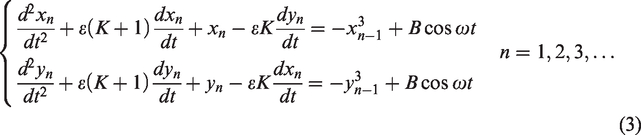
We consider the following coupled nonlinear Duffing system
15


The numerical solution of (1)
The interval
Let


So, when


Next, we take the formula (4) into the initial conditions (2), we can get the following equation

The first 1 and the first 2M of equation (5) are replaced separately by equation (7) in turn. So, we can get
Numerical experiments
In this section, some numerical examples are studied to demonstrate the accuracy of the present method. The examples are computed using MatlabR2017a.


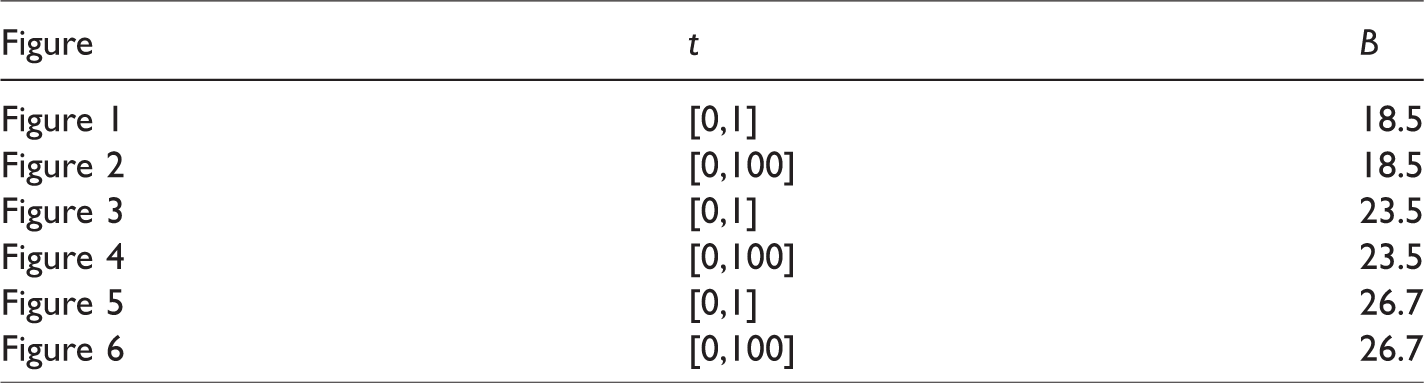
In Figures 1 to 6, we give some numerical results of Example 1. The parameters of Figures 1 to 6 are listed in Table 1.
Parameters used in the numerical simulations for Example 1,
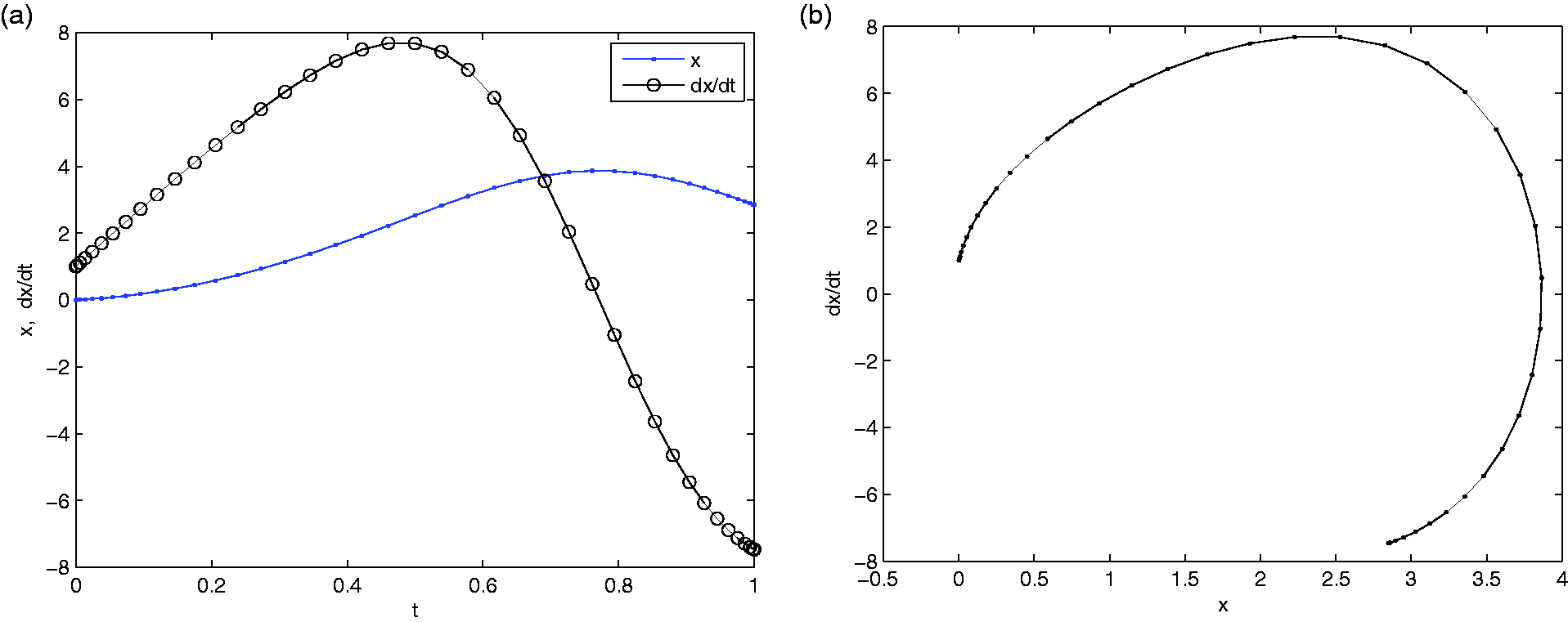
Numerical results for Example 1 at B = 18.5,
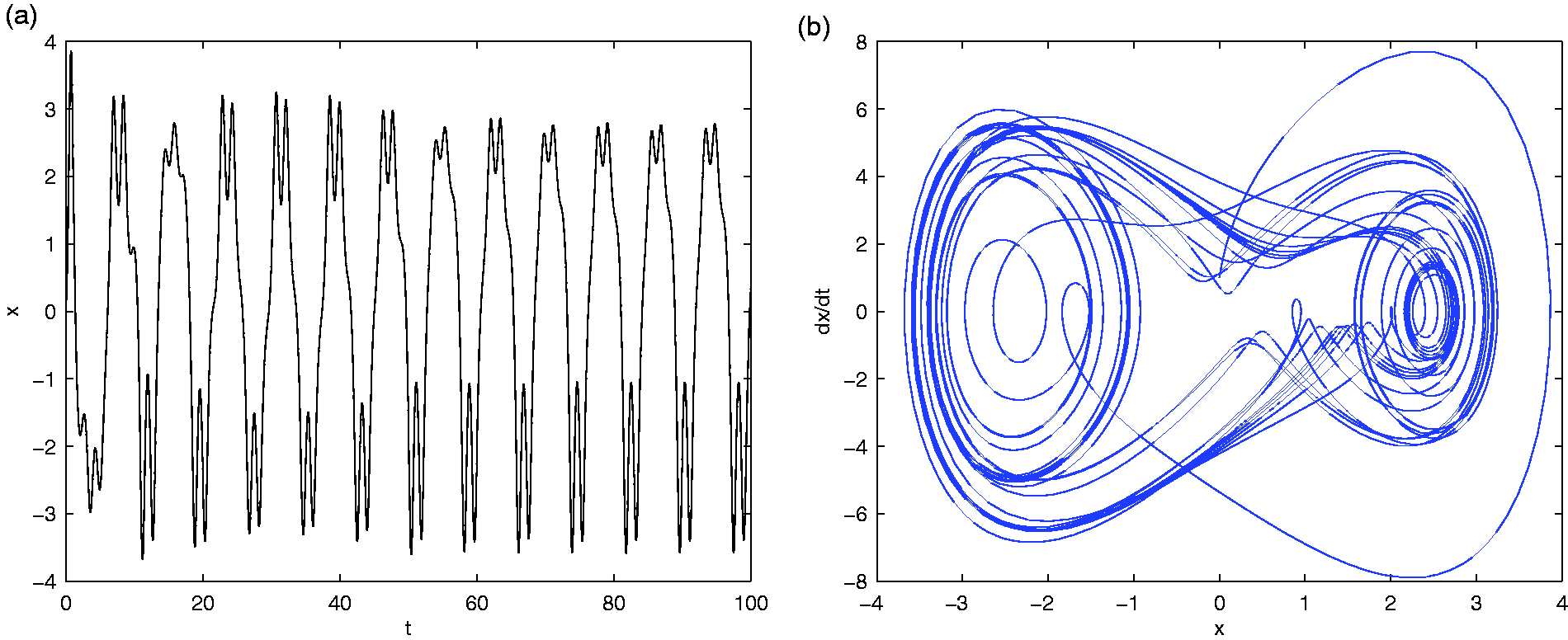
Numerical results for Example 1 at B = 18.5,
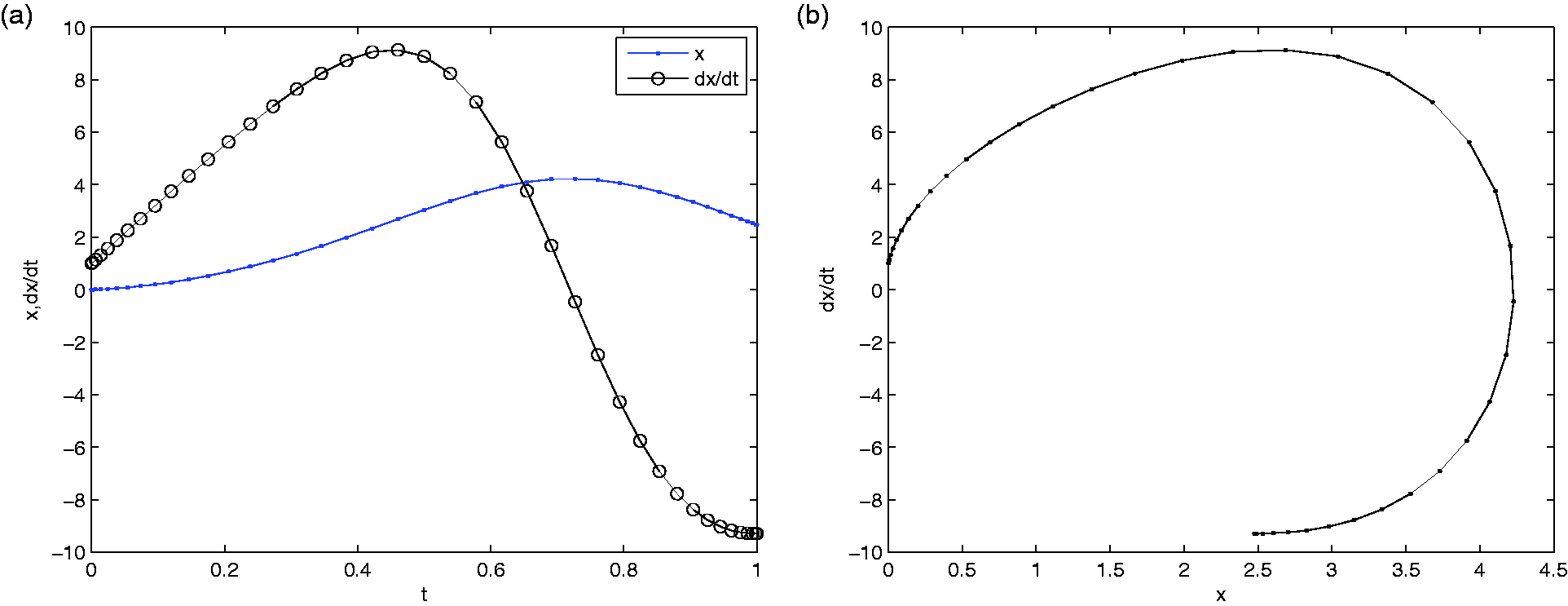
Numerical results for Example 1 at B = 23.5,
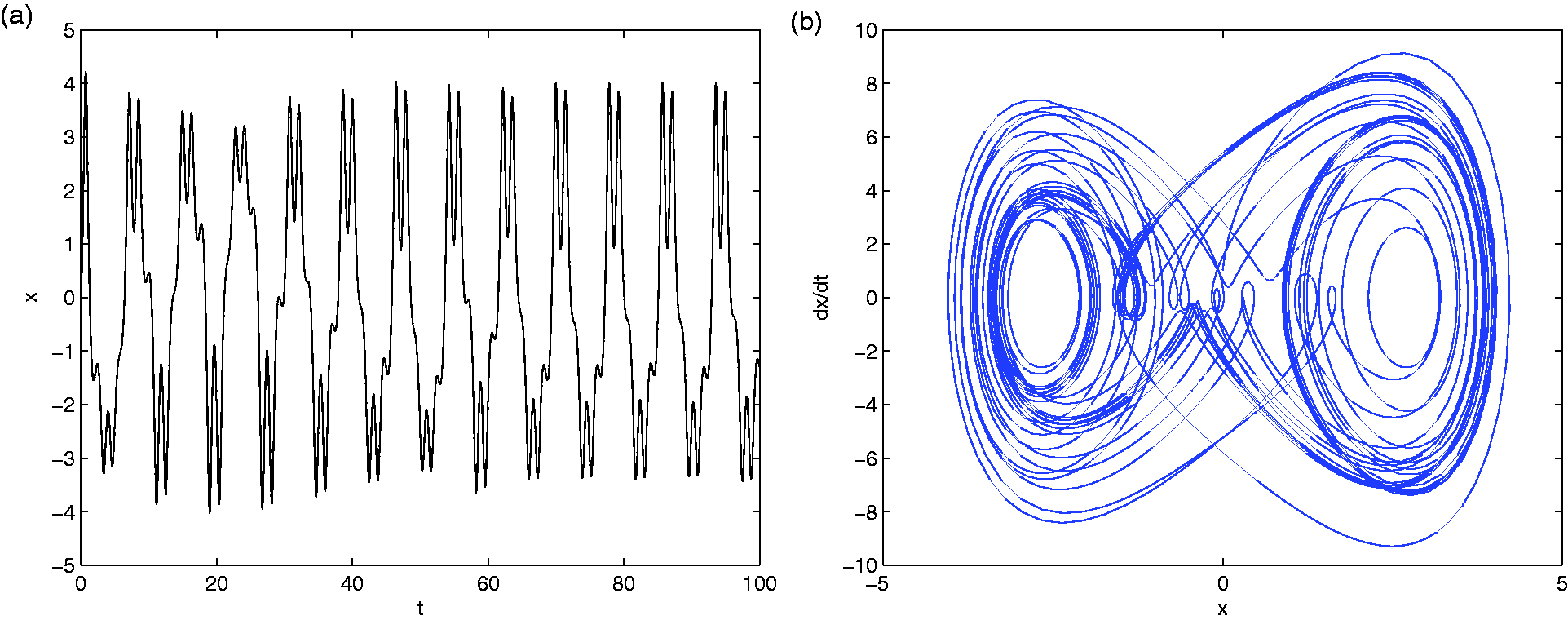
Numerical results for Example 1 at B = 23.5,
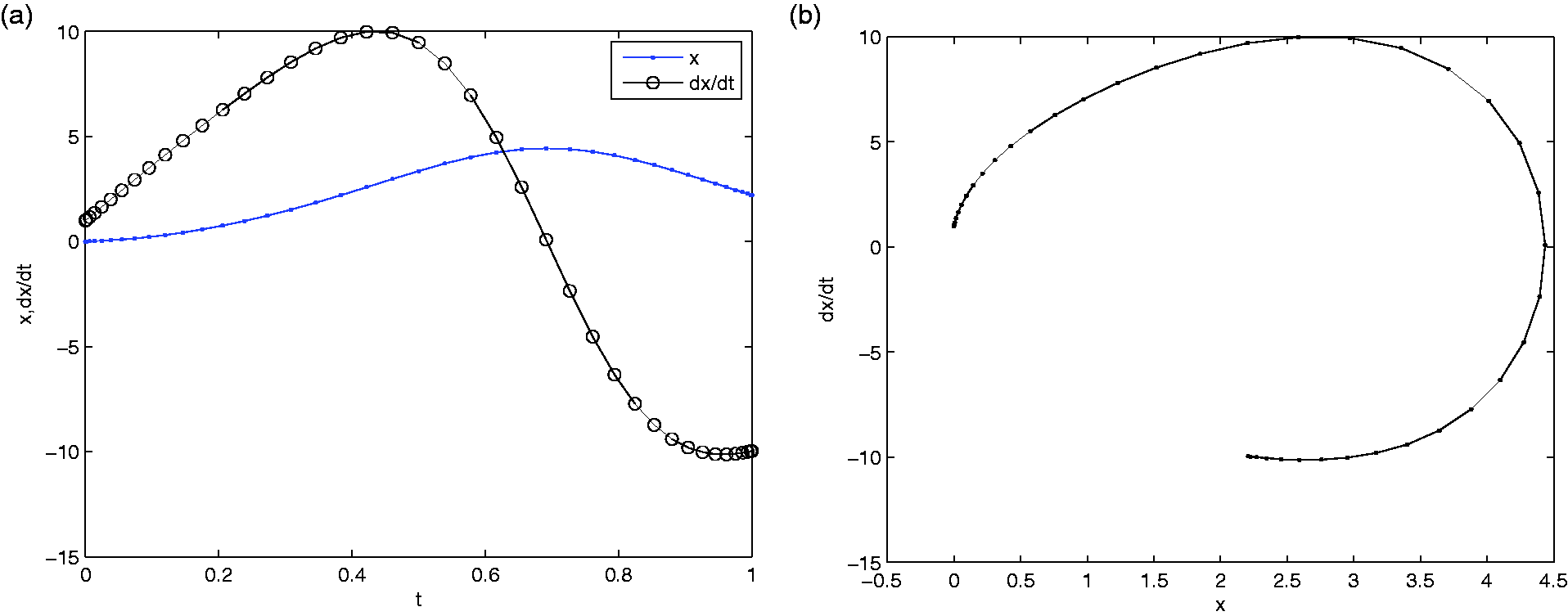
Numerical results for Example 1 at B = 26.7,
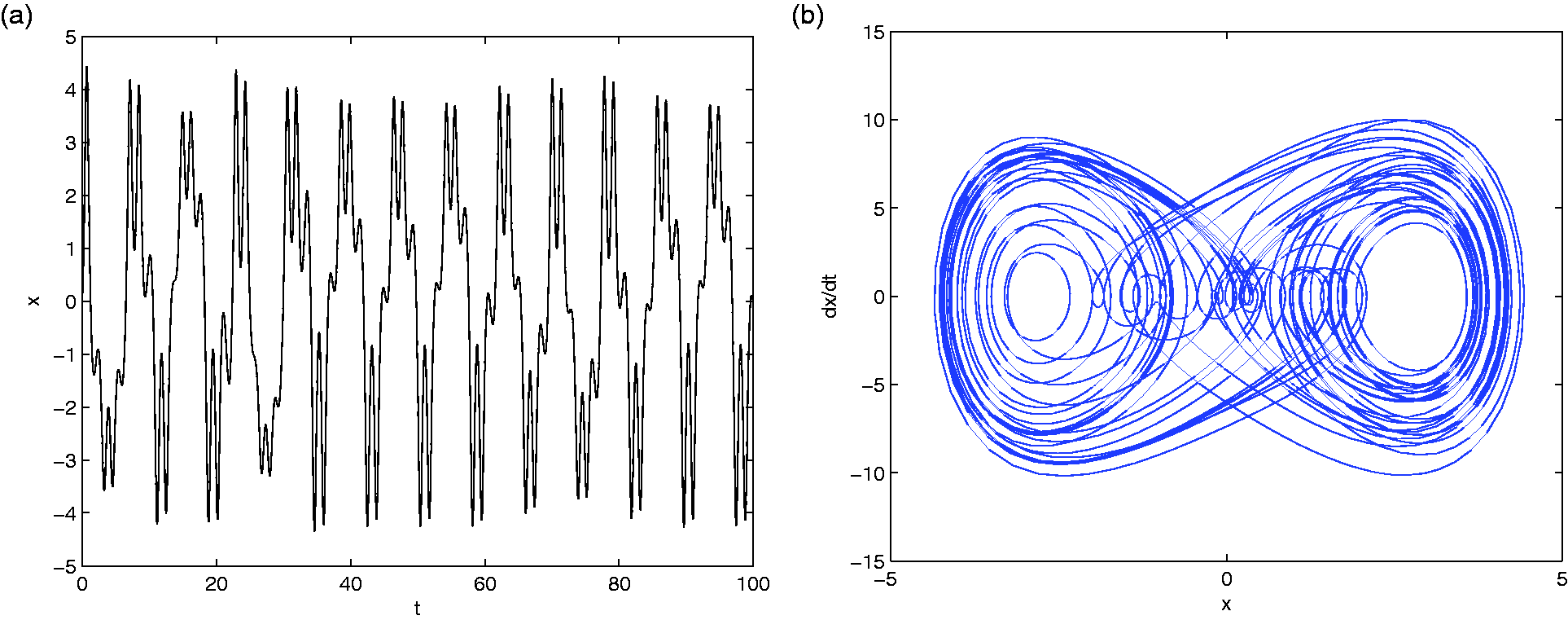
Numerical results for Example 1 at B = 26.7,
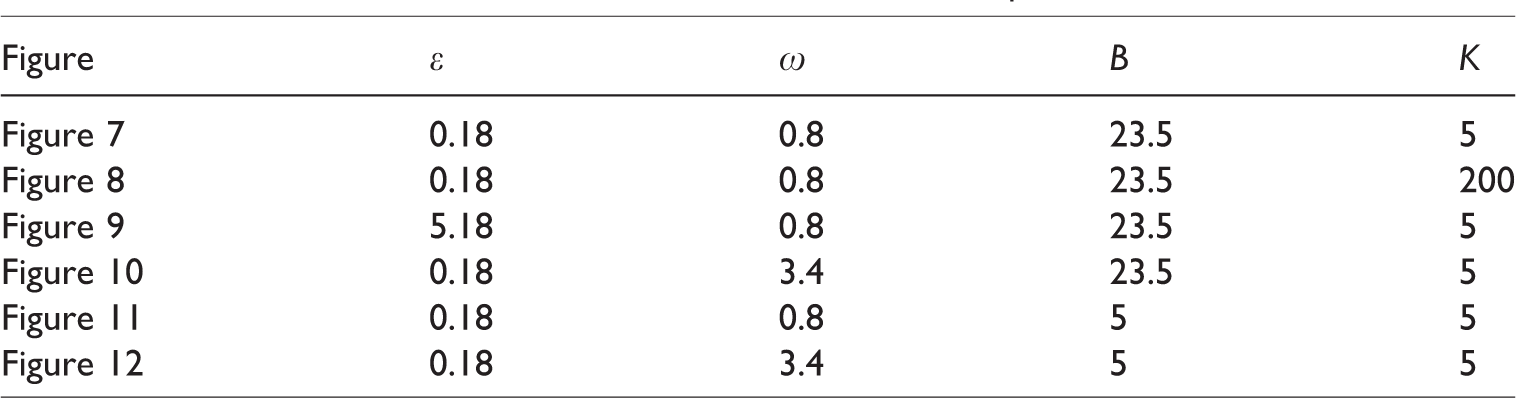
In Figures 7 to 12, we give some numerical results of Example 2. The parameters of Figures 7 to 12 are listed in Table 2.
Parameters used in the numerical simulations for Example 2,
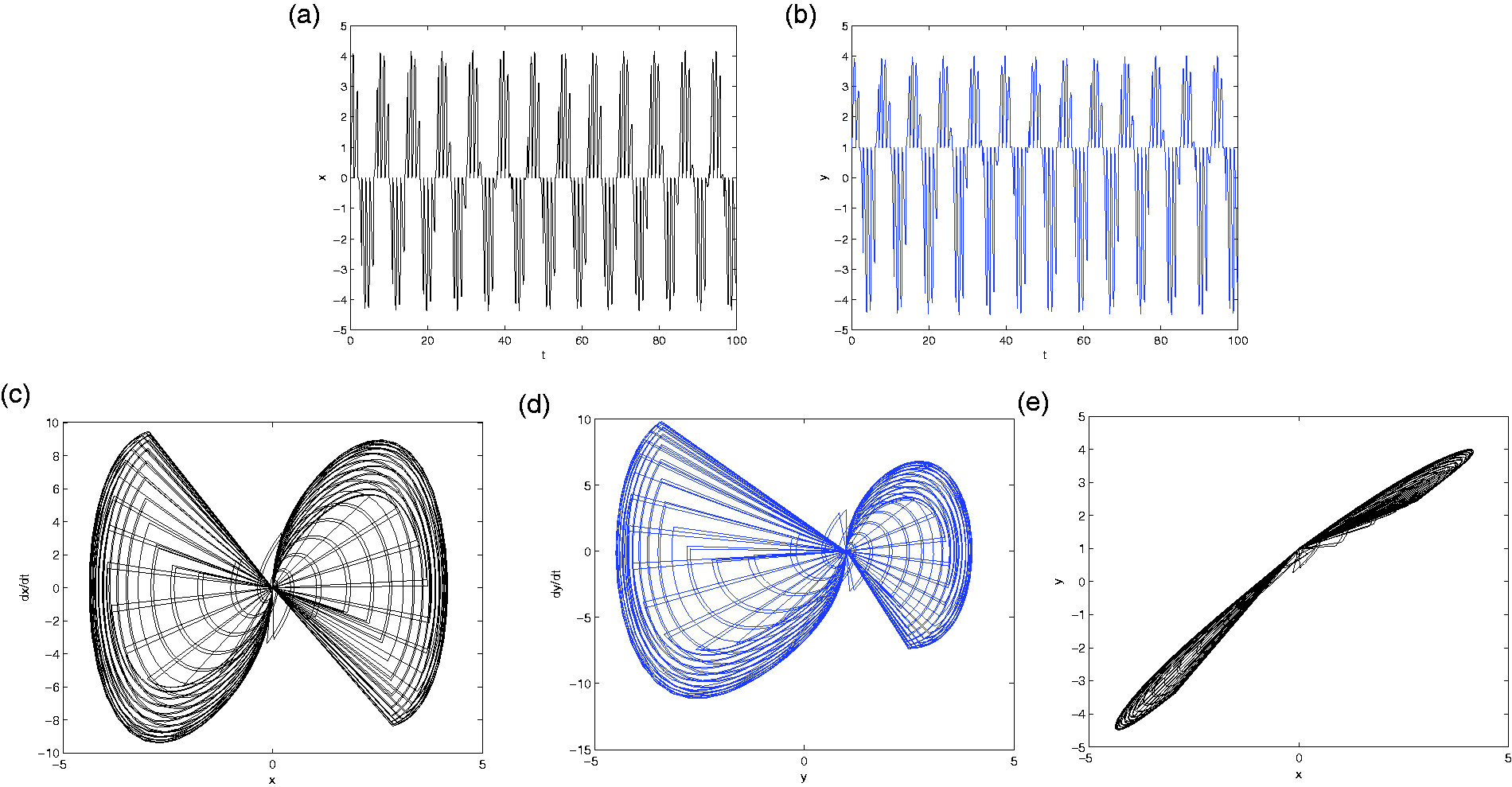
Numerical results for Example 2 at
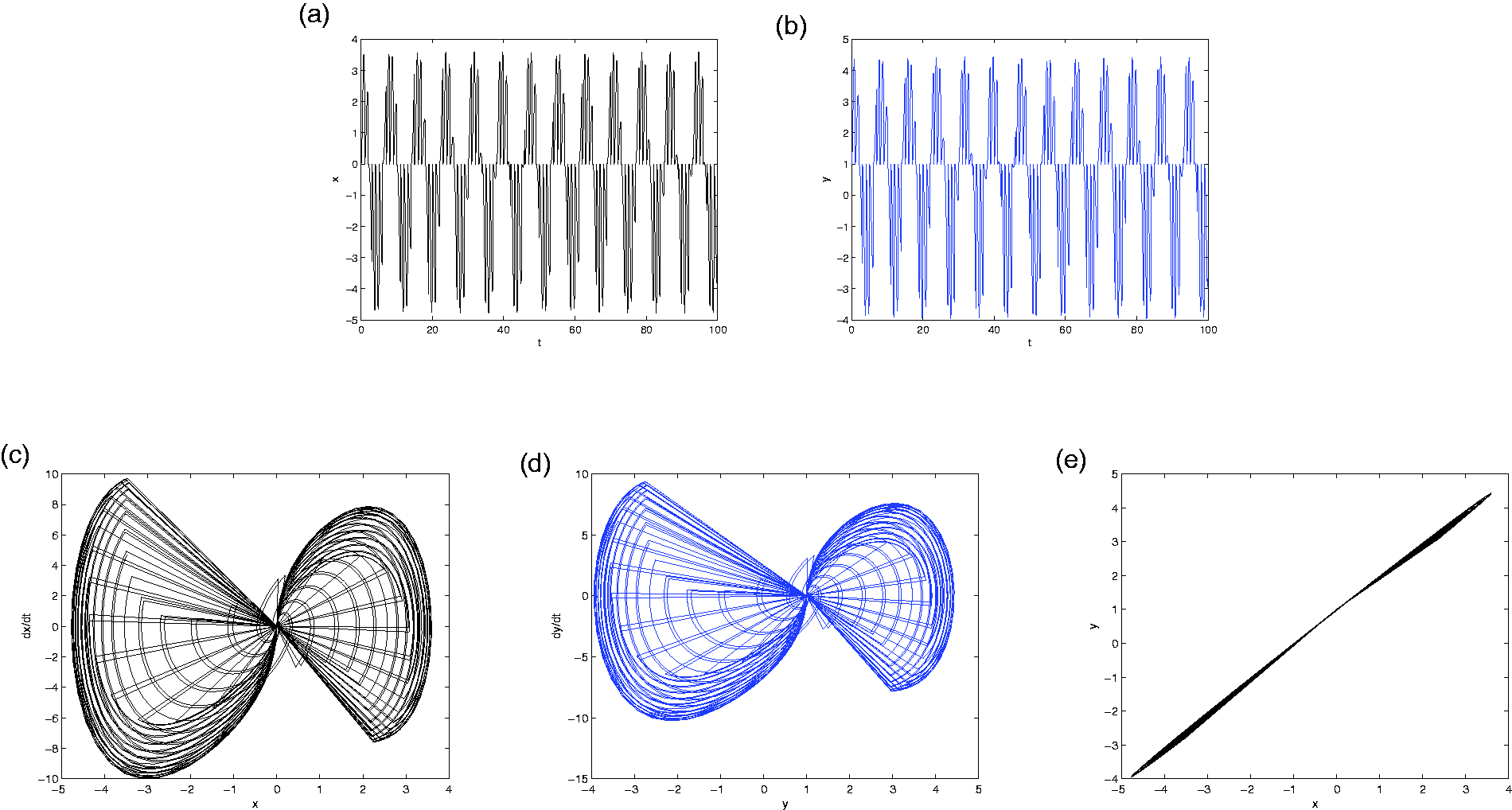
Numerical results for Example 2 at
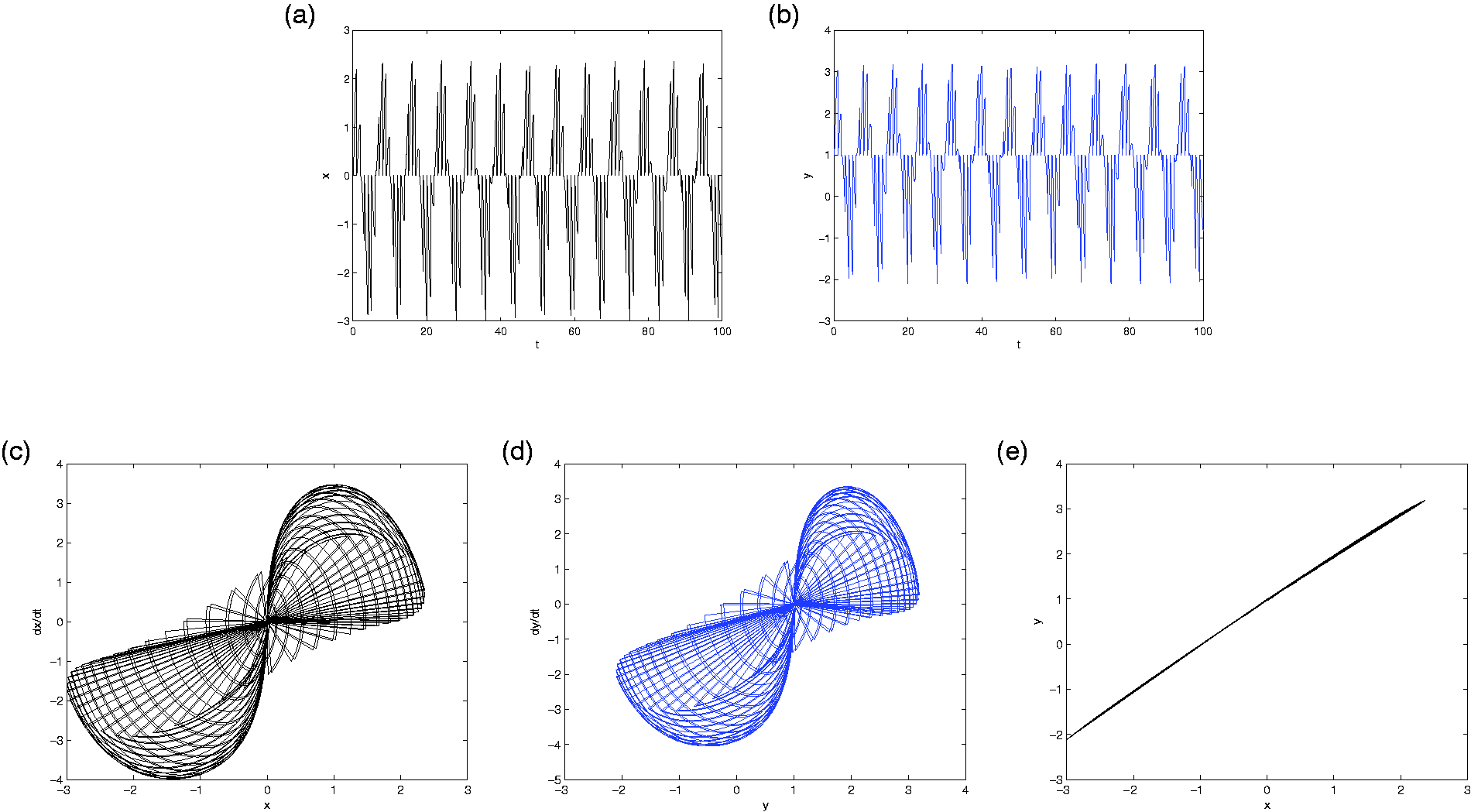
Numerical results for Example 2 at
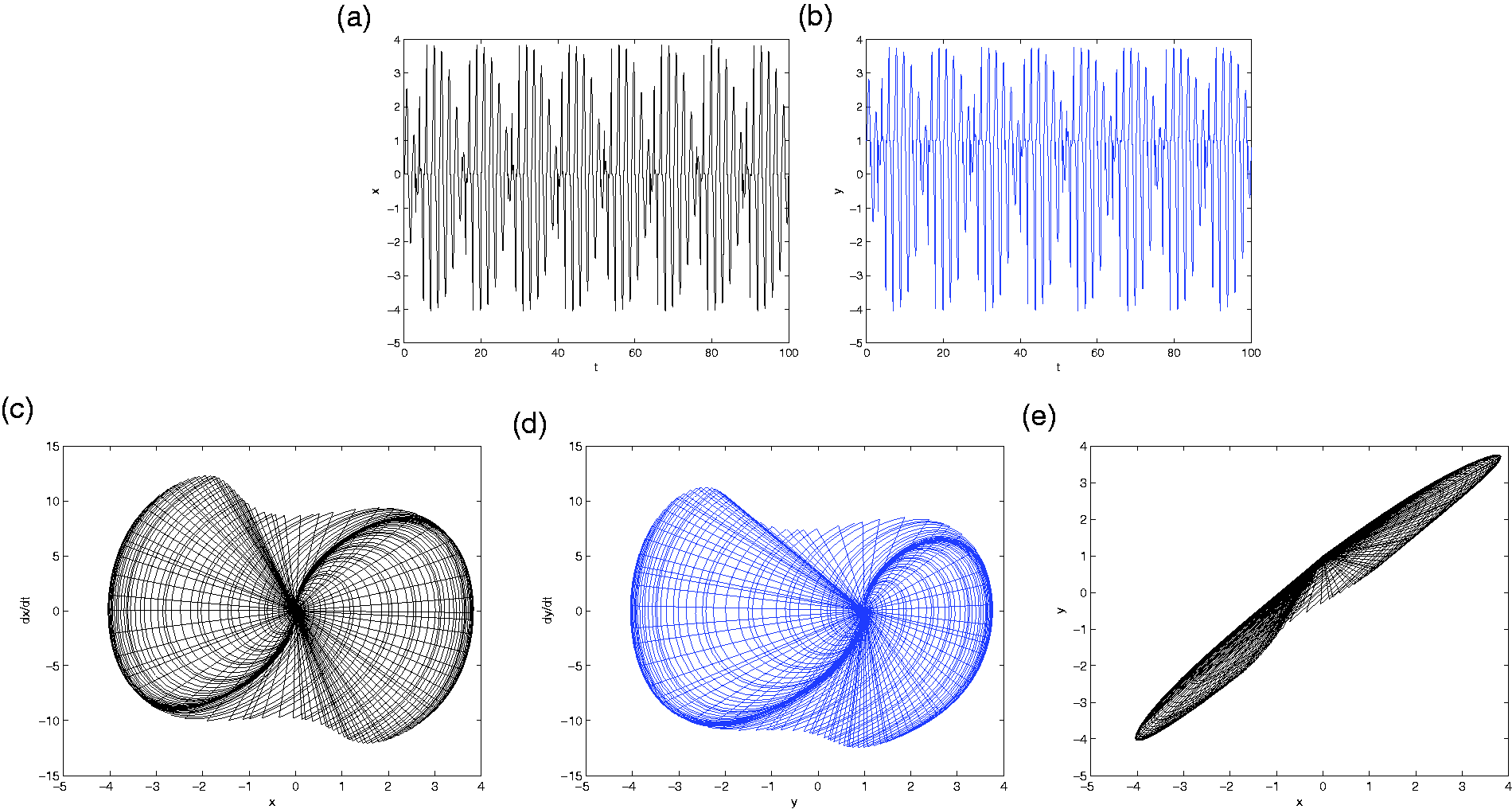
Numerical results for Example 2 at
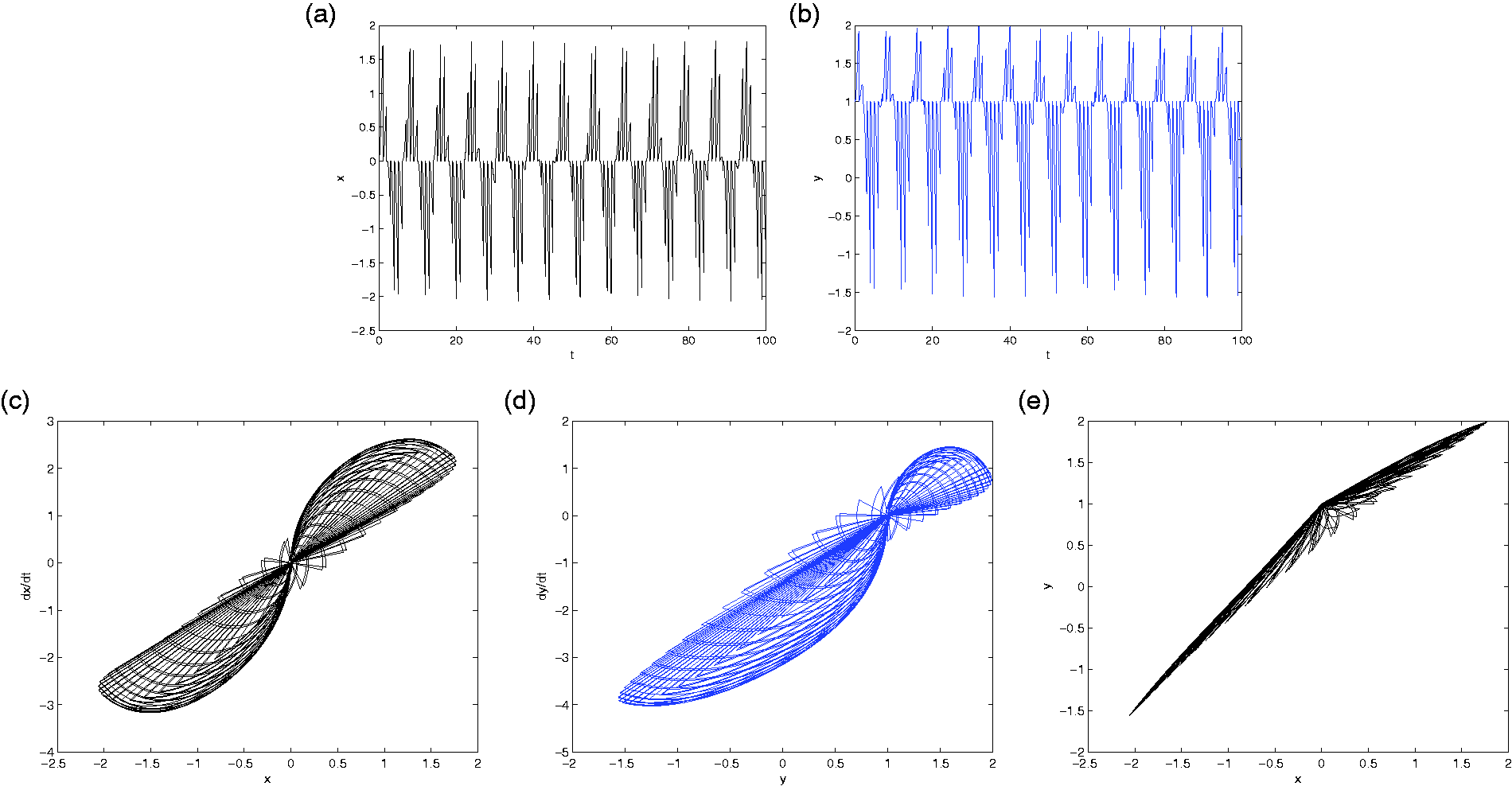
Numerical results for Example 2 at
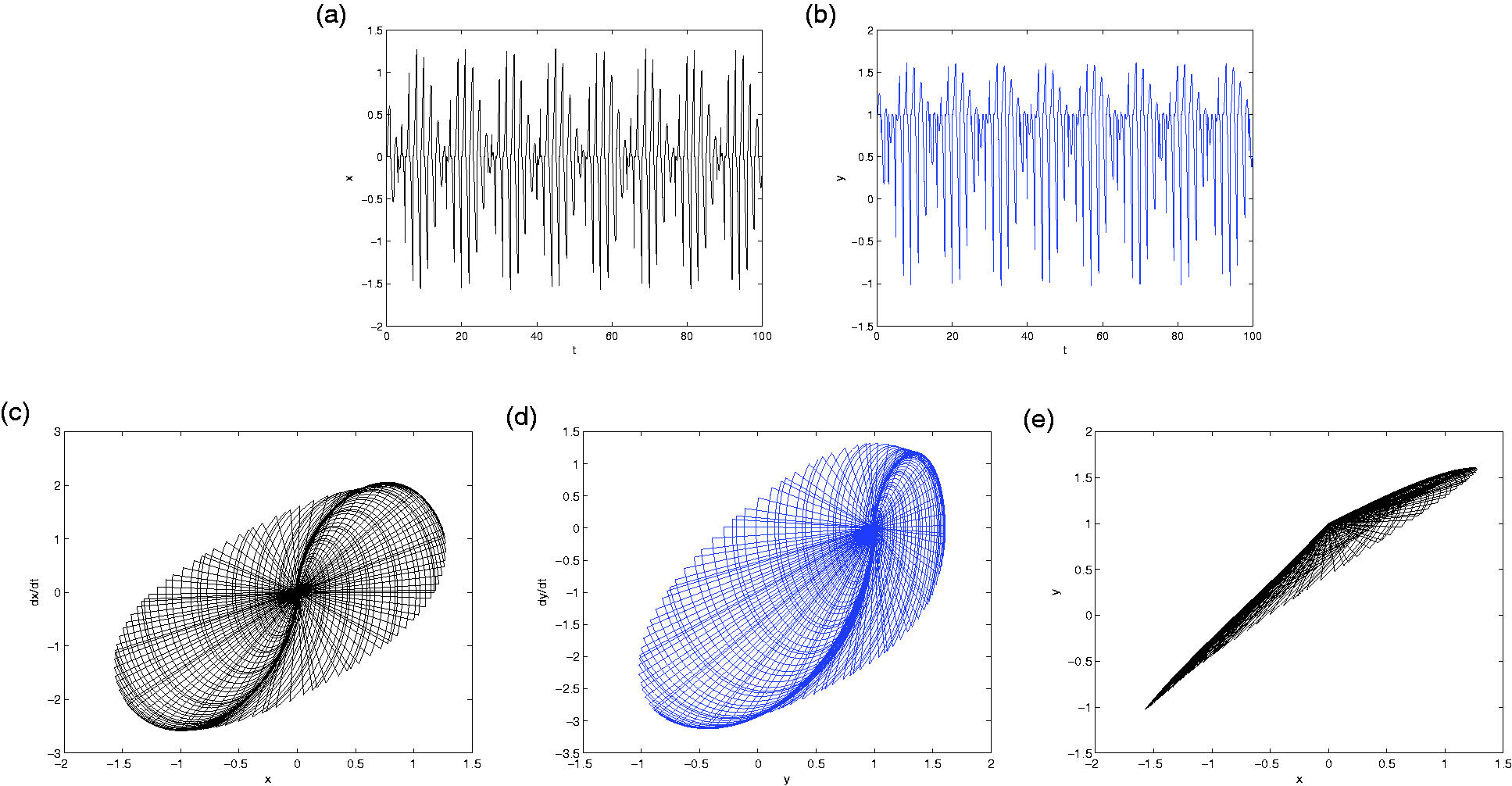
Numerical results for Example 2 at
From the above Examples, we can see that the BICM is an effective method. Next, we use the BICM to solve the following nonlinear epidemic model.
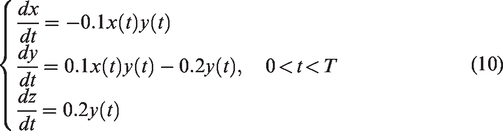

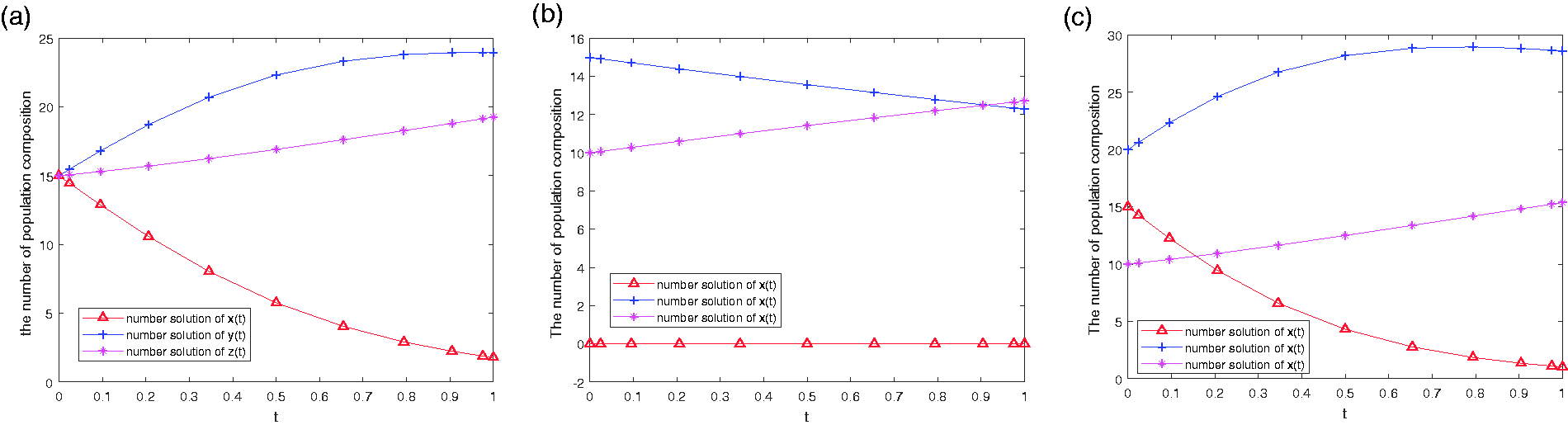
Changes in population composition values affect the epidemic model for Example 3 (a), Example 3 (b), and Example 3 (c).
Parameter selection for Example 3.
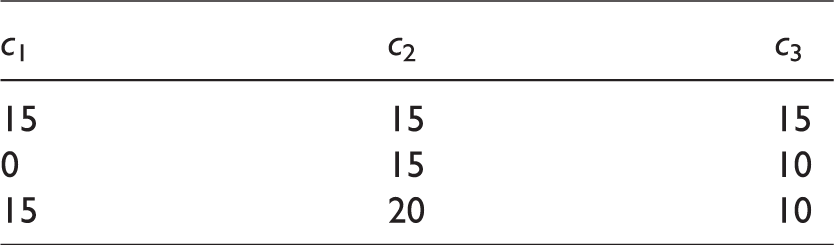
When we take the same value for susceptible population, infective population and isolated population, the rate of decrease of susceptible population is fast, and infective population is always more than isolated population.
When we take the value of susceptible population is zero, the infective population is the largest, the infective population is inversely proportional to the isolated population.
When we take the value of infective population is the largest, the last infective population and the susceptible population are stable.
Conclusions and remarks
In this paper, the Duffing systems have been solved by the BICM. From some figures, we can see that the present method is feasible in solving this model. Meanwhile, these numerical experiments illustrate that the numerical results of the present method are the same as the experimental results of Tafo Wembe and Yamapi 15 Compared with Tafo Wembe and Yamapi, 15 we get better numerical results.
All computations are performed by the MatlabR2014a and MatlabR2017a software package.
Data availability
The data used to support the findings of this study are available from the corresponding author upon request.
Footnotes
Acknowledgements
The authors thank the reviewers for their valuable suggestions, which greatly improved the quality of the paper.
Declaration of conflicting interests
The author(s) declared no potential conflicts of interest with respect to the research, authorship, and/or publication of this article.
Funding
The author(s) disclosed receipt of the following financial support for the research, authorship, and/or publication of this article: This paper is supported by the Natural Science Foundation of Inner Mongolia (2017MS0103), Inner Mongolia Maker Collaborative Innovation Center of Jining Normal University and the Numerical Analysis of Graduate Course Construction Project of Inner Mongolia University of Technology (Grant Number KC2014001) and the National Natural Science Foundation of China (11361037).