




Abstract
The gender and anthropometric effects on vibration absorbed power characteristics of the seated body are investigated through measurements with 31 males and 27 females considering two different back support conditions, and three levels of vertical vibration (0.25, 0.50, and 0.75 m/s2 rms acceleration) in the 0.5–20 Hz frequency range. The absorbed power responses for the males and females revealed strong gender effect, which could be mostly related to differences in body mass of the two groups. Subsequent analyses were conducted considering different datasets grouped corresponding to three ranges of the body mass-, build-, and stature-related parameters for both the males and females. Notable differences were evident in the absorbed power responses of the males and females with comparable anthropometric dimensions. Males revealed significantly higher peak and total absorbed power responses compared to the females of comparable anthropometric dimensions, except for the lean body mass. The differences, however, were relatively small in the data for males and females of comparable body mass. The peak power for the females, invariably, occurred at a lower frequency than that for the males. The total absorbed power responses revealed some degree of correlations with the body mass, lean body mass, body fat, and hip circumference (r2>0.60), irrespective of the back support condition and excitation magnitude for both the genders.
Keywords
Introduction
Vehicle operators are exposed to whole-body vibration (WBV), which is known to be an important occupational health risk factor worldwide. 1 Biodynamic responses of human subjects exposed to vibration have been widely investigated under broad ranges of experimental conditions to study mechanical behavior of the seated body and the potential injury risks. These have been mostly studied in terms of the driving-point mechanical impedance (MI) or apparent mass (AM), and vibration transmitted to the head or particular body segments.2–4 The reported biodynamic responses have been considered vital for developments in anthropodynamic manikins,5–7 mechanical equivalent models of the seated body,8–10 and seating design and assessments.11–14 Alternatively, a few studies have proposed the use of vibration power absorption (VPA) measure for describing the human biodynamics responses to vibration.15,16
Similar to the AM responses, the VPA exhibits strong dependence on both the frequency and magnitude of vibration, and the peak VPA occurs in the vicinity of 5 Hz under vertical vibration.15–17 The energy absorption, unlike the AM, is most strongly dependent upon magnitude of vibration excitation. A few studies have shown a nearly quadratic relationship between the VPA and the excitation magnitude.18,20 Mansfield and Griffin 16 have thus normalized the absorbed power spectrum with the acceleration power spectral density. The studies have also shown definite effects of body mass and sitting posture on the absorbed power responses. The total power absorbed by the body has been positively correlated with the body mass.15,18,19 Consequently, some studies have normalized the absorbed power responses with the body mass supported by the seat pan, 15 as in studies reporting the AM responses. Normalization of VPA with respect to both the body mass and acceleration power spectrum has also been suggested to obtain linear dependence of VPA on both the factors.17,21 The VPA is also strongly affected by the back support condition in a manner similar to that observed in the AM responses. Sitting with a backrest yields relatively lower VPA at lower frequencies and greater VPA at frequencies above the primary resonance, when compared to sitting without a back suppoert.15,18,21
Limited knowledge, however, exists on the effects of gender and anthropometric parameters such as stature, sitting height, hip circumference, body-seat contact area, body fat, and lean body mass on the VPA characteristics of the seated body. Under vertical and horizontal vibration, Lundström et al. 15 showed significant gender effect on the absorbed power. The VPA normalized with respect to body mass suggested greater VPA per kg of body mass for females than the males, which was attributed to relatively higher fat to muscle mass proportions of females. The study however compared absorbed power responses of considerably heavier male subjects with lighter female subjects and body fat of the male and female subjects was not reported. A few studies have suggested insignificant gender effect on the basis of measured AM responses,22,23 even though VPA is directly related to the AM responses. 18 The contradictory findings on the gender effect may be due to large differences in anthropometric dimensions of male and female subjects, especially the body mass and body fat content. In order to uncouple the body mass effects, it has been suggested that the biodynamic responses should be investigated by considering male and female subjects of comparable body mass; however, such an investigation has not been attempted for VPA responses.
The studies on absorbed power responses have also reported contradictory findings on the frequency at which maximal VPA occurs for the male and female subjects. Lundström et al. 15 reported that the maximal power absorption at relatively lower frequencies for females compared to males, while Mansfield et al. 16 reported an opposite trend. Lundström et al. 15 suspected coupling of absorbed power with the anthropometric parameters other than the body mass and suggested normalizing the absorbed power with body segmental length. Apart from the body mass, Wang et al. 18 investigated relations between the total VPA and a few anthropometric variables such as body mass index (BMI), body fat and stature through a series of linear regression analyses, and showed high positive correlation of VPA with the BMI. A definite correlation with the stature, however, could not be established, irrespective of the seat support condition. The effect of lean body mass, hip circumference, seat-pan contact area, mean contact pressure, and sitting height, which could possibly affect absorbed power responses, have not been studied thus far.
Considering that males and females exhibit different morphology, body composition and viscoelastic properties, it is hypothesized that (1) the male and female subjects may exhibit different VPA characteristics; (2) the body mass-, build-, and stature-related anthropometric dimensions may influence the responses; and (3) gender and anthropometric parameters may exhibit coupled effects on VPA responses. In this study, the effects of gender and selected anthropometric parameters were investigated on the absorbed power responses under three different levels of vertical vibration for subjects seated with and without a back support. The anthropometric parameters included the body mass-related (body mass, BMI, body fat, and lean body mass), build-related (hip circumference, seat pan contact area, and mean contact pressure), and stature-related (stature, seated height, and C7 height) dimensions. In order to uncouple the effect of anthropometric parameters and to establish gender effects, the absorbed power responses of the two genders were compared for similar ranges of anthropometric parameters.
Measurement and analysis methods
Subjects
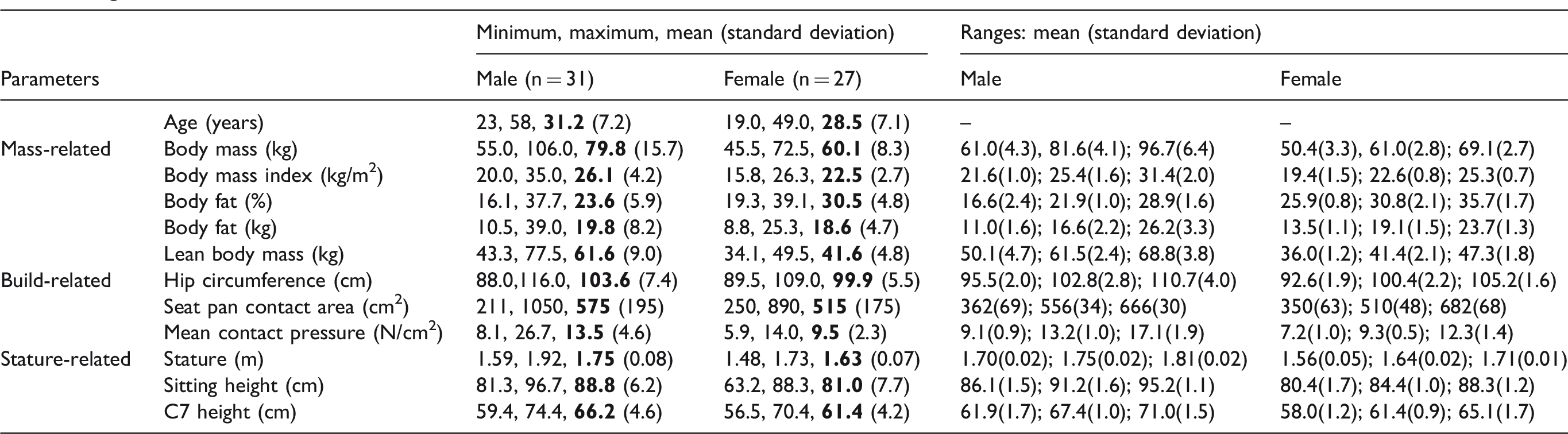
Considering the pronounced effect of body mass on the AM response, 4 a total of 58 subjects (31 males and 27 females) with body mass within specific ranges were recruited for the study. These included nine subjects within each of the three body mass groups in the vicinity of 60, 80, and 96 kg for the males, and around 50, 60, and 70 kg for the females. The subjects sample permitted study of gender effect with two different but comparable mass ranges (55–65 and 65–75 kg) of males and females. These included nine and seven subjects in the 50–65 and 65–75 kg mass ranges, denoted as G60 and G70, respectively. The subjects were free from musculoskeletal symptoms including low back pain. Prior to the test, each subject was informed the test protocol that had been approved by the Human Research Ethics Committee of Concordia University. Matsumoto and Griffin 24 reported pitch motion of the pelvis and head, and bending motion of the spine when seated human are exposed to vertical WBV. Pitch and fore-aft motions of the head depend on the vibration magnitude and C7 height apart from biodynamics of the seated body. Ten parameters which may affect absorbed power were considered in the study, which are summarized in Table 1. Anthropometric dimensions like body mass, stature, sitting height, C7 height, as well as hip, waist, and neck circumferences were measured for each subject. In order to identify C7 vertebra, the spine was palpated by the hand inferiorly down the neck. The first big bump was taken as the location of the C7 vertebra. The anthropometric dimensions are summarized in Table 1 together with the body fat and lean body mass, estimated using the US Navy formula. 25 Subjects are further grouped within three distinct ranges of each anthropometric dimension in order to study the effect of each individual parameter. The means and standard deviations of the ranges are also summarized in the table.
Mean, standard deviation, minimum and maximum values of the selected anthropometric parameters of the participants and mean (standard deviation) for three different ranges.
Note: Mean values are shown in bold.
n: number of subjects.
Methods
The absorbed power characteristics of the seated subjects were computed from the AM responses following the indirect approach described in Wang et al. 18 Thus, the experiments were designed to measure the AM responses of the seated subjects exposed to vertical vibration. The experimental setup used in this study was identical to that presented in Dewangan et al. 26 Briefly, a rigid seat with a horizontal seat pan and a vertical backrest was mounted on a Whole Body Vertical Vibration Simulator (WBVVS) platform through a force plate for measurement of the dynamic force at the seat base (Figure 1). A steering wheel fixed to a steering column was mounted on the WBVVS to provide the hands support for the subjects. A single-axis accelerometer (B&K 4370) was attached to the force plate to measure vertical acceleration due to vibration. Random vibration with nearly flat acceleration power spectral density was synthesized for the experiments with three different levels (overall rms acceleration: 0.25, 0.50, and 0.75 m/s2) in the 0.5–20 Hz frequency range. The measured force and acceleration signals were acquired in a multi-channel spectral analysis system (B&K PULSE 11.0) using a bandwidth of 50 Hz and a frequency resolution of 0.0625 Hz.
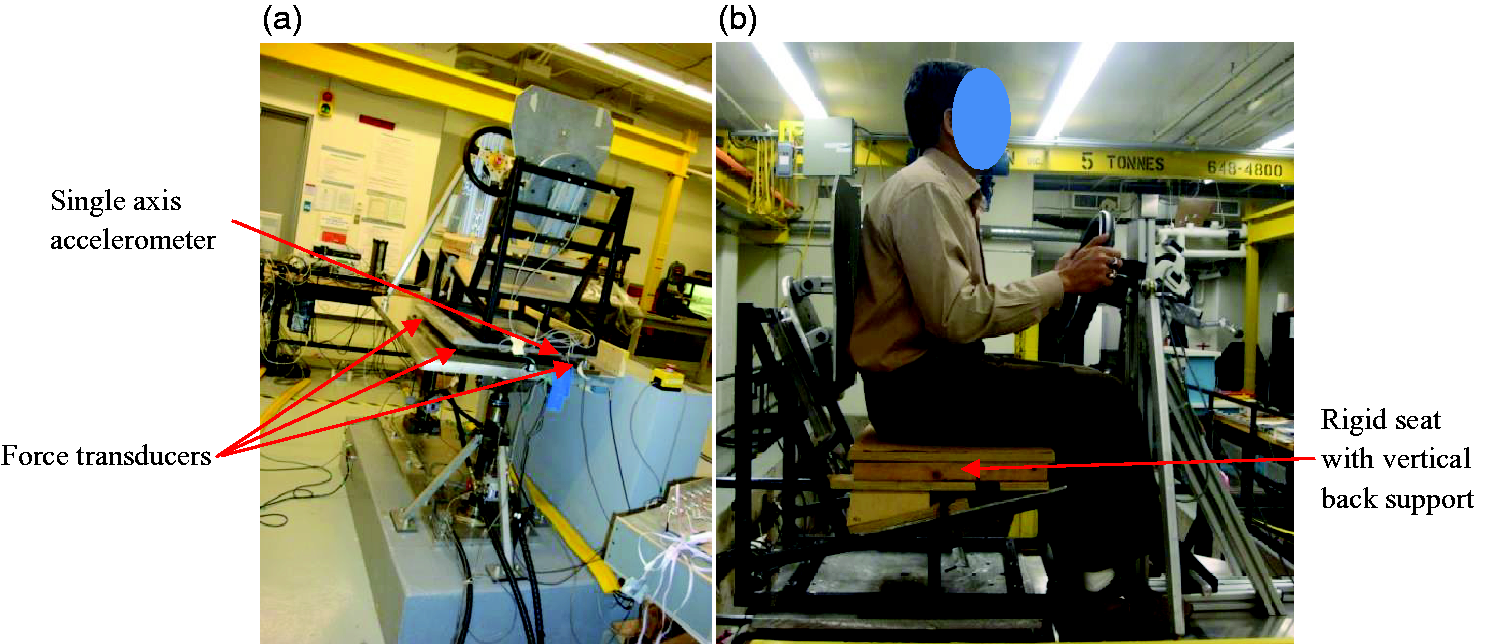
(a) Schematic of the whole body vertical vibration simulator (WBVVS), and (b) schematic illustration of sitting posture without a back support.
Experiments were performed with each subject seated with (WB) and without the back (NB) support with hands on the steering wheel, thighs horizontal, and nearly vertical orientation of lower legs. Prior to the dynamic measurements, the static body-seat pan contact area and mean contact pressure of each subject were measured for both the back support conditions (NB and WB) using a seat pressure sensing mat (Tekscan, range: 207 kPa, resolution: 0.83 kPa), as described in Dewangan et al. 26 The mean contact pressure and effective contact area of the males and females are summarized in Table 1, which are also grouped in three distinct ranges. Subsequently, dynamic measurements were performed under three levels of vertical vibration and two back support conditions. Each measurement was repeated twice. The duration of each measurement was 60 s, while the participants were asked to relax for 1–2 min between each successive measurement. The measured data were inertia corrected to account for the AM of the seat structure supported on the force plate and analyzed to obtain VPA responses.
Data analysis
The measured data were analyzed to obtain complex AM response, 
The total VPA 
The responses of the males and females were evaluated separately for each sitting condition and excitation stimuli in order to study the gender effect on the VPA, together with the effects of the selected mass-, build-, and stature-related anthropometric parameters. The subjects were grouped within three ranges of each selected anthropometric parameter, as given in Table 1, which also lists the mean and standard deviations of the each dimension within the three ranges. The number of subjects within each range varied from a minimum of 6 to a maximum of 11. The body mass dependence of the absorbed power of the two gender groups was initially investigated by grouping the data sets according to three different body mass ranges: 55–65, 75–85, and 90–106 kg for the males; and 45–55, 55–65, and 66–72.5 kg for the females. Each body mass group included 9 subjects, while the respective mean masses were 61.0 ± 4.3, 81.6 ± 4.1, and 96.7 ± 6.4 kg for the males, and 50.4 ± 3.3, 61.0 ± 2.8, and 69.1 ± 2.7 kg for the females.
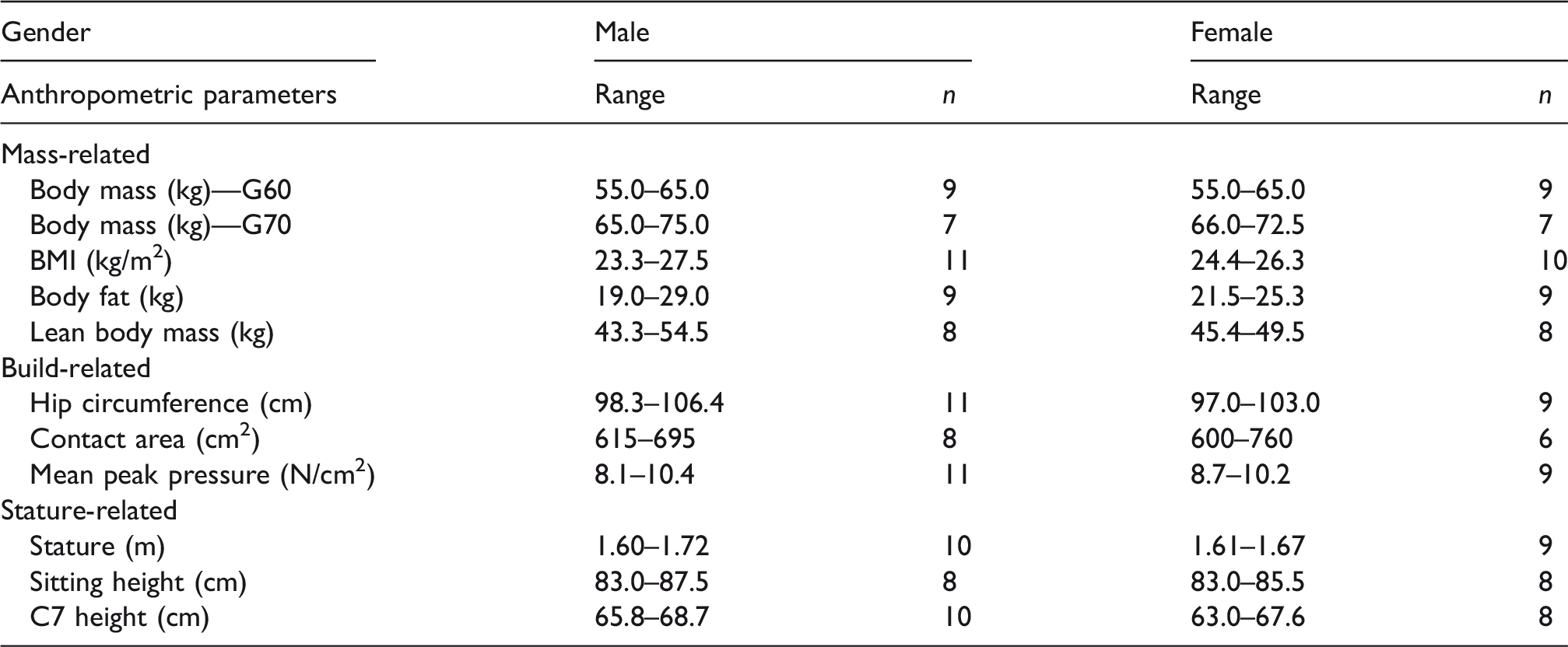
In order to decouple the body mass effect, two approaches were used. In the first approach, the absorbed power responses of each subject were normalized with respect to the body mass supported on the seat pan, as suggested in Lundstrom et al. 15 It is assumed that 75% of the standing body mass is supported by the seat pan as reported in Wang et al. 18 In the second approach, the datasets for the male and female subjects of comparable mean body mass were selected so as to study the gender effect. Owing to the possible coupled effects of other selected anthropometric dimensions, attempts were made to group the datasets for the male and female subjects so as to achieve comparable target values for the two gender groups. Table 2 presents the selected datasets that provide comparable anthropometric dimensions for the two genders. Data for the body mass in the vicinity of 60 and 70 kg were considered for the study of gender effect using similar body masses, denoted as G60 (males: 60.4 ± 4.2 kg; females: 61.0 ± 2.6 kg) and G70 (males: 70.3 ± 3.7 kg; females: 69.6 ± 2.7 kg). The G60 grouping included nine subjects of each gender, while G70 grouping included only seven subjects of each gender. The data were also grouped to achieve comparable values of each of the selected anthropometric parameters for both genders; the sample size ranged from 6 to 11 for each group representing comparable anthropometric dimensions other than the body mass, as summarized in Table 2.
Ranges of selected anthropometric factors used to compare VPA responses of male and female subjects of comparable anthropometric values.
n: number of subjects.
Statistical analysis
The data for the subjects grouped as per different anthropometric parameters (Tables 1 and 2) were analyzed to derive mean VPA responses, in order to identify the effects of other anthropometric parameters, if any, considering comparable anthropometric values, including the body mass. Correlation coefficients were determined between the total VPA and the mass-, build-, and stature-related anthropometric parameters for both the gender groups under three excitations and two sitting conditions. Variations in the VPA and normalized VPA magnitudes between the male and female subjects were tested at each of the one-third octave band center frequencies using one-way repeated measures analyses of variance (rANOVA) for the two sitting conditions and three levels of excitations. Three-way rANOVA was performed to identify the statistical significance levels of the main factors, namely the gender, the back support, and the excitation magnitude on the peak power P(f) and total absorbed power
Results
Absorbed power response characteristics
Figure 2, as an example, compares the VPA responses of 58 subjects seated with NB and WB supports and exposed to 0.50 m/s2 excitation. The results presented in the one-third octave frequency bands show large variations in the responses, although the data exhibit peaks within narrow frequency ranges, 4.13–6.88 Hz for the NB support and 4.06–6.75 Hz for the WB support. Despite the large variation in the data across the subjects, the VPA in the 4–12.5 Hz range is order of 80% of the total absorbed power in the entire frequency range, irrespective of the sitting and excitation conditions. Comparison of the coefficient of variation (CoV) of the magnitude data for the two sitting conditions showed slightly higher value for the NB sitting condition compared to the WB sitting condition.
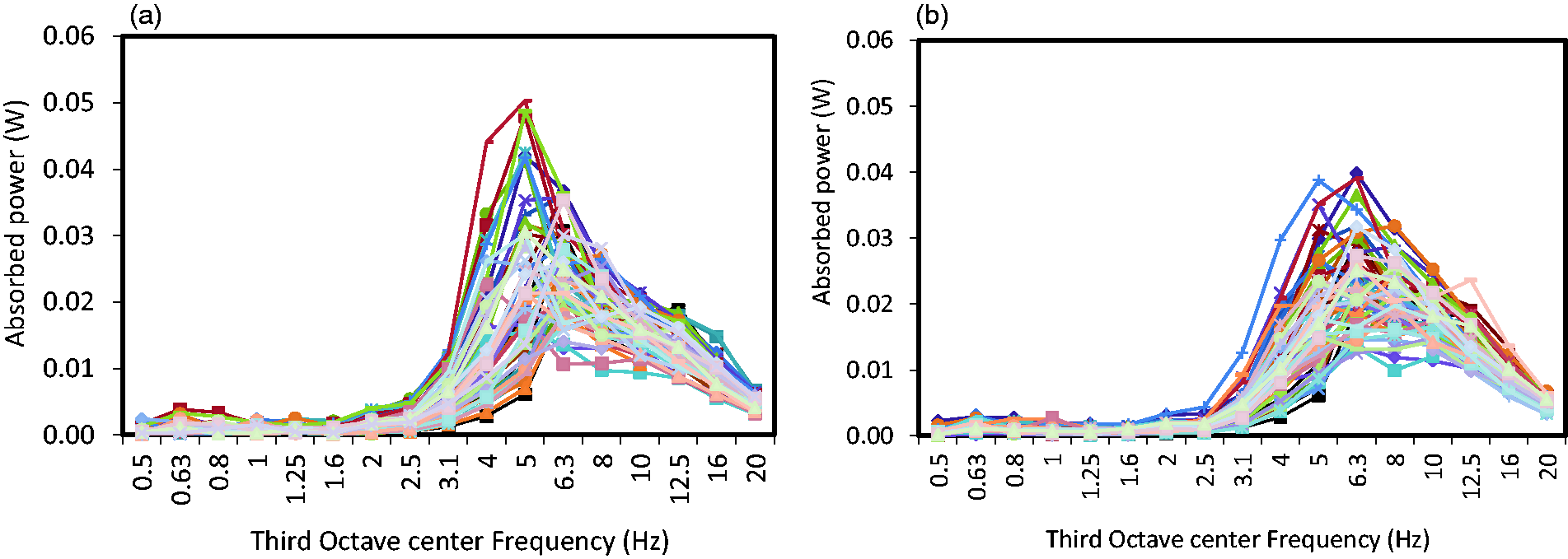
Absorbed power responses of 58 (31 male and 27 female) subjects exposed to 0.50 m/s2 excitation: (a) NB: without a back support and (b) WB: with vertical back support.
The mean VPA responses, obtained for all the males and females, are compared in Figure 3 for the NB and WB sitting conditions under 0.50 m/s2 excitation. The results show higher mean VPA for males compared to that for females in the entire frequency range. The differences between the VPA of males and females, however, tends to diminish when the data are normalized with respect to the body mass, as seen in Figure 3, although the peak VPA of males remains slightly higher than that of females. The mean normalized VPA of females, however, is slightly higher that of the males in the 4 Hz and 8–10 Hz frequency bands. Similar trends in the responses were also observed for other vibration magnitudes considered in the study. One-way rANOVA was subsequently performed to analyze variations on the power absorption magnitude and normalized power absorption magnitude at each one-third octave band center frequency between the male and female subjects for the two sitting conditions and three levels of excitation. The results presented in Table 3 suggest significant (p < 0.05) variation in the power absorption at one-third octave frequencies between the male and female subjects except at 0.5 Hz. However, significant (p < 0.001) variation in the normalized power absorption was obtained only in the 6.3 and 10 Hz bands between the male and female subjects, irrespective of the sitting and excitation conditions.
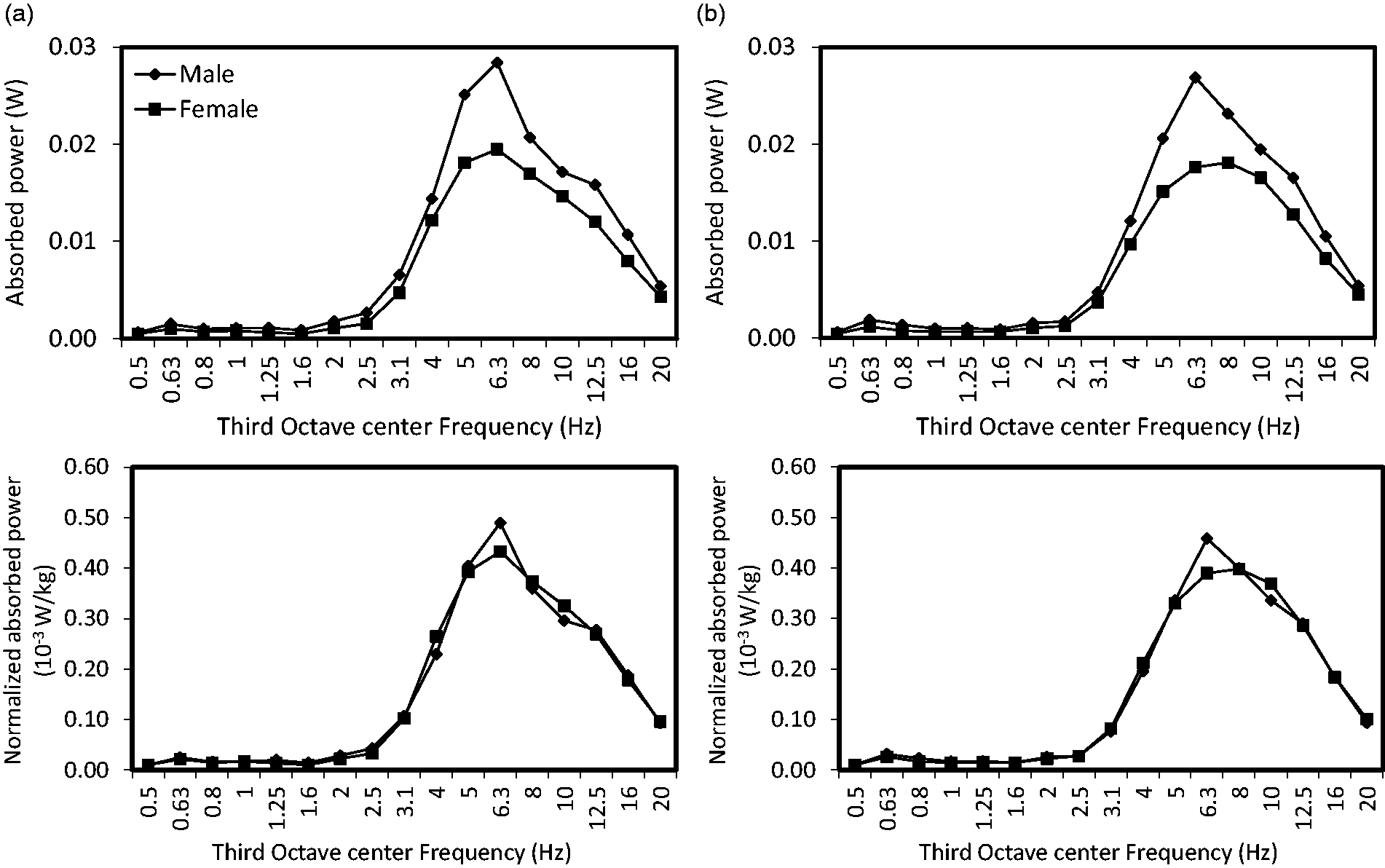
Comparison of mean absorbed power and normalized absorbed power responses of 31 male and 27 female subjects exposed to 0.50 m/s2 excitation: (a) NB: without a back support and (b) WB: with vertical back support.
p Values obtained from one-way repeated measures analyses of variance (rANOVA) for absorbed power magnitude and normalized absorbed power magnitude between male vs. female at one-third octave frequencies for two sitting conditions and three levels of excitation.
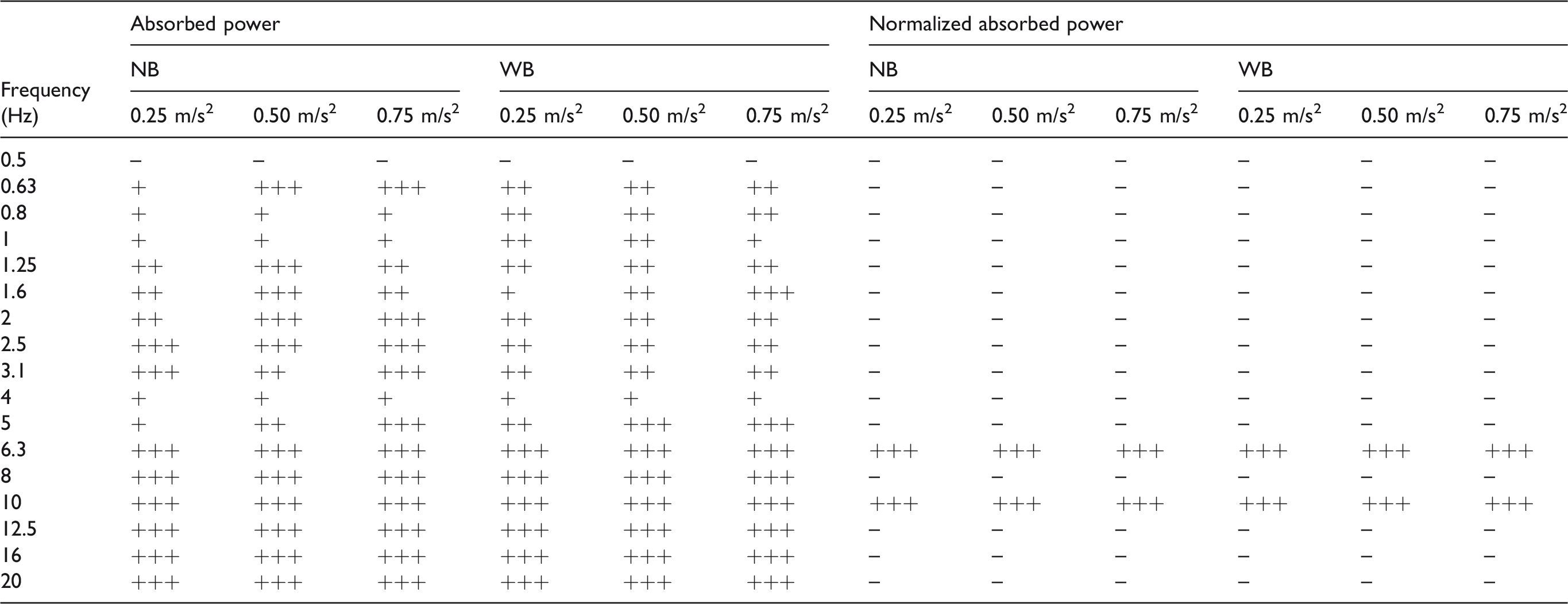
p > 0.05: –; p < 0.05: +; p < 0.01: ++; p < 0.001: +++.
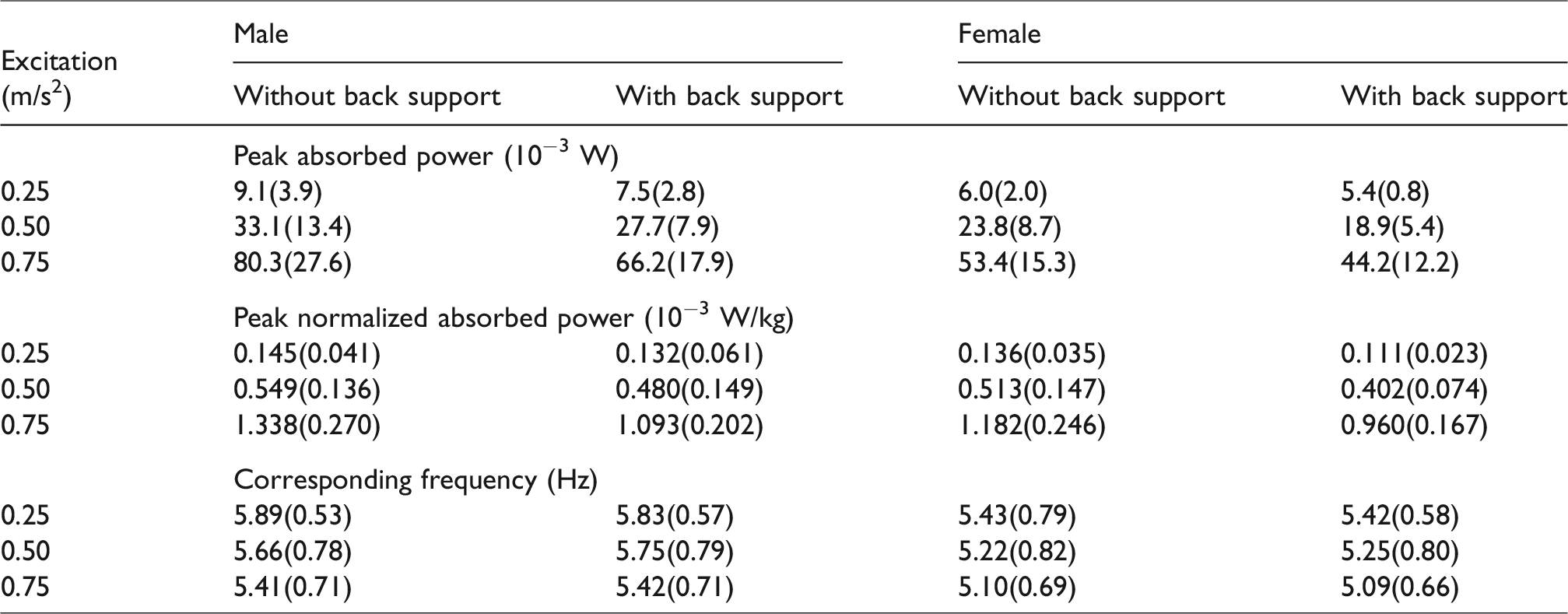
The VPA responses of the males and females are further compared in terms of the peak VPA, peak VPA normalized with respect to seated mass and the corresponding frequencies (Table 4). The results show that the peak power for the males is about 50% higher than that for the females, irrespective of the sitting and excitation conditions. However, the normalized VPA values for the males are only 13% higher compared to those for the females. Furthermore, the frequencies corresponding to the peak VPA are notably higher for the males than those obtained for the females. Figure 4 further compares the total VPA and normalized total VPA of males and females for the two sitting and three excitation conditions. Irrespective of the sitting and excitation conditions, the results show total VPA for males nearly 24% higher compared to those for females. However, normalization with the body mass reduced the differences considerably between males and females. The results attained through three-way rANOVA, considering three main factors (gender, back support, and excitation magnitude), suggest that the normalized values of peak VPA and the corresponding frequency of females and males are significantly (p < 0.01) different. The normalized value of the total VPA, however, is not significantly different (Table 5).
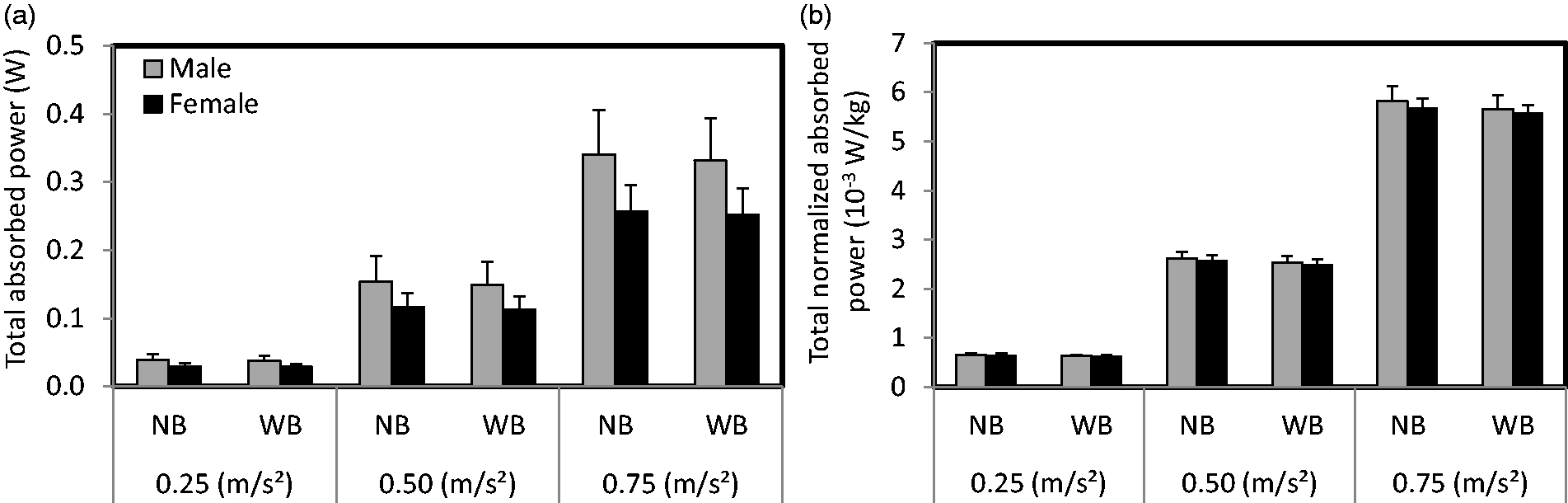
Comparison of (a) total absorbed power and (b) normalized total absorbed power of 31 male and 27 female subjects with different sitting conditions (NB: without a back support and WB: with back support) and exposed to 0.25, 0.50, and 0.75 m/s2 excitation.
Mean (standard deviation) of the peak absorbed power, normalized peak absorbed power, and corresponding frequency for male and female subjects for different excitation and back support conditions.
p Values obtained from a three-way (G, BS, and E) repeated measure analysis of variance (rANOVA) of normalized total absorbed power, and peak normalized power and corresponding frequency.

Note: Mean values are shown in bold. G: gender (male and female); BS: back support (with back and without back support); E: excitation magnitude (0.25, 0.50, and 0.75 m/s2).
The mean responses of males and females with NB and WB sitting conditions and exposed to 0.50 m/s2 excitation are compared in Figure 5. The results show that the peak VPA is slightly lower for WB support as compared to the NB support condition for both the genders. The peak VPA and normalized peak VPA, presented in Table 4, also show higher values for the NB support, while the differences in normalized VPA due to the sitting condition are relatively small (Figure 4). The total VPA, however, is considerably affected by the back support condition. The results obtained from rANOVA show significant (p < 0.001) effect of back support on peak and total normalized VPA, but insignificant effect on frequency corresponding to peak (Table 5).
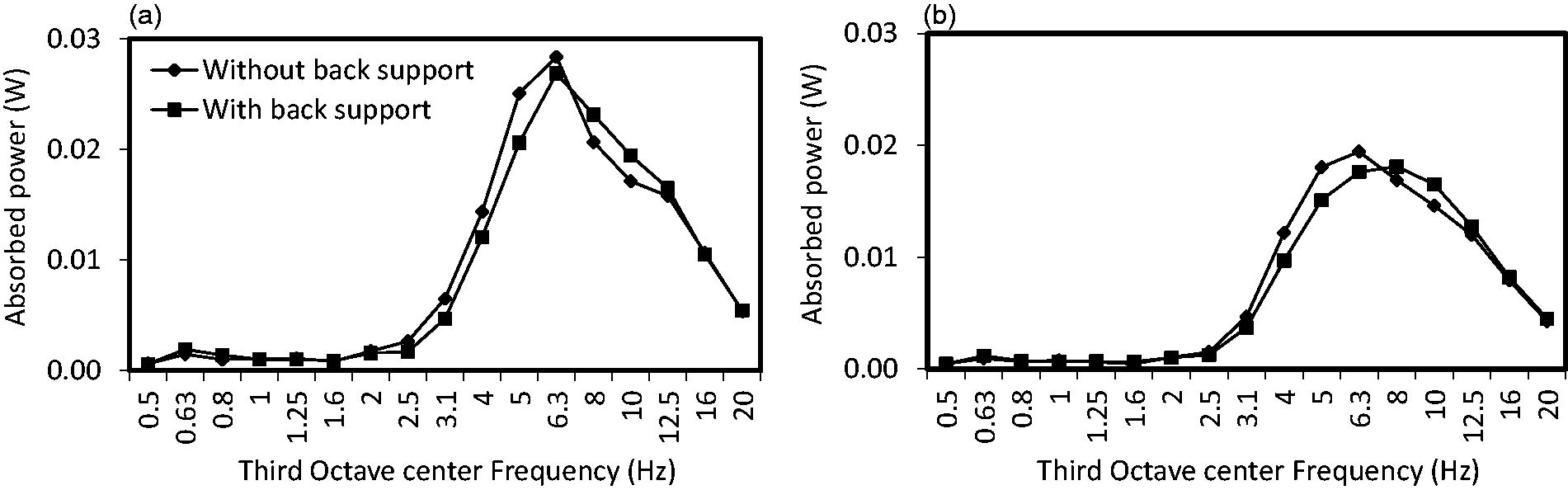
Comparisons of mean absorbed power responses of subjects seated without a back and with back support and exposed to 0.50 m/s2 excitations: (a) male and (b) female.
The VPA is most strongly affected by the excitation magnitude, as seen in Figure 6 for the NB support. Higher excitation magnitude yields substantially higher VPA response for male as well as female subjects. This is also evident from the total VPA shown in Figure 4. The results of rANOVA also show significant (p < 0.001) effect of excitation magnitude on peak and total normalized VPA (Table 5). The frequency corresponding to the peak absorbed power, however, decreases considerably with an increase in the excitation magnitude from 0.25–0.75 m/s2 (Table 4), indicating a softening tendency. The responses of the males, however, exhibit relatively greater softening tendency compared to the females. The primary resonant frequency for the males decreased by 0.48 and 0.41 Hz, respectively for the NB and WB sitting conditions, while the corresponding changes for the females were 0.33 Hz for both back support conditions.
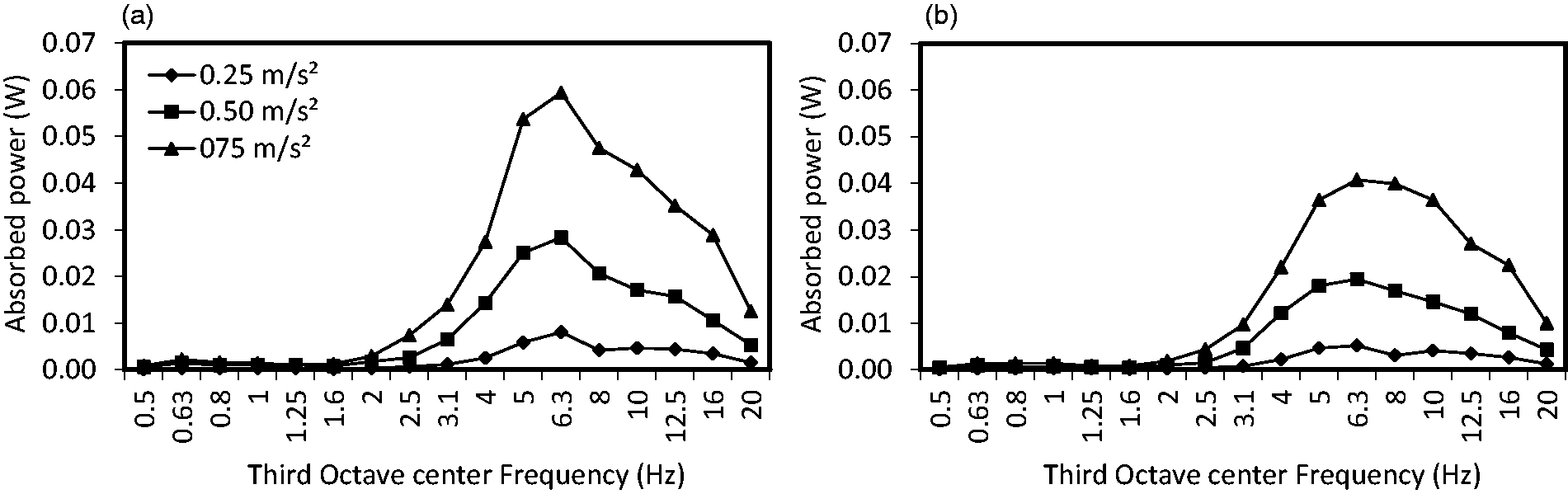
Influence of excitation magnitude on mean absorbed power responses of subjects seated without a back support: (a) male and (b) female.
Gender and body mass-related anthropometry
Figure 7 illustrates VPA and normalized VPA responses of both the genders grouped within three body mass ranges (Table 1; males: 61, 81.6, and 96.7 kg; females: 50.4, 61, and 79.1 kg) for the NB sitting condition and 0.50 m/s2 excitation. The results show higher VPA and normalized for higher body mass, although normalization reduces the body mass effect. The frequency corresponding to peak VPA is also lower for higher body mass subjects when compared to that of the lower mass subjects, irrespective of the gender. Figure 8 shows the total VPA and normalized total VPA for the males and females of three body mass ranges for both sitting conditions and three excitation levels considered in the study. The body mass effect is evident in the total VPA, while the mass effect is relatively small in the normalized VPA for both the genders, irrespective of the sitting and excitation conditions. Three-way rANCOVA was subsequently performed to analyze the effect of gender, back support and excitation magnitude as main factors and body mass as covariant on the peak normalized power, total absorbed power, and primary resonance frequency. The results presented in Table 6 suggest strongly significant effect of the gender (p < 0.001) on the resonance frequency, while the body mass effect on the peak normalized power and total absorbed power is eliminated.
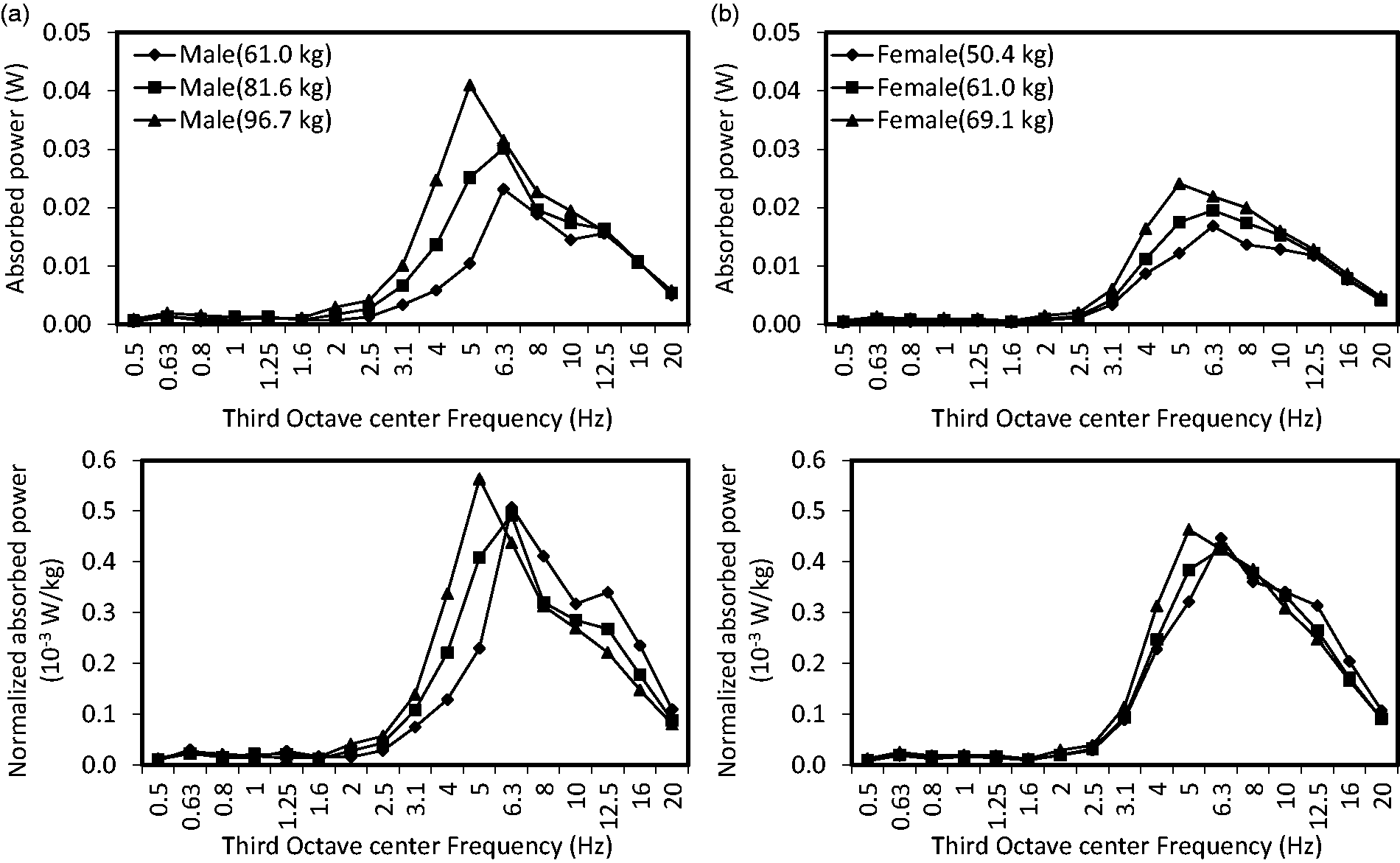
Mean absorbed power and normalized absorbed power responses of subjects in three different mass groups seated without a back support and exposed to 0. 50 m/s2 excitation: (a) male and (b) female.
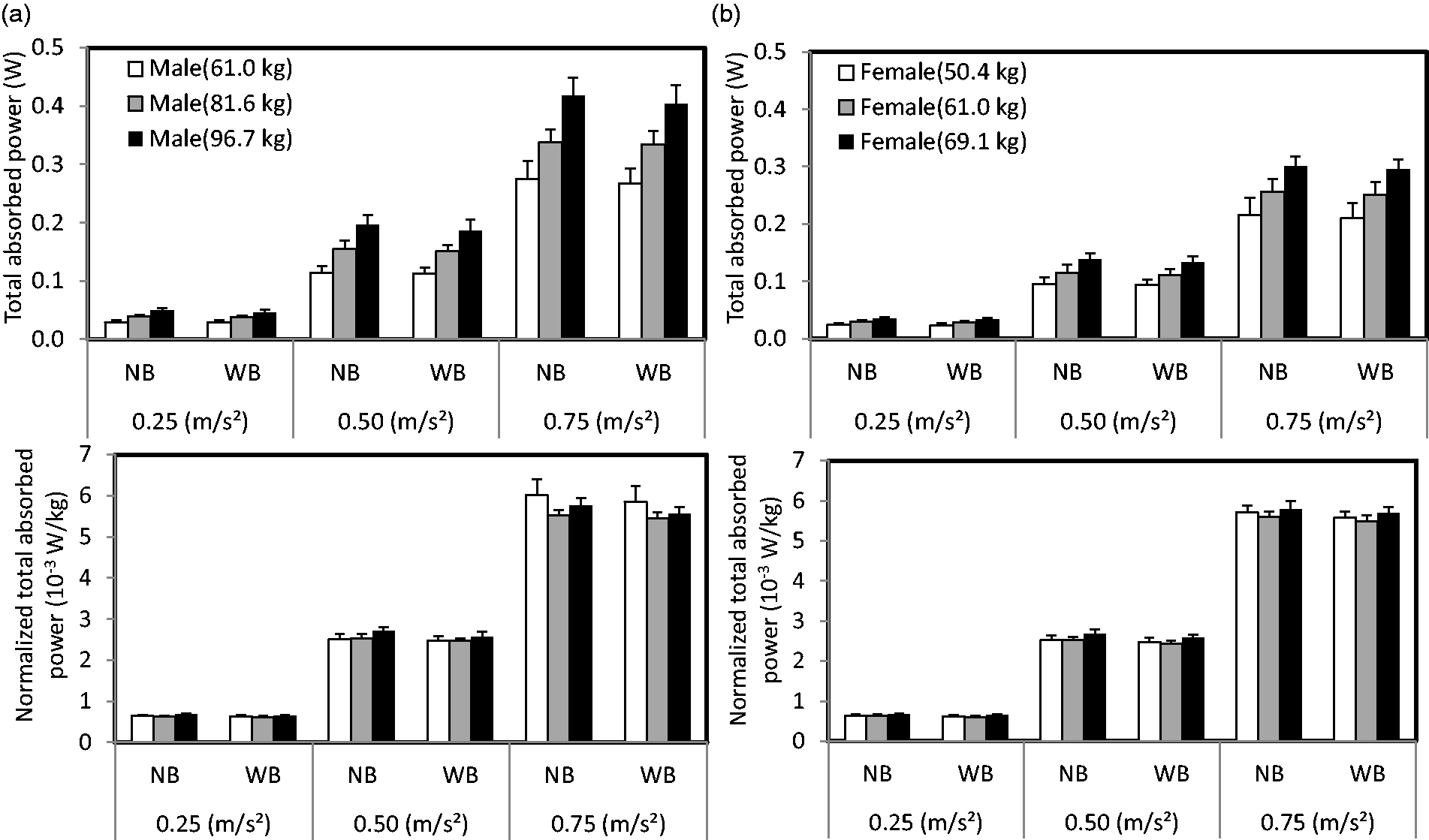
Total absorbed power and normalized total absorbed power of subjects in three different mass groups seated with two posture (NB: without a back support and WB: with back support) and exposed to three excitations (0.25, 0. 50, and 0.75 m/s2): (a) male and (b) female.
p Values obtained from a three-way repeated measure analysis of covariance (rANCOVA) showing the effect of gender, back support, and excitation magnitude as main factors and body mass as covariant on the peak normalized power, total absorbed power, and primary resonance frequency.

Note: Mean values are shown in bold. BM: body mass; G: gender (male and female); BS: back support (with back and without back support); E: excitation magnitude (0.25, 0.50, and 0.75 m/s2).
The influence of mass-related parameters (BMI, body fat mass, and lean body mass) on the mean VPA over one-third octave frequency bands and total VPA for both the gender groups are shown in Figures 9 and 10, respectively for the NB posture and 0.50 m/s2 excitation. The results are presented for the males and females grouped within three ranges of the mass-related parameters presented in Table 1. Higher peaks as well as higher total VPA responses are evident for higher values of all of the mass-related parameters considered. Similar trends were also observed under other excitation and sitting conditions. Higher values of mass-related parameters also lower frequency corresponding to peak VPA, as it was observed for the body mass.
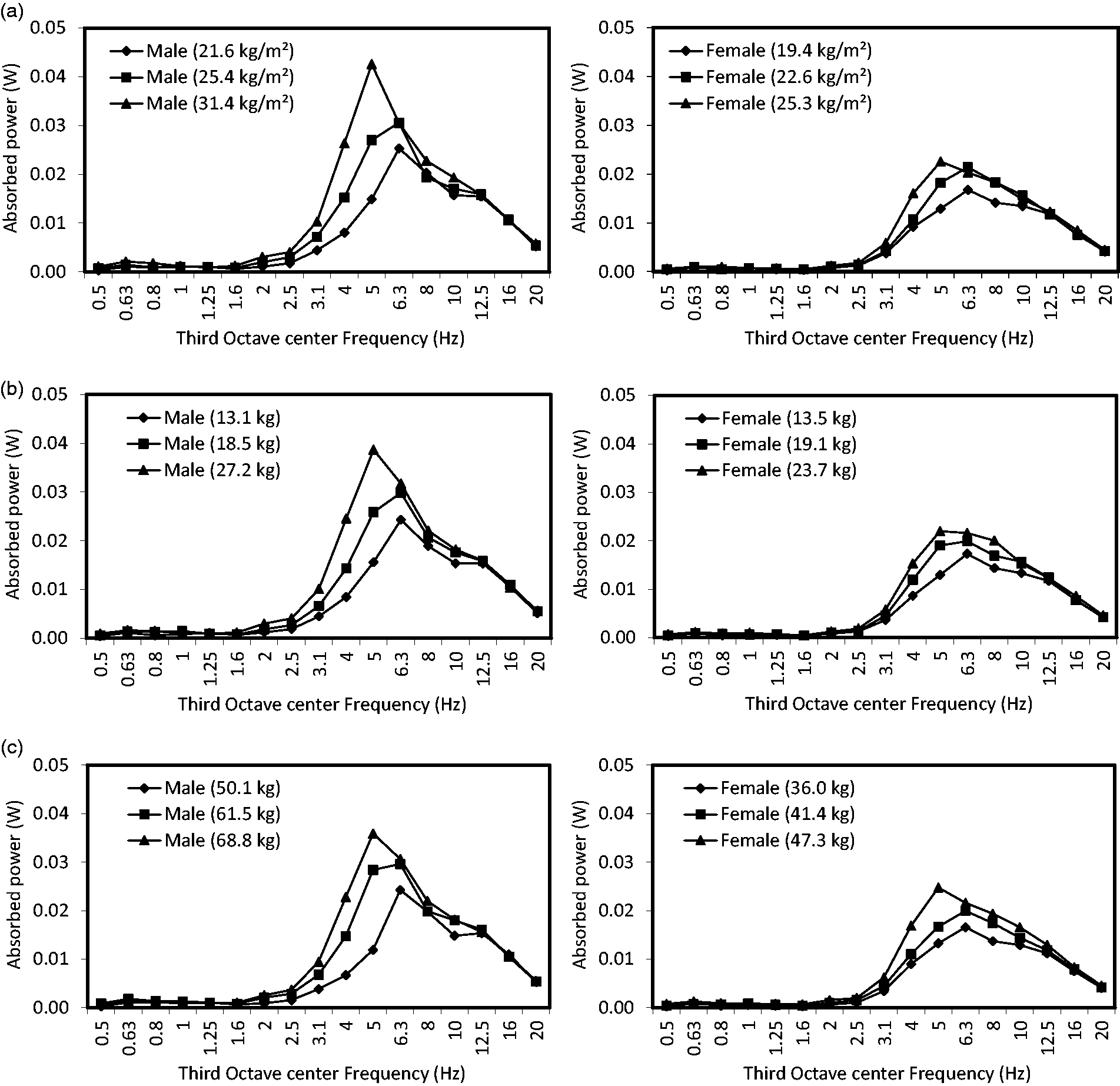
Effect of mass-related parameters on the mean absorbed power responses of male and female subjects: (a) BMI; (b) body fat mass; and (c) lean body mass (NB posture, 0.50 m/s2 excitation).
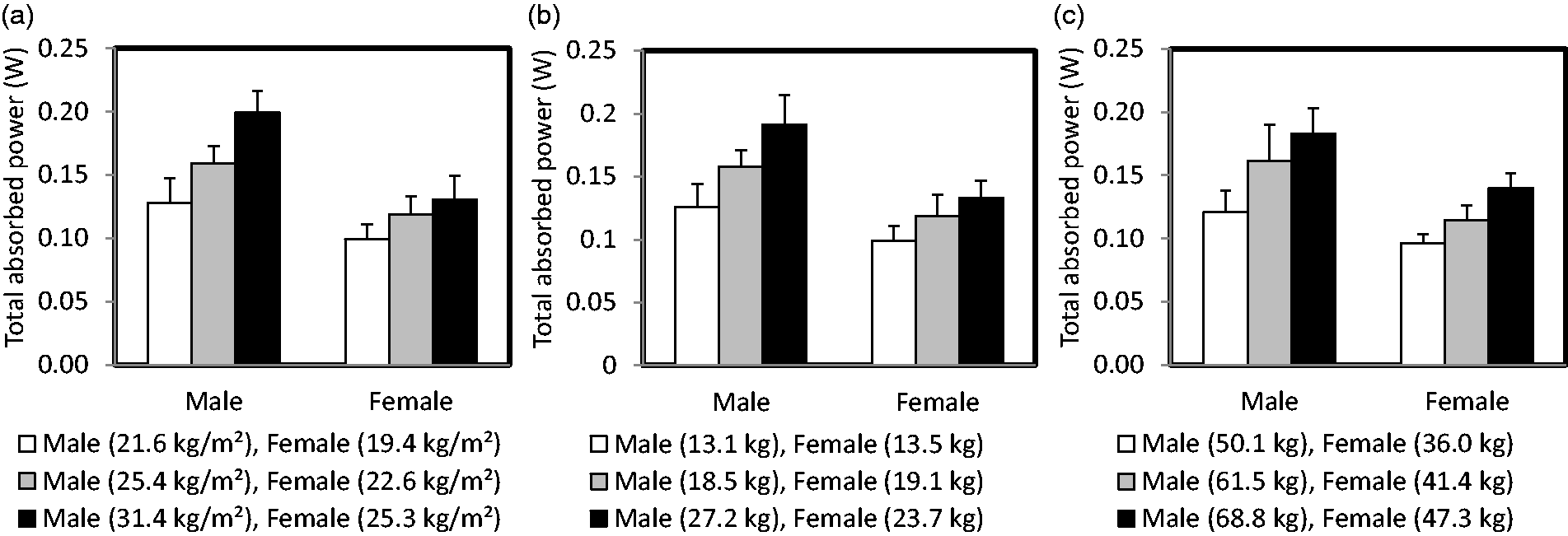
Effect of mass-related parameters on the total absorbed power of male and female subjects: (a) BMI; (b) body fat mass; and (c) lean body mass (NB posture, 0.50 m/s2 excitation).
Though the body masses of females are lower than those of males, the frequencies corresponding to the peak VPA are lower for the females compared to the males. The gender effect is thus further investigated by comparing the responses of the males and females of comparable body mass and mass-related parameters, as summarized in Table 2. Figure 11 compares the mean magnitude responses of the selected males and females of comparable body masses (G60 and G70 groups) for the two back support conditions and 0.50 m/s2 excitation. The results clearly show that the peak VPA of the males is higher than those obtained for the females of comparable body masses, irrespective of the sitting condition. Notable differences are also observed in total VPA of the males and females of similar body mass, as shown in Figure 12. The rANOVA shows significant (p < 0.05) difference in the peak VPA and corresponding frequency between the males and females of comparable body mass, irrespective of excitation and sitting conditions (Table 7). The total absorbed power was however insignificant between the males and females of comparable body mass (Table 7).
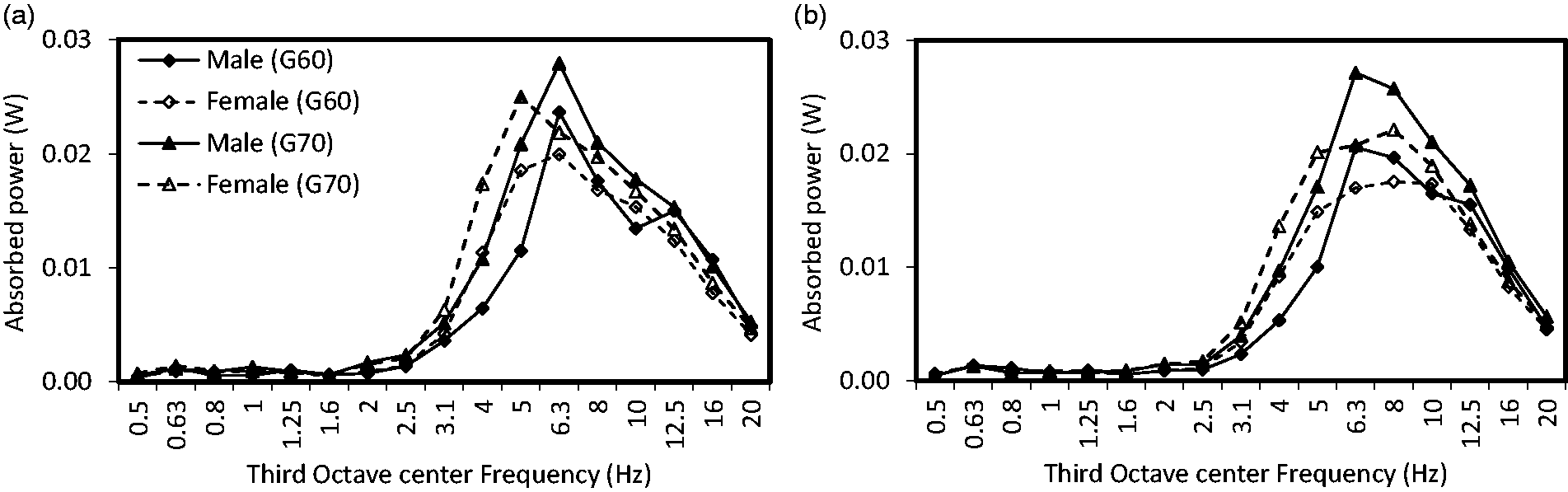
Mean absorbed power responses of male and female subjects within two mass groups (G60 and G70) exposed to 0.50 m/s2 excitation: (a) without a back support and (b) with back support.
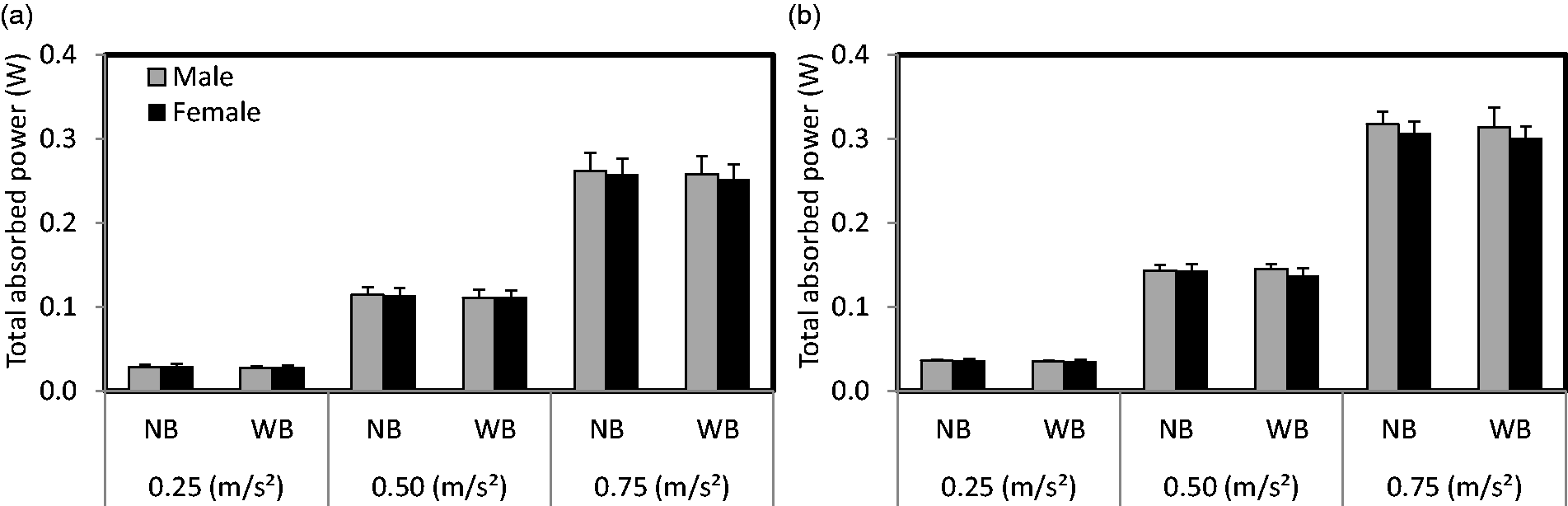
Total absorbed power of male and female subjects corresponding to different sitting (NB: without a back support and WB: with back support) and excitation conditions (0.25, 0.50, and 0.75 m/s2) for two mass groups: (a) G60 and (b) G70.
p Values obtained from one-way repeated measure analysis of variance (rANOVA) of peak absorbed power, total absorbed power, and resonance frequency for male vs. female subjects of comparable body mass (G60: 60 kg; G70: 70 kg) for back support conditions and three levels of excitation.
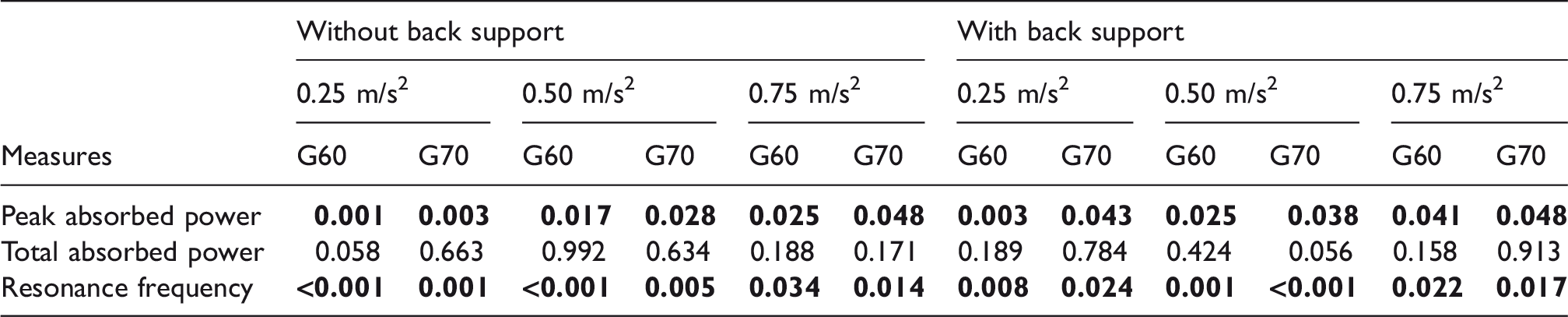
Note: Mean values are shown in bold.
The mean VPA responses of the males and females of comparable BMI, body fat mass and lean body mass (Table 2) are also compared in Figure 13 for the NB posture and 0.50 m/s2 excitation. The results show that the peak VPA responses of the males are considerably higher than those of the females, except in the case of the lean body mass. For comparable lean body mass, the VPA response of females is higher than the males in the 3–5 Hz range, while the peak VPA at a relatively lower frequency. Males showed considerably higher total VPA compared to females of comparable BMI and body fat percentage, as seen in Figure 14. An opposite trend, however, is observed for the lean body mass.
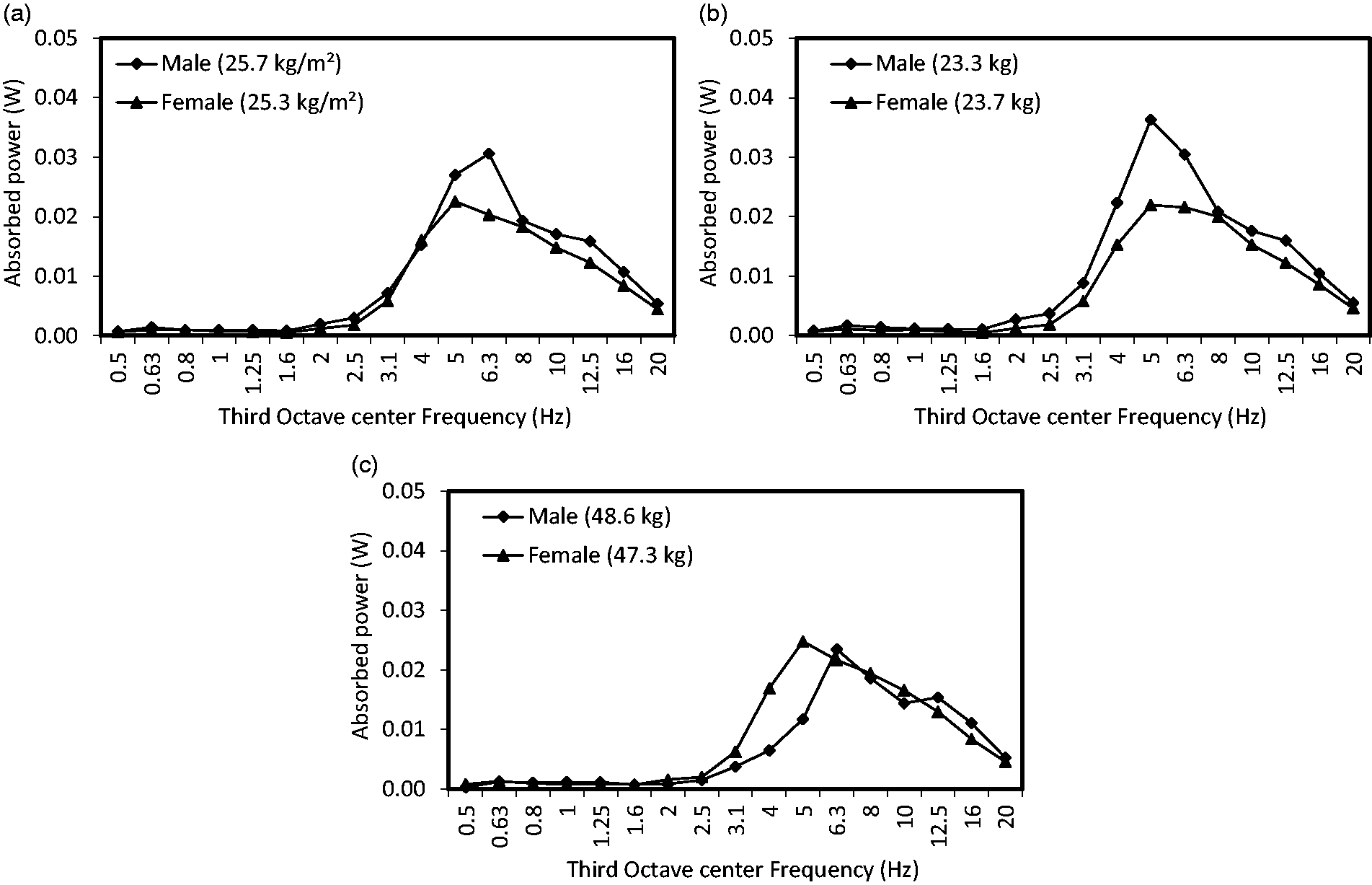
Effect of gender on absorbed power responses considering comparable mass-related parameters: (a) BMI; (b) fat body mass; and (c) lean body mass (NB posture, 0.50 m/s2 excitation).
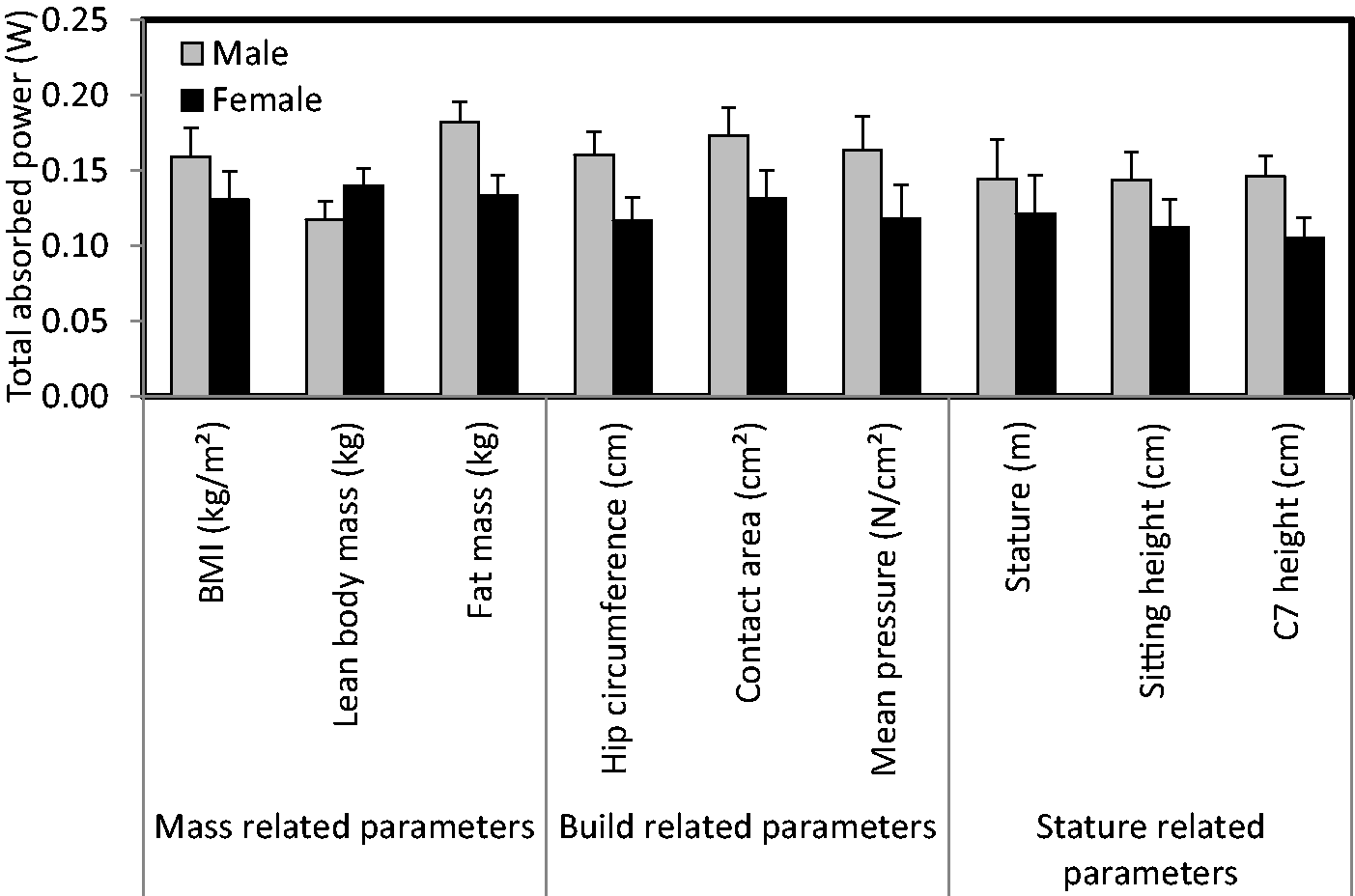
Effect of gender on total absorbed power considering comparable body dimensions (NB posture, 0.50 m/s2 excitation).
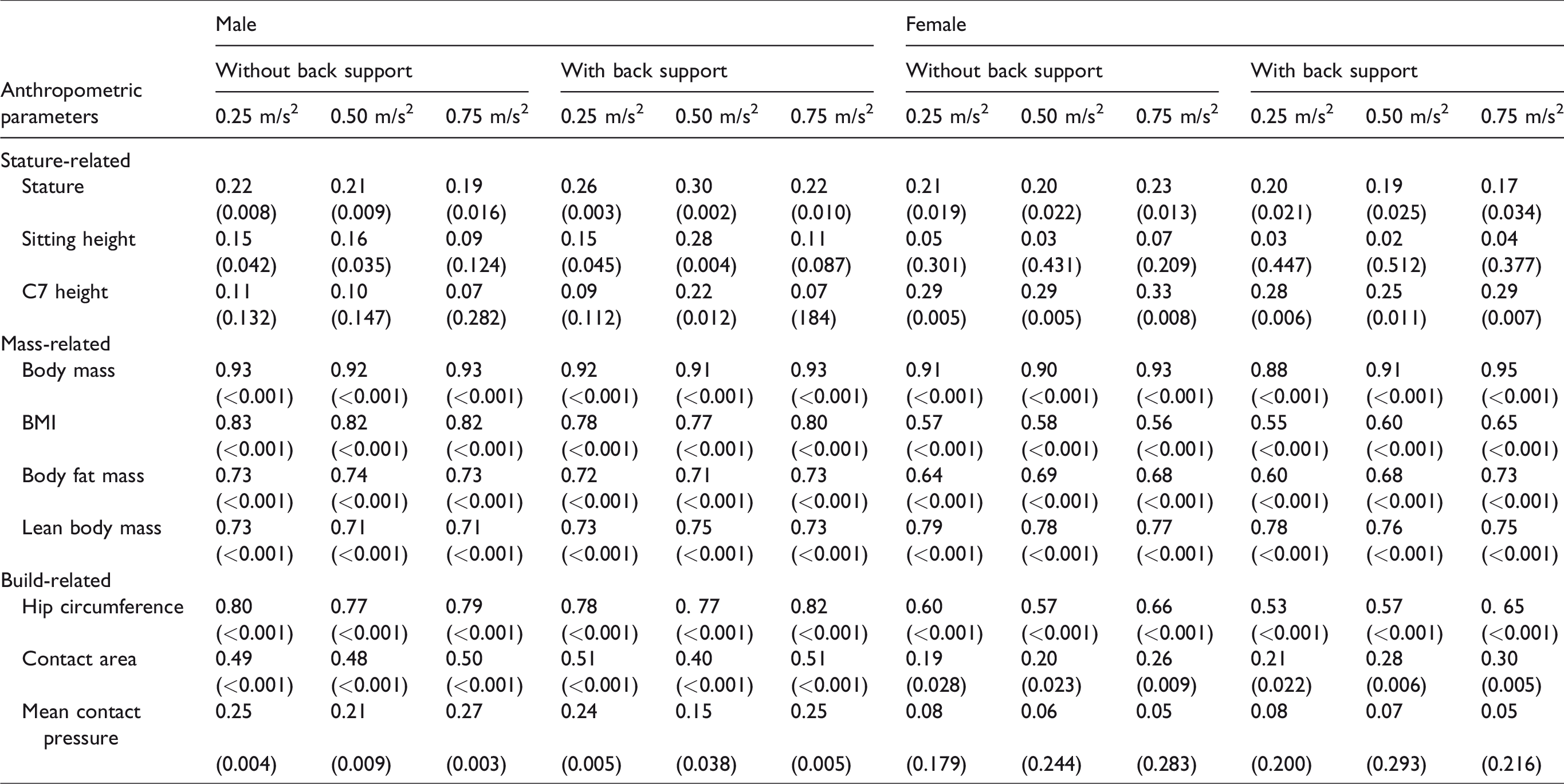
Linear regressions performed on the data acquired for 31 males and 27 females revealed reasonably good positive correlations between the total VPA and all of the mass-related parameters for both the gender groups, and excitation and back support conditions. The correlation coefficients (r2) exceeded 0.9 for the body mass, and ranged from 0.55–0.83, 0.60–0.74, and 0.71–0.79 for the BMI, body fat, and lean body mass, respectively (Table 8). The results also suggested that the males responses are better correlated with BMI (r2 ≈ 0.77–0.83) and body fat mass (r2 ≈ 0.71–0.74) compared to that of the females, while the correlation with lean body mass showed an opposite trend. However, such correlations with the frequency corresponding to peak VPA were not observed.
Values of r2 (p values) between the total absorbed power and the anthropometric parameters for three excitations and two back support conditions.
Gender and build-related anthropometry
Effects of build-related parameters such as hip circumference, seat pan contact area, and mean contact pressure, on the VPA and total VPA responses are illustrated in Figures 15 and 16, respectively, for the NB sitting condition and 0.50 m/s2 excitation. The results are presented for male and female subjects’ datasets grouped within three ranges of build-related parameters (Table 1). The results show higher peak VPA for subjects with higher values of hip circumference and seat-pan contact area, but a clear trend is not observed for the mean contact pressure for both the gender groups. In contrast to the trend in peak VPA, the frequency corresponding to peak VPA is lower for higher values of hip circumference and seat-pan contact area, although it is not clearly evident due to data averaging. Similar trends were also observed in the responses under other vibration magnitude and sitting conditions considered in the study. The responses of the males and females of comparable build-related parameters (Table 2) are further compared in Figure 17 for the NB condition and 0.50 m/s2 excitation. The results show substantially higher VPA responses for males compared to that of the females of comparable build-related parameters. Similar trend is also observed for the total VPA for comparable build-related dimensions (Figure 14). Regression analysis of the total VPA with build-related factors showed strong correlation with the hip circumference for males (r2 ≈ 0.77–0.82) but moderate correlations for females (r2 ≈ 0.53–0.66), as seen in Table 8. The seat-pan contact area is also moderately correlated with total VPA for males, while a poor correlation is observed for the females. The mean contact pressures are also poorly correlated with total VPA for both genders, although the r2 values are higher for the males than those of the females.
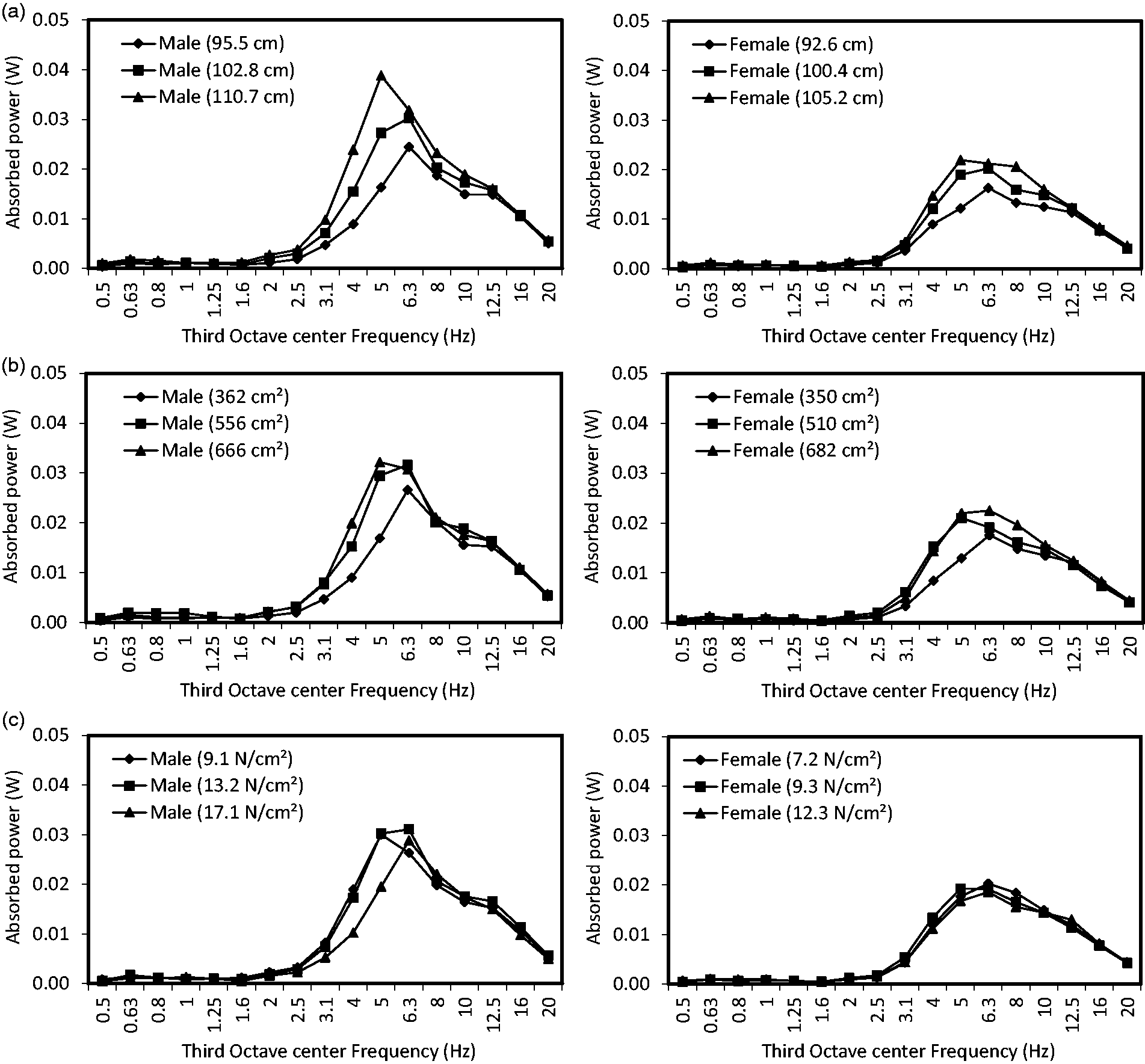
Effect of build-related parameters on the mean absorbed power responses of male and female subjects: (a) hip circumference; (b) seat-pan contact area; and (c) mean pressure (NB posture, 0.50 m/s2 excitation).
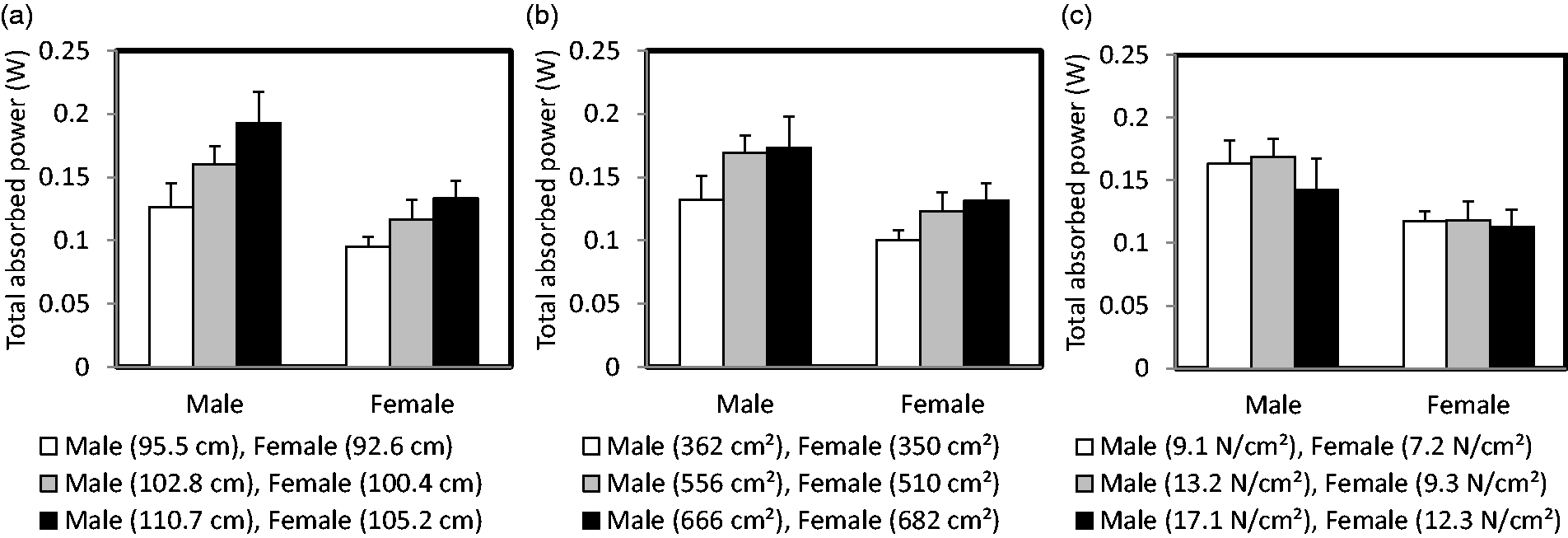
Effect of build-related parameters on the total absorbed power of male and female subjects: (a) hip circumference; (b) seat-pan contact area; and (c) mean pressure (NB posture, 0.50 m/s2 excitation).
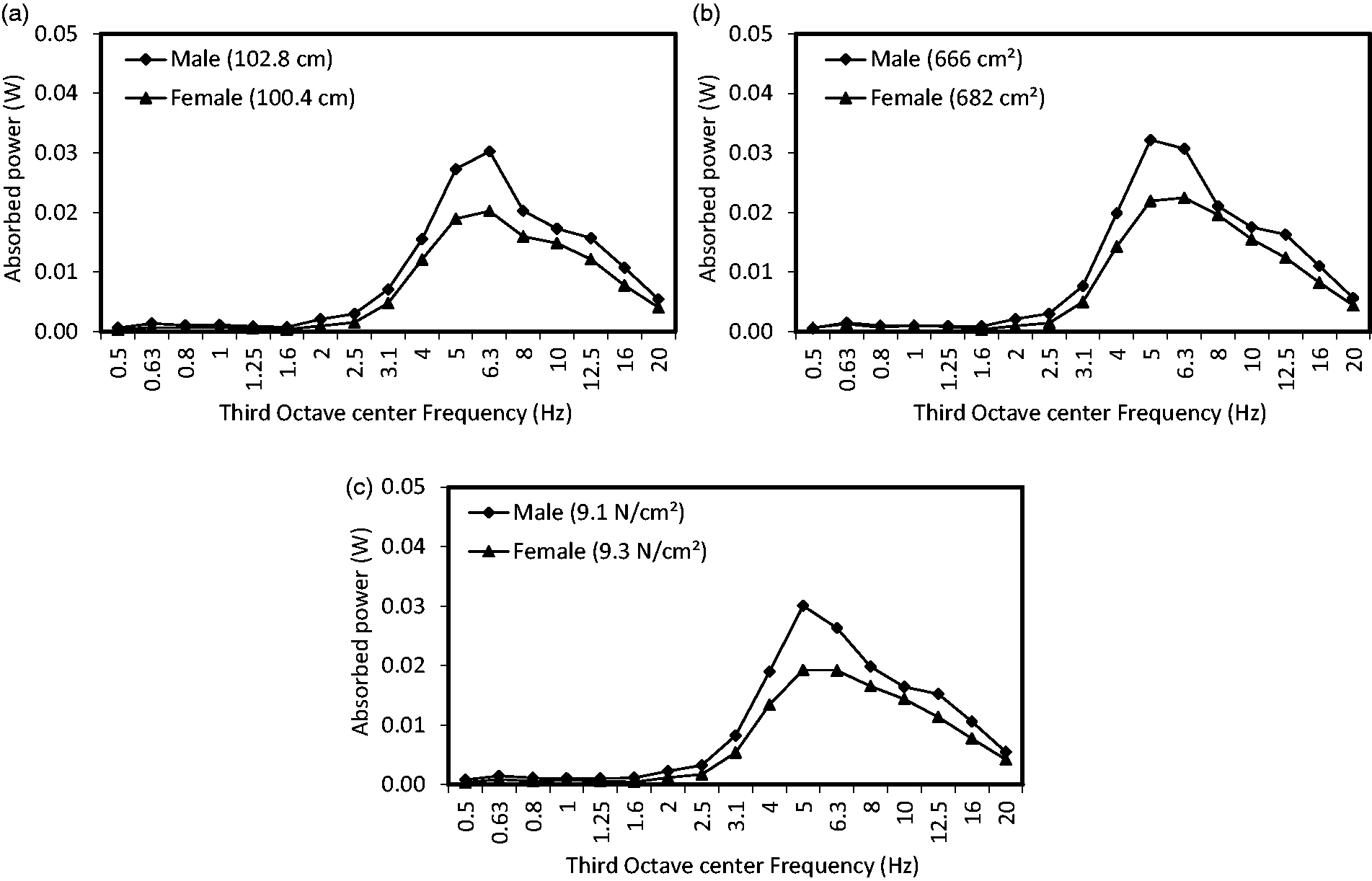
Effect of gender on mean absorbed power responses considering comparable build-related parameters: (a) hip circumference; (b) seat-pan contact area; and (c) mean contact pressure (NB posture, 0.50 m/s2 excitation).
Gender and stature-related anthropometry
Figures 18 and 19, as an example, illustrates the effects of stature-related anthropometric parameters such as stature, sitting height, and C7 height, on the VPA responses and total VPA, respectively of males and females for the NB condition and 0.50 m/s2 excitation. The results are obtained considering the males and females datasets grouped within three ranges of stature-related parameters (Table 1). The results do not show definite trends in the VPA responses with varying stature-related parameters for both the genders. Substantial gender effect, however, is evident when datasets of males and females of comparable stature-related parameters (Table 2) are considered, as seen in Figure 20, for the NB support and the 0.50 m/s2 excitation. The results clearly show higher peak VPA for males compared to females of comparable stature-related dimensions. The total VPA, however, is poorly correlated with the stature parameters for both gender groups and all the experimental conditions (Table 8).
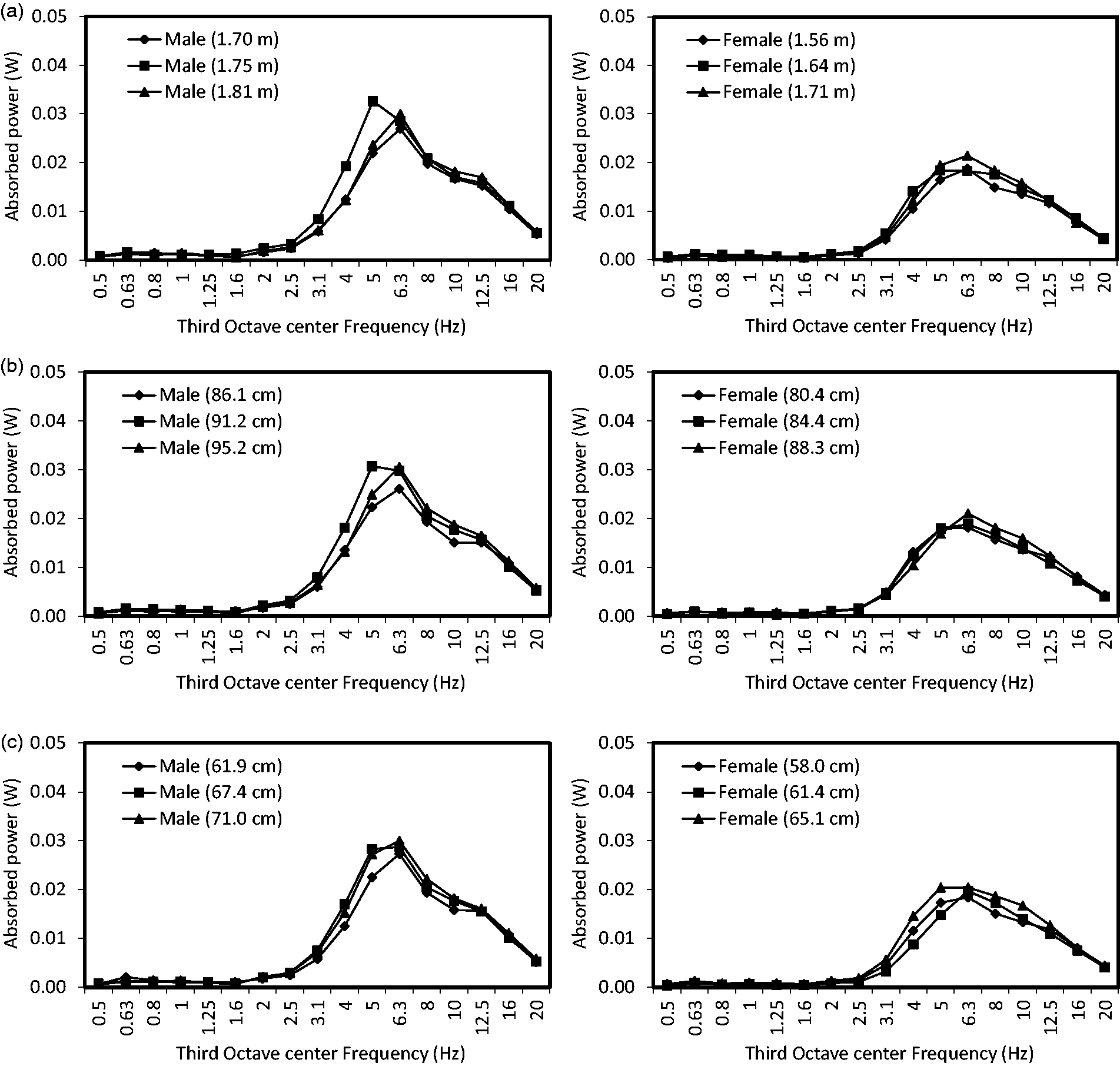
Effect of stature-related parameters on the mean absorbed power responses of male and female subjects: (a) stature; (b) sitting height; and (c) C7 height (NB posture, 0.50 m/s2 excitation).
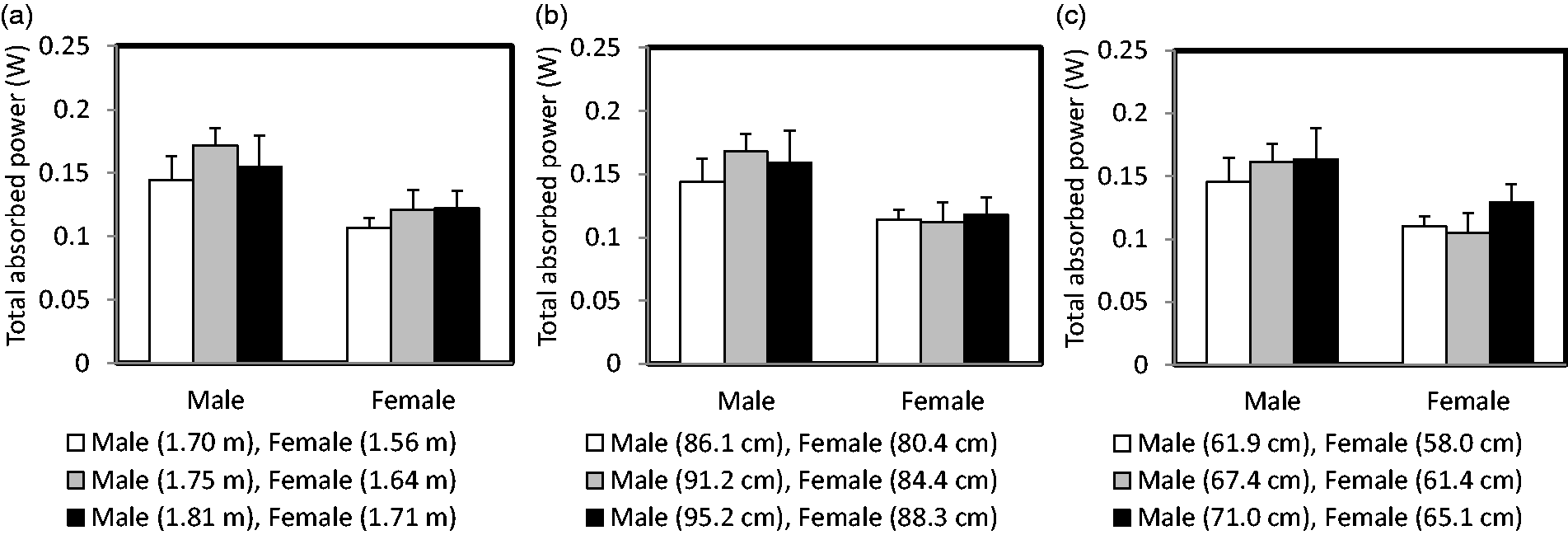
Effect of stature-related parameters on the total absorbed power of male and female subjects: (a) stature; (b) sitting height; and (c) C7 height (NB posture, 0.50 m/s2 excitation).
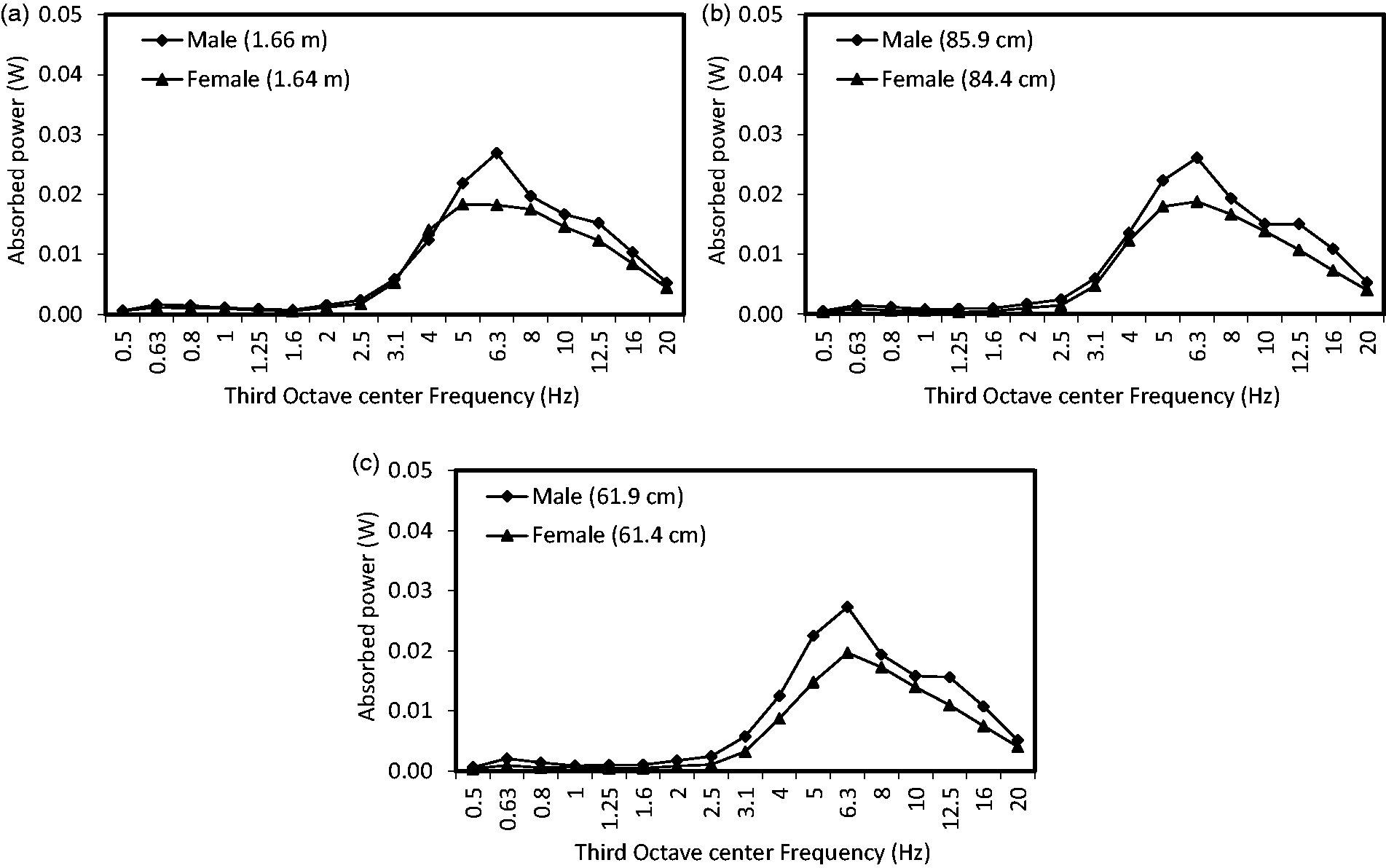
Effect of gender on mean absorbed power responses considering comparable stature-related parameters: (a) stature; (b) sitting height; and (c) C7 height (NB posture, 0.50 m/s2 excitation).
Discussion
Absorbed power characteristics and gender effect
The peaks in the VPA responses occurred in the 4–7 Hz frequency range, which is in line with the reported studies.15,17,27 Considerable scatter in the absorbed power responses in the 4–12.5 Hz frequency range (Figure 2) is also consistent with the trends in the reported studies,15,18,27 which is attributed to large variations in the body mass (45.5–106 kg) and build of the subjects. Substantial gender effect was evident in the VPA responses, which is strongly coupled with various anthropometric parameters. Higher values of mean responses in the one-third octave frequency bands and total VPA for males (Figures 3 and 4) compared to females are likely due to relatively higher body mass of males. Similar gender effect has also been reported in a few studies,15,17 which considered males and females of substantially different body mass. The present study further suggested lower peak values of VPA and the frequency corresponding for females compared to the males (Table 4), suggesting relatively higher overall damping of females likely due to higher body fat content. Lundström et al. 15 also reported relatively lower frequency for females.
The results show that sitting with WB support yields relatively lower peak VPA compared to that for NB support condition, while the effect of back support on the frequency corresponding to peak VPA was very small (Table 4). Similar trends have also been reported in earlier studies on the VPA responses of the seated body under vertical vibration. 18 Many studies have reported that total VPA increases in a nearly quadratic manner with the vibration magnitude15–18,27 and this trend was also evident in the present study. The frequency corresponding to the peak VPA decreased with an increase in vibration magnitude, which showed softening tendency of the human body under increasing excitation magnitudes, as reported in studies.2,17,18,26 The results in this study suggest relatively greater softening tendency for males compared to the females (Table 4). A study on gender effect on AM responses also suggested relatively higher softening behavior of the males. 26 The observed differences in the softening tendencies of the two genders, however, seem to be coupled with the body mass effect.
Gender effect coupled with mass-related anthropometry
The results revealed considerable gender effect on the VPA, which appeared strongly coupled with the body mass, although a few studies have reported contradictory findings. Lundström et al. 15 reported that females tend to absorb more power per kg of sitting body mass than the males. Shibata and Maeda 21 showed higher VPA for heavier subjects. Mansfield et al., 17 on the other hand, reported lower VPA for females than the males. The results in the present study show higher VPA for heavier subjects for both the genders. Moreover, the frequency corresponding to peak VPA tends to shift to a lower value with increasing body mass (Figure 7).
The normalization of the VPA with respect to the body mass permitted the decoupling of the body mass effect from the gender effect to an extent (Figure 7). The results show comparable normalized total VPA for males and females, while the peak normalized VPA was higher for males (Figure 3; Table 4). Normalized VPA responses of subjects of body mass within three close ranges resulted in considerably lower variations (Figures 7 and 8). Results show that normalization with body mass alone cannot eliminate the variations in VPA responses for the two genders. Relatively higher values of peak normalized VPA are evident for heavier subjects, suggesting coupling of responses with body mass and other anthropometric dimensions. Furthermore, relatively greater variations in the normalized VPA responses could be seen at higher frequencies, particularly for the males within all the body mass ranges (Figure 7). A few studies on AM responses have also suggested that such normalization cannot eliminate the strong effect of body mass.26,28 Similar to the effect of the body mass, the peak, and total VPA increased with increasing values of all the mass-related parameters such as BMI, body fat mass, and the lean body mass (Figures 9 and 10), which is due to strong correlations of these dimensions with the body mass.
Owing to the coupled effects of gender and anthropometric parameters, the study of VPA responses of males and females of comparable mass-related anthropometric parameters could help decouple the mass effect and thus yield a better understanding of the gender effect. The responses of males and females of comparable body mass (G60 and G70) confirmed strongly coupled effects of gender and the body mass-related parameters (Figures 11 and 13). Dewangan et al. 26 also reported strong coupling effects of the gender and body mass on AM responses of males and females of comparable body mass. Relatively higher fundamental frequency (corresponding to peak VPA) of males compared to the females of comparable mass (Figure 11) suggested higher body stiffness of males. For comparable body mass, males possess higher muscle mass compared to the females. The stiffness-to-mass ratio of the males is thus relatively higher, which would result in higher resonance frequency. Furthermore, greater softening effect of the males may partly be due to higher muscle mass and lower fat mass. The lean body masses of males and females within group G60 were 49.6 and 41.9 kg, respectively, while those within group G70 were 58.8 and 47.6 kg, respectively. Muscles are visco-elastic materials showing thixotropic behavior, an increase in the excitation magnitude results in a decrease in the resonance frequency. The body fat is anti-thixotropic material, 29 which would also contribute to the resonance frequency. Furthermore, body fat is expected to absorb relatively more power. Since females have relatively higher body fat mass compared to the males, females would be expected to yield higher absorbed power. The results in the present study, however, showed comparable total VPA for the two genders (Figure 12), which may be due to contribution of the muscles and the body fat, and their distribution in the body. Body fat (adipose tissue) in females is mostly deposited in the pelvis and thighs, while it is mostly accumulated near the abdomen for males. 30 Furthermore, the type of muscle fibers and their number are different between the two genders.31,32
The present study has shown strong positive correlations between the total VPA and the body mass, which is in line with the results reported by Lundström et al. 15 ; Wang et al. 18 and Nawayseh and Griffin. 27 Mansfield and Griffin 16 have also observed significant correlation between the body mass and the normalized total VPA at each magnitude of vibration. On the basis of the measured VPA characteristics of 13 males and 14 females, it was shown that the total VPA is strongly correlated with BMI but poorly correlated with the percent body fat. 18 In the present study, the body fat mass and BMI are moderately correlated with the total VPA, while the r2 values varied between the two gender groups. The differences in the r2 values between the present and the reported studies may be due to differences in the sample size and anthropometric characteristics of the subjects considered in the two studies.
Gender and build-related anthropometry
The results also suggested coupled effects of gender and the selected build-related anthropometric parameters (hip circumference, contact area, and mean contact pressure) on the VPA responses in a complex manner (Figures 15 and 16). This is attributable to the anatomy and physiology of the two genders. The size and shape of the pelvis is different in males and females. Female pelvis is larger and broader than the male pelvis, which is taller, narrower, and more compact. For comparable body mass, females exhibit higher hip circumference compared to males, which is evident from relatively higher seat pan contact area and lower mean pressure for the females (Table 1). The responses of the males and females of comparable build-related parameters showed substantially higher VPA for males compared to the females for all the parameters considered (Figure 17). This may be attributed to higher body mass of the males compared to the females, even though the two groups possessed similar build-related factors.
The total VPA was moderately to strongly correlated with the hip circumference, while the correlations were weak to moderate for the mean contact area. The mean contact pressure was also weakly correlated with the total VPA for both the gender groups (Table 8). Such response may be due to higher correlations (r2>0.7) between the body mass and the hip circumference and weak correlation (r2<0.3) between the body mass and the seat-pan contact area and mean contact pressure.
Gender and stature-related anthropometry
In the present study, definite trends on the VPA responses were not observed for stature-related anthropometric parameters (stature, sitting height, and C7 height) for both the genders (Figures 18 and 19). Higher values of VPA obtained for males compared to females of comparable stature-related parameters (Figures 14 and 20) were likely due to higher body mass of the males. For comparable stature (males: 1.66 m and females: 1.64 m), the mean body masses were 70 and 61.3 kg for males and females, respectively. Furthermore, the stature-related parameters were very weakly correlated with the total VPA (r2 ≈ 0.02–0.30), which may be due to weak correlation between the body mass- and stature-related parameters (r2<0.33). Wang et al. 18 also observed relatively weak correlation of the total VPA with the stature (0.32 < r2<0.43). Mansfield and Griffin, 16 however, suggested better correlation between the total normalized VPA with the stature.
Conclusions
The results revealed significant gender effect on the VPA responses, which is strongly coupled with the body mass, body fat mass, and hip circumference. Normalization of the VPA with respect to the seated body mass could not effectively eliminate the coupling effects. A clear gender effect could thus be established when males and females of comparable anthropometric dimensions were considered. Females showed lower peak VPA than those of males of comparable body mass, while the total VPA was comparable for the two genders. The peak VPA occurred at a lower frequency for females than that for males. The peak VPA was higher for the subjects with higher hip circumferences for both the genders. Furthermore, the peak VPA response and total VPA of males were higher compared to those of females of comparable anthropometric dimensions, except for the lean body mass. Irrespective of the vibration magnitude and back support condition, the total VPA was positively correlated (r2>0.6) with the body mass, body fat and lean body mass, while the correlations were poor (r2<0.3) with the stature and the mean contact pressure.
Footnotes
Acknowledgement
The authors acknowledge the contributions of Mr. Arman Shahmir in conducting the experiments and data acquisition.
Declaration of conflicting interests
The author(s) declared no potential conflicts of interest with respect to the research, authorship, and/or publication of this article.
Funding
The author(s) received no financial support for the research, authorship, and/or publication of this article.