




Abstract
An experimental study has been conducted on the vibration simulator, developed as a mockup of a railway vehicle. In this paper, the effect of variations in the posture and vibration magnitude on head motions in three translational directions (fore-and-aft, lateral and vertical) are studied with seat vibration in fore-and-aft direction. Thirty healthy male subjects are exposed to random vibration with three vibration magnitudes of 0.4, 0.8 and 1.2 m/s2 r.m.s. over the frequency range 1–20 Hz. The data results are analyzed in terms of seat-to-head transmissibility (STHT) in two sitting postures; backrest and forward lean. Vibration measurements of the head motions are made with an apparatus (bite-bar). The study confirms that the measured responses to single fore-and-aft axis vibration have shown notable cross-axis responses. An increase in the excitation magnitude consistently revealed a decrease in the response peak magnitude and the corresponding resonant frequency, particularly in the presence of a back support. Such non-linear behavior has been interpreted as a non-linear softening effect in the muscle tension under increasing intensity of vibration. The use of a back support significantly alters the biodynamic responses of the seated body, which is attributable to the constraint due to the backrest support.
Introduction
People travelling in a passenger train or motor car are normally seated facing in the same direction as motion of the vehicle, results in exposed to vibration. A large number of vehicles transmit significant magnitudes of fore-and-aft vibration, which are either comparable or exceed those in the vertical direction.1–3 Despite the high magnitudes of horizontal vibration, the biodynamic responses of the seated body to fore-and-aft vibration have been addressed in a few studies.4–12 Paddan and Griffin 13 reviewed published studies of the transmission of translational seat vibration to the heads of seated subjects, in order to determine the variations in transmissibility results. Donati et al. 14 found that sitting subjects may be less sensitive to fore-and-aft acceleration at 1 Hz than at 2 or 3 Hz.
The effect of many variables (e.g. vibration magnitudes, seat condition, posture, frequency) and the effect on numerous variables (e.g. transmissibility, comfort, task performance, vibration performance, etc.) have been well documented15–22). It is well known that some variables can have large effects on STHT; for example sitting posture 19 and contact with the seat backrest.11,12 Both body posture and muscle tension have been reported to affect human transmissibility.19–21 Some studies have shown that the multiple axis head motion occurs as a result of single axis seat vibration.11,12,22–24 Studies of the effects of posture on STHT have mostly been restricted to the effects of using a backrest and have not considered vibration magnitude as a variable. 25 Paddan and Griffin11,12 studied the effect of a rigid backrest on STHT with six directions of excitation (vertical, fore-and-aft, lateral, roll, pitch and yaw) and six directions of head movement. They reported a decrease in inter-subject variability with a backrest but an increase in head vibration; especially in the mid-sagittal plane in the frequency range 5–10 Hz. Demic and Lukic 26 investigated the behavior of human body in seated position under the influence of random fore-and-aft vibration. The results obtained have shown that the human body under the influence of random excitations behaves as a non-linear system and its response depends on spatial position. It was concluded that the seating with backrest position affects the parameters of resonance and excitation amplitude affects transfer functions. Recently, Mandapuram et al. 27 investigated the effect of hands support, back support and the vibration magnitude on STHT response functions of the seated human body under exposures to fore-aft (x), whole-body vibration. The STHT responses revealed relatively lower magnitudes but comparable resonant frequencies with increase in the magnitude of vibration from 0.25 to 0.4 m/s2.
The review of literature related to the transmission of translational seat vibration to the head revealed shortcomings of actual vibration magnitudes and seating posture observed in Indian passenger trains. Therefore, the present study is concerned with the transmission of seat vibration to the head considering the actual vibration magnitudes and postures, which are relevant for train passengers performing sedentary activities. 28 The study investigates the effect of sitting postures (backrest and leaning forward) and vibration magnitudes on STHT responses. It was hypothesized that the resonance peak and resonance frequency of the transmissibility would decrease with increase in vibration magnitude, but that extent of decrease would vary with the posture.
Subjects and methods
Subjects and subject postures
A total of 30 healthy adult male subjects participated voluntarily in the experiment under informed written consent. All subjects are engineering graduate/postgraduate students of the Institute with fluency in English.
A screening questionnaire is collected from subjects on their personal background, level of education, experience of traveling with train, and fitness, to assure the suitability of the subjects for the experimental task. Subjects’ mental and physical fitness to take part is assessed using a questionnaire derived from ISO 13090–1. 29 Ethical approval was obtained from Indian Institute of Technology Roorkee Human Ethical Committee. It was confirmed that the subjects had no prior history of musculo-skeletal system disorders. The physical characteristics of test subjects are summarized in Table 1.
Physical characteristics of test subjects.

As shown in Figure 1, two subject postures are considered in this laboratory study, which are derived from the survey on Indian trains and are relevant for train passengers performing sedentary activities. 28
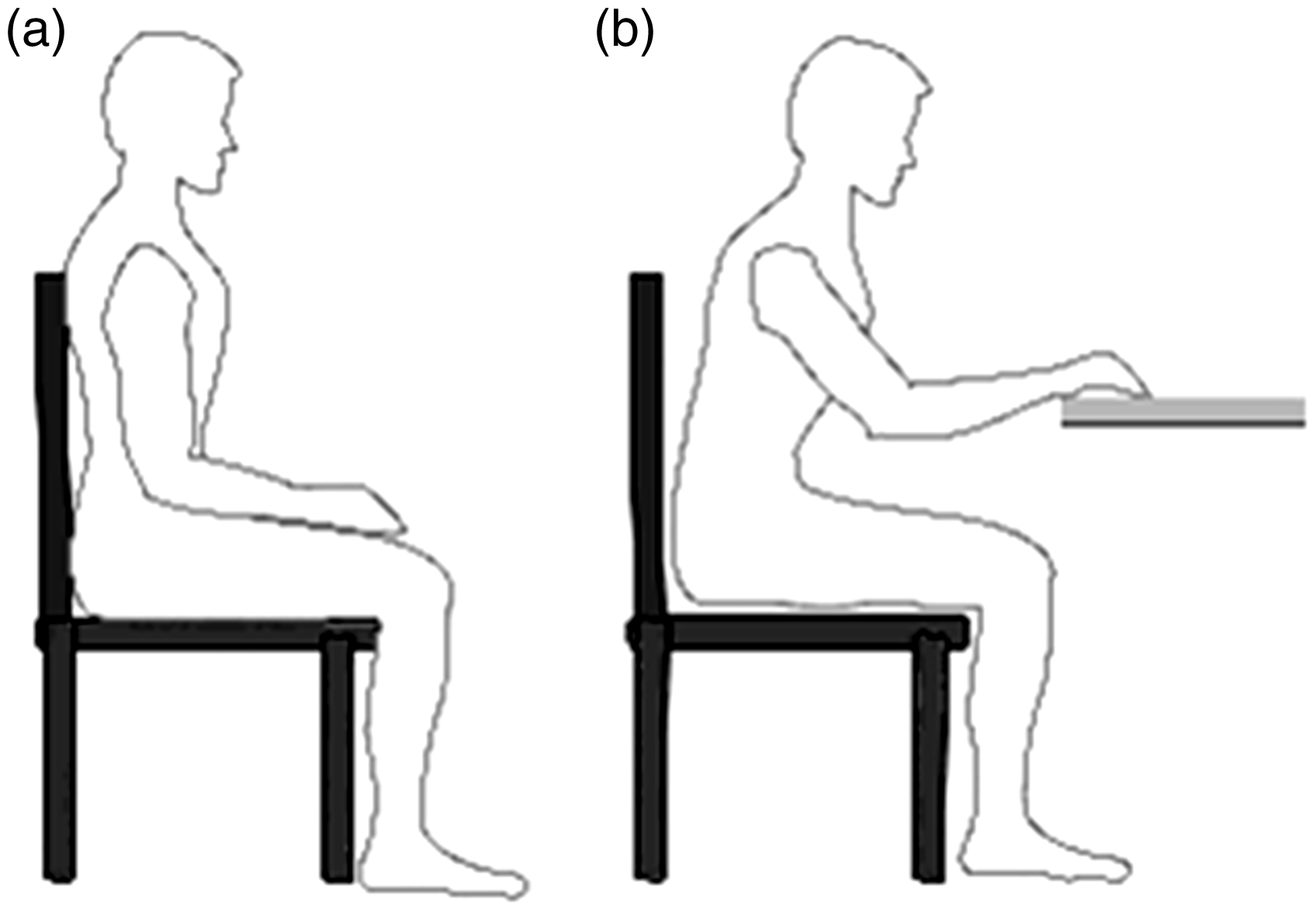
Subject sitting postures: (a) backrest and (b) forward lean posture.
Backrest posture: the subject is seated with backrest support with the hands in his lap,
Forward lean posture: the seated subject leans forward by 20° with hands placed on the table.
Experimental setup
A schematic representation of the experimental setup used for biodynamic response study is shown in Figure 2. The study is conducted on the vibration simulator developed as a mockup of a railway vehicle, housed in partially soundproof room.30,31 It consists of a platform of 2 m × 2 m size, fabricated from a light aluminum alloy frame with thick steel plates at the top and bottom to which the three exciters pushrods are bolted via ball joints. The platform incorporates a table and chairs with rigid wooden seats securely fixed. The seat consisted of a 42 × 42 cm2 flat seat and the height of the seat from floor is 48 cm. The backrest of the chair is rigid, flat, and vertical. None of the seats, backrest, or table had any resonances within the frequency range studied (up to 20 Hz) in any of the three axes. The weight of the platform is supported by four helical springs placed under its each corner.
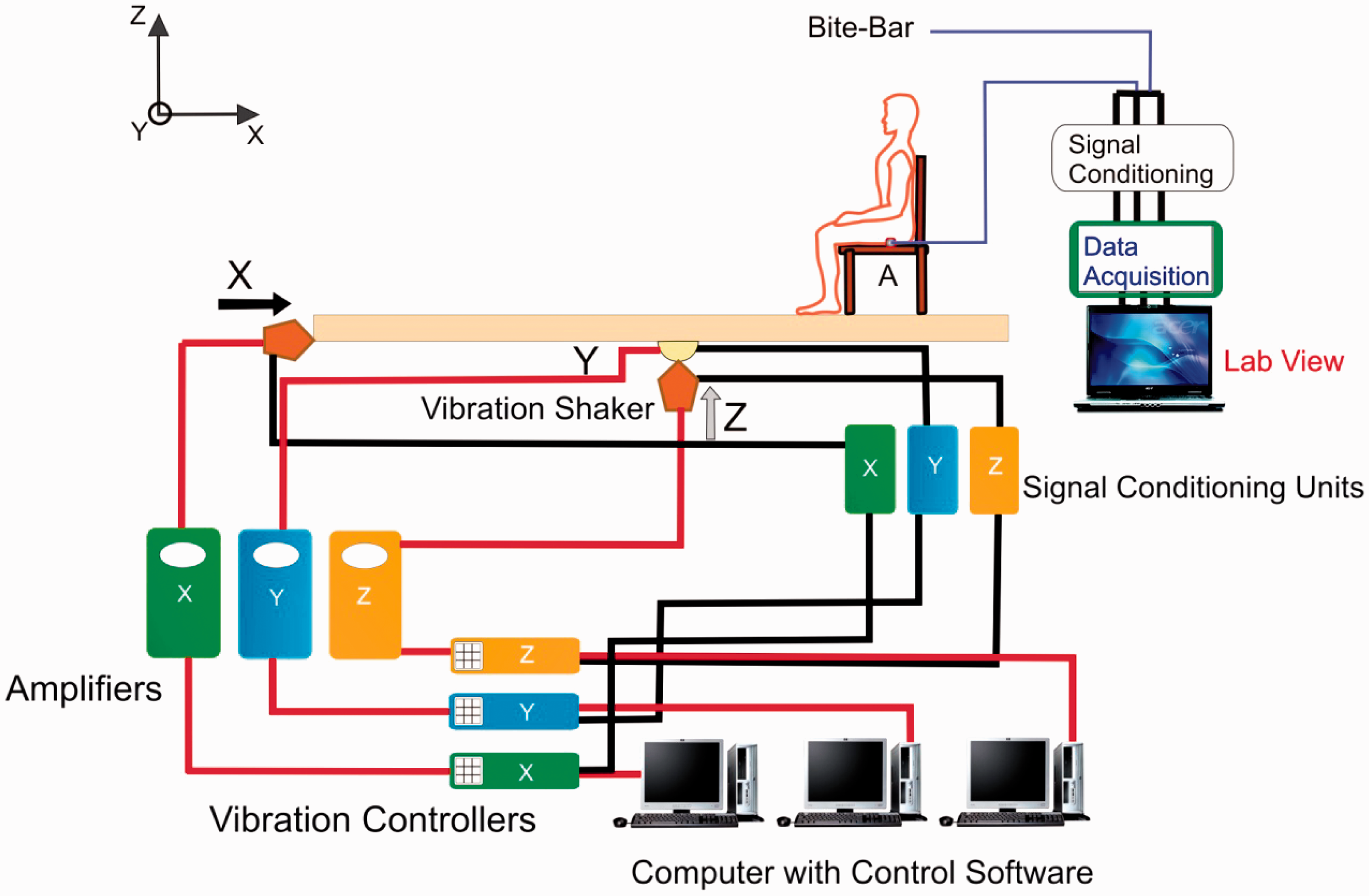
Schematic representation of laboratory set-up.
Three electro-dynamic vibration shakers with vibration controllers are used to provide sinusoidal or random vibration stimuli to the platform in three axes; fore-and-aft (X-axis), lateral (Y-axis) and vertical (Z-axis). Each exciter has a feedback accelerometer by which the controller can fine-tune the drive signal. This allows for control of the vibrations, and automatic shutdown by the control system if magnitudes fall outside the desired range.
Each vibration exciter can generate Gaussian random vibration. For monitoring purpose, the onboard vibrations of the platform are measured on line with a tri-axial accelerometer (PCB 356B41) and the signal is acquired and analyzed in the Labview Signal Express software (V3.0, National Instruments) via a signal conditioning unit (ICP 480B21) and data acquisition system (NI 6218).
Measurement of head motion using bite-Bar
In most of the studies concerning the measurement of head motion during whole-body vibration (WBV), head vibration has generally been measured using either an instrumented bar, which is gripped by subjects in their mouths or using a helmet with accelerometers located on top of the head. There were problems in securing a helmet with sufficient rigidity for reliable use, for frequencies higher than about 10 Hz. It was suggested to use bite-bars to measure frequencies up to about 100 Hz. Bite-bars give repeatable values, which appear to be valid over a wide range of frequencies. 32 The apparent ease of measuring head vibration arises primarily from the use of teeth to grip a rigid bite bar to which accelerometers are secured. Because of the exact registration with the subject’s teeth, the head-bite bar system can be considered a rigid body. 32
In the present study, the bite bar consisted of a light weight, alloy steel strip approximately 21 cm long, which was screwed on to a U-shaped bite plate made of “Perspex” material as shown in Figure 3. The two accelerometers are mounted at both the ends of the strip at a distance of 10 cm from the center of strip. To provide a comfortable and hygienic biting surface, two disposable polyurethane mouthpieces are used above and below the biting surface. The bite bar is held in place by gripping the mouthpieces between teeth. The bite bar is sterilized in a bath of 10% common chlorine bleach for 10 min before use, as per the guidelines in the Manual of Clinical Microbiology. 33 The design of present bite-bar was almost similar to that adopted by VanSickle et al. 34 in their study wherein acceleration at the head was measured.
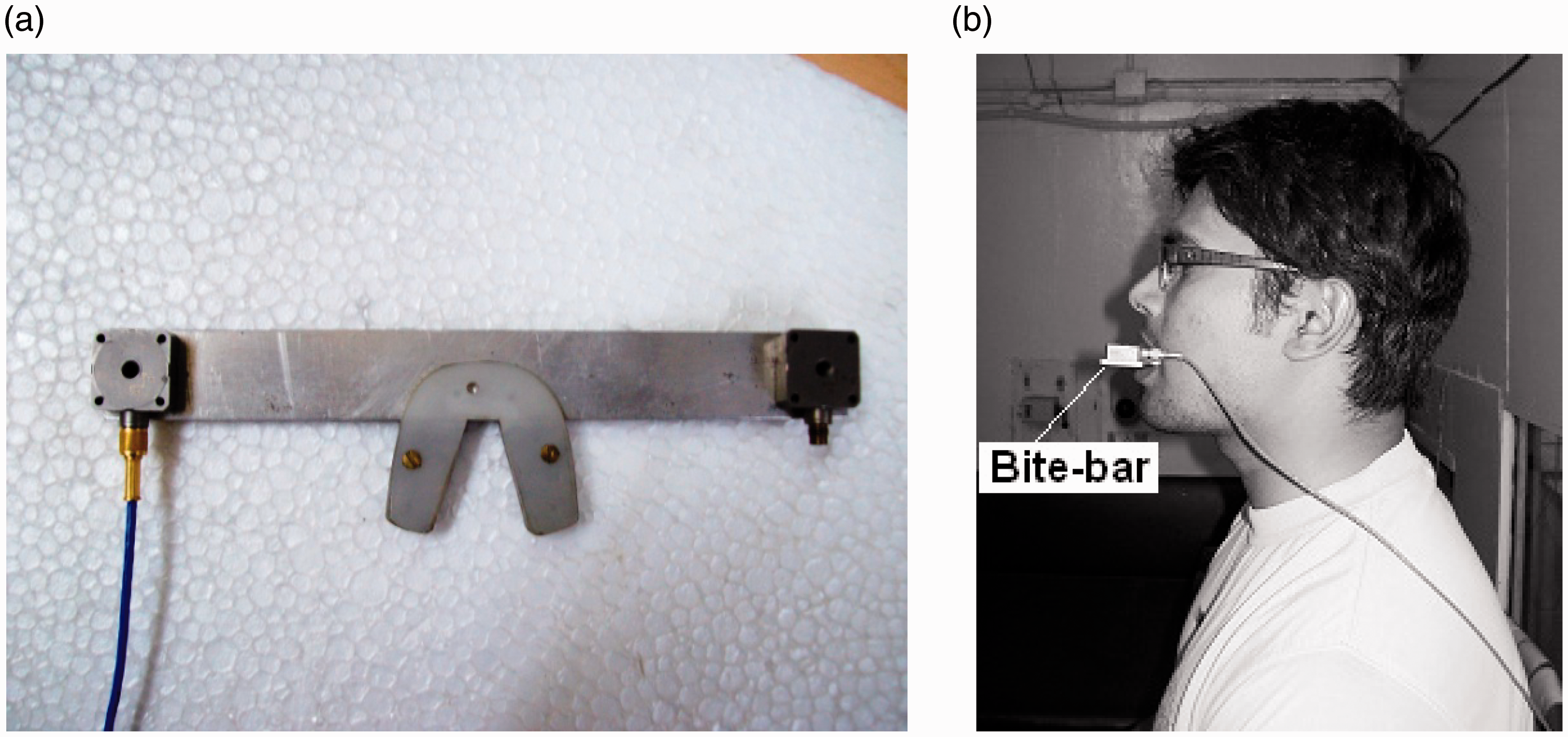
(a) Instrumented bite bar and (b) instrumented bite bar gripped between teeth by subject.
The bite-bar used in the present study weighed about 85 g including the weight of the two accelerometers of 15 g each. Light weight material of the bite bar and the use of miniature accelerometers minimize the possible additional moments acting on the head. Some studies have shown that during whole body vertical vibration, a variation in weight of bite-bar up to 375 grams may have little or no influence on STHT measurements. 32 It was also shown by Paddan and Griffin 13 that a bite-bar, which weighed 135 g, had little effect on the measurement of STHT. Further, this compares favorably with the heavier bite-bars used by previous researchers to monitor fewer axes of motion, e.g. 300 g used by Johnston, 35 250 g used by Barnes and Rance. 36 The design of the bite-bar used in the present study ensured no resonances of the various attachments up to 60 Hz, which is greater than the frequency of interest.
Out of the two accelerometers, one was used as a dummy to counterbalance the other. The weight contributed by the accelerometers is small (i.e. 15 grams) as compared with the total weight of the bite-bar (i.e. 85 g). Also, the total weight of the bite-bar is small, when compared with the weight of the head which would be around 4.5 kg. The accelerometers were calibrated using portable vibration calibrator (VC 110, PCB Piezotronics INC.) before start of the experiment.
Since, the body may oscillate in several axes during single-axis excitation of the seat, it is necessary to orient and install accelerometers carefully. The frequency response characteristic of the bite bar system is measured under mono-axes random vibration in the frequency range of 1–20 Hz. The results revealed nearly unity magnitude and negligible phase in the frequency range of interest.
Experimental seat
In the determination of transmission of vibration through the human body to the head, it is essential that vibration is measured at the input to the body. For a seated person, this would be at the person–seat interface. If a seat with some form of cushion or foam is used, then the vibration characteristics of this would be required. 13 In laboratory experiments, a seat which has no effect on vibration transmitted from the base of the seat to the seat-person interface would be advantageous, as this would not involve dynamics of the seat.
A rigid flat seat is used in all the experiments carried out to determine the transmission of vibration from seat to head. The frame work is made of steel tube and angle sections to give the structure rigidity in all axes. Sections on to which the backrest attached is extended up to the subjects shoulders. Rather than using cushioned train seats, chairs with flat seat are used, for better vibration transmissibility. If a seat with some form of cushion or foam is used, then the vibration characteristics of this would be required. The selection of seat height is based on seat dimensions of Indian train. Both the seat and backrest were made of hard wood. The supporting surface of the seat was 48 cm above the floor. The lower and upper edges of the rigid flat backrest were 9 cm and 42 cm above the seat surface. For biodynamic response measurement, a seat pad accelerometer is placed on the seat surface, beneath the subject’s ischial tuberosities to measure seat vibration.
Vibration parameters
The vibration simulator is operated using a computer-generated Gaussian random vibration in 1–20 Hz frequency range. Three different levels of vibration magnitudes with overall rms acceleration values of 0.4, 0.8 and 1.2 m/s2 are presented to the vibration simulator. The acceleration signals from the two tri axial accelerometers (accelerometer, PCB 356B41) mounted on bite-bar and seat pad are acquired through a multi-channel data acquisition (National Instruments) and analyzed in the Labview signal express software(V3.0, National Instruments) at 220 samples per second via anti-aliasing filters set at 25 Hz.
The data corresponding to each experimental condition is acquired for duration of 180 s, and analyzed to determine STHT, phase and their corresponding coherence functions using a 50 Hz bandwidth with a resolution of 1 Hz. The data analysis corresponding to each trial involved 21 Hanning-windowed averages with an overlap of 75%.
Seat-to-head transmissibility (STHT)
There are many types of transfer functions that can be used in the analyses of biodynamic data. In this study, the cross spectral density (CSD) function method is used to determine the transfer functions between seat and head motions. The cross spectral density function considers the linearly correlated proportions of the output motion with the input motion and it is calculated using the equation:

In the CSD method, the transfer function can be split into its two components, i.e.


Coherence can be calculated for the cross spectral density function method and this would provide an indication of the amount of motion at the output which was linearly correlated with the input motion. It can be calculated as

Here Gyy(f) is the power spectrum of output motion. The coherence values lie between 0 and 1; a coherence of 0 indicates no correlation between input and output motions, whereas 1 implies perfect correlation between the two motions. The coherence between the accelerations has constantly been monitored during the experiments.
In this experiment, three transmissibilities (STHT) are defined as

Test procedure
Prior to the tests, each subject is informed about the purpose of the study and experimental set up. Before each vibration session, the subjects are asked to sit in a prescribed posture comfortably with average thigh contact with upper legs comfortably supported in the seat pan and lower legs oriented vertically. The feet are resting on the floor (vibrating platform) and the subjects are instructed to look straight ahead without any voluntary movement. In order to maintain the required head posture and reduce voluntary movements of the head, the subjects are instructed to direct their eyes at a cross marked on a stationary wall approximately 1.4 m distant. Meanwhile, the subject posture during each trial was visually checked by the experimenter to ensure consistency. The subjects are asked to use their teeth to grip a sterilized bite-bar. The experimenter made the necessary adjustments to ensure appropriate orientation of the bite-bar using a level and is visually monitored before and during the vibration exposure. For fore-and-aft seat vibration, the subject is exposed to three vibration magnitudes in both the subject postures. The order of the presentation of the vibration magnitude for each posture is random for all subjects. The study involved about 1 h of test each day and the duration of the test for each vibration session lasted for 3 min. To avoid fatigue of the subjects, these short measurement sessions are always intermitted by 2-min rest periods.
Response data analysis
Multi-factor ANOVA has been performed using the SPSS software (SPSS Inc., Chicago, USA, version 16) to verify the statistical significance level (p < 0.05) of the main factors upon the STHT responses. The main factors included the three excitation levels and two sitting posture.
Results
The plots of STHT (i.e. moduli of the transfer functions) and phase in both subject postures at vibration magnitude of 1.2 m/s2 during X-axis seat motion are presented in Figures 4 and 5. The effects of vibration magnitude on STHT are compared in Figure 6. Similarly, the effect of subject postures is compared in Figure 7.
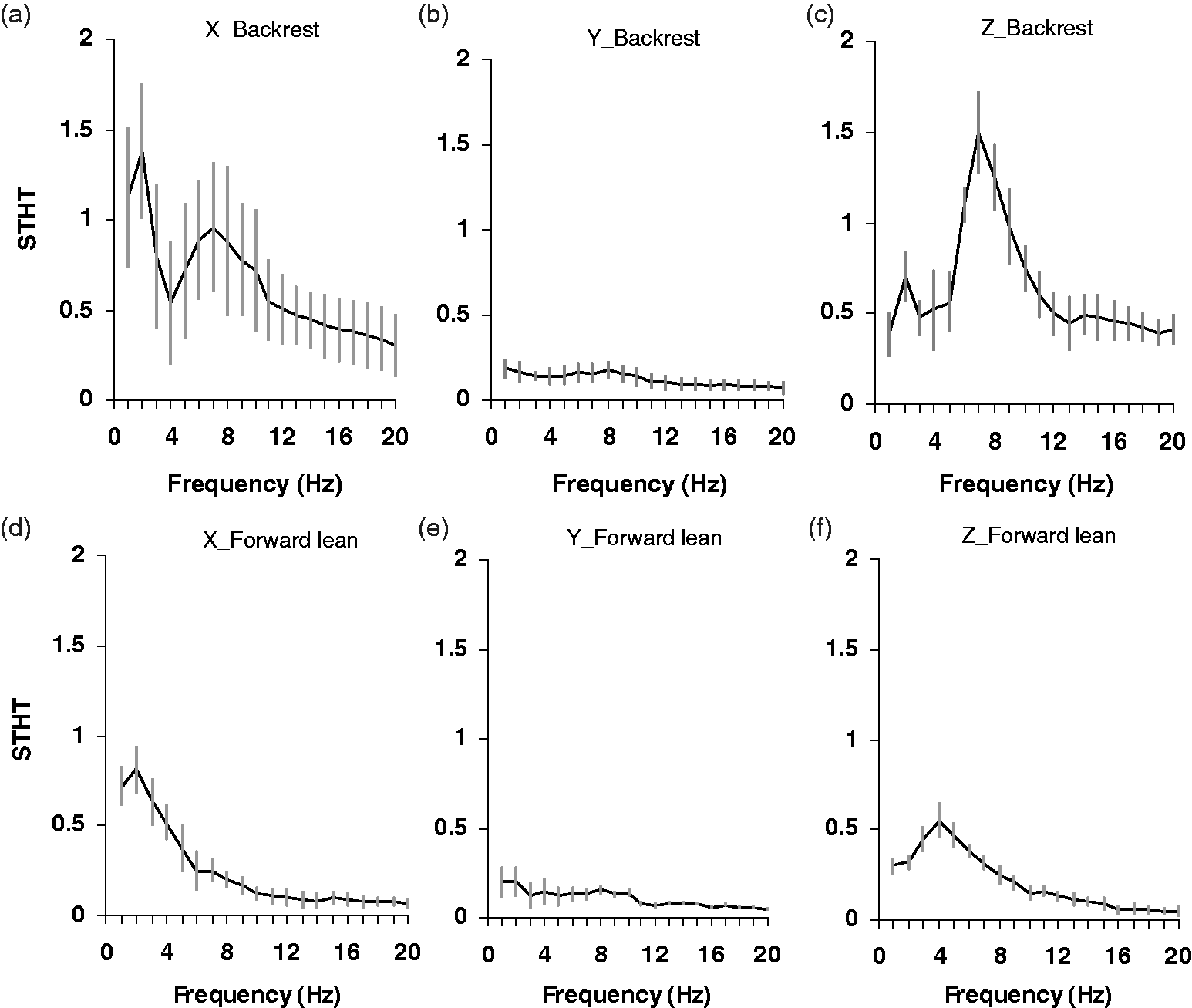
STHT curve with X-axis seat vibration at 1.2 m/s2 in backrest posture for head motion: (a) X-axis, (b) Y-axis, (c) Z-axis and forward lean posture for head motion in (d) X-axis, (e) Y-axis, and (f) Z-axis.
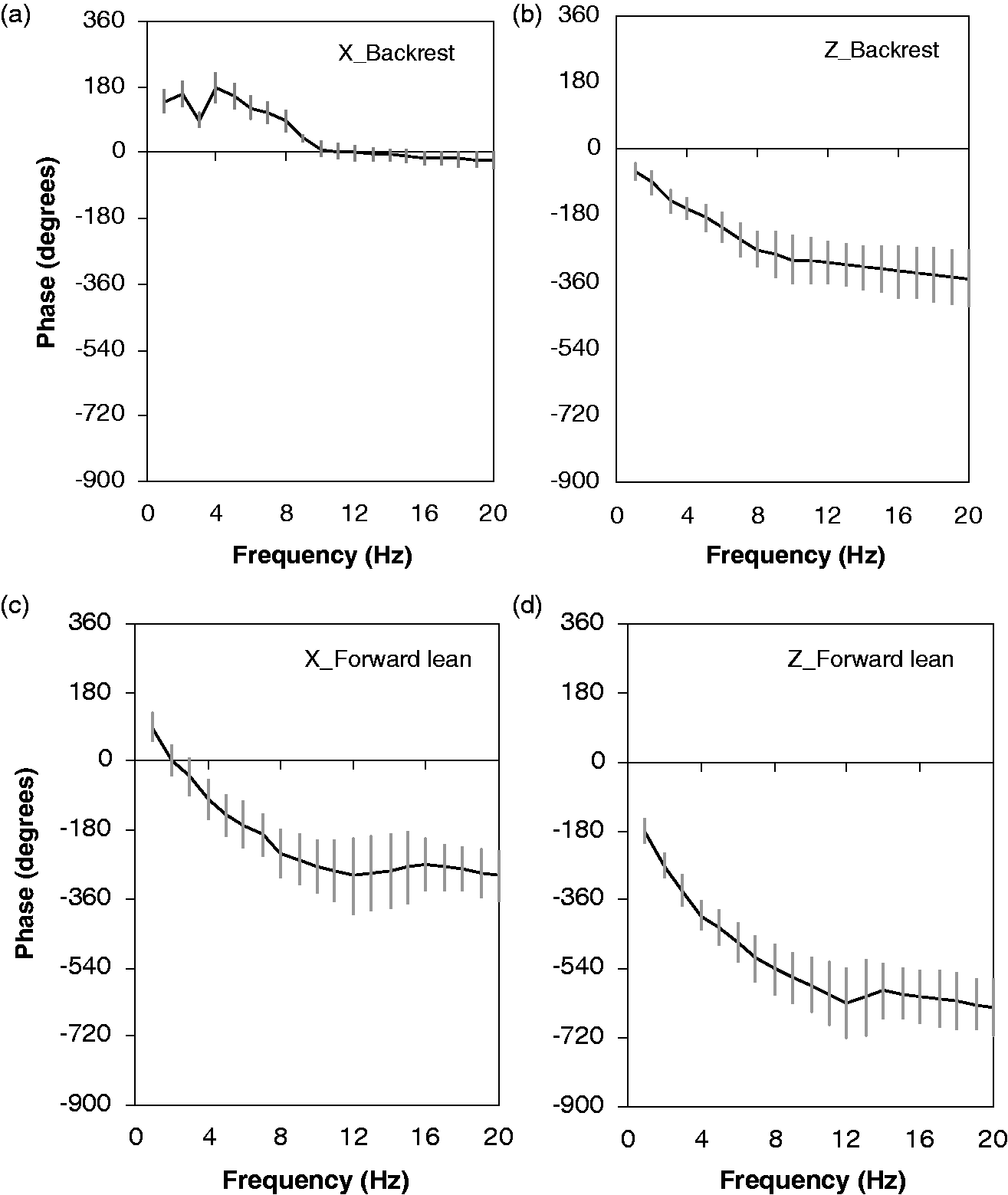
Phase curve with X-axis seat vibration at 1.2 m/s2 in backrest posture for head motion: (a) X-axis, (b) Z-axis and forward lean posture for head motion in (c) X-axis and (d) Z-axis.
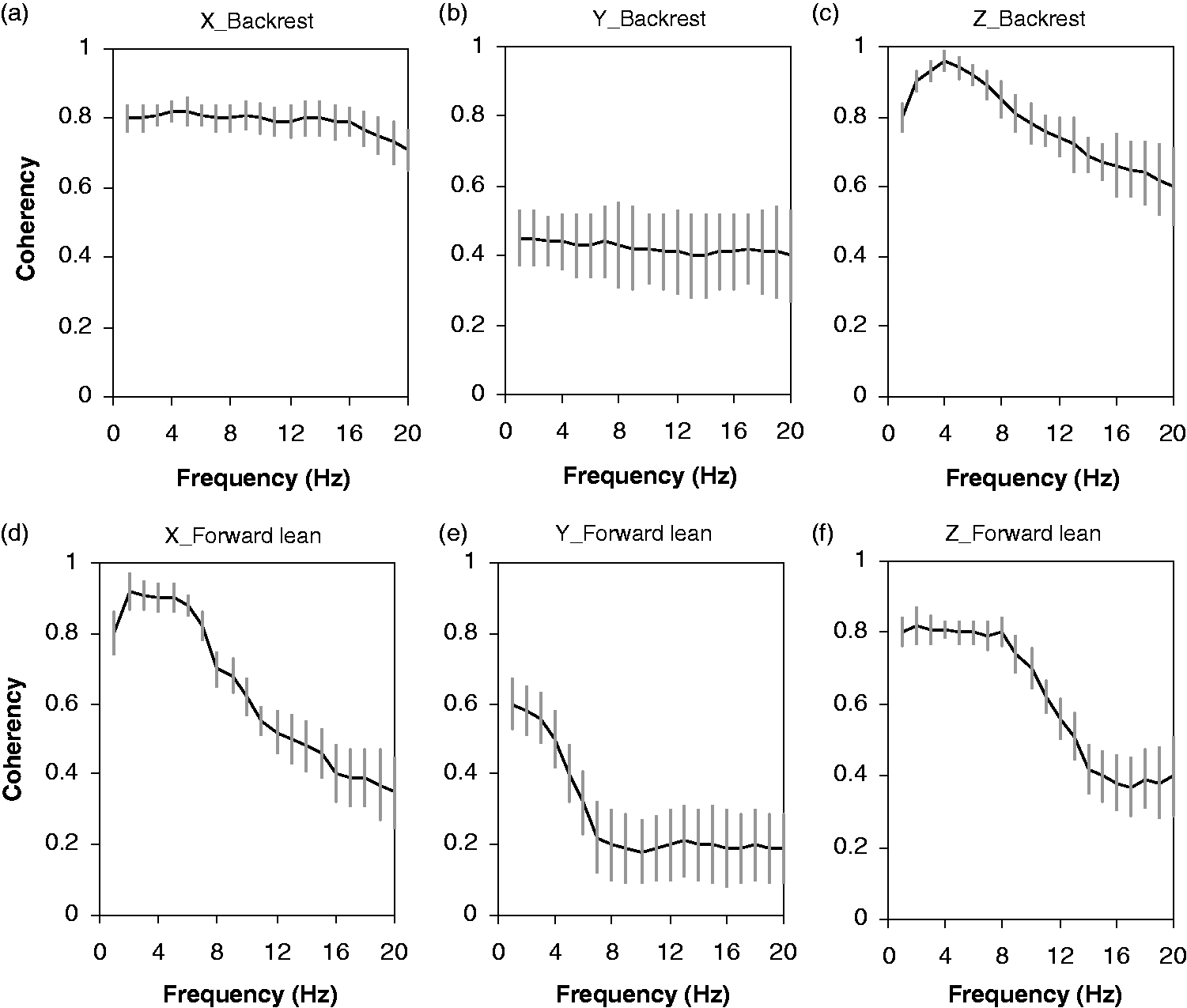
Coherence curve with X-axis seat vibration at 1.2 m/s2 in backrest posture for head motion: (a) X-axis, (b) Y-axis, (c) Z-axis and forward lean posture for head motion in (d) X-axis, (e) Y-axis, (f) Z-axis.
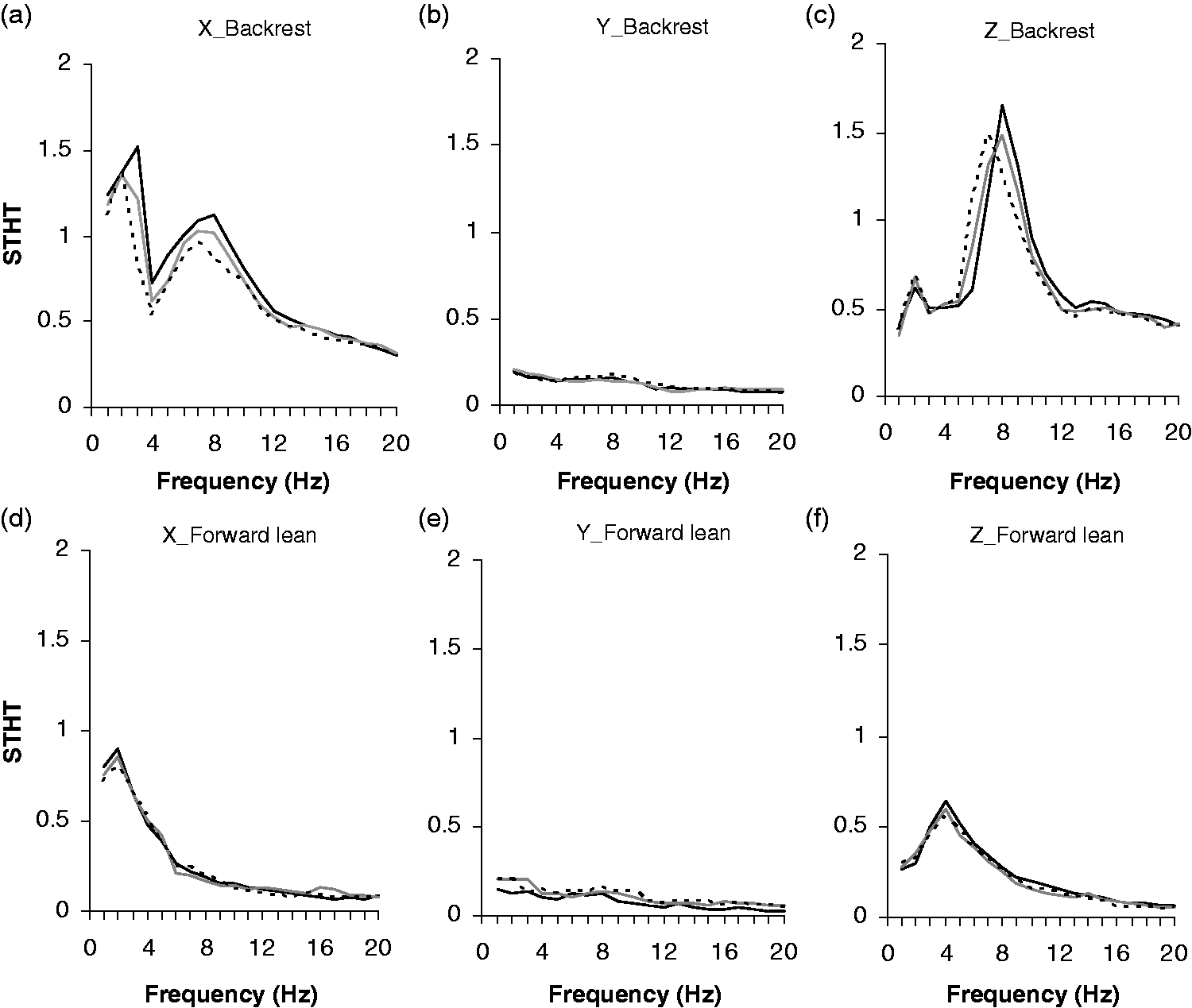
STHT curves with X-axis seat vibration of three vibration magnitudes (–––– 0.4 m/s2; –––– 0.8 m/s2; —— 1.2 m/s2) in backrest posture for head motion (a) X-axis, (b) Y-axis, (c) Z-axis and forward lean posture for head motion in (d) X-axis, (e) Y-axis, and (f) Z-axis.
STHT responses
The mean STHT and phase curves with standard deviations of the mean as error bars of 30 subjects have been plotted for the three-axes of head motion. The subjects are seated with prescribed posture and transfer function for each head motion have been presented, while exposed to 1.2 m/s2 rms acceleration, Figures 4 and 5.
While observing the STHT curves for backrest posture (Figure 4(a) to (c)), two main resonances can be observed for X-axis head motion (Figure 4(a)), first around 2 Hz and a second peak in the vicinity of 7 Hz with comparatively lower transmissibility than first peak, whereas Z-axis head motion exhibits first small resonance peak at 2 Hz and second largest resonance peak at 7 Hz (Figure 4(c)). It is clearly seen that the spread of frequency-dependent transmissibility is large up to 10 Hz for X-axis head motion and maximum around resonance peak for Z-axis. No clear resonance is observed for Y-axis head motion (Figure 4(b)). The Y-axis head motion shows much smaller values up to 10 Hz and onward negligible transmissibility is observed (p > 0.05).
The transmissibility curves for the forward lean posture are shown in Figures 4(d) to (f). The head motion in X-axis exhibits only one resonance peak at 2 Hz (Figure 4(d)), whereas Z-axis head motion indicates broad peak around 4 Hz (Figure 4(f)) and is much smaller than those for the resonance peaks obtained in backrest posture (p < 0.05). The transmissibility curve showed a gradual increase with frequency up to a resonance peak followed by a gradual decrease in transmissibility with frequency after resonance peak in both the X- and Z-axis head motion. Similar to backrest posture, forward lean posture also exhibits smaller transmissibility magnitude values for Y-axis head motion (Figure 4(e)), but statistically insignificant (p > 0.05). The result also shows that the scatter in the transmissibility response tends to be comparatively higher in backrest posture as against forward lean posture.
Since most of the motion at the head occurred in the sagittal plane, the phase data are presented only for the head motion in X- and Z-axes, Figure 5. The figure shows the mean phase response and standard deviations as the error bars for the X- and Z-axes for the subjects seated in the forward lean and backrest posture.
The phase data shows smaller dispersion at lower frequencies and about 12 Hz, the phase data appears to be erratic; this is due to relatively low transmissibility values at these frequencies.
A phase lead appears in the data for X-axis head motion in the backrest posture; this might be related to active postural control of the body. Data for the backrest posture appears to be ‘well behaved’ since the backrest was able to ‘guide’ vibration transmitted to the head, whereas in a forward lean posture, the body attenuated a large proportion of the vibration resulting in low transmissibility and jerky phase data. Coherence data for these axes as shown in Figure 6 demonstrate very low correlation at frequencies above about 10 Hz for the forward lean posture due to relatively small motions of the head in that direction.
Effect of vibration magnitudes on STHT response
The mean STHT responses measured for 30 subjects under three vibration magnitudes for two seated posture have been compared as shown in Figure 7. It is distinctly observed from vibration magnitudes of 0.4 and 1.2 m/s2 that increasing the vibration magnitude decreases the resonance frequency and also reduces the overall magnitude of transmissibility for X- and Z-axes head motion in backrest posture. The reduction in transmissibility is found to be valid up to 12 Hz, following the resonance peak (p < 0.05). No clear distinction is reckoned between 0.4 and 0.8 m/s2 (p > 0.05), which may be due to higher frequency resolution used in the experiment. For forward lean posture, no such significant difference is observed, while varying vibration magnitudes (p > 0.05).
Effect of subject postures on STHT response
Figure 8 shows comparisons of mean STHT attained in both seated posture under exposure to 1.2 m/s2 rms excitation. The STHT responses exhibit similar trends for both the subject postures, except absence of second resonance peak in forward lean posture for X- and Z-axes head motion. Also great reduction in transmissibility is observed for forward lean posture. For head motion in X- and Z-axes, transmissibility is found to increase at frequencies above about 5 Hz in backrest posture. Also it shows higher transmissibility at both resonance frequencies as compared to forward lean posture. Moreover, the first sharp peak at 2 Hz for the backrest posture is shifted to 4 Hz which appear broader for forward lean posture with considerable reduction in transmissibility. The statistical analysis showed that there is a significant effect of the posture (p < 0.05) on the STHT.
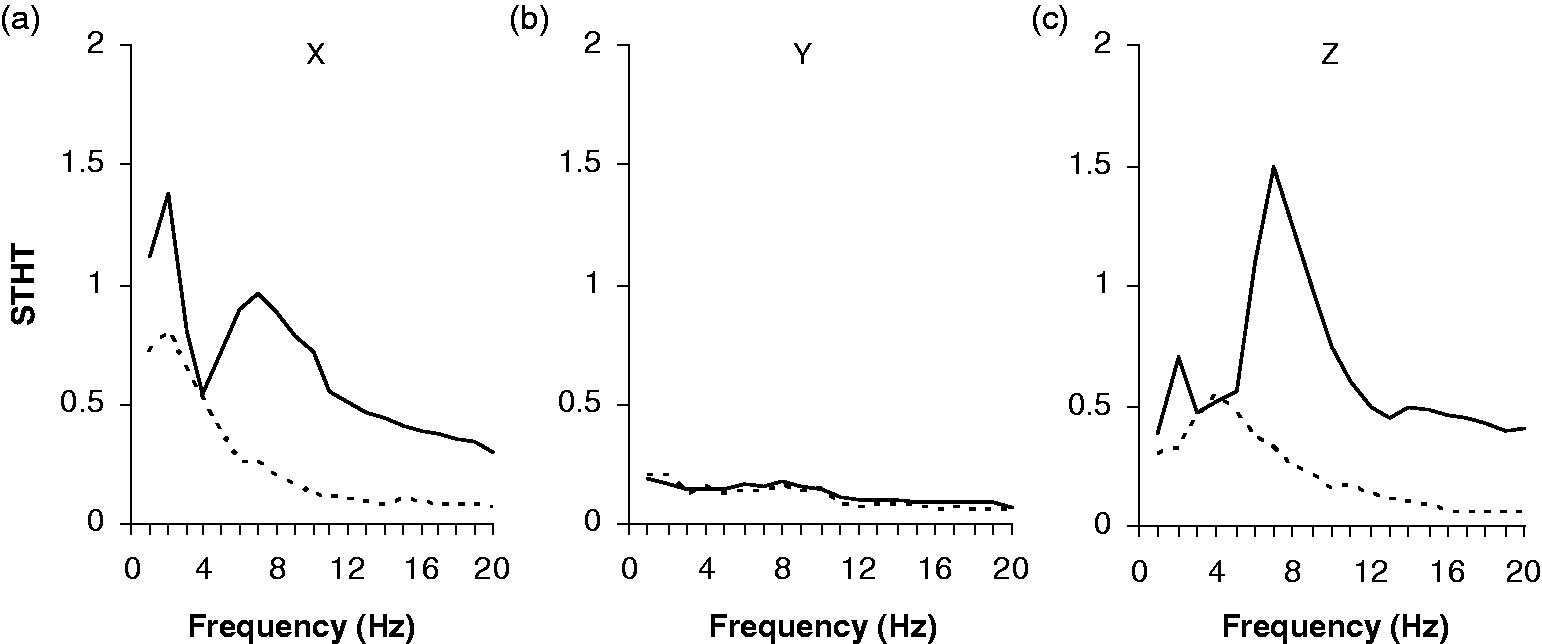
STHT curve with X-axis seat motion of two postures (–––– Backrest; —— Forward lean) at 1.2 m/s2 for head motion in (a) X-axis; (b) Y-axis; and (c) Z-axis.
The STHT responses also exhibit similar trends in both subject postures, for head motion in Y-axis. Although transmissibility’s for head motion in Y-axis were low, the significant difference in transmissibility is not seen between two postures (p > 0.05).
Discussions
The human response to vibration is a very complex phenomenon. In sitting posture, the vibration exciting the hip and thigh is transmitted to the head through the entire body part. So the vibration transmissibility to the head is important to express the vibration characteristics of a body.
The result revealed that single X-axis seat excitation produce the head motion in both X- and Z-axis for both the subject postures. This implies that the motion of head is cross coupled for X-axis seat excitation and is more pronounced in backrest posture. Bhiwapurkar et al.30-31 found interference with reading activities due to visual disturbance in backrest posture in fore-aft seat vibration for same vibration magnitude and frequency range. For the forward lean posture, the absence of this second peak implies that the motion of head is small – probably because of the low transmission of X-axis motion of the spine.
The unsupported upper body undergoes considerable pitch motion about the pelvis at very low frequency, while back support contributes to higher stiffness in the pitch mode and greater coupling with the vertical motion of the upper body. This is mainly attributed to greater interactions of the upper body with the back support, and application of vibration directly to the upper body through the back support, which is also evident from the higher magnitudes of the X-axis motion measured at the backrest.
Moreover, the X-axis seat excitation resulted in higher transmissibility at 2 Hz in X-axis and 4 Hz in Z-axis head motion, for forward lean posture. Also high peak is registered at 2 Hz and 7 Hz in both X- and Z-axes head motion for backrest posture. The result reported that X-axis seat excitation is less well transmitted to the upper body with increasing frequency, i.e. at frequencies above about 10 Hz, the low frequency peak up to 4 Hz in both the postures could probably strongly relate to the biomechanical characteristics of the spine and upper body. 37 The registered peak in Z-axis head motion is smaller than X-axis head motion in backrest posture. Sitting with a backrest support tends to reduce the vertical vibration transmitted to the head at lower frequencies up to 3 Hz but after that greatly amplifies the vibration up to 7 Hz. This could be attributed to cross-axis vertical movements of the restrained upper body due to the fore-aft vibration in the low frequencies.
In this experiment, a main resonance frequency of X-axis head motion is observed to be around 2 Hz irrespective of the subject posture. A whole-body resonance in this region was reported by Dieckmann. 38 In other studies, Fairley and Griffin 39 reported one mode at about 0.7 Hz and another in the region of 1.5 to 3 Hz. Investigating frequencies greater than 1 Hz, Holmlund and Lundstrom 40 observed a single mode between 2 and 5 Hz while Mansfield and Lundstrom 6 reported modes around 3 Hz and 5 Hz. Furthermore, Nawayseh and Griffin 41 measured the vertical cross-axis apparent mass during single-axis fore-and-aft excitation with an average thigh contact posture and found that most of 12 subjects showed modes with frequencies around 1 and around 3 Hz, with a few showing a mode at a higher frequency. Only one study has been cited in the literature in which fore-and-aft, lateral and vertical motion of the head was measured during fore-and-aft seat vibration. 12 The data confirmed that the transmissibility was obtained to a limited extent in this investigation. It would be misleading to compare these data in detail, since the results depend highly on such parameters as location of measurement of head motion, seat condition and posture of the subjects.
To investigate the effect of vibration magnitudes for X-axis head motion in backrest posture, the result distinctly revealed that the primary and secondary resonance in STHT tends to shift to a lower frequency and also reduces the overall peaks of transmissibility with increasing vibration magnitudes. However, only secondary resonance in STHT shows similar trend for Z-axis head motion in backrest posture. This phenomenon is known as a ‘softening effect’ or ‘non linearity’ of the human body, while subjected to WBV. The ANOVA result shows significant effect between 0.4 and 1.2 m/s2 (p < 0.05). No clear distinction is reckoned between 0.4 and 0.8 m/s2 which may be due to higher inter subject variability in the data. This suggests that the upper body supported against a back support exhibits more softening tendency under higher magnitude of X-axis seat vibration. Moreover, the result revealed no significant change in transmissibility or frequency change with increase in vibration magnitudes for forward lean posture. The effect may be attributed to the subject’s tendencies to stiffen under greater upper body motion caused by higher fore-aft vibration magnitudes, and to shift greater portion of the weight towards the legs to realize a more stable sitting posture. Also the hand is supported by table in forward lean posture, which helps to maintain a stable sitting posture under horizontal vibration, although it may serve as an additional source of vibration.
In a vibration environment, the posture has a vital role in transmitting vibrations to the different body segments, as well as to limit their effect on the performance of the various sedentary activities. In the present study, both the postures have most readily been shown to influence STHT in X- and Z-axis head motion. The result revealed that the vibration transmitted to the head is significantly higher over most of the frequency range for backrest posture, as compared to forward lean posture. This remarkable increase in head motion in the X- and Z-axis may be associated with back-slap (constant impact between the back and backrest), these sudden impacts being transmitted to the head. The peak registered at 7 Hz for X- and Z-axis head motion in the backrest posture remains diminished probably because of the low transmission of X-axis motion of the spine for forward lean posture. These results are in broad agreement with those obtained by Lewis and Griffin 42 who reported that contact with the backrest increased the transmission of X-axis seat motion to the head at frequencies above about 5 Hz. Donati and Bonthous 43 found that the presence of a seat back, in the form of a lumber support, increased discomfort between 3 and 6 Hz. Apart from the back support, the hands on lap support also help maintain a stable sitting posture under horizontal vibration. It has been suggested that placing the hands on the lap may help dampen the higher modes of vibration. 44
There is no availability of standards for the activity comfort in railway vehicles. Consideration of this STHT discomfort would be useful for vehicle design optimization to facilitate activity comfort. The findings may also demonstrate the relations between head motion and activity Comfort.
Conclusions
The dynamic response of the human body exposed to single X-axis seat vibration resulted in the head motion in X-and Z-axes. The STHT responses revealed a nonlinear characteristic in which the body softens with increasing magnitude of vibration. The increase in magnitude of X-axis excitation reduces the resonance frequency and STHT response, for X- and Z-axis head motion, particularly in the presence of a back support. It can be summarized that the motion pattern of the head remains nearly unchanged with change in vibration magnitude for forward lean posture, which are strongly influenced by the motion constraints caused by the hands support conditions. The results showed a clear posture dependency as compared to the vibration magnitudes. The use of a back support significantly alters the biodynamic responses of the seated body. The backrest serves as an additional source of fore-aft vibration to the upper body. The study also suggests further investigations to identify the contributions of the hands position.
Footnotes
Acknowledgement
We are thankful to RDSO (Research Designs and Standard Organizations), Lucknow for permission to carry out onboard measurement in the trains.
Declaration of conflicting interests
The author(s) declared no potential conflicts of interest with respect to the research, authorship, and/or publication of this article.
Funding
The author(s) disclosed receipt of the following financial support for the research, authorship, and/or publication of this article: The financial assistance received from DST, New Delhi for the research work is duly acknowledged.